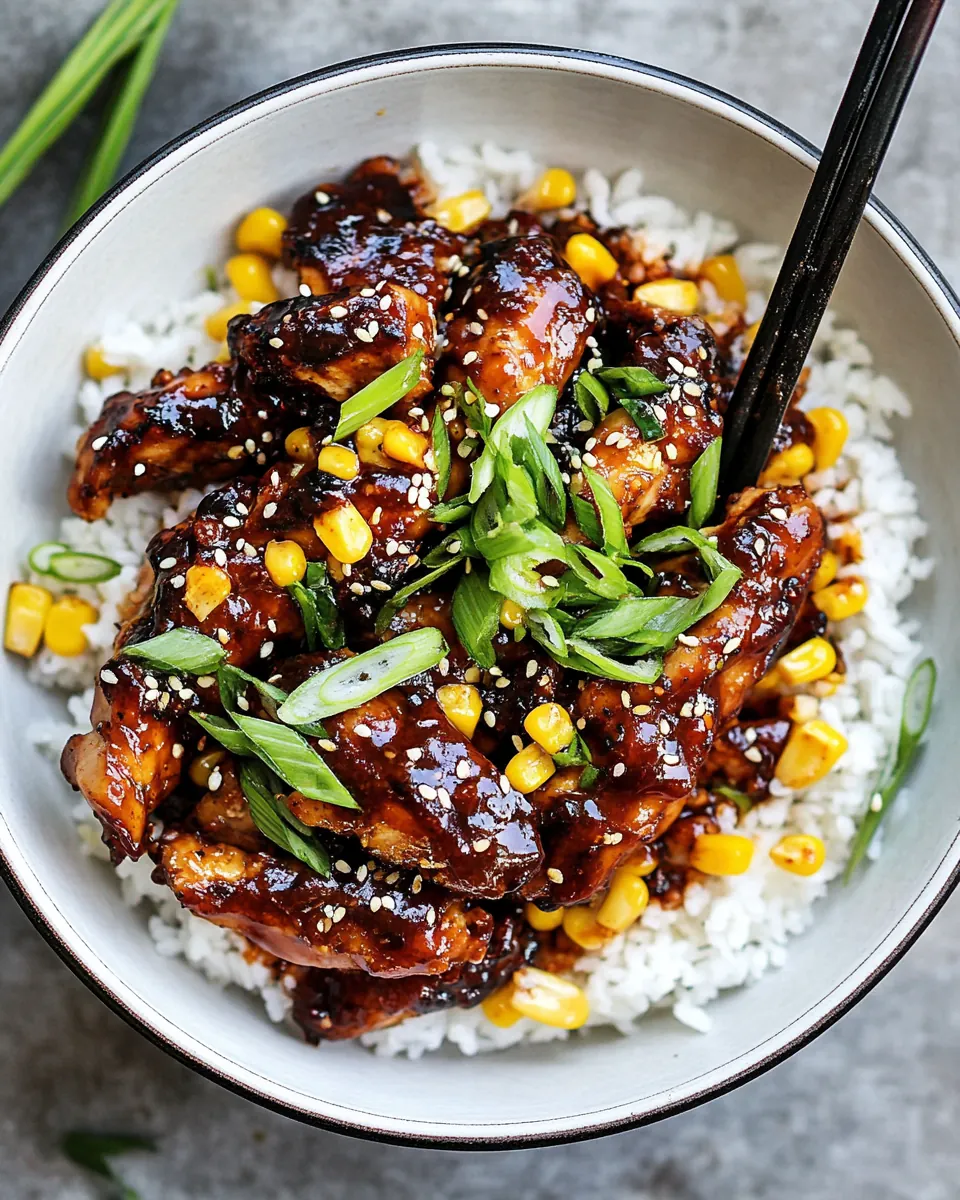
Korean Bulgogi BBQ Chicken with Spicy Garlic Butter Corn
Korean Bulgogi BBQ Chicken with Spicy Garlic Butter Corn is the kind of meal that changed weeknights for me, the kind of dish I reach for when I want big flavor without a fuss. The first time I made it I remember rushing home, the apartment smelling faintly of soy and sesame, and wondering if a simple skillet could really compete with takeout. It did, and then some, because the caramelized edges on the chicken paired with the spicy, buttery corn made every forkful sing.
Over the years I have tweaked the balance of sweet, salty, and spicy until it felt just right for our table. I love how the Gochujang offers depth while garlic and ginger bring brightness. This recipe became my quick celebration dinner when I had friends over, and it also slid perfectly into solo nights when I wanted comfort without the cleanup. The rice soaks up the glossy sauce, and the cilantro adds that final fresh note.
Recipe Snapshot
25 mins
15 mins
10 mins
Easy
550 kcal
Korean
Gluten-Free, Vegan
Dinner
Large skillet, Medium skillet, Mixing bowl, Glass jar or bowl for sauce
Why You’ll Love This Korean Bulgogi BBQ Chicken with Spicy Garlic Butter Corn
Bold, balanced flavor
I love that Korean Bulgogi BBQ Chicken with Spicy Garlic Butter Corn delivers bold flavors from ingredients you might already have. The umami from soy sauce and the spicy heat from Gochujang combine to make a sauce that is both punchy and satisfying, so every bite feels substantial and crave worthy.
Speed without sacrifice
One reason I keep coming back is speed. This recipe moves from stovetop to table in a flash, but it never sacrifices texture. The quick sear on the chicken gives caramelized edges, and the buttery corn develops sweet char notes. You get weeknight convenience with restaurant quality results.
Texture contrast
The interplay between tender, slightly crisped chicken and juicy, popping corn is what makes this dish addictive. That contrast keeps each bite interesting, and the green onions provide a light crunch so the plate never feels one dimensional.
Flexible and friendly
I appreciate how forgiving this recipe is. If you prefer chicken breast over thighs, it still works. If you want more heat, you can nudge the Gochujang up a notch. It’s a very adaptable framework, which means you can make it your own without worrying that you’ll break the dish.
Great for sharing
Finally, this recipe is a crowd pleaser. The glossy sauce and vibrant corn are visually appealing, and the flavors are familiar enough that people who shy away from spicy food can still enjoy it. When I serve it, guests always ask for seconds and for the sauce recipe to take home.
Recipe Ingredients for Korean Bulgogi BBQ Chicken with Spicy Garlic Butter Corn
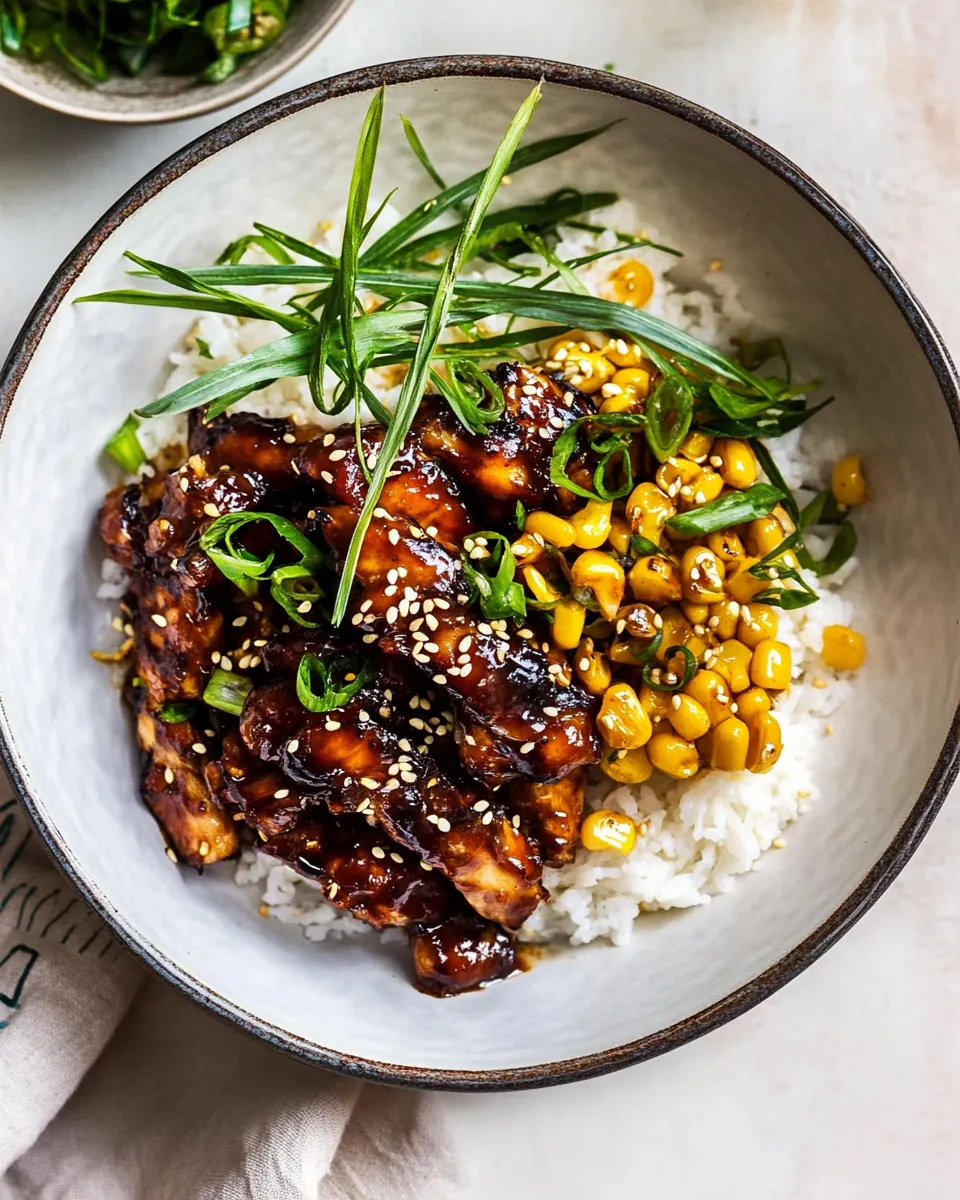
These ingredients are intentionally simple and complementary. I built the list to balance savory, spicy, and buttery notes. The chicken soaks up the marinade, the Gochujang adds a deep chili sweetness, and the butter elevates the corn into a rich, savory side. Each component plays a clear role so the final bowl feels layered but harmonious.
- 1 pound boneless skinless chicken thighs or breasts, thinly sliced: Provide thinly sliced protein that soaks up marinades quickly and cooks evenly; offers tender, juicy texture and rich flavor when seared at high heat.
- 2 tablespoons corn starch or flour: Act as a coating agent to absorb moisture and help marinades cling; creates a light crust during cooking for improved texture and sauce thickness.
- 3 tablespoons sesame oil or extra virgin olive oil: Add a fragrant, nutty layer of flavor and help distribute the marinade evenly; contributes to browning and prevents sticking during cooking.
- 1/2 cup low sodium soy sauce: Deliver salty, umami depth and liquid for the marinade; balances sweet and spicy elements while tenderizing the meat slightly.
- 3 4 tablespoons Gochujang (Korean chili paste): Introduce Korean fermented chili heat and savory complexity; imparts vibrant color, sticky texture, and characteristic spicy-sweet flavor.
- 1 tablespoon ketchup: Bring a touch of tangy sweetness to round out the spicy and salty notes; helps balance acidity and enhances caramelization.
- 1 inch fresh ginger, grated: Provide bright, zesty warmth and aromatic sharpness when grated; helps cut through richness and adds fresh depth to the marinade.
- 4 5 cloves garlic, minced or grated: Contribute pungent, savory aroma and a punchy, garlicky backbone when minced or grated; intensifies overall flavor and pairs well with ginger.
- 3 green onions, chopped, plus more for serving: Offer mild allium sweetness and fresh green aroma when chopped; add color and a sharp finish as part of the marinade and garnish.
- 3 tablespoons salted butter: Supply rich, creamy richness and a slightly salty, savory finish; melts into the corn to create lusciously flavored butter.
- 4 ears corn, kernels, removed from cob: Supply sweet, crisp kernels that add texture and natural sweetness; provide a crunchy contrast and absorb spicy buttery sauce well.
- 2 medium shallots, sliced or chopped: Add delicate, sweet oniony notes and a soft texture when cooked; complement the corn and enhance overall savory depth.
- 1 jalapeño, seeded (if desired) and chopped: Deliver fresh, bright heat and a vegetal kick when chopped; option to include for extra spice and layered flavor.
- 1/4 cup fresh cilantro, roughly chopped: Provide bright, herbaceous freshness and citrus-like lift when roughly chopped; helps cut richness and brightens the finished dish.
- 3 cups steamed white or brown rice: Serve as a neutral, fluffy base to soak up saucy components and balance bold flavors; provides satisfying bulk to the meal.
- yum yum sauce and sesame seeds, for serving: Offer creamy, tangy condiment and nutty crunch from seeds for finishing; add familiar sweet-savoury notes and visual appeal to serve.
Cooking Method for Korean Bulgogi BBQ Chicken with Spicy Garlic Butter Corn
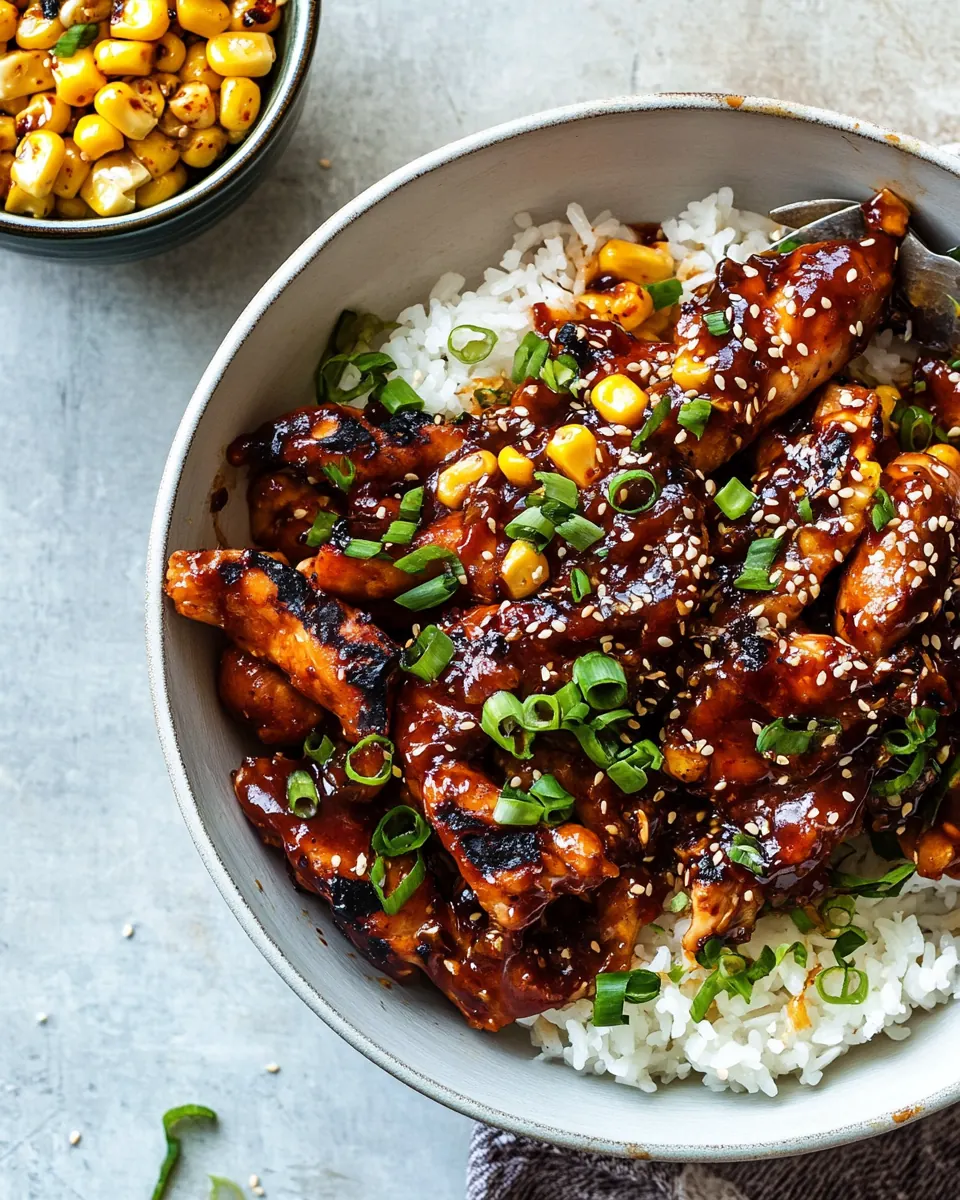
I like to approach the cooking in two parallel tracks: one pan for the chicken and another for the corn. That way both components finish at the same time and you get fresh textures. Keep your pans hot, work efficiently, and taste as you go.
- In a medium bowl, toss together the chicken, cornstarch, and 1 tablespoon oil. In a glass jar, combine the soy sauce, 3 tablespoons Gochujang, ketchup, ginger, 2 cloves garlic, and 1/4 cup water. Heat the remaining 2 tablespoons oil in a large skillet over medium heat. When the oil shimmers, add the chicken and brown all over until it becomes crispy, about 5 minutes. Pour in the Gochujang sauce mix. Bring the sauce to a boil over medium-high heat and cook until the sauce coats the chicken, about 5 minutes. Stir in the green onions, then remove from the heat. Meanwhile, make the corn. Heat a medium skillet over medium heat. Add the butter, corn, shallots, remaining 2-3 cloves garlic, the jalapeño, and season with salt and pepper. Cook 5 minutes or until the corn is golden. Stir in the cilantro. Remove from the heat. To serve, divide the rice among bowls and top with chicken and corn. Serve with additional green onions, cilantro, and yum yum sauce (recipe below). Enjoy!: The moment your hands or spoon mix these ingredients you should feel the starch coating each piece; this creates a protective crust during searing. You will notice a slight tackiness on the surface of the chicken , which helps the sauce cling later. The sizzling sound when the coated pieces meet hot oil is a good cue, it means the pan is hot enough. If the chicken steams instead of browns, it likely crowded the pan or the oil was not hot enough. Avoid stirring too often, allow the meat to form a golden crust for better texture.
- In a glass jar combine the soy sauce 3 tablespoons Gochujang ketchup ginger 2 cloves garlic and 1/4 cup water: As you whisk these into a smooth mixture, the aroma of ginger and garlic should come forward, promising a balanced sauce. The water thins the mixture so it will simmer evenly without scorching. If the Gochujang seems clumpy, stir gently until it integrates; a uniform sauce will coat the chicken more consistently. Beware of adding extra salt now because the soy sauce supplies the savory base and it concentrates while reducing.
- Heat the remaining 2 tablespoons oil in a large skillet over medium heat: The oil should shimmer but not smoke, indicating the pan is ready. When the oil hits the surface you will hear a delicate sizzle if it is at the right temperature. Using a heavy skillet helps maintain that heat when you add the cold chicken . If you see smoke, lower the heat for a moment to prevent burning the oil and imparting bitter flavors.
- When the oil shimmers add the chicken and brown all over until it becomes crispy about 5 minutes: As the chicken hits the pan you should hear a clear sizzle and see edges begin to caramelize within a minute or two. The aroma will shift to a toasty, savory note as proteins and sugars brown. Turn pieces to reveal golden spots; this caramelization is crucial for texture and flavor. Avoid moving the pieces constantly, as that prevents proper browning and results in a pale, less flavorful finish.
- Pour in the Gochujang sauce mix: Once the sauce hits the hot skillet you will see it bubble gently and release steam carrying fragrant notes of ginger and garlic . The sauce begins to cling to the chicken and darken, signaling the sugars are reducing. Stir with a spatula to incorporate any browned bits from the pan, these bits add depth. A common mistake is adding the sauce too early when the chicken is undercooked, which leads to a soggy texture rather than a glossy coating.
- Bring the sauce to a boil over medium high heat and cook until the sauce coats the chicken about 5 minutes: During this simmer watch the sauce transform from loose to glossy; it will thicken and cling to the chicken . Listen for a gentle bubbling rhythm and look for the sauce to reduce by about a third. This concentration enhances the savory and sweet notes making each bite bold. If the sauce reduces too fast and starts to burn, lower the heat and add a splash of water to rescue it.
- Stir in the green onions then remove from the heat: Adding the green onions at the end preserves their bright color and crisp bite, offering a contrast to the rich sauce. As you fold them in you will notice a fresh, oniony scent that lightens the pan. Removing from the heat prevents overcooking the green onions which would otherwise go limp and lose vibrancy. A common oversight is leaving the pan on the heat, which can over soften the onions and mute their flavor.
- Meanwhile make the corn: While the chicken finishes, heat a medium skillet for the corn . This step keeps textures lively because you cook the corn quickly to achieve golden bits while the chicken simmers. The dual pan approach maintains momentum and ensures both elements are hot and fresh when plated. If you try to cook everything in one pan you may end up with soggy kernels or overcooked meat.
- Heat a medium skillet over medium heat: Let the skillet come to temperature until it feels evenly hot across the surface; you will usually notice a faint shimmer. The pan needs to be warm so the butter melts and foams without burning. Using medium heat allows the shallots to soften and the corn to develop golden edges slowly. Too high heat will scorch the butter and leave a bitter taste, so regulate carefully.
- Add the butter corn shallots remaining 2 to 3 cloves garlic the jalapeño and season with salt and pepper: As the butter melts, it will smell rich and nutty before the shallots begin to sweeten. The garlic and jalapeño release aromatic heat that mingles with the butter creating a lively scent. Cook until the corn shows golden flecks and the shallots are translucent. Stir frequently to prevent the garlic from browning too quickly, which would make it bitter.
- Cook 5 minutes or until the corn is golden: During this short cook time watch for kernels to blister and develop small brown spots; that caramelization brings intense sweetness. The sound will shift from a soft simmer to a gentle pop as the moisture escapes and kernels sear. If your corn is releasing too much water, increase the heat slightly to encourage browning, but do not rush it or you risk burning the butter and aromatics.
- Stir in the cilantro: Adding the cilantro off the heat preserves its fresh, citrusy notes and bright color. You will notice an immediate lift to the skillet aroma, tempering the richness of the butter . If you cook cilantro too long it will wilt and lose its distinctive brightness, so fold it in at the end for maximum impact.
- Remove from the heat: Pull the skillet off the burner so residual heat does not overcook the ingredients. This keeps textures vibrant and ensures nothing goes limp. Give the pan a final taste for seasoning since warm dishes concentrate flavors and might need a small pinch of salt or pepper to balance. Leaving the pan on the heat can over soften the corn and dull the fresh elements.
- To serve divide the rice among bowls and top with chicken and corn: The visual pleasure of glossy, sauced chicken nestled next to buttery corn is part of the experience; arrange components so each spoonful gets a bit of both. The steaming rice absorbs the sauce, creating a cohesive bite. A typical mistake is not warming bowls or rice; cold rice will cool the dish quickly and mute aromas.
- Serve with additional green onions cilantro and yum yum sauce recipe below Enjoy: The final garnishes add crunch, herbaceous brightness, and a creamy contrast from the yum yum sauce . Spoon sauce sparingly at first so guests can customize. Encourage diners to add sesame seeds for texture. Watch out for over saucing which can mask the nuanced flavors of the Gochujang based sauce.
Make It Your Own
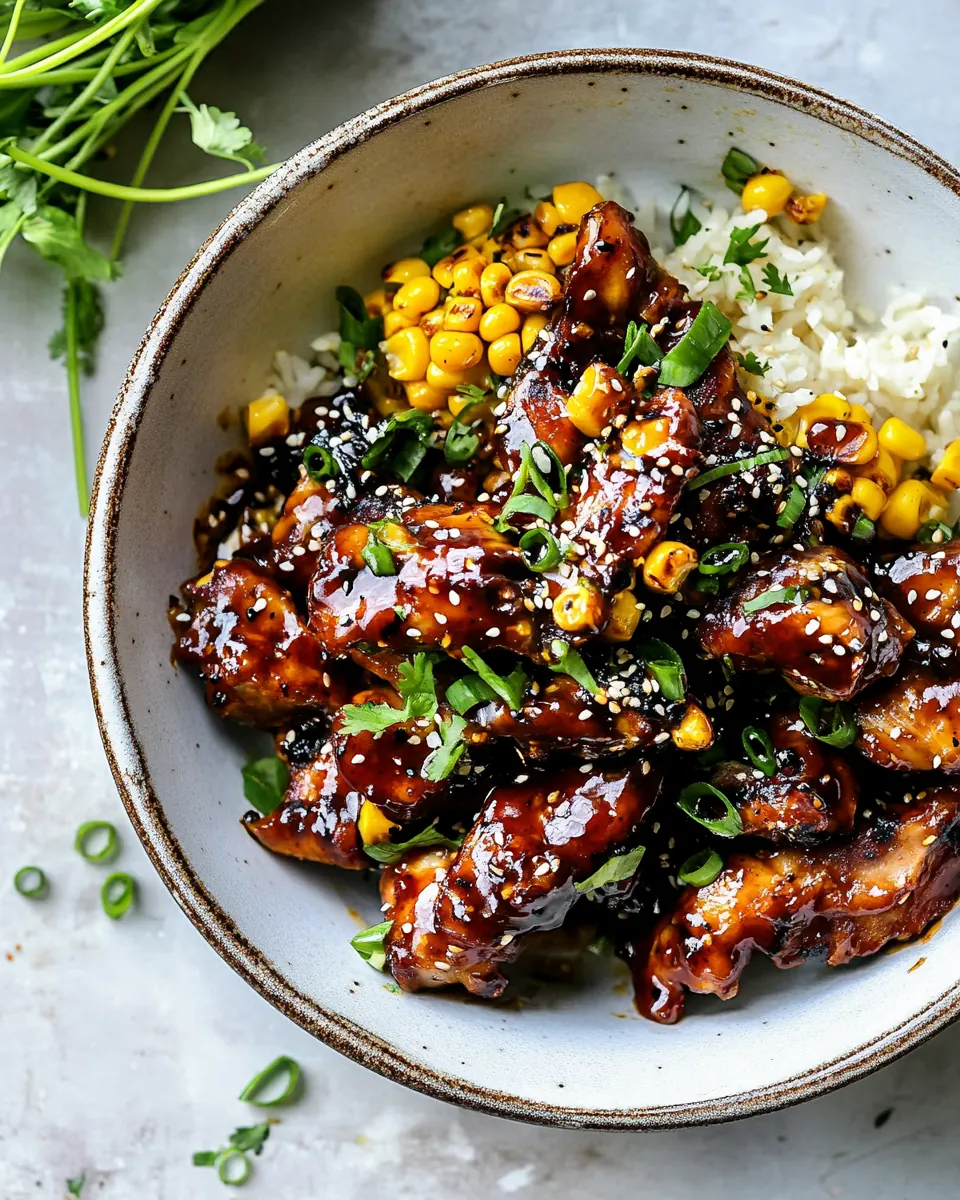
I love sharing ways to customize this recipe because small changes can make it feel completely different. The following tips help you adapt heat level texture and serving style while preserving the core flavor profile.
- Swap proteins carefully: You can choose chicken thighs for juiciness or breasts for a leaner option, but slice them thinly for even, fast cooking. Thicker pieces will take longer and risk uneven doneness.
- Adjust the heat: Increase or decrease Gochujang and jalapeño to control spice, tasting as you go so the overall balance of sweet salt and heat remains harmonious.
- Make the sauce ahead: Combine the soy Gochujang and aromatics in a jar and refrigerate for up to a day, which lets flavors meld and speeds assembly on a busy night.
- Rice choices matter: Choose steamed white rice for a softer texture or brown rice for earthy chew, both absorb the sauce well but change the mouthfeel of the bowl.
- Control butter richness: Use salted butter for immediate seasoning, or unsalted if you prefer adding salt later for precise control over sodium.
- Serve sauce on the side: Offer the yum yum sauce separately so guests can decide how creamy or tangy they want each bite, preventing the dish from becoming overly rich.
Serving Options for Korean Bulgogi BBQ Chicken with Spicy Garlic Butter Corn
This dish works beautifully for weeknight dinners and casual gatherings. The bowl format feels homey and portable, while the bold flavors make it suitable for small celebrations. Below are detailed serving ideas, side suggestions, and storage notes to help you pair and preserve this meal.
- Casual weeknight bowls: Serve the chicken and corn over steaming white or brown rice, garnish with extra green onions and cilantro, and offer the yum yum sauce on the side for personalization.
- Family style: Plate the chicken in a large shallow bowl and the corn in a separate dish so everyone can help themselves; this approach keeps the textures distinct and allows diners to create balanced portions.
- Occasions: Great for casual dinners, potlucks, or summer gatherings where fresh corn shines; the recipe’s vibrant flavors suit festive nights without feeling fussy.
- Storage tips: Store cooled components separately in airtight containers in the refrigerator for up to three days. Reheat the chicken gently in a skillet with a splash of water to loosen the sauce, and reheat the corn briefly to preserve texture.
- Make ahead strategy: Prepare the sauce and slice the chicken a day in advance to shorten active cooking time; keep the corn and herbs fresh by prepping them the day you serve.
- Seasonal pairing: This shines in summer when fresh corn is sweetest, but it also works year round using frozen kernels that are thawed and patted dry before cooking.
- Presentation tips: Spoon the glossy chicken over the rice, add a generous scoop of buttery corn, and sprinkle with sesame seeds and extra chopped green onions for color contrast and texture.
FAQ
Conclusion
This recipe stands out because it combines speedy technique with bold layered flavors that feel special without being complicated. The caramelized chicken and spicy buttery corn create contrast and comfort in every bite, making it a reliable choice for weeknights and small gatherings alike. I encourage you to give it a try this week, taste as you go, and make the small adjustments that match your preferences. Once you pull it together you will understand why it earns a permanent spot in a busy dinner rotation.
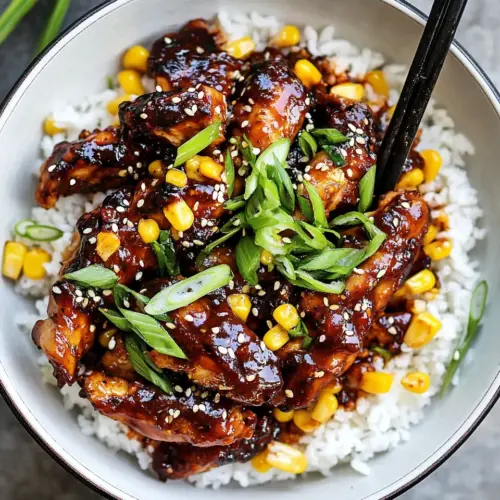
Korean Bulgogi BBQ Chicken with Spicy Garlic Butter Corn
Equipment
- Large Skillet
- Medium skillet
- Mixing Bowl
- Glass jar or bowl for sauce
Ingredients
- 1 pound boneless skinless chicken thighs or breasts, thinly sliced Provide thinly sliced protein that soaks up marinades quickly and cooks evenly; offers tender, juicy texture and rich flavor when seared at high heat.
- 2 tablespoons corn starch or flour Act as a coating agent to absorb moisture and help marinades cling; creates a light crust during cooking for improved texture and sauce thickness.
- 3 tablespoons sesame oil or extra virgin olive oil Add a fragrant, nutty layer of flavor and help distribute the marinade evenly; contributes to browning and prevents sticking during cooking.
- 1/2 cup low sodium soy sauce Deliver salty, umami depth and liquid for the marinade; balances sweet and spicy elements while tenderizing the meat slightly.
- 3 -4 tablespoons Gochujang (Korean chili paste) Introduce Korean fermented chili heat and savory complexity; imparts vibrant color, sticky texture, and characteristic spicy-sweet flavor.
- 1 tablespoon ketchup Bring a touch of tangy sweetness to round out the spicy and salty notes; helps balance acidity and enhances caramelization.
- 1 inch fresh ginger, grated Provide bright, zesty warmth and aromatic sharpness when grated; helps cut through richness and adds fresh depth to the marinade.
- 4 -5 cloves garlic, minced or grated Contribute pungent, savory aroma and a punchy, garlicky backbone when minced or grated; intensifies overall flavor and pairs well with ginger.
- 3 green onions, chopped, plus more for serving Offer mild allium sweetness and fresh green aroma when chopped; add color and a sharp finish as part of the marinade and garnish.
- 3 tablespoons salted butter Supply rich, creamy richness and a slightly salty, savory finish; melts into the corn to create lusciously flavored butter.
- 4 ears corn, kernels, removed from cob Supply sweet, crisp kernels that add texture and natural sweetness; provide a crunchy contrast and absorb spicy buttery sauce well.
- 2 medium shallots, sliced or chopped Add delicate, sweet oniony notes and a soft texture when cooked; complement the corn and enhance overall savory depth.
- 1 jalapeño, seeded (if desired) and chopped Deliver fresh, bright heat and a vegetal kick when chopped; option to include for extra spice and layered flavor.
- 1/4 cup fresh cilantro, roughly chopped Provide bright, herbaceous freshness and citrus-like lift when roughly chopped; helps cut richness and brightens the finished dish.
- 3 cups steamed white or brown rice Serve as a neutral, fluffy base to soak up saucy components and balance bold flavors; provides satisfying bulk to the meal.
- yum yum sauce and sesame seeds, for serving Offer creamy, tangy condiment and nutty crunch from seeds for finishing; add familiar sweet-savoury notes and visual appeal to serve.
Instructions
- In a medium bowl, toss together the chicken, cornstarch, and 1 tablespoon oil. In a glass jar, combine the soy sauce, 3 tablespoons Gochujang, ketchup, ginger, 2 cloves garlic, and 1/4 cup water. Heat the remaining 2 tablespoons oil in a large skillet over medium heat. When the oil shimmers, add the chicken and brown all over until it becomes crispy, about 5 minutes. Pour in the Gochujang sauce mix. Bring the sauce to a boil over medium-high heat and cook until the sauce coats the chicken, about 5 minutes. Stir in the green onions, then remove from the heat. Meanwhile, make the corn. Heat a medium skillet over medium heat. Add the butter, corn, shallots, remaining 2-3 cloves garlic, the jalapeño, and season with salt and pepper. Cook 5 minutes or until the corn is golden. Stir in the cilantro. Remove from the heat. To serve, divide the rice among bowls and top with chicken and corn. Serve with additional green onions, cilantro, and yum yum sauce (recipe below). Enjoy!: The moment your hands or spoon mix these ingredients you should feel the starch coating each piece; this creates a protective crust during searing. You will notice a slight tackiness on the surface of the chicken , which helps the sauce cling later. The sizzling sound when the coated pieces meet hot oil is a good cue, it means the pan is hot enough. If the chicken steams instead of browns, it likely crowded the pan or the oil was not hot enough. Avoid stirring too often, allow the meat to form a golden crust for better texture.
- In a glass jar combine the soy sauce 3 tablespoons Gochujang ketchup ginger 2 cloves garlic and 1/4 cup water: As you whisk these into a smooth mixture, the aroma of ginger and garlic should come forward, promising a balanced sauce. The water thins the mixture so it will simmer evenly without scorching. If the Gochujang seems clumpy, stir gently until it integrates; a uniform sauce will coat the chicken more consistently. Beware of adding extra salt now because the soy sauce supplies the savory base and it concentrates while reducing.
- Heat the remaining 2 tablespoons oil in a large skillet over medium heat: The oil should shimmer but not smoke, indicating the pan is ready. When the oil hits the surface you will hear a delicate sizzle if it is at the right temperature. Using a heavy skillet helps maintain that heat when you add the cold chicken . If you see smoke, lower the heat for a moment to prevent burning the oil and imparting bitter flavors.
- When the oil shimmers add the chicken and brown all over until it becomes crispy about 5 minutes: As the chicken hits the pan you should hear a clear sizzle and see edges begin to caramelize within a minute or two. The aroma will shift to a toasty, savory note as proteins and sugars brown. Turn pieces to reveal golden spots; this caramelization is crucial for texture and flavor. Avoid moving the pieces constantly, as that prevents proper browning and results in a pale, less flavorful finish.
- Pour in the Gochujang sauce mix: Once the sauce hits the hot skillet you will see it bubble gently and release steam carrying fragrant notes of ginger and garlic . The sauce begins to cling to the chicken and darken, signaling the sugars are reducing. Stir with a spatula to incorporate any browned bits from the pan, these bits add depth. A common mistake is adding the sauce too early when the chicken is undercooked, which leads to a soggy texture rather than a glossy coating.
- Bring the sauce to a boil over medium high heat and cook until the sauce coats the chicken about 5 minutes: During this simmer watch the sauce transform from loose to glossy; it will thicken and cling to the chicken . Listen for a gentle bubbling rhythm and look for the sauce to reduce by about a third. This concentration enhances the savory and sweet notes making each bite bold. If the sauce reduces too fast and starts to burn, lower the heat and add a splash of water to rescue it.
- Stir in the green onions then remove from the heat: Adding the green onions at the end preserves their bright color and crisp bite, offering a contrast to the rich sauce. As you fold them in you will notice a fresh, oniony scent that lightens the pan. Removing from the heat prevents overcooking the green onions which would otherwise go limp and lose vibrancy. A common oversight is leaving the pan on the heat, which can over soften the onions and mute their flavor.
- Meanwhile make the corn: While the chicken finishes, heat a medium skillet for the corn . This step keeps textures lively because you cook the corn quickly to achieve golden bits while the chicken simmers. The dual pan approach maintains momentum and ensures both elements are hot and fresh when plated. If you try to cook everything in one pan you may end up with soggy kernels or overcooked meat.
- Heat a medium skillet over medium heat: Let the skillet come to temperature until it feels evenly hot across the surface; you will usually notice a faint shimmer. The pan needs to be warm so the butter melts and foams without burning. Using medium heat allows the shallots to soften and the corn to develop golden edges slowly. Too high heat will scorch the butter and leave a bitter taste, so regulate carefully.
- Add the butter corn shallots remaining 2 to 3 cloves garlic the jalapeño and season with salt and pepper: As the butter melts, it will smell rich and nutty before the shallots begin to sweeten. The garlic and jalapeño release aromatic heat that mingles with the butter creating a lively scent. Cook until the corn shows golden flecks and the shallots are translucent. Stir frequently to prevent the garlic from browning too quickly, which would make it bitter.
- Cook 5 minutes or until the corn is golden: During this short cook time watch for kernels to blister and develop small brown spots; that caramelization brings intense sweetness. The sound will shift from a soft simmer to a gentle pop as the moisture escapes and kernels sear. If your corn is releasing too much water, increase the heat slightly to encourage browning, but do not rush it or you risk burning the butter and aromatics.
- Stir in the cilantro: Adding the cilantro off the heat preserves its fresh, citrusy notes and bright color. You will notice an immediate lift to the skillet aroma, tempering the richness of the butter . If you cook cilantro too long it will wilt and lose its distinctive brightness, so fold it in at the end for maximum impact.
- Remove from the heat: Pull the skillet off the burner so residual heat does not overcook the ingredients. This keeps textures vibrant and ensures nothing goes limp. Give the pan a final taste for seasoning since warm dishes concentrate flavors and might need a small pinch of salt or pepper to balance. Leaving the pan on the heat can over soften the corn and dull the fresh elements.
- To serve divide the rice among bowls and top with chicken and corn: The visual pleasure of glossy, sauced chicken nestled next to buttery corn is part of the experience; arrange components so each spoonful gets a bit of both. The steaming rice absorbs the sauce, creating a cohesive bite. A typical mistake is not warming bowls or rice; cold rice will cool the dish quickly and mute aromas.
- Serve with additional green onions cilantro and yum yum sauce recipe below Enjoy: The final garnishes add crunch, herbaceous brightness, and a creamy contrast from the yum yum sauce . Spoon sauce sparingly at first so guests can customize. Encourage diners to add sesame seeds for texture. Watch out for over saucing which can mask the nuanced flavors of the Gochujang based sauce.
Notes
- Swap proteins carefully: You can choose chicken thighs for juiciness or breasts for a leaner option, but slice them thinly for even, fast cooking. Thicker pieces will take longer and risk uneven doneness.
- Adjust the heat: Increase or decrease Gochujang and jalapeño to control spice, tasting as you go so the overall balance of sweet salt and heat remains harmonious.
- Make the sauce ahead: Combine the soy Gochujang and aromatics in a jar and refrigerate for up to a day, which lets flavors meld and speeds assembly on a busy night.
- Rice choices matter: Choose steamed white rice for a softer texture or brown rice for earthy chew, both absorb the sauce well but change the mouthfeel of the bowl.
- Control butter richness: Use salted butter for immediate seasoning, or unsalted if you prefer adding salt later for precise control over sodium.
- Serve sauce on the side: Offer the yum yum sauce separately so guests can decide how creamy or tangy they want each bite, preventing the dish from becoming overly rich.