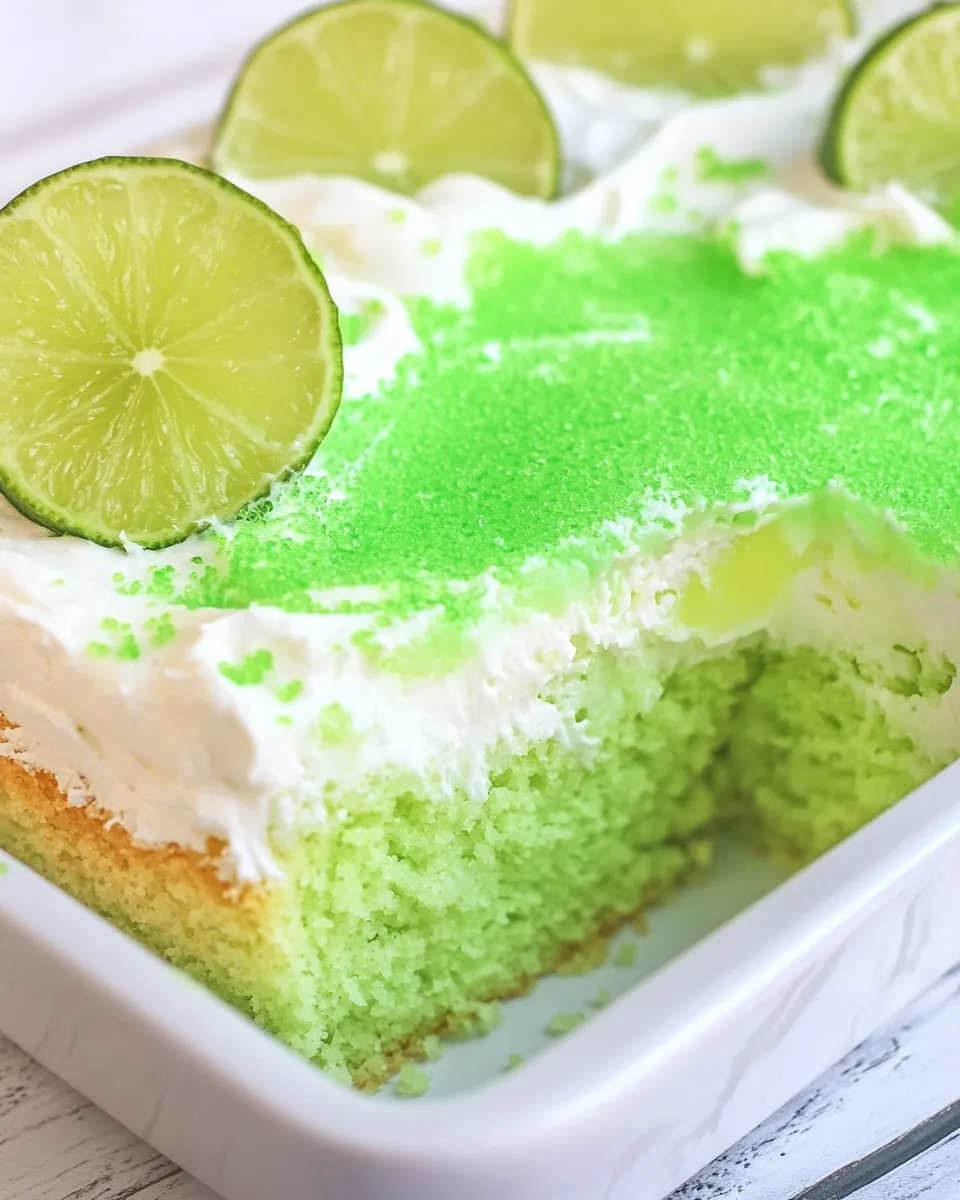
Key Lime Jello Poke Cake
Key Lime Jello Poke Cake is the kind of dessert that instantly takes me back to long, slow summer afternoons at my grandmother’s house, when the smell of citrus and sugar seemed to hang in the air like a promise. The first time I made this, I was chasing bright, nostalgic flavors with a minimal fuss approach, and this cake delivered everything I wanted: tangy lime, pillowy cake, and a creamy topping that felt almost like summer in a slice. I remember laughing at how simple the poke technique is, yet how dramatically it transforms a boxed cake into something that tastes homemade and thoughtful.
That afternoon I invited some neighbors over, and we sliced through layers of pale yellow cake and vibrant green filling while chatting on the porch. Someone said it tasted like key lime pie disguised as cake, and I decided that description fit perfectly. Over time I adjusted the lime intensity, learning when to push the color a little darker so the finished cake looks as lively as it tastes. I like to make the lime curd a touch more concentrated than recipes call for, because I enjoy the bright zip when you get a forkful with both cake and curd.
Recipe Snapshot
2 hr
60 mins
60 mins
Medium
250 kcal
American
Gluten-Free, Low FODMAP
Desserts
Fork, Small bowl, Saucepan, Whisk, Spatula, Refrigerator
Why This Key Lime Jello Poke Cake Works
Bright Citrus Flavor in Every Bite
I love how Key Lime Jello Poke Cake balances the tang of lime juice with the sweet, soft crumb of the yellow cake mix. The jello soak infuses the cake so each mouthful carries a burst of citrus, and the lime curd adds concentrated, chewy ribbons of flavor. It does what I crave when I want something lively but familiar.
Easy Signals, Big Payoff
What sells me on this recipe is the simplicity. Using a boxed yellow cake mix and a small lime jello box lets me focus on technique, not fuss. The poke step is effortless, yet it creates an elegant look and texture that feels far more sophisticated than its effort level would suggest. I often bring this to gatherings because it travels well and always disappears fast.
Textural Contrast That Wins
There is a lovely contrast between the soft, airy cake, the slightly syrupy jello layer, and the smooth whipped mixture on top. The lime curd, made with egg yolks and butter, gives a lush mouthfeel that complements the light whipped topping. I like to layer flavors and textures so every bite has a little something to surprise you.
Flexible and Crowd Friendly
I’ve adapted the timing to accommodate hosting needs, chilling it a couple hours or overnight for convenience. It slices cleanly into many pieces, which makes it ideal for parties where you want a dessert that serves a crowd without stress. The recipe scales well and still retains that striking lime presence.
A Visual Treat
The final touch of lime zest and a hint of green food coloring gives the cake a summery look that draws people in. It’s one of those recipes that tastes like comfort and looks celebratory, which is why I keep it in my entertaining rotation.
Ingredients Overview for Key Lime Jello Poke Cake
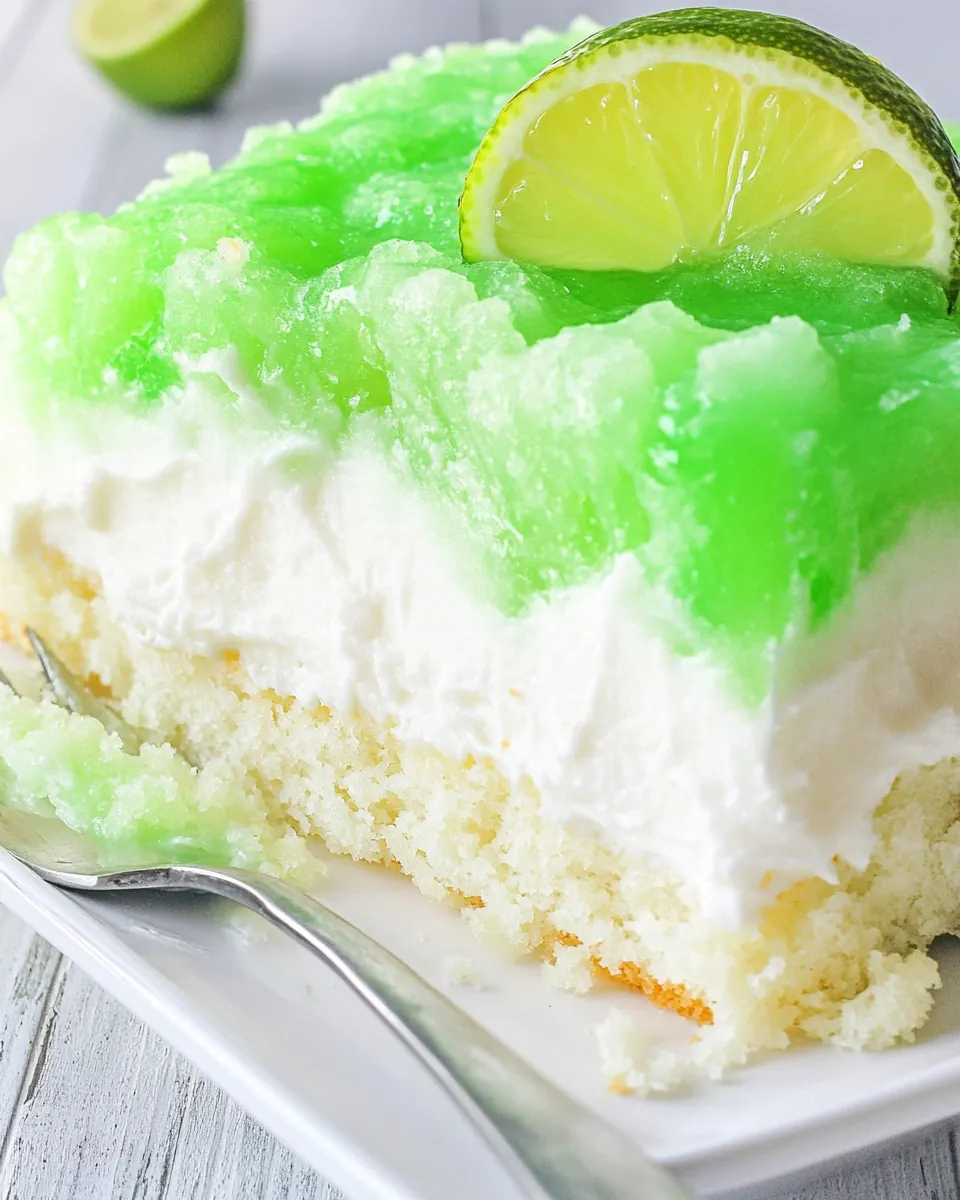
These ingredients work together to create bright, layered flavor. The boxed yellow cake mix supplies a tender, neutral base that soaks up the jello mixture. The lime jello and multiple measures of lime juice supply citrus intensity, while the egg components and butter build a silky lime curd. Finally, the whipped topping lightens the richness and balances the tang, and a touch of zest of 1 lime and green food coloring finish the cake with visual appeal.
- 1 box yellow cake mix baked according to package directions and cooled completely: Prepared by baking according to package directions and cooled completely, providing the cakey base that soaks up flavored gelatin and keeps the dessert moist. Adds structure and bulk to the poke cake, creating a tender crumb that contrasts the creamy topping. Serves as the foundation for integrating the lime jello and custard layers throughout the dessert.
- 1 small box 3.4 oz, lime jello: Dissolved to impart concentrated lime flavor and vibrant color, creating the characteristic tartness of a key lime poke cake. Activates when mixed with boiling water, allowing the gelatin to seep into the cake holes for evenly distributed flavor pockets. Balances sweetness from the cake and whipped topping while delivering a classic citrus profile.
- 1 cup boiling water: Poured over gelatin powder to dissolve it fully and activate the gelling agents, ensuring a smooth lime syrup that can be poured into the cake holes. Provides the heat needed to bloom the gelatin and integrate sugar or flavorings, enabling even absorption into the cake layers. Helps set the jello while preserving bright lime taste.
- 1/4 cup lime juice: Added to adjust the lime concentration and tartness, enhancing the key lime flavor beyond what the jello powder provides. Balances sweetness and acidity in the custard or gelatin mixture, contributing fresh citrus brightness. Helps achieve an authentic key lime profile when combined with other lime components.
- 2 egg yolks: Whisked into custard for richness and silkiness while providing structure and a subtle eggy flavor, helping the filling set without becoming rubbery. Contributes fat and emulsifying properties for a smooth texture in the cooked lime custard layer. Enhances mouthfeel and stability when combined with sugar and cornstarch.
- 1 cup white sugar: Sweetens mixtures and balances the tartness of lime components while aiding caramelization if the custard is cooked briefly. Dissolves into the custard and gelatin mixtures to create a harmonious flavor profile between the cake and topping. Provides bulk sweetness that tempers acidity from lime juice and zest.
- 3/4 cup lime juice: Measured to intensify fresh lime acidity and brightness, elevating the overall citrus profile of both the gelatin and custard elements. Adds natural flavor complexity and a sharper tang than jello alone, making the dessert taste more authentic. Helps cut through richness from whipped topping and butter.
- 2 eggs: Beaten into batters or custards to contribute lift, structure, and richness, improving texture and binding the lime custard as it cooks. Adds volume and cohesion when combined with sugar and other dairy, helping the filling set smoothly. Enhances overall stability of the cake layers.
- 1/2 teaspoon cornstarch: Used as a thickening agent in small quantities to stabilize and set the lime custard without altering flavor, creating a silky, spoonable filling. Dissolves into the custard mixture to prevent separation and ensure a smooth consistency after heating. Works with eggs and sugar to achieve desirable creaminess.
- 1/4 cup butter: Melted into custard or combined with other ingredients to add richness and a velvety mouthfeel, contributing to a smooth, buttery custard layer. Enhances flavor depth and helps carry the lime notes throughout the cake. Adds tenderness and sheen when incorporated into warm mixtures.
- green food coloring: Added sparingly to enhance visual appeal with a faint green hue, reinforcing the lime theme without impacting flavor significantly. Used to tint either the jello mixture or whipped topping to create an attractive, festive presentation. Ensures the cake looks lively and consistent with key lime expectations.
- zest of 1 lime: Zested to deliver concentrated aromatic oils that boost fresh lime scent and flavor, intensifying the citrus character of both custard and topping. Provides bright, zippy notes that complement the tartness of lime juice and the sweetness of sugar. Adds a subtle texture contrast and garnish-worthy freshness when sprinkled on top.
- 1 container 8 ounces, whipped topping, thawed: Spread over the cooled, gelled cake to create a light, airy finish that contrasts the denser cake and custard layers. Stabilized and sweetened, it adds creaminess and helps mellow the tart lime flavors while providing a visually appealing topping. Whips holds shape and contributes a smooth, cool mouthfeel to each bite.
Recipe Steps for Key Lime Jello Poke Cake
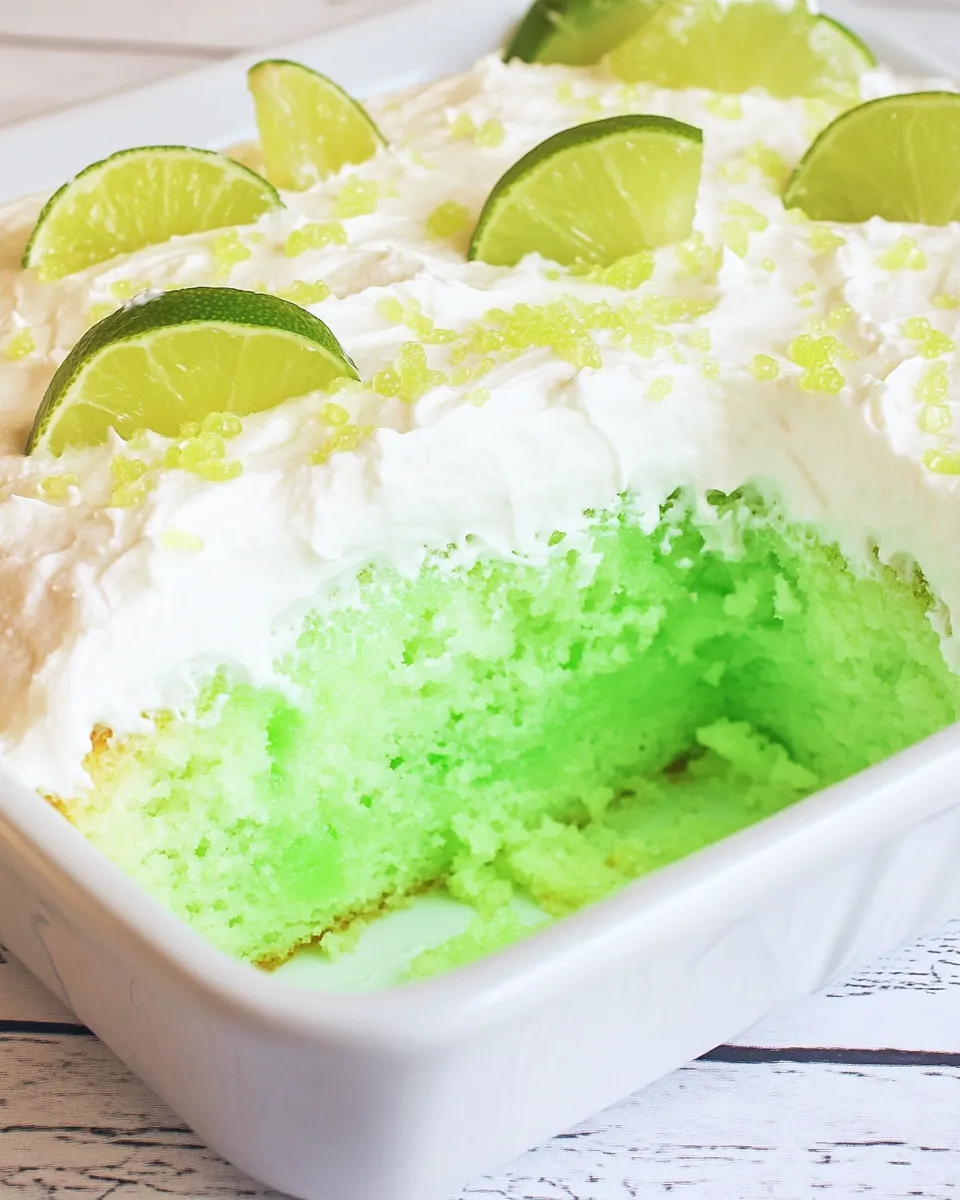
These steps move from preparing the cake through building a lush lime curd and finishing with a creamy topping. Follow each step patiently, and pay attention to temperatures and textures to ensure the best set and flavor. The directions below expand on sensory cues, reasons behind each technique, and troubleshooting tips so you can be confident at every stage.
- Once cake is baked and cooled completely, poke holes in the cake with a fork.: You will notice the cake has a firm but springy surface, and when you poke it the sound is a faint crumbly tap. The act of poking lets the jello syrup sink deep, creating flavored pockets instead of just sitting on top. Why this matters, the poke creates a moist interior and distributes lime flavor throughout. Avoid the common mistake of poking while the cake is still warm, which will cause the jello to run off and create uneven pockets.
- In a small bowl, add lime jello to boiling water and mix for 2 minutes. Stir in lime juice and mix well. Pour over cake.: Right away you will see the powder dissolve into a glossy, fragrant liquid, and a bright lime aroma will rise. Stirring for two minutes ensures every granule dissolves, preventing gritty texture. This step matters because undissolved jello will create unpleasant pockets and inconsistent set. Do not skip thorough stirring; if any grains remain, the soaked cake can end up with chewy bits.
- Refrigerate cake for 2 hours or until set. Overnight is fine.: As you add the lime juice , the mixture will fizz slightly and the citrus scent will intensify, hinting at the brightness to come. The acidity lifts the jello flavor and ensures the syrup is tangy rather than cloying. This blending step harmonizes fresh and processed lime flavors. A common mistake is adding juice too cold and shocking the syrup, so use room temperature juice when possible.
- Add egg yolks and eggs into a small bowl and whisk well. Set aside.: Pouring slowly lets the syrup seep into the fork holes and spread evenly, and you should hear a soft slurping sound as it disappears into the crumb. Visually, the cake darkens where the syrup is absorbed, showing success. This technique ensures even flavor distribution throughout the cake. Avoid pouring all in one spot, which leads to puddling and uneven saturation.
- Add sugar, lime juice, zest and cornstarch to a saucepan. Heat over medium low heat, whisking constantly until boiling.: Cooling chills and firms the jello layer, and you will feel a cool, gelatinous texture when gently touched after two hours. Chilling is essential to let flavors marry and stabilize the texture. If you rush this, the filling will be loose when slicing, so plan ahead rather than slicing too early.
- Continue to boil, and constantly whisk and boil for 4 minutes. Mixture will bubble and double in size.: Letting the cake sit overnight intensifies the lime flavor as it melds into the crumb, and the texture becomes pleasantly cohesive. This slow rest also makes slicing cleaner. Don’t worry about extended chilling; it enhances structure. A mistake is leaving it uncovered, which can dry the top, so cover it well when refrigerating overnight.
- Reduce from heat and slowly drizzle and whisk the eggs into the sugar mixture.: Whisking creates a smooth, pale mixture with a slightly viscous sheen, and it primes the eggs for tempering into hot liquid without scrambling. This step is crucial for silky curd texture. Avoid under-whisking which can lead to uneven cooking and lumps once added to hot ingredients.
- Continue to heat on medium low, stirring constantly for 10 minutes until mixture is thick and coats the spoon.: Letting the whisked eggs rest briefly reduces foam and helps you integrate them steadily when tempering. This small pause makes the tempering process calmer and more controlled. A common oversight is rushing to add cold eggs which risks curdling; room temperature eggs temper more predictably.
- Remove from heat and stir in butter and food coloring. Go dark on the green food coloring because when you add the whipped topping, it will significantly lighten.: As the ingredients combine in the pan, the mixture looks glossy and grainy at first, then smooths as heat activates the cornstarch. The sugar dissolves and the zest of 1 lime releases fragrant oils that perfume the pan. This stage is where flavor intensity is built. A mistake to avoid is using too high heat which causes scorching and a bitter cooked sugar note.
- Let cool to room temperature before covering and refrigerating for 2 hours or overnight.: You will hear a steady, gentle bubbling start and smell bright citrus. Whisking keeps the mixture uniform and prevents lumps because the cornstarch needs even heat activation. The why is that even heating yields a smooth curd base. Avoid turning the heat too high, which can suddenly thicken or scorch the mixture.
- When ready to frost, mix the whipped topping and lime curd together and frost the cake.: During these minutes the mixture will bubble actively and increase in volume, looking lighter as steam incorporates. The texture should change from thin to noticeably thicker, and the bubbling helps cook the starch and concentrate flavors. This sustained simmer is what ensures the curd sets properly. A common misstep is reducing stirring here, which leads to hot spots and potential scorching.
- Top with additional lime zest and lime slices if desired.: You will visually see expansion and hear the rolling boil, and the scent becomes sweeter and more cooked. That size change signals the cornstarch is doing its job. This phenomenon assures you the curd is developing structure. If it does not bubble, your heat may be too low and the curd will remain runny later.
- Makes 24 pieces of key lime poke cake.: As you add the eggs in a slow stream, the mix will become glossy, and the whisk motion prevents hot spots that scramble eggs. This tempering is critical to create a smooth, cohesive curd. If you pour too quickly, you will notice small curdled bits forming, which means the eggs cooked too fast.
- Continue to heat on medium low, stirring constantly for 10 minutes until mixture is thick and coats the spoon: You should see the curd cling to the utensil in a heavy ribbon, and the aroma shifts to a deeper, jammy citrus. This long, low simmer ensures complete thickening and pasteurization of the eggs. The why is textural stability and safety. Avoid upping the heat, which can break the emulsion or cause graininess.
- Remove from heat and stir in butter and food coloring: Off heat, the butter melts smoothly into the curd, giving it a shiny, velvety finish, and the green food coloring deepens the hue. Emulsifying the butter in off heat prevents separation and keeps the curd glossy. A common pitfall is adding cold butter straight from the fridge which can create lumps.
- Go dark on the green food coloring because when you add the whipped topping, it will significantly lighten: The curd will look almost neon depending on how much color you add, and that boldness ensures the finished cake still reads lime green. This visual trick matters for presentation. Overdoing color can look artificial, so adjust with small drops and mix thoroughly.
- Let cool to room temperature before covering and refrigerating for 2 hours or overnight: Cooling to room temperature avoids condensation in the container and prevents the whipped topping from melting when combined. As it cools, the curd texture firms and becomes scoopable. Do not rush to chill while hot, as trapped steam can water down the curd.
- When ready to frost, mix the whipped topping and lime curd together and frost the cake: The combined mixture creates a pillowy, slightly tart frosting that spreads easily; you should smell bright lime and feel a smooth, airy texture under your spatula. This step softens the curd so it complements the cake rather than overpowering it. A mistake is spreading while the curd is too cold, which can tear the cake surface.
- Top with additional lime zest and lime slices if desired: The final garnish adds aromatic oils and a fresh look; the zest gives tiny bursts of flavor, while thin lime slices make it festive. This step finishes the cake with freshness and visual appeal. Avoid placing heavy slices that will slide off; thin slices or wedges work best.
- Makes 24 pieces of key lime poke cake: When sliced, each portion should show layers of pale cake, green curd pockets, and creamy topping, offering a balance of texture and flavor. This yield is perfect for a crowd, and the cake holds well in the refrigerator for several days. Slicing too soon or with a dull knife can cause uneven pieces, so use a sharp, clean blade for best results.
Recipe Variations about Key Lime Jello Poke Cake
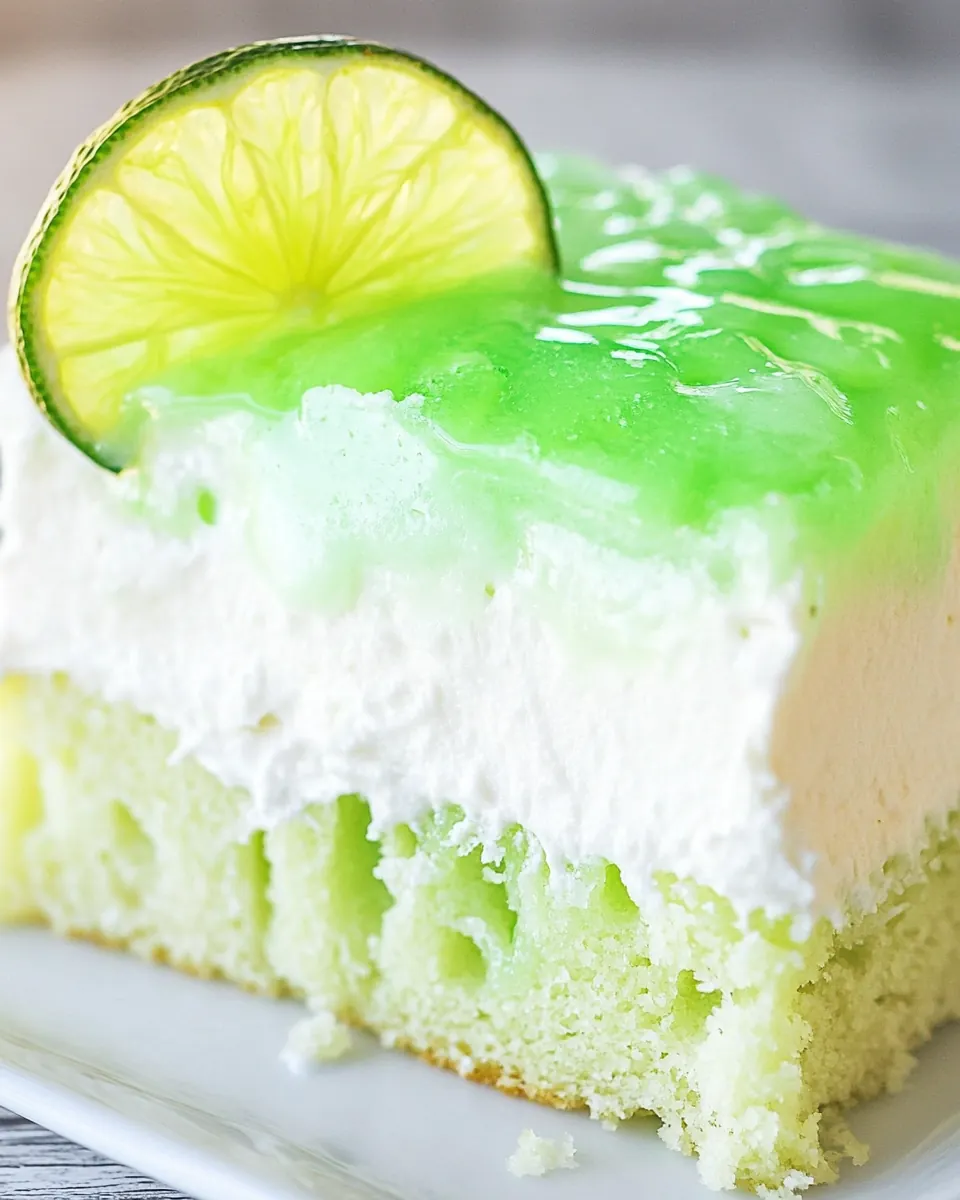
This cake is versatile enough for small twists that keep the spirit intact. Below are practical variations and ideas to tailor the recipe to your personal taste while staying true to the original components.
- Increase lime intensity by adding an extra tablespoon of lime juice to the curd if you prefer a tarter profile; adjust sugar slightly if needed to maintain balance.
- Make it visually bolder by using a few extra drops of green food coloring in the curd so the final frosted cake keeps a vibrant hue after mixing with the whipped topping.
- Prepare ahead by making the curd the day before and chilling it; this deepens flavor and lets you assemble the cake quickly on the day of serving.
- Use fresh lime juice wherever the recipe calls for lime juice, as bottled juice can have muted flavor and change the final brightness.
- Adjust sweetness by tasting the curd before cooling; if it seems too sweet for your palate, a touch more lime juice can brighten and balance it.
- Garnish strategically with just a sprinkle of zest of 1 lime before serving to preserve aroma without adding moisture from fruit slices.
Perfect Matches for Key Lime Jello Poke Cake
This cake pairs well with light accompaniments and fits many casual or festive occasions. Below are thoughtful serving suggestions and storage notes to help you present it well and make the most of each slice.
- Serve chilled for best texture and clean slices, ideal for summer gatherings or potlucks where you want a cool, refreshing dessert.
- Pair with fresh berries such as raspberries or strawberries for color contrast and a complementary tartness that echoes the lime.
- Bring to picnics and backyard barbecues, because this cake travels well if kept in a chilled cooler and slices into many portions for groups.
- Offer alongside coffee for an after-dinner treat where the bright lime notes cut through a rich cup and refresh the palate.
- Store in an airtight container in the refrigerator for up to three days; the cake holds its structure and flavor best when chilled and covered to avoid drying.
- Serve for holiday summer occasions such as family reunions or beach-themed parties where citrus-forward desserts feel on theme and celebratory.
FAQ
Conclusion
This Key Lime Jello Poke Cake stands out because it combines effortless technique with bright, bold lime flavor and a creamy finish. I encourage you to try it because it is forgiving, feeds a crowd easily, and offers a fresh citrus profile that feels both nostalgic and celebratory. Give it a go for your next summer gathering and enjoy how a few simple steps transform a boxed cake into something special and memorable.
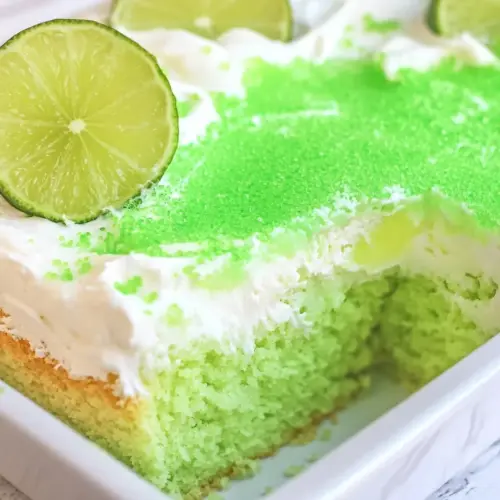
Key Lime Jello Poke Cake
Equipment
- Fork
- Small Bowl
- Saucepan
- Whisk
- Spatula
- Refrigerator
Ingredients
- 1 box yellow cake mix baked according to package directions and cooled completely Prepared by baking according to package directions and cooled completely, providing the cakey base that soaks up flavored gelatin and keeps the dessert moist. Adds structure and bulk to the poke cake, creating a tender crumb that contrasts the creamy topping. Serves as the foundation for integrating the lime jello and custard layers throughout the dessert.
- 1 small box 3.4 oz, lime jello Dissolved to impart concentrated lime flavor and vibrant color, creating the characteristic tartness of a key lime poke cake. Activates when mixed with boiling water, allowing the gelatin to seep into the cake holes for evenly distributed flavor pockets. Balances sweetness from the cake and whipped topping while delivering a classic citrus profile.
- 1 cup boiling water Poured over gelatin powder to dissolve it fully and activate the gelling agents, ensuring a smooth lime syrup that can be poured into the cake holes. Provides the heat needed to bloom the gelatin and integrate sugar or flavorings, enabling even absorption into the cake layers. Helps set the jello while preserving bright lime taste.
- 1/4 cup lime juice Added to adjust the lime concentration and tartness, enhancing the key lime flavor beyond what the jello powder provides. Balances sweetness and acidity in the custard or gelatin mixture, contributing fresh citrus brightness. Helps achieve an authentic key lime profile when combined with other lime components.
- 2 egg yolks Whisked into custard for richness and silkiness while providing structure and a subtle eggy flavor, helping the filling set without becoming rubbery. Contributes fat and emulsifying properties for a smooth texture in the cooked lime custard layer. Enhances mouthfeel and stability when combined with sugar and cornstarch.
- 1 cup white sugar Sweetens mixtures and balances the tartness of lime components while aiding caramelization if the custard is cooked briefly. Dissolves into the custard and gelatin mixtures to create a harmonious flavor profile between the cake and topping. Provides bulk sweetness that tempers acidity from lime juice and zest.
- 3/4 cup lime juice Measured to intensify fresh lime acidity and brightness, elevating the overall citrus profile of both the gelatin and custard elements. Adds natural flavor complexity and a sharper tang than jello alone, making the dessert taste more authentic. Helps cut through richness from whipped topping and butter.
- 2 eggs Beaten into batters or custards to contribute lift, structure, and richness, improving texture and binding the lime custard as it cooks. Adds volume and cohesion when combined with sugar and other dairy, helping the filling set smoothly. Enhances overall stability of the cake layers.
- 1/2 teaspoon cornstarch Used as a thickening agent in small quantities to stabilize and set the lime custard without altering flavor, creating a silky, spoonable filling. Dissolves into the custard mixture to prevent separation and ensure a smooth consistency after heating. Works with eggs and sugar to achieve desirable creaminess.
- 1/4 cup butter Melted into custard or combined with other ingredients to add richness and a velvety mouthfeel, contributing to a smooth, buttery custard layer. Enhances flavor depth and helps carry the lime notes throughout the cake. Adds tenderness and sheen when incorporated into warm mixtures.
- green food coloring Added sparingly to enhance visual appeal with a faint green hue, reinforcing the lime theme without impacting flavor significantly. Used to tint either the jello mixture or whipped topping to create an attractive, festive presentation. Ensures the cake looks lively and consistent with key lime expectations.
- zest of 1 lime Zested to deliver concentrated aromatic oils that boost fresh lime scent and flavor, intensifying the citrus character of both custard and topping. Provides bright, zippy notes that complement the tartness of lime juice and the sweetness of sugar. Adds a subtle texture contrast and garnish-worthy freshness when sprinkled on top.
- 1 container 8 ounces, whipped topping, thawed Spread over the cooled, gelled cake to create a light, airy finish that contrasts the denser cake and custard layers. Stabilized and sweetened, it adds creaminess and helps mellow the tart lime flavors while providing a visually appealing topping. Whips holds shape and contributes a smooth, cool mouthfeel to each bite.
Instructions
- Once cake is baked and cooled completely, poke holes in the cake with a fork.: You will notice the cake has a firm but springy surface, and when you poke it the sound is a faint crumbly tap. The act of poking lets the jello syrup sink deep, creating flavored pockets instead of just sitting on top. Why this matters, the poke creates a moist interior and distributes lime flavor throughout. Avoid the common mistake of poking while the cake is still warm, which will cause the jello to run off and create uneven pockets.
- In a small bowl, add lime jello to boiling water and mix for 2 minutes. Stir in lime juice and mix well. Pour over cake.: Right away you will see the powder dissolve into a glossy, fragrant liquid, and a bright lime aroma will rise. Stirring for two minutes ensures every granule dissolves, preventing gritty texture. This step matters because undissolved jello will create unpleasant pockets and inconsistent set. Do not skip thorough stirring; if any grains remain, the soaked cake can end up with chewy bits.
- Refrigerate cake for 2 hours or until set. Overnight is fine.: As you add the lime juice , the mixture will fizz slightly and the citrus scent will intensify, hinting at the brightness to come. The acidity lifts the jello flavor and ensures the syrup is tangy rather than cloying. This blending step harmonizes fresh and processed lime flavors. A common mistake is adding juice too cold and shocking the syrup, so use room temperature juice when possible.
- Add egg yolks and eggs into a small bowl and whisk well. Set aside.: Pouring slowly lets the syrup seep into the fork holes and spread evenly, and you should hear a soft slurping sound as it disappears into the crumb. Visually, the cake darkens where the syrup is absorbed, showing success. This technique ensures even flavor distribution throughout the cake. Avoid pouring all in one spot, which leads to puddling and uneven saturation.
- Add sugar, lime juice, zest and cornstarch to a saucepan. Heat over medium low heat, whisking constantly until boiling.: Cooling chills and firms the jello layer, and you will feel a cool, gelatinous texture when gently touched after two hours. Chilling is essential to let flavors marry and stabilize the texture. If you rush this, the filling will be loose when slicing, so plan ahead rather than slicing too early.
- Continue to boil, and constantly whisk and boil for 4 minutes. Mixture will bubble and double in size.: Letting the cake sit overnight intensifies the lime flavor as it melds into the crumb, and the texture becomes pleasantly cohesive. This slow rest also makes slicing cleaner. Don’t worry about extended chilling; it enhances structure. A mistake is leaving it uncovered, which can dry the top, so cover it well when refrigerating overnight.
- Reduce from heat and slowly drizzle and whisk the eggs into the sugar mixture.: Whisking creates a smooth, pale mixture with a slightly viscous sheen, and it primes the eggs for tempering into hot liquid without scrambling. This step is crucial for silky curd texture. Avoid under-whisking which can lead to uneven cooking and lumps once added to hot ingredients.
- Continue to heat on medium low, stirring constantly for 10 minutes until mixture is thick and coats the spoon.: Letting the whisked eggs rest briefly reduces foam and helps you integrate them steadily when tempering. This small pause makes the tempering process calmer and more controlled. A common oversight is rushing to add cold eggs which risks curdling; room temperature eggs temper more predictably.
- Remove from heat and stir in butter and food coloring. Go dark on the green food coloring because when you add the whipped topping, it will significantly lighten.: As the ingredients combine in the pan, the mixture looks glossy and grainy at first, then smooths as heat activates the cornstarch. The sugar dissolves and the zest of 1 lime releases fragrant oils that perfume the pan. This stage is where flavor intensity is built. A mistake to avoid is using too high heat which causes scorching and a bitter cooked sugar note.
- Let cool to room temperature before covering and refrigerating for 2 hours or overnight.: You will hear a steady, gentle bubbling start and smell bright citrus. Whisking keeps the mixture uniform and prevents lumps because the cornstarch needs even heat activation. The why is that even heating yields a smooth curd base. Avoid turning the heat too high, which can suddenly thicken or scorch the mixture.
- When ready to frost, mix the whipped topping and lime curd together and frost the cake.: During these minutes the mixture will bubble actively and increase in volume, looking lighter as steam incorporates. The texture should change from thin to noticeably thicker, and the bubbling helps cook the starch and concentrate flavors. This sustained simmer is what ensures the curd sets properly. A common misstep is reducing stirring here, which leads to hot spots and potential scorching.
- Top with additional lime zest and lime slices if desired.: You will visually see expansion and hear the rolling boil, and the scent becomes sweeter and more cooked. That size change signals the cornstarch is doing its job. This phenomenon assures you the curd is developing structure. If it does not bubble, your heat may be too low and the curd will remain runny later.
- Makes 24 pieces of key lime poke cake.: As you add the eggs in a slow stream, the mix will become glossy, and the whisk motion prevents hot spots that scramble eggs. This tempering is critical to create a smooth, cohesive curd. If you pour too quickly, you will notice small curdled bits forming, which means the eggs cooked too fast.
- Continue to heat on medium low, stirring constantly for 10 minutes until mixture is thick and coats the spoon: You should see the curd cling to the utensil in a heavy ribbon, and the aroma shifts to a deeper, jammy citrus. This long, low simmer ensures complete thickening and pasteurization of the eggs. The why is textural stability and safety. Avoid upping the heat, which can break the emulsion or cause graininess.
- Remove from heat and stir in butter and food coloring: Off heat, the butter melts smoothly into the curd, giving it a shiny, velvety finish, and the green food coloring deepens the hue. Emulsifying the butter in off heat prevents separation and keeps the curd glossy. A common pitfall is adding cold butter straight from the fridge which can create lumps.
- Go dark on the green food coloring because when you add the whipped topping, it will significantly lighten: The curd will look almost neon depending on how much color you add, and that boldness ensures the finished cake still reads lime green. This visual trick matters for presentation. Overdoing color can look artificial, so adjust with small drops and mix thoroughly.
- Let cool to room temperature before covering and refrigerating for 2 hours or overnight: Cooling to room temperature avoids condensation in the container and prevents the whipped topping from melting when combined. As it cools, the curd texture firms and becomes scoopable. Do not rush to chill while hot, as trapped steam can water down the curd.
- When ready to frost, mix the whipped topping and lime curd together and frost the cake: The combined mixture creates a pillowy, slightly tart frosting that spreads easily; you should smell bright lime and feel a smooth, airy texture under your spatula. This step softens the curd so it complements the cake rather than overpowering it. A mistake is spreading while the curd is too cold, which can tear the cake surface.
- Top with additional lime zest and lime slices if desired: The final garnish adds aromatic oils and a fresh look; the zest gives tiny bursts of flavor, while thin lime slices make it festive. This step finishes the cake with freshness and visual appeal. Avoid placing heavy slices that will slide off; thin slices or wedges work best.
- Makes 24 pieces of key lime poke cake: When sliced, each portion should show layers of pale cake, green curd pockets, and creamy topping, offering a balance of texture and flavor. This yield is perfect for a crowd, and the cake holds well in the refrigerator for several days. Slicing too soon or with a dull knife can cause uneven pieces, so use a sharp, clean blade for best results.
Notes
- Increase lime intensity by adding an extra tablespoon of lime juice to the curd if you prefer a tarter profile; adjust sugar slightly if needed to maintain balance.
- Make it visually bolder by using a few extra drops of green food coloring in the curd so the final frosted cake keeps a vibrant hue after mixing with the whipped topping.
- Prepare ahead by making the curd the day before and chilling it; this deepens flavor and lets you assemble the cake quickly on the day of serving.
- Use fresh lime juice wherever the recipe calls for lime juice, as bottled juice can have muted flavor and change the final brightness.
- Adjust sweetness by tasting the curd before cooling; if it seems too sweet for your palate, a touch more lime juice can brighten and balance it.
- Garnish strategically with just a sprinkle of zest of 1 lime before serving to preserve aroma without adding moisture from fruit slices.
