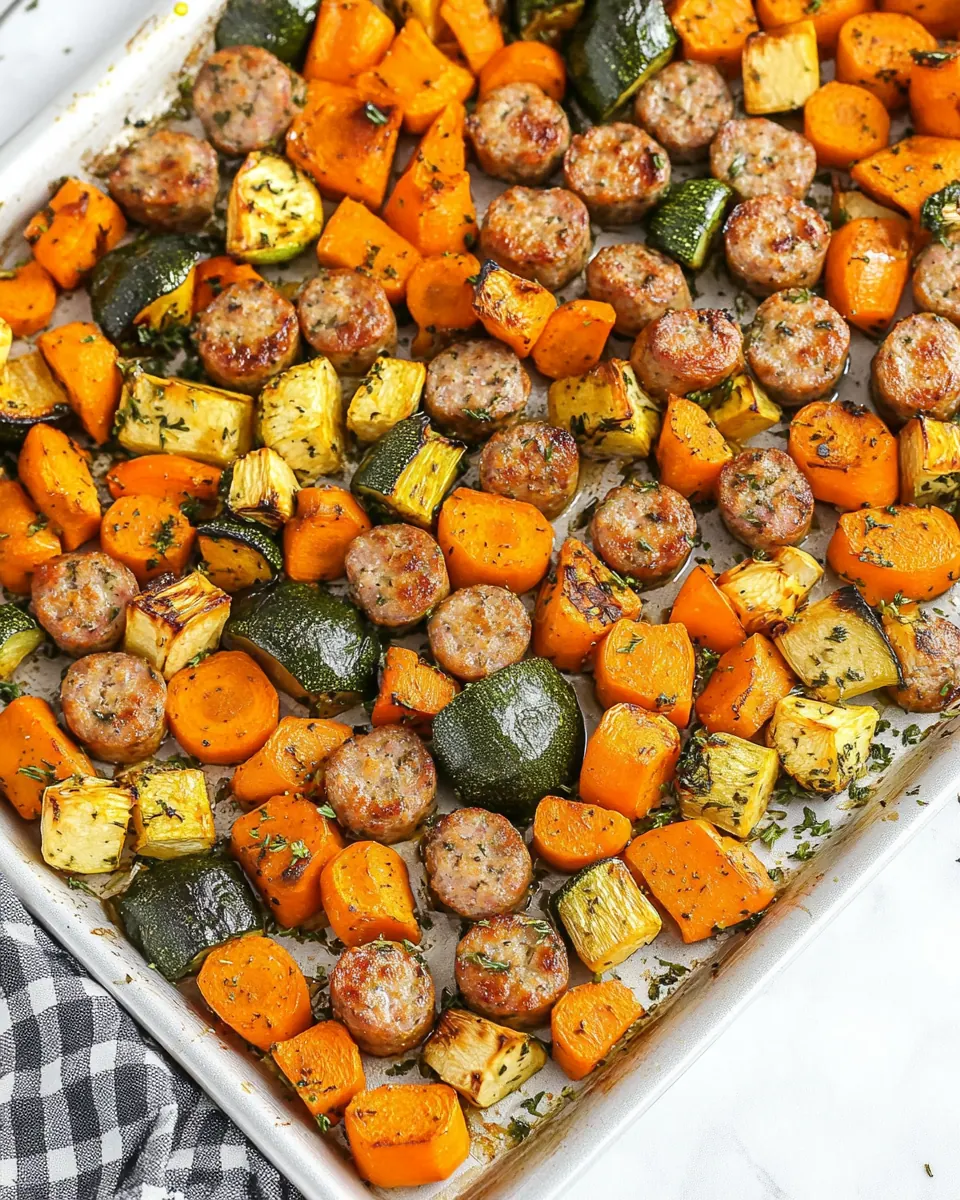
Harvest Sheet Pan Sausage and Veggies
Harvest Sheet Pan Sausage and Veggies is one of those honest, kitchen table meals I reach for when I want comfort without fuss. The first time I made it I was juggling a work call, a toddler’s snack requests, and a suddenly empty fridge, and this sheet pan dinner felt like a small miracle that brought everyone back to the table. The aroma of roasting butternut squash and brussels sprouts with hints of sage and rosemary filled the house and somehow turned a hectic evening into a cozy harvest moment.
Each bite lands somewhere between sweet and savory, the kind of food that makes you slow down and smile. I remember cutting the honeycrisp apples and thinking a simple fruit could transform the whole tray, caramelizing at the edges while keeping a tender interior. The sliced apple chicken sausage gets a little crisp on the outside, offering a pleasing snap against the roasted vegetables, and the maple dijon glaze ties everything together in a way that feels both rustic and thoughtful.
Over the seasons I started treating this as my go to for casual guests, quick Sunday dinners, and even a humble Thanksgiving side when I wanted something effortless but seasonal. I love how forgiving the recipe is, and how it rewards small adjustments like adding more herbs or swapping the apple type based on what looks best at the market. If you savor warm, layered flavors and easy clean up, Harvest Sheet Pan Sausage and Veggies might just become your weekday hero too.
Recipe Snapshot
45 mins
15 mins
30 mins
Medium
350 kcal
American
Gluten-Free, Paleo
Dinner
Baking Sheet, Mixing Bowl, Spatula
What We Adore About This Harvest Sheet Pan Sausage and Veggies
Roasted Fall Flavors in One Pan
I adore how Harvest Sheet Pan Sausage and Veggies concentrates autumn in a single tray. The butternut squash softens and caramelizes, the honeycrisp apples offer bright, juicy pockets, and the brussels sprouts develop those crisp, charred edges I love. You get contrast without extra effort, and that balance makes this dish feel both homey and elevated.
Minimal Fuss, Maximum Reward
What hooks me is the ease. I can chop, toss with a simple maple mustard glaze, and let the oven do the heavy lifting. The timing is forgiving, so I can step away to answer emails or set the table. When life is busy, this tray supper gives me the satisfaction of a full flavored meal with a tiny time investment.
Flexible for Any Crowd
I often scale this up or down. The ingredient set reads like a template rather than a strict rule, so I happily double it for company or reduce portions for a cozy night in. The way the flavors concentrate while roasting means leftovers still sing the next day, which is perfect for quick lunches or reheated dinners.
Herbs and Sweetness That Make Sense
The trio of fresh sage, thyme, and rosemary brightens the rich roasted notes, and the maple syrup with dijon mustard introduces a mellow sweet tang that glues everything together. I appreciate recipes where each component has a clear job, and here every ingredient pulls its weight to create a cohesive plate.
Comfort Without Guilt
This dish feels satisfying and balanced. The combination of protein and vegetables makes it wholesome, and because everything cooks on one pan, cleanup is a breeze. For busy weeknights or relaxed gatherings, Harvest Sheet Pan Sausage and Veggies is a dependable option I turn to again and again.
What You’ll Need for Harvest Sheet Pan Sausage and Veggies
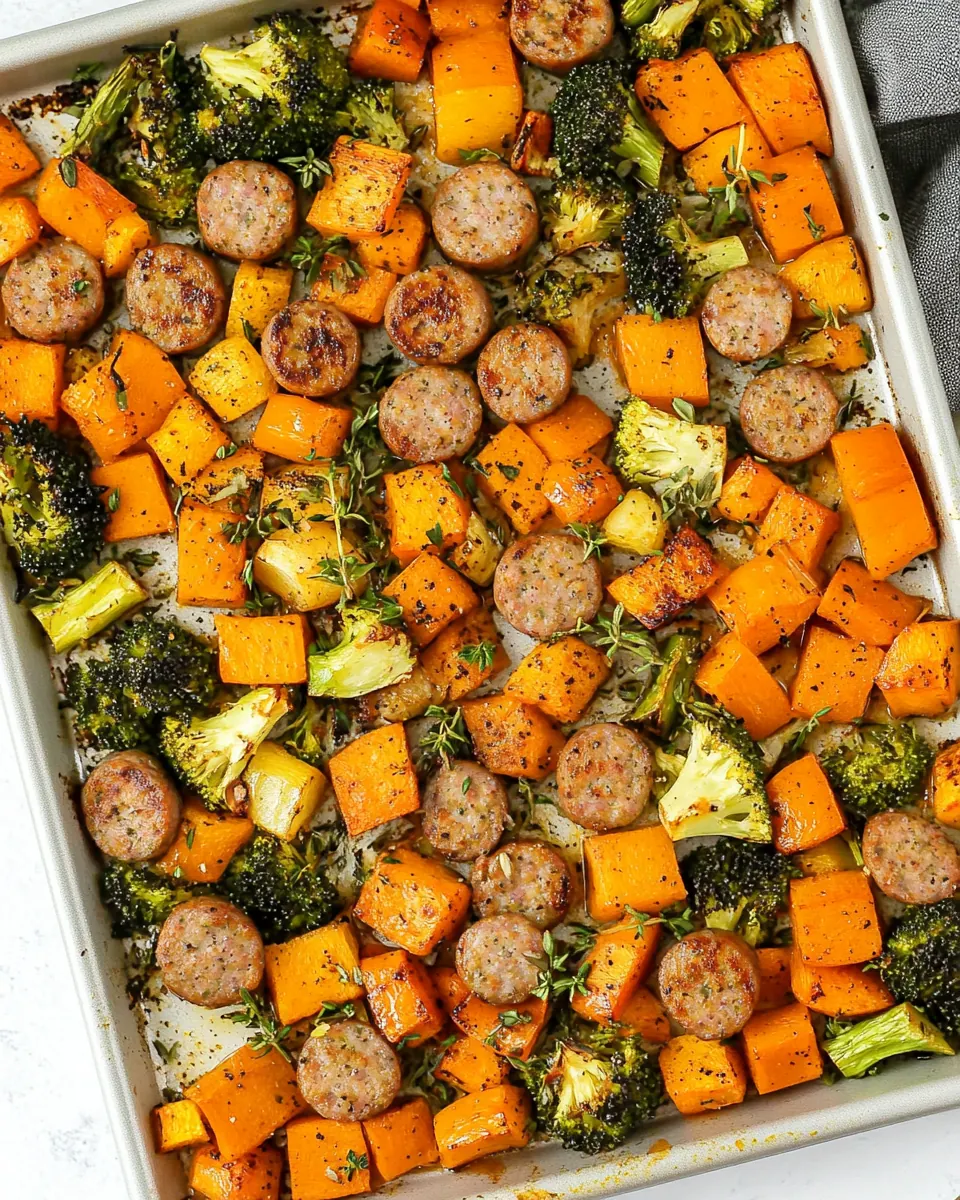
These ingredients are about harmony rather than complexity. The star players are the meaty, savory apple chicken sausage, the sweet and nutty butternut squash, and the crisp, earthy brussels sprouts. The honeycrisp apples add bright sweetness, while the simple glaze made from olive oil, maple syrup, and dijon mustard brings a glossy finish and sticky seasoning that helps herbs and spices cling as everything roasts.
- 12 oz apple chicken sausage, sliced into coins: Sliced into coins and cooked until browned, adds savory, juicy protein and a slightly sweet apple flavor that complements the vegetables; provides hearty texture and umami to the sheet pan ensemble. Carries fat and seasoning into the pan, helping to flavor surrounding squash and sprouts as it roasts.
- 2 cups butternut squash, peeled and cut into 1/2-inch cubes: Peeled and cut into 1/2-inch cubes, offers a tender, sweet and earthy base that roasts to caramelized edges; contributes bulk, color, and seasonal flavor to the dish. Holds up well to high heat and absorbs glaze and seasonings while providing a satisfying contrast to the sausage.
- 2 cups brussels sprouts, trimmed and halved: Trimmed and halved, contribute a crisp-tender bite that crisps at the cut edge and offers a slightly bitter, nutty counterpoint to sweeter components; they add visual interest and a hearty vegetable element. Roast until outer leaves caramelize to maximize flavor and texture.
- 2 honeycrisp apples, peeled and chopped: Peeled and chopped, bring juicy sweetness and slight tartness that balances savory sausage and roasted squash; softens and caramelizes during roasting to create pockets of bright flavor. Adds natural sugars that help form a glossy finish when combined with maple syrup.
- 2 tablespoons olive oil: Used to coat vegetables and sausage, creates a light, even layer that helps promote caramelization and prevents sticking; contributes a subtle fruity richness. Ensures seasonings and maple glaze adhere while enabling high-heat roasting.
- 3 tablespoons maple syrup: Brushed or drizzled over the pan, provides concentrated sweetness and helps create a sticky, caramelized glaze on sausage, apples, and squash; enhances autumnal flavors. Binds mustard and herbs into a cohesive glaze for roasting.
- 1 tablespoon dijon mustard: Whisked into the glaze, offers tangy, sharp flavor that balances the maple syrup's sweetness and brightens the overall profile; helps emulsify the sauce so it clings to ingredients. Cuts through richness and adds a subtle savory edge.
- 4 cloves garlic, minced: Minced and mixed into the glaze or tossed with the vegetables, adds pungent, aromatic depth and savory warmth that mellows with roasting; infuses the entire sheet pan with garlic flavor. Enhances umami and complements herbs and mustard.
- 1/2 teaspoon onion powder: Sprinkled over the mix, contributes concentrated savory-sweet onion flavor and helps round out the seasoning profile; dissolves into the glaze and vegetables during roasting. Adds background depth without adding moisture.
- 1/2 teaspoon each of salt + black pepper: Added to season, provides essential savory balance and a mild heat from the black pepper; enhances all other flavors and helps bring cohesion to the dish. Use measured amounts to avoid oversalting while ensuring full seasoning.
- 1 teaspoon each of fresh sage, fresh thyme and fresh rosemary, finely chopped: Finely chopped and combined, deliver fresh, bright herbal notes and aromatic complexity that elevate roasted components; each herb contributes piney, earthy, and slightly citrusy nuances. Scatter over before or after roasting to impart seasonal fragrance.
Recipe Steps for Harvest Sheet Pan Sausage and Veggies
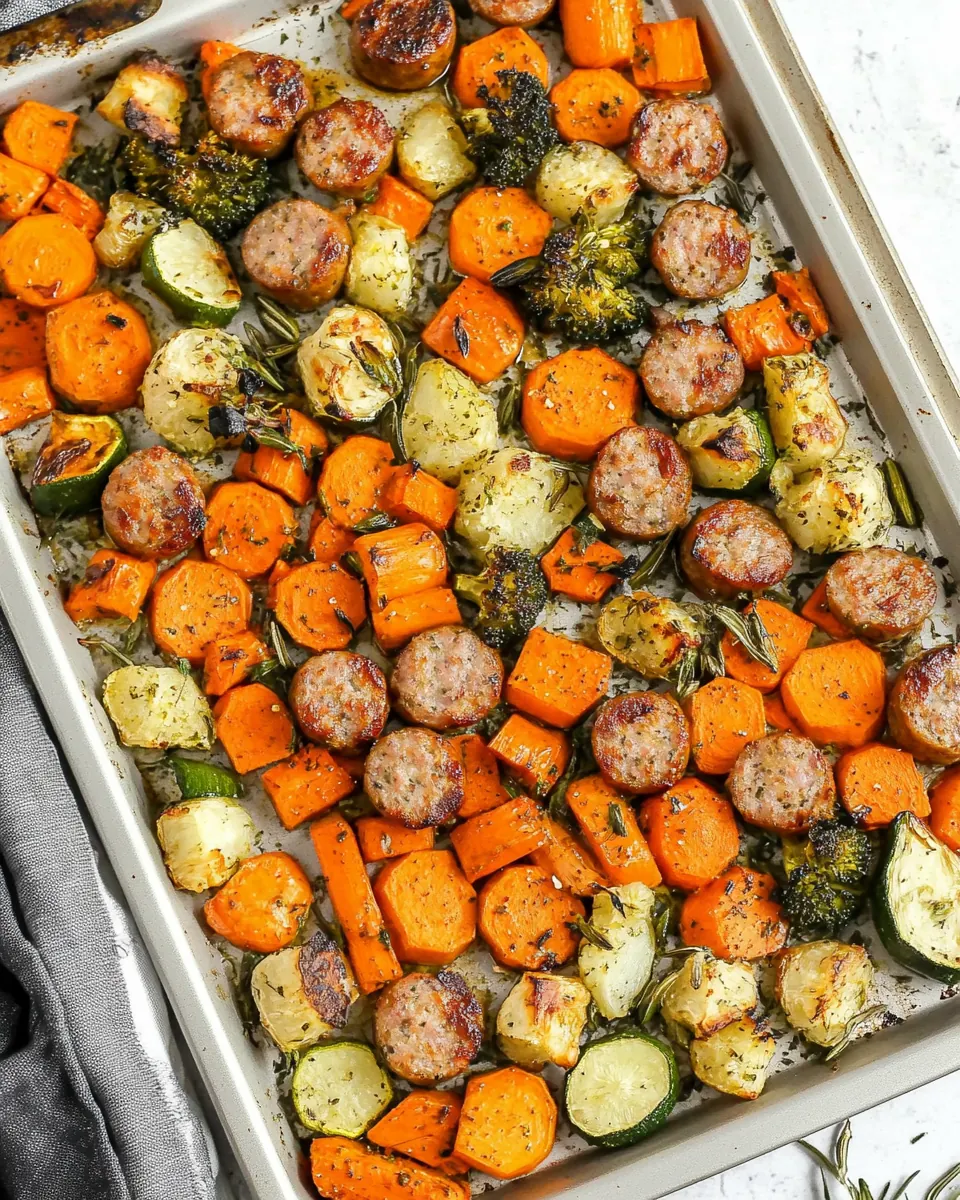
This recipe is straightforward, but the roasting technique and timing matter. I like to set up my tray station so everything is ready to go, and then I let the oven work. These steps expand the short directions into clear, sensory driven guidance so you feel confident at every turn.
- Preheat oven to 425 degrees F and peel/chop all veggies, apples and herbs and slice up sausage links.: When the oven reaches 425 degrees F you want a strong, dry heat so the edges of the butternut squash and brussels sprouts crisp while interiors become tender; you'll hear slight crackling as the tray hits the heat. Prepare uniform pieces to promote even caramelization, peel the squash carefully so it roasts to a creamy interior, and slice the apple chicken sausage into coins so they expose more surface to brown. One common mistake is uneven chopping, which leads to mixed doneness; take a few extra minutes to match sizes. Avoid crowding the pan which causes steaming rather than roasting, and line the sheet if you prefer easier cleanup.
- In a small bowl, whisk together the olive oil, maple syrup, dijon mustard, garlic and onion powder. Set the aside.: The glaze should look glossy and slightly viscous as the olive oil emulsifies with the maple syrup and dijon mustard , coating the minced garlic and onion powder so each piece picks up flavour. You should smell a bright, sweet tang with the mustard cutting through the syrup; this aroma is a good indicator that the components are balanced. A frequent error is under whisking, which leaves oil separated and causes uneven coating; whisk until smooth and homogeneous. If the glaze is too thick, a splash more oil will loosen it, but be mindful not to dilute the flavour.
- Spread out the chicken sausage, veggies and apples onto a large baking sheet (you can line the sheet with aluminum foil for easy clean up), drizzle with maple mustard glaze and sprinkle with fresh herbs, tossing everything together.: As you arrange the ingredients on the sheet, make sure there is space between pieces so hot air can circulate and surfaces brown; the pan should look like a single layer with colorful clusters. Drizzling the glaze creates shiny pockets that will caramelize, and tossing ensures the fresh sage , thyme , and rosemary stick to the food rather than burning in clumps. You will begin to sense the sweet maple scent as the syrup touches warm metal. A typical misstep is piling items; reduce crowding by using two pans if necessary. Also, avoid pouring glaze unevenly which can leave some pieces under seasoned and others overly sweet.
- Season with salt and pepper and roast in the oven for 30 minutes, tossing everything halfway through. Serve immediately and enjoy!: Once the tray is in the oven you'll see edges turn golden, the brussels sprouts will darken where their leaves kiss the pan, and the butternut squash will release a nutty perfume as its sugars caramelize; shifting the contents at the halfway point promotes even browning and prevents burning on hot spots. Use a sturdy spatula to turn pieces gently, listening for a soft sizzle as sticky bits recontact the metal, which is an excellent sign of caramel development. A common trap is opening the oven too often, which drops temperature and lengthens cook time; limit checks to the halfway toss and a final look. If you notice any pieces charring too quickly, rearrange them away from the edges or reduce the temperature slightly for the final minutes.
- Serve immediately and enjoy: The finished tray should present a mosaic of golden butternut squash , crisped brussels sprouts , browned apple chicken sausage coins, and glossy, slightly sticky honeycrisp apples . Serve right away so textures remain distinct, and breathe in the warm, herb infused scent that signals balance between sweet and savory. A common oversight is waiting too long to serve, which softens the crisp edges and mutes the contrast; plating promptly preserves the texture and the bright herb aroma. If you need to hold it briefly, warm the oven to low and keep the tray inside for a few minutes to maintain temperature without drying.
Recipe Variations about Harvest Sheet Pan Sausage and Veggies
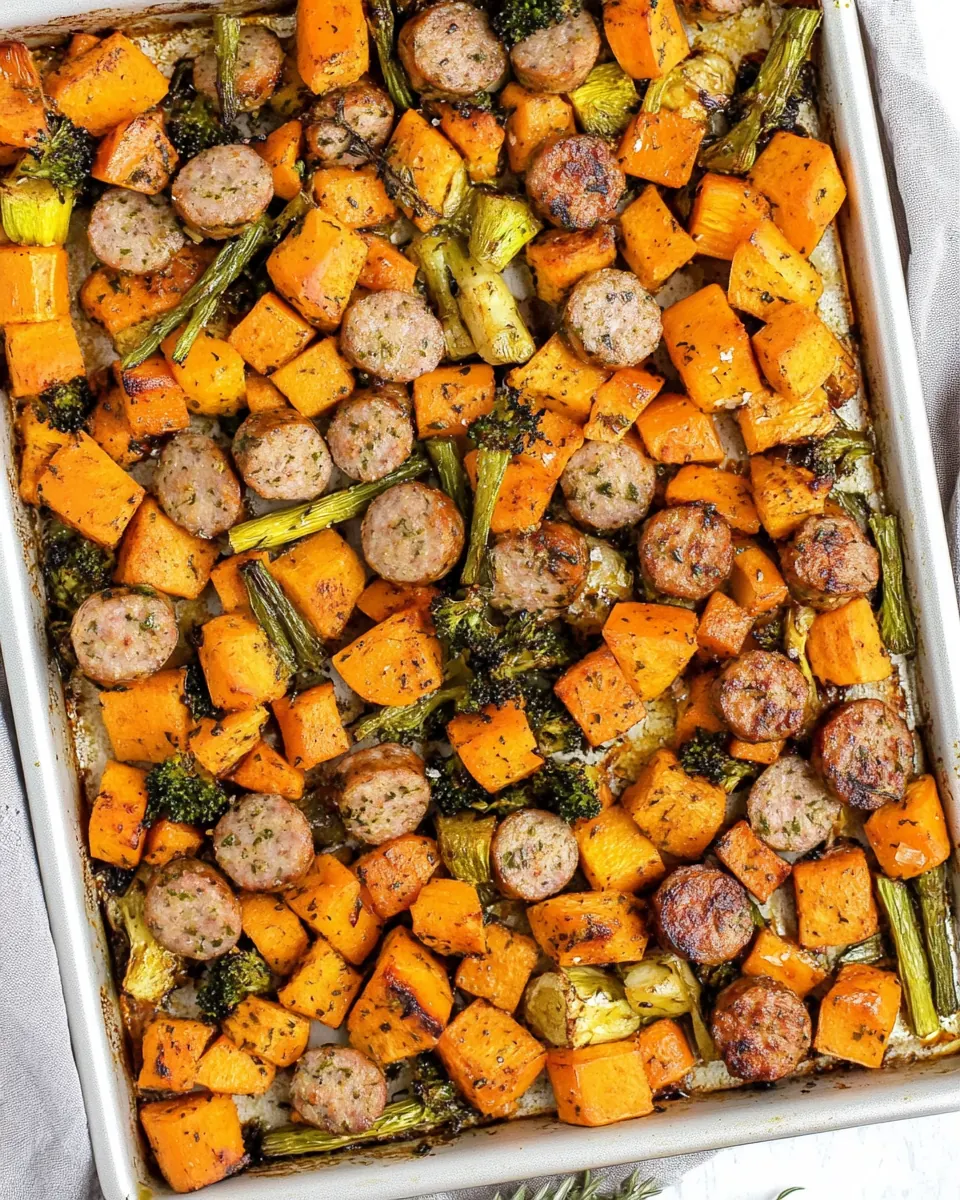
This tray roast is a friendly template for tweaks that suit pantry and season. Below are practical variations and adjustments to help you personalize the dish while keeping its core identity intact.
- Swap the sausage type by using a similar flavored poultry sausage if you prefer a leaner option, but keep the slicing thickness consistent so browning remains predictable.
- Mix the apples by combining honeycrisp with a tarter variety to balance sweetness and add more complex textures as they caramelize.
- Boost herb intensity by lightly toasting the sage, thyme, and rosemary in the pan for 30 seconds before chopping to release deeper aromas, then sprinkle over the tray.
- Make it sweeter by increasing the maple syrup by a tablespoon for more glossy caramelization, but reduce before broiling to avoid burning sugars.
- Add nuts at the end such as toasted walnuts or pecans for crunch, tossing them onto the warm tray right before serving to prevent sogginess.
- Use different squash like kabocha or acorn for a denser texture, adjusting roast time slightly to reach tenderness without over browning.
- Adjust seasoning by adding a pinch more onion powder or black pepper if you prefer bolder savory notes, but taste carefully since the glaze is already flavorful.
Great Combinations for Harvest Sheet Pan Sausage and Veggies
This recipe pairs well with a range of sides and occasions. Serve it simply when you want minimal fuss, or bring it to a holiday table as an approachable seasonal dish. The ideas below cover meals, storage, and seasonal pairing so you can match the mood of your event.
- Weeknight dinner: Serve the tray as the centerpiece with a simple green salad on the side for freshness, making it an easy and balanced evening meal.
- Casual lunch: Pack leftovers into a shallow container and reheat gently for a hearty midday plate that still carries roasted texture and flavor.
- Thanksgiving side: Use this as a colorful, less traditional side alongside classic dishes for a modern harvest addition to the holiday spread.
- Meal prep: Store cooled leftovers in airtight containers for up to three days, separating denser pieces from softer ones to maintain texture when reheating.
- Seasonal pairing: This tray sings in fall when butternut squash and honeycrisp apples are at their peak, making it ideal for autumn dinners and festive menus.
FAQ
Conclusion
This recipe shines because it combines sweet, savory, and herbaceous flavors in a single, effortless sheet pan. I encourage you to give it a try on a busy weeknight or as a low fuss addition to a holiday table. It rewards simple techniques with big flavor and fits easily into a seasonal meal rotation, making it a practical and delicious option you will return to often.
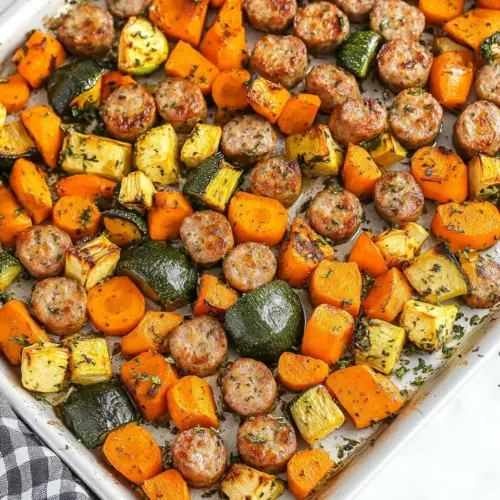
Harvest Sheet Pan Sausage and Veggies
Equipment
- Baking Sheet
- Mixing Bowl
- Spatula
Ingredients
- 12 oz apple chicken sausage, sliced into coins Sliced into coins and cooked until browned, adds savory, juicy protein and a slightly sweet apple flavor that complements the vegetables; provides hearty texture and umami to the sheet pan ensemble. Carries fat and seasoning into the pan, helping to flavor surrounding squash and sprouts as it roasts.
- 2 cups butternut squash, peeled and cut into 1/2-inch cubes Peeled and cut into 1/2-inch cubes, offers a tender, sweet and earthy base that roasts to caramelized edges; contributes bulk, color, and seasonal flavor to the dish. Holds up well to high heat and absorbs glaze and seasonings while providing a satisfying contrast to the sausage.
- 2 cups brussels sprouts, trimmed and halved Trimmed and halved, contribute a crisp-tender bite that crisps at the cut edge and offers a slightly bitter, nutty counterpoint to sweeter components; they add visual interest and a hearty vegetable element. Roast until outer leaves caramelize to maximize flavor and texture.
- 2 honeycrisp apples, peeled and chopped Peeled and chopped, bring juicy sweetness and slight tartness that balances savory sausage and roasted squash; softens and caramelizes during roasting to create pockets of bright flavor. Adds natural sugars that help form a glossy finish when combined with maple syrup.
- 2 tablespoons olive oil Used to coat vegetables and sausage, creates a light, even layer that helps promote caramelization and prevents sticking; contributes a subtle fruity richness. Ensures seasonings and maple glaze adhere while enabling high-heat roasting.
- 3 tablespoons maple syrup Brushed or drizzled over the pan, provides concentrated sweetness and helps create a sticky, caramelized glaze on sausage, apples, and squash; enhances autumnal flavors. Binds mustard and herbs into a cohesive glaze for roasting.
- 1 tablespoon dijon mustard Whisked into the glaze, offers tangy, sharp flavor that balances the maple syrup's sweetness and brightens the overall profile; helps emulsify the sauce so it clings to ingredients. Cuts through richness and adds a subtle savory edge.
- 4 cloves garlic, minced Minced and mixed into the glaze or tossed with the vegetables, adds pungent, aromatic depth and savory warmth that mellows with roasting; infuses the entire sheet pan with garlic flavor. Enhances umami and complements herbs and mustard.
- 1/2 teaspoon onion powder Sprinkled over the mix, contributes concentrated savory-sweet onion flavor and helps round out the seasoning profile; dissolves into the glaze and vegetables during roasting. Adds background depth without adding moisture.
- 1/2 teaspoon each of salt + black pepper Added to season, provides essential savory balance and a mild heat from the black pepper; enhances all other flavors and helps bring cohesion to the dish. Use measured amounts to avoid oversalting while ensuring full seasoning.
- 1 teaspoon each of fresh sage, fresh thyme and fresh rosemary, finely chopped Finely chopped and combined, deliver fresh, bright herbal notes and aromatic complexity that elevate roasted components; each herb contributes piney, earthy, and slightly citrusy nuances. Scatter over before or after roasting to impart seasonal fragrance.
Instructions
- Preheat oven to 425 degrees F and peel/chop all veggies, apples and herbs and slice up sausage links.: When the oven reaches 425 degrees F you want a strong, dry heat so the edges of the butternut squash and brussels sprouts crisp while interiors become tender; you'll hear slight crackling as the tray hits the heat. Prepare uniform pieces to promote even caramelization, peel the squash carefully so it roasts to a creamy interior, and slice the apple chicken sausage into coins so they expose more surface to brown. One common mistake is uneven chopping, which leads to mixed doneness; take a few extra minutes to match sizes. Avoid crowding the pan which causes steaming rather than roasting, and line the sheet if you prefer easier cleanup.
- In a small bowl, whisk together the olive oil, maple syrup, dijon mustard, garlic and onion powder. Set the aside.: The glaze should look glossy and slightly viscous as the olive oil emulsifies with the maple syrup and dijon mustard , coating the minced garlic and onion powder so each piece picks up flavour. You should smell a bright, sweet tang with the mustard cutting through the syrup; this aroma is a good indicator that the components are balanced. A frequent error is under whisking, which leaves oil separated and causes uneven coating; whisk until smooth and homogeneous. If the glaze is too thick, a splash more oil will loosen it, but be mindful not to dilute the flavour.
- Spread out the chicken sausage, veggies and apples onto a large baking sheet (you can line the sheet with aluminum foil for easy clean up), drizzle with maple mustard glaze and sprinkle with fresh herbs, tossing everything together.: As you arrange the ingredients on the sheet, make sure there is space between pieces so hot air can circulate and surfaces brown; the pan should look like a single layer with colorful clusters. Drizzling the glaze creates shiny pockets that will caramelize, and tossing ensures the fresh sage , thyme , and rosemary stick to the food rather than burning in clumps. You will begin to sense the sweet maple scent as the syrup touches warm metal. A typical misstep is piling items; reduce crowding by using two pans if necessary. Also, avoid pouring glaze unevenly which can leave some pieces under seasoned and others overly sweet.
- Season with salt and pepper and roast in the oven for 30 minutes, tossing everything halfway through. Serve immediately and enjoy!: Once the tray is in the oven you'll see edges turn golden, the brussels sprouts will darken where their leaves kiss the pan, and the butternut squash will release a nutty perfume as its sugars caramelize; shifting the contents at the halfway point promotes even browning and prevents burning on hot spots. Use a sturdy spatula to turn pieces gently, listening for a soft sizzle as sticky bits recontact the metal, which is an excellent sign of caramel development. A common trap is opening the oven too often, which drops temperature and lengthens cook time; limit checks to the halfway toss and a final look. If you notice any pieces charring too quickly, rearrange them away from the edges or reduce the temperature slightly for the final minutes.
- Serve immediately and enjoy: The finished tray should present a mosaic of golden butternut squash , crisped brussels sprouts , browned apple chicken sausage coins, and glossy, slightly sticky honeycrisp apples . Serve right away so textures remain distinct, and breathe in the warm, herb infused scent that signals balance between sweet and savory. A common oversight is waiting too long to serve, which softens the crisp edges and mutes the contrast; plating promptly preserves the texture and the bright herb aroma. If you need to hold it briefly, warm the oven to low and keep the tray inside for a few minutes to maintain temperature without drying.
Notes
- Swap the sausage type by using a similar flavored poultry sausage if you prefer a leaner option, but keep the slicing thickness consistent so browning remains predictable.
- Mix the apples by combining honeycrisp with a tarter variety to balance sweetness and add more complex textures as they caramelize.
- Boost herb intensity by lightly toasting the sage, thyme, and rosemary in the pan for 30 seconds before chopping to release deeper aromas, then sprinkle over the tray.
- Make it sweeter by increasing the maple syrup by a tablespoon for more glossy caramelization, but reduce before broiling to avoid burning sugars.
- Add nuts at the end such as toasted walnuts or pecans for crunch, tossing them onto the warm tray right before serving to prevent sogginess.
- Use different squash like kabocha or acorn for a denser texture, adjusting roast time slightly to reach tenderness without over browning.
- Adjust seasoning by adding a pinch more onion powder or black pepper if you prefer bolder savory notes, but taste carefully since the glaze is already flavorful.