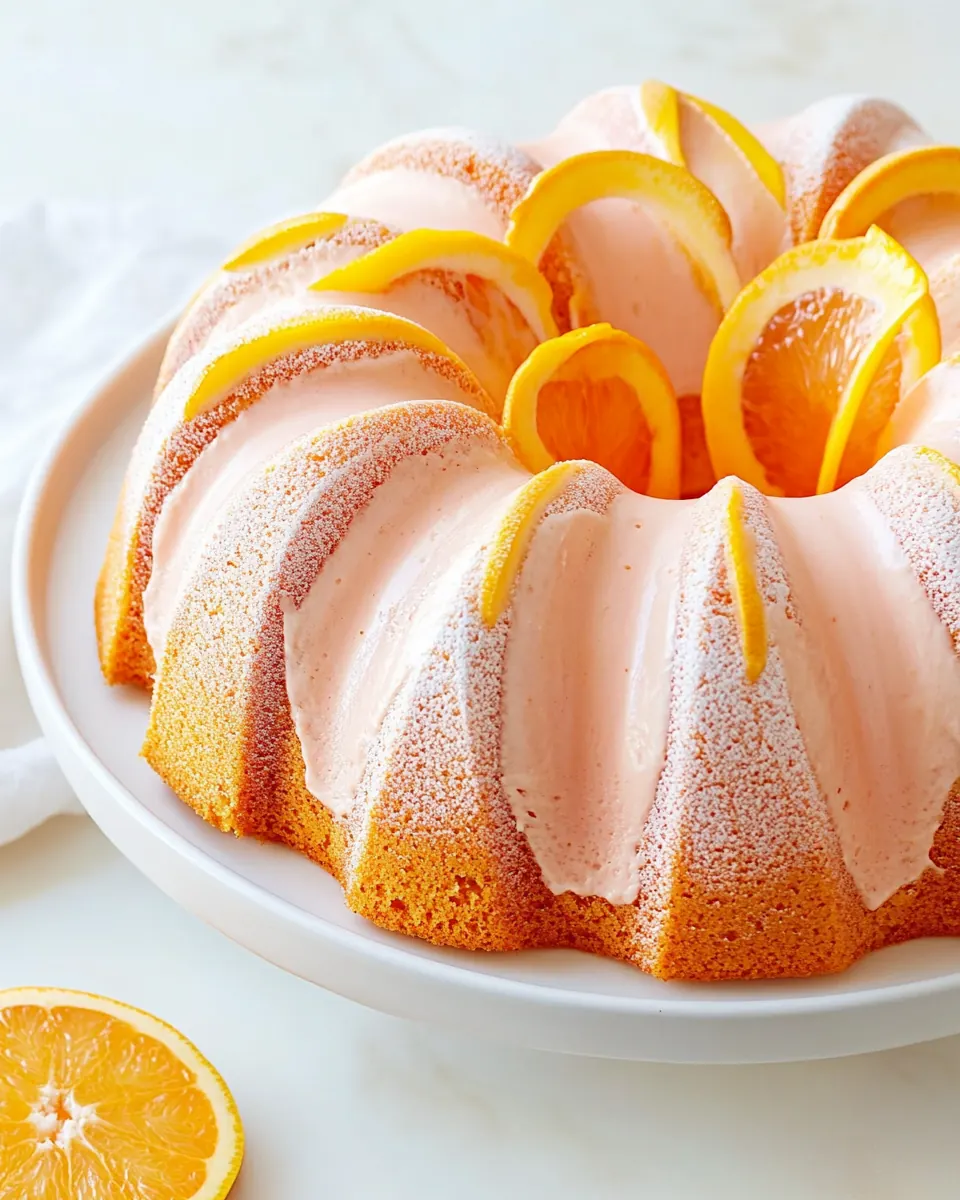
Grapefruit Olive Oil Bundt Cake
Grapefruit Olive Oil Bundt Cake is one of those recipes I reach for when I want a cake that feels bright but not fussy. The very first time I made this cake, a grapefruit tree was overflowing with fruit and I was determined to use every last juicy segment. I remember the kitchen smelling like citrus oil as I zested and juiced, and the texture surprised me: tender crumb from the Greek yogurt and a silkiness from the extra virgin olive oil that made each slice feel almost luxurious. It quickly became my go to when friends came by, because it slices beautifully and keeps well, which is such a relief when entertaining.
That day I learned a few lessons about patience and timing. The grapefruit cordial needs time to steep so the sugar draws out every fragrant note from the zest, and brushing the warm cake with that cordial is the trick that gives the loaf a concentrated citrus hit without making it soggy. I like to sip coffee while the cake cools and watch the glaze slowly set, a little ritual that turns baking into a quiet celebration. Over the seasons this has become my signature for spring gatherings, yet I’ll happily make it whenever I need something bright and comforting on the table.
Recipe Snapshot
1 hr 30 mins
30 mins
60 mins
Medium
350 kcal
American
Gluten-Free, Low FODMAP
Desserts
Bundt pan, Mixing bowls, Whisk, Spatula, Fine mesh sieve, Wire rack, Pastry brush
Why You Need This Grapefruit Olive Oil Bundt Cake
Bright, nuanced citrus flavor
I adore how Grapefruit Olive Oil Bundt Cake balances sharp grapefruit tang with mellow olive oil richness. The cordial concentrates the fruit so every bite delivers lift without cloying sweetness. I often find myself smelling the cake before slicing, and that aroma alone convinces me this is worth making.
Moist, tender crumb from yogurt and oil
Because this cake uses both Greek yogurt and extra virgin olive oil, the crumb stays tender days after baking. I love that texture, it’s the same kind of comforting density I want with a cup of tea. From my experience, the yogurt keeps the cake springy while the oil gives it a silky mouthfeel.
Simple pantry ingredients with a gourmet twist
Most of the ingredients are staples like all purpose flour, granulated sugar, and eggs, yet the method and the grapefruit cordial lift it into something special. I appreciate how approachable the recipe is, I can make it on a weekday and it still feels celebratory.
Make ahead friendly
I often make the cordial and the cake a day ahead, which lets the flavors settle and saves time on the day of serving. When I’ve wrapped a cooled cake and refrigerated it overnight, the glaze sets beautifully and slices cleanly. For busy hosts this flexibility is a lifesaver.
Visually striking yet unfussy
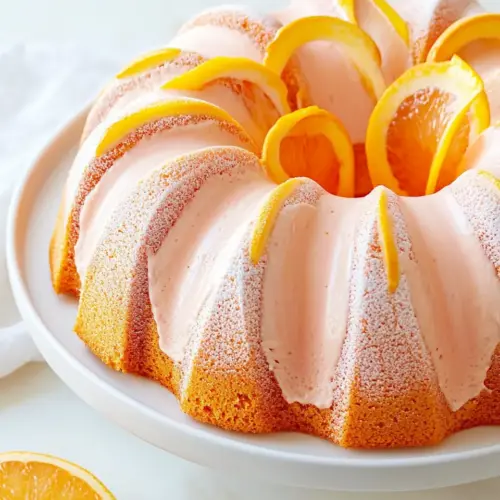
The bundt shape makes Grapefruit Olive Oil Bundt Cake look special with almost no effort. I enjoy the ritual of brushing cordial, drizzling glaze, and watching it pool in the pan below. It makes a simple loaf feel like the centerpiece at tea, brunch, or a spring celebration.
Ingredients Required for Grapefruit Olive Oil Bundt Cake
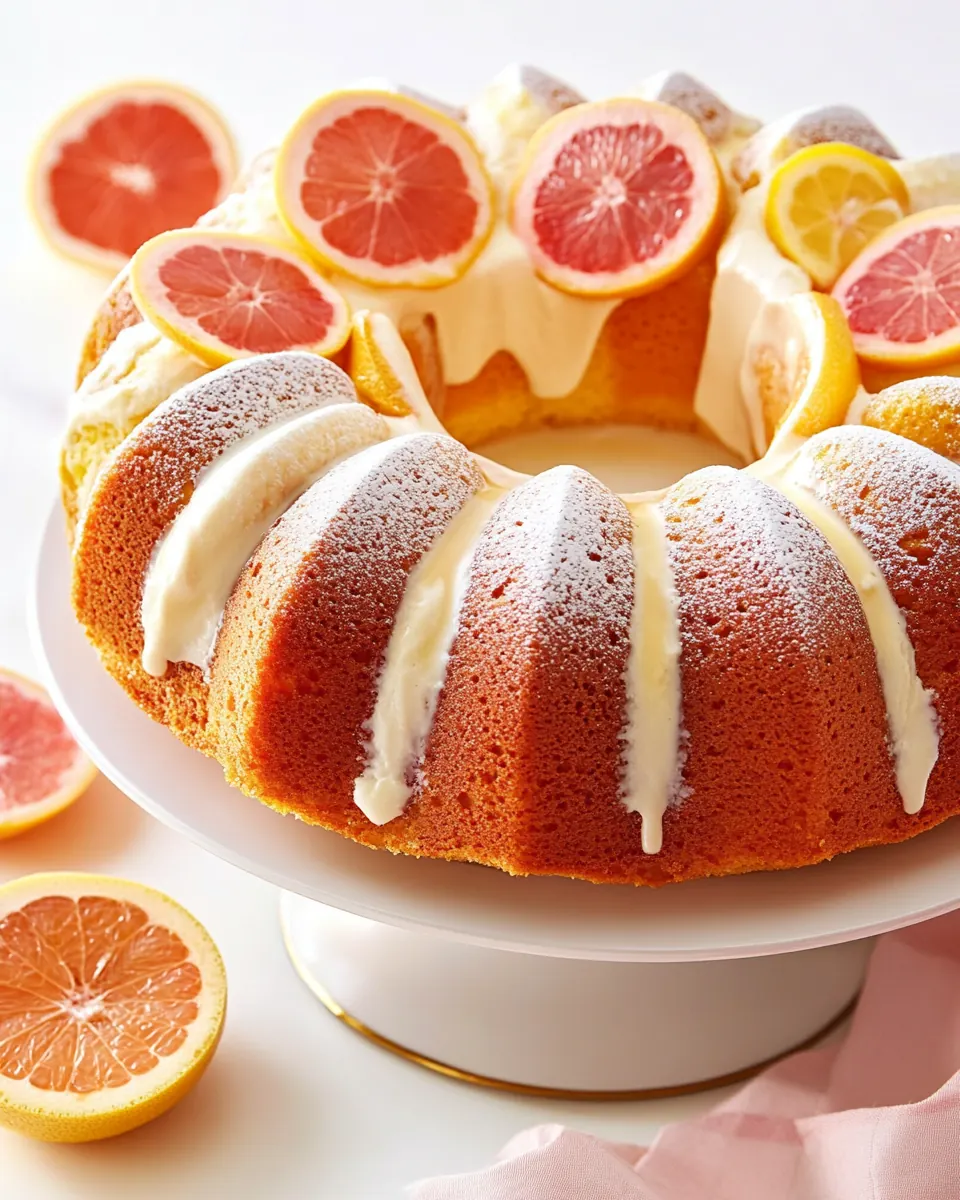
These ingredients work together to create a cake that is bright, tender, and balanced. The citrus elements provide aroma and acidity, the flours form the structure, and the dairy and oil keep the crumb moist. The sugar and zest pairing is a small but powerful technique to release essential oils, while the cordial concentrates flavor for brushing and glazing. Think of the key players as flavor, structure, and moisture, each doing a clear job so the final cake sings.
- 1/2 cup 120 g freshly squeezed grapefruit juice, from 1 large grapefruit: Provide bright, acidic flavor and moisture; freshly squeezed grapefruit juice adds tang and helps balance sweetness while contributing to the cake’s tender crumb through added liquid.
- 1/2 cup 100 g granulated sugar: Add bulk sweetness and structure; granulated sugar dissolves into the batter to sweeten and promote even browning and aeration during baking.
- 2 tablespoons grapefruit zest, from 1 large grapefruit: Deliver concentrated citrus aroma and essential oils; grapefruit zest infuses intense fragrance and bright flavor that lifts the overall cake profile.
- 2 1/2 cups 312 g all-purpose flour: Supply the cake’s primary structure and gluten-forming proteins; all-purpose flour creates the framework that traps air and provides crumb texture.
- 1/2 cup 50 g almond flour, sifted: Contribute nutty flavor and tender crumb; sifted almond flour adds fat and protein that reduce gluten toughness and enhance moistness.
- 2 teaspoons baking powder: Leaven the batter by producing carbon dioxide; baking powder helps the cake rise evenly and creates a light, airy texture.
- 1 teaspoon fine sea salt: Enhance and balance flavors; fine sea salt sharpens sweetness and deepens the overall taste of the cake.
- 2 cups 400 g granulated sugar: Provide additional sweetness and help with texture; granulated sugar in the batter contributes to tenderness, moisture retention, and caramelization.
- 2 tablespoons grapefruit zest, from 1 large grapefruit: Impart more concentrated citrus brightness; additional grapefruit zest layers aroma and flavor intensity throughout the cake.
- 4 large eggs, at room temperature: Incorporate air and bind ingredients; room–temperature large eggs add structure, emulsification, and richness while improving volume.
- 2/3 cup 140 g extra virgin olive oil: Add richness and healthy fats; extra virgin olive oil contributes moistness, a fruity depth of flavor, and tender crumb to the cake.
- 1 1/2 cups 348 g whole Greek yogurt, at room temperature: Give creaminess and acidity for texture; room–temperature whole Greek yogurt adds moisture, tenderizes the crumb, and reacts with leaveners.
- 1/4 cup 60 g freshly squeezed grapefruit juice, from 1/2 large grapefruit: Increase grapefruit flavor and adjust batter consistency; freshly squeezed grapefruit juice adds liquid, acidity, and bright citrus notes.
- 2 teaspoons vanilla extract: Introduce warm vanilla aroma and complexity; vanilla extract rounds flavors and complements the grapefruit without overpowering it.
- 1 teaspoon grapefruit extract (optional): Optionally boost grapefruit intensity with concentrated flavor; grapefruit extract provides a stronger citrus hit when used sparingly.
- 1/4 cup grapefruit cordial, for brushing: Moisten and flavor the baked cake; grapefruit cordial is brushed on to add sweetness, shine, and an extra layer of citrus syrup.
- 1 1/2 cups 180 g powdered sugar, sifted: Sweeten and finish with smooth texture; sifted powdered sugar creates a light glaze or dusting that balances tartness and adds visual appeal.
- 4 5 tablespoons grapefruit cordial: Adjust glaze consistency and intensify flavor; extra grapefruit cordial thins and flavors the glaze while adding sheen.
- pinch fine sea salt: Balance and heighten sweetness; a pinch of fine sea salt in the finishing glaze enhances overall flavor and reduces cloying sweetness.
- pink food coloring (optional): Provide optional color for visual appeal; pink food coloring tints the glaze or batter to give a vibrant, cake-enhancing hue when desired.
Step by Step Instructions for Grapefruit Olive Oil Bundt Cake
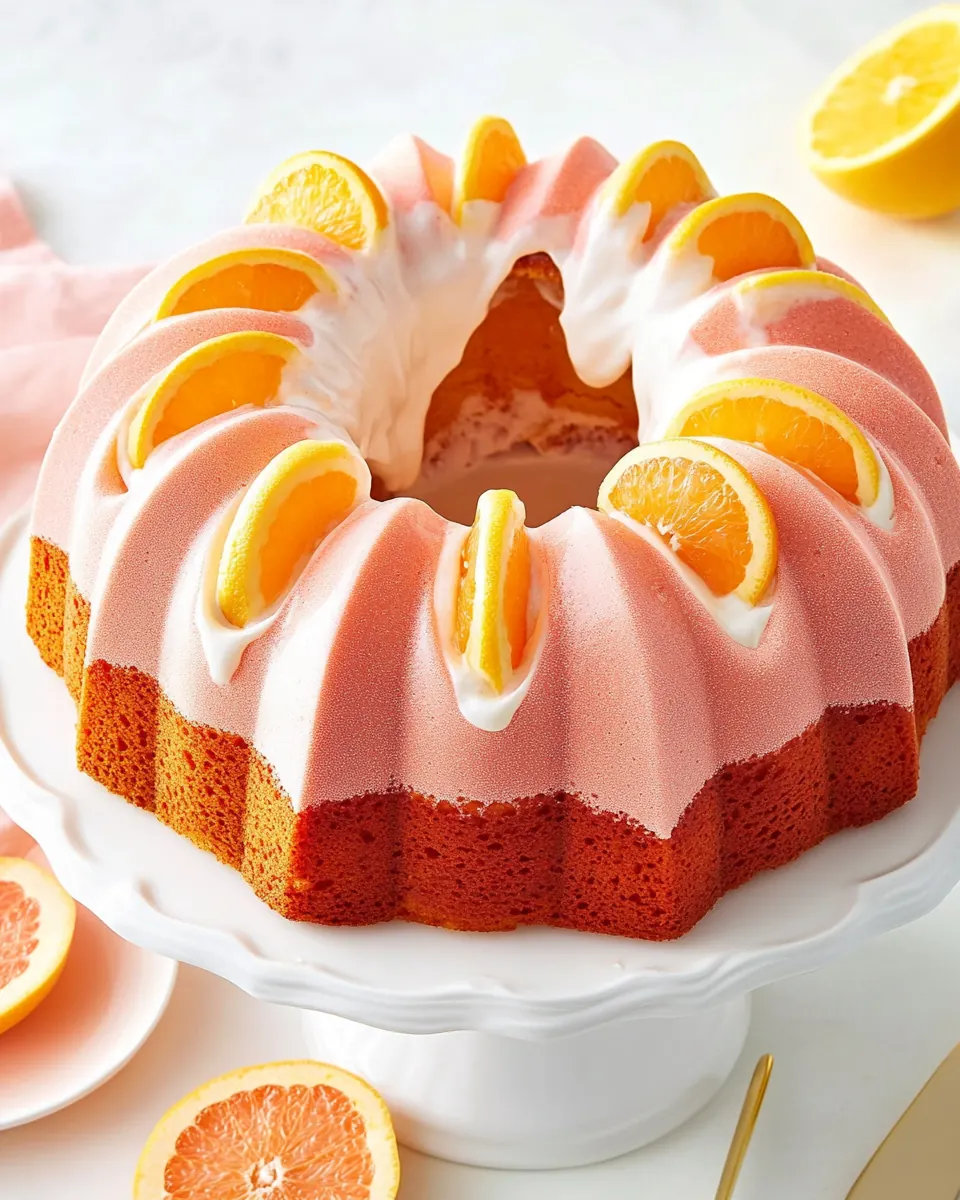
This cake unfolds in a few focused stages: make the cordial, mix dry and wet components, bake, brush with cordial, and finish with a glaze. Take your time with the cordial and the brushing step, those two small moments create the concentrated grapefruit flavor that defines the cake.
- To make grapefruit cordial, combine juice, sugar, and zest in a bowl. Cover and let steep for at least a few hours or ideally overnight. The sugar should be completely dissolved. (If making more than a day ahead of time, let sit for 24 hours then refrigerate where it will keep for up to a week.) Let come to room temperature before using (it will also need to be strained before you use it to remove the bits of zest).: The moment you stir together grapefruit juice , granulated sugar , and grapefruit zest the kitchen fills with an aromatic brightness, the sugar drawing oils from the zest into the liquid. Letting this mixture steep for several hours or overnight deepens the flavor as the sugar dissolves fully and extracts fragrant oils. You should notice the syrup become slightly viscous and richly scented, with tiny bubbles sometimes clinging at the edges. If you skip the steep time, the cordial will be less concentrated and the final brushing will be milder, so give it patience. A common mistake is not dissolving the sugar completely, which leaves a grainy texture in the cordial, so stir and feel for smoothness before covering. If you plan to make it ahead, store it refrigerated and bring it back to room temperature before using, and strain out zest bits to avoid gritty splinters in the glaze.
- To make the cake, preheat oven to 350 degrees F. Grease a standard 12-cup bundt pan (I used baking spray, but you can use butter/flour or cake pan grease too).: Preheating until the oven reaches 350 degrees F ensures an even rise and predictable baking time, you will sense the warmth radiating and the center will bake through as intended. Grease a 12 cup bundt pan thoroughly, using baking spray or a butter and flour method so the cake releases cleanly; the oil in the batter benefits from a slick surface and the bundt's shape highlights the crust. If the oven is not fully heated, the batter may set unevenly and cause a dense center, so wait for a steady temperature before sliding the pan in. Another pitfall is under prepping the pan, which can cause the cake to stick, so take a minute here to ensure all crevices are well coated.
- In a large mixing bowl, whisk flour, almond flour, baking powder and salt until evenly incorporated; set aside.: When you whisk together all purpose flour , almond flour , baking powder , and sea salt , you create a uniform dry base that guarantees even rising. The sound is a soft swish as the flours combine and you will see the mixture lighten in color and texture. Sifting the almond flour prevents dense pockets and the baking powder becomes evenly distributed, which matters for a consistent crumb. A common error is to add wet ingredients to unmixed dry ingredients, which can create streaks of flour and uneven texture, so take the time to whisk thoroughly.
- In another bowl, combine sugar and grapefruit zest. Rub the zest and sugar between your fingers to release the oils and break up the clumps of zest.: Rubbing the granulated sugar and grapefruit zest between your fingers releases essential oils and perfumes the sugar, a small tactile step that makes a big sensory difference. You will feel the sugar soften slightly and smell a burst of citrus; this step amplifies the grapefruit aroma that will permeate the cake. If the zest is clumped, break it up so it can distribute evenly through the batter. Avoid skipping the rubbing process because the flavor will be less pronounced, and watch out for using too much zest which can add a bitter edge if the white pith is included.
- Add eggs and whisk vigorously until completely smooth (there should be no slimy streaks of egg white visible anymore), then whisk in olive oil, yogurt, grapefruit juice, and vanilla and grapefruit extract until fully incorporated.: As you beat in the eggs , the batter gains body and a glossy sheen, and whisking until no slimy streaks remain ensures full emulsification. The mixture should look homogeneous, slightly thickened, and will hold a few air bubbles that help with lift. Next, whisk in extra virgin olive oil , Greek yogurt , grapefruit juice , and vanilla extract until fully incorporated so the wet phase is cohesive. The texture should feel silky and pourable, not curdled, and the aroma will be creamy with citrus highlights. Overbeating at this stage can incorporate too much air, which may cause tunnels, so stop once smooth. A typical mistake is adding cold yogurt or eggs, which can cause the batter to seize, so use room temperature ingredients for harmony.
- Make a well in the center of the dry flour mixture. Add wet ingredients and whisk until just combined and no streaks of dry flour remain (there may be some small lumps, just make sure there aren't any large ones or pockets of dry flour left).: Creating a well allows you to fold the wet into the dry gently, preserving the batter's air and preventing overmixing. As you pour the wet ingredients into the well and whisk until just combined, watch for the disappearance of large pockets of dry flour while a few small lumps are fine. The sound and feel change from stiff to a smooth, slightly dense batter that should pour slowly from the bowl. Overmixing here will develop gluten and yield a tougher cake, so stop as soon as the streaks of flour are gone. A common slip is to beat vigorously to force a uniform batter, which can lead to a firmer texture, so be gentle and patient.
- Pour batter into prepared bundt pan. Bake for 50 to 60 minutes or edges are golden brown and a skewer inserted at the thickest point comes out mostly clean with just a few moist crumbs attached (no gooey batter).: When you transfer the batter you will notice its weight and sheen as it fills the pan, settling into nooks and valleys of the bundt. Smooth the top lightly with a spatula so the surface bakes evenly and the ridges unmold cleanly. Placing the pan in the middle of the oven helps the cake bake uniformly; you might hear a soft hiss as the oven thermostat cycles. Filling the pan too full can spill over, while underfilling leaves a small dome, so aim for the recommended capacity. If the batter seems lopsided, gently tap the pan on the counter to level it and remove large air pockets.
- Let cake cool in the pan for 10 to 15 minutes (just until it's cool enough to handle), then invert onto a wire rack; it should release cleanly. Set the wire rack inside a baking sheet to catch any overflow.: As the cake bakes, the kitchen will fill with a warm citrus fragrance and surface edges will turn a gentle golden brown, a visual cue the Maillard reaction is at work. A skewer inserted into the thickest part should come out mostly clean with a few moist crumbs, not wet batter, which signals doneness. If the top browns too quickly, tent loosely with foil to prevent overcoloring while the center catches up. A misstep is relying solely on time rather than visual and skewer checks, which can result in underbaked or dry outcomes, so use both cues for accuracy.
- At this point your cordial should have been sitting for at least a few hours, if not overnight. Strain through a fine mesh sieve to remove any remaining bits of zest. You should have a little over 1/2 a cup.: Cooling briefly in the pan allows the crumb to set so the cake will release cleanly when inverted, and you will notice the aroma intensify as steam escapes. After 10 to 15 minutes the cake should be cool enough to handle yet still warm, which is ideal for releasing and for the cordial to penetrate. If you leave it too long, the cake may cling, so invert at the right moment for a clean unmolding. The common mistake here is rushing and forcing the cake out while piping hot, which can cause breakage, so be patient.
- Poke all over the surface of the still-warm cake using a thin skewer or long toothpick. Using a pastry brush, brush 1/4 cup of the cordial over entire outside of the cake, including inside the center hole. It should soak in with much overflow being caught in the baking sheet underneath (if you have a lot of drips, feel free to scrape it up and brush it back on the cake).: By now the cordial's flavor will be concentrated and fragrant after steeping, and straining it through a sieve removes zest bits so the liquid is clear and smooth. You should have a little over 1/2 cup, a glossy syrup that smells intensely of grapefruit. Using unstrained cordial will leave flecks of zest in the glaze or cake surface, which may be undesirable for presentation, so always strain. Avoid using a cordial that is under-steeped because it will be less flavorful and will not penetrate the crumb as effectively.
- Let cake cool completely, or, if making ahead of time, wrap the cooled cake in plastic wrap and refrigerate overnight or until ready to glaze.: Poking creates channels for the cordial to sink into, and as you brush the cordial over the warm cake you will see it glisten and gradually absorb, leaving a subtle sheen. The act of brushing is soothing, with a quiet sound as the brush moves and the syrup drips onto the catch tray below. If you have excess that pools on the tray, collect and rebrush to avoid waste. A frequent misstep is brushing too much at once which can waterlog the cake, so brush in increments and allow absorption between passes.
- For glaze, sift powdered sugar into a bowl. Add 4 tablespoons of cordial and whisk until smooth. Continue adding cordial, 1/2 teaspoon at a time, until the glaze reaches a nice pourable consistency (if you lift up your whisk and drizzle a bit back into the bowl, it should absorb back into itself in about 5-6 seconds). Conversely, if the glaze is too thin, you can sift in more sugar as needed.: Cooling fully stabilizes the crumb so slicing yields clean edges; the glaze will also set better on a fully cooled surface. If you make the cake ahead, chilling helps meld flavors and makes slicing neater. Refrigerated cake may firm slightly so bring to room temperature before serving if you prefer softness. The error to watch for is skipping the full cool time before glazing, which can cause the glaze to run off and not set attractively.
- Pour glaze over top of cake, letting it drip down the sides on its own. Let sit for 15 to 30 minutes until glaze is set before slicing and serving.: Sifting powdered sugar removes lumps and creates a silky base for the glaze. As you add 4 tablespoons of cordial and whisk, you will notice the mixture smooth and thicken; adjust with more cordial or sugar to reach a pourable consistency. A good test is to lift the whisk and watch the glaze absorb back in about 5 to 6 seconds, signaling the ideal thickness. If it becomes too thin, sift in more sugar to regain body. Avoid adding too much liquid at once, which makes the glaze runny and hard to control on the cake.
- Cake will keep, wrapped in plastic wrap in the refrigerator, for up to 1 week.: Drizzling allows the glaze to find natural paths down the bundt ridges creating an elegant finish; you will see it pool then thin as it moves. Let it set for 15 to 30 minutes before slicing so it firms slightly and the surface becomes glossy. If you want a thicker finish, add less cordial during mixing for a more substantial coat. A common mistake is overworking the glaze once poured, which can mar the pattern, so pour and step back to let gravity do the work.
- Cake will keep, wrapped in plastic wrap in the refrigerator, for up to 1 week: Stored properly, the cake stays moist and flavorful for several days, and the grapefruit perfume often deepens with time. Bringing slices to room temperature before serving restores tenderness and brightens flavors. Avoid leaving it unwrapped which dries the crumb, and if you find the cake becomes slightly dense, a quick warm in the oven for a few minutes revives it.
Customization Ideas
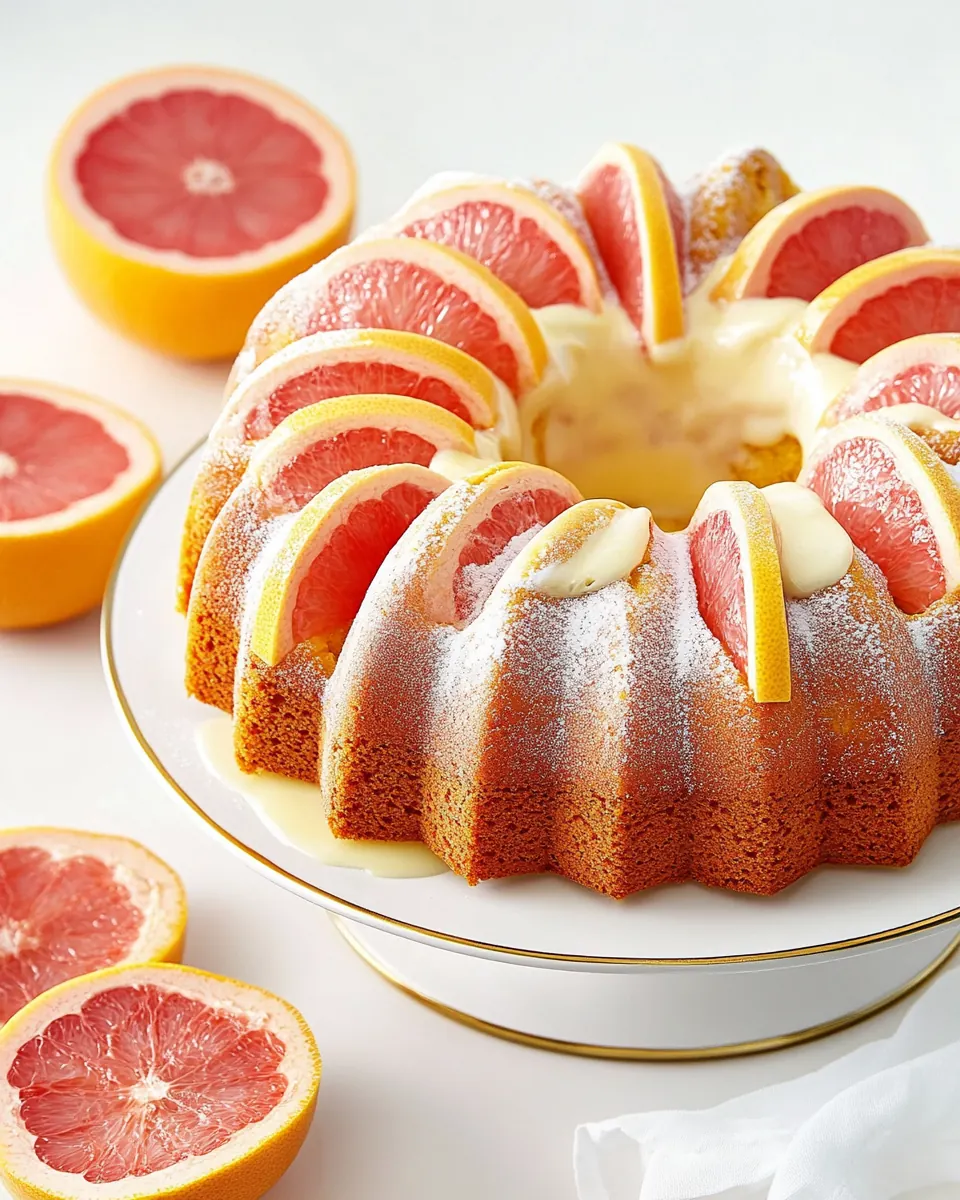
This cake adapts well to small tweaks that enhance texture, color, or flavor intensity. Below are practical, tested suggestions to personalize the recipe while keeping the core character intact.
- Boost citrus intensity by adding a scant 1 teaspoon of grapefruit extract to the wet ingredients, using sparingly to avoid bitterness.
- Make a lighter glaze by using less powdered sugar and more grapefruit cordial; add cordial slowly until the desired pourable consistency is reached.
- Decorative tint with a drop of pink food coloring in the glaze to echo the grapefruit hue, stir gently until evenly blended.
- Texture tweak by ensuring the almond flour is sifted to avoid dense pockets and to help the crumb remain tender.
- Make ahead strategy by preparing the cordial a day early and storing it refrigerated, then brushing it onto the warm cake the next day for deeper infusion.
Best Served With
This cake pairs beautifully with simple accompaniments and suits several occasions. Serve it sliced with a warm beverage or bring it to brunch, afternoon tea, or a spring gathering. The brightness of the grapefruit makes it particularly fitting for early season menus and celebratory moments.
- Light tea service: Serve thin slices with hot tea or coffee for a delicate afternoon pairing that highlights the cake’s citrus notes.
- Brunch spread: Add the cake to a brunch table alongside fresh fruit and mild cheeses for balance and a pretty centerpiece.
- Spring gatherings: Bring this to a garden party or shower, the grapefruit flavor is seasonally appropriate and visually appealing.
- Storage tip: Wrap leftover slices in plastic wrap and refrigerate to maintain moisture, then bring to room temperature before serving for best texture.
- Occasion fit: This is excellent for casual entertaining or a special treat for holidays in spring when citrus is at its best.
FAQ
Conclusion
This cake stands out for its bright grapefruit character, tender crumb from Greek yogurt, and the silky richness of olive oil. I encourage you to try it when you want a dessert that feels both effortless and refined. It performs well for gatherings or a quiet coffee moment at home, and the make ahead options mean you can enjoy great flavor with minimal last minute fuss.
Grapefruit Olive Oil Bundt Cake
Equipment
- Bundt Pan
- Mixing Bowls
- Whisk
- Spatula
- Fine mesh sieve
- Wire Rack
- Pastry Brush
Ingredients
- 1/2 cup 120 g freshly squeezed grapefruit juice, from 1 large grapefruit Provide bright, acidic flavor and moisture; freshly squeezed grapefruit juice adds tang and helps balance sweetness while contributing to the cake’s tender crumb through added liquid.
- 1/2 cup 100 g granulated sugar Add bulk sweetness and structure; granulated sugar dissolves into the batter to sweeten and promote even browning and aeration during baking.
- 2 tablespoons grapefruit zest, from 1 large grapefruit Deliver concentrated citrus aroma and essential oils; grapefruit zest infuses intense fragrance and bright flavor that lifts the overall cake profile.
- 2 1/2 cups 312 g all-purpose flour Supply the cake’s primary structure and gluten-forming proteins; all-purpose flour creates the framework that traps air and provides crumb texture.
- 1/2 cup 50 g almond flour, sifted Contribute nutty flavor and tender crumb; sifted almond flour adds fat and protein that reduce gluten toughness and enhance moistness.
- 2 teaspoons baking powder Leaven the batter by producing carbon dioxide; baking powder helps the cake rise evenly and creates a light, airy texture.
- 1 teaspoon fine sea salt Enhance and balance flavors; fine sea salt sharpens sweetness and deepens the overall taste of the cake.
- 2 cups 400 g granulated sugar Provide additional sweetness and help with texture; granulated sugar in the batter contributes to tenderness, moisture retention, and caramelization.
- 2 tablespoons grapefruit zest, from 1 large grapefruit Impart more concentrated citrus brightness; additional grapefruit zest layers aroma and flavor intensity throughout the cake.
- 4 large eggs, at room temperature Incorporate air and bind ingredients; room-temperature large eggs add structure, emulsification, and richness while improving volume.
- 2/3 cup 140 g extra virgin olive oil Add richness and healthy fats; extra virgin olive oil contributes moistness, a fruity depth of flavor, and tender crumb to the cake.
- 1 1/2 cups 348 g whole Greek yogurt, at room temperature Give creaminess and acidity for texture; room-temperature whole Greek yogurt adds moisture, tenderizes the crumb, and reacts with leaveners.
- 1/4 cup 60 g freshly squeezed grapefruit juice, from 1/2 large grapefruit Increase grapefruit flavor and adjust batter consistency; freshly squeezed grapefruit juice adds liquid, acidity, and bright citrus notes.
- 2 teaspoons vanilla extract Introduce warm vanilla aroma and complexity; vanilla extract rounds flavors and complements the grapefruit without overpowering it.
- 1 teaspoon grapefruit extract, optional Optionally boost grapefruit intensity with concentrated flavor; grapefruit extract provides a stronger citrus hit when used sparingly.
- 1/4 cup grapefruit cordial, for brushing Moisten and flavor the baked cake; grapefruit cordial is brushed on to add sweetness, shine, and an extra layer of citrus syrup.
- 1 1/2 cups 180 g powdered sugar, sifted Sweeten and finish with smooth texture; sifted powdered sugar creates a light glaze or dusting that balances tartness and adds visual appeal.
- 4 -5 tablespoons grapefruit cordial Adjust glaze consistency and intensify flavor; extra grapefruit cordial thins and flavors the glaze while adding sheen.
- pinch fine sea salt Balance and heighten sweetness; a pinch of fine sea salt in the finishing glaze enhances overall flavor and reduces cloying sweetness.
- pink food coloring, optional Provide optional color for visual appeal; pink food coloring tints the glaze or batter to give a vibrant, cake-enhancing hue when desired.
Instructions
- To make grapefruit cordial, combine juice, sugar, and zest in a bowl. Cover and let steep for at least a few hours or ideally overnight. The sugar should be completely dissolved. (If making more than a day ahead of time, let sit for 24 hours then refrigerate where it will keep for up to a week.) Let come to room temperature before using (it will also need to be strained before you use it to remove the bits of zest).: The moment you stir together grapefruit juice , granulated sugar , and grapefruit zest the kitchen fills with an aromatic brightness, the sugar drawing oils from the zest into the liquid. Letting this mixture steep for several hours or overnight deepens the flavor as the sugar dissolves fully and extracts fragrant oils. You should notice the syrup become slightly viscous and richly scented, with tiny bubbles sometimes clinging at the edges. If you skip the steep time, the cordial will be less concentrated and the final brushing will be milder, so give it patience. A common mistake is not dissolving the sugar completely, which leaves a grainy texture in the cordial, so stir and feel for smoothness before covering. If you plan to make it ahead, store it refrigerated and bring it back to room temperature before using, and strain out zest bits to avoid gritty splinters in the glaze.
- To make the cake, preheat oven to 350 degrees F. Grease a standard 12-cup bundt pan (I used baking spray, but you can use butter/flour or cake pan grease too).: Preheating until the oven reaches 350 degrees F ensures an even rise and predictable baking time, you will sense the warmth radiating and the center will bake through as intended. Grease a 12 cup bundt pan thoroughly, using baking spray or a butter and flour method so the cake releases cleanly; the oil in the batter benefits from a slick surface and the bundt's shape highlights the crust. If the oven is not fully heated, the batter may set unevenly and cause a dense center, so wait for a steady temperature before sliding the pan in. Another pitfall is under prepping the pan, which can cause the cake to stick, so take a minute here to ensure all crevices are well coated.
- In a large mixing bowl, whisk flour, almond flour, baking powder and salt until evenly incorporated; set aside.: When you whisk together all purpose flour , almond flour , baking powder , and sea salt , you create a uniform dry base that guarantees even rising. The sound is a soft swish as the flours combine and you will see the mixture lighten in color and texture. Sifting the almond flour prevents dense pockets and the baking powder becomes evenly distributed, which matters for a consistent crumb. A common error is to add wet ingredients to unmixed dry ingredients, which can create streaks of flour and uneven texture, so take the time to whisk thoroughly.
- In another bowl, combine sugar and grapefruit zest. Rub the zest and sugar between your fingers to release the oils and break up the clumps of zest.: Rubbing the granulated sugar and grapefruit zest between your fingers releases essential oils and perfumes the sugar, a small tactile step that makes a big sensory difference. You will feel the sugar soften slightly and smell a burst of citrus; this step amplifies the grapefruit aroma that will permeate the cake. If the zest is clumped, break it up so it can distribute evenly through the batter. Avoid skipping the rubbing process because the flavor will be less pronounced, and watch out for using too much zest which can add a bitter edge if the white pith is included.
- Add eggs and whisk vigorously until completely smooth (there should be no slimy streaks of egg white visible anymore), then whisk in olive oil, yogurt, grapefruit juice, and vanilla and grapefruit extract until fully incorporated.: As you beat in the eggs , the batter gains body and a glossy sheen, and whisking until no slimy streaks remain ensures full emulsification. The mixture should look homogeneous, slightly thickened, and will hold a few air bubbles that help with lift. Next, whisk in extra virgin olive oil , Greek yogurt , grapefruit juice , and vanilla extract until fully incorporated so the wet phase is cohesive. The texture should feel silky and pourable, not curdled, and the aroma will be creamy with citrus highlights. Overbeating at this stage can incorporate too much air, which may cause tunnels, so stop once smooth. A typical mistake is adding cold yogurt or eggs, which can cause the batter to seize, so use room temperature ingredients for harmony.
- Make a well in the center of the dry flour mixture. Add wet ingredients and whisk until just combined and no streaks of dry flour remain (there may be some small lumps, just make sure there aren't any large ones or pockets of dry flour left).: Creating a well allows you to fold the wet into the dry gently, preserving the batter's air and preventing overmixing. As you pour the wet ingredients into the well and whisk until just combined, watch for the disappearance of large pockets of dry flour while a few small lumps are fine. The sound and feel change from stiff to a smooth, slightly dense batter that should pour slowly from the bowl. Overmixing here will develop gluten and yield a tougher cake, so stop as soon as the streaks of flour are gone. A common slip is to beat vigorously to force a uniform batter, which can lead to a firmer texture, so be gentle and patient.
- Pour batter into prepared bundt pan. Bake for 50 to 60 minutes or edges are golden brown and a skewer inserted at the thickest point comes out mostly clean with just a few moist crumbs attached (no gooey batter).: When you transfer the batter you will notice its weight and sheen as it fills the pan, settling into nooks and valleys of the bundt. Smooth the top lightly with a spatula so the surface bakes evenly and the ridges unmold cleanly. Placing the pan in the middle of the oven helps the cake bake uniformly; you might hear a soft hiss as the oven thermostat cycles. Filling the pan too full can spill over, while underfilling leaves a small dome, so aim for the recommended capacity. If the batter seems lopsided, gently tap the pan on the counter to level it and remove large air pockets.
- Let cake cool in the pan for 10 to 15 minutes (just until it's cool enough to handle), then invert onto a wire rack; it should release cleanly. Set the wire rack inside a baking sheet to catch any overflow.: As the cake bakes, the kitchen will fill with a warm citrus fragrance and surface edges will turn a gentle golden brown, a visual cue the Maillard reaction is at work. A skewer inserted into the thickest part should come out mostly clean with a few moist crumbs, not wet batter, which signals doneness. If the top browns too quickly, tent loosely with foil to prevent overcoloring while the center catches up. A misstep is relying solely on time rather than visual and skewer checks, which can result in underbaked or dry outcomes, so use both cues for accuracy.
- At this point your cordial should have been sitting for at least a few hours, if not overnight. Strain through a fine mesh sieve to remove any remaining bits of zest. You should have a little over 1/2 a cup.: Cooling briefly in the pan allows the crumb to set so the cake will release cleanly when inverted, and you will notice the aroma intensify as steam escapes. After 10 to 15 minutes the cake should be cool enough to handle yet still warm, which is ideal for releasing and for the cordial to penetrate. If you leave it too long, the cake may cling, so invert at the right moment for a clean unmolding. The common mistake here is rushing and forcing the cake out while piping hot, which can cause breakage, so be patient.
- Poke all over the surface of the still-warm cake using a thin skewer or long toothpick. Using a pastry brush, brush 1/4 cup of the cordial over entire outside of the cake, including inside the center hole. It should soak in with much overflow being caught in the baking sheet underneath (if you have a lot of drips, feel free to scrape it up and brush it back on the cake).: By now the cordial's flavor will be concentrated and fragrant after steeping, and straining it through a sieve removes zest bits so the liquid is clear and smooth. You should have a little over 1/2 cup, a glossy syrup that smells intensely of grapefruit. Using unstrained cordial will leave flecks of zest in the glaze or cake surface, which may be undesirable for presentation, so always strain. Avoid using a cordial that is under-steeped because it will be less flavorful and will not penetrate the crumb as effectively.
- Let cake cool completely, or, if making ahead of time, wrap the cooled cake in plastic wrap and refrigerate overnight or until ready to glaze.: Poking creates channels for the cordial to sink into, and as you brush the cordial over the warm cake you will see it glisten and gradually absorb, leaving a subtle sheen. The act of brushing is soothing, with a quiet sound as the brush moves and the syrup drips onto the catch tray below. If you have excess that pools on the tray, collect and rebrush to avoid waste. A frequent misstep is brushing too much at once which can waterlog the cake, so brush in increments and allow absorption between passes.
- For glaze, sift powdered sugar into a bowl. Add 4 tablespoons of cordial and whisk until smooth. Continue adding cordial, 1/2 teaspoon at a time, until the glaze reaches a nice pourable consistency (if you lift up your whisk and drizzle a bit back into the bowl, it should absorb back into itself in about 5-6 seconds). Conversely, if the glaze is too thin, you can sift in more sugar as needed.: Cooling fully stabilizes the crumb so slicing yields clean edges; the glaze will also set better on a fully cooled surface. If you make the cake ahead, chilling helps meld flavors and makes slicing neater. Refrigerated cake may firm slightly so bring to room temperature before serving if you prefer softness. The error to watch for is skipping the full cool time before glazing, which can cause the glaze to run off and not set attractively.
- Pour glaze over top of cake, letting it drip down the sides on its own. Let sit for 15 to 30 minutes until glaze is set before slicing and serving.: Sifting powdered sugar removes lumps and creates a silky base for the glaze. As you add 4 tablespoons of cordial and whisk, you will notice the mixture smooth and thicken; adjust with more cordial or sugar to reach a pourable consistency. A good test is to lift the whisk and watch the glaze absorb back in about 5 to 6 seconds, signaling the ideal thickness. If it becomes too thin, sift in more sugar to regain body. Avoid adding too much liquid at once, which makes the glaze runny and hard to control on the cake.
- Cake will keep, wrapped in plastic wrap in the refrigerator, for up to 1 week.: Drizzling allows the glaze to find natural paths down the bundt ridges creating an elegant finish; you will see it pool then thin as it moves. Let it set for 15 to 30 minutes before slicing so it firms slightly and the surface becomes glossy. If you want a thicker finish, add less cordial during mixing for a more substantial coat. A common mistake is overworking the glaze once poured, which can mar the pattern, so pour and step back to let gravity do the work.
- Cake will keep, wrapped in plastic wrap in the refrigerator, for up to 1 week: Stored properly, the cake stays moist and flavorful for several days, and the grapefruit perfume often deepens with time. Bringing slices to room temperature before serving restores tenderness and brightens flavors. Avoid leaving it unwrapped which dries the crumb, and if you find the cake becomes slightly dense, a quick warm in the oven for a few minutes revives it.
Notes
- Boost citrus intensity by adding a scant 1 teaspoon of grapefruit extract to the wet ingredients, using sparingly to avoid bitterness.
- Make a lighter glaze by using less powdered sugar and more grapefruit cordial; add cordial slowly until the desired pourable consistency is reached.
- Decorative tint with a drop of pink food coloring in the glaze to echo the grapefruit hue, stir gently until evenly blended.
- Texture tweak by ensuring the almond flour is sifted to avoid dense pockets and to help the crumb remain tender.
- Make ahead strategy by preparing the cordial a day early and storing it refrigerated, then brushing it onto the warm cake the next day for deeper infusion.