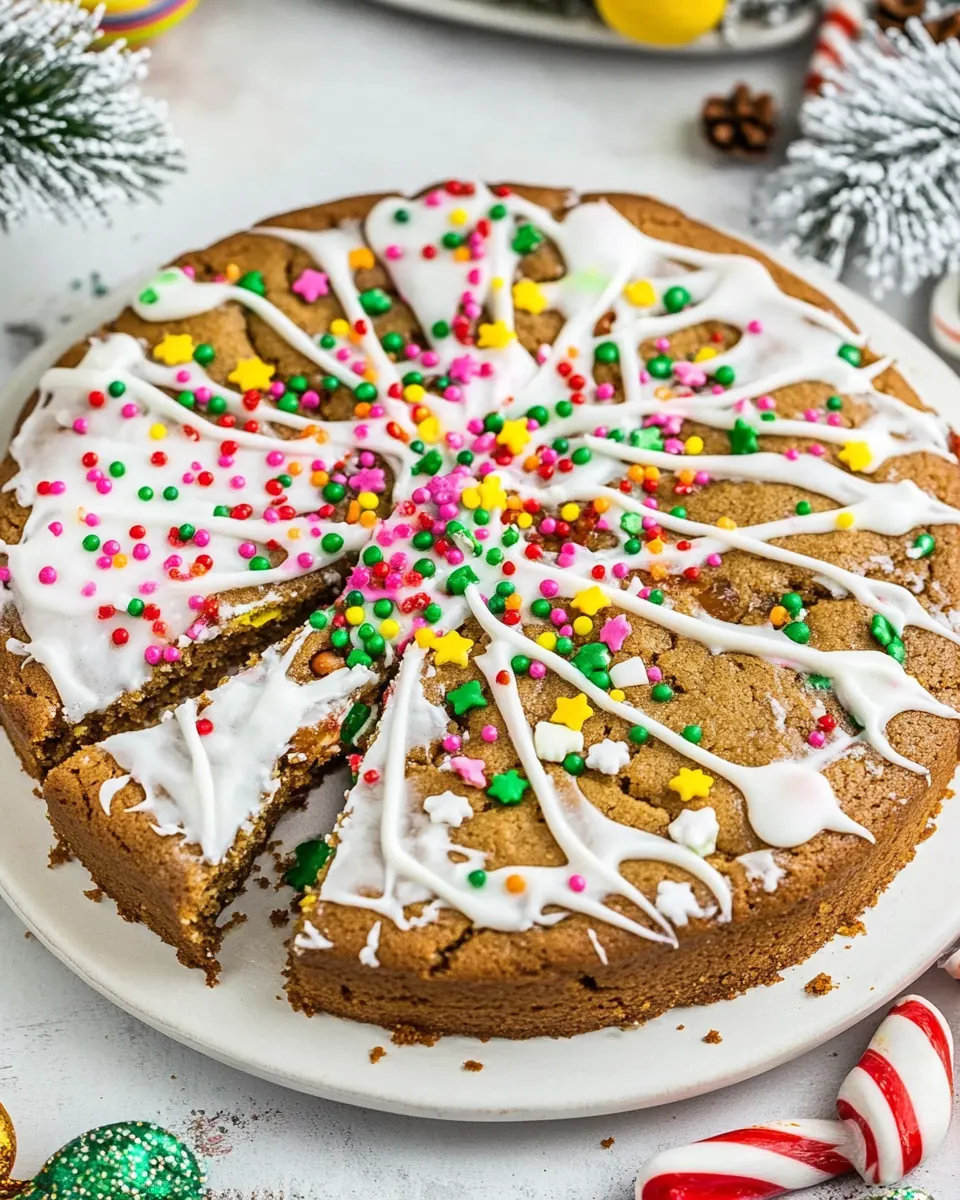
Gingerbread Cookie Cake
Gingerbread Cookie Cake is one of those desserts I reach for when I want something cozy, nostalgic, and a little bit showy without being fussy. The first time I made this, it was for a chilly evening when friends dropped by unexpectedly, and I wanted dessert that felt like a hug. The aroma of molasses, cinnamon, and ginger filled the kitchen and immediately softened the room. I remember stirring the batter while chatting, feeling the warmth of the oven like a companion as the cookie cake baked, turning a deep, spicy brown.
Over the years I have tweaked small details, but the heart of the treat remains the same: a single giant cookie, crisp and golden at the edges, tender and slightly chewy in the center, dressed with a simple glaze and joyous sprinkles. I like serving it straight from the plate, letting guests break off rustic wedges, which always sparks conversation about holiday memories and childhood treats. Sometimes I let the kids take over the decorating, which turns this into both a dessert and an activity. Other times I quietly make one late at night, pour the icing in a slow ribbon, and savor a slice with tea.
Recipe Snapshot
40 mins
15 mins
25 mins
Easy
250 kcal
American
Gluten-Free, Low FODMAP
Desserts
9″ round cake pan, Electric mixer with paddle attachment, Mixing bowls, Whisk
Why You Need This Gingerbread Cookie Cake
Comforting seasonal spice
I adore how Gingerbread Cookie Cake captures the essence of fall and winter with a handful of warm spices. The mix of ground ginger, cinnamon, cloves, and nutmeg creates layers of flavor that smell like the holidays and taste like tradition. Each bite reminds me of holiday markets and cozy kitchen nights.
One pan, big impression
We all love recipes that are effortless yet impressive. This recipe bakes in a single 9″ round cake pan, producing a dramatic presentation with almost no fuss. I find that the spread-then-bake approach saves time and yields an even bake, making it perfect for last minute dessert plans.
Textural delight
This cookie cake balances a slightly crisp edge with a soft, chewy center. The butter and brown sugar caramelize at the rim while the interior keeps moisture from molasses, giving a delightful contrast. It is a texture that appeals to both cookie lovers and cake devotees.
Decorating is joyful and flexible
I love the simple glaze made from powdered sugar, a touch of vanilla, and milk or heavy cream. It sets quickly and provides a canvas for colorful sprinkles. You can keep decoration minimal or let it be whimsical; either way it elevates the treat instantly.
Kid friendly and crowd pleasing
We often make this for gatherings because it slices easily and is familiar to most palates. The straightforward ingredient list, with pantry basics like all purpose flour and eggs, means most home bakers can whip it up without a special trip to the store.
Ingredients Overview for Gingerbread Cookie Cake
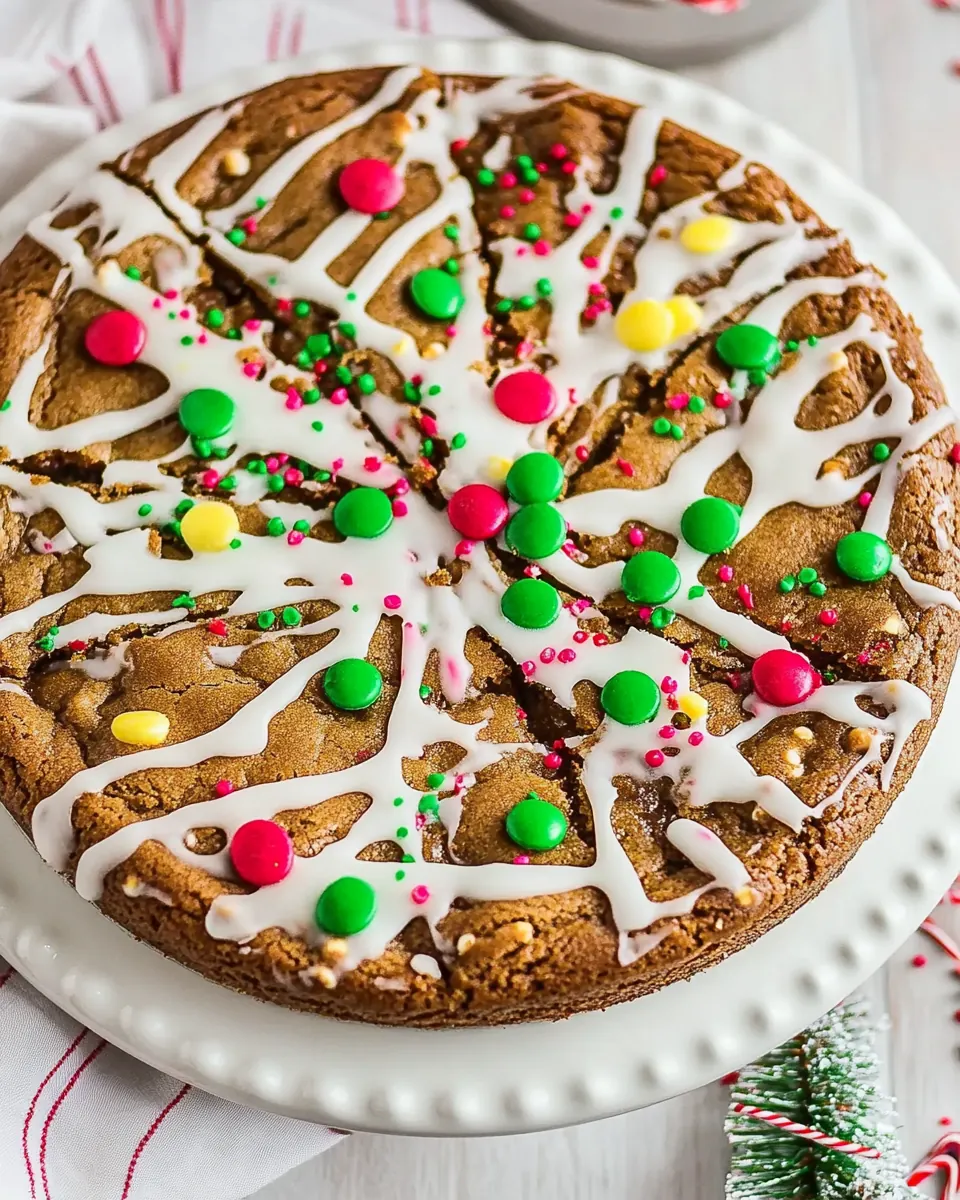
These ingredients are the backbone of a warm, spiced cookie cake. I think of the butter and brown sugar as the flavor foundation, the molasses and spices as the personality, and the all purpose flour as the structure. The glaze and sprinkles finish the look and add a touch of sweetness and celebration.
- 1/2 cup (113 g) butter, softened: Soften and cream to create a light, spreadable fat base that helps incorporate sugar and aerate the batter for a tender crumb in the cookie cake.
- 3/4 cup (150 g) packed brown sugar: Provide moist sweetness and depth; cream together with butter to dissolve and distribute sugar, contributing to chewiness and rich caramel notes.
- 1/3 cup (79 ml) molasses: Add deep, robust sweetness and characteristic molasses flavor; fold into the batter to impart moistness, color, and warm spice complexity.
- 2 large eggs: Beat in to bind ingredients, trap air, and provide structure; eggs also add moisture and richness while helping the cake set properly.
- 1 teaspoon vanilla extract: Enhance overall flavor with a sweet aromatic profile; stir in with wet ingredients to boost and round out other flavors in the cake.
- 1 teaspoon baking soda: React with acidic components to leaven and lift the batter; dissolve into the wet mixture to create a tender, slightly airy texture.
- 1 teaspoon cinnamon: Lend warm, sweet spice and fragrant aroma; mix into the dry ingredients to evenly distribute cozy flavor throughout the cake.
- 1 teaspoon ground ginger: Introduce sharp, warm spice notes characteristic of gingerbread; incorporate into the dry mix so the flavor permeates each bite.
- 1/2 teaspoon ground cloves: Contribute pungent, woody spice and subtle warmth; blend with the other spices to create the spicy backbone of the gingerbread flavor profile.
- 1/2 teaspoon ground nutmeg: Provide soft, sweet nutmeg aroma and gentle warmth; combine with spices to balance and round the overall spice blend.
- 2 1/2 cups (310 g) all-purpose flour: Build structure and bulk as the primary dry component; whisk with spices and leavening to ensure even distribution and proper crumb development.
- 1/2 cup (57 g) powdered sugar: Dust over the frosted surface to add sweetness and a smooth texture for the icing; sift before mixing to avoid lumps and ensure a silky finish.
- 1/4 teaspoon vanilla: Impart concentrated vanilla aroma to the icing; stir into the powdered sugar and cream to deepen flavor and add aromatic warmth.
- 1 tablespoon milk or heavy cream: Thin and smooth the icing while adding richness; whisk into powdered sugar to achieve desired consistency and sheen for spreading.
- Sprinkles for decorating: Provide festive color and texture when sprinkled on top; decorate the finished cookie cake to enhance visual appeal and celebratory presentation.
The Process for Making Gingerbread Cookie Cake
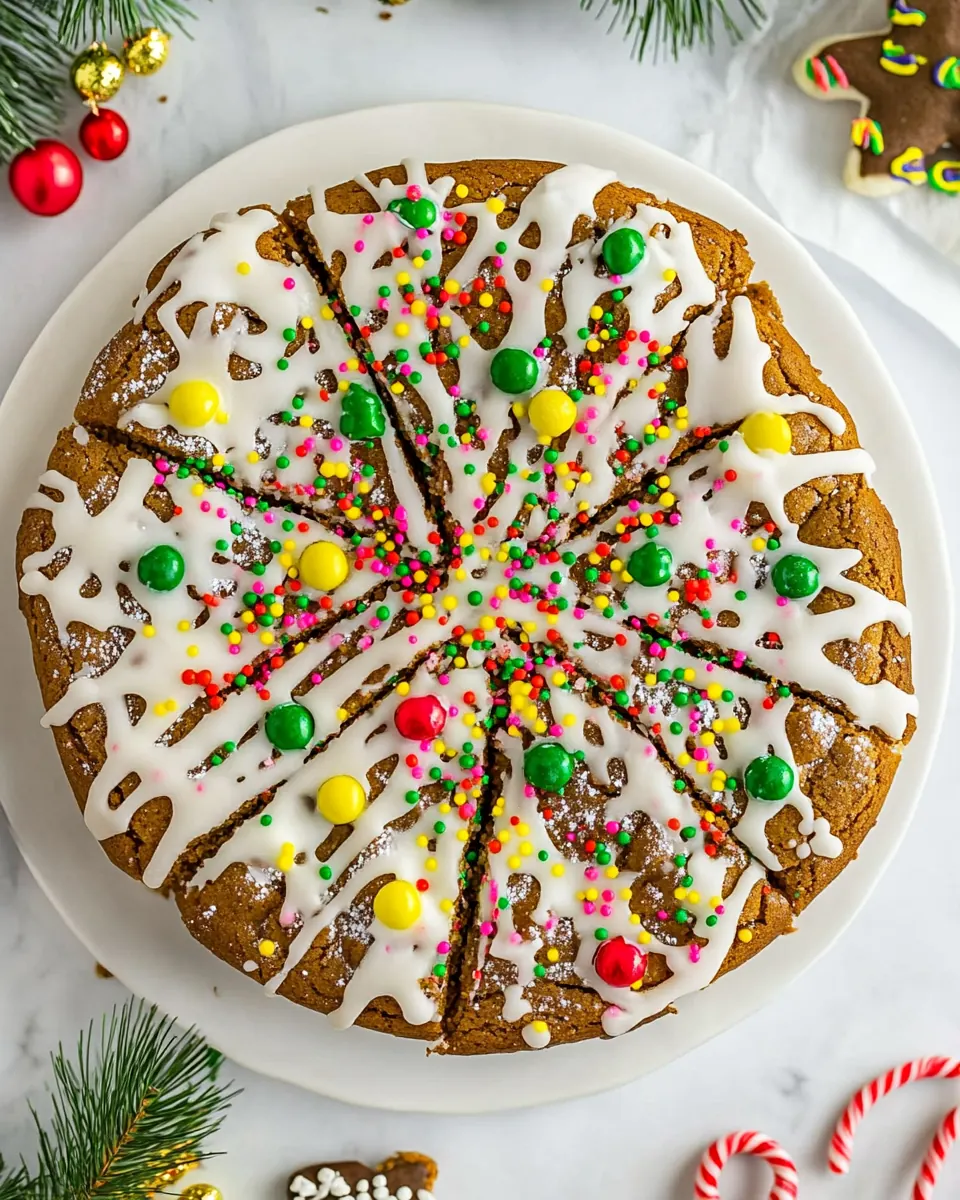
This cookie cake comes together with straightforward steps and a few sensory cues to guide you. Below I expand each direction with cues, reasons, and troubleshooting so you can bake confidently and enjoy the full aroma of the spices while it bakes.
- Preheat oven to 350 F. Line a 9" round cake pan with foil and spray with cooking spray.: The kitchen should smell neutral while the oven heats, then you will notice a gentle warmth as the oven reaches 350 F . Lining the pan with foil and spraying it prevents sticking and makes removing the cookie easier, which preserves the crisp edge. If you skip proper lining you risk tearing the cookie when you remove it. A common mistake is not fully pressing the foil to the pan sides, which can create air pockets and uneven edges; smooth the foil well before spraying.
- Cream butter and sugar in the bowl of an electric mixer fitted with the paddle attachment. Add molasses and mix until mixture is smooth. Add eggs and vanilla and beat until combined. Mix in baking soda, ginger, cinnamon, nutmeg, cloves, and flour.: When creaming butter and brown sugar , listen for a lighter, slightly fluffy sound as the mixture loosens and the color lightens; this aeration helps the cookie cake rise evenly. Adding molasses introduces moisture and deep color, and it will make the batter glossy when well combined. As you blend in the eggs and vanilla , the batter becomes silkier and more homogeneous. When you fold in the dry ingredients, watch the mixture change from glossy to a thicker dough that pulls away from the bowl. This step matters because proper distribution of the spice blend and baking soda ensures balanced flavor and lift. A frequent misstep is overmixing once the flour is added, which activates gluten and yields a tougher final texture; mix only until no streaks of flour remain.
- Press mixture into prepared pan. Bake 20-28 minutes until the top just begins to get golden and is no longer shiny. A toothpick will come out 1-inch from the side mostly clean. Let the cookie cool completely, then remove from pan and remove foil. Place on serving plate.: As you press the dough into the pan, you want an even thickness so it bakes uniformly; the surface should look matte rather than wet. In the oven you will first notice a rich spicy scent, then the edges will darken and the center will set. The top loses its glossy sheen and develops a faint golden tone, signaling doneness. The toothpick test taken about 1 inch from the edge should come out mostly clean, which indicates the middle is tender not raw. Letting it cool completely is crucial because the cookie firms as it cools; removing it too soon can cause it to break. A common error is leaving it in the pan until fully cold without running a knife around the edge; this can trap steam and sog the edge, so gently loosen before flipping out.
- Whisk powdered sugar, vanilla, and milk in a small bowl. Drizzle icing over cookie in desired pattern, top with sprinkles. Let set before serving.: When you whisk powdered sugar with the tiny measures of vanilla and milk or heavy cream , the glaze should be smooth and glossy, flowing slowly off the spoon. Drizzling in a ribbon across the surface creates visual contrast and a sweet bite. Add sprinkles while the icing is still wet so they adhere and create a festive finish. Patience is important here since cutting or serving too soon will smear the glaze; wait until it sets to the touch. One pitfall is making the glaze too thin, which will run off the sides; if it spreads excessively, stir in a touch more powdered sugar to thicken.
Substitutions and Tips
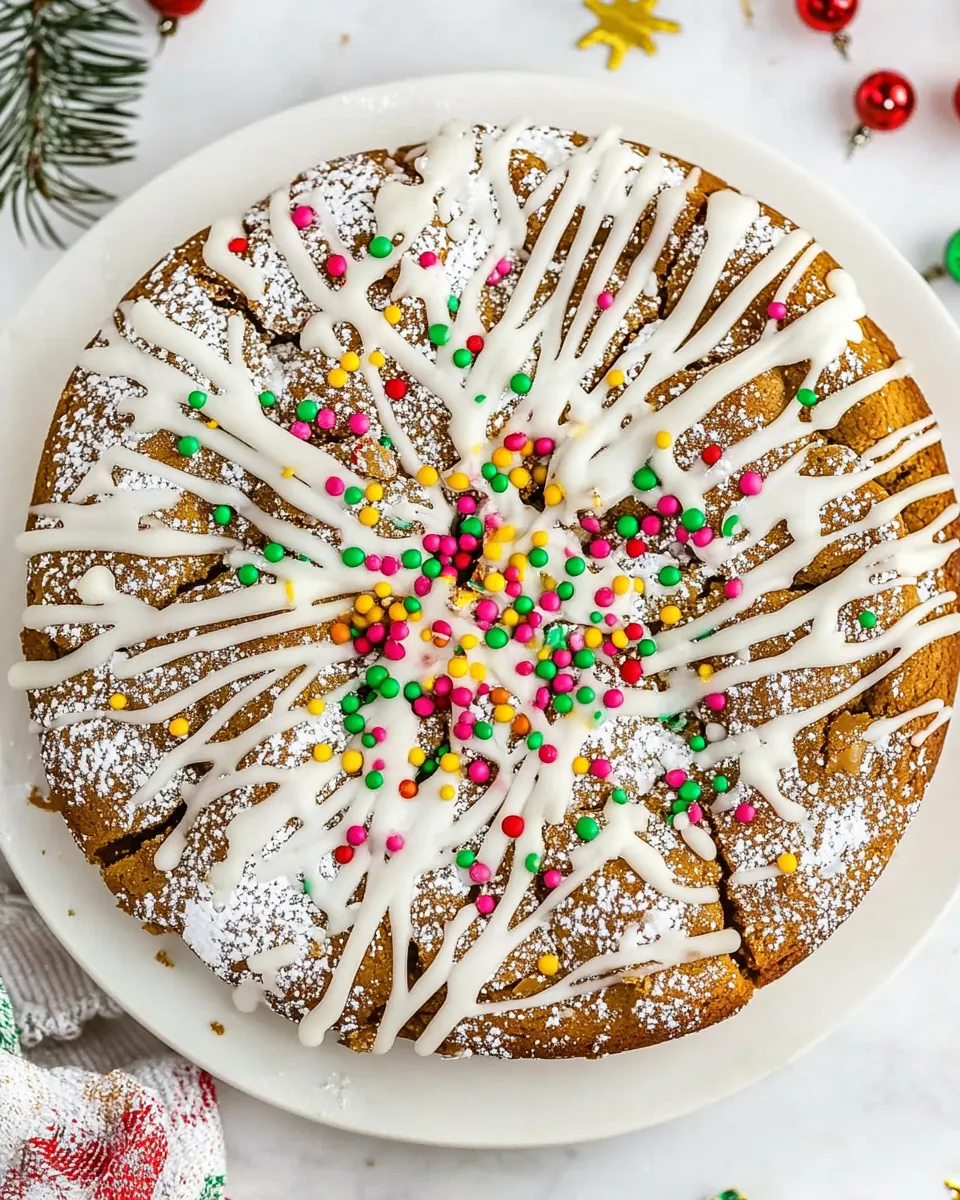
This section offers practical tips and small substitutions that keep the recipe reliable while giving you flexibility. Each tip highlights the first phrase in bold so you can scan quickly and find the right adjustment for your kitchen.
- Soften butter properly — If your butter is cold, microwave it in 5 second bursts until slightly yielding but not oily. Properly softened butter creams better with brown sugar and helps the batter aerate. Overheated butter will melt and cause the dough to spread too much.
- Pack brown sugar — Press the brown sugar into the measuring cup for accurate moisture and sweetness balance. Lightly packed brown sugar can change texture and make the cake drier.
- Control molasses intensity — Stick to the measured 1/3 cup of molasses for authentic gingerbread notes. If you use a stronger blackstrap variety, reduce slightly to avoid bitterness.
- Use a neutral pan release — Lining the pan with foil and spraying it makes removing the cake simpler and keeps edges intact. If you use parchment instead, grease the parchment lightly to prevent sticking.
- Adjust icing thickness — Add milk by drops to reach drizzle consistency, or thicken with extra powdered sugar for a firmer set that holds sprinkles well.
- Store properly — Keep leftovers in an airtight container at room temperature for two to three days to preserve chewiness. Refrigeration may dry it, so only chill if you used heavy cream in the glaze and worry about spoilage.
How to Enjoy Gingerbread Cookie Cake
This cookie cake is versatile for casual nights, holiday gatherings, or kid friendly parties. Below are detailed serving ideas, storage tips, and pairing suggestions to help you present it with confidence.
- Serve warm or room temperature — A slice at room temperature shows the chew in the center, while a slightly warmed piece enhances the spice aroma. Warm gently for a few seconds in the microwave if desired, but avoid overheating which softens the glaze.
- Pair with beverages — Offer hot tea, coffee, or spiced apple cider to complement the warm spices; these pairings amplify the ginger and cinnamon flavors and make the dessert feel complete.
- Occasions — This is perfect for Christmas gatherings, cozy fall dinners, or birthday parties where a rustic, shareable dessert is welcome. Its festive look with sprinkles makes it great for family events and school celebrations.
- Storage — Store slices in an airtight container at room temperature for two to three days. If you want to keep it longer, freeze individual slices wrapped tightly and thaw at room temperature before serving.
- Presentation tips — Serve on a simple platter, scattering a few extra sprinkles around the plate for color. For a special touch, dust the rim with a little extra sifted powdered sugar.
- Make ahead — Bake the cookie cake a day ahead and glaze the morning of serving to keep the icing fresh and bright. This approach reduces last minute prep and keeps flavors vibrant.
FAQ
Conclusion
What makes this recipe special is its easy, single pan format that delivers classic gingerbread flavor in a shareable cookie cake. It combines warm spices, molasses, and a tender crumb to create a dessert that feels both nostalgic and festive. Give it a try when you want a fuss free treat that fills the house with comforting aromas and yields plenty of smiles. Once you taste that soft center and spiced finish, it will likely become one of your go to holiday desserts.
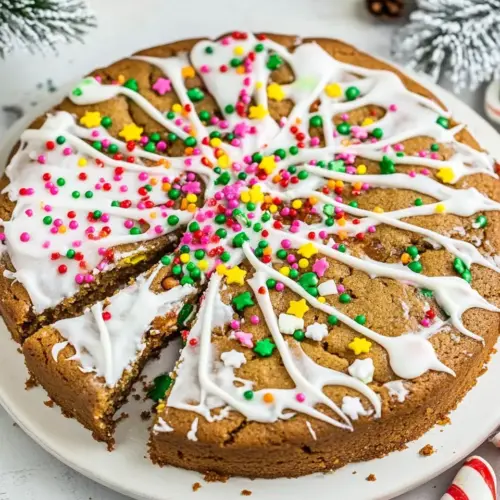
Gingerbread Cookie Cake
Equipment
- 9" round cake pan
- Electric mixer with paddle attachment
- Mixing Bowls
- Whisk
Ingredients
- 1/2 cup (113 g) butter, softened Soften and cream to create a light, spreadable fat base that helps incorporate sugar and aerate the batter for a tender crumb in the cookie cake.
- 3/4 cup (150 g) packed brown sugar Provide moist sweetness and depth; cream together with butter to dissolve and distribute sugar, contributing to chewiness and rich caramel notes.
- 1/3 cup (79 ml) molasses Add deep, robust sweetness and characteristic molasses flavor; fold into the batter to impart moistness, color, and warm spice complexity.
- 2 large eggs Beat in to bind ingredients, trap air, and provide structure; eggs also add moisture and richness while helping the cake set properly.
- 1 teaspoon vanilla extract Enhance overall flavor with a sweet aromatic profile; stir in with wet ingredients to boost and round out other flavors in the cake.
- 1 teaspoon baking soda React with acidic components to leaven and lift the batter; dissolve into the wet mixture to create a tender, slightly airy texture.
- 1 teaspoon cinnamon Lend warm, sweet spice and fragrant aroma; mix into the dry ingredients to evenly distribute cozy flavor throughout the cake.
- 1 teaspoon ground ginger Introduce sharp, warm spice notes characteristic of gingerbread; incorporate into the dry mix so the flavor permeates each bite.
- 1/2 teaspoon ground cloves Contribute pungent, woody spice and subtle warmth; blend with the other spices to create the spicy backbone of the gingerbread flavor profile.
- 1/2 teaspoon ground nutmeg Provide soft, sweet nutmeg aroma and gentle warmth; combine with spices to balance and round the overall spice blend.
- 2 1/2 cups (310 g) all-purpose flour Build structure and bulk as the primary dry component; whisk with spices and leavening to ensure even distribution and proper crumb development.
- 1/2 cup (57 g) powdered sugar Dust over the frosted surface to add sweetness and a smooth texture for the icing; sift before mixing to avoid lumps and ensure a silky finish.
- 1/4 teaspoon vanilla Impart concentrated vanilla aroma to the icing; stir into the powdered sugar and cream to deepen flavor and add aromatic warmth.
- 1 tablespoon milk or heavy cream Thin and smooth the icing while adding richness; whisk into powdered sugar to achieve desired consistency and sheen for spreading.
- Sprinkles for decorating Provide festive color and texture when sprinkled on top; decorate the finished cookie cake to enhance visual appeal and celebratory presentation.
Instructions
- Preheat oven to 350 F. Line a 9" round cake pan with foil and spray with cooking spray.: The kitchen should smell neutral while the oven heats, then you will notice a gentle warmth as the oven reaches 350 F . Lining the pan with foil and spraying it prevents sticking and makes removing the cookie easier, which preserves the crisp edge. If you skip proper lining you risk tearing the cookie when you remove it. A common mistake is not fully pressing the foil to the pan sides, which can create air pockets and uneven edges; smooth the foil well before spraying.
- Cream butter and sugar in the bowl of an electric mixer fitted with the paddle attachment. Add molasses and mix until mixture is smooth. Add eggs and vanilla and beat until combined. Mix in baking soda, ginger, cinnamon, nutmeg, cloves, and flour.: When creaming butter and brown sugar , listen for a lighter, slightly fluffy sound as the mixture loosens and the color lightens; this aeration helps the cookie cake rise evenly. Adding molasses introduces moisture and deep color, and it will make the batter glossy when well combined. As you blend in the eggs and vanilla , the batter becomes silkier and more homogeneous. When you fold in the dry ingredients, watch the mixture change from glossy to a thicker dough that pulls away from the bowl. This step matters because proper distribution of the spice blend and baking soda ensures balanced flavor and lift. A frequent misstep is overmixing once the flour is added, which activates gluten and yields a tougher final texture; mix only until no streaks of flour remain.
- Press mixture into prepared pan. Bake 20-28 minutes until the top just begins to get golden and is no longer shiny. A toothpick will come out 1-inch from the side mostly clean. Let the cookie cool completely, then remove from pan and remove foil. Place on serving plate.: As you press the dough into the pan, you want an even thickness so it bakes uniformly; the surface should look matte rather than wet. In the oven you will first notice a rich spicy scent, then the edges will darken and the center will set. The top loses its glossy sheen and develops a faint golden tone, signaling doneness. The toothpick test taken about 1 inch from the edge should come out mostly clean, which indicates the middle is tender not raw. Letting it cool completely is crucial because the cookie firms as it cools; removing it too soon can cause it to break. A common error is leaving it in the pan until fully cold without running a knife around the edge; this can trap steam and sog the edge, so gently loosen before flipping out.
- Whisk powdered sugar, vanilla, and milk in a small bowl. Drizzle icing over cookie in desired pattern, top with sprinkles. Let set before serving.: When you whisk powdered sugar with the tiny measures of vanilla and milk or heavy cream , the glaze should be smooth and glossy, flowing slowly off the spoon. Drizzling in a ribbon across the surface creates visual contrast and a sweet bite. Add sprinkles while the icing is still wet so they adhere and create a festive finish. Patience is important here since cutting or serving too soon will smear the glaze; wait until it sets to the touch. One pitfall is making the glaze too thin, which will run off the sides; if it spreads excessively, stir in a touch more powdered sugar to thicken.
Notes
- Soften butter properly — If your butter is cold, microwave it in 5 second bursts until slightly yielding but not oily. Properly softened butter creams better with brown sugar and helps the batter aerate. Overheated butter will melt and cause the dough to spread too much.
- Pack brown sugar — Press the brown sugar into the measuring cup for accurate moisture and sweetness balance. Lightly packed brown sugar can change texture and make the cake drier.
- Control molasses intensity — Stick to the measured 1/3 cup of molasses for authentic gingerbread notes. If you use a stronger blackstrap variety, reduce slightly to avoid bitterness.
- Use a neutral pan release — Lining the pan with foil and spraying it makes removing the cake simpler and keeps edges intact. If you use parchment instead, grease the parchment lightly to prevent sticking.
- Adjust icing thickness — Add milk by drops to reach drizzle consistency, or thicken with extra powdered sugar for a firmer set that holds sprinkles well.
- Store properly — Keep leftovers in an airtight container at room temperature for two to three days to preserve chewiness. Refrigeration may dry it, so only chill if you used heavy cream in the glaze and worry about spoilage.
