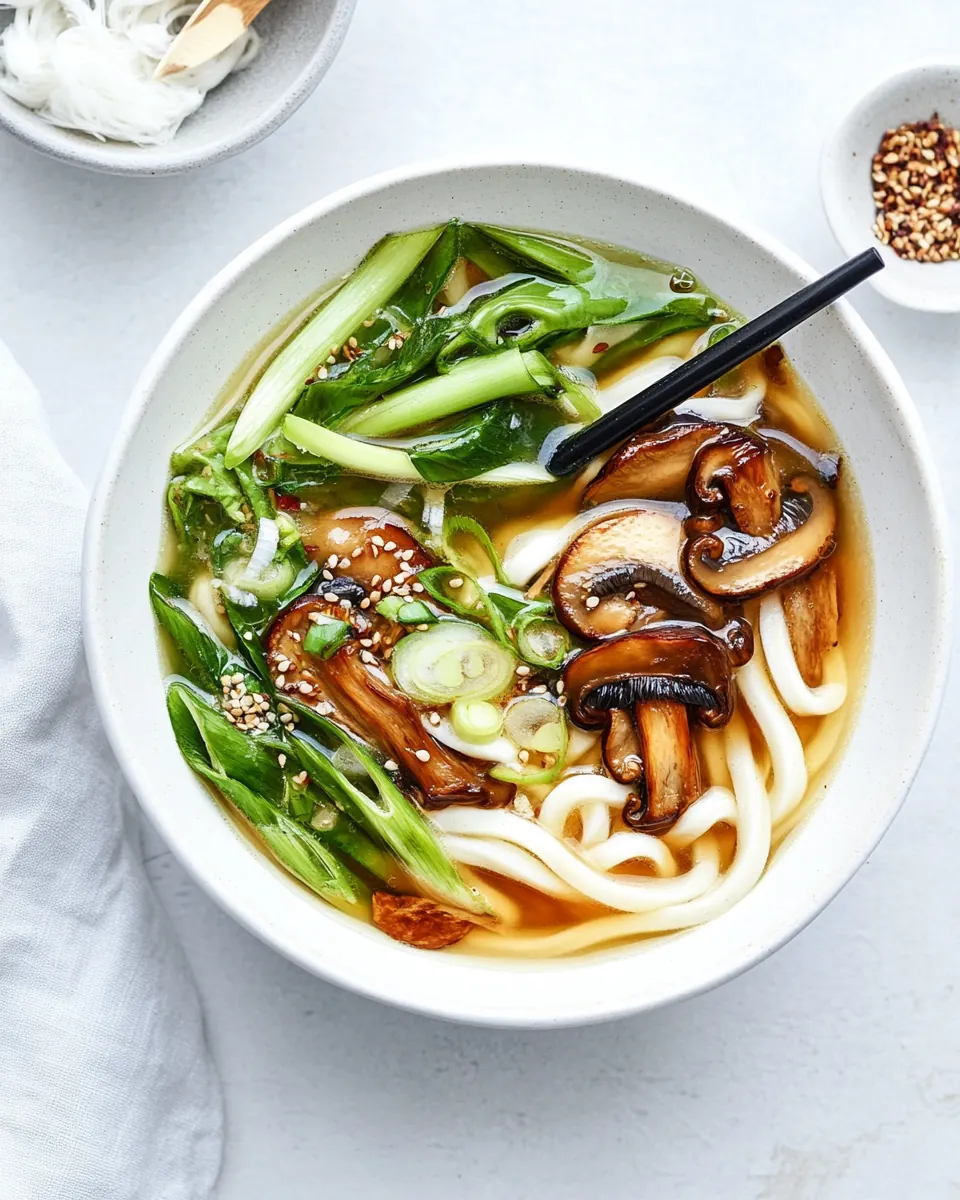
Ginger Miso Udon Noodle Soup with Roasted Mushrooms
Ginger Miso Udon Noodle Soup with Roasted Mushrooms arrived in my kitchen on one of those gray winter evenings when I wanted something warm, slurpy, and comforting without a lot of fuss. I remember unwrapping a block of frozen udon noodles and inhaling that slightly sweet, wheaty aroma while the broth was coming together, and thinking how one bowl can feel like a small, savory hug. The first spoonful of rich, umami broth studded with roasted shiitake mushrooms and tender bok choy immediately convinced me this would become a repeat performer in my weeknight rotation.
There was a small moment of kitchen theater as the kombu and bonito flakes steeped to make dashi, a fragrant ocean whisper that set the tone for the whole meal. While the oven coaxed caramelized edges from the mushrooms, I whisked miso into warm broth, tasting as I went so the seasoning felt just right. That tactile back and forth between oven and stovetop, between tasting and adjusting, is the kind of cooking I savor on busy evenings when I still want to feel like I made something thoughtful.
Recipe Snapshot
40 mins
15 mins
25 mins
Easy
350 kcal
Japanese
Vegan, Gluten-Free
Soups
Medium saucepan, Fine mesh sieve, Small bowl, Baking sheet, Oven
Why This Ginger Miso Udon Noodle Soup with Roasted Mushrooms Is a Winner
Deep, layered umami that feels intentional
I love that Ginger Miso Udon Noodle Soup with Roasted Mushrooms builds its savory base from simple, traditional elements. Using kombu and bonito flakes to make dashi gives a clean oceanic backbone, and folding in white miso paste adds a warm, mellow saltiness. Each spoonful tastes complex, without the need for a long ingredient list, and that makes it feel like a small chef trick I can use any weeknight.
Comforting texture contrasts
I find the contrast between pillowy udon noodles, tender steamed bok choy, springy cubes of tofu, and roasted shiitake mushrooms irresistible. The noodles are slippery and filling, the mushrooms add chew and char, while the tofu soaks up broth and provides gentle protein. Together, they create a bowl you can curl up with and linger over, rather than rush through.
Quick enough for busy nights
Even though it tastes layered, this recipe moves fast. You can have a steaming bowl in under an hour, especially if you use quick techniques like frozen udon noodles and a simple oven roast for mushrooms. I appreciate recipes that deliver big flavor without a long time commitment, and this one does exactly that.
Flexible and forgiving
I often change little things depending on what I have on hand, but the core idea remains steady. Roast the mushrooms until they brown, keep the dashi warm, and adjust the soy sauce or miso to taste. This flexibility makes it a go to, because small swaps do not break the bowl, they simply personalize it.
Visually inviting and simple to dress
Finishing touches like a scattering of toasted sesame seeds and thinly sliced green onion make the bowl look restaurant ready. I enjoy the ritual of arranging components in the bowl so each bite has an element of texture and aroma. It feels like care, without complication.
Everything You Need for Ginger Miso Udon Noodle Soup with Roasted Mushrooms
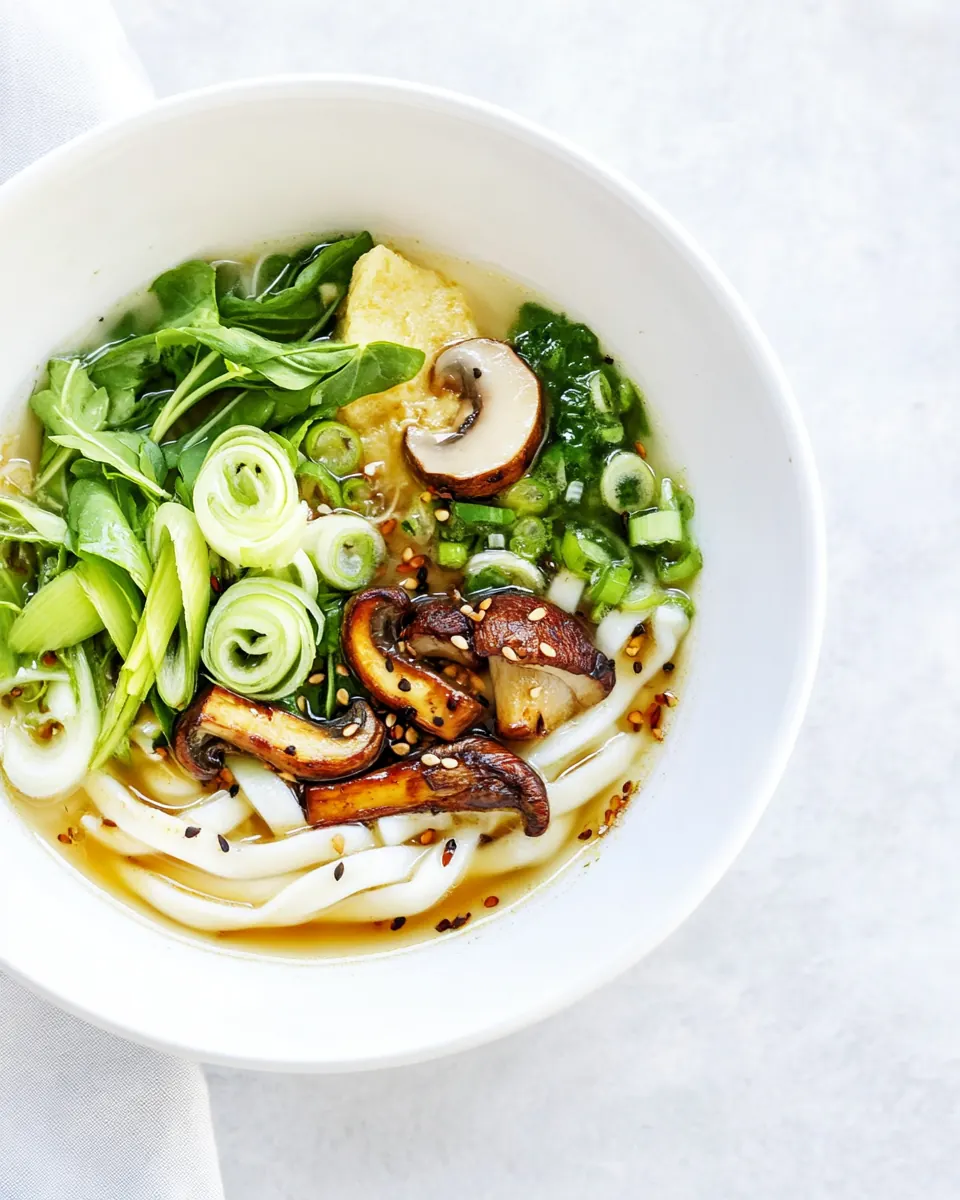
The philosophy behind these ingredients is balance. I like to combine a clean, umami rich dashi base with the creamy saltiness of white miso paste. Roasted shiitake mushrooms bring caramelized depth, while steamed bok choy and cubed tofu add lightness and texture. The udon noodles are the anchor, and a splash of soy sauce plus a hint of sesame oil ties everything together.
- 1 2-inch piece kombu (dried kelp): Soak the kombu briefly to draw out umami-rich glutamates and form the mineral backbone of the dashi stock; remove before simmering to avoid bitterness and preserve its delicate sea flavor. Use a 2-inch piece to gently perfume the broth and add depth without overpowering the soup. Kombu also contributes subtle iodine and mouthfeel that balance the miso and ginger components.
- 1 cup dried bonito flakes: Simmer the bonito flakes to create a smoky, savory dashi when combined with kombu, providing a traditional Japanese umami foundation for the soup. Steep one cup and strain to capture a clean, aromatic stock that marries with miso and ginger for complexity. Bonito imparts smoky, briny notes that lift the overall flavor profile and harmonize with roasted mushrooms.
- 2 tablespoons white miso paste: Dissolve the white miso paste into warm dashi to add creamy, fermented sweetness and rounded savory depth to the broth base. Stir two tablespoons in at low heat to preserve beneficial probiotics and avoid boiling which can dull its nuanced flavors. Miso balances salty and sweet while providing body and a gentle tang that complements soy and sesame.
- 1 teaspoon finely grated fresh ginger: Grate the fresh ginger finely to release bright, spicy aromatics that cut through the richness of miso and tofu and enliven the broth. Use one teaspoon for a warm, zesty lift without overpowering the other components, adding a refreshing contrast to roasted mushrooms and umami dashi. Ginger also aids digestion and adds a pleasant, peppery heat.
- 8 ounces shiitake mushrooms: Roast the shiitake mushrooms to concentrate their meaty, umami-rich flavors and add textural contrast to the soup. Use eight ounces, trimming stems as needed, to provide earthy, savory bites that pair perfectly with miso and bonito-based dashi. Shiitakes contribute depth, a chewy bite, and an intense mushroom aroma that enhances the overall savoriness.
- 1 tablespoon soy sauce: Season the broth with soy sauce to introduce salty, fermented complexity and deepen the savory backbone without overwhelming the miso. Add one tablespoon towards the end of cooking to fine-tune seasoning and enhance color and umami. Soy also helps marry the flavors of dashi, tofu, and roasted mushrooms.
- 1 teaspoon sesame oil: Drizzle sesame oil for a nutty, aromatic finish that rounds out the soup and ties together Asian flavor elements. Use one teaspoon lightly to avoid masking delicate dashi and miso notes while adding a warm, toasty scent. Sesame oil also complements roasted mushrooms and green onion garnish for an inviting aroma.
- 4 servings frozen udon noodles (you can also use dried, but trust me that frozen are so much better!): Cook the frozen udon noodles until tender to provide chewy, satisfying body that soaks up the flavorful broth and balances the soup's textures. Use four servings of frozen noodles for ease and ideal texture; rinsing briefly after cooking prevents clumping. Udon acts as the comforting starch component that makes this dish filling and slurp-worthy.
- 4 baby bok choy, halved and steamed: Steam the halved baby bok choy to preserve bright color, crisp-tender texture, and mild, slightly bitter greens that contrast the rich broth. Prepare four halved heads and gently fold into the soup just before serving to keep stems tender and leaves vibrant. Bok choy adds freshness, crunch, and nutritional balance to the bowl.
- 4 servings firm tofu, cut into cubes: Cube the firm tofu to contribute silky, protein-rich pieces that absorb broth flavors and provide a soft, creamy contrast to roasted mushrooms. Use four servings of firm tofu, gently warmed in the soup to maintain shape and add heartiness. Tofu balances the dish nutritionally while offering a neutral canvas for the miso and soy flavors.
- sesame seeds and thinly sliced green onion, for garnish.: Toast the sesame seeds and slice green onion thinly to garnish, adding crunchy texture and sharp, fresh brightness to each bowl before serving. Sprinkle lightly to finish with nutty crunch and crisp, oniony notes that elevate aroma and presentation. Garnishes provide visual contrast and a final layer of flavor to the completed soup.
Recipe Directions for Ginger Miso Udon Noodle Soup with Roasted Mushrooms
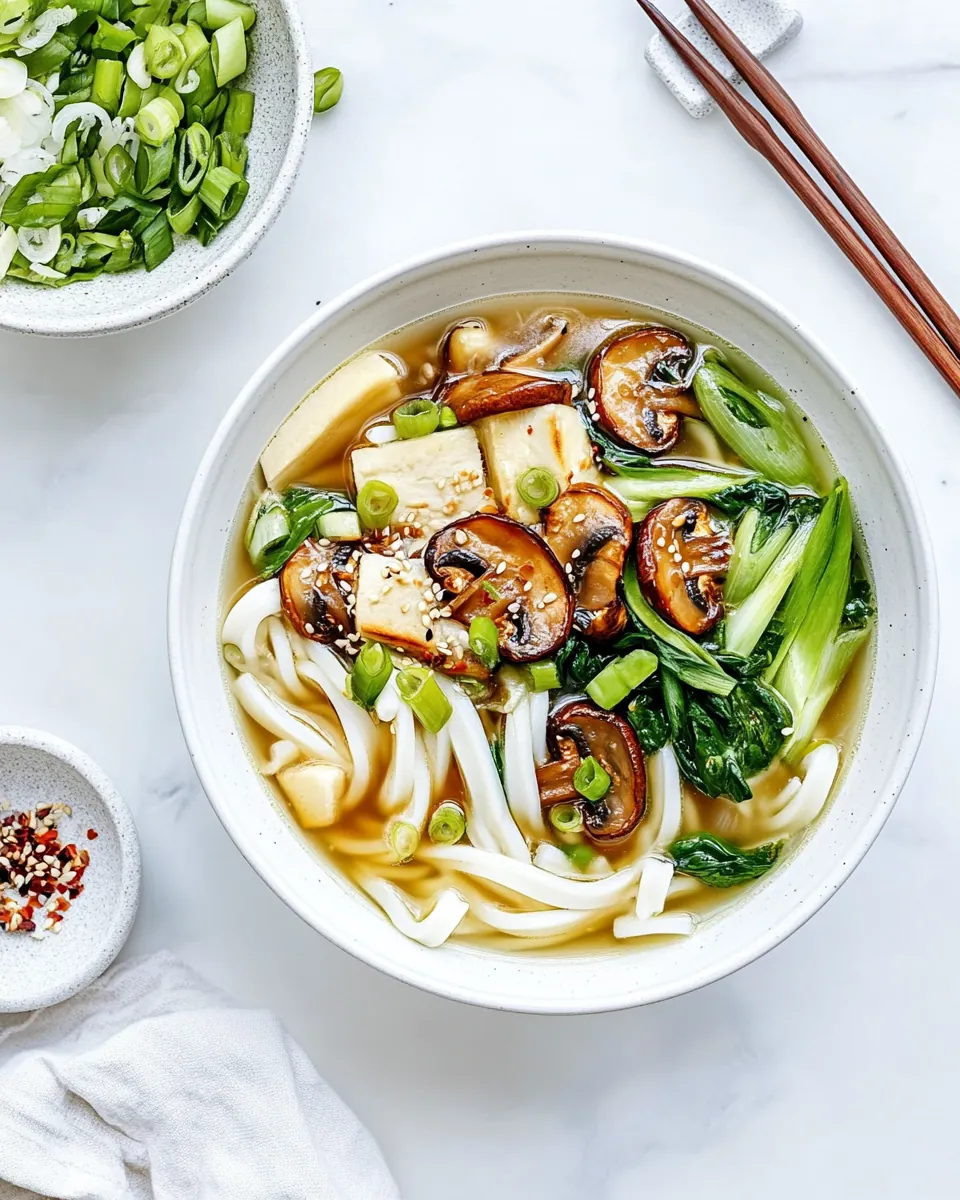
This recipe moves through a few simultaneous tracks, so stay organized and savor the sensory moments. Keep your dashi warm while your mushrooms roast and your udon noodles cook; that way every component finishes ready to assemble into a steaming bowl you will want to eat immediately.
- In a medium saucepan, combine 6 cups water with kombu and bring to a simmer. Add bonito flakes and simmer for 5 minutes to allow the flavors to absorb. Remove from heat and strain through a fine mesh sieve to remove solids. This is your basic dashi broth; keep it warm if you are using it immediately, or feel free to make it ahead of time and refrigerate/freeze until ready to use.: You will notice a gentle perfume of the sea as the kombu begins to release minerals into the water, almost like a soft ocean breeze; keep the heat gentle so the water does not come to a rolling boil, which could create a bitter edge. The visual cue is tiny bubbles forming around the edges and the kombu becoming plump and slightly translucent, not collapsing into mush. This slow warming extracts umami without harsh flavors, and it sets up the clean foundation for the broth. A typical misstep is boiling too vigorously, so maintain a light simmer and watch the pot closely, because overboiling can make the broth taste astringent.
- Whisk about 1/2 cup of warm dashi broth with miso paste in a small bowl until smooth. Pour into saucepan with remaining broth. Stir in ginger. Season to taste with additional soy sauce or miso as desired.: As the bonito flakes hit the hot liquid you will see them sink and then cloud the broth with smoky, savory particles; the aroma shifts from briny sea to something deeper and more rounded. After about five minutes the liquid smells layered and almost meaty without any actual meat present. Use a fine mesh sieve to strain the liquid, and press gently on the solids to release remaining flavor before discarding them. Avoid simmering for much longer than recommended, because prolonged cooking can exaggerate fishy notes, making the dashi less balanced.
- Meanwhile, preheat oven to 400 degrees F. Line a baking sheet with aluminum foil and spray lightly with cooking spray. Toss mushrooms with soy sauce and sesame oil and spread in a single layer on the baking sheet; bake for 10 to 15 minutes or until mushrooms are shrunken significantly in size and starting to brown.: The texture will transform as the white miso paste emulsifies into the warm broth, forming a silky, opaque mixture that dissolves back into the main pot without clumps. This technique preserves the delicate fermentation flavors of the miso, and it prevents gritty pockets of paste in the final soup. If you whisk the miso directly into boiling liquid, it can lose brightness, so temper it with warm dashi first for the best flavor profile. Troubleshooting note, if the miso seems too thick add a splash more warm dashi to loosen it, but avoid hot water which can change the miso's character.
- Cook noodles according to package instructions. Drain and divide among serving bowls. Ladle broth over noodles. Serve with steamed bok choy, cubed tofu, and top with sesame seeds and thinly sliced green onion, if desired.: Once the miso is smooth, incorporate it into the warm dashi and stir gently until the broth takes on a unified, creamy sheen and you sense the first notes of balanced umami. The smell will become rounder and slightly sweet, with hints of fermented depth. Keep the heat low after adding miso; high heat can diminish its delicate aromatics. A mistake to avoid is boiling the soup after miso is added, which can flatten the nuanced flavors you worked to build.
- Stir in ginger: The addition of finely grated ginger brightens the broth with a warm, crisp lift, adding an aromatic top note that complements the dashi and miso foundation. Stirring releases tiny bursts of ginger oil, which you can detect on the nose, and it cuts through any potential heaviness. Use a microplane for a fine grate so the fibers disperse evenly and do not create stringy bits in the mouth. Overdoing ginger is easy, so add conservatively and taste to adjust, because too much will make the broth peppery rather than harmonious.
- Season to taste with additional soy sauce or miso as desired: This is the moment to fine tune saltiness and depth; a small splash of soy sauce or a touch more miso will move the bowl toward your preferred savory point. Taste the broth warm and remember that it will flavor the noodles and tofu, so keep seasoning balanced. A common error is oversalting at this stage, so add incrementally and re-taste after each adjustment, because once salted there is no simple way to reverse it.
- Meanwhile, preheat oven to 400 degrees F: The hot oven will quickly coax moisture from the shiitake mushrooms , allowing them to brown and develop caramelized edges that provide concentrated flavor; you will hear a faint sizzle if they are juicy at first, then a soft crackling as they reduce. A visual cue is darkening edges and glossy surfaces as the mushrooms shrink. Avoid using a lower temperature which prolongs cooking and reduces caramelization; high, consistent heat yields the best roast.
- Line a baking sheet with aluminum foil and spray lightly with cooking spray: The foil makes cleanup effortless and a light spray prevents sticking, helping the mushrooms to brown evenly; you can also use parchment if preferred. Arrange the mushrooms in a single layer so each piece meets the hot metal and roasts instead of steaming. Overcrowding is the typical mistake here, causing soggy, pale mushrooms rather than browned, savory ones, so give them breathing room on the pan.
- Toss mushrooms with soy sauce and sesame oil and spread in a single layer on the baking sheet: The glossy coating of soy sauce and sesame oil helps the shiitake take on rich color and nutty aroma while roasting; you will smell toasted sesame as the oven works, and the mushrooms will release juices that concentrate into concentrated brown edges. This combination also seasons them so each bite is flavorful even without additional topping. Mistake to avoid, use too much sauce which can create a puddle and lead to steaming; a light toss is all you need.
- Bake for 10 to 15 minutes or until mushrooms are shrunken significantly in size and starting to brown: Watch as the mushrooms visibly reduce and their surfaces darken, then remove when they have a mix of deep brown edges and tender centers; that caramelization adds smoky, savory notes that contrast the silky broth. The sound of gentle sizzling should taper, and the oven aroma will turn richly savory. Do not leave them too long, because burnt edges become bitter, so check at the ten minute mark and adjust for your oven.
- Cook noodles according to package instructions: The frozen udon noodles usually need only a brief dunk in boiling water until they loosen and separate; they should be tender yet still have a pleasant chew when bitten. Drain promptly to avoid waterlogging, and if desired, rinse very briefly under warm water to remove excess starch that can cloud the broth. Overcooking will make them limp and cause the bowl to feel heavy, so follow package timing closely and test a strand for texture.
- Drain and divide among serving bowls: Arrange the udon noodles in warm bowls to help maintain the broth temperature, and portion evenly so each diner gets a satisfying base. The visual of neat nests of noodles invites the rest of the components, and warm bowls prevent the soup from cooling too quickly. A pitfall is using cold bowls which will chill the broth on contact, so pre-warm bowls if you can.
- Ladle broth over noodles: Pour the warm miso dashi gently over the noodles so steam rises and aromas mingle, creating a welcoming cloud of scent as you bring the bowl to the table. The broth should flow around the noodles, bathing them and setting the stage for the toppings to shine. If the broth seems thin, it is better to adjust with a touch more miso or a concentrated ladle of dashi rather than boiling to reduce, which can change flavor balance.
- Serve with steamed bok choy, cubed tofu, and top with sesame seeds and thinly sliced green onion, if desired: Finish each bowl with bright steamed bok choy for color and crunch, soft cubes of tofu for substance, and a scattering of toasted sesame seeds plus thinly sliced green onion for freshness and texture; the contrast in temperatures and textures makes every spoonful interesting. Present immediately so the toppings keep their texture and the broth remains hot. A common misstep is assembling too early which allows greens to wilt and tofu to cool, so serve promptly for best results.
Customization Ideas
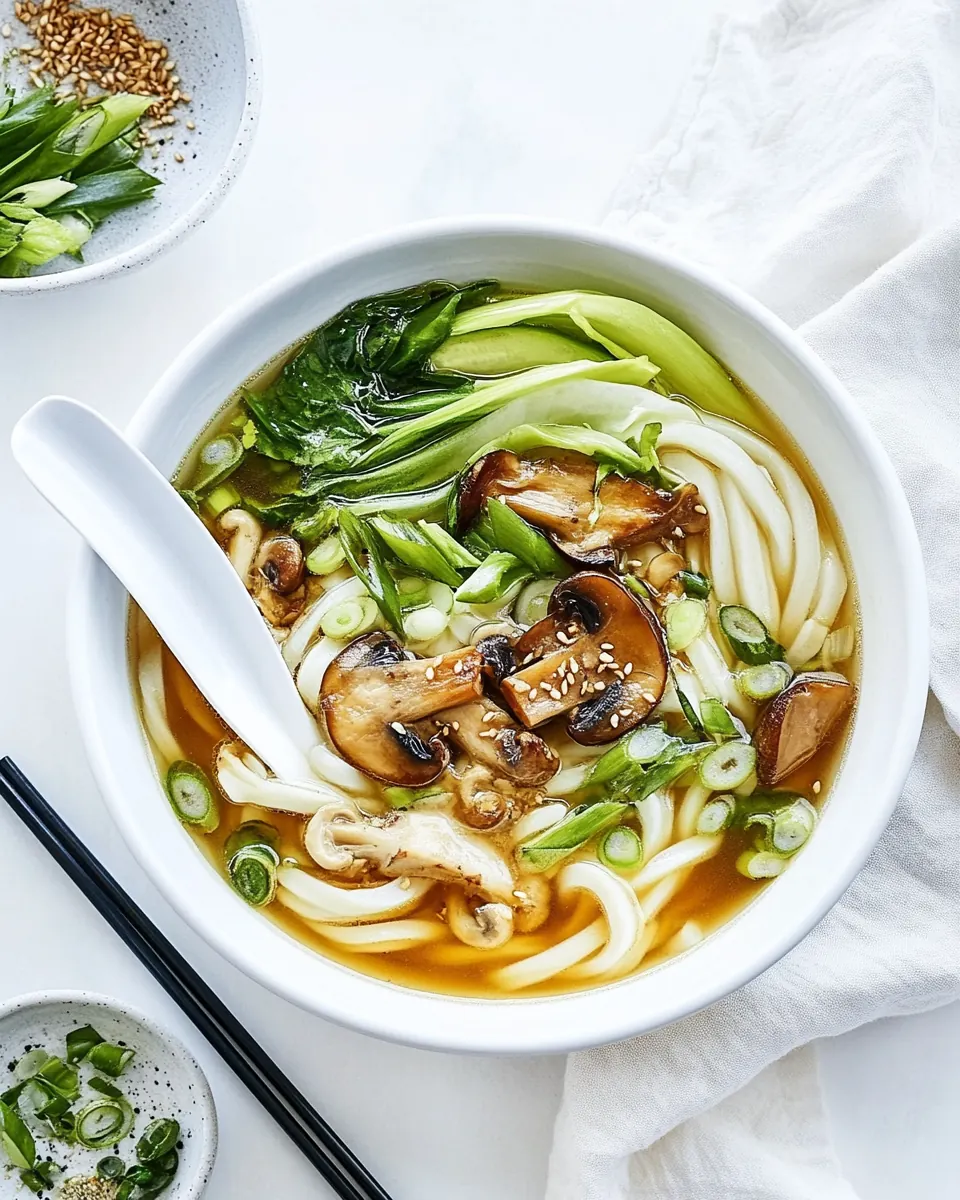
If you want to personalize Ginger Miso Udon Noodle Soup with Roasted Mushrooms, small adjustments make big differences. Below are tips to change texture, flavor intensity, and presentation while keeping the recipe reliable. Each item highlights a clear strategy so you can adapt the bowl to your pantry and mood.
- Adjust miso intensity — Start with the recommended amount of white miso paste and add a teaspoon at a time; this prevents over salting and allows you to reach the precise savory balance you prefer without masking the dashi’s subtlety.
- Boost mushroom caramelization — For deeper browning, increase oven temperature slightly and give mushrooms space on the pan; this concentrates flavor through Maillard reactions, producing richer, almost meaty bites that contrast the silky broth.
- Keep noodles springy — Cook the frozen udon noodles briefly and drain immediately; if needed, rinse them ever so lightly in warm water to remove excess starch that could make the broth cloudy and sticky.
- Make dashi ahead — Prepare the kombu and bonito flake dashi a day or two ahead and refrigerate, so assembly is faster on the day you plan to eat; reheat gently and avoid boiling to maintain clarity and flavor.
- Toast garnishes — Lightly toasting sesame seeds in a dry skillet brings out nutty oils, adding an aromatic crunch that elevates the final bowl; do this just before serving for freshest aroma.
- Texture variation with tofu — Pressing firm tofu before cubing yields a firmer bite that holds up in hot broth, while unpressed tofu is silkier and more custard like; choose based on the mouthfeel you prefer.
- Ginger control — Grate fresh ginger finely and add gradually, tasting as you go; a light hand keeps the broth balanced, while a touch more gives a warming lift that can be wonderful on cold nights.
What Complements This Ginger Miso Udon Noodle Soup with Roasted Mushrooms
This soup pairs well with simple sides and occasions where warm comfort is welcome. Below are serving ideas, seasonal pairings, and storage notes to help you plan meals around the bowl. Think about texture, temperature, and atmosphere when choosing complements.
- Light pickles for contrast — Serve a small plate of quick pickled cucumber or daikon to add bright acidity that cuts through the umami richness and refreshes the palate between bites, perfect for a cozy dinner.
- Simple steamed rice — Offer a bowl of plain steamed rice on the side to soak up extra broth; it makes the meal more filling and is ideal when serving the soup for a casual family dinner.
- Seasonal greens — During winter, pair the soup with roasted root vegetables or sautéed leafy greens for added heartiness; in milder months, a crisp green salad with a light citrus dressing provides a refreshing counterpoint.
- Occasions — This recipe is perfect for weeknight dinners, quiet solo suppers, or serving during Ramadan Iftar as a restorative, nourishing bowl that is easy on the stomach and quick to prepare.
- Storage tips — Keep dashi and broth separate from noodles and toppings when storing leftovers; refrigerate in airtight containers for up to three days, and reheat gently to preserve the miso‘s character and avoid overcooking the noodles.
- Make ahead strategy — Roast mushrooms and prepare dashi in advance, then reheat and assemble at serving time so you preserve the textures of the toppings and deliver a hot, vibrant bowl quickly.
- Presentation — Arrange udon noodles as a nest, place toppings deliberately, and finish with toasted sesame seeds and sliced green onion for a restaurant style look even at a simple weeknight meal.
FAQ
Conclusion
This Ginger Miso Udon Noodle Soup with Roasted Mushrooms is special because it layers traditional Japanese umami with simple techniques to produce a deeply flavorful, comforting bowl. Give it a try on a cool evening when you want a satisfying, nourishing meal that is both quick to assemble and rich in texture. I hope it becomes a go to for you, offering that warm, balanced comfort and a little kitchen joy each time you make it.
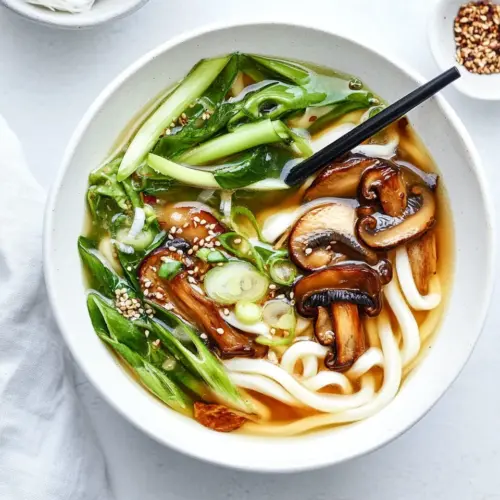
Ginger Miso Udon Noodle Soup with Roasted Mushrooms
Equipment
- Medium Saucepan
- Fine mesh sieve
- Small Bowl
- Baking Sheet
- Oven
Ingredients
- 1 2-inch piece kombu (dried kelp) Soak the kombu briefly to draw out umami-rich glutamates and form the mineral backbone of the dashi stock; remove before simmering to avoid bitterness and preserve its delicate sea flavor. Use a 2-inch piece to gently perfume the broth and add depth without overpowering the soup. Kombu also contributes subtle iodine and mouthfeel that balance the miso and ginger components.
- 1 cup dried bonito flakes Simmer the bonito flakes to create a smoky, savory dashi when combined with kombu, providing a traditional Japanese umami foundation for the soup. Steep one cup and strain to capture a clean, aromatic stock that marries with miso and ginger for complexity. Bonito imparts smoky, briny notes that lift the overall flavor profile and harmonize with roasted mushrooms.
- 2 tablespoons white miso paste Dissolve the white miso paste into warm dashi to add creamy, fermented sweetness and rounded savory depth to the broth base. Stir two tablespoons in at low heat to preserve beneficial probiotics and avoid boiling which can dull its nuanced flavors. Miso balances salty and sweet while providing body and a gentle tang that complements soy and sesame.
- 1 teaspoon finely grated fresh ginger Grate the fresh ginger finely to release bright, spicy aromatics that cut through the richness of miso and tofu and enliven the broth. Use one teaspoon for a warm, zesty lift without overpowering the other components, adding a refreshing contrast to roasted mushrooms and umami dashi. Ginger also aids digestion and adds a pleasant, peppery heat.
- 8 ounces shiitake mushrooms Roast the shiitake mushrooms to concentrate their meaty, umami-rich flavors and add textural contrast to the soup. Use eight ounces, trimming stems as needed, to provide earthy, savory bites that pair perfectly with miso and bonito-based dashi. Shiitakes contribute depth, a chewy bite, and an intense mushroom aroma that enhances the overall savoriness.
- 1 tablespoon soy sauce Season the broth with soy sauce to introduce salty, fermented complexity and deepen the savory backbone without overwhelming the miso. Add one tablespoon towards the end of cooking to fine-tune seasoning and enhance color and umami. Soy also helps marry the flavors of dashi, tofu, and roasted mushrooms.
- 1 teaspoon sesame oil Drizzle sesame oil for a nutty, aromatic finish that rounds out the soup and ties together Asian flavor elements. Use one teaspoon lightly to avoid masking delicate dashi and miso notes while adding a warm, toasty scent. Sesame oil also complements roasted mushrooms and green onion garnish for an inviting aroma.
- 4 servings frozen udon noodles (you can also use dried, but trust me that frozen are so much better!) Cook the frozen udon noodles until tender to provide chewy, satisfying body that soaks up the flavorful broth and balances the soup's textures. Use four servings of frozen noodles for ease and ideal texture; rinsing briefly after cooking prevents clumping. Udon acts as the comforting starch component that makes this dish filling and slurp-worthy.
- 4 baby bok choy, halved and steamed Steam the halved baby bok choy to preserve bright color, crisp-tender texture, and mild, slightly bitter greens that contrast the rich broth. Prepare four halved heads and gently fold into the soup just before serving to keep stems tender and leaves vibrant. Bok choy adds freshness, crunch, and nutritional balance to the bowl.
- 4 servings firm tofu, cut into cubes Cube the firm tofu to contribute silky, protein-rich pieces that absorb broth flavors and provide a soft, creamy contrast to roasted mushrooms. Use four servings of firm tofu, gently warmed in the soup to maintain shape and add heartiness. Tofu balances the dish nutritionally while offering a neutral canvas for the miso and soy flavors.
- sesame seeds and thinly sliced green onion, for garnish. Toast the sesame seeds and slice green onion thinly to garnish, adding crunchy texture and sharp, fresh brightness to each bowl before serving. Sprinkle lightly to finish with nutty crunch and crisp, oniony notes that elevate aroma and presentation. Garnishes provide visual contrast and a final layer of flavor to the completed soup.
Instructions
- In a medium saucepan, combine 6 cups water with kombu and bring to a simmer. Add bonito flakes and simmer for 5 minutes to allow the flavors to absorb. Remove from heat and strain through a fine mesh sieve to remove solids. This is your basic dashi broth; keep it warm if you are using it immediately, or feel free to make it ahead of time and refrigerate/freeze until ready to use.: You will notice a gentle perfume of the sea as the kombu begins to release minerals into the water, almost like a soft ocean breeze; keep the heat gentle so the water does not come to a rolling boil, which could create a bitter edge. The visual cue is tiny bubbles forming around the edges and the kombu becoming plump and slightly translucent, not collapsing into mush. This slow warming extracts umami without harsh flavors, and it sets up the clean foundation for the broth. A typical misstep is boiling too vigorously, so maintain a light simmer and watch the pot closely, because overboiling can make the broth taste astringent.
- Whisk about 1/2 cup of warm dashi broth with miso paste in a small bowl until smooth. Pour into saucepan with remaining broth. Stir in ginger. Season to taste with additional soy sauce or miso as desired.: As the bonito flakes hit the hot liquid you will see them sink and then cloud the broth with smoky, savory particles; the aroma shifts from briny sea to something deeper and more rounded. After about five minutes the liquid smells layered and almost meaty without any actual meat present. Use a fine mesh sieve to strain the liquid, and press gently on the solids to release remaining flavor before discarding them. Avoid simmering for much longer than recommended, because prolonged cooking can exaggerate fishy notes, making the dashi less balanced.
- Meanwhile, preheat oven to 400 degrees F. Line a baking sheet with aluminum foil and spray lightly with cooking spray. Toss mushrooms with soy sauce and sesame oil and spread in a single layer on the baking sheet; bake for 10 to 15 minutes or until mushrooms are shrunken significantly in size and starting to brown.: The texture will transform as the white miso paste emulsifies into the warm broth, forming a silky, opaque mixture that dissolves back into the main pot without clumps. This technique preserves the delicate fermentation flavors of the miso, and it prevents gritty pockets of paste in the final soup. If you whisk the miso directly into boiling liquid, it can lose brightness, so temper it with warm dashi first for the best flavor profile. Troubleshooting note, if the miso seems too thick add a splash more warm dashi to loosen it, but avoid hot water which can change the miso's character.
- Cook noodles according to package instructions. Drain and divide among serving bowls. Ladle broth over noodles. Serve with steamed bok choy, cubed tofu, and top with sesame seeds and thinly sliced green onion, if desired.: Once the miso is smooth, incorporate it into the warm dashi and stir gently until the broth takes on a unified, creamy sheen and you sense the first notes of balanced umami. The smell will become rounder and slightly sweet, with hints of fermented depth. Keep the heat low after adding miso; high heat can diminish its delicate aromatics. A mistake to avoid is boiling the soup after miso is added, which can flatten the nuanced flavors you worked to build.
- Stir in ginger: The addition of finely grated ginger brightens the broth with a warm, crisp lift, adding an aromatic top note that complements the dashi and miso foundation. Stirring releases tiny bursts of ginger oil, which you can detect on the nose, and it cuts through any potential heaviness. Use a microplane for a fine grate so the fibers disperse evenly and do not create stringy bits in the mouth. Overdoing ginger is easy, so add conservatively and taste to adjust, because too much will make the broth peppery rather than harmonious.
- Season to taste with additional soy sauce or miso as desired: This is the moment to fine tune saltiness and depth; a small splash of soy sauce or a touch more miso will move the bowl toward your preferred savory point. Taste the broth warm and remember that it will flavor the noodles and tofu, so keep seasoning balanced. A common error is oversalting at this stage, so add incrementally and re-taste after each adjustment, because once salted there is no simple way to reverse it.
- Meanwhile, preheat oven to 400 degrees F: The hot oven will quickly coax moisture from the shiitake mushrooms , allowing them to brown and develop caramelized edges that provide concentrated flavor; you will hear a faint sizzle if they are juicy at first, then a soft crackling as they reduce. A visual cue is darkening edges and glossy surfaces as the mushrooms shrink. Avoid using a lower temperature which prolongs cooking and reduces caramelization; high, consistent heat yields the best roast.
- Line a baking sheet with aluminum foil and spray lightly with cooking spray: The foil makes cleanup effortless and a light spray prevents sticking, helping the mushrooms to brown evenly; you can also use parchment if preferred. Arrange the mushrooms in a single layer so each piece meets the hot metal and roasts instead of steaming. Overcrowding is the typical mistake here, causing soggy, pale mushrooms rather than browned, savory ones, so give them breathing room on the pan.
- Toss mushrooms with soy sauce and sesame oil and spread in a single layer on the baking sheet: The glossy coating of soy sauce and sesame oil helps the shiitake take on rich color and nutty aroma while roasting; you will smell toasted sesame as the oven works, and the mushrooms will release juices that concentrate into concentrated brown edges. This combination also seasons them so each bite is flavorful even without additional topping. Mistake to avoid, use too much sauce which can create a puddle and lead to steaming; a light toss is all you need.
- Bake for 10 to 15 minutes or until mushrooms are shrunken significantly in size and starting to brown: Watch as the mushrooms visibly reduce and their surfaces darken, then remove when they have a mix of deep brown edges and tender centers; that caramelization adds smoky, savory notes that contrast the silky broth. The sound of gentle sizzling should taper, and the oven aroma will turn richly savory. Do not leave them too long, because burnt edges become bitter, so check at the ten minute mark and adjust for your oven.
- Cook noodles according to package instructions: The frozen udon noodles usually need only a brief dunk in boiling water until they loosen and separate; they should be tender yet still have a pleasant chew when bitten. Drain promptly to avoid waterlogging, and if desired, rinse very briefly under warm water to remove excess starch that can cloud the broth. Overcooking will make them limp and cause the bowl to feel heavy, so follow package timing closely and test a strand for texture.
- Drain and divide among serving bowls: Arrange the udon noodles in warm bowls to help maintain the broth temperature, and portion evenly so each diner gets a satisfying base. The visual of neat nests of noodles invites the rest of the components, and warm bowls prevent the soup from cooling too quickly. A pitfall is using cold bowls which will chill the broth on contact, so pre-warm bowls if you can.
- Ladle broth over noodles: Pour the warm miso dashi gently over the noodles so steam rises and aromas mingle, creating a welcoming cloud of scent as you bring the bowl to the table. The broth should flow around the noodles, bathing them and setting the stage for the toppings to shine. If the broth seems thin, it is better to adjust with a touch more miso or a concentrated ladle of dashi rather than boiling to reduce, which can change flavor balance.
- Serve with steamed bok choy, cubed tofu, and top with sesame seeds and thinly sliced green onion, if desired: Finish each bowl with bright steamed bok choy for color and crunch, soft cubes of tofu for substance, and a scattering of toasted sesame seeds plus thinly sliced green onion for freshness and texture; the contrast in temperatures and textures makes every spoonful interesting. Present immediately so the toppings keep their texture and the broth remains hot. A common misstep is assembling too early which allows greens to wilt and tofu to cool, so serve promptly for best results.
Notes
- Adjust miso intensity — Start with the recommended amount of white miso paste and add a teaspoon at a time; this prevents over salting and allows you to reach the precise savory balance you prefer without masking the dashi's subtlety.
- Boost mushroom caramelization — For deeper browning, increase oven temperature slightly and give mushrooms space on the pan; this concentrates flavor through Maillard reactions, producing richer, almost meaty bites that contrast the silky broth.
- Keep noodles springy — Cook the frozen udon noodles briefly and drain immediately; if needed, rinse them ever so lightly in warm water to remove excess starch that could make the broth cloudy and sticky.
- Make dashi ahead — Prepare the kombu and bonito flake dashi a day or two ahead and refrigerate, so assembly is faster on the day you plan to eat; reheat gently and avoid boiling to maintain clarity and flavor.
- Toast garnishes — Lightly toasting sesame seeds in a dry skillet brings out nutty oils, adding an aromatic crunch that elevates the final bowl; do this just before serving for freshest aroma.
- Texture variation with tofu — Pressing firm tofu before cubing yields a firmer bite that holds up in hot broth, while unpressed tofu is silkier and more custard like; choose based on the mouthfeel you prefer.
- Ginger control — Grate fresh ginger finely and add gradually, tasting as you go; a light hand keeps the broth balanced, while a touch more gives a warming lift that can be wonderful on cold nights.