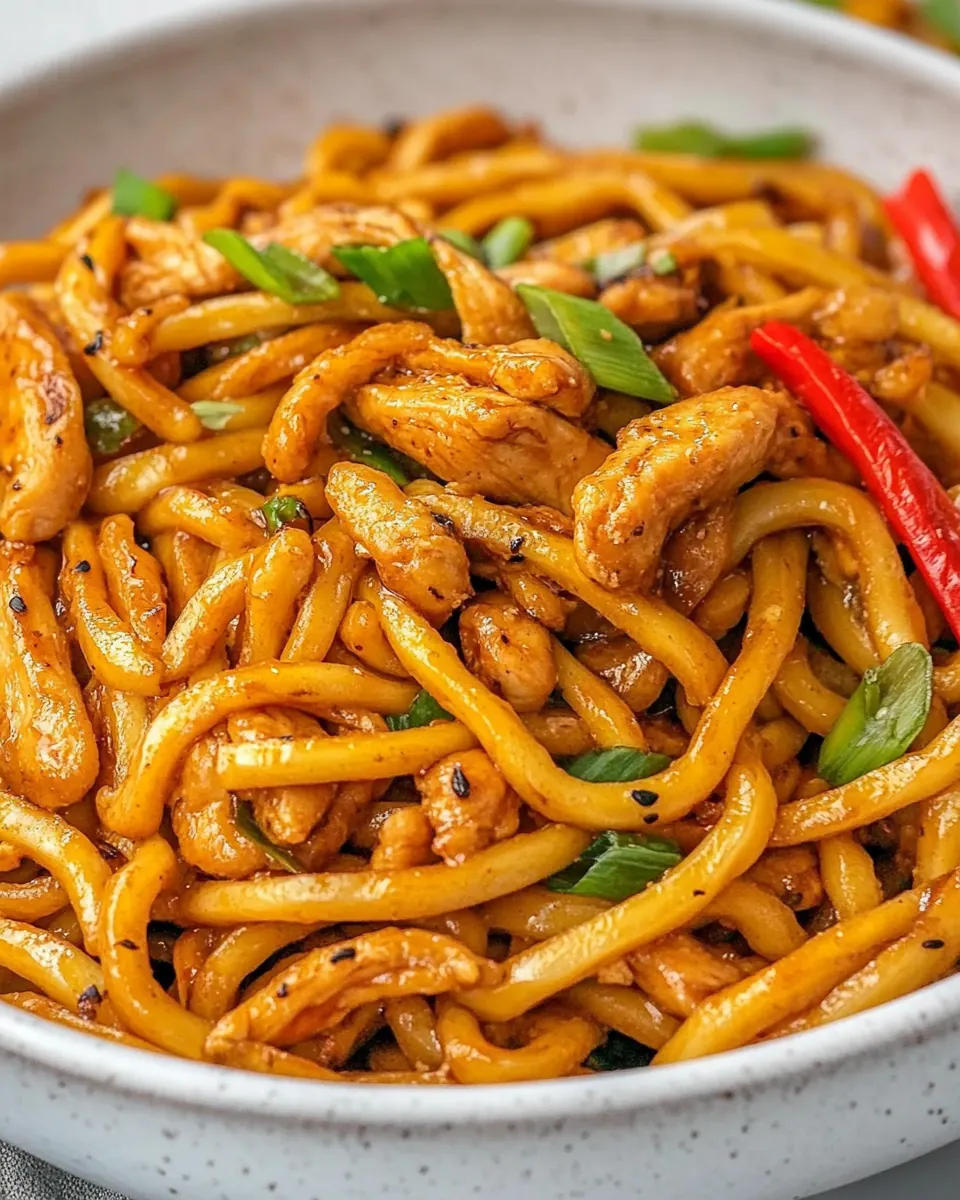
Ginger Chicken Udon Noodles
Ginger Chicken Udon Noodles is the kind of bowl I crave when I want something warm, quick, and deeply satisfying after a long day. The first time I made it I was exhausted from travel, carrying groceries and a stubborn jet lag, and this recipe unfolded like a tiny rescue mission: bright ginger, savory soy, and tender chicken tossed with chewy udon noodles. I remember leaning over the skillet, inhaling that steam and thinking how lucky I was that such comfort could come together so fast.
Since then, Ginger Chicken Udon Noodles has earned a spot in my weeknight rotation. I love that it asks for simple pantry items, yet rewards you with layered flavors and texture contrasts. There is a playful crackle when the cabbage hits the hot oil, and the scent of grated ginger hits your nose in a way that feels both bright and grounding. I often make a double batch of the sauce so I can drizzle extra over leftovers. When friends drop by, this dish never feels fussy, it feels generous.
Recipe Snapshot
30 mins
15 mins
15 mins
Easy
450 kcal
Asian
Gluten-Free, Paleo
Dinner
Large skillet, Mixing bowl, Tongs
Why This Ginger Chicken Udon Noodles Hits Different
Flavor Harmony
I adore how Ginger Chicken Udon Noodles balances bold and subtle notes. The salty depth of soy sauce plays off the fresh bite of ginger and the gentle sweetness of honey. I find that the chili crisp adds a lively heat without stealing the show, so every mouthful tastes layered and thoughtful.
Speed Without Sacrifice
One major reason I keep returning to this recipe is speed. From prep to plate it moves fast, yet you do not trade quality for time. Thinly sliced chicken cooks in minutes, and stir frying the cabbage and carrot keeps them crisp tender. I can have dinner on the table and still feel like I made something worth savoring.
Texture Contrast
The combination of soft udon noodles, juicy chicken, and crunchy vegetables creates a pleasing mouthfeel. I especially love the toasted sesame seeds sprinkled on top, they add a nutty finish and tiny pops of texture. That contrast is what turns a simple noodle bowl into a memorable meal.
Flexible and Practical
I’ve adapted this dish for what I have on hand many times. The recipe takes substitutions beautifully, so it is forgiving when life gets chaotic. I also appreciate that the sauce doubles as a quick marinade or a dipping sauce for other dishes, which makes me value the recipe beyond just this one bowl.
Comfort with Brightness
Finally, this is comfort food that does not feel heavy. The ginger keeps things lively, the vinegar lifts the palate, and the chili crisp offers warmth. Every time I make Ginger Chicken Udon Noodles, it reminds me that comfort can be clean, balanced, and bright all at once.
Ingredients to Make Ginger Chicken Udon Noodles
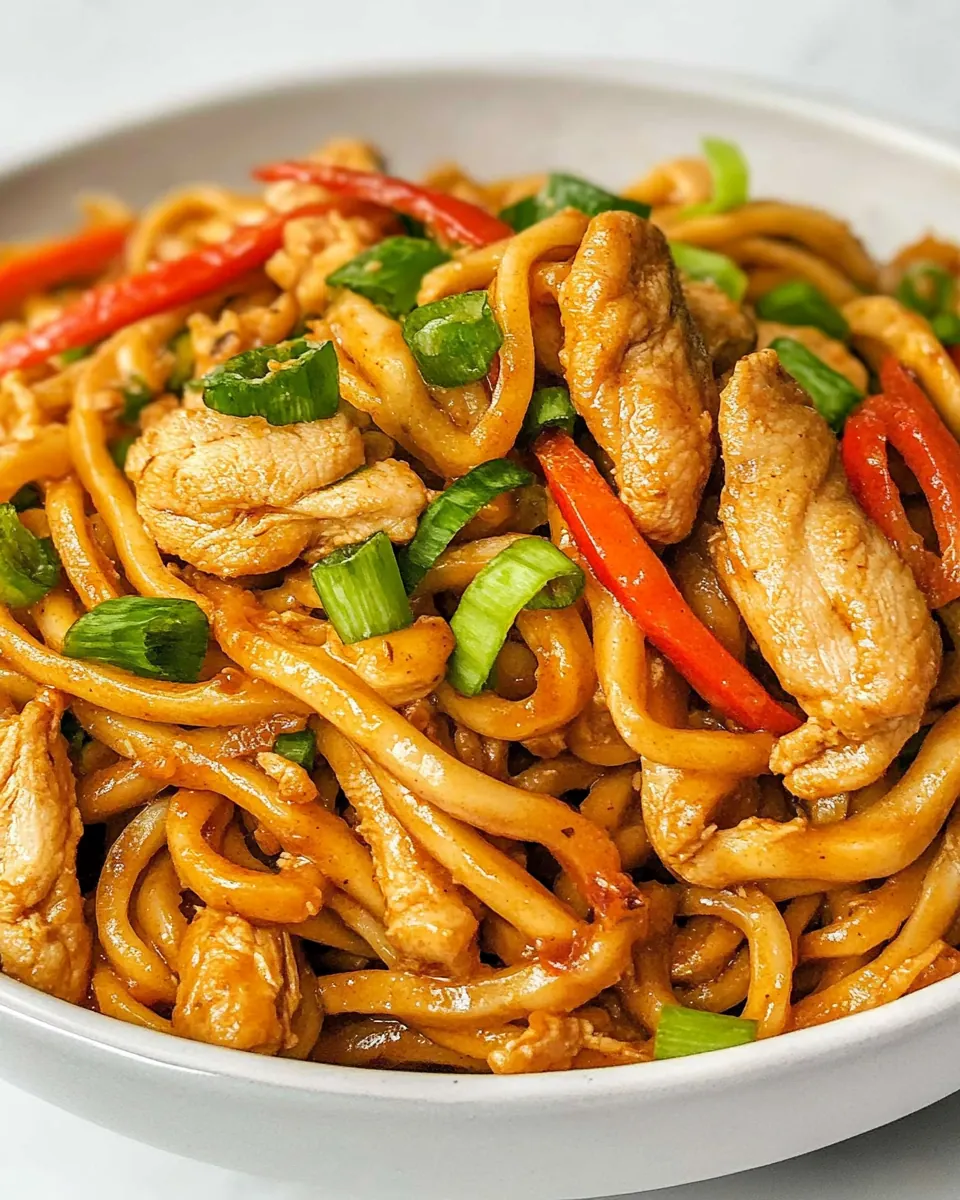
I choose ingredients that are simple yet purposeful. Each element contributes either a flavor anchor, texture, or aromatic lift. The sauce components bring salty, sweet, tangy, and spicy notes while the protein and vegetables provide body and bite. Together they create a cohesive bowl that is greater than the sum of its parts.
- 3 tablespoons low-sodium soy sauce: Adds a savory, salty foundation and umami complexity to the sauce; balances sweet and spicy elements while helping to tenderize the chicken when used in marinades. Opt for low-sodium to control overall saltiness and allow other seasonings to shine through in the finished dish.
- 1 tablespoon rice vinegar: Brightens the sauce with mild acidity, cutting through richness and balancing sweet and salty flavors; assists in tenderizing proteins slightly when combined with soy sauce. Use rice vinegar for its subtle, slightly sweet tang that complements Asian-style noodle dishes.
- 1 tablespoon honey: Provides sweetness and helps create a glossy sauce that clings to noodles and chicken; balances the heat from chili crisp and the acidity from rice vinegar. Honey also contributes a mellow flavor and slight viscosity, improving sauce texture.
- 1 tablespoon Sichuan chili crisp: Delivers concentrated heat, aromatic chili oil, and crunchy bits that infuse the dish with bold, spicy, and savory notes; acts as both seasoning and condiment in the sauce. Choose Sichuan chili crisp for its layered flavors of chili, garlic, and fermented elements that elevate the udon.
- 2 cloves garlic: Lends pungent, aromatic depth and sharpness when minced or grated, supporting savory flavors and enhancing umami perception in the sauce and stir-fry. Garlic also browns quickly, contributing to the overall aromatic base when cooked briefly in oil.
- 2 tablespoons grated ginger root: Contributes bright, warm, zesty heat and fresh aromatic character; helps enliven the sauce and pairs well with soy and chili flavors. Grated ginger also aids digestion and adds a slightly fibrous texture when incorporated into marinades and stir-fries.
- 2 3 tablespoons water: Adjusts sauce consistency to achieve desired coating for noodles and chicken while preventing the sauce from becoming too thick; useful for loosening the sauce during cooking. Start with the lower amount and add more as needed to reach a smooth, glossy finish.
- 2 tablespoons neutral cooking oil: Provides a neutral frying medium for searing chicken and sautéing vegetables without imparting strong flavor; ensures even browning and helps distribute aromatics like garlic and ginger. Use a high smoke-point oil to maintain clean flavors and prevent burning.
- 1 pound thinly-sliced boneless, skinless chicken thighs: Supplies tender, flavorful protein that absorbs the marinade and sauce; thin slices cook quickly for even browning and remain juicy when not overcooked. Boneless, skinless thighs offer more fat and succulence than breast meat, enhancing the overall mouthfeel of the dish.
- 3 cups shredded green or Napa cabbage: Adds crunchy, mildly sweet, and slightly peppery texture that contrasts with soft noodles and tender chicken; quickly wilts when tossed in the hot pan to retain some bite and freshness. Shredded green or Napa cabbage also soaks up sauce, contributing volume and color.
- 1 large carrot: Introduces natural sweetness, color, and slight firmness when julienned or thinly sliced; cooks quickly in a hot pan and complements cabbage and scallions in both flavor and texture. Carrot also adds visual appeal and a pleasant earthy note to the stir-fry.
- 3 scallions: Contributes a mild oniony bite and fresh herbal lift when thinly sliced and added at the end of cooking; provides aromatic garnish and textural contrast. Scallions also add a bright green color and can be used both cooked and raw for varying intensity.
- 1 pound cooked udon noodles: Delivers chewy, substantial body and soaks up sauce, forming the central carbohydrate of the meal; pre-cooked udon reheats quickly and picks up flavors from the stir-fry. Use cooked noodles to reduce cooking time and prevent overcooking while achieving a silky texture.
- toasted sesame seeds: Adds nutty flavor, slight crunch, and a finishing visual flourish when sprinkled over the finished dish; enhances aroma and provides small bursts of toasted sesame richness. Use toasted sesame seeds sparingly to complement rather than overpower the other flavors.
Step by Step Guide for Ginger Chicken Udon Noodles
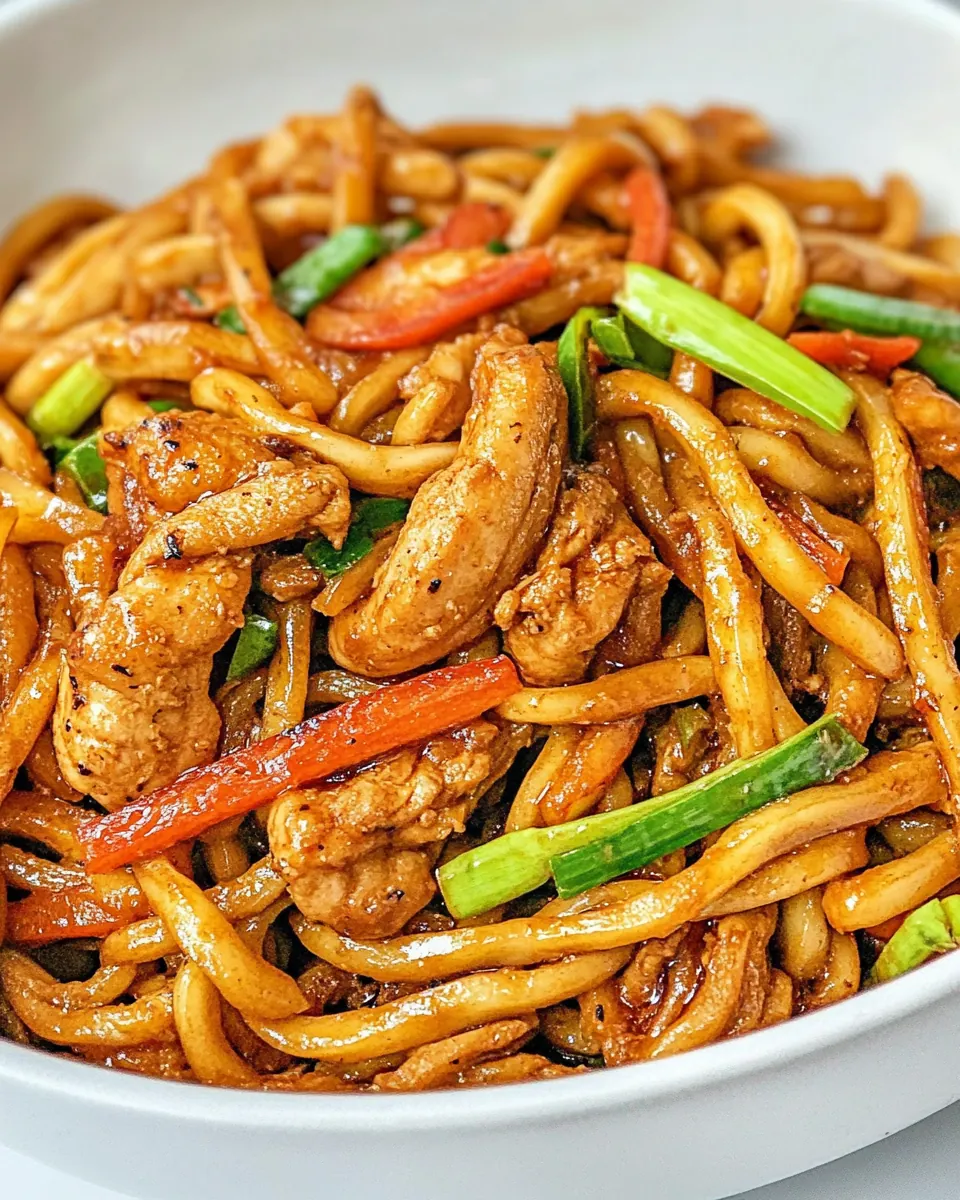
Follow a straightforward sequence to build flavors in layers. The method prioritizes quick searing of the chicken, then gently cooking the vegetables, and finally marrying everything with the sauce and the udon noodles. Keep your mise en place handy and use a hot skillet for best results.
- In a small bowl, whisk together the soy sauce, rice vinegar, honey, chili crisp, garlic, ginger, and water until smooth.: Right away you will notice the aroma of grated ginger and minced garlic mingling with the sweet and tangy elements, a scent that signals the flavor profile to come. Whisking releases the oils from the chili crisp and helps the honey dissolve, creating a glossy sauce that will cling to the udon noodles . If the mixture seems too thick, a little extra water will loosen it and make tossing easier. Common mistake to avoid is skipping the whisking step, which can leave clumps of honey or uneven heat distribution in the sauce.
- Heat 1 tablespoon of oil in a large skillet over medium-high heat. Add the chicken and cook for 4–6 minutes, stirring occasionally, until browned and cooked through. Transfer to a plate.: As the chicken hits the hot oil you should hear a confident sizzle, and after a couple of minutes the edges will caramelize to a golden brown, locking in juices. Cook in a single layer if possible so pieces brown rather than steam. Move the chicken when a nice crust has formed, and transfer it off heat while you prepare the vegetables to prevent overcooking. A frequent error is crowding the pan, which lowers the temperature and prevents browning, causing a stewy texture instead of a caramelized exterior.
- In the same skillet, add the remaining 1 tablespoon of oil, followed by the cabbage and carrot. Cook for 2–3 minutes until wilted and lightly browned. Add the scallion whites and cook for another minute.: The residual fond from cooking the chicken will flavor the vegetables, creating sweet browned bits and a richer overall taste. Toss the shredded cabbage and julienned carrot so they soften but still offer crispness, you want tender crunch not mush. Adding the scallion whites near the end releases their milder onion flavor without burning. Avoid overcooking which makes the cabbage limp and flabby rather than pleasantly textured.
- Add the noodles to the skillet and toss well.: When the udon noodles enter the pan you will feel the texture shift as they warm and pick up residual flavors, and they will begin to steam and loosen. Use tongs or chopsticks to separate any clumped strands so the sauce can coat each piece. The noodles should be hot through and supple, not rubbery or falling apart. One trap to avoid is adding cold straight from the fridge without loosening them, which can cause clumping and uneven heating.
- Return the chicken to the pan, add the scallion greens, and pour in the sauce. Toss everything together until the noodles are coated and heated through, 1–2 minutes.: At this stage the combined aromas intensify, with the sauce becoming glossy and clinging to the noodles and meat. Toss continuously so the heat distributes evenly and the sauce reduces slightly, concentrating flavors and coating each strand. The scallion greens wilt slightly and offer a fresh counterpoint to the rich sauce. Be careful not to overheat once everything is mixed, because prolonged high heat can toughen the chicken and dry out the noodles.
- Serve with extra chili crisp, sesame seeds, or scallion greens if desired.: Plating releases the final sensory cues, the steam carrying savory perfume while the sesame seeds add a toasty aroma. Garnish thoughtfully, sprinkling toasted seeds and a few extra scallion ribbons for color and snap. Offering extra chili crisp on the side lets each person control heat. A common misstep is serving immediately without tasting, you might want a small splash more soy or vinegar to balance the bowl before presenting.
Recipe Variations about Ginger Chicken Udon Noodles
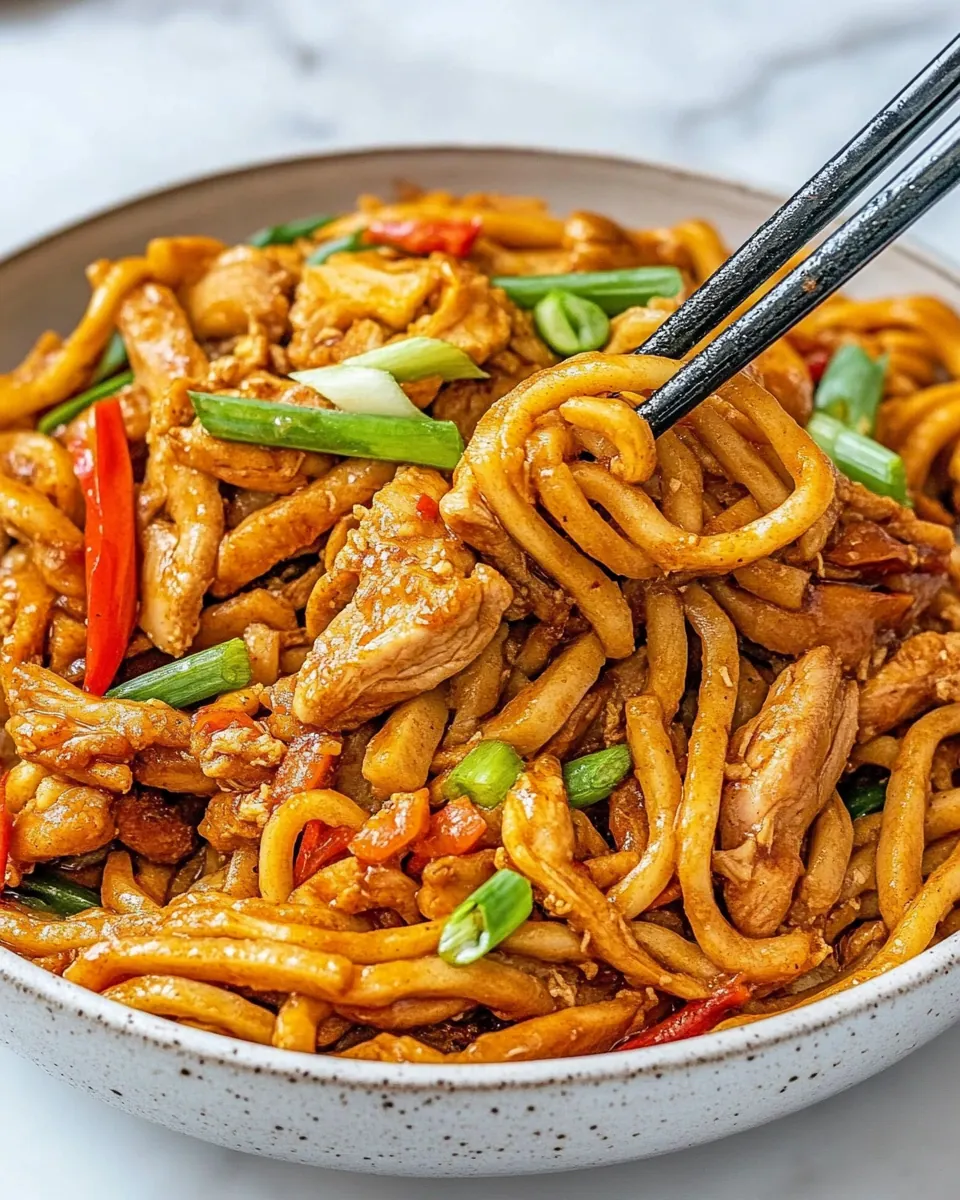
I like offering variations so this recipe feels personal and flexible. Small swaps change the texture or spice level without losing the essence of the bowl. Below are practical tweaks I use when I want a different vibe or must work with what I have.
- Make the sauce thicker Whisk 1 teaspoon of cornstarch with the sauce in step 1 to achieve a silkier, clingier finish that adheres to the udon noodles and chicken.
- Faster prep Use pre shredded cabbage and pre cooked udon noodles to cut assembly time, ensuring you still pat the noodles dry so the sauce sticks properly.
- Ginger and garlic prep Use a microplane to grate the ginger and garlic, which releases more juice and aroma than mincing and blends seamlessly into the sauce.
- Slicing trick for chicken Partially freeze the chicken for 20 minutes for cleaner, thinner slices that sear evenly and speed up cooking.
- Vegetable swaps Substitute Napa cabbage with green cabbage bok choy or shredded kale to change texture and flavor, while keeping the same cooking method.
- Leftover friendly This dish is an excellent fridge cleaner; add pre cooked vegetables or a bag of coleslaw to the skillet in place of fresh cabbage to reduce prep time.
What to Pair With Ginger Chicken Udon Noodles
This dish pairs well with light sides and simple accompaniments that complement its savory and bright notes. For lunches and casual dinners I like something cool and crisp on the side. For special occasions, consider adding an appetizer to elevate the meal. Below are practical serving suggestions, storage tips, and seasonal ideas to round out the experience.
- Steamed dumplings as a side Serve small steamed dumplings for a comforting combo that adds textural variety without overpowering the flavors of the noodles.
- Pickled vegetables A small bowl of pickled cucumber or radish adds an acidic pop that refreshes the palate between bites of the savory udon noodles.
- Light cucumber salad A simple cucumber salad with rice vinegar and a pinch of sugar provides cooling contrast and is especially nice in warm weather.
- Occasions This recipe is perfect for easy weeknight dinners quick lunches or casual gatherings where you want flavorful food without fuss.
- Storage tips Store leftovers in an airtight container in the fridge for up to three days. Reheat gently in a skillet with a splash of water to loosen the sauce and prevent drying.
- Seasonal pairing In cooler months you can serve this with a warm miso soup, while in spring and summer a bright citrusy salad complements the ginger notes well.
FAQ
Conclusion
Ginger Chicken Udon Noodles shines because it combines speedy technique with deeply layered flavors and satisfying textures. The bright kick of fresh ginger, the savory honey soy sauce, and tender slices of chicken come together with chewy udon for a bowl that feels both comforting and vibrant. I encourage you to give this recipe a try on a busy weeknight, and tune the heat and seasoning to match your taste. It is one of those recipes that rewards small tweaks and becomes a dependable favorite, perfect for sharing or enjoying solo.
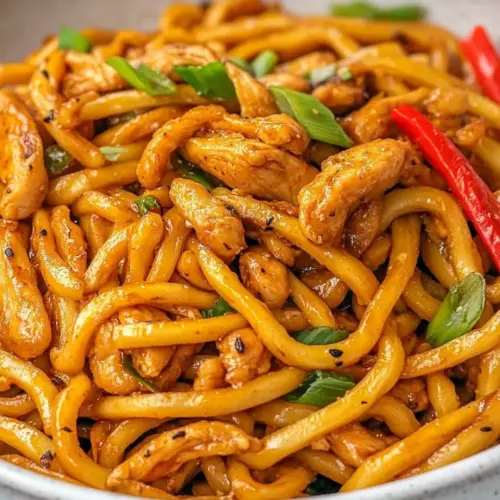
Ginger Chicken Udon Noodles
Equipment
- Large Skillet
- Mixing Bowl
- Tongs
Ingredients
- 3 tablespoons low-sodium soy sauce Adds a savory, salty foundation and umami complexity to the sauce; balances sweet and spicy elements while helping to tenderize the chicken when used in marinades. Opt for low-sodium to control overall saltiness and allow other seasonings to shine through in the finished dish.
- 1 tablespoon rice vinegar Brightens the sauce with mild acidity, cutting through richness and balancing sweet and salty flavors; assists in tenderizing proteins slightly when combined with soy sauce. Use rice vinegar for its subtle, slightly sweet tang that complements Asian-style noodle dishes.
- 1 tablespoon honey Provides sweetness and helps create a glossy sauce that clings to noodles and chicken; balances the heat from chili crisp and the acidity from rice vinegar. Honey also contributes a mellow flavor and slight viscosity, improving sauce texture.
- 1 tablespoon Sichuan chili crisp Delivers concentrated heat, aromatic chili oil, and crunchy bits that infuse the dish with bold, spicy, and savory notes; acts as both seasoning and condiment in the sauce. Choose Sichuan chili crisp for its layered flavors of chili, garlic, and fermented elements that elevate the udon.
- 2 cloves garlic Lends pungent, aromatic depth and sharpness when minced or grated, supporting savory flavors and enhancing umami perception in the sauce and stir-fry. Garlic also browns quickly, contributing to the overall aromatic base when cooked briefly in oil.
- 2 tablespoons grated ginger root Contributes bright, warm, zesty heat and fresh aromatic character; helps enliven the sauce and pairs well with soy and chili flavors. Grated ginger also aids digestion and adds a slightly fibrous texture when incorporated into marinades and stir-fries.
- 2 -3 tablespoons water Adjusts sauce consistency to achieve desired coating for noodles and chicken while preventing the sauce from becoming too thick; useful for loosening the sauce during cooking. Start with the lower amount and add more as needed to reach a smooth, glossy finish.
- 2 tablespoons neutral cooking oil Provides a neutral frying medium for searing chicken and sautéing vegetables without imparting strong flavor; ensures even browning and helps distribute aromatics like garlic and ginger. Use a high smoke-point oil to maintain clean flavors and prevent burning.
- 1 pound thinly-sliced boneless, skinless chicken thighs Supplies tender, flavorful protein that absorbs the marinade and sauce; thin slices cook quickly for even browning and remain juicy when not overcooked. Boneless, skinless thighs offer more fat and succulence than breast meat, enhancing the overall mouthfeel of the dish.
- 3 cups shredded green or Napa cabbage Adds crunchy, mildly sweet, and slightly peppery texture that contrasts with soft noodles and tender chicken; quickly wilts when tossed in the hot pan to retain some bite and freshness. Shredded green or Napa cabbage also soaks up sauce, contributing volume and color.
- 1 large carrot Introduces natural sweetness, color, and slight firmness when julienned or thinly sliced; cooks quickly in a hot pan and complements cabbage and scallions in both flavor and texture. Carrot also adds visual appeal and a pleasant earthy note to the stir-fry.
- 3 scallions Contributes a mild oniony bite and fresh herbal lift when thinly sliced and added at the end of cooking; provides aromatic garnish and textural contrast. Scallions also add a bright green color and can be used both cooked and raw for varying intensity.
- 1 pound cooked udon noodles Delivers chewy, substantial body and soaks up sauce, forming the central carbohydrate of the meal; pre-cooked udon reheats quickly and picks up flavors from the stir-fry. Use cooked noodles to reduce cooking time and prevent overcooking while achieving a silky texture.
- toasted sesame seeds Adds nutty flavor, slight crunch, and a finishing visual flourish when sprinkled over the finished dish; enhances aroma and provides small bursts of toasted sesame richness. Use toasted sesame seeds sparingly to complement rather than overpower the other flavors.
Instructions
- In a small bowl, whisk together the soy sauce, rice vinegar, honey, chili crisp, garlic, ginger, and water until smooth.: Right away you will notice the aroma of grated ginger and minced garlic mingling with the sweet and tangy elements, a scent that signals the flavor profile to come. Whisking releases the oils from the chili crisp and helps the honey dissolve, creating a glossy sauce that will cling to the udon noodles . If the mixture seems too thick, a little extra water will loosen it and make tossing easier. Common mistake to avoid is skipping the whisking step, which can leave clumps of honey or uneven heat distribution in the sauce.
- Heat 1 tablespoon of oil in a large skillet over medium-high heat. Add the chicken and cook for 4–6 minutes, stirring occasionally, until browned and cooked through. Transfer to a plate.: As the chicken hits the hot oil you should hear a confident sizzle, and after a couple of minutes the edges will caramelize to a golden brown, locking in juices. Cook in a single layer if possible so pieces brown rather than steam. Move the chicken when a nice crust has formed, and transfer it off heat while you prepare the vegetables to prevent overcooking. A frequent error is crowding the pan, which lowers the temperature and prevents browning, causing a stewy texture instead of a caramelized exterior.
- In the same skillet, add the remaining 1 tablespoon of oil, followed by the cabbage and carrot. Cook for 2–3 minutes until wilted and lightly browned. Add the scallion whites and cook for another minute.: The residual fond from cooking the chicken will flavor the vegetables, creating sweet browned bits and a richer overall taste. Toss the shredded cabbage and julienned carrot so they soften but still offer crispness, you want tender crunch not mush. Adding the scallion whites near the end releases their milder onion flavor without burning. Avoid overcooking which makes the cabbage limp and flabby rather than pleasantly textured.
- Add the noodles to the skillet and toss well.: When the udon noodles enter the pan you will feel the texture shift as they warm and pick up residual flavors, and they will begin to steam and loosen. Use tongs or chopsticks to separate any clumped strands so the sauce can coat each piece. The noodles should be hot through and supple, not rubbery or falling apart. One trap to avoid is adding cold straight from the fridge without loosening them, which can cause clumping and uneven heating.
- Return the chicken to the pan, add the scallion greens, and pour in the sauce. Toss everything together until the noodles are coated and heated through, 1–2 minutes.: At this stage the combined aromas intensify, with the sauce becoming glossy and clinging to the noodles and meat. Toss continuously so the heat distributes evenly and the sauce reduces slightly, concentrating flavors and coating each strand. The scallion greens wilt slightly and offer a fresh counterpoint to the rich sauce. Be careful not to overheat once everything is mixed, because prolonged high heat can toughen the chicken and dry out the noodles.
- Serve with extra chili crisp, sesame seeds, or scallion greens if desired.: Plating releases the final sensory cues, the steam carrying savory perfume while the sesame seeds add a toasty aroma. Garnish thoughtfully, sprinkling toasted seeds and a few extra scallion ribbons for color and snap. Offering extra chili crisp on the side lets each person control heat. A common misstep is serving immediately without tasting, you might want a small splash more soy or vinegar to balance the bowl before presenting.
Notes
- Make the sauce thicker Whisk 1 teaspoon of cornstarch with the sauce in step 1 to achieve a silkier, clingier finish that adheres to the udon noodles and chicken.
- Faster prep Use pre shredded cabbage and pre cooked udon noodles to cut assembly time, ensuring you still pat the noodles dry so the sauce sticks properly.
- Ginger and garlic prep Use a microplane to grate the ginger and garlic, which releases more juice and aroma than mincing and blends seamlessly into the sauce.
- Slicing trick for chicken Partially freeze the chicken for 20 minutes for cleaner, thinner slices that sear evenly and speed up cooking.
- Vegetable swaps Substitute Napa cabbage with green cabbage bok choy or shredded kale to change texture and flavor, while keeping the same cooking method.
- Leftover friendly This dish is an excellent fridge cleaner; add pre cooked vegetables or a bag of coleslaw to the skillet in place of fresh cabbage to reduce prep time.