Edd Kimber’s Flourless Chocolate Cake with Roasted Strawberries
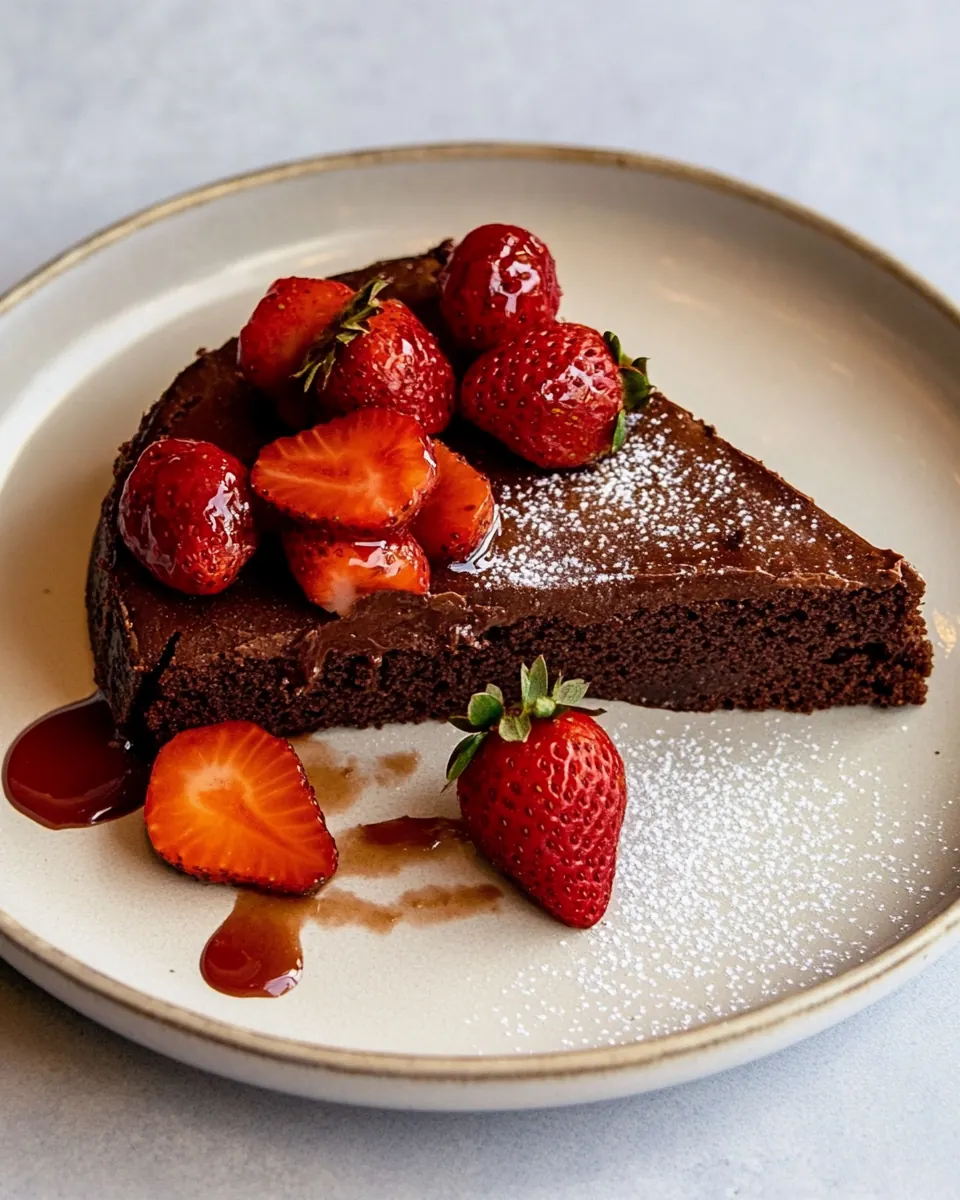
Edd Kimber’s Flourless Chocolate Cake with Roasted Strawberries has been one of those desserts that sneaks into my life on celebratory afternoons and quiet Sunday teatimes, and it always feels like a small, elegant act of kindness. I first encountered this version years ago when I was hunting for something rich but not heavy, something to bring to a friend who loved chocolate yet preferred lighter textures. The moment I sliced into it and saw the soft, slightly cracked top give way to a dense, glossy interior, I knew I had to make it again and again.
I remember the first time I roasted the strawberries to go with it, the kitchen filling with a bright, tangy scent that cut through the chocolate like sun through clouds. The contrast of the warm, syrupy berries against the cool dollop of crème fraîche made every forkful sing. That juxtaposition of textures and temperatures is what keeps me coming back to Edd Kimber’s Flourless Chocolate Cake with Roasted Strawberries, and why it is my go to for when I want to impress without fuss.
Over the years I have learned to cherish the small rituals around this cake, like patiently whisking egg whites until they hold soft peaks, and using a warm bowl to melt chocolate with butter so the mixture becomes silky and forgiving. Each time I make it I tinker slightly, but the core of the recipe remains the same. It is forgiving, crowd pleasing, and quietly celebratory.
Recipe Snapshot
60 mins
20 mins
40 mins
Medium
350 kcal
American
Gluten-Free, Low FODMAP
Desserts
Loaf pan 9 x 5 inch, Parchment paper, Mixing bowls, Stand mixer or hand mixer, Bowl and pan for double boiler, Baking tray
Why This Edd Kimber’s Flourless Chocolate Cake with Roasted Strawberries Is a Winner
Elegant Simplicity
I adore how Edd Kimber’s Flourless Chocolate Cake with Roasted Strawberries feels sophisticated while being straightforward to execute. The recipe relies on a handful of quality ingredients, so the chocolate and eggs really shine. Because there is no flour, the cake has a lush, almost truffle like texture that feels indulgent, yet it is simply butter, chocolate, and eggs working together. I find that minimalism in baking often leads to the most memorable results.
Great Texture Contrast
The interplay between the dense, fudgy cake and the bright, roasted strawberries is why this dessert stands out for me. I like how the strawberries soften and become syrupy in the oven, offering acidity and freshness that balances the chocolate. Adding a spoonful of crème fraîche brings a creamy, tangy counterpoint that lifts each bite. These contrasts make the dish feel thoughtfully composed every time I serve it.
Reliable for Gatherings
I often bring this cake when I want to appear effortlessly put together. It travels well and keeps its integrity after cooling, so you can bake it earlier in the day and finish with roasted strawberries right before serving. Guests always ask for the recipe, which is a lovely compliment. Because it is flourless, it also naturally suits friends who avoid wheat, so it can be an inclusive dessert option.
Technique That Teaches
Working on the meringue folding and melting chocolate teaches patience and respect for technique without being intimidating. I like that it asks you to care about temperature and timing in small ways, and those moments of attention reward you with a glossy crumb and a crackled top. Over time you pick up the sensory cues, like when the batter looks streak free, that signal it is ready for the oven.
Versatile Finishing Touches
While I usually dust the cake with cocoa powder and serve with crème fraîche, this recipe allows for slight variations depending on the season. Roasted strawberries are perfect in spring, but you could also imagine other roasted fruits in warmer months while keeping the cake identical. This flexibility makes the dessert feel adaptable, yet always recognizably special when I make Edd Kimber’s Flourless Chocolate Cake with Roasted Strawberries.
Ingredients Required for Edd Kimber’s Flourless Chocolate Cake with Roasted Strawberries
These ingredients are elegantly simple yet purposeful. The list highlights a few key players that create the cake’s rich, fudgy texture and the bright, syrupy accompaniment. Quality matters here, especially with the bittersweet chocolate and the fresh strawberries, because they define the flavor experience. Every item has a role, whether it lends structure, sweetness, or acidity.
- 1 cup (76 grams) unsalted butter, diced: Melted and softened to provide a rich, tender crumb and carry fat-soluble chocolate flavors throughout the cake; diced butter also helps create a smooth batter when combined with melted chocolate and beaten eggs, contributing to moistness and a glossy finish.
- 2.64 ounces (75 grams) bittersweet chocolate, finely chopped: Finely chopped and melted to supply deep cocoa flavor and structure; bittersweet chocolate balances the cake's sweetness while adding a dense, fudgy texture and glossy sheen when mixed with butter.
- 2 large eggs (100 grams), separated: Beaten and separated to build both richness and lift; yolks are whisked into the chocolate–butter mixture for creaminess and structure while whipped whites create volume and a light crumb when folded in carefully.
- 1/4 cup (55 grams) firmly packed light brown sugar: Packed and dissolved to add moistness and caramel notes; light brown sugar brings subtle molasses flavor that deepens the cake's sweetness and helps with a tender texture and glossy crust.
- 2 tablespoons (24 grams) granulated sugar: Sprinkled and whipped into egg whites to sweeten and stabilize the meringue; granulated sugar helps create glossy, stable peaks that incorporate air for lift and lightness in the cake.
- Pinch of cream of tartar: Added in a pinch to stabilize beaten egg whites and improve volume; cream of tartar prevents over-whipping and helps maintain small, even bubbles for a fine, airy meringue structure.
- Pinch of kosher salt: Sprinkled lightly to balance sweetness and enhance overall flavor; kosher salt brightens chocolate notes and strengthens the baked structure by interacting with proteins in the eggs.
- 10.5 ounces (300 grams) fresh strawberries: Roasted or macerated to provide bright, juicy fruit contrast; fresh strawberries add acidity, freshness, and a vibrant topping that complements the rich, dense chocolate cake.
- 2 tablespoons (24 grams) granulated sugar: Sprinkled over strawberries to macerate and draw out juices; granulated sugar softens the fruit, intensifies sweetness, and creates a syrupy glaze when roasted or rested.
- 2 tablespoons (30 ml) lemon juice: Squeezed over berries to introduce acidity and brightness; lemon juice balances sweetness, enhances strawberry flavor, and cuts through the cake's richness for a fresher finish.
- Cocoa powder and crème fraîche, to serve: Dusting and dolloping to finish and balance the dessert; cocoa powder offers an intense chocolate punch on the surface while crème fraîche provides tangy creaminess that offsets the cake's richness.
Making Edd Kimber’s Flourless Chocolate Cake with Roasted Strawberries
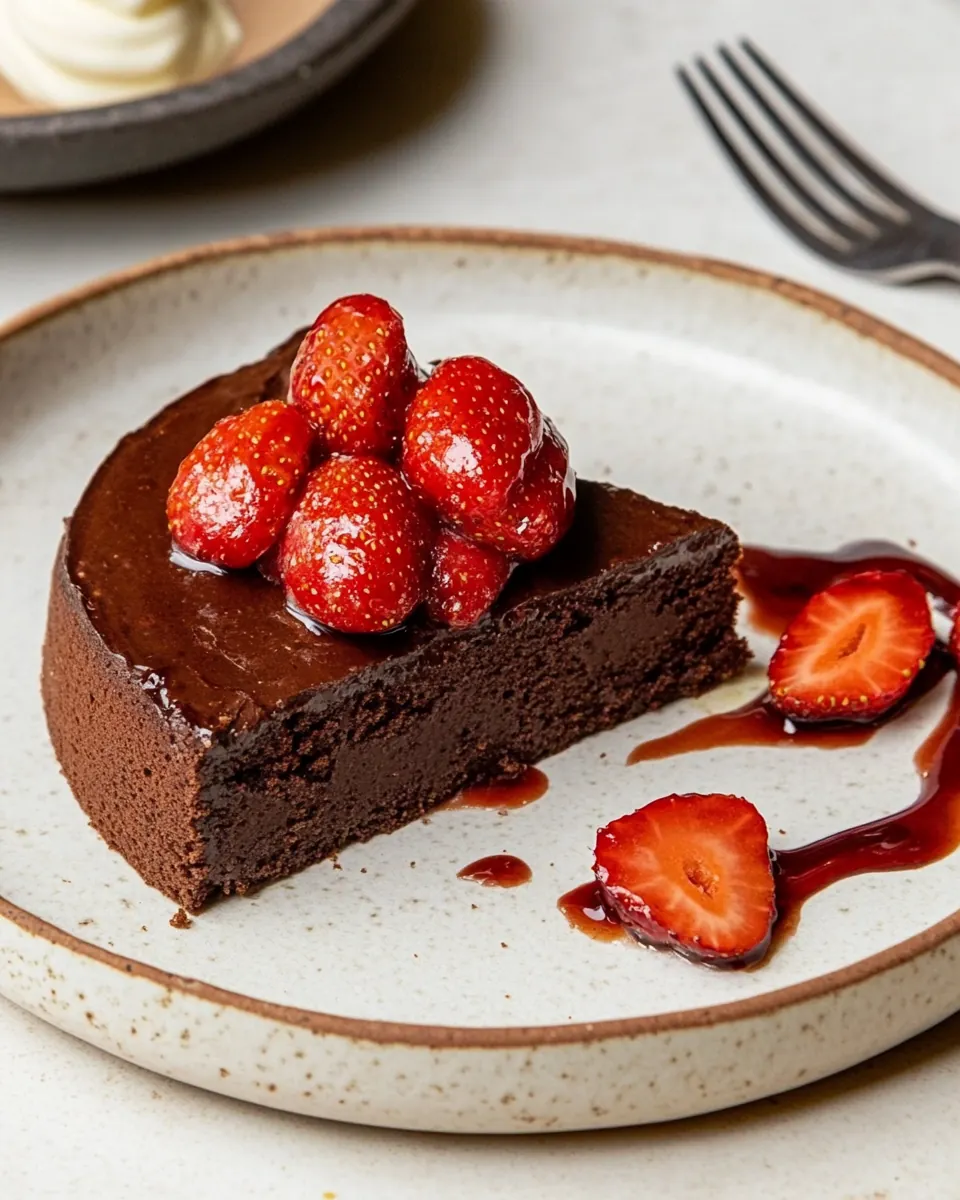
This recipe moves in a few clear phases, from prepping the pan and melting chocolate to whipping whites and roasting the strawberries. I like to have everything at hand before I begin, because the meringue and folding require focus. Below, I expand each original instruction into detailed, sensory rich guidance so you know what to expect at every stage.
- Lightly grease a 9 x 5-inch loaf pan, and line with parchment paper. Preheat the oven to 350°F (180°C).: The room will smell faintly of butter as you grease the pan, and the paper should sit snugly to catch the batter. Rubbing the pan with a bit of unsalted butter ensures the cake releases cleanly, and the parchment lining makes removal effortless. Preheating to 350°F readies the oven so the batter begins setting immediately when placed inside, which helps develop that characteristic cracked top. A common mistake is not preheating, which can cause uneven rise and texture. Make sure the pan sits level in the oven to avoid lopsided baking, and don’t skimp on smoothing the batter once poured.
- For flourless chocolate cake: Place the butter and the chocolate into a bowl set over a pan of simmering water, and heat, stirring occasionally, until fully melted. Remove the bowl from the heat, and set aside for the moment.: As the butter and bittersweet chocolate melt together, the mixture will gloss over and give off a deep, cocoa forward aroma that feels warming and rich. Stirring keeps the emulsion smooth and prevents hot spots, and removing the bowl from the heat as soon as it is melted prevents seizing. You want a velvety, shiny texture not a grainy one. If the chocolate overheats, it may separate or become gritty, so avoid vigorous boiling under the bowl. Cooling slightly before adding to yolks prevents cooking them on contact.
- In a large bowl, add the egg yolks and brown sugar, and whisk together until thick and pale. Pour in the chocolate mixture, and whisk until smooth and combined.: Whisking the egg yolks with light brown sugar until pale and slightly ribboning creates a silkier finish and integrates air for a lighter crumb. When you fold in the warm chocolate, work steadily so the mixture becomes uniform and glossy, releasing a warm chocolate perfume. Overwhisking can deflate the aeration you created, yet underwhisking leaves streaks, so aim for a consistently smooth batter. If the chocolate is too hot it can scramble the yolks, so ensure it is warm rather than steaming.
- Place the egg whites, the granulated sugar, cream of tartar, and salt into the bowl of a stand mixer (or use a hand mixer), and whisk on medium-high until the meringue holds soft peaks. Add the meringue to the chocolate batter in three additions, gently folding in each addition to avoid knocking out too much air. Once the batter is streak-free, pour the batter into the prepared loaf pan, and spread out into an even layer.: As you begin whipping the egg whites , they will first foam, then become glossy and foamy, and finally hold soft peaks, producing a faintly sweet, cloud like scent. The granulated sugar and a pinch of cream of tartar stabilize this foam. Folding the meringue into the chocolate base in three stages preserves the trapped air that gives lift, while avoiding overmixing which would yield a denser cake. Use a gentle scooping, turning motion to maintain volume. Spread the batter evenly in the pan so it bakes uniformly; an uneven surface can lead to one side collapsing more than the other. Be mindful that some streaks of white are easier to eliminate than overworked batter.
- Bake until the cake is puffed and has a cracked crust, about 25 minutes. Remove from the oven, and set aside to cool. As the cake cools, it will collapse; don’t worry—this is as designed.: During baking you will notice the cake puff and the top form a delicate cracked crust that gives away its moist interior. The aroma deepens into toasted chocolate notes. Remove it when the center still feels slightly jiggly, as residual heat continues cooking. Cooling causes the interior to sink into a dense, fudgy consistency that is intended and desirable. If you overbake, the cake will become dry and lose that luscious texture, so err on the side of slightly underdone. Don’t be alarmed by the collapse; it signals the cake has the tender, ganache like interior that makes it so special.
- For roasted strawberries: As the cake bakes, remove the green tops from strawberries, and slice each berry in half. Scatter on a small baking tray, and sprinkle on the sugar and lemon juice, stirring to coat evenly. When you remove the cake from the oven, place the strawberries into the oven, and bake until the fruit is soft and syrupy but still holding its shape, about 15 minutes. Remove, and set aside until ready to serve.: The process of preparing the fresh strawberries releases a bright, fruity perfume as you toss them with granulated sugar and lemon juice . Roasting concentrates the sweetness and draws out juices that bubble gently and caramelize at the edges, creating a glossy, syrupy coating. The strawberries should be tender but not collapsed, offering a pleasant contrast to the dense cake. A common slip up is overcrowding the tray, which causes uneven roasting; give each berry space so heat circulates. Keep an eye on them, as ovens vary and sugars can caramelize quickly.
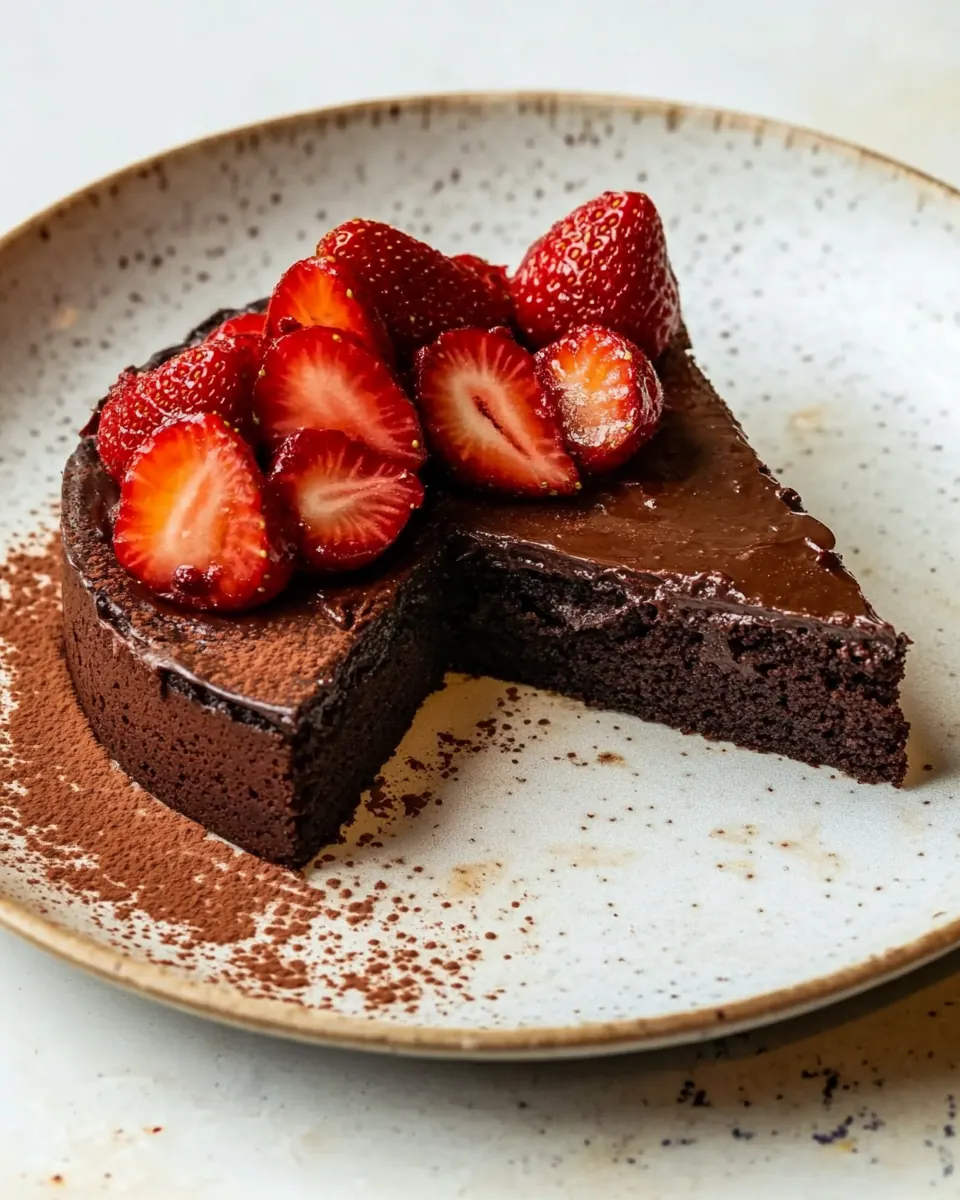
- To serve, sift cocoa onto cake, slice into quarters, and serve alongside roasted strawberries and a dollop of crème fraîche.: Sifting unsweetened cocoa powder over the cake adds a dry aromatic note and an elegant finish, while slices reveal the moody, dense interior. The cool, tangy crème fraîche smooths the palate and complements both the chocolate and roasted berries. Serve the warm strawberries beside slightly cooled cake so the contrasts of temperature are clear. A typical error is serving everything too hot or too cold, which mutes the intended interplay of textures and temperatures. Aim for warm fruit and room temperature cake for the most balanced experience.
Customization Ideas
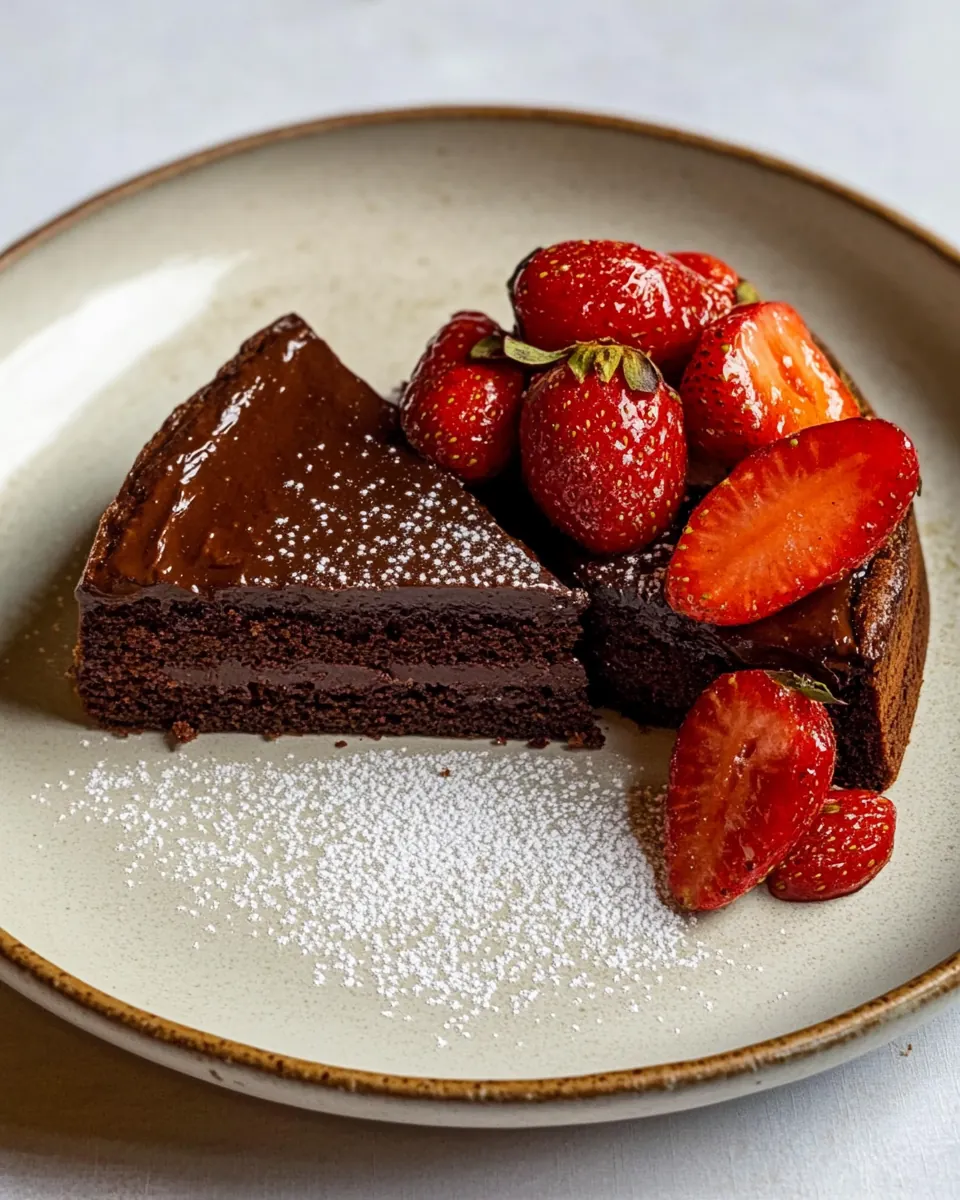
This cake is wonderfully adaptable, and small changes can shift the mood of the dessert without changing the core technique. Below are practical ideas to customize the experience while keeping the core recipe intact.
- Swap cocoa garnish: Dusting cocoa powder is classic, but you can use a very fine grate of chocolate for a different texture and aroma.
- Fruit timing: Roast the strawberries slightly longer for a jam like syrup, or shorten roasting time for firmer berries that add a fresh bite.
- Chocolate intensity: Choose a higher or lower percentage bittersweet chocolate to make the cake darker or sweeter, adapting to your palate and guests.
- Serving temperature: Serve the cake at room temperature with warm strawberries and cold crème fraîche for striking contrasts in every mouthful.
- Make ahead: Bake the cake earlier in the day and roast the strawberries just before serving to preserve their texture and freshness.
Serve This Edd Kimber’s Flourless Chocolate Cake with Roasted Strawberries With
This dessert suits many occasions, from intimate dinners to festive gatherings. I like to think about how temperature, pairing, and presentation amplify the experience. Serving it with complementary elements heightens the dessert’s layered flavors and textures.
- Occasion flexibility: Ideal for dinner parties, spring celebrations, or a cozy weekend dessert when you want something refined yet simple to execute.
- Plating style: Slice into quarters and plate each piece with a generous spoonful of warm roasted strawberries and a dollop of cold crème fraîche for a restaurant style presentation.
- Storage tips: Keep leftover cake in an airtight container at room temperature for up to two days, or refrigerate for longer storage; bring back to room temperature before serving to restore the texture.
- Seasonal pairings: In spring, the bright strawberries feel right, while in late summer you could roast other in season berries using the same method to maintain the dessert’s balance.
- Serving size guidance: Cut into quarters for generous portions, or trim into smaller slices if serving as part of a multi course meal to offer a sweet finish without overwhelming guests.
FAQ
Conclusion
This cake stands out because it combines a deeply chocolate, almost truffle like interior with bright roasted fruit and a cool creamy finish. Try making it when you want something that feels special but is straightforward to execute; the technique rewards attention to detail without demanding complexity. I hope you enjoy the contrast of textures and flavors as much as I do, and that it becomes a dessert you return to for celebrations and quiet moments alike.
Edd Kimber’s Flourless Chocolate Cake with Roasted Strawberries
Equipment
- Loaf pan 9 x 5 inch
- Parchment Paper
- Mixing Bowls
- Stand mixer or hand mixer
- Bowl and pan for double boiler
- Baking Tray
Ingredients
- 1 cup (76 grams) unsalted butter, diced Melted and softened to provide a rich, tender crumb and carry fat-soluble chocolate flavors throughout the cake; diced butter also helps create a smooth batter when combined with melted chocolate and beaten eggs, contributing to moistness and a glossy finish.
- 2.64 ounces (75 grams) bittersweet chocolate, finely chopped Finely chopped and melted to supply deep cocoa flavor and structure; bittersweet chocolate balances the cake's sweetness while adding a dense, fudgy texture and glossy sheen when mixed with butter.
- 2 large eggs (100 grams), separated Beaten and separated to build both richness and lift; yolks are whisked into the chocolate-butter mixture for creaminess and structure while whipped whites create volume and a light crumb when folded in carefully.
- 1/4 cup (55 grams) firmly packed light brown sugar Packed and dissolved to add moistness and caramel notes; light brown sugar brings subtle molasses flavor that deepens the cake's sweetness and helps with a tender texture and glossy crust.
- 2 tablespoons (24 grams) granulated sugar Sprinkled and whipped into egg whites to sweeten and stabilize the meringue; granulated sugar helps create glossy, stable peaks that incorporate air for lift and lightness in the cake.
- Pinch of cream of tartar Added in a pinch to stabilize beaten egg whites and improve volume; cream of tartar prevents over-whipping and helps maintain small, even bubbles for a fine, airy meringue structure.
- Pinch of kosher salt Sprinkled lightly to balance sweetness and enhance overall flavor; kosher salt brightens chocolate notes and strengthens the baked structure by interacting with proteins in the eggs.
- 10.5 ounces (300 grams) fresh strawberries Roasted or macerated to provide bright, juicy fruit contrast; fresh strawberries add acidity, freshness, and a vibrant topping that complements the rich, dense chocolate cake.
- 2 tablespoons (24 grams) granulated sugar Sprinkled over strawberries to macerate and draw out juices; granulated sugar softens the fruit, intensifies sweetness, and creates a syrupy glaze when roasted or rested.
- 2 tablespoons (30 ml) lemon juice Squeezed over berries to introduce acidity and brightness; lemon juice balances sweetness, enhances strawberry flavor, and cuts through the cake's richness for a fresher finish.
- Cocoa powder and crème fraîche, to serve Dusting and dolloping to finish and balance the dessert; cocoa powder offers an intense chocolate punch on the surface while crème fraîche provides tangy creaminess that offsets the cake's richness.
Instructions
- Lightly grease a 9 x 5-inch loaf pan, and line with parchment paper. Preheat the oven to 350°F (180°C).: The room will smell faintly of butter as you grease the pan, and the paper should sit snugly to catch the batter. Rubbing the pan with a bit of unsalted butter ensures the cake releases cleanly, and the parchment lining makes removal effortless. Preheating to 350°F readies the oven so the batter begins setting immediately when placed inside, which helps develop that characteristic cracked top. A common mistake is not preheating, which can cause uneven rise and texture. Make sure the pan sits level in the oven to avoid lopsided baking, and don’t skimp on smoothing the batter once poured.
- For flourless chocolate cake: Place the butter and the chocolate into a bowl set over a pan of simmering water, and heat, stirring occasionally, until fully melted. Remove the bowl from the heat, and set aside for the moment.: As the butter and bittersweet chocolate melt together, the mixture will gloss over and give off a deep, cocoa forward aroma that feels warming and rich. Stirring keeps the emulsion smooth and prevents hot spots, and removing the bowl from the heat as soon as it is melted prevents seizing. You want a velvety, shiny texture not a grainy one. If the chocolate overheats, it may separate or become gritty, so avoid vigorous boiling under the bowl. Cooling slightly before adding to yolks prevents cooking them on contact.
- In a large bowl, add the egg yolks and brown sugar, and whisk together until thick and pale. Pour in the chocolate mixture, and whisk until smooth and combined.: Whisking the egg yolks with light brown sugar until pale and slightly ribboning creates a silkier finish and integrates air for a lighter crumb. When you fold in the warm chocolate, work steadily so the mixture becomes uniform and glossy, releasing a warm chocolate perfume. Overwhisking can deflate the aeration you created, yet underwhisking leaves streaks, so aim for a consistently smooth batter. If the chocolate is too hot it can scramble the yolks, so ensure it is warm rather than steaming.
- Place the egg whites, the granulated sugar, cream of tartar, and salt into the bowl of a stand mixer (or use a hand mixer), and whisk on medium-high until the meringue holds soft peaks. Add the meringue to the chocolate batter in three additions, gently folding in each addition to avoid knocking out too much air. Once the batter is streak-free, pour the batter into the prepared loaf pan, and spread out into an even layer.: As you begin whipping the egg whites , they will first foam, then become glossy and foamy, and finally hold soft peaks, producing a faintly sweet, cloud like scent. The granulated sugar and a pinch of cream of tartar stabilize this foam. Folding the meringue into the chocolate base in three stages preserves the trapped air that gives lift, while avoiding overmixing which would yield a denser cake. Use a gentle scooping, turning motion to maintain volume. Spread the batter evenly in the pan so it bakes uniformly; an uneven surface can lead to one side collapsing more than the other. Be mindful that some streaks of white are easier to eliminate than overworked batter.
- Bake until the cake is puffed and has a cracked crust, about 25 minutes. Remove from the oven, and set aside to cool. As the cake cools, it will collapse; don’t worry—this is as designed.: During baking you will notice the cake puff and the top form a delicate cracked crust that gives away its moist interior. The aroma deepens into toasted chocolate notes. Remove it when the center still feels slightly jiggly, as residual heat continues cooking. Cooling causes the interior to sink into a dense, fudgy consistency that is intended and desirable. If you overbake, the cake will become dry and lose that luscious texture, so err on the side of slightly underdone. Don’t be alarmed by the collapse; it signals the cake has the tender, ganache like interior that makes it so special.
- For roasted strawberries: As the cake bakes, remove the green tops from strawberries, and slice each berry in half. Scatter on a small baking tray, and sprinkle on the sugar and lemon juice, stirring to coat evenly. When you remove the cake from the oven, place the strawberries into the oven, and bake until the fruit is soft and syrupy but still holding its shape, about 15 minutes. Remove, and set aside until ready to serve.: The process of preparing the fresh strawberries releases a bright, fruity perfume as you toss them with granulated sugar and lemon juice . Roasting concentrates the sweetness and draws out juices that bubble gently and caramelize at the edges, creating a glossy, syrupy coating. The strawberries should be tender but not collapsed, offering a pleasant contrast to the dense cake. A common slip up is overcrowding the tray, which causes uneven roasting; give each berry space so heat circulates. Keep an eye on them, as ovens vary and sugars can caramelize quickly.
- To serve, sift cocoa onto cake, slice into quarters, and serve alongside roasted strawberries and a dollop of crème fraîche.: Sifting unsweetened cocoa powder over the cake adds a dry aromatic note and an elegant finish, while slices reveal the moody, dense interior. The cool, tangy crème fraîche smooths the palate and complements both the chocolate and roasted berries. Serve the warm strawberries beside slightly cooled cake so the contrasts of temperature are clear. A typical error is serving everything too hot or too cold, which mutes the intended interplay of textures and temperatures. Aim for warm fruit and room temperature cake for the most balanced experience.
Notes
- Swap cocoa garnish: Dusting cocoa powder is classic, but you can use a very fine grate of chocolate for a different texture and aroma.
- Fruit timing: Roast the strawberries slightly longer for a jam like syrup, or shorten roasting time for firmer berries that add a fresh bite.
- Chocolate intensity: Choose a higher or lower percentage bittersweet chocolate to make the cake darker or sweeter, adapting to your palate and guests.
- Serving temperature: Serve the cake at room temperature with warm strawberries and cold crème fraîche for striking contrasts in every mouthful.
- Make ahead: Bake the cake earlier in the day and roast the strawberries just before serving to preserve their texture and freshness.