Croissant French Toast with Raspberries
Croissant French Toast with Raspberries has been my favorite weekend treat since a sleepy Saturday swap with a neighbor introduced me to the idea of using buttery pastry in place of plain bread. The first bite was a revelation, a crisp edge yielding to a custardy interior studded with bursts of bright raspberries, and from then on I started reserving a stash of mini croissants for lazy brunches. I love how the slightly tangy filling balances the rich cream cheese and the sweet, eggy custard, it feels decadent without being heavy.
That morning the house smelled like baking and citrus, a warm, comforting scent that made the whole day feel slower and more indulgent. I remember watching the casserole bubble gently in the oven, the tops turning golden, while I set the table. Serving it with an extra sift of powdered sugar and a handful of fresh raspberries made it feel like a small celebration, even if it was just Tuesday. Over time I’ve tweaked the lemon and vanilla amounts until they sang in harmony, but the backbone remains the same, a simple layering of halved croissants and a luscious custard that soaks in overnight.
Recipe Snapshot
1 hr 5 mins
20 mins
45 mins
Medium
350 kcal
American
Gluten-Free, Low FODMAP
Breakfast
Whisk, Mixing bowl, 8 x 8 inch baking pan, Oven
Why We Love This Croissant French Toast with Raspberries
Buttery Texture That Feels Special
I adore how croissants transform into a rich, flaky base that holds a custardy center, giving each bite a mix of crisp and silk. As a baker I notice the pastry edges get that golden, slightly toasted snap while the interiors stay soft, and that contrast is impossible to resist. You get a pastry experience with breakfast comfort, which is a win in my book.
Bright, Fresh Raspberry Pop
The addition of fresh raspberries lifts the whole dish, cutting through the richness with sharp, juicy notes. I like the way these berries burst gently under a fork, releasing bright juice that threads through the custard, creating pockets of fruit throughout. For me, the raspberries prevent the casserole from feeling one note, they add spark and color.
Cream Cheese Layer for Creamy Depth
The layer of room temperature cream cheese folded with lemon and powdered sugar gives an almost cheesecake like tang that complements the custard. I often think of that creamy layer as the glue that balances sweet and tart, making each forkful rounded and luscious. It also helps the top finish with a lightly tangy sheen after baking.
Make Ahead Ease
I love that this casserole is mostly hands off once assembled, you can refrigerate it overnight and then simply slide it into the oven the next morning. That slow soak time gives the custard a chance to penetrate the croissants, resulting in a better texture than a quick soak would. It’s a reliable solution for hosting because you can rest easy while guests arrive.
Playful Yet Classic Flavor Pairings
The trio of vanilla, lemon zest, and raspberries feels both familiar and a bit elevated. I appreciate how the lemon lifts the dairy notes and the vanilla rounds the edges. These small touches are why I return to this recipe when I want something that feels thoughtful but is still easy to prepare.
Ingredients Overview for Croissant French Toast with Raspberries
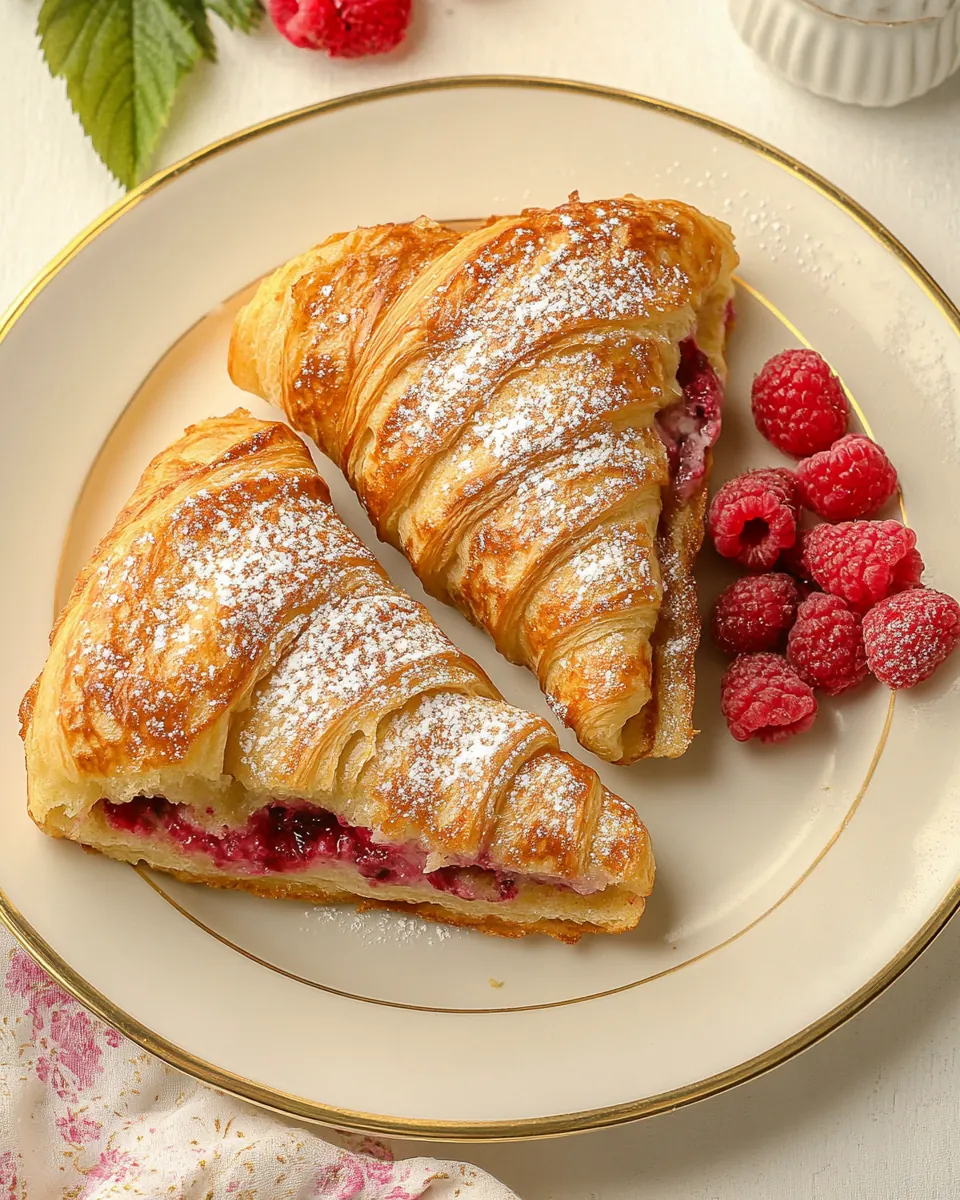
The ingredients for Croissant French Toast with Raspberries are straightforward yet carefully chosen to create layers of flavor and texture. The star players are the buttery croissants, the tangy cream cheese, and the bright raspberries. Together they give you crisp edges, creamy custard, and popping fruit. Each component contributes to the final balance, from richness to acidity to sweetness.
- 1/2 cup powdered sugar, plus more to dust the casserole before serving () (optional): Dust generously to add delicate sweetness and a light snowy finish; helps balance tart raspberries and enrich presentation when sprinkled just before serving.
- 1 8-ounce package cream cheese, at room temperature: Soften thoroughly to ensure a smooth, creamy filling; beaten with powdered sugar, lemon zest, and vanilla to create a tangy, luscious layer between croissant halves.
- 1 teaspoon grated lemon zest: Zest finely to contribute bright, citrusy aroma and subtle acidity; works with lemon juice to lift richness and add complexity to both filling and custard.
- 2 teaspoons freshly squeezed lemon juice, divided: Squeeze freshly to provide bright acidity and freshness; divided use ensures some flavor in the cream cheese mixture and the custard for balanced tartness.
- 1 1/2 teaspoons vanilla, first amount added to cream cheese and other to custard: Flavor delicately to infuse both the cream cheese and the custard with warm, sweet vanilla notes; split amounts allow nuanced layering of aroma across components.
- 1 cup fresh raspberries: Rinse gently and scatter evenly to deliver bursts of tartness and color; folded into the casserole or used as topping they give freshness and texture contrast.
- 1/3 cup sugar: Dissolve fully to sweeten both the fruit and custard components; helps caramelize lightly while baking and balances the tang of cream cheese and lemon.
- 1 cup half and half: Whisk thoroughly to create a rich, creamy custard base; provides fat and body that soaks into croissant pieces for a tender, custardy interior.
- 1/4 teaspoon salt: Pinch carefully to enhance and balance sweetness and acidity; salt rounds flavors and elevates the overall taste profile of the custard and filling.
- 7 mini croissants, cut in half lengthwise: Slice lengthwise to expose interior for filling and custard absorption; mini croissants provide buttery, flaky structure that crisps on edges while soaking custard.
The Process for Making Croissant French Toast with Raspberries

This casserole is a layered, patient recipe that rewards a slow soak and gentle baking. I like to assemble it the night before so the custard can fully penetrate the croissants. The steps below expand on the directions so you can sense each change in texture and aroma as the dish develops.
- Whisk together the powdered sugar, half the cream cheese, 1 1/2 tablespoons of lemon juice, and 1/2 teaspoon of vanilla until smooth.: The bowl fills with a fragrant, tangy scent, the powdered sugar dissolving into the softened cream cheese until the mixture becomes glossy and streak free. You will notice a smooth, almost mousse like texture forming under the whisk, and the lemon lifts the dairy aroma so the mixture smells bright rather than cloyingly sweet. This step matters because a smooth layer blends with the custard rather than forming lumps that create textural pockets. A common mistake is using cold cream cheese , which resists whisking and leaves small curd like bits, so ensure the cheese is softened at room temperature.
- Stir in 1/2 cup of the raspberries. Set aside.: As you gently fold in the raspberries , you will hear quiet little pops and see tiny ribbons of berry juice streak through the cream, adding vivid ruby color. The berries lend fresh acidity and a fruity perfume that contrasts the dairy, which keeps the finished bake lively. Handle them delicately to avoid crushing, because broken berries will thin the cream cheese layer and create excess moisture. Avoid vigorous stirring that will pulverize the fruit.
- Whisk together the sugar and the remaining cream cheese until smooth. Slowly whisk in the half and half, eggs, salt, and remaining 1 1/2 tablespoons of lemon juice until well combined. Set aside.: The mixture will transition from thick to pourable as you incorporate the half and half and eggs , releasing a warm, custard like aroma. Whisking slowly prevents lumps and helps the eggs blend without scrambling, yielding a silky, homogeneous custard. This procedure is essential because an evenly mixed custard cooks uniformly and sets properly. A frequent error is adding dairy too quickly to eggs, which can cause curdling, so whisk continuously and pour gradually.
- Butter and dust an 8 x 8-inch baking pan with sugar.: The pan should glisten as you spread the butter , and the sugar layer gives a subtle caramelized finish on the bottom and edges, creating a slightly crisp, sweet crust. This coating also helps prevent sticking while contributing a delicate crunchy contrast to the custard. If you skip this, the bottom may stick or lack that tiny caramelized note, so take the extra minute to butter and sugar the pan thoroughly.
- Slice the croissants in half lengthwise and place the bottoms, cut side up, across the bottom of the pan. Fit tightly and cut if needed to fill any gaps. Pour the egg custard over the croissants. Sprinkle with the remaining raspberries.: As the custard soaks into the exposed interiors of the **croissants**, you will see the pastry swell slightly and darken where it absorbs the liquid. The fitting step is important because a snug arrangement ensures even custard distribution and prevents dry pockets. Scattering the remaining **raspberries** on top gives bursts of color and localized tart flavor. A common slip is leaving large gaps between the croissant halves, which causes uneven soaking and dry spots in the finished casserole.
- Cover and refrigerate for 8-12 hours.: The long rest allows the custard to migrate into the flaky layers of the **croissants**, creating a uniformly custardy interior and preventing a raw center after baking. You will notice the pastry become more pliable and saturated, with the custard settling into air pockets. This step is crucial for texture; rushing it will yield a less integrated result. Resist the urge to shorten the chill time if you want the classic, tender center.
- Preheat oven to 325°F. Let the casserole sit at room temperature while the oven preheats.: Bringing the chilled casserole briefly to room temperature prevents a temperature shock that can affect even baking. As the oven warms, the dish warms slightly and steam begins to mingle with the custard, signaling readiness. This modest pause helps the center bake evenly rather than staying cold while the edges overcook. A mistake here is putting a cold dish straight into a hot oven without the brief tempering, which can lead to uneven set.
- Bake, covered with foil for 30 minutes, then uncover and bake for 15-20 minutes more or until custard is set. Sprinkle with powdered sugar to serve.: During the covered phase the dish steams gently, setting the interior to a tender, almost pudding like texture. You will hear a soft sizzle as trapped steam escapes when you uncover the foil and the top begins to brown and form those appealing golden edges. The final uncovered bake caramelizes the sugar and crisps the pastry tips. The custard is done when a knife inserted near the center comes out mostly clean with a few moist crumbs. Avoid overbaking which dries the custard, and underbaking leaves it runny; timing and visual cues are key.
- Sprinkle with powdered sugar to serve: The final dusting of powdered sugar adds a delicate sweetness and a beautiful finish, catching in the crevices of browned pastry and brightening the presentation. It contrasts the golden top and echoes the initial sugar layer, tying flavors together. Add it right before serving to keep that fresh snowy look; dust too early and it will dissolve into the warm surface.
Expert Tips about Croissant French Toast with Raspberries

This dish rewards small attentions, from proper chilling to gentle folding of berries. The tips below expand on practical details I use to get consistent results that balance texture and flavor.
- Soften the cream cheese: Ensure the cream cheese is fully at room temperature for a smooth, lump free cream layer.
- Trim and fit croissants snugly: Cut and place the croissants so they fit tightly in the pan, preventing dry spots after soaking.
- Divide the lemon and vanilla: Splitting the lemon juice and vanilla between layers gives a balanced citrus and aromatic presence without one overpowering the other.
- Handle raspberries gently: Fold raspberries in with a light touch to keep their shape and avoid extra liquid in the custard.
- Chill overnight: Refrigerate for at least eight hours to allow the custard to fully penetrate the pastry for an even, creamy set.
- Watch the uncovered bake: Uncover for the final minutes to develop golden color, and remove as soon as the center sets to keep the casserole tender.
How to Enjoy Croissant French Toast with Raspberries
This casserole shines as a relaxed brunch centerpiece or a special breakfast treat. Below are ways to serve it, pairings, and storage suggestions so you get the most from every bake.
- Serve warm with a dusting of powdered sugar: Present individual slices with a light sift of powdered sugar to enhance appearance and add a gentle sweetness.
- Garnish with extra raspberries: Top each serving with a few fresh raspberries to reinforce the fruity brightness and add visual contrast.
- Pair with coffee or tea: A bright, medium roast coffee or a citrusy black tea complements the lemon and raspberry notes nicely for a well rounded morning meal.
- Occasions: This casserole is ideal for weekend brunches, celebratory breakfasts, or slow holiday mornings in spring when berries are at their best.
- Storage: Keep leftovers covered in the refrigerator for up to three days. Reheat gently in a low oven to restore texture without drying the custard.
- Make ahead strategy: Assemble the night before for stress free hosting, then bake in the morning so you can focus on company rather than last minute prep.
FAQ
Conclusion
This Croissant French Toast with Raspberries stands out because it balances flaky pastry, creamy custard, and bright fruit in every forkful. The make ahead assembly and overnight soak make it ideal for relaxed gatherings or special mornings, while the lemon and vanilla lift the flavors. Give it a try the next time you want a show stopping brunch that actually simplifies your morning, and enjoy the small joy of golden pastry and tender, berry studded custard.

Croissant French Toast with Raspberries
Equipment
- Whisk
- Mixing Bowl
- 8 x 8-inch baking pan
- Oven
Ingredients
- 1/2 cup powdered sugar, plus more to dust the casserole before serving (optional) Dust generously to add delicate sweetness and a light snowy finish; helps balance tart raspberries and enrich presentation when sprinkled just before serving.
- 1 8-ounce package cream cheese, at room temperature Soften thoroughly to ensure a smooth, creamy filling; beaten with powdered sugar, lemon zest, and vanilla to create a tangy, luscious layer between croissant halves.
- 1 teaspoon grated lemon zest Zest finely to contribute bright, citrusy aroma and subtle acidity; works with lemon juice to lift richness and add complexity to both filling and custard.
- 2 teaspoons freshly squeezed lemon juice, divided Squeeze freshly to provide bright acidity and freshness; divided use ensures some flavor in the cream cheese mixture and the custard for balanced tartness.
- 1 1/2 teaspoons vanilla, first amount added to cream cheese and other to custard Flavor delicately to infuse both the cream cheese and the custard with warm, sweet vanilla notes; split amounts allow nuanced layering of aroma across components.
- 1 cup fresh raspberries Rinse gently and scatter evenly to deliver bursts of tartness and color; folded into the casserole or used as topping they give freshness and texture contrast.
- 1/3 cup sugar Dissolve fully to sweeten both the fruit and custard components; helps caramelize lightly while baking and balances the tang of cream cheese and lemon.
- 1 cup half and half Whisk thoroughly to create a rich, creamy custard base; provides fat and body that soaks into croissant pieces for a tender, custardy interior.
- 1/4 teaspoon salt Pinch carefully to enhance and balance sweetness and acidity; salt rounds flavors and elevates the overall taste profile of the custard and filling.
- 7 mini croissants, cut in half lengthwise Slice lengthwise to expose interior for filling and custard absorption; mini croissants provide buttery, flaky structure that crisps on edges while soaking custard.
Instructions
- Whisk together the powdered sugar, half the cream cheese, 1 1/2 tablespoons of lemon juice, and 1/2 teaspoon of vanilla until smooth.: The bowl fills with a fragrant, tangy scent, the powdered sugar dissolving into the softened cream cheese until the mixture becomes glossy and streak free. You will notice a smooth, almost mousse like texture forming under the whisk, and the lemon lifts the dairy aroma so the mixture smells bright rather than cloyingly sweet. This step matters because a smooth layer blends with the custard rather than forming lumps that create textural pockets. A common mistake is using cold cream cheese , which resists whisking and leaves small curd like bits, so ensure the cheese is softened at room temperature.
- Stir in 1/2 cup of the raspberries. Set aside.: As you gently fold in the raspberries , you will hear quiet little pops and see tiny ribbons of berry juice streak through the cream, adding vivid ruby color. The berries lend fresh acidity and a fruity perfume that contrasts the dairy, which keeps the finished bake lively. Handle them delicately to avoid crushing, because broken berries will thin the cream cheese layer and create excess moisture. Avoid vigorous stirring that will pulverize the fruit.
- Whisk together the sugar and the remaining cream cheese until smooth. Slowly whisk in the half and half, eggs, salt, and remaining 1 1/2 tablespoons of lemon juice until well combined. Set aside.: The mixture will transition from thick to pourable as you incorporate the half and half and eggs , releasing a warm, custard like aroma. Whisking slowly prevents lumps and helps the eggs blend without scrambling, yielding a silky, homogeneous custard. This procedure is essential because an evenly mixed custard cooks uniformly and sets properly. A frequent error is adding dairy too quickly to eggs, which can cause curdling, so whisk continuously and pour gradually.
- Butter and dust an 8 x 8-inch baking pan with sugar.: The pan should glisten as you spread the butter , and the sugar layer gives a subtle caramelized finish on the bottom and edges, creating a slightly crisp, sweet crust. This coating also helps prevent sticking while contributing a delicate crunchy contrast to the custard. If you skip this, the bottom may stick or lack that tiny caramelized note, so take the extra minute to butter and sugar the pan thoroughly.
- Slice the croissants in half lengthwise and place the bottoms, cut side up, across the bottom of the pan. Fit tightly and cut if needed to fill any gaps. Pour the egg custard over the croissants. Sprinkle with the remaining raspberries.: As the custard soaks into the exposed interiors of the **croissants**, you will see the pastry swell slightly and darken where it absorbs the liquid. The fitting step is important because a snug arrangement ensures even custard distribution and prevents dry pockets. Scattering the remaining **raspberries** on top gives bursts of color and localized tart flavor. A common slip is leaving large gaps between the croissant halves, which causes uneven soaking and dry spots in the finished casserole.
- Cover and refrigerate for 8-12 hours.: The long rest allows the custard to migrate into the flaky layers of the **croissants**, creating a uniformly custardy interior and preventing a raw center after baking. You will notice the pastry become more pliable and saturated, with the custard settling into air pockets. This step is crucial for texture; rushing it will yield a less integrated result. Resist the urge to shorten the chill time if you want the classic, tender center.
- Preheat oven to 325°F. Let the casserole sit at room temperature while the oven preheats.: Bringing the chilled casserole briefly to room temperature prevents a temperature shock that can affect even baking. As the oven warms, the dish warms slightly and steam begins to mingle with the custard, signaling readiness. This modest pause helps the center bake evenly rather than staying cold while the edges overcook. A mistake here is putting a cold dish straight into a hot oven without the brief tempering, which can lead to uneven set.
- Bake, covered with foil for 30 minutes, then uncover and bake for 15-20 minutes more or until custard is set. Sprinkle with powdered sugar to serve.: During the covered phase the dish steams gently, setting the interior to a tender, almost pudding like texture. You will hear a soft sizzle as trapped steam escapes when you uncover the foil and the top begins to brown and form those appealing golden edges. The final uncovered bake caramelizes the sugar and crisps the pastry tips. The custard is done when a knife inserted near the center comes out mostly clean with a few moist crumbs. Avoid overbaking which dries the custard, and underbaking leaves it runny; timing and visual cues are key.
- Sprinkle with powdered sugar to serve: The final dusting of powdered sugar adds a delicate sweetness and a beautiful finish, catching in the crevices of browned pastry and brightening the presentation. It contrasts the golden top and echoes the initial sugar layer, tying flavors together. Add it right before serving to keep that fresh snowy look; dust too early and it will dissolve into the warm surface.
Notes
- Soften the cream cheese: Ensure the cream cheese is fully at room temperature for a smooth, lump free cream layer.
- Trim and fit croissants snugly: Cut and place the croissants so they fit tightly in the pan, preventing dry spots after soaking.
- Divide the lemon and vanilla: Splitting the lemon juice and vanilla between layers gives a balanced citrus and aromatic presence without one overpowering the other.
- Handle raspberries gently: Fold raspberries in with a light touch to keep their shape and avoid extra liquid in the custard.
- Chill overnight: Refrigerate for at least eight hours to allow the custard to fully penetrate the pastry for an even, creamy set.
- Watch the uncovered bake: Uncover for the final minutes to develop golden color, and remove as soon as the center sets to keep the casserole tender.