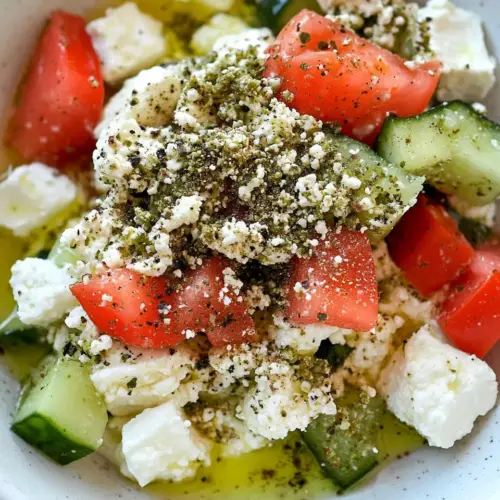
Cottage Cheese Salad with Za’atar
Cottage Cheese Salad with Za’atar is a creamy, bright, and easy summer salad that balances crisp Persian cucumbers, juicy tomatoes, and briny olives with silky cottage cheese and aromatic Za’atar. This refreshing dish makes a quick healthy lunch or a lively side for entertaining, perfect for busy weeknight dinners when you want flavor without fuss.
Equipment
- Knife
- Cutting Board
- Salad Bowl
Ingredients
- 4 small Persian cucumbers Slice thinly for a crisp, refreshing bite that provides structure and mild sweetness; works as the primary crunchy element that balances creaminess.
- 1 cup diced fresh tomatoes (see notes) Dice finely to add juicy acidity and bright color, contributing fresh tomato flavor and moisture that melds with the cheese; helps brighten each forkful.
- 1/4 cup thinly sliced green onion Slice thinly to lend a mild allium sharpness and tender green color; offers subtle aromatic lift and textural contrast when mixed into the salad.
- 1/2 cup sliced olives (see notes) Slice or halve to introduce briny, savory notes and chewy texture; acts as a salty counterpoint that enhances overall savory balance.
- 1 cup cottage cheese Spoon in as the creamy, tangy base that binds components and adds rich dairy protein; supplies a smooth mouthfeel and mild tang.
- 2 T olive oil (a generous drizzle) Drizzle to coat ingredients lightly and add fruity richness and mouth-coating fat; helps carry flavors and gives the salad a silky finish.
- 1 T Za’atar (more or less to taste) Sprinkle to impart herbaceous, slightly tangy, and toasty flavors; functions as the signature seasoning that defines the salad's Mediterranean profile.
Instructions
- Cut the Persian cucumbers into fourths lengthwise and then cut into slices. (If you have to use regular cucumbers, they may need to be fully or partially peeled.): The cucumbers should sound crisp as you slice them, a clean, watery snap that tells you they are fresh and ready. Visually aim for slender slices so each bite remains delicate and light rather than chunky. This step matters because thin slices distribute cucumber evenly through the bowl, ensuring contrast with the creamy cottage cheese . If you hear a dull thud instead of a crisp snap, the cukes may be overripe, which can make the salad soggy. A common mistake is cutting too thick, which overwhelms the other textures, so take your time and use a sharp knife.
- Dice the tomatoes, slice the green onions, and slice the olives.: When you dice tomatoes , they should release a faint, sweet aroma and a little juice, signaling ripeness without being mushy. Thinly sliced green onion should look bright and vibrant, offering a fresh green accent. Slice the olives uniformly to ensure consistent bursts of brininess. The purpose here is balance, so that no single element dominates the bowl. Avoid dicing tomatoes that are overly soft as they will macerate and make the salad watery.
- Combine the vegetables in a salad bowl, large enough to toss the ingredients together.: Tossing the cut vegetables together should create a colorful mosaic in the bowl, with the scent of tomato and green onion mingling. Use a bowl roomy enough to move ingredients without spilling, so you can dress and toss evenly later. This technique matters because it helps the olive oil and seasonings to coat everything uniformly. Do not overcrowd the bowl, as ingredients need space to tumble and mix properly, or they will not marry their flavors evenly.
- Put the cottage cheese on top of the tossed vegetables.: Spoon the cottage cheese in gentle mounds on top so it remains visually distinct, creating a pleasing contrast between creamy curds and crisp vegetables. This layering preserves texture, allowing the dairy to soften slightly against the warm bowl if present, yet still remain curdy. The reason for adding it on top is to keep some pockets of creaminess intact rather than having everything uniformly soggy. A frequent misstep is stirring it in too early, which can make the salad homogenous and less interesting.
- Drizzle with a generous amount of olive oil, sprinkle with Za’atar to taste, and toss again.: As you drizzle the olive oil , breathe in the fruity aroma; it should smell fresh and grassy. The Za’atar will give an earthy, nutty scent that becomes more pronounced as you toss. Toss gently so the cottage cheese incorporates without completely breaking down, aiming for visible swirls of cream throughout. This technique matters because even coating ensures balanced bites of herb, oil, and dairy. Over-tossing is a common slip that can mash the curds, so be delicate.
- Serve right away, with more Za’atar to be added at the table.: Serve the salad promptly so the vegetables retain their crispness and the cottage cheese stays pleasantly cool. At the table, offering extra Za’atar lets guests personalize the herb intensity, which I find keeps the dish exciting bite to bite. The sensory cue for readiness is that the bowl should look glossy from the olive oil and fragrant from the herbs. A warning: letting the salad sit too long can cause the tomatoes to soften and release liquid, diluting the flavors, so serve soon after tossing.
Notes
- Choose the right tomatoes — Opt for firm, ripe tomatoes so they hold their shape when diced, adding juiciness without turning the salad watery. If you only have very soft tomatoes, drain the seeds briefly on a paper towel.
- Adjust Za’atar slowly — Sprinkle a little at first, then taste. Since Za’atar blends vary, adding gradually helps you find the perfect balance without overpowering the other ingredients.
- Keep cottage cheese chilled — Store the cottage cheese in the fridge until the last minute; cold curds contrast beautifully with room temperature vegetables and keep the salad feeling fresh.
- Slice cucumbers uniformly — Aim for even slices so each bite has consistent texture. A mandoline works well if you want precise, paper thin slices, but a sharp knife is fine for casual prep.
- Serve immediately — This dish is best right after tossing, before tomatoes release too much liquid. If preparing ahead, keep components separate and assemble just before serving.