Corned Beef Cabbage Turnovers
Corned Beef Cabbage Turnovers came into my kitchen on a blustery winter afternoon when I had a small batch of leftover corned beef and a craving for something warm and handheld. I remember the way the spice from the corned beef teased my nose as I chopped it, and how the idea of tucking that savory filling into flaky pastry felt like a little celebration of leftovers. I couldn’t resist turning it into something that feels both nostalgic and unexpectedly elegant, perfect for casual company or a cozy night in.
That day I set out to make something that was simple enough for an afternoon project, yet special enough to bring out when friends stop by. I reached for the puff pastry, let it thaw while I sautéed onion and wilted the coleslaw mix, and found myself smiling at the comforting sizzle. Assembling each pocket felt like folding up a warm secret, and the final bake rewarded me with golden, buttery crispness. The finished turnovers begged to be dipped into a tangy mayo Dijon sauce, which brightened the savory filling and made every bite pop.
I love recipes that are practical but soulful, and Corned Beef Cabbage Turnovers fits that description. They’re the kind of thing you can scale for a crowd or make just a few of for a satisfying snack, and they travel well to potlucks or game day gatherings. In this writeup I’ll walk you through why these turnovers work, the ingredient philosophy, and a step by step method that keeps the process relaxed and reliable. You’ll learn to read the visual cues for perfect browning, how to avoid soggy centers, and how to time the components so everything comes together without stress. Get your apron ready, because these turnovers are comfort food with a clever twist.
Recipe Snapshot
45 mins
25 mins
20 mins
Medium
350 kcal
American
Gluten-Free, Low FODMAP
Dinner
Large skillet, Baking sheet, Parchment paper, Rolling pin
Why This Corned Beef Cabbage Turnovers Works
Comfort food that uses leftovers brilliantly
I adore recipes that rescue leftover corned beef and turn it into something new. These turnovers transform modest scraps into a handheld treat, so you don’t need to worry about waste. The combination of meaty corned beef and crisped pastry gives you that satisfying contrast of tender filling and flaky shell, which I find genuinely uplifting after a long day.
Flavor balance with simple pantry players
The marriage of sautéed onion, shredded coleslaw mix, and a punchy mayo Dijon dip is economical but flavorful. I like that you can taste each element: sweet, caramelized notes from the onion, the mild crunch and brightness from the coleslaw mix, and the savory depth from the corned beef. Those few components carry a lot of flavor without complexity.
Fast, crowd friendly, and portable
These turnovers are quick to assemble once the filling is cool, and they bake in about 20 minutes until golden. I often make a batch for gatherings because they travel well and stay crisp for a while. They’re perfect for bringing to casual events where guests can grab a warm pocket and keep mingling.
Textural contrast that delights
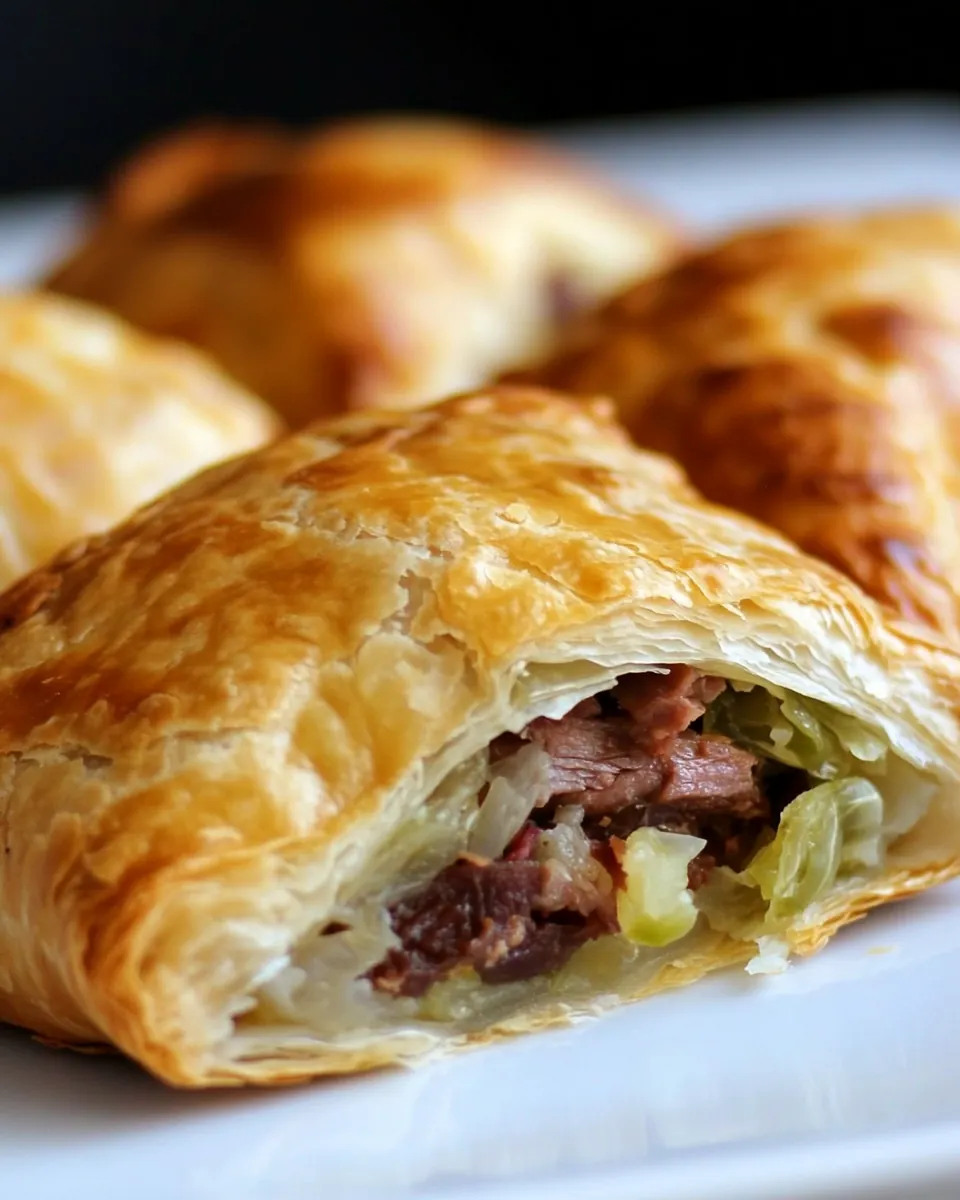
The flaky, buttery puff pastry contrasts with the slightly moist, savory interior beautifully. I value that sensory interplay, it makes every bite interesting. When you get that crunch followed by a soft, flavorful center, it just feels like a complete, satisfying mouthful.
Flexible and forgiving technique
I like recipes that let me be improvised and these turnovers do exactly that. If your filling is a little wetter, chilling it firms things up. If you want more tang, the mayo Dijon dip can be adjusted. That flexibility makes it a go to for weeknight creativity or last minute hosting.
What to Gather for Corned Beef Cabbage Turnovers
These ingredients are humble but purposeful. The star is the corned beef, supported by buttery puff pastry and aromatics like onion. The coleslaw mix brings texture and a light vegetal note that keeps the filling from feeling heavy. For me, the mayo Dijon dip is what lifts each bite, adding creaminess and tang that complements the savory pockets.
- 2 tablespoons canola oil: Heat and sauté in a skillet to develop flavor and provide the cooking medium for softening aromatics and vegetables; canola oil offers a neutral taste and high smoke point suitable for frying onions and cabbage without overpowering the filling.
- 1 medium (about 1 cup) sweet onion, finely chopped: Cook and sweat until translucent and sweet; finely chopped sweet onion adds moisture, savory-sweet depth, and aromatic complexity that balances the saltiness of corned beef in the filling.
- 4 cups (12 ounces) coleslaw mix, (shredded cabbage & carrot): Shred and wilt down in the pan to create the core bulky texture of the filling; coleslaw mix contributes crisp cabbage and tender carrot strands that meld with onions and corned beef when cooked.
- 1/2 pound cooked corned beef, chopped finely: Chop and incorporate as the primary savory protein providing cured, salty, and beefy flavor; finely chopped cooked corned beef supplies the distinctive corned–beef taste and hearty bite for each turnover.
- salt and pepper, to taste: Season and balance the mixture to enhance overall flavors; salt and pepper adjust seasoning levels, brighten taste, and control the savory-salty profile of the filling to suit preference.
- 2 sheets (one 17.3 ounce box) frozen puff pastry, thawed: Roll and cut into squares for assembly and baking; frozen puff pastry sheets provide the flaky, buttery layers that become the crispy, golden turnover crust when thawed and baked.
- 1 large egg: Brush and bind components during assembly and baking; a large egg beaten serves as an egg wash to give turnovers a shiny, golden finish and helps seal edges for neat pockets.
- 1/2 cup mayonnaise: Bind and add creaminess to the filling and finished turnover; mayonnaise contributes a rich, smooth texture and subtle tang that keeps the filling moist and cohesive.
- 2 tablespoons Dijon mustard: Flavor and add a sharp, tangy accent to the filling and sauce; Dijon mustard brings bright acidity and a gentle heat that complements the richness of corned beef and mayonnaise.
Step by Step Guide for Corned Beef Cabbage Turnovers

These turnovers come together in a few clear stages, from sauté to assembly to baking. I like to pace myself, letting the filling cool before filling the pastry so the final pockets stay crisp. Read the sensory cues and you will know when each step is ready.
- Preheat oven to 375 degrees F. Line one large baking sheet with parchment paper.: The room fills with clean heat and a quiet hum as the oven comes to temperature, which ensures a steady, golden bake. This precise heat encourages even puffing of the puff pastry , producing that signature flaky lift. If the oven is not fully preheated the pastry can brown unevenly and the interior may stay underdone, so wait until the oven reaches the full temperature. A common mistake is rushing this step, which yields less crispness and uneven browning.
- In a large skillet, heat oil over medium heat. Add onion and sauté until translucent, stirring occasionally, about 5 minutes. Add coleslaw mix and sauté until mixture is wilted, stirring occasionally, about another 5 minutes. Stir in corned beef, salt and pepper and set aside. Let cool.: As the onion hits the hot oil you will hear a gentle sizzle and soon smell sweet, fragrant aromatics. The translucent onion should look glossy and soft, not browned, which signals the perfect time to add the shredded coleslaw mix . When the coleslaw mix wilts it loses bulk and becomes tender, soaking up savory juices from the corned beef . Folding in the finely chopped corned beef integrates its briny, meaty notes. Cooling the filling is critical, because a hot filling will steam the inside of the pastry and create soggy pockets. Avoid overcooking the vegetables, which can make the filling mushy rather than pleasantly textured.
- Lightly flour a surface and rolling pin. Roll out thawed sheet of puff pastry to even out and seal seams. Cut out 9 (2 3/4 inch) squares from each sheet. Scoop a rounded tablespoon of filling into the center of 9 puff pastry squares. Rub edges of each square with water. Place another square in your hands, stretch it slightly, and then place it on top of the filling to cover (like a ravioli). Use a fork to press the edges together and seal. Continue until all nine squares have been covered and sealed.: The cool, silky feel of the puff pastry as you roll it out tells you when it is pliable enough to cut, and the even thickness ensures consistent baking. When you place a rounded tablespoon of filling onto the center, you will sense a compact mound that is firm enough to hold its shape but moist enough to meld with the pastry. Brushing the edges with water helps them adhere, and pressing the edges with a fork creates a neat seal and a charming crimped pattern. Stretching the top square slightly helps prevent puffing issues and promotes an even seal. A common error is overfilling, which causes leakage and difficult sealing, so keep the portions modest to preserve the pocket integrity.
- Place filled turnovers onto a parchment lined baking sheet. Brush tops with beaten egg. Bake about 20 minutes, or until golden brown.: When the tray goes into the oven you will quickly see the corners feather and then the whole surface rise as steam puffs the layers of the puff pastry . The egg wash encourages a deep, shiny golden color, making the turnover visually inviting. Sniff for a warm, buttery aroma and watch for even browning at the edges as the best visual cue that they are done. If they brown too quickly, reduce the oven temperature slightly to allow the interior to heat through without burning the exterior. Underbaked pastry feels dense and pale, so make sure to wait for that inviting golden tone.
- Let cool slightly, then serve with a mixture of 1/2 cup mayonnaise mixed with 2 tablespoons Dijon to make a mustard sauce dip.: After removing the tray you will notice a tempting steam rising from the centers, a signal that the pockets are piping hot inside. Letting them rest allows the interior to settle and prevents the filling from running out when bitten. The creamy mayo Dijon dip cuts through the saltiness of the corned beef with bright, smooth acidity, enhancing each bite. Common mistakes include serving too soon, which can lead to burns and a slightly doughy texture, so give them a short rest to achieve ideal texture and flavor balance.
Substitutions and Tips

These tips will help you make the best possible batch of turnovers and troubleshoot common issues. I expanded the single note provided into practical, hands on advice that I use every time I make them.
- Buy cooked corned beef if you do not have leftovers Use pre cooked corned beef from the deli and chop it finely to match the texture of leftovers, which keeps the filling consistent and saves time when you want to make these quickly.
- Keep the filling cool before assembly Cooling prevents steam from making the pastry soggy, and it helps the pockets retain structure during baking, giving you crisp layers rather than a dense interior.
- Handle puff pastry as little as possible Overworking warms the butter layers and reduces flakiness, so roll gently and chill briefly if it becomes too soft to handle cleanly.
- Don’t overfill each square A rounded tablespoon is enough, stuffing more often leads to tearing and leaking, which spoils both the appearance and texture of the turnover.
- Taste before seasoning Because corned beef has inherent salt, add salt sparingly and adjust with pepper, tasting the cooled filling first to avoid over salting.
- Use an egg wash for best color Brushing with beaten egg gives a golden finish and helps the top and bottom seal adhere, resulting in a professional looking turnover.
- Serve with the mayo Dijon dip The creamy, tangy dip balances the savory filling and adds moisture without overpowering the pastry, making each bite more interesting.
How to Serve Corned Beef Cabbage Turnovers
These turnovers are versatile and welcome at many occasions. They shine as finger food for casual gatherings and also work as a warm appetizer or a light dinner accompanied by a simple side. Below are serving ideas, storage guidance, and pairing suggestions.
- Serve warm on a platter Arrange the turnovers warm on a large platter with a ramekin of the mayo Dijon dip in the center so guests can help themselves at parties or family gatherings.
- Pair with a crisp salad A simple, lightly dressed green salad provides contrast to the rich, flaky pastry and gives the plate a fresh element for lunch or dinner.
- Great for casual entertaining Offer them as an appetizer at game day events or weekend get togethers, they travel and hold up well for a few hours at room temperature.
- Make ahead and reheat Prepare and assemble, then freeze the unbaked turnovers on a sheet pan. Bake from frozen, adding a few extra minutes, for easy entertaining without last minute work.
- Storage tips Store leftovers in an airtight container in the refrigerator and reheat in a hot oven to restore crispness; avoid the microwave which will soften the pastry.
- Seasonal pairing These are cozy for winter gatherings when you want a handheld warm appetizer that evokes traditional flavors in a new format.
FAQ
Conclusion
Corned Beef Cabbage Turnovers are special because they turn humble leftovers into a flaky, flavorful handheld that is both comforting and clever. The contrast between buttery puff pastry and a savory, slightly briny filling makes each bite satisfying and easy to share. I hope you’ll give them a try, whether you’re repurposing holiday corned beef or creating a new snack for a gathering. They are forgiving, adaptable, and a lovely way to celebrate simple ingredients with minimal fuss.

Corned Beef Cabbage Turnovers
Equipment
- Large Skillet
- Baking Sheet
- Parchment Paper
- Rolling Pin
Ingredients
- 2 tablespoons canola oil Heat and sauté in a skillet to develop flavor and provide the cooking medium for softening aromatics and vegetables; canola oil offers a neutral taste and high smoke point suitable for frying onions and cabbage without overpowering the filling.
- 1 medium (about 1 cup) sweet onion, finely chopped Cook and sweat until translucent and sweet; finely chopped sweet onion adds moisture, savory-sweet depth, and aromatic complexity that balances the saltiness of corned beef in the filling.
- 4 cups (12 ounces) coleslaw mix, (shredded cabbage & carrot) Shred and wilt down in the pan to create the core bulky texture of the filling; coleslaw mix contributes crisp cabbage and tender carrot strands that meld with onions and corned beef when cooked.
- 1/2 pound cooked corned beef, chopped finely Chop and incorporate as the primary savory protein providing cured, salty, and beefy flavor; finely chopped cooked corned beef supplies the distinctive corned-beef taste and hearty bite for each turnover.
- salt and pepper, to taste Season and balance the mixture to enhance overall flavors; salt and pepper adjust seasoning levels, brighten taste, and control the savory-salty profile of the filling to suit preference.
- 2 sheets (one 17.3 ounce box) frozen puff pastry, thawed Roll and cut into squares for assembly and baking; frozen puff pastry sheets provide the flaky, buttery layers that become the crispy, golden turnover crust when thawed and baked.
- 1 large egg Brush and bind components during assembly and baking; a large egg beaten serves as an egg wash to give turnovers a shiny, golden finish and helps seal edges for neat pockets.
- 1/2 cup mayonnaise Bind and add creaminess to the filling and finished turnover; mayonnaise contributes a rich, smooth texture and subtle tang that keeps the filling moist and cohesive.
- 2 tablespoons Dijon mustard Flavor and add a sharp, tangy accent to the filling and sauce; Dijon mustard brings bright acidity and a gentle heat that complements the richness of corned beef and mayonnaise.
Instructions
- Preheat oven to 375 degrees F. Line one large baking sheet with parchment paper.: The room fills with clean heat and a quiet hum as the oven comes to temperature, which ensures a steady, golden bake. This precise heat encourages even puffing of the puff pastry , producing that signature flaky lift. If the oven is not fully preheated the pastry can brown unevenly and the interior may stay underdone, so wait until the oven reaches the full temperature. A common mistake is rushing this step, which yields less crispness and uneven browning.
- In a large skillet, heat oil over medium heat. Add onion and sauté until translucent, stirring occasionally, about 5 minutes. Add coleslaw mix and sauté until mixture is wilted, stirring occasionally, about another 5 minutes. Stir in corned beef, salt and pepper and set aside. Let cool.: As the onion hits the hot oil you will hear a gentle sizzle and soon smell sweet, fragrant aromatics. The translucent onion should look glossy and soft, not browned, which signals the perfect time to add the shredded coleslaw mix . When the coleslaw mix wilts it loses bulk and becomes tender, soaking up savory juices from the corned beef . Folding in the finely chopped corned beef integrates its briny, meaty notes. Cooling the filling is critical, because a hot filling will steam the inside of the pastry and create soggy pockets. Avoid overcooking the vegetables, which can make the filling mushy rather than pleasantly textured.
- Lightly flour a surface and rolling pin. Roll out thawed sheet of puff pastry to even out and seal seams. Cut out 9 (2 3/4 inch) squares from each sheet. Scoop a rounded tablespoon of filling into the center of 9 puff pastry squares. Rub edges of each square with water. Place another square in your hands, stretch it slightly, and then place it on top of the filling to cover (like a ravioli). Use a fork to press the edges together and seal. Continue until all nine squares have been covered and sealed.: The cool, silky feel of the puff pastry as you roll it out tells you when it is pliable enough to cut, and the even thickness ensures consistent baking. When you place a rounded tablespoon of filling onto the center, you will sense a compact mound that is firm enough to hold its shape but moist enough to meld with the pastry. Brushing the edges with water helps them adhere, and pressing the edges with a fork creates a neat seal and a charming crimped pattern. Stretching the top square slightly helps prevent puffing issues and promotes an even seal. A common error is overfilling, which causes leakage and difficult sealing, so keep the portions modest to preserve the pocket integrity.
- Place filled turnovers onto a parchment lined baking sheet. Brush tops with beaten egg. Bake about 20 minutes, or until golden brown.: When the tray goes into the oven you will quickly see the corners feather and then the whole surface rise as steam puffs the layers of the puff pastry . The egg wash encourages a deep, shiny golden color, making the turnover visually inviting. Sniff for a warm, buttery aroma and watch for even browning at the edges as the best visual cue that they are done. If they brown too quickly, reduce the oven temperature slightly to allow the interior to heat through without burning the exterior. Underbaked pastry feels dense and pale, so make sure to wait for that inviting golden tone.
- Let cool slightly, then serve with a mixture of 1/2 cup mayonnaise mixed with 2 tablespoons Dijon to make a mustard sauce dip.: After removing the tray you will notice a tempting steam rising from the centers, a signal that the pockets are piping hot inside. Letting them rest allows the interior to settle and prevents the filling from running out when bitten. The creamy mayo Dijon dip cuts through the saltiness of the corned beef with bright, smooth acidity, enhancing each bite. Common mistakes include serving too soon, which can lead to burns and a slightly doughy texture, so give them a short rest to achieve ideal texture and flavor balance.
Notes
- Buy cooked corned beef if you do not have leftovers Use pre cooked corned beef from the deli and chop it finely to match the texture of leftovers, which keeps the filling consistent and saves time when you want to make these quickly.
- Keep the filling cool before assembly Cooling prevents steam from making the pastry soggy, and it helps the pockets retain structure during baking, giving you crisp layers rather than a dense interior.
- Handle puff pastry as little as possible Overworking warms the butter layers and reduces flakiness, so roll gently and chill briefly if it becomes too soft to handle cleanly.
- Don’t overfill each square A rounded tablespoon is enough, stuffing more often leads to tearing and leaking, which spoils both the appearance and texture of the turnover.
- Taste before seasoning Because corned beef has inherent salt, add salt sparingly and adjust with pepper, tasting the cooled filling first to avoid over salting.
- Use an egg wash for best color Brushing with beaten egg gives a golden finish and helps the top and bottom seal adhere, resulting in a professional looking turnover.
- Serve with the mayo Dijon dip The creamy, tangy dip balances the savory filling and adds moisture without overpowering the pastry, making each bite more interesting.