Chocolate Frosted Cake Donuts
Chocolate Frosted Cake Donuts are the kind of treat that turns an ordinary morning into a small celebration, and I still remember the first time I dunked one into a glossy chocolate glaze and heard that soft crack as it set. Growing up, weekend breakfasts were when my family relaxed, and I started playing with cake donut batters because they felt forgiving, like a warm hug that tolerated a little extra sugar or a rushed fold. Over time I learned to read the dough by feel, and those lessons shape how I make these donuts today.
On a rainy Saturday a few years back, I tested this recipe to be both simple and a little indulgent. I wanted a donut that had the tender crumb of a cake but still bubbled and crisped up when fried just right. The glaze was inspired by old-school chocolate shops, the kind where chocolate smells like a promise the moment you walk in. I like to make a double batch and share with neighbors, because watching someone take that first bite and close their eyes is one of my favorite rewards.
Recipe Snapshot
1 hr 30 mins
60 mins
30 mins
Medium
200 kcal
American
Gluten-Free, Low FODMAP
Desserts
Large bowl, Measuring glass, Doughnut cutter or round cutter, Large saucepan, Candy thermometer, Slotted spoon, Small saucepan, Whisk
What Makes This Chocolate Frosted Cake Donuts Special
They are reliably cozy
I love how Chocolate Frosted Cake Donuts deliver a soft, cake like interior while still boasting a slightly crisp exterior from frying. This contrast is comforting, and I find it perfect for a slow morning where each bite feels intentional. The texture balance is one of the main reasons I keep coming back to this recipe.
Easy to scale and share
Because the batter is straightforward, I can double or halve it without fuss. I often make a larger batch when friends stop by, and the dough chills well in the fridge so you can prep ahead. That flexibility makes these donuts ideal for casual brunches or last minute gatherings.
Glaze that tastes like bakery chocolate
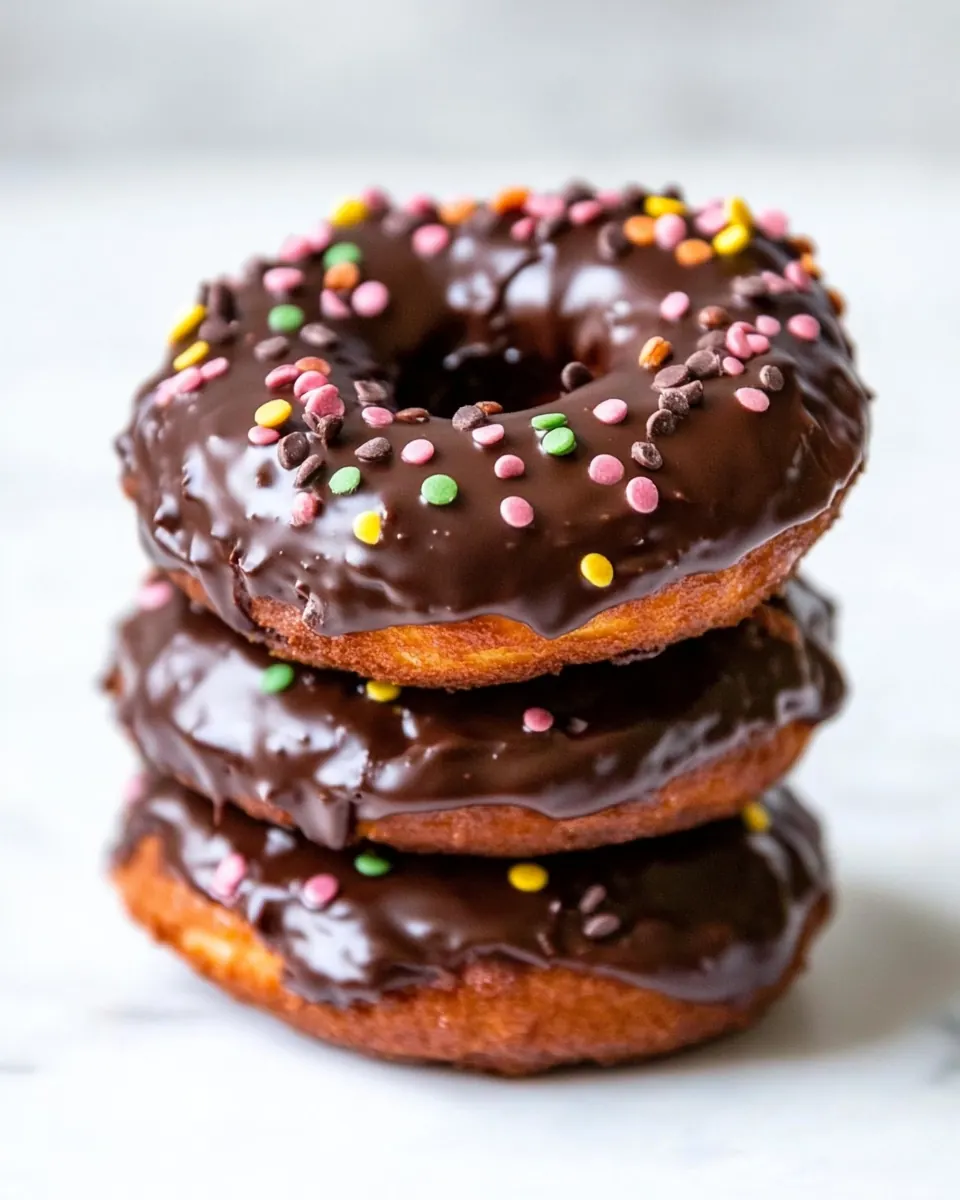
The chocolate glaze in this recipe is dark and shiny, with a silky mouthfeel from butter and milk. It sets beautifully on the donut surface, creating a glossy finish that snaps when you bite into it. I like that the glaze never tastes cloying, it reads more like a refined bakery topping than a sugary smear.
Forgiving technique
There are a few key moments, but overall the method is forgiving. The dough can be slightly sticky, and a light dusting of flour while rolling keeps things manageable. Even if you overwork it a little, the donuts still turn out tender, so it’s a friendly recipe for home cooks who are building confidence.
Fun to customize
While the recipe shines as written, you can add finishing touches like sprinkles for a playful look. I enjoy switching the garnish depending on the occasion, and the glaze pairs well with bright decor when serving at a party. That make it both reliable and playful in my kitchen.
Essential Ingredients for Chocolate Frosted Cake Donuts
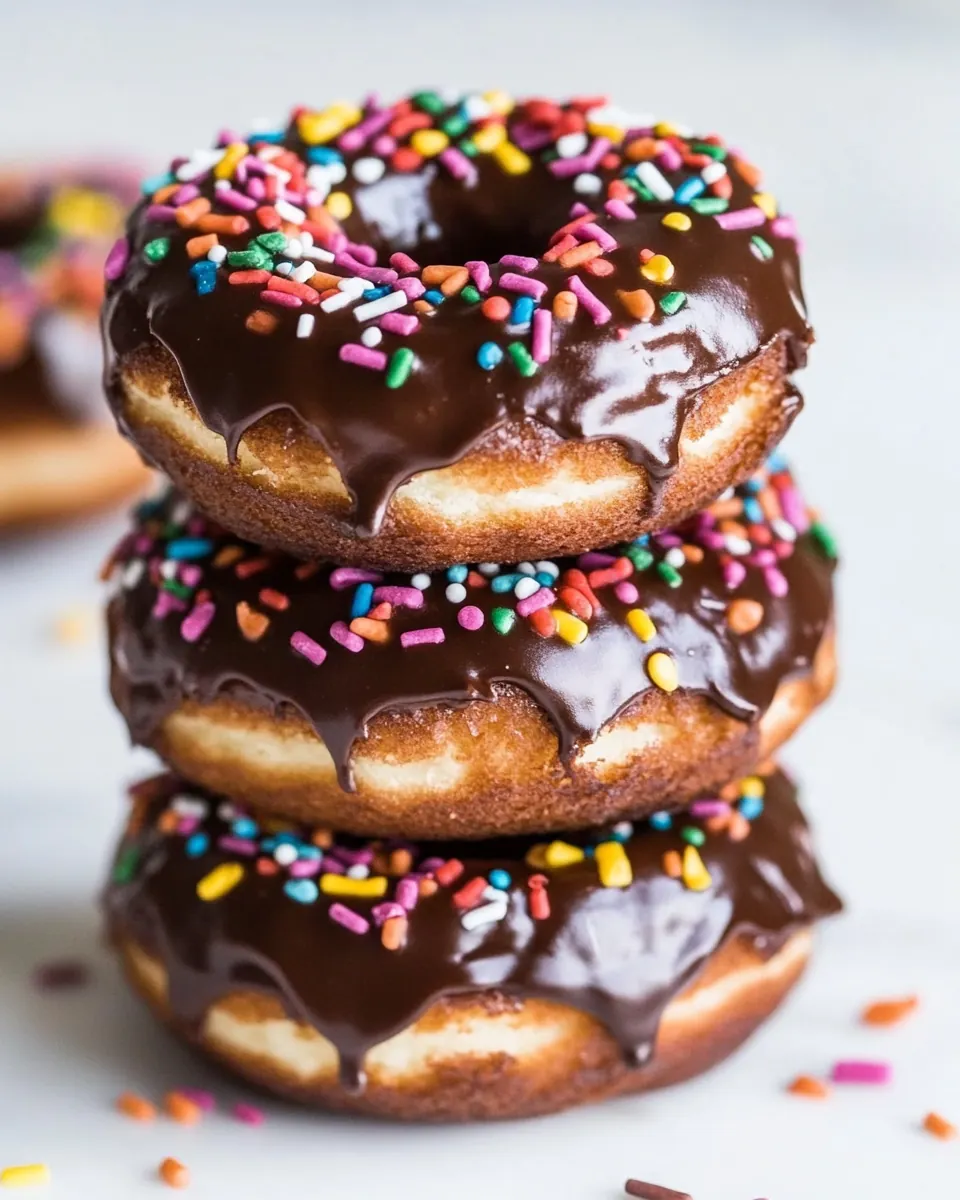
These ingredients are chosen to create a sturdy cake batter that fries up tender yet crisp. The dry elements give structure and lift, while the wet players add moisture and richness. The glaze ingredients are small in number but crucial for that glossy finish that clings to the donut, turning each piece into a bite worthy of a café.
- 2 1/2 cups all-purpose flour: Provide structure and bulk to the batter, creating the crumb and texture of the cake donut; combine with leavening and liquids to form a cohesive dough that fries up tender and slightly cakey.
- 1/3 cup granulated sugar: Add sweetness and tenderizing effect to the dough, helping to balance flavors while promoting browning during frying; dissolve into the wet ingredients for even distribution.
- 1 tablespoon baking powder: Act as the primary leavening agent, producing carbon dioxide to lift and lighten the donut crumb; ensure even mixing with the flour to avoid uneven rise and metallic pockets.
- 1/4 teaspoon cinnamon: Contribute a warm, subtle spice note that enhances chocolate and sugar flavors; use sparingly to avoid overpowering the delicate cake donut profile.
- 1/4 teaspoons salt: Enhance overall flavor by providing a touch of saltiness that balances sweetness and strengthens gluten structure slightly; distribute evenly to avoid salty spots.
- 1 cup milk: Provide necessary hydration to form the batter and activate leaveners, while contributing to tenderness and mouthfeel; adjust temperature to room temperature for best incorporation.
- 1 large egg, lightly beaten: Bind the ingredients together and add richness and slight lift from trapped air when beaten; incorporate lightly to maintain a tender cake texture.
- 5 tablespoons unsalted butter, melted and cooled: Introduce fat for richness, tenderness, and moistness while contributing to the donut's tender crumb; melt and cool to avoid cooking eggs when mixed into the batter.
- 2 teaspoons vanilla extract: Impart aromatic sweetness that enhances other flavors and rounds out the profile of the donut; add to the wet mix to distribute flavor evenly throughout the batter.
- oil for frying: Serve as the frying medium to cook the donuts quickly and develop a golden exterior; maintain proper temperature to prevent greasy or undercooked centers.
- 4 tablespoons unsalted butter: Provide richness and a silky base for the chocolate frosting, contributing to flavor and smooth mouthfeel when melted with chocolate; use at room temperature for mixing with other glaze ingredients.
- 2 teaspoons vanilla extract: Add aromatic flavor to the frosting and complement the chocolate, amplifying depth and sweetness; incorporate with melted butter for even dispersion.
- 1 teaspoon light corn syrup: Improve the sheen and stability of the chocolate glaze while keeping it slightly fluid; disperse evenly into the warm chocolate–butter mixture.
- 1/4 cup milk: Adjust the viscosity of the frosting and add creaminess, helping to create a spreadable glossy glaze when combined with chocolate and powdered sugar; warm slightly to aid melting.
- 3 ounces dark chocolate, chopped: Deliver concentrated chocolate flavor and richness to the frosting, melting into the butter and milk to form a smooth, deep-tasting glaze; chop finely for even melting.
- 1 cup powdered sugar: Sweeten and help thicken the frosting to a pipeable or spreadable consistency while contributing to a smooth, silky texture when sifted and mixed into the glaze.
Directions for Chocolate Frosted Cake Donuts
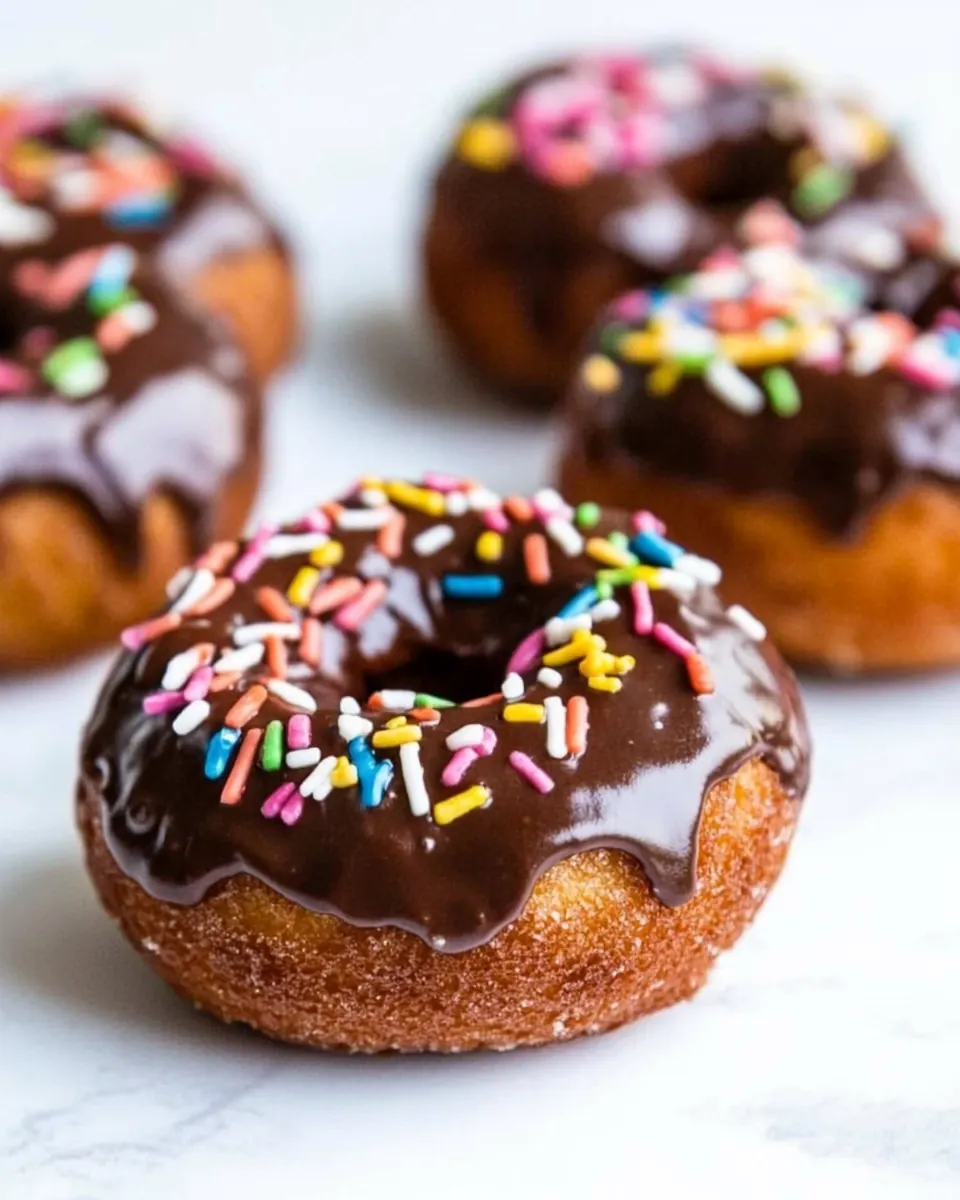
These directions will guide you through making the dough, frying the donuts, and finishing them with a glossy chocolate glaze. Read each step fully before you start, because frying moves quickly and timing is key.
- In a large bowl, whisk together flour, sugar, baking powder, salt and cinnamon. Make a well in the center.: The air smells faintly of spice when you whisk these dry ingredients together, and you will notice a uniform pale tan color with tiny specks of cinnamon. This dry mix is the backbone, so sift any lumps away with your whisking motion to ensure even rise. Why this matters: even distribution of baking powder prevents pockets of uneven lift. Troubleshooting tip: if the mixture seems noticeably clumpy, quickly break lumps with the back of a spoon to avoid dense spots in the donuts.
- In a large measuring glass, whisk together milk, egg, butter and vanilla extract. Pour into the center of the dry ingredients then mix with a large spoon. Stir until dough is combined but do not overmix. The dough will be sticky! Cover with plastic wrap and set the bowl in the fridge for 1 hour.: When you combine the wet mix you can smell warm vanilla and melted butter, which promise richness. The wet mixture should look homogenous and slightly glossy before you fold it into the dry bowl. Sensory cue: you will feel the batter change from powdery to tacky as you stir, and visually it will turn from dusty to cohesive. Why this matters: gentle mixing keeps the gluten development minimal, which preserves tenderness in the crumb. Troubleshooting tip: overmixing yields tough donuts, so stop as soon as no streaks of flour remain. Also chilling the dough firms it slightly, making rolling easier and helping preserve texture during frying.
- After an hour, remove dough and place on a well floured surface. Roll dough out to be about 1/2-3/4 inch thick. Using a doughnut cutter, biscuit cutter or… something round, cut circles into the dough. To cut out the center, I used the wide bottom of a frosting tip, but you can also use a bottle cap or something of the sort.: The dough should feel pliable but not sticky after chilling, and when you press a finger it should slowly bounce back. As you roll, the surface will pick up a faint dusting of flour that prevents sticking, and you will see neat circular edges once cut. Why this matters: consistent thickness ensures even frying and uniform cook through. Troubleshooting tip: if the dough sticks while rolling, sprinkle a little more all purpose flour but avoid overflouring, which can dry the donuts out.
- Heat oil in a large saucepan over medium heat so it’s about 2-3 inches deep. Once the oil hits 360-365 degrees, fry the doughnuts 2-3 at a time, for about 2 minutes per side, or until puffed and golden brown. Make sure you use a candy thermometer as this is the only way to determine the temperature! I have burned many doughnuts in my life. It is not pretty. Remove doughnuts with a slotted spoon and let cool on a paper towel. Repeat with remaining.: The oil will shimmer and faintly smell neutral when it reaches the right temperature, and the surface will show tiny ripples. As donuts hit the oil they should sizzle gently and begin to float, puffing as steam escapes. Why this matters: keeping oil at a steady temperature prevents overly greasy donuts or charred exteriors with raw centers. Troubleshooting tip: if the donuts brown too fast, your oil is too hot, so lower the heat and let it stabilize; if they soak up oil, the temperature is too low.
- While doughnuts are cooling, heat a small saucepan over medium heat and add butter, vanilla, corn syrup and milk. Whisk to combine and once butter is melt, reduce heat to low and add chopped chocolate. Whisk ask to combine, then once smooth, remove from heat and stir in powdered sugar. Stir continuously until it is all dissolve and no lumps remain. Dunk each doughnut into the glaze, then cover with sprinkles. Let set for about 30 minutes.: When you fish the donuts out, listen for a soft hiss and notice the surface turn a warm golden brown that darkens slightly as they rest. Laying them on paper towel helps absorb excess oil without flattening the shape, and within a few minutes the donut will feel set to the touch. Why this matters: proper draining keeps the final texture light rather than greasy. Troubleshooting tip: avoid stacking hot donuts, as trapped steam will make them soggy.
- While doughnuts are cooling, heat a small saucepan over medium heat and add butter, vanilla, corn syrup and milk. Whisk to combine and once butter is melt, reduce heat to low and add chopped chocolate.: As the butter melts with the milk you will hear a gentle bubbling and smell a rich, dairy aroma. Adding chocolate at low heat invites the chocolate to soften and melt into a glossy pool, and whisking helps emulsify the mixture. Why this matters: gentle heat prevents chocolate from seizing, which would make the glaze grainy. Troubleshooting tip: if your chocolate looks grainy, remove from heat and keep whisking, small amounts of warm milk can coax it smooth again.
- Whisk ask to combine, then once smooth, remove from heat and stir in powdered sugar. Stir continuously until it is all dissolve and no lumps remain. Dunk each doughnut into the glaze, then cover with sprinkles. Let set for about 30 minutes.: The finished glaze should be shiny and thick enough to coat the back of a spoon, and when you dip a donut you will hear a soft scraping sound as excess glaze drips back. As it cools the glaze will firm slightly into a tender shell, and sprinkles add a festive crunch. Why this matters: the continuous stirring ensures a silky texture without sugar grit. Troubleshooting tip: if the glaze is too thin, add a little more powdered sugar ; if too thick, stir in a teaspoon of warm milk at a time until desired consistency is reached.
Tips for Success
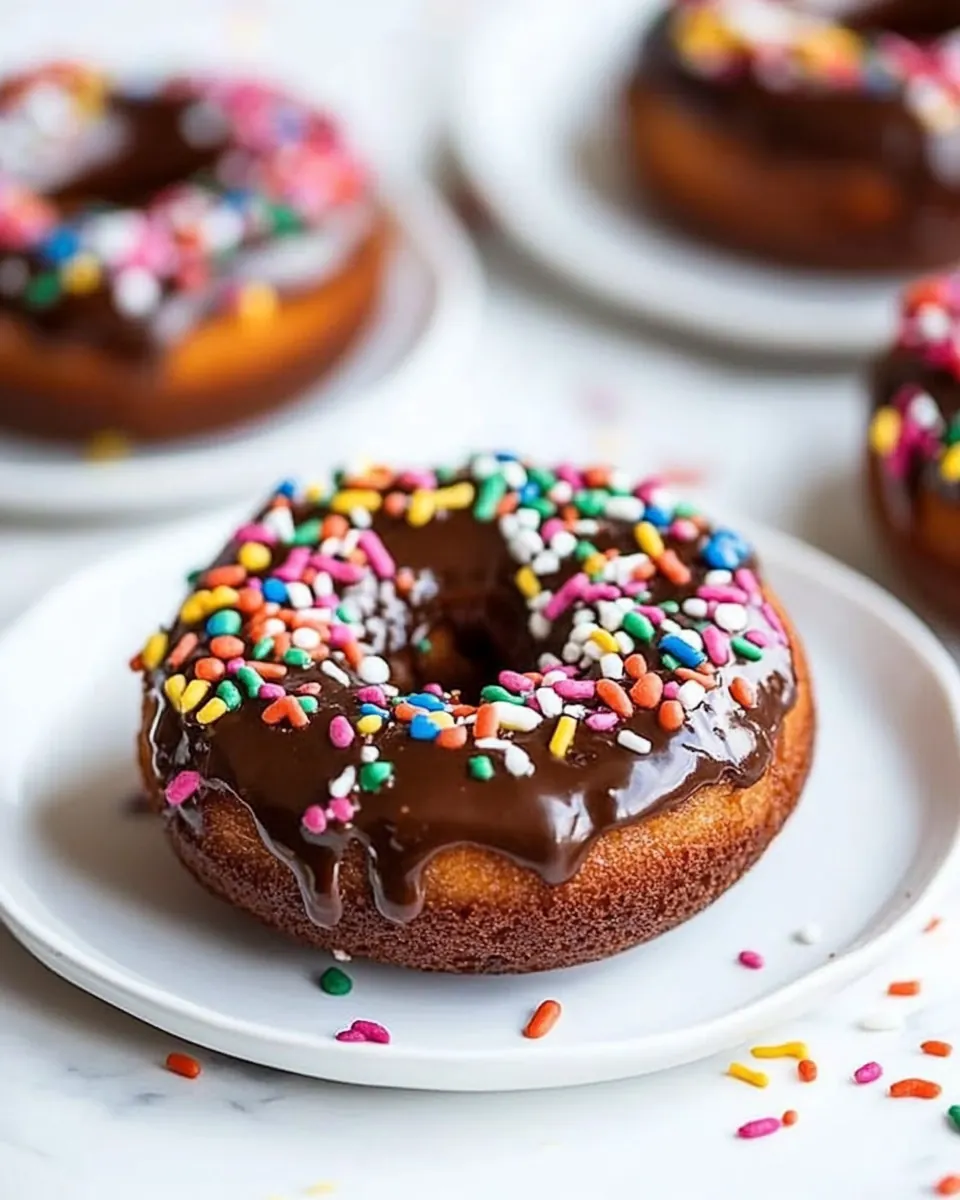
I like to think of these tips as small course corrections that keep the process smooth. Below you will find practical guidance for the batter, frying, and glazing stages, based on seasons of testing and a few kitchen mishaps I learned from.
- Measure flour by spooning into the cup and leveling it off to avoid packing, which can create dense donuts.
- Keep your oil temperature steady using a candy thermometer; temperature swings are the main reason donuts cook unevenly.
- Chill the dough for at least an hour to make rolling easier and to help maintain shape during frying.
- Whisk glaze gently off heat if you see the chocolate begin to seize, adding small amounts of warm milk to smooth it out.
- Drain donuts briefly on paper towel but do not stack when hot, as steam will soften their crust.
- Use fresh baking powder for reliable rise, check date on the can if you are unsure.
- Sift powdered sugar into the glaze to avoid lumps and ensure a silky finish.
Perfect Matches for Chocolate Frosted Cake Donuts
These donuts pair well with simple accompaniments and make for a flexible option across occasions. Below I outline serving ideas, storage notes, and contexts where they shine.
- Breakfast spread Serve with coffee and fresh fruit for a relaxed morning where each donut is the star.
- Brunch gatherings Arrange on a tiered stand for a casual get together, letting guests choose glaze and sprinkles.
- Party dessert Use colorful sprinkles and display on a platter for birthdays and family celebrations.
- Storage tip Keep in an airtight container at room temperature for up to two days, placing parchment between layers to prevent sticking.
- Reheat carefully If you want warm donuts, heat briefly in a low oven to avoid melting the glaze too much.
- Seasonal pairing These donuts work well year round, brightening winter mornings or lazy summer brunches alike.
FAQ
Conclusion
This recipe stands out for its combination of a tender, cake like interior and a glossy, chocolate finish that feels both nostalgic and refined. Give it a try on a slow weekend or when you want to bring something warm and cheerful to a gathering, because the process is forgiving and the results are reliably crowd pleasing. I hope you enjoy the ritual of frying, glazing, and sharing these donuts, and that you find as much joy in that first warm bite as I do.
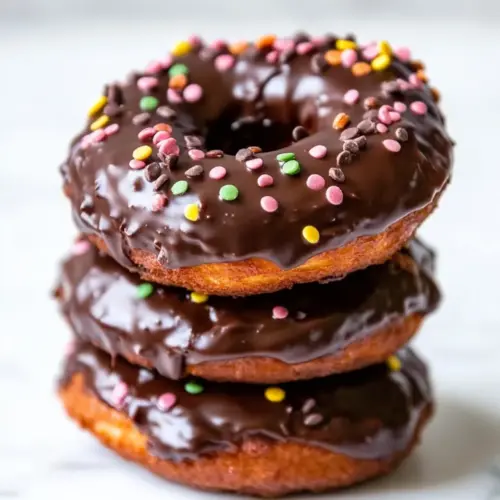
Chocolate Frosted Cake Donuts
Equipment
- Large Bowl
- Measuring glass
- Doughnut cutter or round cutter
- Large saucepan
- Candy thermometer
- Slotted Spoon
- Small Saucepan
- Whisk
Ingredients
- 2 1/2 cups all-purpose flour Provide structure and bulk to the batter, creating the crumb and texture of the cake donut; combine with leavening and liquids to form a cohesive dough that fries up tender and slightly cakey.
- 1/3 cup granulated sugar Add sweetness and tenderizing effect to the dough, helping to balance flavors while promoting browning during frying; dissolve into the wet ingredients for even distribution.
- 1 tablespoon baking powder Act as the primary leavening agent, producing carbon dioxide to lift and lighten the donut crumb; ensure even mixing with the flour to avoid uneven rise and metallic pockets.
- 1/4 teaspoon cinnamon Contribute a warm, subtle spice note that enhances chocolate and sugar flavors; use sparingly to avoid overpowering the delicate cake donut profile.
- 1/4 teaspoons salt Enhance overall flavor by providing a touch of saltiness that balances sweetness and strengthens gluten structure slightly; distribute evenly to avoid salty spots.
- 1 cup milk Provide necessary hydration to form the batter and activate leaveners, while contributing to tenderness and mouthfeel; adjust temperature to room temperature for best incorporation.
- 1 large egg, lightly beaten Bind the ingredients together and add richness and slight lift from trapped air when beaten; incorporate lightly to maintain a tender cake texture.
- 5 tablespoons unsalted butter, melted and cooled Introduce fat for richness, tenderness, and moistness while contributing to the donut's tender crumb; melt and cool to avoid cooking eggs when mixed into the batter.
- 2 teaspoons vanilla extract Impart aromatic sweetness that enhances other flavors and rounds out the profile of the donut; add to the wet mix to distribute flavor evenly throughout the batter.
- oil for frying Serve as the frying medium to cook the donuts quickly and develop a golden exterior; maintain proper temperature to prevent greasy or undercooked centers.
- 4 tablespoons unsalted butter Provide richness and a silky base for the chocolate frosting, contributing to flavor and smooth mouthfeel when melted with chocolate; use at room temperature for mixing with other glaze ingredients.
- 2 teaspoons vanilla extract Add aromatic flavor to the frosting and complement the chocolate, amplifying depth and sweetness; incorporate with melted butter for even dispersion.
- 1 teaspoon light corn syrup Improve the sheen and stability of the chocolate glaze while keeping it slightly fluid; disperse evenly into the warm chocolate-butter mixture.
- 1/4 cup milk Adjust the viscosity of the frosting and add creaminess, helping to create a spreadable glossy glaze when combined with chocolate and powdered sugar; warm slightly to aid melting.
- 3 ounces dark chocolate, chopped Deliver concentrated chocolate flavor and richness to the frosting, melting into the butter and milk to form a smooth, deep-tasting glaze; chop finely for even melting.
- 1 cup powdered sugar Sweeten and help thicken the frosting to a pipeable or spreadable consistency while contributing to a smooth, silky texture when sifted and mixed into the glaze.
Instructions
- In a large bowl, whisk together flour, sugar, baking powder, salt and cinnamon. Make a well in the center.: The air smells faintly of spice when you whisk these dry ingredients together, and you will notice a uniform pale tan color with tiny specks of cinnamon. This dry mix is the backbone, so sift any lumps away with your whisking motion to ensure even rise. Why this matters: even distribution of baking powder prevents pockets of uneven lift. Troubleshooting tip: if the mixture seems noticeably clumpy, quickly break lumps with the back of a spoon to avoid dense spots in the donuts.
- In a large measuring glass, whisk together milk, egg, butter and vanilla extract. Pour into the center of the dry ingredients then mix with a large spoon. Stir until dough is combined but do not overmix. The dough will be sticky! Cover with plastic wrap and set the bowl in the fridge for 1 hour.: When you combine the wet mix you can smell warm vanilla and melted butter, which promise richness. The wet mixture should look homogenous and slightly glossy before you fold it into the dry bowl. Sensory cue: you will feel the batter change from powdery to tacky as you stir, and visually it will turn from dusty to cohesive. Why this matters: gentle mixing keeps the gluten development minimal, which preserves tenderness in the crumb. Troubleshooting tip: overmixing yields tough donuts, so stop as soon as no streaks of flour remain. Also chilling the dough firms it slightly, making rolling easier and helping preserve texture during frying.
- After an hour, remove dough and place on a well floured surface. Roll dough out to be about 1/2-3/4 inch thick. Using a doughnut cutter, biscuit cutter or… something round, cut circles into the dough. To cut out the center, I used the wide bottom of a frosting tip, but you can also use a bottle cap or something of the sort.: The dough should feel pliable but not sticky after chilling, and when you press a finger it should slowly bounce back. As you roll, the surface will pick up a faint dusting of flour that prevents sticking, and you will see neat circular edges once cut. Why this matters: consistent thickness ensures even frying and uniform cook through. Troubleshooting tip: if the dough sticks while rolling, sprinkle a little more all purpose flour but avoid overflouring, which can dry the donuts out.
- Heat oil in a large saucepan over medium heat so it’s about 2-3 inches deep. Once the oil hits 360-365 degrees, fry the doughnuts 2-3 at a time, for about 2 minutes per side, or until puffed and golden brown. Make sure you use a candy thermometer as this is the only way to determine the temperature! I have burned many doughnuts in my life. It is not pretty. Remove doughnuts with a slotted spoon and let cool on a paper towel. Repeat with remaining.: The oil will shimmer and faintly smell neutral when it reaches the right temperature, and the surface will show tiny ripples. As donuts hit the oil they should sizzle gently and begin to float, puffing as steam escapes. Why this matters: keeping oil at a steady temperature prevents overly greasy donuts or charred exteriors with raw centers. Troubleshooting tip: if the donuts brown too fast, your oil is too hot, so lower the heat and let it stabilize; if they soak up oil, the temperature is too low.
- While doughnuts are cooling, heat a small saucepan over medium heat and add butter, vanilla, corn syrup and milk. Whisk to combine and once butter is melt, reduce heat to low and add chopped chocolate. Whisk ask to combine, then once smooth, remove from heat and stir in powdered sugar. Stir continuously until it is all dissolve and no lumps remain. Dunk each doughnut into the glaze, then cover with sprinkles. Let set for about 30 minutes.: When you fish the donuts out, listen for a soft hiss and notice the surface turn a warm golden brown that darkens slightly as they rest. Laying them on paper towel helps absorb excess oil without flattening the shape, and within a few minutes the donut will feel set to the touch. Why this matters: proper draining keeps the final texture light rather than greasy. Troubleshooting tip: avoid stacking hot donuts, as trapped steam will make them soggy.
- While doughnuts are cooling, heat a small saucepan over medium heat and add butter, vanilla, corn syrup and milk. Whisk to combine and once butter is melt, reduce heat to low and add chopped chocolate.: As the butter melts with the milk you will hear a gentle bubbling and smell a rich, dairy aroma. Adding chocolate at low heat invites the chocolate to soften and melt into a glossy pool, and whisking helps emulsify the mixture. Why this matters: gentle heat prevents chocolate from seizing, which would make the glaze grainy. Troubleshooting tip: if your chocolate looks grainy, remove from heat and keep whisking, small amounts of warm milk can coax it smooth again.
- Whisk ask to combine, then once smooth, remove from heat and stir in powdered sugar. Stir continuously until it is all dissolve and no lumps remain. Dunk each doughnut into the glaze, then cover with sprinkles. Let set for about 30 minutes.: The finished glaze should be shiny and thick enough to coat the back of a spoon, and when you dip a donut you will hear a soft scraping sound as excess glaze drips back. As it cools the glaze will firm slightly into a tender shell, and sprinkles add a festive crunch. Why this matters: the continuous stirring ensures a silky texture without sugar grit. Troubleshooting tip: if the glaze is too thin, add a little more powdered sugar ; if too thick, stir in a teaspoon of warm milk at a time until desired consistency is reached.
Notes
- Measure flour by spooning into the cup and leveling it off to avoid packing, which can create dense donuts.
- Keep your oil temperature steady using a candy thermometer; temperature swings are the main reason donuts cook unevenly.
- Chill the dough for at least an hour to make rolling easier and to help maintain shape during frying.
- Whisk glaze gently off heat if you see the chocolate begin to seize, adding small amounts of warm milk to smooth it out.
- Drain donuts briefly on paper towel but do not stack when hot, as steam will soften their crust.
- Use fresh baking powder for reliable rise, check date on the can if you are unsure.
- Sift powdered sugar into the glaze to avoid lumps and ensure a silky finish.