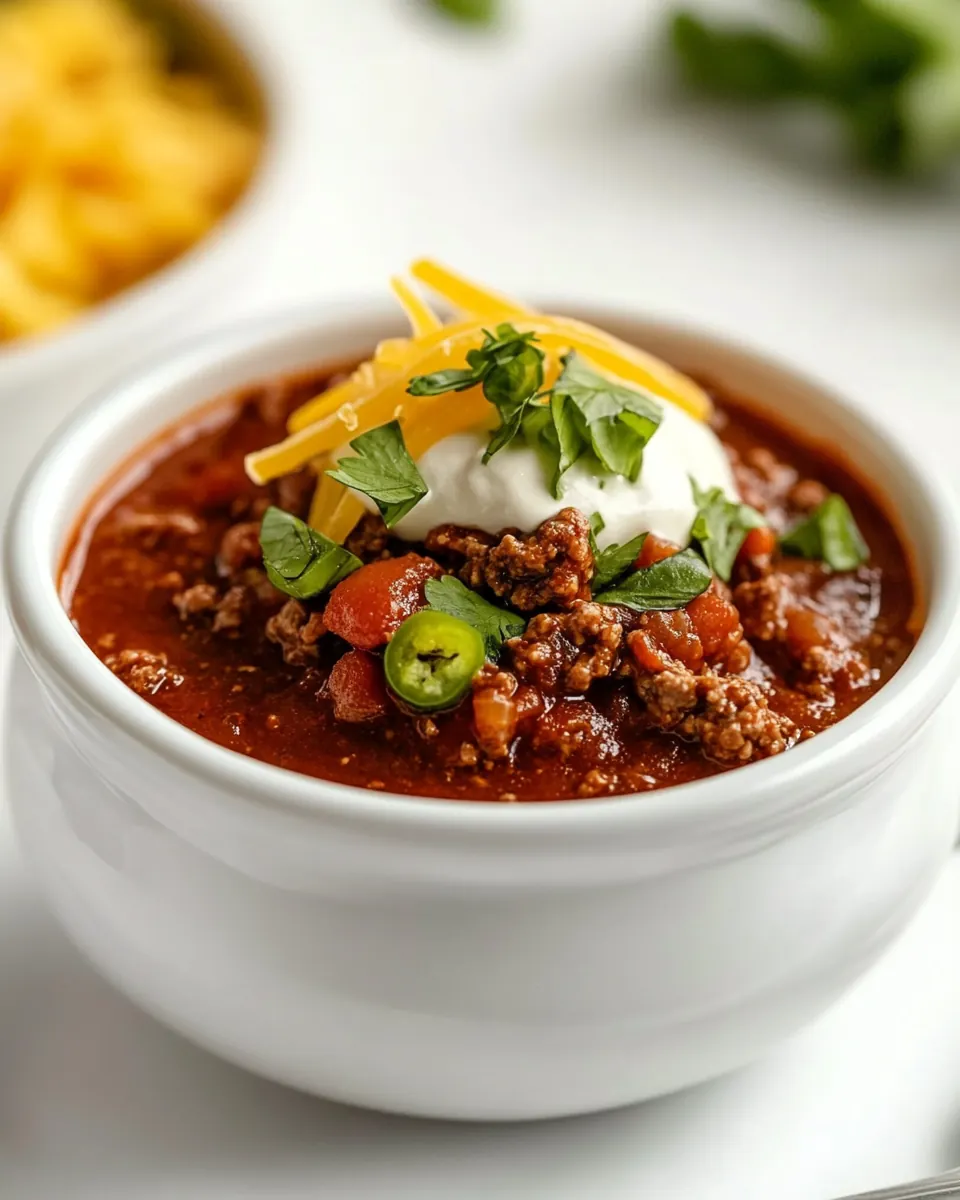
Chili Con Carne
Chili Con Carne is the kind of bowl I turn to when I want something bold, warming, and unapologetically savory on a cold evening. The first time I made this recipe it felt like discovery, a slow layering of smoky spice and rich tomato that settled into the kind of comfort food I keep coming back to. I remember stirring the pot and thinking how food can anchor a night, the heady aroma of ground beef and ancho chile knitting the kitchen together.
There are nights when this version of Chili Con Carne is my lone supper, ladled into a wide bowl with a scattering of bright cilantro on top, and there are other nights when it becomes the centerpiece of a gathering. I like how the texture plays out too, with crumbled pieces of ground beef giving way to softened onion and bell pepper. Each spoonful has a rhythm of warm spice, tomato tang, and the subtle heat from cayenne pepper, and that rhythm makes it instantly memorable.
Recipe Snapshot
45 mins
15 mins
30 mins
Medium
400 kcal
Mexican
Keto, Gluten-Free
Dinner
6 to 8 quart pot, Wooden spoon
Why This Chili Con Carne Hits Different
I love the deep, layered flavor
The backbone of this chili is the interplay between crushed tomato, toasted spices, and the rich fat of the ground beef. I find that letting the spices bloom in the hot pot for a moment before adding the tomatoes unlocks a complexity you can taste in every spoonful. It makes the dish feel like it has depth beyond simple heat, with smoky, earthy notes from the ancho chile and a warm, nutty base from the cumin.
It is forgiving and perfect for weeknights
I appreciate how this recipe adapts to busy evenings. You can move through the steps at a steady pace and still end up with a dish that tastes like you spent hours on it. The method is straightforward, and little adjustments matter a lot, which is great if you enjoy dialling flavors to your liking. When time is tight, the short simmer still yields great results.
There is comfort without the fuss
For me, comfort is as much about texture as it is about warmth. The crumbled ground beef alongside softened onion and bell pepper creates a hearty mouthfeel that pairs beautifully with the tang of crushed tomato. The bay leaf and oregano add aromatic notes that make each bite interesting, so you never feel like you are eating the same thing over and over.
It invites easy personalization
I always leave space for toppings and tweaks, because a simple garnish can shift the whole experience. Spoons of creamy sour cream or a sprinkle of shredded cheese cut the heat and add a cool counterpoint, while a handful of chopped cilantro brightens the dish. That flexibility makes it a crowd pleaser.
Great for leftovers and meal prep
Leftover Chili Con Carne only gets better after a day in the fridge, as the flavors continue to meld. I love that it reheats beautifully, which means you can plan ahead and enjoy a rich, ready-made meal later in the week. It is economical and satisfying, which is always a winning combo in my kitchen.
Everything You Need for Chili Con Carne

These ingredients work together to create a chili that balances savory meat, bright tomato, and warm spices. The key players, ground beef, crushed tomato, and the spice blend, carry the flavor, while aromatics like onion, bell pepper, and garlic build the foundation. I treat the spices like collaborators: toast and bloom them, and they reward you with deeper, richer notes.
- 2 – 2 1/2 pounds lean ground beef: Brown and crumble to develop savory depth and provide the hearty protein base for the chili; cook thoroughly until no longer pink and excess fat is drained if desired to control richness. Add seasoning while browning to infuse flavors into the meat and create a robust foundation that carries the spices and tomatoes. Allow rendered juices to meld with aromatics later in the recipe to build a cohesive sauce.
- 1 large onion peeled and diced: Peel, dice, and sauté to soften and release sweet, aromatic flavors that form the savory backbone of the chili; cook until translucent to balance the dish's acidity and heat. Add early in the cooking process so the onion's sugars caramelize slightly and integrate with the meat and spices. Adjust cooking time to achieve desired texture and flavor intensity.
- 1 bell pepper seeded and diced: Seed, dice, and cook until softened to contribute a mild sweetness and fresh vegetable texture that complements the beef; bell pepper adds color and a subtle vegetal note. Combine with onions and garlic early to meld flavors and provide a classic chili profile. Choose red, green, or yellow peppers depending on preferred sweetness and appearance.
- 6 8 cloves garlic minced: Mince finely and sauté briefly to release pungent, aromatic oils that brighten and deepen the overall flavor; avoid burning to prevent bitterness. Add near the beginning once onions are softened so garlic infuses the oil and meat with its distinctive savory bite. Adjust amount within the range for preferred garlic intensity.
- 2 tablespoons ground ancho chile: Measure and add to introduce smoky, fruity heat that defines the chili's chile flavor profile; ground ancho contributes depth without overpowering. Toast briefly in the pan with other spices to awaken its aromas before adding liquids. Balance quantity with other chiles and cayenne for desired warmth and complexity.
- 2 tablespoons ground cumin: Measure and stir in to provide warm, earthy notes and a slightly nutty aroma that complements the chiles; cumin enhances the savory character of the chili. Bloom in hot oil with other spices to release essential oils and ensure even distribution throughout the dish. Adjust to taste for a pronounced or subtle cumin presence.
- 2 teaspoons dried oregano: Sprinkle in to add herbaceous, slightly bitter flavors that support the chili's savory profile; dried oregano lends Mediterranean warmth and complexity. Crumble between fingers before adding to release oil and aroma, and simmer to allow flavors to mellow and integrate. Use sparingly to avoid overpowering other spices.
- 1 bay leaf: Toss in whole to impart a subtle, herbal background and gentle vanilla-like aroma during long simmering; bay leaf rounds out the sauce and adds depth. Remove before serving as it remains tough and inedible, having released its flavor into the chili. Use one leaf to avoid excessive bitterness from prolonged cooking.
- 1 1/2 teaspoons salt: Measure and season to enhance overall taste and balance flavors; salt brings out sweetness, intensifies savory notes, and helps proteins bind. Add gradually and taste during cooking since flavors concentrate as the chili reduces. Adjust final seasoning to personal preference and dietary needs.
- 1/4 – 1/2 teaspoon cayenne pepper: Sprinkle in to introduce a sharp, concentrated heat that lifts the chili and provides spicy contrast; cayenne controls the chili's kick level. Start with a smaller amount and increase cautiously, tasting as the dish simmers to reach the desired heat. Combine with other chiles for layered spiciness.
- 2 – 28 ounce cans crushed tomato: Pour in to create body, acidity, and tomato richness that form the primary sauce of the chili; crushed tomatoes provide texture and robust tomato flavor. Simmer with meat and spices to meld flavors and allow the sauce to thicken and concentrate. Use the full amount for a saucier chili or reduce for a thicker consistency.
- 1 cup water: Add to adjust the sauce consistency and help ingredients simmer evenly; water loosens the mixture and prevents sticking during long cooking. Use as needed to achieve the preferred thickness, keeping in mind that evaporation will concentrate flavors over time. Substitute broth for extra savory depth if desired, but follow the locked ingredient list.
- 1/4 cup chopped cilantro: Chop and sprinkle in near the end to add a fresh, citrusy-herb note that brightens and balances the rich, spicy chili; cilantro provides a finishing flavor contrast. Stir in just before serving to retain color and delicate aroma, and reserve some for garnish if desired. Adjust quantity to taste since cilantro can be a polarizing herb.
- Toppings: Shredded cheese sour cream, scallions, jalapenos, avocado, fresh cilantro (optional): Offer as optional toppings to customize texture, temperature, and creaminess at serving; shredded cheese, sour cream, scallions, jalapenos, avocado, and fresh cilantro each add distinct finishing elements. Arrange on the side or atop bowls so diners can tailor heat, richness, and brightness to preference. Use sparingly to complement rather than mask the chili's core flavors.
The Process for Making Chili Con Carne

This is a hands on, sensory process that rewards attention. Move from browning the ground beef to softening the vegetables, bloom the spices, and then let the sauce simmer so flavors meld into a cohesive, rich chili.
- Set a large 6-8 quart pot over medium heat. Add the ground beef to the pot and break into small chunks with a wooden spoon. As the meat browns, continue to move it around the pan and break it into smaller chunks. Move the ground meat to the sides of the pot. Add the diced onion, bell pepper, and minced garlic. Sauté the meat and vegetables together for 3 to 5 minutes to soften.: When the pot heats, you will notice a slight shimmer on the metal and a faint warm scent. This preheating ensures good contact so the ground beef browns instead of steams. The sizzle when meat hits the pot is a key audio cue, indicating the pan is hot enough. If you skip this and add meat to a cool pot, you risk a pale, stewed texture rather than flavorful browned bits. A common mistake is setting the heat too high, which can burn the meat's exterior before the inside cooks, so aim for a consistent medium heat.
- Add the ancho chile, cumin, oregano, bay leaf, salt, and cayenne pepper to the pot. Stir to combine.: As the ground beef hits the hot surface, you'll hear an immediate sizzle, and the smell will shift toward roasted meat. Breaking it into small chunks increases surface area for browning, producing caramelized bits that create savory depth. Keep the pieces roughly uniform so they cook evenly. If the meat clumps, it steams rather than browns, so keep stirring to separate pieces. Watch for excess moisture in the pot; if the meat releases too much liquid, briefly raise the heat to evaporate it, then reduce to medium again.
- Then add in the crushed tomatoes, water, and cilantro. Stir well, then cover and bring to a boil.: Browning should create golden to deep brown edges on many bits, which is a visual cue that flavor is developing. The sizzling sound will ebb and flow as moisture evaporates. Use a wooden spoon to scrape up fond, those browned bits, because they dissolve into the sauce later. Overcrowding the pot prevents proper browning and produces grayish meat, which signals lost flavor complexity. If that happens, remove some meat, brown in batches, and combine later.
- Once the chili is boiling, lower the heat so the chili stays at a simmer. Partially cover the pot and simmer the chili for at least 20 minutes. Stir regularly.: Pushing the cooked meat to the pot edges creates a central well for the aromatics to cook in without the meat burning. This technique allows you to soften the vegetables in the center while keeping the browned bits intact around the rim. You should hear gentle sizzling as the vegetables hit the pan. Avoid mixing everything at once at high heat, which can overwhelm the aromatics and hinder their proper softening.
- Once the chili has cooked for 20-25 minutes, turn off the heat and allow the chili to rest for at least one hour. This helps the flavors to deepen, without overcooking the tomato sauce.: The moment these go into the hot center, their scent will quickly become fragrant, and you will notice sweet, savory notes rising from the pot. Cooking them until softened, about a few minutes, helps release sugars and mellow sharpness. Keep stirring so the garlic does not stick and burn, which would create bitterness. A common misstep is to add garlic too early at high heat, so add it with the onion and pepper and watch closely.
- When ready to serve, reheat the chili and serve warm with fresh toppings.: The pan will produce a low, steady sizzle as flavors begin to marry and the vegetables turn translucent. This brief sauté helps the vegetables release moisture and meld with the meat juices. The texture should be tender but not mushy, preserving slight bite from the bell pepper . Overcooking here will erase texture contrast and flatten the flavor profile, so aim for gentle softening rather than collapse.
- Add the ancho chile, cumin, oregano, bay leaf, salt, and cayenne pepper to the pot: When you sprinkle in the spices, a warm, fragrant wave should hit you, signaling that essential oils are releasing. Stirring them into the softened vegetables and meat wakes up their flavors and creates a cohesive spice foundation. Toasting them briefly in the fat helps amplify aroma, but watch carefully because ground spices can scorch and turn bitter. If you detect any harsh burnt smell, remove the pot from heat briefly and stir in a splash of water to cool the pan.
- Stir to combine: As the spices integrate, you'll notice the mixture darken slightly and the aroma become layered, with smoky, earthy, and herbal notes mingling. This step ensures even distribution so no single bite is overly dominant. The visual cue is a uniform color and the pot releasing a steady, rich fragrance. A mistake here is to move too quickly to the next step; allow a minute for the spices to bloom for full flavor impact.
- Then add in the crushed tomatoes, water, and cilantro: Introducing the crushed tomato and water transforms the pan into a simmering sauce. The pot will shift from sizzling to gentle bubbling, and the bright tomato scent will balance the toasted spices. Stir until the mixture looks cohesive, and distribute the chopped cilantro so it can infuse mild freshness. Avoid adding too much water, which dilutes flavor, or too little, which risks scorching during simmering.
- Stir well, then cover and bring to a boil: When you cover the pot and raise the heat, steam will begin to escape and the sauce will rise to a rolling boil. This vigorous activity is a cue that the sauce has reached a high enough temperature to activate deeper flavor melding. Once boiling, reduce immediately to maintain control. Letting it boil too long at high heat will evaporate liquid too quickly and could overconcentrate or scorch the sauce.
- Once the chili is boiling, lower the heat so the chili stays at a simmer: A simmer produces gentle curls of steam and soft bubbling, which is the ideal state for slow flavor marriage. Partially cover the pot to prevent splatter while still allowing some evaporation, which concentrates flavors. Stirring occasionally helps prevent sticking and promotes even cooking. If you see large, aggressive bubbles, the heat is too high and the texture can become grainy or the sauce may reduce too fast.
- Partially cover the pot and simmer the chili for at least 20 minutes: During this simmer, aromas will deepen and the sauce will thicken slightly, with a change in color toward a richer red. The bay leaf and oregano will have time to infuse, smoothing edges between spice and tomato. This is when the chili starts to taste cohesive. A common error is not simmering long enough, which leaves flavors feeling separate and raw.
- Stir regularly: As you stir, you will notice texture changes as the sauce becomes silkier and the ground beef integrates fully. Scraping the pot bottom lifts fond into the sauce, adding savory complexity. Regular stirring also prevents localized scorching, which is especially important with thicker tomato bases. Skip stirring and you risk burned patches that create off flavors.
- Once the chili has cooked for 20 to 25 minutes, turn off the heat and allow the chili to rest for at least one hour: Resting off heat lets the flavors settle and meld further without risking overcooked tomato or a bitter edge. The aroma will mellow into a rounded, cohesive profile, and the sauce will thicken slightly as it cools. This hands off downtime is where the dish often elevates from good to great. A typical mistake is skipping the rest and serving right away, which can produce a shallower taste.
- This helps the flavors to deepen, without overcooking the tomato sauce: As it rests, acids and spices integrate so the final result is balanced and less sharp. You will notice the heat level feel different after resting, often more harmonious. Let the pot sit covered in a warm spot; avoid leaving it out too long at room temperature for safety reasons.
- When ready to serve, reheat the chili and serve warm with fresh toppings: Reheating should be gentle, bringing the chili back to a low simmer so it is hot through without scorching. The aroma will revive and the toppings you add, such as shredded cheese or chopped cilantro , will provide contrasting textures and temperatures that elevate each bite. Overheating can dull fresh herbs and change textures, so warm slowly and stir to distribute heat evenly.
How to Switch It Up

This section shares practical variations and helpful ideas to make Chili Con Carne your own. Small swaps can change the mood from mild and homey to bright and lively, while still honoring the core flavors. Use these tips as starting points and adjust to your taste.
- Make it milder Reduce the cayenne pepper to a pinch and omit jalapeno toppings, focusing instead on creamy garnishes like sour cream to temper heat.
- Boost smokiness Add a touch more ancho chile or include smoked paprika if available to deepen the smoky profile without increasing heat.
- Thicker chili Simmer uncovered for a longer time to evaporate more liquid, watching closely and stirring to prevent sticking as the sauce concentrates.
- Fresh herb finish Stir in the chopped cilantro at the end for bright contrast, rather than cooking it down which mutes its flavor.
- Make ahead and reheat Cool completely before refrigerating; gentle reheating on the stovetop brings flavors back while preserving texture better than high heat.
- Lower sodium Start with less salt and adjust at the end after reduction, because flavors concentrate during simmer and resting.
Great Combinations for Chili Con Carne
Chili Con Carne pairs beautifully with simple sides and adaptable serving styles. Whether you are hosting an informal weeknight dinner or a cozy winter gathering, choose accompaniments that balance the chili’s bold flavor and offer textural contrast.
- Classic rice or cornbread A scoop of plain rice or a warm piece of cornbread helps soak up the sauce and tames the heat, making each bite feel comforting and complete.
- Fresh toppings station Set out bowls of shredded cheese, sour cream, sliced scallions, chopped cilantro, diced avocado, and sliced jalapenos so guests can customize their bowls.
- For casual dinners Serve the chili with tortilla chips or crusty bread for dipping, turning the meal into an easy communal experience where everyone helps themselves.
- Meal prep and storage Cool leftovers thoroughly before sealing in airtight containers, refrigerate up to four days, or freeze up to three months. Thaw overnight and reheat gently on the stovetop for best texture.
- Occasions This chili is ideal for winter evenings, game day gatherings, and potlucks, offering hearty comfort that travels well and feeds a crowd.
- Seasonal pairings Rich, warming side dishes like roasted root vegetables or a crisp green salad provide contrast, while lighter sides keep the meal balanced during milder months.
FAQ
Conclusion
This Chili Con Carne stands out for its bold, layered flavors and comforting texture, built from simple pantry ingredients and a few thoughtful techniques. It is a dish that rewards patience with deeper taste after resting and makes for a reliable weeknight winner or a hearty meal for company. Try it on a chilly evening, and you will likely find it becomes a staple, appreciated for both its straightforward method and satisfying results.

Chili Con Carne
Equipment
- 6 to 8 quart pot
- Wooden Spoon
Ingredients
- 2 – 2 1/2 pounds lean ground beef Brown and crumble to develop savory depth and provide the hearty protein base for the chili; cook thoroughly until no longer pink and excess fat is drained if desired to control richness. Add seasoning while browning to infuse flavors into the meat and create a robust foundation that carries the spices and tomatoes. Allow rendered juices to meld with aromatics later in the recipe to build a cohesive sauce.
- 1 large onion peeled and diced Peel, dice, and sauté to soften and release sweet, aromatic flavors that form the savory backbone of the chili; cook until translucent to balance the dish's acidity and heat. Add early in the cooking process so the onion's sugars caramelize slightly and integrate with the meat and spices. Adjust cooking time to achieve desired texture and flavor intensity.
- 1 bell pepper seeded and diced Seed, dice, and cook until softened to contribute a mild sweetness and fresh vegetable texture that complements the beef; bell pepper adds color and a subtle vegetal note. Combine with onions and garlic early to meld flavors and provide a classic chili profile. Choose red, green, or yellow peppers depending on preferred sweetness and appearance.
- 6 -8 cloves garlic minced Mince finely and sauté briefly to release pungent, aromatic oils that brighten and deepen the overall flavor; avoid burning to prevent bitterness. Add near the beginning once onions are softened so garlic infuses the oil and meat with its distinctive savory bite. Adjust amount within the range for preferred garlic intensity.
- 2 tablespoons ground ancho chile Measure and add to introduce smoky, fruity heat that defines the chili's chile flavor profile; ground ancho contributes depth without overpowering. Toast briefly in the pan with other spices to awaken its aromas before adding liquids. Balance quantity with other chiles and cayenne for desired warmth and complexity.
- 2 tablespoons ground cumin Measure and stir in to provide warm, earthy notes and a slightly nutty aroma that complements the chiles; cumin enhances the savory character of the chili. Bloom in hot oil with other spices to release essential oils and ensure even distribution throughout the dish. Adjust to taste for a pronounced or subtle cumin presence.
- 2 teaspoons dried oregano Sprinkle in to add herbaceous, slightly bitter flavors that support the chili's savory profile; dried oregano lends Mediterranean warmth and complexity. Crumble between fingers before adding to release oil and aroma, and simmer to allow flavors to mellow and integrate. Use sparingly to avoid overpowering other spices.
- 1 bay leaf Toss in whole to impart a subtle, herbal background and gentle vanilla-like aroma during long simmering; bay leaf rounds out the sauce and adds depth. Remove before serving as it remains tough and inedible, having released its flavor into the chili. Use one leaf to avoid excessive bitterness from prolonged cooking.
- 1 1/2 teaspoons salt Measure and season to enhance overall taste and balance flavors; salt brings out sweetness, intensifies savory notes, and helps proteins bind. Add gradually and taste during cooking since flavors concentrate as the chili reduces. Adjust final seasoning to personal preference and dietary needs.
- 1/4 – 1/2 teaspoon cayenne pepper Sprinkle in to introduce a sharp, concentrated heat that lifts the chili and provides spicy contrast; cayenne controls the chili's kick level. Start with a smaller amount and increase cautiously, tasting as the dish simmers to reach the desired heat. Combine with other chiles for layered spiciness.
- 2 – 28 ounce cans crushed tomato Pour in to create body, acidity, and tomato richness that form the primary sauce of the chili; crushed tomatoes provide texture and robust tomato flavor. Simmer with meat and spices to meld flavors and allow the sauce to thicken and concentrate. Use the full amount for a saucier chili or reduce for a thicker consistency.
- 1 cup water Add to adjust the sauce consistency and help ingredients simmer evenly; water loosens the mixture and prevents sticking during long cooking. Use as needed to achieve the preferred thickness, keeping in mind that evaporation will concentrate flavors over time. Substitute broth for extra savory depth if desired, but follow the locked ingredient list.
- 1/4 cup chopped cilantro Chop and sprinkle in near the end to add a fresh, citrusy-herb note that brightens and balances the rich, spicy chili; cilantro provides a finishing flavor contrast. Stir in just before serving to retain color and delicate aroma, and reserve some for garnish if desired. Adjust quantity to taste since cilantro can be a polarizing herb.
- Optional Toppings: Shredded cheese sour cream, scallions, jalapenos, avocado, fresh cilantro Offer as optional toppings to customize texture, temperature, and creaminess at serving; shredded cheese, sour cream, scallions, jalapenos, avocado, and fresh cilantro each add distinct finishing elements. Arrange on the side or atop bowls so diners can tailor heat, richness, and brightness to preference. Use sparingly to complement rather than mask the chili's core flavors.
Instructions
- Set a large 6-8 quart pot over medium heat. Add the ground beef to the pot and break into small chunks with a wooden spoon. As the meat browns, continue to move it around the pan and break it into smaller chunks. Move the ground meat to the sides of the pot. Add the diced onion, bell pepper, and minced garlic. Sauté the meat and vegetables together for 3 to 5 minutes to soften.: When the pot heats, you will notice a slight shimmer on the metal and a faint warm scent. This preheating ensures good contact so the ground beef browns instead of steams. The sizzle when meat hits the pot is a key audio cue, indicating the pan is hot enough. If you skip this and add meat to a cool pot, you risk a pale, stewed texture rather than flavorful browned bits. A common mistake is setting the heat too high, which can burn the meat's exterior before the inside cooks, so aim for a consistent medium heat.
- Add the ancho chile, cumin, oregano, bay leaf, salt, and cayenne pepper to the pot. Stir to combine.: As the ground beef hits the hot surface, you'll hear an immediate sizzle, and the smell will shift toward roasted meat. Breaking it into small chunks increases surface area for browning, producing caramelized bits that create savory depth. Keep the pieces roughly uniform so they cook evenly. If the meat clumps, it steams rather than browns, so keep stirring to separate pieces. Watch for excess moisture in the pot; if the meat releases too much liquid, briefly raise the heat to evaporate it, then reduce to medium again.
- Then add in the crushed tomatoes, water, and cilantro. Stir well, then cover and bring to a boil.: Browning should create golden to deep brown edges on many bits, which is a visual cue that flavor is developing. The sizzling sound will ebb and flow as moisture evaporates. Use a wooden spoon to scrape up fond, those browned bits, because they dissolve into the sauce later. Overcrowding the pot prevents proper browning and produces grayish meat, which signals lost flavor complexity. If that happens, remove some meat, brown in batches, and combine later.
- Once the chili is boiling, lower the heat so the chili stays at a simmer. Partially cover the pot and simmer the chili for at least 20 minutes. Stir regularly.: Pushing the cooked meat to the pot edges creates a central well for the aromatics to cook in without the meat burning. This technique allows you to soften the vegetables in the center while keeping the browned bits intact around the rim. You should hear gentle sizzling as the vegetables hit the pan. Avoid mixing everything at once at high heat, which can overwhelm the aromatics and hinder their proper softening.
- Once the chili has cooked for 20-25 minutes, turn off the heat and allow the chili to rest for at least one hour. This helps the flavors to deepen, without overcooking the tomato sauce.: The moment these go into the hot center, their scent will quickly become fragrant, and you will notice sweet, savory notes rising from the pot. Cooking them until softened, about a few minutes, helps release sugars and mellow sharpness. Keep stirring so the garlic does not stick and burn, which would create bitterness. A common misstep is to add garlic too early at high heat, so add it with the onion and pepper and watch closely.
- When ready to serve, reheat the chili and serve warm with fresh toppings.: The pan will produce a low, steady sizzle as flavors begin to marry and the vegetables turn translucent. This brief sauté helps the vegetables release moisture and meld with the meat juices. The texture should be tender but not mushy, preserving slight bite from the bell pepper . Overcooking here will erase texture contrast and flatten the flavor profile, so aim for gentle softening rather than collapse.
- Add the ancho chile, cumin, oregano, bay leaf, salt, and cayenne pepper to the pot: When you sprinkle in the spices, a warm, fragrant wave should hit you, signaling that essential oils are releasing. Stirring them into the softened vegetables and meat wakes up their flavors and creates a cohesive spice foundation. Toasting them briefly in the fat helps amplify aroma, but watch carefully because ground spices can scorch and turn bitter. If you detect any harsh burnt smell, remove the pot from heat briefly and stir in a splash of water to cool the pan.
- Stir to combine: As the spices integrate, you'll notice the mixture darken slightly and the aroma become layered, with smoky, earthy, and herbal notes mingling. This step ensures even distribution so no single bite is overly dominant. The visual cue is a uniform color and the pot releasing a steady, rich fragrance. A mistake here is to move too quickly to the next step; allow a minute for the spices to bloom for full flavor impact.
- Then add in the crushed tomatoes, water, and cilantro: Introducing the crushed tomato and water transforms the pan into a simmering sauce. The pot will shift from sizzling to gentle bubbling, and the bright tomato scent will balance the toasted spices. Stir until the mixture looks cohesive, and distribute the chopped cilantro so it can infuse mild freshness. Avoid adding too much water, which dilutes flavor, or too little, which risks scorching during simmering.
- Stir well, then cover and bring to a boil: When you cover the pot and raise the heat, steam will begin to escape and the sauce will rise to a rolling boil. This vigorous activity is a cue that the sauce has reached a high enough temperature to activate deeper flavor melding. Once boiling, reduce immediately to maintain control. Letting it boil too long at high heat will evaporate liquid too quickly and could overconcentrate or scorch the sauce.
- Once the chili is boiling, lower the heat so the chili stays at a simmer: A simmer produces gentle curls of steam and soft bubbling, which is the ideal state for slow flavor marriage. Partially cover the pot to prevent splatter while still allowing some evaporation, which concentrates flavors. Stirring occasionally helps prevent sticking and promotes even cooking. If you see large, aggressive bubbles, the heat is too high and the texture can become grainy or the sauce may reduce too fast.
- Partially cover the pot and simmer the chili for at least 20 minutes: During this simmer, aromas will deepen and the sauce will thicken slightly, with a change in color toward a richer red. The bay leaf and oregano will have time to infuse, smoothing edges between spice and tomato. This is when the chili starts to taste cohesive. A common error is not simmering long enough, which leaves flavors feeling separate and raw.
- Stir regularly: As you stir, you will notice texture changes as the sauce becomes silkier and the ground beef integrates fully. Scraping the pot bottom lifts fond into the sauce, adding savory complexity. Regular stirring also prevents localized scorching, which is especially important with thicker tomato bases. Skip stirring and you risk burned patches that create off flavors.
- Once the chili has cooked for 20 to 25 minutes, turn off the heat and allow the chili to rest for at least one hour: Resting off heat lets the flavors settle and meld further without risking overcooked tomato or a bitter edge. The aroma will mellow into a rounded, cohesive profile, and the sauce will thicken slightly as it cools. This hands off downtime is where the dish often elevates from good to great. A typical mistake is skipping the rest and serving right away, which can produce a shallower taste.
- This helps the flavors to deepen, without overcooking the tomato sauce: As it rests, acids and spices integrate so the final result is balanced and less sharp. You will notice the heat level feel different after resting, often more harmonious. Let the pot sit covered in a warm spot; avoid leaving it out too long at room temperature for safety reasons.
- When ready to serve, reheat the chili and serve warm with fresh toppings: Reheating should be gentle, bringing the chili back to a low simmer so it is hot through without scorching. The aroma will revive and the toppings you add, such as shredded cheese or chopped cilantro , will provide contrasting textures and temperatures that elevate each bite. Overheating can dull fresh herbs and change textures, so warm slowly and stir to distribute heat evenly.
Notes
- Make it milder Reduce the cayenne pepper to a pinch and omit jalapeno toppings, focusing instead on creamy garnishes like sour cream to temper heat.
- Boost smokiness Add a touch more ancho chile or include smoked paprika if available to deepen the smoky profile without increasing heat.
- Thicker chili Simmer uncovered for a longer time to evaporate more liquid, watching closely and stirring to prevent sticking as the sauce concentrates.
- Fresh herb finish Stir in the chopped cilantro at the end for bright contrast, rather than cooking it down which mutes its flavor.
- Make ahead and reheat Cool completely before refrigerating; gentle reheating on the stovetop brings flavors back while preserving texture better than high heat.
- Lower sodium Start with less salt and adjust at the end after reduction, because flavors concentrate during simmer and resting.