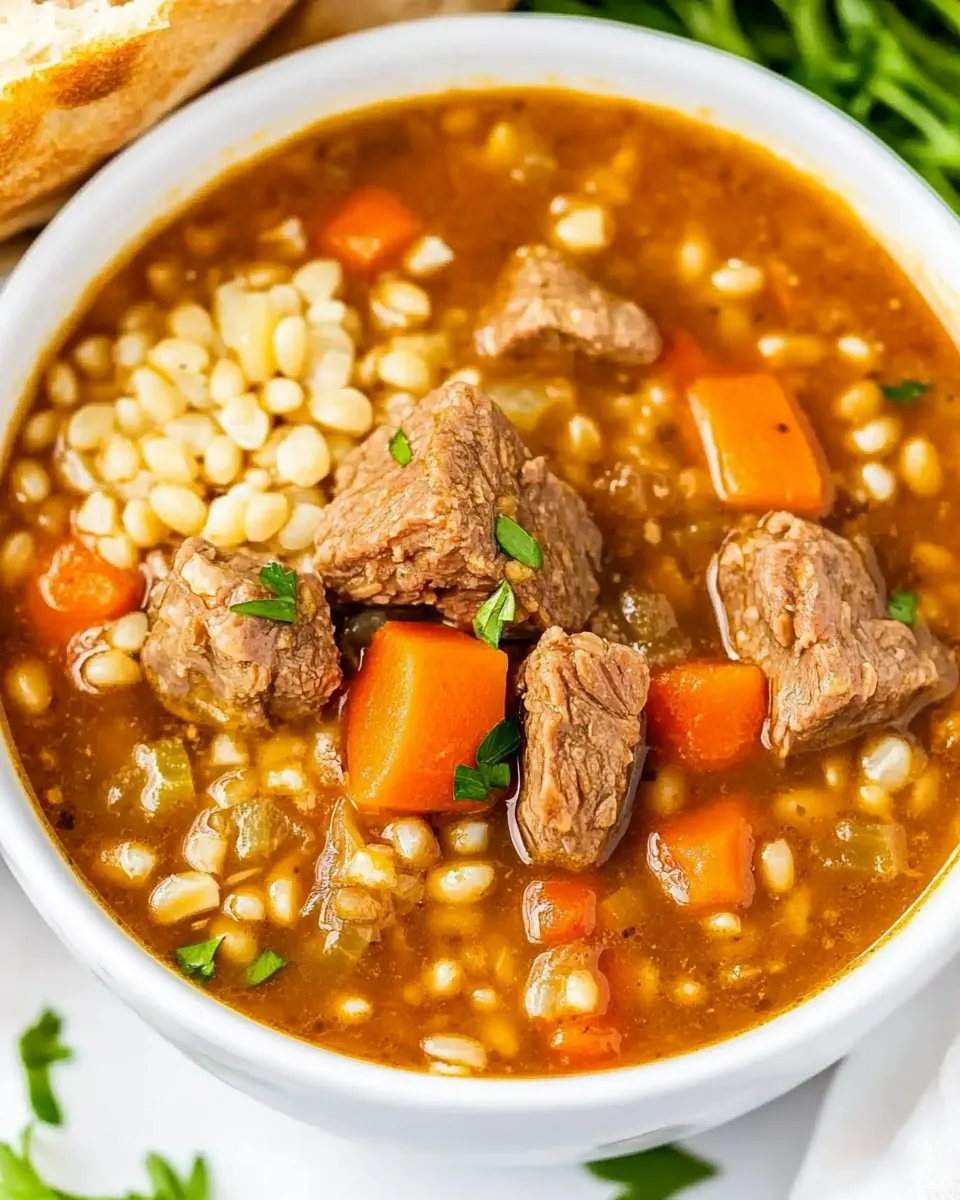
Beef Barley Soup
Beef Barley Soup has been my go to on cold nights when I want something that feels like a long hug in a bowl. I first learned to make this version while helping my aunt clean out her pantry, and the humble combination of beef and chewy barley quickly became our family’s comfort ritual. Right away I loved how simple pantry items transform into something soulful, and I still reach for this recipe when I want food that calms and satisfies.
Some nights I simmer a pot while I catch up on phone calls, and other times I make it on a quiet Sunday when the house smells like caramelized onions and roasted beef. The texture feels sturdy without being heavy, with the barley giving every spoonful a little chew and the broth wrapping around each ingredient. I enjoy serving it with a scattering of fresh chopped parsley, which brightens the deep, savory notes. Over time I’ve tweaked small things, but the core of this Beef Barley Soup remains true to that first satisfying bowl.
Recipe Snapshot
60 mins
15 mins
45 mins
Medium
350 kcal
American
Whole30, Paleo
Soups
Dutch oven or stock pot, Spatula, Ladle, Cutting board and knife, Mixing bowl or large ziploc bag
The Magic of This Beef Barley Soup
Rich, beef forward flavor
I love that the heart of this soup is bold beef flavor. Browning the meat first builds deep savory notes that carry through the whole pot, and the small amount of all purpose flour helps create a slightly silky body. I feel like this makes the soup feel more substantial, something you can enjoy for dinner and still feel nourished after.
Comforting, chewy barley texture
One of the reasons I keep coming back to this recipe is the texture that barley brings. It soaks up the broth while staying delightfully toothsome, and that contrast with tender chunks of beef makes every spoonful interesting. If you want a soup that fills you without being heavy, barley is the quiet hero here.
Layered savory aromatics
The combination of sautéed onion, diced carrots, celery, minced garlic, and tomato paste creates a fragrant base that smells incredible as it simmers. I love the way the kitchen fills with that savory promise, and that aroma alone sells this soup before the first taste.
Flexible and forgiving method
What I appreciate is how forgiving this recipe is. It allows for gentle adjustments, like choosing chuck roast or stew meat, and it still rewards you with tender results. If life gets busy, you can brown the meat ahead of time, or let it simmer while you do other things at home.
Great for leftovers and meal prep
This soup reheats beautifully, and the flavors deepen overnight. I often make a big pot so I have dinners ready, and it freezes well when I need longer storage. For anyone who likes planning ahead, this recipe is a dependable choice.
Ingredients You’ll Need for Beef Barley Soup
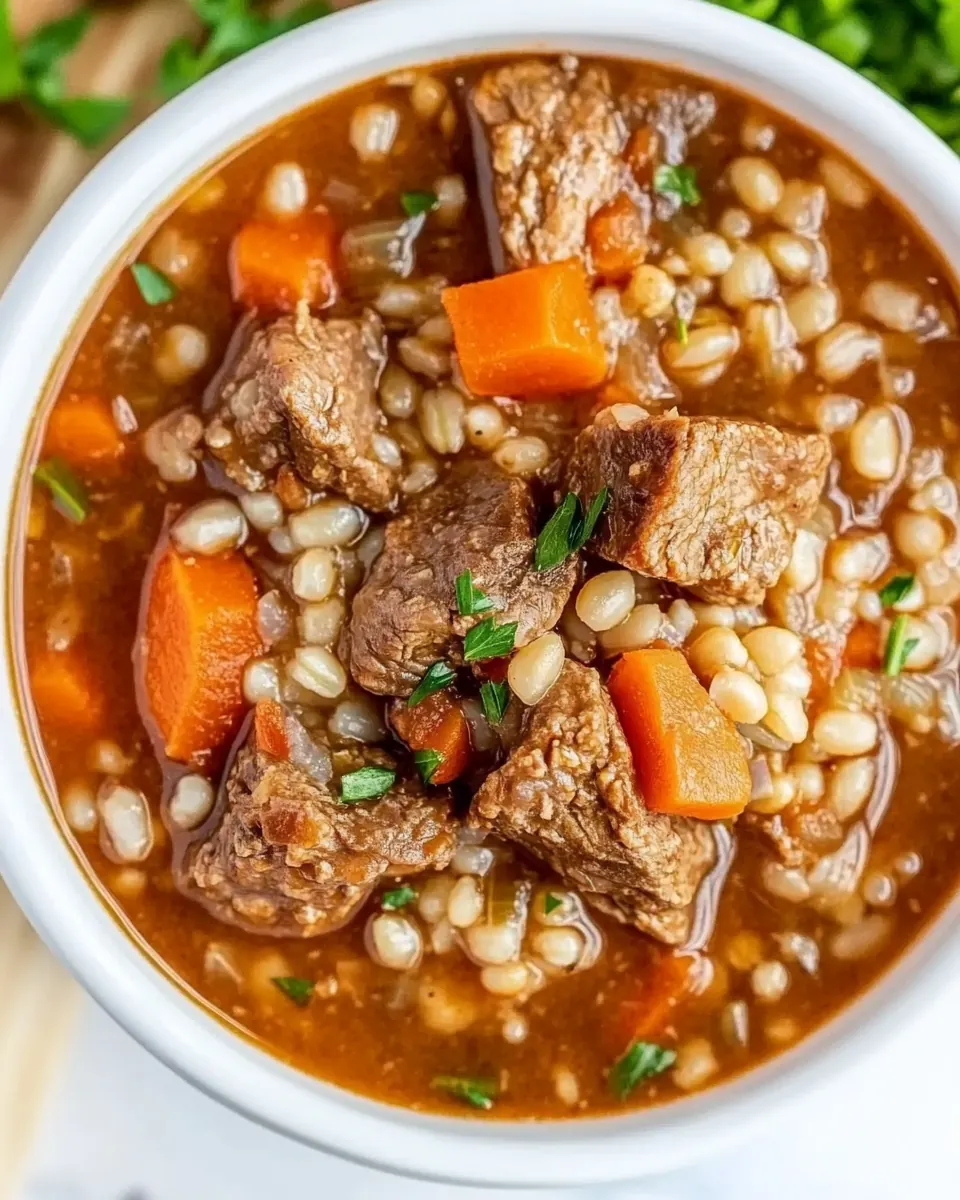
These ingredients form a classic, balanced broth based soup. The key players are the beef for richness, the barley for texture, and the aromatic vegetables for depth. Together they create a bowl that is hearty, savory, and layered with comforting flavors.
- 4 tablespoons extra virgin olive oil divided: Provide richness and healthy fats while preventing sticking; use divided to brown meat and finish the soup for a glossy texture and enhanced mouthfeel.
- 1 1/2 pounds chuck roast trimmed, or beef stew meat: Supply hearty protein and beefy flavor; trim excess fat and cut into bite-sized pieces for even browning and tender results after simmering.
- 1 teaspoon fine sea salt: Enhance overall flavor balance and help season the meat and broth; dissolve into liquids for an even savory base throughout the soup.
- 1/2 teaspoon fresh ground black pepper: Contribute mild heat and depth to the savory profile while balancing richness; freshly ground for brighter aroma and adjusted to taste during cooking.
- 2 tablespoons all purpose flour: Thicken cooking juices and encourage a flavorful crust on the meat; toss with beef before browning to seal juices and slightly thicken the broth.
- 3 large carrots peeled and chopped: Add natural sweetness, body, and texture; peel and chop into uniform pieces so they soften evenly and release flavor while simmering.
- 2 stalks celery diced: Provide aromatic earthiness and subtle crunch as a textural counterpoint; dice uniformly and sweat with onions to build the soup’s flavor base.
- 1 medium onion diced (yellow or white): Create a savory aromatic foundation and sweetness when softened; dice and sauté until translucent to unlock natural sugars that deepen the broth.
- 2 teaspoons Italian seasoning: Infuse herbaceous, slightly peppery, and Mediterranean notes; sprinkle in during sauté or simmering to meld flavors without overpowering the beef.
- 2 teaspoons minced garlic: Deliver pungent, aromatic depth and savory umami; mince finely and add toward the end of sautéing to avoid bitter burned garlic.
- 3 tablespoons tomato paste: Introduce concentrated tomato depth and umami; stir into the sautéed aromatics to caramelize slightly and enrich the soup’s color and flavor.
- 8 cups low sodium beef broth or stock, substitute in one can of Beef Consomme for richer beef flavor: Form the liquid backbone and major savory concentration; use low sodium to better control seasoning and to allow other ingredients’ flavors to shine.
- 2 cups water: Extend the cooking liquid for proper simmering volume and to adjust consistency; add gradually if you need less intense beef flavor.
- 1 bay leaf: Impart subtle herbal complexity and a warm, bay-like aroma; add whole while simmering and remove before serving to avoid bitterness.
- 2/3 cup barley: Provide chewy texture, nuttiness, and body that thickens the soup; rinse if needed and simmer until tender for a satisfying bite.
- chopped parsley: Brighten and freshen finished soup with herbaceous color; chop and sprinkle over individual bowls to add a fresh finish and mild parsley aroma.
Beef Barley Soup Instructions
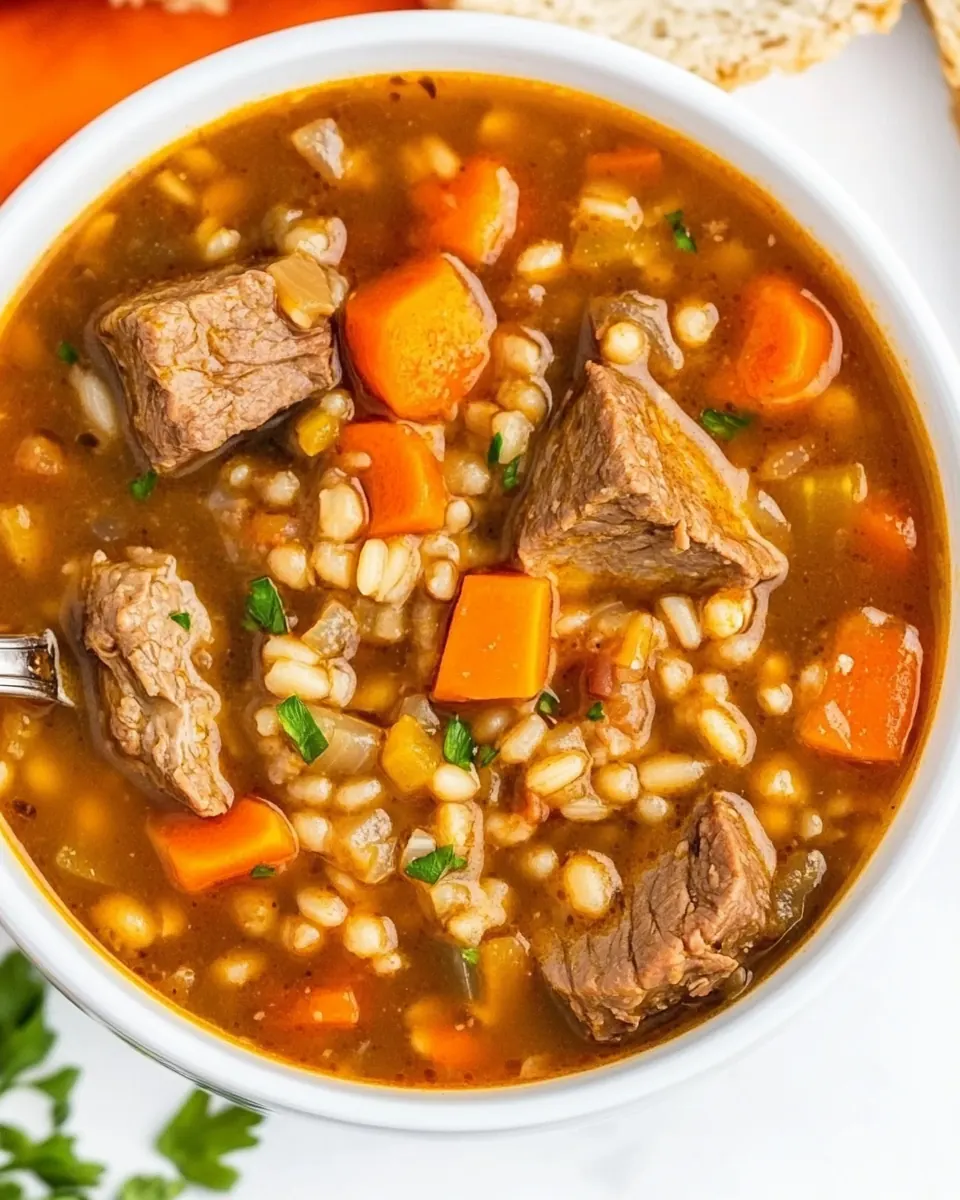
I enjoy slow building flavor when making this soup, it rewards patience and small techniques. Below I expand each step into detailed, sensory guidance so you know what to look and listen for as it comes together.
- Add 2 tablespoons of extra virgin olive oil to a large dutch oven or stock pot and place over medium heat.: The moment the oil starts to shimmer you will notice a faint fruity scent, which is your cue that the pot is ready. Heat that oil until it glides across the pan and appears slightly thinner, this prevents the meat from sticking. A common mistake is rushing the pan while it is too cool, which leads to steaming rather than searing. If you hear little popping sounds as you place the meat, you are doing it right, that audible sizzle helps lock in savory juices. Visually look for oil that moves easily across the pan surface and for a faint heat ripple above it. If the oil smokes, lower the heat slightly, since burned oil gives bitter notes that will carry through the soup. Properly heated oil also helps develop fond, those brown bits that add deep flavor when deglazed later.
- Transfer beef to a large ziploc bag or large mixing bowl and season with salt and pepper. Add flour and toss to coat.: When you toss the beef with salt , black pepper , and all purpose flour you create a light envelope that browns beautifully. The flour helps create a slight crust and thickens the broth as it releases during simmering. Watch for even coverage so no raw flour pockets remain, clumping will burn on the pan. A typical error here is over seasoning, so season moderately and taste the final soup before adding more salt. The flour should look evenly dusted, and the meat should feel slightly tacky to the touch, not floured to a paste. This step primes the meat for searing, which adds color and savory complexity that you will notice in the finished bowl.
- Cook the beef by adding the meat to the dutch oven in batches, cooking for 1 to 2 minutes per side, just until the meat is seared and browned. Be careful not to overcrowd. Remove to a plate and then continue cooking until all meat is seared adding additional oil as needed.: As the beef hits the hot oil listen for a strong sizzle, that sound indicates the Maillard reaction is happening and flavor is developing. Browning for 1 to 2 minutes per side gives a rich caramelized surface while keeping interiors from overcooking. If the pot is overcrowded you will trap steam and get gray, steamed pieces rather than browned ones. Remove browned pieces to a plate and keep going in batches, adding a bit more oil if the pan dries out. The pooled brown bits on the bottom, called fond, are flavor gold and will be deglazed later, so resist scraping them away. A common misstep is moving the meat too soon; allow crust to form before turning to avoid tearing and to get even color. After searing all meat, you will have a pile of beautifully browned pieces that will contribute deep savory notes once they simmer in the broth.
- Add remaining olive oil to pot and scrape the bottom to loosen any bits on the bottom. Add carrots, celery and onion and reduce heat to medium low, cooking until vegetables have softened, about 7 to 9 minutes, stirring frequently.: When you add the remaining oil and scrape, you are dissolving the browned fond into the fat which flavors the vegetables. As the onion , carrots , and celery soften you will notice a sweet, savory aroma rising, and the vegetables will lose their raw bite, becoming glossy and tender. Stir frequently to ensure even softening and to avoid sticking. If the heat is too high the vegetables will brown too quickly and may develop bitter notes, so keep to medium low for even sweetness extraction. A mistake here is skipping the sweating and rushing to liquid, which prevents flavor concentration and yields a flatter broth. The softened vegetables create a fragrant base that tastes richer and more layered once simmered with the beef .
- Stir in the Italian seasoning, minced garlic and tomato paste until the garlic is aromatic, about 2 to 3 minutes.: When you add the herbs, minced garlic , and tomato paste , cook just long enough for the garlic to become fragrant and the tomato paste to darken slightly, which mellows its raw tang and adds caramelized umami. You should smell a sweet roasted tomato note and a warm herbal lift within minutes. Be careful not to burn the garlic, as it will turn bitter; if you detect a sharp acrid smell reduce the heat immediately. The tomato paste clings to the vegetables and fond, drawing those flavors together and creating a concentrated base. This technique intensifies the broth and gives the finished soup a deeper, almost glossy mouthfeel.
- Add the beef back to the pot and pour in the beef broth and water. Use a spatula to scrape the bottom of the pot again.: Pouring in the beef broth and water deglazes the pan, lifting all those flavorful browned bits into the liquid. You will see the pot bottom release as the broth bubbles and looses up any stuck pieces, making the liquid richer. Stir well so the broth becomes a unified base. A common oversight is adding too-cold liquid which drops the pot temperature drastically, slowing the cooking process; slightly warm the liquid if you can. The broth at this stage will smell deeply savory and savory sweet, and it is the foundation for the final simmer flavors.
- Add bay leaf and barley and stir to combine.: As you stir in the bay leaf and barley the barley will begin absorbing some of the hot liquid immediately, swelling as it cooks. The bay leaf contributes a subtle herbal note that is almost imperceptible alone but essential to rounding the broth. Mix to ensure the barley is submerged so it cooks evenly. One mistake is adding too much barley for the liquid volume, which can make the soup gummy; keep proportions balanced as listed. The texture of barley will transform from hard to pleasantly chewy over the simmer, and this step sets that transformation in motion.
- Increase the heat to medium-high and bring the mixture to a boil. Let boil for 2 to 3 minutes before reducing the heat to medium-low.: Bringing the pot to a brief boil helps kick the cooking process into gear and ensures the starches in the barley begin gelatinizing. You will see steady bubbling and a stronger aroma as the soup reaches this point. After 2 to 3 minutes, lowering to medium low prevents a violent boil which can break up the beef and make the broth cloudy. A common error is leaving it boiling too hard, which can cause excessive evaporation and tougher meat. The gentle transition from boil to simmer preserves texture while allowing flavors to meld.
- Place lid on pot with the lid slightly cracked and cook at a simmer for 45 minutes to 1 hour or until barley is cooked through and the beef is tender, stirring occasionally.: During the long simmer you will notice the broth deepen in color and smell richer, the barley swelling and the beef becoming tender enough to break apart with a fork. Keeping the lid slightly cracked allows some steam to escape while retaining enough heat for a steady simmer, maintaining the right concentration. Stir occasionally to prevent sticking and to check doneness. If the barley is still slightly firm at 45 minutes continue to cook, but avoid overcooking as barley can become mushy. A regular slip is setting the heat too low and assuming time alone will finish it; maintain a gentle simmer for even cooking. The final texture should be tender beef and chewy barley in a rich, flavorful broth.
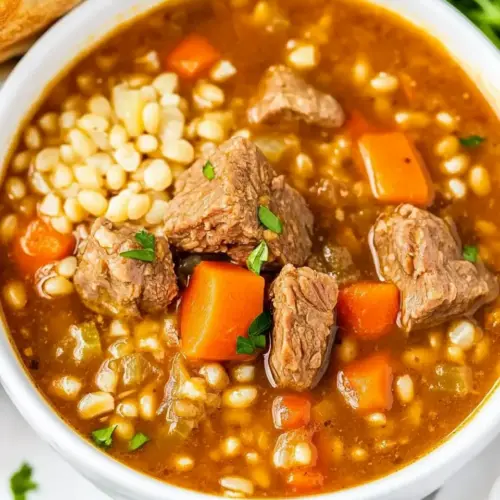
- Remove the bay leaf, ladle into bowls and top with chopped parsley. Enjoy!: Before serving, fish out the bay leaf , which has imparted its subtle aroma but is not pleasant to eat whole. When you ladle the soup into bowls you should see a glossy broth, tender bits of beef , plump barley , and soft vegetables. Sprinkle chopped parsley for a fresh herb contrast and a pop of color. One mistake to avoid is leaving the bay leaf in the pot as it can turn slightly astringent over time. Taste and adjust seasoning at the table if needed; the hot bowl will smell wonderful and invite that first comforting spoonful.
Customization Ideas
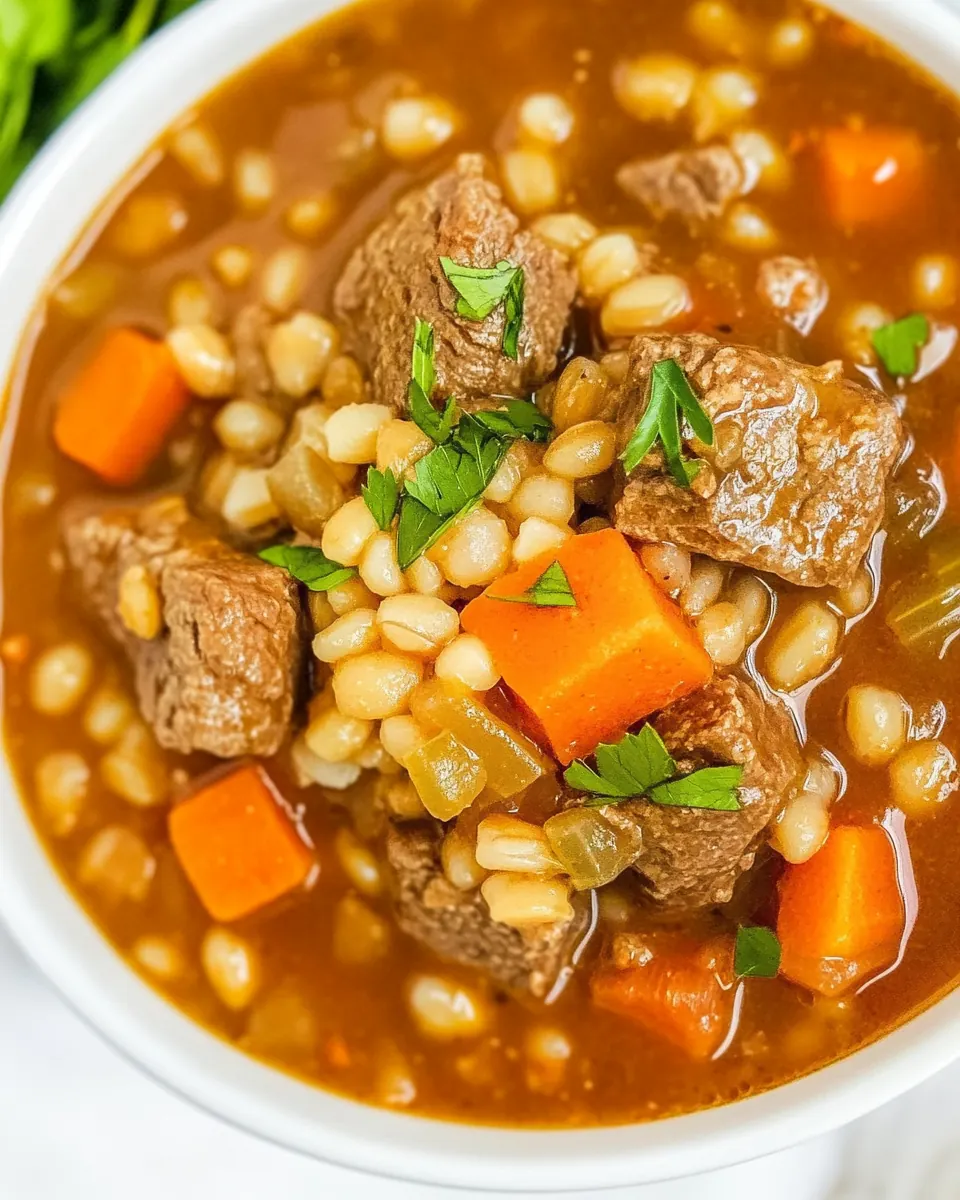
I like to offer ways to adapt this recipe without changing its heart. Below are focused ideas to customize texture, richness, and make ahead plans while keeping the original spirit intact.
- Change the cut of beef: Use chuck roast for the richest texture, since slow simmering breaks down connective tissue into silky mouthfeel.
- Adjust barley amount: If you prefer a brothier soup, reduce the barley slightly and add a little extra water or stock so the grains do not absorb all the liquid.
- Boost umami: For deeper savory notes, stir in a can of beef consomme instead of some broth as suggested, this concentrates meat flavor without extra steps.
- Batch cooking: Make a double batch and freeze portions, since the flavors mature over time, but be aware barley texture may soften after freezing and reheating.
- Finish with fresh herbs: Sprinkle chopped parsley just before serving to add a bright lift against the rich broth.
Great Combinations for Beef Barley Soup
This soup pairs well with simple sides and suits many occasions, from weeknight dinners to cozy winter lunches. Below I outline complementary foods, serving styles, and storage suggestions that make the most of each bowl.
- Crusty bread for dipping: A warm, crusty loaf is perfect for soaking up the savory broth and adds textural contrast to the chewy barley.
- Light salad for balance: A crisp green salad with a bright vinaigrette pairs well if you want a fresher counterpoint to the rich soup for dinner.
- Family dinner occasions: This recipe fits winter family dinners and casual gatherings, because it is easy to scale and stays comforting across many servings.
- Meal prep lunches: Portion into airtight containers for easy reheating at work, the soup keeps well and offers a satisfying midday meal.
- Storage tips: Refrigerate cooled soup up to 3 to 4 days, or freeze in portions for up to 3 months; thaw overnight in the fridge before gentle reheating.
- Seasonal pairing: Serve this in winter or on chilly days when you want warming, hearty flavors; it also works well as a transitional meal in early spring.
FAQ
Conclusion
This Beef Barley Soup stands out for its deep, beef forward broth and satisfying barley texture. It brings together simple pantry ingredients into a bowl that feels both nourishing and familiar. I hope you give it a try on a chilly evening, and that it becomes one of your reliable comfort meals. Enjoy the process, savor the aromas while it simmers, and relish the warm, homey satisfaction of a bowl well made.
Beef Barley Soup
Equipment
- Dutch oven or stock pot
- Spatula
- Ladle
- Cutting board and knife
- Mixing bowl or large ziploc bag
Ingredients
- 4 tablespoons extra virgin olive oil divided Provide richness and healthy fats while preventing sticking; use divided to brown meat and finish the soup for a glossy texture and enhanced mouthfeel.
- 1 1/2 pounds chuck roast trimmed, or beef stew meat Supply hearty protein and beefy flavor; trim excess fat and cut into bite-sized pieces for even browning and tender results after simmering.
- 1 teaspoon fine sea salt Enhance overall flavor balance and help season the meat and broth; dissolve into liquids for an even savory base throughout the soup.
- 1/2 teaspoon fresh ground black pepper Contribute mild heat and depth to the savory profile while balancing richness; freshly ground for brighter aroma and adjusted to taste during cooking.
- 2 tablespoons all purpose flour Thicken cooking juices and encourage a flavorful crust on the meat; toss with beef before browning to seal juices and slightly thicken the broth.
- 3 large carrots peeled and chopped Add natural sweetness, body, and texture; peel and chop into uniform pieces so they soften evenly and release flavor while simmering.
- 2 stalks celery diced Provide aromatic earthiness and subtle crunch as a textural counterpoint; dice uniformly and sweat with onions to build the soup’s flavor base.
- 1 medium onion diced (yellow or white) Create a savory aromatic foundation and sweetness when softened; dice and sauté until translucent to unlock natural sugars that deepen the broth.
- 2 teaspoons Italian seasoning Infuse herbaceous, slightly peppery, and Mediterranean notes; sprinkle in during sauté or simmering to meld flavors without overpowering the beef.
- 2 teaspoons minced garlic Deliver pungent, aromatic depth and savory umami; mince finely and add toward the end of sautéing to avoid bitter burned garlic.
- 3 tablespoons tomato paste Introduce concentrated tomato depth and umami; stir into the sautéed aromatics to caramelize slightly and enrich the soup’s color and flavor.
- 8 cups low sodium beef broth or stock, substitute in one can of Beef Consomme for richer beef flavor Form the liquid backbone and major savory concentration; use low sodium to better control seasoning and to allow other ingredients’ flavors to shine.
- 2 cups water Extend the cooking liquid for proper simmering volume and to adjust consistency; add gradually if you need less intense beef flavor.
- 1 bay leaf Impart subtle herbal complexity and a warm, bay-like aroma; add whole while simmering and remove before serving to avoid bitterness.
- 2/3 cup barley Provide chewy texture, nuttiness, and body that thickens the soup; rinse if needed and simmer until tender for a satisfying bite.
- chopped parsley Brighten and freshen finished soup with herbaceous color; chop and sprinkle over individual bowls to add a fresh finish and mild parsley aroma.
Instructions
- Add 2 tablespoons of extra virgin olive oil to a large dutch oven or stock pot and place over medium heat.: The moment the oil starts to shimmer you will notice a faint fruity scent, which is your cue that the pot is ready. Heat that oil until it glides across the pan and appears slightly thinner, this prevents the meat from sticking. A common mistake is rushing the pan while it is too cool, which leads to steaming rather than searing. If you hear little popping sounds as you place the meat, you are doing it right, that audible sizzle helps lock in savory juices. Visually look for oil that moves easily across the pan surface and for a faint heat ripple above it. If the oil smokes, lower the heat slightly, since burned oil gives bitter notes that will carry through the soup. Properly heated oil also helps develop fond, those brown bits that add deep flavor when deglazed later.
- Transfer beef to a large ziploc bag or large mixing bowl and season with salt and pepper. Add flour and toss to coat.: When you toss the beef with salt , black pepper , and all purpose flour you create a light envelope that browns beautifully. The flour helps create a slight crust and thickens the broth as it releases during simmering. Watch for even coverage so no raw flour pockets remain, clumping will burn on the pan. A typical error here is over seasoning, so season moderately and taste the final soup before adding more salt. The flour should look evenly dusted, and the meat should feel slightly tacky to the touch, not floured to a paste. This step primes the meat for searing, which adds color and savory complexity that you will notice in the finished bowl.
- Cook the beef by adding the meat to the dutch oven in batches, cooking for 1 to 2 minutes per side, just until the meat is seared and browned. Be careful not to overcrowd. Remove to a plate and then continue cooking until all meat is seared adding additional oil as needed.: As the beef hits the hot oil listen for a strong sizzle, that sound indicates the Maillard reaction is happening and flavor is developing. Browning for 1 to 2 minutes per side gives a rich caramelized surface while keeping interiors from overcooking. If the pot is overcrowded you will trap steam and get gray, steamed pieces rather than browned ones. Remove browned pieces to a plate and keep going in batches, adding a bit more oil if the pan dries out. The pooled brown bits on the bottom, called fond, are flavor gold and will be deglazed later, so resist scraping them away. A common misstep is moving the meat too soon; allow crust to form before turning to avoid tearing and to get even color. After searing all meat, you will have a pile of beautifully browned pieces that will contribute deep savory notes once they simmer in the broth.
- Add remaining olive oil to pot and scrape the bottom to loosen any bits on the bottom. Add carrots, celery and onion and reduce heat to medium low, cooking until vegetables have softened, about 7 to 9 minutes, stirring frequently.: When you add the remaining oil and scrape, you are dissolving the browned fond into the fat which flavors the vegetables. As the onion , carrots , and celery soften you will notice a sweet, savory aroma rising, and the vegetables will lose their raw bite, becoming glossy and tender. Stir frequently to ensure even softening and to avoid sticking. If the heat is too high the vegetables will brown too quickly and may develop bitter notes, so keep to medium low for even sweetness extraction. A mistake here is skipping the sweating and rushing to liquid, which prevents flavor concentration and yields a flatter broth. The softened vegetables create a fragrant base that tastes richer and more layered once simmered with the beef .
- Stir in the Italian seasoning, minced garlic and tomato paste until the garlic is aromatic, about 2 to 3 minutes.: When you add the herbs, minced garlic , and tomato paste , cook just long enough for the garlic to become fragrant and the tomato paste to darken slightly, which mellows its raw tang and adds caramelized umami. You should smell a sweet roasted tomato note and a warm herbal lift within minutes. Be careful not to burn the garlic, as it will turn bitter; if you detect a sharp acrid smell reduce the heat immediately. The tomato paste clings to the vegetables and fond, drawing those flavors together and creating a concentrated base. This technique intensifies the broth and gives the finished soup a deeper, almost glossy mouthfeel.
- Add the beef back to the pot and pour in the beef broth and water. Use a spatula to scrape the bottom of the pot again.: Pouring in the beef broth and water deglazes the pan, lifting all those flavorful browned bits into the liquid. You will see the pot bottom release as the broth bubbles and looses up any stuck pieces, making the liquid richer. Stir well so the broth becomes a unified base. A common oversight is adding too-cold liquid which drops the pot temperature drastically, slowing the cooking process; slightly warm the liquid if you can. The broth at this stage will smell deeply savory and savory sweet, and it is the foundation for the final simmer flavors.
- Add bay leaf and barley and stir to combine.: As you stir in the bay leaf and barley the barley will begin absorbing some of the hot liquid immediately, swelling as it cooks. The bay leaf contributes a subtle herbal note that is almost imperceptible alone but essential to rounding the broth. Mix to ensure the barley is submerged so it cooks evenly. One mistake is adding too much barley for the liquid volume, which can make the soup gummy; keep proportions balanced as listed. The texture of barley will transform from hard to pleasantly chewy over the simmer, and this step sets that transformation in motion.
- Increase the heat to medium-high and bring the mixture to a boil. Let boil for 2 to 3 minutes before reducing the heat to medium-low.: Bringing the pot to a brief boil helps kick the cooking process into gear and ensures the starches in the barley begin gelatinizing. You will see steady bubbling and a stronger aroma as the soup reaches this point. After 2 to 3 minutes, lowering to medium low prevents a violent boil which can break up the beef and make the broth cloudy. A common error is leaving it boiling too hard, which can cause excessive evaporation and tougher meat. The gentle transition from boil to simmer preserves texture while allowing flavors to meld.
- Place lid on pot with the lid slightly cracked and cook at a simmer for 45 minutes to 1 hour or until barley is cooked through and the beef is tender, stirring occasionally.: During the long simmer you will notice the broth deepen in color and smell richer, the barley swelling and the beef becoming tender enough to break apart with a fork. Keeping the lid slightly cracked allows some steam to escape while retaining enough heat for a steady simmer, maintaining the right concentration. Stir occasionally to prevent sticking and to check doneness. If the barley is still slightly firm at 45 minutes continue to cook, but avoid overcooking as barley can become mushy. A regular slip is setting the heat too low and assuming time alone will finish it; maintain a gentle simmer for even cooking. The final texture should be tender beef and chewy barley in a rich, flavorful broth.
- Remove the bay leaf, ladle into bowls and top with chopped parsley. Enjoy!: Before serving, fish out the bay leaf , which has imparted its subtle aroma but is not pleasant to eat whole. When you ladle the soup into bowls you should see a glossy broth, tender bits of beef , plump barley , and soft vegetables. Sprinkle chopped parsley for a fresh herb contrast and a pop of color. One mistake to avoid is leaving the bay leaf in the pot as it can turn slightly astringent over time. Taste and adjust seasoning at the table if needed; the hot bowl will smell wonderful and invite that first comforting spoonful.
Notes
- Change the cut of beef: Use chuck roast for the richest texture, since slow simmering breaks down connective tissue into silky mouthfeel.
- Adjust barley amount: If you prefer a brothier soup, reduce the barley slightly and add a little extra water or stock so the grains do not absorb all the liquid.
- Boost umami: For deeper savory notes, stir in a can of beef consomme instead of some broth as suggested, this concentrates meat flavor without extra steps.
- Batch cooking: Make a double batch and freeze portions, since the flavors mature over time, but be aware barley texture may soften after freezing and reheating.
- Finish with fresh herbs: Sprinkle chopped parsley just before serving to add a bright lift against the rich broth.
