Basil Pesto Chicken Pasta
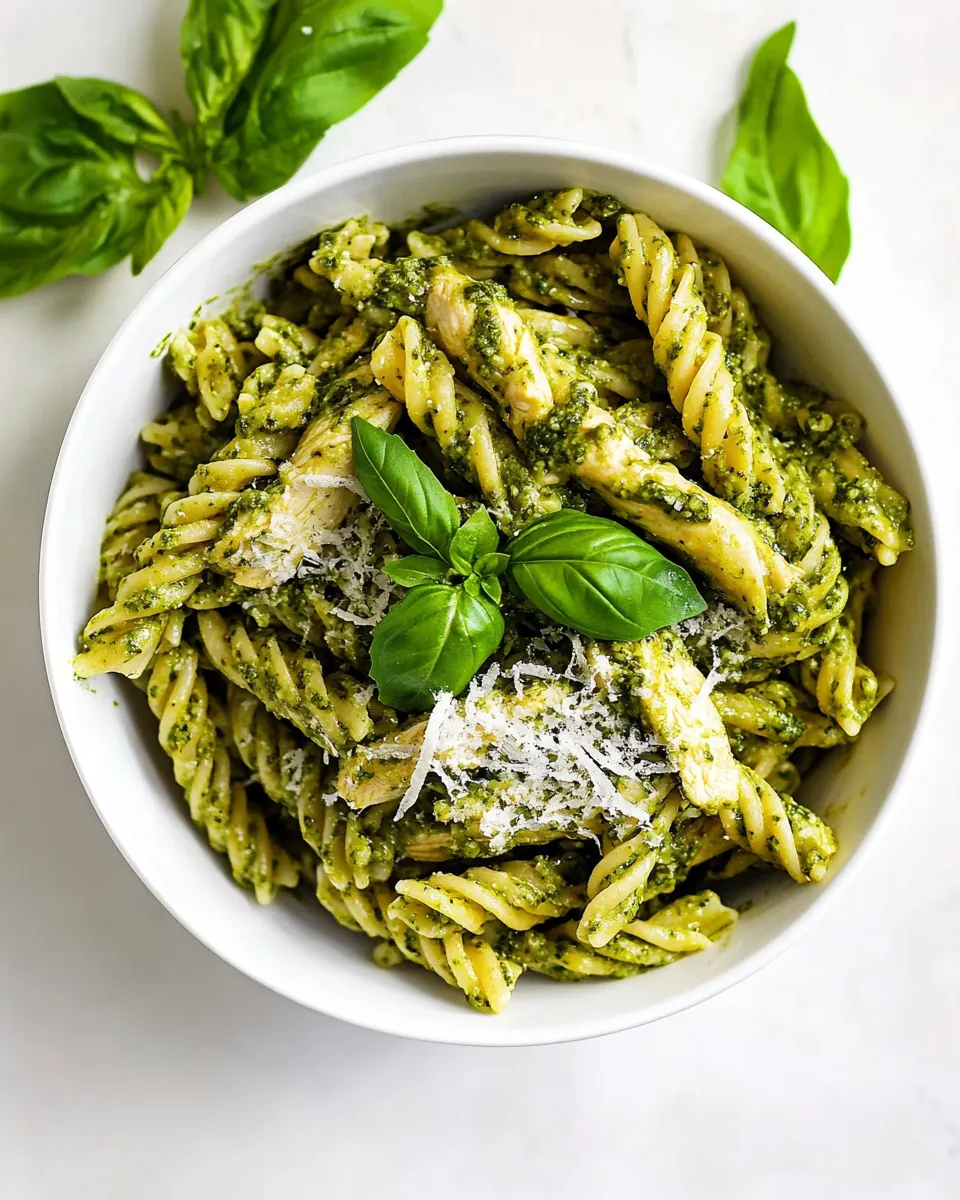
Basil Pesto Chicken Pasta is one of those recipes I reach for when I want a meal that feels like a warm kitchen hug without hours of work. The first time I made it, I was racing home after a long day and found a bag of fresh basil begging to be used. I tossed things together, and by the time my house filled with the bright, herbaceous perfume, I knew this would become a regular in my rotation.
Over the years I’ve tweaked small details, and every change taught me something about balance. The combination of nutty pine nuts, tangy grated pecorino cheese, a kiss of lemon juice, and silky extra virgin olive oil creates a sauce that sings when paired with tender chicken and al dente pasta. I often remind friends that the key is freshness and restraint, so the flavors stay bright and never feel heavy.
Recipe Snapshot
25 mins
15 mins
10 mins
Easy
450 kcal
Italian
Gluten-Free, Low FODMAP
Dinner
Food processor, Large pot, Mixing bowl, Colander
What Makes This Basil Pesto Chicken Pasta Special
Fresh herb forward flavor
I love how the Basil Pesto Chicken Pasta showcases fresh basil in every bite. The basil provides an aromatic, almost floral note that wakes up the palate, and when you pulse it in a food processor it releases essential oils that perfume the whole kitchen. I always recommend using leaves that are bright green and free of dark spots, because that freshness translates directly to the final sauce.
Speed without compromise
This dish is a champion of quick meals that still feel home cooked. From start to finish it takes about a half hour, and that short timeline means you can put a satisfying dinner on the table any night. I appreciate how this recipe lets you keep dinner plans flexible, and it pairs well with busy schedules when you need something nourishing and fast.
Textural harmony
There is a lovely contrast between the tender strands or shapes of pasta and the shredded chicken. The pesto clings to the pasta, while the chicken adds substance without weighing the dish down. I like that you get both saucy and meaty elements in each forkful, which keeps every mouthful interesting.
Make ahead friendly
I frequently prepare the pesto in advance because it holds its character for a few days when stored properly. That makes the recipe perfect for meal prep or easy entertaining. When I take the pesto out of the fridge, I let it come to nearly room temperature so the oils loosen and it blends smoothly into the warm pasta.
Versatile and approachable
Finally, this recipe is forgiving. It adapts to whatever shape of pasta you have on hand and welcomes tweaks in olive oil quantity to reach the texture you like. I enjoy that it feels gourmet yet accessible, and it’s a crowd pleaser whether served chilled on a summer afternoon or at room temperature for a casual dinner.
Basil Pesto Chicken Pasta Shopping List
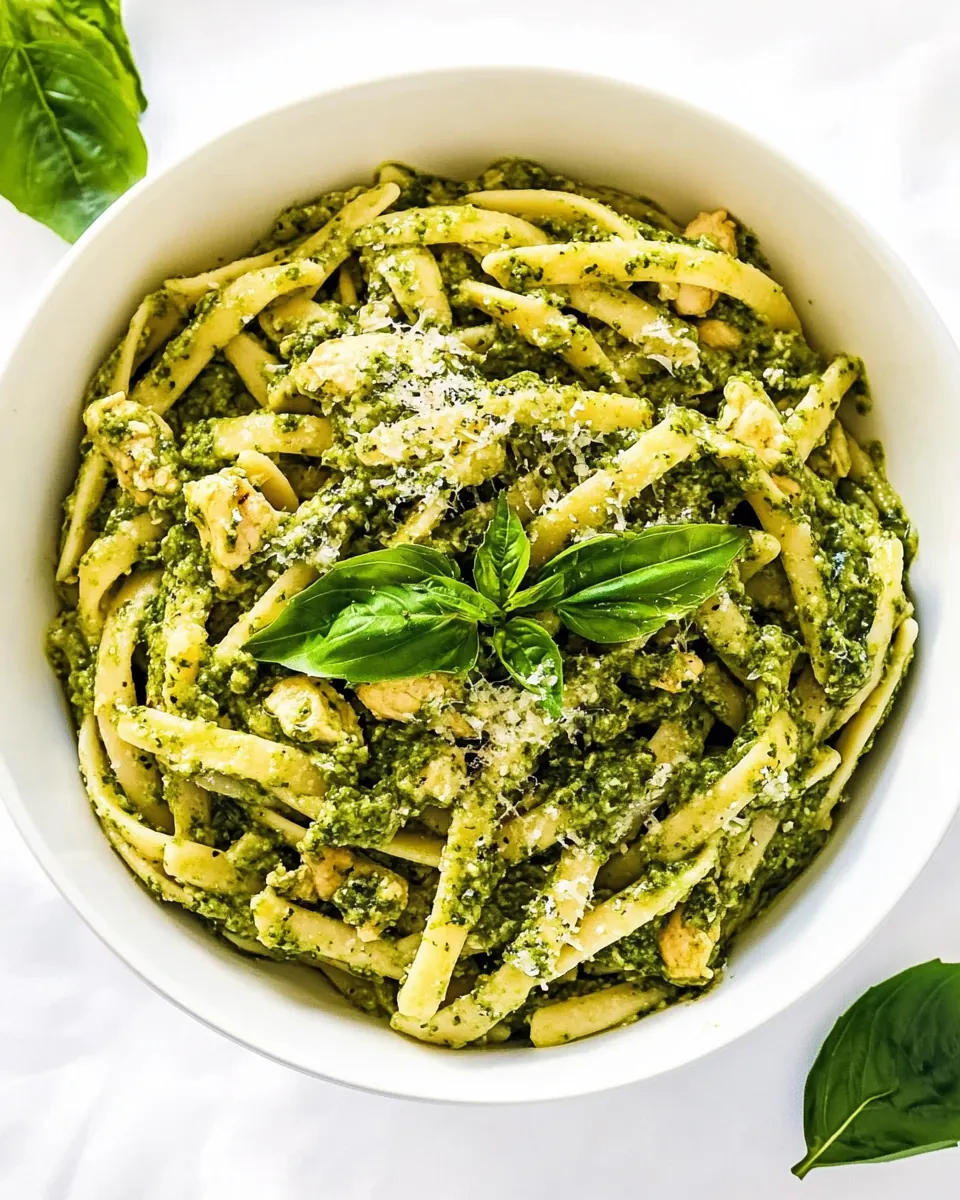
These ingredients form a simple, harmonious team where each player has a clear role. Fresh leafy basil supplies aromatic brightness, nuts and cheese bring body and umami, and the oil binds everything into a silky sauce that coats the pasta. The cooked chicken adds protein and makes the dish satisfying enough for a main course. Together they create a balanced plate that feels fresh, savory, and texturally pleasing.
- 2 cups fresh basil leaves packed: Provide vibrant aromatic freshness and form the herbal base for the pesto; gently pack the leaves to maximize flavor and blend until smooth for a bright green sauce that lifts the entire pasta dish.
- 1/2 cup pine nuts: Add rich, buttery texture and a subtle pine flavor to the pesto; lightly toast before blending to deepen nuttiness and help create a creamy emulsion with the oil and cheese.
- 1/2 cup grated pecorino cheese or parmesan: Contribute salty, savory umami and a slightly sharp, nutty finish to the pesto; finely grate for even distribution and combine with the cheese-free alternatives if desired to adjust intensity.
- 1 clove garlic peeled: Offer pungent, aromatic sharpness that brightens the pesto; smash or mince the clove to release oils and blend thoroughly so the garlic integrates without overpowering the basil.
- 2 teaspoons lemon juice: Provide bright acidity to balance the richness of oil and cheese in the pesto; squeeze and add gradually, tasting to maintain a lively but not overly tart sauce.
- 2/3 cup extra-virgin olive oil: Serve as the rich, silky fat that binds the pesto ingredients into a smooth emulsion; pour slowly while blending to achieve a glossy consistency that coats pasta evenly.
- salt and pepper: Season the dish to enhance and balance flavors; add salt sparingly at first and finish with pepper to taste so the pesto and chicken are savory without being flat.
- 1 pound small pasta ziti, fusilli, or gemelli: Act as the hearty carbohydrate base that carries the pesto and chicken; choose small shapes like ziti, fusilli, or gemelli to trap sauce and provide satisfying texture when al dente.
- 2 cups shredded cooked chicken: Supply protein and a tender texture to make the pasta a complete meal; shred cooked chicken and fold into the pasta so it absorbs pesto flavors while remaining moist.
Cooking Method for Basil Pesto Chicken Pasta
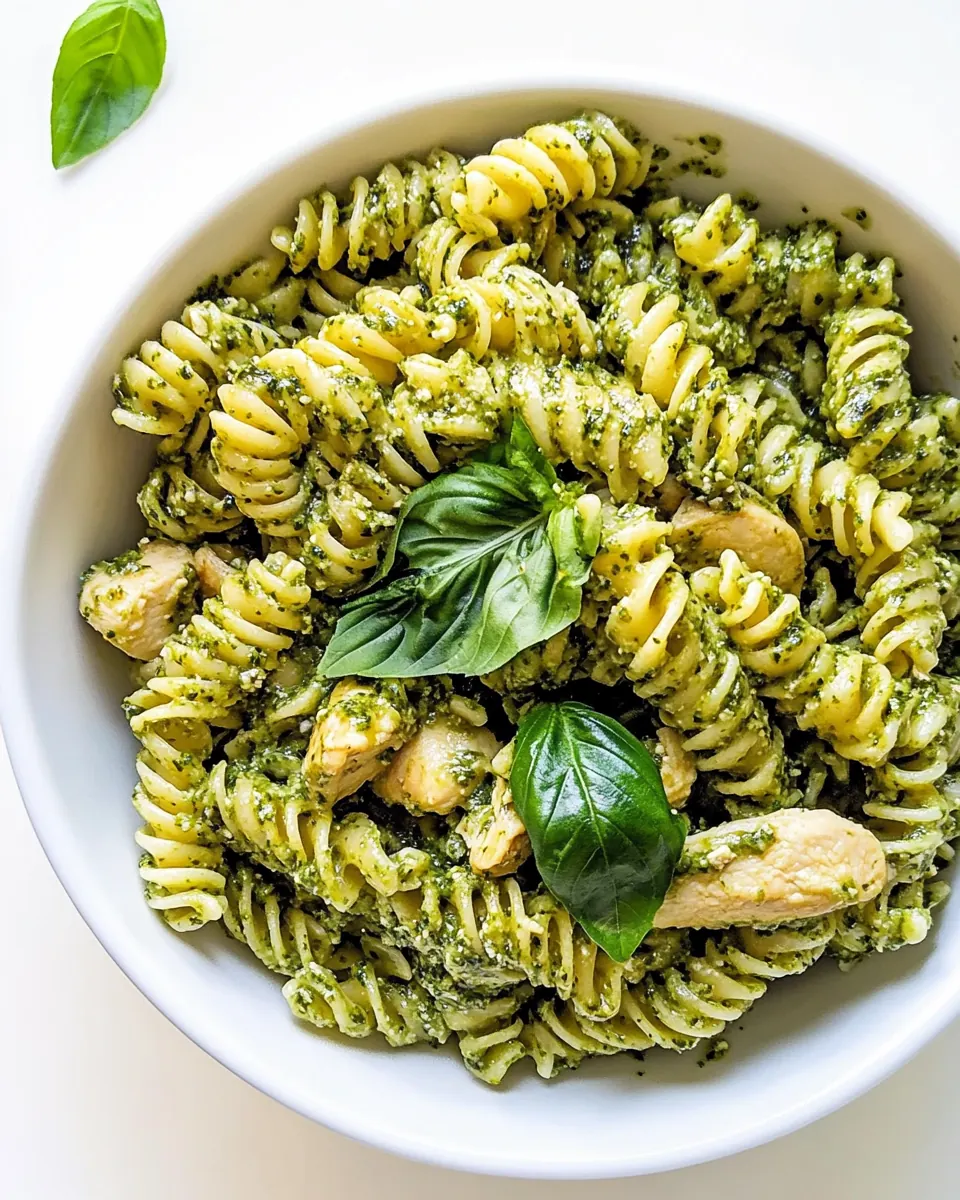
This recipe is straightforward but benefits from attention to detail. As you move through the steps, focus on aroma, texture, and gentle handling so the pesto stays bright. I’ll walk you through each stage and point out sensory cues and troubleshooting tips that help you get the best result.
- Set out a food processor. Place the basil leaves, pine nuts, pecorino cheese, garlic clove, and lemon juice in the food processor. Cover and pulse until finely ground.: You will notice an immediate fresh, herbal scent as soon as you add basil to the bowl, and the machine makes a steady humming background as it works the leaves. This step is crucial because pulsing in a processor creates even, small bits which allow the oil and cheese to emulsify, building a cohesive sauce. If your processor struggles or overheats, pause and scrape down the sides to prevent uneven chopping. A common mistake is over-processing until the herbs turn dark, which dulls the flavor, so pulse in short bursts and watch the color.
- Then add in the olive oil, 1/2 teaspoon salt, and 1/4 teaspoon ground pepper. Pulse again until a smooth, thick pesto sauce is formed. Taste, then salt and pepper as needed.: As the blades start, you will smell the nutty and cheesy notes combining with bright herb aromas, and you should see tiny flecks forming. This initial blend helps break down the ingredients so they integrate smoothly once oil is added. If pieces cling to the sides, stop and scrape down the bowl for uniform texture. The error to avoid here is crowding the processor bowl, which prevents proper blending and yields an uneven pesto.
- Set a large pot of salted water over high heat, and set out a mixing bowl. Once the water is boiling, stir the pasta into the water. Cook to al dente, according to the package instructions. Drain the pasta and place in the bowl.: The sound will be rapid, with intermittent pauses when you stop to scrape; visually you want a coarse, uniform mixture that still shows flecks of green. Achieving this consistency matters because it creates a foundation that the oil will bind into a glossy sauce. Over-pulsing can make the mixture pasty and less vibrant, so pulse briefly and check frequently.
- Stir in the shredded cooked chicken. Allow the temperature of the pasta to come down a little, as to not cook the pesto. Once the pasta is warm (not hot) stir in the pesto, one half cup at a time, until it is as saucy as you like.: Gradually pouring the extra–virgin olive oil while pulsing produces an emulsion that gives the sauce its silky sheen. The aroma mellows as the oil integrates, and the texture should become smoother and more cohesive. If the mixture looks too thick, add a touch more oil in small increments. A common pitfall is adding all the oil at once, which can separate the mixture and make it runny rather than creamy.
- Serve at room temperature, or cold. Cover and chill until ready to serve.: You will see the mixture transform into a glossy, verdant paste that clings to the spoon. This step matters because proper emulsification ensures the pesto coats pasta evenly. Taste now to fine tune salt and pepper. One mistake people make is skipping the tasting step; the salt level should enhance the basil, not drown it.
- Taste, then salt and pepper as needed.: Take a small spoonful to evaluate the balance of herb, acid, cheese, and fat; the lemon should lift the flavors and the cheese should add savory depth. Adjustments here are critical for final flavor harmony. Over-salting is easy to do, so add in small amounts and taste between additions to avoid making the pesto too salty.
- Set a large pot of salted water over high heat, and set out a mixing bowl.: When the water begins to roar, you will smell the faint mineral tang of salted water, and rolling bubbles signal readiness. The mixing bowl should be large enough to toss the pasta comfortably with the pesto. Using insufficiently salted water can leave the pasta bland, so season the water as you would the sea, but not overwhelmingly so.
- Once the water is boiling, stir the pasta into the water.: As the pasta cooks, you will hear it move and sometimes clink as it softens; the scent of cooked wheat will become noticeable. Stirring prevents pieces from sticking together. Follow the package for al dente timing because slightly firm pasta holds the sauce better. A frequent error is overcooking, which causes mushy texture and poor sauce cling.
- Cook to al dente, according to the package instructions.: Al dente means a pleasant bite when you test a piece, with a tender exterior and a slight chew in the center. This texture provides contrast to the soft chicken and creamy pesto. If your pasta is overcooked, it will absorb too much sauce and lose structure, so check a minute or two before the shortest suggested time and taste.
- Drain the pasta and place in the bowl.: After draining, you will feel the remaining warmth on the pasta, which is key because it helps the pesto loosen and coat the noodles without cooking the sauce components. Transfer swiftly to the mixing bowl to keep the pasta from cooling unevenly. Leaving pasta to sit too long in the colander can cause it to dry and clump, so move it directly into the bowl.
- Stir in the shredded cooked chicken.: As you fold in the shredded chicken , the mix gains body and a satisfying chew, and you may notice small steam wisps if the chicken is warm. Incorporating the meat now helps distribute protein evenly. If the chicken is too cold it can chill the mixture excessively, so allow it to come closer to room temperature if possible. A common oversight is adding raw or not fully cooked chicken , which is unsafe and incompatible with the recipe timing.
- Allow the temperature of the pasta to come down a little, as to not cook the pesto.: The goal is a warm, not hot, base so the oils in the pesto do not separate and the basil keeps its fresh flavor. You will feel the temperature drop and notice the pesto maintain its vibrant green color when added to warm rather than steaming pasta. If the pasta is too hot, the pesto can lose brightness and take on a wilted quality, so be patient and let it cool briefly.
- Once the pasta is warm not hot stir in the pesto, one half cup at a time, until it is as saucy as you like.: As you add the pesto incrementally, observe how it clings to the pasta and coats each piece; this gradual approach prevents overdressing and allows you to control silkiness. The aroma should be herbaceous and balanced. Over-saucing can make the dish overly oily, while under-saucing leaves it dry, so taste and adjust as you go.
- Serve at room temperature, or cold.: When plated, the dish should have a gentle sheen and a fresh herbal fragrance, and the texture should be pleasantly cohesive. Serving this way allows the flavors to settle and be enjoyed without the pesto becoming muted. If you plan to chill it, do so in an airtight container to preserve the bright green color and avoid drying out. A misstep is refrigerating while still steaming, which can create condensation and dilute the flavor.
- Cover and chill until ready to serve.: Chilling tightens textures slightly and makes the pasta great for picnics or make ahead meals. The pesto may firm up in the fridge but will loosen to a perfect consistency when brought back toward room temperature. Avoid leaving it uncovered because exposure can dry the top layer and dull the appearance.
Change It Up
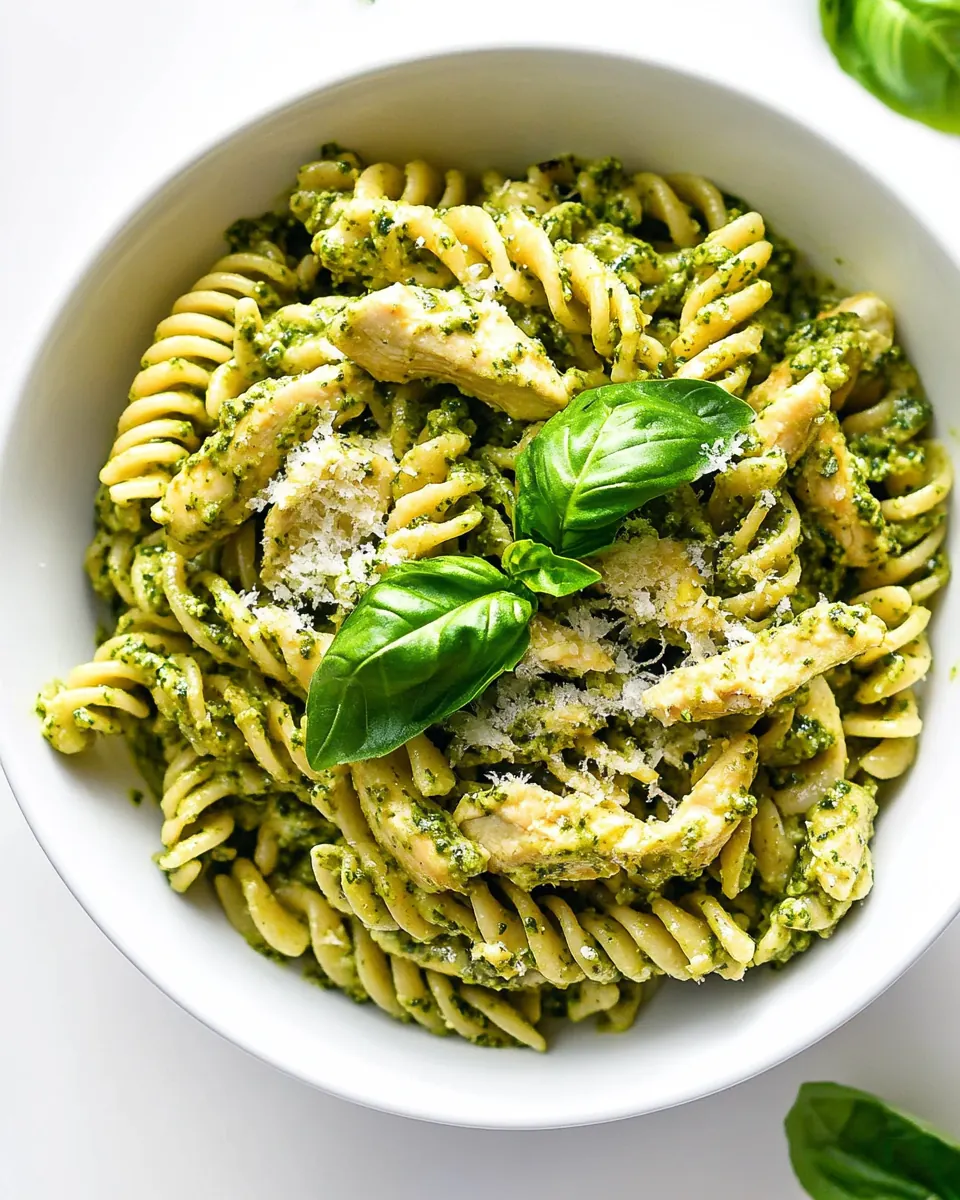
If you want to tweak the dish, small adjustments go a long way. Below are ways I often vary the recipe to suit mood, season, or pantry items. Each tip starts with a practical highlight so you can scan for ideas quickly.
- Make it creamier: Stir in half a cup to one cup of heavy cream at the end to transform the sauce into a luxurious, silky coating that feels indulgent while still showcasing the basil.
- Toast your pine nuts: Heating pine nuts in a dry skillet until fragrant deepens their taste dramatically, adding a warm, toasty note that contrasts the bright basil.
- Adjust olive oil for texture: Add the extra-virgin olive oil slowly to control whether you want a thick pesto paste or a looser, more pourable sauce that clings lightly to the pasta.
- Cold or room temperature serving: Serving the dish chilled enhances the herbaceous clarity, ideal for warm weather gatherings or make-ahead lunches.
- Use different pasta shapes: Small twisted shapes like fusilli or gemelli trap the pesto in their grooves, maximizing flavor in every bite.
- Prep pesto ahead: Make the pesto up to four days in advance and store it in an airtight container with a thin layer of oil on top to protect color and flavor.
What Goes Well With This Basil Pesto Chicken Pasta
This dish pairs wonderfully with light accompaniments that let the pesto shine. Serving ideas range from casual lunches to relaxed dinners, and the recipe adapts to occasions like family meals or potlucks. Below are thoughtful serving suggestions and practical storage notes to help you present the dish at its best.
- Light green salad: A simple leafy salad dressed with lemon and olive oil complements the herb-forward pasta without competing with it, adding a crisp contrast in texture.
- Crisp roasted vegetables: Serve with roasted vegetables at room temperature to introduce caramelized notes that play well with the pesto’s brightness.
- Picnic or potluck: Because it holds up well chilled, this dish is ideal for outdoor gatherings where you want something make ahead and easy to serve.
- Weeknight dinner: For an easy weeknight meal, pair with crusty bread and a small antipasto plate for a satisfying, no-fuss dinner.
- Storage tips: Keep leftover pesto in an airtight container with a thin layer of oil on top for up to four days; store the tossed pasta in the fridge and bring it toward room temperature before serving for best texture.
- Seasonal pairings: In spring when herbs are abundant, use extra basil to intensify the flavor; in cooler months, serve at room temperature to let the richness come forward.
FAQ
Conclusion
What makes this recipe special is its brightness and simplicity, pairing fresh herbaceous pesto with tender shredded chicken and small pasta shapes for a satisfying, balanced meal. Give it a try when you want a speedy dinner that still tastes thoughtful and fresh, because the combination of toasted nuts, tangy cheese, and fragrant basil really sings. I hope you enjoy the ease and flavor of this dish, and that it becomes a reliable weeknight favorite in your kitchen.
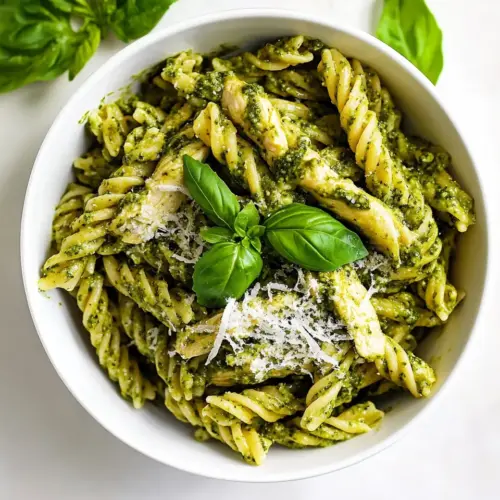
Basil Pesto Chicken Pasta
Equipment
- Food Processor
- Large Pot
- Mixing Bowl
- Colander
Ingredients
- 2 cups fresh basil leaves packed Provide vibrant aromatic freshness and form the herbal base for the pesto; gently pack the leaves to maximize flavor and blend until smooth for a bright green sauce that lifts the entire pasta dish.
- 1/2 cup pine nuts Add rich, buttery texture and a subtle pine flavor to the pesto; lightly toast before blending to deepen nuttiness and help create a creamy emulsion with the oil and cheese.
- 1/2 cup grated pecorino cheese or parmesan Contribute salty, savory umami and a slightly sharp, nutty finish to the pesto; finely grate for even distribution and combine with the cheese-free alternatives if desired to adjust intensity.
- 1 clove garlic peeled Offer pungent, aromatic sharpness that brightens the pesto; smash or mince the clove to release oils and blend thoroughly so the garlic integrates without overpowering the basil.
- 2 teaspoons lemon juice Provide bright acidity to balance the richness of oil and cheese in the pesto; squeeze and add gradually, tasting to maintain a lively but not overly tart sauce.
- 2/3 cup extra-virgin olive oil Serve as the rich, silky fat that binds the pesto ingredients into a smooth emulsion; pour slowly while blending to achieve a glossy consistency that coats pasta evenly.
- salt and pepper Season the dish to enhance and balance flavors; add salt sparingly at first and finish with pepper to taste so the pesto and chicken are savory without being flat.
- 1 pound small pasta ziti, fusilli, or gemelli Act as the hearty carbohydrate base that carries the pesto and chicken; choose small shapes like ziti, fusilli, or gemelli to trap sauce and provide satisfying texture when al dente.
- 2 cups shredded cooked chicken Supply protein and a tender texture to make the pasta a complete meal; shred cooked chicken and fold into the pasta so it absorbs pesto flavors while remaining moist.
Instructions
- Set out a food processor. Place the basil leaves, pine nuts, pecorino cheese, garlic clove, and lemon juice in the food processor. Cover and pulse until finely ground.: You will notice an immediate fresh, herbal scent as soon as you add basil to the bowl, and the machine makes a steady humming background as it works the leaves. This step is crucial because pulsing in a processor creates even, small bits which allow the oil and cheese to emulsify, building a cohesive sauce. If your processor struggles or overheats, pause and scrape down the sides to prevent uneven chopping. A common mistake is over-processing until the herbs turn dark, which dulls the flavor, so pulse in short bursts and watch the color.
- Then add in the olive oil, 1/2 teaspoon salt, and 1/4 teaspoon ground pepper. Pulse again until a smooth, thick pesto sauce is formed. Taste, then salt and pepper as needed.: As the blades start, you will smell the nutty and cheesy notes combining with bright herb aromas, and you should see tiny flecks forming. This initial blend helps break down the ingredients so they integrate smoothly once oil is added. If pieces cling to the sides, stop and scrape down the bowl for uniform texture. The error to avoid here is crowding the processor bowl, which prevents proper blending and yields an uneven pesto.
- Set a large pot of salted water over high heat, and set out a mixing bowl. Once the water is boiling, stir the pasta into the water. Cook to al dente, according to the package instructions. Drain the pasta and place in the bowl.: The sound will be rapid, with intermittent pauses when you stop to scrape; visually you want a coarse, uniform mixture that still shows flecks of green. Achieving this consistency matters because it creates a foundation that the oil will bind into a glossy sauce. Over-pulsing can make the mixture pasty and less vibrant, so pulse briefly and check frequently.
- Stir in the shredded cooked chicken. Allow the temperature of the pasta to come down a little, as to not cook the pesto. Once the pasta is warm (not hot) stir in the pesto, one half cup at a time, until it is as saucy as you like.: Gradually pouring the extra-virgin olive oil while pulsing produces an emulsion that gives the sauce its silky sheen. The aroma mellows as the oil integrates, and the texture should become smoother and more cohesive. If the mixture looks too thick, add a touch more oil in small increments. A common pitfall is adding all the oil at once, which can separate the mixture and make it runny rather than creamy.
- Serve at room temperature, or cold. Cover and chill until ready to serve.: You will see the mixture transform into a glossy, verdant paste that clings to the spoon. This step matters because proper emulsification ensures the pesto coats pasta evenly. Taste now to fine tune salt and pepper. One mistake people make is skipping the tasting step; the salt level should enhance the basil, not drown it.
- Taste, then salt and pepper as needed.: Take a small spoonful to evaluate the balance of herb, acid, cheese, and fat; the lemon should lift the flavors and the cheese should add savory depth. Adjustments here are critical for final flavor harmony. Over-salting is easy to do, so add in small amounts and taste between additions to avoid making the pesto too salty.
- Set a large pot of salted water over high heat, and set out a mixing bowl.: When the water begins to roar, you will smell the faint mineral tang of salted water, and rolling bubbles signal readiness. The mixing bowl should be large enough to toss the pasta comfortably with the pesto. Using insufficiently salted water can leave the pasta bland, so season the water as you would the sea, but not overwhelmingly so.
- Once the water is boiling, stir the pasta into the water.: As the pasta cooks, you will hear it move and sometimes clink as it softens; the scent of cooked wheat will become noticeable. Stirring prevents pieces from sticking together. Follow the package for al dente timing because slightly firm pasta holds the sauce better. A frequent error is overcooking, which causes mushy texture and poor sauce cling.
- Cook to al dente, according to the package instructions.: Al dente means a pleasant bite when you test a piece, with a tender exterior and a slight chew in the center. This texture provides contrast to the soft chicken and creamy pesto. If your pasta is overcooked, it will absorb too much sauce and lose structure, so check a minute or two before the shortest suggested time and taste.
- Drain the pasta and place in the bowl.: After draining, you will feel the remaining warmth on the pasta, which is key because it helps the pesto loosen and coat the noodles without cooking the sauce components. Transfer swiftly to the mixing bowl to keep the pasta from cooling unevenly. Leaving pasta to sit too long in the colander can cause it to dry and clump, so move it directly into the bowl.
- Stir in the shredded cooked chicken.: As you fold in the shredded chicken , the mix gains body and a satisfying chew, and you may notice small steam wisps if the chicken is warm. Incorporating the meat now helps distribute protein evenly. If the chicken is too cold it can chill the mixture excessively, so allow it to come closer to room temperature if possible. A common oversight is adding raw or not fully cooked chicken , which is unsafe and incompatible with the recipe timing.
- Allow the temperature of the pasta to come down a little, as to not cook the pesto.: The goal is a warm, not hot, base so the oils in the pesto do not separate and the basil keeps its fresh flavor. You will feel the temperature drop and notice the pesto maintain its vibrant green color when added to warm rather than steaming pasta. If the pasta is too hot, the pesto can lose brightness and take on a wilted quality, so be patient and let it cool briefly.
- Once the pasta is warm not hot stir in the pesto, one half cup at a time, until it is as saucy as you like.: As you add the pesto incrementally, observe how it clings to the pasta and coats each piece; this gradual approach prevents overdressing and allows you to control silkiness. The aroma should be herbaceous and balanced. Over-saucing can make the dish overly oily, while under-saucing leaves it dry, so taste and adjust as you go.
- Serve at room temperature, or cold.: When plated, the dish should have a gentle sheen and a fresh herbal fragrance, and the texture should be pleasantly cohesive. Serving this way allows the flavors to settle and be enjoyed without the pesto becoming muted. If you plan to chill it, do so in an airtight container to preserve the bright green color and avoid drying out. A misstep is refrigerating while still steaming, which can create condensation and dilute the flavor.
- Cover and chill until ready to serve.: Chilling tightens textures slightly and makes the pasta great for picnics or make ahead meals. The pesto may firm up in the fridge but will loosen to a perfect consistency when brought back toward room temperature. Avoid leaving it uncovered because exposure can dry the top layer and dull the appearance.
Notes
- Make it creamier: Stir in half a cup to one cup of heavy cream at the end to transform the sauce into a luxurious, silky coating that feels indulgent while still showcasing the basil.
- Toast your pine nuts: Heating pine nuts in a dry skillet until fragrant deepens their taste dramatically, adding a warm, toasty note that contrasts the bright basil.
- Adjust olive oil for texture: Add the extra-virgin olive oil slowly to control whether you want a thick pesto paste or a looser, more pourable sauce that clings lightly to the pasta.
- Cold or room temperature serving: Serving the dish chilled enhances the herbaceous clarity, ideal for warm weather gatherings or make-ahead lunches.
- Use different pasta shapes: Small twisted shapes like fusilli or gemelli trap the pesto in their grooves, maximizing flavor in every bite.
- Prep pesto ahead: Make the pesto up to four days in advance and store it in an airtight container with a thin layer of oil on top to protect color and flavor.