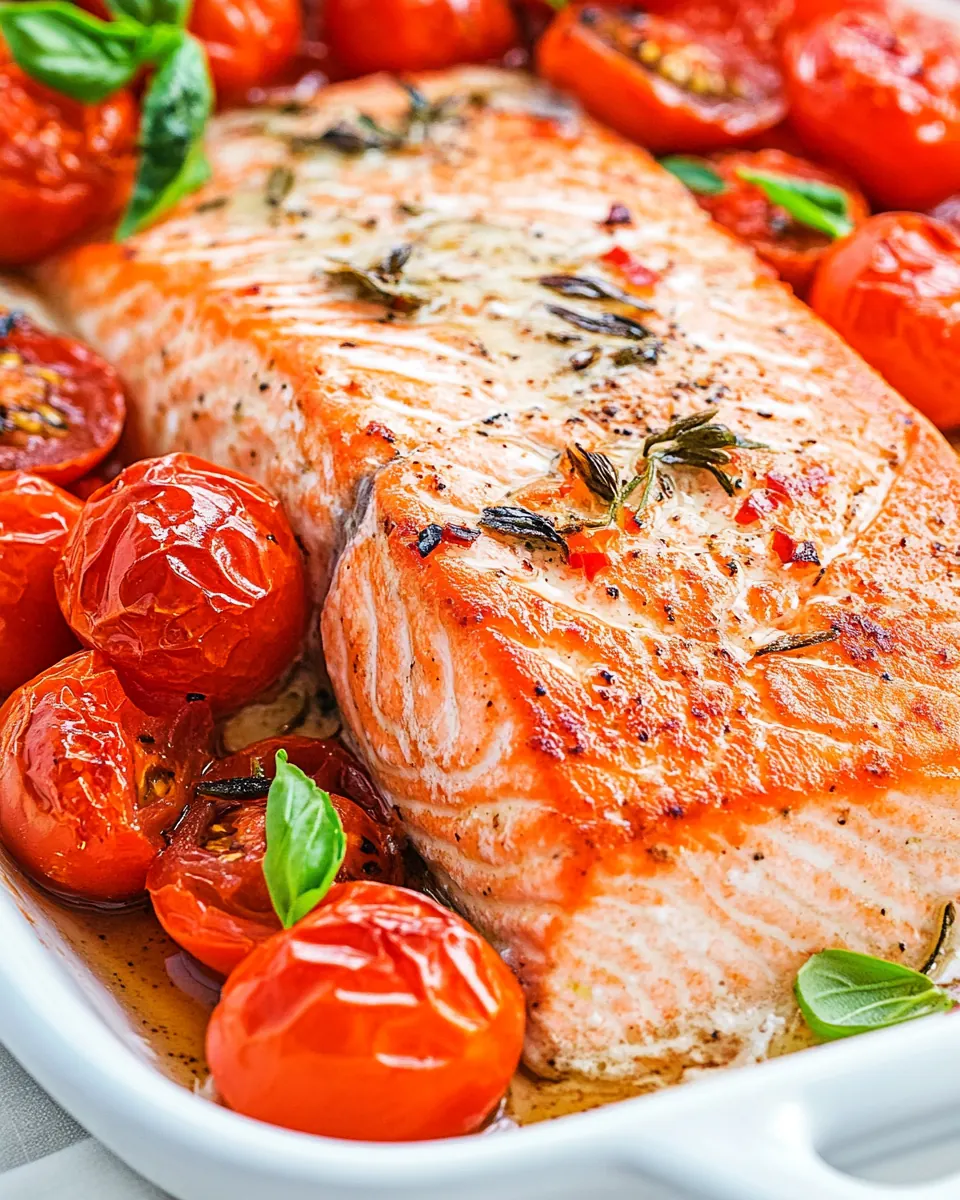
Baked Salmon with Roasted Tomatoes
Baked Salmon with Roasted Tomatoes is one of those recipes I turn to when I want dinner to feel thoughtful but not fussy.
I first made Baked Salmon with Roasted Tomatoes on a late summer evening after a farmer’s market run. The tomatoes were impossibly sweet, still warm from the sun, and I wanted a simple way to highlight them without masking their flavor. I remember how the whole kitchen smelled of garlic and olive oil as the tomatoes began to blister, and how the salmon, placed gently on top, steamed just enough to stay tender. That night we ate at the kitchen table, windows open, and I kept going back for another forkful.
Since then I’ve adapted the approach when I need a quick weeknight rescue or when friends drop by unexpectedly. Baked Salmon with Roasted Tomatoes feels elegant because of how the ingredients behave together, yet it’s forgiving if you are short on time. I love how the tomatoes release juices that become an easy sauce, while the salmon stays moist and flaky. There is a comforting immediacy to pulling a hot dish from the oven and serving it straight away, no plate juggling required.
Recipe Snapshot
40 mins
10 mins
30 mins
Easy
350 kcal
American
Paleo, Whole30
Dinner
Aluminum Baking Sheet, Instant Read Meat Thermometer
What Sets This Baked Salmon with Roasted Tomatoes Apart
Fresh bright flavors that sing
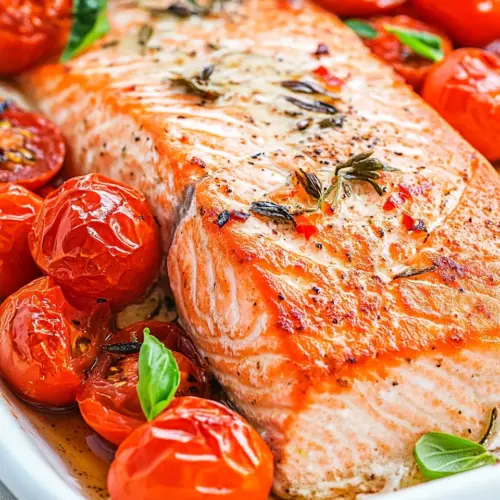
I adore how the sweetness of the tomatoes contrasts with the savory richness of the salmon. When roasted, the tomatoes concentrate their natural sugars, creating a vivid burst of flavor in every bite. This pairing feels simple, yet the result reads like a composed dish.
Minimal fuss, maximum impact
We get excellent results with just a few pantry staples: olive oil, garlic, and a little oregano. The technique is straightforward, which means you can focus on enjoying the company at the table rather than babysitting the stove. I often pull this together when I want to impress without spending hours on prep.
Textures that please
The contrast between the soft, syrupy roasted tomatoes and the firm yet tender flakes of salmon is what keeps me coming back. The tomatoes break down into a silky bed that cushions the fish, so each forkful is a mix of lush juice and meaty flakes.
Healthy and adaptable
This recipe leans into wholesome ingredients, offering a balance of protein and vibrant vegetables. It is easy to scale up for guests, and I often tweak the herb quantities to match what I have on hand. It feels like a meal that honors both flavor and nutrition without any drama.
Weeknight friendly and elegant
I love that you can serve this for a casual family dinner or a small gathering. The presentation is effortless because the roasted tomatoes do a lot of the visual work, turning the plate into something that looks deliberate and cared for. For me, that combination of ease and charm is everything.
Shopping List for Baked Salmon with Roasted Tomatoes
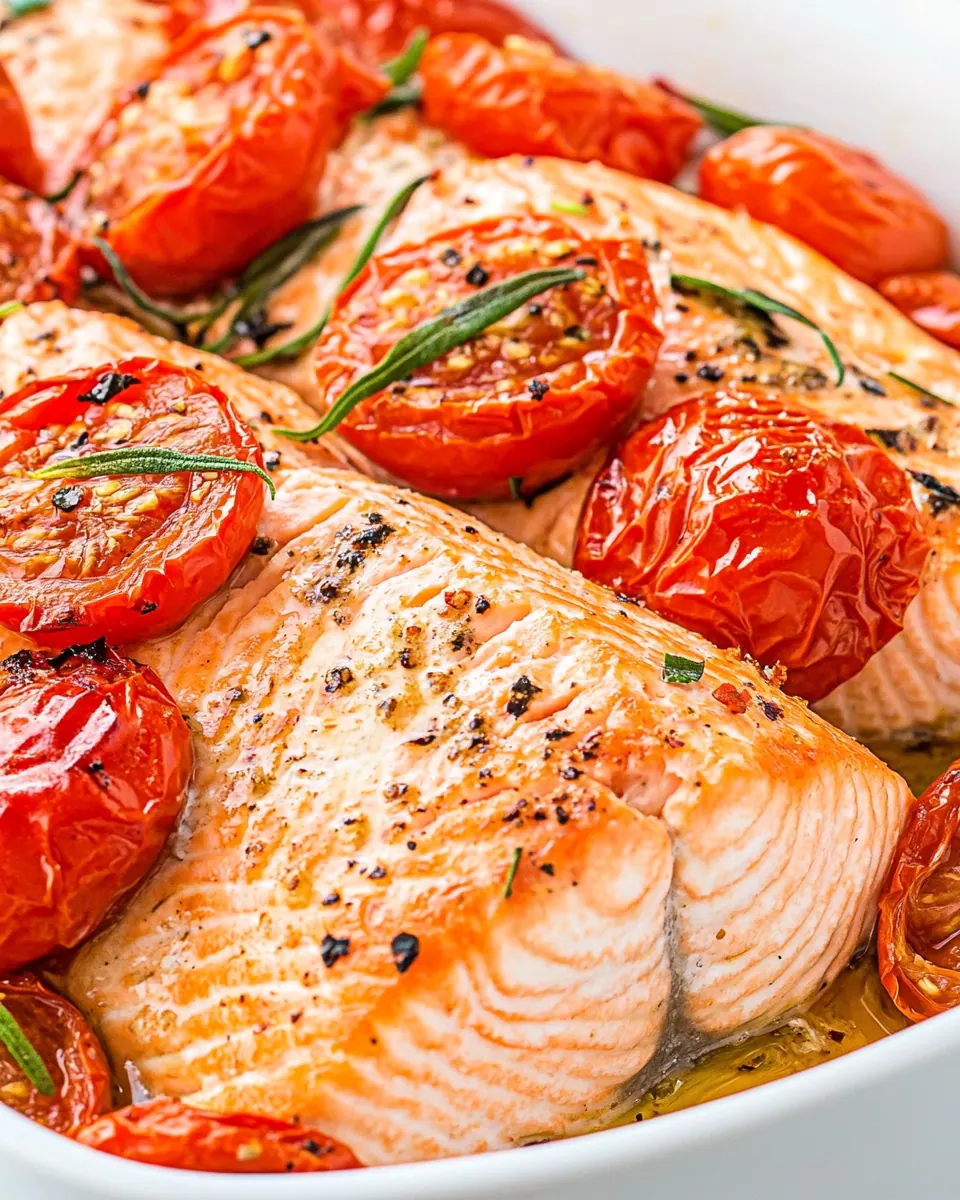
These ingredients are about balance and clarity. The salmon brings substance, the tomatoes bring brightness, and the aromatics like garlic and onion create a savory backbone. Together, the olive oil and oregano bind the components into a harmonized roast that needs no elaborate sauce.
- 2 pounds salmon fillets (fresh or frozen): Provide a rich, oily base that keeps the salmon moist while adding depth of flavor; ideal for baking whole fillets to prevent drying and promote even cooking. Use at room temperature if possible to help the fillets roast evenly and develop a slightly crisp exterior. Can be seasoned or marinated with other listed ingredients to infuse the fish with complementary aromatics.
- 2 cups tomatoes (cherry or grapes): Add bright, juicy bursts that roast down to concentrate sweetness and acidity, complementing the richness of the salmon. Halve or leave whole depending on size to allow caramelization while retaining shape, and scatter around the fillets to mingle flavors in the pan. Serve with the roasted juices spooned over the fish to enhance moisture and taste.
- 1 onion (thinly sliced): Provide a savory, aromatic layer that softens and caramelizes when roasted, contributing sweetness and depth to the dish. Slice thinly to allow even browning and to meld with tomatoes and garlic; cooked onion also adds a pleasant texture contrast to tender salmon. Can be arranged beneath or alongside the fillets to flavor the cooking juices.
- 4 teaspoons fresh oregano (chopped, or 1 tsp dried oregano): Impart an herbaceous, slightly peppery note that brightens the overall flavor and pairs naturally with fish and tomatoes. Use chopped fresh leaves to release essential oils, or substitute dried sparingly for concentrated flavor; sprinkle toward the end of cooking to preserve freshness. Works well mixed with oil, garlic, and salt to create a simple marinade or finishing herb drizzle.
- 1 tablespoon olive oil: Provide the primary cooking fat that helps transfer heat, encourages gentle roasting, and aids in browning the tomatoes and onions. Drizzle evenly over the pan ingredients to promote caramelization and prevent sticking, and combine with herbs and garlic to form a flavorful coating for the salmon. Use high-quality oil for the best mouthfeel and subtle fruitiness.
- 4 cloves garlic (minced): Deliver pungent, savory aromatics that infuse the fish and vegetables with depth and a warm bite when roasted. Mince finely to distribute flavor throughout the dish; briefly sautéing or mixing with oil before roasting helps mellow harshness and release sweetness. Balances the richness of the salmon and pairs particularly well with tomatoes and oregano.
- 1/2 teaspoons salt: Season the dish to enhance and balance natural flavors, helping highlight both the fish and the roasted vegetables without overpowering them. Use measured amounts and taste accordingly, adjusting to dietary preference and the saltiness of any additional components. Sprinkle evenly to ensure every bite benefits from gentle seasoning.
- 1/2 teaspoon black pepper (ground): Provide mild heat and subtle earthy notes that round out the seasoning and elevate the savoriness of the salmon and vegetables. Grind freshly if possible to preserve aromatic oils, and add selectively to taste so it complements rather than overwhelms the delicate fish. Combine with salt and herbs to create a balanced finishing seasoning.
Making Baked Salmon with Roasted Tomatoes
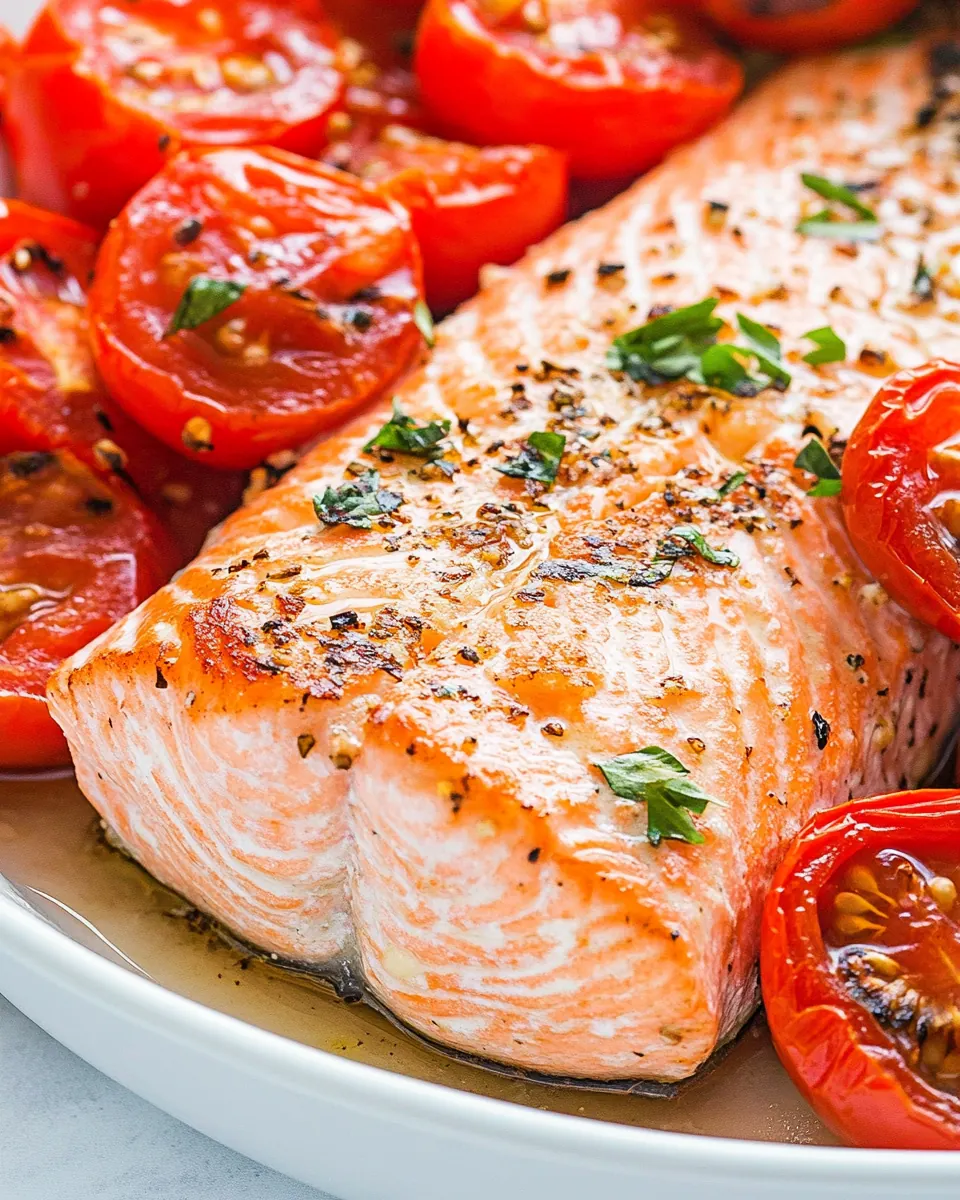
These steps are deliberately simple, but they reward attention to small details. Read through each instruction once, then move confidently. The oven does most of the work, and the sensory cues will guide you if you pay attention to smell, texture, and color.
- Prep salmon and oven: Thaw fish if frozen. Rinse the fish and pat dry with paper towels. Preheat the oven to 400°F. Grease a baking dish with cooking spray.: The air fills with a clean oven heat and a faint mineral scent when you preheat to 400°F , signaling the moment the pan will begin to transform the ingredients. Listen for the quiet hum of the oven settling, and feel the rise in warmth near the door. Patting the salmon dry helps prevent excess steaming, allowing the fish to roast gently on top of the tomatoes. A common mistake is leaving the fish wet which can make the exterior mushy, so make sure you firmly blot with paper towels. Greasing the baking dish ensures the roasted juices do not stick, and it makes serving simpler. If your frozen fillets are not fully thawed, the center will need more time, so allow an extra ten to fifteen minutes overall in that case.
- Prep veggies and roast: In the prepared baking dish combine tomatoes, onions, oregano, oil, garlic, 1/4 tsp of the salt, and 1/4 tsp of the pepper. Toss to coat the tomatoes. Transfer the baking dish to the oven and bake for 15 minutes, uncovered.: As you toss the tomatoes , sliced onion , chopped oregano , olive oil , minced garlic , and a portion of the salt and pepper together, the garlic scent will bloom and the oil will sheen over the skins. The tomatoes should glisten when they are well coated, that gloss meaning they will blister and release juices. Transfer the dish to the preheated oven and allow the vegetables to roast for about 15 minutes , uncovered, until you see skins lax and starting to split, and a syrupy liquid forming on the bottom. Avoid crowding the dish since crowded tomatoes steam rather than roast, losing that lovely concentrated sweetness. If the tomatoes are not blistering after 15 minutes , give them a few more minutes but watch closely so they do not collapse completely.
- Bake salmon: Place fish, skin side down, on top of the tomatoes. Sprinkle fish with remaining 1/4 tsp pepper and 1/4 tsp salt. Bake, uncovered, for another 15 to 20 minutes or until the salmon is opaque and flakes easily. Salmon is done when the internal temperature reaches 145°F.: When you place the salmon skin side down on top of the softened tomatoes and onions, you will notice the gentle hiss as the juice meets the warm flesh, and a moment later the scent will shift toward a savory roast. Sprinkle the remaining salt and pepper evenly over the fish so each bite is seasoned through. Return the dish to the oven and bake uncovered for another 15 to 20 minutes until the salmon turns opaque and flakes easily with a fork. The internal temperature target is 145°F , and using an instant read thermometer in the thickest part ensures accuracy. A common error is overbaking, which dries the fish; aim for just set and tender. You will notice the top of the salmon become slightly firm to the touch while the flesh beneath remains moist.
- Serve: Transfer the salmon from the baking dish with a spatula and top with roasted tomatoes and onions.: When you transfer the salmon with a spatula, the roasted tomatoes and onions should glisten and pool slightly, forming a natural sauce to spoon over the fish. The aroma will be rich and savory with bright tomato notes and an herby edge from the oregano . If the dish seems dry, spoon some of the pan juices over the fish to add moisture and shine. Avoid cutting the fillets too early, as they continue to rest and finish cooking for a minute or two; slicing prematurely can cause the juices to run away. For best texture, serve immediately so the contrast between warm, silky tomatoes and flaky salmon remains distinct.
Recipe Tips about Baked Salmon with Roasted Tomatoes
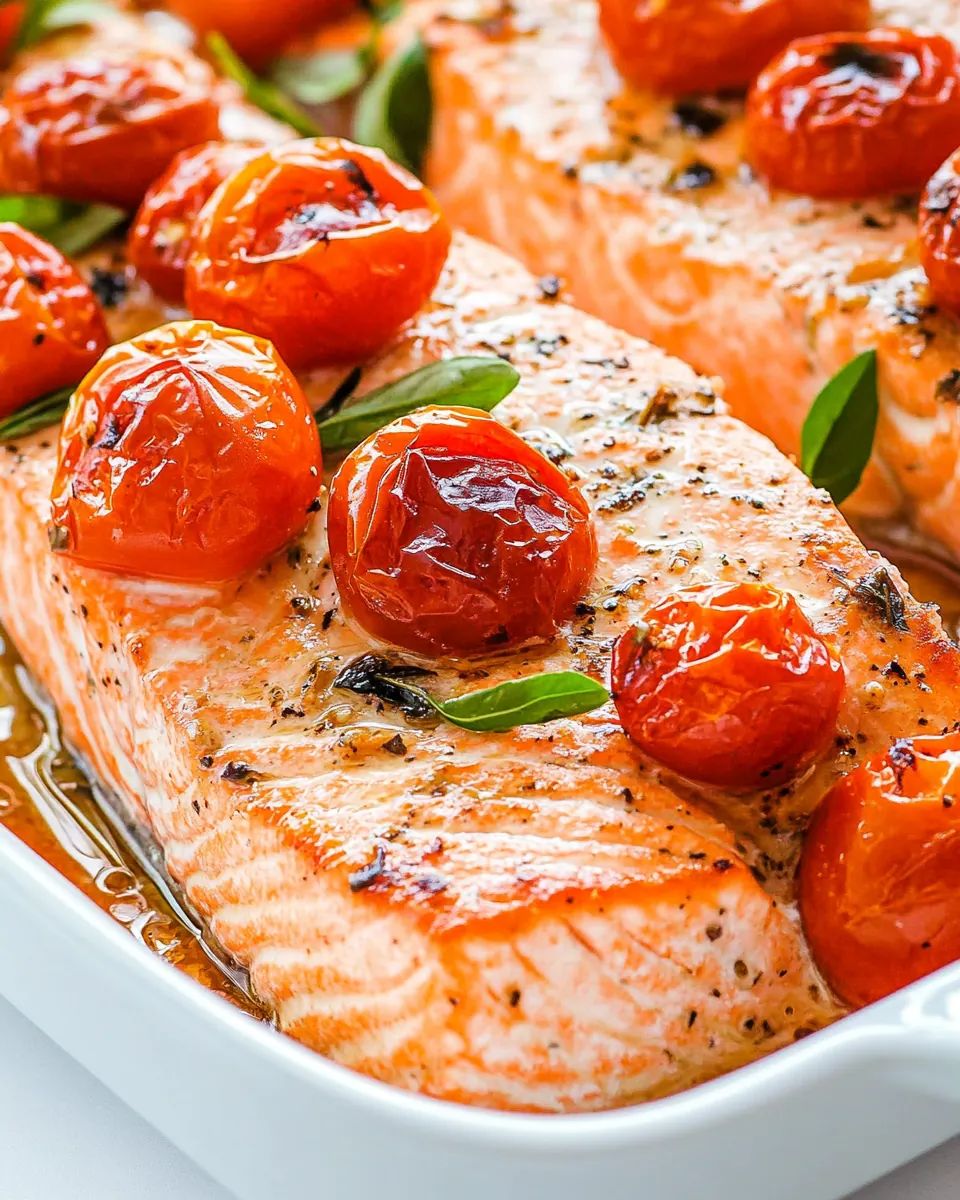
I like to keep tips practical and specific so you can get great results with minimal fuss. Here are techniques and small habits that make the recipe shine every time.
- Choose even fillets so the salmon cooks uniformly from edge to center without overcooking thinner pieces.
- Seedless tomatoes work best, since cherry or grape tomatoes break down faster and produce a silky sauce without needing extra steps.
- Use fresh oregano when possible, it gives a brighter, more aromatic lift than dried, though dried will do in a pinch.
- Don’t skip patting the fish dry. This step prevents excess moisture that can cause the salmon to steam instead of roast.
- Invest in an instant read thermometer, it takes the guesswork out of cooking and helps avoid overdone salmon.
Accompaniments for Baked Salmon with Roasted Tomatoes
This dish pairs well with simple sides that complement the savory roasted tomatoes and the tender salmon. Below are ideas for serving occasions and storage advice to keep leftovers at their best.
- Light green salad – A crisp salad with lemony dressing adds brightness and a cooling contrast to the warm roasted tomatoes and salmon.
- Steamed rice or couscous – These grains soak up the tomato juices and make the meal more filling while keeping the flavors balanced.
- Crusty bread – A thick slice of bread is perfect for sopping up the pan juices and makes the plate feel cozy and satisfying.
- Weeknight dinner – This recipe is ideal for busy evenings when you want something nutritious and quick that still feels special.
- Small dinner gatherings – Serve the dish straight from the oven for an effortless presentation that looks intentional and homey.
- Storage tips – Refrigerate leftovers in a shallow airtight container for up to three to four days, and reheat gently to avoid drying the salmon.
FAQ
Conclusion
What makes this recipe special is the effortless marriage of sweet roasted tomatoes and tender, flaky salmon, creating a dish that feels both fresh and satisfying. I encourage you to try it on a busy weeknight or for a relaxed dinner with friends, because it comes together quickly and delivers big on flavor. The technique is forgiving, the ingredients are straightforward, and the result feels like an intentional, comforting meal. Give it a go and enjoy the bright, herby notes alongside the rich, silky texture of the fish.
Baked Salmon with Roasted Tomatoes
Equipment
- Aluminum Baking Sheet
- Instant-read meat thermometer
Ingredients
- 2 pounds salmon fillets (fresh or frozen) Provide a rich, oily base that keeps the salmon moist while adding depth of flavor; ideal for baking whole fillets to prevent drying and promote even cooking. Use at room temperature if possible to help the fillets roast evenly and develop a slightly crisp exterior. Can be seasoned or marinated with other listed ingredients to infuse the fish with complementary aromatics.
- 2 cups tomatoes (cherry or grapes) Add bright, juicy bursts that roast down to concentrate sweetness and acidity, complementing the richness of the salmon. Halve or leave whole depending on size to allow caramelization while retaining shape, and scatter around the fillets to mingle flavors in the pan. Serve with the roasted juices spooned over the fish to enhance moisture and taste.
- 1 onion (thinly sliced) Provide a savory, aromatic layer that softens and caramelizes when roasted, contributing sweetness and depth to the dish. Slice thinly to allow even browning and to meld with tomatoes and garlic; cooked onion also adds a pleasant texture contrast to tender salmon. Can be arranged beneath or alongside the fillets to flavor the cooking juices.
- 4 teaspoons fresh oregano (chopped, or 1 tsp dried oregano) Impart an herbaceous, slightly peppery note that brightens the overall flavor and pairs naturally with fish and tomatoes. Use chopped fresh leaves to release essential oils, or substitute dried sparingly for concentrated flavor; sprinkle toward the end of cooking to preserve freshness. Works well mixed with oil, garlic, and salt to create a simple marinade or finishing herb drizzle.
- 1 tablespoon olive oil Provide the primary cooking fat that helps transfer heat, encourages gentle roasting, and aids in browning the tomatoes and onions. Drizzle evenly over the pan ingredients to promote caramelization and prevent sticking, and combine with herbs and garlic to form a flavorful coating for the salmon. Use high-quality oil for the best mouthfeel and subtle fruitiness.
- 4 cloves garlic (minced) Deliver pungent, savory aromatics that infuse the fish and vegetables with depth and a warm bite when roasted. Mince finely to distribute flavor throughout the dish; briefly sautéing or mixing with oil before roasting helps mellow harshness and release sweetness. Balances the richness of the salmon and pairs particularly well with tomatoes and oregano.
- 1/2 teaspoons salt Season the dish to enhance and balance natural flavors, helping highlight both the fish and the roasted vegetables without overpowering them. Use measured amounts and taste accordingly, adjusting to dietary preference and the saltiness of any additional components. Sprinkle evenly to ensure every bite benefits from gentle seasoning.
- 1/2 teaspoon black pepper (ground) Provide mild heat and subtle earthy notes that round out the seasoning and elevate the savoriness of the salmon and vegetables. Grind freshly if possible to preserve aromatic oils, and add selectively to taste so it complements rather than overwhelms the delicate fish. Combine with salt and herbs to create a balanced finishing seasoning.
Instructions
- Prep salmon and oven: Thaw fish if frozen. Rinse the fish and pat dry with paper towels. Preheat the oven to 400°F. Grease a baking dish with cooking spray.: The air fills with a clean oven heat and a faint mineral scent when you preheat to 400°F , signaling the moment the pan will begin to transform the ingredients. Listen for the quiet hum of the oven settling, and feel the rise in warmth near the door. Patting the salmon dry helps prevent excess steaming, allowing the fish to roast gently on top of the tomatoes. A common mistake is leaving the fish wet which can make the exterior mushy, so make sure you firmly blot with paper towels. Greasing the baking dish ensures the roasted juices do not stick, and it makes serving simpler. If your frozen fillets are not fully thawed, the center will need more time, so allow an extra ten to fifteen minutes overall in that case.
- Prep veggies and roast: In the prepared baking dish combine tomatoes, onions, oregano, oil, garlic, 1/4 tsp of the salt, and 1/4 tsp of the pepper. Toss to coat the tomatoes. Transfer the baking dish to the oven and bake for 15 minutes, uncovered.: As you toss the tomatoes , sliced onion , chopped oregano , olive oil , minced garlic , and a portion of the salt and pepper together, the garlic scent will bloom and the oil will sheen over the skins. The tomatoes should glisten when they are well coated, that gloss meaning they will blister and release juices. Transfer the dish to the preheated oven and allow the vegetables to roast for about 15 minutes , uncovered, until you see skins lax and starting to split, and a syrupy liquid forming on the bottom. Avoid crowding the dish since crowded tomatoes steam rather than roast, losing that lovely concentrated sweetness. If the tomatoes are not blistering after 15 minutes , give them a few more minutes but watch closely so they do not collapse completely.
- Bake salmon: Place fish, skin side down, on top of the tomatoes. Sprinkle fish with remaining 1/4 tsp pepper and 1/4 tsp salt. Bake, uncovered, for another 15 to 20 minutes or until the salmon is opaque and flakes easily. Salmon is done when the internal temperature reaches 145°F.: When you place the salmon skin side down on top of the softened tomatoes and onions, you will notice the gentle hiss as the juice meets the warm flesh, and a moment later the scent will shift toward a savory roast. Sprinkle the remaining salt and pepper evenly over the fish so each bite is seasoned through. Return the dish to the oven and bake uncovered for another 15 to 20 minutes until the salmon turns opaque and flakes easily with a fork. The internal temperature target is 145°F , and using an instant read thermometer in the thickest part ensures accuracy. A common error is overbaking, which dries the fish; aim for just set and tender. You will notice the top of the salmon become slightly firm to the touch while the flesh beneath remains moist.
- Serve: Transfer the salmon from the baking dish with a spatula and top with roasted tomatoes and onions.: When you transfer the salmon with a spatula, the roasted tomatoes and onions should glisten and pool slightly, forming a natural sauce to spoon over the fish. The aroma will be rich and savory with bright tomato notes and an herby edge from the oregano . If the dish seems dry, spoon some of the pan juices over the fish to add moisture and shine. Avoid cutting the fillets too early, as they continue to rest and finish cooking for a minute or two; slicing prematurely can cause the juices to run away. For best texture, serve immediately so the contrast between warm, silky tomatoes and flaky salmon remains distinct.
Notes
- Choose even fillets so the salmon cooks uniformly from edge to center without overcooking thinner pieces.
- Seedless tomatoes work best, since cherry or grape tomatoes break down faster and produce a silky sauce without needing extra steps.
- Use fresh oregano when possible, it gives a brighter, more aromatic lift than dried, though dried will do in a pinch.
- Don’t skip patting the fish dry. This step prevents excess moisture that can cause the salmon to steam instead of roast.
- Invest in an instant read thermometer, it takes the guesswork out of cooking and helps avoid overdone salmon.
