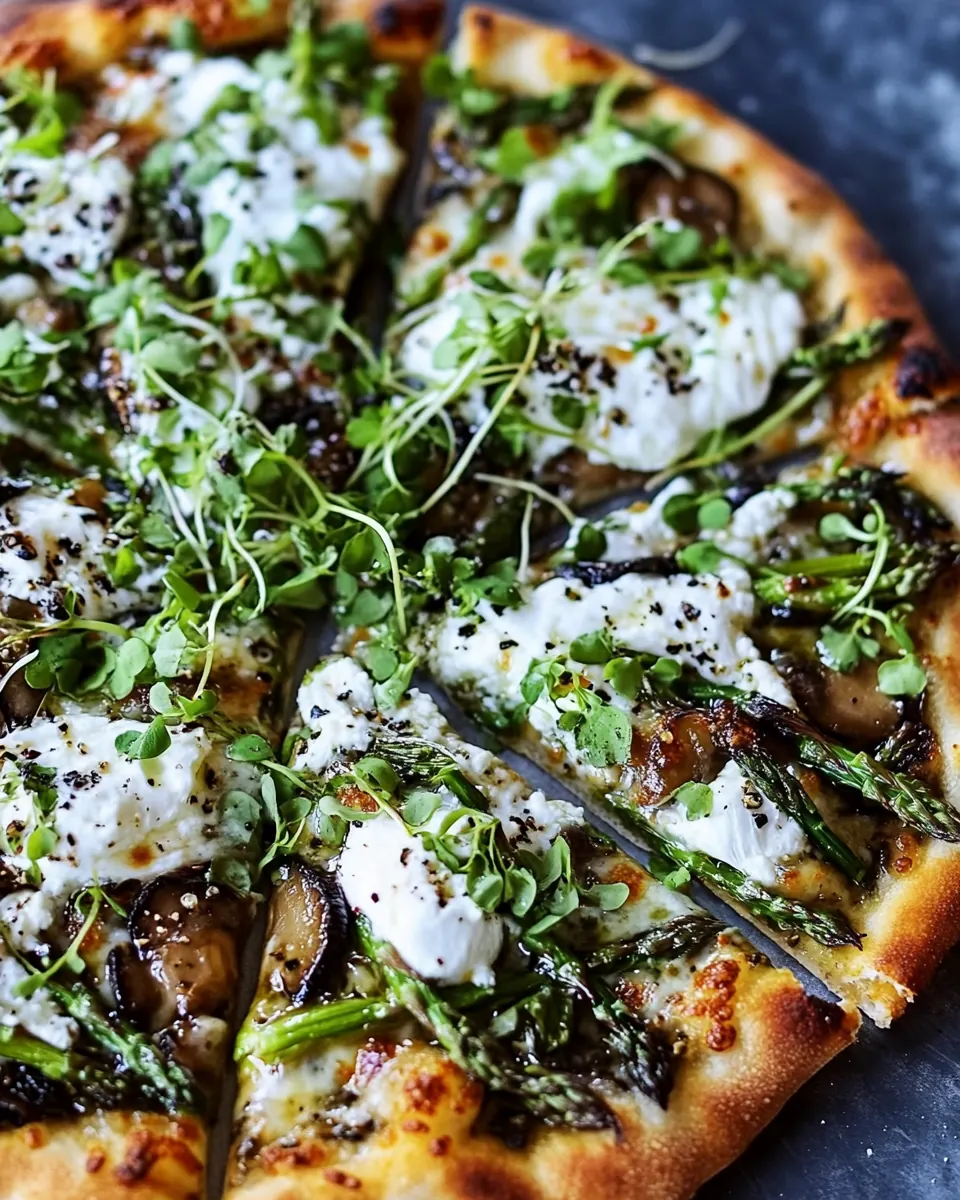
Asparagus Mushroom Burrata Pizza
Asparagus Mushroom Burrata Pizza is the kind of pie that makes a weeknight feel special without any fuss. I remember the first time I tossed together these ingredients, standing at my kitchen counter with a warm ball of dough and a skillet that smelled of garlic and olive oil. The contrast between the creamy Burrata cheese and the tender asparagus felt unexpectedly elegant, and the mushrooms added that earthy note that kept me reaching for another slice.
That night, I invited a friend over on short notice. We sipped sparkling water, chatted about our day, and while the pizza bubbled in the oven the kitchen filled with a savory aroma. When I pulled it out, the crust had browned just enough, the mozzarella cheese had melted into a golden blanket, and chunks of Burrata cheese were creamy pockets ready to break. We ate straight from the baking sheet, and the microgreens on top added a fresh lift that made each bite sing.
Recipe Snapshot
40 mins
10 mins
30 mins
Medium
350 kcal
Italian
Gluten-Free, Vegan
Dinner
Parchment Paper Sheets, Extra Virgin Olive Oil, Baking Sheet Pan
What Makes This Asparagus Mushroom Burrata Pizza Special
Fresh seasonal produce takes center stage
I love how Asparagus and mushroom work together, they bring spring to the plate. The asparagus gives a bright, grassy snap while the mushrooms add depth, so this pizza feels both light and satisfying.
Decadent, yet simple cheese pairing
The combination of shredded mozzarella cheese and a ball of creamy Burrata cheese is pure magic. Mozzarella provides stretch and a golden top, while Burrata cheese offers a luxurious, creamy center that melts into the vegetables when broken up, creating pockets of richness.
Textural contrast keeps every bite interesting
I appreciate the contrast between the crisp, slightly blistered crust and the tender sautéed vegetables. Adding micro greens after baking introduces a peppery crunch that refreshes the palate with each bite.
Quick to prepare for spontaneous dinners
This recipe is perfect when you want something that looks and tastes like you fussed for hours, but you actually spent minutes prepping. The sauté step intensifies the vegetables, meaning you get big flavor without lengthy roast times.
Versatile and crowd friendly
I often serve this at casual gatherings because it travels well on a baking sheet and slices easily. People always ask what I put on it, and it is satisfying without being heavy, so guests leave happy and not weighed down.
Essential Ingredients for Asparagus Mushroom Burrata Pizza
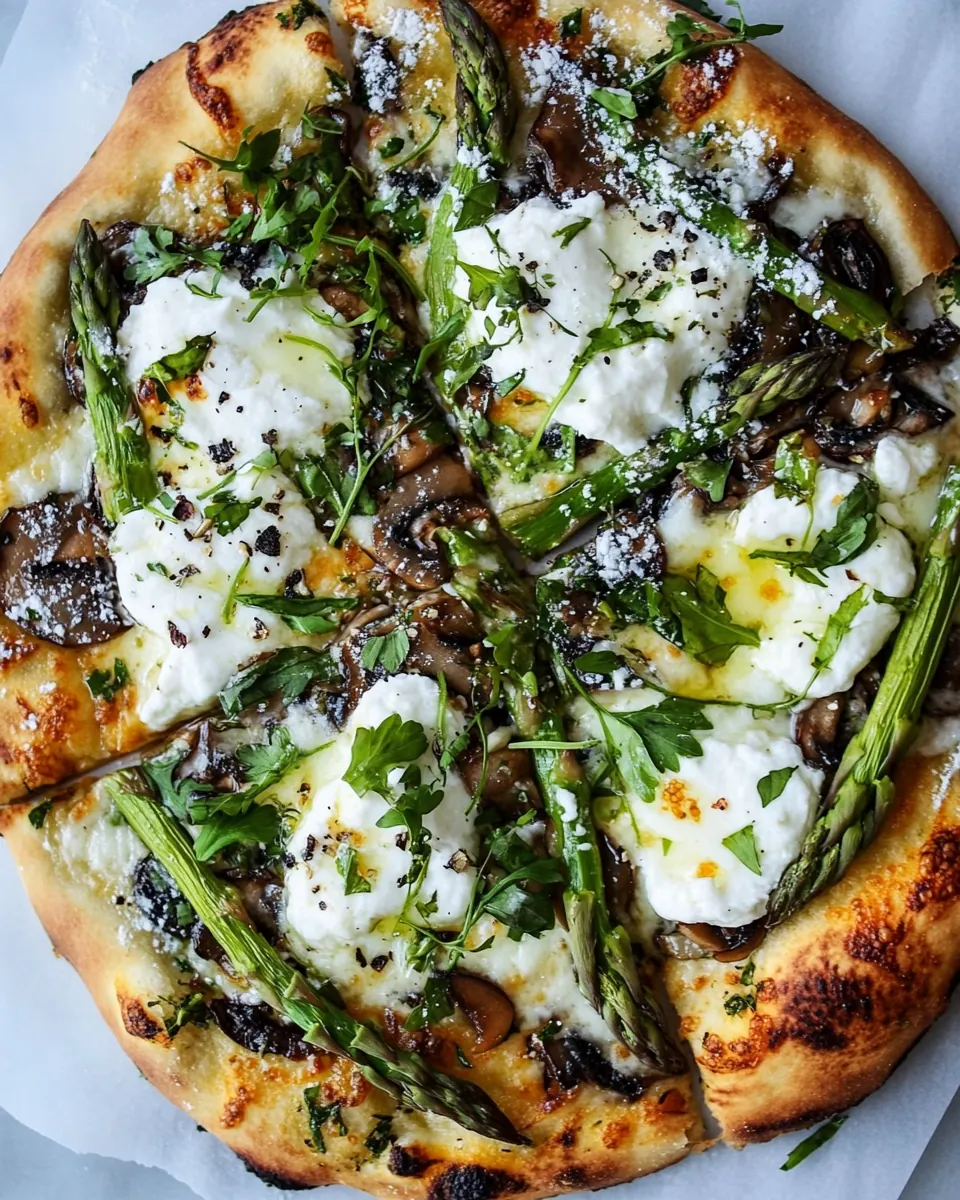
These ingredients are chosen to work in harmony: a tender dough base, savory vegetables, melted cheese for stretch, and creamy Burrata cheese for a luxurious finish. The olive oil brings flavor and helps with sautéing, while the micro greens lift the whole pie at the end. Each element plays a clear role in texture and balance.
- 1 pound pizza dough, room temperature: Bring elasticity and structure to the base by providing a chewy, airy crust that crisps when baked; allow to rest at room temperature so it stretches easily without tearing and browns evenly under high heat.
- 3 tablespoons olive oil, divided: Coat and flavor vegetables and dough by creating a fragrant, golden surface; reserve part for brushing the crust for color and use the rest to sauté mushrooms and asparagus until tender and glossy.
- 1 cup thinly sliced portabella mushrooms: Add meaty texture and an earthy umami note when thinly sliced and sautéed; release moisture during cooking that should be properly reduced so topping avoids becoming soggy and instead develops a caramelized edge.
- 10 skinny asparagus spears, woody ends trimmed off and cut into 2 inch long pieces: Contribute crisp-tender bite and a fresh vegetal sweetness when trimmed and cut into uniform pieces; blanch or quickly sauté to soften slightly while preserving bright color and a light snap on the finished pizza.
- 1/3 cup chopped sun-dried tomatoes: Provide concentrated sweet-tart tomato flavor and chewy texture when chopped; distribute evenly to add bursts of acidity that balance the richness of cheeses and oil on each slice.
- 2 cloves garlic, minced: Infuse aromatic pungency and depth by mincing finely and cooking briefly with oil; mellow when sautéed and blend with other toppings to enhance overall savory complexity.
- 1 1/2 cups shredded mozzarella cheese: Deliver gooey meltiness and mild milky flavor when shredded and sprinkled over the pie; create a binding layer that browns lightly and stretches pleasingly with each slice.
- 1 ball Burrata cheese: Introduce a creamy, luxurious center that oozes richness when torn or dolloped onto the hot pizza; contrast the melted mozzarella with a cool, silky interior for a decadent mouthfeel.
- Red pepper flakes: Provide a warm, spicy kick and visual flecks of color when lightly sprinkled; use sparingly to elevate flavor without overpowering the delicate asparagus and burrata.
- 2 cups micro greens: Finish the pizza with bright, peppery freshness and a tender crunch when scattered on top after baking; add visual appeal and a light leafy counterpoint to rich cheeses.
How to Make Asparagus Mushroom Burrata Pizza
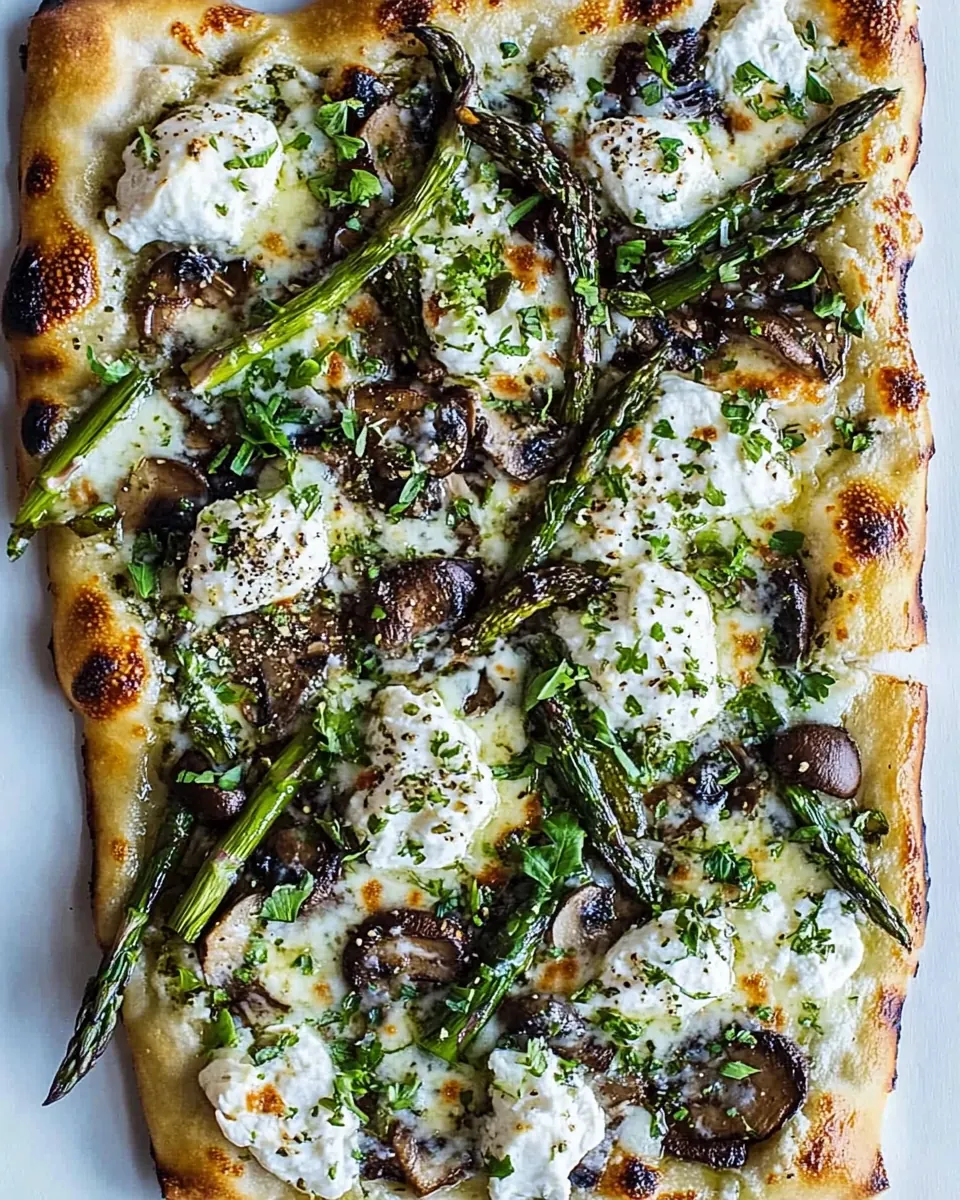
I like to keep the mood relaxed when I make this pizza, because it rewards a casual, confident approach. The sauté step concentrates flavors, and the staggered cheese application ensures gooeyness and creamy pockets. Watch for visual cues so you bake the crust to the perfect shade of brown.
- Preheat the oven to 425 degrees F and prepare a baking sheet with a non-stick liner.: The kitchen fills with a warm, anticipatory scent as the oven climbs to 425 degrees F , and the liner prevents sticking while making cleanup a breeze. You want the oven fully heated so the crust springs and crisps quickly, creating a contrast between a tender interior and a browned exterior. A common mistake is rushing this step, which can yield a pale, doughy bottom, so always allow the oven the full time to reach temperature.
- Spread out dough onto the liner and set it aside.: As you press and stretch the pizza dough , you will feel it give and relax, which is a good sign that the gluten has loosened. The sound is soft, doughy, and pliant under your fingertips, and visually you want an even thickness so it cooks uniformly. If the dough keeps snapping back, let it rest for a few minutes to relax; forcing it can create tears.
- Brush the dough with 1 tablespoon of olive oil and set aside.: Brushing with olive oil creates a barrier that helps prevent the toppings from soaking into the dough, and it adds a subtle fruity aroma when baked. The oil sheens across the surface, making the crust look polished. Avoid using too much oil here, because excess can lead to a floppy center rather than a crisp rim.
- In a large skillet add 2 tablespoons olive oil and set over medium heat.: When the olive oil shimmers in the pan, it is ready, and you will notice a faint scent that signals the pan is primed for vegetables. Medium heat is important to develop flavor without burning, producing a gentle sizzle when ingredients hit the surface. Too high heat can char the vegetables before they soften, so control the flame.
- When the oil is hot add in the mushrooms and sauté for a few minutes until they start to soften.: The mushrooms will release moisture and make a soft sizzling sound, and you will see them shrink slightly and darken around the edges. This step intensifies their umami, concentrating flavor for the pizza. A typical pitfall is overcrowding the pan which steams rather than sautés, so give them space to brown.
- Add in the asparagus spears, sun-dried tomatoes, and garlic.: As you add the asparagus , sun dried tomatoes , and garlic , the pan fills with a layered aroma, green brightness mingling with sweet tomato and pungent garlic. The garlic should be added with care so it softens without burning, which would introduce bitterness. Stir gently to combine the textures and flavors, ensuring the pieces are distributed evenly.
- Sauté for another 5 minutes just until everything is soft and the garlic is fragrant. Remove from the heat.: You will notice the color of the asparagus deepen slightly and the garlic scent become warm and aromatic, signaling readiness. This short sauté allows vegetables to become tender while preserving their character, which matters for texture once on the pizza. Overcooking here makes them mushy, so aim for tender crisp rather than falling apart.
- On your stretched-out dough use the remaining tablespoon of olive oil and brush across the dough.: This second brushing creates a glossy, flavored surface that helps the mozzarella cheese adhere and promotes a golden finish. The oil also keeps the crust edge from drying out while baking. Be mindful of distributing it evenly, as pooling oil can cause sogginess under heavy toppings.
- Top with 1 cup mozzarella cheese and all the sautéed vegetables.: As you scatter shredded mozzarella cheese it begins to settle into the dough's nooks, promising melt and stretch. Pile on the sautéed vegetables so each slice will have a balance of textures and flavors. A common error is to overload the pizza which prevents proper baking, so aim for even coverage rather than heaping mounds.
- Drain your burrata cheese ball and break it into lumps and scatter it across the pizza.: When you tear the Burrata cheese into pieces, the creamy interior becomes visible and you can imagine the rich pockets it will create. Tucking those lumps across the pie ensures each bite has that luxurious, silky finish. Make sure to drain any excess liquid so it does not create soggy areas on the crust.
- Top with the remaining 1/2 cup cheese and sprinkle with your desired amount of crushed red pepper flakes.: A final layer of shredded mozzarella cheese helps hold the Burrata cheese in place and browns nicely, while red pepper flakes add a gently warming note. The visual of golden cheese dotted with red is appealing, and the flakes allow you to control heat. Start with a light hand because spice intensifies as it rests.
- Bake for about 20 minutes or until the dough is fully cooked and the top is lightly brown.: The oven will sing with a warm, yeasty scent as the crust browns and the cheese bubbles. Look for a pale to golden brown color on the rim and bubbling cheese as your cue. Opening the oven too often drops temperature and can make the pizza take longer to finish, so trust visual cues rather than timing alone.
- Remove from the oven and sprinkle with the desired amount of microgreens.: Fresh micro greens add a final burst of color and freshness, their delicate texture contrasting with the hot, melty toppings. Sprinkle them immediately after the pizza is out of the oven to preserve their crispness. Avoid adding them before baking because they will wilt and lose their bright flavor.
Ways to Customize
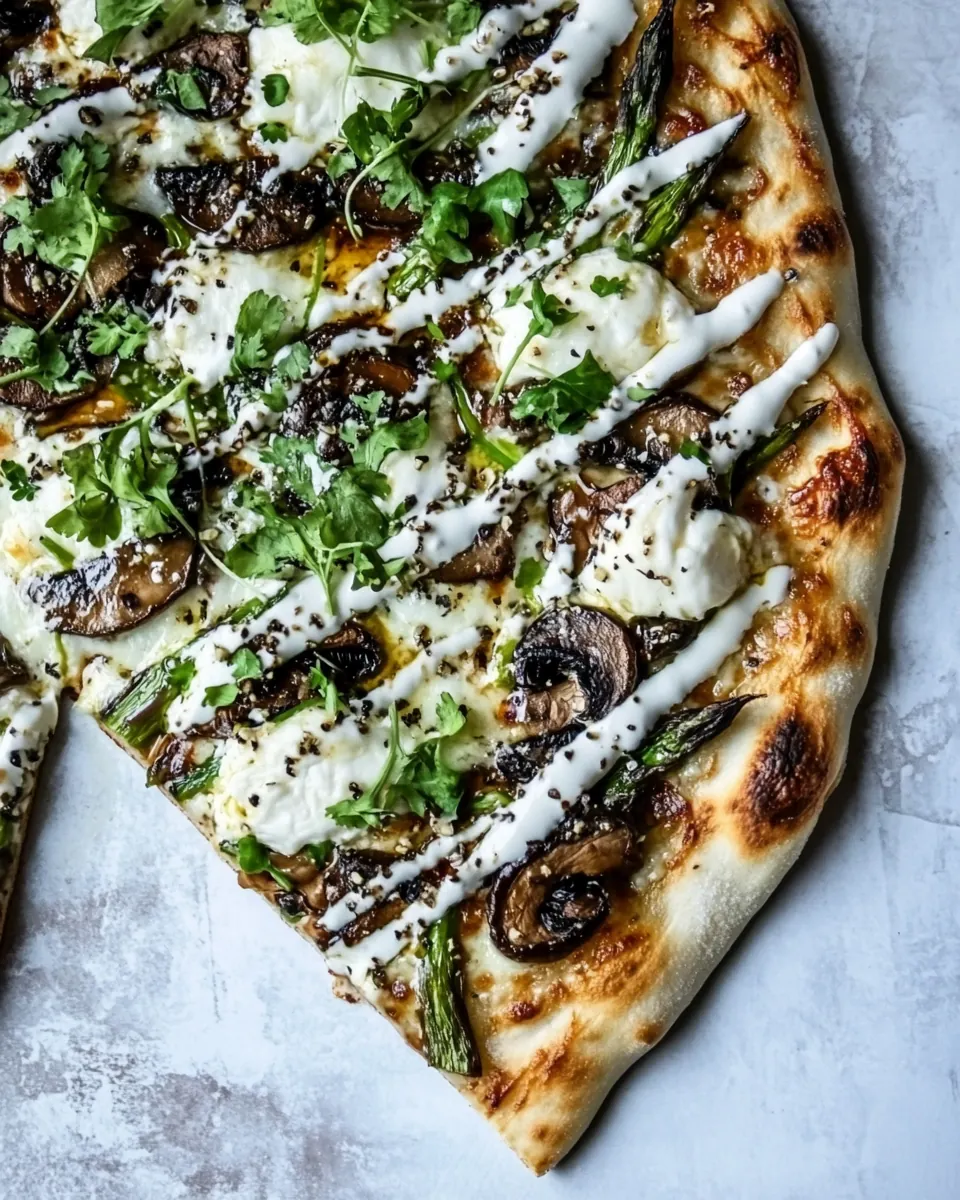
This pizza is wonderfully adaptable, and small adjustments let you tailor it to your taste. Below are thoughtful ways I have personalized it over time, each with a practical reason and a clear outcome. Use these to make the dish your own while keeping the balance intact.
- Swap the mushrooms for another variety: If you prefer an earthier flavor, try cremini or shiitake in place of portabella mushrooms, which will change the texture slightly but keep the savory depth.
- Use a different green: If asparagus is not available, blanched broccolini or thinly sliced zucchini can stand in for asparagus, offering a similar fresh element.
- Adjust the heat: Increase or reduce the amount of red pepper flakes to suit your tolerance, adding them before or after baking to control intensity.
- Make it extra creamy: Add a few dollops of ricotta along with the Burrata cheese for extra creaminess without overwhelming the vegetables.
- Finish with citrus: A light squeeze of lemon over the micro greens after baking brightens the flavors and lifts the richness of the cheeses.
What Complements This Asparagus Mushroom Burrata Pizza
This pizza pairs beautifully with light, vibrant accompaniments that highlight its spring character. I often keep the sides simple so the pizza remains the star. Think salads, crisp vegetables, and occasions ranging from casual lunches to special dinners. Proper storage keeps leftovers tasting fresh for the next day.
- Light green salad: A salad of mixed lettuce and a lemon vinaigrette complements the creamy Burrata cheese and refreshes the palate between bites.
- Simple soup: A clear vegetable soup served before the pizza can make the meal feel more composed for a dinner gathering.
- Occasions: This pie works well for a relaxed lunch, a spring dinner, or a shared weekend meal when you want something special without fuss.
- Storage tips: Cool completely, then refrigerate leftovers in an airtight container for up to two days. Reheat in a hot oven to revive crispness rather than microwaving which can make the crust soft.
- Seasonal pairings: Serve during spring when asparagus is at its best to maximize freshness and flavor.
FAQ
Conclusion
Asparagus Mushroom Burrata Pizza shines because it balances creamy cheese, bright vegetables, and a crisp crust in an effortless way. Give it a try the next time you want something that looks and tastes special without a long list of steps. You will love the way the Burrata cheese melts into warm pockets of richness against the sautéed mushroom and tender asparagus, and how a sprinkle of micro greens refreshes each bite. This recipe is perfect for a relaxed dinner that still feels celebratory, and I hope it becomes a go to in your rotation.
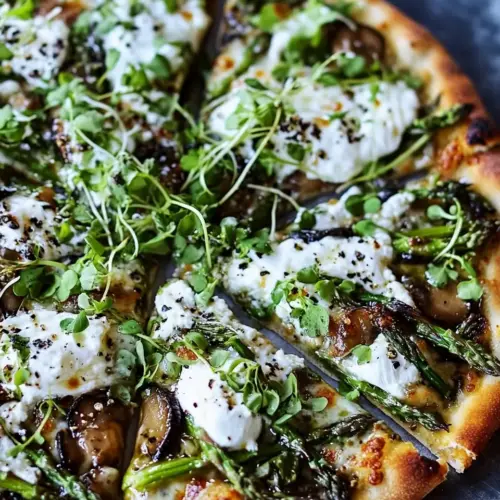
Asparagus Mushroom Burrata Pizza
Equipment
- Parchment Paper Sheets
- Extra Virgin Olive Oil
- Baking Sheet Pan
Ingredients
- 1 pound pizza dough, room temperature Bring elasticity and structure to the base by providing a chewy, airy crust that crisps when baked; allow to rest at room temperature so it stretches easily without tearing and browns evenly under high heat.
- 3 tablespoons olive oil, divided Coat and flavor vegetables and dough by creating a fragrant, golden surface; reserve part for brushing the crust for color and use the rest to sauté mushrooms and asparagus until tender and glossy.
- 1 cup thinly sliced portabella mushrooms Add meaty texture and an earthy umami note when thinly sliced and sautéed; release moisture during cooking that should be properly reduced so topping avoids becoming soggy and instead develops a caramelized edge.
- 10 skinny asparagus spears, woody ends trimmed off and cut into 2 inch long pieces Contribute crisp-tender bite and a fresh vegetal sweetness when trimmed and cut into uniform pieces; blanch or quickly sauté to soften slightly while preserving bright color and a light snap on the finished pizza.
- 1/3 cup chopped sun-dried tomatoes Provide concentrated sweet-tart tomato flavor and chewy texture when chopped; distribute evenly to add bursts of acidity that balance the richness of cheeses and oil on each slice.
- 2 cloves garlic, minced Infuse aromatic pungency and depth by mincing finely and cooking briefly with oil; mellow when sautéed and blend with other toppings to enhance overall savory complexity.
- 1 -1/2 cups shredded mozzarella cheese Deliver gooey meltiness and mild milky flavor when shredded and sprinkled over the pie; create a binding layer that browns lightly and stretches pleasingly with each slice.
- 1 ball Burrata cheese Introduce a creamy, luxurious center that oozes richness when torn or dolloped onto the hot pizza; contrast the melted mozzarella with a cool, silky interior for a decadent mouthfeel.
- Red pepper flakes Provide a warm, spicy kick and visual flecks of color when lightly sprinkled; use sparingly to elevate flavor without overpowering the delicate asparagus and burrata.
- 2 cups micro greens Finish the pizza with bright, peppery freshness and a tender crunch when scattered on top after baking; add visual appeal and a light leafy counterpoint to rich cheeses.
Instructions
- Preheat the oven to 425 degrees F and prepare a baking sheet with a non-stick liner.: The kitchen fills with a warm, anticipatory scent as the oven climbs to 425 degrees F , and the liner prevents sticking while making cleanup a breeze. You want the oven fully heated so the crust springs and crisps quickly, creating a contrast between a tender interior and a browned exterior. A common mistake is rushing this step, which can yield a pale, doughy bottom, so always allow the oven the full time to reach temperature.
- Spread out dough onto the liner and set it aside.: As you press and stretch the pizza dough , you will feel it give and relax, which is a good sign that the gluten has loosened. The sound is soft, doughy, and pliant under your fingertips, and visually you want an even thickness so it cooks uniformly. If the dough keeps snapping back, let it rest for a few minutes to relax; forcing it can create tears.
- Brush the dough with 1 tablespoon of olive oil and set aside.: Brushing with olive oil creates a barrier that helps prevent the toppings from soaking into the dough, and it adds a subtle fruity aroma when baked. The oil sheens across the surface, making the crust look polished. Avoid using too much oil here, because excess can lead to a floppy center rather than a crisp rim.
- In a large skillet add 2 tablespoons olive oil and set over medium heat.: When the olive oil shimmers in the pan, it is ready, and you will notice a faint scent that signals the pan is primed for vegetables. Medium heat is important to develop flavor without burning, producing a gentle sizzle when ingredients hit the surface. Too high heat can char the vegetables before they soften, so control the flame.
- When the oil is hot add in the mushrooms and sauté for a few minutes until they start to soften.: The mushrooms will release moisture and make a soft sizzling sound, and you will see them shrink slightly and darken around the edges. This step intensifies their umami, concentrating flavor for the pizza. A typical pitfall is overcrowding the pan which steams rather than sautés, so give them space to brown.
- Add in the asparagus spears, sun-dried tomatoes, and garlic.: As you add the asparagus , sun dried tomatoes , and garlic , the pan fills with a layered aroma, green brightness mingling with sweet tomato and pungent garlic. The garlic should be added with care so it softens without burning, which would introduce bitterness. Stir gently to combine the textures and flavors, ensuring the pieces are distributed evenly.
- Sauté for another 5 minutes just until everything is soft and the garlic is fragrant. Remove from the heat.: You will notice the color of the asparagus deepen slightly and the garlic scent become warm and aromatic, signaling readiness. This short sauté allows vegetables to become tender while preserving their character, which matters for texture once on the pizza. Overcooking here makes them mushy, so aim for tender crisp rather than falling apart.
- On your stretched-out dough use the remaining tablespoon of olive oil and brush across the dough.: This second brushing creates a glossy, flavored surface that helps the mozzarella cheese adhere and promotes a golden finish. The oil also keeps the crust edge from drying out while baking. Be mindful of distributing it evenly, as pooling oil can cause sogginess under heavy toppings.
- Top with 1 cup mozzarella cheese and all the sautéed vegetables.: As you scatter shredded mozzarella cheese it begins to settle into the dough's nooks, promising melt and stretch. Pile on the sautéed vegetables so each slice will have a balance of textures and flavors. A common error is to overload the pizza which prevents proper baking, so aim for even coverage rather than heaping mounds.
- Drain your burrata cheese ball and break it into lumps and scatter it across the pizza.: When you tear the Burrata cheese into pieces, the creamy interior becomes visible and you can imagine the rich pockets it will create. Tucking those lumps across the pie ensures each bite has that luxurious, silky finish. Make sure to drain any excess liquid so it does not create soggy areas on the crust.
- Top with the remaining 1/2 cup cheese and sprinkle with your desired amount of crushed red pepper flakes.: A final layer of shredded mozzarella cheese helps hold the Burrata cheese in place and browns nicely, while red pepper flakes add a gently warming note. The visual of golden cheese dotted with red is appealing, and the flakes allow you to control heat. Start with a light hand because spice intensifies as it rests.
- Bake for about 20 minutes or until the dough is fully cooked and the top is lightly brown.: The oven will sing with a warm, yeasty scent as the crust browns and the cheese bubbles. Look for a pale to golden brown color on the rim and bubbling cheese as your cue. Opening the oven too often drops temperature and can make the pizza take longer to finish, so trust visual cues rather than timing alone.
- Remove from the oven and sprinkle with the desired amount of microgreens.: Fresh micro greens add a final burst of color and freshness, their delicate texture contrasting with the hot, melty toppings. Sprinkle them immediately after the pizza is out of the oven to preserve their crispness. Avoid adding them before baking because they will wilt and lose their bright flavor.
Notes
- Swap the mushrooms for another variety: If you prefer an earthier flavor, try cremini or shiitake in place of portabella mushrooms, which will change the texture slightly but keep the savory depth.
- Use a different green: If asparagus is not available, blanched broccolini or thinly sliced zucchini can stand in for asparagus, offering a similar fresh element.
- Adjust the heat: Increase or reduce the amount of red pepper flakes to suit your tolerance, adding them before or after baking to control intensity.
- Make it extra creamy: Add a few dollops of ricotta along with the Burrata cheese for extra creaminess without overwhelming the vegetables.
- Finish with citrus: A light squeeze of lemon over the micro greens after baking brightens the flavors and lifts the richness of the cheeses.
