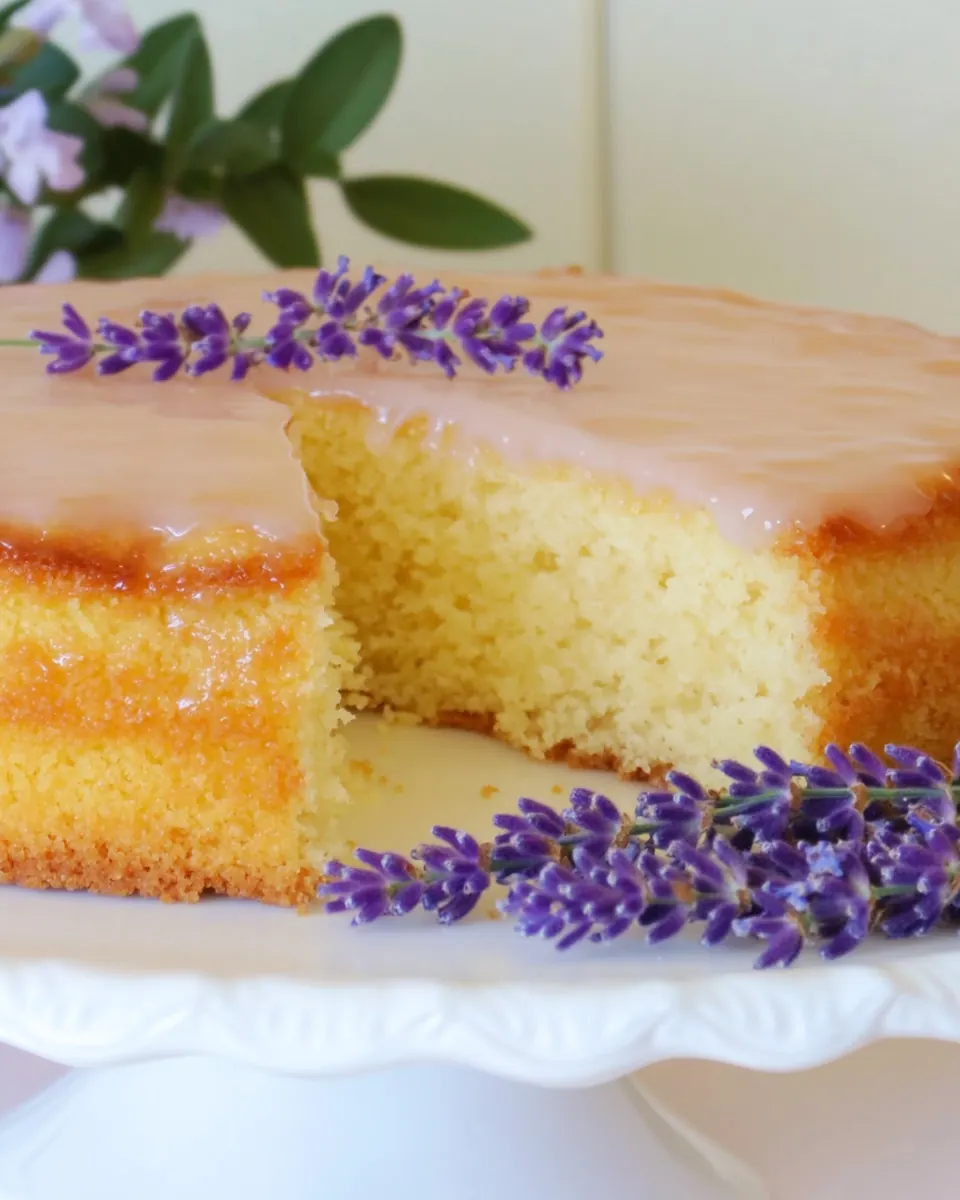
French Lavender Almond Cake
French Lavender Almond Cake has been one of my quietly cherished bakes for years, a cake I reach for when I want something floral, nutty, and intimate without a lot of fuss.
I first made French Lavender Almond Cake on a rainy spring afternoon when I had a half jar of dried lavender and a craving for something light yet soulful. I remember the kitchen filling with a gentle lemon and lavender perfume as the batter hit the oven, and how the almond crumb created a tender crumb that felt almost like a cross between a sponge and a cloud. My family gathered around with mugs of tea, and we tore into it while it was still warm, the glaze sinking into tiny pores and bringing everything together.
Since then, this cake has become my go to for small celebrations and unexpected guests, the kind of dessert that looks elegant without trying too hard. I love how the combination of almond flour and cake flour keeps the crumb both moist and delicate, while the whipped egg whites give lift without weight. The lavender lemon glaze is the finishing touch that makes people ask what the secret is, though the method is straightforward.
Recipe Snapshot
45 mins
15 mins
30 mins
Medium
350 kcal
French
Gluten-Free, Low FODMAP
Desserts
8×8 inch square pan, Mixer, Mixing bowls, Rubber spatula, Small saucepan, Mesh sieve
The Beauty of This French Lavender Almond Cake
Subtle floral charm that does not overpower
I adore how French Lavender Almond Cake brings forward the floral notes of dried lavender flowers without becoming perfumy. The lavender is steeped in lemon juice, which tames and brightens it, so each bite has a faint, sophisticated aroma that sits in the background, letting the almond and citrus shine.
Light yet luxuriously textured
The dual use of egg yolks and whipped egg whites creates a crumb that is both tender and airy. The yolks lend richness and a melt in the mouth feel, while the whipped whites provide gentle lift. I appreciate this balance because it reads elegant on a plate, but it is forgiving to make.
Simple pantry friendly ingredients
You likely already have the core players like unsalted butter, powdered sugar, and almond flour on hand, so this recipe is practical for impromptu entertaining. I love recipes that feel special without requiring a grocery run, and this one fits that frame perfectly.
Versatile serving options
This cake works for tea time, a light dessert after dinner, or a casual brunch centerpiece. The glaze soaks in and keeps slices moist for hours, making it a reliable choice when you want something pretty that travels well to a friend or potluck.
Technique that rewards gentle attention
The method emphasizes folding and restraint, which is satisfying because it teaches control, not fuss. When I take my time and fold carefully, the result is a uniformly tender cake. When I rush, the texture can fall flat, so the payoff is real when you slow down and listen for the cues.
Ingredients Overview for French Lavender Almond Cake
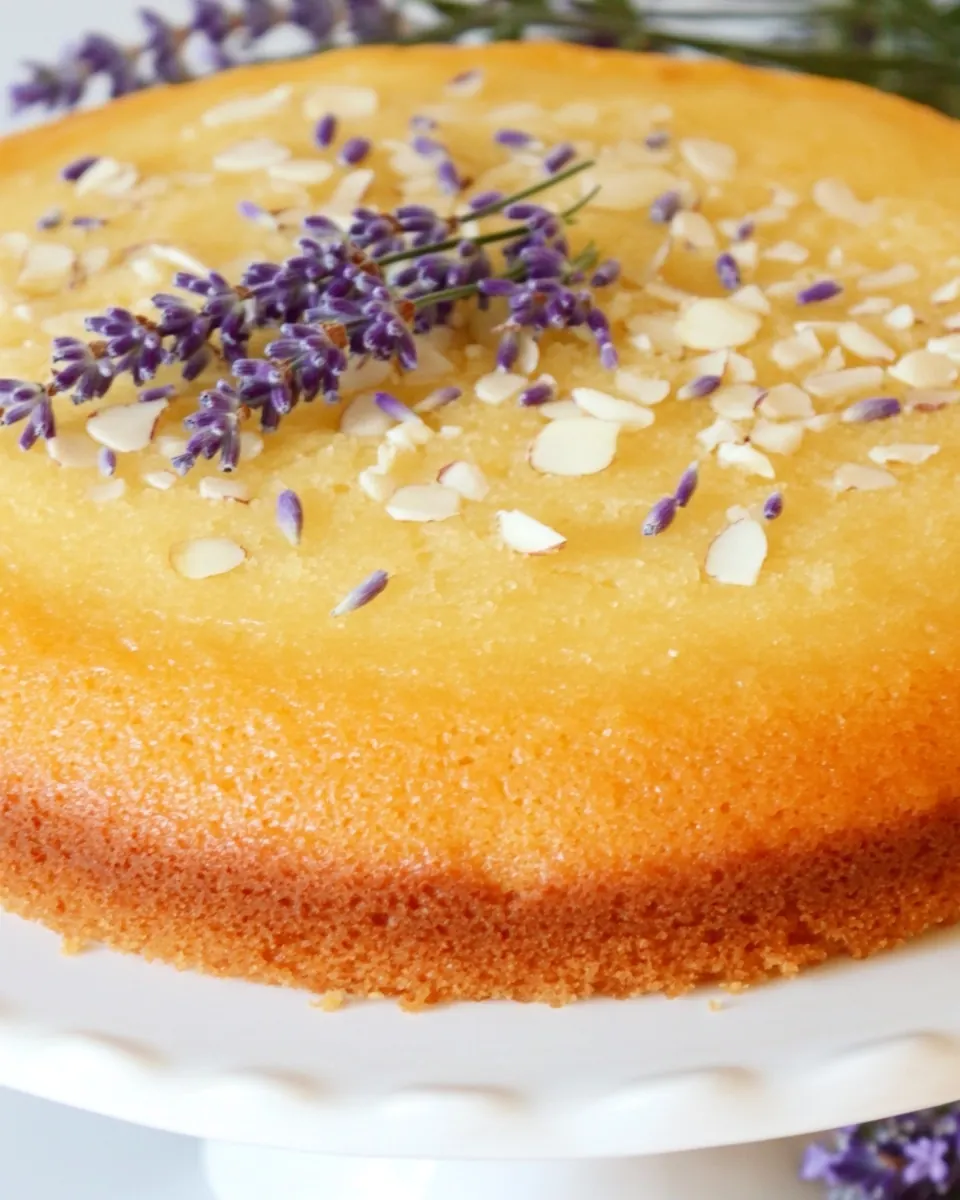
The ingredients for French Lavender Almond Cake are intentionally focused around a few key players that deliver both flavor and texture. Almond flour gives a nutty richness and moist crumb, while the combo of cake flour and whipped egg whites creates lift and delicacy. The glaze uses lemon juice and dried lavender flowers to infuse brightness and floral notes that elevate the whole cake.
- 1/2 cup unsalted butter, at room temperature: Soften and cream to provide richness and a tender crumb while helping to incorporate air for a lighter cake texture; room temperature ensures even mixing with sugars and emulsification with egg yolks.
- 1/2 to 3/4 cup white granulated sugar, depending on desired sweetness: Adjust sweetness level to taste while contributing structure and browning; granulated sugar helps create a fine crumb and tenderizes by interacting with fat and proteins.
- 3/4 cup almond flour: Provide nutty flavor and moistness while contributing to the cake's crumb and density; almond flour adds richness and helps bind without gluten development.
- 3 egg yolks: Enrich the batter, add fat for silkiness, and help emulsify ingredients for a stable, cohesive batter; yolks also contribute to flavor and color.
- 3 egg whites: Whip to incorporate air and provide lift when folded into the batter; egg whites also add structure and lightness when properly beaten.
- 1/2 teaspoon cream of tartar: Stabilize beaten egg whites to increase volume and prevent collapse, ensuring a firmer meringue-like texture when whipped.
- 2 teaspoons vanilla extract: Impart aromatic sweetness and depth, balancing floral and citrus notes while enhancing overall flavor complexity in the cake.
- 1/2 teaspoon almond extract: Add concentrated almond aroma to reinforce the nutty profile and complement the almond flour without adding moisture.
- 2 teaspoons lemon zest: Provide bright citrus fragrance and acidity to balance the cake's sweetness while adding freshness to the overall flavor profile.
- 1/2 cup cake flour, sifted: Lighten the texture by adding a small amount of gluten and structure; sifting prevents lumps and ensures even distribution in the batter.
- 1 teaspoon baking powder: Leaven the cake gently by releasing gases during baking, aiding rise and contributing to a tender crumb when combined with the batter's structure.
- For the Lavender Lemon Glaze: Designate the following ingredients for the glaze component, signaling a shift from cake batter to finishing touch and flavor enhancement.
- 2 1/2 tablespoons freshly squeezed lemon juice: Add bright acidity and liquid to the glaze, balancing powdered sugar sweetness and helping to dissolve sugar for a smooth, pourable consistency.
- 2 teaspoons dried lavender flowers: Infuse a distinct floral, slightly herbaceous note into the glaze; dried lavender adds aromatic complexity and pairs with lemon and almond flavors.
- 1 cup powdered sugar: Sweeten and thicken the glaze while providing a smooth, glossy finish; powdered sugar dissolves readily to create a silky lemon–lavender coating.
How to Cook French Lavender Almond Cake
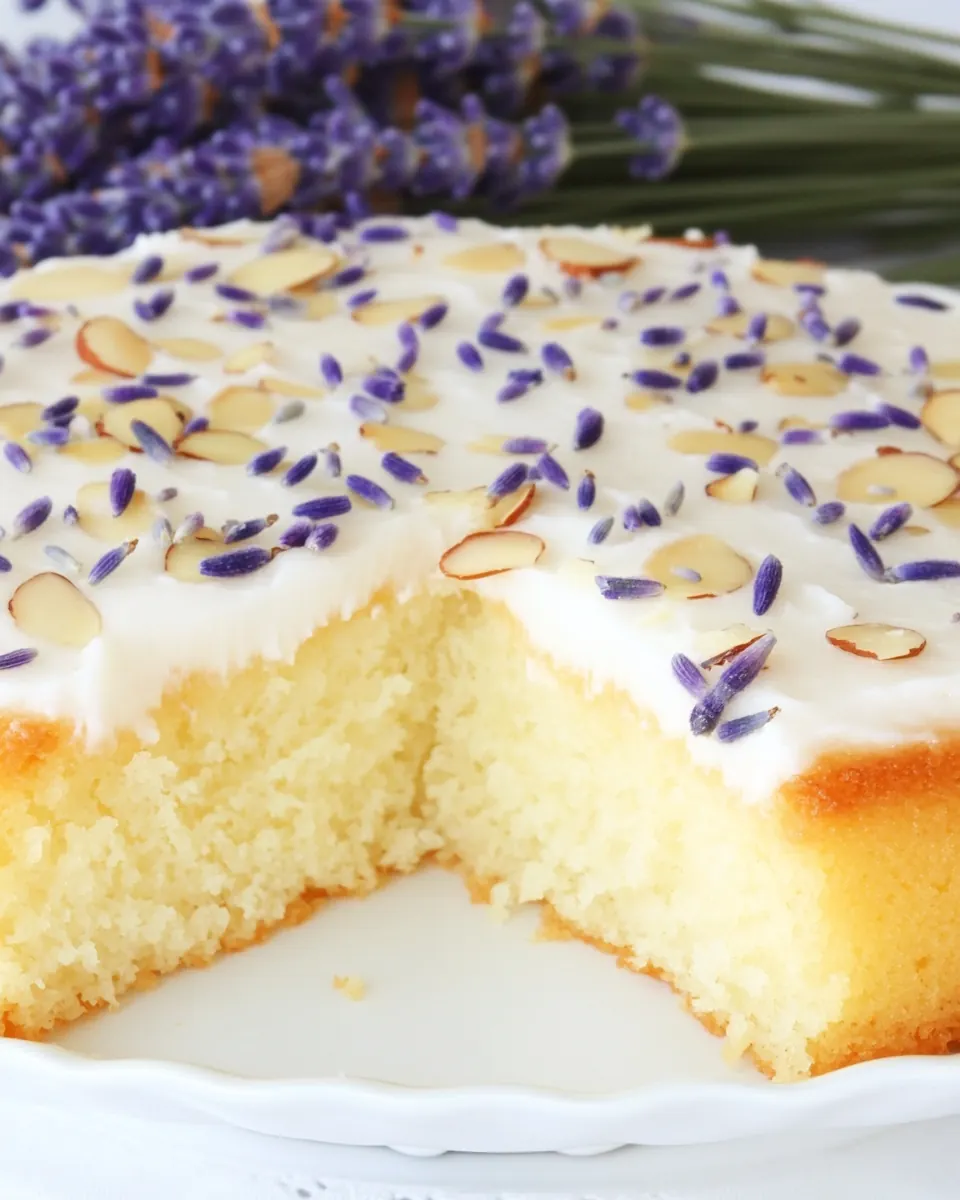
These directions guide you from warming the oven to glazing the finished cake with small, careful actions. Follow the sensory cues and resist rushing the folding steps to preserve the airy texture and elegant crumb.
- Preheat the oven to 350 degrees F. Grease a 8×8 inch square pan.: The smell of a warm oven is the first sign the bake will come together, so allow full preheating so temperature is consistent. When you grease an 8×8 inch square pan , use a thin, even coating or line it with parchment to ensure the cake releases cleanly. The metal will feel warm to the touch when ready, and the oven light should show an even glow. If the oven is not fully up to temperature, the cake may bake unevenly with a dense center. Avoid opening the door repeatedly during the first half of baking, as that drops oven heat and can cause collapse.
- Combine the cake flour and baking powder in a small bowl. Set aside. In a larger bowl, cream the butter and 1/2 cup of sugar until light and fluffy, about 4-5 minutes. Add the egg yolks one at a time, beating until the mixture is pale and fluffy, another 3-4 minutes. Add the vanilla, almond extract, and lemon zest and beat just until combined. Fold in the almond flour. Beat the egg whites in a clean, dry bowl on medium high speed until foamy, then add the cream of tartar. Continue to beat until stiff peaks form. Fold in 1/3 of the egg whites, then 1/3 of the flour mixture. Repeat with the remaining egg whites and flour. Be very careful not to over-stir. Spoon the batter into the pan, smoothing it with the back of the spoon to even it out. Bake for about 30 minutes, or until a toothpick inserted into the middle of the cake comes out clean. Be careful not to over-bake. Remove the cake from the oven and let sit for 10 minutes. Carefully invert the cake.: At this stage you should notice the fine, powdery texture of the cake flour and the faint scent of leavening powder. Whisking them together aerates the mixture, which helps distribute the baking powder evenly so the rise is uniform. Sifting or whisking also removes lumps that would create tunnels in the cake. A common mistake is skipping this step, which can lead to an uneven crumb, so take the few extra moments to blend them thoroughly.
- While the cake is cooling, make the glaze: Combine the lemon juice and lavender flowers in a small saucepan or microwaveable dish, bring to a boil, remove and let steep for at least 5 minutes. Use a mesh sieve to strain the lavender flowers. Stir the powdered sugar and lavender liquid together until the sugar is dissolved.: When creaming unsalted butter with white granulated sugar , you'll see the color shift to pale and the texture become airy, which traps tiny pockets of air that contribute to rise. Use a mixer on medium speed or beat by hand with persistence; the sound turns from heavy thudding to a smoother, more rhythmic beat. If the butter is too cold it will not cream properly, producing a dense batter, while butter that's too soft can result in a greasy batter. Aim for a texture that holds soft peaks when scooped.
- Poke some small holes around the top of the cake with a toothpick to allow the glaze to fully absorb. Pour the glaze over the cake and let the cake sit for at least 20 minutes before serving.: As you incorporate each egg yolk , the batter will become silkier and slightly more fluid, and the color will deepen to a warm yellow. Beating between additions helps emulsify the yolks into the butter, preventing separation and ensuring the cake remains tender. Listen for the mixer smoothing out, and stop once the batter looks glossy. Overworking at this stage can cause the batter to become thin and collapse later, so aim for just combined and aerated.
- Add the vanilla, almond extract, and lemon zest and beat just until combined.: At this point the aroma will become more complex, with sweet vanilla and bright citrus brightness lifting the richer butter notes. The almond extract is potent, so add it sparingly and mix briefly, as it will very quickly assert itself. Mixing just until combined prevents dissipating the trapped air. A mistake to avoid is adding too much almond extract which turns the cake overly perfumed; small amounts amplify the almond flour rather than overpowering it.
- Fold in the almond flour.: The almond flour brings a moist, slightly grainy texture that will dissolve into the batter with gentle folding. You should feel and see the batter smooth out, and notice a subtle nutty scent. Folding preserves the aeration created earlier; aggressive stirring at this point will deflate the batter, producing a heavy result. If you overfold, the cake may become dense, so stop once streaks disappear and the mixture looks homogeneous.
- Beat the egg whites in a clean, dry bowl on medium high speed until foamy, then add the cream of tartar.: Whipping egg whites begins as a pale foam that then becomes thicker and shines as proteins stretch and trap air. Adding cream of tartar early stabilizes the foam so it holds when folded in. You will hear a change in the mixer sound from splashing to a higher pitch as stiffness increases. A common error is any trace of yolk or moisture in the bowl, which prevents whites from whipping; ensure tools are spotless and dry.
- Continue to beat until stiff peaks form.: Stiff peaks will stand tall without collapsing when the whisk lifts; visually they look glossy and hold shape. The surface will appear satiny under kitchen light, and you may feel slight resistance when stirring. Overbeating turns whites grainy and dry, making incorporation difficult and resulting in a dry crumb, so stop as soon as you see firm, stable peaks.
- Fold in 1/3 of the egg whites, then 1/3 of the flour mixture. Repeat with the remaining egg whites and flour.: The sequence of alternating small additions softens the batter and helps maintain air. You should see the batter lighten and gain volume as you fold, with gentle streaks that disappear after a few careful turns. Use a rubber spatula and scoop from the bottom, folding over the top in a figure eight motion to preserve trapped air. Rushing or stirring will deflate the mixture and yield a dense cake; take patient, deliberate folds.
- Spoon the batter into the pan, smoothing it with the back of the spoon to even it out.: The batter should spread with a slight resistance and hold an even surface. Smoothness is a visual cue that the cake will bake uniformly. Use the back of a spoon to coax it into corners and create a level top. If there are big air pockets or uneven thickness, tap the pan lightly on the counter once or twice to release large bubbles, but avoid jarring movements that can disturb the delicate structure.
- Bake for about 30 minutes, or until a toothpick inserted into the middle of the cake comes out clean.: During baking you will notice the edges pulling slightly from the pan and the top turning a light golden color. The smell of cooked almonds and lemon will fill the kitchen. Check doneness by inserting a toothpick; if it comes out clean or with a few moist crumbs the cake is done. Overbaking will dry the crumb and mute the delicate flavors, so start checking a few minutes before the stated time and remove when the center is set but not hard.
- Remove the cake from the oven and let sit for 10 minutes.: Resting allows the crumb to stabilize and makes flipping easier. You will feel the residual warmth and the cake should shrink slightly away from the pan edges. If you try to unmold while very hot the cake may break; patience at this stage prevents tearing. Ten minutes provides enough time for juices to distribute without losing heat needed for release.
- Carefully invert the cake.: Inversion reveals the cake's top and helps it cool evenly. Use gentle, steady motion so the cake slips free, peeling away from the pan lining if used. The surface should look even and lightly golden. If the cake sticks, slide a thin knife around the edges first to help release it; forcing it loose can crack the surface.
- While the cake is cooling, make the glaze: Combine the lemon juice and lavender flowers in a small saucepan or microwaveable dish, bring to a boil, remove and let steep for at least 5 minutes. : Heating lemon juice with dried lavender flowers releases the floral oils, and the steam will carry a gentle herbaceous scent. After boiling, let the mixture cool and steep so the lavender infuses without turning bitter. Strain with a mesh sieve to remove solids. Oversteeping can create an astringent taste, so watch the steeping time closely to preserve a bright floral note.
- Use a mesh sieve to strain the lavender flowers. Stir the powdered sugar and lavender liquid together until the sugar is dissolved.: Straining leaves a clear, fragrant liquid that mixes into powdered sugar for a smooth glaze. Stir until glossy and lump free, ensuring the texture is pourable but not runny. If the glaze is too thin add a touch more powdered sugar, if too thick add a little lemon liquid. Avoid adding too much liquid at once as it can become overly thin and will not set into the cake.
- Poke some small holes around the top of the cake with a toothpick to allow the glaze to fully absorb.: Tiny punctures let the glaze sink into the crumb, creating pockets of citrus and lavender. You should feel the moist interior when poking gently; the holes do not need to be large. Overpoking can cause the cake to fall apart when glazed, so space them evenly and keep them shallow.
- Pour the glaze over the cake and let the cake sit for at least 20 minutes before serving.: As the glaze seeps in, you will hear faint liquid settling and see the surface darken slightly where it absorbs. Waiting at least 20 minutes lets flavors meld and the glaze set to a tacky finish, making slicing cleaner. If you slice too soon the glaze will smear and the crumb may compress, so give it the recommended rest for the best presentation.
Change It Up
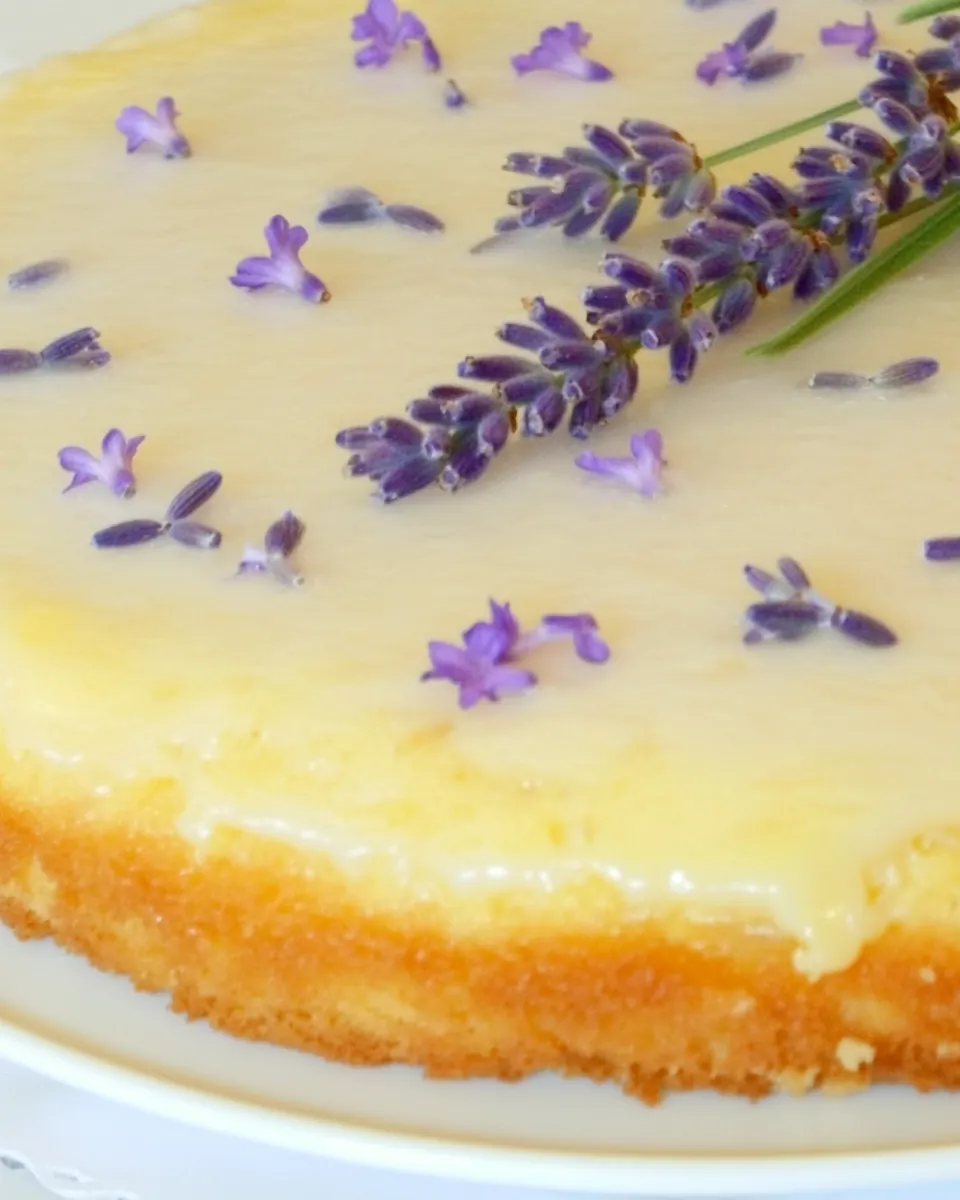
If you want to tweak or adapt French Lavender Almond Cake, these ideas help you reimagine it without losing what makes it special. Small adjustments can change texture, aroma, and presentation while keeping the core method the same.
- Slightly sweeter finish Increase the white granulated sugar in the batter to 3/4 cup if you prefer a sweeter profile that balances the floral notes.
- More pronounced almond flavor Add a scant extra 1/4 teaspoon of almond extract for a deeper nutty aroma, being careful because it is potent and can quickly dominate.
- Stronger lavender infusion Steep the dried lavender flowers a bit longer for a brighter floral note in the glaze, but stop before it turns bitter, usually around 5 to 8 minutes total infusion time.
- Glaze thickness control Adjust the powdered sugar to lemon liquid ratio to achieve a spreadable or pourable glaze, adding small amounts gradually to avoid over thinning.
- Pan alternatives Use a round 9 inch cake pan if you prefer slices with a different aesthetic, and adjust baking time by 3 to 5 minutes, watching for the toothpick test.
- Transport friendly Let the glazed cake set fully before moving, and place it in a shallow box to prevent the glaze from being disturbed during travel.
What Complements This French Lavender Almond Cake
French Lavender Almond Cake pairs beautifully with beverages and light accompaniments that mirror its floral and citrus notes. Think gentle contrasts, such as a bright citrus salad or a simple cup of tea that complements but does not overwhelm. The list below covers contexts, pairings, and storage so you can serve this cake confidently for many occasions.
- Tea time pairing Serve slices with a light herbal or green tea to mirror the floral notes, ideal for an afternoon gathering where the cake is the centerpiece.
- Brunch addition Include the cake as a sweet course at a spring brunch, alongside fruit salads or a lemony yogurt, for an elegant but relaxed menu.
- Small celebration Present the cake for intimate occasions like birthdays or anniversaries, where its delicate flavors make it feel special without needing elaborate decoration.
- Storage Keep the cake loosely covered at room temperature for up to two days, or refrigerate for longer keeping; allow it to return closer to room temperature before serving for best texture.
- Occasions This cake suits spring gatherings, bridal showers, or Ramadan if you’re seeking a gentle dessert after iftar, because it feels light and thoughtful.
- Serving suggestion Slice with a serrated knife and wipe it between cuts for clean presentation, and serve each piece with a small wedge of lemon to echo the glaze.
FAQ
Conclusion
French Lavender Almond Cake stands out for its delicate balance of floral lavender, bright lemon, and nutty almond, all held together in a tender, airy crumb. This cake is approachable yet refined, perfect for small celebrations or an elevated everyday treat. I encourage you to try it when you want a dessert that feels special without a lot of fuss; take your time with the folding and the glaze, and you will be rewarded with a cake that looks and tastes like a gentle celebration.
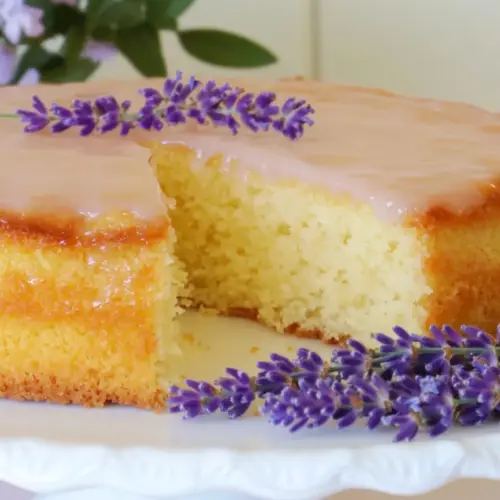
French Lavender Almond Cake
Equipment
- 8×8 inch square pan
- Mixer
- Mixing Bowls
- Rubber spatula
- Small Saucepan
- Mesh sieve
Ingredients
- 1/2 cup unsalted butter, at room temperature Soften and cream to provide richness and a tender crumb while helping to incorporate air for a lighter cake texture; room temperature ensures even mixing with sugars and emulsification with egg yolks.
- 1/2 to 3/4 cup white granulated sugar, depending on desired sweetness Adjust sweetness level to taste while contributing structure and browning; granulated sugar helps create a fine crumb and tenderizes by interacting with fat and proteins.
- 3/4 cup almond flour Provide nutty flavor and moistness while contributing to the cake's crumb and density; almond flour adds richness and helps bind without gluten development.
- 3 egg yolks Enrich the batter, add fat for silkiness, and help emulsify ingredients for a stable, cohesive batter; yolks also contribute to flavor and color.
- 3 egg whites Whip to incorporate air and provide lift when folded into the batter; egg whites also add structure and lightness when properly beaten.
- 1/2 teaspoon cream of tartar Stabilize beaten egg whites to increase volume and prevent collapse, ensuring a firmer meringue-like texture when whipped.
- 2 teaspoons vanilla extract Impart aromatic sweetness and depth, balancing floral and citrus notes while enhancing overall flavor complexity in the cake.
- 1/2 teaspoon almond extract Add concentrated almond aroma to reinforce the nutty profile and complement the almond flour without adding moisture.
- 2 teaspoons lemon zest Provide bright citrus fragrance and acidity to balance the cake's sweetness while adding freshness to the overall flavor profile.
- 1/2 cup cake flour, sifted Lighten the texture by adding a small amount of gluten and structure; sifting prevents lumps and ensures even distribution in the batter.
- 1 teaspoon baking powder Leaven the cake gently by releasing gases during baking, aiding rise and contributing to a tender crumb when combined with the batter's structure.
- For the Lavender Lemon Glaze: Designate the following ingredients for the glaze component, signaling a shift from cake batter to finishing touch and flavor enhancement.
- 2 1/2 tablespoons freshly squeezed lemon juice Add bright acidity and liquid to the glaze, balancing powdered sugar sweetness and helping to dissolve sugar for a smooth, pourable consistency.
- 2 teaspoons dried lavender flowers Infuse a distinct floral, slightly herbaceous note into the glaze; dried lavender adds aromatic complexity and pairs with lemon and almond flavors.
- 1 cup powdered sugar Sweeten and thicken the glaze while providing a smooth, glossy finish; powdered sugar dissolves readily to create a silky lemon-lavender coating.
Instructions
- Preheat the oven to 350 degrees F. Grease a 8×8 inch square pan.: The smell of a warm oven is the first sign the bake will come together, so allow full preheating so temperature is consistent. When you grease an 8×8 inch square pan , use a thin, even coating or line it with parchment to ensure the cake releases cleanly. The metal will feel warm to the touch when ready, and the oven light should show an even glow. If the oven is not fully up to temperature, the cake may bake unevenly with a dense center. Avoid opening the door repeatedly during the first half of baking, as that drops oven heat and can cause collapse.
- Combine the cake flour and baking powder in a small bowl. Set aside. In a larger bowl, cream the butter and 1/2 cup of sugar until light and fluffy, about 4-5 minutes. Add the egg yolks one at a time, beating until the mixture is pale and fluffy, another 3-4 minutes. Add the vanilla, almond extract, and lemon zest and beat just until combined. Fold in the almond flour. Beat the egg whites in a clean, dry bowl on medium high speed until foamy, then add the cream of tartar. Continue to beat until stiff peaks form. Fold in 1/3 of the egg whites, then 1/3 of the flour mixture. Repeat with the remaining egg whites and flour. Be very careful not to over-stir. Spoon the batter into the pan, smoothing it with the back of the spoon to even it out. Bake for about 30 minutes, or until a toothpick inserted into the middle of the cake comes out clean. Be careful not to over-bake. Remove the cake from the oven and let sit for 10 minutes. Carefully invert the cake.: At this stage you should notice the fine, powdery texture of the cake flour and the faint scent of leavening powder. Whisking them together aerates the mixture, which helps distribute the baking powder evenly so the rise is uniform. Sifting or whisking also removes lumps that would create tunnels in the cake. A common mistake is skipping this step, which can lead to an uneven crumb, so take the few extra moments to blend them thoroughly.
- While the cake is cooling, make the glaze: Combine the lemon juice and lavender flowers in a small saucepan or microwaveable dish, bring to a boil, remove and let steep for at least 5 minutes. Use a mesh sieve to strain the lavender flowers. Stir the powdered sugar and lavender liquid together until the sugar is dissolved.: When creaming unsalted butter with white granulated sugar , you'll see the color shift to pale and the texture become airy, which traps tiny pockets of air that contribute to rise. Use a mixer on medium speed or beat by hand with persistence; the sound turns from heavy thudding to a smoother, more rhythmic beat. If the butter is too cold it will not cream properly, producing a dense batter, while butter that's too soft can result in a greasy batter. Aim for a texture that holds soft peaks when scooped.
- Poke some small holes around the top of the cake with a toothpick to allow the glaze to fully absorb. Pour the glaze over the cake and let the cake sit for at least 20 minutes before serving.: As you incorporate each egg yolk , the batter will become silkier and slightly more fluid, and the color will deepen to a warm yellow. Beating between additions helps emulsify the yolks into the butter, preventing separation and ensuring the cake remains tender. Listen for the mixer smoothing out, and stop once the batter looks glossy. Overworking at this stage can cause the batter to become thin and collapse later, so aim for just combined and aerated.
- Add the vanilla, almond extract, and lemon zest and beat just until combined.: At this point the aroma will become more complex, with sweet vanilla and bright citrus brightness lifting the richer butter notes. The almond extract is potent, so add it sparingly and mix briefly, as it will very quickly assert itself. Mixing just until combined prevents dissipating the trapped air. A mistake to avoid is adding too much almond extract which turns the cake overly perfumed; small amounts amplify the almond flour rather than overpowering it.
- Fold in the almond flour.: The almond flour brings a moist, slightly grainy texture that will dissolve into the batter with gentle folding. You should feel and see the batter smooth out, and notice a subtle nutty scent. Folding preserves the aeration created earlier; aggressive stirring at this point will deflate the batter, producing a heavy result. If you overfold, the cake may become dense, so stop once streaks disappear and the mixture looks homogeneous.
- Beat the egg whites in a clean, dry bowl on medium high speed until foamy, then add the cream of tartar.: Whipping egg whites begins as a pale foam that then becomes thicker and shines as proteins stretch and trap air. Adding cream of tartar early stabilizes the foam so it holds when folded in. You will hear a change in the mixer sound from splashing to a higher pitch as stiffness increases. A common error is any trace of yolk or moisture in the bowl, which prevents whites from whipping; ensure tools are spotless and dry.
- Continue to beat until stiff peaks form.: Stiff peaks will stand tall without collapsing when the whisk lifts; visually they look glossy and hold shape. The surface will appear satiny under kitchen light, and you may feel slight resistance when stirring. Overbeating turns whites grainy and dry, making incorporation difficult and resulting in a dry crumb, so stop as soon as you see firm, stable peaks.
- Fold in 1/3 of the egg whites, then 1/3 of the flour mixture. Repeat with the remaining egg whites and flour.: The sequence of alternating small additions softens the batter and helps maintain air. You should see the batter lighten and gain volume as you fold, with gentle streaks that disappear after a few careful turns. Use a rubber spatula and scoop from the bottom, folding over the top in a figure eight motion to preserve trapped air. Rushing or stirring will deflate the mixture and yield a dense cake; take patient, deliberate folds.
- Spoon the batter into the pan, smoothing it with the back of the spoon to even it out.: The batter should spread with a slight resistance and hold an even surface. Smoothness is a visual cue that the cake will bake uniformly. Use the back of a spoon to coax it into corners and create a level top. If there are big air pockets or uneven thickness, tap the pan lightly on the counter once or twice to release large bubbles, but avoid jarring movements that can disturb the delicate structure.
- Bake for about 30 minutes, or until a toothpick inserted into the middle of the cake comes out clean.: During baking you will notice the edges pulling slightly from the pan and the top turning a light golden color. The smell of cooked almonds and lemon will fill the kitchen. Check doneness by inserting a toothpick; if it comes out clean or with a few moist crumbs the cake is done. Overbaking will dry the crumb and mute the delicate flavors, so start checking a few minutes before the stated time and remove when the center is set but not hard.
- Remove the cake from the oven and let sit for 10 minutes.: Resting allows the crumb to stabilize and makes flipping easier. You will feel the residual warmth and the cake should shrink slightly away from the pan edges. If you try to unmold while very hot the cake may break; patience at this stage prevents tearing. Ten minutes provides enough time for juices to distribute without losing heat needed for release.
- Carefully invert the cake.: Inversion reveals the cake's top and helps it cool evenly. Use gentle, steady motion so the cake slips free, peeling away from the pan lining if used. The surface should look even and lightly golden. If the cake sticks, slide a thin knife around the edges first to help release it; forcing it loose can crack the surface.
- While the cake is cooling, make the glaze: Combine the lemon juice and lavender flowers in a small saucepan or microwaveable dish, bring to a boil, remove and let steep for at least 5 minutes. : Heating lemon juice with dried lavender flowers releases the floral oils, and the steam will carry a gentle herbaceous scent. After boiling, let the mixture cool and steep so the lavender infuses without turning bitter. Strain with a mesh sieve to remove solids. Oversteeping can create an astringent taste, so watch the steeping time closely to preserve a bright floral note.
- Use a mesh sieve to strain the lavender flowers. Stir the powdered sugar and lavender liquid together until the sugar is dissolved.: Straining leaves a clear, fragrant liquid that mixes into powdered sugar for a smooth glaze. Stir until glossy and lump free, ensuring the texture is pourable but not runny. If the glaze is too thin add a touch more powdered sugar, if too thick add a little lemon liquid. Avoid adding too much liquid at once as it can become overly thin and will not set into the cake.
- Poke some small holes around the top of the cake with a toothpick to allow the glaze to fully absorb.: Tiny punctures let the glaze sink into the crumb, creating pockets of citrus and lavender. You should feel the moist interior when poking gently; the holes do not need to be large. Overpoking can cause the cake to fall apart when glazed, so space them evenly and keep them shallow.
- Pour the glaze over the cake and let the cake sit for at least 20 minutes before serving.: As the glaze seeps in, you will hear faint liquid settling and see the surface darken slightly where it absorbs. Waiting at least 20 minutes lets flavors meld and the glaze set to a tacky finish, making slicing cleaner. If you slice too soon the glaze will smear and the crumb may compress, so give it the recommended rest for the best presentation.
Notes
- Slightly sweeter finish Increase the white granulated sugar in the batter to 3/4 cup if you prefer a sweeter profile that balances the floral notes.
- More pronounced almond flavor Add a scant extra 1/4 teaspoon of almond extract for a deeper nutty aroma, being careful because it is potent and can quickly dominate.
- Stronger lavender infusion Steep the dried lavender flowers a bit longer for a brighter floral note in the glaze, but stop before it turns bitter, usually around 5 to 8 minutes total infusion time.
- Glaze thickness control Adjust the powdered sugar to lemon liquid ratio to achieve a spreadable or pourable glaze, adding small amounts gradually to avoid over thinning.
- Pan alternatives Use a round 9 inch cake pan if you prefer slices with a different aesthetic, and adjust baking time by 3 to 5 minutes, watching for the toothpick test.
- Transport friendly Let the glazed cake set fully before moving, and place it in a shallow box to prevent the glaze from being disturbed during travel.