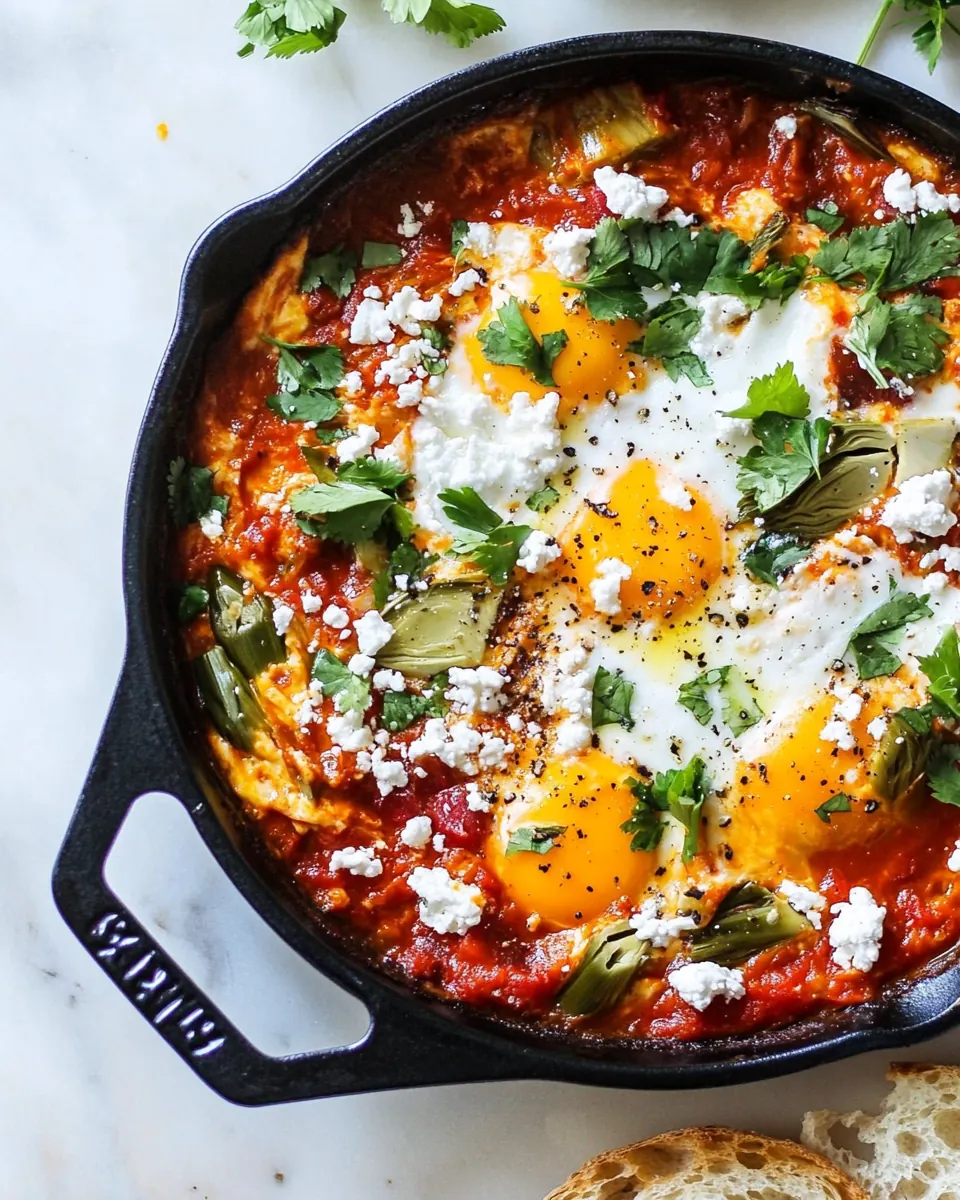
Artichoke Shakshuka
Artichoke Shakshuka has become one of my favorite ways to turn a few pantry jars and a handful of simple ingredients into a dish that feels celebratory and homey at once.
I remember the first time I tossed a jar of marinara into a sizzling skillet and imagined it as more than pasta sauce. I wanted something bright, a breakfast that could hold up to lunch, something to serve straight from the pan while conversation unfolded at the table. That night I added canned artichoke hearts, cracked in a few eggs, and finished it with crumbled feta. The scent of warm tomato and tangy cheese filled the kitchen, and everyone reached for a fork before I could plate a single portion.
Since then I make Artichoke Shakshuka when I want an easy weeknight meal that still feels intentional. It stores beautifully, travels well, and invites improvisation, but its core elements remain the same: vibrant sauce, tender artichoke hearts, and gently baked eggs. I like the way the feta melts into little pockets of creamy saltiness, contrasting with the silky yolks. When you serve it straight from the skillet, it becomes a communal ritual, everyone digging in and sharing that first warm spoonful.
Recipe Snapshot
30 mins
15 mins
15 mins
Easy
300 kcal
Mediterranean
Keto, Gluten-Free
Breakfast
10 inch cast iron skillet, Oven
The Beauty of This Artichoke Shakshuka
Bold, vegetable forward comfort
I love how Artichoke Shakshuka centers on vegetables yet feels deeply satisfying. Using a jar of robust marinara sauce and tender artichoke hearts gives the dish a meaty, substantial bite without leaning on heavy proteins. For me this is the kind of meal that comforts without weighing you down.
Fast to pull together
One of the reasons I keep this recipe in heavy rotation is speed. From the moment I turn on the heat you are only dealing with a few simple actions, and the payoff is immediate. It makes a reliable easy weeknight dinner when time is short and appetite is big.
Textural contrast that sings
The combination of silky eggs, soft artichoke hearts, and crumbly feta creates layers of texture. I enjoy how the creamy yolks mingle with tangy cheese, while the vegetables retain a slight bite. That contrast is what keeps me coming back, and guests always comment on it.
Adaptable and shareable
I adore that Artichoke Shakshuka scales easily. Make it for a solo lunch, or stretch it to feed a crowd. It travels from skillet to table beautifully, which means fewer dishes and more time connecting. I often serve it straight from the pan so people can help themselves.
Bright, pantry friendly flavors
Because it relies on jarred marinara sauce and canned artichoke hearts, this recipe is pantry friendly and forgiving. It rewards small improvements like using extra virgin olive oil or fresh parsley, but it tastes excellent even on a rushed evening. That accessibility makes it one of my most recommended quick recipes.
Ingredient List for Artichoke Shakshuka
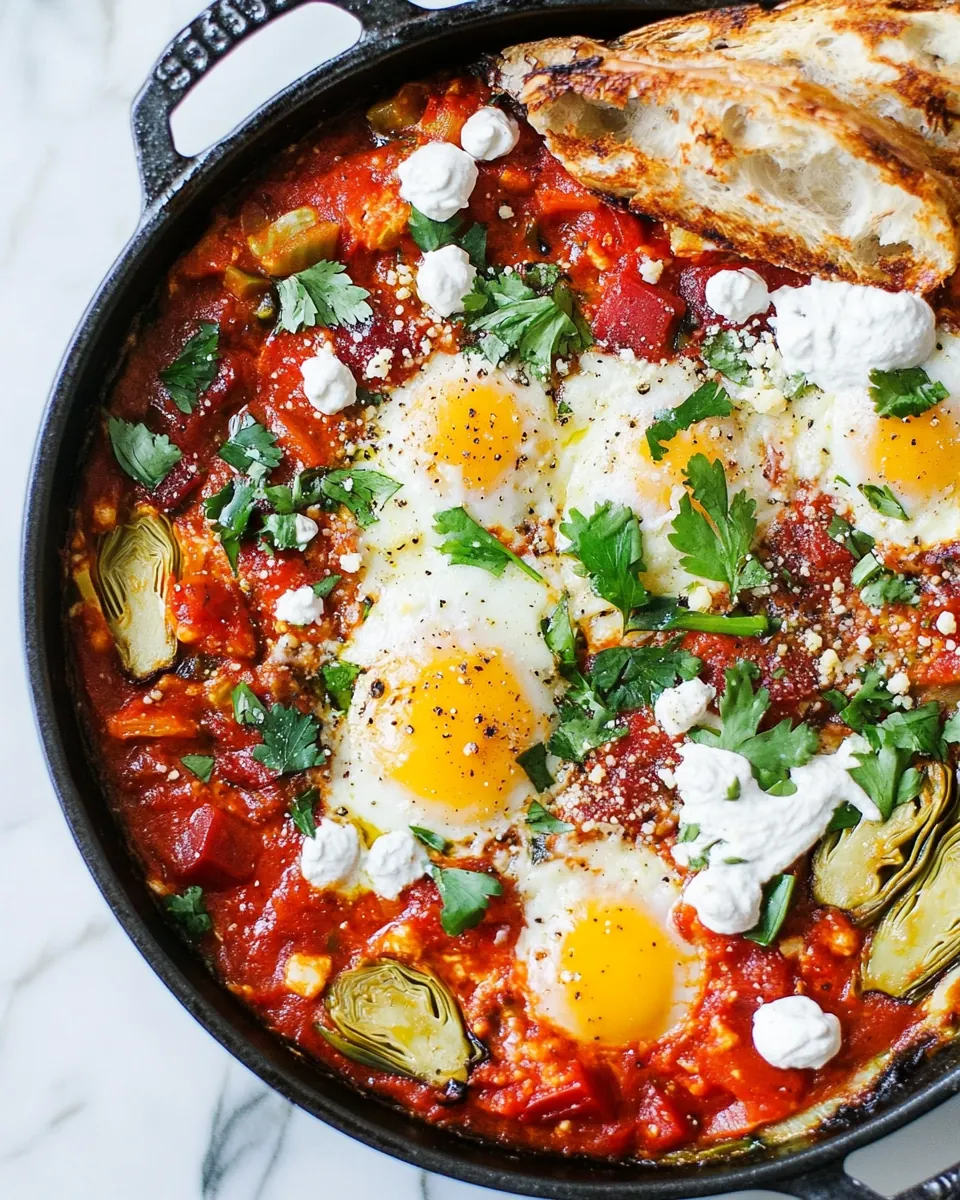
These ingredients come together to create a balance of savory, tangy, and creamy flavors. I think about the jarred marinara sauce as the foundation, the artichoke hearts as the main attraction, and the eggs and feta as the finishing touches that bring richness and salt. The aromatics and olive oil build the base, while parsley adds freshness at the end.
- 2 tablespoons extra-virgin olive oil: Drizzle extra–virgin olive oil into the skillet to provide a fragrant cooking fat that helps soften aromatics and prevents sticking; its peppery flavor boosts the overall richness of the shakshuka. Use it at medium heat to gently sweat the onion and pepper before adding sauce, creating a cohesive base for the dish.
- 1 small yellow onion, thinly sliced: Thinly slice the small yellow onion to release sweet, savory flavors as it caramelizes; its natural sugars deepen the sauce and add a mellow aromatic backbone. Cook slowly until translucent or lightly golden to build layered flavor without overpowering the other components.
- 1 red bell pepper, thinly sliced: Thinly slice the red bell pepper to introduce bright, sweet notes and tender texture; its vibrant color enhances the visual appeal while contributing a mild vegetal sweetness. Sauté with the onion until softened to meld flavors and create a balanced, aromatic base for the sauce.
- 1 (24 ounce) jar marinara sauce: Pour the marinara sauce into the pan as the primary tomato component, creating a rich, spiced bed for poaching the eggs; it supplies acidity, body, and umami that define shakshuka. Simmer briefly with the aromatics to concentrate flavors and allow the sauce to thicken slightly before adding the artichokes and eggs.
- 1 (12 ounce) jar artichoke hearts, drained and quartered: Drain and quarter the artichoke hearts to add tender, briny complexity and a slightly nutty texture that complements the tomato base; their mild tang provides contrast to the richer elements. Fold them into the simmering sauce so they warm through and absorb surrounding flavors without disintegrating.
- 6 to 8 large eggs: Crack six to eight large eggs into wells in the simmering sauce to poach them gently, introducing creamy, custardy yolks that enrich each serving; adjust count based on serving size and appetite. Cover the skillet to steam the eggs to desired doneness, ensuring whites are set while yolks remain runny or firm, as preferred.
- Kosher salt and black pepper: Season with kosher salt and black pepper to heighten and balance the dish’s flavors; salt enhances natural sweetness and savory notes while pepper adds subtle heat. Taste the sauce after simmering and the eggs after cooking, adjusting seasoning gradually to avoid over-salting.
- 1 cup crumbled feta or goat cheese: Crumble feta or goat cheese over the finished shakshuka to contribute tangy, creamy, and slightly salty accents that contrast the tomato base and eggs; choose based on preferred saltiness and creaminess. Scatter evenly so each portion receives some crumbled cheese that melts slightly from residual heat, enriching texture and flavor.
- 2 tablespoons chopped flat-leaf parsley: Chop flat–leaf parsley to sprinkle as a fresh, herbaceous finish that brightens flavors and adds a pop of green color; its clean taste cuts through richness and ties the dish together. Add just before serving to preserve its fresh aroma and visual appeal.
Making This Artichoke Shakshuka
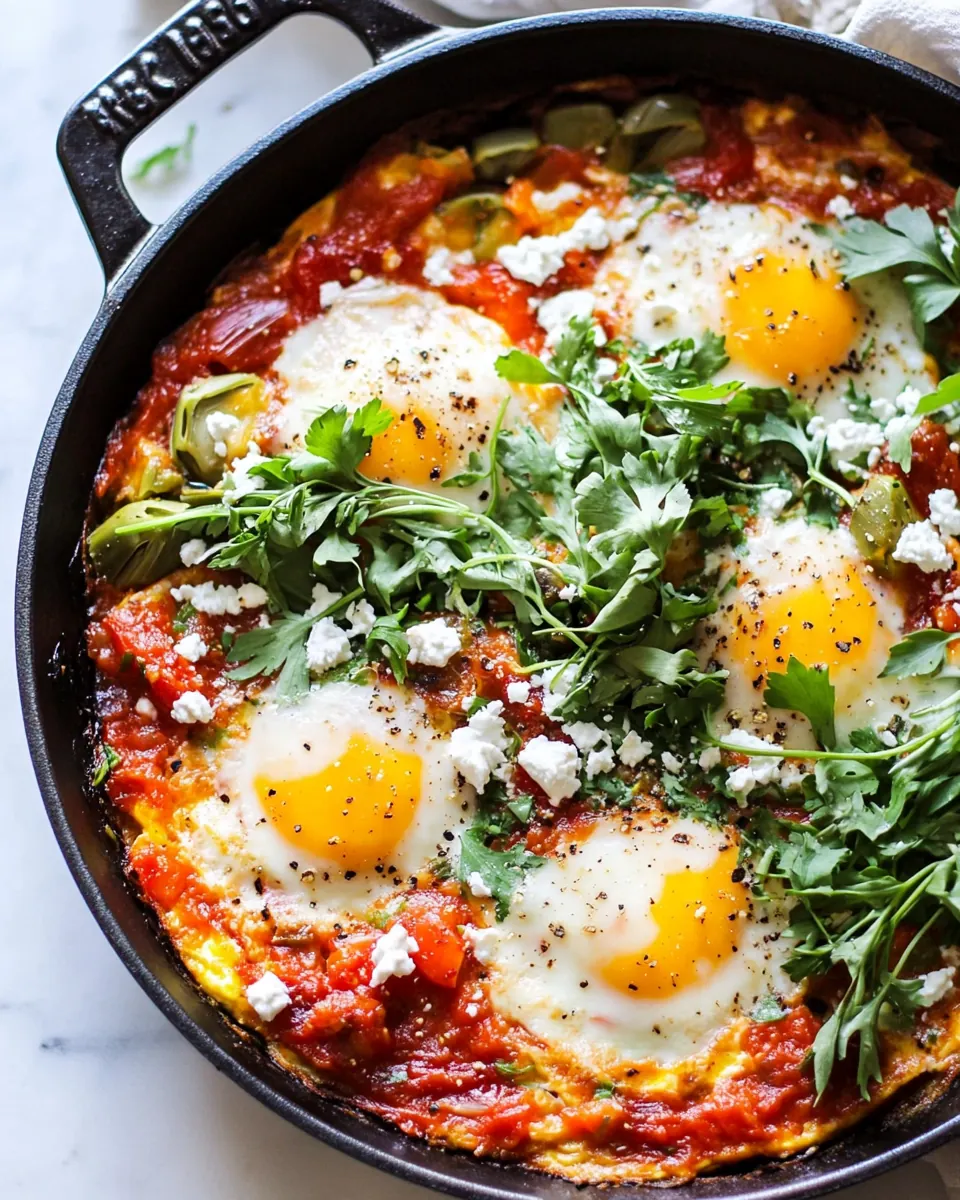
I like to talk you through the process like we are standing side by side at the stove. The method is straightforward, but paying attention to little sensory cues will make a huge difference. Keep an eye on how the onion softens and the sauce thickens, and you will end up with glossy, flavorful results.
- Preheat oven to 375 degrees F. with rack in center. Heat olive oil in a 10 inch cast-iron skillet over medium-high heat. When oil is shimmering, add onion and bell pepper and sauté until beginning to soften, about 5 minutes. Remove pan from heat and add marinara sauce and artichoke hearts. Crack eggs into sauce and sprinkle with generous pinches of salt and pepper. Sprinkle crumbled feta or goat cheese over pan. Transfer pan to oven and bake until egg whites are set but yolks are still slightly runny, 15 to 20 minutes. Scatter parsley over top before serving warm from skillet, family-style.: As the kitchen warms, you will notice a faint rise in ambient heat, and that preheated oven ensures the eggs set evenly without overcooking. The oven’s steady warmth gives a gentle, enveloping heat that cooks the whites through while leaving yolks glossy. Avoid starting with a cold oven, which can lead to inconsistent cooking and rubbery whites.
- Heat olive oil in a 10 inch cast iron skillet over medium high heat: The oil should shimmer and move easily in the pan, releasing a light fruity scent when ready. Heating in a cast iron skillet gives an even base and helps maintain temperature when you transfer to the oven, producing gentle, even heat around the sauce. If the oil smokes, lower the heat immediately to prevent off flavors.
- When oil is shimmering add onion and bell pepper and sauté until beginning to soften about 5 minutes: You will hear soft sizzling, and the onion will turn translucent while the bell pepper loses some firmness. The sound becomes a gentle whisper rather than a roar, indicating the vegetables are sweetening. A common error is rushing this step on too high heat which causes uneven browning instead of gentle softening.
- Remove pan from heat and add marinara sauce and artichoke hearts: The cool-down of the pan before adding the jarred sauce prevents splattering and keeps the oil from overheating. As you stir, the sauce will blend, and the artichoke hearts will nestle into the tomato base, releasing a faint briny note. If you add sauce to a searing pan it may sputter and reduce too quickly, altering the sauce texture.
- Crack eggs into sauce and sprinkle with generous pinches of salt and pepper: The moment you crack the eggs into wells in the sauce, you will see bright yolks shining against the crimson backdrop. The salt and black pepper draw out flavor and help the eggs set with a seasoned edge. Be careful not to crowd the pan so each egg has room to cook evenly, otherwise some will finish sooner than others.
- Sprinkle crumbled feta or goat cheese over pan: As the cheese hits the warm sauce it will begin to soften and form creamy pockets that contrast with the smooth yolks. The aroma becomes tangier and more layered, signaling the marriage of flavors. Overdoing the cheese can mask the delicate artichoke notes, so keep a balanced hand.
- Transfer pan to oven and bake until egg whites are set but yolks are still slightly runny 15 to 20 minutes: Inside the oven you will hear a gentle hum rather than active sizzling, and visually the whites will firm into opaque ribbons while the yolks remain glossy. This timing yields silky yolks that break into the sauce and create a luxurious mouthfeel. Opening the oven too soon or leaving it too long risks underdone whites or firm yolks, so check visually toward the end of the bake time.
- Scatter parsley over top before serving warm from skillet family style: The fresh parsley adds a flash of green and a clean herbal brightness that lifts the dish as soon as it comes out of the oven. Serve directly from the skillet so everyone can dig in while it is still bubbling slightly around the edges. If you wait too long to serve, the dish will settle and lose some of its inviting steam and warm aroma.
Ways to Adapt This Recipe
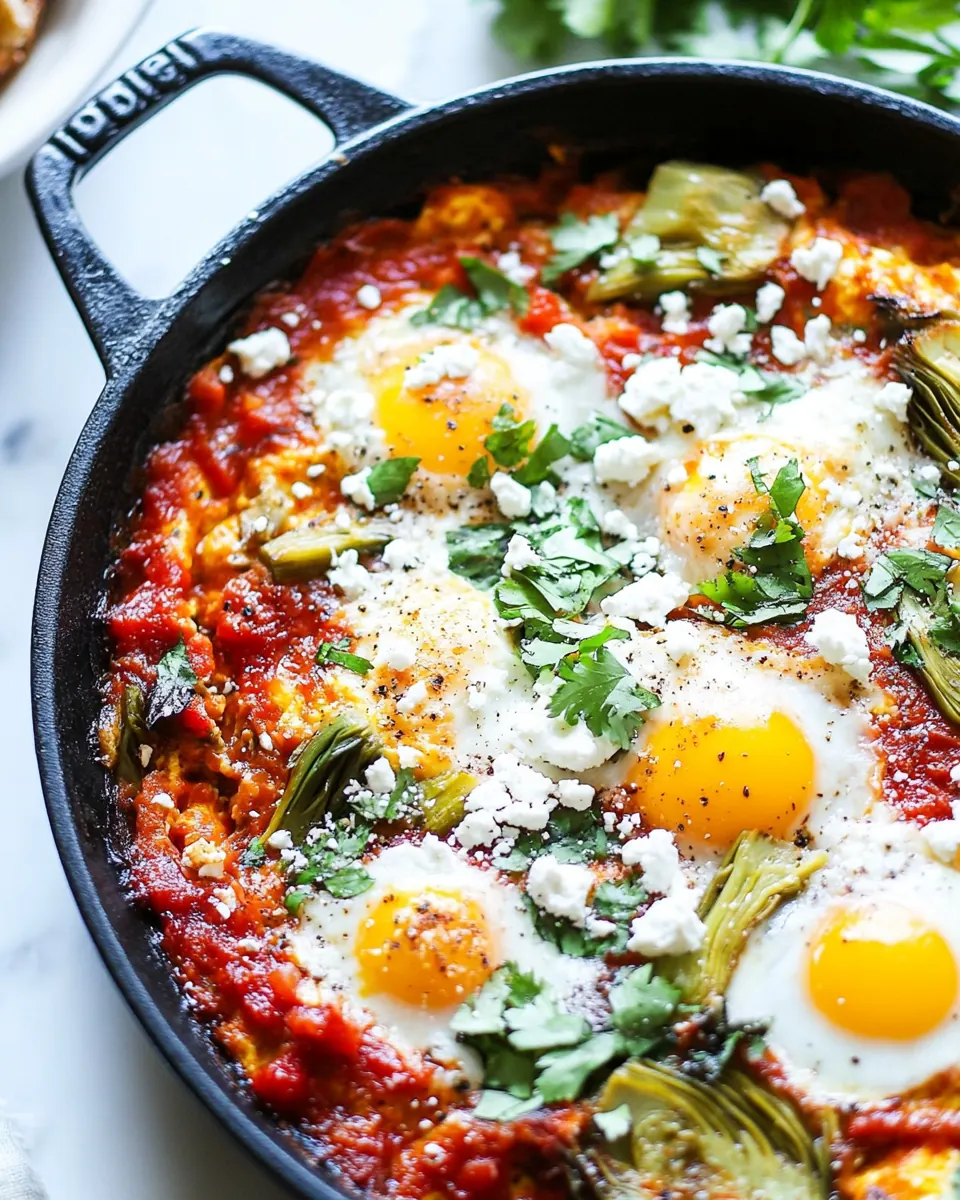
This section explores flexible ways to adapt Artichoke Shakshuka for different occasions and preferences. Below are practical ideas you can try immediately, each expanded into a single tip to help guide your adjustments.
- Swap cheeses thoughtfully Try goat cheese for a tangier, creamier finish; crumble it sparsely to preserve balance with the artichoke hearts.
- Adjust egg count per appetite For heartier portions add up to eight eggs if your pan has room, spacing them so all cook evenly without crowding.
- Concentrate a thin sauce If your jarred marinara sauce seems watery, simmer briefly on the stove until slightly reduced to intensify tomato flavor before adding artichoke hearts.
- Make it skillet friendly for smaller servings Use a smaller pan and reduce eggs to match size, keeping the same vegetable proportions for balanced flavor.
- Brighten with fresh herbs Finish with extra chopped parsley or another fresh herb to add a vibrant lift just before serving.
Side Dish Ideas for Artichoke Shakshuka
Artichoke Shakshuka pairs well with a range of sides depending on the occasion. Whether you want something light for lunch or more substantial for dinner, these ideas provide complementary textures and flavors. Think about warm breads to soak up sauce or crisp salads for contrast.
- Crusty bread Tear warm, crusty bread to scoop up saucy bits and make each bite comforting and communal.
- Simple green salad A crisp salad dressed lightly with lemon and olive oil offers a refreshing counterpoint to the warm, rich skillet.
- Roasted potatoes Small roasted potatoes add a hearty, earthy component that turns this into a fuller meal for dinner gatherings.
- Steamed green beans Bright and slightly crunchy, they contrast the creaminess of the eggs and feta while keeping the plate balanced.
- Grain bowl base Serve the shakshuka atop cooked grains like barley or farro to stretch it into a midnight or hearty lunch option.
- Occasion suggestions Serve for weekend brunch with friends, a relaxed weeknight dinner, or during spring gatherings when lighter vegetable focused meals are welcome.
- Storage tips Refrigerate leftovers in an airtight container for up to three days, reheat gently on the stove to avoid overcooking the eggs.
- Seasonal pairings In spring, offer a bright lemony salad to echo fresh seasons and keep the meal feeling light and fresh.
FAQ
Conclusion
What makes this recipe special is the way simple pantry ingredients transform into a comforting, shareable skillet brimming with flavor. The combination of bright tomato sauce, tender artichoke hearts, creamy yolks, and tangy crumbled cheese hits savory, creamy, and fresh notes all at once. I encourage you to give it a try, whether for a leisurely weekend brunch or a quick weeknight dinner. It is straightforward, forgiving, and always earns compliments from whoever joins the table.
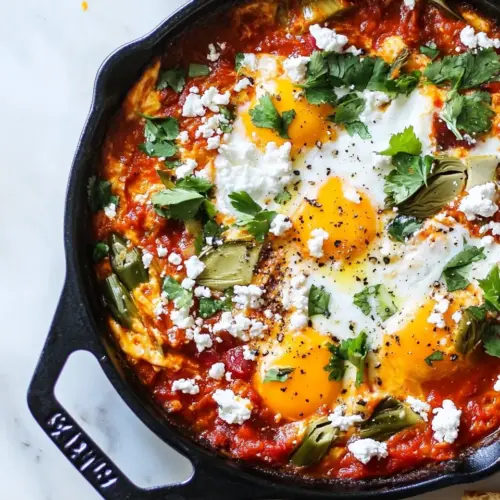
Artichoke Shakshuka
Equipment
- 10-inch cast iron skillet
- Oven
Ingredients
- 2 tablespoons extra-virgin olive oil Drizzle extra-virgin olive oil into the skillet to provide a fragrant cooking fat that helps soften aromatics and prevents sticking; its peppery flavor boosts the overall richness of the shakshuka. Use it at medium heat to gently sweat the onion and pepper before adding sauce, creating a cohesive base for the dish.
- 1 small yellow onion, thinly sliced Thinly slice the small yellow onion to release sweet, savory flavors as it caramelizes; its natural sugars deepen the sauce and add a mellow aromatic backbone. Cook slowly until translucent or lightly golden to build layered flavor without overpowering the other components.
- 1 red bell pepper, thinly sliced Thinly slice the red bell pepper to introduce bright, sweet notes and tender texture; its vibrant color enhances the visual appeal while contributing a mild vegetal sweetness. Sauté with the onion until softened to meld flavors and create a balanced, aromatic base for the sauce.
- 1 (24 ounce) jar marinara sauce Pour the marinara sauce into the pan as the primary tomato component, creating a rich, spiced bed for poaching the eggs; it supplies acidity, body, and umami that define shakshuka. Simmer briefly with the aromatics to concentrate flavors and allow the sauce to thicken slightly before adding the artichokes and eggs.
- 1 (12 ounce) jar artichoke hearts, drained and quartered Drain and quarter the artichoke hearts to add tender, briny complexity and a slightly nutty texture that complements the tomato base; their mild tang provides contrast to the richer elements. Fold them into the simmering sauce so they warm through and absorb surrounding flavors without disintegrating.
- 6 to 8 large eggs Crack six to eight large eggs into wells in the simmering sauce to poach them gently, introducing creamy, custardy yolks that enrich each serving; adjust count based on serving size and appetite. Cover the skillet to steam the eggs to desired doneness, ensuring whites are set while yolks remain runny or firm, as preferred.
- Kosher salt and black pepper Season with kosher salt and black pepper to heighten and balance the dish’s flavors; salt enhances natural sweetness and savory notes while pepper adds subtle heat. Taste the sauce after simmering and the eggs after cooking, adjusting seasoning gradually to avoid over-salting.
- 1 cup crumbled feta or goat cheese Crumble feta or goat cheese over the finished shakshuka to contribute tangy, creamy, and slightly salty accents that contrast the tomato base and eggs; choose based on preferred saltiness and creaminess. Scatter evenly so each portion receives some crumbled cheese that melts slightly from residual heat, enriching texture and flavor.
- 2 tablespoons chopped flat-leaf parsley Chop flat-leaf parsley to sprinkle as a fresh, herbaceous finish that brightens flavors and adds a pop of green color; its clean taste cuts through richness and ties the dish together. Add just before serving to preserve its fresh aroma and visual appeal.
Instructions
- Preheat oven to 375 degrees F. with rack in center. Heat olive oil in a 10 inch cast-iron skillet over medium-high heat. When oil is shimmering, add onion and bell pepper and sauté until beginning to soften, about 5 minutes. Remove pan from heat and add marinara sauce and artichoke hearts. Crack eggs into sauce and sprinkle with generous pinches of salt and pepper. Sprinkle crumbled feta or goat cheese over pan. Transfer pan to oven and bake until egg whites are set but yolks are still slightly runny, 15 to 20 minutes. Scatter parsley over top before serving warm from skillet, family-style.: As the kitchen warms, you will notice a faint rise in ambient heat, and that preheated oven ensures the eggs set evenly without overcooking. The oven’s steady warmth gives a gentle, enveloping heat that cooks the whites through while leaving yolks glossy. Avoid starting with a cold oven, which can lead to inconsistent cooking and rubbery whites.
- Heat olive oil in a 10 inch cast iron skillet over medium high heat: The oil should shimmer and move easily in the pan, releasing a light fruity scent when ready. Heating in a cast iron skillet gives an even base and helps maintain temperature when you transfer to the oven, producing gentle, even heat around the sauce. If the oil smokes, lower the heat immediately to prevent off flavors.
- When oil is shimmering add onion and bell pepper and sauté until beginning to soften about 5 minutes: You will hear soft sizzling, and the onion will turn translucent while the bell pepper loses some firmness. The sound becomes a gentle whisper rather than a roar, indicating the vegetables are sweetening. A common error is rushing this step on too high heat which causes uneven browning instead of gentle softening.
- Remove pan from heat and add marinara sauce and artichoke hearts: The cool-down of the pan before adding the jarred sauce prevents splattering and keeps the oil from overheating. As you stir, the sauce will blend, and the artichoke hearts will nestle into the tomato base, releasing a faint briny note. If you add sauce to a searing pan it may sputter and reduce too quickly, altering the sauce texture.
- Crack eggs into sauce and sprinkle with generous pinches of salt and pepper: The moment you crack the eggs into wells in the sauce, you will see bright yolks shining against the crimson backdrop. The salt and black pepper draw out flavor and help the eggs set with a seasoned edge. Be careful not to crowd the pan so each egg has room to cook evenly, otherwise some will finish sooner than others.
- Sprinkle crumbled feta or goat cheese over pan: As the cheese hits the warm sauce it will begin to soften and form creamy pockets that contrast with the smooth yolks. The aroma becomes tangier and more layered, signaling the marriage of flavors. Overdoing the cheese can mask the delicate artichoke notes, so keep a balanced hand.
- Transfer pan to oven and bake until egg whites are set but yolks are still slightly runny 15 to 20 minutes: Inside the oven you will hear a gentle hum rather than active sizzling, and visually the whites will firm into opaque ribbons while the yolks remain glossy. This timing yields silky yolks that break into the sauce and create a luxurious mouthfeel. Opening the oven too soon or leaving it too long risks underdone whites or firm yolks, so check visually toward the end of the bake time.
- Scatter parsley over top before serving warm from skillet family style: The fresh parsley adds a flash of green and a clean herbal brightness that lifts the dish as soon as it comes out of the oven. Serve directly from the skillet so everyone can dig in while it is still bubbling slightly around the edges. If you wait too long to serve, the dish will settle and lose some of its inviting steam and warm aroma.
Notes
- Swap cheeses thoughtfully Try goat cheese for a tangier, creamier finish; crumble it sparsely to preserve balance with the artichoke hearts.
- Adjust egg count per appetite For heartier portions add up to eight eggs if your pan has room, spacing them so all cook evenly without crowding.
- Concentrate a thin sauce If your jarred marinara sauce seems watery, simmer briefly on the stove until slightly reduced to intensify tomato flavor before adding artichoke hearts.
- Make it skillet friendly for smaller servings Use a smaller pan and reduce eggs to match size, keeping the same vegetable proportions for balanced flavor.
- Brighten with fresh herbs Finish with extra chopped parsley or another fresh herb to add a vibrant lift just before serving.