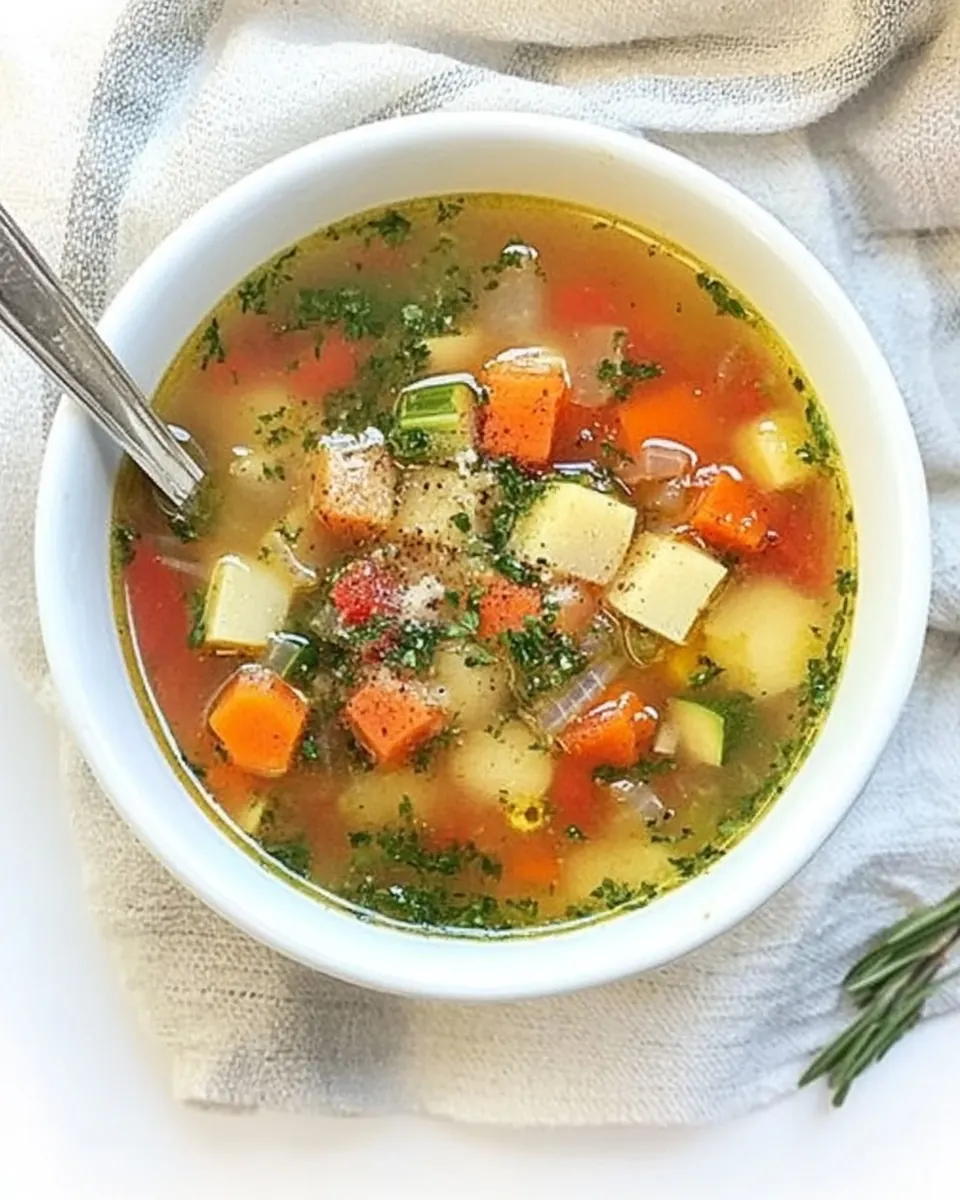
Easy Vegetable Soup
Easy Vegetable Soup is the bowl I reach for when I want food that feels like a gentle, warming hug after a long day. The first time I made this soup I was craving comfort without fuss, so I pulled together what I had on hand and watched simple items transform into a fragrant, satisfying meal. The aroma of simmering potatoes and onion filled my kitchen and instantly lifted my mood.
I remember chopping carrots while the radio played in the background, the knife making a steady rhythm on the board. As the pot came to a soft boil, steam carried the scent of herbs and tomatoes through the house, and I knew dinner would be worth the brief effort. I like meals that let ingredients shine, and with this recipe each vegetable keeps its character, from the tender bite of zucchini to the pops of bright peas.
Over the years I have tweaked this soup in small ways, learning that timing matters, and that a touch of Parmesan cheese at the end brings everything together in a way that feels satisfying rather than heavy. I often make a big pot so there is leftover comfort for the next day, and I love how the flavors deepen overnight. This soup has become a quiet staple for chilly evenings, quick lunches, and the nights I need something homey and reliable.
Recipe Snapshot
50 mins
25 mins
25 mins
Medium
150 kcal
American
Gluten-Free, Vegan
Soups
Large soup pot, Knife, Cutting board
What We Adore About This Easy Vegetable Soup
Simple, honest ingredients that sing
I love how Easy Vegetable Soup relies on pantry and fridge staples. When you start with good chicken broth or a high quality veg broth, the rest of the ingredients have space to shine. Each vegetable contributes texture and flavor, and the result is layered without fuss.
Fast to make, great for busy nights
This recipe moves quickly on the stove, so you can have a nourishing meal in under an hour. I appreciate recipes that respect a busy evening, and this one gives payoff for small hands on a short amount of time, making it ideal for weeknights.
Flexible and forgiving
I often swap small items depending on what I have. The soup is forgiving, so if one vegetable is smaller or larger, or if your broth is lighter, the final bowl still comes together beautifully. That flexibility makes it a go to when I want minimal planning and maximum comfort.
Bright herb finish
Adding fresh basil at the end lifts the soup and keeps it from tasting one dimensional. I find that fresh herbs layered in at service time preserve their aroma and give each spoonful a lively finish.
Family friendly and crowd pleasing
This is the sort of recipe that pleases a range of eaters. It is gentle enough for kids while still appealing to adults who appreciate clear, comforting flavors. I make it when friends drop by, because it stretches well and invites conversation over bowls of warm broth and vegetables.
What You’ll Need for Easy Vegetable Soup
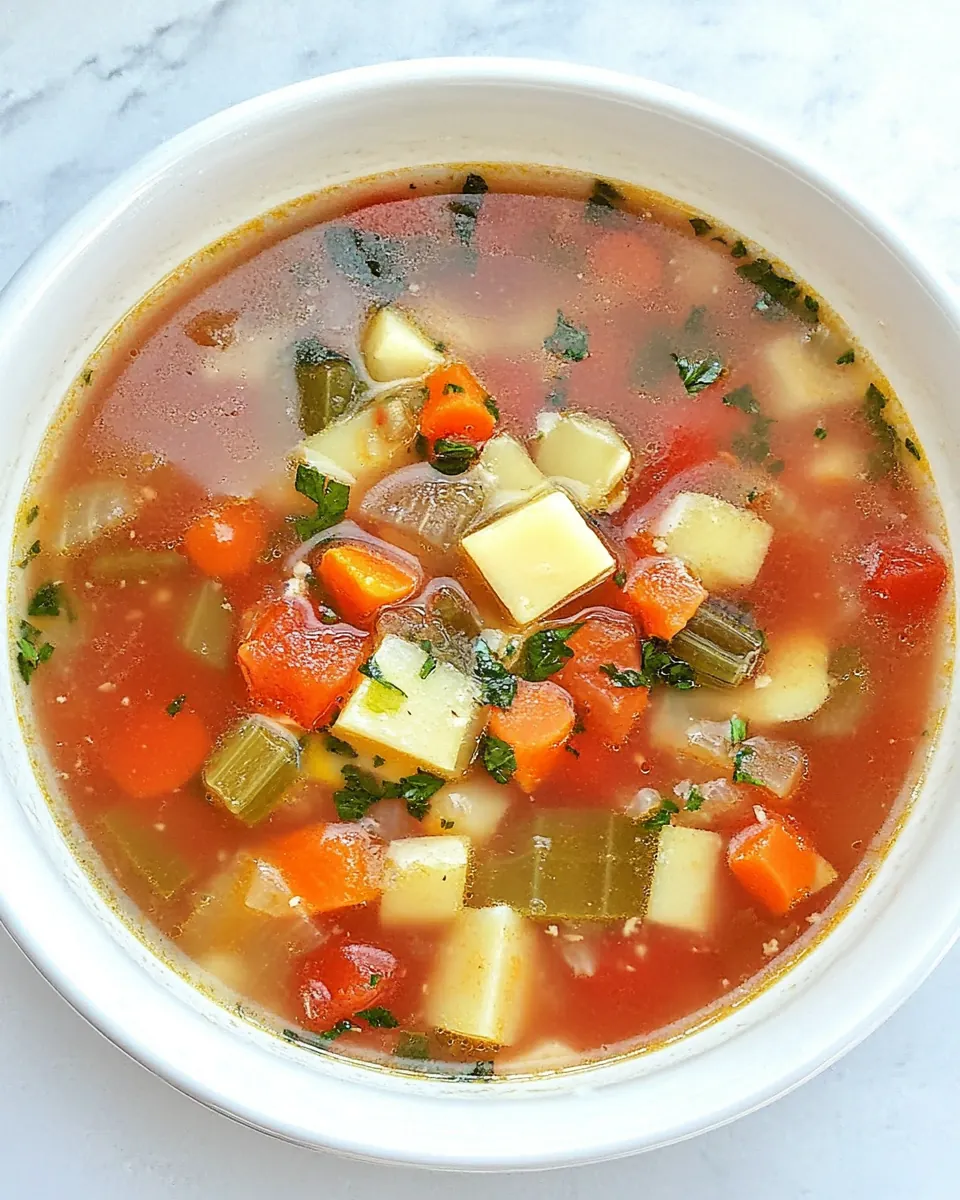
The philosophy behind these ingredients is harmony. Starchy potatoes and sweet carrots provide body, while bright zucchini and crisp green beans add texture. A quality chicken broth or vegetable alternative forms the savory backbone, and finishing touches like fresh basil and grated Parmesan cheese lend aromatic lift and umami. Together they create a soup that is balanced, nourishing, and easy to eat.
- 2 medium Yukon Gold potatoes, diced: Provide creamy body and tender chunks that absorb flavors during simmering; diced small to cook evenly and help thicken the broth slightly, adding a satisfying texture to each spoonful.
- 1 medium onion, chopped: Add a savory aromatic base when chopped finely; sweated until translucent to release natural sugars and deepen the soup's overall flavor profile.
- 2 large carrots, chopped: Contribute natural sweetness and a subtle earthy note when chopped; cooked until tender to complement heartier vegetables and balance acidity from tomatoes.
- 2 large celery stalks, thinly sliced: Offer a mild aromatic crunch and celery saltiness when thinly sliced; sautéed with onion and carrots to build the classic mirepoix foundation for the soup.
- 8 cups chicken broth (use veg broth for Vegetarian): Create the flavorful cooking medium and provide depth; simmer vegetables in broth to meld flavors and adjust to vegetarian preference by swapping for vegetable broth.
- One 14.5 ounce can diced tomatoes, with juice: Introduce bright acidity and tomatoey richness with juices included; poured in to add body, natural umami, and a slight tang that livens the soup.
- 2 medium zucchini, chopped: Give tender, slightly sweet pieces and absorb surrounding flavors when chopped; added later in cooking to prevent over-softening and preserve texture.
- 1 1/2 cups chopped fresh green beans: Supply a fresh, crisp green vegetable element when chopped; simmer briefly to retain color and bite while contributing fiber and a subtle snap.
- 1 cup frozen peas: Bring bursts of sweetness and pop-in-the-mouth texture from frozen peas; stirred in near the end to warm through without losing vibrant color or firmness.
- 1 teaspoon dried oregano: Impart warm herbal notes and Mediterranean character when dried; sprinkled into the simmering soup to infuse a gentle, savory oregano fragrance throughout.
- 1/2 teaspoon salt: Enhance overall seasoning balance and bring out natural flavors when measured carefully; added to taste during cooking to avoid over-salting and ensure proper seasoning.
- 1/2 teaspoon freshly ground black pepper: Provide a sharp, mildly spicy accent and depth when freshly ground; used with salt to season the soup and awaken other flavors without overpowering them.
- 1/2 cup chopped fresh basil: Add fresh, aromatic brightness and a sweet peppery finish when chopped; stirred in at the end to maintain its herbal fragrance and vibrant green color.
- 1/2 cup grated Parmesan cheese: Offer a salty, nutty umami finish when grated; sprinkled over individual bowls to enrich richness and create a pleasant, savory topping.
Putting Together Easy Vegetable Soup
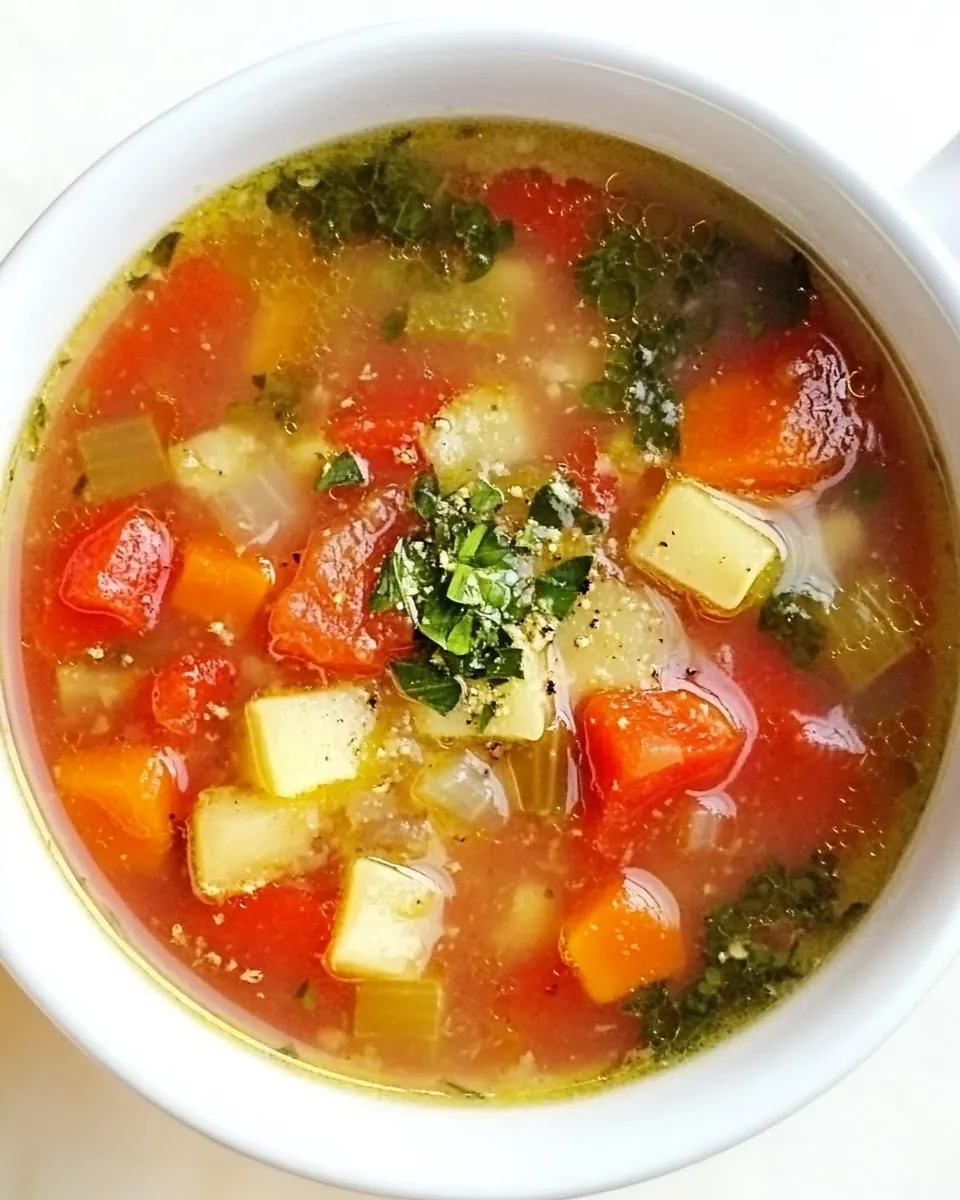
This soup comes together in a single pot and rewards careful attention to timing and texture. As you follow the steps the kitchen will fill with layers of savory aroma, and small visual cues will tell you when to move to the next step. Keep your mise en place ready because the transitions between stages are where the balance develops.
- In a large soup pot, combine the potatoes, onion, carrots, celery and broth over medium-high heat; bring to a boil. Reduce heat to low, cover and simmer until the potatoes are just tender, about 10 minutes.: The first scents hit you here, savory and slightly sweet as the potatoes , onion , carrots , and celery meet the hot broth . You will hear a gentle simmer escalate to small rolling bubbles that signal the pot is coming up to a boil, and the steam will smell earthy and comforting. This step is crucial because it allows the starchy potatoes to begin releasing their body into the liquid, which helps thicken the soup slightly as it cooks. Stirring once or twice ensures even distribution, and you should watch for any sticking at the bottom, which is a common mistake when heat is uneven. If the pot seems to boil too vigorously, lower the heat a touch to avoid over reduction, which can concentrate salt and lead to a sharper flavor than desired.
- Add the tomatoes, zucchini, green beans, peas, oregano, salt and pepper. Continue to simmer until the vegetables are tender, about 10 minutes longer. Remove the pot from heat. Top individual servings with 1 tablespoon fresh basil and 1 tablespoon cheese.: At this stage the pot will settle into a low, steady simmer, offering softer, more rounded aromas. You want the potatoes to be tender but not falling apart, so test with a fork against the side of the pot to judge tenderness. The thin skin of Yukon Golds often slips slightly and gives a creamy mouthfeel when bitten. Gentle simmering extracts flavor from the vegetables into the broth while preserving individual textures. A frequent error is over simmering, which produces a cloudy, mashed result rather than a composed soup. Keep the lid slightly ajar if your pot is steaming heavily, which helps maintain the right volume of liquid.
- Add the tomatoes zucchini green beans peas oregano salt and pepper: As you introduce the canned tomatoes with their juices, the pot brightens in aroma, offering a tang that balances the starch. The visual contrast of green zucchini and green beans against the red tomatoes is appealing, and as the peas thaw they release a fresh, sweet scent. Dried oregano folds into the broth, giving gentle herbal notes while salt and black pepper tune the overall flavor. This combination matters because the acidity and herb balance prevent the soup from tasting one layered, and the timing is important to avoid mushy vegetables. Over-seasoning here is easy, so add conservatively and taste after the vegetables have softened.
- Continue to simmer until the vegetables are tender about 10 minutes longer: During this continued simmer you will notice the pot giving off a fuller aroma as flavors marry. Visually, the vegetables should look vibrant yet tender, with zucchini softened but intact, and green beans losing their raw sheen without becoming limp. The bubbling will be gentle, and the broth should remain clear rather than cloudy, indicating you have avoided over agitation. The reason this gentle simmer matters is it allows vegetables to reach just the right texture, which keeps each spoonful interesting. A common misstep is raising the heat to speed things up, which can lead to uneven cooking and a broth that reduces too much.
- Remove the pot from heat: When you take the pot off the stove the residual warmth finishes gentle carryover cooking. This pause locks textures in place and prevents vegetables like zucchini from turning mushy. You will still smell the mingled herbaceousness and sweetness, but the simmering sound will stop, leaving a calmer kitchen. This choice preserves the final mouthfeel and makes it easier to plate right away. Leaving the pot on heat too long is a frequent issue, so remove it promptly once the vegetables meet your tenderness test.
- Top individual servings with 1 tablespoon fresh basil and 1 tablespoon cheese: The finishing touch of chopped basil and grated Parmesan cheese makes the final impression. The basil's aroma will be bright and immediate, offering a fresh lift when mixed with a spoon, while the cheese melts slightly into the hot broth, adding savory depth and a silky texture on the tongue. This step is about layering contrast, and it encourages mindful tasting as you balance herbal brightness with umami. Overlooking this garnish robs the soup of its final, cohesive note, so be generous and add it right before serving.
Ways to Customize
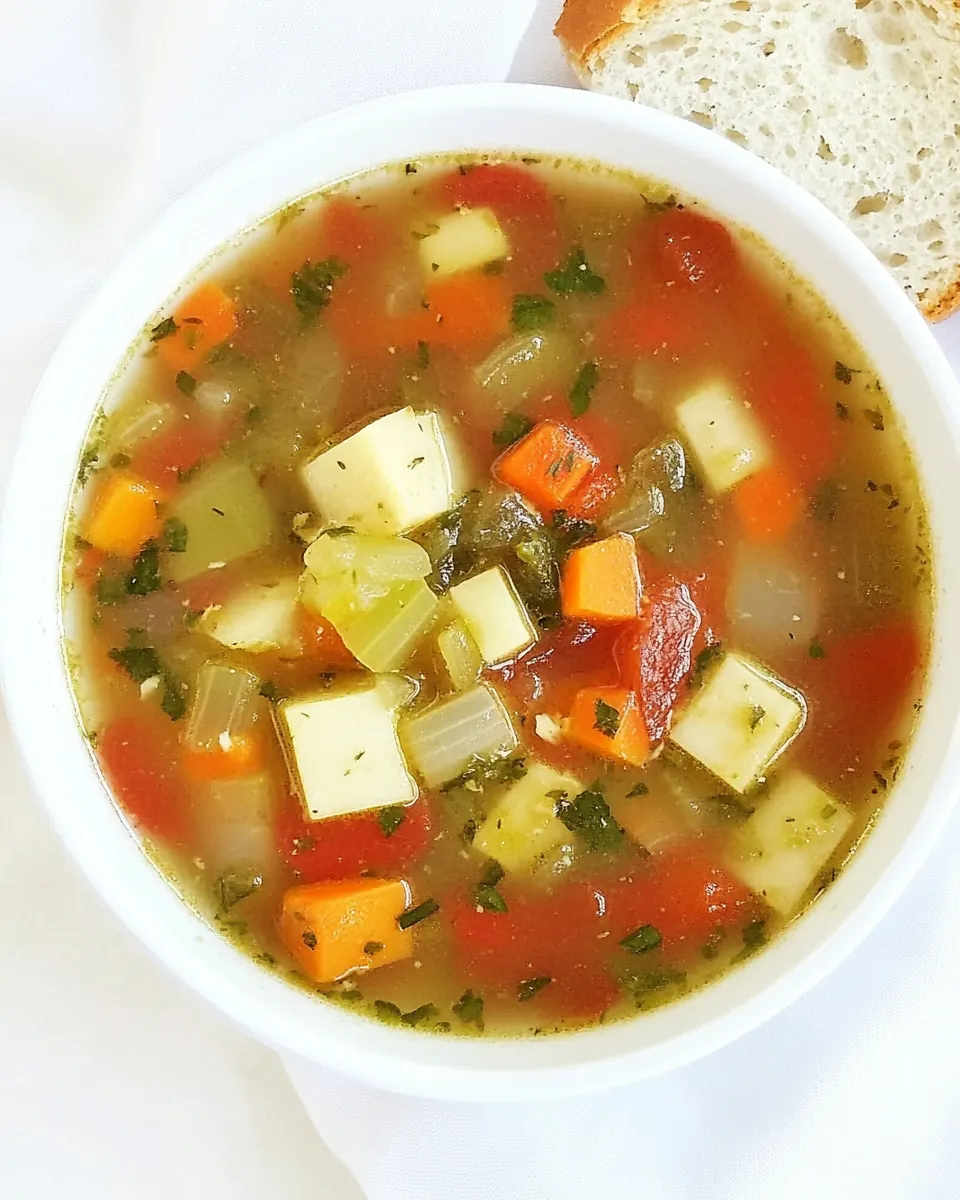
If you want to make Easy Vegetable Soup your own, there are several small changes that keep the spirit of the recipe while adjusting texture, flavor, or dietary preferences. Below are practical ideas that I have used to adapt the soup for different occasions and palates.
- Make it vegetarian: Swap the chicken broth for a robust vegetable broth to keep savory depth while avoiding animal products, and taste for salt as some veg broths are lower in sodium.
- Boost the herbs: Increase fresh basil or add a handful of chopped parsley at the end for a brighter, greener finish without overwhelming the vegetables.
- Adjust the texture: For a heartier feel, mash a portion of the cooked potatoes against the pot side and stir to thicken the broth slightly, creating a creamier body without adding dairy.
- Make ahead: The flavors deepen overnight, so refrigerate and gently reheat, adding a splash of broth if the soup has reduced too much.
- Change the finish: Instead of Parmesan cheese, try a swirl of olive oil or a sprinkle of a favorite grated cheese for different savory notes and mouthfeel.
How to Enjoy Easy Vegetable Soup
This soup is versatile for many meals and gatherings, and it pairs well with simple sides that complement its gentle flavors. Below are ways I like to serve it, depending on the occasion, plus storage and seasonal notes to keep it practical.
- Weeknight dinner: Serve bowls hot with an extra sprinkle of grated Parmesan cheese and a scattering of chopped basil, pairing it with crusty bread for dipping to make the meal more substantial.
- Lunch or light meal: Offer smaller bowls alongside a crisp green salad for a balanced midday option that is comforting without being heavy.
- Family gatherings: Keep the soup warm in a large pot on low and let everyone garnish their bowls with extra basil and Parmesan cheese, which keeps service relaxed and communal.
- Storage: Refrigerate leftovers in an airtight container for up to four days, and when reheating gently warm on the stove so the textures remain intact; add a splash of broth if the soup thickens too much.
- Freezing: You can freeze the soup without the fresh basil and reserve cheese for serving, thawing overnight in the fridge before reheating to preserve texture.
- Seasonal pairing: This is a lovely winter bowl because it is warm and nourishing, though it also works in spring when fresh green beans and basil are at their peak.
FAQ
Conclusion
This Easy Vegetable Soup stands out for its simplicity and comforting, layered flavors. The combination of tender potatoes, bright vegetables, and a savory broth makes it an approachable go to for chilly evenings and busy weeknights. I encourage you to give it a try, keeping your knife work uniform and tasting as you go to find your perfect balance. It rewards small attention with big, homey results, and I hope it becomes one of those recipes you reach for when you want a reliable, soothing bowl.

Easy Vegetable Soup
Equipment
- Large soup pot
- Knife
- Cutting Board
Ingredients
- 2 medium Yukon Gold potatoes, diced Provide creamy body and tender chunks that absorb flavors during simmering; diced small to cook evenly and help thicken the broth slightly, adding a satisfying texture to each spoonful.
- 1 medium onion, chopped Add a savory aromatic base when chopped finely; sweated until translucent to release natural sugars and deepen the soup's overall flavor profile.
- 2 large carrots, chopped Contribute natural sweetness and a subtle earthy note when chopped; cooked until tender to complement heartier vegetables and balance acidity from tomatoes.
- 2 large celery stalks, thinly sliced Offer a mild aromatic crunch and celery saltiness when thinly sliced; sautéed with onion and carrots to build the classic mirepoix foundation for the soup.
- 8 cups chicken broth (use veg broth for Vegetarian) Create the flavorful cooking medium and provide depth; simmer vegetables in broth to meld flavors and adjust to vegetarian preference by swapping for vegetable broth.
- One 14.5 ounce can diced tomatoes, with juice Introduce bright acidity and tomatoey richness with juices included; poured in to add body, natural umami, and a slight tang that livens the soup.
- 2 medium zucchini, chopped Give tender, slightly sweet pieces and absorb surrounding flavors when chopped; added later in cooking to prevent over-softening and preserve texture.
- 1 1/2 cups chopped fresh green beans Supply a fresh, crisp green vegetable element when chopped; simmer briefly to retain color and bite while contributing fiber and a subtle snap.
- 1 cup frozen peas Bring bursts of sweetness and pop-in-the-mouth texture from frozen peas; stirred in near the end to warm through without losing vibrant color or firmness.
- 1 teaspoon dried oregano Impart warm herbal notes and Mediterranean character when dried; sprinkled into the simmering soup to infuse a gentle, savory oregano fragrance throughout.
- 1/2 teaspoon salt Enhance overall seasoning balance and bring out natural flavors when measured carefully; added to taste during cooking to avoid over-salting and ensure proper seasoning.
- 1/2 teaspoon freshly ground black pepper Provide a sharp, mildly spicy accent and depth when freshly ground; used with salt to season the soup and awaken other flavors without overpowering them.
- 1/2 cup chopped fresh basil Add fresh, aromatic brightness and a sweet peppery finish when chopped; stirred in at the end to maintain its herbal fragrance and vibrant green color.
- 1/2 cup grated Parmesan cheese Offer a salty, nutty umami finish when grated; sprinkled over individual bowls to enrich richness and create a pleasant, savory topping.
Instructions
- In a large soup pot, combine the potatoes, onion, carrots, celery and broth over medium-high heat; bring to a boil. Reduce heat to low, cover and simmer until the potatoes are just tender, about 10 minutes.: The first scents hit you here, savory and slightly sweet as the potatoes , onion , carrots , and celery meet the hot broth . You will hear a gentle simmer escalate to small rolling bubbles that signal the pot is coming up to a boil, and the steam will smell earthy and comforting. This step is crucial because it allows the starchy potatoes to begin releasing their body into the liquid, which helps thicken the soup slightly as it cooks. Stirring once or twice ensures even distribution, and you should watch for any sticking at the bottom, which is a common mistake when heat is uneven. If the pot seems to boil too vigorously, lower the heat a touch to avoid over reduction, which can concentrate salt and lead to a sharper flavor than desired.
- Add the tomatoes, zucchini, green beans, peas, oregano, salt and pepper. Continue to simmer until the vegetables are tender, about 10 minutes longer. Remove the pot from heat. Top individual servings with 1 tablespoon fresh basil and 1 tablespoon cheese.: At this stage the pot will settle into a low, steady simmer, offering softer, more rounded aromas. You want the potatoes to be tender but not falling apart, so test with a fork against the side of the pot to judge tenderness. The thin skin of Yukon Golds often slips slightly and gives a creamy mouthfeel when bitten. Gentle simmering extracts flavor from the vegetables into the broth while preserving individual textures. A frequent error is over simmering, which produces a cloudy, mashed result rather than a composed soup. Keep the lid slightly ajar if your pot is steaming heavily, which helps maintain the right volume of liquid.
- Add the tomatoes zucchini green beans peas oregano salt and pepper: As you introduce the canned tomatoes with their juices, the pot brightens in aroma, offering a tang that balances the starch. The visual contrast of green zucchini and green beans against the red tomatoes is appealing, and as the peas thaw they release a fresh, sweet scent. Dried oregano folds into the broth, giving gentle herbal notes while salt and black pepper tune the overall flavor. This combination matters because the acidity and herb balance prevent the soup from tasting one layered, and the timing is important to avoid mushy vegetables. Over-seasoning here is easy, so add conservatively and taste after the vegetables have softened.
- Continue to simmer until the vegetables are tender about 10 minutes longer: During this continued simmer you will notice the pot giving off a fuller aroma as flavors marry. Visually, the vegetables should look vibrant yet tender, with zucchini softened but intact, and green beans losing their raw sheen without becoming limp. The bubbling will be gentle, and the broth should remain clear rather than cloudy, indicating you have avoided over agitation. The reason this gentle simmer matters is it allows vegetables to reach just the right texture, which keeps each spoonful interesting. A common misstep is raising the heat to speed things up, which can lead to uneven cooking and a broth that reduces too much.
- Remove the pot from heat: When you take the pot off the stove the residual warmth finishes gentle carryover cooking. This pause locks textures in place and prevents vegetables like zucchini from turning mushy. You will still smell the mingled herbaceousness and sweetness, but the simmering sound will stop, leaving a calmer kitchen. This choice preserves the final mouthfeel and makes it easier to plate right away. Leaving the pot on heat too long is a frequent issue, so remove it promptly once the vegetables meet your tenderness test.
- Top individual servings with 1 tablespoon fresh basil and 1 tablespoon cheese: The finishing touch of chopped basil and grated Parmesan cheese makes the final impression. The basil's aroma will be bright and immediate, offering a fresh lift when mixed with a spoon, while the cheese melts slightly into the hot broth, adding savory depth and a silky texture on the tongue. This step is about layering contrast, and it encourages mindful tasting as you balance herbal brightness with umami. Overlooking this garnish robs the soup of its final, cohesive note, so be generous and add it right before serving.
Notes
- Make it vegetarian: Swap the chicken broth for a robust vegetable broth to keep savory depth while avoiding animal products, and taste for salt as some veg broths are lower in sodium.
- Boost the herbs: Increase fresh basil or add a handful of chopped parsley at the end for a brighter, greener finish without overwhelming the vegetables.
- Adjust the texture: For a heartier feel, mash a portion of the cooked potatoes against the pot side and stir to thicken the broth slightly, creating a creamier body without adding dairy.
- Make ahead: The flavors deepen overnight, so refrigerate and gently reheat, adding a splash of broth if the soup has reduced too much.
- Change the finish: Instead of Parmesan cheese, try a swirl of olive oil or a sprinkle of a favorite grated cheese for different savory notes and mouthfeel.
