Almond Poppy Seed Bread
Almond Poppy Seed Bread is the loaf I reach for when I want something that feels both comforting and a little fancy, a quick way to lift an ordinary morning or to bring to a neighbor without fuss.
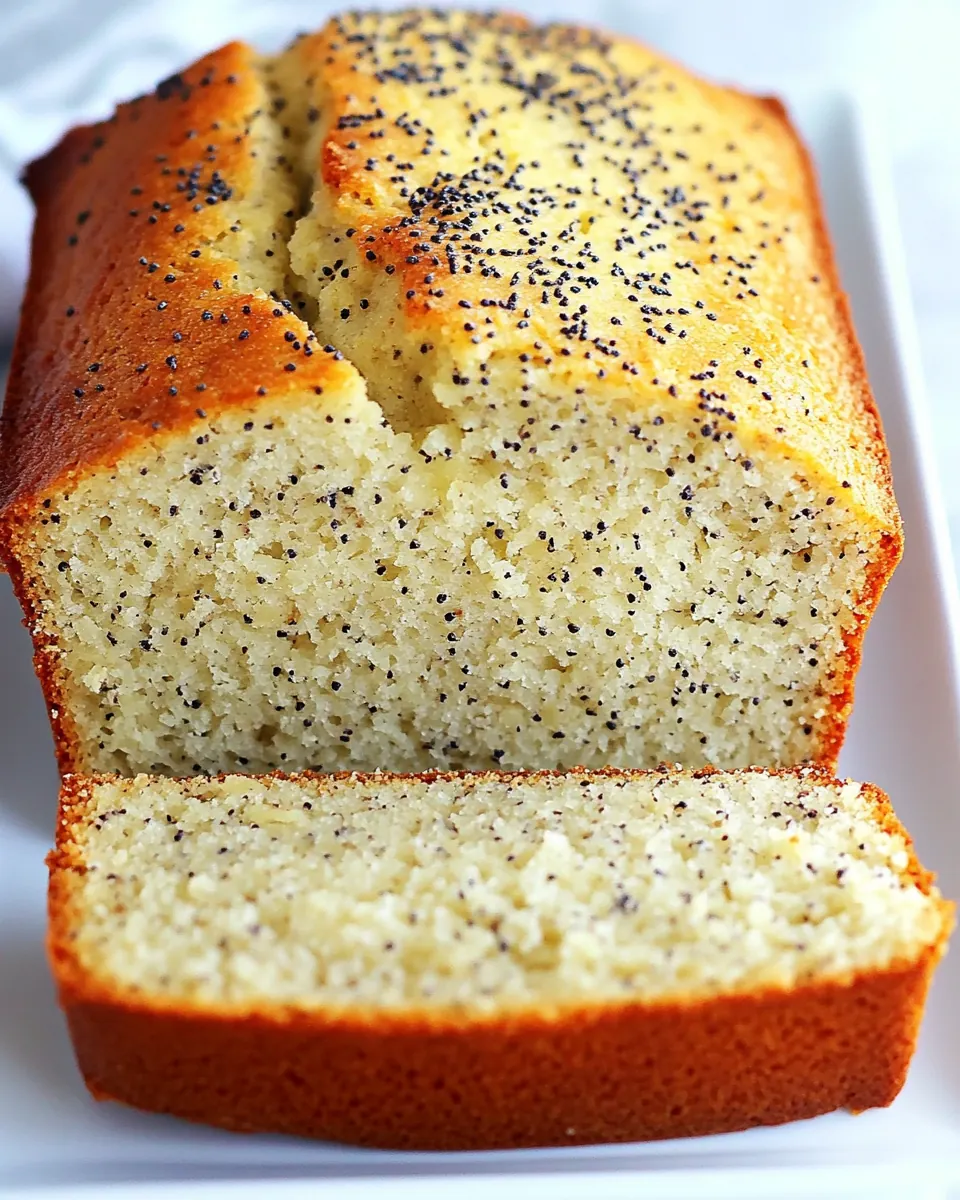
One rainy afternoon I found myself with a jar of poppy seeds and a nearly forgotten little bottle of almond extract, and that tiny pairing sparked a craving. I mixed a simple batter, and as the kitchen filled with a warm, nutty aroma I realized how evocative a loaf can be, stirring memories of tea time and long chats. The crumb was tender, the poppy seeds a pleasant, subtle crunch, and the almond note threaded through every slice in a way that felt celebratory without being showy.
Over the years I have tweaked the balance between tang and sweetness so the loaf slices beautifully and holds up well when spread with a smear of butter or a thin layer of jam. I used to guard the recipe as a special treat for guests, now I bake it for weeknight breakfasts and slow Sundays. The texture invites toasting, and the fragrance makes the whole house feel like a tiny bakery. I love how versatile it is, and the fact that it needs just a few pantry staples to shine.
Recipe Snapshot
60 mins
10 mins
50 mins
Medium
250 kcal
American
Gluten-Free, Low FODMAP
Breakfast
Muffin Tin
Why This Almond Poppy Seed Bread Is a Winner
A comforting everyday loaf that still feels special
I love Almond Poppy Seed Bread because it hits that sweet spot where simple meets sophisticated. The batter is straightforward, but the tiny pop of texture from the poppy seeds and the almond harmony transform ordinary slices into something memorable. When I serve it to friends they often ask for the recipe, which tells me this loaf has a warm, homey charm without being boring.
Texture that delights
What stands out for me is the crumb, it is tender yet sturdy enough to hold spreads. The combination of creamed butter and the little bit of sour cream keeps the interior moist while producing a thin, slightly golden crust. Every bite has that soft but satisfying mouthfeel I aim for in a quick bread.
Flavor complexity from few ingredients
Using both vanilla extract and almond extract gives this bread a layered aroma. The almond note is bright and slightly floral, cutting through the sugar so the loaf never tastes cloying. I appreciate how a splash of milk smooths the batter, making the flavors mingle without overpowering the delicate poppy seed crunch.
Reliable and forgiving
This recipe is one I trust on busy mornings because the steps are forgiving. Overmixing a little will not ruin the loaf, although I still gently fold the dry ingredients to avoid toughness. It holds well wrapped at room temperature for a couple of days, and it travels nicely, which is why I often bring slices to friends or to potlucks.
Perfect for many occasions
I turn to Almond Poppy Seed Bread for casual brunches, afternoon tea, and holiday breakfast spreads. It dresses up easily with a citrus glaze or stays humble with a smear of butter. That adaptability makes it a staple in my baking rotation, and I think you will find the same ease of use and wide appeal.
Key Ingredients for Almond Poppy Seed Bread
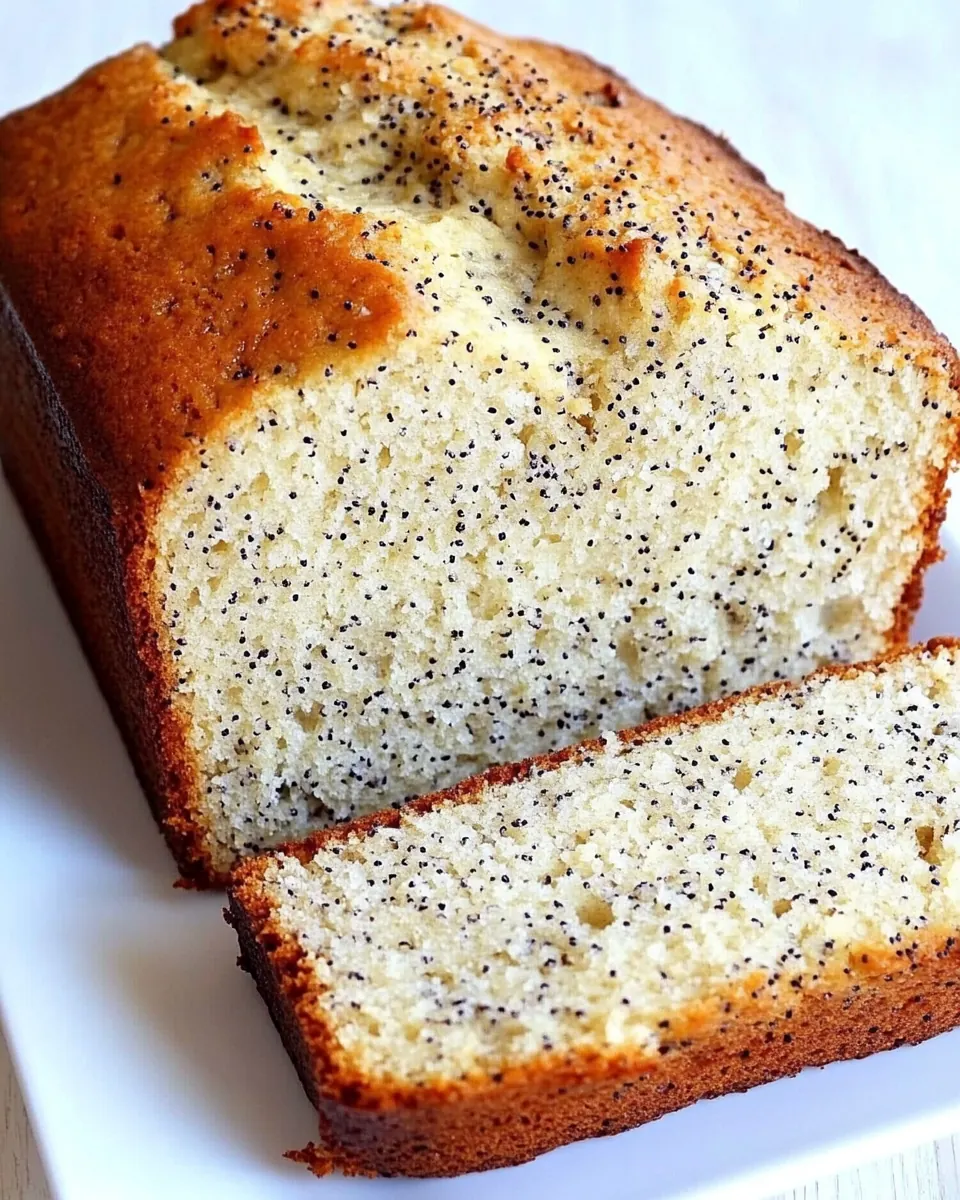
The ingredient list for Almond Poppy Seed Bread is intentionally concise. Each element plays a clear role: the dry players build structure, the fats and dairy bring tenderness and richness, and the extracts and poppy seeds provide the signature aroma and texture. Together they yield a loaf that is moist, slightly tender, and bright with almond essence.
- 1 2/3 cups all-purpose flour: Provide structure and bulk to the loaf, forming the base of the batter and giving the bread its crumb; combine with leavening to create a tender texture when mixed properly. Use spoon-and-level measuring to avoid dense results and whisk with dry ingredients for even distribution.
- 1 1/2 tablespoons poppy seeds: Add small crunchy seeds throughout the bread that contribute a subtle nutty flavor and visual appeal; distribute evenly in the dry mixture to prevent clumping. Toast lightly if desired to intensify flavor before folding into the batter.
- 1 teaspoon baking powder: Leaven the batter by releasing carbon dioxide when heated, helping the loaf rise and become light; ensure it is fresh for effective lift. Sift or whisk with flour to incorporate evenly and prevent pockets of unreacted powder.
- 1/2 teaspoons salt: Enhance and balance flavors while strengthening gluten slightly, helping to control fermentation and taste; dissolve salt into dry ingredients for even seasoning. Use the specified amount to avoid overpowering sweetness.
- 1 1/4 cups granulated sugar: Provide sweetness and help with moisture and tenderization by interacting with fats and eggs; creaming sugar with butter helps aerate the batter for a finer crumb. Measure precisely and consider that sugar also contributes to crust color.
- 1/2 cup butter, room temperature: Incorporate fat for richness, tenderness, and flavor while aiding in creaming with sugar to trap air for lift; use room–temperature butter for optimal creaming results. Cut into pieces for even creaming and avoid overmixing once combined with flour.
- 3 large eggs, room temperature: Bind ingredients, provide structure, moisture, and leavening support through steam and protein coagulation; use room–temperature eggs for better emulsification with fats. Beat eggs gently into the creamed mixture to ensure uniform incorporation.
- 1 teaspoon vanilla extract: Contribute warm, familiar flavor and a rounded vanilla note that complements almond and poppy; add to the wet mixture to evenly distribute aroma. Use pure extract for the best flavor impact at the specified amount.
- 1 teaspoon almond extract: Impart a concentrated nutty almond flavor that complements the poppy seeds and enhances the overall profile; add with the vanilla to the wet ingredients for balanced flavor dispersion. Use sparingly to avoid an artificial or overpowering taste.
- 1/2 cup milk: Add liquid to adjust batter consistency, contribute to tenderness, and help activate the leavening agents for proper rise; warm or room–temperature milk blends best with other wet ingredients. Measure accurately to maintain the intended loaf density.
- 1/4 cups sour cream: Introduce acidity and additional moisture for a tangy richness that tenderizes the crumb and reacts with baking powder if needed; fold gently into the batter to maintain a smooth texture. Use specified amount to keep balance between richness and structure.
Recipe Steps for Almond Poppy Seed Bread
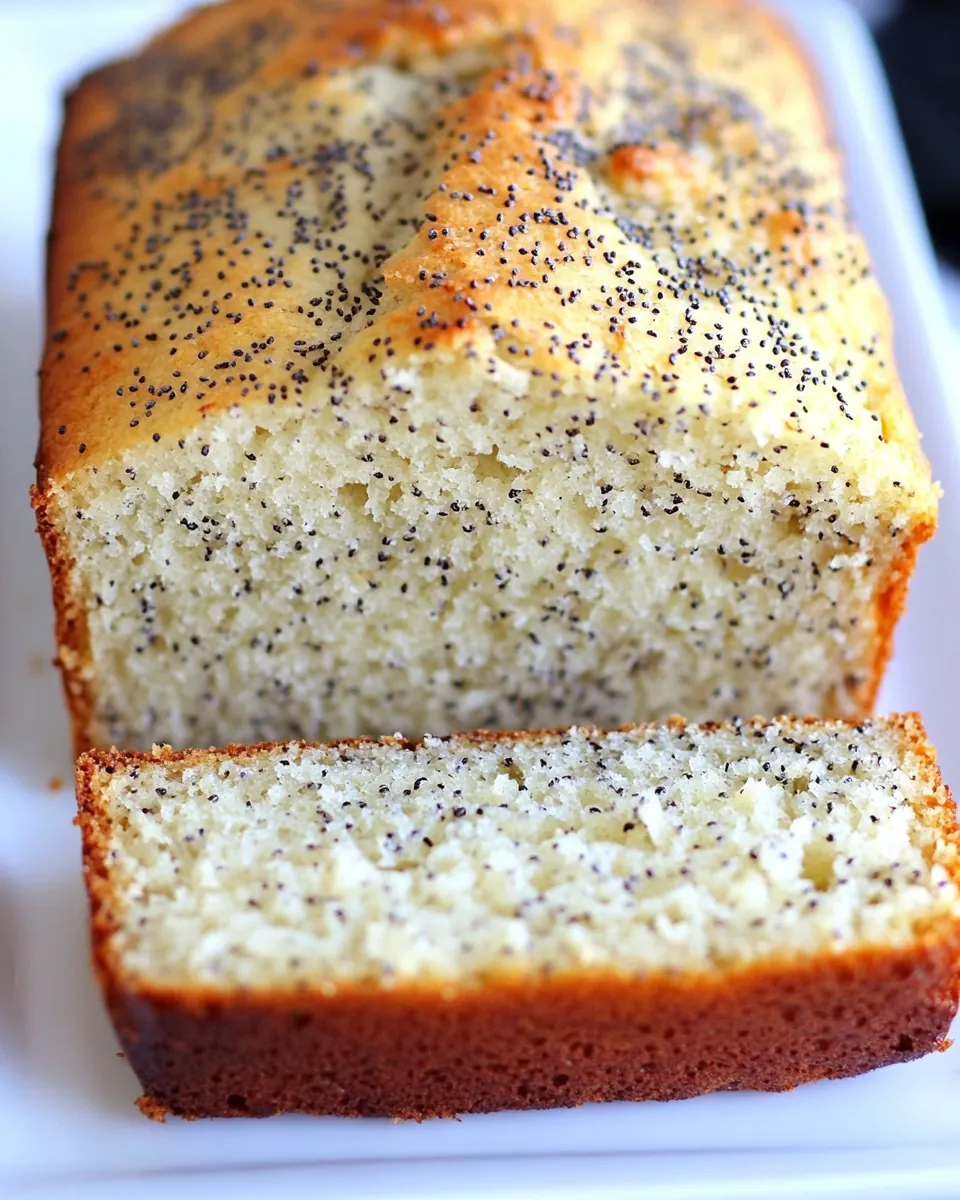
These directions are straightforward, and I recommend reading them once through before you start. The steps are forgiving but pay attention to mixing and visual cues to get the best texture and rise.
- Preheat oven to 350 degrees F. Grease and flour a standard 9 x 5'' loaf pan.: The kitchen fills with a faint warm smell as the oven climbs, and preheating ensures the loaf gets a steady, even rise from the start. You should hear the oven click or the fan begin, which signals readiness. If you skip this step and put batter into a cold oven the loaf will struggle to rise and can bake unevenly. A common pitfall is relying on an inaccurate oven temperature, so I suggest using an oven thermometer for precision.
- In a small bowl sift together flour, poppy seeds, baking powder and salt.: Rubbing the pan with butter or oil then dusting with flour helps the loaf release cleanly and promotes crisp, golden edges. I like to tap out excess flour and line the pan with parchment for extra insurance. If you overdo the flour coating it can leave a dry ring on the crust, so shake off the surplus. Visual cue: the pan surface should be evenly coated, not patchy.
- In another large bowl cream together the butter and sugar. Add the eggs and mix well.: Sifting aerates the dry ingredients and evenly distributes the baking powder and salt , which prevents dense pockets and ensures a uniform rise. As you sift, notice the flour lighten and the poppy seeds spread through the mix, a sign the loaf will have consistent texture. Mixing them thoroughly avoids uneven leavening. A common mistake is skipping sifting when the flour is lumpy, which can create pockets of dry flour in the batter.
- Add vanilla extract and almond extract. Add the milk and sour cream and mix well. Slowly stir in dry ingredients, just until combined.: Creaming traps tiny air pockets that help create a tender crumb, and the mixture should turn paler and slightly fluffy. Use a mixer on medium speed or vigorous whisking if doing it by hand. The sound changes from heavy to lighter, and the aroma becomes more buttery sweet. If the butter is too cold it will not cream properly, and if it is too warm the mixture can become greasy and lose structure.
- Pour batter into prepared pan. Bake for 40-50 minutes or until a toothpick inserted in the center comes out clean. Remove to a wire cooling rack to cool completely.: As you add the eggs , the batter will smooth and shine, and it may thin slightly as the proteins incorporate. Eggs contribute structure and moisture, so mixing until homogenous ensures an even crumb. Stop mixing as soon as the streaks of egg disappear to avoid overworking the batter, which can toughen the loaf. Watch for a glossy batter that holds a ribbon like texture briefly when lifted.
- Add vanilla extract and almond extract: These extracts instantly lift the batter aromatically, releasing warm and nutty scents that hint at the finished loaf. Blend them in gently so the flavor is evenly spread. If you add too much almond extract it can dominate and taste artificial, so measure it carefully. A sniff test after blending should reveal a balanced perfume of vanilla and almond.
- Add the milk and sour cream and mix well: Pouring in the milk and sour cream loosens the batter into a smooth, pourable consistency while adding tang and silkiness. Stir until the texture is uniform, and you should see a glossy batter that holds together. Overmixing at this stage is less risky than after adding dry ingredients, but excessive stirring can still lead to loss of volume. If the batter seems too stiff, a tablespoon more milk will help.
- Slowly stir in dry ingredients just until combined: When you fold in the sifted dry mix, you will feel the batter thicken and see the flour streaks vanish; stop mixing as soon as the streaks are gone. This gentle approach preserves air and prevents gluten overdevelopment, which keeps the loaf tender. The batter should be smooth but not completely flat, with a few small lumps acceptable. Overmixing here is the most common error and leads to a tight, chewy crumb.
- Pour batter into prepared pan: As you scrape the bowl, notice the batter flow into the pan and settle with a slightly domed surface. A light tap on the counter removes large air pockets and evens the batter. The surface should look even and glossy, not overly dry. If the batter is too thick to pour, a few gentle folds can loosen it, but avoid aggressive stirring.
- Bake for 40 to 50 minutes or until a toothpick inserted in the center comes out clean: During baking the kitchen will fill with a toasty almond scent, and the top will turn a warm golden brown. Check at around 40 minutes, inserting a toothpick into the center to test doneness; a few moist crumbs are fine, but wet batter is not. Leaving it too long can dry the loaf, while pulling it too early risks an underbaked center. If the top browns too quickly, tent with foil for the remaining time.
- Remove to a wire cooling rack to cool completely: Cooling on a rack prevents steam from condensing under the loaf, which keeps the crust crisp and stops the crumb from becoming soggy. As it cools the aroma continues to settle and the structure firms up, making slicing cleaner. Cutting too soon can compress the crumb and create a gummy texture, so patience here pays off. Aim for the loaf to reach just-warm or room temperature before slicing for best results.
Make It Your Own
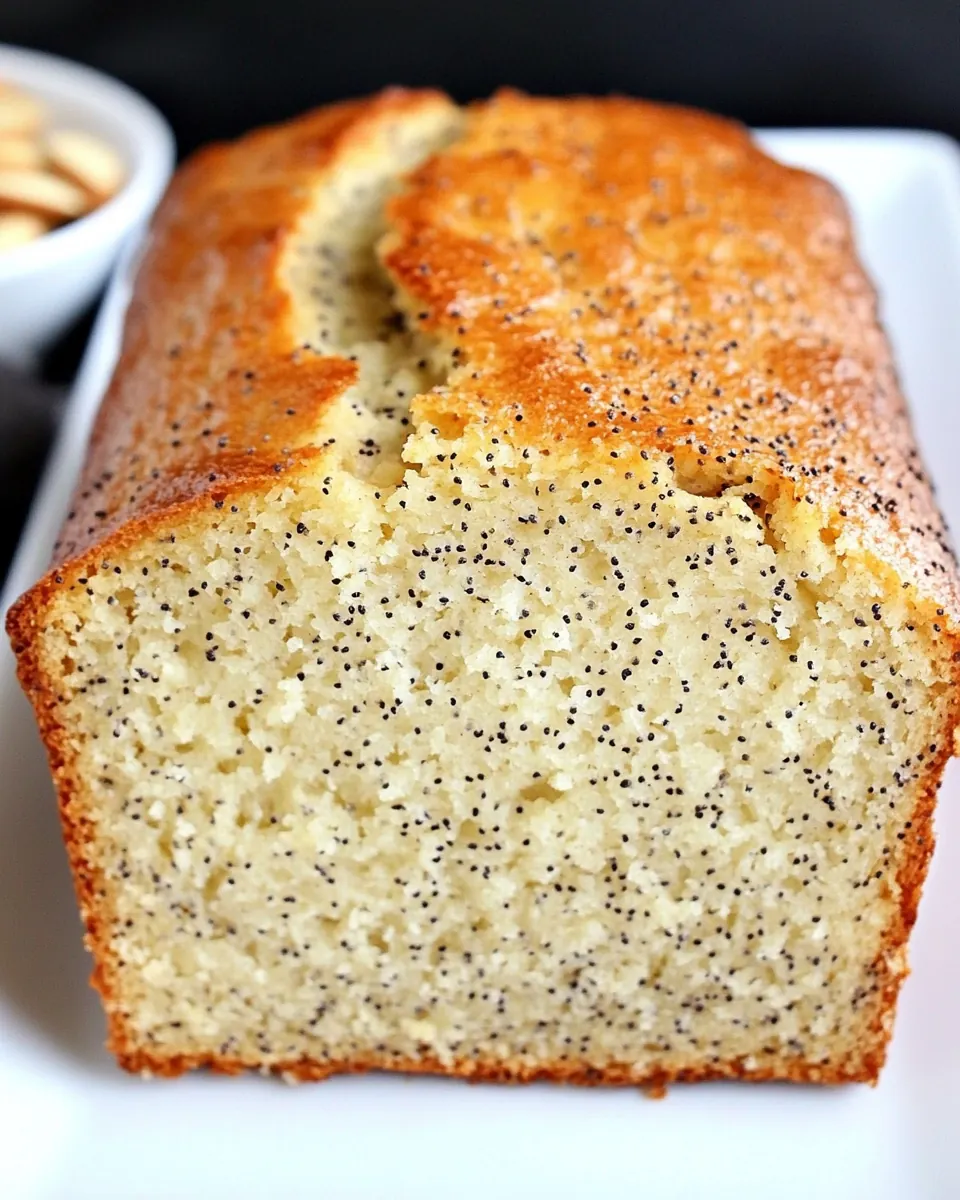
There are gentle variations you can make to personalize Almond Poppy Seed Bread. Below are tips that help you adapt texture, flavor, and presentation while keeping the loaf reliable and delicious.
- Adjust the sugar — If you prefer less sweetness, reduce the granulated sugar by up to one quarter cup, tasting as you go in future bakes to find your ideal balance.
- Storage method — Wrap the cooled loaf tightly in plastic wrap and store at room temperature for two days, or freeze sliced portions for up to two months for convenient breakfasts.
- Almond intensity — If the almond flavor feels strong, decrease the almond extract slightly next time; conversely, a tiny extra splash will make the aroma pop for special occasions.
- Temperature accuracy — Use an oven thermometer to ensure the stated 350 degrees F is accurate, which prevents overbrowning or underbaking.
- Mixing order — Follow the creaming method as written because it traps air for lift; changing to melted butter will alter the texture towards denser, cake like crumb.
- Swap tang — If you want a slightly brighter tang, substitute an equal amount of plain yogurt for the sour cream, which yields a similar moisture but a milder acid note.
How to Serve Almond Poppy Seed Bread
This loaf is versatile, and how you serve it can suit quiet mornings, casual gatherings, or special occasions. Below I list practical serving ideas, pairings, and storage suggestions to make the most of each bake.
- Breakfast spread — Serve slices slightly warm with a thin smear of butter and a side of fresh fruit, creating a balanced morning plate that highlights the almond aroma.
- Afternoon tea — Offer small slices with a mild cheese and jam for a tea time offering, the poppy seeds adding a pleasant texture contrast to soft accompaniments.
- Brunch centerpiece — Present the loaf whole on a board with labeled spreads so guests can help themselves; it pairs well with citrus marmalade to brighten the almond notes.
- Gift idea — Wrap a cooled loaf in parchment and tie with twine to give as a hostess gift, the loaf transporting well and feeling thoughtful yet unfussy.
- Storage tips — Keep at room temperature for up to two days wrapped tightly, refrigerate up to five days if your kitchen is warm, or freeze slices for convenient reheating.
- Seasonal pairings — In spring serve with fresh berries and light spreads, while in cooler months a dab of warmed fruit compote complements the almond warmth.
FAQ
Conclusion
This Almond Poppy Seed Bread stands out for its tender crumb, subtle crunch from poppy seeds, and bright almond fragrance that lifts every slice. Give it a try when you want an easy yet elegant loaf to brighten breakfasts, brunches, or thoughtful gifts, and enjoy how reliably comforting it is. I hope this recipe becomes one of your go to bakes, bringing a little homemade warmth to your table again and again.
Almond Poppy Seed Bread
Equipment
- Muffin Tin
Ingredients
- 1 2/3 cups all-purpose flour Provide structure and bulk to the loaf, forming the base of the batter and giving the bread its crumb; combine with leavening to create a tender texture when mixed properly. Use spoon-and-level measuring to avoid dense results and whisk with dry ingredients for even distribution.
- 1 1/2 tablespoons poppy seeds Add small crunchy seeds throughout the bread that contribute a subtle nutty flavor and visual appeal; distribute evenly in the dry mixture to prevent clumping. Toast lightly if desired to intensify flavor before folding into the batter.
- 1 teaspoon baking powder Leaven the batter by releasing carbon dioxide when heated, helping the loaf rise and become light; ensure it is fresh for effective lift. Sift or whisk with flour to incorporate evenly and prevent pockets of unreacted powder.
- 1/2 teaspoons salt Enhance and balance flavors while strengthening gluten slightly, helping to control fermentation and taste; dissolve salt into dry ingredients for even seasoning. Use the specified amount to avoid overpowering sweetness.
- 1 1/4 cups granulated sugar Provide sweetness and help with moisture and tenderization by interacting with fats and eggs; creaming sugar with butter helps aerate the batter for a finer crumb. Measure precisely and consider that sugar also contributes to crust color.
- 1/2 cup butter, room temperature Incorporate fat for richness, tenderness, and flavor while aiding in creaming with sugar to trap air for lift; use room-temperature butter for optimal creaming results. Cut into pieces for even creaming and avoid overmixing once combined with flour.
- 3 large eggs, room temperature Bind ingredients, provide structure, moisture, and leavening support through steam and protein coagulation; use room-temperature eggs for better emulsification with fats. Beat eggs gently into the creamed mixture to ensure uniform incorporation.
- 1 teaspoon vanilla extract Contribute warm, familiar flavor and a rounded vanilla note that complements almond and poppy; add to the wet mixture to evenly distribute aroma. Use pure extract for the best flavor impact at the specified amount.
- 1 teaspoon almond extract Impart a concentrated nutty almond flavor that complements the poppy seeds and enhances the overall profile; add with the vanilla to the wet ingredients for balanced flavor dispersion. Use sparingly to avoid an artificial or overpowering taste.
- 1/2 cup milk Add liquid to adjust batter consistency, contribute to tenderness, and help activate the leavening agents for proper rise; warm or room-temperature milk blends best with other wet ingredients. Measure accurately to maintain the intended loaf density.
- 1/4 cups sour cream Introduce acidity and additional moisture for a tangy richness that tenderizes the crumb and reacts with baking powder if needed; fold gently into the batter to maintain a smooth texture. Use specified amount to keep balance between richness and structure.
Instructions
- Preheat oven to 350 degrees F. Grease and flour a standard 9 x 5'' loaf pan.: The kitchen fills with a faint warm smell as the oven climbs, and preheating ensures the loaf gets a steady, even rise from the start. You should hear the oven click or the fan begin, which signals readiness. If you skip this step and put batter into a cold oven the loaf will struggle to rise and can bake unevenly. A common pitfall is relying on an inaccurate oven temperature, so I suggest using an oven thermometer for precision.
- In a small bowl sift together flour, poppy seeds, baking powder and salt.: Rubbing the pan with butter or oil then dusting with flour helps the loaf release cleanly and promotes crisp, golden edges. I like to tap out excess flour and line the pan with parchment for extra insurance. If you overdo the flour coating it can leave a dry ring on the crust, so shake off the surplus. Visual cue: the pan surface should be evenly coated, not patchy.
- In another large bowl cream together the butter and sugar. Add the eggs and mix well.: Sifting aerates the dry ingredients and evenly distributes the baking powder and salt , which prevents dense pockets and ensures a uniform rise. As you sift, notice the flour lighten and the poppy seeds spread through the mix, a sign the loaf will have consistent texture. Mixing them thoroughly avoids uneven leavening. A common mistake is skipping sifting when the flour is lumpy, which can create pockets of dry flour in the batter.
- Add vanilla extract and almond extract. Add the milk and sour cream and mix well. Slowly stir in dry ingredients, just until combined.: Creaming traps tiny air pockets that help create a tender crumb, and the mixture should turn paler and slightly fluffy. Use a mixer on medium speed or vigorous whisking if doing it by hand. The sound changes from heavy to lighter, and the aroma becomes more buttery sweet. If the butter is too cold it will not cream properly, and if it is too warm the mixture can become greasy and lose structure.
- Pour batter into prepared pan. Bake for 40-50 minutes or until a toothpick inserted in the center comes out clean. Remove to a wire cooling rack to cool completely.: As you add the eggs , the batter will smooth and shine, and it may thin slightly as the proteins incorporate. Eggs contribute structure and moisture, so mixing until homogenous ensures an even crumb. Stop mixing as soon as the streaks of egg disappear to avoid overworking the batter, which can toughen the loaf. Watch for a glossy batter that holds a ribbon like texture briefly when lifted.
- Add vanilla extract and almond extract: These extracts instantly lift the batter aromatically, releasing warm and nutty scents that hint at the finished loaf. Blend them in gently so the flavor is evenly spread. If you add too much almond extract it can dominate and taste artificial, so measure it carefully. A sniff test after blending should reveal a balanced perfume of vanilla and almond.
- Add the milk and sour cream and mix well: Pouring in the milk and sour cream loosens the batter into a smooth, pourable consistency while adding tang and silkiness. Stir until the texture is uniform, and you should see a glossy batter that holds together. Overmixing at this stage is less risky than after adding dry ingredients, but excessive stirring can still lead to loss of volume. If the batter seems too stiff, a tablespoon more milk will help.
- Slowly stir in dry ingredients just until combined: When you fold in the sifted dry mix, you will feel the batter thicken and see the flour streaks vanish; stop mixing as soon as the streaks are gone. This gentle approach preserves air and prevents gluten overdevelopment, which keeps the loaf tender. The batter should be smooth but not completely flat, with a few small lumps acceptable. Overmixing here is the most common error and leads to a tight, chewy crumb.
- Pour batter into prepared pan: As you scrape the bowl, notice the batter flow into the pan and settle with a slightly domed surface. A light tap on the counter removes large air pockets and evens the batter. The surface should look even and glossy, not overly dry. If the batter is too thick to pour, a few gentle folds can loosen it, but avoid aggressive stirring.
- Bake for 40 to 50 minutes or until a toothpick inserted in the center comes out clean: During baking the kitchen will fill with a toasty almond scent, and the top will turn a warm golden brown. Check at around 40 minutes, inserting a toothpick into the center to test doneness; a few moist crumbs are fine, but wet batter is not. Leaving it too long can dry the loaf, while pulling it too early risks an underbaked center. If the top browns too quickly, tent with foil for the remaining time.
- Remove to a wire cooling rack to cool completely: Cooling on a rack prevents steam from condensing under the loaf, which keeps the crust crisp and stops the crumb from becoming soggy. As it cools the aroma continues to settle and the structure firms up, making slicing cleaner. Cutting too soon can compress the crumb and create a gummy texture, so patience here pays off. Aim for the loaf to reach just-warm or room temperature before slicing for best results.
Notes
- Adjust the sugar — If you prefer less sweetness, reduce the granulated sugar by up to one quarter cup, tasting as you go in future bakes to find your ideal balance.
- Storage method — Wrap the cooled loaf tightly in plastic wrap and store at room temperature for two days, or freeze sliced portions for up to two months for convenient breakfasts.
- Almond intensity — If the almond flavor feels strong, decrease the almond extract slightly next time; conversely, a tiny extra splash will make the aroma pop for special occasions.
- Temperature accuracy — Use an oven thermometer to ensure the stated 350 degrees F is accurate, which prevents overbrowning or underbaking.
- Mixing order — Follow the creaming method as written because it traps air for lift; changing to melted butter will alter the texture towards denser, cake like crumb.
- Swap tang — If you want a slightly brighter tang, substitute an equal amount of plain yogurt for the sour cream, which yields a similar moisture but a milder acid note.