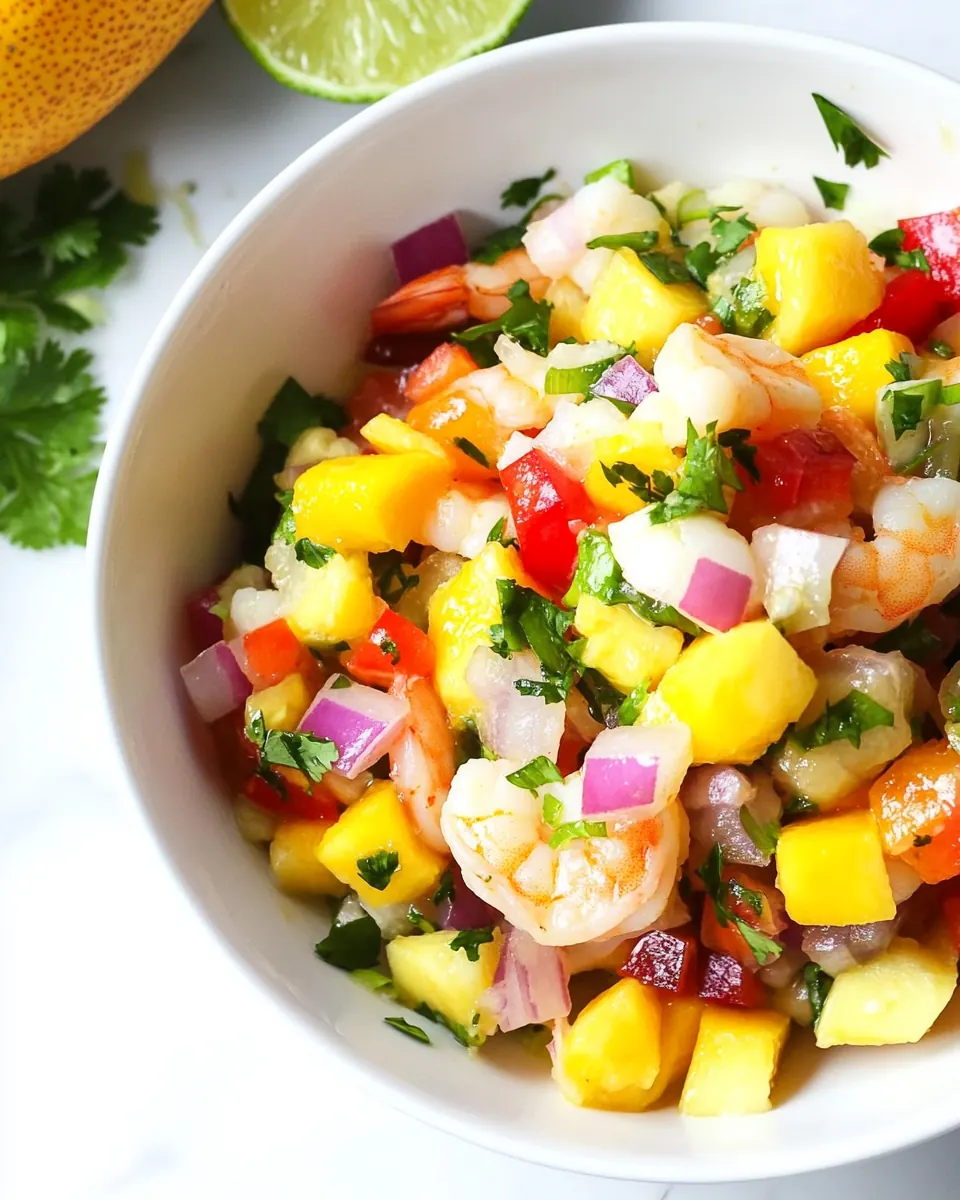
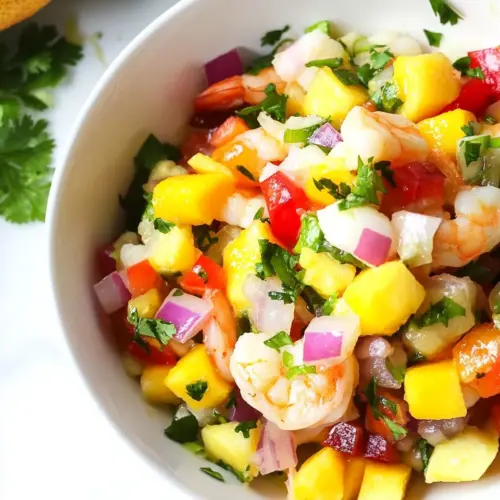
Tropical Mango Shrimp Ceviche
Tropical Mango Shrimp Ceviche is the kind of bright, sunlit dish I reach for when I want something that feels like a mini vacation in a bowl.
Years ago I brought a version of this to a beachside potluck and ended up swapping stories and recipes with half the crowd while everyone went back for seconds. The mix of mango and citrus cut through the briny shrimp in a way that felt both fresh and unexpectedly luxurious, and the crunchy pop of grape tomatoes kept each bite lively. I’ve adapted the proportions since that day, dialing in the lime for just the right amount of tang, and I still remember one guest who insisted it tasted like summer in a spoon.
I love how forgiving this recipe is, it lets you choose whether to start with raw shrimp for traditional ceviche texture, or to use cooked seafood if you prefer a safer route. The texture play between juicy orange segments and creamy avocado keeps the mouthfeel interesting, while a dash of sea salt pulls everything into harmony. When I make it for friends, I often prepare the components ahead so the flavors can mingle, then fold in the avocado last so it stays intact and pretty.
Recipe Snapshot
16 mins
15 mins
1 mins
Easy
200 kcal
American
Paleo, Gluten-Free
Appetizers
Large bowl, Knife, Cutting board
Why You Need This Tropical Mango Shrimp Ceviche
Bright, Balanced Flavors
I adore this dish because the acidity from the lime juice and the sweetness of mango create a perfect counterpoint to the savory shrimp. The contrast keeps each bite lively, and I find guests always comment on how clean and refreshing the flavors are.
Flexible Preparation
One of the reasons I return to this recipe is its flexibility. You can use raw shrimp that cures in acid, or choose pre cooked shrimp for speed and peace of mind. I often parboil if I want a firmer texture, and your choice will not ruin the overall dish.
Textural Contrast
I love the textural interplay here. The soft, creamy avocado and the juicy orange segments complement the snappy bite of chopped shrimp and the little burst from grape tomatoes. That variety makes people come back for another spoonful.
Light and Crowd Friendly
This recipe scales easily, and it’s naturally light and bright, which makes it perfect for summer gatherings and potlucks. I usually double the batch when entertaining because it disappears fast.
Minimal Equipment, Maximum Impact
Finally, the recipe requires simple tools and a short list of ingredients, yet it tastes thoughtful and deliberate. I like meals that feel special without demanding a lot of fuss, and this one fits that bill every time.
Ingredients Overview for Tropical Mango Shrimp Ceviche
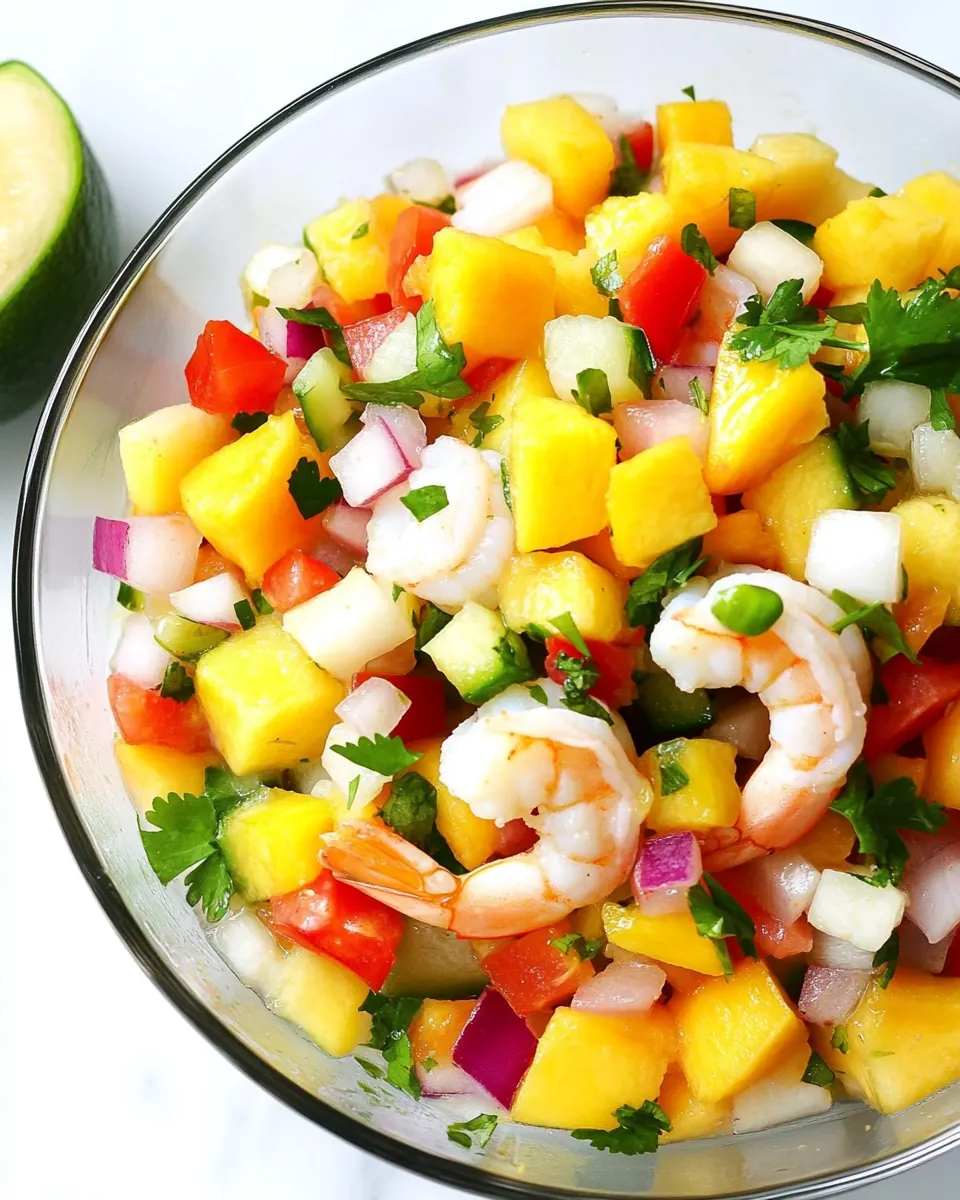
This combination of ingredients is all about bright contrasts and balance. The mango and orange bring sweetness and acidity, while the shrimp provides a meaty, oceanic backbone. Aromatics like red onion and cilantro add freshness, and the lime juice is the functional glue that lightly cures the seafood and ties flavors together.
- 1 cup grape tomatoes chopped: Adds bright, juicy bursts of mild sweetness and acidity that balance richer flavors; chop into small pieces to distribute color and texture throughout the ceviche. Works well raw and provides a fresh counterpoint to the shrimp and mango, enhancing visual appeal and mouthfeel.
- 1 mango diced (about 1 1/2 cups): Provides concentrated tropical sweetness and creamy texture when diced; choose a ripe mango for optimal flavor and aroma. Complements the citrus and seafood elements while adding body and a fragrant finish to each bite.
- 1 navel orange segmented and diced (about 1 cup): Contributes citrusy sweetness and subtle acidity that lifts the overall flavor profile; segment and dice to avoid membranes and seeds for a smooth texture. Offers a fragrant, bright layer that harmonizes with lime juice and cuts through the richness of avocado and shrimp.
- 1/2 red onion finely diced: Adds sharp, pungent crunch and aromatic bite when finely diced; use sparingly to avoid overpowering delicate flavors. Enhances contrast with sweet mango and citrus while providing textural interest and savory depth.
- 1/8 cup chopped jalapeno (optional): Brings a spicy, vegetal heat when chopped; adjust quantity based on desired spice level and remove seeds for milder heat. Offers a lively kick that enlivens the ceviche without masking the fresh seafood and fruit notes.
- 1 pound wild-caught peeled and deveined shrimp chopped (see note about raw shrimp): Supplies tender, protein-rich seafood that forms the ceviche's central component; chop into small pieces and follow safe handling or cooking notes for raw shrimp. Absorbs citrus and seasoning flavors, yielding a satisfying, savory foundation for the dish.
- 1/2 teaspoon fine sea salt: Season with a precise amount to enhance and unify flavors without making the dish salty; sprinkle and taste gradually. Helps bring out natural sweetness in the fruit and the savory taste of the shrimp for balanced seasoning.
- 1/4 cup lime juice: Acidifies and 'cooks' the shrimp while adding bright, zesty flavor; use freshly squeezed lime juice for best results. Balances sweetness from mango and orange while providing a clean, tart backbone that preserves and seasons the ceviche.
- 1 avocado diced: Contributes creamy, buttery texture and mild flavor when diced into cubes; add just before serving to prevent browning. Balances acidity and heat, lending richness that softens sharp and spicy elements for a rounded bite.
- 1/4 cup fresh cilantro roughly chopped () (optional): Adds a fresh, herbal brightness and subtle citrusy notes when roughly chopped; include if desired for aroma and color contrast. Provides a fragrant finish that ties together the fruit, spice, and seafood components with a clean, leafy accent.
How to Prepare Tropical Mango Shrimp Ceviche
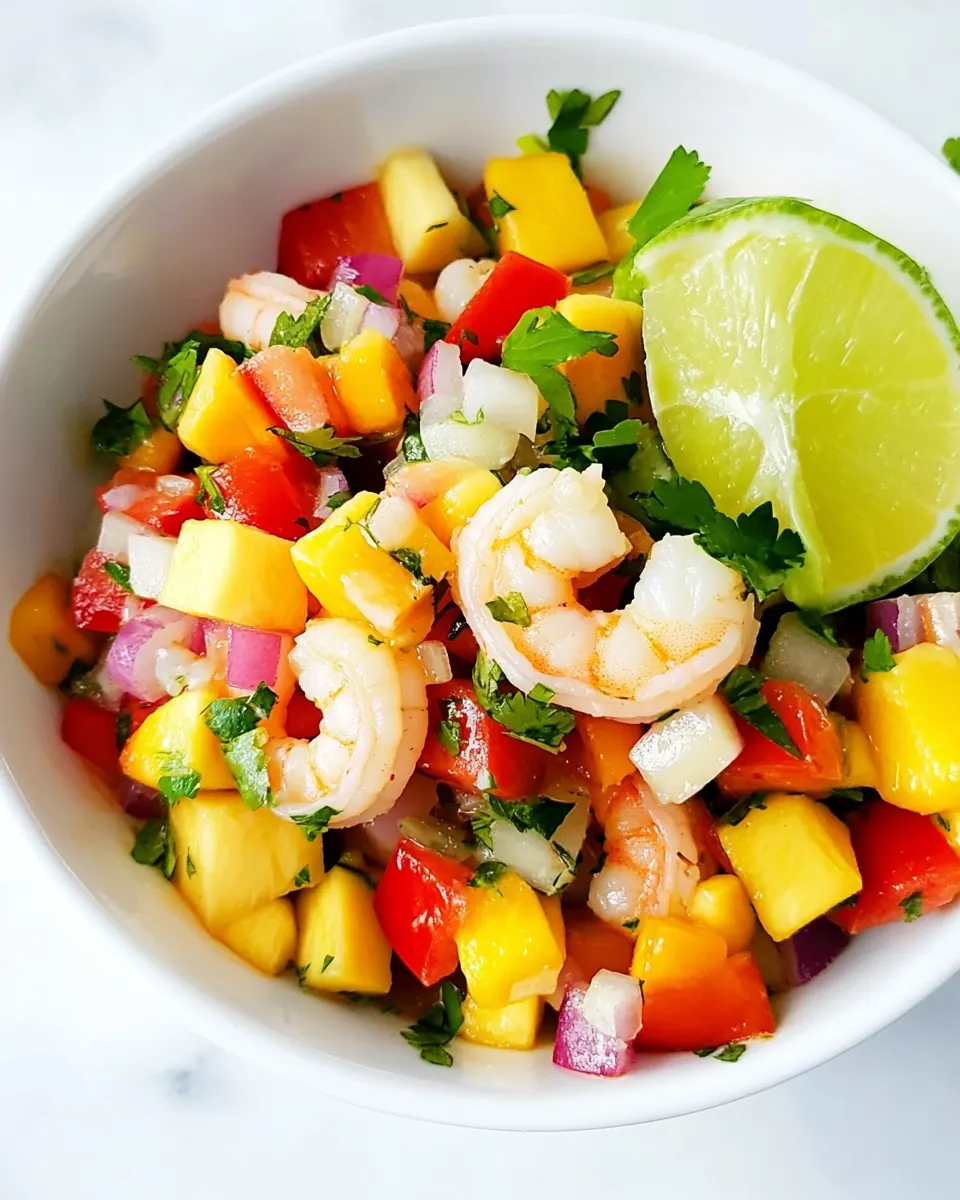
This ceviche comes together quickly, and the steps are straightforward. You will assemble the produce, combine with the shrimp, and let the acid work. Follow each step closely so textures stay vibrant and the final dish looks and tastes its best.
- In a large bowl, mix together the tomatoes, mango, orange, red onion, and jalapeño (if using).: The moment you toss the chopped grape tomatoes , diced mango , segmented orange , finely diced red onion , and chopped jalapeno you will notice a riot of colors and scents, citrus and tropical sweetness mingling with a faint onion aroma. Use a roomy bowl so juices can mingle without spilling, and gently fold rather than smash to preserve texture. At this stage you want each element to remain distinct, so aim for uniform pieces that distribute evenly. A common mistake is over mixing which makes the fruit release too much juice, watering down the final balance, so be delicate.
- Stir in the shrimp and season with salt.: When you add the chopped shrimp , you'll feel the mixture firm up visually as the seafood integrates. Sprinkle the sea salt evenly rather than dumping it in one spot to ensure balanced seasoning. The salt heightens the natural brininess of the shrimp and enhances the sweetness of the fruit. Avoid adding too much salt early on, you can always adjust after the lime has done its work, and oversalting at this stage can mask delicate flavors.
- Add the lime juice and toss.: Pour the fresh lime juice over the bowl so the acid bathes each piece, then toss gently to coat. The scent of citrus will become prominent, and you may notice the surface glisten as the juice spreads. This acid is what cures the shrimp , changing its texture and flavor, so ensure there is enough juice to contact all pieces. A common slip is skimping on juice, which leaves some shrimp undercured and inconsistent in texture.
- Cover and refrigerate for 20 minutes. When the shrimp is done 'cooking' in the lime juice, it should have an opaque color (more white or pinkish, instead of transparent).: As the ceviche chills, the aromas settle and the texture transforms; you will see the shrimp go from translucent to opaque, signaling that the acid has firmed the proteins. The mixture should cool and the flavors will meld, giving you a more cohesive bite. If you leave it too long, the fruit can break down and the shrimp may become overly firm, so test early if you prefer a softer texture. A typical mistake is assuming refrigeration equals cooking time, but visual cues like opacity are the reliable indicator.
- Just before serving, gently stir in the diced avocado and cilantro, if adding.: Right before plating, fold in the diced avocado and roughly chopped cilantro so the avocado stays vibrant and intact. The creamy texture of the avocado mellows the acidity and makes the mouthfeel luxurious, while the herbaceous cilantro injects a final burst of freshness. Stir carefully to avoid mashing the avocado , and add a small pinch of salt to taste if the mixture needs brightening. A common error is adding avocado too early which causes browning and a less appealing presentation.
Recipe Tips about Tropical Mango Shrimp Ceviche
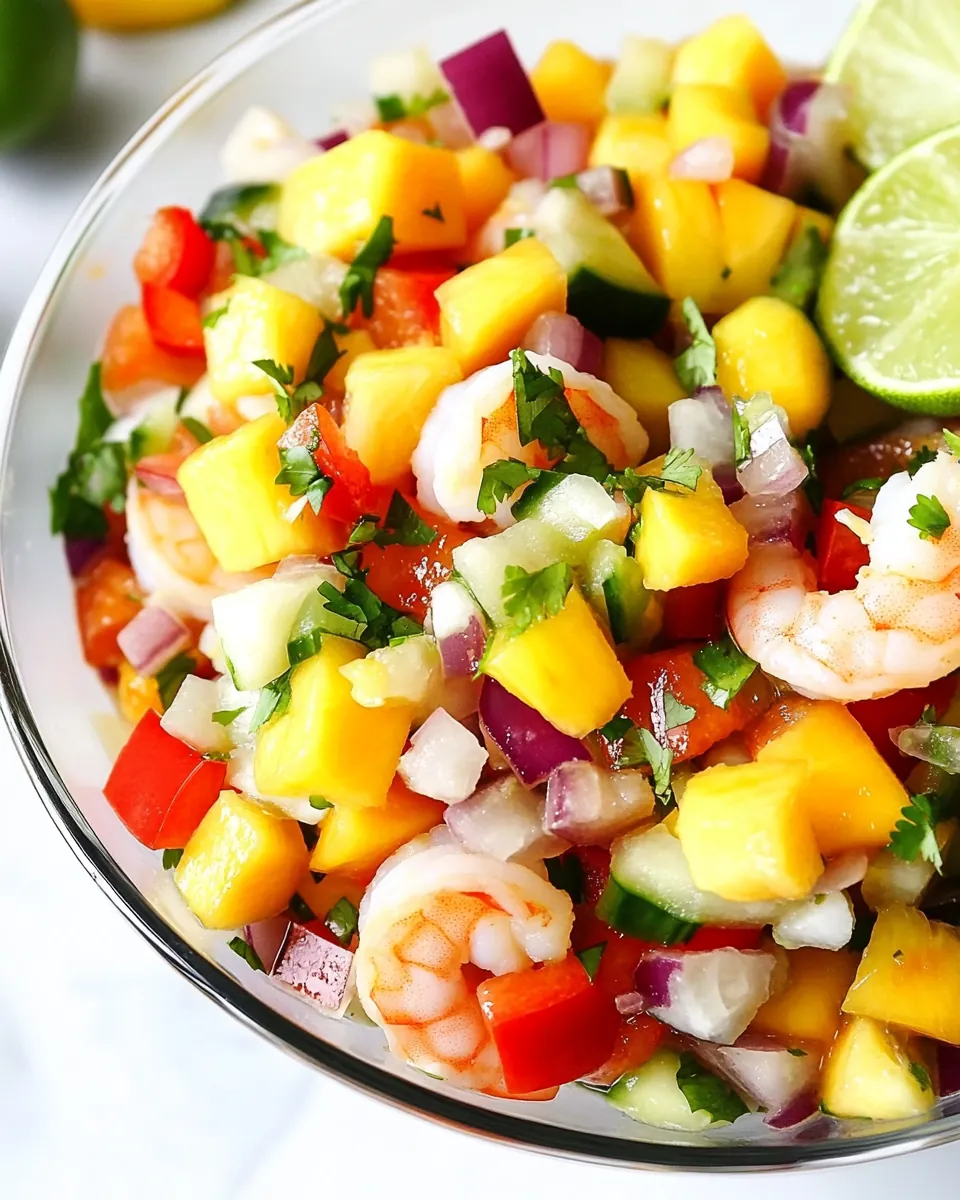
This ceviche shines when you respect timing and ingredient quality. Below are detailed tips to help the flavors sing and the textures stay just right.
- Choose ripe but firm mango — A mango that is fragrant and gives slightly to touch will provide sweetness without turning mushy. If the mango is overly ripe it may release too much juice and make the ceviche watery. Aim for uniform dice to keep texture balanced.
- Manage the lime to shrimp ratio — Enough lime juice is necessary to contact all shrimp pieces so they cure evenly. Pour gradually while tossing and ensure all pieces are coated. Under juicing results in uneven curing, while too much will wash out delicate flavors.
- Use cold ingredients — Keep your fruits and shrimp chilled before combining, cold temperatures help preserve texture and slow down flavor breakdown. If ingredients are warm, the avocado can brown and the mixture may become soggy.
- Parboil if unsure about raw shrimp — If you are uncomfortable with raw seafood, briefly boil the shrimp until opaque and shock in ice water. This gives you confidence and keeps the texture pleasantly firm. Overcooking in boiling water is a risk, so time it carefully.
- Add avocado last — Stirring in the diced avocado right before serving preserves its color and shape. Adding it earlier leads to browning and a softer texture that changes the mouthfeel of the dish.
What to Serve With Tropical Mango Shrimp Ceviche
This ceviche is versatile, and how you serve it can shift the entire meal. Below are serving ideas, pairings, and occasions that play well with its bright profile.
- With crisp tortilla chips — Offer a bowl of neutral, crunchy chips to scoop the ceviche, creating a delightful contrast between creamy avocado and crisp chip.
- As a light lunch — This recipe works wonderfully for a light midday meal when you want something fresh and not heavy, pairing well with an iced tea or sparkling water.
- At a summer gathering — Serve in a chilled glass bowl on a buffet, where guests can make small plates; the bright colors add visual appeal to any spread.
- For Ramadan iftar — The light, refreshing nature of the dish is a gentle way to break a fast, especially when paired with bread or small savory sides.
- Storage tips — Keep leftovers in an airtight container and consume within 24 hours, adding fresh avocado when serving to retain texture and color.
- Seasonal pairing — This shines in summer when mangoes and tomatoes are at their best, offering peak flavor and sweetest fruit.
FAQ
Conclusion
This recipe stands out because it combines tropical sweetness and bright acidity with tender shrimp for a lively, memorable dish. Give it a try the next time you want something that feels fresh and celebratory, it’s a simple way to bring vibrant flavors to your table. I hope you enjoy the interplay of textures and that it becomes a staple for warm weather meals and gatherings.
Tropical Mango Shrimp Ceviche
Equipment
- Large Bowl
- Knife
- Cutting Board
Ingredients
- 1 cup grape tomatoes chopped Adds bright, juicy bursts of mild sweetness and acidity that balance richer flavors; chop into small pieces to distribute color and texture throughout the ceviche. Works well raw and provides a fresh counterpoint to the shrimp and mango, enhancing visual appeal and mouthfeel.
- 1 mango diced (about 1 1/2 cups) Provides concentrated tropical sweetness and creamy texture when diced; choose a ripe mango for optimal flavor and aroma. Complements the citrus and seafood elements while adding body and a fragrant finish to each bite.
- 1 navel orange segmented and diced (about 1 cup) Contributes citrusy sweetness and subtle acidity that lifts the overall flavor profile; segment and dice to avoid membranes and seeds for a smooth texture. Offers a fragrant, bright layer that harmonizes with lime juice and cuts through the richness of avocado and shrimp.
- 1/2 red onion finely diced Adds sharp, pungent crunch and aromatic bite when finely diced; use sparingly to avoid overpowering delicate flavors. Enhances contrast with sweet mango and citrus while providing textural interest and savory depth.
- 1/8 cup chopped jalapeno optional Brings a spicy, vegetal heat when chopped; adjust quantity based on desired spice level and remove seeds for milder heat. Offers a lively kick that enlivens the ceviche without masking the fresh seafood and fruit notes.
- 1 pound wild-caught peeled and deveined shrimp chopped (see note about raw shrimp) Supplies tender, protein-rich seafood that forms the ceviche's central component; chop into small pieces and follow safe handling or cooking notes for raw shrimp. Absorbs citrus and seasoning flavors, yielding a satisfying, savory foundation for the dish.
- 1/2 teaspoon fine sea salt Season with a precise amount to enhance and unify flavors without making the dish salty; sprinkle and taste gradually. Helps bring out natural sweetness in the fruit and the savory taste of the shrimp for balanced seasoning.
- 1/4 cup lime juice Acidifies and 'cooks' the shrimp while adding bright, zesty flavor; use freshly squeezed lime juice for best results. Balances sweetness from mango and orange while providing a clean, tart backbone that preserves and seasons the ceviche.
- 1 avocado diced Contributes creamy, buttery texture and mild flavor when diced into cubes; add just before serving to prevent browning. Balances acidity and heat, lending richness that softens sharp and spicy elements for a rounded bite.
- 1/4 cup fresh cilantro roughly chopped (optional) Adds a fresh, herbal brightness and subtle citrusy notes when roughly chopped; include if desired for aroma and color contrast. Provides a fragrant finish that ties together the fruit, spice, and seafood components with a clean, leafy accent.
Instructions
- In a large bowl, mix together the tomatoes, mango, orange, red onion, and jalapeño (if using).: The moment you toss the chopped grape tomatoes , diced mango , segmented orange , finely diced red onion , and chopped jalapeno you will notice a riot of colors and scents, citrus and tropical sweetness mingling with a faint onion aroma. Use a roomy bowl so juices can mingle without spilling, and gently fold rather than smash to preserve texture. At this stage you want each element to remain distinct, so aim for uniform pieces that distribute evenly. A common mistake is over mixing which makes the fruit release too much juice, watering down the final balance, so be delicate.
- Stir in the shrimp and season with salt.: When you add the chopped shrimp , you'll feel the mixture firm up visually as the seafood integrates. Sprinkle the sea salt evenly rather than dumping it in one spot to ensure balanced seasoning. The salt heightens the natural brininess of the shrimp and enhances the sweetness of the fruit. Avoid adding too much salt early on, you can always adjust after the lime has done its work, and oversalting at this stage can mask delicate flavors.
- Add the lime juice and toss.: Pour the fresh lime juice over the bowl so the acid bathes each piece, then toss gently to coat. The scent of citrus will become prominent, and you may notice the surface glisten as the juice spreads. This acid is what cures the shrimp , changing its texture and flavor, so ensure there is enough juice to contact all pieces. A common slip is skimping on juice, which leaves some shrimp undercured and inconsistent in texture.
- Cover and refrigerate for 20 minutes. When the shrimp is done 'cooking' in the lime juice, it should have an opaque color (more white or pinkish, instead of transparent).: As the ceviche chills, the aromas settle and the texture transforms; you will see the shrimp go from translucent to opaque, signaling that the acid has firmed the proteins. The mixture should cool and the flavors will meld, giving you a more cohesive bite. If you leave it too long, the fruit can break down and the shrimp may become overly firm, so test early if you prefer a softer texture. A typical mistake is assuming refrigeration equals cooking time, but visual cues like opacity are the reliable indicator.
- Just before serving, gently stir in the diced avocado and cilantro, if adding.: Right before plating, fold in the diced avocado and roughly chopped cilantro so the avocado stays vibrant and intact. The creamy texture of the avocado mellows the acidity and makes the mouthfeel luxurious, while the herbaceous cilantro injects a final burst of freshness. Stir carefully to avoid mashing the avocado , and add a small pinch of salt to taste if the mixture needs brightening. A common error is adding avocado too early which causes browning and a less appealing presentation.
Notes
- Choose ripe but firm mango — A mango that is fragrant and gives slightly to touch will provide sweetness without turning mushy. If the mango is overly ripe it may release too much juice and make the ceviche watery. Aim for uniform dice to keep texture balanced.
- Manage the lime to shrimp ratio — Enough lime juice is necessary to contact all shrimp pieces so they cure evenly. Pour gradually while tossing and ensure all pieces are coated. Under juicing results in uneven curing, while too much will wash out delicate flavors.
- Use cold ingredients — Keep your fruits and shrimp chilled before combining, cold temperatures help preserve texture and slow down flavor breakdown. If ingredients are warm, the avocado can brown and the mixture may become soggy.
- Parboil if unsure about raw shrimp — If you are uncomfortable with raw seafood, briefly boil the shrimp until opaque and shock in ice water. This gives you confidence and keeps the texture pleasantly firm. Overcooking in boiling water is a risk, so time it carefully.
- Add avocado last — Stirring in the diced avocado right before serving preserves its color and shape. Adding it earlier leads to browning and a softer texture that changes the mouthfeel of the dish.