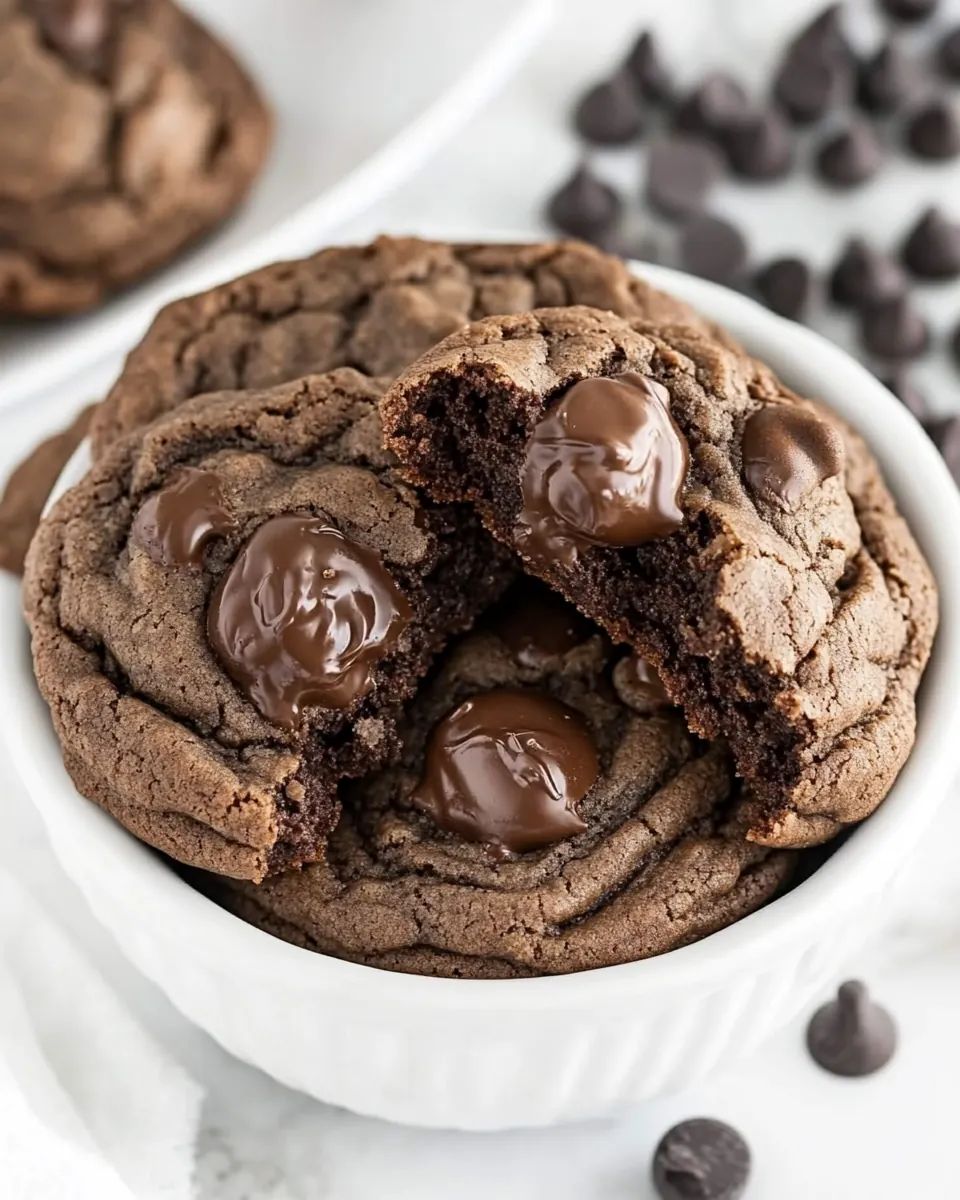
Triple Chocolate Cookies
Triple Chocolate Cookies were the kind of treat I carried to every bake sale as a kid, the cookies that vanished first from the tin and left friends asking for the recipe. I still remember the warmth of the kitchen, the sound of chocolate melting, and the way the aroma made the whole house feel like a hug. When I make these now, I think about those quick afternoons, a mug of milk nearby, and the small rituals that make baking feel like a conversation with the past.
Once, on a rainy Sunday, I baked a double batch and invited the neighborhood kids over for taste testing. We laughed as some declared themselves official judges while others insisted on dunking the warm cookies into glasses of cold milk. I love how Triple Chocolate Cookies can be both a casual snack and the star of a homemade gift, depending on how you plate them. There is a comfort in stirring batter and watching chocolate transform from glossy liquid to rich pockets of molten goodness.
Recipe Snapshot
30 mins
20 mins
10 mins
Medium
200 kcal
American
Gluten-Free, Low FODMAP
Desserts
Mixer, Paddle Attachment, Mixing Bowls, Spatula, Cookie Sheets, Parchment Paper, Wire Rack, Measuring Cups, Microwave Safe Bowl
The Charm of This Triple Chocolate Cookies
Loaded with chocolate depth
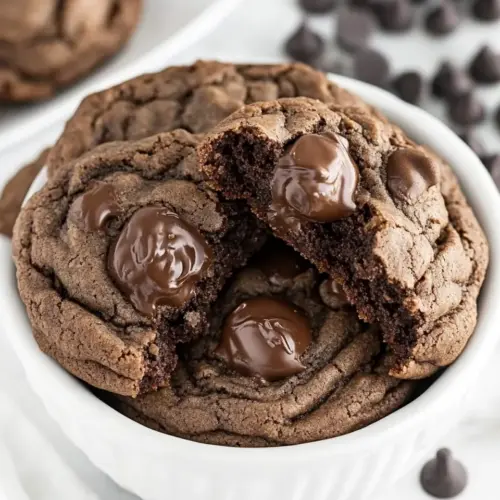
I adore that Triple Chocolate Cookies layer chocolate in three forms, which gives each bite complexity. The melted chopped semisweet chocolate creates a dense, fudgy body, the cocoa powder offers an earthy backbone, and the semisweet chocolate chips give those familiar pockets of melty sweetness. I find that this combo prevents any single element from overpowering the others, and you end up with a balanced, deeply chocolatey cookie.
Fudgy yet scoopable texture
One reason I keep returning to this recipe is the texture, it manages to be both fudgy and easy to scoop. The trick is the warm melted chocolate folded into the batter and the careful mixing of the dry ingredients. That yields dough that is dense enough to feel indulgent, but not so stiff that it resists shaping. When I want perfectly round cookies, I roll them with slightly buttered hands, and they always come out glossy and crackled on top.
Simple pantry-friendly ingredients
I love how approachable these cookies are, they mostly rely on staples like flour, butter, brown sugar, and eggs. You do need good semisweet chocolate and quality cocoa powder to make the flavor sing, but otherwise this recipe is perfect for a quick, satisfying bake when you want something special without a complicated ingredient run.
Flexible cooling and bake window
Another standout is how forgiving the recipe is around chilling and baking. If your dough is a touch soft, a short rest helps it firm up, and the bake time aims for set edges with soft centers, so you have margin for oven variance. I often tell friends that the cookies are happiest when you remove them while the centers still feel soft, that residual heat finishes the job on the cookie sheet, producing a tender center and slightly crisp edge.
Great for sharing
Finally, these cookies travel well and make beautiful gifts. I’ve packaged them in simple boxes for neighbors, and they arrive still tender and crackled. Because the flavor is crowd pleasing, they work for parties, holidays, or a quiet afternoon treat, which is why I keep this recipe in my regular rotation.
What to Gather for Triple Chocolate Cookies
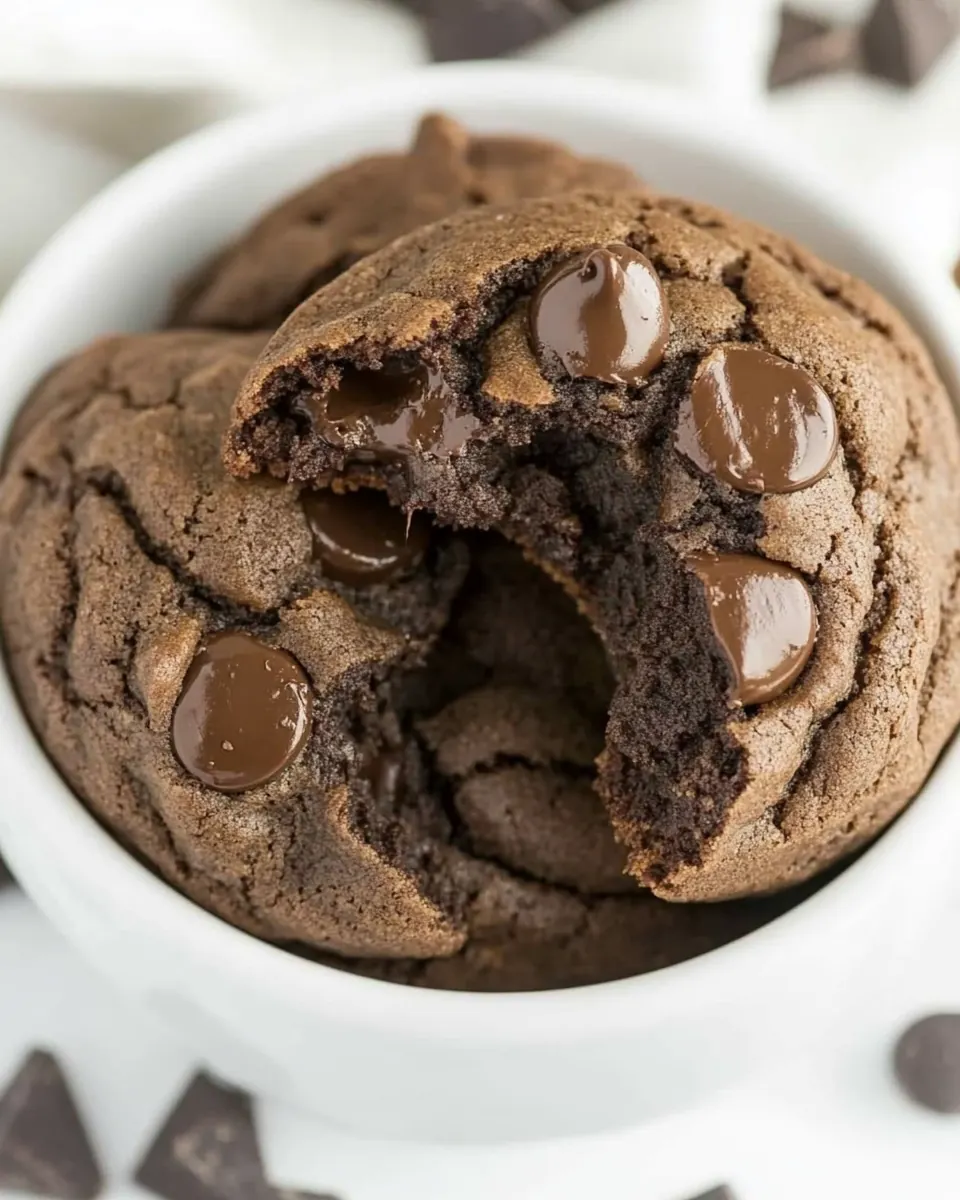
These ingredients are all about building richness and structure. The dry players like flour, cocoa powder, and baking powder create the framework and chocolate backbone, while the wet elements such as butter, eggs, and melted semisweet chocolate make the dough fudgy and tender. Sugars add both sweetness and moisture, and the chocolate chips deliver those signature melty moments.
- 2 cups flour: Provide structure and bulk to the cookie dough, forming the base that binds wet and dry components together. Develops gluten when mixed, which affects chewiness and texture depending on handling. Sifts or measures accurately for consistent cookie spread and density.
- 1/2 cup Dutch-processed cocoa powder: Add deep chocolate flavor and dark color, contributing a richer, more intense cocoa profile than natural cocoa. Enhances the cookie's overall chocolate complexity and can slightly affect moisture and texture. Use Dutch–processed for a smoother, less acidic bite and consistent flavor.
- 2 teaspoons baking powder: Leaven the dough lightly to produce a tender crumb and encourage modest rise during baking. Balances density from the flour and cocoa so cookies are not overly flat or heavy. Mix evenly with dry ingredients to ensure uniform lift.
- 1/2 teaspoon salt: Enhance overall flavor by balancing sweetness and deepening chocolate notes while supporting chemical leavening. Helps bring out other flavors and control the final taste profile. Use measured amounts to avoid overly salty results.
- 16 ounces semisweet chocolate, chopped: Introduce melted or chopped chocolate for intense chocolate richness and silky pockets of chocolate within the cookie. Adds depth of flavor and varying textures when combined with chips. Chop to desired size to control distribution and melting behavior.
- 4 large eggs: Provide moisture, structure, and richness; eggs also act as an emulsifier to help ingredients combine. Contribute to leavening and tender crumb when beaten and incorporated. Use room-temperature eggs for better integration into the dough.
- 2 teaspoons vanilla extract: Impart aromatic sweetness and round out chocolate flavors with warm, floral vanilla notes. Enhances perception of sweetness without adding sugar and balances bitter cocoa elements. Stir in with wet ingredients for even distribution.
- 1 2 teaspoons instant coffee or espresso powder: Accentuate and deepen chocolate flavor with a subtle coffee or espresso nuance that amplifies cocoa notes without making the cookie taste like coffee. Dissolves quickly and intensifies overall richness. Adjust amount to avoid noticeable coffee flavor if undesired.
- 10 tablespoons butter, softened but still firm: Add richness, moisture, and tenderness through fat, helping cookies spread and develop a soft interior with slightly crisp edges. Creamed with sugars, butter traps air for structure and lift. Keep softened but firm to properly cream and incorporate.
- 1 1/2 cups brown sugar: Contribute moist sweetness and caramel-like depth that enhances chewiness and flavor complexity. Brown sugar's molasses content also affects cookie color and moisture retention for a tender texture. Pack firmly when measuring for accuracy.
- 1/2 cup granulated sugar: Provide primary sweetness and contribute to spreading and slight crispness at the edges when creamed with butter. Granulated sugar helps with aeration and light texture in the finished cookie. Measure accurately to balance sweetness and structure.
- 12 ounces semisweet chocolate chips: Offer additional pockets of melted chocolate and textural contrast with chunks that remain distinct in the baked cookies. Reinforce the triple-chocolate concept and add varying chocolate intensity. Fold in at the end to maintain distribution and prevent overmelting.
Triple Chocolate Cookies Instructions
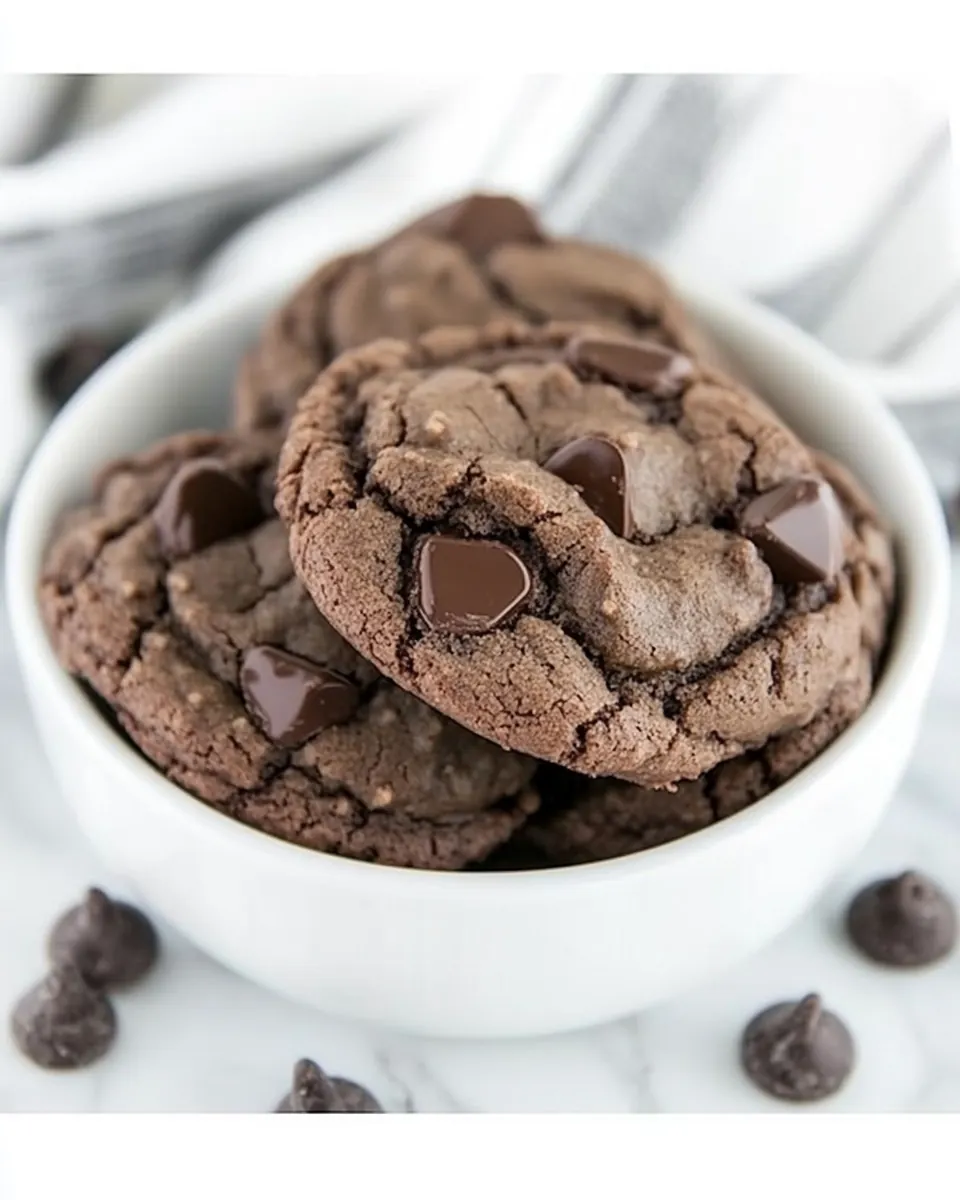
These instructions guide you through building a dense, fudgy dough and turning it into cookies with melty pockets of chocolate. The steps are written to help you sense when things are right, and to avoid common pitfalls that change texture or flavor. Read them once, then follow along while baking for best results.
- Whisk together flour, cocoa, baking powder, and salt in a medium bowl; set aside. Melt chocolate in a bowl in the microwave using 30-second increments, stirring once or twice, until smooth. Set bowl aside.: The dry mix will smell faintly of cocoa and have a dusty, velvety texture, which readies it to absorb the wet ingredients for a fudgy consistency. Doing this ahead ensures even distribution so pockets of baking powder do not create odd bumps, and the cocoa disperses for uniform color. If you skip thorough whisking you might find streaks of cocoa or uneven rise in baked cookies.
- Beat eggs and vanilla lightly with a fork, sprinkle the coffee powder over to dissolve, and set aside. I do this in a one-cup Pyrex measuring cup.: As the semisweet chocolate softens you will see glossy ribbons form, and stirring will encourage a silky, homogeneous sheen; the smell becomes intensely chocolatey and warm. Microwaving short bursts prevents scorching, and stirring evens out hot spots. If you overheat, the chocolate can seize into a grainy mass, so stop heating when a few unmelted pieces remain and stir until smooth.
- In the bowl of a standing mixer fitted with the paddle attachment, beat butter just until smooth and creamy.: This mixture will smell aromatic from the vanilla and slightly bitter from the dissolved coffee, adding depth. Dissolving the coffee into the eggs avoids gritty specks in the dough and helps the flavor integrate. If the coffee does not dissolve well, your cookies may have uneven flavor pockets, so ensure you whisk it until gone.
- Beat in sugars until combined. Reduce speed to low and gradually beat in egg mixture until incorporated.: The butter will soften to a pale, satiny texture and a faint dairy aroma will develop, which helps aeration. Stopping when it is simply smooth preserves the right amount of air for texture. If you overbeat to the point of becoming too light, the cookies can spread too much when baked.
- Add chocolate and beat until just combined. Scrape the bottom and sides of the bowl with a spatula. With the mixer at low speed, add the flour mixture and mix until combined. Do not overbeat. Mix in chocolate chips.: As the brown sugar and granulated sugar incorporate, the mixture will smell caramel like and feel slightly grainy then smooth; this creates the moisture balance and sweetness backbone. Proper creaming helps dissolve the sugars, preventing grainy pockets in the dough. Under mixing can leave undissolved sugar, which makes gritty bites, while over mixing can create too much incorporation of air.
- If your dough is not fudge-like and scoopable, cover it with plastic and let rest for about 30 minutes. I did not need to do this step.: The batter will glossy slightly and smell richer as the egg and vanilla meld in, creating a cohesive emulsion that supports the melted chocolate . Adding slowly prevents curdling and ensures a smooth batter. If you add the eggs too fast the mixture can split, leading to an uneven texture.
- Preheat oven to 350º. Line cookie sheets with parchment paper. Leaving about 1 1/2-inches between each ball, scoop dough using a medium cookie disher to form heaping tablespoon balls of dough.: The melted semisweet chocolate will cool the batter and create a dense, luxurious texture; visually the mix turns darker and thicker. Scraping the bottom and sides with a spatula ensures no streaks of flour remain. Overmixing here will incorporate too much air and change the tender, fudgy result, so stop when streaks disappear.
- Roll each dough ball between your hands to make them nice and round. Press in a few extra chocolate chips to garnish, if desired.: The dough should come together into a thick, scoopable mass, with the flour no longer visible. This step sets the cookie structure, and mixing just until combined prevents tough cookies from overdeveloped gluten. A common error is overmixing which yields dense, chewy cookies rather than tender ones.
- Bake cookies until edges have just begun to set but centers are still very soft about 10 minutes.: The semisweet chocolate chips will stud the dough, giving contrasting pockets of melty chocolate and small bursts of sweetness. Folding them in by hand prevents beating air into the dough and keeps the chips intact. Using a mixer on high can crush chips and cause them to melt too much into the batter.
- Cool cookies on sheets for about 10 minutes, slide parchment with cookies onto a wire rack, and cool to room temperature.: Resting chills the dough slightly, allowing fats to firm and hydration to even out, which makes it easier to scoop and yields more uniform cookies. The texture will go from glossy to slightly firmer, and you will smell deeper chocolate notes as it sets. If your dough is already scoopable do not force a long chill, as extended refrigeration can dry the surface and alter bake time.
- Preheat oven to 350º: The oven will come up to a steady heat that encourages the edges to set while the centers remain soft; you may notice a warm, ambient scent of heat when it reaches temperature. A fully preheated oven ensures consistent baking and predictable spread. Baking in an underheated oven will cause uneven cook and excessive spreading, so always preheat fully.
- Line cookie sheets with parchment paper: Parchment provides an even, nonstick surface that encourages gentle browning and easy removal, and you will notice the bottoms turning a tender golden rather than sticking. It also protects against hot spots on the pan. Skipping parchment can cause cookies to stick and break when transferred.
- Leaving about 1 1/2 inches between each ball, scoop dough using a medium cookie disher to form heaping tablespoon balls of dough: Spacing allows for even expansion, and the cookie disher produces uniform sizes so they bake at the same rate. You should hear a slight thud as the scooper releases the dough into the pan, and the balls will be glossy and compact. Crowding the pan will yield merged cookies and inconsistent centers.
- Roll each dough ball between your hands to make them nice and round: Rolling smooths the surface for prettier domes and seals chocolate chips into the interior, producing a uniform crackle as they bake. If you press a few extra chocolate chips on top, they will melt into a pretty garnish. If your hands are too warm the dough will soften excessively, so cool your palms or chill briefly to maintain shape.
- Bake cookies until edges have just begun to set but centers are still very soft about 10 minutes: As the cookies bake you will see the edges take on a firmer, slightly satin sheen while centers remain domed and tender, and the room will fill with a warm chocolate aroma. Removing them while centers are soft ensures a chewy, fudgy interior once cooled. Leaving them too long will produce drier, firmer cookies rather than that desirable soft center.
- Cool cookies on sheets for about 10 minutes, slide parchment with cookies onto a wire rack, and cool to room temperature: During the rest they finish setting; you will notice the centers firming slightly and the bottoms becoming perfectly set. Sliding the parchment preserves shape and prevents breakage during transfer. If you try to move them too soon they will fall apart, so patience here protects the texture.
How to Switch It Up
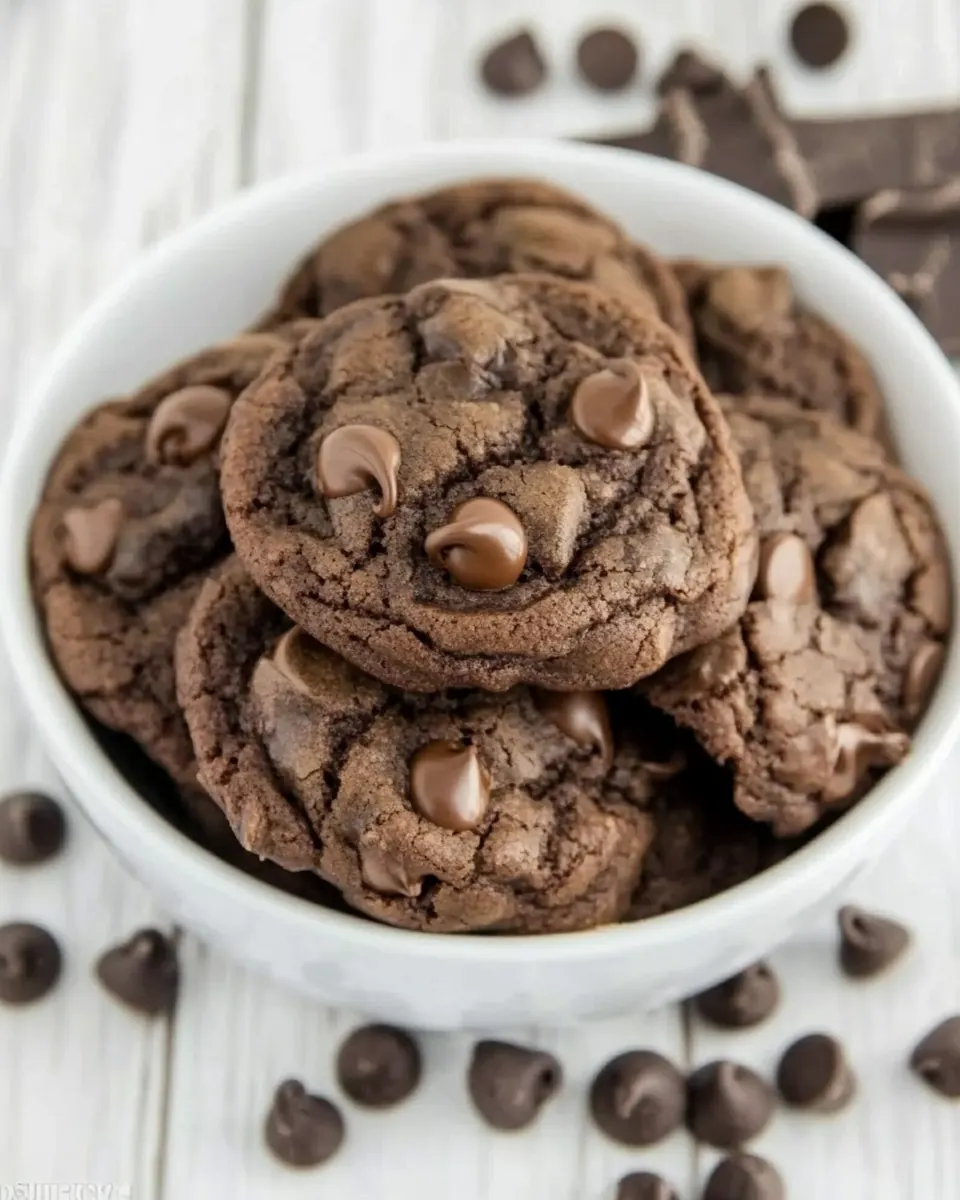
There are a few simple ways to vary these cookies without changing their core identity. Below are practical, tested suggestions that keep the fudgy texture intact while playing with finish, presentation, and mixing techniques.
- Use all chopped chocolate instead of some chips to create larger pockets of molten chocolate and a more luxurious, glossy crumb.
- Try a shorter bake time by removing cookies when centers wobble slightly for an ultra gooey interior that firms as they cool.
- Chill the dough briefly to reduce spread and create taller, more domed cookies with a chewier center.
- Press extra chips on top for a bold visual finish and immediate melty bites on the top of each cookie.
- Swap brown sugar ratios to adjust chewiness, increasing brown sugar for more moisture and chew, or reducing it for crisper edges.
Serve This Triple Chocolate Cookies With
These cookies are flexible company at gatherings, they travel well and pair with a variety of drinks and occasions. Below are serving ideas, contexts, and storage notes to keep them tasting their best.
- Classic pairing: Serve with tall glasses of cold milk for contrast, the milk cools the warm chocolate and balances sweetness.
- Gift packaging: Stack in a small box with parchment and tie it with twine for neighborly gifts or bake sale presentations.
- Party platter: Arrange on a wide platter with small labels for flavors to showcase their triple chocolate identity at casual gatherings.
- Storage: Keep at room temperature in an airtight container for up to three days, or freeze baked cookies layered with parchment for longer storage.
- Occasions: These cookies work for birthdays, afternoon tea, or festive baking during holidays where a chocolate forward dessert is welcome.
FAQ
Conclusion
These Triple Chocolate Cookies stand out because they layer melted semisweet chocolate, cocoa powder, and chocolate chips for deep, complex flavor and a fudgy texture. Give them a try when you want a chocolate-forward bake that feels both indulgent and approachable, and don’t be afraid to share them with friends. I hope you enjoy the process as much as the warm, melty result, and that these cookies find a spot in your rotation for cozy weekends and spontaneous gatherings.
Triple Chocolate Cookies
Equipment
- Mixer
- Paddle attachment
- Mixing Bowls
- Spatula
- Cookie Sheets
- Parchment Paper
- Wire Rack
- Measuring Cups
- Microwave-safe Bowl
Ingredients
- 2 cups flour Provide structure and bulk to the cookie dough, forming the base that binds wet and dry components together. Develops gluten when mixed, which affects chewiness and texture depending on handling. Sifts or measures accurately for consistent cookie spread and density.
- 1/2 cup Dutch-processed cocoa powder Add deep chocolate flavor and dark color, contributing a richer, more intense cocoa profile than natural cocoa. Enhances the cookie's overall chocolate complexity and can slightly affect moisture and texture. Use Dutch-processed for a smoother, less acidic bite and consistent flavor.
- 2 teaspoons baking powder Leaven the dough lightly to produce a tender crumb and encourage modest rise during baking. Balances density from the flour and cocoa so cookies are not overly flat or heavy. Mix evenly with dry ingredients to ensure uniform lift.
- 1/2 teaspoon salt Enhance overall flavor by balancing sweetness and deepening chocolate notes while supporting chemical leavening. Helps bring out other flavors and control the final taste profile. Use measured amounts to avoid overly salty results.
- 16 ounces semisweet chocolate, chopped Introduce melted or chopped chocolate for intense chocolate richness and silky pockets of chocolate within the cookie. Adds depth of flavor and varying textures when combined with chips. Chop to desired size to control distribution and melting behavior.
- 4 large eggs Provide moisture, structure, and richness; eggs also act as an emulsifier to help ingredients combine. Contribute to leavening and tender crumb when beaten and incorporated. Use room-temperature eggs for better integration into the dough.
- 2 teaspoons vanilla extract Impart aromatic sweetness and round out chocolate flavors with warm, floral vanilla notes. Enhances perception of sweetness without adding sugar and balances bitter cocoa elements. Stir in with wet ingredients for even distribution.
- 1 -2 teaspoons instant coffee or espresso powder Accentuate and deepen chocolate flavor with a subtle coffee or espresso nuance that amplifies cocoa notes without making the cookie taste like coffee. Dissolves quickly and intensifies overall richness. Adjust amount to avoid noticeable coffee flavor if undesired.
- 10 tablespoons butter, softened but still firm Add richness, moisture, and tenderness through fat, helping cookies spread and develop a soft interior with slightly crisp edges. Creamed with sugars, butter traps air for structure and lift. Keep softened but firm to properly cream and incorporate.
- 1 1/2 cups brown sugar Contribute moist sweetness and caramel-like depth that enhances chewiness and flavor complexity. Brown sugar's molasses content also affects cookie color and moisture retention for a tender texture. Pack firmly when measuring for accuracy.
- 1/2 cup granulated sugar Provide primary sweetness and contribute to spreading and slight crispness at the edges when creamed with butter. Granulated sugar helps with aeration and light texture in the finished cookie. Measure accurately to balance sweetness and structure.
- 12 ounces semisweet chocolate chips Offer additional pockets of melted chocolate and textural contrast with chunks that remain distinct in the baked cookies. Reinforce the triple-chocolate concept and add varying chocolate intensity. Fold in at the end to maintain distribution and prevent overmelting.
Instructions
- Whisk together flour, cocoa, baking powder, and salt in a medium bowl; set aside. Melt chocolate in a bowl in the microwave using 30-second increments, stirring once or twice, until smooth. Set bowl aside.: The dry mix will smell faintly of cocoa and have a dusty, velvety texture, which readies it to absorb the wet ingredients for a fudgy consistency. Doing this ahead ensures even distribution so pockets of baking powder do not create odd bumps, and the cocoa disperses for uniform color. If you skip thorough whisking you might find streaks of cocoa or uneven rise in baked cookies.
- Beat eggs and vanilla lightly with a fork, sprinkle the coffee powder over to dissolve, and set aside. I do this in a one-cup Pyrex measuring cup.: As the semisweet chocolate softens you will see glossy ribbons form, and stirring will encourage a silky, homogeneous sheen; the smell becomes intensely chocolatey and warm. Microwaving short bursts prevents scorching, and stirring evens out hot spots. If you overheat, the chocolate can seize into a grainy mass, so stop heating when a few unmelted pieces remain and stir until smooth.
- In the bowl of a standing mixer fitted with the paddle attachment, beat butter just until smooth and creamy.: This mixture will smell aromatic from the vanilla and slightly bitter from the dissolved coffee, adding depth. Dissolving the coffee into the eggs avoids gritty specks in the dough and helps the flavor integrate. If the coffee does not dissolve well, your cookies may have uneven flavor pockets, so ensure you whisk it until gone.
- Beat in sugars until combined. Reduce speed to low and gradually beat in egg mixture until incorporated.: The butter will soften to a pale, satiny texture and a faint dairy aroma will develop, which helps aeration. Stopping when it is simply smooth preserves the right amount of air for texture. If you overbeat to the point of becoming too light, the cookies can spread too much when baked.
- Add chocolate and beat until just combined. Scrape the bottom and sides of the bowl with a spatula. With the mixer at low speed, add the flour mixture and mix until combined. Do not overbeat. Mix in chocolate chips.: As the brown sugar and granulated sugar incorporate, the mixture will smell caramel like and feel slightly grainy then smooth; this creates the moisture balance and sweetness backbone. Proper creaming helps dissolve the sugars, preventing grainy pockets in the dough. Under mixing can leave undissolved sugar, which makes gritty bites, while over mixing can create too much incorporation of air.
- If your dough is not fudge-like and scoopable, cover it with plastic and let rest for about 30 minutes. I did not need to do this step.: The batter will glossy slightly and smell richer as the egg and vanilla meld in, creating a cohesive emulsion that supports the melted chocolate . Adding slowly prevents curdling and ensures a smooth batter. If you add the eggs too fast the mixture can split, leading to an uneven texture.
- Preheat oven to 350º. Line cookie sheets with parchment paper. Leaving about 1 1/2-inches between each ball, scoop dough using a medium cookie disher to form heaping tablespoon balls of dough.: The melted semisweet chocolate will cool the batter and create a dense, luxurious texture; visually the mix turns darker and thicker. Scraping the bottom and sides with a spatula ensures no streaks of flour remain. Overmixing here will incorporate too much air and change the tender, fudgy result, so stop when streaks disappear.
- Roll each dough ball between your hands to make them nice and round. Press in a few extra chocolate chips to garnish, if desired.: The dough should come together into a thick, scoopable mass, with the flour no longer visible. This step sets the cookie structure, and mixing just until combined prevents tough cookies from overdeveloped gluten. A common error is overmixing which yields dense, chewy cookies rather than tender ones.
- Bake cookies until edges have just begun to set but centers are still very soft about 10 minutes.: The semisweet chocolate chips will stud the dough, giving contrasting pockets of melty chocolate and small bursts of sweetness. Folding them in by hand prevents beating air into the dough and keeps the chips intact. Using a mixer on high can crush chips and cause them to melt too much into the batter.
- Cool cookies on sheets for about 10 minutes, slide parchment with cookies onto a wire rack, and cool to room temperature.: Resting chills the dough slightly, allowing fats to firm and hydration to even out, which makes it easier to scoop and yields more uniform cookies. The texture will go from glossy to slightly firmer, and you will smell deeper chocolate notes as it sets. If your dough is already scoopable do not force a long chill, as extended refrigeration can dry the surface and alter bake time.
- Preheat oven to 350º: The oven will come up to a steady heat that encourages the edges to set while the centers remain soft; you may notice a warm, ambient scent of heat when it reaches temperature. A fully preheated oven ensures consistent baking and predictable spread. Baking in an underheated oven will cause uneven cook and excessive spreading, so always preheat fully.
- Line cookie sheets with parchment paper: Parchment provides an even, nonstick surface that encourages gentle browning and easy removal, and you will notice the bottoms turning a tender golden rather than sticking. It also protects against hot spots on the pan. Skipping parchment can cause cookies to stick and break when transferred.
- Leaving about 1 1/2 inches between each ball, scoop dough using a medium cookie disher to form heaping tablespoon balls of dough: Spacing allows for even expansion, and the cookie disher produces uniform sizes so they bake at the same rate. You should hear a slight thud as the scooper releases the dough into the pan, and the balls will be glossy and compact. Crowding the pan will yield merged cookies and inconsistent centers.
- Roll each dough ball between your hands to make them nice and round: Rolling smooths the surface for prettier domes and seals chocolate chips into the interior, producing a uniform crackle as they bake. If you press a few extra chocolate chips on top, they will melt into a pretty garnish. If your hands are too warm the dough will soften excessively, so cool your palms or chill briefly to maintain shape.
- Bake cookies until edges have just begun to set but centers are still very soft about 10 minutes: As the cookies bake you will see the edges take on a firmer, slightly satin sheen while centers remain domed and tender, and the room will fill with a warm chocolate aroma. Removing them while centers are soft ensures a chewy, fudgy interior once cooled. Leaving them too long will produce drier, firmer cookies rather than that desirable soft center.
- Cool cookies on sheets for about 10 minutes, slide parchment with cookies onto a wire rack, and cool to room temperature: During the rest they finish setting; you will notice the centers firming slightly and the bottoms becoming perfectly set. Sliding the parchment preserves shape and prevents breakage during transfer. If you try to move them too soon they will fall apart, so patience here protects the texture.
Notes
- Use all chopped chocolate instead of some chips to create larger pockets of molten chocolate and a more luxurious, glossy crumb.
- Try a shorter bake time by removing cookies when centers wobble slightly for an ultra gooey interior that firms as they cool.
- Chill the dough briefly to reduce spread and create taller, more domed cookies with a chewier center.
- Press extra chips on top for a bold visual finish and immediate melty bites on the top of each cookie.
- Swap brown sugar ratios to adjust chewiness, increasing brown sugar for more moisture and chew, or reducing it for crisper edges.
