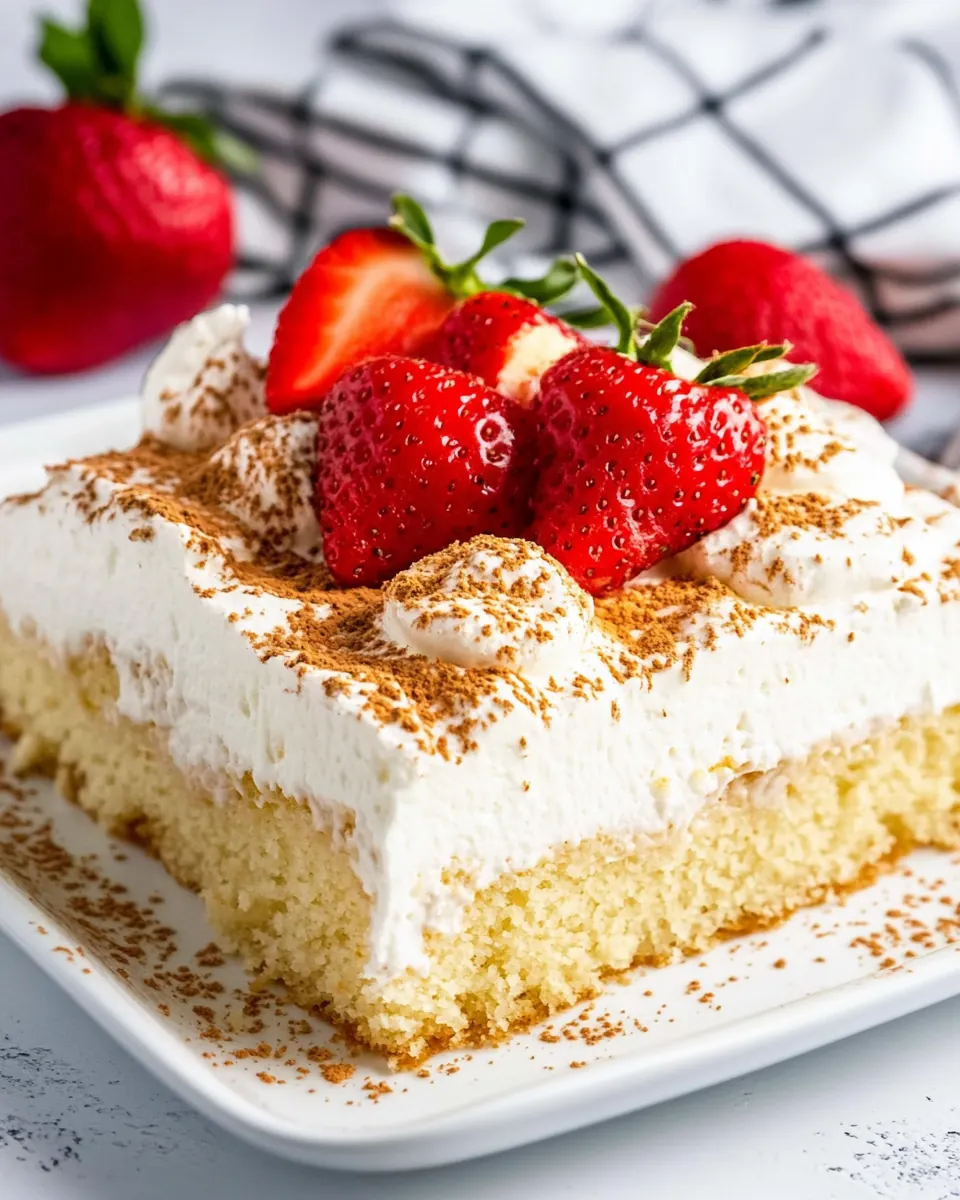
Tres Leches Cake
Tres Leches Cake is the kind of dessert that turned my kitchen into a small celebration the first time I made it, with a few flour flecks on my shirt and a grin that would not quit.
I remember borrowing my grandmother’s oversized mixing bowl, feeling oddly reverent as I cracked the fourth egg, and thinking this humble batter would become something almost magical. The sponge soaked up a milky bath and the house filled with a warm, comforting aroma that felt like a soft hug, the kind of scent that makes you stop what you are doing and wander into the kitchen to see how it’s coming along. My neighbor popped in unannounced and left with a generous slice and a recipe request, which still makes me laugh when I recall how proudly I wrapped that piece in wax paper.
Over the years I have tweaked small things, nudging sugar or swapping a bowl for another tool, and each change taught me something new about balance. Baking this treat has become my go to for potlucks and celebrations, a recipe that somehow feels both simple and indulgent. Guests always comment on the pillowy top and the cool, creamy soak that makes every forkful sing. When I serve Tres Leches Cake I like to watch people taste it, searching their faces for that little surprised smile that tells you it worked.
Recipe Snapshot
60 mins
30 mins
30 mins
Medium
350 kcal
Mexican
Gluten-Free, Low FODMAP
Desserts
Mixing bowls, Stand mixer or hand mixer, 9 x 13 inch cake pan, Whisk, Fork
Why This Tres Leches Cake Is So Good
Velvety Texture
I love how Tres Leches Cake gives you a sponge that soaks but still holds its shape, yielding a velvety mouthfeel. This happens because the cake itself is light and airy, which lets the three milks merge into each bite without turning the dessert mushy, and that contrast between moist interior and slightly whipped topping is pure joy.
Layered Sweetness
There is a layered sweetness here, not a single loud note. The sweetened condensed milk brings concentrated sugar and caramel like depth, while the evaporated milk adds creaminess without heaviness, and a touch of heavy cream for the topping keeps everything balanced. I find the interplay subtle and addictive, it invites slow savoring rather than hurried bites.
Comforting Aroma
Baking Tres Leches Cake fills the kitchen with warm, familiar scents, from the toasty edge of the sponge to the soft perfume of ground cinnamon and nutmeg. I always pause to breathe it in, because the smell alone is an excellent appetizer and a memory maker.
Make Ahead Friendly
This is a friendly make ahead dessert. I often soak the cake a day before serving so the flavors knit together, and chilling overnight only improves the texture. For busy hosts like me, that flexibility is a lifesaver, letting me focus on guests instead of last minute frantic prep.
Simple, Crowd Pleasing
I adore that Tres Leches Cake looks like a showstopper but uses pantry staples, so you can impress without stress. It scales nicely for large gatherings and travels well, which makes it my go to when I want something that feels special but is easy to execute.
What Goes Into Tres Leches Cake
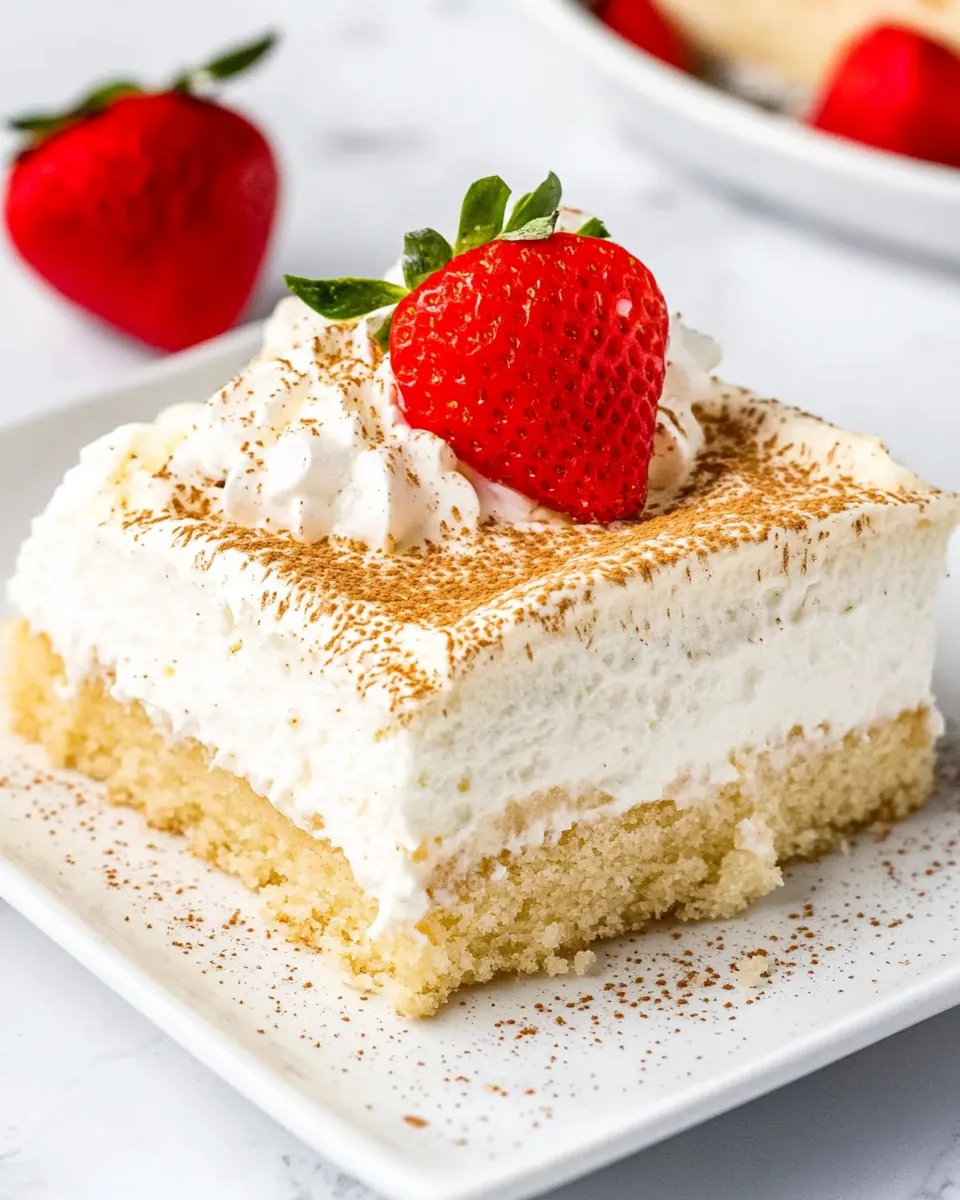
The philosophy behind these ingredients is harmony. A light, tender sponge provides structure and air, while the trio of milks brings richness and moisture. Tiny leavening agents and a pinch of salt lift flavors, and the finishing whipped heavy cream dresses the cake in a cloud like topping. Each component plays a clear role, from texture to aroma, and together they create a dessert that is more than the sum of its parts.
- 1 1/2 cups all purpose flour: Provide structure and body to the cake by forming the primary dry base; sift to avoid lumps and combine with leavening for even crumb development. Use room-temperature flour measurements for accurate texture and to ensure the batter holds moisture from the milks.
- 2 tsp baking powder: Leaven the batter gently by releasing carbon dioxide during baking to yield a light, tender crumb. Measure precisely to prevent over-rising and maintain an even cake surface ideal for soaking with the milk mixture.
- 1/4 tsp fine sea salt: Season the batter subtly to enhance overall flavor balance and to contrast sweetness without becoming savory. Dissolve completely into the dry ingredients so salt distributes evenly throughout the cake.
- 4 large eggs: Whip air into the batter when beaten, creating volume and a tender crumb that supports the milk soak without collapsing. Use at room temperature for better incorporation and emulsification with fats and liquids.
- 1 cup granulated sugar: Sweeten and assist with structure by aiding in aeration during creaming or whisking; control sweetness level for the cake and balance with the tres leches soak. Gradually add while beating eggs to stabilize foam and improve texture.
- 1 tsp pure vanilla extract: Infuse warm aromatic notes that complement the milks and spices, elevating overall flavor with a sweet, floral vanilla presence. Add during mixing to distribute flavor uniformly throughout the batter.
- 1/3 cup whole milk: Adjust batter consistency and contribute a small amount of dairy richness to the cake, improving tenderness and mouthfeel. Use at room temperature to help batter mix smoothly and prevent chilling the batter.
- 14 ounces sweetened condensed milk: Provide concentrated sweetness and creamy density to the tres leches soak, contributing body and the signature caramelized flavor. Pour evenly into the milk mixture to ensure consistent sweetness and texture across the cake.
- 12 ounces evaporated milk: Add milkiness and thinness to the soak while contributing a cooked milk flavor that balances the condensed milk's sweetness. Combine thoroughly with other milks to create a pourable mixture that will evenly saturate the cake.
- 1/4 cup heavy cream: Increase richness and creaminess in the soak for a silky mouthfeel and additional fat to prevent the cake from becoming overly dry. Chill slightly before combining to maintain emulsion and avoid separation.
- 1 tsp ground cinnamon: Deliver warm, fragrant spice notes that pair with vanilla and dairy, adding subtle complexity to both the cake and the topping. Sprinkle lightly into the milk mixture or on top to avoid overpowering the dessert's sweetness.
- 1/2 tsp ground nutmeg: Introduce a nutty, warm undertone that complements cinnamon and enhances depth; use sparingly to avoid masking other flavors. Grate or measure precisely and mix into the batter or whipped topping for subtle spice.
- 2 cups heavy cream: Create a rich, stable whipped topping with high fat content for dolloping or spreading; provide a smooth counterpoint to the soaked cake. Chill bowl and beaters for best volume and gently sweeten to maintain structure.
- 1/4 cup granulated sugar: Adjust whipped cream sweetness and help stabilize the topping while balancing the cake's overall sugar; integrate gradually to taste. Use fine sugar to dissolve quickly and avoid graininess in the whipped cream.
- 2 tsp clear vanilla extract: Enhance aromatic depth in the topping with a clear, pure vanilla presence that won't color the cream; contribute subtle flavor nuances. Add sparingly to avoid overpowering and to preserve the whipped cream's clean appearance.
- garnishes: sliced berries or ground cinnamon (optional): Offer optional visual and flavor finishing touches that add freshness, acidity, or extra spice contrast to the rich cake; use as desired for presentation. Slice or dust lightly to complement the texture and sweetness without altering the core recipe.
Step by Step Guide for Tres Leches Cake
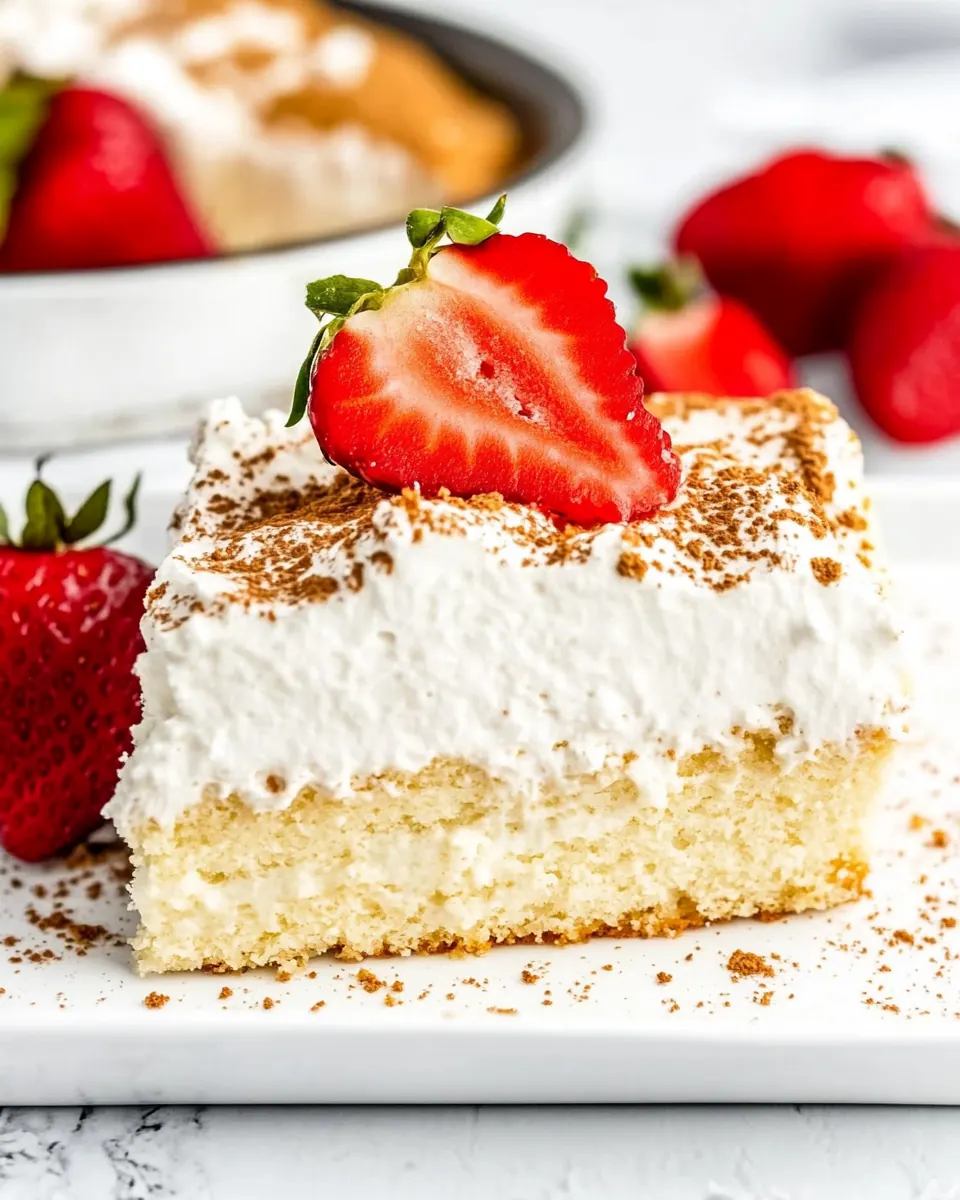
Below I break the process into clear, sensory rich steps so you can follow along confidently. I like to work methodically, prepping bowls and measuring everything before I start so each step flows, and I share troubleshooting notes so you can avoid small mistakes that change the outcome.
- Preheat the oven to 350° F. Butter a 9 x 13 inch cake pan and set aside.: As the oven warms you will notice a faint warm, toasty smell; this gentle heat sets the stage for even baking. Buttering the pan well ensures the cake releases cleanly, and I sometimes line the bottom with parchment for extra insurance. If your oven runs hot, rotate the pan halfway through baking to prevent uneven browning, and avoid opening the oven door too often because that lets out heat and can deflate the sponge.
- In a medium mixing bowl add the flour, baking powder, and salt and whisk to combine. Set aside.: You should see a uniform pale mixture with no lumps, and whisking traps a little air which helps the batter stay light. This dry mix distributes leavening so the cake rises evenly; failing to combine can leave pockets of baking powder, which produce odd bumps. Sift if your flour is clumpy, but do not overwork the mixture once liquids are added.
- In a large mixing bowl or bowl of a stand mixer, add the eggs and sugar. Beat on medium speed until pale and fluffy, about 10 minutes. Add in the vanilla and mix just until combined.: Early on you will hear a steady, airy whipping sound and watch the eggs transform into a ribbon like batter, light in color and thick enough to form trails. This aeration is essential, it creates the sponge's lift and the structure needed to absorb the milks. A common mistake is underbeating, which yields a dense cake, so be patient and stop when the batter looks glossy and holds soft peaks.
- Add half of the flour mixture to the egg mixture and beat just until combined. Mix in the whole milk until combined and then mix in the rest of the flour mixture until just combined.: At this stage you want to fold or beat briefly to preserve air bubbles; the texture should become smooth but still buoyant. The milk loosens the batter, making it silkier, and the staged addition prevents overmixing. Overdoing the mixing will develop gluten and make the final cake less tender, so aim for gentle, efficient motions.
- Pour the batter into prepared cake pan and bake for 25-30 minutes or until cake springs back when lightly touched. Allow to cool for 45 minutes.: As it bakes you will see the top turn faintly golden and smell a warm, comforting aroma. The spring back test and a toothpick with a few moist crumbs are your cues that it is done; underbaking leaves a gummy center that will resist the soak. Letting it cool slightly is crucial, because pouring the cool soak onto a hot cake causes it to absorb unevenly.
- While the cake is cooling prepare the filling. Add the sweetened condensed milk, evaporated milk, heavy cream, ground cinnamon, and nutmeg to a medium mixing bowl and whisk until well-combined.: Whisking blends the milks into a silky, slightly viscous soak that smells faintly sweet and spiced. The texture should be smooth, with no streaks of condensed milk, and the spices should be evenly distributed. If you skip thorough mixing you might get clumps of condensed milk that settle, leading to pockets of intense sweetness when poured.
- When the cake has cooled use a fork to pierce the entire surface of the cake. Gently pour the filling over the cake.: Piercing creates channels for the milks to sink deep into the crumb, and as you pour you will see the cake accept the liquid slowly, almost like a sponge peacefully drinking. Pouring too quickly floods the top and leaves the interior dry, so move slowly and allow the soak to be absorbed before adding more. If the cake resists liquid, use additional fork pricks in denser spots.
- Add the heavy cream and sugar to the bowl of a stand mixer and beat on high speed for 7-10 minutes, or until fluffy and somewhat stiff. Add in the clear vanilla extract and gently combine with a rubber spatula. Spread the topping over the cake.: You will hear the mixer speed change as the cream thickens and watch soft peaks become a stable cloud like topping. The whipped cream should be cool and billowy, with a silky sheen, and folding in the vanilla at the end preserves its volume. Overwhipping turns the cream grainy or into butter, so stop as soon as it holds shape but is still soft enough to spread.
- Cover and chill the cake in the refrigerator for 2 hours or overnight before slicing and serving. Top with fresh berries and/or a sprinkle of ground cinnamon right before serving.: Chilling lets the soak set and the flavors meld, giving a consistently moistened crumb and a firm slice. Overnight chilling deepens the flavor and improves texture, and the cake will taste cooler and more refreshing. A common error is slicing too soon, which leads to a sloppy cut and milks running out, so be patient for clean slices and add garnishes just before serving to keep them bright.
Make It Your Own
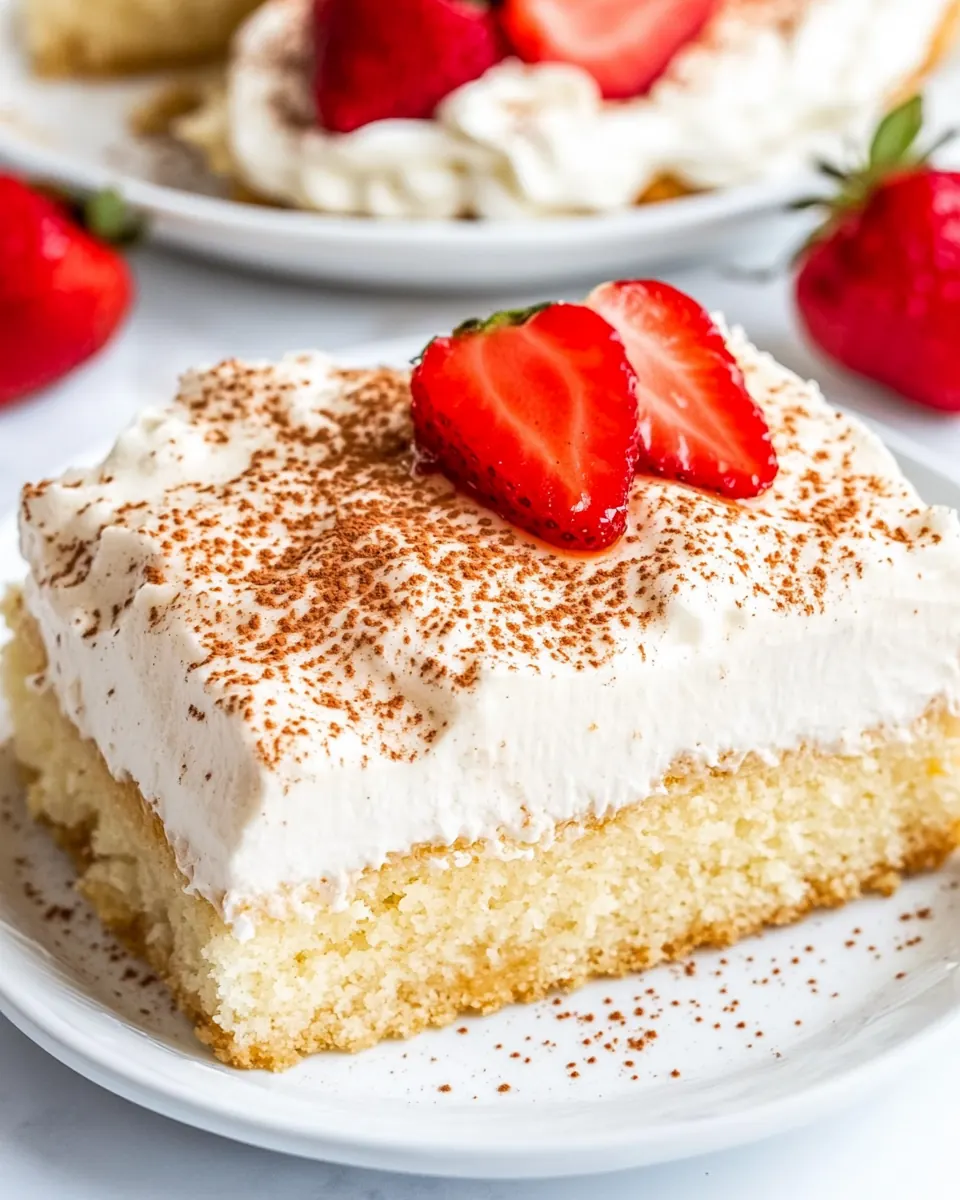
I like to think of small touches that tailor this cake to the moment, whether serving a weekday crowd or a celebratory table. Below are ways I personalize the dessert and what I’ve learned works best.
- Infuse spices: Toast a pinch of ground cinnamon and nutmeg briefly before adding to the soak for deeper aroma, but be careful not to burn them or the flavor will turn bitter.
- Adjust sweetness: If you prefer a less sweet finish, reduce the 1 cup granulated sugar in the batter or use slightly less sweetened condensed milk, keeping in mind it will alter the classic profile.
- Chill time matters: I recommend at least 2 hours in the fridge, and overnight yields the best texture and flavor integration, so plan ahead when possible.
- Garnish smartly: Add sliced berries right before serving for brightness, since they release moisture if added too early and can make the topping soggy.
- Whip carefully: Use chilled bowls and beaters for the whipped heavy cream to achieve volume quickly, watching closely to avoid overwhipping that results in butter.
- Pan prep: Butter the pan well and consider lining with parchment for easy removal, especially if you will transport the cake to another location.
- Even soaking: Pour the milk mixture slowly and in stages, allowing absorption between pours so the soak distributes evenly throughout the cake.
Serve This Tres Leches Cake With
This dessert is uniquely versatile, fitting casual gatherings and festive celebrations alike. Below are serving ideas, occasions, and storage notes to help you present it beautifully and keep leftovers at their best.
- For casual dinners: Serve modest square slices alongside strong coffee or black tea, which balance the cake’s creamy sweetness.
- For celebrations: Present the cake on a platter garnished with fresh berries and a light dusting of ground cinnamon, making it visually striking and festive.
- Portioning: Cut the cake into 12 even pieces to match the indicated servings, using a warm knife for neat slices and wiping the blade between cuts.
- Storage: Keep leftovers covered in the refrigerator for up to 4 days, placing plastic wrap directly on the topping to prevent it from drying out.
- Occasions: This works well for family dinners, potlucks, Ramadan iftar gatherings, birthdays, and afternoon tea, because it travels and scales nicely.
- Seasonal pairing: In summer I pair it with bright berries, while in cooler months a sprinkle more of ground cinnamon complements seasonal warmth.
- Transport tips: Chill the cake well before moving it and use a flat, stable carrier so the top stays pristine, adding garnishes on arrival if possible.
FAQ
Conclusion
What makes this recipe special is the way a light sponge and a simple trio of milks come together to create an indulgent yet approachable dessert. It delivers creamy texture, gentle spice notes, and flexible timing, so you can make it ahead and still present something that feels celebratory. I encourage you to try the recipe as written first, then make small adjustments to sweetness or garnish that reflect your taste. Enjoy the process, and notice how a modest set of ingredients can yield a memorable finish to any meal.
Tres Leches Cake
Equipment
- Mixing Bowls
- Stand mixer or hand mixer
- 9 x 13 inch cake pan
- Whisk
- Fork
Ingredients
- 1 1/2 cups all purpose flour Provide structure and body to the cake by forming the primary dry base; sift to avoid lumps and combine with leavening for even crumb development. Use room-temperature flour measurements for accurate texture and to ensure the batter holds moisture from the milks.
- 2 tsp baking powder Leaven the batter gently by releasing carbon dioxide during baking to yield a light, tender crumb. Measure precisely to prevent over-rising and maintain an even cake surface ideal for soaking with the milk mixture.
- 1/4 tsp fine sea salt Season the batter subtly to enhance overall flavor balance and to contrast sweetness without becoming savory. Dissolve completely into the dry ingredients so salt distributes evenly throughout the cake.
- 4 large eggs Whip air into the batter when beaten, creating volume and a tender crumb that supports the milk soak without collapsing. Use at room temperature for better incorporation and emulsification with fats and liquids.
- 1 cup granulated sugar Sweeten and assist with structure by aiding in aeration during creaming or whisking; control sweetness level for the cake and balance with the tres leches soak. Gradually add while beating eggs to stabilize foam and improve texture.
- 1 tsp pure vanilla extract Infuse warm aromatic notes that complement the milks and spices, elevating overall flavor with a sweet, floral vanilla presence. Add during mixing to distribute flavor uniformly throughout the batter.
- 1/3 cup whole milk Adjust batter consistency and contribute a small amount of dairy richness to the cake, improving tenderness and mouthfeel. Use at room temperature to help batter mix smoothly and prevent chilling the batter.
- 14 ounces sweetened condensed milk Provide concentrated sweetness and creamy density to the tres leches soak, contributing body and the signature caramelized flavor. Pour evenly into the milk mixture to ensure consistent sweetness and texture across the cake.
- 12 ounces evaporated milk Add milkiness and thinness to the soak while contributing a cooked milk flavor that balances the condensed milk's sweetness. Combine thoroughly with other milks to create a pourable mixture that will evenly saturate the cake.
- 1/4 cup heavy cream Increase richness and creaminess in the soak for a silky mouthfeel and additional fat to prevent the cake from becoming overly dry. Chill slightly before combining to maintain emulsion and avoid separation.
- 1 tsp ground cinnamon Deliver warm, fragrant spice notes that pair with vanilla and dairy, adding subtle complexity to both the cake and the topping. Sprinkle lightly into the milk mixture or on top to avoid overpowering the dessert's sweetness.
- 1/2 tsp ground nutmeg Introduce a nutty, warm undertone that complements cinnamon and enhances depth; use sparingly to avoid masking other flavors. Grate or measure precisely and mix into the batter or whipped topping for subtle spice.
- 2 cups heavy cream Create a rich, stable whipped topping with high fat content for dolloping or spreading; provide a smooth counterpoint to the soaked cake. Chill bowl and beaters for best volume and gently sweeten to maintain structure.
- 1/4 cup granulated sugar Adjust whipped cream sweetness and help stabilize the topping while balancing the cake's overall sugar; integrate gradually to taste. Use fine sugar to dissolve quickly and avoid graininess in the whipped cream.
- 2 tsp clear vanilla extract Enhance aromatic depth in the topping with a clear, pure vanilla presence that won't color the cream; contribute subtle flavor nuances. Add sparingly to avoid overpowering and to preserve the whipped cream's clean appearance.
- Optional garnishes: sliced berries or ground cinnamon Offer optional visual and flavor finishing touches that add freshness, acidity, or extra spice contrast to the rich cake; use as desired for presentation. Slice or dust lightly to complement the texture and sweetness without altering the core recipe.
Instructions
- Preheat the oven to 350° F. Butter a 9 x 13 inch cake pan and set aside.: As the oven warms you will notice a faint warm, toasty smell; this gentle heat sets the stage for even baking. Buttering the pan well ensures the cake releases cleanly, and I sometimes line the bottom with parchment for extra insurance. If your oven runs hot, rotate the pan halfway through baking to prevent uneven browning, and avoid opening the oven door too often because that lets out heat and can deflate the sponge.
- In a medium mixing bowl add the flour, baking powder, and salt and whisk to combine. Set aside.: You should see a uniform pale mixture with no lumps, and whisking traps a little air which helps the batter stay light. This dry mix distributes leavening so the cake rises evenly; failing to combine can leave pockets of baking powder, which produce odd bumps. Sift if your flour is clumpy, but do not overwork the mixture once liquids are added.
- In a large mixing bowl or bowl of a stand mixer, add the eggs and sugar. Beat on medium speed until pale and fluffy, about 10 minutes. Add in the vanilla and mix just until combined.: Early on you will hear a steady, airy whipping sound and watch the eggs transform into a ribbon like batter, light in color and thick enough to form trails. This aeration is essential, it creates the sponge's lift and the structure needed to absorb the milks. A common mistake is underbeating, which yields a dense cake, so be patient and stop when the batter looks glossy and holds soft peaks.
- Add half of the flour mixture to the egg mixture and beat just until combined. Mix in the whole milk until combined and then mix in the rest of the flour mixture until just combined.: At this stage you want to fold or beat briefly to preserve air bubbles; the texture should become smooth but still buoyant. The milk loosens the batter, making it silkier, and the staged addition prevents overmixing. Overdoing the mixing will develop gluten and make the final cake less tender, so aim for gentle, efficient motions.
- Pour the batter into prepared cake pan and bake for 25-30 minutes or until cake springs back when lightly touched. Allow to cool for 45 minutes.: As it bakes you will see the top turn faintly golden and smell a warm, comforting aroma. The spring back test and a toothpick with a few moist crumbs are your cues that it is done; underbaking leaves a gummy center that will resist the soak. Letting it cool slightly is crucial, because pouring the cool soak onto a hot cake causes it to absorb unevenly.
- While the cake is cooling prepare the filling. Add the sweetened condensed milk, evaporated milk, heavy cream, ground cinnamon, and nutmeg to a medium mixing bowl and whisk until well-combined.: Whisking blends the milks into a silky, slightly viscous soak that smells faintly sweet and spiced. The texture should be smooth, with no streaks of condensed milk, and the spices should be evenly distributed. If you skip thorough mixing you might get clumps of condensed milk that settle, leading to pockets of intense sweetness when poured.
- When the cake has cooled use a fork to pierce the entire surface of the cake. Gently pour the filling over the cake.: Piercing creates channels for the milks to sink deep into the crumb, and as you pour you will see the cake accept the liquid slowly, almost like a sponge peacefully drinking. Pouring too quickly floods the top and leaves the interior dry, so move slowly and allow the soak to be absorbed before adding more. If the cake resists liquid, use additional fork pricks in denser spots.
- Add the heavy cream and sugar to the bowl of a stand mixer and beat on high speed for 7-10 minutes, or until fluffy and somewhat stiff. Add in the clear vanilla extract and gently combine with a rubber spatula. Spread the topping over the cake.: You will hear the mixer speed change as the cream thickens and watch soft peaks become a stable cloud like topping. The whipped cream should be cool and billowy, with a silky sheen, and folding in the vanilla at the end preserves its volume. Overwhipping turns the cream grainy or into butter, so stop as soon as it holds shape but is still soft enough to spread.
- Cover and chill the cake in the refrigerator for 2 hours or overnight before slicing and serving. Top with fresh berries and/or a sprinkle of ground cinnamon right before serving.: Chilling lets the soak set and the flavors meld, giving a consistently moistened crumb and a firm slice. Overnight chilling deepens the flavor and improves texture, and the cake will taste cooler and more refreshing. A common error is slicing too soon, which leads to a sloppy cut and milks running out, so be patient for clean slices and add garnishes just before serving to keep them bright.
Notes
- Infuse spices: Toast a pinch of ground cinnamon and nutmeg briefly before adding to the soak for deeper aroma, but be careful not to burn them or the flavor will turn bitter.
- Adjust sweetness: If you prefer a less sweet finish, reduce the 1 cup granulated sugar in the batter or use slightly less sweetened condensed milk, keeping in mind it will alter the classic profile.
- Chill time matters: I recommend at least 2 hours in the fridge, and overnight yields the best texture and flavor integration, so plan ahead when possible.
- Garnish smartly: Add sliced berries right before serving for brightness, since they release moisture if added too early and can make the topping soggy.
- Whip carefully: Use chilled bowls and beaters for the whipped heavy cream to achieve volume quickly, watching closely to avoid overwhipping that results in butter.
- Pan prep: Butter the pan well and consider lining with parchment for easy removal, especially if you will transport the cake to another location.
- Even soaking: Pour the milk mixture slowly and in stages, allowing absorption between pours so the soak distributes evenly throughout the cake.