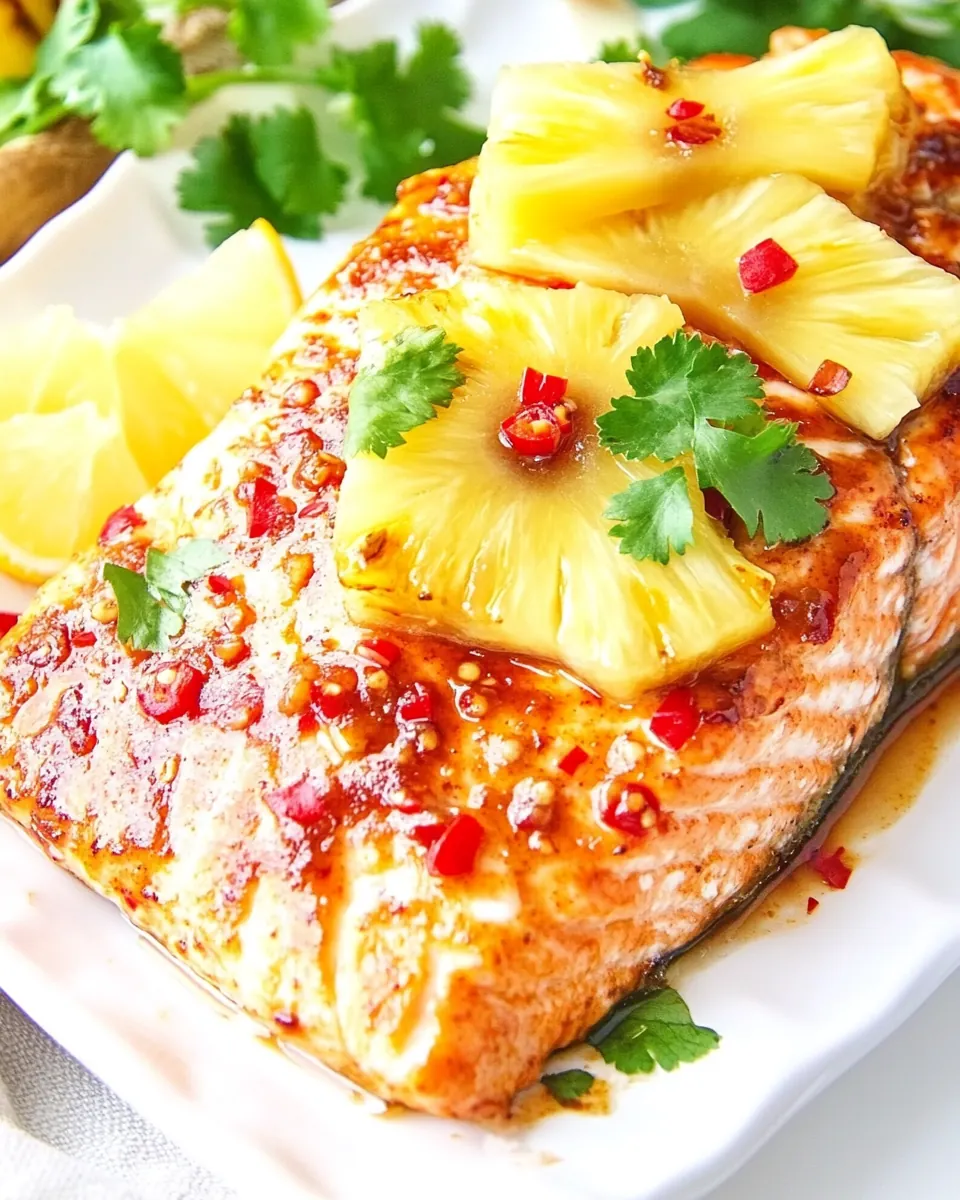
Sweet Chili Pineapple Salmon
Sweet Chili Pineapple Salmon is the kind of dish that stopped me midweek and made dinner feel like a mini celebration. The first time I cooked this I had a bruised week behind me and a small, very ripe pineapple waiting on the counter. I wanted something quick, bright, and a little bit sticky, so I paired the tangy fruit with a jar of sweet chili sauce we always keep for snacks. The result felt unexpectedly festive, like a tropical weeknight hug.
That evening I roasted the pineapple until the edges caramelized and the kitchen filled with a perfume that made my neighbors peek through the window. The salmon turned glossy under the sweet chili glaze, and the chopped peanuts added a satisfying crunch that kept me coming back for one more forkful. I served it with lime wedges and watched everyone at the table trade bites and compliments while asking for seconds. It felt like a small victory, and I still reach for this recipe when I want something simple to impress.
Recipe Snapshot
25 mins
10 mins
15 mins
Medium
350 kcal
American
Gluten-Free, Low FODMAP
Dinner
Oven, Baking sheet, Mixing bowl, Brush
Why This Sweet Chili Pineapple Salmon Is a Winner
Vibrant Flavor Contrast
I love how Sweet Chili Pineapple Salmon balances sweet, salty, and tangy elements. The natural sugar in the pineapple caramelizes and amplifies the sweet chili sauce, while the fish sauce and soy sauce bring depth. That push and pull keeps every bite lively, so you never get bored.
Speed and Ease
We can have this on the table in under 30 minutes. For busy nights I value recipes that deliver big flavor without fuss. The preparation is straightforward, and the oven does most of the work while you prep garnishes like cilantro and green onions.
Textural Delight
The combination of tender salmon, juicy roasted pineapple, and crunchy peanuts creates a satisfying mouthfeel. That variety of textures makes every forkful interesting, and the contrast highlights each ingredient rather than masking it.
Versatility at the Table
You can easily adapt this dish for different meals. Serve it for a casual weeknight dinner, a summer gathering, or a light meal for guests. It pairs well with simple grains and fresh salads, and it scales up nicely when you are feeding a crowd.
Fresh Aromatics Finish
I always finish with a squeeze of lime juice, chopped cilantro, and green onions. Those bright touches lift the glaze and add a clean, herbal note that keeps the dish from feeling too heavy.
Ingredients You’ll Need for Sweet Chili Pineapple Salmon
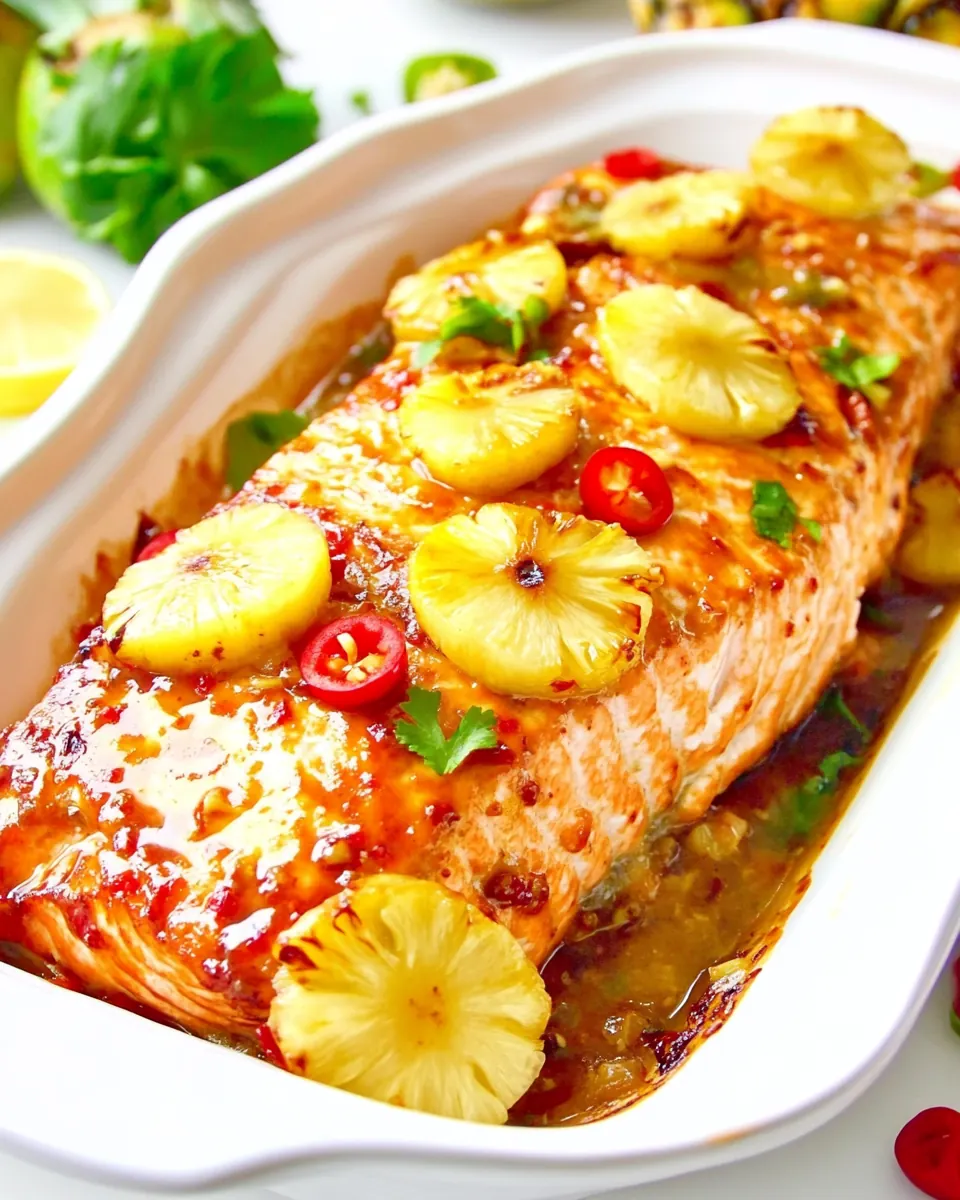
The philosophy behind these ingredients is balance and simplicity. Each element plays a clear role: the pineapple provides sweetness and acidity, the sweet chili sauce brings sticky heat, and the trio of fish sauce, oyster sauce, and soy sauce layers savory umami. The salmon is rich and tender, while chopped peanuts and fresh herbs add texture and brightness. Together they create a harmony that feels both tropical and grounded.
- 1 pineapple sliced in about 10 slices that are 1/4 inch thick or use canned pineapple rounds: Sliced and caramelized to add sweet, tangy flavor and a tropical contrast to the savory fish; can be grilled or broiled to develop char and juices that pair well with the sauce.
- 1 1/2 2 pounds salmon fillet deboned: Deboned and portioned to provide tender, flaky protein that soaks up the sweet–chili glaze; choose even-thickness fillets for uniform cooking and gentle handling to preserve texture.
- 1/4 cup peanuts roasted and roughly chopped: Roasted and roughly chopped to contribute crunchy texture and nutty richness that balances the sweet and spicy elements; sprinkle over finished dish for contrast and visual appeal.
- 1 tablespoon cilantro chopped: Chopped to deliver fresh, herbaceous brightness and a subtle citrusy note that lifts the overall flavor; scatter on top just before serving to preserve color and aroma.
- Green onions chopped: Chopped to offer mild oniony sharpness and fresh green color that complements the herbs and sauce; add as a garnish or fold into the finished dish for crispness.
- 1/2 cup sweet chili sauce: Used as the primary sweet-and-spicy glaze component to coat the salmon and pineapple; brings cohesive flavor, a glossy finish, and convenient balance between heat and sweetness.
- 4 cloves garlic minced: Minced to provide aromatic pungency and savory depth that enhances the glaze; sauté briefly to mellow harshness and release fragrant oils into the sauce.
- 1 tablespoon ginger grated: Grated to contribute warm, peppery heat and aromatic complexity that brightens the sweet chili base; incorporate into the sauce for layered spiciness and fresh flavor.
- 1 tablespoon lime juice: Added for bright acidity and citrus lift to balance sweetness and cut through richness; squeeze in toward the end of sauce preparation to preserve fresh juice flavor.
- 2 tablespoons brown sugar: Stirred in to deepen caramel notes and increase viscosity of the glaze while enhancing browning; dissolve into the sauce for rounded sweetness and stickiness.
- 1 teaspoon oyster sauce: Included sparingly to add a hint of savory umami and mild brininess that complements seafood; blend into the sauce for subtle depth without overpowering other flavors.
- 2 tablespoons fish sauce: Poured in to introduce complex fishy umami and salty depth that enhances the overall savory profile; use judiciously to avoid making the dish overly salty.
- 2 tablespoons soy sauce: Mixed in to provide salty soy-based umami and a savory backbone for the sauce; balance with other salty components to maintain harmony in flavor.
The Method for Sweet Chili Pineapple Salmon
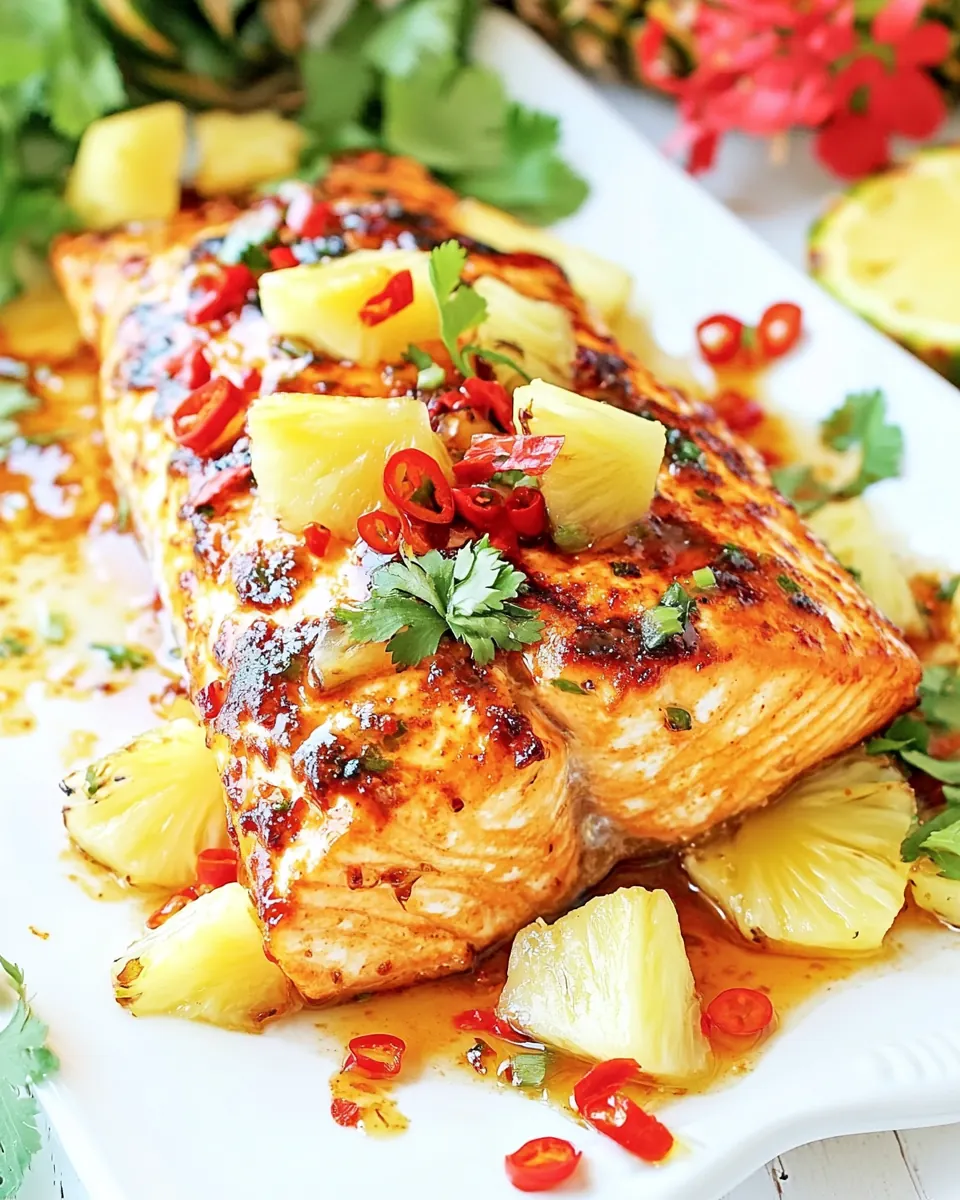
This recipe is approachable and relies on clear visual cues. I like to prep the sauce first, arrange the pineapple and salmon on the pan, and then let the oven do the work. Below I expand each original instruction into deep, sensory guidance so you know exactly how the dish should look and smell at every stage.
- Preheat the oven to 400 degrees F.: The warmth in the kitchen will be filled with a low, anticipatory heat, and the oven set to 400 degrees F gives the right balance for caramelizing the pineapple while cooking the salmon through. Preheating ensures the surface sizzles quickly rather than slowly steaming. You want the oven fully hot before the pan goes in, otherwise you may lose the glossy glaze finish. A common mistake is not waiting for a full preheat which leads to a pale exterior and uneven cooking.
- Line a baking sheet with foil and lightly grease it with cooking spray or olive oil.: The foil helps with cleanup and reflects heat so the bottoms of the pineapple and salmon brown more evenly. A thin coating of oil prevents sticking and encourages caramelization where the glaze touches the surface. When the sheet enters the oven you should hear a faint hiss as the oil warms, and the foil will shine. Avoid using too much oil which can pool and interfere with browning.
- In a small bowl mix the Sauce ingredients.: As you stir the sweet chili sauce , grated ginger , minced garlic , brown sugar , oyster sauce , fish sauce , soy sauce , and lime juice the aromas will unfold, with sharp ginger and garlic cutting through sticky sweetness. This mixture should look glossy and slightly pourable, with a balance of sweet and umami. Taste a tiny amount to check balance but be mindful of strong salt from the fish sauce and soy sauce . Overmixing is not an issue, but letting it sit too long can mute the fresh bite of the ginger .
- Arrange the pineapple slices or rounds in a single layer on the prepared baking sheet.: Lay the pineapple so each slice sits flat and there is space between pieces for air to circulate. You should see edges beginning to glisten as natural juices settle on the foil. Proper spacing allows the fruit to caramelize and prevents steaming. Crowding will trap moisture and produce soggy rings instead of crisped edges.
- Place the salmon on top and brush with the sauce mixture.: Gently nestle the deboned salmon over the pineapple and brush the surface with the sauce so it forms a shiny coat. The brush strokes will leave a lacquered finish that starts to thicken in the oven, and the sugar will begin to brown around the edges. Ensure the flesh has been patted dry first so the glaze adheres. If the fish is too wet the sauce will slide off and you will lose that glossy cling.
- Bake for about 15 minutes or until just cooked.: In the oven you will notice the sauce bubbling gently and a sweet steam rising as the pineapple caramelizes. The salmon should be opaque and flake easily with a fork when done, while the surface keeps a tender sheen. Check the thickest part after 12 minutes to avoid overcooking, as salmon becomes dry if left too long. A usual error is relying solely on time rather than visual cues, so always test the flesh for doneness.
- Squeeze some lime juice on top, and garnish with chopped peanuts, cilantro, and green onions.: The finished dish benefits from an immediate squeeze of fresh lime juice which brightens the glaze and accents the tropical notes. Scatter the chopped peanuts for crunch, then add the cilantro and green onions for herbal lift and a pop of green color. The contrast in textures and aromas at this point is delightful, and the citrus will smell citrusy and sharp. Avoid adding these garnishes before cooking, or they will wilt and lose vibrancy.
- Serve with lime slices.: Serving with extra lime lets everyone finish their plate to taste. The tart juice contrasts with the sticky glaze and refreshes the palate between bites. Presenting lime slices is practical and visually appealing, and it invites diners to customize acidity. A misstep is over-squeezing all the lime ahead of time which can overwhelm the flavors.
Making Adjustments
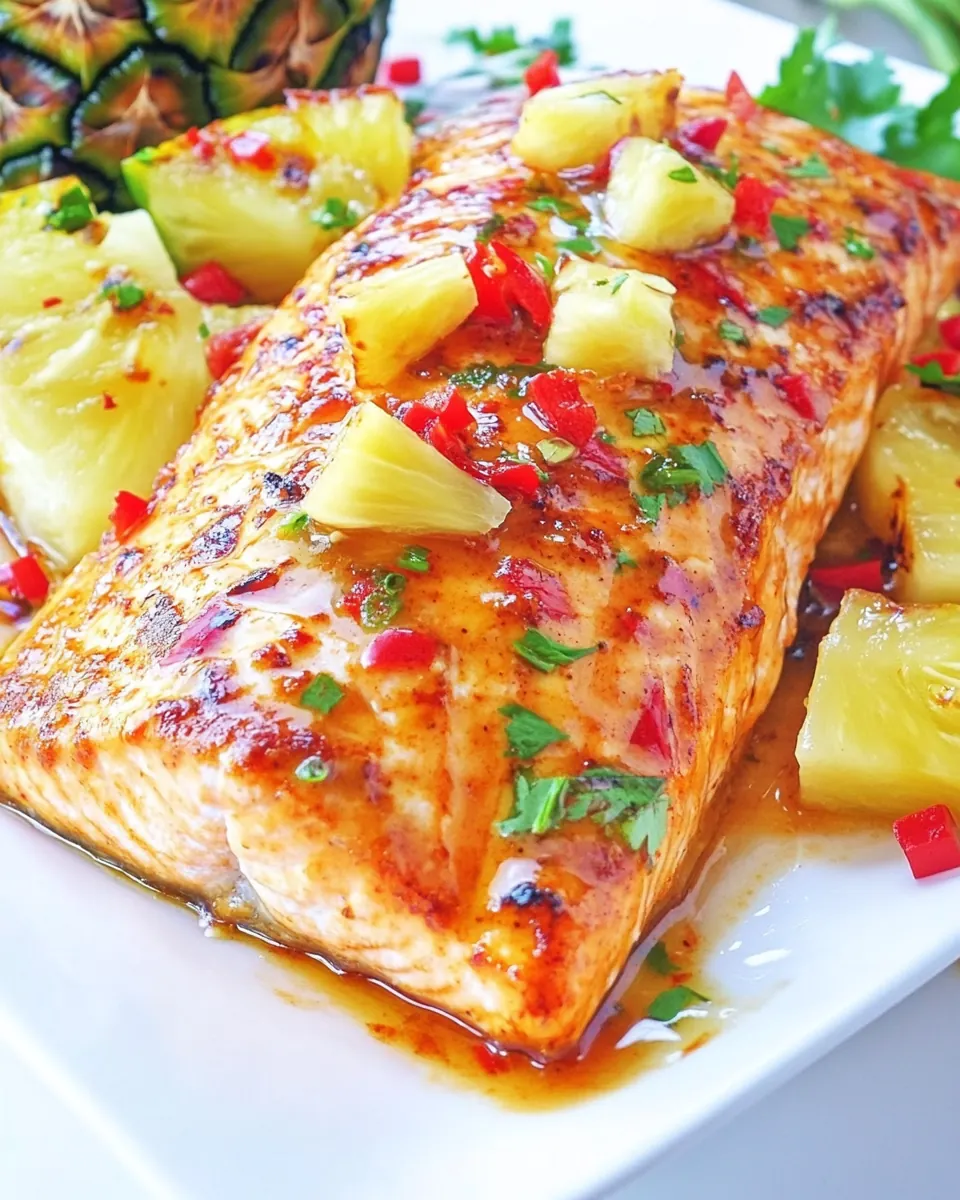
I like to offer adjustments that help this dish suit different palates and schedules. Below are focused tips that expand on texture, heat level, and meal planning so you can tailor the recipe without losing what makes it special.
- Lowering the heat If you are sensitive to spice, use less sweet chili sauce and increase brown sugar by a teaspoon to keep the glaze glossy without adding heat.
- Boosting umami Add an extra splash of soy sauce or a tiny additional pinch of oyster sauce to deepen savory notes, but taste cautiously to avoid oversalting.
- Making it ahead You can mix the glaze up to a day in advance and store it covered in the refrigerator, then brush it on the salmon just before baking so the fresh aromatics stay bright.
- Crunch timing Keep the chopped peanuts aside until after baking, adding them right before serving to preserve their crispness under the warm glaze.
- Fruit swap If pineapple is not available, short rounds of canned pineapple drained and patted dry can work, though fresh will caramelize more vibrantly.
What to Serve Alongside Sweet Chili Pineapple Salmon
This dish pairs beautifully with simple sides that let the glazed salmon shine. Think about textures and temperature contrasts, and choose accompaniments that will soak up the extra sauce. Below are detailed serving ideas and occasions where this recipe excels.
- Steamed jasmine rice A fluffy bed of rice is classic and practical, absorbing the sticky sauce so each bite is saucy and satisfying, ideal for casual dinners.
- Light green salad Crisp lettuces with a citrusy vinaigrette add a cool, refreshing contrast that balances the warm, sweet fish, perfect for summer meals.
- Grilled vegetables Zucchini and bell peppers charred lightly provide smoky notes that pair nicely with the tropical glaze, making it a hearty plate for outdoor gatherings.
- Simple noodles Tossed with a touch of sesame oil and scallions, noodles offer a comforting, slurpable base that complements the sweet and salty glaze.
- Occasions Serve this for a relaxed weeknight, a summer BBQ, or a small dinner party when you want food that feels celebratory yet effortless.
- Storage tips Refrigerate leftovers in an airtight container for up to two days; reheat gently to avoid drying the salmon, or serve cold in salads for a bright leftover meal.
- Seasonal pairings This recipe is excellent in summer when pineapples are at their best, and pairs well with fresh herbs and light sides that emphasize brightness.
FAQ
Conclusion
What makes this recipe special is its bright interplay of sweet, savory, and crunchy elements, all coming together with minimal fuss. The caramelized pineapple and sticky sweet chili glaze create a restaurant worthy coating for tender salmon, while the chopped peanuts and fresh herbs add texture and lift. I encourage you to try it on an evening when you want something fast but memorable. Serve it simply, savor the contrasts, and enjoy the easy applause from anyone at your table.
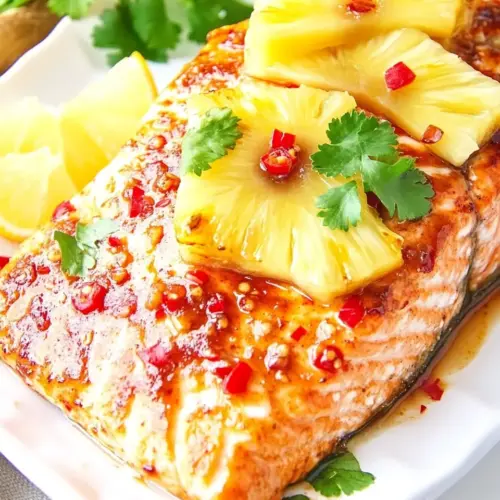
Sweet Chili Pineapple Salmon
Equipment
- Oven
- Baking Sheet
- Mixing Bowl
- Brush
Ingredients
- 1 pineapple sliced in about 10 slices that are 1/4 inch thick or use canned pineapple rounds Sliced and caramelized to add sweet, tangy flavor and a tropical contrast to the savory fish; can be grilled or broiled to develop char and juices that pair well with the sauce.
- 1 1/2 -2 pounds salmon fillet deboned Deboned and portioned to provide tender, flaky protein that soaks up the sweet-chili glaze; choose even-thickness fillets for uniform cooking and gentle handling to preserve texture.
- 1/4 cup peanuts roasted and roughly chopped Roasted and roughly chopped to contribute crunchy texture and nutty richness that balances the sweet and spicy elements; sprinkle over finished dish for contrast and visual appeal.
- 1 tablespoon cilantro chopped Chopped to deliver fresh, herbaceous brightness and a subtle citrusy note that lifts the overall flavor; scatter on top just before serving to preserve color and aroma.
- Green onions chopped Chopped to offer mild oniony sharpness and fresh green color that complements the herbs and sauce; add as a garnish or fold into the finished dish for crispness.
- 1/2 cup sweet chili sauce Used as the primary sweet-and-spicy glaze component to coat the salmon and pineapple; brings cohesive flavor, a glossy finish, and convenient balance between heat and sweetness.
- 4 cloves garlic minced Minced to provide aromatic pungency and savory depth that enhances the glaze; sauté briefly to mellow harshness and release fragrant oils into the sauce.
- 1 tablespoon ginger grated Grated to contribute warm, peppery heat and aromatic complexity that brightens the sweet chili base; incorporate into the sauce for layered spiciness and fresh flavor.
- 1 tablespoon lime juice Added for bright acidity and citrus lift to balance sweetness and cut through richness; squeeze in toward the end of sauce preparation to preserve fresh juice flavor.
- 2 tablespoons brown sugar Stirred in to deepen caramel notes and increase viscosity of the glaze while enhancing browning; dissolve into the sauce for rounded sweetness and stickiness.
- 1 teaspoon oyster sauce Included sparingly to add a hint of savory umami and mild brininess that complements seafood; blend into the sauce for subtle depth without overpowering other flavors.
- 2 tablespoons fish sauce Poured in to introduce complex fishy umami and salty depth that enhances the overall savory profile; use judiciously to avoid making the dish overly salty.
- 2 tablespoons soy sauce Mixed in to provide salty soy-based umami and a savory backbone for the sauce; balance with other salty components to maintain harmony in flavor.
Instructions
- Preheat the oven to 400 degrees F.: The warmth in the kitchen will be filled with a low, anticipatory heat, and the oven set to 400 degrees F gives the right balance for caramelizing the pineapple while cooking the salmon through. Preheating ensures the surface sizzles quickly rather than slowly steaming. You want the oven fully hot before the pan goes in, otherwise you may lose the glossy glaze finish. A common mistake is not waiting for a full preheat which leads to a pale exterior and uneven cooking.
- Line a baking sheet with foil and lightly grease it with cooking spray or olive oil.: The foil helps with cleanup and reflects heat so the bottoms of the pineapple and salmon brown more evenly. A thin coating of oil prevents sticking and encourages caramelization where the glaze touches the surface. When the sheet enters the oven you should hear a faint hiss as the oil warms, and the foil will shine. Avoid using too much oil which can pool and interfere with browning.
- In a small bowl mix the Sauce ingredients.: As you stir the sweet chili sauce , grated ginger , minced garlic , brown sugar , oyster sauce , fish sauce , soy sauce , and lime juice the aromas will unfold, with sharp ginger and garlic cutting through sticky sweetness. This mixture should look glossy and slightly pourable, with a balance of sweet and umami. Taste a tiny amount to check balance but be mindful of strong salt from the fish sauce and soy sauce . Overmixing is not an issue, but letting it sit too long can mute the fresh bite of the ginger .
- Arrange the pineapple slices or rounds in a single layer on the prepared baking sheet.: Lay the pineapple so each slice sits flat and there is space between pieces for air to circulate. You should see edges beginning to glisten as natural juices settle on the foil. Proper spacing allows the fruit to caramelize and prevents steaming. Crowding will trap moisture and produce soggy rings instead of crisped edges.
- Place the salmon on top and brush with the sauce mixture.: Gently nestle the deboned salmon over the pineapple and brush the surface with the sauce so it forms a shiny coat. The brush strokes will leave a lacquered finish that starts to thicken in the oven, and the sugar will begin to brown around the edges. Ensure the flesh has been patted dry first so the glaze adheres. If the fish is too wet the sauce will slide off and you will lose that glossy cling.
- Bake for about 15 minutes or until just cooked.: In the oven you will notice the sauce bubbling gently and a sweet steam rising as the pineapple caramelizes. The salmon should be opaque and flake easily with a fork when done, while the surface keeps a tender sheen. Check the thickest part after 12 minutes to avoid overcooking, as salmon becomes dry if left too long. A usual error is relying solely on time rather than visual cues, so always test the flesh for doneness.
- Squeeze some lime juice on top, and garnish with chopped peanuts, cilantro, and green onions.: The finished dish benefits from an immediate squeeze of fresh lime juice which brightens the glaze and accents the tropical notes. Scatter the chopped peanuts for crunch, then add the cilantro and green onions for herbal lift and a pop of green color. The contrast in textures and aromas at this point is delightful, and the citrus will smell citrusy and sharp. Avoid adding these garnishes before cooking, or they will wilt and lose vibrancy.
- Serve with lime slices.: Serving with extra lime lets everyone finish their plate to taste. The tart juice contrasts with the sticky glaze and refreshes the palate between bites. Presenting lime slices is practical and visually appealing, and it invites diners to customize acidity. A misstep is over-squeezing all the lime ahead of time which can overwhelm the flavors.
Notes
- Lowering the heat If you are sensitive to spice, use less sweet chili sauce and increase brown sugar by a teaspoon to keep the glaze glossy without adding heat.
- Boosting umami Add an extra splash of soy sauce or a tiny additional pinch of oyster sauce to deepen savory notes, but taste cautiously to avoid oversalting.
- Making it ahead You can mix the glaze up to a day in advance and store it covered in the refrigerator, then brush it on the salmon just before baking so the fresh aromatics stay bright.
- Crunch timing Keep the chopped peanuts aside until after baking, adding them right before serving to preserve their crispness under the warm glaze.
- Fruit swap If pineapple is not available, short rounds of canned pineapple drained and patted dry can work, though fresh will caramelize more vibrantly.
