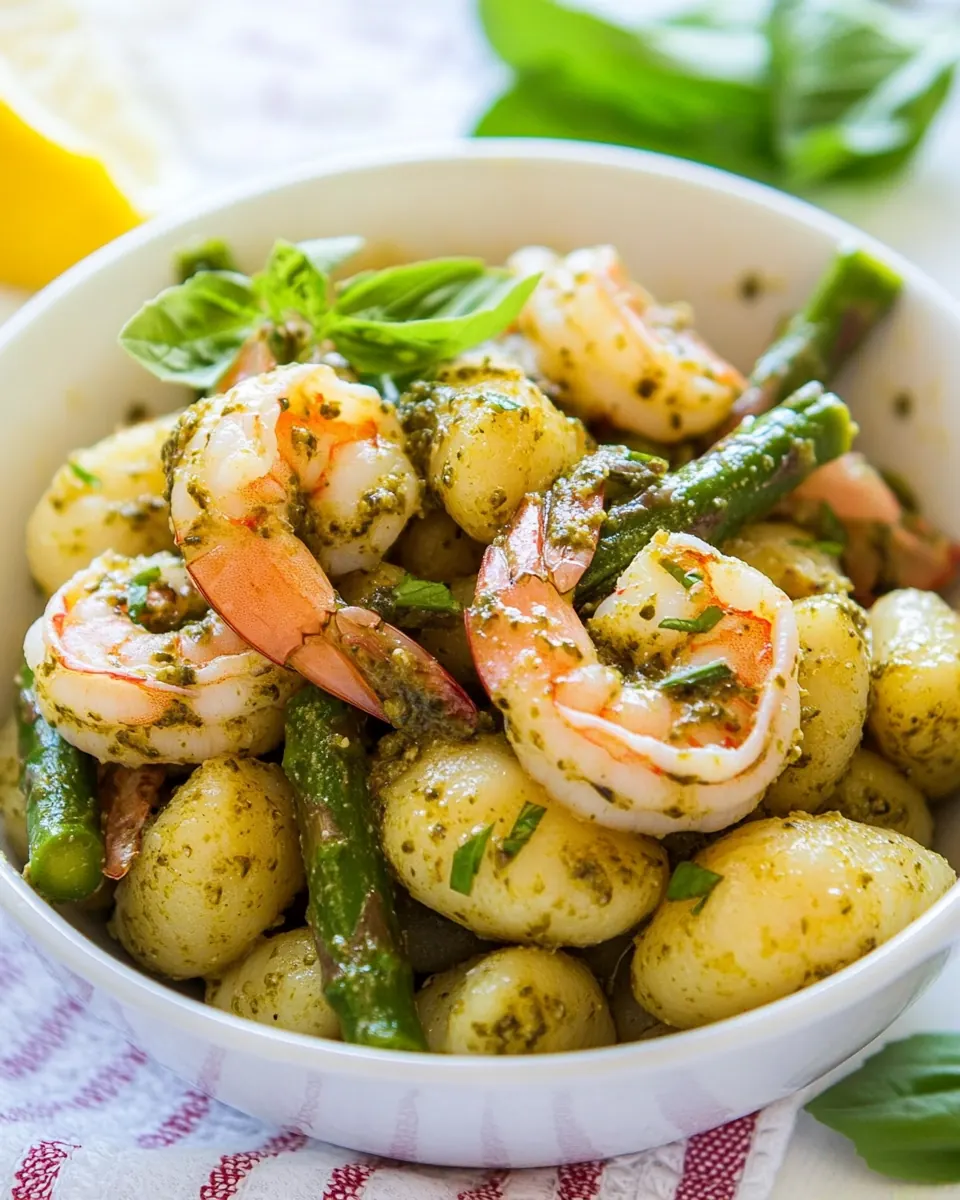
20 Minute Pesto Shrimp with Gnocchi and Asparagus
20 Minute Pesto Shrimp with Gnocchi and Asparagus is one of those weeknight rescues I reach for when I want something that feels special but comes together faster than takeout.
I remember the first time I tossed tender shrimp with pillowy gnocchi and bright asparagus in a pan smeared with glossy olive oil and a spoonful of verdant basil pesto. The aroma hit me first, that fresh basil perfume mingling with warm butter and lemon, and I knew dinner had just leveled up. It was a simple Thursday, but serving it across the table made the evening feel like a small celebration.
Over the years I learned a few little rhythms that keep this dish humming. I always finish the gnocchi in the same pot I boiled it in, and I pull the shrimp early so they stay tender. The contrast of textures is what sells it to me, the soft chew of the gnocchi against the slight snap of perfectly cooked asparagus. That first bite, with a fleck of Parmesan cheese, is what keeps me coming back.
Recipe Snapshot
20 mins
5 mins
15 mins
Medium
400 kcal
Italian
Gluten-Free, Keto
Dinner
Large pot, Large skillet, Slotted spoon
Why You Need This 20 Minute Pesto Shrimp with Gnocchi and Asparagus
Speed without compromise
I love that 20 Minute Pesto Shrimp with Gnocchi and Asparagus comes together extremely quickly, so you can cook a restaurant worthy plate when time is tight. The gnocchi cooks in minutes, and the shrimp and asparagus finish in the same skillet, which means less time at the stove and more time at the table.
Vibrant seasonal flavors
Spring produce, especially fresh asparagus and basil based pesto, lifts the whole dish. I find the brightness of the lemon and herb notes balance the richness of the butter and Parmesan cheese, making each bite lively rather than heavy.
Textural contrast
The interplay between pillowy gnocchi, snappy asparagus, and tender shrimp is a major reason this dish stands out. I enjoy how the roasted like sear on the shrimp adds slight caramelized edges, while the gnocchi stays soft, creating a pleasing mouthfeel.
Simple, high impact ingredients
I constantly rely on a handful of excellent ingredients to make big flavors. Good quality basil pesto, freshly squeezed lemon juice, and a little Parmesan cheese go a very long way. You do not need a dozen items to impress, just a few chosen well.
Flexible and forgiving
One of my favorite things is how adaptable this recipe is. If you want to stretch it for guests, extra gnocchi fills plates quickly. If you prefer it lighter, add an extra squeeze of lemon juice to brighten it further. It handles small tweaks without losing its soul.
What Goes Into 20 Minute Pesto Shrimp with Gnocchi and Asparagus
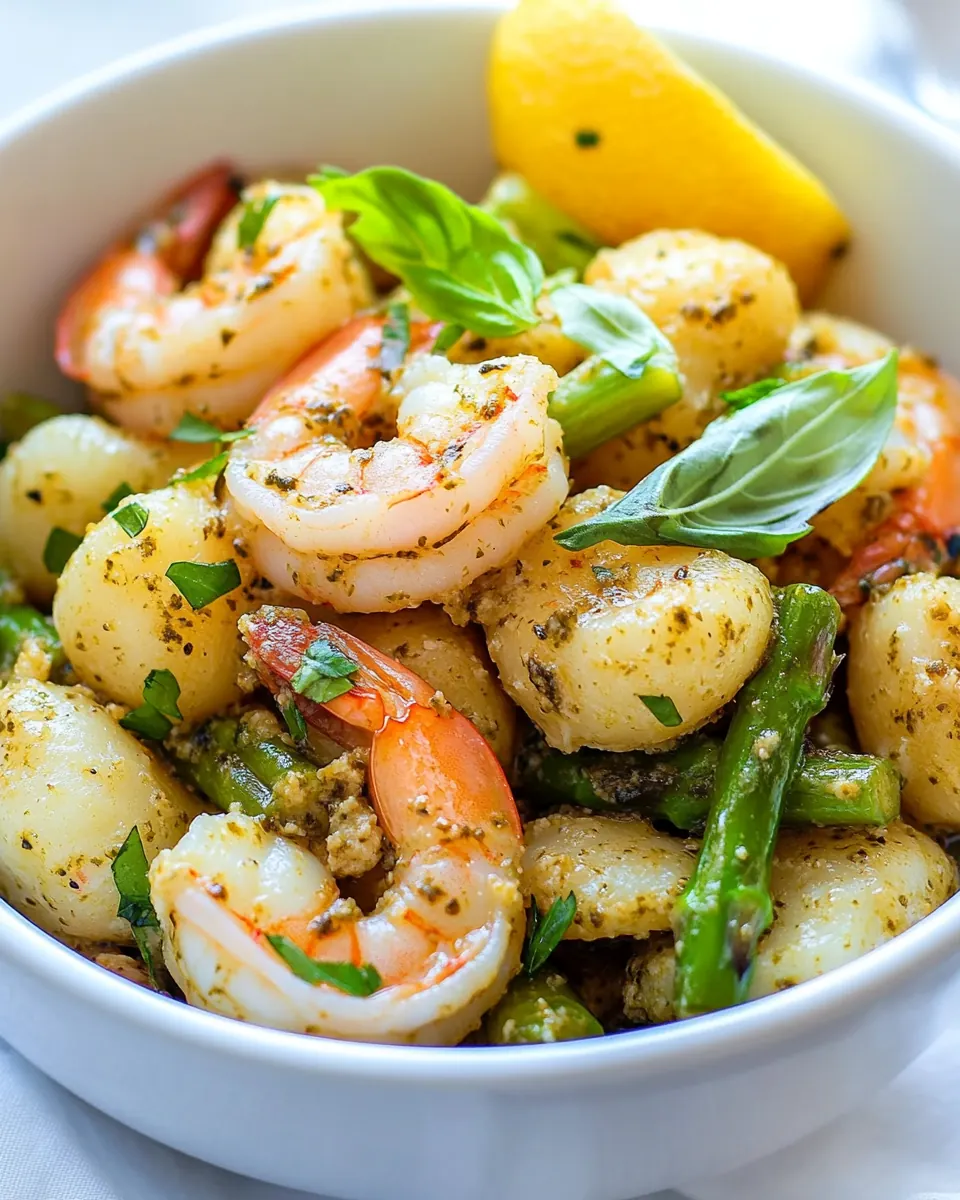
The philosophy behind these ingredients is balance. I choose components that bring texture, brightness, and richness so every forkful feels complete. The key players are gnocchi for comfort, shrimp for protein and sweetness, asparagus for snap and color, and basil pesto to tie everything together with herbaceous fat.
- 16 oz potato gnocchi: Provides pillowy, tender dumplings that soak up sauce and add hearty carbohydrate structure to the dish; cook according to package instructions until al dente and finish in the pan to absorb flavors.
- 16 oz jumbo or large shrimp, peeled and deveined: Adds sweet, briny protein that cooks quickly and delivers a succulent texture; devein and pat dry before searing to achieve a lightly caramelized exterior without overcooking.
- 16 oz asparagus, ends removed, cut into bite-size pieces: Contributes a bright, crisp vegetable element with a slightly grassy flavor and pleasant snap; trim and cut into bite–size pieces so they cook evenly and retain a vibrant color.
- 2 tbsp extra virgin olive oil, divided: Offers a fruity, aromatic fat for sautéing and building the base of the dish; divide the amount to control browning and to combine with butter for a balanced pan sauce.
- 2 tbsp unsalted butter, divided: Introduces a rich, silky mouthfeel and helps emulsify the sauce when combined with oil; use divided pats to finish shrimp and gnocchi with a glossy coating and mild nuttiness.
- 2 tbsp lemon juice: Delivers bright acidity that lifts the overall flavors and balances richness; squeeze fresh lemon juice over the finished dish to brighten pesto and seafood notes.
- 4 tbsp basil pesto (more or less depending on preference): Provides concentrated herbal, garlicky, and nutty flavor that serves as the primary sauce; stir into the warm gnocchi and shrimp to evenly coat and unify the components.
- 1 oz Parmesan cheese, shaved or grated: Adds a sharp, savory, umami finish and a pleasing salty depth when shaved or grated; sprinkle over the plated dish for flavor contrast and a slightly granular texture.
- salt and pepper to taste: Used to adjust and enhance the overall taste profile by balancing sweetness, acidity, and savory elements; season gradually and taste to achieve desired levels of flavor.
Making 20 Minute Pesto Shrimp with Gnocchi and Asparagus
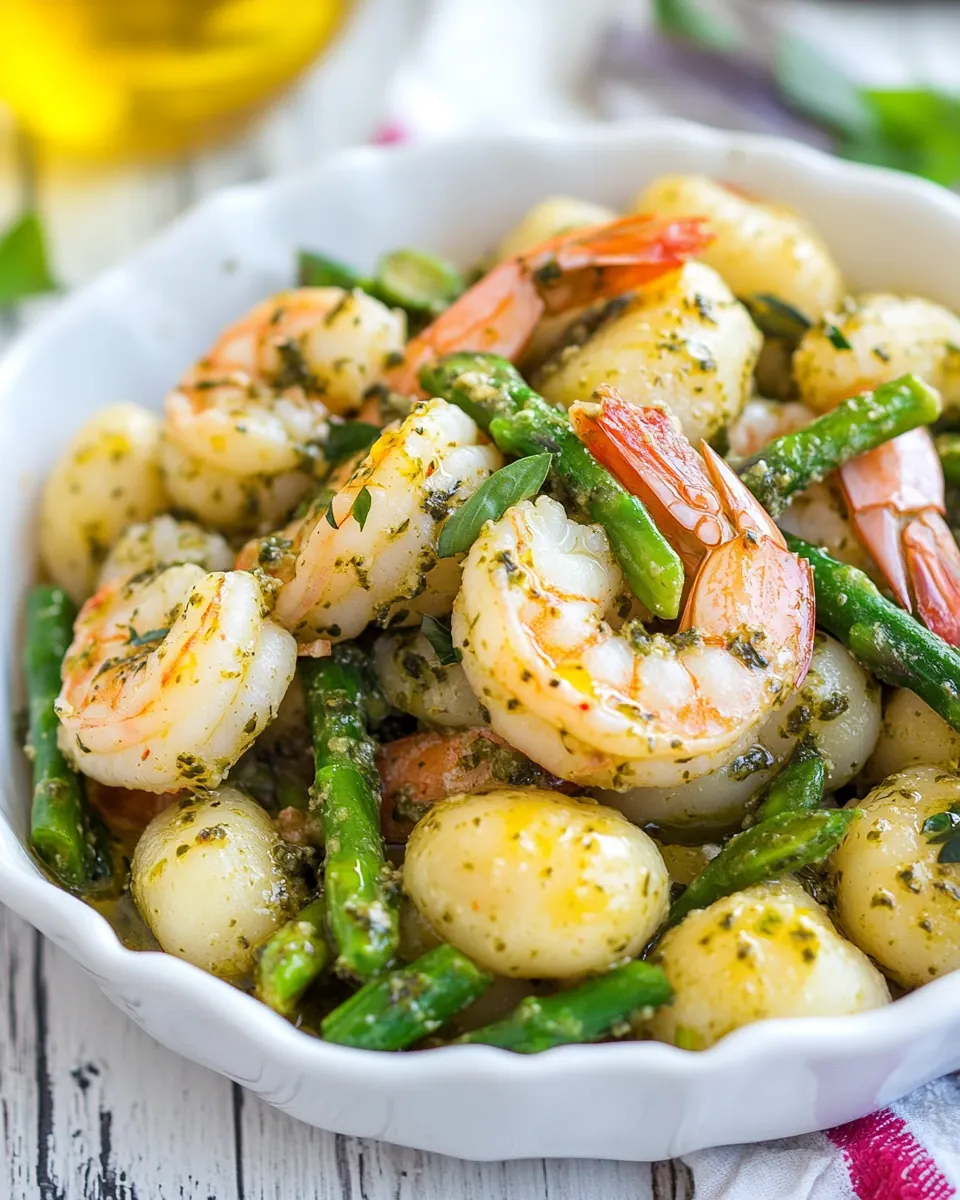
These directions are straightforward and conversational, so you can follow along easily. I like to keep a rhythm where the pot and the skillet work in tandem, which shortens active time and ensures everything is warm and ready to combine. Below I expand each step with sensory detail, reasons behind the technique, and a troubleshooting note.
- Bring water to a boil in a large 3 quart pot. Salt generously.: You will hear the water move from quiet to a rolling, lively boil and see large bubbles breaking the surface, which tells you it is hot enough to cook gnocchi quickly. Salting the water seasons the gnocchi from the inside, so the final dish is flavorful rather than flat. A common mistake is under-salting the water, which results in bland pasta; taste the water it should be as salty as the sea.
- Season shrimp with salt and pepper.: The sound of salt drawing moisture to the surface is subtle, and you will notice the shrimp glistening when properly seasoned. This step enhances the natural sweetness and ensures the shrimp develops a seasoned crust when seared. Avoid over seasoning early if your Parmesan cheese is salty, because the combined salt levels can become too intense.
- Add one tablespoon of olive oil and one tablespoon of butter to a large skillet over medium-high heat.: The oil will shimmer and the butter will foam, giving you a glossy, hot surface for searing. This fat blend provides both a high smoke point and rich flavor, helping to create a gentle browning on the shrimp . If the pan smokes black, it is too hot; reduce the heat to prevent bitterness.
- Add shrimp and sauté for about 2 minutes. Flip shrimp over and continue cooking until shrimp are pink and no longer translucent, about one minute longer. Remove shrimp from skillet.: You will hear a soft sizzle as the shrimp makes contact, and small browned edges will form, adding a caramelized note. Removing them while they are just opaque preserves tenderness. Overcooking is the most frequent issue here, which yields tough shrimp , so pull them off as soon as they lose translucency.
- Add remaining tablespoon of olive oil and tablespoon of butter to the skillet.: The refreshed fats in the pan will melt and shimmer, ready to return glossy heat to the next ingredients. This replenishes fat for proper sautéing of the asparagus , ensuring even cooking and flavor transfer. Skipping this replenishment can lead to dry, unevenly cooked vegetables.
- Add asparagus and lemon juice and toss to combine.: The pan will spring to life with a bright citrus perfume as the lemon juice hits the hot oil. Tossing helps the asparagus pick up the buttery glaze so each piece cooks evenly and acquires flavor. If the pan is overcrowded, the asparagus will steam rather than sear, yielding a limp texture.
- Sauté for 3 to 5 minutes or until asparagus are crisp-tender and bright green in color.: You want to see the vibrant green deepen and the stalks soften slightly while still snapping when bent. The audible sizzle will calm as moisture releases, and the scent will be vegetal and sweet. Cooking too long kills the color and leaves mushy stalks, so test a piece at three minutes.
- At the same time you are sautéing the asparagus, add the gnocchi to the pot of boiling water and cook according to package directions, about 2 minutes. Remove gnocchi with a slotted spoon.: The gnocchi will float and bob on the surface, and that floating is your visual cue to test for tenderness. Using a slotted spoon keeps the cooking liquid out of the pan and gives you control over timing. Letting them sit in the boiling water too long will cause them to fall apart and become gummy.
- Add gnocchi and shrimp to the skillet with the asparagus. Top with pesto and gently stir to combine.: As you fold these components together you will feel the heat of the skillet coat everything in a glossy, herb flecked sheen. The aroma of basil pesto will freshen the whole pan, and the gnocchi will soak up that flavorful sauce. Be gentle as you stir; vigorous tossing can break the gnocchi and bruise the shrimp .
- Top with Parmesan cheese and serve immediately.: The final sprinkle of Parmesan cheese melts lightly into the warm pasta and adds a savory, nutty finish. Serve while hot so textures remain distinct and the flavors are vibrant. Letting it sit too long causes the sauce to set and the shrimp to firm up, reducing the dish's appeal.
Tips and Tricks about 20 Minute Pesto Shrimp with Gnocchi and Asparagus
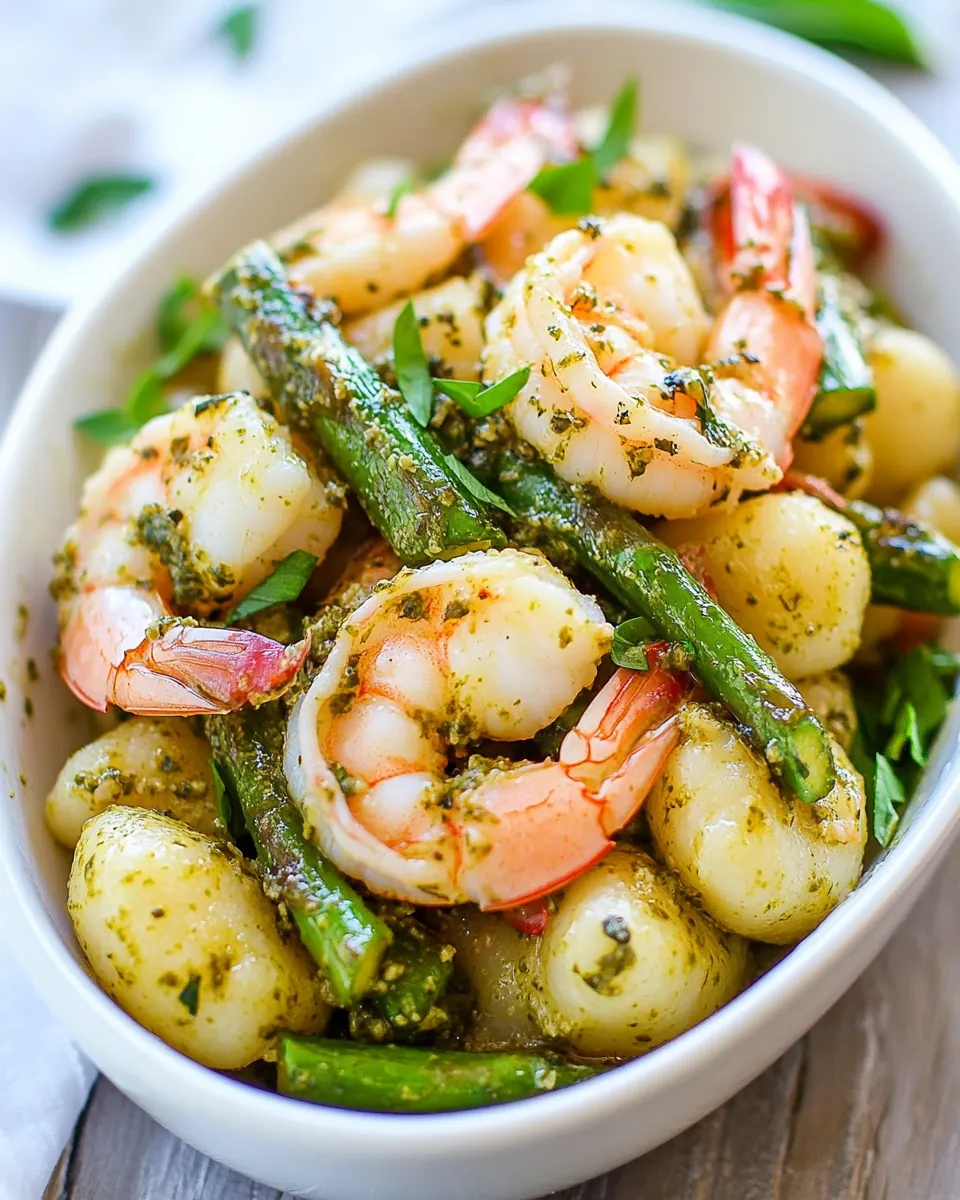
This dish rewards small techniques that add big returns. Below are practical tips I use every time to keep the flavors bright and the textures right. Each tip highlights a single focus so you can apply it quickly while cooking.
- Use fresh lemon juice: Fresh lemon juice brightens the entire dish in a way bottled juice cannot, offering a clean citrus lift that balances the richness of butter and basil pesto. Squeeze directly over the sizzling asparagus so the heat releases aromatic oils for maximum impact.
- Do not overcook shrimp: Watch for the moment shrimp lose translucency and gain a blush of pink, then remove them immediately, as even a minute too long turns them chewy. Carryover heat will finish them gently while you finish other steps.
- Boil gnocchi briefly: Trust the package times and remove the gnocchi as soon as they float; they only need a short boil to become pillowy. Overboiling causes them to absorb water and fall apart when tossed with the pesto.
- Reserve a little cooking water: If your sauce seems tight, save a spoonful of the gnocchi cooking water and stir it in to loosen and gloss the pesto, without watering down flavor.
- Serve immediately for best texture: This plate shines hot from the pan, with tender shrimp, soft gnocchi, and crisp asparagus. Leftovers can be reheated carefully, but textures will shift slightly.
How to Serve 20 Minute Pesto Shrimp with Gnocchi and Asparagus
This dish is versatile enough for casual weeknights and special dinners alike. I like to present it simply so the colors and textures stand out, and to pair it with light complements that do not overpower the pesto and Parmesan cheese.
- Plate warm: Serve right from the skillet or transfer to warmed plates so the sauce stays silky and the gnocchi keeps its tender texture.
- Garnish sparingly: A few extra shaves of Parmesan cheese or a small drizzle of olive oil brightens the surface without masking the pesto flavors.
- Occasions: This works well for a relaxed weeknight dinner, a spring lunch, or a light dinner party main where you want something impressive but quick.
- Pairings: Keep sides simple, such as a crisp green salad or a bowl of lemon dressed greens that echo the citrus notes in the dish.
- Storage: Cool to room temperature before storing in an airtight container. Refrigerate for up to 2 days, and reheat gently in a skillet with a touch of oil or butter.
- Seasonal note: This dish shines in spring when asparagus is at its peak, but it is still enjoyable any time you can find tender stalks.
FAQ
Conclusion
What makes this recipe special is its ability to feel luxurious while coming together in a very short time. The combination of pillowy gnocchi, tender shrimp, and bright asparagus tossed with basil pesto creates a satisfying balance of texture and flavor that feels elevated yet effortless. I encourage you to give it a try on a busy weeknight when you want something fast that still impresses. Share it with friends or tuck into it quietly yourself, either way it has a way of turning an ordinary evening into something worth savoring.
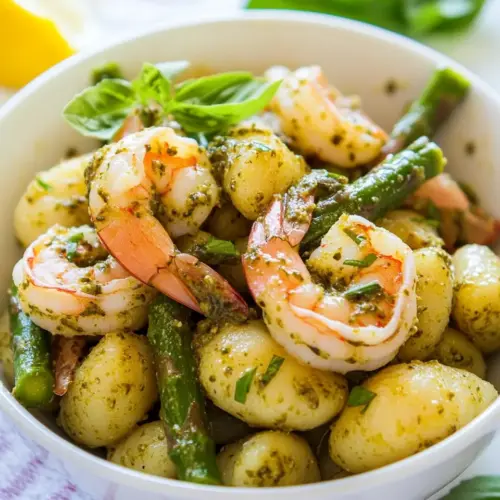
20 Minute Pesto Shrimp with Gnocchi and Asparagus
Equipment
- Large Pot
- Large Skillet
- Slotted Spoon
Ingredients
- 16 oz potato gnocchi Provides pillowy, tender dumplings that soak up sauce and add hearty carbohydrate structure to the dish; cook according to package instructions until al dente and finish in the pan to absorb flavors.
- 16 oz jumbo or large shrimp, peeled and deveined Adds sweet, briny protein that cooks quickly and delivers a succulent texture; devein and pat dry before searing to achieve a lightly caramelized exterior without overcooking.
- 16 oz asparagus, ends removed, cut into bite-size pieces Contributes a bright, crisp vegetable element with a slightly grassy flavor and pleasant snap; trim and cut into bite-size pieces so they cook evenly and retain a vibrant color.
- 2 tbsp extra virgin olive oil, divided Offers a fruity, aromatic fat for sautéing and building the base of the dish; divide the amount to control browning and to combine with butter for a balanced pan sauce.
- 2 tbsp unsalted butter, divided Introduces a rich, silky mouthfeel and helps emulsify the sauce when combined with oil; use divided pats to finish shrimp and gnocchi with a glossy coating and mild nuttiness.
- 2 tbsp lemon juice Delivers bright acidity that lifts the overall flavors and balances richness; squeeze fresh lemon juice over the finished dish to brighten pesto and seafood notes.
- 4 tbsp basil pesto (more or less depending on preference) Provides concentrated herbal, garlicky, and nutty flavor that serves as the primary sauce; stir into the warm gnocchi and shrimp to evenly coat and unify the components.
- 1 oz Parmesan cheese, shaved or grated Adds a sharp, savory, umami finish and a pleasing salty depth when shaved or grated; sprinkle over the plated dish for flavor contrast and a slightly granular texture.
- salt and pepper to taste Used to adjust and enhance the overall taste profile by balancing sweetness, acidity, and savory elements; season gradually and taste to achieve desired levels of flavor.
Instructions
- Bring water to a boil in a large 3 quart pot. Salt generously.: You will hear the water move from quiet to a rolling, lively boil and see large bubbles breaking the surface, which tells you it is hot enough to cook gnocchi quickly. Salting the water seasons the gnocchi from the inside, so the final dish is flavorful rather than flat. A common mistake is under-salting the water, which results in bland pasta; taste the water it should be as salty as the sea.
- Season shrimp with salt and pepper.: The sound of salt drawing moisture to the surface is subtle, and you will notice the shrimp glistening when properly seasoned. This step enhances the natural sweetness and ensures the shrimp develops a seasoned crust when seared. Avoid over seasoning early if your Parmesan cheese is salty, because the combined salt levels can become too intense.
- Add one tablespoon of olive oil and one tablespoon of butter to a large skillet over medium-high heat.: The oil will shimmer and the butter will foam, giving you a glossy, hot surface for searing. This fat blend provides both a high smoke point and rich flavor, helping to create a gentle browning on the shrimp . If the pan smokes black, it is too hot; reduce the heat to prevent bitterness.
- Add shrimp and sauté for about 2 minutes. Flip shrimp over and continue cooking until shrimp are pink and no longer translucent, about one minute longer. Remove shrimp from skillet.: You will hear a soft sizzle as the shrimp makes contact, and small browned edges will form, adding a caramelized note. Removing them while they are just opaque preserves tenderness. Overcooking is the most frequent issue here, which yields tough shrimp , so pull them off as soon as they lose translucency.
- Add remaining tablespoon of olive oil and tablespoon of butter to the skillet.: The refreshed fats in the pan will melt and shimmer, ready to return glossy heat to the next ingredients. This replenishes fat for proper sautéing of the asparagus , ensuring even cooking and flavor transfer. Skipping this replenishment can lead to dry, unevenly cooked vegetables.
- Add asparagus and lemon juice and toss to combine.: The pan will spring to life with a bright citrus perfume as the lemon juice hits the hot oil. Tossing helps the asparagus pick up the buttery glaze so each piece cooks evenly and acquires flavor. If the pan is overcrowded, the asparagus will steam rather than sear, yielding a limp texture.
- Sauté for 3 to 5 minutes or until asparagus are crisp-tender and bright green in color.: You want to see the vibrant green deepen and the stalks soften slightly while still snapping when bent. The audible sizzle will calm as moisture releases, and the scent will be vegetal and sweet. Cooking too long kills the color and leaves mushy stalks, so test a piece at three minutes.
- At the same time you are sautéing the asparagus, add the gnocchi to the pot of boiling water and cook according to package directions, about 2 minutes. Remove gnocchi with a slotted spoon.: The gnocchi will float and bob on the surface, and that floating is your visual cue to test for tenderness. Using a slotted spoon keeps the cooking liquid out of the pan and gives you control over timing. Letting them sit in the boiling water too long will cause them to fall apart and become gummy.
- Add gnocchi and shrimp to the skillet with the asparagus. Top with pesto and gently stir to combine.: As you fold these components together you will feel the heat of the skillet coat everything in a glossy, herb flecked sheen. The aroma of basil pesto will freshen the whole pan, and the gnocchi will soak up that flavorful sauce. Be gentle as you stir; vigorous tossing can break the gnocchi and bruise the shrimp .
- Top with Parmesan cheese and serve immediately.: The final sprinkle of Parmesan cheese melts lightly into the warm pasta and adds a savory, nutty finish. Serve while hot so textures remain distinct and the flavors are vibrant. Letting it sit too long causes the sauce to set and the shrimp to firm up, reducing the dish's appeal.
Notes
- Use fresh lemon juice: Fresh lemon juice brightens the entire dish in a way bottled juice cannot, offering a clean citrus lift that balances the richness of butter and basil pesto. Squeeze directly over the sizzling asparagus so the heat releases aromatic oils for maximum impact.
- Do not overcook shrimp: Watch for the moment shrimp lose translucency and gain a blush of pink, then remove them immediately, as even a minute too long turns them chewy. Carryover heat will finish them gently while you finish other steps.
- Boil gnocchi briefly: Trust the package times and remove the gnocchi as soon as they float; they only need a short boil to become pillowy. Overboiling causes them to absorb water and fall apart when tossed with the pesto.
- Reserve a little cooking water: If your sauce seems tight, save a spoonful of the gnocchi cooking water and stir it in to loosen and gloss the pesto, without watering down flavor.
- Serve immediately for best texture: This plate shines hot from the pan, with tender shrimp, soft gnocchi, and crisp asparagus. Leftovers can be reheated carefully, but textures will shift slightly.
