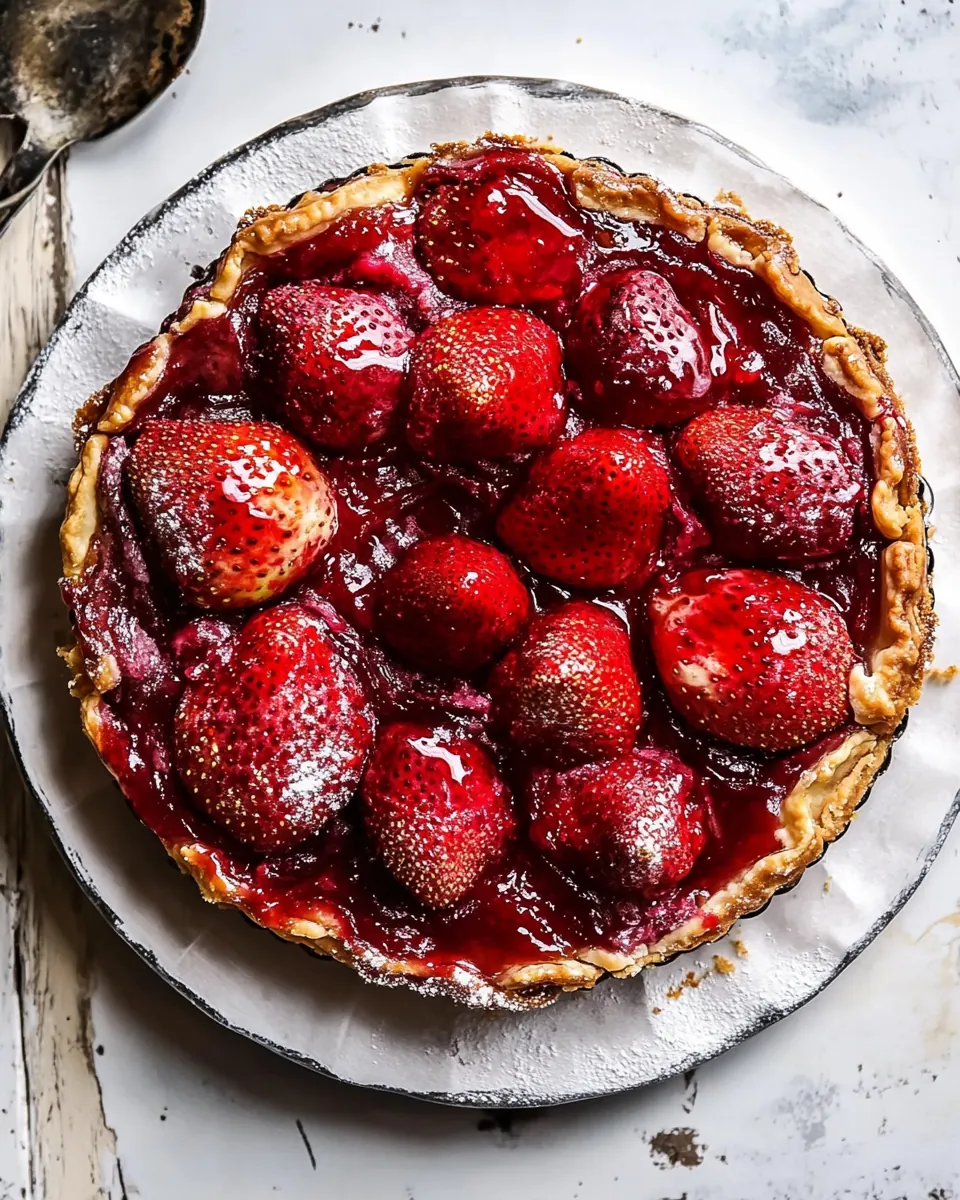
Strawberry Tarte Tatin
Strawberry Tarte Tatin has been one of those recipes I reach for when I want something showstopping but not precious.
Years ago I found myself juggling a hectic dinner party and a half box of overripe strawberries that had become far too sweet to ignore. I remember standing at the stove, spoon in hand, coaxing fruit and sugar into a glossy caramel, and feeling oddly calm as the kitchen filled with a jammy, fragrant steam. That evening the upside down tart came out of the skillet warm and sticky, the pastry perfectly puffed, and guests kept asking for another slice. It felt like a little triumph, the sort of victory that comes from trusting a simple technique.
Now when I make Strawberry Tarte Tatin I think about that blur of urgency turned into indulgence. I like how the method celebrates the fruit, letting natural juices mingle with honey and brown sugar until the aroma of strawberries and caramel fills the house. There is something deeply comforting about turning a skillet full of fruit into a gilded tart, then flipping it over to reveal glossy berries crowning a crisp pastry. It’s rustic yet elegant, and it reminds me that good desserts don’t have to be complicated to be memorable.
Recipe Snapshot
60 mins
20 mins
40 mins
Medium
250 kcal
American
Gluten-Free, Vegan
Desserts
10 inch oven safe skillet, Baking sheet, Rolling pin
The Beauty of This Strawberry Tarte Tatin
Intense fruit focus
I love how Strawberry Tarte Tatin puts the fruit center stage. The strawberries are cooked slowly with honey and brown sugar until they concentrate into a jammy, slightly syrupy topping. This approach highlights the strawberry flavor, rather than masking it with heavy creams. I find that the result tastes like summer, even when made on a chilly evening.
Simple but dramatic technique
The upside down flip makes a statement. You get a beautiful glossy crown of fruit with minimal fuss. We achieve a caramelized surface that looks professional, and yet the method is accessible. I always tell friends that mastering the flick of the wrist to invert the skillet is part theater, part confidence building.
Textural contrast
The contrast between the crisp, flaky puff pastry and the soft, saucy strawberries is why I return to this recipe. The pastry adds air and structure, providing a light crunch against the tender berries. That mix of textures creates a satisfying bite each time.
Flexible sweetness
I appreciate that the sweetness can be tuned. Using a combination of honey and brown sugar brings depth, with honey adding floral notes and brown sugar giving molasses warmth. I often adjust the quantities to match how sweet my berries are, and that little calibration changes the final balance beautifully.
Great for gatherings
This tart scales mentally, and it travels well from skillet to table. I like bringing it to dinner parties because it looks grand but doesn’t take over my prep time, allowing me to focus on conversation and simple sides. The recipe feels celebratory without being fussy.
Strawberry Tarte Tatin Ingredients
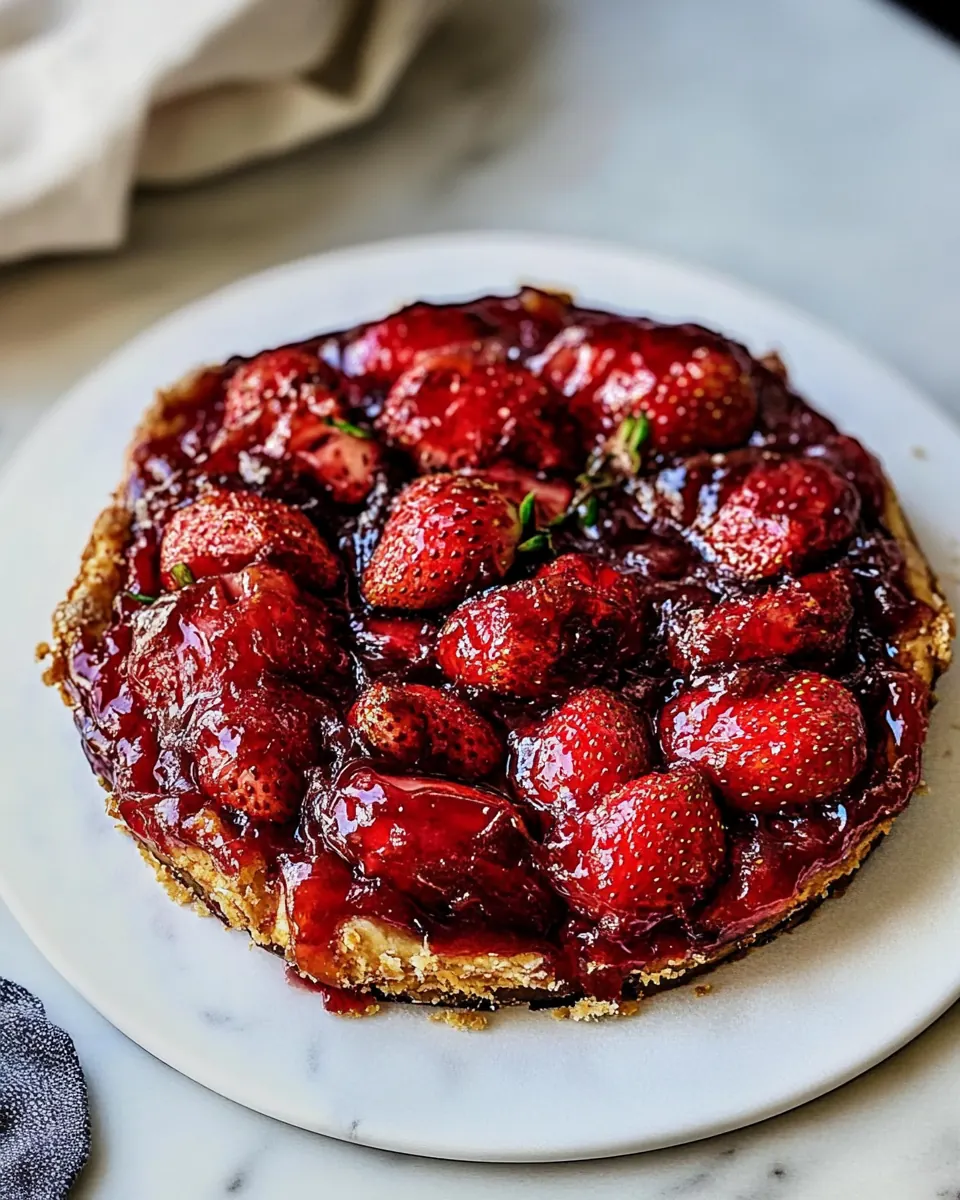
These ingredients work together to create a glossy, caramelized topping balanced by airy pastry. The strawberries are the centerpiece, while honey and brown sugar build a deep, warm sweetness. A little arrowroot or cornstarch helps the juices thicken so the topping is syrupy but not runny. Fresh thyme and vanilla add subtle aromatic layers that lift the fruit. Puff pastry provides the necessary oven spring and flaky texture to contrast the soft berries.
- 5 cups strawberries, halved if large: Provide bright, juicy sweetness and bulk to the tarte tatin, offering fresh acidity and vibrant strawberry flavor when halved to ensure even cooking and caramel absorption.
- 2 4 tablespoons honey: Add natural sweetness and depth with floral notes, helping to dissolve into the pan juices and balance tartness while allowing control of overall sweetness by using 2 to 4 tablespoons.
- 2 4 tablespoons brown sugar: Deliver rich, molasses-like caramel flavor and promote deep browning in the caramel layer; sprinkle and adjust between 2 to 4 tablespoons to achieve the desired caramel intensity.
- 1 tablespoon arrowroot powder or cornstarch: Thicken released fruit juices slightly when mixed with a little liquid, helping the caramel set and preventing a soggy bottom while maintaining a glossy finish.
- 1 tablespoon fresh thyme leaves: Infuse subtle herbal complexity and fragrance to the caramel and strawberries, with fresh leaves sprinkled in to complement the fruit without overpowering its natural sweetness.
- 2 teaspoons vanilla extract: Enhance and round out the strawberry flavor with warm, sweet aromatics; stir into the caramel or brushed pastry to lift overall flavor depth.
- 1 sheet frozen puff pastry, thawed: Provide a buttery, flaky top that bakes golden and crisp, creating the classic inverted tart crust once baked and flipped; thaw fully for even rolling and sealing.
- 1 egg beaten () (optional): Create an egg wash to brush over the puff pastry for a shiny, golden finish; optional but recommended for improved appearance and slight richness.
- coarse sugar, for sprinkling () (optional): Add a crunchy, decorative finish when sprinkled on the pastry before baking, contributing sparkle and texture to the crust; use sparingly as an optional garnish.
- vanilla ice cream, for serving: Complement the warm tarte tatin with cold, creamy contrast when served, melting over slices to balance caramelized sweetness and add luscious richness.
Preparation Steps for Strawberry Tarte Tatin
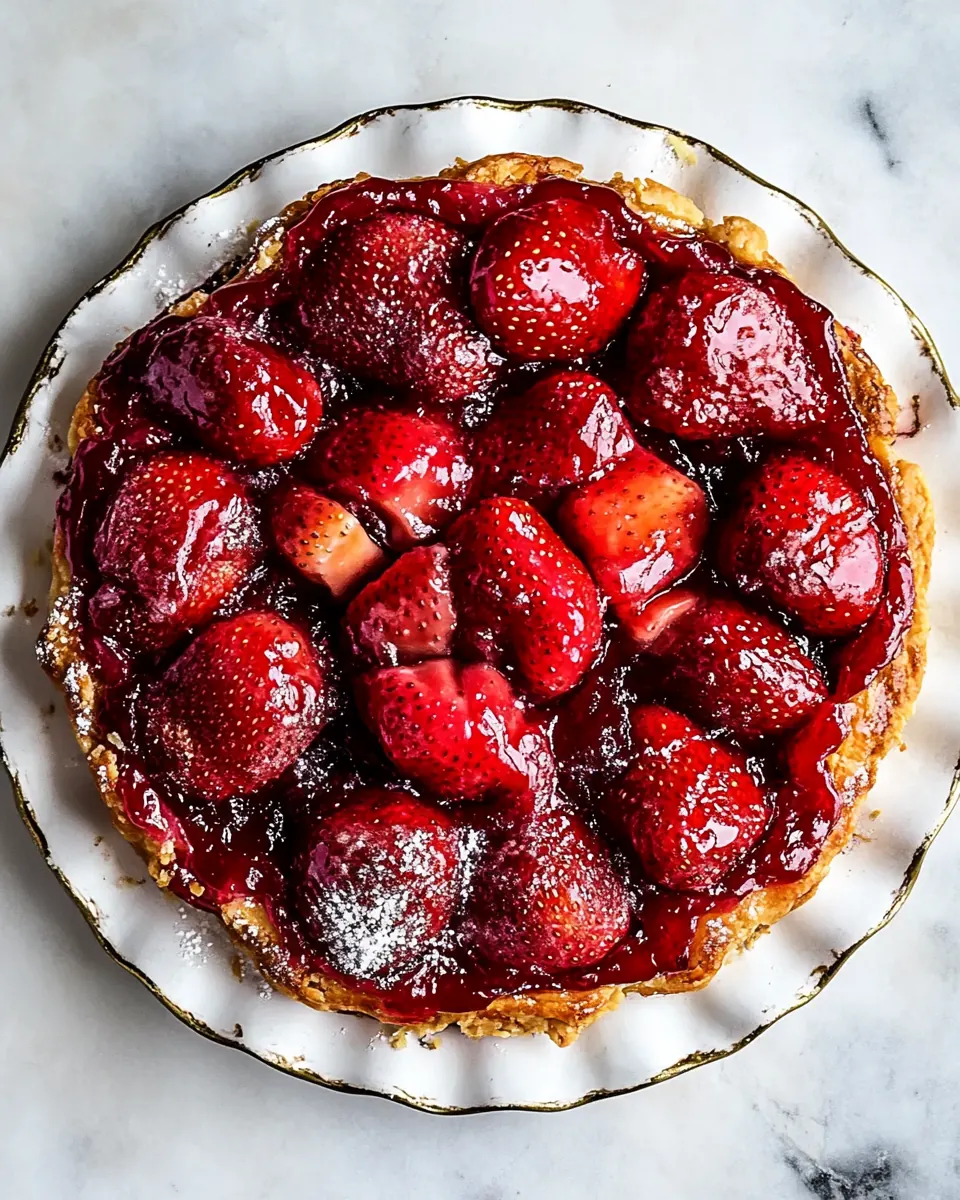
This method turns simple ingredients into something dramatic. I’ll walk you through each stage so you can read the sensory cues and avoid common missteps. Pay attention to color changes and timing, and you will be rewarded with a shiny, perfectly inverted tart.
- Preheat oven to 425°F. In a 10-inch oven-safe skillet, combine the strawberries, honey, brown sugar, arrowroot powder/cornstarch, thyme (if using), and 1 tablespoon of water. Set over medium-high heat. Bring to boil and cook 10 minutes, until the berries start to release their juices. Remove from the heat, add the vanilla. On a lightly floured surface, roll the puff pastry out into a rectangle about 1/4 inch thick. Place the pastry over the strawberries and press down gently, tucking the sides of the pastry under the strawberries. If desired, brush the pastry with a beaten egg and sprinkle with coarse sugar. Place the skillet on a baking sheet. Bake 25-30 minutes, cover with foil for the last 5-10 minutes. I like a darker pastry! Let cool in the skillet for 15 minutes. Run a knife around the edge to loosen. Carefully invert the Tarte Tatin onto a serving plate. If any strawberries fall out of place, just tuck them back in. Serve warm, topped with ice cream. Enjoy!: You should notice the oven reaching a steady, high heat so the pastry will puff immediately when it hits the oven. The dry, hot environment helps the bottom of the pastry crisp while the fruit syrup bubbles, creating a pleasing contrast. A common mistake is not preheating long enough, which leads to soggy pastry. Make sure the oven indicator has reached temperature before baking.
- In a 10-inch oven-safe skillet, combine the strawberries, honey, brown sugar, arrowroot powder/cornstarch, thyme (if using), and 1 tablespoon of water.: As the fruit mixes with the sugars and starch, you will see juices start to bead on the strawberries. The starch helps bind those juices so the topping becomes glossy instead of watery. Stir gently to coat the strawberries , and avoid smashing them, which would make the mixture too pulpy.
- Set over medium-high heat.: Place the skillet on the stove so the mixture can warm up steadily. You will hear a gentle simmer building to a soft bubbling as sugar melts and fruit releases moisture. Too high a flame can scorch the sugars, while too low will not reduce the juices properly, so moderate heat is key.
- Bring to boil and cook 10 minutes, until the berries start to release their juices.: Expect a fragrant steam of warm strawberries and honey, and you will see berries shedding liquid that mingles with melted sugar. The surface should look syrupy. If the mixture seems too thin after 10 minutes, continue a bit longer, stirring occasionally, until it thickens slightly.
- Remove from the heat, add the vanilla.: Off the heat, pour in the vanilla extract so the aroma remains delicate rather than being driven off by boiling. The room will fill with a warm, sweet scent. Adding vanilla at this point preserves its fragrance. Avoid adding it too early or it will lose its bright notes.
- On a lightly floured surface, roll the puff pastry out into a rectangle about 1/4 inch thick.: When you roll the puff pastry , you should feel slight resistance and see distinct layers form as the dough becomes even. Keep the pastry chilled during handling to maintain layers, and use a light dusting of flour to prevent sticking. Overworking the dough will compress layers and reduce flakiness.
- Place the pastry over the strawberries and press down gently, tucking the sides of the pastry under the strawberries.: As the pastry meets the warm fruit, you will hear a soft hiss and see steam escape at the edges. Tucking the edges secures the filling and creates a neat rim when inverted. Be careful pressing too firmly, which can force out too much syrup; gently coax the dough into place instead.
- If desired, brush the pastry with a beaten egg and sprinkle with coarse sugar.: Brushing with the beaten egg gives a glossy, deep golden finish, and the coarse sugar will caramelize slightly on top for added texture. You will notice the pastry gleaming before it even goes into the oven. Skip this step if you prefer a paler crust, but know that you will lose a bit of the showy sheen.
- Place the skillet on a baking sheet.: Setting the skillet on a baking sheet catches any bubbling syrup that might escape, preventing oven drips and making clean up easier. You may hear a soft crackle as residual juices hit the hot metal, which is normal. Avoid putting the skillet directly on racks without a tray, which risks overflow onto the oven floor.
- Bake 25-30 minutes, cover with foil for the last 5-10 minutes.: In the oven the pastry should rise and turn golden, and the sugar will deepen to an amber color while the filling bubbles gently. Covering with foil toward the end prevents the pastry from overbrowning while ensuring the interior finishes. A common error is leaving it uncovered the whole time and ending with overly dark pastry; timing your foil cover keeps the color controlled.
- Let cool in the skillet for 15 minutes.: Cooling allows the hot syrup to settle and slightly thicken, which helps the tart hold its shape when inverted. You will feel the skillet grow cooler and notice the bubbling slow. Inverting too soon often leads to a runny topping, so patience at this stage pays off.
- Run a knife around the edge to loosen.: As you slide a knife between the pastry and skillet, you should feel the tart release from the metal. This step ensures a clean flip. If the edges cling, gently work the knife further under the pastry but avoid tearing the crust, which makes an irregular presentation.
- Carefully invert the Tarte Tatin onto a serving plate.: With a confident motion, cover the skillet with a plate and flip; you may hear a soft thud and see the glossy strawberry crown emerge. Steam and syrup can run, so use oven mitts and a stable surface. If pieces shift, tuck them back into place quickly. Hesitation midflip can cause hot syrup to spill, so commit and turn decisively.
- If any strawberries fall out of place, just tuck them back in.: After inversion, you might find a berry misaligned, and gently arranging them improves the look. The syrup will still be warm and malleable, so you can nudge berries into a pleasing pattern. Be mindful of hot spots and use a spoon to reposition, avoiding burns.
- Serve warm, topped with ice cream.: The final touch is a scoop of vanilla ice cream , which melts into the warm syrup, creating a creamy counterpoint. Listen for the soft sizzle as cold meets hot, and enjoy the contrast of textures. Serving it cold is an option, but the warmth elevates the caramel notes best.
Ways to Adapt This Recipe
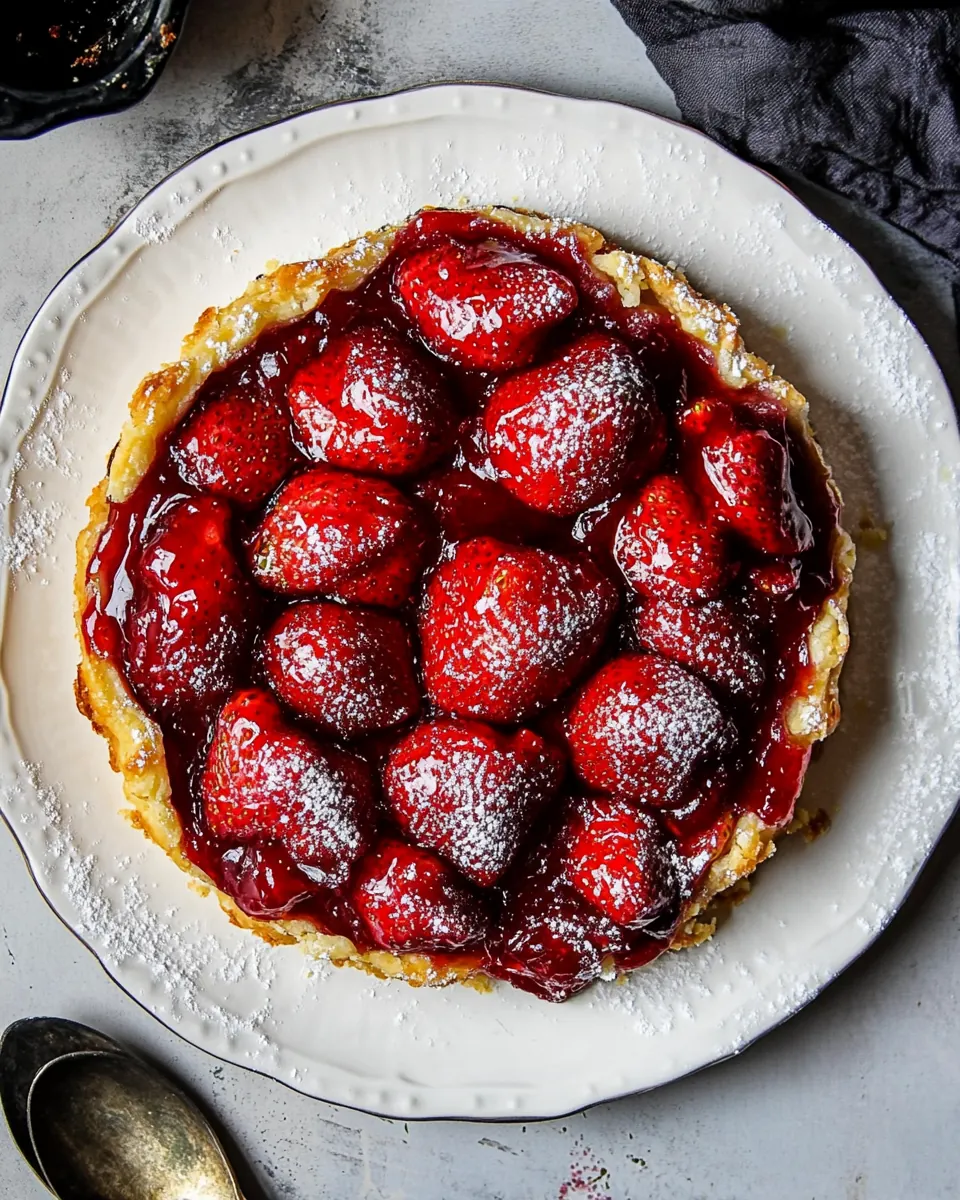
This tart is versatile, and small changes let you tailor it to your pantry and guests. Below are practical tips and variations that keep the core technique intact while offering new flavor directions or easier preparation tricks.
- Scale the sweetness: If your strawberries are exceptionally ripe, use the lower amounts of honey and brown sugar; for tart berries, use the higher amounts to ensure a syrupy caramel that balances acidity.
- Make ahead options: You can prepare the fruit topping an hour ahead and keep it warm on the stove, then cover and chill for up to a day, bringing it back to a gentle simmer before adding vanilla and assembling with the pastry.
- Egg wash for presentation: Brushing the pastry with a beaten egg yields a glossy, inviting crust that looks elegant for guests; omit if you prefer a more rustic matte finish.
- Textural sparkle: Sprinkle coarse sugar before baking to create a slightly crunchy top, which plays nicely against the tender strawberries and flaky pastry.
- Serving temperature: Serve the tart warm with a scoop of vanilla ice cream to enjoy the contrast of hot and cold, or let it cool to room temperature for a denser, more set topping if transporting to a picnic.
Accompaniments for Strawberry Tarte Tatin
The right accompaniments elevate the experience. Think about contrasts in temperature, texture, and flavor to complement the syrupy fruit and flaky pastry. Below I suggest pairings, occasions, storage guidance, and seasonal notes to help you serve with confidence.
- Classic pairing: A scoop of vanilla ice cream is timeless, balancing the warm, sweet strawberries with cold creaminess that melts into the caramel.
- Light sauce: Serve with a spoonful of lightly whipped cream to add an airy counterpoint to the dense fruit topping, ideal for less sweet palates.
- Cheese option: A small side of mild, creamy cheese provides a savory balance if you prefer contrasting flavors at a dinner party.
- Best occasions: This tart shines at spring gatherings, brunches, and celebratory dinners; its glossy appearance makes it a great focal dessert for special meals.
- Storage tips: Store leftovers wrapped in plastic in the refrigerator for up to two days. Reheat gently in a warm oven to revive the pastry before serving again.
- Seasonal pairing: During spring, pair with other berry-forward dishes or light salads to keep the meal feeling fresh and bright.
FAQ
Conclusion
What makes this Strawberry Tarte Tatin special is its ability to turn humble strawberries into a glossy, caramelized centerpiece with minimal fuss. The combination of jammy fruit and crisp puff pastry delivers texture and flavor in every bite, and the dramatic inversion gives a professional presentation without complicated techniques. I encourage you to give it a try next time you have ripe berries; the process is forgiving, and the results are consistently impressive. Share it warm with a scoop of ice cream and enjoy the simple pleasure of a dessert that feels both rustic and refined.
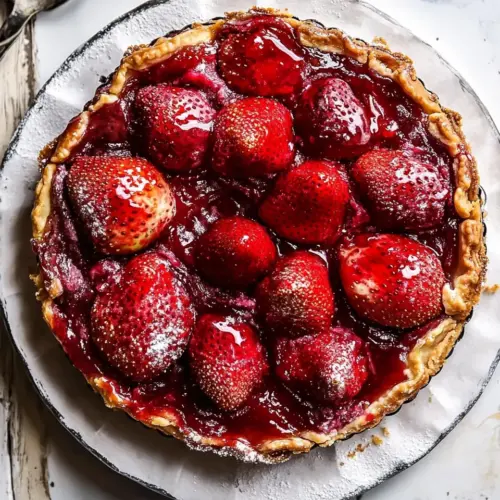
Strawberry Tarte Tatin
Equipment
- 10 inch oven safe skillet
- Baking Sheet
- Rolling Pin
Ingredients
- 5 cups strawberries, halved if large Provide bright, juicy sweetness and bulk to the tarte tatin, offering fresh acidity and vibrant strawberry flavor when halved to ensure even cooking and caramel absorption.
- 2 -4 tablespoons honey Add natural sweetness and depth with floral notes, helping to dissolve into the pan juices and balance tartness while allowing control of overall sweetness by using 2 to 4 tablespoons.
- 2 -4 tablespoons brown sugar Deliver rich, molasses-like caramel flavor and promote deep browning in the caramel layer; sprinkle and adjust between 2 to 4 tablespoons to achieve the desired caramel intensity.
- 1 tablespoon arrowroot powder or cornstarch Thicken released fruit juices slightly when mixed with a little liquid, helping the caramel set and preventing a soggy bottom while maintaining a glossy finish.
- 1 tablespoon fresh thyme leaves Infuse subtle herbal complexity and fragrance to the caramel and strawberries, with fresh leaves sprinkled in to complement the fruit without overpowering its natural sweetness.
- 2 teaspoons vanilla extract Enhance and round out the strawberry flavor with warm, sweet aromatics; stir into the caramel or brushed pastry to lift overall flavor depth.
- 1 sheet frozen puff pastry, thawed Provide a buttery, flaky top that bakes golden and crisp, creating the classic inverted tart crust once baked and flipped; thaw fully for even rolling and sealing.
- 1 egg beaten (optional) Create an egg wash to brush over the puff pastry for a shiny, golden finish; optional but recommended for improved appearance and slight richness.
- coarse sugar, for sprinkling (optional) Add a crunchy, decorative finish when sprinkled on the pastry before baking, contributing sparkle and texture to the crust; use sparingly as an optional garnish.
- vanilla ice cream, for serving Complement the warm tarte tatin with cold, creamy contrast when served, melting over slices to balance caramelized sweetness and add luscious richness.
Instructions
- Preheat oven to 425°F. In a 10-inch oven-safe skillet, combine the strawberries, honey, brown sugar, arrowroot powder/cornstarch, thyme (if using), and 1 tablespoon of water. Set over medium-high heat. Bring to boil and cook 10 minutes, until the berries start to release their juices. Remove from the heat, add the vanilla. On a lightly floured surface, roll the puff pastry out into a rectangle about 1/4 inch thick. Place the pastry over the strawberries and press down gently, tucking the sides of the pastry under the strawberries. If desired, brush the pastry with a beaten egg and sprinkle with coarse sugar. Place the skillet on a baking sheet. Bake 25-30 minutes, cover with foil for the last 5-10 minutes. I like a darker pastry! Let cool in the skillet for 15 minutes. Run a knife around the edge to loosen. Carefully invert the Tarte Tatin onto a serving plate. If any strawberries fall out of place, just tuck them back in. Serve warm, topped with ice cream. Enjoy!: You should notice the oven reaching a steady, high heat so the pastry will puff immediately when it hits the oven. The dry, hot environment helps the bottom of the pastry crisp while the fruit syrup bubbles, creating a pleasing contrast. A common mistake is not preheating long enough, which leads to soggy pastry. Make sure the oven indicator has reached temperature before baking.
- In a 10-inch oven-safe skillet, combine the strawberries, honey, brown sugar, arrowroot powder/cornstarch, thyme (if using), and 1 tablespoon of water.: As the fruit mixes with the sugars and starch, you will see juices start to bead on the strawberries. The starch helps bind those juices so the topping becomes glossy instead of watery. Stir gently to coat the strawberries , and avoid smashing them, which would make the mixture too pulpy.
- Set over medium-high heat.: Place the skillet on the stove so the mixture can warm up steadily. You will hear a gentle simmer building to a soft bubbling as sugar melts and fruit releases moisture. Too high a flame can scorch the sugars, while too low will not reduce the juices properly, so moderate heat is key.
- Bring to boil and cook 10 minutes, until the berries start to release their juices.: Expect a fragrant steam of warm strawberries and honey, and you will see berries shedding liquid that mingles with melted sugar. The surface should look syrupy. If the mixture seems too thin after 10 minutes, continue a bit longer, stirring occasionally, until it thickens slightly.
- Remove from the heat, add the vanilla.: Off the heat, pour in the vanilla extract so the aroma remains delicate rather than being driven off by boiling. The room will fill with a warm, sweet scent. Adding vanilla at this point preserves its fragrance. Avoid adding it too early or it will lose its bright notes.
- On a lightly floured surface, roll the puff pastry out into a rectangle about 1/4 inch thick.: When you roll the puff pastry , you should feel slight resistance and see distinct layers form as the dough becomes even. Keep the pastry chilled during handling to maintain layers, and use a light dusting of flour to prevent sticking. Overworking the dough will compress layers and reduce flakiness.
- Place the pastry over the strawberries and press down gently, tucking the sides of the pastry under the strawberries.: As the pastry meets the warm fruit, you will hear a soft hiss and see steam escape at the edges. Tucking the edges secures the filling and creates a neat rim when inverted. Be careful pressing too firmly, which can force out too much syrup; gently coax the dough into place instead.
- If desired, brush the pastry with a beaten egg and sprinkle with coarse sugar.: Brushing with the beaten egg gives a glossy, deep golden finish, and the coarse sugar will caramelize slightly on top for added texture. You will notice the pastry gleaming before it even goes into the oven. Skip this step if you prefer a paler crust, but know that you will lose a bit of the showy sheen.
- Place the skillet on a baking sheet.: Setting the skillet on a baking sheet catches any bubbling syrup that might escape, preventing oven drips and making clean up easier. You may hear a soft crackle as residual juices hit the hot metal, which is normal. Avoid putting the skillet directly on racks without a tray, which risks overflow onto the oven floor.
- Bake 25-30 minutes, cover with foil for the last 5-10 minutes.: In the oven the pastry should rise and turn golden, and the sugar will deepen to an amber color while the filling bubbles gently. Covering with foil toward the end prevents the pastry from overbrowning while ensuring the interior finishes. A common error is leaving it uncovered the whole time and ending with overly dark pastry; timing your foil cover keeps the color controlled.
- Let cool in the skillet for 15 minutes.: Cooling allows the hot syrup to settle and slightly thicken, which helps the tart hold its shape when inverted. You will feel the skillet grow cooler and notice the bubbling slow. Inverting too soon often leads to a runny topping, so patience at this stage pays off.
- Run a knife around the edge to loosen.: As you slide a knife between the pastry and skillet, you should feel the tart release from the metal. This step ensures a clean flip. If the edges cling, gently work the knife further under the pastry but avoid tearing the crust, which makes an irregular presentation.
- Carefully invert the Tarte Tatin onto a serving plate.: With a confident motion, cover the skillet with a plate and flip; you may hear a soft thud and see the glossy strawberry crown emerge. Steam and syrup can run, so use oven mitts and a stable surface. If pieces shift, tuck them back into place quickly. Hesitation midflip can cause hot syrup to spill, so commit and turn decisively.
- If any strawberries fall out of place, just tuck them back in.: After inversion, you might find a berry misaligned, and gently arranging them improves the look. The syrup will still be warm and malleable, so you can nudge berries into a pleasing pattern. Be mindful of hot spots and use a spoon to reposition, avoiding burns.
- Serve warm, topped with ice cream.: The final touch is a scoop of vanilla ice cream , which melts into the warm syrup, creating a creamy counterpoint. Listen for the soft sizzle as cold meets hot, and enjoy the contrast of textures. Serving it cold is an option, but the warmth elevates the caramel notes best.
Notes
- Scale the sweetness: If your strawberries are exceptionally ripe, use the lower amounts of honey and brown sugar; for tart berries, use the higher amounts to ensure a syrupy caramel that balances acidity.
- Make ahead options: You can prepare the fruit topping an hour ahead and keep it warm on the stove, then cover and chill for up to a day, bringing it back to a gentle simmer before adding vanilla and assembling with the pastry.
- Egg wash for presentation: Brushing the pastry with a beaten egg yields a glossy, inviting crust that looks elegant for guests; omit if you prefer a more rustic matte finish.
- Textural sparkle: Sprinkle coarse sugar before baking to create a slightly crunchy top, which plays nicely against the tender strawberries and flaky pastry.
- Serving temperature: Serve the tart warm with a scoop of vanilla ice cream to enjoy the contrast of hot and cold, or let it cool to room temperature for a denser, more set topping if transporting to a picnic.
