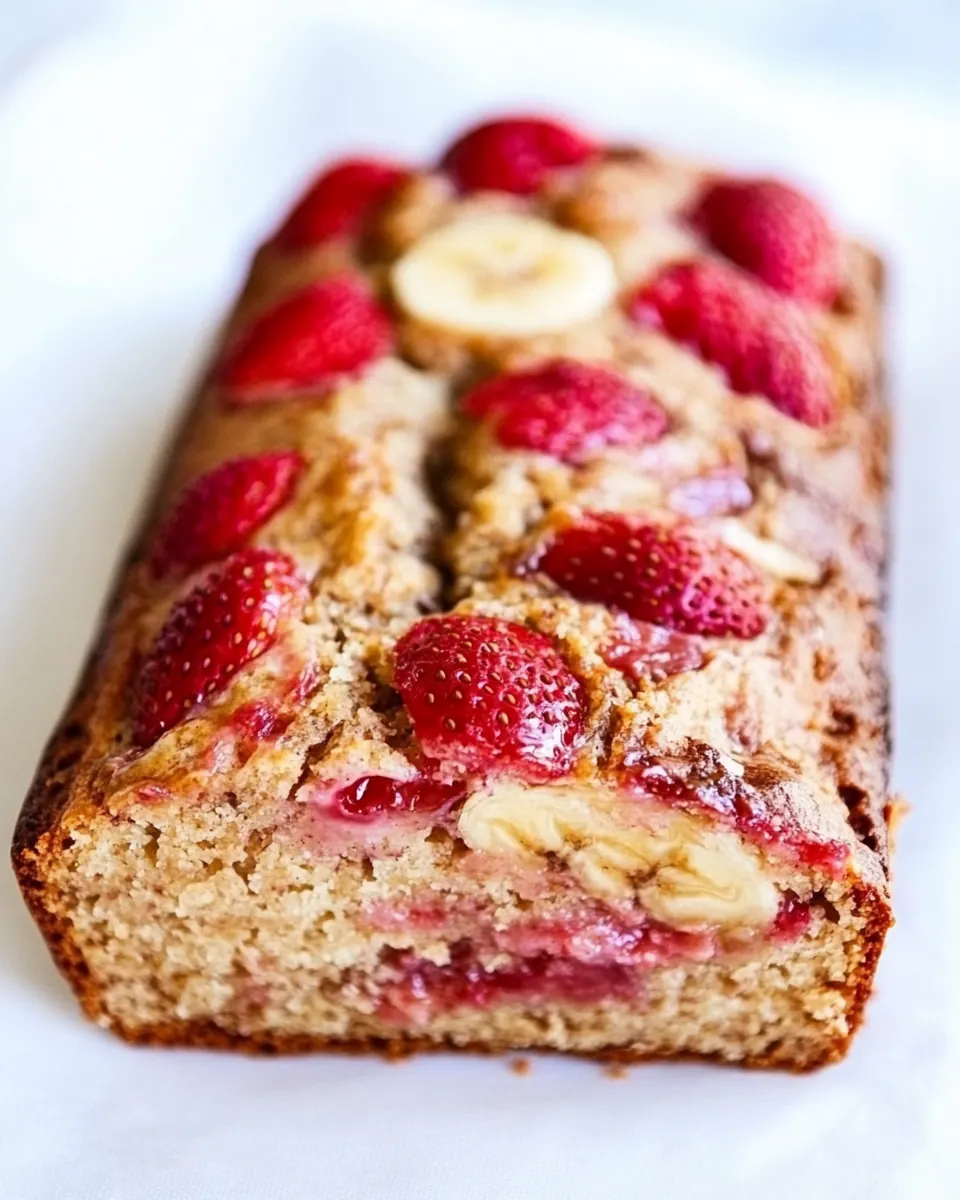
Strawberry Banana Bread
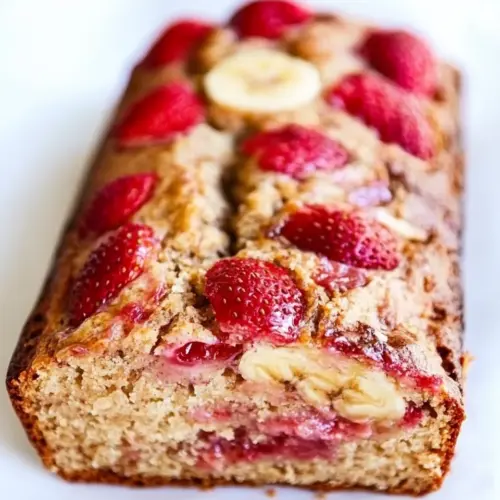
Strawberry Banana Bread has been one of those recipes I reach for when I want something homey, slightly sweet, and honest. The first time I made it I had an overripe bunch of bananas and a pint of strawberries that needed saving, and the kitchen filled with a warm, fruity aroma that made the whole house feel like a hug. From the moment I pulled the loaf from the oven and tapped the golden top, I knew this was a keeper.
Every batch since has taught me a small lesson. Once I learned to toss the strawberries in a little flour so they do not sink, the crumb stayed tender and studded with bright bursts of berry. I also began to trust a thicker batter, which yields a loaf that slices well and does not become soggy as it cools. When friends come over for coffee, this loaf disappears in minutes, and I love that it feels special without being fussy.
Recipe Snapshot
1 hr 15 mins
10 mins
65 mins
Medium
200 kcal
American
Gluten-Free, Low FODMAP
Breakfast
19×5-inch loaf pan, 1 Large Bowl
Why We Love This Strawberry Banana Bread
Flavor simplicity that sings
I love how Strawberry Banana Bread balances two very familiar fruits without overwhelming either one. The bananas provide natural sweetness and a tender crumb, while the strawberries give bright pockets of juiciness. I find the contrast between the mellow, caramel notes of ripe bananas and the slightly tart freshness of strawberries keeps every slice interesting, and that is why I make it when I want comfort with a lift.
Easy pantry friendly baking
I’m drawn to recipes I can make without a dozen special ingredients, and this loaf fits that bill perfectly. With staples like all-purpose flour, eggs, and a couple of sweeteners, you can pull it together quickly. In my kitchen, that means less fuss and more time sharing the loaf with guests or saving slices for a simple breakfast the next morning.
Texture that behaves
One reason I keep returning to this recipe is the reliably tender yet sliceable crumb. The inclusion of a little sour cream or Greek yogurt gives moisture and a gentle tang, which helps the loaf stay soft without being gummy. Tossing the strawberries in flour keeps them suspended so you get strawberry bites throughout, not just a mushed center.
Adaptable and forgiving
I often tweak recipes, and this loaf is forgiving of small changes. You can swap oils based on what you have, or dial the sugar slightly down if your bananas are very ripe. Over the years I learned that watching the loaf for visual cues matters more than strictly obeying the clock, and that makes it relaxing to bake.
Great for sharing
Finally, I adore how this loaf travels well. Wrap a few slices for a neighbor, bring it to a brunch, or serve it warmed at a family gathering. The combination of bright strawberries and familiar bananas makes it universally appealing, and I find it sparks conversation more than a plain loaf ever does.
Ingredients to Make Strawberry Banana Bread
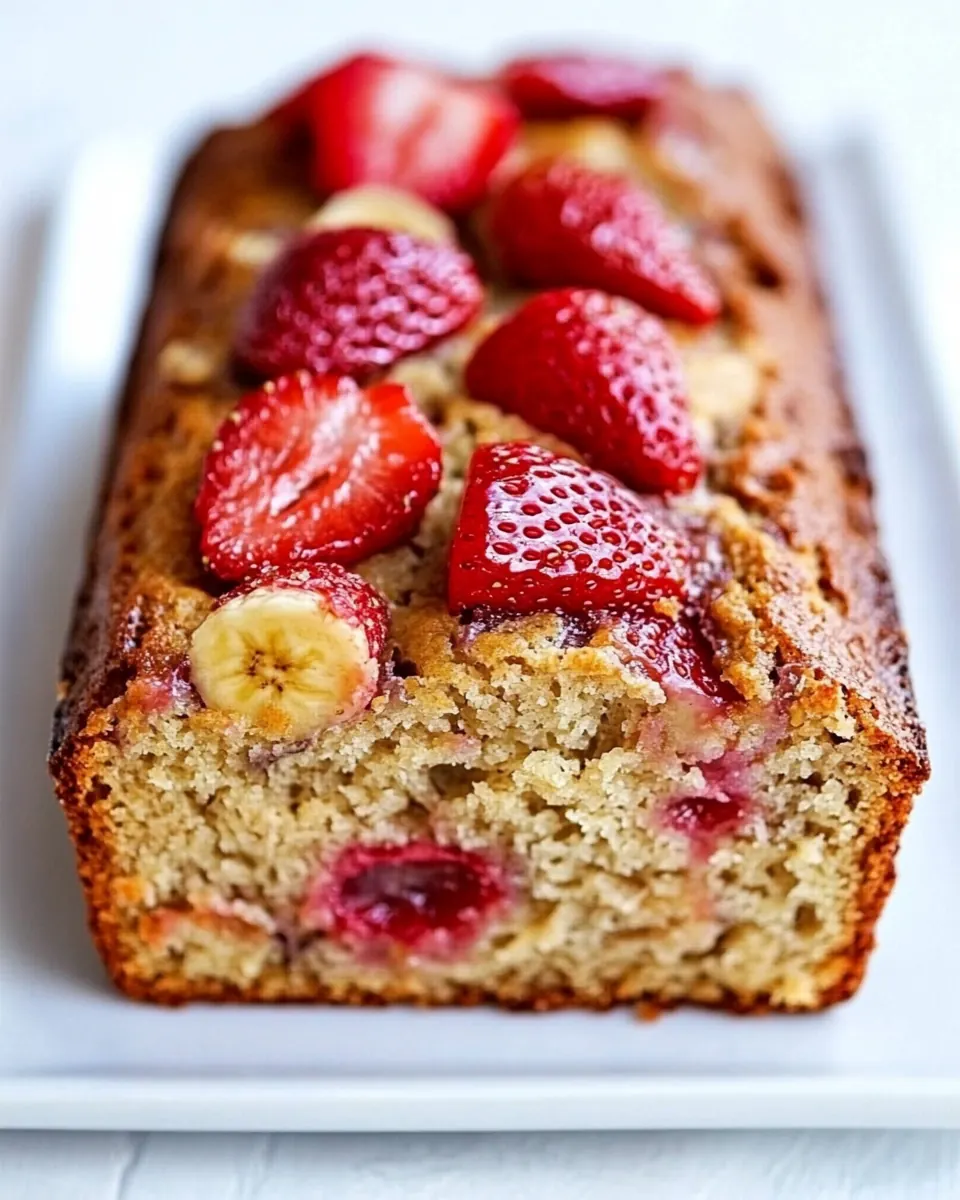
I believe good baking starts with a clear purpose for each ingredient. In this loaf, the bananas act as natural sweeteners and tenderizers, the strawberries add freshness and pockets of flavor, and the combination of sugars plus a bit of oil keeps the crumb moist. The chemical leaveners lift the loaf, while the sour cream brings silkiness and a subtle tang that balances the fruit.
- 1 large egg: Whisked into the batter to provide structure and moisture while helping emulsify fats and liquids for a tender crumb. Adds richness and assists leavening by trapping air when beaten, contributing to the loaf's rise and texture.
- 1/2 cup light brown sugar, packed: Packed into the measure to supply caramel-like sweetness and moistness while aiding browning and depth of flavor in the bread. Balances fruit tartness and works with granulated sugar to create a nuanced sweetness profile and tender crumb.
- 1/3 cup canola or vegetable oil, liquid-state coconut oil may be substituted: Poured in as the primary fat to tenderize the crumb and add moistness without solid pockets, keeping the loaf soft. Provides a neutral flavor that lets the strawberries and bananas shine while aiding mouthfeel and shelf life.
- 1/4 cup granulated sugar: Sprinkled into the batter to deliver straightforward sweetness and assist in browning and texture control during baking. Combines with brown sugar to balance flavors and ensure proper sugar structure for moistness and crust formation.
- 1/4 cup sour cream, lite is okay; or Greek yogurt may be substituted: Folded into the mixture to add tangy richness and slight acidity, which helps activate baking soda for lift and contributes to a moist crumb. Can be substituted with Greek yogurt for similar creaminess and tartness while maintaining texture.
- 2 teaspoons vanilla extract: Stirred in for aromatic sweetness that enhances the fruity flavors and rounds out the overall taste profile. Small quantity significantly elevates the bread's flavor complexity without affecting texture.
- 1 1/4 cups all-purpose flour, plus additional if necessary (see step 4 in directions): Sifted or measured to create the bulk of the loaf and provide the necessary gluten structure for shape and chew. Can be adjusted slightly if batter is too thick, ensuring the right consistency for even baking and proper crumb.
- 1/2 teaspoon baking powder: Sprinkled into the dry mix in a small amount to contribute gentle leavening and support rise alongside baking soda for a light crumb. Works with the acidic components to help the loaf puff and maintain tenderness.
- 1/2 teaspoon baking soda: Added in tandem with baking powder to react with acidic ingredients and produce carbon dioxide for lift during baking. Helps create an even, airy texture and prevents a dense, heavy loaf.
- 1/2 teaspoon salt, or to taste: Measured carefully to enhance and balance flavors while controlling yeast or chemical leavening activity, preventing overly flat or excessively salty results. Used judiciously to heighten sweetness and the natural flavors of fruit without overpowering them.
- 1 cup mashed ripe bananas, about 2 large or 3 small bananas: Mashed and folded in to provide natural sweetness, moisture, and flavor concentration while contributing to the loaf's tender structure. Ripeness level influences sweetness and texture, so very ripe bananas yield better moisture and banana flavor.
- 1 1/2 cups fresh strawberries, quartered and tossed in 3 tablespoons all-purpose flour: Tossed in with flour to prevent sinking, these berries add bright fruity sweetness, color, and bursts of freshness throughout the loaf. Quartered strawberries distribute evenly and their slight acidity complements the banana and sour cream for balanced flavor.
How to Prepare Strawberry Banana Bread
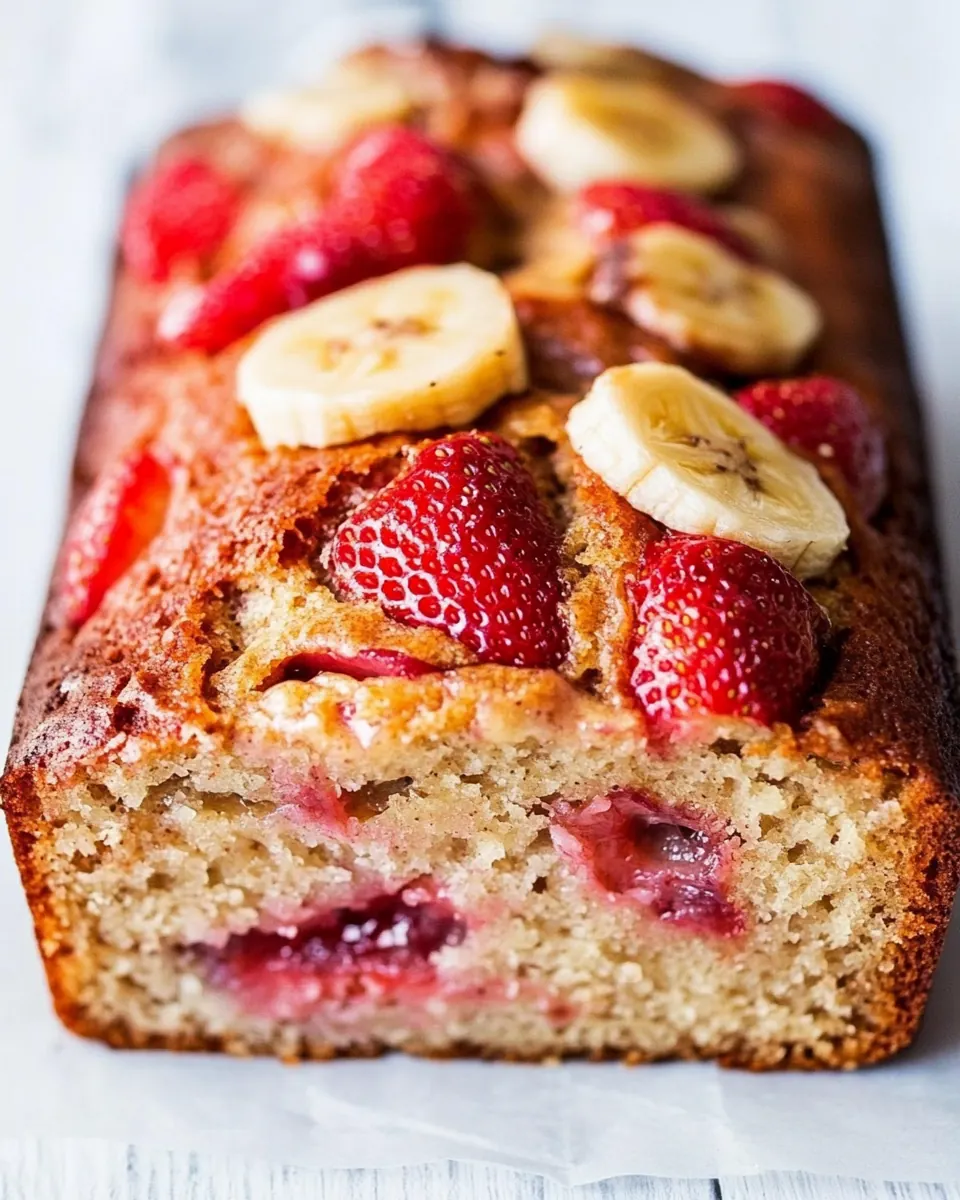
Below I expand each direction into a detailed, sensory-led walkthrough. I like to bake with attention to touch, sight, and smell so you can tell when everything is going as it should. Read the cues, trust your oven a little, and be ready to adapt if your fruits are extra juicy.
- Preheat oven to 350 F. Spray one 9×5-inch loaf pan with floured cooking spray, or grease and flour the pan; set aside. Note – Loaf is not very tall as baked in a 9×5 pan, but I fear an 8×4 pan will be a bit too skimpy.: When you step into the kitchen and set the oven to 350 F , you will start to feel the ritual of baking. As the oven warms, you might catch a faint metallic hum followed by a gentle thermal scent. This even heat is crucial because it gives the loaf time to rise steadily and set without collapsing. A common mistake is to put the batter into an oven that is not fully up to temperature, which can lead to uneven rising and a dense center. Make sure your oven reads the correct temperature, and position the rack in the center so heat circulates evenly around the 9×5-inch loaf pan .
- To a large bowl, add the first six ingredients, through vanilla, and whisk to combine.: Greasing and flouring the pan ensures the loaf releases cleanly and develops a nicely textured crust. When you press your finger gently against the greased surface before adding flour, you should feel a light coating that glistens. If you overdo the flour layer it can create dry patches on the sides, and if you skip greasing altogether you risk the loaf sticking. I like to tap out excess flour and wipe any clumps to avoid uneven browning.
- Add 1 1/4 cups flour, baking powder, baking soda, salt, and fold with spatula or stir gently with a spoon until just combined; don’t overmix.: Combine the egg , light brown sugar , canola or vegetable oil , granulated sugar , sour cream , and vanilla extract in a large bowl and whisk until smooth. You will notice the mixture become glossy and slightly thickened, and the sugar will dissolve into the wet ingredients, producing a fragrant, creamy base. This blend sets the tone for the crumb by evenly distributing fat and moisture. A typical error is under-whisking which leaves sugar grains; whisk until you no longer feel grittiness between your fingers.
- Add the bananas and fold gently to combine.: Folding in the dry ingredients by hand helps preserve a tender texture. As you fold, watch the batter change from glossy to a more matte appearance, and you will see streaks of flour disappear. The goal is to mix until you no longer see dry pockets, but stop before a fully uniform batter if you want a lighter loaf. Overmixing activates gluten and will yield a tight, chewy crumb, so fold gently and stop as soon as the flour is incorporated.
- Add the strawberries tossed in 3 tablespoons flour and fold gently to combine. Batter should be on the thicker side. If it’s not, you may wish to add up to 1/4 cup additional flour. All bananas and strawberries vary in their moisture content and the consistency of batters will vary. The berries will release water into batter during baking and it’s better to err on the side of a thicker than thinner batter by adding additional flour if you deem it necessary.: When you add the mashed ripe bananas , the batter will loosen slightly and take on a deeper golden hue. You may smell a soft, caramelized banana fragrance as the sugars meld. Folding carefully prevents overworking the batter and preserves air bubbles. A common problem here is adding bananas that are too liquid; if your mash is very watery, scoop off excess liquid or add a touch more flour to keep the batter thick and supportive for the fruit.
- Turn batter out into the prepared pan, smoothing the top lightly with a spatula.: Fold in the strawberries that have been dusted with flour, and you will see specks of red distributed through the batter. The flour coating helps the berries stay suspended and not sink, avoiding a wet center. The scent will brighten with their addition. Avoid vigorous stirring which can macerate the berries and turn your batter pink and runny. If you notice a lot of liquid pooling, fold as little as possible and consider a touch more flour to achieve the right consistency.
- Bake for about 55 to 65 minutes (I baked 60 minutes) or until the top is golden, the center is set, and a toothpick inserted in the center comes out clean, or with a few moist crumbs, but no batter.: Spoon the thicker batter into the greased and floured 9×5-inch loaf pan , and smooth the top with a spatula so the loaf bakes evenly. You should see a dense but spreadable surface that will form a gentle dome as it rises. If the top is too rough, it can brown unevenly; too smooth and it may not form a pleasing crust. A gentle nap of batter that holds its shape is ideal.
- Allow bread to cool in pan for about 15 minutes before turning out on a wire rack to cool completely before slicing and serving.: During baking the kitchen will fill with a warm, fruity perfume as the sugars caramelize and the fruits release steam. Look for a golden top that springs back slightly to the touch and for the center to be set. Insert a toothpick in the center and expect it to come out with a few moist crumbs but no raw batter. If the top is browning too quickly, tent loosely with foil in the last 10 minutes. A frequent mistake is removing the loaf too early because the outer edges may appear done while the center still needs more time.
- Allow bread to cool in pan for about 15 minutes before turning out on a wire rack to cool completely before slicing and serving: Let the loaf rest so it finishes setting and releases from the pan easily. The residual heat continues to cook the interior gently, and you can hear a subtle settling sound as steam escapes. If you try to unmold it while piping hot, the loaf can crack or crumble. After turning out, cool completely on a wire rack to prevent a soggy bottom, and slice with a serrated knife for clean cuts.
Ways to Adapt This Recipe
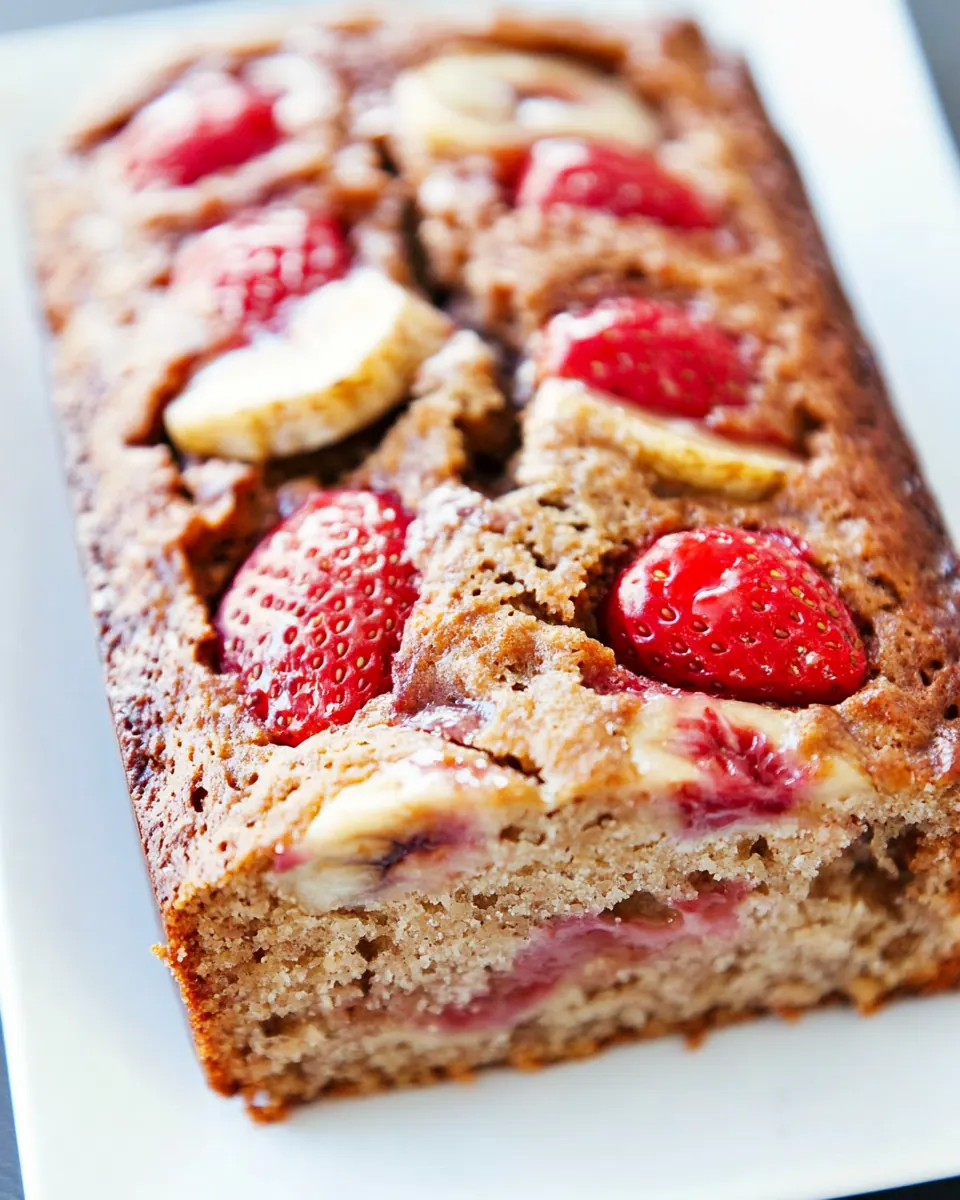
This loaf adapts well to small swaps, and with attention to moisture you can make it work with what you have on hand. Below are practical, tested ideas that keep the integrity of the recipe while offering variety.
- Swap oils carefully Use canola or vegetable oil as written for a neutral profile; if substituting liquid coconut oil, melt and cool slightly first to integrate without seizing the batter.
- Lower sugar gently Reduce the granulated sugar by a tablespoon or two if your bananas are very ripe, tasting the batter for balance and watching for less browning during baking.
- Sour cream alternatives Greek yogurt can replace sour cream in equal measure to maintain moisture and tang, but use a thicker variety to avoid thinning the batter.
- Control fruit moisture If your strawberries are very ripe and juicy, drain briefly on paper towel before quartering, then dust with the flour to prevent excess liquid in the batter.
- Make it ahead Bake, cool fully, and wrap tightly. Stored at room temperature in an airtight container it will keep well for several days, or freeze slices for longer storage.
What Complements This Strawberry Banana Bread
This loaf pairs with simple drinks and light accompaniments, and it suits casual breakfasts, brunches, or snacks. Think seasonal pairings and thoughtful presentation, and you can elevate a humble slice into a moment.
- Morning coffee or tea Serve slightly warmed with a cup of coffee or a mild black tea for a relaxed breakfast that highlights the loaf’s fruity notes.
- Brunch platter Arrange slices with fresh fruit and yogurt for a bright brunch spread that guests can nibble on between savory bites.
- Picnic fare Pack slices in a cooler for an easy picnic treat that travels well and does not require reheating.
- Snack or lunchbox Slice thinly for a portable snack or to include in a lunchbox for a sweet, homey bite without being overly heavy.
- Storage tips Keep the loaf airtight at room temperature for up to one week, or freeze slices wrapped individually for up to six months to preserve freshness.
- Seasonal pairings In spring serve with a light citrus salad or berries, as the fresh flavors complement the loaf’s brightness and make it feel in season.
FAQ
Conclusion
This recipe stands out for its lovely combination of ripe banana richness and bright strawberry notes, producing a loaf that is both comforting and lively. Try it the next time you have ripe fruit on hand, and you will likely find it becomes a go-to for breakfasts, snacks, or casual gatherings. Baking it is straightforward, and the results reward patience and attention to small details like fruit moisture and visual cues. Share a slice with someone, and enjoy the warmth it brings to an ordinary day.
Strawberry Banana Bread
Equipment
- 19×5-inch loaf pan
- 1 Large Bowl
Ingredients
- 1 large egg Whisked into the batter to provide structure and moisture while helping emulsify fats and liquids for a tender crumb. Adds richness and assists leavening by trapping air when beaten, contributing to the loaf's rise and texture.
- 1/2 cup light brown sugar, packed Packed into the measure to supply caramel-like sweetness and moistness while aiding browning and depth of flavor in the bread. Balances fruit tartness and works with granulated sugar to create a nuanced sweetness profile and tender crumb.
- 1/3 cup canola or vegetable oil, liquid-state coconut oil may be substituted Poured in as the primary fat to tenderize the crumb and add moistness without solid pockets, keeping the loaf soft. Provides a neutral flavor that lets the strawberries and bananas shine while aiding mouthfeel and shelf life.
- 1/4 cup granulated sugar Sprinkled into the batter to deliver straightforward sweetness and assist in browning and texture control during baking. Combines with brown sugar to balance flavors and ensure proper sugar structure for moistness and crust formation.
- 1/4 cup sour cream, lite is okay; or Greek yogurt may be substituted Folded into the mixture to add tangy richness and slight acidity, which helps activate baking soda for lift and contributes to a moist crumb. Can be substituted with Greek yogurt for similar creaminess and tartness while maintaining texture.
- 2 teaspoons vanilla extract Stirred in for aromatic sweetness that enhances the fruity flavors and rounds out the overall taste profile. Small quantity significantly elevates the bread's flavor complexity without affecting texture.
- 1 1/4 cups all-purpose flour, plus additional if necessary (see step 4 in directions) Sifted or measured to create the bulk of the loaf and provide the necessary gluten structure for shape and chew. Can be adjusted slightly if batter is too thick, ensuring the right consistency for even baking and proper crumb.
- 1/2 teaspoon baking powder Sprinkled into the dry mix in a small amount to contribute gentle leavening and support rise alongside baking soda for a light crumb. Works with the acidic components to help the loaf puff and maintain tenderness.
- 1/2 teaspoon baking soda Added in tandem with baking powder to react with acidic ingredients and produce carbon dioxide for lift during baking. Helps create an even, airy texture and prevents a dense, heavy loaf.
- 1/2 teaspoon salt, or to taste Measured carefully to enhance and balance flavors while controlling yeast or chemical leavening activity, preventing overly flat or excessively salty results. Used judiciously to heighten sweetness and the natural flavors of fruit without overpowering them.
- 1 cup mashed ripe bananas, about 2 large or 3 small bananas Mashed and folded in to provide natural sweetness, moisture, and flavor concentration while contributing to the loaf's tender structure. Ripeness level influences sweetness and texture, so very ripe bananas yield better moisture and banana flavor.
- 1 1/2 cups fresh strawberries, quartered and tossed in 3 tablespoons all-purpose flour Tossed in with flour to prevent sinking, these berries add bright fruity sweetness, color, and bursts of freshness throughout the loaf. Quartered strawberries distribute evenly and their slight acidity complements the banana and sour cream for balanced flavor.
Instructions
- Preheat oven to 350 F. Spray one 9×5-inch loaf pan with floured cooking spray, or grease and flour the pan; set aside. Note – Loaf is not very tall as baked in a 9×5 pan, but I fear an 8×4 pan will be a bit too skimpy.: When you step into the kitchen and set the oven to 350 F , you will start to feel the ritual of baking. As the oven warms, you might catch a faint metallic hum followed by a gentle thermal scent. This even heat is crucial because it gives the loaf time to rise steadily and set without collapsing. A common mistake is to put the batter into an oven that is not fully up to temperature, which can lead to uneven rising and a dense center. Make sure your oven reads the correct temperature, and position the rack in the center so heat circulates evenly around the 9×5-inch loaf pan .
- To a large bowl, add the first six ingredients, through vanilla, and whisk to combine.: Greasing and flouring the pan ensures the loaf releases cleanly and develops a nicely textured crust. When you press your finger gently against the greased surface before adding flour, you should feel a light coating that glistens. If you overdo the flour layer it can create dry patches on the sides, and if you skip greasing altogether you risk the loaf sticking. I like to tap out excess flour and wipe any clumps to avoid uneven browning.
- Add 1 1/4 cups flour, baking powder, baking soda, salt, and fold with spatula or stir gently with a spoon until just combined; don’t overmix.: Combine the egg , light brown sugar , canola or vegetable oil , granulated sugar , sour cream , and vanilla extract in a large bowl and whisk until smooth. You will notice the mixture become glossy and slightly thickened, and the sugar will dissolve into the wet ingredients, producing a fragrant, creamy base. This blend sets the tone for the crumb by evenly distributing fat and moisture. A typical error is under-whisking which leaves sugar grains; whisk until you no longer feel grittiness between your fingers.
- Add the bananas and fold gently to combine.: Folding in the dry ingredients by hand helps preserve a tender texture. As you fold, watch the batter change from glossy to a more matte appearance, and you will see streaks of flour disappear. The goal is to mix until you no longer see dry pockets, but stop before a fully uniform batter if you want a lighter loaf. Overmixing activates gluten and will yield a tight, chewy crumb, so fold gently and stop as soon as the flour is incorporated.
- Add the strawberries tossed in 3 tablespoons flour and fold gently to combine. Batter should be on the thicker side. If it’s not, you may wish to add up to 1/4 cup additional flour. All bananas and strawberries vary in their moisture content and the consistency of batters will vary. The berries will release water into batter during baking and it’s better to err on the side of a thicker than thinner batter by adding additional flour if you deem it necessary.: When you add the mashed ripe bananas , the batter will loosen slightly and take on a deeper golden hue. You may smell a soft, caramelized banana fragrance as the sugars meld. Folding carefully prevents overworking the batter and preserves air bubbles. A common problem here is adding bananas that are too liquid; if your mash is very watery, scoop off excess liquid or add a touch more flour to keep the batter thick and supportive for the fruit.
- Turn batter out into the prepared pan, smoothing the top lightly with a spatula.: Fold in the strawberries that have been dusted with flour, and you will see specks of red distributed through the batter. The flour coating helps the berries stay suspended and not sink, avoiding a wet center. The scent will brighten with their addition. Avoid vigorous stirring which can macerate the berries and turn your batter pink and runny. If you notice a lot of liquid pooling, fold as little as possible and consider a touch more flour to achieve the right consistency.
- Bake for about 55 to 65 minutes (I baked 60 minutes) or until the top is golden, the center is set, and a toothpick inserted in the center comes out clean, or with a few moist crumbs, but no batter.: Spoon the thicker batter into the greased and floured 9×5-inch loaf pan , and smooth the top with a spatula so the loaf bakes evenly. You should see a dense but spreadable surface that will form a gentle dome as it rises. If the top is too rough, it can brown unevenly; too smooth and it may not form a pleasing crust. A gentle nap of batter that holds its shape is ideal.
- Allow bread to cool in pan for about 15 minutes before turning out on a wire rack to cool completely before slicing and serving.: During baking the kitchen will fill with a warm, fruity perfume as the sugars caramelize and the fruits release steam. Look for a golden top that springs back slightly to the touch and for the center to be set. Insert a toothpick in the center and expect it to come out with a few moist crumbs but no raw batter. If the top is browning too quickly, tent loosely with foil in the last 10 minutes. A frequent mistake is removing the loaf too early because the outer edges may appear done while the center still needs more time.
- Allow bread to cool in pan for about 15 minutes before turning out on a wire rack to cool completely before slicing and serving: Let the loaf rest so it finishes setting and releases from the pan easily. The residual heat continues to cook the interior gently, and you can hear a subtle settling sound as steam escapes. If you try to unmold it while piping hot, the loaf can crack or crumble. After turning out, cool completely on a wire rack to prevent a soggy bottom, and slice with a serrated knife for clean cuts.
Notes
- Swap oils carefully Use canola or vegetable oil as written for a neutral profile; if substituting liquid coconut oil, melt and cool slightly first to integrate without seizing the batter.
- Lower sugar gently Reduce the granulated sugar by a tablespoon or two if your bananas are very ripe, tasting the batter for balance and watching for less browning during baking.
- Sour cream alternatives Greek yogurt can replace sour cream in equal measure to maintain moisture and tang, but use a thicker variety to avoid thinning the batter.
- Control fruit moisture If your strawberries are very ripe and juicy, drain briefly on paper towel before quartering, then dust with the flour to prevent excess liquid in the batter.
- Make it ahead Bake, cool fully, and wrap tightly. Stored at room temperature in an airtight container it will keep well for several days, or freeze slices for longer storage.
