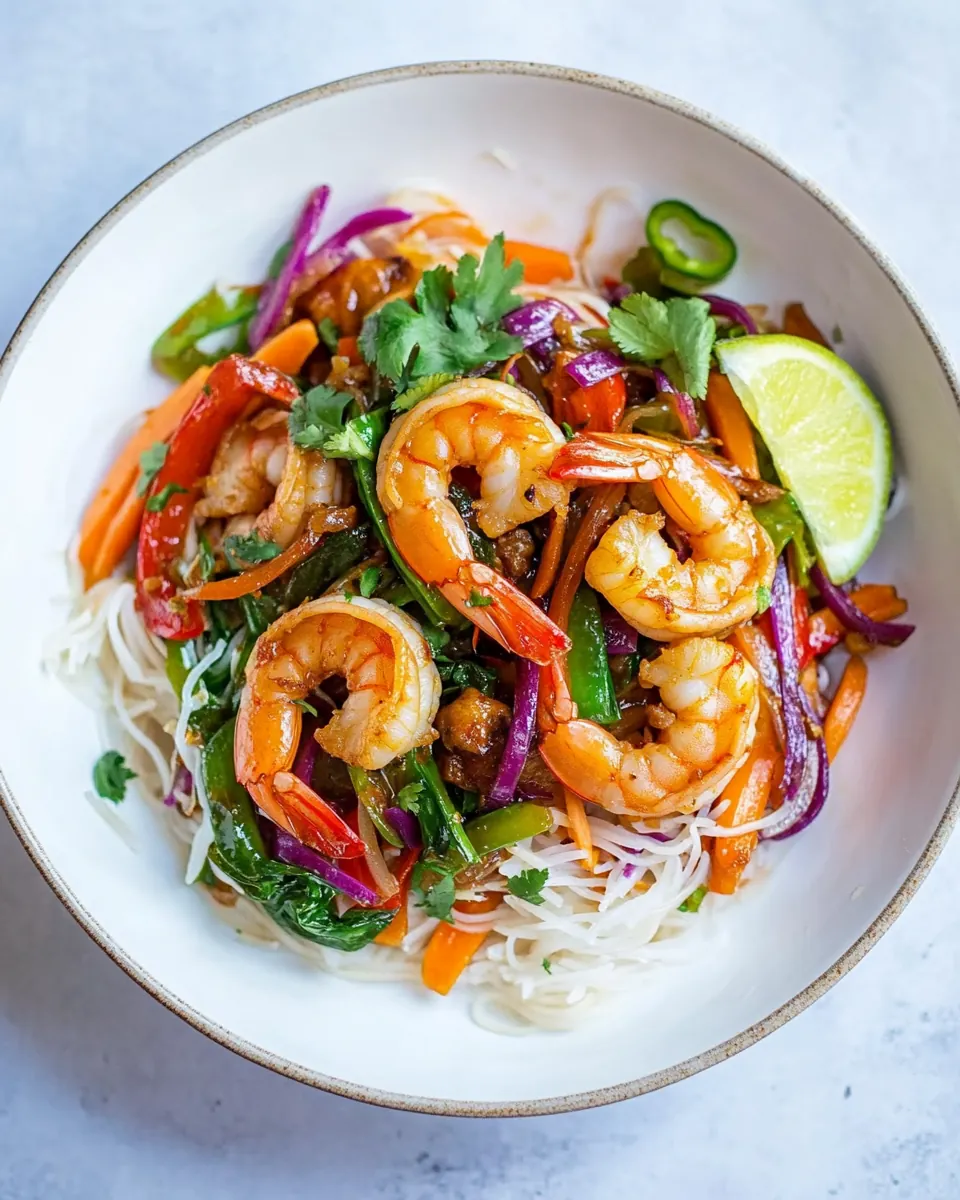
Stir Fry Shrimp Veggies with Rice Noodles
Stir Fry Shrimp Veggies with Rice Noodles is the kind of dinner I turn to when I want something fast, bright, and a little celebratory after a long day. The first time I made this dish I had a bag of frozen prawns and an overripe carrot begging for use, and the result felt like a tiny weeknight victory. I remember the sizzling in the wok, the steam rising as the noodles hit the pan, and how a quick squeeze of lime made everything snap into place. That evening stuck with me because it proved a flavorful meal does not require fuss, just good technique and fresh ingredients.
I often make a batch on a busy evening, because it’s forgiving and adaptable. When guests arrive unexpectedly I toss whatever colorful vegetables I have into the wok and the dish still looks and tastes like I spent hours. The textures are what I love most, the soft chew of rice noodles paired with the tender crunch of stir fried carrot and zucchini. I also enjoy playing with aromatics; a little garlic and chili lift the whole plate, while sesame oil brings a toasty finish. Over time I learned small adjustments that make big differences, like soaking the noodles properly and not overcooking the prawns.
Cooking this has become my go to for quick weeknight dinners and casual lunches alike. It’s the recipe I reach for when I want something colorful on the table, and it’s the one that gets compliments even from picky eaters. The combination of soy sauce and lime gives the dish both savory depth and bright acidity, which keeps every bite interesting. If you like meals that come together in minutes but deliver on flavor, you’ll find this one rewarding and reliably satisfying.
Recipe Snapshot
30 mins
15 mins
15 mins
Easy
400 kcal
Asian
Vegan, Gluten-Free
Dinner
Wok, Large pot, Sieve, Knife
Why This Stir Fry Shrimp Veggies with Rice Noodles Is a Winner
Fast and Reliable
I love how quickly Stir Fry Shrimp Veggies with Rice Noodles comes together. You can go from fridge to table in under half an hour, which makes it perfect for easy weeknight dinner situations. I appreciate recipes that respect my time without sacrificing flavor, and this one fits the bill every time.
Bright, Balanced Flavors
The interplay between salty soy sauce, nutty sesame oil, and bright lime juice gives the dish a balanced profile. I often add a touch more lime if the pan feels heavy, because that acid wakes everything up. The result is savory, slightly tangy, and fresh, which keeps each bite interesting.
Great Textural Contrast
I like how the soft, slippery rice noodles contrast with the crispness of sliced carrot, red pepper, and zucchini. The prawns add a juicy pop that makes the meal feel substantial without being heavy. That variety in texture makes it feel like a thoughtfully composed dish.
Flexible and Seasonal
This recipe adapts easily to what’s in the market. I’ll swap or omit vegetables depending on the season, and it still sings. The core idea is quick high heat cooking to preserve color and crunch while coaxing flavor from the aromatics and sauce, and that technique works year round.
Visually Inviting
I often garnish with bright leaves or edible flowers when I want a little extra flair. The colorful vegetables and delicate garnishes make it look like an intentional dinner, not a last minute scramble, which makes serving it to guests feel effortless.
Everything You Need for Stir Fry Shrimp Veggies with Rice Noodles
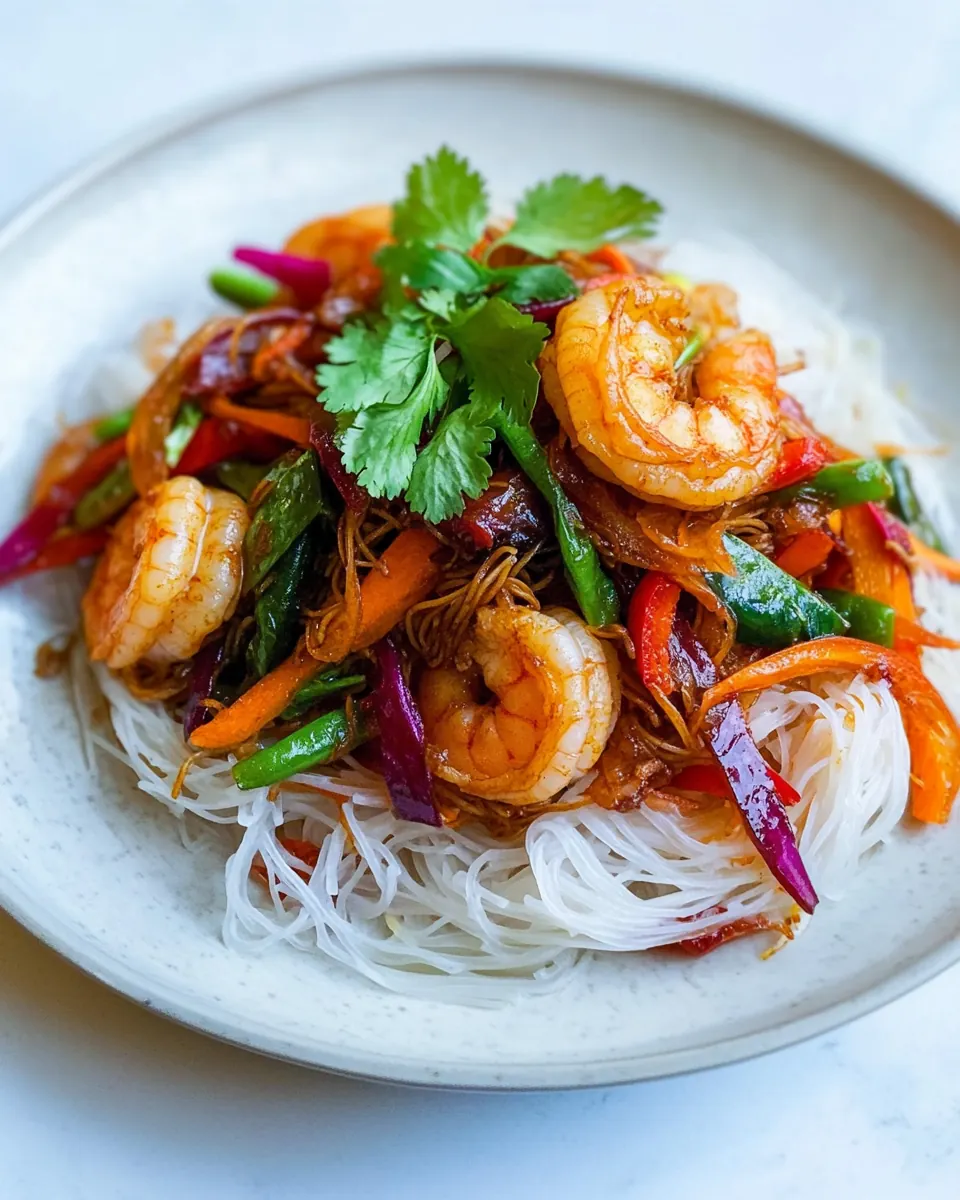
The philosophy here is simple: fresh, high impact ingredients that play well together under high heat. The rice noodles act as a neutral canvas, absorbing the savory sauce, while the vegetables provide crunch and color. The prawns introduce briny, sweet notes, and aromatics like garlic and chilli pepper give momentum to each bite. Together these components balance texture, flavor, and speed, making a lively, comforting plate.
- 250 g prawns: Provide firm, deveined prawns that bring sweet, briny flavor and protein to the stir fry; quickly sear at high heat to keep them tender and prevent rubberiness. Use as the central protein element, adding near the end so they cook through without overcooking.
- 1/2 red onion: Add thinly sliced red onion to contribute mild sweetness and a slight sharpness that softens with stir-frying. Caramelize briefly to develop depth while retaining some texture for contrast with other vegetables.
- 1/4 clove garlic: Crush or finely mince a small portion of garlic to impart aromatic, savory umami that enhances the overall flavor profile. Fry briefly in hot oil at the start to release its fragrance but avoid burning to prevent bitterness.
- 1/2 chilli pepper: Slice the chilli pepper finely to introduce a controlled heat and a bright, fruity note; adjust amount to taste for mild to moderate spiciness. Toss in early enough to infuse oil with chili flavor but late enough to preserve freshness and color.
- 1 red pepper: Slice the red pepper into strips to deliver juicy sweetness and vibrant color that complements the dish visually and texturally. Stir-fry until just tender-crisp to maintain its crunchy bite and fresh flavor.
- 1 yellow pepper: Cut the yellow pepper into similar strips for balanced sweetness and a sunny hue that enhances presentation. Combine with other peppers so each bite offers diverse, crisp textures.
- 1/4 eggplant: Cube or dice the eggplant to absorb sauces and provide a silky, meaty texture that contrasts with firmer vegetables. Pre-salt lightly or cook thoroughly to reduce any tendency to soak up excessive oil while ensuring tender results.
- 1/2 zucchini: Slice the zucchini into half-moons to contribute light, delicate texture and subtle vegetal flavor; it cooks quickly and should be added toward the end. Retain slight bite to avoid mushiness and to balance the noodle texture.
- 1 carrot: Julienne the carrot to add natural sweetness, bright color, and crunchy texture; it holds up well during stir-frying. Sear until slightly softened but still offering a pleasant snap for textural variety.
- 1 parsnip: Cut the parsnip into matchsticks to introduce an earthy, sweet backbone that complements the carrot and root-forward depth. Parboil briefly or cook a bit longer in the pan to ensure tenderness without burning.
- 50 ml soy sauce: Measure and add soy sauce to provide savory saltiness, deep umami, and a caramelized glaze for the vegetables and prawns. Use to season during stir-frying and to flavor the noodles, balancing with other liquids.
- 20 ml sesame oil: Drizzle sesame oil to deliver toasted, nutty aroma that enriches the dish; add mainly at the end to preserve its fragrance. Use sparingly as a finishing oil to elevate the overall taste without overpowering other flavors.
- 1 lime: Squeeze fresh lime to contribute bright acidity that cuts through richness and balances salty and oily elements. Add just before serving to enliven flavors and bring freshness to each bite.
- 30 ml sunflower oil: Heat sunflower oil as the neutral cooking medium for stir-frying at high temperatures without imparting extra flavor. Use enough to coat the pan so ingredients sear properly and develop good browning.
- 200 g rice noodles: Prepare rice noodles according to package instructions to provide a tender, slippery base that soaks up sauces and ties the components together. Rinse and drain if necessary to prevent sticking, then toss with stir-fried ingredients to combine.
- red sorrel leaves and chive flowers ( for decoration) (optional): Include red sorrel leaves and chive flowers optionally to garnish with tangy, lemony notes and a delicate onion-like floral touch; add for visual flair. Scatter sparingly over the finished dish to enhance presentation and offer a subtle fresh finish.
Step by Step Guide for Stir Fry Shrimp Veggies with Rice Noodles
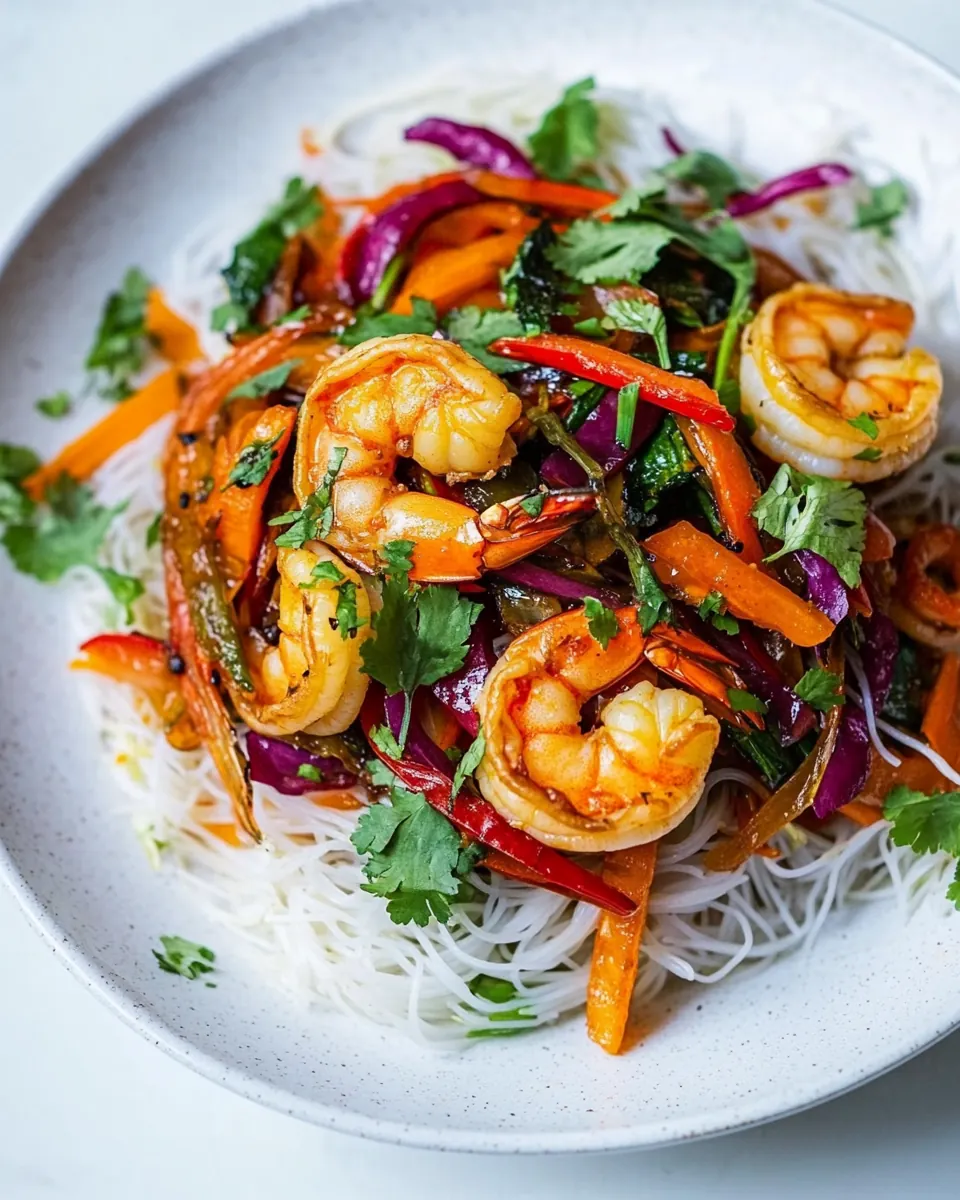
This guide takes the brief directions and unfolds them into vivid, chef style steps. Read each step slowly before you start, and try to prep everything so the actual stir frying is fast and energetic. Keep your heat high and move quickly to preserve color and texture.
- Clean the onions, carrots, parsnips, peppers, zucchini and eggplant and cut into sticks.: You will notice a crisp, vegetal scent as you slice the carrot and parsnip , and the workbench will fill with the peppery perfume of the red pepper and yellow pepper . Cutting everything into uniform sticks ensures even cooking and a pleasing mouthfeel, so take your time here. Uneven pieces can either undercook or overcook, which will disrupt the balance of textures. A common mistake is rushing the prep, which makes the quick stir fry feel chaotic; keep a sharp knife and steady rhythm to achieve consistent pieces. If the eggplant seems particularly spongy, salt it lightly and let it sit for a few minutes to draw out excess moisture, then pat dry before cooking.
- Separately boil water with a little salt, and when it boils add the rice noodles and let them boil for about 3-4 minutes, then strain them into a large sieve and rinse them with cold water.: As the water comes to a rolling boil you will hear a lively hiss and see clouds of steam; adding the rice noodles will soften them quickly and they will become pliable in a few minutes. Rinsing under cold water stops the cooking and firms up the texture so the noodles do not turn to mush in the wok. The cold rinse also removes excess starch, preventing clumping and helping the noodles take on the sauce later. Avoid overcooking, which results in sticky, gummy noodles that collapse in the pan. If you accidentally overcook, refresh them briefly in very hot water, drain well, and toss with a little oil to separate strands.
- Chop the garlic and ginger and fry them together with the finely chopped chilli pepper in a wok heated with oil.: As soon as the sunflower oil shimmers you will notice the aroma of garlic and ginger bloom, the hallmark scent of many stir fries. Frying these aromatics releases essential oils that form the flavor foundation, so keep the oil hot but not smoking to avoid burning. The little pops and sizzles let you know the aromatics are doing their work; a quick 10 to 20 seconds is enough to fragrance the oil. If you let them brown too long they will turn bitter, which can taint the whole dish. Stir constantly and use a spatula to move them around so they cook evenly without sticking.
- After about 10-15 seconds add the vegetables, heat them over high heat for about 1 minute, then add the soy sauce, sesame oil and shrimp.: When the vegetables hit the wok you will hear a robust sizzle and see glossy steam; that high heat encourages quick searing which preserves color and snap. Toss frequently to get even contact with the hot surface, moving the pieces so edges char lightly without burning. After roughly a minute the vegetables should be vivid and slightly tender; this is the moment to add the soy sauce and sesame oil so the sauce coats them without making the pan wet. Adding the prawns at this point allows them to cook through in the residual heat and pick up the sauce flavors. A common slip is overcrowding the wok, which traps steam and leads to limp vegetables; if your pan is small, cook in two batches to maintain heat and crispness.
- Keep the wok on the heat for about 2 minutes and before serving squeeze the juice of 1/2 lime into the wok.: During these final two minutes the prawns should turn opaque and slightly curled, and the sauce will reduce to a glossy coating that clings to the vegetables and noodles. You will smell a concentrated savory aroma as moisture evaporates, and the sizzling will soften to a steady hiss. Squeezing half a lime into the pan just before plating brightens the whole mixture and balances the soy richness. Avoid leaving the prawns in too long, as they quickly become rubbery; remove from heat when they are just cooked through. If the pan seems dry, a splash of water or reserved noodle water can loosen the sauce without diluting flavor.
- I used red sorrel leaves and chive flowers for decoration.: Adding delicate garnishes transforms the plate visually, offering a tart edge from the red sorrel leaves and a mild onion perfume from the chive flowers . These are optional, but they make the dish feel thoughtfully finished and add a fresh contrast to the warm stir fry. Place them sparingly so they do not overwhelm the flavors, and add them right before serving to preserve their texture. A frequent oversight is adding garnishes too early, which causes them to wilt and lose impact; reserve them for the final plating moment.
Recipe Notes about Stir Fry Shrimp Veggies with Rice Noodles
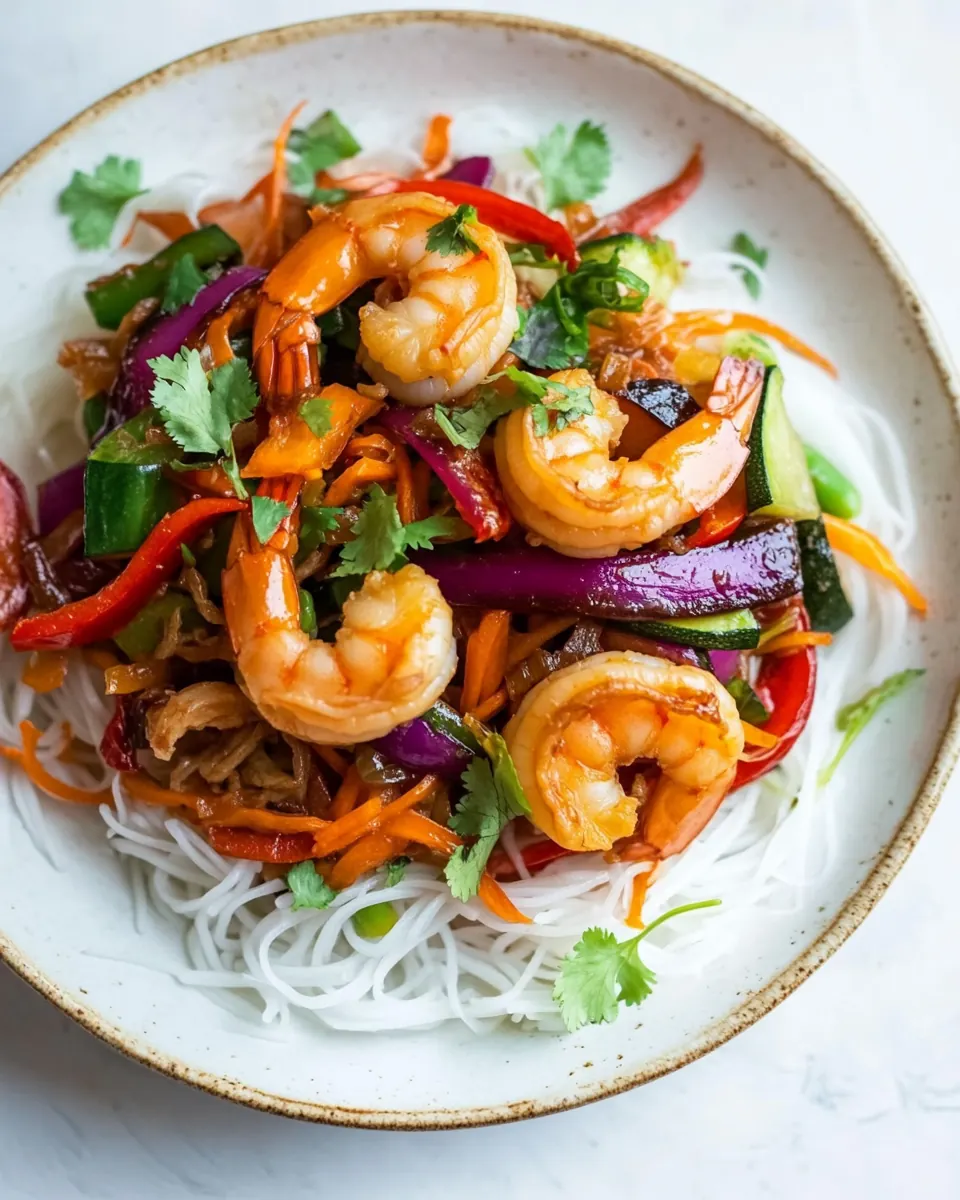
This section expands on practical tips to get the best results with Stir Fry Shrimp Veggies with Rice Noodles. I share technique notes, timing advice, and small swaps that preserve the dish’s spirit while improving consistency. Read these before you start cooking so you can anticipate the sensory cues and pacing.
- Prep everything first, because stir frying moves quickly; have your rice noodles cooked and drained, vegetables cut, and prawns ready so you can keep the wok hot and focused on cooking rather than chopping.
- Control the heat, using high heat for searing but lowering slightly if aromatics start to brown too fast; burnt garlic tastes bitter and can ruin the pan, so keep the oil shimmering rather than smoking.
- Reserve noodle water when you drain the rice noodles; a splash can help loosen a tight sauce without watering down flavor, because the starch helps the sauce cling to the noodles.
- Keep textures in mind, adding firmer vegetables earlier and tender ones later so everything finishes at the same time; this avoids overcooked zucchini or undercooked parsnip.
- Finish with acid and oil, squeezing lime juice and drizzling sesame oil at the end to brighten flavors and add aromatic lift that won’t survive high heat.
What to Serve Alongside Stir Fry Shrimp Veggies with Rice Noodles
This dish stands well on its own but you can round out the meal with simple companions that complement its flavors. Think light sides or small salads that echo the freshness, plus ideas for occasions and storage. Below I list ways to serve it for lunch, dinner, and informal gatherings.
- Light cucumber salad, a crisp side dressed with a little rice vinegar and sesame seeds complements the warm noodles and refreshes the palate between bites.
- Steamed greens, such as bok choy or spinach, provide an earthy counterpoint and a boost of vitamins when served alongside the stir fry, keeping the meal balanced.
- Extra lime wedges on the side allow diners to adjust acidity to taste, which is especially useful if you serve this at a casual dinner where preferences vary.
- Family style for weeknights, serve the stir fry in a large shallow bowl with garnishes on the side so everyone can portion and personalize their plates quickly.
- Meal prep and storage, cool leftovers quickly and refrigerate in an airtight container for up to two days; reheat gently with a splash of water to restore moisture without overcooking the prawns.
- Seasonal pairings, in cooler months add heartier root vegetables or in summer emphasize fresh herbs and raw garnishes to keep the dish feeling light and seasonal.
FAQ
Conclusion
This recipe stands out for its speed, lively flavors, and appealing textures that make weeknight cooking feel special. Try the combination of tender rice noodles, crisp vegetables, and juicy prawns with savory soy sauce and a squeeze of lime to brighten every bite. I encourage you to give it a go on a busy evening, keeping your prep organized and the heat high for the best results. You may find it becomes a regular in your dinner rotation for its reliability and satisfying balance.
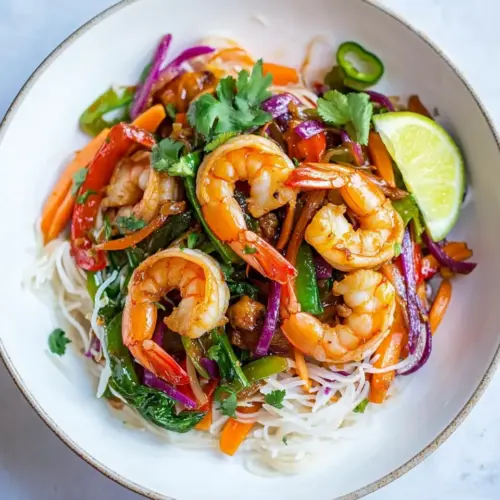
Stir Fry Shrimp Veggies with Rice Noodles
Equipment
- Wok
- Large Pot
- Sieve
- Knife
Ingredients
- 250 g prawns Provide firm, deveined prawns that bring sweet, briny flavor and protein to the stir fry; quickly sear at high heat to keep them tender and prevent rubberiness. Use as the central protein element, adding near the end so they cook through without overcooking.
- 1/2 red onion Add thinly sliced red onion to contribute mild sweetness and a slight sharpness that softens with stir-frying. Caramelize briefly to develop depth while retaining some texture for contrast with other vegetables.
- 1/4 clove garlic Crush or finely mince a small portion of garlic to impart aromatic, savory umami that enhances the overall flavor profile. Fry briefly in hot oil at the start to release its fragrance but avoid burning to prevent bitterness.
- 1/2 chilli pepper Slice the chilli pepper finely to introduce a controlled heat and a bright, fruity note; adjust amount to taste for mild to moderate spiciness. Toss in early enough to infuse oil with chili flavor but late enough to preserve freshness and color.
- 1 red pepper Slice the red pepper into strips to deliver juicy sweetness and vibrant color that complements the dish visually and texturally. Stir-fry until just tender-crisp to maintain its crunchy bite and fresh flavor.
- 1 yellow pepper Cut the yellow pepper into similar strips for balanced sweetness and a sunny hue that enhances presentation. Combine with other peppers so each bite offers diverse, crisp textures.
- 1/4 eggplant Cube or dice the eggplant to absorb sauces and provide a silky, meaty texture that contrasts with firmer vegetables. Pre-salt lightly or cook thoroughly to reduce any tendency to soak up excessive oil while ensuring tender results.
- 1/2 zucchini Slice the zucchini into half-moons to contribute light, delicate texture and subtle vegetal flavor; it cooks quickly and should be added toward the end. Retain slight bite to avoid mushiness and to balance the noodle texture.
- 1 carrot Julienne the carrot to add natural sweetness, bright color, and crunchy texture; it holds up well during stir-frying. Sear until slightly softened but still offering a pleasant snap for textural variety.
- 1 parsnip Cut the parsnip into matchsticks to introduce an earthy, sweet backbone that complements the carrot and root-forward depth. Parboil briefly or cook a bit longer in the pan to ensure tenderness without burning.
- 50 ml soy sauce Measure and add soy sauce to provide savory saltiness, deep umami, and a caramelized glaze for the vegetables and prawns. Use to season during stir-frying and to flavor the noodles, balancing with other liquids.
- 20 ml sesame oil Drizzle sesame oil to deliver toasted, nutty aroma that enriches the dish; add mainly at the end to preserve its fragrance. Use sparingly as a finishing oil to elevate the overall taste without overpowering other flavors.
- 1 lime Squeeze fresh lime to contribute bright acidity that cuts through richness and balances salty and oily elements. Add just before serving to enliven flavors and bring freshness to each bite.
- 30 ml sunflower oil Heat sunflower oil as the neutral cooking medium for stir-frying at high temperatures without imparting extra flavor. Use enough to coat the pan so ingredients sear properly and develop good browning.
- 200 g rice noodles Prepare rice noodles according to package instructions to provide a tender, slippery base that soaks up sauces and ties the components together. Rinse and drain if necessary to prevent sticking, then toss with stir-fried ingredients to combine.
- red sorrel leaves and chive flowers (optional for decoration) Include red sorrel leaves and chive flowers optionally to garnish with tangy, lemony notes and a delicate onion-like floral touch; add for visual flair. Scatter sparingly over the finished dish to enhance presentation and offer a subtle fresh finish.
Instructions
- Clean the onions, carrots, parsnips, peppers, zucchini and eggplant and cut into sticks.: You will notice a crisp, vegetal scent as you slice the carrot and parsnip , and the workbench will fill with the peppery perfume of the red pepper and yellow pepper . Cutting everything into uniform sticks ensures even cooking and a pleasing mouthfeel, so take your time here. Uneven pieces can either undercook or overcook, which will disrupt the balance of textures. A common mistake is rushing the prep, which makes the quick stir fry feel chaotic; keep a sharp knife and steady rhythm to achieve consistent pieces. If the eggplant seems particularly spongy, salt it lightly and let it sit for a few minutes to draw out excess moisture, then pat dry before cooking.
- Separately boil water with a little salt, and when it boils add the rice noodles and let them boil for about 3-4 minutes, then strain them into a large sieve and rinse them with cold water.: As the water comes to a rolling boil you will hear a lively hiss and see clouds of steam; adding the rice noodles will soften them quickly and they will become pliable in a few minutes. Rinsing under cold water stops the cooking and firms up the texture so the noodles do not turn to mush in the wok. The cold rinse also removes excess starch, preventing clumping and helping the noodles take on the sauce later. Avoid overcooking, which results in sticky, gummy noodles that collapse in the pan. If you accidentally overcook, refresh them briefly in very hot water, drain well, and toss with a little oil to separate strands.
- Chop the garlic and ginger and fry them together with the finely chopped chilli pepper in a wok heated with oil.: As soon as the sunflower oil shimmers you will notice the aroma of garlic and ginger bloom, the hallmark scent of many stir fries. Frying these aromatics releases essential oils that form the flavor foundation, so keep the oil hot but not smoking to avoid burning. The little pops and sizzles let you know the aromatics are doing their work; a quick 10 to 20 seconds is enough to fragrance the oil. If you let them brown too long they will turn bitter, which can taint the whole dish. Stir constantly and use a spatula to move them around so they cook evenly without sticking.
- After about 10-15 seconds add the vegetables, heat them over high heat for about 1 minute, then add the soy sauce, sesame oil and shrimp.: When the vegetables hit the wok you will hear a robust sizzle and see glossy steam; that high heat encourages quick searing which preserves color and snap. Toss frequently to get even contact with the hot surface, moving the pieces so edges char lightly without burning. After roughly a minute the vegetables should be vivid and slightly tender; this is the moment to add the soy sauce and sesame oil so the sauce coats them without making the pan wet. Adding the prawns at this point allows them to cook through in the residual heat and pick up the sauce flavors. A common slip is overcrowding the wok, which traps steam and leads to limp vegetables; if your pan is small, cook in two batches to maintain heat and crispness.
- Keep the wok on the heat for about 2 minutes and before serving squeeze the juice of 1/2 lime into the wok.: During these final two minutes the prawns should turn opaque and slightly curled, and the sauce will reduce to a glossy coating that clings to the vegetables and noodles. You will smell a concentrated savory aroma as moisture evaporates, and the sizzling will soften to a steady hiss. Squeezing half a lime into the pan just before plating brightens the whole mixture and balances the soy richness. Avoid leaving the prawns in too long, as they quickly become rubbery; remove from heat when they are just cooked through. If the pan seems dry, a splash of water or reserved noodle water can loosen the sauce without diluting flavor.
- I used red sorrel leaves and chive flowers for decoration.: Adding delicate garnishes transforms the plate visually, offering a tart edge from the red sorrel leaves and a mild onion perfume from the chive flowers . These are optional, but they make the dish feel thoughtfully finished and add a fresh contrast to the warm stir fry. Place them sparingly so they do not overwhelm the flavors, and add them right before serving to preserve their texture. A frequent oversight is adding garnishes too early, which causes them to wilt and lose impact; reserve them for the final plating moment.
Notes
- Prep everything first, because stir frying moves quickly; have your rice noodles cooked and drained, vegetables cut, and prawns ready so you can keep the wok hot and focused on cooking rather than chopping.
- Control the heat, using high heat for searing but lowering slightly if aromatics start to brown too fast; burnt garlic tastes bitter and can ruin the pan, so keep the oil shimmering rather than smoking.
- Reserve noodle water when you drain the rice noodles; a splash can help loosen a tight sauce without watering down flavor, because the starch helps the sauce cling to the noodles.
- Keep textures in mind, adding firmer vegetables earlier and tender ones later so everything finishes at the same time; this avoids overcooked zucchini or undercooked parsnip.
- Finish with acid and oil, squeezing lime juice and drizzling sesame oil at the end to brighten flavors and add aromatic lift that won’t survive high heat.
