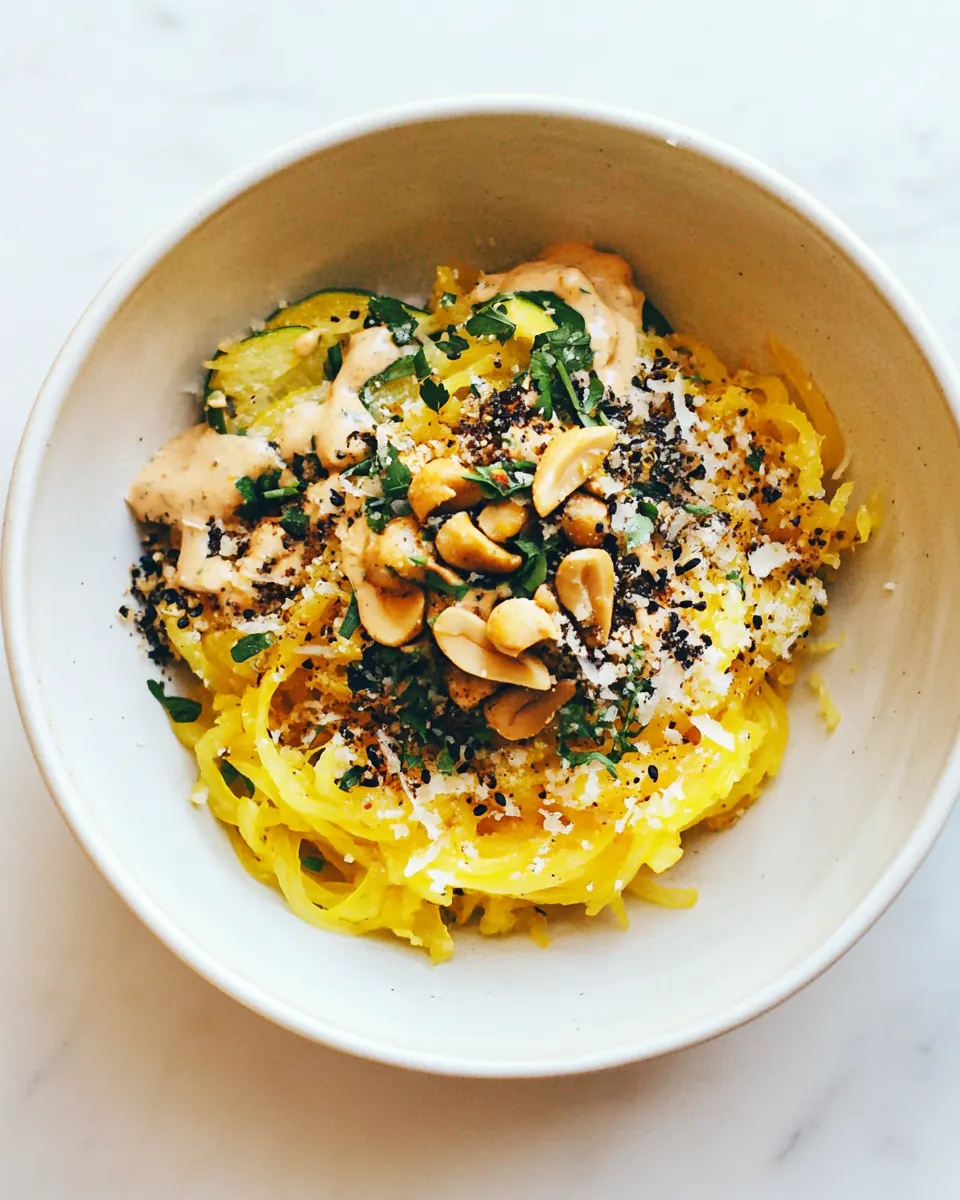
Spaghetti Squash Noodle Bowl with Lime Peanut Sauce
Spaghetti Squash Noodle Bowl with Lime Peanut Sauce landed in my weeknight rotation the moment I wanted something bright, hearty, and genuinely easy to eat straight from a bowl. I remember cutting into the first roasted squash, surprised by the way those tender strands fell apart like noodles, and how the lime peanut sauce clung to every forkful. That first bowl felt like a small celebration after a long day, and it keeps showing up whenever I want comfort that still feels fresh.
My first try was an improvisation, friends gathered on the couch, and a blender that made the sauce sing. I loved how the crunch of toasted nuts and sesame seeds contrasted with soft strands of spaghetti squash. The kale wilts just enough from residual heat, the steamed broccoli stays bright and snappy, and the red onion gives that sharp, cooling bite. Each time I make Spaghetti Squash Noodle Bowl with Lime Peanut Sauce, I learn a tiny trick, like teasing the squash gently with a fork to coax longer strands, or toasting sesame seeds until they pop with aroma.
Recipe Snapshot
1 hr 5 mins
25 mins
40 mins
Medium
350 kcal
American
Vegan, Gluten-Free
Dinner
Blender
Why This Spaghetti Squash Noodle Bowl with Lime Peanut Sauce Hits Different
Flavor that’s Balanced
I love this bowl because the lime brightens the rich peanut butter, and the tamari adds deep savory notes. It is rare to find a dish where sweet, salty, tangy, and spicy all sit comfortably together, and this one does it without fuss.
Textural Contrast
We get tender spaghetti squash, slightly wilted kale, crisp broccoli, and crunchy toasted nuts and sesame seeds. That mix keeps every bite interesting, so you do not end up with a monotonous mouthfeel.
Simple, Pantry Friendly Sauce
I appreciate that most sauce components are pantry staples. A quick blitz in the blender makes a creamy dressing that clings to strands and greens. It is smooth, with a little heat if you like it, and it tastes like effort but takes almost no time.
Flexible and Seasonal
We can enjoy this through the cooler months because spaghetti squash is at its peak in fall, and the components adapt well for what you have on hand. I often swap nuts based on what is in the jar, and the herbs can be cilantro or parsley depending on my mood.
Healthy but Satisfying
This is not just a side, it is a meal. The vegetables, nuts, and peanut sauce provide satisfying calories, while the squash offers a lighter, noodle like base. I often reach for this when I want something wholesome that still feels indulgent.
Key Ingredients for Spaghetti Squash Noodle Bowl with Lime Peanut Sauce
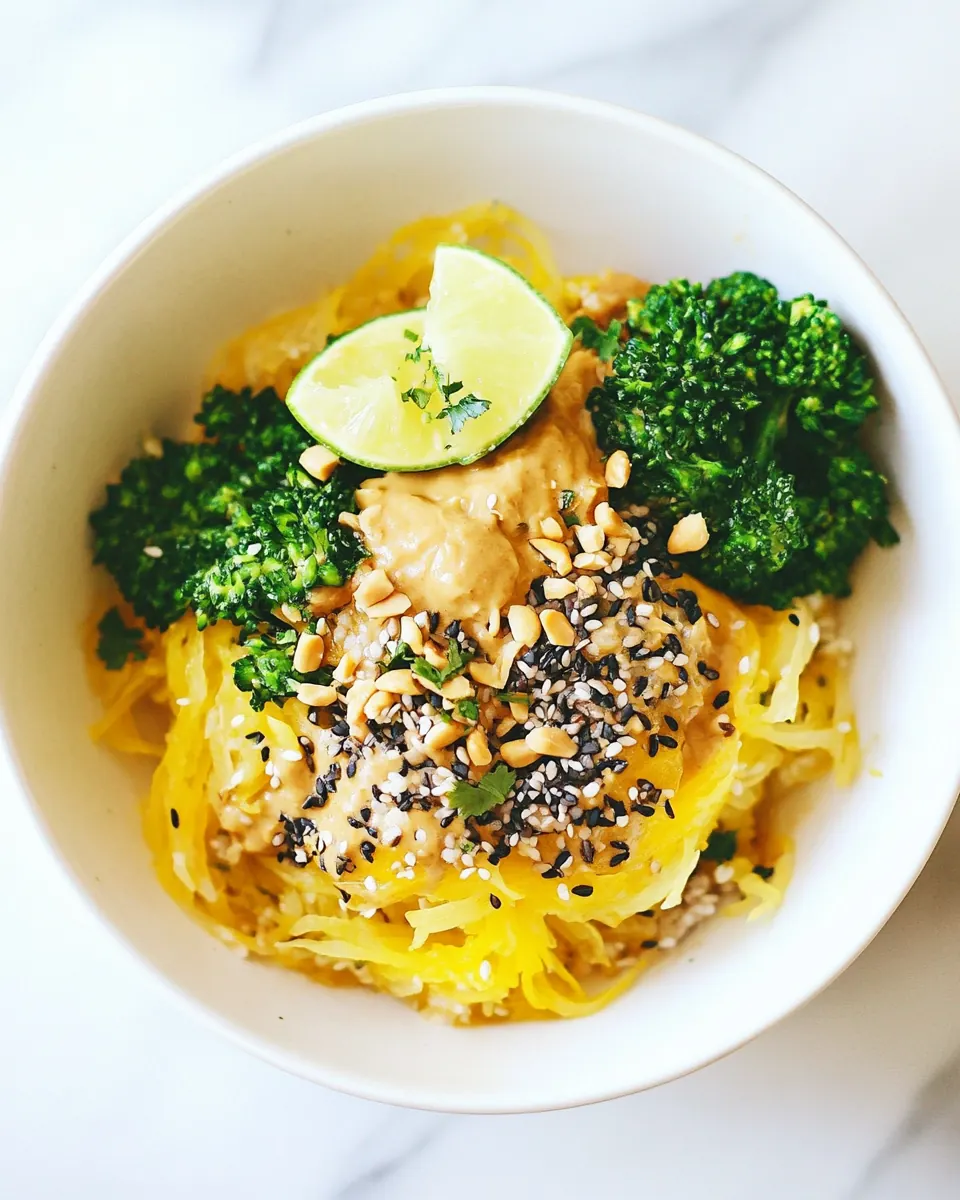
These ingredients come together with a thoughtful purpose. The spaghetti squash acts as a light, naturally noodle like base, while the lime and peanut butter form a bright, creamy dressing. The vegetables add body and color, and the toasted nuts and sesame seeds bring crunchy, toasty notes that finish each bite. Together they balance richness with freshness, and texture with tang.
- 1/2 inch fresh ginger, peeled and chopped: Add grated or chopped ginger for a bright, spicy foundation that lifts the peanut–lime flavors and adds warm aromatics to the sauce and bowl.
- 2 cloves garlic, chopped: Mince garlic to contribute savory depth and a pungent backbone that balances the sweetness and acidity in the dressing and sautéed vegetables.
- 1 2 teaspoons hot sauce of your choosing: Drizzle hot sauce to introduce adjustable heat and tang, enhancing overall complexity and giving the bowl a lively finish when mixed into the sauce.
- 2 tablespoons peanut butter: Whisk peanut butter to create a creamy, nutty base for the sauce that binds other liquids and provides rich mouthfeel and protein.
- 1/2 teaspoon lime zest: Zest lime finely to deliver concentrated citrus oils that boost fragrance and brighten the sauce without adding extra liquid.
- 1 tablespoon lime juice: Squeeze lime juice to supply fresh acidity that cuts through the richness of peanut butter and rounds out the dressing’s flavor profile.
- 1 tablespoon rice vinegar: Stir in rice vinegar to add mild acidity and a subtle sweetness that complements the lime and balances the peanut sauce.
- 2 teaspoons agave nectar: Incorporate agave nectar to gently sweeten the dressing, tempering heat and acidity while enhancing overall harmony of flavors.
- 1 tablespoon tamari soy sauce: Measure tamari soy sauce to contribute savory umami and saltiness, deepening the sauce’s flavor and helping season the vegetable components.
- 1/4 tsp toasted sesame oil () (optional): Drizzle toasted sesame oil sparingly to impart a toasty, aromatic finish that intensifies the sesame notes without overpowering the dressing.
- 1/2 cup grapeseed oil: Emulsify grapeseed oil into the dressing to create a smooth, neutral-bodied sauce that helps suspend peanut butter and distribute flavors evenly.
- 1 large spaghetti squash, cut in half lengthwise and seeds scooped out: Roast or bake spaghetti squash halves to create tender, noodle-like strands that serve as a gluten-free base for the bowl.
- 4 cups thinly sliced kale: Massage thinly sliced kale to soften fibers and reduce bitterness, providing a hearty, nutrient-dense green with good texture contrast.
- 4 5 cups broccoli florets: Steam or roast broccoli florets to add crisp-tender bite and vegetal sweetness, contributing bulk and nutritional value to the bowl.
- 1/2 small red onion, thinly sliced: Slice red onion thinly to add sharpness and crunchy texture that contrasts creamy elements and brightens each bite with pungent flavor.
- 1/2 cup chopped toasted nuts (cashews, almonds etc): Chop toasted nuts to provide crunchy texture and complementary nutty echoes to the peanut sauce, enhancing the bowl’s mouthfeel.
- 3 tablespoons sesame seeds, toasted: Toast sesame seeds to deliver delicate crunchy nuggets and toasted aroma that accent nutty flavors when sprinkled over the finished dish.
- 1/2 cup chopped cilantro or parsley: Chop cilantro or parsley to introduce fresh herbal brightness and a clean finish that lifts the rich peanut–lime dressing.
- sea salt and ground black pepper, to taste: Season with sea salt and ground black pepper to adjust and balance all flavors, ensuring each component of the bowl reaches optimal taste.
How to Prepare Spaghetti Squash Noodle Bowl with Lime Peanut Sauce
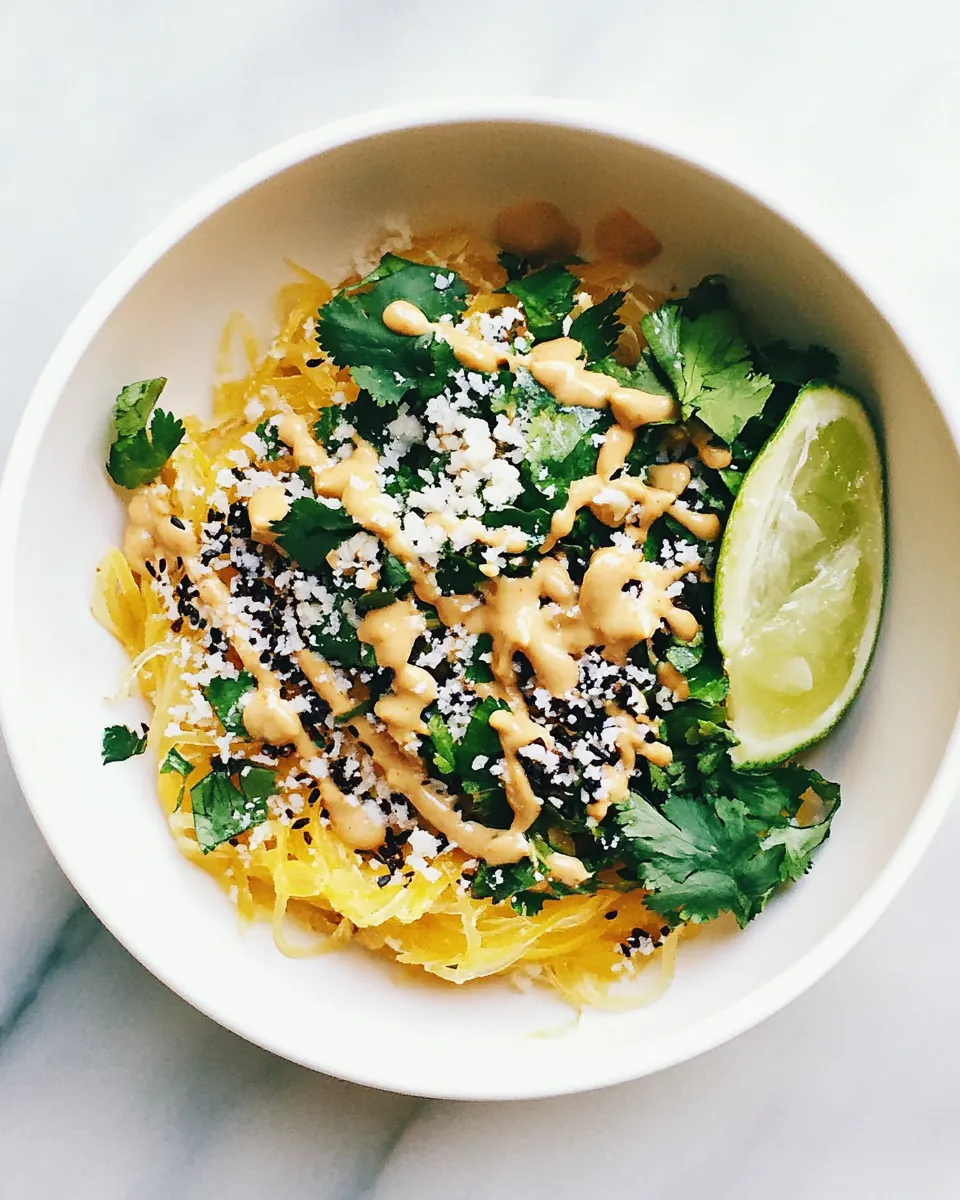
These instructions will walk you through roasting, steaming, and assembling so each component has the right texture and flavor. Move through the steps deliberately and keep your blender nearby for the sauce. The sequence ensures the squash and kale marry while the broccoli stays crisp tender.
- Preheat the oven to 375°F.: Smell and warmth set the scene for roasting. As the oven comes to temperature you will notice the faint hum and the slight warmth when you open the door. This preheat ensures even roasting of the spaghetti squash , so the flesh softens uniformly rather than drying at the edges. A common mistake is putting the squash into an oven that is still warming, which lengthens cooking and yields uneven texture; avoid that by waiting until the oven indicator shows full heat.
- Combine all of the sauce ingredients in a blender and blend until fully incorporated. Taste for seasoning and set aside.: Once you blend, you will see a creamy, glossy sauce forming, and the aroma of ginger and lime will be bright. The blender creates a smooth emulsion so the peanut butter and grapeseed oil integrate without graininess. Taste and adjust salt or heat, because the balance is key to how the sauce will coat the squash and greens. One pitfall is underblending which leaves bits of nut or ginger; if you feel any grittiness, buzz a few more seconds until velvety.
- Line a baking sheet with parchment and place the squash halves, cut side down, onto the sheet. Bake for about 40 minutes, or until the flesh pulls away in easy strands.: As the squash roasts you will notice a sweet, roasted aroma filling the kitchen and the cut sides will darken slightly. The correct visual cue is the flesh yielding easily when scraped with a fork into noodle like strands. This texture matters because it mimics noodles and soaks up the sauce, giving you satisfying bites. A problem to watch for is overroasting which can dry the strands; check a little early if your squash is smaller than average.
- While the squash is baking, place the sliced kale in a large bowl and set aside.: The kale will sit ready to receive warm squash strands and slightly wilt from residual heat later. Preparing it in advance speeds assembly, and the cool, slightly coarse feel of the leaves contrasts with the softness that will follow. A common oversight is adding dressing to kale too early which can make it soggy; waiting until right before tossing keeps texture lively.
- Once you’ve taken the squash out of the oven, set a medium saucepan with about an inch of water over medium heat. Bring it to a simmer. Place the broccoli florets into a steamer basket and drop it into the pot, closing the lid on top. Let the broccoli steam for 3-4 minutes, or until tender. Keep warm.: Heating water to a gentle simmer creates steam without boiling aggressively. You will hear the soft bubbling and see wisps of steam rise. This gentle heat preserves the bright green color and snap of the broccoli . The key is not to overfill the pot, which can lead to uneven steaming; keep the water level low so the florets sit above it in the basket.
- While broccoli is steaming, scrape the spaghetti strands out with a fork into the large bowl with the sliced kale. The heat from the squash should wilt the kale slightly. Pour a big splash of the dressing into the bowl, season with salt and pepper and lightly toss the squash and kale.: The steam will make the broccoli go vibrant green and tender crisp, and you may hear a light hiss as steam circulates. The texture should remain slightly firm, not mushy, which keeps a satisfying contrast in the finished bowl. Over steaming is the most common mistake here; test a floret at three minutes and remove once it yields to a fork but still has bite.
- Remove broccoli from the heat. Portion the squash and kale into 4 bowls. Top each bowl with the steamed broccoli, red onions, chopped nuts, sesame seeds, chopped herbs and extra sauce.: The act of scraping releases steam and a sweet roasted scent. As the warm strands hit the kale, you'll notice the leaves soften and curl slightly, which is the desired gentle wilt. This step matters because it lets the squash and kale mingle, creating an integrated base. One thing to avoid is pressing too hard while scraping, which can mash the strands instead of separating them into noodle like pieces.
- The heat from the squash should wilt the kale slightly. Pour a big splash of the dressing into the bowl, season with salt and pepper and lightly toss the squash and kale.: As you toss, the sauce will coat the strands and greens, and the lime aroma will lift the mixture. Tossing gently ensures the strands remain intact while every leaf gets some dressing. Overdressing can make the bowl soggy, so add sauce gradually until you reach the level you prefer.
- Remove broccoli from the heat. Portion the squash and kale into 4 bowls.: Serving while components are warm makes a comforting bowl. Use a slotted spoon if your squash released any excess moisture, so the bowls do not get watery. The visual cue for readiness is a tidy nest of strands and wilted greens, steaming lightly but not dripping.
- Top each bowl with the steamed broccoli, red onions, chopped nuts, sesame seeds, chopped herbs and extra sauce.: The final assembly is about layering contrasts; place the bright broccoli for color, scatter thin red onion for bite, and sprinkle toasted nuts and sesame seeds for crunch and aroma. Finish with herbs for freshness and an extra drizzle of sauce for a cohesive bite. The mistake to avoid is crowding the bowl so toppings slide off; distribute evenly and serve immediately for best texture.
Making Adjustments
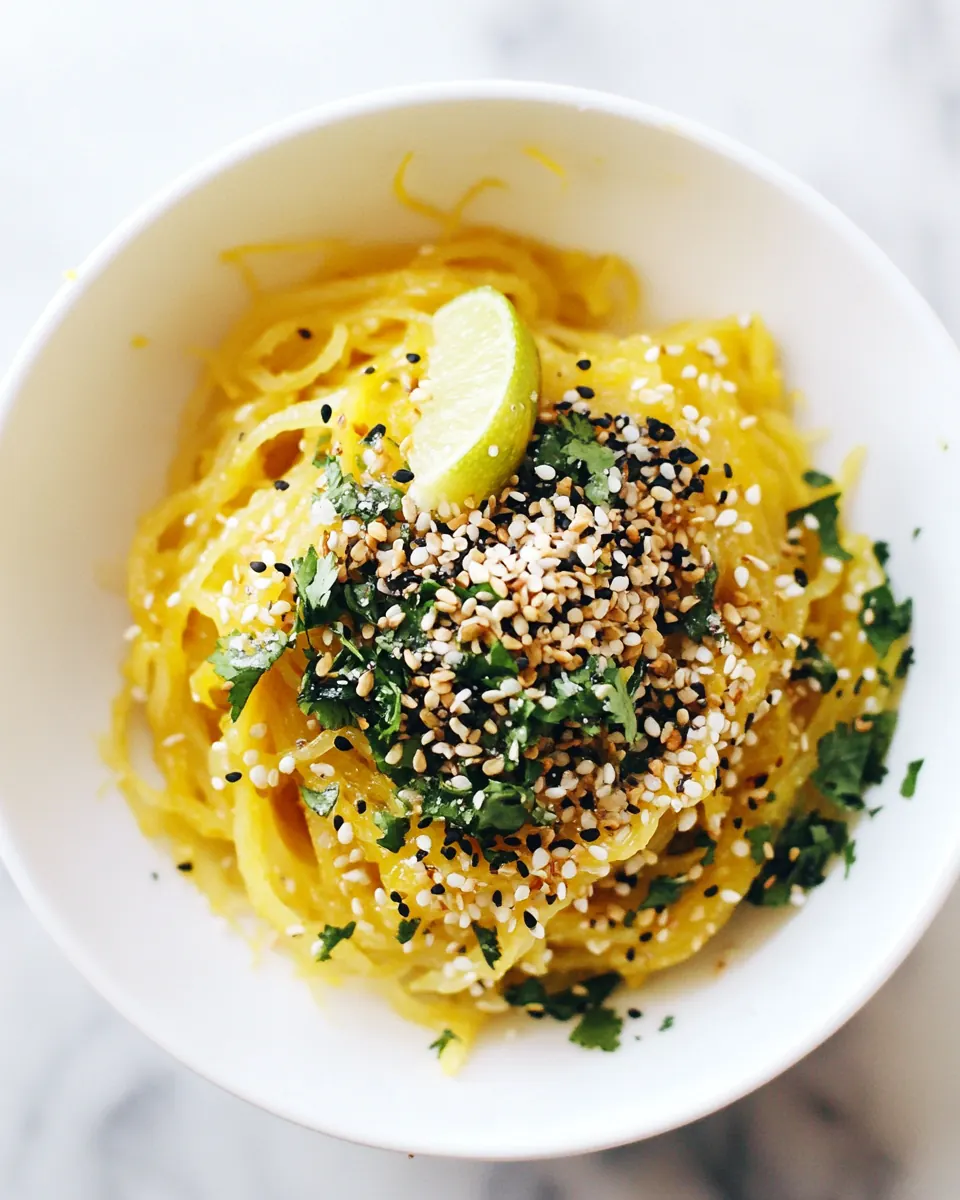
These adjustments help you tailor the bowl to your pantry and preferences. Below are focused tips to change texture, swap components, and adapt heat and sweetness. Each tip starts with a bold phrase so you can skim quickly and apply small changes that make a big difference to the final dish.
- Substitute nut butters: If you prefer a different nut butter, use tahini, almond butter, or sunflower seed butter in the same measure. Each will shift the flavor profile slightly, tahini lending a more sesame forward taste, almond butter making it milder and nuttier, and sunflower adding an earthy, seed like note. Pay attention to salt levels, as some nut butters are salted.
- Adjust heat level: Control the spice by adding hot sauce slowly. Start with one teaspoon and increase to taste, or swap for a milder chili paste if you want background warmth without a lingering burn. Remember that heat intensifies slightly as the sauce sits.
- Control dressing thickness: If the sauce is too thick for tossing, whisk in small increments of warm water or additional grapeseed oil until it reaches a silky pouring consistency. Thin slowly so you do not dilute the flavors.
- Make ahead components: Roast the spaghetti squash and toast the nuts ahead of time, then store separately. Rewarm the squash gently before combining with kale so it still wilts the greens slightly and keeps the bowl lively.
- Keep broccoli crisp: Steam the broccoli briefly and plunge into cold water if you want to prepare it in advance; this stops cooking and locks in color and snap, useful for meal prep or serving cold bowls.
- Herb choices: Choose cilantro for a bright, citrusy finish or parsley for a cleaner, more herbaceous note. Chop finely so the herbs distribute evenly across bowls.
Serve This Spaghetti Squash Noodle Bowl with Lime Peanut Sauce With
This bowl shines as a wholesome main for lunch or dinner, and it pairs nicely with light sides. Below are serving ideas, occasions, and storage advice to elevate how you present and enjoy the dish. Each item highlights practical suggestions and seasonal pairings.
- Weeknight Dinner: Serve the warm bowls with extra sauce on the side so each person can adjust richness; this makes it a relaxed, customizable meal.
- Lunch Bowls: Portion into airtight containers for a make ahead lunch; keep the dressing separate if you prefer to maintain crunch from the toasted nuts and sesame seeds until ready to eat.
- Casual Gatherings: Lay out components buffet style for guests to assemble bowls, offering extra herbs and sauce so everyone tailors their plate; it creates an interactive, low stress dinner experience.
- Seasonal Pairings: This feels at home in fall because spaghetti squash is in season, and the warm roasted notes complement late harvest flavors, while the lime keeps it feeling fresh.
- Storage Tips: Store leftovers in separate containers, squash and vegetables together and extra sauce in a sealed jar; they will keep up to three days refrigerated, and you can rewarm gently to revive texture.
- Occasion Suggestions: Great for Ramadan if you need a light, nourishing meal for iftar that is easy to prepare and full of sustaining ingredients; the bowl offers balanced nutrition and satisfying texture.
FAQ
Conclusion
This Spaghetti Squash Noodle Bowl with Lime Peanut Sauce shines because it pairs roasted, noodle like squash with a bright, creamy dressing and a chorus of textures that keeps every bite interesting. I encourage you to try it when you want a bowl that feels both nourishing and indulgent, whether for a cozy weeknight or a relaxed dinner with friends. It is forgiving, adaptable, and rewarding to assemble, and with a few small adjustments you can make it exactly how you like it.
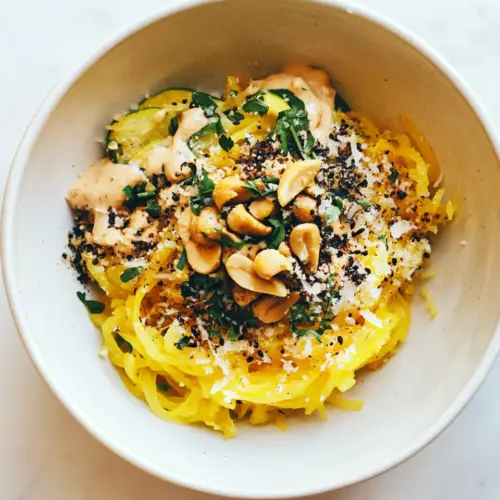
Spaghetti Squash Noodle Bowl with Lime Peanut Sauce
Equipment
- Blender
Ingredients
- 1/2 inch fresh ginger, peeled and chopped Add grated or chopped ginger for a bright, spicy foundation that lifts the peanut-lime flavors and adds warm aromatics to the sauce and bowl.
- 2 cloves garlic, chopped Mince garlic to contribute savory depth and a pungent backbone that balances the sweetness and acidity in the dressing and sautéed vegetables.
- 1 -2 teaspoons hot sauce of your choosing Drizzle hot sauce to introduce adjustable heat and tang, enhancing overall complexity and giving the bowl a lively finish when mixed into the sauce.
- 2 tablespoons peanut butter Whisk peanut butter to create a creamy, nutty base for the sauce that binds other liquids and provides rich mouthfeel and protein.
- 1/2 teaspoon lime zest Zest lime finely to deliver concentrated citrus oils that boost fragrance and brighten the sauce without adding extra liquid.
- 1 tablespoon lime juice Squeeze lime juice to supply fresh acidity that cuts through the richness of peanut butter and rounds out the dressing’s flavor profile.
- 1 tablespoon rice vinegar Stir in rice vinegar to add mild acidity and a subtle sweetness that complements the lime and balances the peanut sauce.
- 2 teaspoons agave nectar Incorporate agave nectar to gently sweeten the dressing, tempering heat and acidity while enhancing overall harmony of flavors.
- 1 tablespoon tamari soy sauce Measure tamari soy sauce to contribute savory umami and saltiness, deepening the sauce’s flavor and helping season the vegetable components.
- 1/4 tsp toasted sesame oil (optional) Drizzle toasted sesame oil sparingly to impart a toasty, aromatic finish that intensifies the sesame notes without overpowering the dressing.
- 1/2 cup grapeseed oil Emulsify grapeseed oil into the dressing to create a smooth, neutral-bodied sauce that helps suspend peanut butter and distribute flavors evenly.
- 1 large spaghetti squash, cut in half lengthwise and seeds scooped out Roast or bake spaghetti squash halves to create tender, noodle-like strands that serve as a gluten-free base for the bowl.
- 4 cups thinly sliced kale Massage thinly sliced kale to soften fibers and reduce bitterness, providing a hearty, nutrient-dense green with good texture contrast.
- 4 -5 cups broccoli florets Steam or roast broccoli florets to add crisp-tender bite and vegetal sweetness, contributing bulk and nutritional value to the bowl.
- 1/2 small red onion, thinly sliced Slice red onion thinly to add sharpness and crunchy texture that contrasts creamy elements and brightens each bite with pungent flavor.
- 1/2 cup chopped toasted nuts (cashews, almonds etc) Chop toasted nuts to provide crunchy texture and complementary nutty echoes to the peanut sauce, enhancing the bowl’s mouthfeel.
- 3 tablespoons sesame seeds, toasted Toast sesame seeds to deliver delicate crunchy nuggets and toasted aroma that accent nutty flavors when sprinkled over the finished dish.
- 1/2 cup chopped cilantro or parsley Chop cilantro or parsley to introduce fresh herbal brightness and a clean finish that lifts the rich peanut-lime dressing.
- sea salt and ground black pepper, to taste Season with sea salt and ground black pepper to adjust and balance all flavors, ensuring each component of the bowl reaches optimal taste.
Instructions
- Preheat the oven to 375°F.: Smell and warmth set the scene for roasting. As the oven comes to temperature you will notice the faint hum and the slight warmth when you open the door. This preheat ensures even roasting of the spaghetti squash , so the flesh softens uniformly rather than drying at the edges. A common mistake is putting the squash into an oven that is still warming, which lengthens cooking and yields uneven texture; avoid that by waiting until the oven indicator shows full heat.
- Combine all of the sauce ingredients in a blender and blend until fully incorporated. Taste for seasoning and set aside.: Once you blend, you will see a creamy, glossy sauce forming, and the aroma of ginger and lime will be bright. The blender creates a smooth emulsion so the peanut butter and grapeseed oil integrate without graininess. Taste and adjust salt or heat, because the balance is key to how the sauce will coat the squash and greens. One pitfall is underblending which leaves bits of nut or ginger; if you feel any grittiness, buzz a few more seconds until velvety.
- Line a baking sheet with parchment and place the squash halves, cut side down, onto the sheet. Bake for about 40 minutes, or until the flesh pulls away in easy strands.: As the squash roasts you will notice a sweet, roasted aroma filling the kitchen and the cut sides will darken slightly. The correct visual cue is the flesh yielding easily when scraped with a fork into noodle like strands. This texture matters because it mimics noodles and soaks up the sauce, giving you satisfying bites. A problem to watch for is overroasting which can dry the strands; check a little early if your squash is smaller than average.
- While the squash is baking, place the sliced kale in a large bowl and set aside.: The kale will sit ready to receive warm squash strands and slightly wilt from residual heat later. Preparing it in advance speeds assembly, and the cool, slightly coarse feel of the leaves contrasts with the softness that will follow. A common oversight is adding dressing to kale too early which can make it soggy; waiting until right before tossing keeps texture lively.
- Once you’ve taken the squash out of the oven, set a medium saucepan with about an inch of water over medium heat. Bring it to a simmer. Place the broccoli florets into a steamer basket and drop it into the pot, closing the lid on top. Let the broccoli steam for 3-4 minutes, or until tender. Keep warm.: Heating water to a gentle simmer creates steam without boiling aggressively. You will hear the soft bubbling and see wisps of steam rise. This gentle heat preserves the bright green color and snap of the broccoli . The key is not to overfill the pot, which can lead to uneven steaming; keep the water level low so the florets sit above it in the basket.
- While broccoli is steaming, scrape the spaghetti strands out with a fork into the large bowl with the sliced kale. The heat from the squash should wilt the kale slightly. Pour a big splash of the dressing into the bowl, season with salt and pepper and lightly toss the squash and kale.: The steam will make the broccoli go vibrant green and tender crisp, and you may hear a light hiss as steam circulates. The texture should remain slightly firm, not mushy, which keeps a satisfying contrast in the finished bowl. Over steaming is the most common mistake here; test a floret at three minutes and remove once it yields to a fork but still has bite.
- Remove broccoli from the heat. Portion the squash and kale into 4 bowls. Top each bowl with the steamed broccoli, red onions, chopped nuts, sesame seeds, chopped herbs and extra sauce.: The act of scraping releases steam and a sweet roasted scent. As the warm strands hit the kale, you'll notice the leaves soften and curl slightly, which is the desired gentle wilt. This step matters because it lets the squash and kale mingle, creating an integrated base. One thing to avoid is pressing too hard while scraping, which can mash the strands instead of separating them into noodle like pieces.
- The heat from the squash should wilt the kale slightly. Pour a big splash of the dressing into the bowl, season with salt and pepper and lightly toss the squash and kale.: As you toss, the sauce will coat the strands and greens, and the lime aroma will lift the mixture. Tossing gently ensures the strands remain intact while every leaf gets some dressing. Overdressing can make the bowl soggy, so add sauce gradually until you reach the level you prefer.
- Remove broccoli from the heat. Portion the squash and kale into 4 bowls.: Serving while components are warm makes a comforting bowl. Use a slotted spoon if your squash released any excess moisture, so the bowls do not get watery. The visual cue for readiness is a tidy nest of strands and wilted greens, steaming lightly but not dripping.
- Top each bowl with the steamed broccoli, red onions, chopped nuts, sesame seeds, chopped herbs and extra sauce.: The final assembly is about layering contrasts; place the bright broccoli for color, scatter thin red onion for bite, and sprinkle toasted nuts and sesame seeds for crunch and aroma. Finish with herbs for freshness and an extra drizzle of sauce for a cohesive bite. The mistake to avoid is crowding the bowl so toppings slide off; distribute evenly and serve immediately for best texture.
Notes
- Substitute nut butters: If you prefer a different nut butter, use tahini, almond butter, or sunflower seed butter in the same measure. Each will shift the flavor profile slightly, tahini lending a more sesame forward taste, almond butter making it milder and nuttier, and sunflower adding an earthy, seed like note. Pay attention to salt levels, as some nut butters are salted.
- Adjust heat level: Control the spice by adding hot sauce slowly. Start with one teaspoon and increase to taste, or swap for a milder chili paste if you want background warmth without a lingering burn. Remember that heat intensifies slightly as the sauce sits.
- Control dressing thickness: If the sauce is too thick for tossing, whisk in small increments of warm water or additional grapeseed oil until it reaches a silky pouring consistency. Thin slowly so you do not dilute the flavors.
- Make ahead components: Roast the spaghetti squash and toast the nuts ahead of time, then store separately. Rewarm the squash gently before combining with kale so it still wilts the greens slightly and keeps the bowl lively.
- Keep broccoli crisp: Steam the broccoli briefly and plunge into cold water if you want to prepare it in advance; this stops cooking and locks in color and snap, useful for meal prep or serving cold bowls.
- Herb choices: Choose cilantro for a bright, citrusy finish or parsley for a cleaner, more herbaceous note. Chop finely so the herbs distribute evenly across bowls.