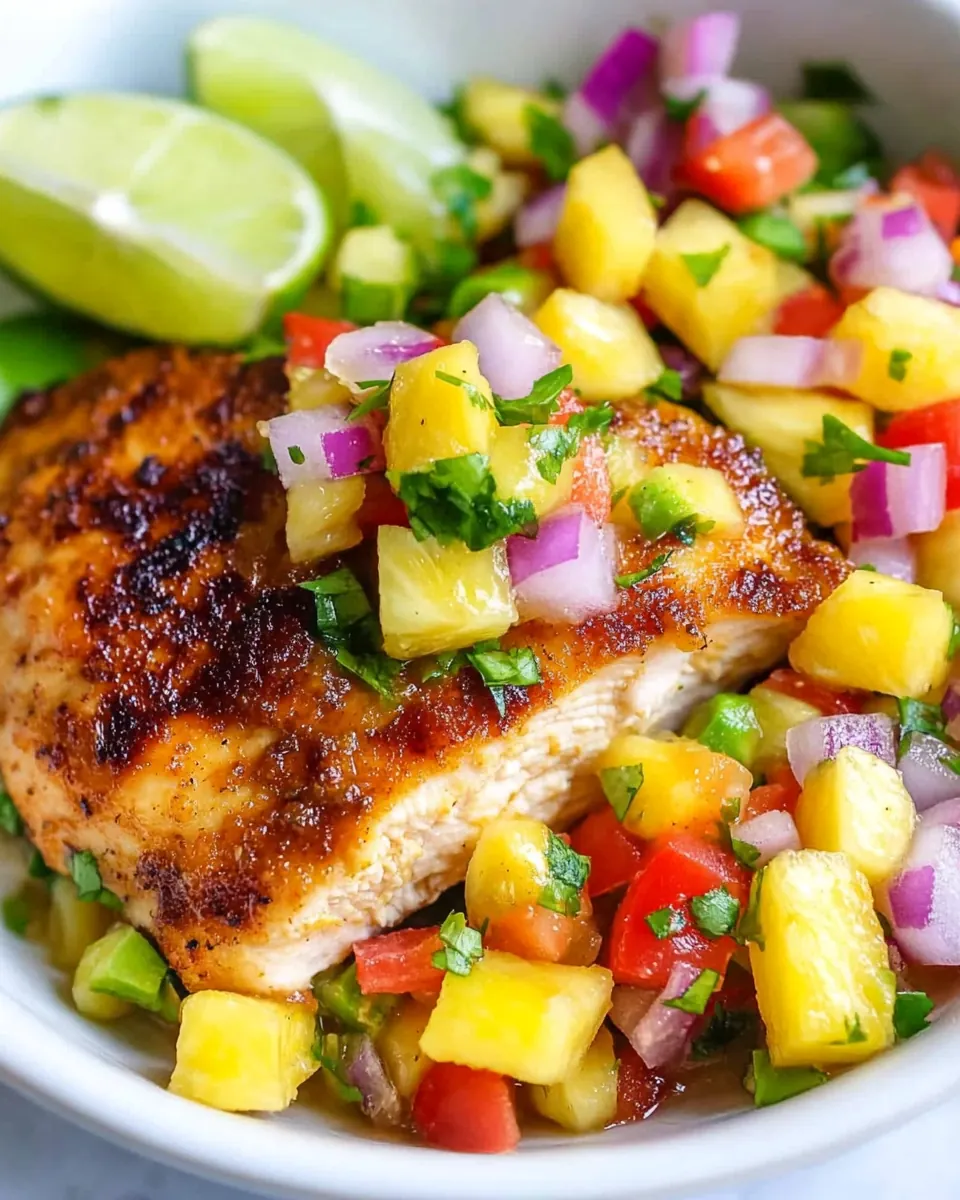
Pineapple Salsa Chicken
Pineapple Salsa Chicken first became my go to when the backyard was full of chatter and someone asked for something bright and not fussy. I remember juggling a bowl of chopped fruit while the grill hissed nearby, and how the sweet tang of pineapple paired with the warm embrace of chicken felt like an instant celebration. That first afternoon I tossed the mixture together without a recipe and watched neighbors gather, drawn by the aroma and the promise of something light yet satisfying.
Since then I reach for this dish when I want dinner to feel like a mini escape. I like that the salsa is forgiving, so I often chop while I tell a story, and the chicken cooks quickly so conversation never stalls. Each bite balances textures, the juicy pineapple offsetting the tender chicken, and a squeeze of lime brightens the whole plate. Over time I tweaked seasoning amounts to match my crowd, and now it reliably earns requests for seconds.
Recipe Snapshot
20 mins
10 mins
10 mins
Medium
320 kcal
Mexican
Whole30, Gluten-Free
Dinner
Large Skillet, Mixing Bowl, Knife, Cutting Board, Meat Thermometer
What’s Great About This Pineapple Salsa Chicken
Bright contrast of flavors
I love how Pineapple Salsa Chicken layers sweetness, acidity, and a gentle heat. The fresh pineapple gives pops of juice that balance the savory notes from the seasoned chicken, so every forkful feels lively rather than heavy. I find this contrast wakes up the palate, which is why I often serve it when I want guests to stay engaged with the meal.
Fast and flexible
We can have this on the table in minutes because the preparation is simple and the cook time is short. I appreciate recipes that adapt, so whether you want to chop finer for a relish or leave slightly chunkier for texture, this one forgives. That flexibility is a huge part of why I keep it in my weeknight rotation.
Great for warm weather entertaining
Because the salsa is chilled and the chicken is light, this recipe feels perfect for summer gatherings. I like preparing the salsa ahead of time, which lets me socialize instead of standing by the stove. Guests always comment on how fresh the topping tastes, and I always reply that it’s the simple ingredients doing the work.
Kid friendly but grown up enough for company
My family eats the milder version without the jalapeno, while I’ll keep a spicier batch for those who like a kick. That makes it a reliable crowd pleaser. The texture of the chicken and the fruity salsa means picky eaters often give it a chance, while adults appreciate the layered flavors.
Easy to scale and store
I often double the salsa portion because it stores well and keeps the meal feeling fresh for lunches the next few days. The components hold up in the fridge, and reheating the chicken gently keeps it juicy. For me, recipes that improve or remain steady after storage are winners every time.
What to Buy for Pineapple Salsa Chicken
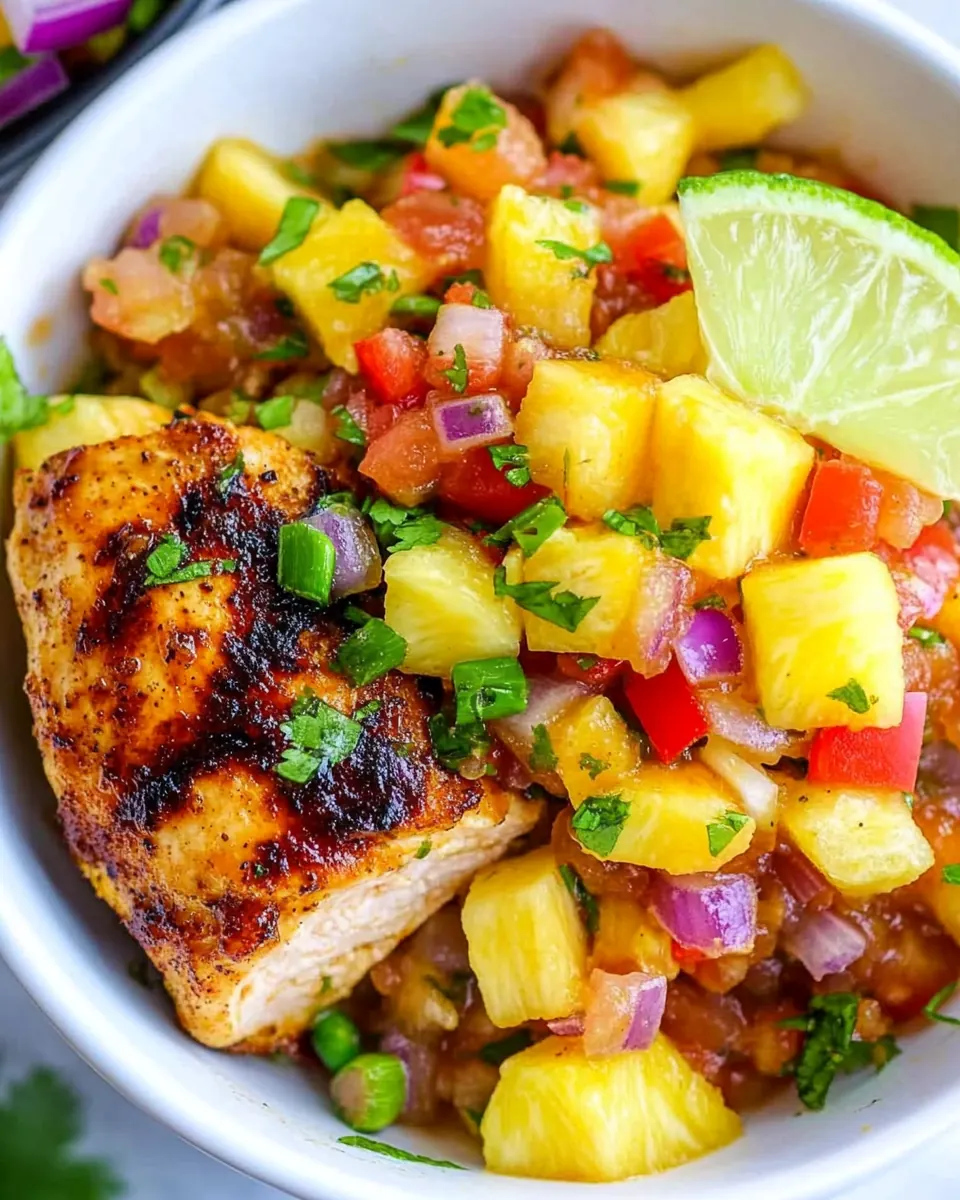
The philosophy behind these ingredients is simple: bright produce meets pantry basics to create contrast and balance. The chicken serves as a neutral canvas, while pineapple, peppers, and cilantro provide the color, texture, and lift. Spices and citrus tie everything together, ensuring every bite tastes fresh and intentional.
- 3 lbs boneless, skinless chicken breast, thin filets: Flatten and slice to even thin filets for quick, uniform cooking; provides the primary protein and main body of the dish. Marinate briefly with spices and lime juice to absorb flavor, then sear or grill to develop a caramelized exterior and juicy interior.
- 2 tbsp vegetable oil: Heat briefly to coat the chicken and transfer heat efficiently while searing; helps create a golden crust and prevents sticking. Use a neutral-flavored oil so the spices and pineapple remain the stars of the recipe.
- 1 tsp garlic powder: Sprinkle evenly as a dry seasoning to lend a mild, savory garlic aroma and depth without moisture. Works well in marinades and on the surface of the chicken to enhance overall savory notes.
- 1 tsp onion powder: Dust over the chicken for a subtle, sweet onion backbone that complements fresh onion in the salsa; adds umami and enhances browning. Blends with other dry spices to create a balanced savory profile.
- 1 tsp ground cumin: Season the chicken with a warm, earthy note that supports the tropical-sweet flavors of pineapple; helps tie together the savory and bright components. Use conservatively to keep the spice from overpowering the fresh salsa.
- 1 tsp salt: Season liberally enough to bring out flavors and balance sweetness from the pineapple, ensuring the chicken and salsa are well seasoned. Adjust to taste, remembering some salt will be absorbed during cooking and the salsa contains additional salt.
- 1 lime, juice of: Squeeze over the chicken or into a marinade to add bright acidity and help tenderize the meat; balances sweetness and fattiness. Use freshly squeezed juice for the best citrus brightness and clean flavor.
- 1.5 cups fresh pineapple: Chop fresh into small pieces to contribute sweet, tropical juiciness and texture to the salsa; acts as the primary sweet component that contrasts with savory chicken. Use ripe pineapple for the best balance of sweetness and acidity.
- 1/2 red bell pepper: Dice finely to add crisp, sweet pepper notes and crunchy texture to the salsa; contributes color and mild sweetness. Combine with other peppers for a balanced flavor and visual appeal.
- 1/2 green bell pepper: Dice finely to introduce a slightly bitter, grassy pepper flavor and crispness to the salsa; balances red bell pepper and pineapple sweetness. Provides visual contrast and a milder pepper bite.
- 1 jalapeno pepper, ribs and seeds removed () (optional): Finely chop or remove seeds for milder heat, or leave seeds in for more spice; contributes a sharp, vegetal heat to the salsa if used. Adjust amount to suit heat tolerance and wear gloves if sensitive when handling.
- 1/4 cup red onion: Finely mince to provide pungent, slightly sweet sharpness and crunchy texture in the salsa; helps amplify savory notes and contrast the pineapple. Rinse briefly if you want to mellow the bite before adding to the mix.
- 1/4 cup cilantro: Chop finely to impart fresh, citrusy herbal brightness and a clean finish to the salsa; ties together sweet and savory elements. Add toward the end to preserve color and delicate flavor.
- 1 tbsp lime juice: Squeeze into the salsa to boost acidity and brighten flavors; balances the sweetness of pineapple and rounds out the seasoning. Use fresh lime juice for the most vibrant, zesty impact.
- 1/8 tsp salt: Pinch in to lightly season the salsa and balance sweetness; provides a finishing touch that enhances overall flavor clarity. Use sparingly and adjust after combining all salsa components.
The Method for Pineapple Salsa Chicken
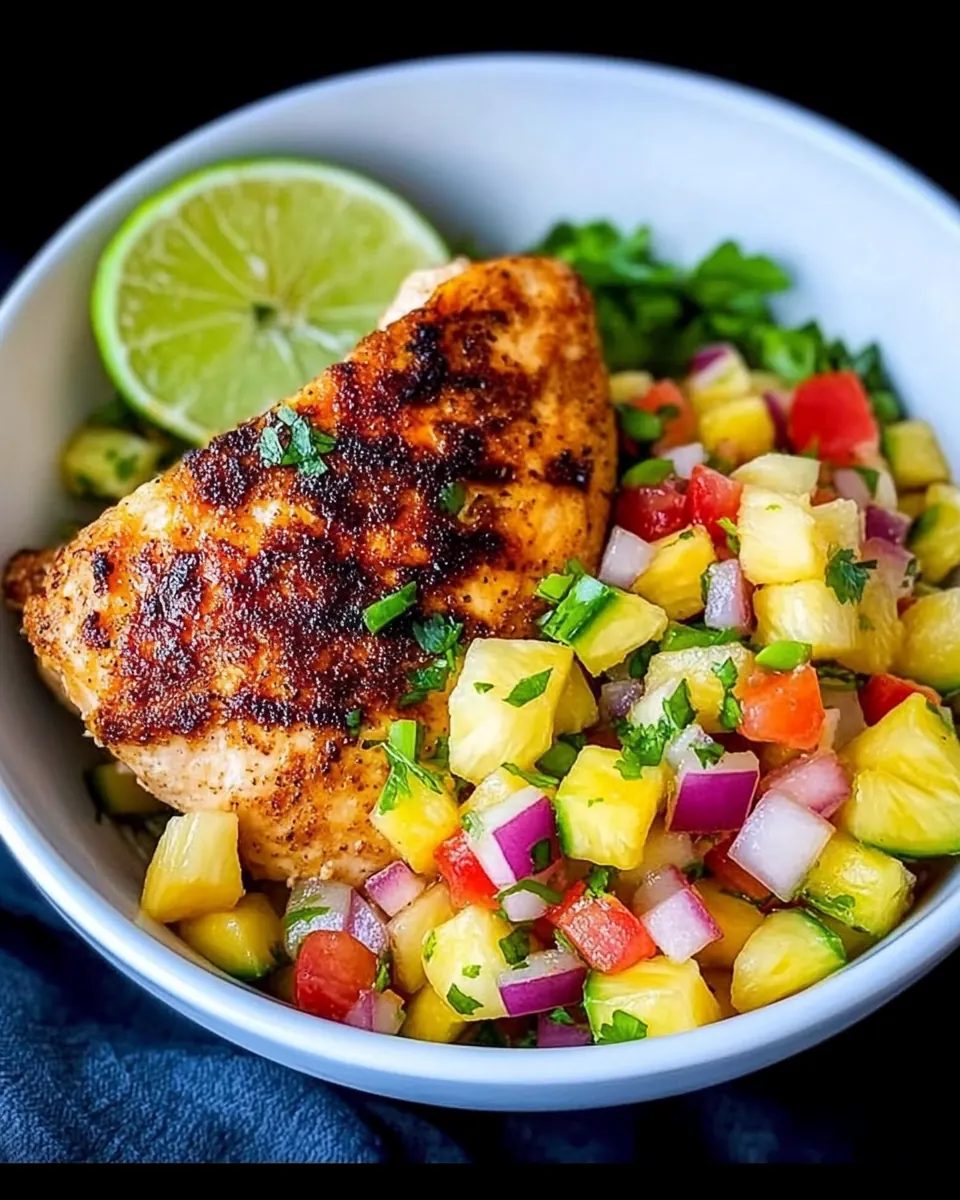
This is a hands on but relaxed method, and I like to move deliberately while I cook so flavors develop properly. I walk through each part, from seasoning the chicken to building the salsa, so you know what signs to look for and how to avoid common pitfalls. Keep your mise en place handy, because the cook time is quick and steady attention makes a difference.
- Combine the chicken with the seasonings, lime juice, and 1 tbsp oil. Mix well so all of the meat is evenly coated and set aside.: The aroma that hits you when the spices meet fresh lime and oil is the first clue this will be vibrant, with the citrus cutting through the savory notes. As the oil coats the chicken , it helps the spices adhere and promotes browning when it hits a hot skillet. You should notice the surface becoming glossy and evenly seasoned, which ensures uniform flavor in every bite, and that gloss also helps with a pleasing sear. One reason I set the seasoned chicken aside is to let the flavors meld briefly, even five to ten minutes makes a tangible difference, though do not marinate for too long or the acid will start to change the texture. A common misstep is overmixing and tearing the meat when you want even coverage, so gently toss instead of aggressively rubbing. If your meat looks patchy, give it another light toss so the spices distribute evenly.
- Finely dice the pineapple, bell pepper, jalapeno, onion and cilantro. Note: you can leave the jalapeno out all together for no spice, or if you want more spice you can add an extra jalapeno pepper, or leave in the seeds and ribs for extra heat.: The texture here makes the salsa sing, so aim for uniform small dice so every spoonful has balance; finely diced pineapple releases little bursts of juice that mingle with the other ingredients. As you chop the peppers and onion, pay attention to the sound of the knife hitting the board and the bright aroma released, those are signs you are correctly breaking down the vegetables. Removing the ribs and seeds from the jalapeno cuts the heat while leaving them will ramp up the spice quickly, so adjust to your audience. Avoid cutting pieces unevenly, because larger chunks will dominate the softer pineapple . If your salsa seems watery after mixing, you likely overripe the fruit or chopped too finely, so coarser pieces will help maintain structure.
- Note: you can leave the jalapeno out all together for no spice, or if you want more spice you can add an extra jalapeno pepper, or leave in the seeds and ribs for extra heat.: Think of this as your moment to decide the level of warmth for the finished dish, and taste as you go if you are unsure. The presence or absence of heat alters how other flavors register, with spice often enhancing the perception of sweetness and acidity. When I opt for milder, I remove seeds and ribs and sometimes split one pepper to taste later, that way I can add a bit to a few servings. A common mistake is underestimating the heat that will build overnight, so if you will store the salsa, dial back initial spice slightly.
- Mix all of the ingredients together in a medium bowl until combined. Refrigerate until serving.: As the components sit, the juices mingle and the flavors knit together, creating a cohesive salsa where each ingredient supports the others. You should notice the mixture take on an even sheen from the lime and juices, and the scent of cilantro and onion will temper the sweetness from the pineapple . Chilling helps the salsa firm up and makes it refreshing when served, plus it gives you time to finish the chicken without rushing. One pitfall is over mixing which can break down the texture, so fold gently until evenly distributed. If the salsa tastes flat after chilling, a touch more lime will brighten it quickly.
- Heat the remaining 1 tbsp in a large skillet over medium high heat. Once hot add chicken and cook 3-4 minutes on each side, or until cooked through. (165˚F internal temp) Make sure the chicken is not too crowded in the skillet. You can cook the chicken in batches if needed.: The sound of the chicken hitting a hot pan and sizzling is a satisfying cue that a crust will form, locking in juices while adding texture. You want the pan hot enough to sear but not so hot that the outside burns before the interior reaches 165°F. Using a thermometer takes the guesswork out of doneness and keeps the meat succulent. Leave space between pieces so heat circulates, and resist the urge to flip too soon; a clean release indicates a good sear. Cooking in batches avoids steaming, which is what happens when you crowd the pan, so be patient and keep finished pieces warm on a tray while you cook the rest.
- Make sure the chicken is not too crowded in the skillet. You can cook the chicken in batches if needed.: This is the technical reminder that spacing is essential for texture, because overcrowding traps steam and prevents browning, which changes both flavor and mouthfeel. I like to hear a steady sizzle and see a golden edge forming before flipping, those visual and auditory cues tell you heat is doing the work. If you notice pale, soft surfaces instead of a crust, reduce the batch size or increase the heat slightly while watching closely. A common error is trying to rush final steps by jamming more into the pan, which results in less appetizing, gray meat. Keep a plate in a warm oven if you need to hold cooked pieces while finishing the rest.
- Plate chicken with a scoop of the pineapple salsa to serve.: The final presentation benefits from contrast, so spoon a generous portion of the chilled salsa atop or beside the warm chicken to create a mix of temperatures and textures. The sight of bright pineapple and colorful peppers against the golden meat invites people to dig in, and the initial aroma of warm spices followed by citrus in the bite is why this pairing works so well. Avoid adding the salsa too early, or the heat will break down its texture; serve it chilled for the best effect. If the plate looks sparse, a wedge of lime or extra cilantro sprig adds visual brightness without changing the flavor profile drastically.
Variations to Try
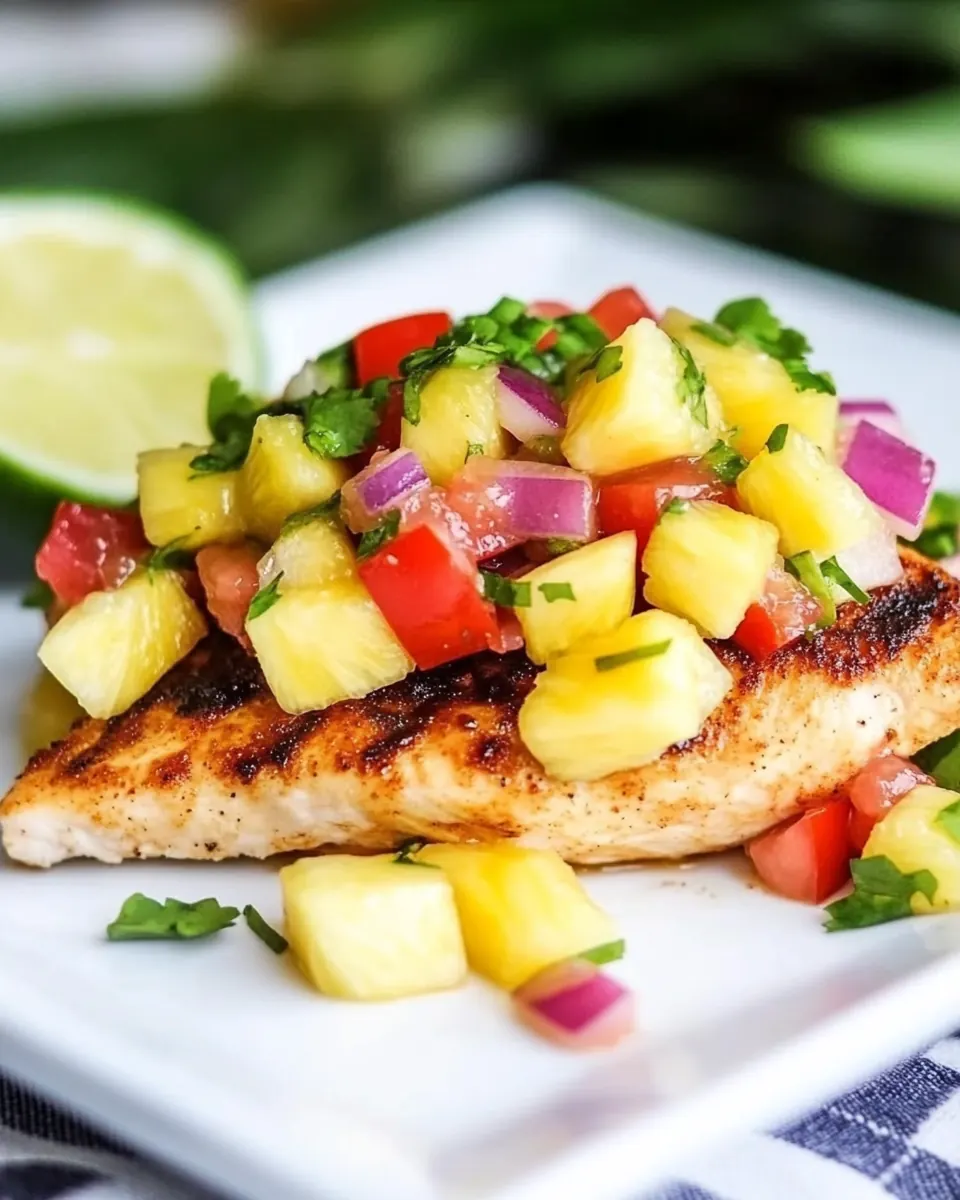
There are a few fun ways to shift the profile of this recipe while keeping the core of what makes it work intact. Small swaps or additions can tailor the dish to different meals or palates, and I often experiment depending on what I have on hand.
- Grill the chicken: Charred grill marks add a smoky layer that pairs beautifully with the sweet pineapple, creating a more robust outdoor vibe for summer cookouts.
- Mild salsa: Omit the jalapeno and increase the red onion slightly for a kid friendly version that keeps texture and brightness.
- Extra citrus: Add an extra tablespoon of fresh lime juice to the salsa for sharper acidity if your fruit is especially sweet.
- Make it a bowl: Serve slices of the finished chicken over rice or greens for a complete meal that’s easy to pack for lunches.
- Batch the salsa: Double the salsa and refrigerate separately for quick topping use during the week, it stays vibrant for several days.
What Complements This Pineapple Salsa Chicken
This dish pairs well with many sides and occasions, and I like to think about serving it in a way that highlights its freshness. Whether you want a casual lunch or a relaxed dinner, pairings can shift the mood from bright and light to heartier and more filling. Below I outline ideas for sides, occasions, storage, and seasonal notes to help you plan the perfect meal.
- Rice or grains: A bed of fluffy rice or quinoa soaks up the juices and makes the meal more substantial, ideal for a weeknight family dinner.
- Simple salad: Crisp greens dressed lightly with lime and oil echo the salsa flavors and keep the plate fresh for warm weather lunches.
- Street taco style: Slice the chicken and serve in warm tortillas with the salsa spooned on top for a festive, hands on meal suited to gatherings.
- Occasions: This works well for summer cookouts, casual dinner parties, or a light Ramadan iftar where something bright and easy to digest is welcome.
- Storage tips: Keep the salsa and chicken stored separately in airtight containers for three to five days to maintain texture; warm the meat gently to avoid drying.
- Seasonal pairings: In summer emphasize chilled sides and citrus notes, while in cooler months pair with warm grains and roasted vegetables to add comfort.
FAQ
Conclusion
Pineapple Salsa Chicken shines because it combines quick cooking with bright, layered flavors that feel both easy and special. Give it a try when you want a lively weeknight meal or a light dish for guests, and you may find it becomes one of your reliable favorites. Enjoy the textures, the balance of sweet and tangy notes, and the simple satisfaction of a meal that comes together without fuss.
Pineapple Salsa Chicken
Equipment
- Large Skillet
- Mixing Bowl
- Knife
- Cutting Board
- Meat Thermometer
Ingredients
- 3 lbs boneless, skinless chicken breast, thin filets Flatten and slice to even thin filets for quick, uniform cooking; provides the primary protein and main body of the dish. Marinate briefly with spices and lime juice to absorb flavor, then sear or grill to develop a caramelized exterior and juicy interior.
- 2 tbsp vegetable oil Heat briefly to coat the chicken and transfer heat efficiently while searing; helps create a golden crust and prevents sticking. Use a neutral-flavored oil so the spices and pineapple remain the stars of the recipe.
- 1 tsp garlic powder Sprinkle evenly as a dry seasoning to lend a mild, savory garlic aroma and depth without moisture. Works well in marinades and on the surface of the chicken to enhance overall savory notes.
- 1 tsp onion powder Dust over the chicken for a subtle, sweet onion backbone that complements fresh onion in the salsa; adds umami and enhances browning. Blends with other dry spices to create a balanced savory profile.
- 1 tsp ground cumin Season the chicken with a warm, earthy note that supports the tropical-sweet flavors of pineapple; helps tie together the savory and bright components. Use conservatively to keep the spice from overpowering the fresh salsa.
- 1 tsp salt Season liberally enough to bring out flavors and balance sweetness from the pineapple, ensuring the chicken and salsa are well seasoned. Adjust to taste, remembering some salt will be absorbed during cooking and the salsa contains additional salt.
- 1 lime, juice of Squeeze over the chicken or into a marinade to add bright acidity and help tenderize the meat; balances sweetness and fattiness. Use freshly squeezed juice for the best citrus brightness and clean flavor.
- 1.5 cups fresh pineapple Chop fresh into small pieces to contribute sweet, tropical juiciness and texture to the salsa; acts as the primary sweet component that contrasts with savory chicken. Use ripe pineapple for the best balance of sweetness and acidity.
- 1/2 red bell pepper Dice finely to add crisp, sweet pepper notes and crunchy texture to the salsa; contributes color and mild sweetness. Combine with other peppers for a balanced flavor and visual appeal.
- 1/2 green bell pepper Dice finely to introduce a slightly bitter, grassy pepper flavor and crispness to the salsa; balances red bell pepper and pineapple sweetness. Provides visual contrast and a milder pepper bite.
- 1 jalapeno pepper, ribs and seeds removed (optional) Finely chop or remove seeds for milder heat, or leave seeds in for more spice; contributes a sharp, vegetal heat to the salsa if used. Adjust amount to suit heat tolerance and wear gloves if sensitive when handling.
- 1/4 cup red onion Finely mince to provide pungent, slightly sweet sharpness and crunchy texture in the salsa; helps amplify savory notes and contrast the pineapple. Rinse briefly if you want to mellow the bite before adding to the mix.
- 1/4 cup cilantro Chop finely to impart fresh, citrusy herbal brightness and a clean finish to the salsa; ties together sweet and savory elements. Add toward the end to preserve color and delicate flavor.
- 1 tbsp lime juice Squeeze into the salsa to boost acidity and brighten flavors; balances the sweetness of pineapple and rounds out the seasoning. Use fresh lime juice for the most vibrant, zesty impact.
- 1/8 tsp salt Pinch in to lightly season the salsa and balance sweetness; provides a finishing touch that enhances overall flavor clarity. Use sparingly and adjust after combining all salsa components.
Instructions
- Combine the chicken with the seasonings, lime juice, and 1 tbsp oil. Mix well so all of the meat is evenly coated and set aside.: The aroma that hits you when the spices meet fresh lime and oil is the first clue this will be vibrant, with the citrus cutting through the savory notes. As the oil coats the chicken , it helps the spices adhere and promotes browning when it hits a hot skillet. You should notice the surface becoming glossy and evenly seasoned, which ensures uniform flavor in every bite, and that gloss also helps with a pleasing sear. One reason I set the seasoned chicken aside is to let the flavors meld briefly, even five to ten minutes makes a tangible difference, though do not marinate for too long or the acid will start to change the texture. A common misstep is overmixing and tearing the meat when you want even coverage, so gently toss instead of aggressively rubbing. If your meat looks patchy, give it another light toss so the spices distribute evenly.
- Finely dice the pineapple, bell pepper, jalapeno, onion and cilantro. Note: you can leave the jalapeno out all together for no spice, or if you want more spice you can add an extra jalapeno pepper, or leave in the seeds and ribs for extra heat.: The texture here makes the salsa sing, so aim for uniform small dice so every spoonful has balance; finely diced pineapple releases little bursts of juice that mingle with the other ingredients. As you chop the peppers and onion, pay attention to the sound of the knife hitting the board and the bright aroma released, those are signs you are correctly breaking down the vegetables. Removing the ribs and seeds from the jalapeno cuts the heat while leaving them will ramp up the spice quickly, so adjust to your audience. Avoid cutting pieces unevenly, because larger chunks will dominate the softer pineapple . If your salsa seems watery after mixing, you likely overripe the fruit or chopped too finely, so coarser pieces will help maintain structure.
- Note: you can leave the jalapeno out all together for no spice, or if you want more spice you can add an extra jalapeno pepper, or leave in the seeds and ribs for extra heat.: Think of this as your moment to decide the level of warmth for the finished dish, and taste as you go if you are unsure. The presence or absence of heat alters how other flavors register, with spice often enhancing the perception of sweetness and acidity. When I opt for milder, I remove seeds and ribs and sometimes split one pepper to taste later, that way I can add a bit to a few servings. A common mistake is underestimating the heat that will build overnight, so if you will store the salsa, dial back initial spice slightly.
- Mix all of the ingredients together in a medium bowl until combined. Refrigerate until serving.: As the components sit, the juices mingle and the flavors knit together, creating a cohesive salsa where each ingredient supports the others. You should notice the mixture take on an even sheen from the lime and juices, and the scent of cilantro and onion will temper the sweetness from the pineapple . Chilling helps the salsa firm up and makes it refreshing when served, plus it gives you time to finish the chicken without rushing. One pitfall is over mixing which can break down the texture, so fold gently until evenly distributed. If the salsa tastes flat after chilling, a touch more lime will brighten it quickly.
- Heat the remaining 1 tbsp in a large skillet over medium high heat. Once hot add chicken and cook 3-4 minutes on each side, or until cooked through. (165˚F internal temp) Make sure the chicken is not too crowded in the skillet. You can cook the chicken in batches if needed.: The sound of the chicken hitting a hot pan and sizzling is a satisfying cue that a crust will form, locking in juices while adding texture. You want the pan hot enough to sear but not so hot that the outside burns before the interior reaches 165°F. Using a thermometer takes the guesswork out of doneness and keeps the meat succulent. Leave space between pieces so heat circulates, and resist the urge to flip too soon; a clean release indicates a good sear. Cooking in batches avoids steaming, which is what happens when you crowd the pan, so be patient and keep finished pieces warm on a tray while you cook the rest.
- Make sure the chicken is not too crowded in the skillet. You can cook the chicken in batches if needed.: This is the technical reminder that spacing is essential for texture, because overcrowding traps steam and prevents browning, which changes both flavor and mouthfeel. I like to hear a steady sizzle and see a golden edge forming before flipping, those visual and auditory cues tell you heat is doing the work. If you notice pale, soft surfaces instead of a crust, reduce the batch size or increase the heat slightly while watching closely. A common error is trying to rush final steps by jamming more into the pan, which results in less appetizing, gray meat. Keep a plate in a warm oven if you need to hold cooked pieces while finishing the rest.
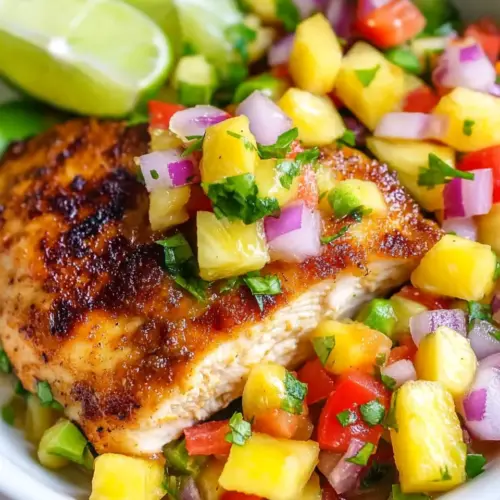
- Plate chicken with a scoop of the pineapple salsa to serve.: The final presentation benefits from contrast, so spoon a generous portion of the chilled salsa atop or beside the warm chicken to create a mix of temperatures and textures. The sight of bright pineapple and colorful peppers against the golden meat invites people to dig in, and the initial aroma of warm spices followed by citrus in the bite is why this pairing works so well. Avoid adding the salsa too early, or the heat will break down its texture; serve it chilled for the best effect. If the plate looks sparse, a wedge of lime or extra cilantro sprig adds visual brightness without changing the flavor profile drastically.
Notes
- Grill the chicken: Charred grill marks add a smoky layer that pairs beautifully with the sweet pineapple, creating a more robust outdoor vibe for summer cookouts.
- Mild salsa: Omit the jalapeno and increase the red onion slightly for a kid friendly version that keeps texture and brightness.
- Extra citrus: Add an extra tablespoon of fresh lime juice to the salsa for sharper acidity if your fruit is especially sweet.
- Make it a bowl: Serve slices of the finished chicken over rice or greens for a complete meal that’s easy to pack for lunches.
- Batch the salsa: Double the salsa and refrigerate separately for quick topping use during the week, it stays vibrant for several days.