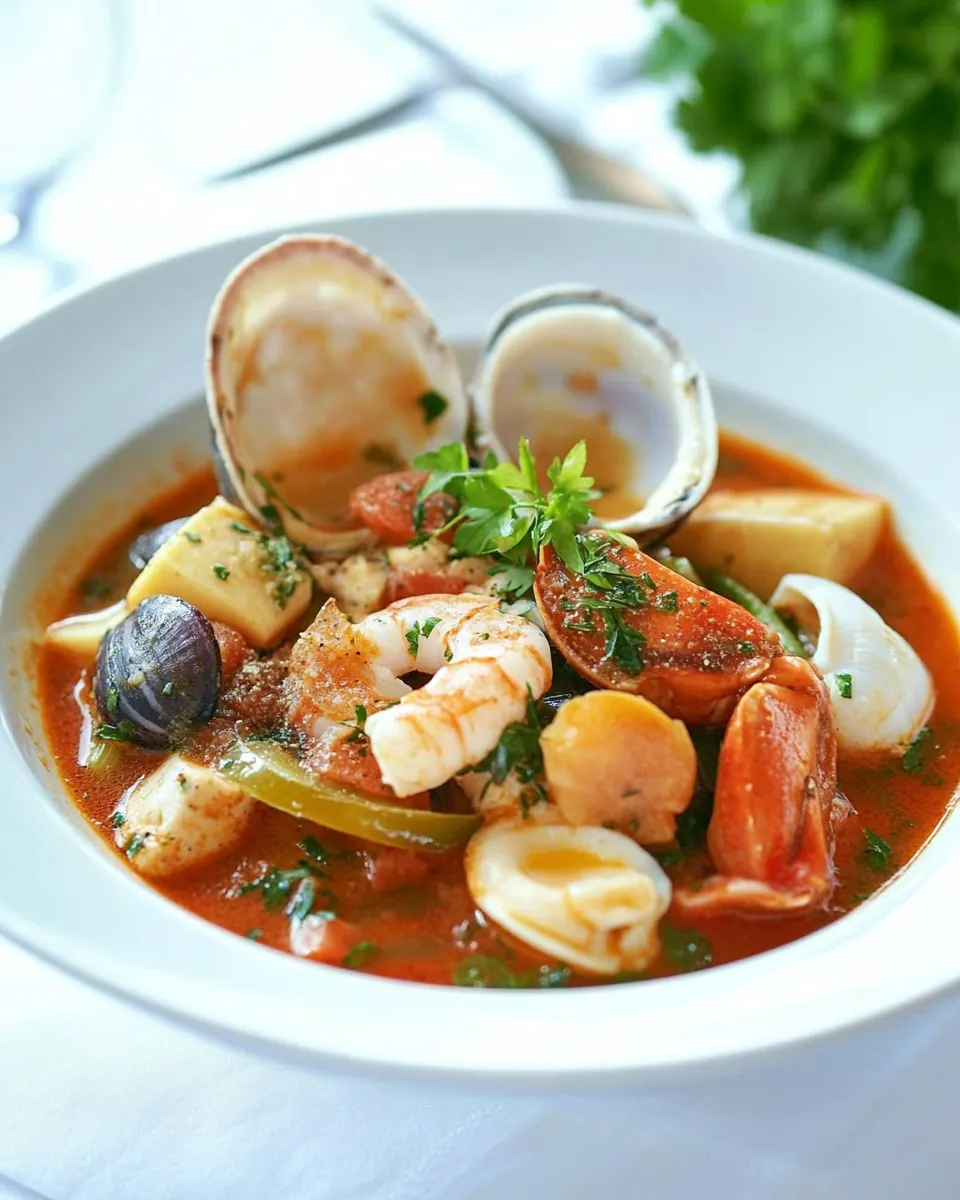
Simple Seafood Bouillabaisse
Simple Seafood Bouillabaisse is one of those recipes I return to when I want a bowl that feels like a warm coastal hug.
Years ago I learned to make this dish on a gray weekday afternoon, standing over a modest stove with a kettle of fragrant stock bubbling away. I remember tasting a spoonful and thinking how a few humble ingredients like olive oil, garlic, and a splash of bright lemon could sing against the briny sweetness of fish fillets and clams. That memory keeps me company whenever I want something comforting but not fussy.
What I love most about Simple Seafood Bouillabaisse is its friendly flexibility. I often swap whatever seafood is at the market, but I never skimp on the aromatics. The layering of textures, from tender potato to snappy shrimp, and the warm saffron perfume, makes each bowl feel intentionally made. When friends come over, I let the pot do the work while we chat, and the house fills with the kind of smell that pulls people into the kitchen.
There are evenings when I want to impress without showing off, and that is exactly when this recipe shines. It rewards gentle attention rather than complicated technique, and it brings people together around a rustic bowl and toasted bread. Over time I learned small moves that change the outcome in subtle but important ways, and those are the touches I share freely when someone asks for the secret.
Recipe Snapshot
30 mins
5 mins
25 mins
Medium
350 kcal
Mediterranean
Paleo, Gluten-Free
Dinner
Large pot or skillet, Wooden spoon
The Magic of This Simple Seafood Bouillabaisse
Deep, layered flavor from simple beginnings
I adore how Simple Seafood Bouillabaisse builds intense flavor by starting with basic components like olive oil, garlic, and leek. The long gentle simmer with seafood stock and saffron lets each element contribute without any single aroma overpowering the bowl. I sometimes gently mash a few vegetables at the end to thicken the broth, and that little trick creates a luxurious mouthfeel that feels gourmet without fuss.
Briny, sweet seafood that stays tender
I love that the recipe honors the seafood by adding delicate proteins late, so the fish fillets and clams stay tender and not overcooked. The brief final simmer time means you get soft flakes of fish and slightly chewy mussels that still taste fresh. When I serve it, everyone notices the difference between rushed seafood and seafood treated with care.
Comforting and sociable
This is a very social dish for me. I often make a big pot and serve it family style with toasted bread or croutons, so people can dip and chat. The broth is hearty enough for dinner yet elegant enough for guests. I find it works equally well for a cozy weeknight or a casual dinner party.
Flexible to what you have on hand
I often adapt this recipe based on what the market offers. If shrimp are cheap that week, I use more of them. If I have a whole fish fillet, I cut it into chunks. The structure of the recipe supports swaps while keeping the core flavors intact, so you can make it your own without losing the spirit of the dish.
Balanced aromatics and texture
The interplay of root vegetables like potato and carrot, the brightness of lemon zest, and the herb lift from parsley keeps the bowl from feeling one note. That balance is why I return to this recipe again and again, because every spoonful offers complexity that still feels approachable.
Ingredients for Simple Seafood Bouillabaisse
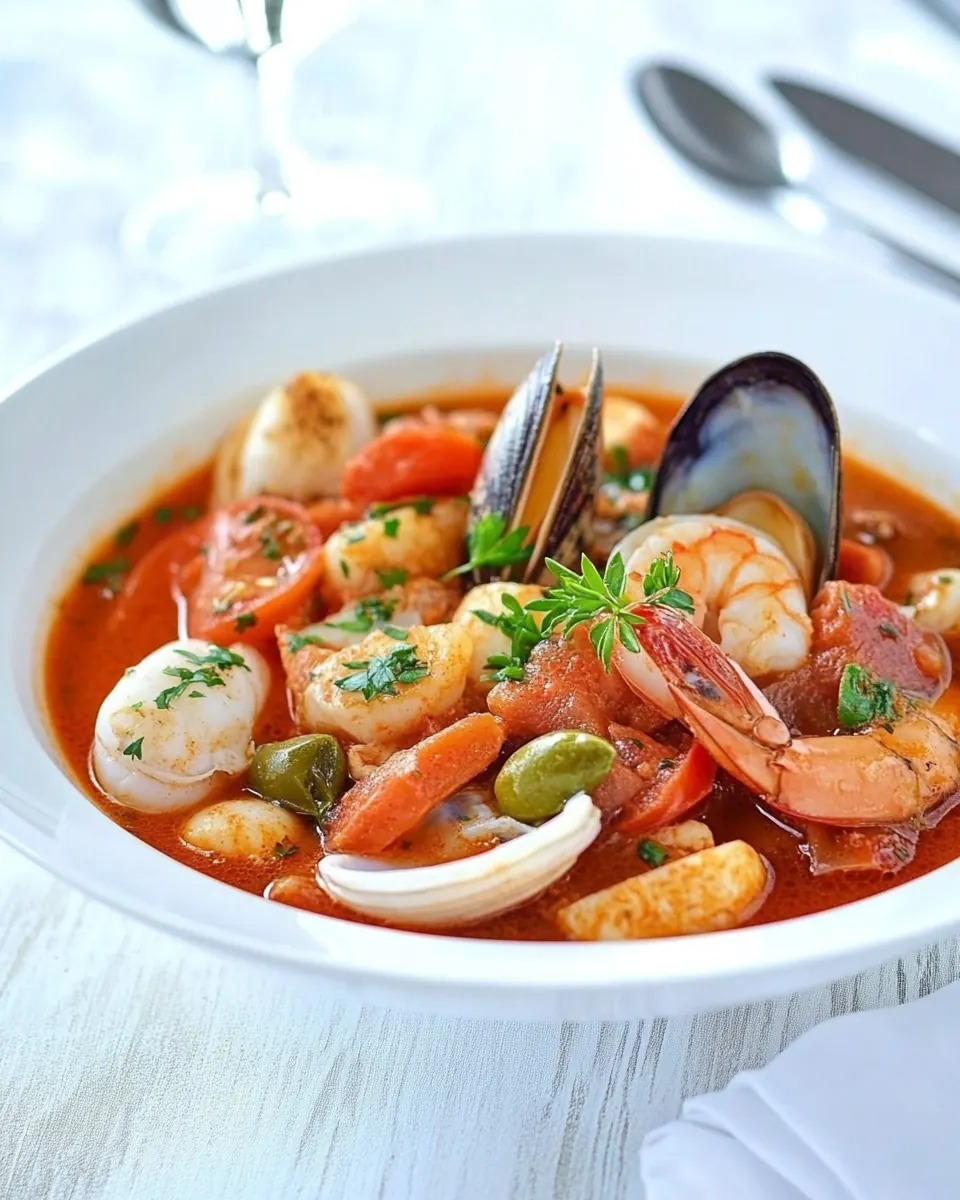
These ingredients are built for harmony. I choose components that bring body, brightness, and brine, so each spoonful has depth and lift. The vegetables add texture and natural thickness, the aromatics and saffron create the signature perfume, and the assortment of seafood provides a range of textures from tender flakes to firm shells.
- 2 tablespoons olive oil: Heat and flavor the base of the soup, coating the pot to help sauté aromatics and develop a golden foundation for the broth.
- 2 cloves garlic, peeled and smashed: Crush and release pungent oils for depth, then quickly soften to infuse the cooking fat with a mellow garlic aroma without burning.
- 1 large leek, only the white part, sliced: Slice and sweat for a mild, onion-like sweetness that adds body and a subtle vegetal layer to the stew as it cooks down.
- 1 large potato, peeled and cubed: Cube and tenderize during simmering to contribute a creamy, starchy texture that helps slightly thicken and enrich the broth.
- 1 carrot, peeled and cubed: Peel and simmer until soft to add natural sweetness and textural contrast, complementing the potato with bright vegetal notes.
- 1 tablespoon lemon zest: Zest and brighten the overall flavor to introduce citrusy, aromatic oils that cut through the richness of seafood.
- few sprigs of thyme or basil leaves or both: Provide fresh herbal fragrance and layered aroma, releasing subtle green, peppery, or sweet notes depending on thyme, basil, or both.
- 1 large pinch of saffron: Infuse a warm, floral, and slightly bitter saffron aroma and color when steeped, lending an authentic Mediterranean character.
- 1 can whole plum tomatoes, in juice: Break down and dissolve into the stew to offer concentrated tomato acidity, sweetness, and umami for a balanced base.
- 6 cups seafood stock: Simmer and build the liquid backbone of the dish, concentrating seafood flavors and carrying aromatics and spices throughout.
- 10 oz 300 gr fish fillets such as halibut, cod, monkfish or snapper, cut into chunks: Cut and add tender flakes that absorb the broth, supplying firm, flaky protein and a mild, delicate seafood taste to the soup.
- 4 6 shell-on large shrimps or 2 cleaned and sliced squids, or both: Cook briefly to contribute sweet, briny shellfish richness and texture, enhancing the stew's seafood variety and savory depth.
- 1 cup 200 gr clams or mussels: Steam open to release briny juices and add chewy, oceanic morsels that intensify the broth's mineral and saline profile.
- 1 bunch Italian parsley, chopped: Chop and sprinkle at the end to lend bright, peppery freshness and a verdant finish that balances richness.
- Freshly toasted bread or croutons, to serve () (optional): Toast and serve alongside to provide crunchy contrast, ideal for sopping up the flavorful broth and adding textural variety.
Cooking Instructions for Simple Seafood Bouillabaisse
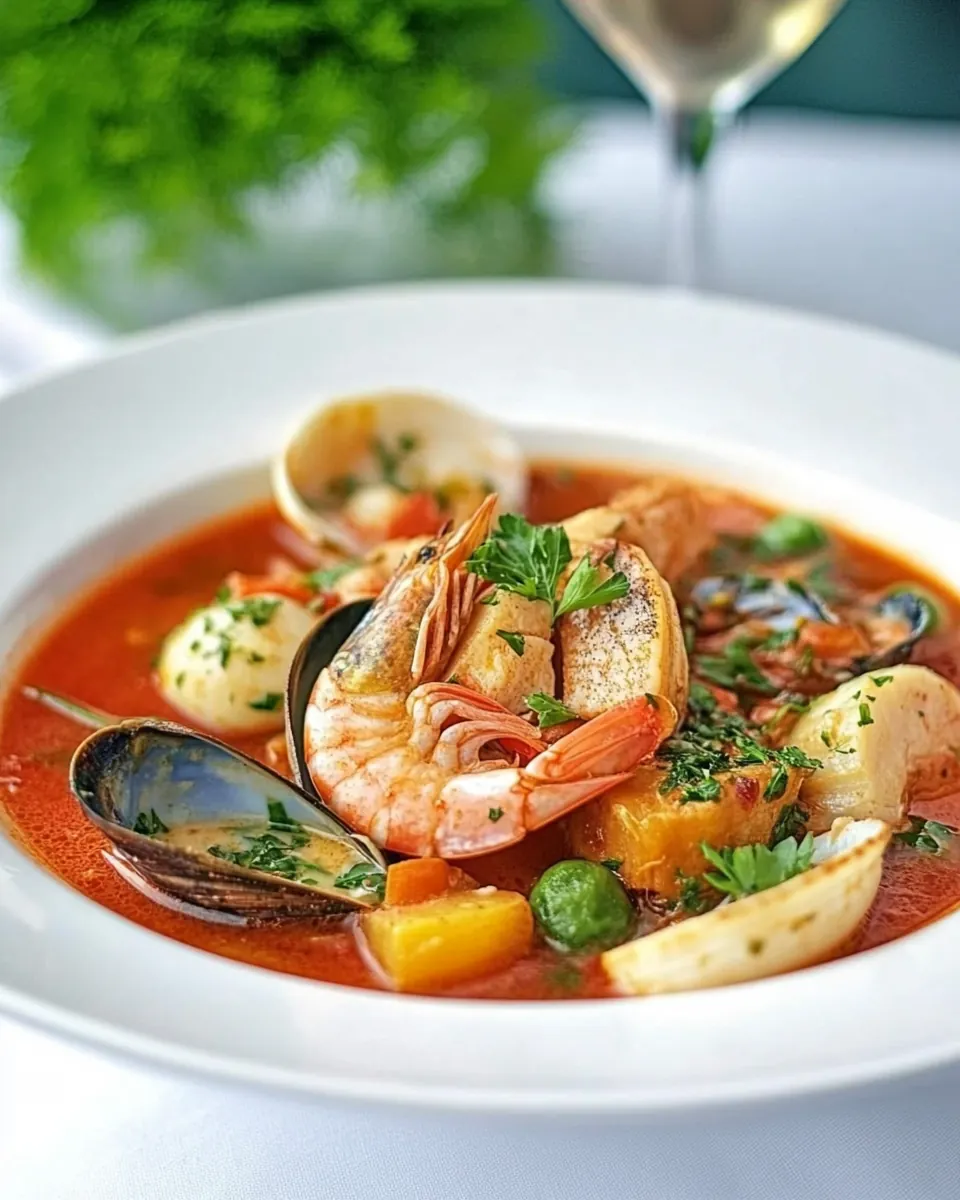
I approach the cooking as a gentle build, allowing each stage to develop aroma and texture before moving on. These steps lean on patience and attention, rewarding you with a broth layered in flavor and seafood cooked to perfect tenderness.
- Heat the olive oil in a large pot or skillet over medium heat. Add potato, garlic, leek and carrot cubes and sauté until just softened and slightly brown, for about 5 minutes.: Warmth is your first ally, you should notice a soft shimmer on the surface of the olive oil when the pan has reached the correct temperature, not smoke. The oil will carry the flavors of subsequent ingredients, so aim for medium heat so the garlic and vegetables release their aromatics slowly. You will hear a gentle sizzle as you add the first vegetable pieces, and that sound signals moisture escaping and flavor building. One reason this matters is that a slow start prevents bitter char and creates a sweet, savory bed for the stock. A common error is turning the heat too high which leads to burnt edges and loss of the oil's fruity notes, so if you see spatter or rapid browning, reduce the heat immediately. Keep a wooden spoon handy to stir and avoid sticking.
- Add in lemon zest and thyme, followed by tomatoes and saffron.: As these vegetables hit the pan, the scent will deepen into a warm, vegetal perfume, and the edges will take on a gentle golden hue when they are ready. The goal is translucent, tender pieces with tiny browned spots that enrich the base flavor. Texture is important here because the potato will later release starch to body the broth; undercooked cubes will stay firm, and overcooked ones will disintegrate. You want the middle ground, so stir often and check tenderness with a fork. Watch for the garlic to avoid browning too fast, as bitter garlic can ruin the pot; if pieces begin to darken prematurely, lower the heat and continue cooking gently.
- Stir all the ingredients then pour in the fish stock.: When you toss in the lemon zest and thyme , the pan will release a citrusy herbal lift that brightens the heavier vegetable notes. Once you add the canned tomatoes , you will see their juices loosen and begin to coat the veg, creating a richer base. Sprinkle in the saffron and it will start to tint the mixture with a warm gold and an exotic floral scent. This step matters because the acid from the tomatoes balances the natural sweetness and enhances the seafood flavors later. A common misstep is adding saffron directly to a cold mixture; instead, let it bloom in the warm juices for full aroma.
- Bring to a boil and simmer until the veggies are tender and stock is reduced by half, about 15 minutes. Season to taste with sea salt and black pepper.: As you combine everything, the mixture should take on a cohesive texture, and when the fish stock hits the pan it will steam and lift the concentrated aromas into the air. Pour slowly to avoid splashing, and use a spoon to loosen any caramelized bits from the pot bottom, because those browned pieces carry deep umami. The stock becomes the canvas for the seafood and vegetables, so starting with a flavorful liquid prevents a thin, uninspired broth. If your stock seems weak at this stage, simmer a bit longer to reduce and intensify it before adding seafood.
- Reduce heat to medium-low and fold in the fish chunks. Cook for a couple of minutes.: You will notice a change from a raw, thin broth to one that smells concentrated and tastes rounded, with the vegetables contributing both body and sweetness. A rolling boil initially helps incorporate flavors, then reducing to a gentle simmer brings clarity and prevents cloudiness. The visual cue to look for is the liquid coating the spoon and reduced volume by roughly half, which indicates flavor concentration. Taste and adjust with sea salt and black pepper , but add salt cautiously because the shellfish and stock may already provide significant salinity. Over-salting at this point is hard to fix, so err on the side of light seasoning and correct later if needed.
- At this point, add in any seafood using: clams, mussels, and shrimps. Simmer until the clam/mussel shells open, about 5 minutes more.: As you gently add the fish chunks , you will see pale fillets turn opaque and begin to flake at the edges, a visual cue they are nearly done. Folding them in rather than stirring vigorously protects the delicate texture and keeps chunks intact. The gentle heat finishes cooking the fish through without drying it; if you overcook, the fillets will separate into chalky flakes. One tip is to spoon some hot broth over the top of the fish to ensure even cooking; avoid high heat which tightens proteins and makes the texture tough.
- Sprinkle with parsley and extra lemon zest if you like, and serve with croutons or grilled bread slices.: clams, mussels, and shrimps. Simmer until the clam/mussel shells open, about 5 minutes more : When you add the shellfish and shrimp , the pot will hiss softly and release a new layer of briny aroma as sea flavors quickly permeate the broth. The shells will begin to move and open; that opening is the best indicator of doneness for clams and mussels. Shrimp will turn pink and curl slightly, a visual sign they are ready. Keeping the simmer gentle prevents the shellfish from toughening, and discarding any shells that do not open is essential for safety. A common mistake is leaving shellfish in too long, which makes them rubbery and diminishes the delicate contrast with the fish.
- Sprinkle with parsley and extra lemon zest if you like, and serve with croutons or grilled bread slices: Freshly chopped parsley added at the end brightens the bowl and introduces a peppery finish, while extra lemon zest adds a sparkling lift that cuts through richness. The aroma at this stage will be herbaceous and lively, and the addition of toasted bread gives textural contrast, perfect for sopping up broth. Serve immediately so the seafood remains at its ideal tenderness. Avoid letting the pot sit too long on heat, as residual cooking will continue to firm up the proteins, so remove from heat and ladle into warmed bowls right away.
Tips and Tricks about Simple Seafood Bouillabaisse
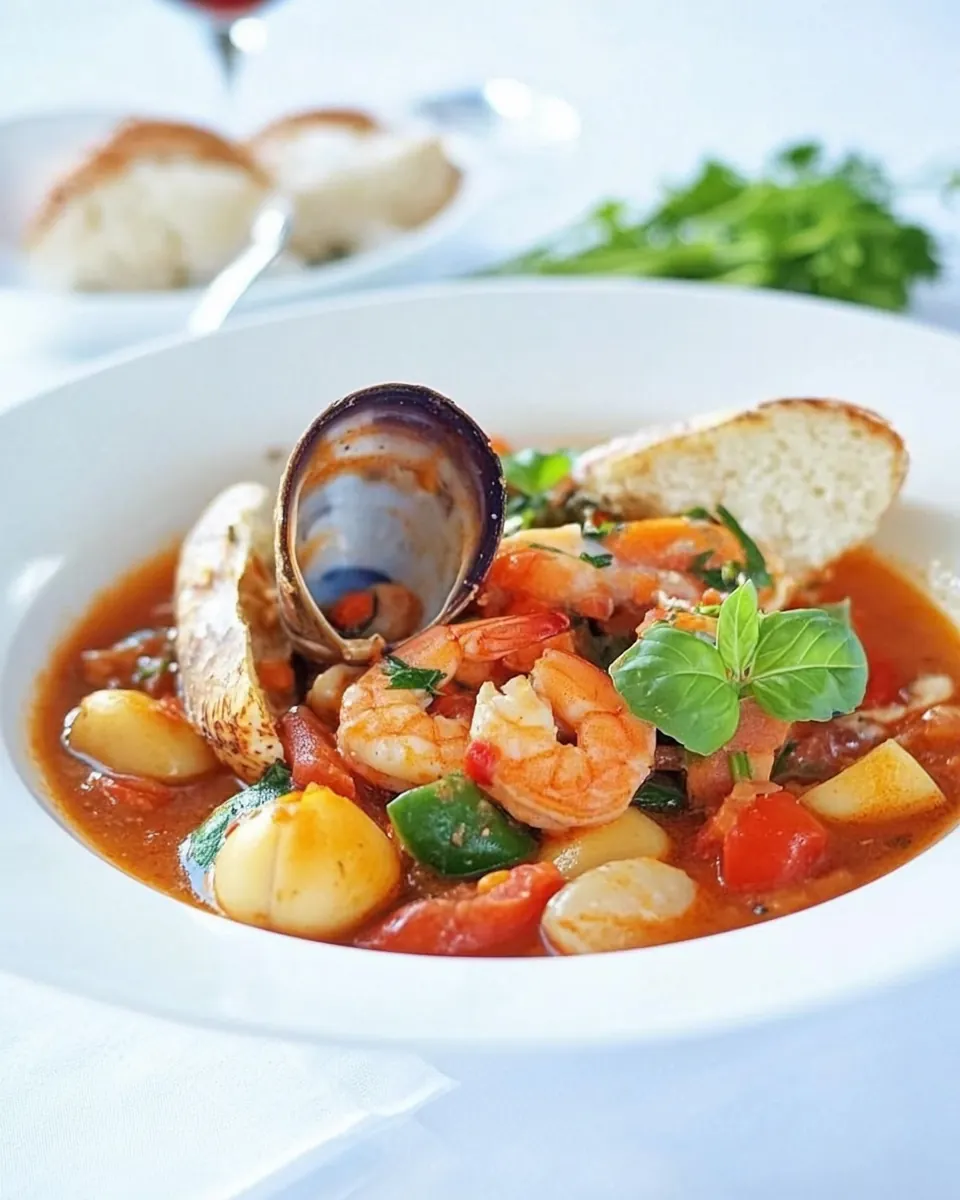
This recipe responds to small details, so a few focused tips will help you elevate the outcome. Below are practical notes I use every time to keep flavor bright and textures perfect.
- Choose firm white fish such as cod or halibut for the best texture, because they hold their shape when simmered gently and flake attractively when served.
- Add shellfish at the end to prevent overcooking, since clams, mussels, and shrimp need only a few minutes to open or turn opaque.
- Use quality seafood stock as your foundation because it contributes the primary marine flavor; if using storebought, pick a low sodium version so you can season precisely.
- Keep heat moderate throughout so vegetables soften and flavors concentrate without burning, which preserves the delicate notes of saffron and lemon zest.
- Finish with fresh herbs and zest right before serving to add brightness that contrasts the warm, savory broth, making the dish feel lively and complete.
What to Serve With Simple Seafood Bouillabaisse
I like to present this dish as a communal bowl with toasted bread and light sides. The goal is to complement the broth and seafood without competing for attention, so choose accompaniments that soak up liquid and add contrast. Serve in deep bowls so everyone can scoop both solids and broth together.
- Toasted garlic bread rubbed with a little raw garlic for an aromatic finish, perfect for sopping up the broth and adding crunchy texture to each bite.
- Simple green salad dressed lightly in lemon and olive oil to provide a crisp, acidic counterpoint that refreshes the palate between spoonfuls.
- Light white beans tossed with parsley for a creamy, earthy side that complements the seafood without overwhelming it, suitable for heartier meals.
- Occasions: Serve this for cozy winter dinners, casual dinner parties, or a comforting weekend meal when you want something special but manageable; it also works well during family gatherings and intimate celebrations.
- Storage tips: Refrigerate leftovers in an airtight container for up to two days, keeping seafood separate if possible, then reheat gently on low to avoid tightening proteins.
- Seasonal pairings: This feels most at home in cooler months like winter when warm, aromatic bowls are most welcome, but it also suits spring evenings when fresh herbs are at their best.
FAQ
Conclusion
Simple Seafood Bouillabaisse stands out because it layers humble ingredients to create a fragrant, comforting bowl that still feels elegant. Give it a try when you want a meal that is cozy, impressive, and forgiving of small improvisations. I hope this recipe becomes one of those go to dishes that brings people together around the table and makes weekday dinners feel a bit more special.
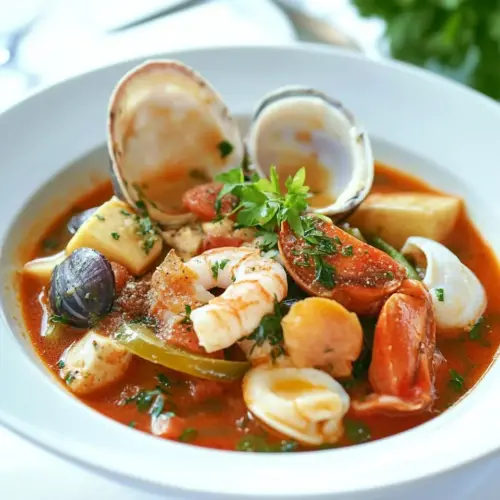
Simple Seafood Bouillabaisse
Equipment
- Large Pot or Skillet
- Wooden Spoon
Ingredients
- 2 tablespoons olive oil Heat and flavor the base of the soup, coating the pot to help sauté aromatics and develop a golden foundation for the broth.
- 2 cloves garlic, peeled and smashed Crush and release pungent oils for depth, then quickly soften to infuse the cooking fat with a mellow garlic aroma without burning.
- 1 large leek, only the white part, sliced Slice and sweat for a mild, onion-like sweetness that adds body and a subtle vegetal layer to the stew as it cooks down.
- 1 large potato, peeled and cubed Cube and tenderize during simmering to contribute a creamy, starchy texture that helps slightly thicken and enrich the broth.
- 1 carrot, peeled and cubed Peel and simmer until soft to add natural sweetness and textural contrast, complementing the potato with bright vegetal notes.
- 1 tablespoon lemon zest Zest and brighten the overall flavor to introduce citrusy, aromatic oils that cut through the richness of seafood.
- few sprigs of thyme or basil leaves or both Provide fresh herbal fragrance and layered aroma, releasing subtle green, peppery, or sweet notes depending on thyme, basil, or both.
- 1 large pinch of saffron Infuse a warm, floral, and slightly bitter saffron aroma and color when steeped, lending an authentic Mediterranean character.
- 1 can whole plum tomatoes, in juice Break down and dissolve into the stew to offer concentrated tomato acidity, sweetness, and umami for a balanced base.
- 6 cups seafood stock Simmer and build the liquid backbone of the dish, concentrating seafood flavors and carrying aromatics and spices throughout.
- 10 oz 300 gr fish fillets such as halibut, cod, monkfish or snapper, cut into chunks Cut and add tender flakes that absorb the broth, supplying firm, flaky protein and a mild, delicate seafood taste to the soup.
- 4 -6 shell-on large shrimps or 2 cleaned and sliced squids, or both Cook briefly to contribute sweet, briny shellfish richness and texture, enhancing the stew's seafood variety and savory depth.
- 1 cup 200 gr clams or mussels Steam open to release briny juices and add chewy, oceanic morsels that intensify the broth's mineral and saline profile.
- 1 bunch Italian parsley, chopped Chop and sprinkle at the end to lend bright, peppery freshness and a verdant finish that balances richness.
- Freshly toasted bread or croutons, to serve (optional) Toast and serve alongside to provide crunchy contrast, ideal for sopping up the flavorful broth and adding textural variety.
Instructions
- Heat the olive oil in a large pot or skillet over medium heat. Add potato, garlic, leek and carrot cubes and sauté until just softened and slightly brown, for about 5 minutes.: Warmth is your first ally, you should notice a soft shimmer on the surface of the olive oil when the pan has reached the correct temperature, not smoke. The oil will carry the flavors of subsequent ingredients, so aim for medium heat so the garlic and vegetables release their aromatics slowly. You will hear a gentle sizzle as you add the first vegetable pieces, and that sound signals moisture escaping and flavor building. One reason this matters is that a slow start prevents bitter char and creates a sweet, savory bed for the stock. A common error is turning the heat too high which leads to burnt edges and loss of the oil's fruity notes, so if you see spatter or rapid browning, reduce the heat immediately. Keep a wooden spoon handy to stir and avoid sticking.
- Add in lemon zest and thyme, followed by tomatoes and saffron.: As these vegetables hit the pan, the scent will deepen into a warm, vegetal perfume, and the edges will take on a gentle golden hue when they are ready. The goal is translucent, tender pieces with tiny browned spots that enrich the base flavor. Texture is important here because the potato will later release starch to body the broth; undercooked cubes will stay firm, and overcooked ones will disintegrate. You want the middle ground, so stir often and check tenderness with a fork. Watch for the garlic to avoid browning too fast, as bitter garlic can ruin the pot; if pieces begin to darken prematurely, lower the heat and continue cooking gently.
- Stir all the ingredients then pour in the fish stock.: When you toss in the lemon zest and thyme , the pan will release a citrusy herbal lift that brightens the heavier vegetable notes. Once you add the canned tomatoes , you will see their juices loosen and begin to coat the veg, creating a richer base. Sprinkle in the saffron and it will start to tint the mixture with a warm gold and an exotic floral scent. This step matters because the acid from the tomatoes balances the natural sweetness and enhances the seafood flavors later. A common misstep is adding saffron directly to a cold mixture; instead, let it bloom in the warm juices for full aroma.
- Bring to a boil and simmer until the veggies are tender and stock is reduced by half, about 15 minutes. Season to taste with sea salt and black pepper.: As you combine everything, the mixture should take on a cohesive texture, and when the fish stock hits the pan it will steam and lift the concentrated aromas into the air. Pour slowly to avoid splashing, and use a spoon to loosen any caramelized bits from the pot bottom, because those browned pieces carry deep umami. The stock becomes the canvas for the seafood and vegetables, so starting with a flavorful liquid prevents a thin, uninspired broth. If your stock seems weak at this stage, simmer a bit longer to reduce and intensify it before adding seafood.
- Reduce heat to medium-low and fold in the fish chunks. Cook for a couple of minutes.: You will notice a change from a raw, thin broth to one that smells concentrated and tastes rounded, with the vegetables contributing both body and sweetness. A rolling boil initially helps incorporate flavors, then reducing to a gentle simmer brings clarity and prevents cloudiness. The visual cue to look for is the liquid coating the spoon and reduced volume by roughly half, which indicates flavor concentration. Taste and adjust with sea salt and black pepper , but add salt cautiously because the shellfish and stock may already provide significant salinity. Over-salting at this point is hard to fix, so err on the side of light seasoning and correct later if needed.
- At this point, add in any seafood using: clams, mussels, and shrimps. Simmer until the clam/mussel shells open, about 5 minutes more.: As you gently add the fish chunks , you will see pale fillets turn opaque and begin to flake at the edges, a visual cue they are nearly done. Folding them in rather than stirring vigorously protects the delicate texture and keeps chunks intact. The gentle heat finishes cooking the fish through without drying it; if you overcook, the fillets will separate into chalky flakes. One tip is to spoon some hot broth over the top of the fish to ensure even cooking; avoid high heat which tightens proteins and makes the texture tough.
- Sprinkle with parsley and extra lemon zest if you like, and serve with croutons or grilled bread slices.: clams, mussels, and shrimps. Simmer until the clam/mussel shells open, about 5 minutes more : When you add the shellfish and shrimp , the pot will hiss softly and release a new layer of briny aroma as sea flavors quickly permeate the broth. The shells will begin to move and open; that opening is the best indicator of doneness for clams and mussels. Shrimp will turn pink and curl slightly, a visual sign they are ready. Keeping the simmer gentle prevents the shellfish from toughening, and discarding any shells that do not open is essential for safety. A common mistake is leaving shellfish in too long, which makes them rubbery and diminishes the delicate contrast with the fish.
- Sprinkle with parsley and extra lemon zest if you like, and serve with croutons or grilled bread slices: Freshly chopped parsley added at the end brightens the bowl and introduces a peppery finish, while extra lemon zest adds a sparkling lift that cuts through richness. The aroma at this stage will be herbaceous and lively, and the addition of toasted bread gives textural contrast, perfect for sopping up broth. Serve immediately so the seafood remains at its ideal tenderness. Avoid letting the pot sit too long on heat, as residual cooking will continue to firm up the proteins, so remove from heat and ladle into warmed bowls right away.
Notes
- Choose firm white fish such as cod or halibut for the best texture, because they hold their shape when simmered gently and flake attractively when served.
- Add shellfish at the end to prevent overcooking, since clams, mussels, and shrimp need only a few minutes to open or turn opaque.
- Use quality seafood stock as your foundation because it contributes the primary marine flavor; if using storebought, pick a low sodium version so you can season precisely.
- Keep heat moderate throughout so vegetables soften and flavors concentrate without burning, which preserves the delicate notes of saffron and lemon zest.
- Finish with fresh herbs and zest right before serving to add brightness that contrasts the warm, savory broth, making the dish feel lively and complete.