Salmon Bowls
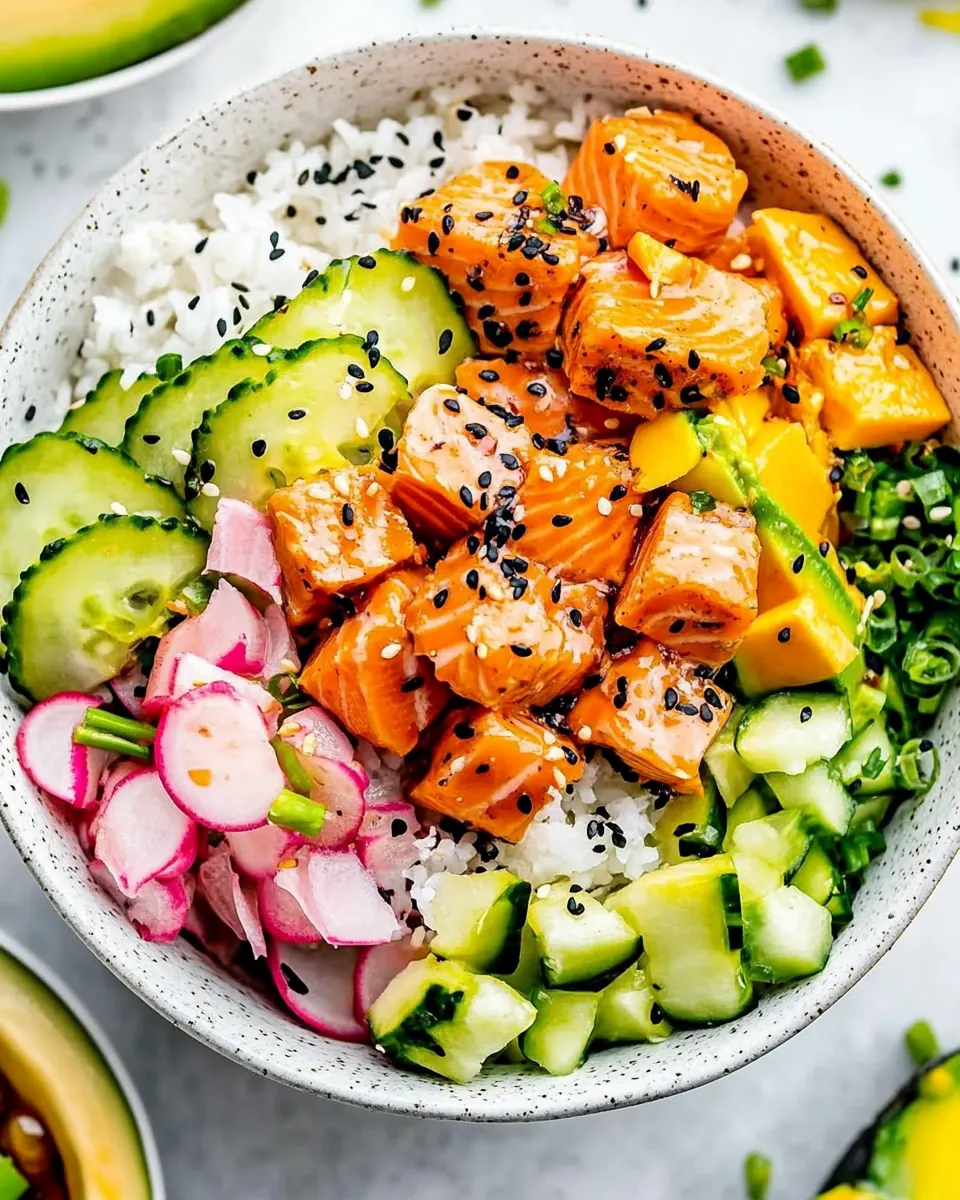
Salmon Bowls became my go to on busy weeknights when I wanted something that felt thoughtful, bright, and effortless all at once.
I still remember the first time I layered warm rice, tender cubes of pan seared salmon, and creamy slices of avocado into a bowl and felt like I had cracked a simple code for balanced meals. That evening I was juggling work calls and dinner, and this bowl saved me from takeout without making me feel like I had eaten a chore. The contrast of textures, from fluffy rice to crisp shredded carrot, kept every bite interesting. I often change up the mix ins depending on what I have on hand, but the core idea stays the same, a protein forward base with fresh, pickled, and creamy elements.
What I love most about Salmon Bowls is how forgiving they are. You can scale components, swap a few ingredients, and still end up with a satisfying plate. Over time I developed little rituals, like patting the salmon dry before seasoning, and slicing the avocado just before serving so it stays vibrant. Those tiny steps make the whole meal feel restaurant level without extra fuss. If you like meals that come together fast, but still taste like you spent time on them, these bowls will be on heavy rotation in your kitchen.
Recipe Snapshot
15 mins
5 mins
10 mins
Easy
500 kcal
Japanese
Gluten-Free, Paleo
Dinner
Large bowl, Large skillet or pan, Spatula, Knife
The Best Thing About This Salmon Bowls
Comfort and Convenience
I adore how Salmon Bowls bridge comfort and convenience. The warm rice base gives that homey, filling feeling, while the pan seared salmon adds protein and richness. It is the kind of dinner I reach for when time is tight, yet I still want a proper meal on the table.
Balanced Textures and Flavors
These bowls sing because of contrasts. Creamy avocado and spicy mayo cut through the tender salmon, while crunchy shredded carrot and crisp diced cucumber keep each bite lively. The pickled red onion introduces bright acidity to balance the soy forward marinade.
Simple Techniques, Big Results
I love that the cooking is straightforward, a quick marinade and a fast sauté yield deep flavor. Taking the time to sear the salmon properly creates a caramelized exterior that is so rewarding, it elevates the whole bowl. Little techniques like patting the fish dry and using medium high heat matter a lot.
Customizable and Flexible
We can make these bowls our own easily. Swap the rice type, double up on the edamame for extra protein, or add more pickled onion if you like tang. I often tweak components for seasonal produce and to use what is in my fridge.
Great for Sharing or Meal Prep
These bowls work both as a family meal and as prepped lunches. I like to assemble components separately and combine them at serving time so textures stay pristine. The result is a bowl that feels freshly made, even on a busy day.
What’s In This Salmon Bowls
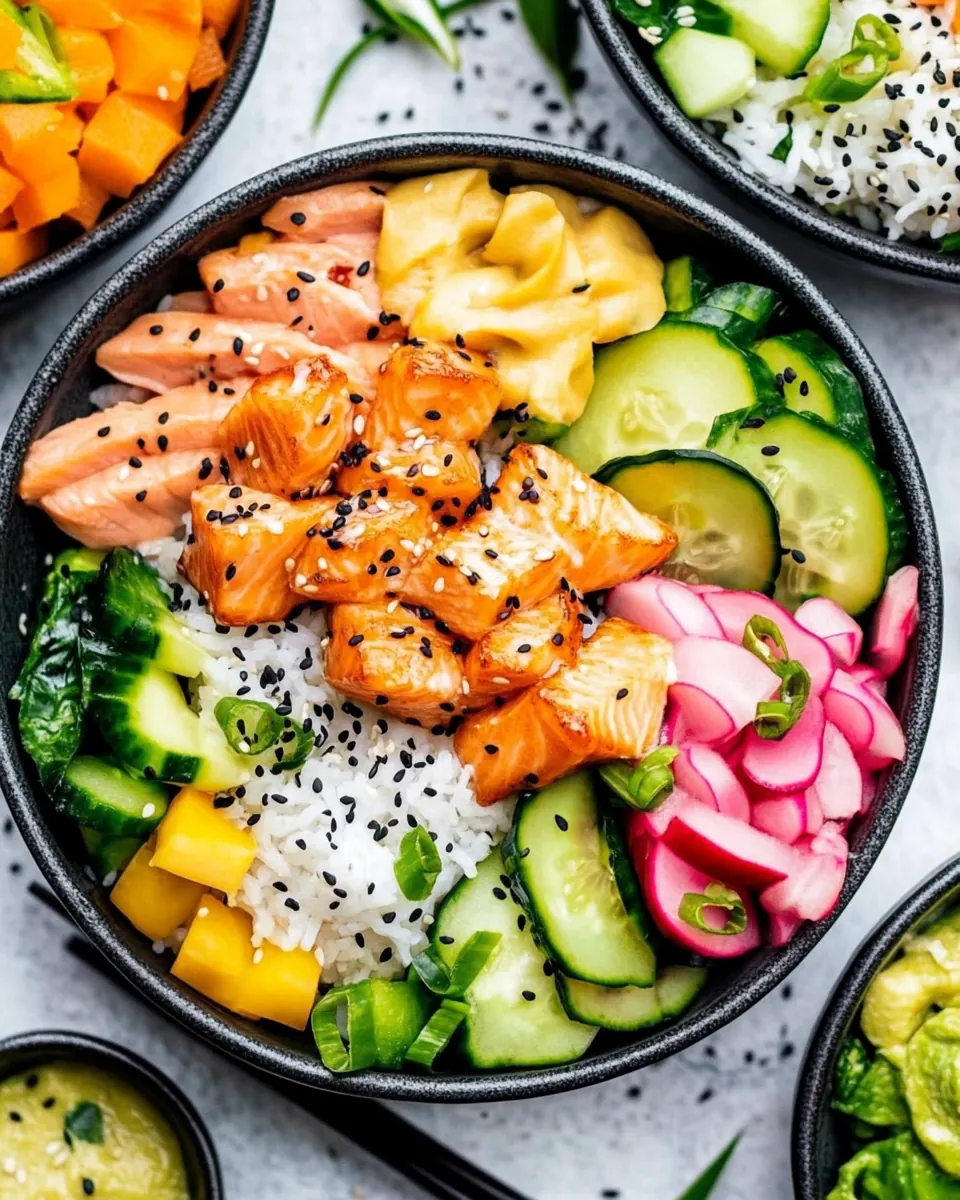
These ingredients are chosen to create harmony between savory, creamy, bright, and crunchy elements. The star players are the cubed salmon and the rice base, while components like avocado, edamame, and pickled red onion add layers of texture and freshness. Each item plays a role, whether it is adding moisture, acidity, or bite, resulting in bowls that are balanced and satisfying.
- 8 ounces salmon cut into 1-inch cubes: Season lightly to enhance overall flavor and help balance the richness of the salmon and creamy elements; dissolves into sauces and marinades to deepen savory notes. Supports natural protein tastes while promoting moisture retention during cooking for a better-textured final bowl.
- 1/2 teaspoons salt: Add sparingly to bring out savory flavors and provide subtle contrast; works with acidic and umami components to round the dish. Helps highlight the salmon's natural sweetness without overpowering delicate ingredients like avocado and mango.
- 1/4 teaspoon black pepper: Sprinkle modestly to introduce gentle heat and earthy peppery nuance; blends well with soy and ginger for a balanced seasoning profile. Prevents the bowl from tasting flat by contributing a slight bite that complements richer components.
- 1 teaspoon garlic powder: Dust evenly to impart warm, garlicky undertones that enhance umami and meld with soy-based marinades; contributes aromatic depth when cooked with salmon. Works well to unify disparate flavors like spicy mayo and pickled onions into a cohesive dish.
- 1/4 cups soy sauce: Provide a salty, savory base and serve as the primary umami component for marinating the salmon; helps create a glaze and ties together sweet, acidic, and spicy notes. Also aids in seasoning the rice and vegetables when combined into the bowl for consistent flavor throughout.
- 1/2 tablespoon ginger freshly grated: Grate fresh to deliver bright, peppery citrus-like warmth that cuts through fatty salmon and creamy avocado; adds a lively aromatic lift to marinades and dressings. Balances sweetness from mango and richness from spicy mayo for a fresher finish.
- 1/2 tablespoon olive oil: Use a small amount to coat the salmon for searing, adding slight richness and preventing sticking; contributes a smooth mouthfeel and subtle fruitiness. Helps carry flavors from aromatics into the fish and promotes a crisp exterior when cooked properly.
- 2 cups cooked rice: Serve as the hearty, neutral base to absorb sauces and provide comforting texture; binds the bowl components together and balances strong flavors. Offers a mild backdrop that lets salmon, pickled onions, and spicy mayo shine without overpowering them.
- 1 small avocado sliced: Slice thinly to add creamy, buttery texture and mild, nutty flavor; provides cooling contrast to spicy and acidic elements. Enhances mouthfeel and visual appeal while supplying healthy fats that pair well with seared salmon.
- 1 small carrot shredded: Shred finely to contribute subtle sweetness, crunchy texture, and vibrant color; helps refresh the palate between bites of richer components. Complements pickled onions and edamame by adding vegetal brightness and a slight earthy note.
- 1/2 small cucumber chopped: Chop into small pieces to add crisp, watery crunch and a clean, refreshing flavor; helps lighten the bowl and offset richness. Works well mixed with rice and other vegetables to introduce a cooling element that balances spicy mayo.
- 1/2 cup edamame shelled: Include shelled edamame for tender, slightly sweet, and nutty protein-rich bites that boost the dish's nutrition; provides chew and a pleasing green color. Offers textural contrast with soft rice and creamy avocado while complementing salmon's protein.
- 1/2 cup pickled red onions: Use for tangy, bright acidic punches that cut through fatty components; adds vibrant color and palate-cleansing bite. Balances richness of spicy mayo and salmon while contributing a fermented-sweet complexity to the bowl.
- 1/2 cup mango chopped: Chop into small pieces to introduce juicy sweetness and tropical brightness that pairs exceptionally with savory and spicy flavors; provides a refreshing contrast. Helps lift the overall flavor profile and complements the saltiness of soy and the creaminess of avocado.
- 1/2 cups spicy mayo: Drizzle to deliver creamy heat and rich umami, tying together spicy, sweet, and savory elements; provides a luscious finishing touch. Adds a spicy, tangy layer that enhances the salmon and other bowl components without overwhelming them.
How to Assemble Salmon Bowls
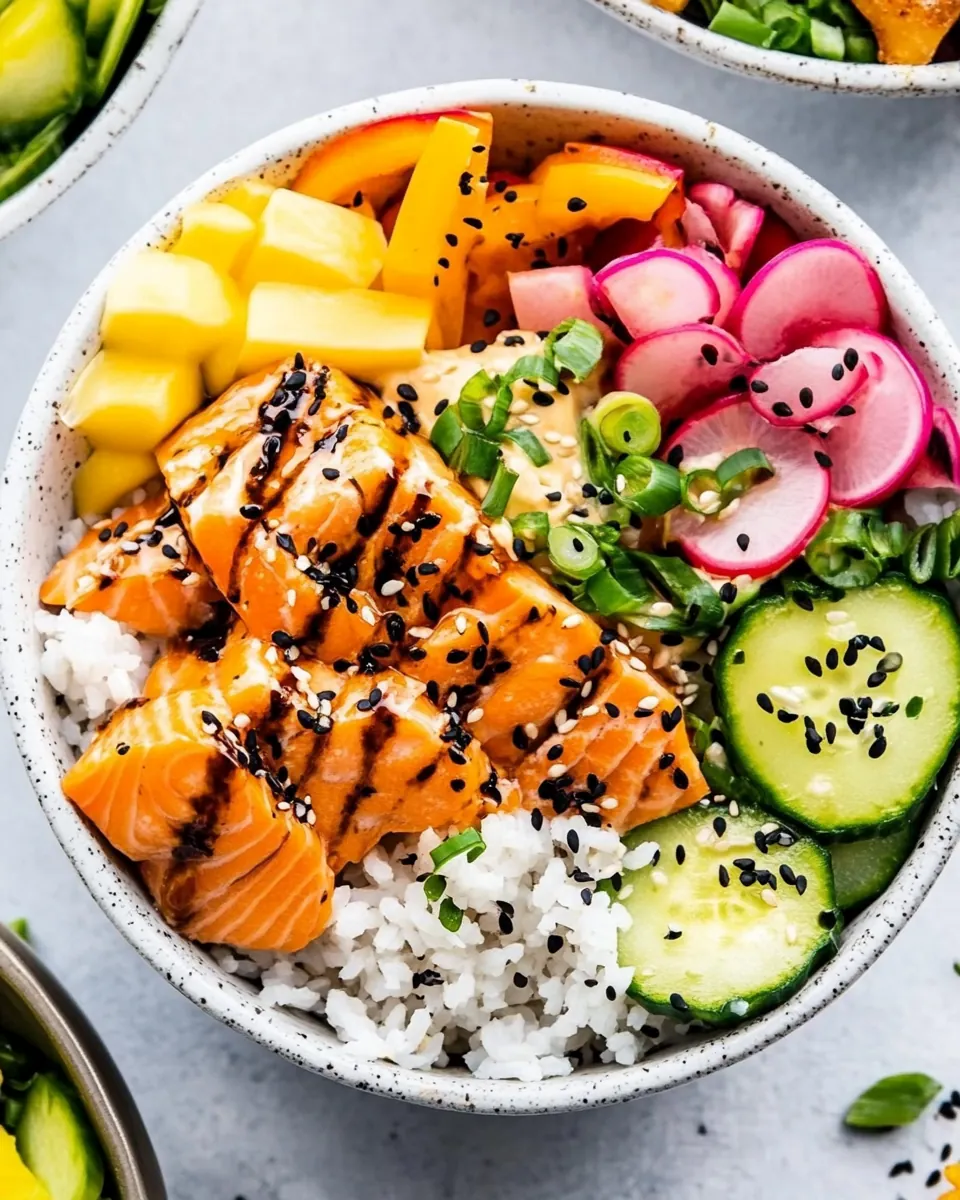
These steps are written so you can follow confidently and build bowls that are balanced and visually appealing. Take your time with the sear on the salmon and assemble components so textures remain distinct. I like to lay everything out first, then cook and combine quickly, plating while elements are still warm.
- In a large bowl, combine the salt, pepper, garlic powder, soy sauce, ginger, and olive oil. Add the salmon and gently mix until combined.: The air will fill with the warm, pungent aroma of fresh ginger mingling with savory soy sauce , a scent that signals the marinade is doing its job. Gently tossing lets the spices coat each cube, ensuring every piece will sear up with flavor, and the oil helps conduct heat during cooking. A common mistake is overmixing, which can break down the texture of the salmon , so be delicate and avoid pounding the fish. You'll notice the surface becomes glossy and slightly tacky when evenly coated, a visual cue that it is ready to hit the pan.
- Add olive oil to a large skillet or pan and place over medium-high heat. Sauté the salmon for 3 minutes on each side or until golden brown.: You will hear a confident sizzle as the salmon meets the hot oil, and that sound is your best feedback that the pan is at the right temperature. The goal is a golden brown exterior that gives a little resistance when you lift a piece with a spatula. This crust locks in juices, creating a tender interior that contrasts the caramelized outside. A frequent slip is crowding the pan, which causes steaming instead of searing, so cook in batches if needed. The smell will deepen to a toasty, savory note as the sugars in the soy caramelize, and the surface should look glossy and richly browned when done.
- Remove from the pan and set aside.: As you lift the salmon out, you'll notice faint wisps of steam and a pleasing browned aroma. Resting briefly allows the carry over heat to finish cooking gently, preserving moistness. Place the pieces on a plate away from hot oil to avoid further cooking. A common oversight is skipping this rest, which can cause the fish to release juices all over the plate and become drier, so give it a minute or two to relax. Visually, the fish will keep its glossy sear and firm up just enough to hold shape when plated.
- Assemble the bowls. Divide the rice, avocado, cucumber, edamame, pickled red onion, and mango into four bowls. Add the salmon on top of each bowl, drizzle with the spicy mayo, then sprinkle with sesame seeds and sliced green onion to garnish.: When you assemble, start by spreading warm rice as the foundation, which helps soak up the savory juices and spicy mayo. Arrange the cool, creamy avocado , crisp shredded carrot , and refreshing diced cucumber around the rice so each portion offers contrast. Place the rested salmon gently on top so it remains warm but not overcooked, then finish with a measured drizzle of spicy mayo to introduce creaminess and heat. A frequent misstep is over saucing, which can overwhelm the delicate flavors; add a little, taste, then add more if desired. The final visual should be colorful and layered, with each ingredient visible and inviting.
Tips and Variations
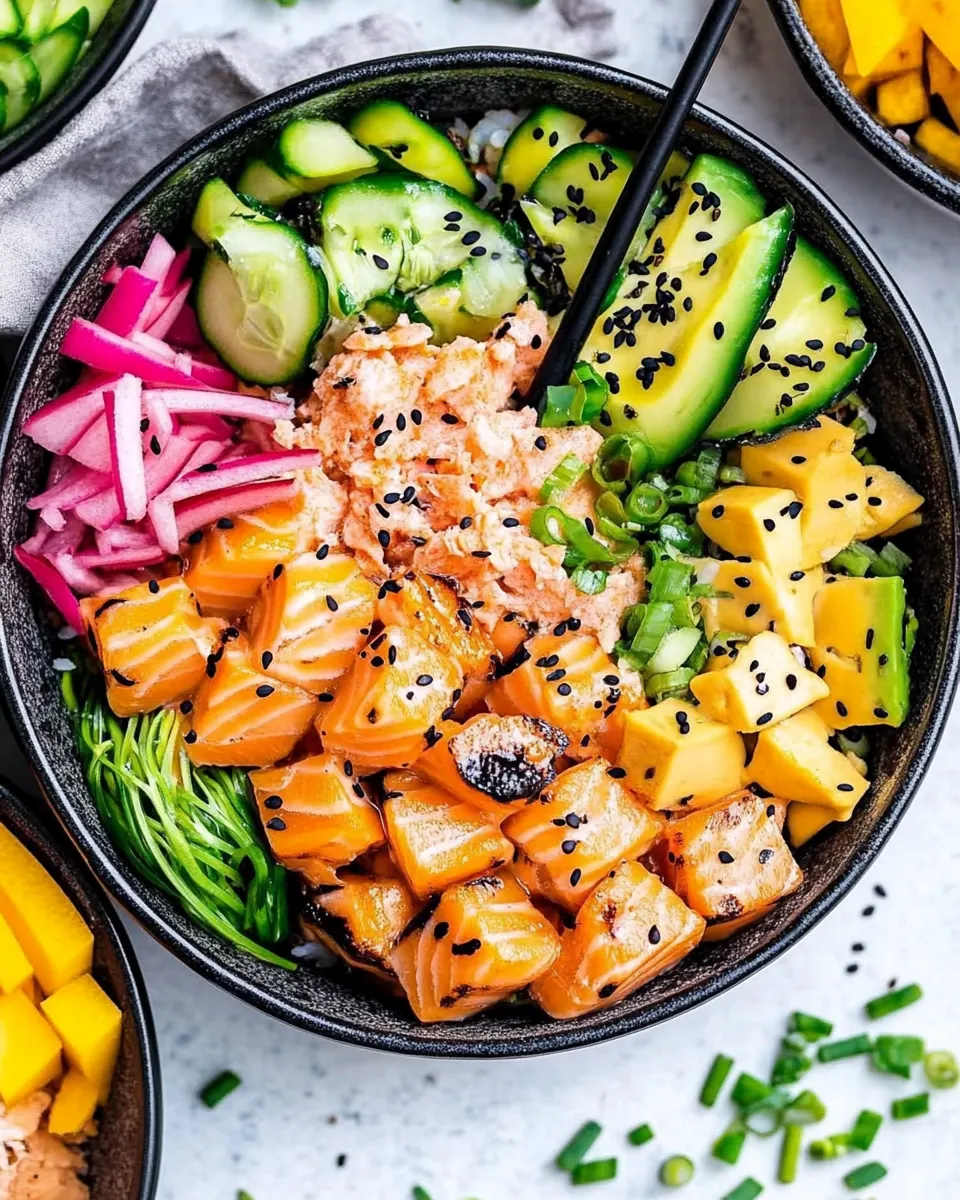
These tips will help you make the most of your Salmon Bowls whether you are cooking for one or feeding a crowd. I include practical swaps and little technique notes that consistently improve the results.
- Choose the right rice: I like sushi rice for stickiness, or long grain for a fluffier texture, and rinsing rice first improves the mouthfeel by removing excess starch.
- Adjust the spicy mayo: Start with a small amount and increase to taste, mixing mayo and your favorite hot sauce so the heat complements rather than overwhelms.
- Marinate briefly: Ten to twenty minutes is enough for these small cubes to pick up flavor without becoming overly salty from the soy sauce.
- Use fresh ginger: Freshly grated ginger brightens the profile far more than powdered, and it gives a fresh aromatic lift that pairs perfectly with the soy and garlic powder.
- Sear with confidence: Make sure the pan is hot and the oil is shimmering before adding the salmon, that initial sizzle is essential for a good crust.
- Prep components ahead: Cook the rice and prep the vegetables in advance for quick assembly on busy nights, keeping wet and dry items separated until serving.
How to Serve Salmon Bowls
Serving these bowls is about balance and presentation. Arrange components so colors and textures are visible, and encourage guests to drizzle sauce as they like. These bowls are perfect for casual dinners and for sharing during warm weather gatherings.
- Serve family style: Place bowls on the table with extra spicy mayo and pickled onions so everyone can customize their heat and acidity levels.
- Lunch or dinner: These bowls are versatile enough for a quick lunch or a relaxed dinner, offering satisfying protein with fresh vegetables.
- Occasions: They work wonderfully for informal gatherings, picnic style meals in summer, or easy weeknight dinners when you want something fresh and filling.
- Storage tips: Store components separately in airtight containers for up to two days, keeping the avocado and spicy mayo aside until serving to maintain texture.
- Seasonal pairings: Emphasize seasonal fruit or veg swaps, like adding stone fruit in summer, to keep the bowls feeling timely and bright.
- Presentation: Use shallow bowls and arrange ingredients in sections for a beautiful, restaurant style look that invites people to mix and match flavors.
- Make ahead: Assemble portions of rice and protein for meal prep but combine the fresh toppings at serving time so textures stay at their best.
FAQ
Conclusion
This recipe stands out because it balances quick cooking with layered textures and vibrant flavors. Salmon Bowls are satisfying and adaptable, making them ideal for weeknights and casual gatherings alike. I encourage you to give this combination a try, adjusting components to your taste so the bowl becomes your own. It is an approachable dish that rewards small attentions like a good sear and fresh avocado slices, and it will likely become a regular in your rotation.
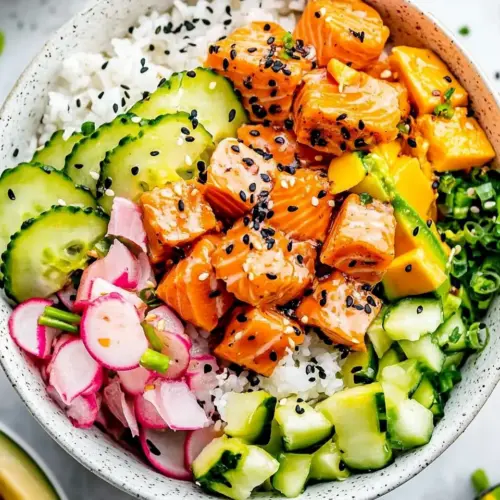
Salmon Bowls
Equipment
- Large Bowl
- Large skillet or pan
- Spatula
- Knife
Ingredients
- 8 ounces salmon cut into 1-inch cubes Season lightly to enhance overall flavor and help balance the richness of the salmon and creamy elements; dissolves into sauces and marinades to deepen savory notes. Supports natural protein tastes while promoting moisture retention during cooking for a better-textured final bowl.
- 1/2 teaspoons salt Add sparingly to bring out savory flavors and provide subtle contrast; works with acidic and umami components to round the dish. Helps highlight the salmon's natural sweetness without overpowering delicate ingredients like avocado and mango.
- 1/4 teaspoon black pepper Sprinkle modestly to introduce gentle heat and earthy peppery nuance; blends well with soy and ginger for a balanced seasoning profile. Prevents the bowl from tasting flat by contributing a slight bite that complements richer components.
- 1 teaspoon garlic powder Dust evenly to impart warm, garlicky undertones that enhance umami and meld with soy-based marinades; contributes aromatic depth when cooked with salmon. Works well to unify disparate flavors like spicy mayo and pickled onions into a cohesive dish.
- 1/4 cups soy sauce Provide a salty, savory base and serve as the primary umami component for marinating the salmon; helps create a glaze and ties together sweet, acidic, and spicy notes. Also aids in seasoning the rice and vegetables when combined into the bowl for consistent flavor throughout.
- 1/2 tablespoon ginger freshly grated Grate fresh to deliver bright, peppery citrus-like warmth that cuts through fatty salmon and creamy avocado; adds a lively aromatic lift to marinades and dressings. Balances sweetness from mango and richness from spicy mayo for a fresher finish.
- 1/2 tablespoon olive oil Use a small amount to coat the salmon for searing, adding slight richness and preventing sticking; contributes a smooth mouthfeel and subtle fruitiness. Helps carry flavors from aromatics into the fish and promotes a crisp exterior when cooked properly.
- 2 cups cooked rice Serve as the hearty, neutral base to absorb sauces and provide comforting texture; binds the bowl components together and balances strong flavors. Offers a mild backdrop that lets salmon, pickled onions, and spicy mayo shine without overpowering them.
- 1 small avocado sliced Slice thinly to add creamy, buttery texture and mild, nutty flavor; provides cooling contrast to spicy and acidic elements. Enhances mouthfeel and visual appeal while supplying healthy fats that pair well with seared salmon.
- 1 small carrot shredded Shred finely to contribute subtle sweetness, crunchy texture, and vibrant color; helps refresh the palate between bites of richer components. Complements pickled onions and edamame by adding vegetal brightness and a slight earthy note.
- 1/2 small cucumber chopped Chop into small pieces to add crisp, watery crunch and a clean, refreshing flavor; helps lighten the bowl and offset richness. Works well mixed with rice and other vegetables to introduce a cooling element that balances spicy mayo.
- 1/2 cup edamame shelled Include shelled edamame for tender, slightly sweet, and nutty protein-rich bites that boost the dish's nutrition; provides chew and a pleasing green color. Offers textural contrast with soft rice and creamy avocado while complementing salmon's protein.
- 1/2 cup pickled red onions Use for tangy, bright acidic punches that cut through fatty components; adds vibrant color and palate-cleansing bite. Balances richness of spicy mayo and salmon while contributing a fermented-sweet complexity to the bowl.
- 1/2 cup mango chopped Chop into small pieces to introduce juicy sweetness and tropical brightness that pairs exceptionally with savory and spicy flavors; provides a refreshing contrast. Helps lift the overall flavor profile and complements the saltiness of soy and the creaminess of avocado.
- 1/2 cups spicy mayo Drizzle to deliver creamy heat and rich umami, tying together spicy, sweet, and savory elements; provides a luscious finishing touch. Adds a spicy, tangy layer that enhances the salmon and other bowl components without overwhelming them.
Instructions
- In a large bowl, combine the salt, pepper, garlic powder, soy sauce, ginger, and olive oil. Add the salmon and gently mix until combined.: The air will fill with the warm, pungent aroma of fresh ginger mingling with savory soy sauce , a scent that signals the marinade is doing its job. Gently tossing lets the spices coat each cube, ensuring every piece will sear up with flavor, and the oil helps conduct heat during cooking. A common mistake is overmixing, which can break down the texture of the salmon , so be delicate and avoid pounding the fish. You'll notice the surface becomes glossy and slightly tacky when evenly coated, a visual cue that it is ready to hit the pan.
- Add olive oil to a large skillet or pan and place over medium-high heat. Sauté the salmon for 3 minutes on each side or until golden brown.: You will hear a confident sizzle as the salmon meets the hot oil, and that sound is your best feedback that the pan is at the right temperature. The goal is a golden brown exterior that gives a little resistance when you lift a piece with a spatula. This crust locks in juices, creating a tender interior that contrasts the caramelized outside. A frequent slip is crowding the pan, which causes steaming instead of searing, so cook in batches if needed. The smell will deepen to a toasty, savory note as the sugars in the soy caramelize, and the surface should look glossy and richly browned when done.
- Remove from the pan and set aside.: As you lift the salmon out, you'll notice faint wisps of steam and a pleasing browned aroma. Resting briefly allows the carry over heat to finish cooking gently, preserving moistness. Place the pieces on a plate away from hot oil to avoid further cooking. A common oversight is skipping this rest, which can cause the fish to release juices all over the plate and become drier, so give it a minute or two to relax. Visually, the fish will keep its glossy sear and firm up just enough to hold shape when plated.
- Assemble the bowls. Divide the rice, avocado, cucumber, edamame, pickled red onion, and mango into four bowls. Add the salmon on top of each bowl, drizzle with the spicy mayo, then sprinkle with sesame seeds and sliced green onion to garnish.: When you assemble, start by spreading warm rice as the foundation, which helps soak up the savory juices and spicy mayo. Arrange the cool, creamy avocado , crisp shredded carrot , and refreshing diced cucumber around the rice so each portion offers contrast. Place the rested salmon gently on top so it remains warm but not overcooked, then finish with a measured drizzle of spicy mayo to introduce creaminess and heat. A frequent misstep is over saucing, which can overwhelm the delicate flavors; add a little, taste, then add more if desired. The final visual should be colorful and layered, with each ingredient visible and inviting.
Notes
- Choose the right rice: I like sushi rice for stickiness, or long grain for a fluffier texture, and rinsing rice first improves the mouthfeel by removing excess starch.
- Adjust the spicy mayo: Start with a small amount and increase to taste, mixing mayo and your favorite hot sauce so the heat complements rather than overwhelms.
- Marinate briefly: Ten to twenty minutes is enough for these small cubes to pick up flavor without becoming overly salty from the soy sauce.
- Use fresh ginger: Freshly grated ginger brightens the profile far more than powdered, and it gives a fresh aromatic lift that pairs perfectly with the soy and garlic powder.
- Sear with confidence: Make sure the pan is hot and the oil is shimmering before adding the salmon, that initial sizzle is essential for a good crust.
- Prep components ahead: Cook the rice and prep the vegetables in advance for quick assembly on busy nights, keeping wet and dry items separated until serving.