Quinoa Stuffed Squash
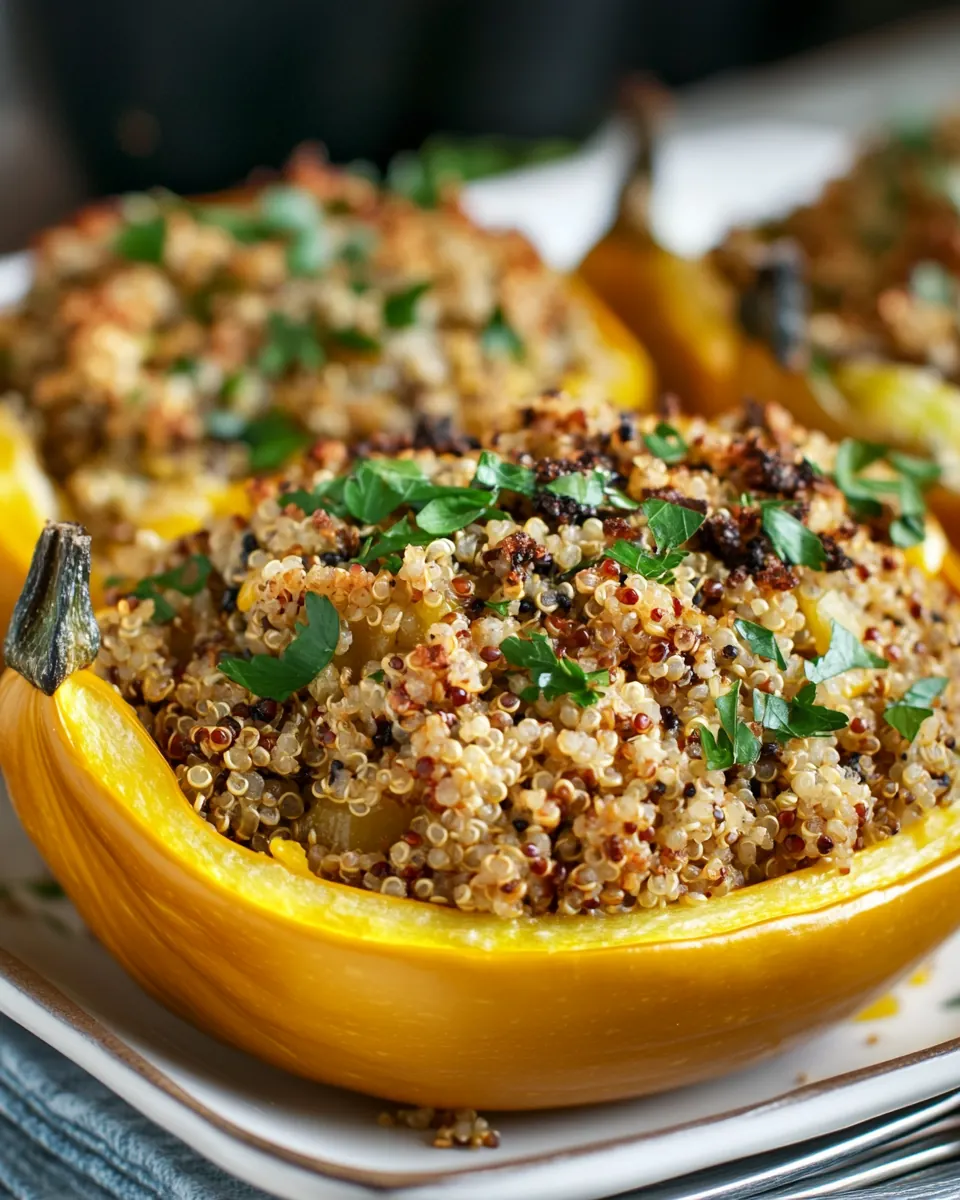
Quinoa Stuffed Squash is one of those recipes I turn to when I want something cozy, nourishing, and a little bit showy without any fuss. The first time I made it, I was chasing the memory of a farmers market stall piled high with acorn squash, and I wanted a filling that felt warm and substantial, not heavy. I remember the gentle, earthy aroma of roasted squash meeting the toasty, nutty scent of quinoa and mushrooms in my kitchen, and how that simple mix made a weeknight feel special.
Over the years I have tweaked the balance between the squash and the filling so each bite is a harmony of textures, with the tender, caramelized edges of the squash, fluffy grains of quinoa, and silky mushrooms. When family came by, this dish became a quick favorite, because it looks impressive on the plate yet uses humble pantry ingredients. I like to prepare the filling while the squash roasts, so the kitchen fills with savory smells and the timing is relaxed, which suits me perfectly on busy evenings.
Recipe Snapshot
1 hr 10 mins
15 mins
55 mins
Medium
300 kcal
American
Vegan, Gluten-Free
Dinner
Oven, Baking sheet, Parchment paper, Small pot, Saute pan, Fork
The Beauty of This Quinoa Stuffed Squash
Comforting but Light
I love that Quinoa Stuffed Squash manages to feel indulgent while staying light. The roasted acorn squash gives a creamy, naturally sweet vessel that balances the earthy, chewy quinoa, so you get satisfaction without heaviness. For me, that means I can serve this as a centerpiece for weeknight dinners or a side at a weekend meal and no one feels weighed down.
Layered Textures and Flavors
The contrast between the soft, slightly caramelized flesh of the acorn squash and the fluffy, slightly nutty quinoa is a joy. When I sauté the mushrooms until their edges brown and their moisture has evaporated, they add a meatiness that makes the dish feel complete, even for guests who expect a hearty plate. A whisper of thyme and the warmth of nutmeg lift the whole thing, giving the filling more depth.
Simple Techniques Yield Big Results
I appreciate that the methods are straightforward. Roasting the squash concentrates its sweetness, and toasting the quinoa briefly before simmering brings out its aroma. These small steps are quick but their impact is big, and that’s why I keep this recipe in steady rotation: minimal effort, maximum payoff.
Flexible and Friendly
I find Quinoa Stuffed Squash is forgiving when life interrupts the plan. If I need more time, the quinoa holds up off heat, and the roasted halves stay warm while I finish the filling. The recipe fits vegetarian menus and holiday tables alike, so I often bring it to potlucks where it disappears fast.
Seasonal Star
When autumn arrives, squash shows up at every market, and this recipe makes the most of that seasonal bounty. The flavors feel of the season without being fussy, and the presentation is inherently festive. I love serving it when I want something that announces fall without a lot of prep.
Quinoa Stuffed Squash Ingredients
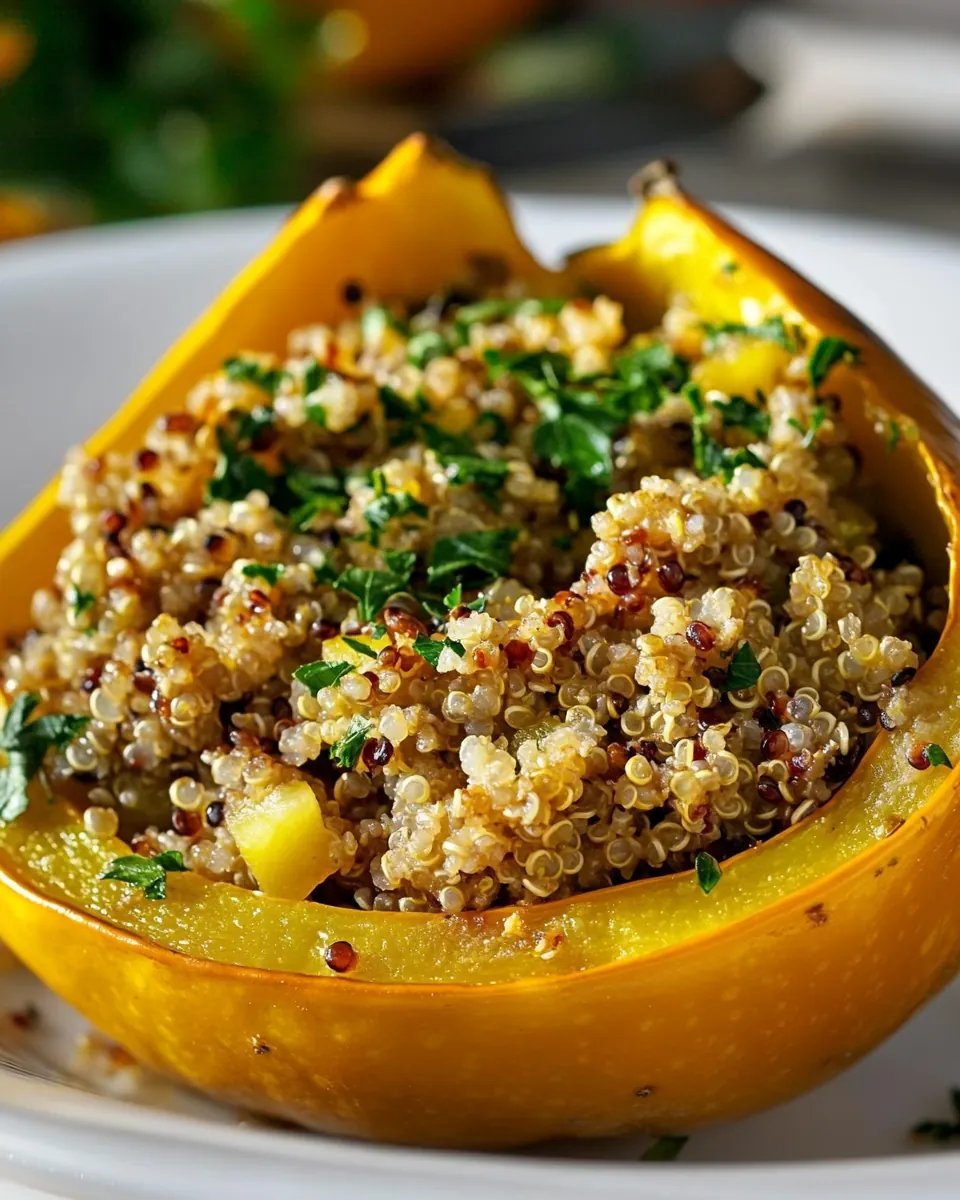
These ingredients are chosen to create a balanced, seasonal dish that showcases the key players: the sweet, tender acorn squash, the nutty quinoa, and the savory mushrooms. Each component plays a role in texture and flavor, and together they make a filling that feels complete and comforting.
- 2 whole acorn squash each halved, seeds and pulp removed from centers: Halve and roast to serve as edible bowls that hold the filling and become tender with caramelized edges after baking.
- 1 1/2 tablespoons olive oil divided: Drizzle or sauté with quinoa and vegetables for moisture and a glossy finish; divided usage helps coat both squash and filling evenly.
- 1/4 teaspoon kosher or sea salt divided: Sprinkle across squash and filling to enhance overall flavor balance; divided use seasons both the roasted squash and the cooked quinoa mixture.
- 1/8 teaspoon nutmeg: Grate or pinch into the filling to add warm, slightly sweet aromatic notes that complement roasted winter squash.
- 1/8 teaspoon black pepper: Crack or grind over the squash and filling to contribute a sharp, earthy heat that brightens the dish’s flavor profile.
- 1 1/2 cups dry quinoa: Rinse and cook to provide a nutty, fluffy grain base that absorbs broth and binds the stuffing for a satisfying texture.
- 3 1/2 cups vegetable broth or water, low-sodium: Simmer with quinoa to cook the grains and infuse them with savory depth; low-sodium broth controls overall saltiness while adding liquid.
- 1/2 cup onions finely chopped: Sauté until translucent to form a sweet, savory foundation for the stuffing, adding moisture and aromatic complexity.
- 1 1/2 cups baby bella mushrooms or white button mushrooms, sliced: Slice and cook to provide meaty, umami-rich texture and a savory counterpoint to the sweet roasted squash.
- 2 tablespoons thyme leaves fresh or 1 teaspoon dried thyme: Tear or chop and stir into the filling to contribute herbal, floral notes that brighten and unify the flavors.
- 1 garlic clove minced: Mince and quickly cook to release pungent, aromatic sulfur compounds that deepen the savory profile of the stuffing.
Recipe Steps for Quinoa Stuffed Squash
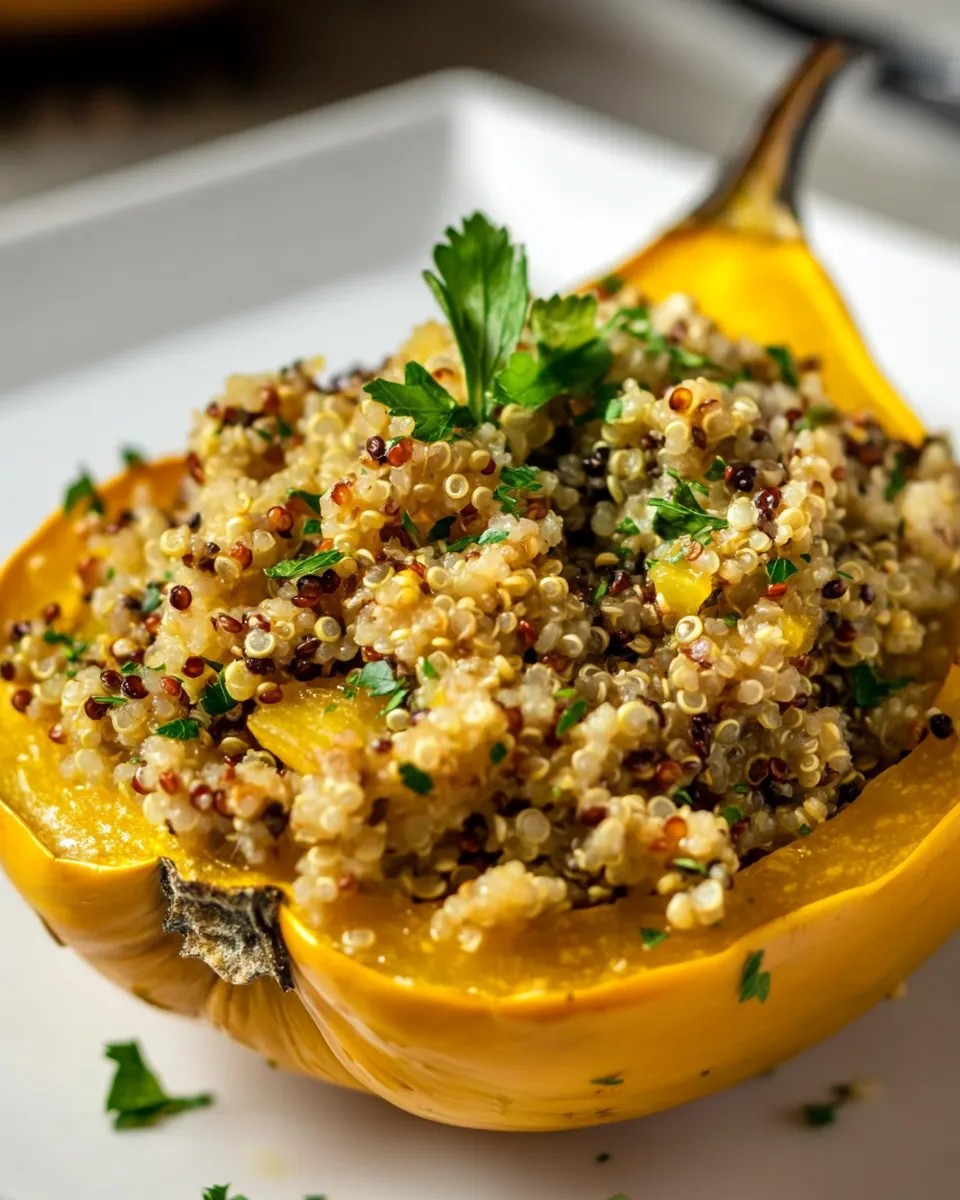
I like to think of the process as two parallel tracks, roast and sauté, that meet at the table. The oven does the slow work of coaxing sweetness from the acorn squash, while the stovetop builds the filling’s savory layers. Keep your tools ready, taste as you go, and enjoy the small, rewarding aromas that unfold in the kitchen.
- Preheat the oven to 375 degrees.: Warm air and the faint scent of heating elements start the baking environment, which is essential so the acorn squash roasts evenly from the moment it goes in. You should feel the oven temperature stabilize before you place the squash inside, otherwise the exterior may brown too quickly while the centers stay firm. A common mistake is rushing this step, which can lead to uneven tenderness; wait until the oven reads correctly and the warmth fills the oven cavity.
- Rub the insides of the 4 squash halves with 3/4 tablespoon olive oil, 1/8 teaspoon salt, nutmeg, and pepper. Place on a baking sheet lined with parchment paper. Allow to roast for 30 minutes, or until tender when pierced with a fork.: As the squash roasts, the surface will darken slightly and the aroma of caramelizing sugars will perfume the kitchen, signaling progress. The oil helps the seasonings adhere and encourages those edges to crisp just a touch, while the interior softens into a scoopable texture. If your squash seems resistant to the fork after the suggested time, continue roasting in 5 minute increments rather than increasing temperature, to avoid drying the flesh. Avoid overcrowding on the sheet, or steam will form and prevent browning.
- Toast dry quinoa in a small pot over medium heat, for about 2 minutes, stirring the entire time. Add 3 1/2 cups water or vegetable broth, 1/8 teaspoon salt. Increase heat to high. Bring just to a boil, uncovered. Reduce heat to the lowest setting. Cover, cooking for about 25 minutes, or until all of the liquid is absorbed. Remove from heat and fluff with a fork.: Toasting releases a warm, nutty scent and adds a toasty depth that simple boiling cannot achieve, so you will notice the quinoa brighten and become slightly fragrant. Keep the grains moving in the pot so they do not scorch, which would impart a bitter note. A frequent misstep is leaving the heat too high, causing uneven toasting; maintain medium heat and constant stirring for even color and aroma.
- Add 3/4 tablespoon olive oil to a saute pan over medium heat. Add onions and cook for about 5 minutes, until they are soft and translucent. Add mushrooms and thyme. Cook for about 5 to 8 minutes, until mushrooms have browned and all of their water has been released and evaporated.: You will see gentle rolling bubbles form, and the broth will steam, carrying savory notes into the quinoa. Using low sodium vegetable broth adds subtle flavor without oversalting. If you overboil vigorously, the liquid can evaporate too fast, leaving the quinoa undercooked; watch for the first strong bubble and remove from high heat to prevent loss of liquid.
- Add garlic and cook for an additional 30 seconds until golden and fragrant, stirring, and remove from the heat. Stir mushroom and onion mixture into the cooked quinoa. Spoon the quinoa mixture into the halves of each acorn squash. Serve and enjoy!: As the pot simmers gently, the quinoa plumps and the grains separate, and you can expect a quiet, gentle steam. This low, steady heat ensures even absorption, producing fluffy texture rather than a sticky mass. A common issue is lifting the lid too often to check, which lets steam escape and can extend cooking time; trust the clock and check once near the end.
- Remove from heat and fluff with a fork.: Fluffing releases steam and separates the grains so they look light and airy, and you should see distinct, slightly translucent spirals on each grain. This is important so the filling does not become clumpy when mixed with the sautéed vegetables. A mistake to avoid is stirring vigorously with a spoon, which can mash the grains; use a fork and gentle motions.
- Add 3/4 tablespoon olive oil to a saute pan over medium heat.: Heating the oil until it shimmers but does not smoke creates a surface that browns the onions and mushrooms beautifully. You will hear a soft sizzle when the vegetables hit the pan, which is the sound of flavor being built. If the oil smokes, lower the heat to prevent burnt flavors from developing.
- Add onions and cook for about 5 minutes, until they are soft and translucent.: During this stage the pan will release a sweet, savory fragrance as the onions soften and their sugars begin to caramelize. The texture should become tender and slightly glossy, which signals readiness for the mushrooms. Cutting the onions unevenly can lead to uneven cooking; aim for consistent pieces so everything softens together.
- Add mushrooms and thyme. Cook for about 5 to 8 minutes, until mushrooms have browned and all of their water has been released and evaporated.: You will notice the mushrooms shrink and then brown at their edges while a deep, roasted aroma develops, creating a savory base for the quinoa. Allowing the moisture to evaporate concentrates the mushroom flavor, otherwise the filling can become watery. A common oversight is adding mushrooms to an overcrowded pan; work in batches or give them room to brown instead of steam.
- Add garlic and cook for an additional 30 seconds until golden and fragrant, stirring, and remove from the heat.: The scent of garlic blooming in warm oil is immediate and distinct, giving the mixture an aromatic lift. Because garlic cooks quickly, watch closely to avoid browning it, which produces bitterness. If garlic starts to darken too fast, remove the pan from heat immediately to carry residual warmth and finish the aroma without burning.
- Stir mushroom and onion mixture into the cooked quinoa.: Combining these elements marries textures and flavors, the fluffy quinoa absorbing savory juices from the vegetables, resulting in a cohesive filling. You will hear a soft, mixing sound and smell a rich blend of herb and mushroom notes. Overmixing can flatten the texture, so fold gently until evenly incorporated.
- Spoon the quinoa mixture into the halves of each acorn squash.: As you fill each squash, the contrast between the smooth, warm cavity and the textured filling is satisfying to the touch and eye. Fill to preference, and gently press so the filling nestles into the squash. Avoid overstuffing to the point of spilling; allow a little room so the top can brown and the filling stays intact when serving.
- Serve and enjoy!: The finished dish is warm, aromatic, and visually appealing, with roasted edges of acorn squash and a textured, savory filling. Serve right away while the contrast between hot filling and tender squash is at its best. If left too long, the filling can lose steam and the squash will cool unevenly; aim to serve promptly for the best sensory experience.
Change It Up
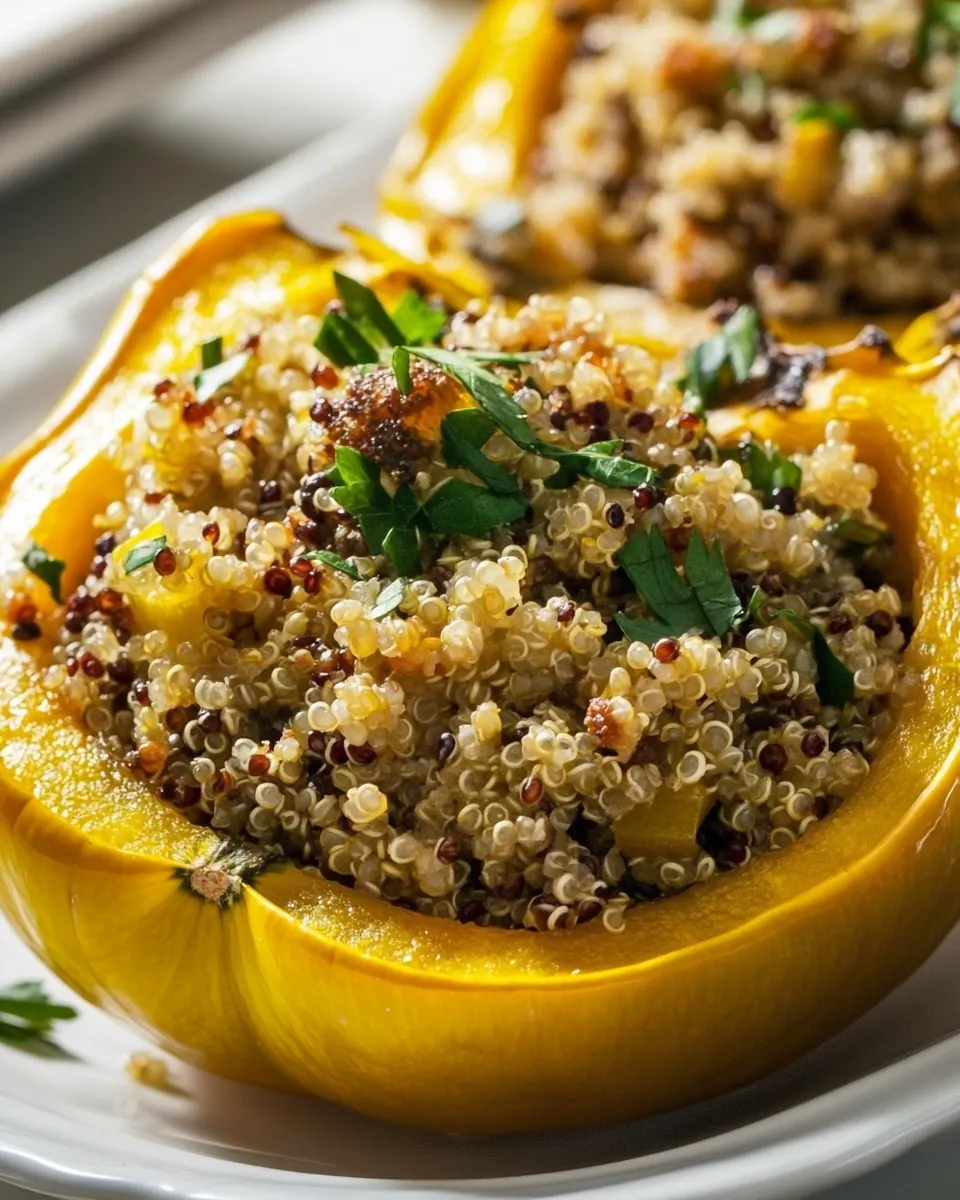
I like to offer ways to vary the dish without straying from its heart. These tips help you adapt the recipe to what you have on hand, to different occasions, and to personal preferences. Each suggestion starts with a practical prompt, followed by why it works.
- Boost Umami: If you want deeper savory notes, add a splash of the reserved mushroom juices to the quinoa or stir in a spoonful of miso dissolved in warm vegetable broth before cooking the grains to layer in complexity.
- Herb Swap: If thyme is not at hand, experiment with a small amount of chopped rosemary or sage, using less since those herbs are more assertive, to keep the balance with the sweet acorn squash.
- Make Ahead: Prepare the quinoa and mushroom mixture a day in advance, refrigerate, and rewarm gently before stuffing the roasted squash for faster assembly when guests arrive.
- Texture Play: Stir in a handful of toasted chopped nuts just before filling the squash for crunch that contrasts the soft quinoa and roasted flesh.
- Salt Control: Start with the lower end of the salt measurements and taste before serving, especially if using store bought vegetable broth which can vary in sodium content.
Serving Ideas for Quinoa Stuffed Squash
This dish can be served in many contexts, from a casual weeknight to a festive seasonal meal. Below are thoughtful pairings, suggestions for occasions, and storage ideas so you can present and preserve the dish with confidence.
- As a Main for Weeknight Dinner: Serve one stuffed half per person alongside a crisp green salad for a simple, balanced meal that highlights the stuffed acorn squash as the centerpiece.
- Vegetarian Holiday Centerpiece: Present multiple halves on a large platter for a holiday table, garnishing with fresh thyme sprigs for an elegant look that reads seasonal and celebratory.
- Brunch or Lunch Option: Pair with crusty bread and a light bean salad to create a satisfying midday meal that benefits from the warm, savory filling and sweet roasted squash.
- Make Ahead and Reheat: Store the cooked filling in an airtight container for up to three days, rewarm gently on the stovetop with a splash of vegetable broth before stuffing freshly roasted squash for best texture.
- Occasions: This recipe works well for casual family dinners, vegetarian friendly holiday menus, potlucks, and seasonal gatherings where you want a visually appealing, meatless option.
- Seasonal Pairings: Serve alongside roasted root vegetables or a warm grain salad in fall and winter, when the squash flavor feels most at home.
- Storage Tips: Leftover stuffed squash will keep covered in the refrigerator for up to three days; reheat gently in a low oven until warmed through to maintain texture.
FAQ
Conclusion
What makes this recipe special is the harmony between the roasted sweet acorn squash and the savory, textured quinoa filling, with mushrooms and herbs bringing depth. I encourage you to try it when squash is in season, because the natural sweetness and the toasty filling combine into a comforting, satisfying plate that looks as good as it tastes. It’s approachable enough for a weeknight and attractive enough for guests, so give it a go and enjoy the warm, seasonal flavors.
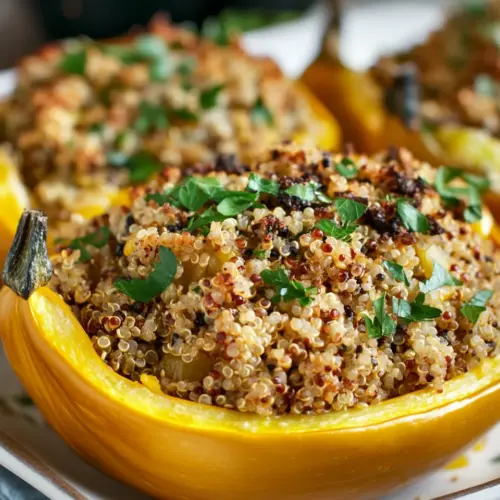
Quinoa Stuffed Squash
Equipment
- Oven
- Baking Sheet
- Parchment Paper
- Small pot
- Sauté Pan
- Fork
Ingredients
- 2 whole acorn squash each halved, seeds and pulp removed from centers Halve and roast to serve as edible bowls that hold the filling and become tender with caramelized edges after baking.
- 1 1/2 tablespoons olive oil divided Drizzle or sauté with quinoa and vegetables for moisture and a glossy finish; divided usage helps coat both squash and filling evenly.
- 1/4 teaspoon kosher or sea salt divided Sprinkle across squash and filling to enhance overall flavor balance; divided use seasons both the roasted squash and the cooked quinoa mixture.
- 1/8 teaspoon nutmeg Grate or pinch into the filling to add warm, slightly sweet aromatic notes that complement roasted winter squash.
- 1/8 teaspoon black pepper Crack or grind over the squash and filling to contribute a sharp, earthy heat that brightens the dish’s flavor profile.
- 1 1/2 cups dry quinoa Rinse and cook to provide a nutty, fluffy grain base that absorbs broth and binds the stuffing for a satisfying texture.
- 3 1/2 cups vegetable broth or water, low-sodium Simmer with quinoa to cook the grains and infuse them with savory depth; low-sodium broth controls overall saltiness while adding liquid.
- 1/2 cup onions finely chopped Sauté until translucent to form a sweet, savory foundation for the stuffing, adding moisture and aromatic complexity.
- 1 1/2 cups baby bella mushrooms or white button mushrooms, sliced Slice and cook to provide meaty, umami-rich texture and a savory counterpoint to the sweet roasted squash.
- 2 tablespoons thyme leaves fresh or 1 teaspoon dried thyme Tear or chop and stir into the filling to contribute herbal, floral notes that brighten and unify the flavors.
- 1 garlic clove minced Mince and quickly cook to release pungent, aromatic sulfur compounds that deepen the savory profile of the stuffing.
Instructions
- Preheat the oven to 375 degrees.: Warm air and the faint scent of heating elements start the baking environment, which is essential so the acorn squash roasts evenly from the moment it goes in. You should feel the oven temperature stabilize before you place the squash inside, otherwise the exterior may brown too quickly while the centers stay firm. A common mistake is rushing this step, which can lead to uneven tenderness; wait until the oven reads correctly and the warmth fills the oven cavity.
- Rub the insides of the 4 squash halves with 3/4 tablespoon olive oil, 1/8 teaspoon salt, nutmeg, and pepper. Place on a baking sheet lined with parchment paper. Allow to roast for 30 minutes, or until tender when pierced with a fork.: As the squash roasts, the surface will darken slightly and the aroma of caramelizing sugars will perfume the kitchen, signaling progress. The oil helps the seasonings adhere and encourages those edges to crisp just a touch, while the interior softens into a scoopable texture. If your squash seems resistant to the fork after the suggested time, continue roasting in 5 minute increments rather than increasing temperature, to avoid drying the flesh. Avoid overcrowding on the sheet, or steam will form and prevent browning.
- Toast dry quinoa in a small pot over medium heat, for about 2 minutes, stirring the entire time. Add 3 1/2 cups water or vegetable broth, 1/8 teaspoon salt. Increase heat to high. Bring just to a boil, uncovered. Reduce heat to the lowest setting. Cover, cooking for about 25 minutes, or until all of the liquid is absorbed. Remove from heat and fluff with a fork.: Toasting releases a warm, nutty scent and adds a toasty depth that simple boiling cannot achieve, so you will notice the quinoa brighten and become slightly fragrant. Keep the grains moving in the pot so they do not scorch, which would impart a bitter note. A frequent misstep is leaving the heat too high, causing uneven toasting; maintain medium heat and constant stirring for even color and aroma.
- Add 3/4 tablespoon olive oil to a saute pan over medium heat. Add onions and cook for about 5 minutes, until they are soft and translucent. Add mushrooms and thyme. Cook for about 5 to 8 minutes, until mushrooms have browned and all of their water has been released and evaporated.: You will see gentle rolling bubbles form, and the broth will steam, carrying savory notes into the quinoa. Using low sodium vegetable broth adds subtle flavor without oversalting. If you overboil vigorously, the liquid can evaporate too fast, leaving the quinoa undercooked; watch for the first strong bubble and remove from high heat to prevent loss of liquid.
- Add garlic and cook for an additional 30 seconds until golden and fragrant, stirring, and remove from the heat. Stir mushroom and onion mixture into the cooked quinoa. Spoon the quinoa mixture into the halves of each acorn squash. Serve and enjoy!: As the pot simmers gently, the quinoa plumps and the grains separate, and you can expect a quiet, gentle steam. This low, steady heat ensures even absorption, producing fluffy texture rather than a sticky mass. A common issue is lifting the lid too often to check, which lets steam escape and can extend cooking time; trust the clock and check once near the end.
- Remove from heat and fluff with a fork.: Fluffing releases steam and separates the grains so they look light and airy, and you should see distinct, slightly translucent spirals on each grain. This is important so the filling does not become clumpy when mixed with the sautéed vegetables. A mistake to avoid is stirring vigorously with a spoon, which can mash the grains; use a fork and gentle motions.
- Add 3/4 tablespoon olive oil to a saute pan over medium heat.: Heating the oil until it shimmers but does not smoke creates a surface that browns the onions and mushrooms beautifully. You will hear a soft sizzle when the vegetables hit the pan, which is the sound of flavor being built. If the oil smokes, lower the heat to prevent burnt flavors from developing.
- Add onions and cook for about 5 minutes, until they are soft and translucent.: During this stage the pan will release a sweet, savory fragrance as the onions soften and their sugars begin to caramelize. The texture should become tender and slightly glossy, which signals readiness for the mushrooms. Cutting the onions unevenly can lead to uneven cooking; aim for consistent pieces so everything softens together.
- Add mushrooms and thyme. Cook for about 5 to 8 minutes, until mushrooms have browned and all of their water has been released and evaporated.: You will notice the mushrooms shrink and then brown at their edges while a deep, roasted aroma develops, creating a savory base for the quinoa. Allowing the moisture to evaporate concentrates the mushroom flavor, otherwise the filling can become watery. A common oversight is adding mushrooms to an overcrowded pan; work in batches or give them room to brown instead of steam.
- Add garlic and cook for an additional 30 seconds until golden and fragrant, stirring, and remove from the heat.: The scent of garlic blooming in warm oil is immediate and distinct, giving the mixture an aromatic lift. Because garlic cooks quickly, watch closely to avoid browning it, which produces bitterness. If garlic starts to darken too fast, remove the pan from heat immediately to carry residual warmth and finish the aroma without burning.
- Stir mushroom and onion mixture into the cooked quinoa.: Combining these elements marries textures and flavors, the fluffy quinoa absorbing savory juices from the vegetables, resulting in a cohesive filling. You will hear a soft, mixing sound and smell a rich blend of herb and mushroom notes. Overmixing can flatten the texture, so fold gently until evenly incorporated.
- Spoon the quinoa mixture into the halves of each acorn squash.: As you fill each squash, the contrast between the smooth, warm cavity and the textured filling is satisfying to the touch and eye. Fill to preference, and gently press so the filling nestles into the squash. Avoid overstuffing to the point of spilling; allow a little room so the top can brown and the filling stays intact when serving.
- Serve and enjoy!: The finished dish is warm, aromatic, and visually appealing, with roasted edges of acorn squash and a textured, savory filling. Serve right away while the contrast between hot filling and tender squash is at its best. If left too long, the filling can lose steam and the squash will cool unevenly; aim to serve promptly for the best sensory experience.
Notes
- Boost Umami: If you want deeper savory notes, add a splash of the reserved mushroom juices to the quinoa or stir in a spoonful of miso dissolved in warm vegetable broth before cooking the grains to layer in complexity.
- Herb Swap: If thyme is not at hand, experiment with a small amount of chopped rosemary or sage, using less since those herbs are more assertive, to keep the balance with the sweet acorn squash.
- Make Ahead: Prepare the quinoa and mushroom mixture a day in advance, refrigerate, and rewarm gently before stuffing the roasted squash for faster assembly when guests arrive.
- Texture Play: Stir in a handful of toasted chopped nuts just before filling the squash for crunch that contrasts the soft quinoa and roasted flesh.
- Salt Control: Start with the lower end of the salt measurements and taste before serving, especially if using store bought vegetable broth which can vary in sodium content.