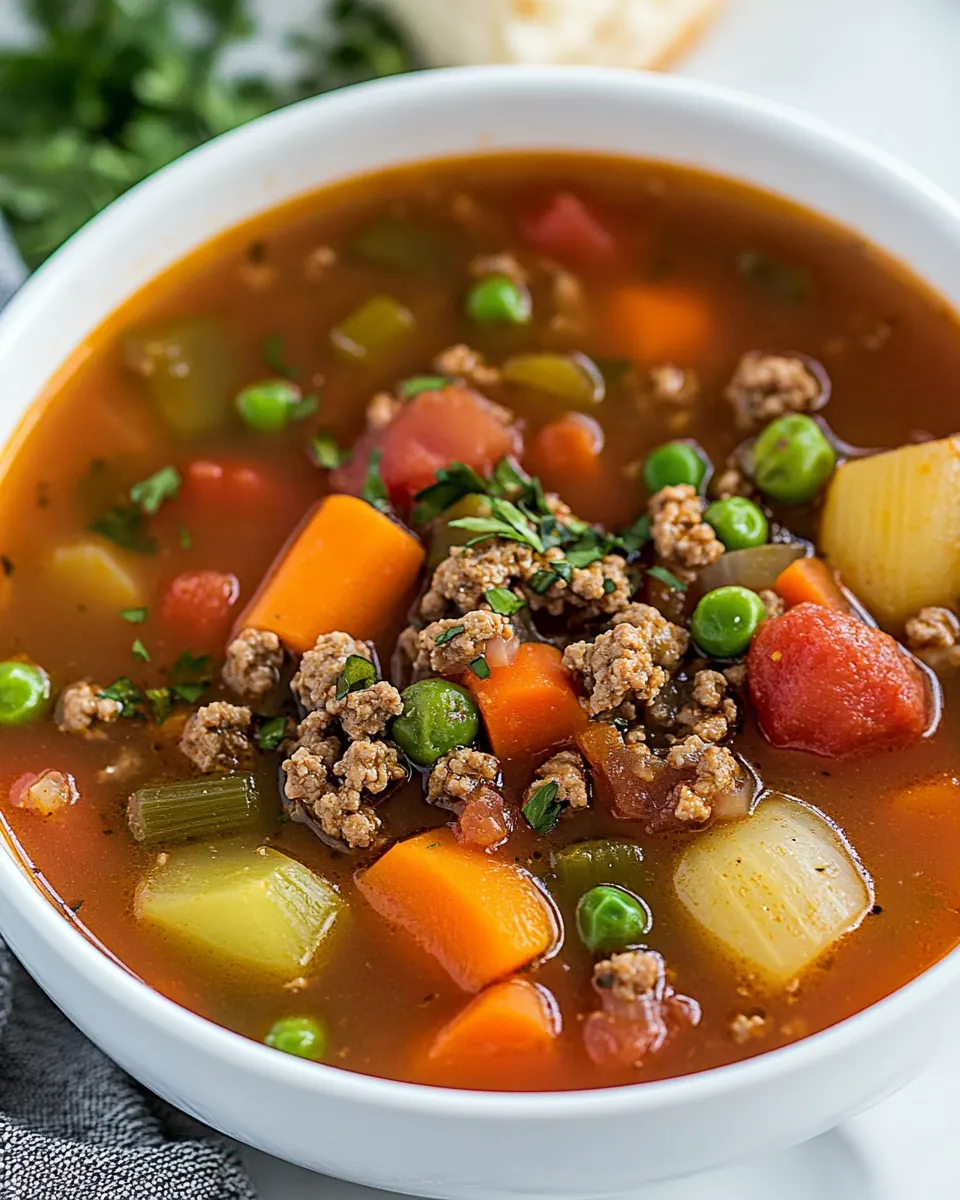
Quick Vegetable Ground Beef Soup
Quick Vegetable Ground Beef Soup is the kind of bowl I reach for on a chilly night when I want something honest, warming, and a little nostalgic. I remember the first time I made it for a group of friends who were between apartments, all of us too tired to cook separate meals. We ended up crowding around a single pot, passing bowls and stories, and that simple comfort still sticks with me.
That meal taught me how a handful of pantry staples and a little patience can turn into a full, satisfying supper. When I make Quick Vegetable Ground Beef Soup now, I think about layering flavors slowly, tasting as I go, and the small rituals that make soup feel like more than fuel. I love how the aromas fill the kitchen, and how everyone seems to relax once a steaming bowl appears in front of them.
Recipe Snapshot
45 mins
15 mins
30 mins
Medium
250 kcal
American
Gluten-Free, Low FODMAP
Soups
Dutch oven, Wooden spoon
The Magic of This Quick Vegetable Ground Beef Soup
Hearty and Nourishing
I adore how Quick Vegetable Ground Beef Soup delivers a complete meal in a single bowl, with ground beef supplying savory depth and a solid hit of protein. The combination of starchy potatoes, bright green beans, and sweet carrots creates a satisfying bite every spoonful, so you and I get a balanced plate without fuss.
Speed without Sacrificing Flavor
We get great taste fast. Browning the ground beef and sautéing the onion builds savory base notes, then a short simmer melds everything. This recipe feels like a weeknight winner, perfect when you want an easy weeknight dinner that still tastes homemade.
Flexible and Friendly
I appreciate how accommodating this soup is. The ingredient list reads like a pantry inventory you can tweak, and the vegetables are interchangeable. That flexibility means you can adapt it to what you have, making it a pantry-efficient comfort food I return to again and again.
Texture and Contrast
There is a pleasing play between tender potatoes and crisp-tender green beans, plus the occasional pop from frozen peas and corn. Those contrasting textures keep each spoonful interesting, and the fresh parsley at the end lifts the whole bowl with a clean herbal note.
Family Friendly and Crowd Pleasing
I trust this recipe to satisfy a hungry family or a gathering because it scales easily and warms up well. The savory broth and familiar flavors appeal to kids and adults alike, which is why I often double the batch and refrigerate the extras for a quick reheat later.
Ingredients for Quick Vegetable Ground Beef Soup
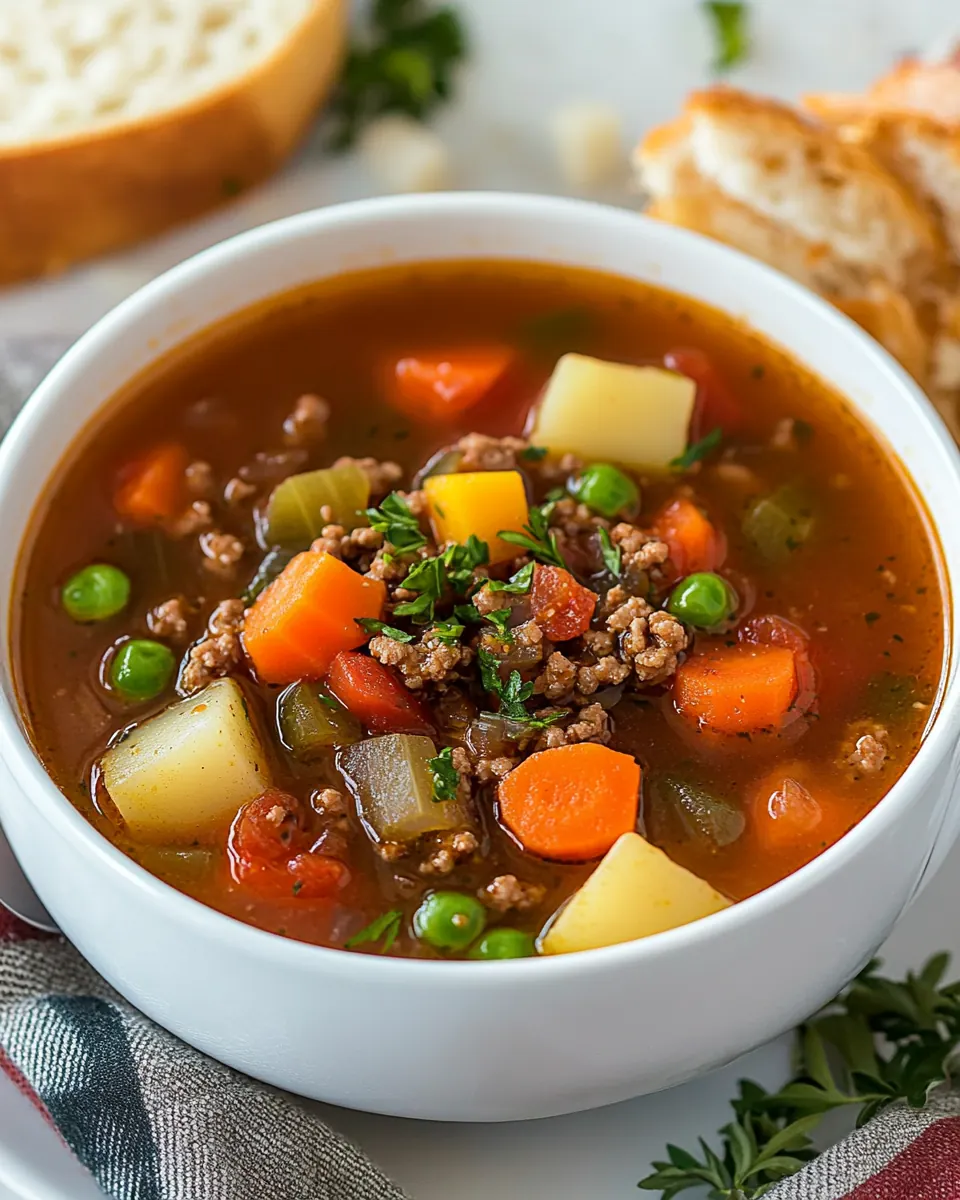
These ingredients form a classic, balanced soup. The ground beef provides savory backbone, the broth and tomatoes create a rich liquid base, and a mix of starchy and fresh vegetables adds texture and color. Each item plays a clear role, from building flavor to adding mouthfeel, and together they create a comforting, well rounded bowl.
- 1 lb . extra lean ground beef: Brown and crumble to develop deep, savory flavor and provide hearty protein and texture to the soup; drain excess fat if desired to control richness. Enhance umami and meld with seasonings as the base for the broth to carry other vegetable flavors.
- 1 med. onion, diced: Dice and sauté until translucent to build a sweet aromatic foundation that balances the meat and vegetables; release natural sugars that enrich the overall broth. Add early in cooking to soften and blend with garlic and herbs for cohesive flavor.
- 2 tsp garlic, minced: Mince and cook briefly to release pungent, aromatic oils that brighten the soup and complement the onion; avoid burning to prevent bitterness. Stir in early to infuse the broth with savory depth and to layer the seasoning profile.
- 1 cup carrots, sliced: Slice and simmer to introduce mild sweetness, tender texture, and pleasant color contrast; carrots also add natural sweetness that rounds out acidic tomatoes. Add early enough to soften through simmering so they become tender but not mushy.
- 1 cup celery, diced: Dice and sweat to contribute aromatic crunch and a subtle vegetal backbone that enhances savory notes; celery adds light herbaceousness and a slight bitterness to balance richness. Cook alongside carrots to build layered texture and flavor.
- 8 cups beef broth: Simmer as the liquid base to unify all ingredients, delivering beefy depth and rich mouthfeel; control saltiness by tasting before adding additional seasonings. Provide enough volume for a hearty, comforting soup and to properly cook vegetables.
- 28 oz petite diced tomatoes: Add and simmer to introduce bright acidity, tomato sweetness, and chunky texture that complement the meat and vegetables; help build a robust, slightly tangy broth. Stir occasionally so the tomatoes break down and integrate throughout the soup.
- 2 medium potatoes, peeled and diced: Peel and dice then simmer until tender to contribute a creamy, starchy element that helps thicken and add body; absorb surrounding flavors for comforting bites. Cook long enough to ensure even doneness without falling apart.
- 1 cup fresh green beans, trimmed and cut: Trim and cut then simmer to provide a fresh, crisp-tender green element that adds color, texture, and mild vegetal flavor; maintain slight firmness by adding at the right time. Balance cooking time so beans remain vibrant and not overly soft.
- 1 tbsp tomato paste: Stir in to intensify tomato flavor and add concentrated sweetness and acidity; helps thicken and deepen the broth for a richer mouthfeel. Dissolve into the hot liquid to distribute savory tomato notes evenly throughout the soup.
- 1 tbsp Worcestershire sauce: Mix in to contribute complex savory-sweet-umami notes that enhance beefiness and add depth to the broth; balances acidity from tomatoes. Use sparingly and taste to avoid overpowering other seasonings while boosting overall flavor.
- 1 tsp Italian seasoning: Sprinkle to introduce an earthy, herbaceous blend that complements Italian-style flavors and ties vegetables together; provides aromatic complexity. Add early for infused flavor or later for a fresher herbal presence, according to preference.
- 1 tsp salt: Season to control and elevate overall taste, bringing out natural flavors of meat and vegetables; helps balance acidity and bitterness. Adjust amount to dietary needs and taste, keeping soup well-seasoned but not oversalted.
- 1/2 tsp black pepper: Grind and add to introduce subtle heat and warm, peppery notes that enhance savory layers without overwhelming delicate vegetables. Use as a finishing seasoning or during cooking to build balanced flavor.
- 1 cup frozen peas: Stir in toward the end to add sweet, tender pops of texture and fresh vegetal flavor while preserving color; peas contribute quick-cooking sweetness. Add late so they thaw and warm through without becoming mushy.
- 1 cup frozen corn: Add near the end to provide sweet crunch and additional color, complementing peas and other vegetables; corn adds pleasant textural contrast. Warm through gently to maintain kernels’ integrity and sweetness.
- 1/3 cup freshly chopped parsley: Chop and sprinkle at the finish to deliver bright, fresh herbaceousness and visual appeal; parsley lifts heavy flavors and adds a clean finish. Use generously for garnish to enhance aroma and freshness.
How to Cook Quick Vegetable Ground Beef Soup
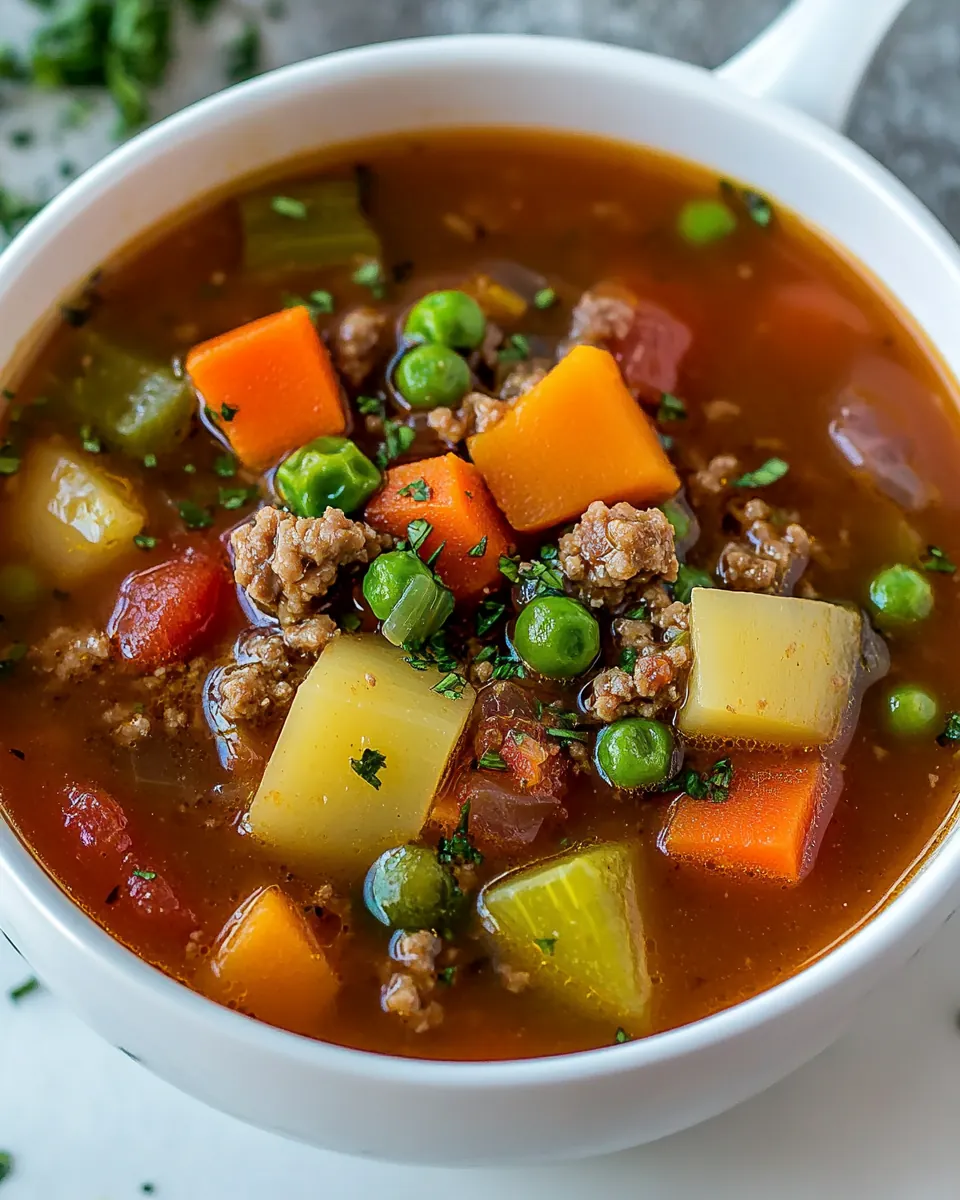
I like to walk you through this soup like we’re standing at the stove together. The directions are straightforward, but each stage benefits from attention to heat, timing, and sensory cues. Follow the order and taste as you go, and you will be rewarded with a comforting, well balanced pot of soup.
- In a large dutch oven or pot brown the ground beef over medium-high heat, breaking up into small chunks along with the diced onion. Cook until no longer pink and onion is tender. Add in the garlic and cook about 30 seconds, until fragrant. Drain and discard any fat.: You should hear a steady sizzle as the ground beef hits the hot pan, releasing a savory aroma that deepens as the meat browns. The visual cue is a transformation from pink to golden flecked brown, and the onions will become translucent and start to caramelize at the edges, adding sweet notes. Browning builds fond on the pan surface, which later dissolves into the broth for rich flavor, so resist moving the meat constantly; let it contact the pan to develop color. A common mistake is overcrowding the pot, which causes steaming instead of browning, leaving the meat gray and less flavorful. If the meat releases excess fat, drain it to keep the broth clear and avoid an oily mouthfeel. While you're breaking the beef into small pieces, listen for that change in sizzle intensity which signals moisture loss and browning progress.
- Return pan to stove top over medium-high heat and add in the carrots, celery, beef broth, canned tomatoes, potatoes, green beans, tomato paste, Worcestershire sauce, Italian seasoning, salt, and pepper. Stir to combine and bring mixture to a boil. Reduce heat to a simmer, cover and let cook until potatoes and veggies are tender, about 25 minutes.: As the mixture cooks further, the onion will soften and its edges will glow a pale gold, contributing sweet undertones that balance the beef. The meat should show no pink and should separate into small, evenly cooked pieces. This evenness ensures consistent bites throughout the soup. Watch for the moment the onion turns glossy and the meat smells nutty; that marks readiness. Avoid undercooking which leaves a raw texture and taste, and avoid burning by reducing heat if the pan becomes too dark. Stir occasionally to prevent bits from sticking, but keep enough stillness to preserve browning.
- Finally, add in the frozen peas, corn and parsley and cook until heated through. Serve and enjoy!: When you add the garlic , the scent will lift immediately into a warm, heady fragrance, and you may notice the pan releasing little aromatic wisps. This brief cook unlocks garlic's sweetness and integrates it with the beef and onion. Because garlic browns very quickly, this short window is crucial; burned garlic turns bitter and ruins the dish. Keep the heat steady and stir constantly during this short period to avoid hot spots. If the garlic does scorch, start over in a clean pan to avoid bitter undertones.
- Drain and discard any fat: After you've developed the meat and aromatics, pour off excess fat to prevent greasiness and to allow the broth to shine. The sensory difference is immediate, with the pot smelling cleaner and the liquid able to absorb flavors more readily. Use a heatproof spoon or tilt the pot carefully to remove fat, making sure not to lose browned bits that contain flavor. A common error is discarding the fond along with the fat; gently deglaze the pan with a splash of broth if needed to lift those bits before draining.
- Return pan to stove top over medium-high heat and add in the carrots, celery, beef broth, canned tomatoes, potatoes, green beans, tomato paste, Worcestershire sauce, Italian seasoning, salt, and pepper: As you add these components, you'll notice the pot transform visually into a colorful mosaic of vegetables and tomatoes, with fragrant steam rising. The beef broth and tomatoes will dissolve into the fond, creating a complex, savory liquid. Stir to incorporate the tomato paste , which should darken slightly as it blooms into the liquid, concentrating its sweetness. The mixture should look hearty and well combined; the aroma will be an inviting meld of savory, herbal, and tomato notes. A typical mistake is adding salt too early or in excess; since broth and canned tomatoes carry sodium, season lightly and adjust later. Ensure the pot returns to a gentle boil before reducing heat to simmer.
- Stir to combine and bring mixture to a boil: You'll see bubbling rise across the surface as heat penetrates the pot, and the steam will smell robust and layered. Boiling helps the flavors meet quickly, but maintain control so the pot does not roll vigorously, which can break down delicate vegetables. This active phase is short, and you should watch for a full, even boil before lowering the heat. Avoid a wild boil that can splatter and cause uneven cooking. A steady, rolling bubble signals readiness to reduce to a gentler simmer.
- Reduce heat to a simmer, cover and let cook until potatoes and veggies are tender, about 25 minutes: At a simmer, the sound becomes a soft murmur, and the liquid should barely tremble rather than roar. This gentle heat allows the potatoes and carrots to soften slowly, absorbing broth without disintegrating. Visual cues include potatoes becoming pierceable with a fork and vegetables brightening in color. Patience here yields texture contrast and integrated flavor, while rushing can lead to underdone potatoes or overcooked mush. A mistake is removing the lid too frequently which lets heat escape and lengthens cooking time; check sparingly and use a fork to test doneness.
- Finally, add in the frozen peas, corn and parsley and cook until heated through: The frozen peas and corn should go in at the end to preserve their pop and sweetness, and within minutes they will regain a bright color and tender snap. The fresh parsley will add a green, herbaceous lift that cuts through the richness, and you will notice a fresher aroma right away. This finishing touch brightens each bowl and balances the savory broth. Overcooking these items flattens their flavor and dulls color, so heat just until warm. Stir gently to distribute heat evenly and taste for final seasoning adjustments.
- Serve and enjoy: At serving, the soup should be steaming, with a layered aroma of beef, tomato, and herbs. Ladle into warmed bowls so the soup stays hot longer, sprinkle any remaining parsley on top, and observe the comforting steam and texture of vegetables and meat. A common oversight is serving in cold bowls which cools the soup quickly, so preheat bowls with hot water if you can. Sit down and savor the balance of tender potatoes , lively vegetables, and savory beef in each spoonful.
Substitutions and Tips

This recipe is forgiving, and a few smart swaps or small technique notes can make it even better. Below are focused tips and substitution ideas to keep your soup flavorful, balanced, and straightforward to execute any night you need a hearty bowl.
- Lean beef alternative If you prefer a slightly different texture, you can choose a slightly higher fat ground beef and be sure to drain excess fat after browning to control the mouthfeel.
- Vegetable swaps If you want different veggies, maintain a balance of starchy and crisp items so the soup stays hearty and interesting in texture.
- Tomato intensity If your canned tomatoes taste very acidic, a small pinch of sugar or an extra spoon of tomato paste can round flavors without masking the tomato presence.
- Herb timing Add dried Italian seasoning early to infuse the broth, and finish with fresh parsley for a bright, herbal lift at the end.
- Make ahead The soup often tastes better the next day as flavors meld, and gentle reheating on the stove with a splash of broth refreshes the consistency.
What to Serve With Quick Vegetable Ground Beef Soup
This soup shines with complementary sides and serving styles that make it a full meal. Think about texture contrast, ease, and how the occasion shapes what you bring to the table. Below are ideas that pair well across seasons and gatherings.
- Crusty bread or rolls A warm, crusty loaf is perfect for soaking up the savory broth, offering a satisfying contrast to the tender vegetables and meat.
- Simple green salad A light salad with a bright dressing cuts through the richness and adds fresh crunch to the meal.
- Cheese for topping A sprinkle of grated cheese can add indulgent richness, although it is optional depending on dietary preference.
- Occasions This recipe works for informal family dinners, cozy winter nights, or when feeding a crowd at a casual gathering because it scales easily and warms well.
- Storage tips Store in an airtight container in the refrigerator for up to four days, and reheat gently on the stove to preserve texture and flavor.
- Seasonal pairings In colder months, serve with hot tea or a warming beverage; in milder weather, pair with chilled sides or a bright slaw to freshen the plate.
FAQ
Conclusion
This soup stands out for its straightforward method and satisfying balance of savory meat with colorful vegetables. It’s an accessible, homey recipe that comes together quickly yet offers layered flavors that improve with rest. I encourage you to give it a try on a busy evening when you want something comforting and nourishing that still feels homemade. Serve it with warm bread and invite someone over, because bowls like this are best enjoyed with good company.
Quick Vegetable Ground Beef Soup
Equipment
- Dutch Oven
- Wooden Spoon
Ingredients
- 1 lb . extra lean ground beef Brown and crumble to develop deep, savory flavor and provide hearty protein and texture to the soup; drain excess fat if desired to control richness. Enhance umami and meld with seasonings as the base for the broth to carry other vegetable flavors.
- 1 med. onion, diced Dice and sauté until translucent to build a sweet aromatic foundation that balances the meat and vegetables; release natural sugars that enrich the overall broth. Add early in cooking to soften and blend with garlic and herbs for cohesive flavor.
- 2 tsp garlic, minced Mince and cook briefly to release pungent, aromatic oils that brighten the soup and complement the onion; avoid burning to prevent bitterness. Stir in early to infuse the broth with savory depth and to layer the seasoning profile.
- 1 cup carrots, sliced Slice and simmer to introduce mild sweetness, tender texture, and pleasant color contrast; carrots also add natural sweetness that rounds out acidic tomatoes. Add early enough to soften through simmering so they become tender but not mushy.
- 1 cup celery, diced Dice and sweat to contribute aromatic crunch and a subtle vegetal backbone that enhances savory notes; celery adds light herbaceousness and a slight bitterness to balance richness. Cook alongside carrots to build layered texture and flavor.
- 8 cups beef broth Simmer as the liquid base to unify all ingredients, delivering beefy depth and rich mouthfeel; control saltiness by tasting before adding additional seasonings. Provide enough volume for a hearty, comforting soup and to properly cook vegetables.
- 28 oz petite diced tomatoes Add and simmer to introduce bright acidity, tomato sweetness, and chunky texture that complement the meat and vegetables; help build a robust, slightly tangy broth. Stir occasionally so the tomatoes break down and integrate throughout the soup.
- 2 medium potatoes, peeled and diced Peel and dice then simmer until tender to contribute a creamy, starchy element that helps thicken and add body; absorb surrounding flavors for comforting bites. Cook long enough to ensure even doneness without falling apart.
- 1 cup fresh green beans, trimmed and cut Trim and cut then simmer to provide a fresh, crisp-tender green element that adds color, texture, and mild vegetal flavor; maintain slight firmness by adding at the right time. Balance cooking time so beans remain vibrant and not overly soft.
- 1 tbsp tomato paste Stir in to intensify tomato flavor and add concentrated sweetness and acidity; helps thicken and deepen the broth for a richer mouthfeel. Dissolve into the hot liquid to distribute savory tomato notes evenly throughout the soup.
- 1 tbsp Worcestershire sauce Mix in to contribute complex savory-sweet-umami notes that enhance beefiness and add depth to the broth; balances acidity from tomatoes. Use sparingly and taste to avoid overpowering other seasonings while boosting overall flavor.
- 1 tsp Italian seasoning Sprinkle to introduce an earthy, herbaceous blend that complements Italian-style flavors and ties vegetables together; provides aromatic complexity. Add early for infused flavor or later for a fresher herbal presence, according to preference.
- 1 tsp salt Season to control and elevate overall taste, bringing out natural flavors of meat and vegetables; helps balance acidity and bitterness. Adjust amount to dietary needs and taste, keeping soup well-seasoned but not oversalted.
- 1/2 tsp black pepper Grind and add to introduce subtle heat and warm, peppery notes that enhance savory layers without overwhelming delicate vegetables. Use as a finishing seasoning or during cooking to build balanced flavor.
- 1 cup frozen peas Stir in toward the end to add sweet, tender pops of texture and fresh vegetal flavor while preserving color; peas contribute quick-cooking sweetness. Add late so they thaw and warm through without becoming mushy.
- 1 cup frozen corn Add near the end to provide sweet crunch and additional color, complementing peas and other vegetables; corn adds pleasant textural contrast. Warm through gently to maintain kernels’ integrity and sweetness.
- 1/3 cup freshly chopped parsley Chop and sprinkle at the finish to deliver bright, fresh herbaceousness and visual appeal; parsley lifts heavy flavors and adds a clean finish. Use generously for garnish to enhance aroma and freshness.
Instructions
- In a large dutch oven or pot brown the ground beef over medium-high heat, breaking up into small chunks along with the diced onion. Cook until no longer pink and onion is tender. Add in the garlic and cook about 30 seconds, until fragrant. Drain and discard any fat.: You should hear a steady sizzle as the ground beef hits the hot pan, releasing a savory aroma that deepens as the meat browns. The visual cue is a transformation from pink to golden flecked brown, and the onions will become translucent and start to caramelize at the edges, adding sweet notes. Browning builds fond on the pan surface, which later dissolves into the broth for rich flavor, so resist moving the meat constantly; let it contact the pan to develop color. A common mistake is overcrowding the pot, which causes steaming instead of browning, leaving the meat gray and less flavorful. If the meat releases excess fat, drain it to keep the broth clear and avoid an oily mouthfeel. While you're breaking the beef into small pieces, listen for that change in sizzle intensity which signals moisture loss and browning progress.
- Return pan to stove top over medium-high heat and add in the carrots, celery, beef broth, canned tomatoes, potatoes, green beans, tomato paste, Worcestershire sauce, Italian seasoning, salt, and pepper. Stir to combine and bring mixture to a boil. Reduce heat to a simmer, cover and let cook until potatoes and veggies are tender, about 25 minutes.: As the mixture cooks further, the onion will soften and its edges will glow a pale gold, contributing sweet undertones that balance the beef. The meat should show no pink and should separate into small, evenly cooked pieces. This evenness ensures consistent bites throughout the soup. Watch for the moment the onion turns glossy and the meat smells nutty; that marks readiness. Avoid undercooking which leaves a raw texture and taste, and avoid burning by reducing heat if the pan becomes too dark. Stir occasionally to prevent bits from sticking, but keep enough stillness to preserve browning.
- Finally, add in the frozen peas, corn and parsley and cook until heated through. Serve and enjoy!: When you add the garlic , the scent will lift immediately into a warm, heady fragrance, and you may notice the pan releasing little aromatic wisps. This brief cook unlocks garlic's sweetness and integrates it with the beef and onion. Because garlic browns very quickly, this short window is crucial; burned garlic turns bitter and ruins the dish. Keep the heat steady and stir constantly during this short period to avoid hot spots. If the garlic does scorch, start over in a clean pan to avoid bitter undertones.
- Drain and discard any fat: After you've developed the meat and aromatics, pour off excess fat to prevent greasiness and to allow the broth to shine. The sensory difference is immediate, with the pot smelling cleaner and the liquid able to absorb flavors more readily. Use a heatproof spoon or tilt the pot carefully to remove fat, making sure not to lose browned bits that contain flavor. A common error is discarding the fond along with the fat; gently deglaze the pan with a splash of broth if needed to lift those bits before draining.
- Return pan to stove top over medium-high heat and add in the carrots, celery, beef broth, canned tomatoes, potatoes, green beans, tomato paste, Worcestershire sauce, Italian seasoning, salt, and pepper: As you add these components, you'll notice the pot transform visually into a colorful mosaic of vegetables and tomatoes, with fragrant steam rising. The beef broth and tomatoes will dissolve into the fond, creating a complex, savory liquid. Stir to incorporate the tomato paste , which should darken slightly as it blooms into the liquid, concentrating its sweetness. The mixture should look hearty and well combined; the aroma will be an inviting meld of savory, herbal, and tomato notes. A typical mistake is adding salt too early or in excess; since broth and canned tomatoes carry sodium, season lightly and adjust later. Ensure the pot returns to a gentle boil before reducing heat to simmer.
- Stir to combine and bring mixture to a boil: You'll see bubbling rise across the surface as heat penetrates the pot, and the steam will smell robust and layered. Boiling helps the flavors meet quickly, but maintain control so the pot does not roll vigorously, which can break down delicate vegetables. This active phase is short, and you should watch for a full, even boil before lowering the heat. Avoid a wild boil that can splatter and cause uneven cooking. A steady, rolling bubble signals readiness to reduce to a gentler simmer.
- Reduce heat to a simmer, cover and let cook until potatoes and veggies are tender, about 25 minutes: At a simmer, the sound becomes a soft murmur, and the liquid should barely tremble rather than roar. This gentle heat allows the potatoes and carrots to soften slowly, absorbing broth without disintegrating. Visual cues include potatoes becoming pierceable with a fork and vegetables brightening in color. Patience here yields texture contrast and integrated flavor, while rushing can lead to underdone potatoes or overcooked mush. A mistake is removing the lid too frequently which lets heat escape and lengthens cooking time; check sparingly and use a fork to test doneness.
- Finally, add in the frozen peas, corn and parsley and cook until heated through: The frozen peas and corn should go in at the end to preserve their pop and sweetness, and within minutes they will regain a bright color and tender snap. The fresh parsley will add a green, herbaceous lift that cuts through the richness, and you will notice a fresher aroma right away. This finishing touch brightens each bowl and balances the savory broth. Overcooking these items flattens their flavor and dulls color, so heat just until warm. Stir gently to distribute heat evenly and taste for final seasoning adjustments.
- Serve and enjoy: At serving, the soup should be steaming, with a layered aroma of beef, tomato, and herbs. Ladle into warmed bowls so the soup stays hot longer, sprinkle any remaining parsley on top, and observe the comforting steam and texture of vegetables and meat. A common oversight is serving in cold bowls which cools the soup quickly, so preheat bowls with hot water if you can. Sit down and savor the balance of tender potatoes , lively vegetables, and savory beef in each spoonful.
Notes
- Lean beef alternative If you prefer a slightly different texture, you can choose a slightly higher fat ground beef and be sure to drain excess fat after browning to control the mouthfeel.
- Vegetable swaps If you want different veggies, maintain a balance of starchy and crisp items so the soup stays hearty and interesting in texture.
- Tomato intensity If your canned tomatoes taste very acidic, a small pinch of sugar or an extra spoon of tomato paste can round flavors without masking the tomato presence.
- Herb timing Add dried Italian seasoning early to infuse the broth, and finish with fresh parsley for a bright, herbal lift at the end.
- Make ahead The soup often tastes better the next day as flavors meld, and gentle reheating on the stove with a splash of broth refreshes the consistency.