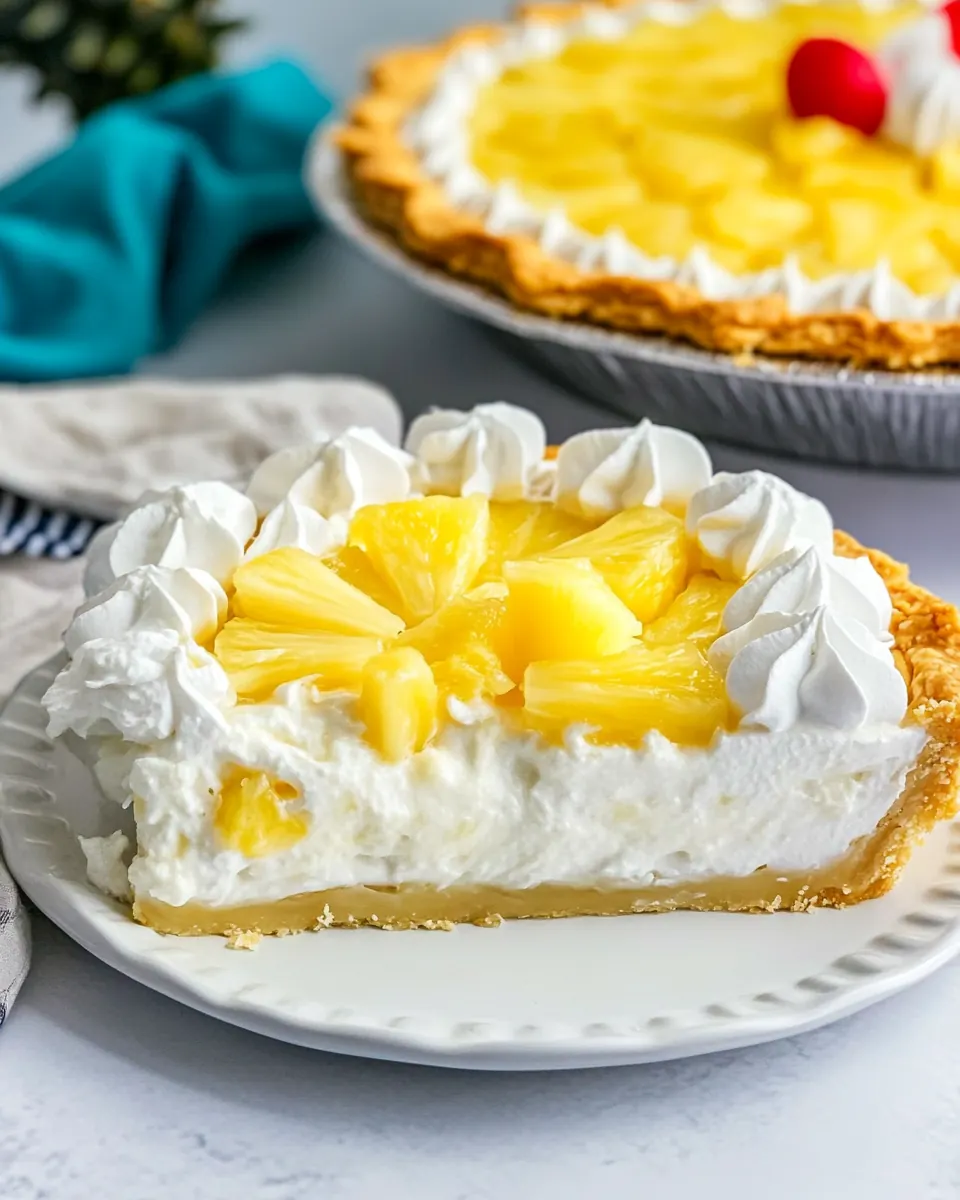
Pineapple Pie
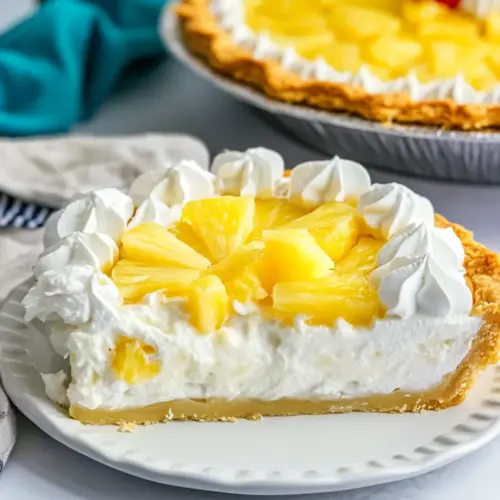
Pineapple Pie is the kind of dessert I reach for when I want something bright, nostalgic, and impossibly simple to make. The first time I served it at a summer potluck, folks kept coming back for seconds, drawn to the creamy filling and the tropical pop from the pineapple. I remember the low hum of conversation, the clink of plates, and that satisfied silence as people tasted that cool slice.
Over the years I refined the little details, like pressing the pineapple in a strainer until most of the juice is gone, and letting the pie rest long enough for the filling to firm up in the fridge. Those small moves make the difference between a runny plate and a slice that holds its shape, with a velvety mouthfeel from the cream cheese and the airy lift from the whipped topping. Friends often ask for the recipe, and I tell them it is less about technique and more about respect for the ingredients, treating each one so it can shine.
What I love most about Pineapple Pie is how forgiving it is. You can prepare the filling in minutes, chill it, and still look like you planned an indulgent finale. I like to serve it on warm evenings with a wedge of citrusy fruit or a simple cup of coffee. When I plate it, I sometimes spoon a little extra whipped topping on the side, because why not be generous with pleasure? This pie carries summer in a slice, and it has become my go to when I want something cheerful but undemanding.
Recipe Snapshot
2 hr 20 mins
20 mins
120 mins
Hard
250 kcal
American
Gluten-Free, Vegan
Desserts
Hand mixer, Large bowl, Fine mesh strainer, Spatula, Refrigerator
What You’ll Enjoy About This Pineapple Pie
Bright tropical flavor that feels fresh
I adore how the pineapple brings a lively, tangy brightness that contrasts beautifully with the creamy filling. The fruit provides a clean acidity that lifts every bite, so the pie never tastes heavy even though it is rich. When I serve it on a warm afternoon, guests comment on how light and refreshing it tastes.
Speed and simplicity in the kitchen
This recipe wins for ease. With only a handful of ingredients, you can mix the filling in one bowl and set it to chill. I appreciate recipes that let me spend more time with friends and less time stirring, and this pie fits that bill perfectly.
Great texture contrast
The combination of a crisp graham cracker pie crust with the silky cream cheese filling and the tender pineapple creates a pleasing range of textures. You get a slight crunch, a smooth creaminess, and a juicy pop, which keeps every bite interesting. I often think about texture as the secret ingredient, and this pie delivers.
Adaptable and crowd friendly
I like that Pineapple Pie travels well to potlucks and stays stable in the fridge for a few days. It is easy to scale up for a larger gathering. When hosting, I appreciate recipes that let me focus on hospitality instead of last minute fussing, and this one is reliably helpful.
Comfort with a touch of nostalgia
There is something comforting about a no bake pie like this. It evokes those simple desserts from family gatherings, yet it feels modern and bright thanks to the pineapple. I always notice how it sparks memories and conversation, which is part of why I keep returning to it.
What Goes Into Pineapple Pie
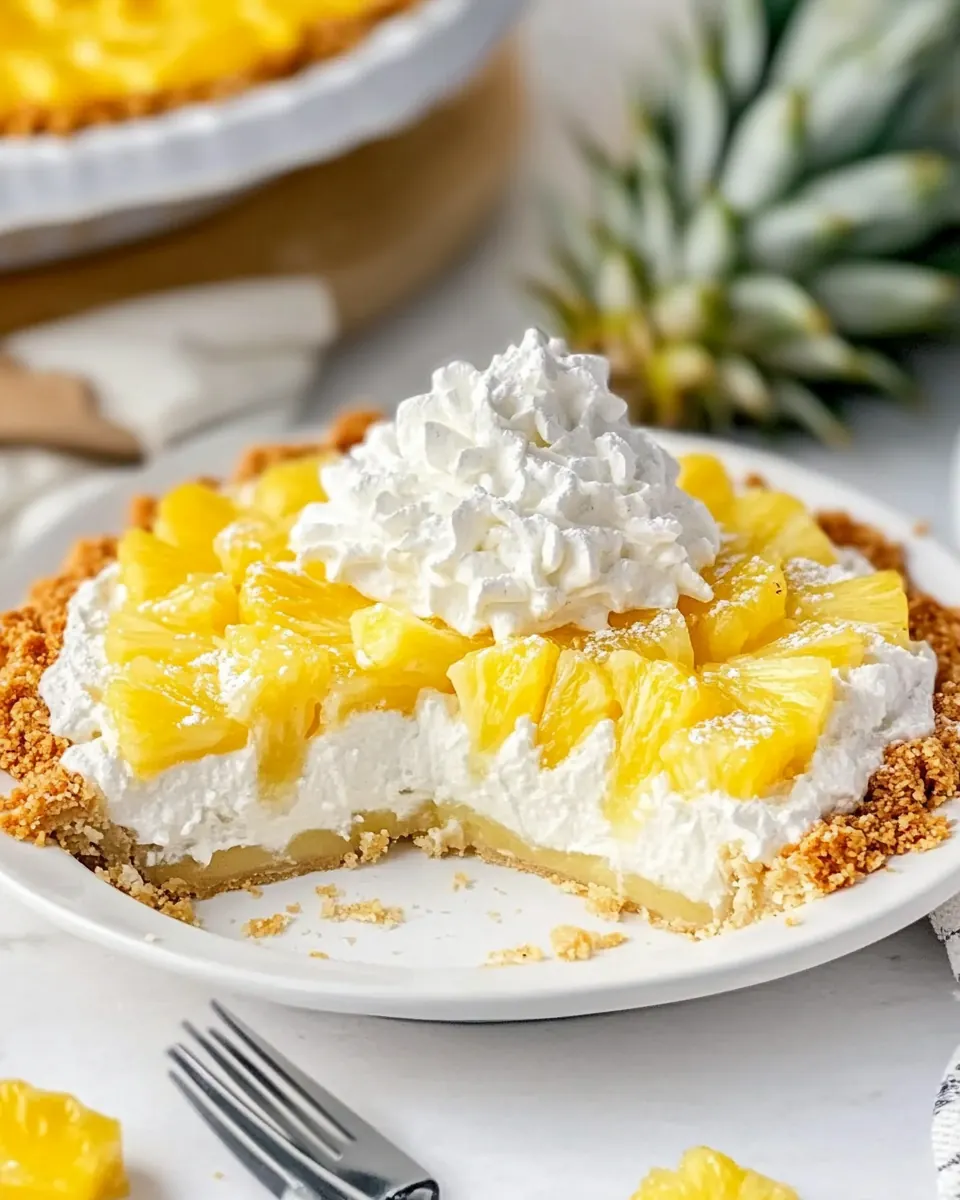
The ingredient list for Pineapple Pie is intentionally short, which is part of its charm. Each component plays a clear role: the graham cracker pie crust offers a buttery base and crunch, the cream cheese adds body and tang, the whipped topping brings airiness, and the pineapple provides bright acidity. The sugar pulls everything into balance by enhancing sweetness without overpowering the fruit.
- 1 (20 oz) can crushed pineapple, drained and dried: Provide tropical sweetness and moisture; drained and dried crushed pineapple contributes bright flavor without excess liquid that would sog the filling. Use the canned form for consistent texture and easy preparation while retaining natural acidity to balance richness.
- 8 ounces (226 g) softened cream cheese: Add smooth, tangy creaminess and body; softened cream cheese creates a rich, stable base that helps set the filling when whipped together. Ensure it is at room temperature for easier incorporation and a silky mouthfeel.
- 1/4 cup (50 g) granulated sugar: Sweeten and slightly stabilize the filling; granulated sugar balances the pineapple’s acidity and enhances overall flavor. Measure precisely to avoid overly sweet results and dissolve it into the cream cheese for uniform sweetness.
- 18 ounce container whipped topping, thawed: Lighten and aerate the filling; whipped topping adds fluffy volume and a smooth, cloudlike texture while keeping the pie easy to slice. Fold it gently to preserve air and maintain a delicate consistency without making the filling heavy.
- 1 graham cracker pie crust: Provide a buttery, crunchy vessel and defined shape; graham cracker pie crust holds the filling and offers a contrasting crumbly texture. Use a pre-made crust for convenience and even baking-free assembly.
How to Cook Pineapple Pie
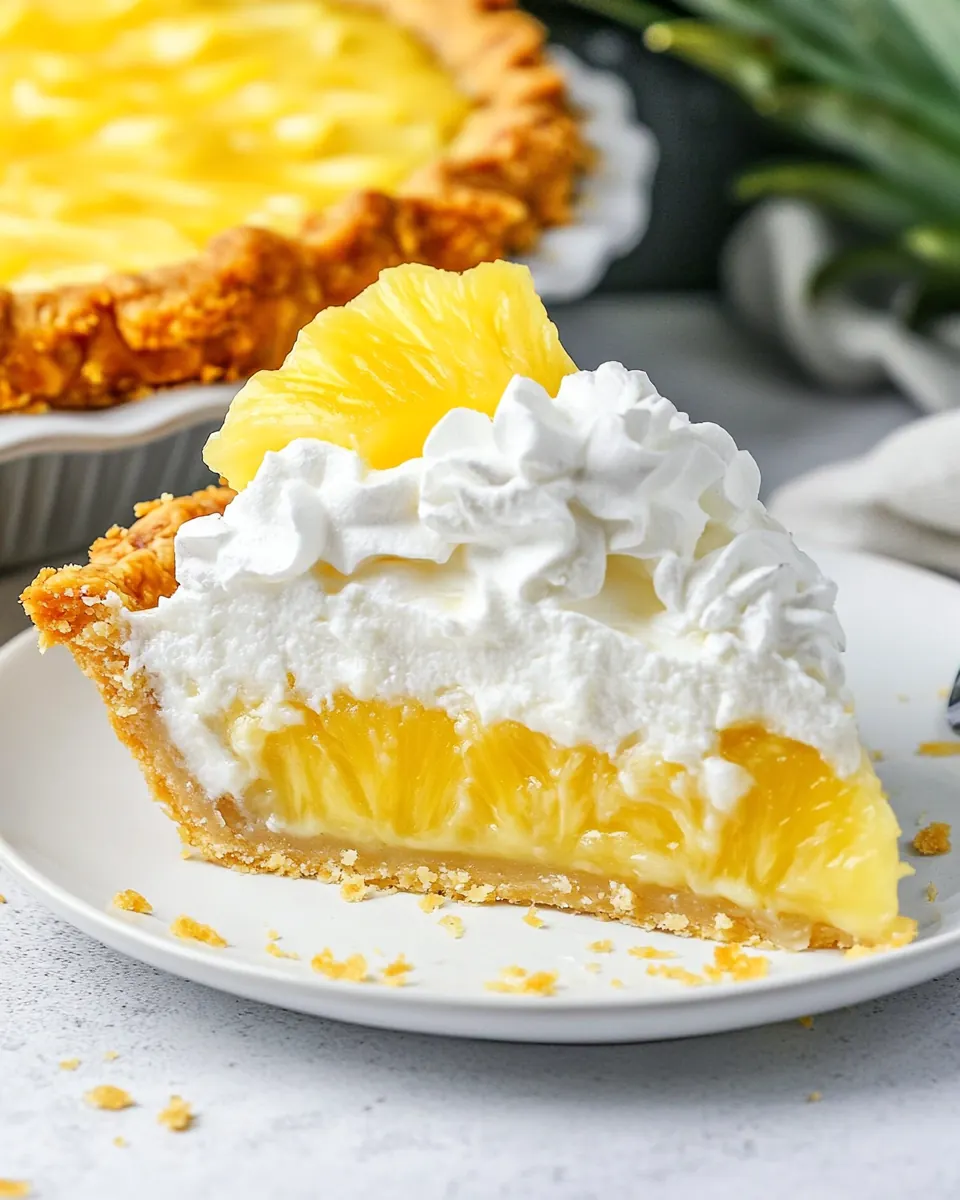
This pie is straightforward to assemble, and the steps reward careful handling of the ingredients more than culinary skill. Work in a cool kitchen if possible, and take your time draining the pineapple and smoothing the filling into the crust. The chilling time is essential for the texture to set, so be patient and let the pie rest.
- Drain pineapple in a strainer. Let drain for a few minutes then use a spatula to press the pineapple against the sides of the strainer to get as much liquid out as possible.: The aroma of canned pineapple will be bright and slightly syrupy as you begin, and you should notice quite a bit of liquid when you first pour it into a fine mesh strainer. Pressing the fruit gently with a spatula helps release trapped juices, and you will see the liquid collect below. This step prevents the filling from becoming watery, which would make the textures collapse; if you skip or rush this, the crust and filling can become soggy. A common mistake is shaking the can into the crust, which adds too much moisture. Instead, let gravity and gentle pressure do the work until the fruit looks relatively dry and no longer drips.
- Place cream cheese and sugar in a large bowl. Mix with a hand mixer until smooth.: When you combine the softened cream cheese and sugar , the initial scent is creamy and slightly sweet. Use a hand mixer on medium speed to coax the two together, and you will see the texture transition from lumpy to smooth. This creates the stable base for the whipped topping. If the cream cheese is still cold, you will battle lumps; conversely, overbeating for too long can incorporate too much air, making the filling overly light and less stable. Scrape the bowl occasionally so all the cream cheese is evenly blended.
- Add whipped topping and mix until smooth on low speed.: The cool, billowy whipped topping will fold into the sweetened cream cheese and mellow the tang, producing a pale, cloud like filling. Use low speed to avoid deflating the topping's structure, and watch for a uniform, velvety appearance. The sound is quieter now, more of a soft whir as the mixer blends the two components. A pitfall here is using high speed, which can break down the whipped topping and make the filling dense; mix just until homogeneous and stop.
- Fold in drained pineapple.: As you introduce the drained pineapple , you will notice flecks of gold suspended throughout the creamy mixture. Folding by hand or at the lowest speed preserves the airy texture while distributing the fruit evenly. The contrast between the silky filling and the tender fruit is what gives the pie its appeal. If you stir too aggressively, you may crush the pieces and lose that pleasant bite; fold gently until the pieces are incorporated.
- Place pie filling in pie crust. Chill at least 2 hours before serving.: Spoon the filling into the chilled graham cracker pie crust , and use a spatula to smooth the top so it is evenly distributed. The filling should mound slightly but settle as it chills, and the visual cue of an even surface indicates good distribution. Pressing too hard can compress the structure, so be gentle. For neat slices, chill the pie fully before cutting; slicing immediately often leads to messy portions.
- Garnish pie as desired, with more whipped cream, crushed pineapple, and/or cherries.: The refrigerator will quiet down the filling as it firms, and after two hours the texture will be noticeably creamier and more sliceable. Cooling allows the fats in the cream cheese to set, which stabilizes the shape. If you rush this step, the pie will be soft and weepy on the plate. Plan ahead and give it the necessary time so each slice holds together cleanly.
- Store in refrigerator for up to 3 days. It’s not recommended to freeze the pie.: A final flourish makes the presentation inviting and adds flavor contrasts. Extra whipped topping offers creaminess, a sprinkle of crushed pineapple amplifies the fruit note, and cherries add a bright pop of color. When garnishing, avoid heavy additions that weigh the topping down, and place decorations just before serving to keep them fresh. Over decorating can distract from the clean, tropical profile of the pie.
- Store in refrigerator for up to 3 days: Wrapped lightly in plastic or kept in an airtight container, the pie will retain its texture and flavor for several days. Refrigeration keeps the cream cheese firm and the pineapple fresh tasting. Freezing is not recommended because the whipped topping and fruit will change texture once thawed. A common error is leaving the pie out at room temperature too long, which can soften it excessively and affect quality.
Customization Ideas
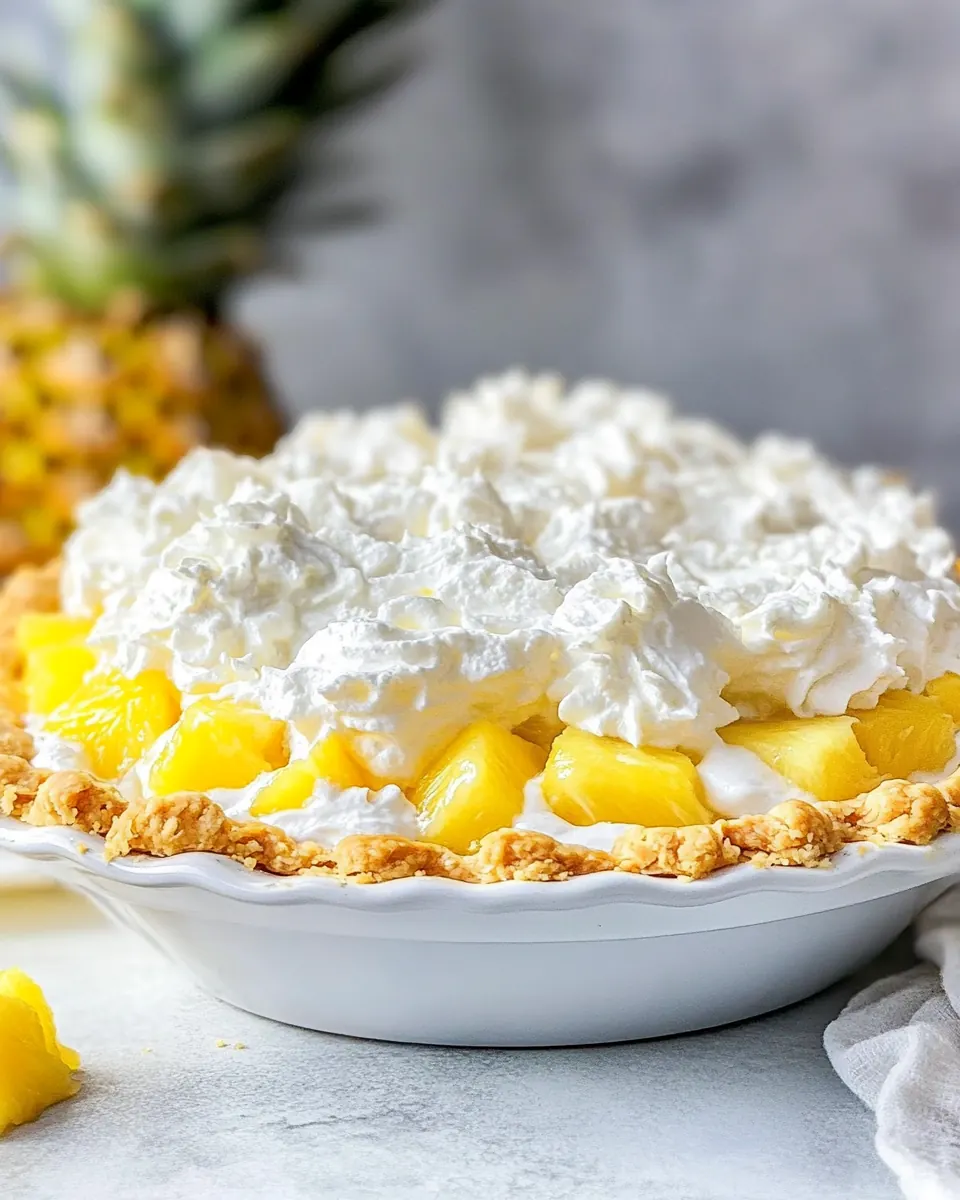
This pie is versatile and welcomes small tweaks that personalize flavor and presentation. Below are practical ideas to change texture, garnish, or ingredient handling while keeping the original spirit of the dessert intact.
- Fresh pineapple garnish Use finely diced fresh pineapple on top for a brighter, less syrupy fruit note, as I sometimes do for a more vibrant presentation.
- Swap whipped topping Substitute with freshly whipped cream, whipped to stiff peaks, folded in by hand to keep the filling airy and slightly less sweet.
- Extra texture Sprinkle crushed graham crackers or toasted coconut on top for a toasty contrast that complements the graham cracker pie crust.
- Make mini pies Fill small tart shells instead of a whole crust for individual servings that are easy to plate at parties.
- Presentation tricks Pipe a ring of whipped topping around the edge before adding a cherry or a small pile of crushed pineapple, for a classic diner style look.
What to Pair With Pineapple Pie
Pineapple Pie pairs well with light, complementary flavors that do not overpower its tropical profile. For serving, think about balance: something simple to drink, and perhaps a small bite that contrasts the creamy texture. It is lovely for summer gatherings, casual dinners, or festive occasions when a quick, pleasing dessert is needed.
- Simple coffee or tea A lightly brewed coffee or a fragrant tea complements the sweet and tangy notes without overwhelming them.
- Fresh fruit plate Serve alongside a small plate of berries or citrus segments to echo the fruitiness and add a zesty contrast.
- Light brunch menu Include it as a dessert option for a brunch spread, paired with savory quiches or light salads.
- Summer gatherings This pie is perfect for backyard meals and potlucks because it is easy to transport and serve chilled.
- Storage note Keep refrigerated until serving, and store leftovers covered for up to three days for best texture and flavor retention.
- Seasonal pairing In the summer, pair with citrusy cocktails or mocktails that emphasize brightness; in cooler months, offer a lightly spiced tea to warm the palate.
FAQ
Conclusion
Pineapple Pie stands out for its bright fruit flavor, creamy texture, and effortless assembly. It is an ideal dessert when you want something that feels special without hours of work in the kitchen. Give it a try at your next gathering, and notice how the contrast of tangy pineapple and silken filling brings smiles to the table. Enjoy the simplicity and the memories this easy, nostalgic pie creates.
Pineapple Pie
Equipment
- Hand Mixer
- Large Bowl
- Fine-mesh strainer
- Spatula
- Refrigerator
Ingredients
- 1 (20 oz) can crushed pineapple, drained and dried Provide tropical sweetness and moisture; drained and dried crushed pineapple contributes bright flavor without excess liquid that would sog the filling. Use the canned form for consistent texture and easy preparation while retaining natural acidity to balance richness.
- 8 ounces (226 g) softened cream cheese Add smooth, tangy creaminess and body; softened cream cheese creates a rich, stable base that helps set the filling when whipped together. Ensure it is at room temperature for easier incorporation and a silky mouthfeel.
- 1/4 cup (50 g) granulated sugar Sweeten and slightly stabilize the filling; granulated sugar balances the pineapple’s acidity and enhances overall flavor. Measure precisely to avoid overly sweet results and dissolve it into the cream cheese for uniform sweetness.
- 18 ounce container whipped topping, thawed Lighten and aerate the filling; whipped topping adds fluffy volume and a smooth, cloudlike texture while keeping the pie easy to slice. Fold it gently to preserve air and maintain a delicate consistency without making the filling heavy.
- 1 graham cracker pie crust Provide a buttery, crunchy vessel and defined shape; graham cracker pie crust holds the filling and offers a contrasting crumbly texture. Use a pre-made crust for convenience and even baking-free assembly.
Instructions
- Drain pineapple in a strainer. Let drain for a few minutes then use a spatula to press the pineapple against the sides of the strainer to get as much liquid out as possible.: The aroma of canned pineapple will be bright and slightly syrupy as you begin, and you should notice quite a bit of liquid when you first pour it into a fine mesh strainer. Pressing the fruit gently with a spatula helps release trapped juices, and you will see the liquid collect below. This step prevents the filling from becoming watery, which would make the textures collapse; if you skip or rush this, the crust and filling can become soggy. A common mistake is shaking the can into the crust, which adds too much moisture. Instead, let gravity and gentle pressure do the work until the fruit looks relatively dry and no longer drips.
- Place cream cheese and sugar in a large bowl. Mix with a hand mixer until smooth.: When you combine the softened cream cheese and sugar , the initial scent is creamy and slightly sweet. Use a hand mixer on medium speed to coax the two together, and you will see the texture transition from lumpy to smooth. This creates the stable base for the whipped topping. If the cream cheese is still cold, you will battle lumps; conversely, overbeating for too long can incorporate too much air, making the filling overly light and less stable. Scrape the bowl occasionally so all the cream cheese is evenly blended.
- Add whipped topping and mix until smooth on low speed.: The cool, billowy whipped topping will fold into the sweetened cream cheese and mellow the tang, producing a pale, cloud like filling. Use low speed to avoid deflating the topping's structure, and watch for a uniform, velvety appearance. The sound is quieter now, more of a soft whir as the mixer blends the two components. A pitfall here is using high speed, which can break down the whipped topping and make the filling dense; mix just until homogeneous and stop.
- Fold in drained pineapple.: As you introduce the drained pineapple , you will notice flecks of gold suspended throughout the creamy mixture. Folding by hand or at the lowest speed preserves the airy texture while distributing the fruit evenly. The contrast between the silky filling and the tender fruit is what gives the pie its appeal. If you stir too aggressively, you may crush the pieces and lose that pleasant bite; fold gently until the pieces are incorporated.
- Place pie filling in pie crust. Chill at least 2 hours before serving.: Spoon the filling into the chilled graham cracker pie crust , and use a spatula to smooth the top so it is evenly distributed. The filling should mound slightly but settle as it chills, and the visual cue of an even surface indicates good distribution. Pressing too hard can compress the structure, so be gentle. For neat slices, chill the pie fully before cutting; slicing immediately often leads to messy portions.
- Garnish pie as desired, with more whipped cream, crushed pineapple, and/or cherries.: The refrigerator will quiet down the filling as it firms, and after two hours the texture will be noticeably creamier and more sliceable. Cooling allows the fats in the cream cheese to set, which stabilizes the shape. If you rush this step, the pie will be soft and weepy on the plate. Plan ahead and give it the necessary time so each slice holds together cleanly.
- Store in refrigerator for up to 3 days. It’s not recommended to freeze the pie.: A final flourish makes the presentation inviting and adds flavor contrasts. Extra whipped topping offers creaminess, a sprinkle of crushed pineapple amplifies the fruit note, and cherries add a bright pop of color. When garnishing, avoid heavy additions that weigh the topping down, and place decorations just before serving to keep them fresh. Over decorating can distract from the clean, tropical profile of the pie.
- Store in refrigerator for up to 3 days: Wrapped lightly in plastic or kept in an airtight container, the pie will retain its texture and flavor for several days. Refrigeration keeps the cream cheese firm and the pineapple fresh tasting. Freezing is not recommended because the whipped topping and fruit will change texture once thawed. A common error is leaving the pie out at room temperature too long, which can soften it excessively and affect quality.
Notes
- Fresh pineapple garnish Use finely diced fresh pineapple on top for a brighter, less syrupy fruit note, as I sometimes do for a more vibrant presentation.
- Swap whipped topping Substitute with freshly whipped cream, whipped to stiff peaks, folded in by hand to keep the filling airy and slightly less sweet.
- Extra texture Sprinkle crushed graham crackers or toasted coconut on top for a toasty contrast that complements the graham cracker pie crust.
- Make mini pies Fill small tart shells instead of a whole crust for individual servings that are easy to plate at parties.
- Presentation tricks Pipe a ring of whipped topping around the edge before adding a cherry or a small pile of crushed pineapple, for a classic diner style look.
