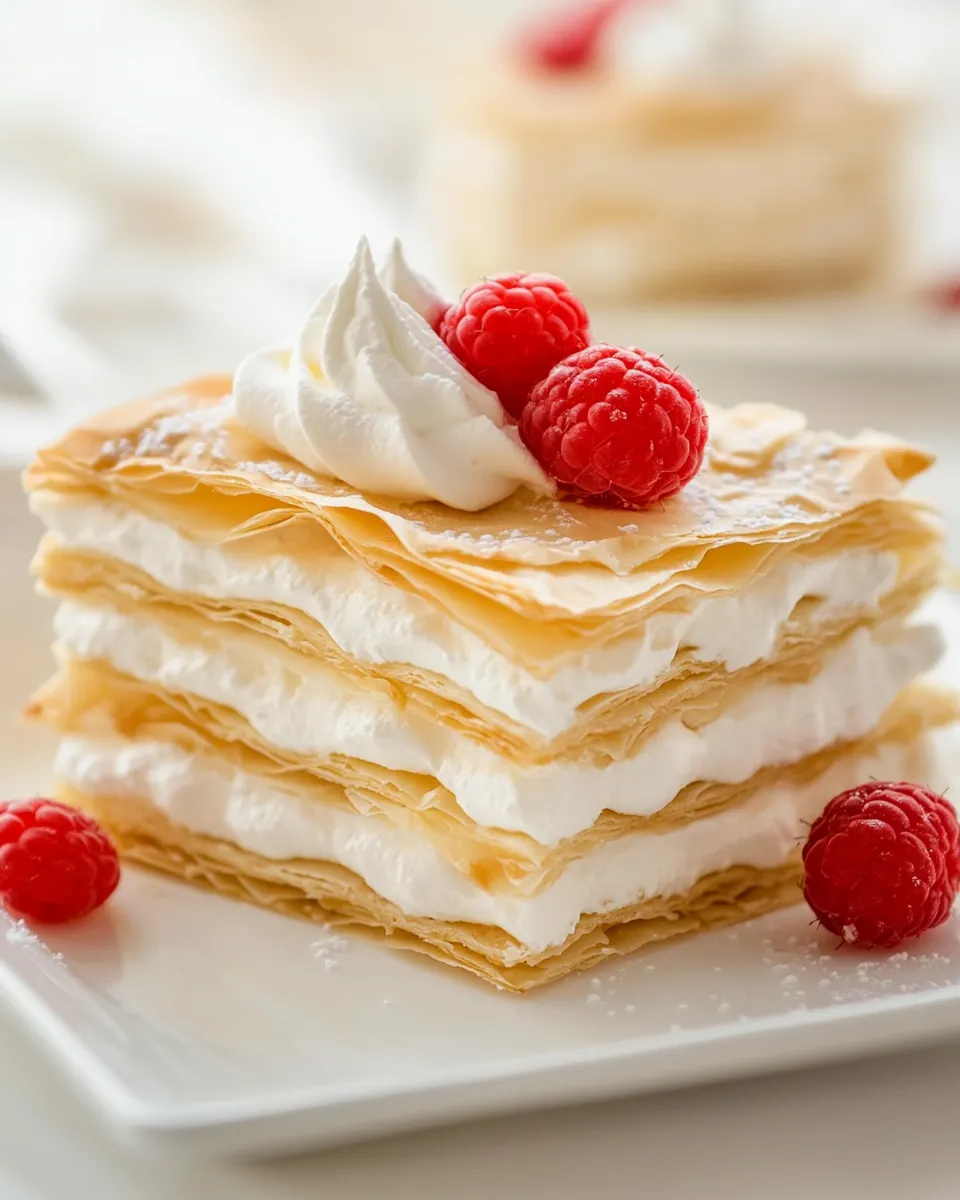
Phyllo Napoleon
Phyllo Napoleon came into my kitchen on a rainy afternoon when I wanted something elegant without the fuss. I had a stack of phyllo dough in the fridge and a craving for a crisp layered treat, so I set aside the grand plans and focused on making each layer count. The process felt a little like crafting a miniature pastry sculpture, and I loved how the thin, paperlike phyllo dough toasted into the lightest, flakiest sheets.
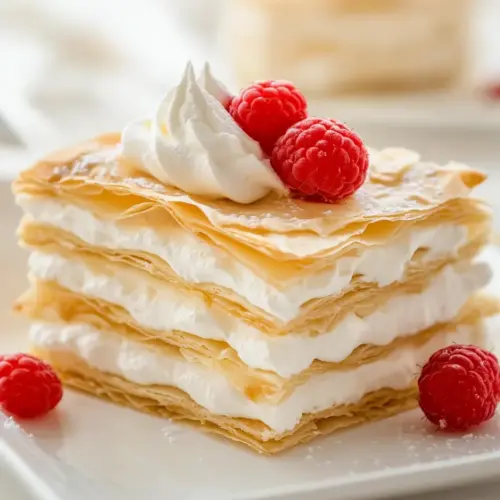
As I worked, I kept thinking about contrasts, which is what makes this version of Phyllo Napoleon so compelling. The cool, pillowy heavy cream whipped to soft peaks sits against shards of golden phyllo dough, and fresh strawberries lend a bright, juicy pop. I found myself pausing between steps, savoring the scent of browned butter and the soft crackle of baked layers as they cooled. friends who stopped by later said it looked like a fancy patisserie treat, but the truth is it is very forgiving and approachable.
When you assemble the layers, you get a rhythm going, and that small ritual made the dessert feel special. I like to bake the sheets ahead and keep them crisp until just before serving, then quickly pipe or spoon whipped cream and add berries. That way, you preserve the contrast everyone loves. If you want to adapt or make it for a gathering, the method scales nicely and stays crowd friendly. Ultimately, Phyllo Napoleon is one of those recipes that rewards a little patience with a lot of texture and freshness.
Recipe Snapshot
30 mins
15 mins
15 mins
Medium
250 kcal
American
Gluten-Free, Low FODMAP
Desserts
Oven, Baking sheet, Parchment paper, Mixing bowl, Electric mixer, Piping bag
Why This Phyllo Napoleon Is a Winner
Texture Contrast That Wows
I adore how Phyllo Napoleon pairs ultra thin, crisp phyllo dough with light, creamy filling. Each bite gives you a brittle, toasted crunch followed by soft, airy heavy cream, and that juxtaposition keeps you coming back. I always say texture matters more than decoration because it is what lingers on your tongue and in your memory.
Fast, Elegant Results
One of the best things about this recipe is how quickly it transforms basic pantry items into something impressive. From my experience, you can go from sheets of phyllo dough to plated dessert in under an hour, which makes it a great choice when guests arrive unexpectedly. It looks like a labor intensive pastry, but it is mostly assembly and quick baking.
Flexible and Seasonal
I love that Phyllo Napoleon adapts to whatever fruit you have on hand. While I often reach for fresh strawberries, other berries or stone fruit work beautifully, giving each season a slightly different expression. I enjoy swapping berries and adjusting the dusting of powdered sugar for visual effect and added sweetness.
Beginner Friendly Techniques
Don’t be intimidated by working with phyllo dough. From many tests, brushing sheets with melted butter and layering them takes practice, not perfection. I walk you through the key cues, like golden edges and a dry, brittle snap when cooling, so even a first timer can get excellent results.
Make Ahead and Entertain with Ease
I often bake the sheets in advance and store them crisp at room temperature, assembling just before serving to keep the contrast sharp. That small strategy means you can focus on plating and company, not last minute scrambling. For me, that is the kind of planning that turns a good dinner into a memorable one.
Recipe Ingredients for Phyllo Napoleon
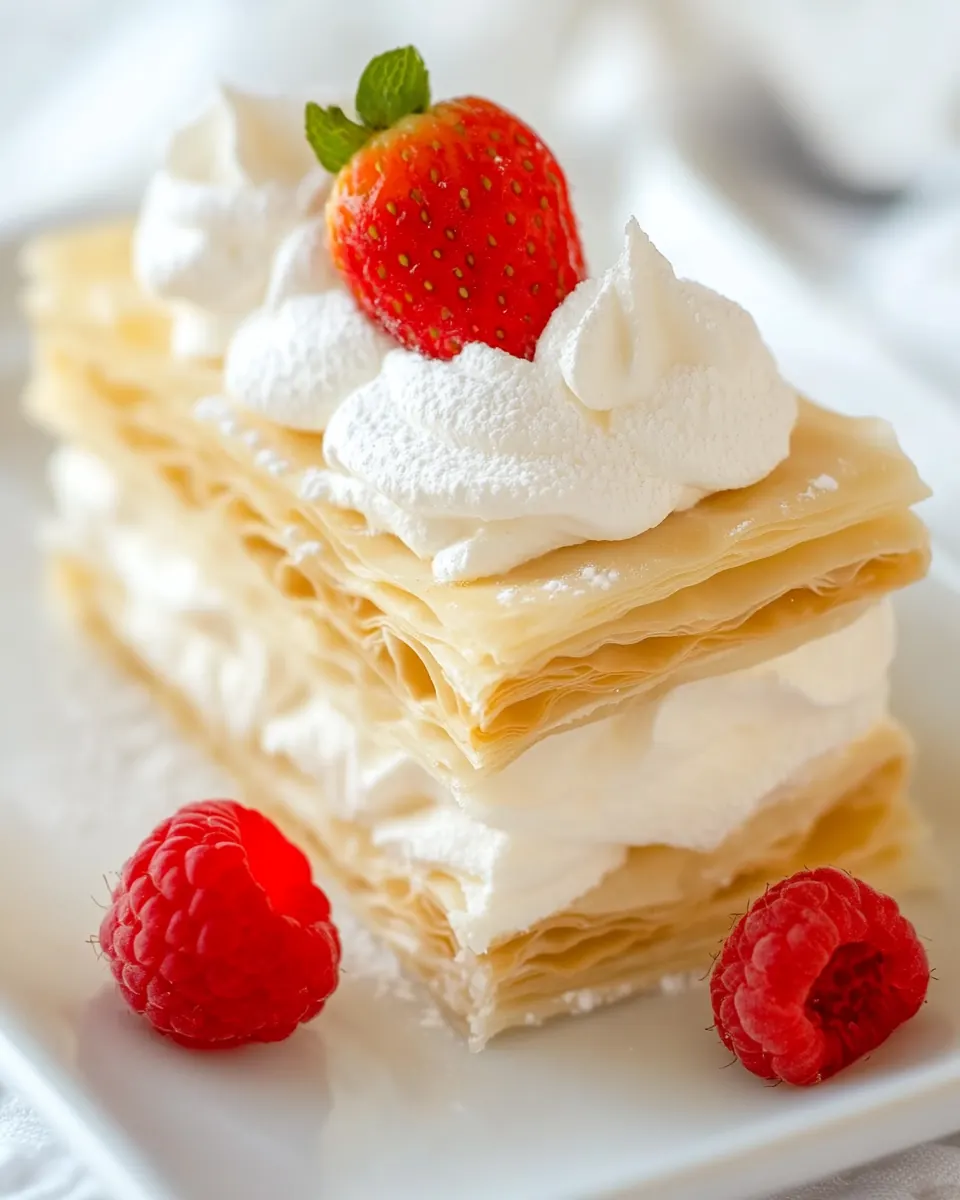
The philosophy behind these ingredients is simple, crisp contrast. The delicate structure of phyllo dough forms the crispy architecture, while the whipped heavy cream provides lightness and a creamy mouthfeel. A touch of unsalted butter ensures golden layers, and powdered sugar adds gentle sweetness without grainy texture. Fresh strawberries or other berries bring acidity and juiciness to balance richness.
- 9 sheets phyllo dough thawed if frozen: Thawed and delicate, provides the light, flaky layers that form the pastry’s crisp structure when baked; handle gently to avoid tearing and brush with butter between layers for golden browning.
- 4 tablespoons unsalted butter melted: Melted and rich, contributes to browning and separates phyllo layers while adding a silky, savory richness that balances the dessert’s sweetness; distribute evenly to ensure even crispness.
- 1 cup heavy cream chilled: Chilled and voluminous, whips into a stable cream that creates the airy, creamy filling between phyllo layers; keep cold to achieve firm peaks and a smooth texture.
- 2 tablespoons powdered sugar: Finely sweetened and powdery, stabilizes and lightly sweetens whipped cream without adding graininess; sift in gradually while whipping to maintain a consistent sweetness.
- 1/3 cup powdered sugar or more, for dusting: Finely milled and decorative, used to dust the finished napoleon for a delicate, sweet finish and visual contrast; apply sparingly to avoid sogginess on the pastry surface.
- 4 8 strawberries fresh, hulled & sliced, or berries of choice: Fresh and juicy, provides bright acidity and fruity freshness to cut through the rich cream and flaky pastry while adding color and texture when sliced and arranged.
Recipe Steps for Phyllo Napoleon
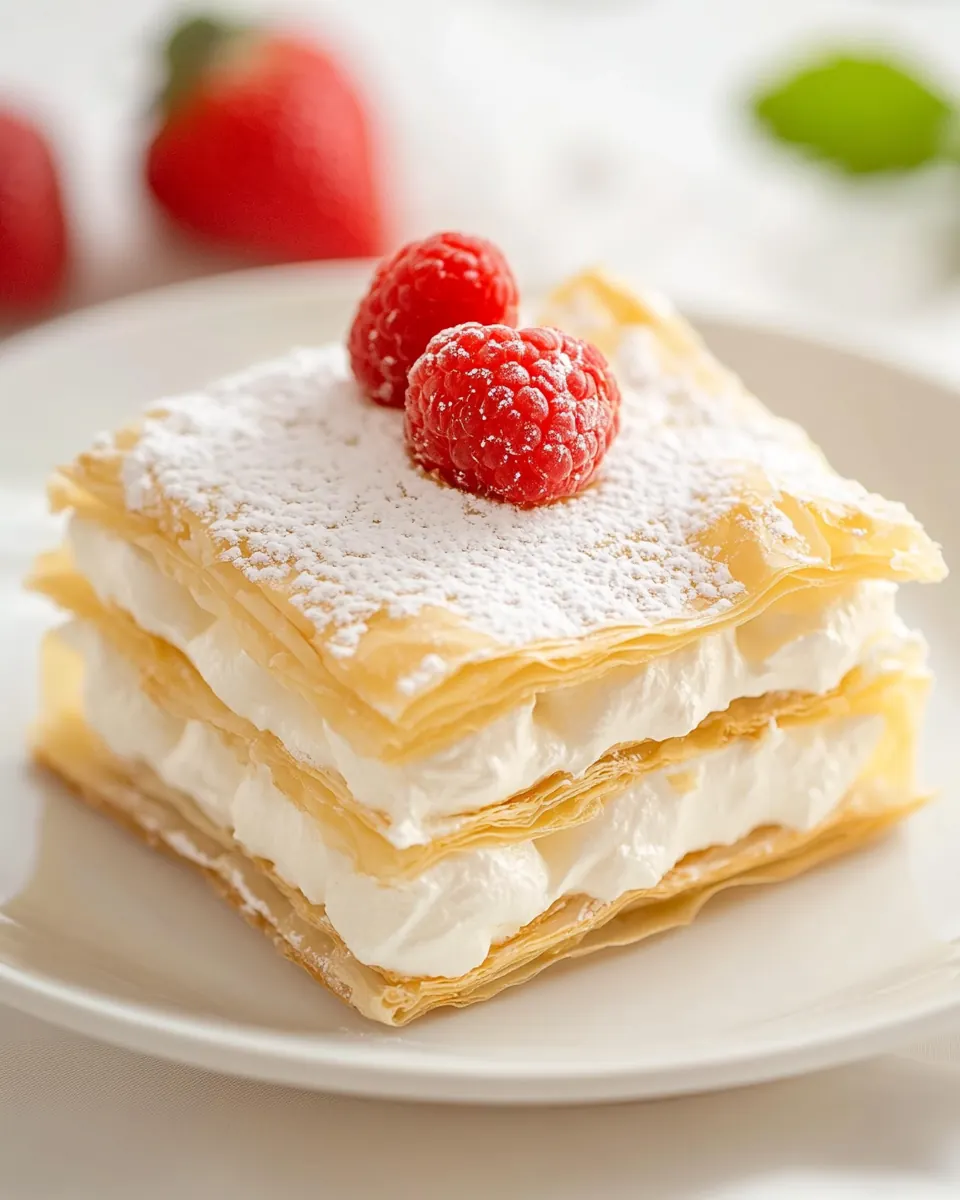
I like to think of the steps as a short choreography, where timing and texture cues guide you. With attention to visual and tactile signals, you will get consistent results. Keep a sense of rhythm as you butter sheets and assemble layers to preserve the crispness and overall presentation.
- Preheat the oven to 350° F.: You will notice a warm, even heat filling the kitchen as the oven reaches 350° F , which is perfect for crisping phyllo dough without burning it. Preheating ensures the sheets begin to brown immediately and evenly, creating that sought after golden color. A common mistake is placing cold sheets into a partially heated oven, which causes uneven texture, so wait until the temperature stabilizes before baking.
- Line a baking sheet with parchment paper or a silicone mat.: Lining the pan gives a smooth surface and prevents sticking, which helps the phyllo dough lift easily after baking. You will feel the smoothness under the sheets and hear a more delicate crack as they cool. Avoid using an unlined pan, because direct contact can cause uneven browning and sticking, which damages the fragile layers when you remove them.
- Cut stacked phyllo sheets into rectangles (about 3×5 inches).: When you slice the stacked sheets into rectangles, the clean edges help the final presentation look intentional and sharp. Use a sharp knife or pizza cutter to glide through layers, and you will see tidy edges that make assembly simpler. Cutting on an unstable surface or with a dull blade can shred the sheets, leading to irregular pieces that are harder to layer neatly.
- Separate 2–3 sheets per layer, brushing melted butter between each layer.: As you separate and brush with melted butter , the sheets should shimmer slightly, and you will smell a warm, toasty butter aroma when brushed consistently. This step creates thin pockets that crisp independently during baking. A pitfall is overloading with butter, which makes layers greasy and prevents that delicate crisp snap, so use a thin, even coating.
- Place stacks on the baking sheet. Cover with another silicone mat or parchment and a second tray to weigh them down.: Weighing the stacks keeps the layers flat and ensures even contact with heat, resulting in uniform crisping and a consistent golden tone. You may notice a faint press mark from the weight as the layers bake, which is normal. Skipping the weight can lead to uneven puffing and warped sheets that will be harder to stack; using a heavy tray helps avoid that.
- Bake for 10–15 minutes, until golden and crisp. Let cool completely.: During baking you will see the color move from pale to a deep golden brown, and the aroma will shift to nutty and toasty. The sound of cooled sheets is a satisfying brittle crack, which indicates they are done. Pulling sheets out too early results in limp pastry, while leaving them too long risks burning, so watch for even golden edges and dryness across the surface.
- In a cold bowl, beat heavy cream with powdered sugar until soft peaks form. Transfer to a piping bag if using.: As you whip chilled heavy cream with powdered sugar , it will thicken and become glossy, with soft peaks that hold shape but still have a gentle bend. Using a cold bowl and cold heavy cream speeds whipping and improves stability. Overwhipping turns the cream grainy and buttery, so stop when soft peaks appear and keep it chilled until ready to use.
- Layer: phyllo → whipped cream → phyllo → whipped cream → phyllo.: When you assemble, the first contact is the fragile crisp of baked phyllo dough followed by the cool, velvety feel of whipped heavy cream , creating a contrast of temperature and texture. I press lightly to even the layers without compressing them flat, preserving air pockets for crunch. A common error is adding too much cream, which can cause slippage and sogginess, so aim for balanced portions that maintain structure.
- Dust with powdered sugar and top fresh sliced strawberries, or berries of choice.: The final dusting of powdered sugar and bright placement of strawberries adds visual contrast and a sweet finish. You will see a soft white veil over the top layer, and the fruit will glisten against it. If you dust too early or use overly wet fruit, the sugar can dissolve into a paste, so dust just before serving and arrange fruit last for the best look and texture.
Customization Ideas
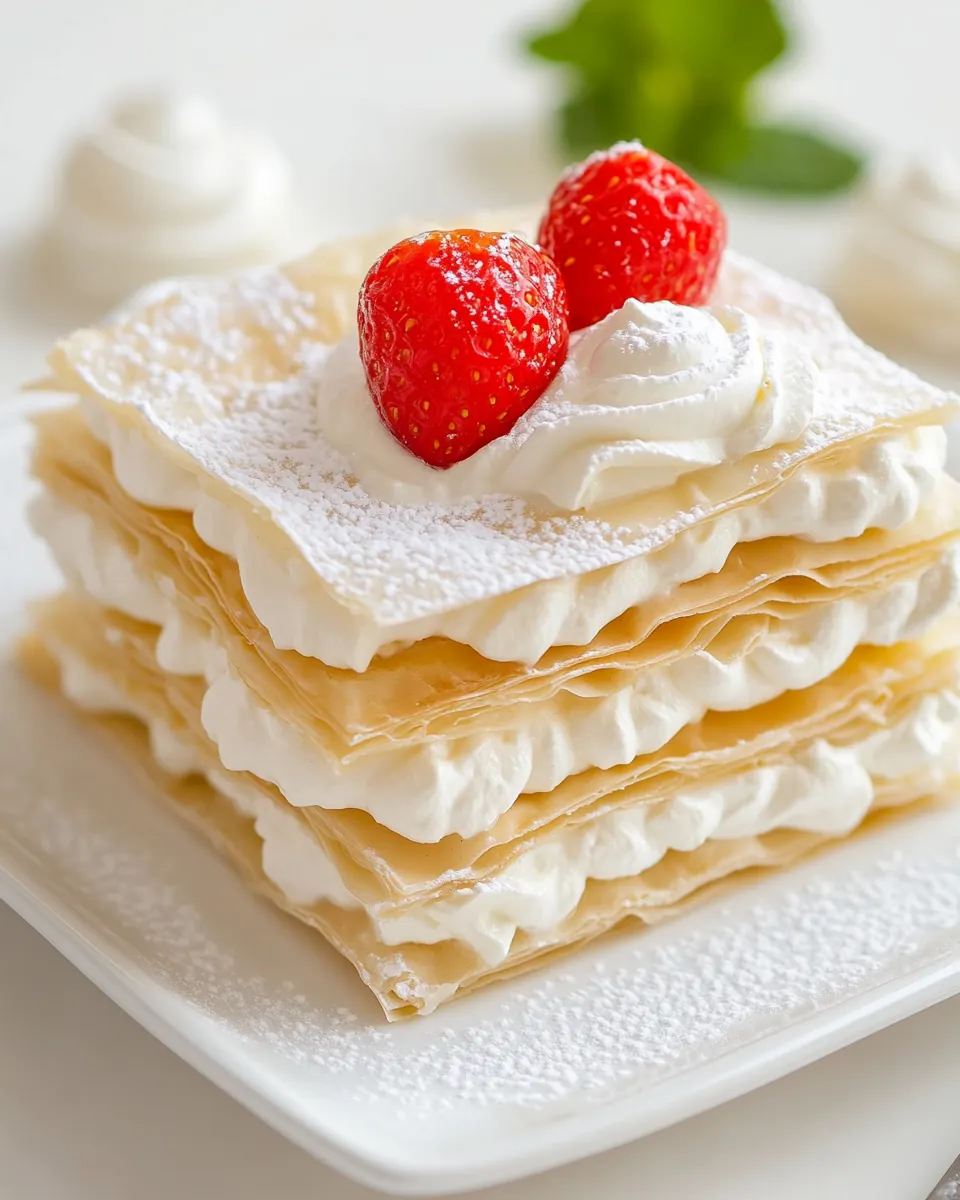
You can tailor Phyllo Napoleon to different tastes while keeping the core technique intact. Below are ideas that respect the original flavors and structure, each starting with a strong highlighted phrase followed by details to help you adapt confidently.
- Use different berries Swap strawberries for raspberries, blueberries, or sliced stone fruit to change acidity and color while preserving texture contrast.
- Adjust sweetness Increase or reduce the powdered sugar in the whipped heavy cream to match the ripeness of your fruit and personal preference.
- Toast the butter Briefly brown the unsalted butter before brushing for a deeper, nuttier aroma that complements the toasted phyllo dough.
- Make smaller portions Cut the rectangles into bite sized pieces for party servings, assembling mini Napoleons for easy finger food.
- Keep components separate Bake and store the phyllo dough sheets in an airtight container, then whip the heavy cream and assemble just before serving to maximize crispness.
What to Serve Alongside Phyllo Napoleon
This dessert pairs beautifully with light accompaniments and can fit many occasions from casual brunches to festive dinners. Below are ideas covering sides, occasions, storage tips, and seasonal pairings, each item designed to enhance the experience of Phyllo Napoleon.
- Fresh fruit platter Complement the dessert with a simple platter of sliced strawberries, blueberries, and citrus segments for guests to add as they like, which keeps the table interactive and colorful.
- Light coffee or tea Offer brewed coffee or a fragrant tea to balance the creaminess and provide a warm contrast to the cool whipped filling, suitable for brunch or after dinner.
- Elegant brunch spread Serve alongside small pastries, yogurt, and honey for a brunch setting, where the crisp layers and fruit emphasize freshness and variety.
- Festival and celebration For holidays and special gatherings, present the assembled Napoleons on a decorative platter, and dust with extra powdered sugar right before the first pour of coffee to keep them picture perfect.
- Storage guidance If you need to prepare ahead, keep baked phyllo dough at room temperature in an airtight container and store whipped heavy cream chilled, assembling within one day for the best texture.
- Seasonal pairing In spring and summer, highlight berries like strawberries or raspberries, while in cooler months you might use preserved fruit that is not overly wet, keeping the pastry crisp.
FAQ
Conclusion
What makes this recipe special is the contrast between the crisp, golden phyllo dough and the cool, airy whipped heavy cream, finished with bright strawberries. It is elegant enough for guests yet approachable for a relaxed afternoon dessert. Try it once and you will appreciate how a few thoughtful steps transform simple ingredients into a memorable treat. I hope you enjoy making and sharing this layered favorite.
Phyllo Napoleon
Equipment
- Oven
- Baking Sheet
- Parchment Paper
- Mixing Bowl
- Electric Mixer
- Piping Bag
Ingredients
- 9 sheets phyllo dough thawed if frozen Thawed and delicate, provides the light, flaky layers that form the pastry’s crisp structure when baked; handle gently to avoid tearing and brush with butter between layers for golden browning.
- 4 tablespoons unsalted butter melted Melted and rich, contributes to browning and separates phyllo layers while adding a silky, savory richness that balances the dessert’s sweetness; distribute evenly to ensure even crispness.
- 1 cup heavy cream chilled Chilled and voluminous, whips into a stable cream that creates the airy, creamy filling between phyllo layers; keep cold to achieve firm peaks and a smooth texture.
- 2 tablespoons powdered sugar Finely sweetened and powdery, stabilizes and lightly sweetens whipped cream without adding graininess; sift in gradually while whipping to maintain a consistent sweetness.
- 1/3 cup powdered sugar or more, for dusting Finely milled and decorative, used to dust the finished napoleon for a delicate, sweet finish and visual contrast; apply sparingly to avoid sogginess on the pastry surface.
- 4 -8 strawberries fresh, hulled & sliced, or berries of choice Fresh and juicy, provides bright acidity and fruity freshness to cut through the rich cream and flaky pastry while adding color and texture when sliced and arranged.
Instructions
- Preheat the oven to 350° F.: You will notice a warm, even heat filling the kitchen as the oven reaches 350° F , which is perfect for crisping phyllo dough without burning it. Preheating ensures the sheets begin to brown immediately and evenly, creating that sought after golden color. A common mistake is placing cold sheets into a partially heated oven, which causes uneven texture, so wait until the temperature stabilizes before baking.
- Line a baking sheet with parchment paper or a silicone mat.: Lining the pan gives a smooth surface and prevents sticking, which helps the phyllo dough lift easily after baking. You will feel the smoothness under the sheets and hear a more delicate crack as they cool. Avoid using an unlined pan, because direct contact can cause uneven browning and sticking, which damages the fragile layers when you remove them.
- Cut stacked phyllo sheets into rectangles (about 3×5 inches).: When you slice the stacked sheets into rectangles, the clean edges help the final presentation look intentional and sharp. Use a sharp knife or pizza cutter to glide through layers, and you will see tidy edges that make assembly simpler. Cutting on an unstable surface or with a dull blade can shred the sheets, leading to irregular pieces that are harder to layer neatly.
- Separate 2–3 sheets per layer, brushing melted butter between each layer.: As you separate and brush with melted butter , the sheets should shimmer slightly, and you will smell a warm, toasty butter aroma when brushed consistently. This step creates thin pockets that crisp independently during baking. A pitfall is overloading with butter, which makes layers greasy and prevents that delicate crisp snap, so use a thin, even coating.
- Place stacks on the baking sheet. Cover with another silicone mat or parchment and a second tray to weigh them down.: Weighing the stacks keeps the layers flat and ensures even contact with heat, resulting in uniform crisping and a consistent golden tone. You may notice a faint press mark from the weight as the layers bake, which is normal. Skipping the weight can lead to uneven puffing and warped sheets that will be harder to stack; using a heavy tray helps avoid that.
- Bake for 10–15 minutes, until golden and crisp. Let cool completely.: During baking you will see the color move from pale to a deep golden brown, and the aroma will shift to nutty and toasty. The sound of cooled sheets is a satisfying brittle crack, which indicates they are done. Pulling sheets out too early results in limp pastry, while leaving them too long risks burning, so watch for even golden edges and dryness across the surface.
- In a cold bowl, beat heavy cream with powdered sugar until soft peaks form. Transfer to a piping bag if using.: As you whip chilled heavy cream with powdered sugar , it will thicken and become glossy, with soft peaks that hold shape but still have a gentle bend. Using a cold bowl and cold heavy cream speeds whipping and improves stability. Overwhipping turns the cream grainy and buttery, so stop when soft peaks appear and keep it chilled until ready to use.
- Layer: phyllo → whipped cream → phyllo → whipped cream → phyllo.: When you assemble, the first contact is the fragile crisp of baked phyllo dough followed by the cool, velvety feel of whipped heavy cream , creating a contrast of temperature and texture. I press lightly to even the layers without compressing them flat, preserving air pockets for crunch. A common error is adding too much cream, which can cause slippage and sogginess, so aim for balanced portions that maintain structure.
- Dust with powdered sugar and top fresh sliced strawberries, or berries of choice.: The final dusting of powdered sugar and bright placement of strawberries adds visual contrast and a sweet finish. You will see a soft white veil over the top layer, and the fruit will glisten against it. If you dust too early or use overly wet fruit, the sugar can dissolve into a paste, so dust just before serving and arrange fruit last for the best look and texture.
Notes
- Use different berries Swap strawberries for raspberries, blueberries, or sliced stone fruit to change acidity and color while preserving texture contrast.
- Adjust sweetness Increase or reduce the powdered sugar in the whipped heavy cream to match the ripeness of your fruit and personal preference.
- Toast the butter Briefly brown the unsalted butter before brushing for a deeper, nuttier aroma that complements the toasted phyllo dough.
- Make smaller portions Cut the rectangles into bite sized pieces for party servings, assembling mini Napoleons for easy finger food.
- Keep components separate Bake and store the phyllo dough sheets in an airtight container, then whip the heavy cream and assemble just before serving to maximize crispness.
