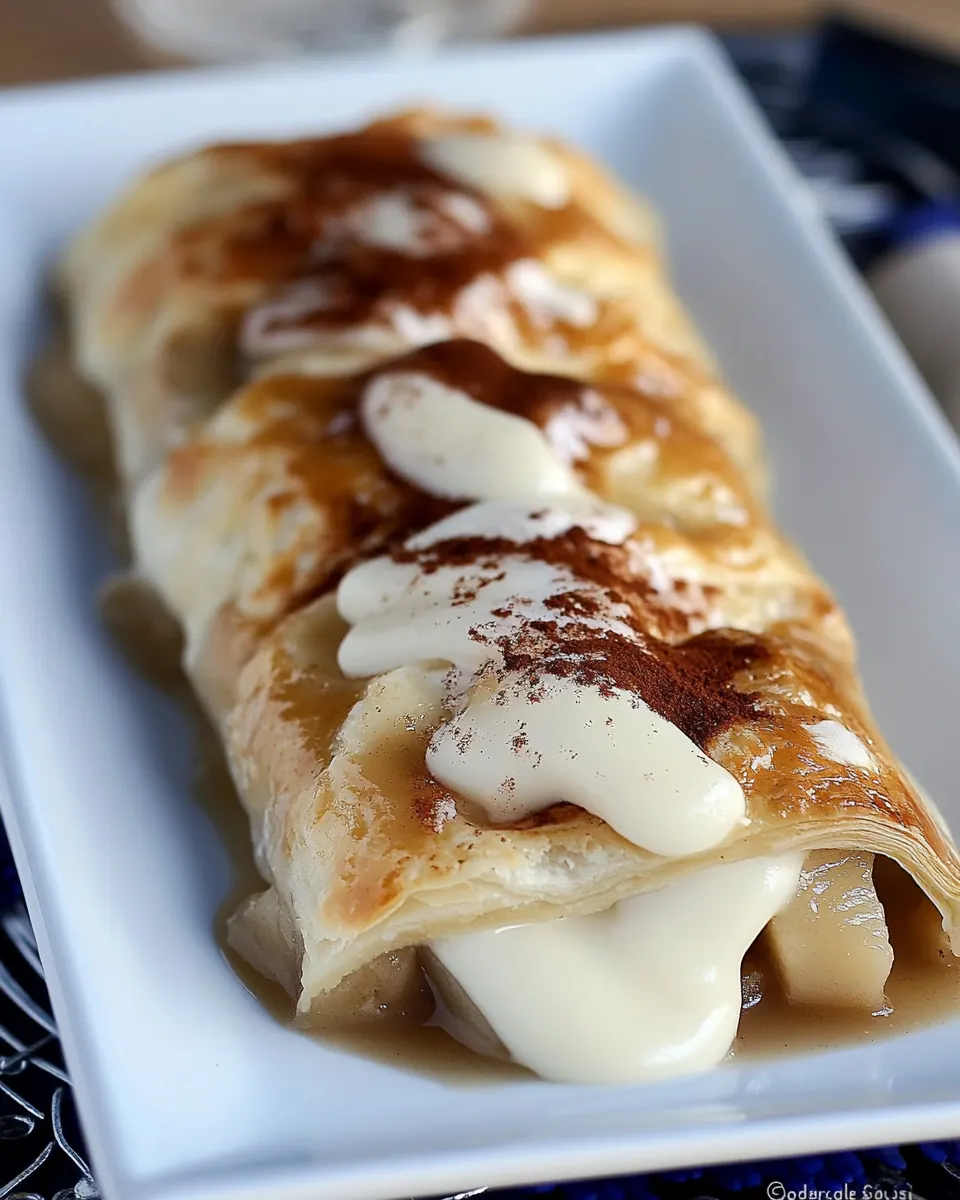
Pear Strudel
Pear Strudel has always felt like the sort of pastry I crave when the air turns crisp and conversations move indoors. The first time I made Pear Strudel I remember the way the kitchen filled with warm spice from ground cinnamon and ground nutmeg, and how the gentle softness of cooked pears contrasted with the whisper crisp of baked phyllo dough. That memory stuck, and now every fall I find an excuse to bring this out when friends pop over.
There is a comfort to assembling Pear Strudel that is almost meditative, from laying delicate sheets of phyllo dough to brushing melted unsalted butter over each layer. I like to chat while I work, telling small stories about the pears, the markets where I buy them, or how a simple glaze of powdered sugar and milk can elevate a humble pastry into something worth savoring. With every roll and brush I recall a different kitchen, a different set of friends, and the way dessert can turn ordinary evenings into moments worth remembering.
Recipe Snapshot
25 mins
15 mins
10 mins
Medium
300 kcal
American
Gluten-Free, Vegan
Desserts
Large skillet, Rimmed baking pan, Parchment paper, Serrated knife, Mixing bowl
The Charm of This Pear Strudel
Why the filling sings
I adore the filling because the combination of 3 large D’Anjou pears, peeled, and diced may substitute apples, 1/4 cup brown sugar, packed, and warming spices creates a layered flavor profile. When the pears soften they release juices that mingle with the sugar, and the light acidity from 1/2 teaspoon lemon juice keeps the filling bright so it never tastes flat or cloying.
Why phyllo makes it special
Using 8 sheets phyllo dough gives you that signature contrast of flaky, paper thin layers and buttery crunch. I love how the buttered surfaces separate during baking, producing a golden lattice that shatters pleasingly when you slice into the strudel.
Why the glaze matters
The simple vanilla glaze made with 3/4 cup powdered sugar, sifted, 2 tablespoons milk, and 1/2 teaspoon vanilla extract brightens every bite. I reach for this glaze because it adds a delicate sweetness and a glossy finish, and it helps the pastry feel finished rather than heavy.
Why it is approachable
This recipe is approachable for lively weeknight baking or a relaxed weekend project. The techniques are straightforward, and you can prepare the filling ahead, which gives you flexibility during a busy afternoon. I often refrigerate the filling so the flavors meld, and that small pause rewards you with a more cohesive filling texture.
Why it is versatile
I appreciate that Pear Strudel works for many moments, from a casual tea to an intimate dinner. The recipe scales, the filling can be made ahead, and the pastry keeps well for a short time, making it a reliable choice when you want something that feels special but is not fussy.
Main Ingredients for Pear Strudel
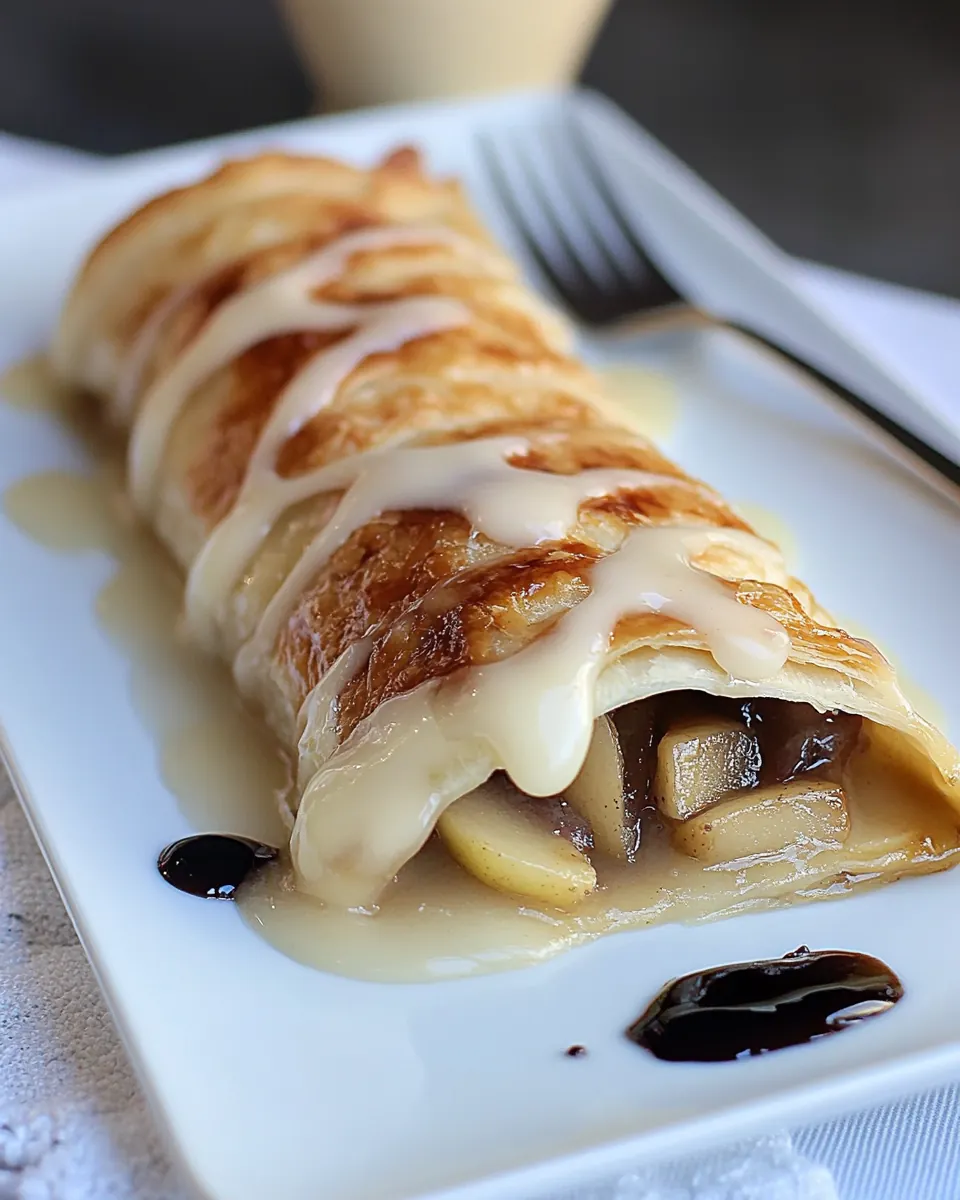
These components form a simple, harmonious team. The pears are the star, offering sweetness and body, while the brown sugar and spices deepen the flavor. Phyllo dough provides the delicate structure, and melted unsalted butter turns those layers into crisp, golden sheets. The glaze ties everything together with a smooth, sweet finish.
- 4 tablespoons unsalted butter, divided: Melted and divided to brown and brush phyllo layers, providing rich flavor and helping create a crisp, golden crust when baked.
- 3 large D’Anjou pears, peeled, and diced may substitute apples: Peeled and diced to supply tender, juicy fruit pieces that become soft when baked; may substitute apples for a firmer texture and different sweetness.
- 1/4 cup brown sugar, packed: Packed and stirred into fruit to add deep, molasses-like sweetness and help the filling caramelize as it bakes for added richness.
- 1/2 teaspoon lemon juice: Added sparingly to brighten the fruit filling, preventing oxidation and balancing sweetness with a subtle tart note throughout the strudel.
- 1/2 teaspoon ground cinnamon: Sprinkled into the filling to introduce warm, aromatic spice that complements the pears and enhances overall depth of flavor.
- 1/4 teaspoon ground nutmeg: Measured into the spice mix to contribute a warm, slightly sweet-nutty nuance that rounds out the cinnamon without overpowering the other spices.
- 8 sheets phyllo dough: Layered and brushed with butter to create multiple ultra-thin, crispy sheets that encase the filling and bake into a flaky, delicate pastry.
- 3/4 cup powdered sugar, sifted: Sifted and dusted over the finished strudel or mixed into a glaze to add pure sweetness and a soft, snowy finish for presentation.
- 2 tablespoons milk: Mixed into the powdered sugar to form a smooth glaze that adds moisture and sheen, helping the sugar adhere to the pastry surface.
- 1/2 teaspoon vanilla extract: Blended into the glaze to impart a floral-vanilla aroma and subtle flavor, enhancing the sweetness and rounding out the glaze profile.
Making This Pear Strudel
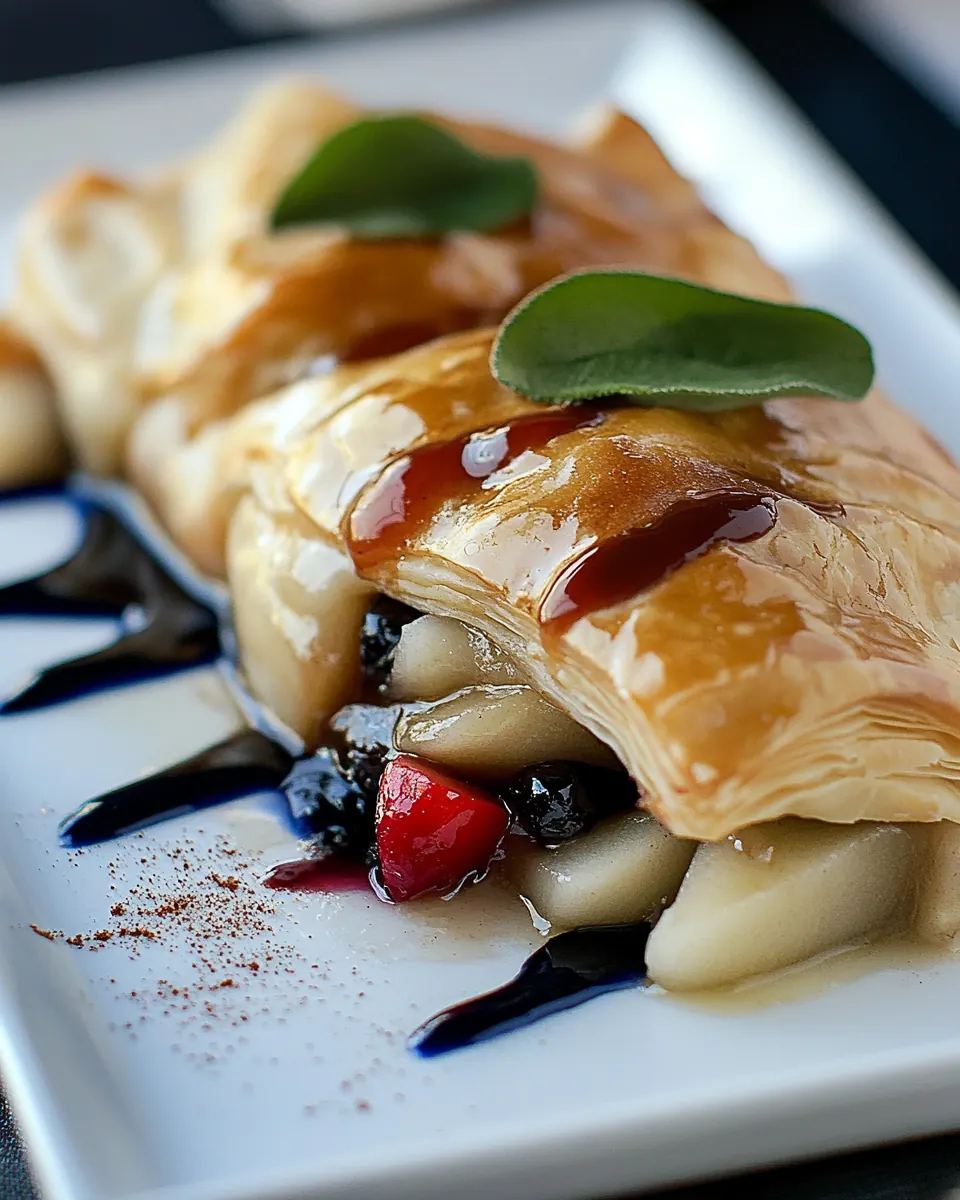
Working through the steps feels like composing a small performance, where timing and attention reward you with golden layers and warmly spiced fruit. Below you’ll find detailed, sensory focused guidance for each original direction, helping you feel confident at the stove and at the oven.
- Melt 2 tablespoons butter over medium heat in a large skillet. Add pears, brown sugar, lemon juice, cinnamon, nutmeg and cook 8 to 10 minutes or until pears are very tender and almost all liquid is evaporated, stirring occasionally. Spread mixture on small rimmed baking pan or large plate and refrigerate for 15 minutes to cool (this can be done up to 2 days in advance).: You will notice the butter soften, then shimmer as the surface ripples when the pan reaches medium heat, releasing a warm, toasty aroma that primes the kitchen. As the butter melts, sprinkle in the diced pears and the 1/4 cup brown sugar, packed , the sugar dissolving into the pear juices and creating soft bubbling sounds. The mixture should come to a gentle simmer so the sugars caramelize lightly, adding depth and sweetness. Stirring occasionally ensures even cooking and prevents small hot spots from forming, which can lead to uneven browning. Why this matters, the gentle heat allows the pears to soften without disintegrating, maintaining some texture while yielding a cohesive filling. A common mistake is turning the heat too high, which causes the sugars to scorch and the pears to burn instead of soften. If the filling looks too wet, continue cooking a bit, allowing excess liquid to evaporate, so the strudel will not become soggy.
- Preheat oven to 400 degrees. Line your counter with parchment paper to create a work surface for the phyllo. Melt remaining 2 tablespoons butter in the microwave.: As the pears cook with the 1/2 teaspoon lemon juice and spices, you will smell the cinnamon bloom and the nutmeg's subtle warmth. The skillet should emit steady little pops as liquid reduces and sugars thicken into a glossy coating around the fruit. This reduction concentrates flavors and prevents a watery filling that would sog the phyllo dough . Stirring occasionally prevents sticking and encourages even caramelization, and you should watch for a visual shift to a deeper, amber hue. If the pears are not soft after 10 minutes, give them a few more minutes, but watch for darkening which signals burning. Avoid rushing by raising the heat, because that leads to uneven texture and possible bitter notes.
- To create one large surface of phyllo, place a stack of 4 phyllo sheets on the parchment paper. Make a second stack of 4 more phyllo sheets and place it next to the long edge of the first stack, overlapping the first stack by about an inch.: Cooling the filling transforms hot syrup into a tacky, manageable component that will not steam or soften the phyllo dough . You will feel how the filling firms slightly as it chills, and aromas will mellow, allowing the spices to integrate with the fruit. This pause helps the strudel maintain a flaky texture during baking because hot filling can create steam pockets and soggy layers. One pitfall is trying to assemble with warm filling, which often results in soaked pastry. If you need to speed things up, spread the filling thinly to expedite cooling, but ideally allow the full rest time.
- Mound the cooled pear filling along one of the long sides of phyllo dough. Roll up like a jelly roll and transfer the parchment with strudel to a rimmed baking pan.: Preheating ensures the oven is hot enough to begin crisping the phyllo dough as soon as it goes in, producing the desirable rapid puff and browning. You should hear the faint hum of the oven and, when you open it, feel a blast of dry heat. This intense initial heat seizes the buttered layers, promoting flakiness and an even golden surface. A common oversight is putting the strudel into a not fully preheated oven, which can cause the pastry to bake unevenly and remain pale and doughy. Confirm the oven has reached the target temperature before sliding the pan in.
- Brush strudel with melted butter. Score the dough into 1-inch portions using a serrated knife, but do not cut completely through the strudel. Bake 20 minutes or until golden brown.: The parchment offers a friction free surface that makes handling phyllo dough far easier, preventing sticking and tearing. As you unroll the sheets, you will feel how delicate they are, and the parchment protects them from drafts that dry the dough. Keeping the sheets covered with a damp kitchen towel while you work preserves elasticity. A typical mistake is leaving the unused sheets exposed, which causes brittle edges and increases tearing during assembly. If a sheet does tear, you can overlap with another and brush with a little melted butter to seal.
- Meanwhile, make the vanilla glaze by whisking the Vanilla Glaze ingredients together in a medium bowl.: The second portion of unsalted butter should be just melted, glossy and warm, not browned. This butter will be brushed onto the phyllo to create separate, crisp layers that brown beautifully. The smell will be rich and inviting, and using warm butter helps it spread easily without cracking the sheets. Avoid overheating, which can burn the butter and add an off flavor. If the butter separates, stir gently to recombine before brushing.
- Slice strudel and serve warm with glaze drizzled on top.: Handling the phyllo dough in stacks gives you a thicker base that will hold the filling without tearing. As you lay each sheet, brush with a light coat of the warm melted butter so the layers remain distinct and crisp. The surface should glisten slightly after each brushing, and you will notice a subtle buttery aroma building. Keep a damp towel over unused sheets to prevent them from drying. A common error is using too much butter, which saturates the dough and yields greasy layers rather than crisp ones.
- Make a second stack of 4 more phyllo sheets and place it next to the long edge of the first stack, overlapping the first stack by about an inch.: Overlapping creates the full width needed for a generous strudel, and the seam will bake into a unified roll if well buttered. You should feel a continuous sheet once both stacks are aligned, and the overlapping edge will be slightly thicker, so be mindful when brushing to maintain even coverage. If alignment slips, gently nudge the sheets back into place to prevent gaps that can let filling escape. Rushed assembly here often leads to uneven rolling.
- Mound the cooled pear filling along one of the long sides of phyllo dough.: The cooled filling will be tacky, almost jam like in texture, and you can sense its sweet perfume. Pile it in a long line so the roll will form evenly, keeping a small margin at the edge to allow sealing. The quantity should be manageable, not overflowing, because excess filling can force seams open during baking. A frequent mistake is overfilling, which causes the strudel to leak and lose crispness. If the filling seems too loose, drain briefly on a spoon before placing it on the dough.
- Roll up like a jelly roll and transfer the parchment with strudel to a rimmed baking pan.: As you roll, the phyllo will layer and compact around the filling, creating a pleasing spiral when sliced. The roll should be snug but not tight, allowing steam to escape during baking. When transferring, the parchment makes it simple to move the strudel without disturbing the shape. If the seam does not seal, brush a little of the melted butter to help it adhere. Avoid jerky movements while lifting, as the roll can uncoil or tear at the seam.
- Brush strudel with melted butter.: A generous brushing gives the pastry its deep golden sheen and encourages crisping across the surface. The butter will sizzle slightly as it hits the warm or room temperature roll, and you should see the surface glisten before baking. If desired, a final light brush mid bake can rescue areas that look dry. Overbasting, however, can make the bottom greasy, so aim for an even, thin coat.
- Score the dough into 1-inch portions using a serrated knife, but do not cut completely through the strudel.: Scoring creates neat slices after baking and helps steam vent in controlled places, preventing random splits. The serrated knife will make gentle ridges, and you will see the top yield slightly with each score. Be careful not to cut through, because that releases filling while baking. If the filling begins to escape during scoring, press the seam gently to reseal before baking.
- Bake 20 minutes or until golden brown.: The oven will transform the buttered layers into crisp, flaky sheets that turn a warm, deep gold. You might hear faint crackles as steam escapes, and the aroma will shift to rich, toasted butter and caramel notes from the filling. Visual cues tell you it is done, the surface should be evenly colored and flaky, not pale or doughy. A common mistake is opening the oven too early, which can drop the temperature and affect browning. Use a window to monitor progress when possible.
- Meanwhile, make the vanilla glaze by whisking the Vanilla Glaze ingredients together in a medium bowl.: As you whisk together the 3/4 cup powdered sugar, sifted , 2 tablespoons milk , and 1/2 teaspoon vanilla extract , the mixture will transform into a velvety, slightly glossy drizzle. The powdered sugar dissolves to create a smooth texture that clings to warm pastry, and the vanilla lifts the flavor. If lumps remain, sift again or whisk vigorously to achieve silkiness. A watery glaze means too much milk , and it will not set on the strudel as intended.
- Slice strudel and serve warm with glaze drizzled on top.: Serving while warm highlights the contrast between the crisp phyllo dough and tender filling, and the glaze will melt slightly, adding a glossy sweetness. As you slice, you will hear a satisfying snap of the crust and see defined spirals of fruit inside. Plate each portion and drizzle the glaze in a steady stream for an inviting finish. A common misstep is slicing immediately from the oven without allowing a few minutes to settle, which can cause the filling to run. Let it rest briefly, then slice with a sharp serrated knife for clean edges.
Making Adjustments
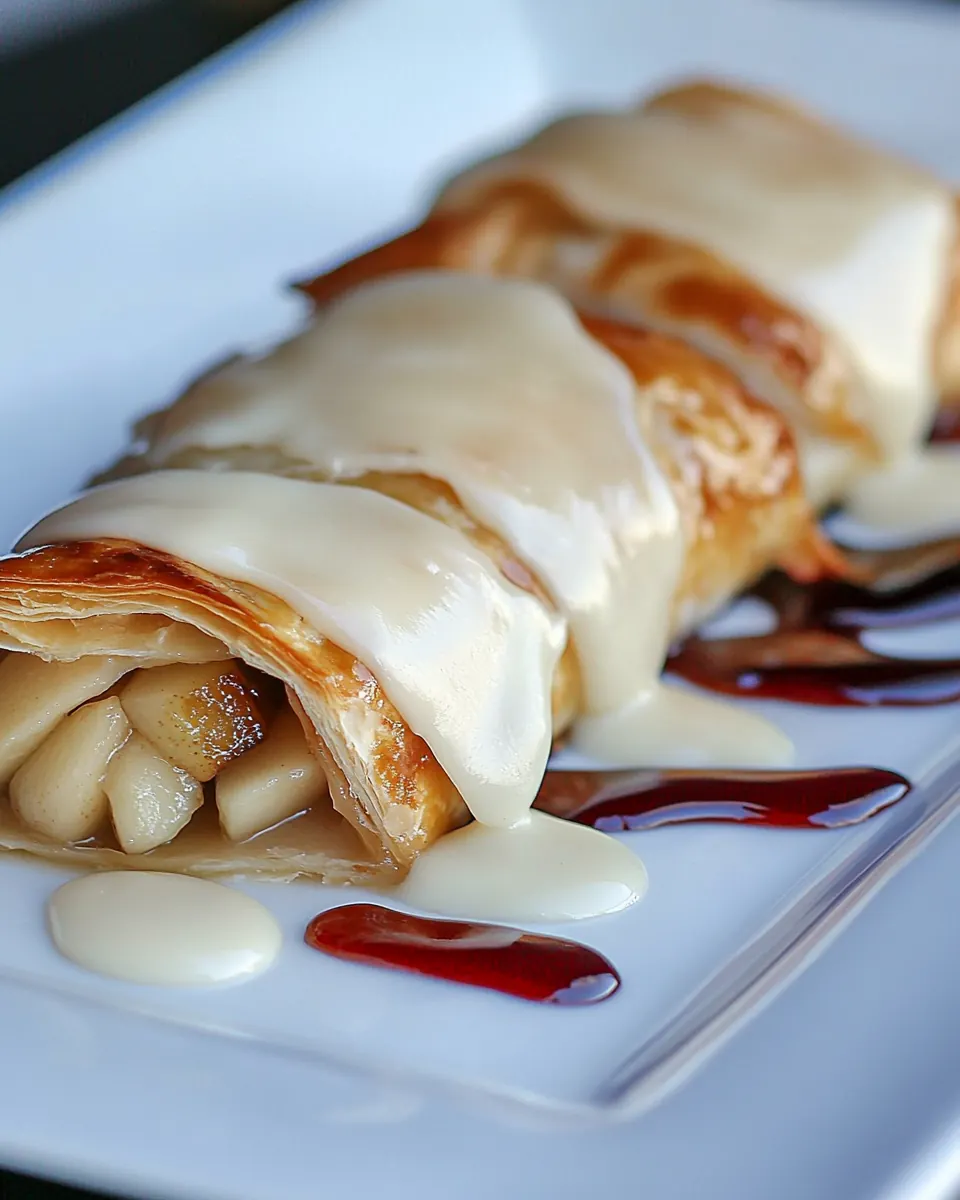
I like to give straightforward, practical adjustments so you can tailor Pear Strudel to your pantry and schedule. Below are expanded tips you can rely on when planning, prepping, and serving.
- Make ahead: The filling keeps well refrigerated for up to two days, which lets you spread out work and assemble just before baking for maximum flakiness.
- Phyllo handling: Keep the sheets covered with a damp towel while working, and if any tears occur, patch with an extra sheet and a little butter.
- Butter control: Use warm, melted butter for brushing so it spreads easily, and avoid saturating the dough to prevent greasiness.
- Glaze consistency: Adjust the milk amount one teaspoon at a time to reach a drizzleable but not runny glaze that will set slightly on warm pastry.
- Temperature check: Ensure your oven reads 400 degrees before baking, because an underheated oven can yield a pale, underbaked crust.
- Serving warm: Let the strudel rest five minutes after baking to firm the filling slightly, then slice with a serrated knife for clean pieces.
Great Combinations for Pear Strudel
Pear Strudel pairs beautifully with a variety of sides and occasions, and these options highlight how flexible this pastry can be. Below I outline serving styles, storage notes, and ideal moments to enjoy it.
- Tea time pairing: Serve warm slices with a small pot of strong black tea for afternoon visitors, the tannins cutting through the glaze and butter.
- Brunch option: Offer slices alongside a simple fruit salad for a late morning spread, balancing the pastry richness with fresh brightness.
- Casual dinner finale: Present Pear Strudel at the end of a relaxed dinner, allowing guests to take a slice while still chatting in the living room.
- Seasonal occasion: This recipe is ideal for fall gatherings, when the spices and pears feel particularly on theme and comforting.
- Storage tips: Store leftover strudel wrapped loosely at room temperature for up to one day, or refrigerate for up to two days; reheat briefly in a low oven to restore crispness.
- Make ahead strategy: Prepare the filling up to two days in advance and assemble just before baking to preserve the phyllo dough crispness.
FAQ
Conclusion
Pear Strudel shines because it combines tender, spiced fruit with impossibly crisp layers of phyllo, creating a balance of textures and flavors that feels both cozy and elegant. Give it a try the next time you want a dessert that looks impressive but is straightforward to make. You will enjoy the ritual of assembling the layers and the satisfying result of a golden, fragrant pastry that invites sharing.
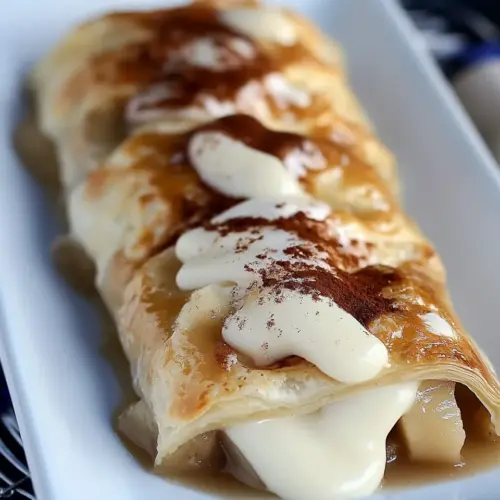
Pear Strudel
Equipment
- Large Skillet
- Rimmed baking pan
- Parchment Paper
- Serrated Knife
- Mixing Bowl
Ingredients
- 4 tablespoons unsalted butter, divided Melted and divided to brown and brush phyllo layers, providing rich flavor and helping create a crisp, golden crust when baked.
- 3 large D’Anjou pears, peeled, and diced may substitute apples Peeled and diced to supply tender, juicy fruit pieces that become soft when baked; may substitute apples for a firmer texture and different sweetness.
- 1/4 cup brown sugar, packed Packed and stirred into fruit to add deep, molasses-like sweetness and help the filling caramelize as it bakes for added richness.
- 1/2 teaspoon lemon juice Added sparingly to brighten the fruit filling, preventing oxidation and balancing sweetness with a subtle tart note throughout the strudel.
- 1/2 teaspoon ground cinnamon Sprinkled into the filling to introduce warm, aromatic spice that complements the pears and enhances overall depth of flavor.
- 1/4 teaspoon ground nutmeg Measured into the spice mix to contribute a warm, slightly sweet-nutty nuance that rounds out the cinnamon without overpowering the other spices.
- 8 sheets phyllo dough Layered and brushed with butter to create multiple ultra-thin, crispy sheets that encase the filling and bake into a flaky, delicate pastry.
- 3/4 cup powdered sugar, sifted Sifted and dusted over the finished strudel or mixed into a glaze to add pure sweetness and a soft, snowy finish for presentation.
- 2 tablespoons milk Mixed into the powdered sugar to form a smooth glaze that adds moisture and sheen, helping the sugar adhere to the pastry surface.
- 1/2 teaspoon vanilla extract Blended into the glaze to impart a floral-vanilla aroma and subtle flavor, enhancing the sweetness and rounding out the glaze profile.
Instructions
- Melt 2 tablespoons butter over medium heat in a large skillet. Add pears, brown sugar, lemon juice, cinnamon, nutmeg and cook 8 to 10 minutes or until pears are very tender and almost all liquid is evaporated, stirring occasionally. Spread mixture on small rimmed baking pan or large plate and refrigerate for 15 minutes to cool (this can be done up to 2 days in advance).: You will notice the butter soften, then shimmer as the surface ripples when the pan reaches medium heat, releasing a warm, toasty aroma that primes the kitchen. As the butter melts, sprinkle in the diced pears and the 1/4 cup brown sugar, packed , the sugar dissolving into the pear juices and creating soft bubbling sounds. The mixture should come to a gentle simmer so the sugars caramelize lightly, adding depth and sweetness. Stirring occasionally ensures even cooking and prevents small hot spots from forming, which can lead to uneven browning. Why this matters, the gentle heat allows the pears to soften without disintegrating, maintaining some texture while yielding a cohesive filling. A common mistake is turning the heat too high, which causes the sugars to scorch and the pears to burn instead of soften. If the filling looks too wet, continue cooking a bit, allowing excess liquid to evaporate, so the strudel will not become soggy.
- Preheat oven to 400 degrees. Line your counter with parchment paper to create a work surface for the phyllo. Melt remaining 2 tablespoons butter in the microwave.: As the pears cook with the 1/2 teaspoon lemon juice and spices, you will smell the cinnamon bloom and the nutmeg's subtle warmth. The skillet should emit steady little pops as liquid reduces and sugars thicken into a glossy coating around the fruit. This reduction concentrates flavors and prevents a watery filling that would sog the phyllo dough . Stirring occasionally prevents sticking and encourages even caramelization, and you should watch for a visual shift to a deeper, amber hue. If the pears are not soft after 10 minutes, give them a few more minutes, but watch for darkening which signals burning. Avoid rushing by raising the heat, because that leads to uneven texture and possible bitter notes.
- To create one large surface of phyllo, place a stack of 4 phyllo sheets on the parchment paper. Make a second stack of 4 more phyllo sheets and place it next to the long edge of the first stack, overlapping the first stack by about an inch.: Cooling the filling transforms hot syrup into a tacky, manageable component that will not steam or soften the phyllo dough . You will feel how the filling firms slightly as it chills, and aromas will mellow, allowing the spices to integrate with the fruit. This pause helps the strudel maintain a flaky texture during baking because hot filling can create steam pockets and soggy layers. One pitfall is trying to assemble with warm filling, which often results in soaked pastry. If you need to speed things up, spread the filling thinly to expedite cooling, but ideally allow the full rest time.
- Mound the cooled pear filling along one of the long sides of phyllo dough. Roll up like a jelly roll and transfer the parchment with strudel to a rimmed baking pan.: Preheating ensures the oven is hot enough to begin crisping the phyllo dough as soon as it goes in, producing the desirable rapid puff and browning. You should hear the faint hum of the oven and, when you open it, feel a blast of dry heat. This intense initial heat seizes the buttered layers, promoting flakiness and an even golden surface. A common oversight is putting the strudel into a not fully preheated oven, which can cause the pastry to bake unevenly and remain pale and doughy. Confirm the oven has reached the target temperature before sliding the pan in.
- Brush strudel with melted butter. Score the dough into 1-inch portions using a serrated knife, but do not cut completely through the strudel. Bake 20 minutes or until golden brown.: The parchment offers a friction free surface that makes handling phyllo dough far easier, preventing sticking and tearing. As you unroll the sheets, you will feel how delicate they are, and the parchment protects them from drafts that dry the dough. Keeping the sheets covered with a damp kitchen towel while you work preserves elasticity. A typical mistake is leaving the unused sheets exposed, which causes brittle edges and increases tearing during assembly. If a sheet does tear, you can overlap with another and brush with a little melted butter to seal.
- Meanwhile, make the vanilla glaze by whisking the Vanilla Glaze ingredients together in a medium bowl.: The second portion of unsalted butter should be just melted, glossy and warm, not browned. This butter will be brushed onto the phyllo to create separate, crisp layers that brown beautifully. The smell will be rich and inviting, and using warm butter helps it spread easily without cracking the sheets. Avoid overheating, which can burn the butter and add an off flavor. If the butter separates, stir gently to recombine before brushing.
- Slice strudel and serve warm with glaze drizzled on top.: Handling the phyllo dough in stacks gives you a thicker base that will hold the filling without tearing. As you lay each sheet, brush with a light coat of the warm melted butter so the layers remain distinct and crisp. The surface should glisten slightly after each brushing, and you will notice a subtle buttery aroma building. Keep a damp towel over unused sheets to prevent them from drying. A common error is using too much butter, which saturates the dough and yields greasy layers rather than crisp ones.
- Make a second stack of 4 more phyllo sheets and place it next to the long edge of the first stack, overlapping the first stack by about an inch.: Overlapping creates the full width needed for a generous strudel, and the seam will bake into a unified roll if well buttered. You should feel a continuous sheet once both stacks are aligned, and the overlapping edge will be slightly thicker, so be mindful when brushing to maintain even coverage. If alignment slips, gently nudge the sheets back into place to prevent gaps that can let filling escape. Rushed assembly here often leads to uneven rolling.
- Mound the cooled pear filling along one of the long sides of phyllo dough.: The cooled filling will be tacky, almost jam like in texture, and you can sense its sweet perfume. Pile it in a long line so the roll will form evenly, keeping a small margin at the edge to allow sealing. The quantity should be manageable, not overflowing, because excess filling can force seams open during baking. A frequent mistake is overfilling, which causes the strudel to leak and lose crispness. If the filling seems too loose, drain briefly on a spoon before placing it on the dough.
- Roll up like a jelly roll and transfer the parchment with strudel to a rimmed baking pan.: As you roll, the phyllo will layer and compact around the filling, creating a pleasing spiral when sliced. The roll should be snug but not tight, allowing steam to escape during baking. When transferring, the parchment makes it simple to move the strudel without disturbing the shape. If the seam does not seal, brush a little of the melted butter to help it adhere. Avoid jerky movements while lifting, as the roll can uncoil or tear at the seam.
- Brush strudel with melted butter.: A generous brushing gives the pastry its deep golden sheen and encourages crisping across the surface. The butter will sizzle slightly as it hits the warm or room temperature roll, and you should see the surface glisten before baking. If desired, a final light brush mid bake can rescue areas that look dry. Overbasting, however, can make the bottom greasy, so aim for an even, thin coat.
- Score the dough into 1-inch portions using a serrated knife, but do not cut completely through the strudel.: Scoring creates neat slices after baking and helps steam vent in controlled places, preventing random splits. The serrated knife will make gentle ridges, and you will see the top yield slightly with each score. Be careful not to cut through, because that releases filling while baking. If the filling begins to escape during scoring, press the seam gently to reseal before baking.
- Bake 20 minutes or until golden brown.: The oven will transform the buttered layers into crisp, flaky sheets that turn a warm, deep gold. You might hear faint crackles as steam escapes, and the aroma will shift to rich, toasted butter and caramel notes from the filling. Visual cues tell you it is done, the surface should be evenly colored and flaky, not pale or doughy. A common mistake is opening the oven too early, which can drop the temperature and affect browning. Use a window to monitor progress when possible.
- Meanwhile, make the vanilla glaze by whisking the Vanilla Glaze ingredients together in a medium bowl.: As you whisk together the 3/4 cup powdered sugar, sifted , 2 tablespoons milk , and 1/2 teaspoon vanilla extract , the mixture will transform into a velvety, slightly glossy drizzle. The powdered sugar dissolves to create a smooth texture that clings to warm pastry, and the vanilla lifts the flavor. If lumps remain, sift again or whisk vigorously to achieve silkiness. A watery glaze means too much milk , and it will not set on the strudel as intended.
- Slice strudel and serve warm with glaze drizzled on top.: Serving while warm highlights the contrast between the crisp phyllo dough and tender filling, and the glaze will melt slightly, adding a glossy sweetness. As you slice, you will hear a satisfying snap of the crust and see defined spirals of fruit inside. Plate each portion and drizzle the glaze in a steady stream for an inviting finish. A common misstep is slicing immediately from the oven without allowing a few minutes to settle, which can cause the filling to run. Let it rest briefly, then slice with a sharp serrated knife for clean edges.
Notes
- Make ahead: The filling keeps well refrigerated for up to two days, which lets you spread out work and assemble just before baking for maximum flakiness.
- Phyllo handling: Keep the sheets covered with a damp towel while working, and if any tears occur, patch with an extra sheet and a little butter.
- Butter control: Use warm, melted butter for brushing so it spreads easily, and avoid saturating the dough to prevent greasiness.
- Glaze consistency: Adjust the milk amount one teaspoon at a time to reach a drizzleable but not runny glaze that will set slightly on warm pastry.
- Temperature check: Ensure your oven reads 400 degrees before baking, because an underheated oven can yield a pale, underbaked crust.
- Serving warm: Let the strudel rest five minutes after baking to firm the filling slightly, then slice with a serrated knife for clean pieces.
