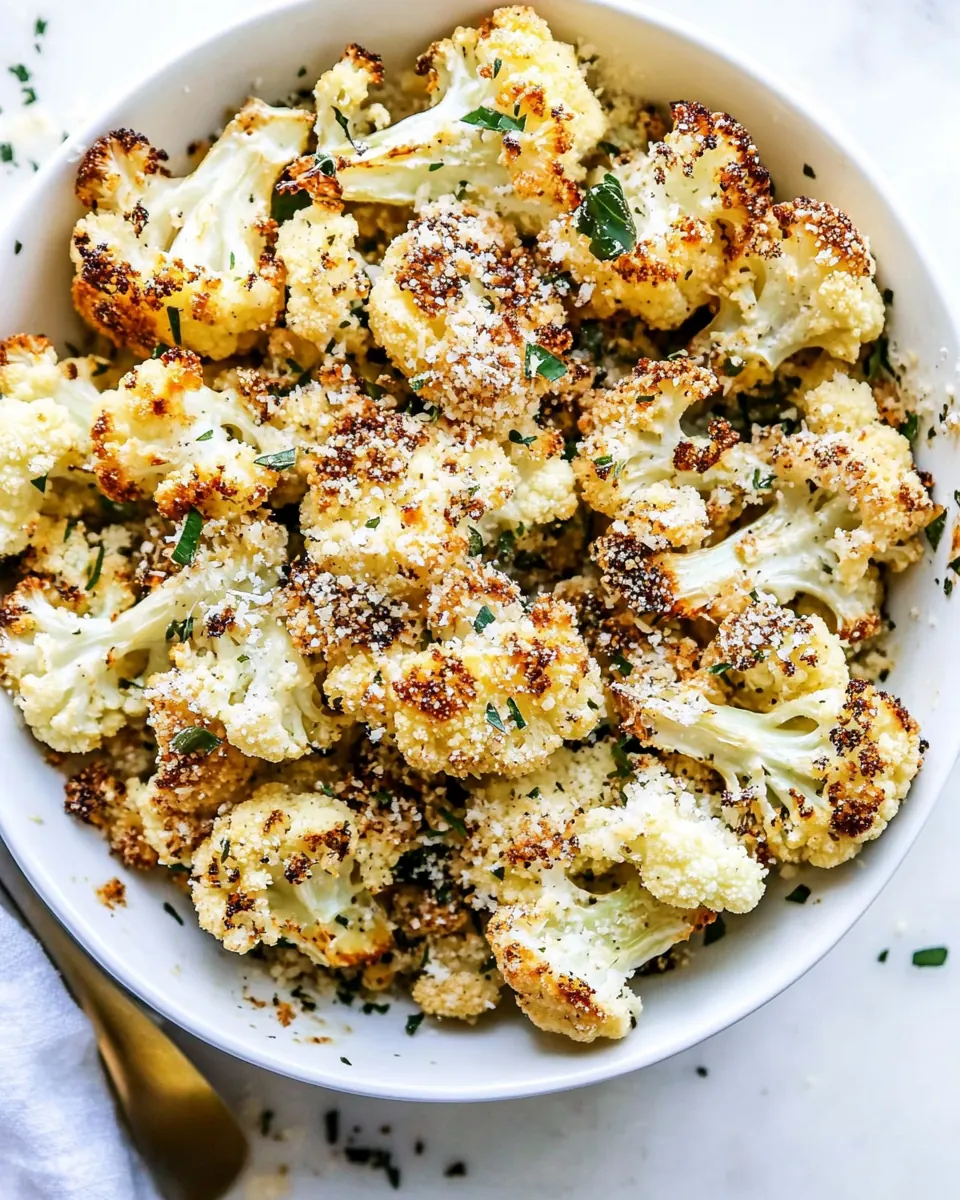
Parmesan Roasted Cauliflower
Parmesan Roasted Cauliflower has always been my go to when I want something that feels both rustic and a little bit fancy without fuss.
Years ago I learned to love this dish on a cramped weeknight when the oven did most of the work and I got to focus on conversation instead of chopping every last thing. The crisp, toasted edges of the florets and the nutty hit of Parmesan cheese made a plain cauliflower feel celebratory. I still remember the first time I scraped those browned bits from the sheet pan with a fork, and how the kitchen smelled like a cozy neighborhood bistro for minutes after.
Over time I adjusted little things to suit how I cook now. I prefer slightly larger florets so they hold a tender interior and a caramelized exterior. A quick toss in extra-virgin olive oil and a light sprinkle of Italian seasoning is all it takes to let the vegetable sing. This recipe lives in my rotation for casual dinners, potlucks, and when I want a nourishing side that appeals to everyone at the table.
Recipe Snapshot
30 mins
5 mins
25 mins
Easy
150 kcal
Italian
Gluten-Free, Keto
Side Dishes
Baking sheet, Mixing bowl, Knife, Cutting board, Spatula
Why This Parmesan Roasted Cauliflower Is a Winner
Golden caramelization that tastes like effort but takes hardly any
I love how the high heat transforms humble cauliflower into something rich and savory. The edges become deeply golden, with a slightly sweet, nutty depth that you would expect from slow cooking, but you get it in a fraction of the time. That contrast between crisp exterior and tender heart makes every bite interesting.
Cheesy crunch without heaviness
The combination of Parmesan cheese and panko bread crumbs gives you texture and umami without turning this into a heavy gratin. I like that the crumbs brown quickly and the cheese gets those flecks of toasted flavor. It reads as indulgent, yet the overall dish stays light and vegetable forward.
Ridiculously simple ingredient list
There are only a few players: cauliflower, olive oil, seasonings, and the crunchy cheesy topping. Because each component has a clear role, the flavors remain bright and purposeful. That simplicity makes it perfect for quick weeknights and for pairing with more complex mains.
Versatile for many occasions
I find myself bringing this to potlucks, serving it alongside roasted proteins for dinner, or offering it as a vegetable side at holiday meals. It scales well, which means I can make a pan for two or double it for a crowd, and it still holds up in flavor and texture.
Hands off, satisfying technique
Baking at a high temperature does the heavy lifting. You get roasted depth and crunchy bits with minimal babysitting, which is perfect when I am juggling a few other dishes. It feels clever to rely on the oven and end up with something that tastes like you labored for it, when really it was mostly patience and heat.
Ingredients for Parmesan Roasted Cauliflower
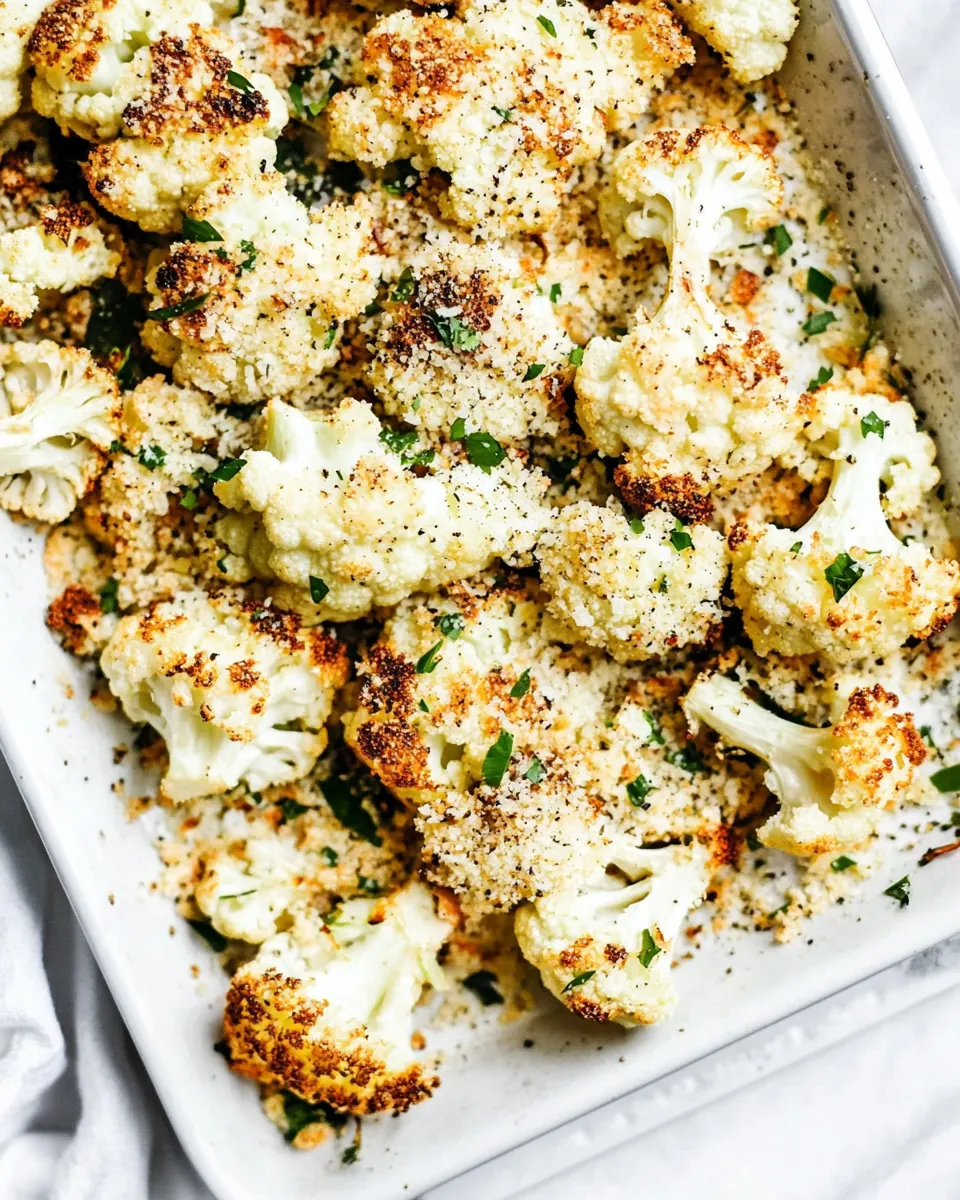
These ingredients are chosen to highlight the natural sweetness and texture of the vegetable while adding savory, crunchy contrast. The cauliflower is the star, the extra-virgin olive oil conducts heat and helps caramelize, the Italian seasoning and kosher salt bring balanced flavor, and the Parmesan cheese with panko bread crumbs create that irresistible toasted topping. Together they create layers of texture and flavor without masking the vegetable’s character.
- 1 head cauliflower: Trimmed and separated into florets, provides the meaty base and mild flavor that soaks up seasonings and crisps when roasted. Roasting develops a nutty sweetness and creates a tender interior with golden edges, forming the main body of the dish.
- 2 tablespoons extra-virgin olive oil: Drizzled over the cauliflower before roasting, coats florets to promote even browning and carry flavors. Adds a fruity, slightly peppery richness that enhances texture and helps breadcrumbs and cheese adhere.
- 1 teaspoon Italian seasoning: Sprinkled over the oiled florets, imparts a balanced blend of Mediterranean herbs to complement the cauliflower. Delivers aromatic notes like oregano and basil that brighten the dish without overpowering other ingredients.
- 1/2 teaspoon kosher salt: Seasoned onto the florets to enhance natural flavors and balance sweetness from roasting. Helps draw out moisture for better caramelization while ensuring the finished bites are savory and well-rounded.
- 1/2 teaspoon freshly ground black pepper: Ground onto the vegetables to inject a sharp, mildly pungent heat and depth of flavor. Provides subtle background warmth that contrasts the creamy interior and enhances overall seasoning.
- 1/2 cup grated Parmesan cheese: Tossed with the cauliflower and breadcrumbs to create a savory, salty crust that melts and browns in the oven. Contributes umami and a sharp dairy tang that amplifies richness and helps form a gratin-like topping.
- 1/4 cup panko bread crumbs: Mixed with Parmesan and sprinkled over the florets to add a crunchy, toasty finish once baked. Creates texture contrast and absorbs some oil, producing crisp, golden tidbits that elevate each bite.
- 1 tablespoon minced fresh parsley: Chopped finely and scattered over the finished cauliflower to add fresh color and a mild herbaceous lift. Balances richness and adds a bright, slightly grassy note that refreshes the palate.
Putting Together Parmesan Roasted Cauliflower
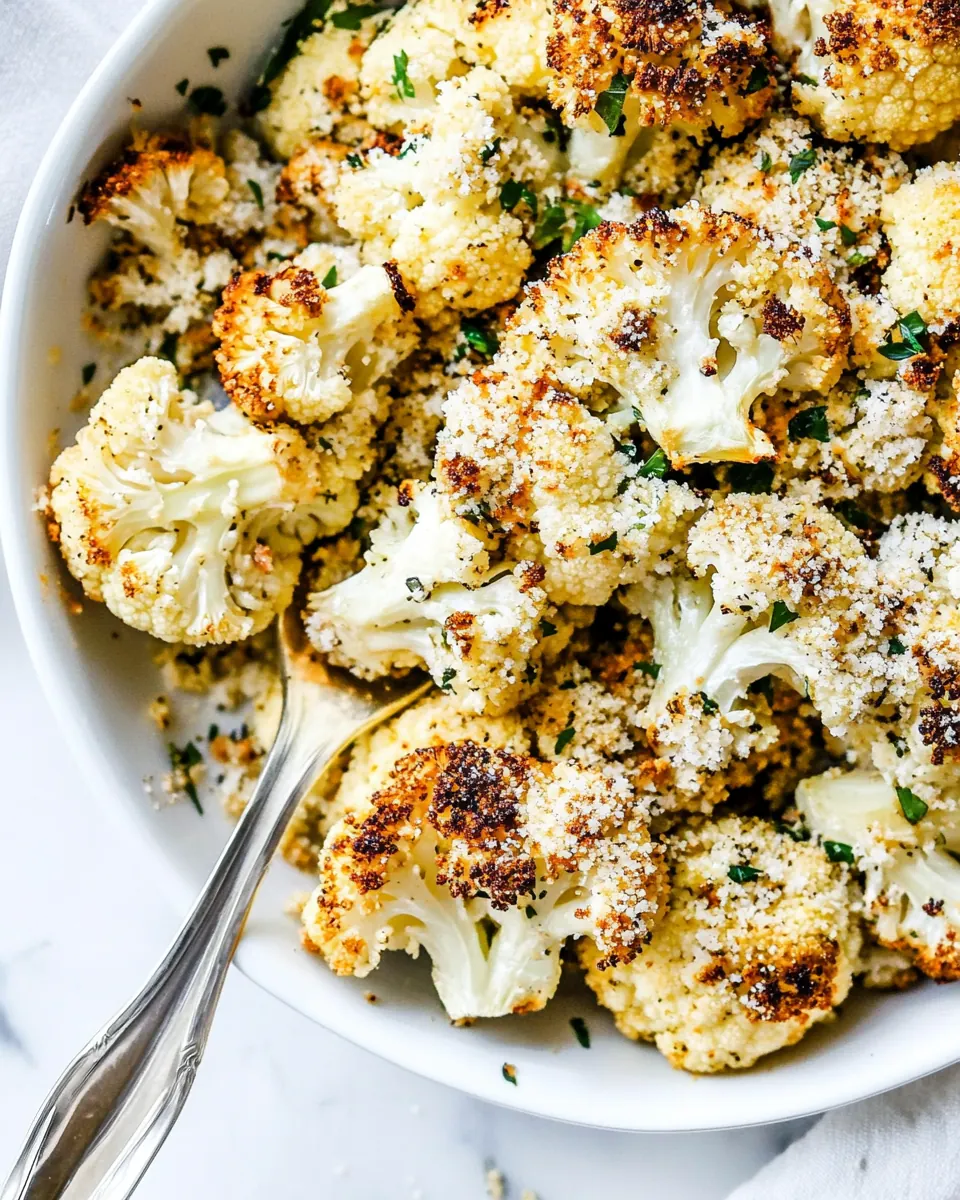
Bringing this dish together is straightforward, and the steps reward attention to texture and timing. Move confidently from prepping to baking, and use sensory cues like color and sound to gauge doneness. Below are the cleaned steps from the recipe with rich, practical guidance to help you get perfect results.
- Preheat the oven to 425°F.: You will notice the warm, dry air start to sweep through the oven as it comes up to temperature, which is essential for getting deep caramelization on the cauliflower . A fully preheated oven gives an immediate sizzle when the florets hit the sheet, helping exterior browning while keeping the interior tender. Common mistakes include putting the pan in too early, which leads to pale, steamed florets, or not placing the rack in the right position, which can affect color. Make sure the oven reads 425°F on an oven thermometer if you have one, and use a sturdy baking sheet so heat distributes evenly.
- Slice the head of the cauliflower in half from the top of the crown through to the stem. Cut out the core of each of the halves and remove the leaves. Trim the cauliflower into large florets, then into smaller florets. Use the knife or break with your fingers. Cut the florets into roughly the same size, with each floret displaying at least one cut side that lays flat on the baking sheet to become caramelized.: As you cut, you can hear and see the dense white core yield to the knife, and the exposed faces will quickly turn a deeper cream as they air dry for a few minutes. Cutting through the crown makes it easier to remove the core and obtain uniform pieces. If you rush this step you might end up with tiny bits that overcook, so aim for controlled, deliberate cuts. Keep a stable cutting board and a sharp knife to reduce slipping and uneven pieces.
- Scatter the cauliflower on a high sided baking sheet and drizzle with olive oil. Sprinkle the cauliflower with Italian seasoning, kosher salt and black pepper and toss to coat. In a small bowl, mix together the Parmesan cheese, panko bread crumbs, and parsley. Set aside.: Removing the core frees the florets and reduces fibrous pieces that take longer to cook. When you extract the core you can feel where the florets naturally separate, and following those lines keeps pieces intact. Leaving the core in can yield undercooked, chewy sections, so be thorough. Use your hands to break apart larger chunks if needed, rather than making too many small slices.
- Lay the florets on a baking sheet in an even layer, cut side down. Bake for 15 minutes. Flip half way through cooking time if desired. Sprinkle the Parmesan mixture over the cauliflower and bake for 5-10 minutes or more, or until the cheese is melted and beginning to brown. Serve warm, and be sure to scrape up all of the little crispy bits to enjoy.: At this point you will see a range of shapes; aim for uniform sizes so they roast evenly. Large florets keep a pleasant bite, while flatter faces mean more surface area will brown. If pieces are very different in size, remove the tiniest ones to a separate area so you can add them later if needed. A common pitfall is inconsistent pieces that leave some burnt and others underdone.
- Use the knife or break with your fingers.: Breaking florets by hand gives natural, irregular edges that crisp beautifully in the oven. You can hear the snap and feel the texture as you separate segments. If you use a knife, keep cuts decisive to create flat surfaces. Tearing too forcefully can rag the surface and create crumbly bits that cook differently, so balance hand separation with clean knife work.
- Cut the florets into roughly the same size, with each floret displaying at least one cut side that lays flat on the baking sheet to become caramelized.: Lay each floret flat and you will notice how quickly edges start to brown in the hot oven, turning golden and developing tiny toasted flavors. Uniformity ensures even cooking and predictable texture. If you skip ensuring a flat side, you may end up with less surface browning and a more steamed texture. Arrange them deliberately so each piece has good contact with the pan.
- Scatter the cauliflower on a high sided baking sheet and drizzle with olive oil.: When the extra–virgin olive oil hits the warm pan and florets, you should see a faint sheen form; this promotes even browning and a satisfying mouthfeel. Tossing ensures every piece has a thin film for conduction. Using too little oil can cause dryness, while too much will pool and inhibit crisping, so aim for a light, even coat. If your pan is overcrowded the florets will steam rather than roast, so leave space between pieces.
- Sprinkle the cauliflower with Italian seasoning, kosher salt and black pepper and toss to coat.: The herbs and spices release aroma as they heat, building savory top notes while salt draws out moisture to concentrate flavor. Tossing gives even coverage so no single piece is bland. Over seasoning at this stage can make the dish taste too intense, so use measured amounts and adjust after roasting if needed. Beware of dumping dried herbs in clumps which will burn and become bitter.
- In a small bowl, mix together the Parmesan cheese, panko bread crumbs, and parsley.: Combining these elements ahead of time means you can add them quickly when the cauliflower is nearly done, preserving the texture and keeping the parsley bright. The mixture should look evenly distributed, with fine flecks of cheese coating the crumbs. If you wait until the pan is hot, you risk uneven topping and potential clumping. Make sure the cheese is grated fine so it melts evenly rather than forming a single chewy layer.
- Set aside.: Letting the topping sit gives you a moment to check the florets and adjust oven placement. This pause is practical and keeps the workflow calm. The toppings will hold together well for a few minutes; leaving them out too long in a humid kitchen can cause slight softening, so keep them covered briefly if needed.
- Lay the florets on a baking sheet in an even layer, cut side down.: Placing the cut side down creates direct contact with the hot metal, which leads to faster caramelization and those attractive golden patches. You should hear a faint sizzle when they hit the sheet and see the panels of contact start to color within minutes. If you pile them, the trapped steam will prevent browning, so give them space. A crowded pan is the most common reason for uneven results here.
- Bake for 15 minutes.: During this bake time you will see the edges begin to darken and smell a toasty, slightly sweet aroma as natural sugars caramelize. The florets should be tender when pierced but still hold shape. Opening the oven frequently prolongs cooking and reduces browning, so resist peeking more than needed. If after 15 minutes the pieces are still pale, check your oven temperature and the rack position.
- Flip half way through cooking time if desired.: Turning the florets can promote even color on all sides, and you will notice how the texture evens out as surfaces that were shielded now face heat. If you prefer maximized flat side browning, you can skip flipping, but flipping helps when pieces are uneven in size. A common error is aggressive flipping that breaks the florets apart, so use a sturdy spatula and gentle motions.
- Sprinkle the Parmesan mixture over the cauliflower and bake for 5 to 10 minutes or more, or until the cheese is melted and beginning to brown.: As the cheese and panko toast, you will hear a faint crisping and see golden flecks appear, adding crunch and an umami pop. This final bake lets the topping adhere and form those little crispy bits you will want to scrape from the pan. Keep an eye because cheese can go from perfectly browned to overly dark quickly; adjust timing by oven hot spots. If the crumbs brown too quickly, tent the pan with foil briefly while the interior finishes.
- Serve warm, and be sure to scrape up all of the little crispy bits to enjoy.: Serveings straight from the oven deliver the best contrast between warm tender centers and crisp, browned edges. Scraping the pan captures those concentrated flavor morsels that often carry the most savory notes. If you let the pan sit too long, the topping can soften and lose texture, so plan to serve promptly. If storing leftovers, re-crisp gently in a hot oven instead of the microwave to preserve the crunch.
Expert Tips about Parmesan Roasted Cauliflower
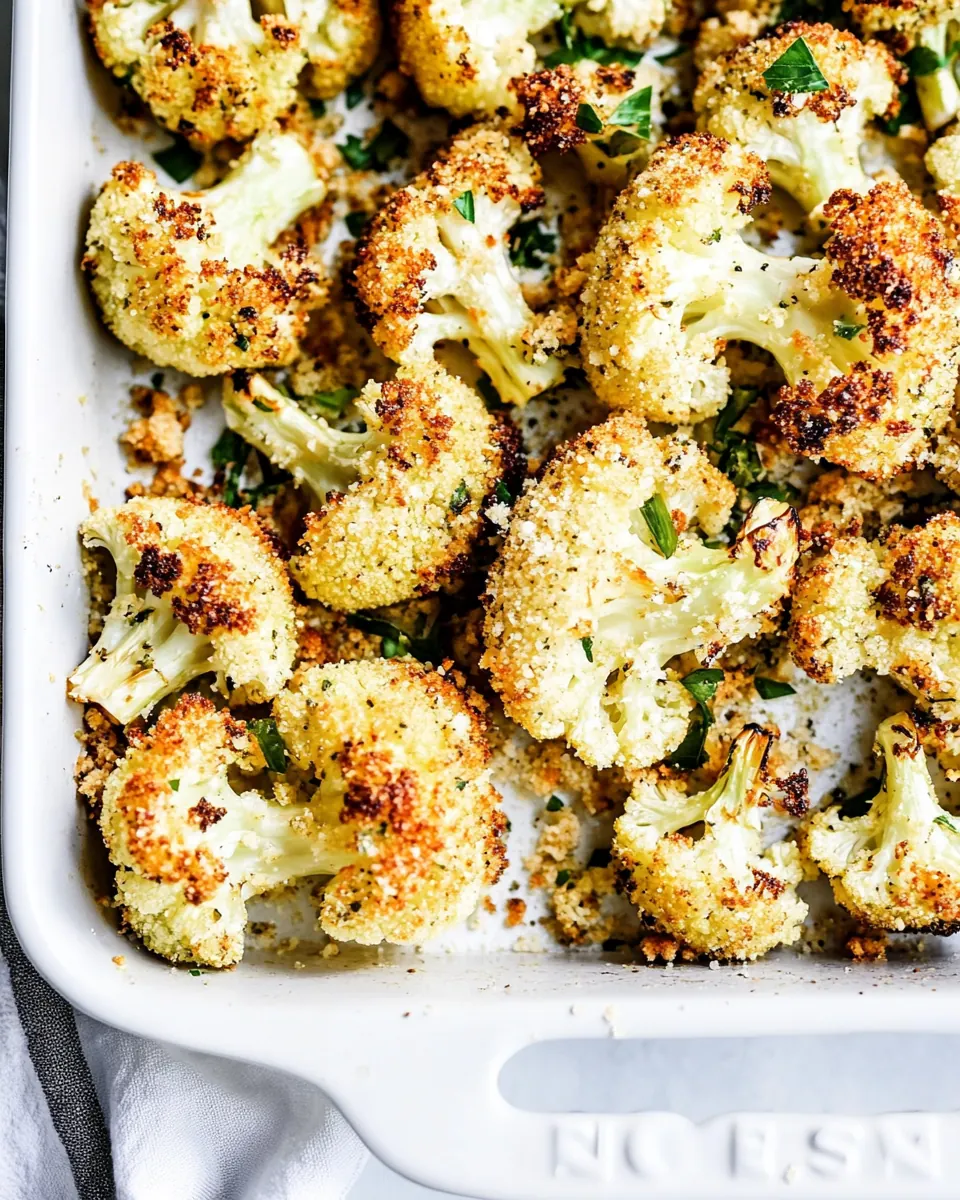
This short list of hands on pointers will help you get consistent results. I expand each tip into practical actions you can apply today, from prep to plating.
- Preheat fully: Ensure your oven reaches the full 425°F before the florets go in, because immediate high heat promotes the Maillard reaction and deep browning that creates flavor.
- Dry the florets: Pat the cauliflower dry after washing to prevent steaming on the sheet pan, which can inhibit crisping and lead to a softer texture.
- Use a light oil coating: Measure the extra-virgin olive oil so each piece gets a thin sheen rather than pooling oil that will prevent proper browning and add greasiness.
- Distribute toppings evenly: Mix the Parmesan cheese, panko bread crumbs, and parsley well so every bite receives crunchy, cheesy notes rather than clumps in one area.
- Watch closely at the end: The final 5 to 10 minutes are decisive; check frequently so the cheese and crumbs toast to a golden color without burning.
- Reheat with care: If you have leftovers, restore crispness in a hot oven rather than a microwave to preserve texture and flavor.
Great Combinations for Parmesan Roasted Cauliflower
This section covers how to serve the dish, best pairings, and when to bring it to the table. I describe complementary mains, occasions, and storage strategies to make the most of the recipe.
- Weeknight dinners: Serve the Parmesan Roasted Cauliflower alongside a simply roasted protein and a grain for a balanced plate that comes together quickly.
- Holiday side: Bring it to a holiday table as a vegetable alternative that feels festive thanks to the toasted Parmesan cheese and crunchy crumbs.
- Vegetarian centerpiece: For casual entertaining, present this as a warm vegetable course paired with seasonal salads and crusty bread for guests to help themselves.
- Storage tips: Cool completely before refrigerating in an airtight container, and re-crisp in a 400°F oven for about 6 to 8 minutes to restore texture.
- Seasonal pairing: In fall, pair with roasted root vegetables and warm grains to echo the oven roasted flavors; in other seasons keep sides lighter with green salads.
- Serving style: Serve warm from the pan, and offer a small bowl so guests can scrape the crunchy bits, which are often the most popular part.
FAQ
Conclusion
Parmesan Roasted Cauliflower stands out because it turns a simple vegetable into a showstopping side with minimal effort. The combination of golden caramelized florets and a crunchy, cheesy topping delivers contrast in texture and a rich savory profile that feels special. I encourage you to try this recipe soon, whether for a quiet weeknight or a shared meal with friends. It’s an easy, reliable dish that rewards attention to a few small details and always earns compliments at the table.
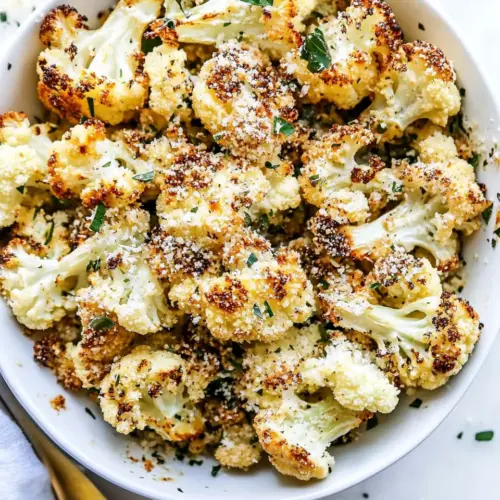
Parmesan Roasted Cauliflower
Equipment
- Baking Sheet
- Mixing Bowl
- Knife
- Cutting Board
- Spatula
Ingredients
- 1 head cauliflower Trimmed and separated into florets, provides the meaty base and mild flavor that soaks up seasonings and crisps when roasted. Roasting develops a nutty sweetness and creates a tender interior with golden edges, forming the main body of the dish.
- 2 tablespoons extra-virgin olive oil Drizzled over the cauliflower before roasting, coats florets to promote even browning and carry flavors. Adds a fruity, slightly peppery richness that enhances texture and helps breadcrumbs and cheese adhere.
- 1 teaspoon Italian seasoning Sprinkled over the oiled florets, imparts a balanced blend of Mediterranean herbs to complement the cauliflower. Delivers aromatic notes like oregano and basil that brighten the dish without overpowering other ingredients.
- 1/2 teaspoon kosher salt Seasoned onto the florets to enhance natural flavors and balance sweetness from roasting. Helps draw out moisture for better caramelization while ensuring the finished bites are savory and well-rounded.
- 1/2 teaspoon freshly ground black pepper Ground onto the vegetables to inject a sharp, mildly pungent heat and depth of flavor. Provides subtle background warmth that contrasts the creamy interior and enhances overall seasoning.
- 1/2 cup grated Parmesan cheese Tossed with the cauliflower and breadcrumbs to create a savory, salty crust that melts and browns in the oven. Contributes umami and a sharp dairy tang that amplifies richness and helps form a gratin-like topping.
- 1/4 cup panko bread crumbs Mixed with Parmesan and sprinkled over the florets to add a crunchy, toasty finish once baked. Creates texture contrast and absorbs some oil, producing crisp, golden tidbits that elevate each bite.
- 1 tablespoon minced fresh parsley Chopped finely and scattered over the finished cauliflower to add fresh color and a mild herbaceous lift. Balances richness and adds a bright, slightly grassy note that refreshes the palate.
Instructions
- Preheat the oven to 425°F.: You will notice the warm, dry air start to sweep through the oven as it comes up to temperature, which is essential for getting deep caramelization on the cauliflower . A fully preheated oven gives an immediate sizzle when the florets hit the sheet, helping exterior browning while keeping the interior tender. Common mistakes include putting the pan in too early, which leads to pale, steamed florets, or not placing the rack in the right position, which can affect color. Make sure the oven reads 425°F on an oven thermometer if you have one, and use a sturdy baking sheet so heat distributes evenly.
- Slice the head of the cauliflower in half from the top of the crown through to the stem. Cut out the core of each of the halves and remove the leaves. Trim the cauliflower into large florets, then into smaller florets. Use the knife or break with your fingers. Cut the florets into roughly the same size, with each floret displaying at least one cut side that lays flat on the baking sheet to become caramelized.: As you cut, you can hear and see the dense white core yield to the knife, and the exposed faces will quickly turn a deeper cream as they air dry for a few minutes. Cutting through the crown makes it easier to remove the core and obtain uniform pieces. If you rush this step you might end up with tiny bits that overcook, so aim for controlled, deliberate cuts. Keep a stable cutting board and a sharp knife to reduce slipping and uneven pieces.
- Scatter the cauliflower on a high sided baking sheet and drizzle with olive oil. Sprinkle the cauliflower with Italian seasoning, kosher salt and black pepper and toss to coat. In a small bowl, mix together the Parmesan cheese, panko bread crumbs, and parsley. Set aside.: Removing the core frees the florets and reduces fibrous pieces that take longer to cook. When you extract the core you can feel where the florets naturally separate, and following those lines keeps pieces intact. Leaving the core in can yield undercooked, chewy sections, so be thorough. Use your hands to break apart larger chunks if needed, rather than making too many small slices.
- Lay the florets on a baking sheet in an even layer, cut side down. Bake for 15 minutes. Flip half way through cooking time if desired. Sprinkle the Parmesan mixture over the cauliflower and bake for 5-10 minutes or more, or until the cheese is melted and beginning to brown. Serve warm, and be sure to scrape up all of the little crispy bits to enjoy.: At this point you will see a range of shapes; aim for uniform sizes so they roast evenly. Large florets keep a pleasant bite, while flatter faces mean more surface area will brown. If pieces are very different in size, remove the tiniest ones to a separate area so you can add them later if needed. A common pitfall is inconsistent pieces that leave some burnt and others underdone.
- Use the knife or break with your fingers.: Breaking florets by hand gives natural, irregular edges that crisp beautifully in the oven. You can hear the snap and feel the texture as you separate segments. If you use a knife, keep cuts decisive to create flat surfaces. Tearing too forcefully can rag the surface and create crumbly bits that cook differently, so balance hand separation with clean knife work.
- Cut the florets into roughly the same size, with each floret displaying at least one cut side that lays flat on the baking sheet to become caramelized.: Lay each floret flat and you will notice how quickly edges start to brown in the hot oven, turning golden and developing tiny toasted flavors. Uniformity ensures even cooking and predictable texture. If you skip ensuring a flat side, you may end up with less surface browning and a more steamed texture. Arrange them deliberately so each piece has good contact with the pan.
- Scatter the cauliflower on a high sided baking sheet and drizzle with olive oil.: When the extra-virgin olive oil hits the warm pan and florets, you should see a faint sheen form; this promotes even browning and a satisfying mouthfeel. Tossing ensures every piece has a thin film for conduction. Using too little oil can cause dryness, while too much will pool and inhibit crisping, so aim for a light, even coat. If your pan is overcrowded the florets will steam rather than roast, so leave space between pieces.
- Sprinkle the cauliflower with Italian seasoning, kosher salt and black pepper and toss to coat.: The herbs and spices release aroma as they heat, building savory top notes while salt draws out moisture to concentrate flavor. Tossing gives even coverage so no single piece is bland. Over seasoning at this stage can make the dish taste too intense, so use measured amounts and adjust after roasting if needed. Beware of dumping dried herbs in clumps which will burn and become bitter.
- In a small bowl, mix together the Parmesan cheese, panko bread crumbs, and parsley.: Combining these elements ahead of time means you can add them quickly when the cauliflower is nearly done, preserving the texture and keeping the parsley bright. The mixture should look evenly distributed, with fine flecks of cheese coating the crumbs. If you wait until the pan is hot, you risk uneven topping and potential clumping. Make sure the cheese is grated fine so it melts evenly rather than forming a single chewy layer.
- Set aside.: Letting the topping sit gives you a moment to check the florets and adjust oven placement. This pause is practical and keeps the workflow calm. The toppings will hold together well for a few minutes; leaving them out too long in a humid kitchen can cause slight softening, so keep them covered briefly if needed.
- Lay the florets on a baking sheet in an even layer, cut side down.: Placing the cut side down creates direct contact with the hot metal, which leads to faster caramelization and those attractive golden patches. You should hear a faint sizzle when they hit the sheet and see the panels of contact start to color within minutes. If you pile them, the trapped steam will prevent browning, so give them space. A crowded pan is the most common reason for uneven results here.
- Bake for 15 minutes.: During this bake time you will see the edges begin to darken and smell a toasty, slightly sweet aroma as natural sugars caramelize. The florets should be tender when pierced but still hold shape. Opening the oven frequently prolongs cooking and reduces browning, so resist peeking more than needed. If after 15 minutes the pieces are still pale, check your oven temperature and the rack position.
- Flip half way through cooking time if desired.: Turning the florets can promote even color on all sides, and you will notice how the texture evens out as surfaces that were shielded now face heat. If you prefer maximized flat side browning, you can skip flipping, but flipping helps when pieces are uneven in size. A common error is aggressive flipping that breaks the florets apart, so use a sturdy spatula and gentle motions.
- Sprinkle the Parmesan mixture over the cauliflower and bake for 5 to 10 minutes or more, or until the cheese is melted and beginning to brown.: As the cheese and panko toast, you will hear a faint crisping and see golden flecks appear, adding crunch and an umami pop. This final bake lets the topping adhere and form those little crispy bits you will want to scrape from the pan. Keep an eye because cheese can go from perfectly browned to overly dark quickly; adjust timing by oven hot spots. If the crumbs brown too quickly, tent the pan with foil briefly while the interior finishes.
- Serve warm, and be sure to scrape up all of the little crispy bits to enjoy.: Serveings straight from the oven deliver the best contrast between warm tender centers and crisp, browned edges. Scraping the pan captures those concentrated flavor morsels that often carry the most savory notes. If you let the pan sit too long, the topping can soften and lose texture, so plan to serve promptly. If storing leftovers, re-crisp gently in a hot oven instead of the microwave to preserve the crunch.
Notes
- Preheat fully: Ensure your oven reaches the full 425°F before the florets go in, because immediate high heat promotes the Maillard reaction and deep browning that creates flavor.
- Dry the florets: Pat the cauliflower dry after washing to prevent steaming on the sheet pan, which can inhibit crisping and lead to a softer texture.
- Use a light oil coating: Measure the extra-virgin olive oil so each piece gets a thin sheen rather than pooling oil that will prevent proper browning and add greasiness.
- Distribute toppings evenly: Mix the Parmesan cheese, panko bread crumbs, and parsley well so every bite receives crunchy, cheesy notes rather than clumps in one area.
- Watch closely at the end: The final 5 to 10 minutes are decisive; check frequently so the cheese and crumbs toast to a golden color without burning.
- Reheat with care: If you have leftovers, restore crispness in a hot oven rather than a microwave to preserve texture and flavor.