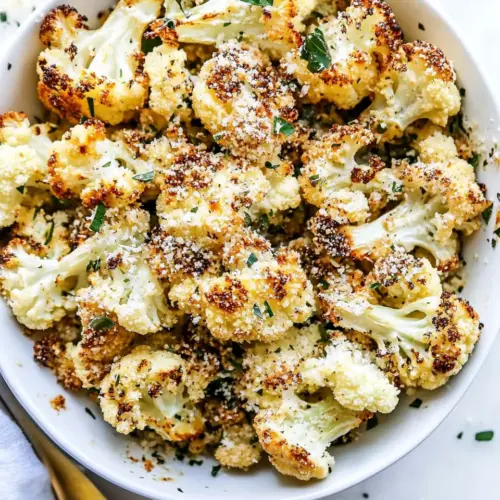
Parmesan Roasted Cauliflower
Parmesan Roasted Cauliflower is a crispy, savory side that balances tender roasted florets with a crunchy cheesy topping. This easy weeknight recipe yields golden caramelized edges, nutty Parmesan cheese notes, and a satisfying crunch from panko bread crumbs, making it perfect for casual dinners or special gatherings. Try it when you want a simple vegetable dish that feels indulgent.
Equipment
- Baking Sheet
- Mixing Bowl
- Knife
- Cutting Board
- Spatula
Ingredients
- 1 head cauliflower Trimmed and separated into florets, provides the meaty base and mild flavor that soaks up seasonings and crisps when roasted. Roasting develops a nutty sweetness and creates a tender interior with golden edges, forming the main body of the dish.
- 2 tablespoons extra-virgin olive oil Drizzled over the cauliflower before roasting, coats florets to promote even browning and carry flavors. Adds a fruity, slightly peppery richness that enhances texture and helps breadcrumbs and cheese adhere.
- 1 teaspoon Italian seasoning Sprinkled over the oiled florets, imparts a balanced blend of Mediterranean herbs to complement the cauliflower. Delivers aromatic notes like oregano and basil that brighten the dish without overpowering other ingredients.
- 1/2 teaspoon kosher salt Seasoned onto the florets to enhance natural flavors and balance sweetness from roasting. Helps draw out moisture for better caramelization while ensuring the finished bites are savory and well-rounded.
- 1/2 teaspoon freshly ground black pepper Ground onto the vegetables to inject a sharp, mildly pungent heat and depth of flavor. Provides subtle background warmth that contrasts the creamy interior and enhances overall seasoning.
- 1/2 cup grated Parmesan cheese Tossed with the cauliflower and breadcrumbs to create a savory, salty crust that melts and browns in the oven. Contributes umami and a sharp dairy tang that amplifies richness and helps form a gratin-like topping.
- 1/4 cup panko bread crumbs Mixed with Parmesan and sprinkled over the florets to add a crunchy, toasty finish once baked. Creates texture contrast and absorbs some oil, producing crisp, golden tidbits that elevate each bite.
- 1 tablespoon minced fresh parsley Chopped finely and scattered over the finished cauliflower to add fresh color and a mild herbaceous lift. Balances richness and adds a bright, slightly grassy note that refreshes the palate.
Instructions
- Preheat the oven to 425°F.: You will notice the warm, dry air start to sweep through the oven as it comes up to temperature, which is essential for getting deep caramelization on the cauliflower . A fully preheated oven gives an immediate sizzle when the florets hit the sheet, helping exterior browning while keeping the interior tender. Common mistakes include putting the pan in too early, which leads to pale, steamed florets, or not placing the rack in the right position, which can affect color. Make sure the oven reads 425°F on an oven thermometer if you have one, and use a sturdy baking sheet so heat distributes evenly.
- Slice the head of the cauliflower in half from the top of the crown through to the stem. Cut out the core of each of the halves and remove the leaves. Trim the cauliflower into large florets, then into smaller florets. Use the knife or break with your fingers. Cut the florets into roughly the same size, with each floret displaying at least one cut side that lays flat on the baking sheet to become caramelized.: As you cut, you can hear and see the dense white core yield to the knife, and the exposed faces will quickly turn a deeper cream as they air dry for a few minutes. Cutting through the crown makes it easier to remove the core and obtain uniform pieces. If you rush this step you might end up with tiny bits that overcook, so aim for controlled, deliberate cuts. Keep a stable cutting board and a sharp knife to reduce slipping and uneven pieces.
- Scatter the cauliflower on a high sided baking sheet and drizzle with olive oil. Sprinkle the cauliflower with Italian seasoning, kosher salt and black pepper and toss to coat. In a small bowl, mix together the Parmesan cheese, panko bread crumbs, and parsley. Set aside.: Removing the core frees the florets and reduces fibrous pieces that take longer to cook. When you extract the core you can feel where the florets naturally separate, and following those lines keeps pieces intact. Leaving the core in can yield undercooked, chewy sections, so be thorough. Use your hands to break apart larger chunks if needed, rather than making too many small slices.
- Lay the florets on a baking sheet in an even layer, cut side down. Bake for 15 minutes. Flip half way through cooking time if desired. Sprinkle the Parmesan mixture over the cauliflower and bake for 5-10 minutes or more, or until the cheese is melted and beginning to brown. Serve warm, and be sure to scrape up all of the little crispy bits to enjoy.: At this point you will see a range of shapes; aim for uniform sizes so they roast evenly. Large florets keep a pleasant bite, while flatter faces mean more surface area will brown. If pieces are very different in size, remove the tiniest ones to a separate area so you can add them later if needed. A common pitfall is inconsistent pieces that leave some burnt and others underdone.
- Use the knife or break with your fingers.: Breaking florets by hand gives natural, irregular edges that crisp beautifully in the oven. You can hear the snap and feel the texture as you separate segments. If you use a knife, keep cuts decisive to create flat surfaces. Tearing too forcefully can rag the surface and create crumbly bits that cook differently, so balance hand separation with clean knife work.
- Cut the florets into roughly the same size, with each floret displaying at least one cut side that lays flat on the baking sheet to become caramelized.: Lay each floret flat and you will notice how quickly edges start to brown in the hot oven, turning golden and developing tiny toasted flavors. Uniformity ensures even cooking and predictable texture. If you skip ensuring a flat side, you may end up with less surface browning and a more steamed texture. Arrange them deliberately so each piece has good contact with the pan.
- Scatter the cauliflower on a high sided baking sheet and drizzle with olive oil.: When the extra-virgin olive oil hits the warm pan and florets, you should see a faint sheen form; this promotes even browning and a satisfying mouthfeel. Tossing ensures every piece has a thin film for conduction. Using too little oil can cause dryness, while too much will pool and inhibit crisping, so aim for a light, even coat. If your pan is overcrowded the florets will steam rather than roast, so leave space between pieces.
- Sprinkle the cauliflower with Italian seasoning, kosher salt and black pepper and toss to coat.: The herbs and spices release aroma as they heat, building savory top notes while salt draws out moisture to concentrate flavor. Tossing gives even coverage so no single piece is bland. Over seasoning at this stage can make the dish taste too intense, so use measured amounts and adjust after roasting if needed. Beware of dumping dried herbs in clumps which will burn and become bitter.
- In a small bowl, mix together the Parmesan cheese, panko bread crumbs, and parsley.: Combining these elements ahead of time means you can add them quickly when the cauliflower is nearly done, preserving the texture and keeping the parsley bright. The mixture should look evenly distributed, with fine flecks of cheese coating the crumbs. If you wait until the pan is hot, you risk uneven topping and potential clumping. Make sure the cheese is grated fine so it melts evenly rather than forming a single chewy layer.
- Set aside.: Letting the topping sit gives you a moment to check the florets and adjust oven placement. This pause is practical and keeps the workflow calm. The toppings will hold together well for a few minutes; leaving them out too long in a humid kitchen can cause slight softening, so keep them covered briefly if needed.
- Lay the florets on a baking sheet in an even layer, cut side down.: Placing the cut side down creates direct contact with the hot metal, which leads to faster caramelization and those attractive golden patches. You should hear a faint sizzle when they hit the sheet and see the panels of contact start to color within minutes. If you pile them, the trapped steam will prevent browning, so give them space. A crowded pan is the most common reason for uneven results here.
- Bake for 15 minutes.: During this bake time you will see the edges begin to darken and smell a toasty, slightly sweet aroma as natural sugars caramelize. The florets should be tender when pierced but still hold shape. Opening the oven frequently prolongs cooking and reduces browning, so resist peeking more than needed. If after 15 minutes the pieces are still pale, check your oven temperature and the rack position.
- Flip half way through cooking time if desired.: Turning the florets can promote even color on all sides, and you will notice how the texture evens out as surfaces that were shielded now face heat. If you prefer maximized flat side browning, you can skip flipping, but flipping helps when pieces are uneven in size. A common error is aggressive flipping that breaks the florets apart, so use a sturdy spatula and gentle motions.
- Sprinkle the Parmesan mixture over the cauliflower and bake for 5 to 10 minutes or more, or until the cheese is melted and beginning to brown.: As the cheese and panko toast, you will hear a faint crisping and see golden flecks appear, adding crunch and an umami pop. This final bake lets the topping adhere and form those little crispy bits you will want to scrape from the pan. Keep an eye because cheese can go from perfectly browned to overly dark quickly; adjust timing by oven hot spots. If the crumbs brown too quickly, tent the pan with foil briefly while the interior finishes.
- Serve warm, and be sure to scrape up all of the little crispy bits to enjoy.: Serveings straight from the oven deliver the best contrast between warm tender centers and crisp, browned edges. Scraping the pan captures those concentrated flavor morsels that often carry the most savory notes. If you let the pan sit too long, the topping can soften and lose texture, so plan to serve promptly. If storing leftovers, re-crisp gently in a hot oven instead of the microwave to preserve the crunch.
Notes
- Preheat fully: Ensure your oven reaches the full 425°F before the florets go in, because immediate high heat promotes the Maillard reaction and deep browning that creates flavor.
- Dry the florets: Pat the cauliflower dry after washing to prevent steaming on the sheet pan, which can inhibit crisping and lead to a softer texture.
- Use a light oil coating: Measure the extra-virgin olive oil so each piece gets a thin sheen rather than pooling oil that will prevent proper browning and add greasiness.
- Distribute toppings evenly: Mix the Parmesan cheese, panko bread crumbs, and parsley well so every bite receives crunchy, cheesy notes rather than clumps in one area.
- Watch closely at the end: The final 5 to 10 minutes are decisive; check frequently so the cheese and crumbs toast to a golden color without burning.
- Reheat with care: If you have leftovers, restore crispness in a hot oven rather than a microwave to preserve texture and flavor.