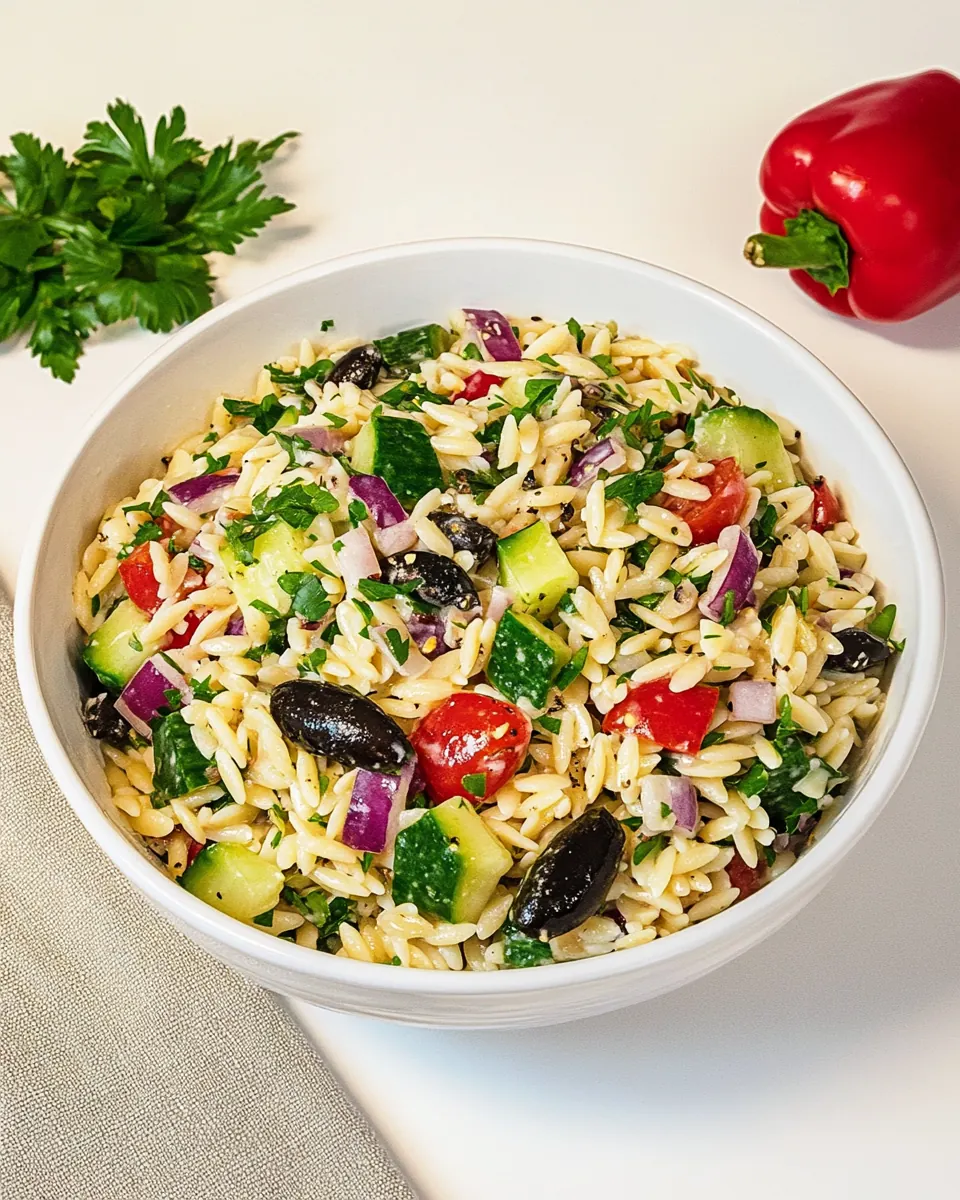
Mediterranean Orzo Salad
Mediterranean Orzo Salad is one of those dishes I turn to when I want something bright, relaxed, and reliably delicious.
I first met this salad on a sunlit patio at a friend s summer gathering, where the bowl sat like a little sunburst of colors, each bite offering a contrast of tender pasta and crisp vegetables. I remember scooping a forkful, tasting the tang of lemon and the briny pop of olives, and thinking how a few simple moves can make a dish that feels composed and effortless.
Since then, I ve adapted the recipe to fit weeknight rhythms and picnic crates alike. I like making a big batch early in the day so the flavors marry, then letting it rest while I finish other dishes. What I love most is how forgiving it is, and how the textures stay lively even after sitting for hours. It s become my go to for potlucks because it travels well and rarely disappoints.
Recipe Snapshot
20 mins
10 mins
10 mins
Easy
250 kcal
Mediterranean
Gluten-Free, Vegan
Salads
Large pot, Colander, Large bowl, Small bowl, Whisk
Why Try This Mediterranean Orzo Salad
Bright, balanced flavors that sing
I adore how Mediterranean Orzo Salad layers tastes and textures. The gentle chew of orzo pasta absorbs the vinaigrette just enough to carry flavor, while the cherry tomatoes and cucumber offer fresh bursts on every bite. That contrast keeps each forkful lively, and I think that flavor balance is the recipe s superpower.
Totally make ahead friendly
One of the reasons I often bring Mediterranean Orzo Salad to gatherings is its make ahead nature. You can cook the orzo pasta and toss everything together a few hours in advance, which lets the olive oil and lemon juice settle into the ingredients. I usually chill it so the flavors meld, and it still tastes fresh hours later.
Versatile for many occasions
I find this salad works for dinners, lunches, and outdoor celebrations. It s light enough to accompany grilled mains, and substantial enough to stand alone as a vegetarian option. Because the ingredients are straightforward, I can scale it up when I need to feed a few more people without losing the character of the dish.
Simple ingredients, big impact
The ingredient list is short, and that s intentional. Each component like feta cheese or Kalamata olives plays a clear role. That precision means you get concentrated flavor without fuss, which is why I keep this in heavy rotation during warm months.
Approachable for cooks of all levels
I love giving this to friends who are new to cooking because it teaches technique without pressure. Cooking orzo pasta to al dente, chopping a perfect cucumber, and whisking a balanced vinaigrette are skills that build confidence. The returns are immediate, and you end up with a stunning bowl everyone wants a second helping of.
Shopping List for Mediterranean Orzo Salad
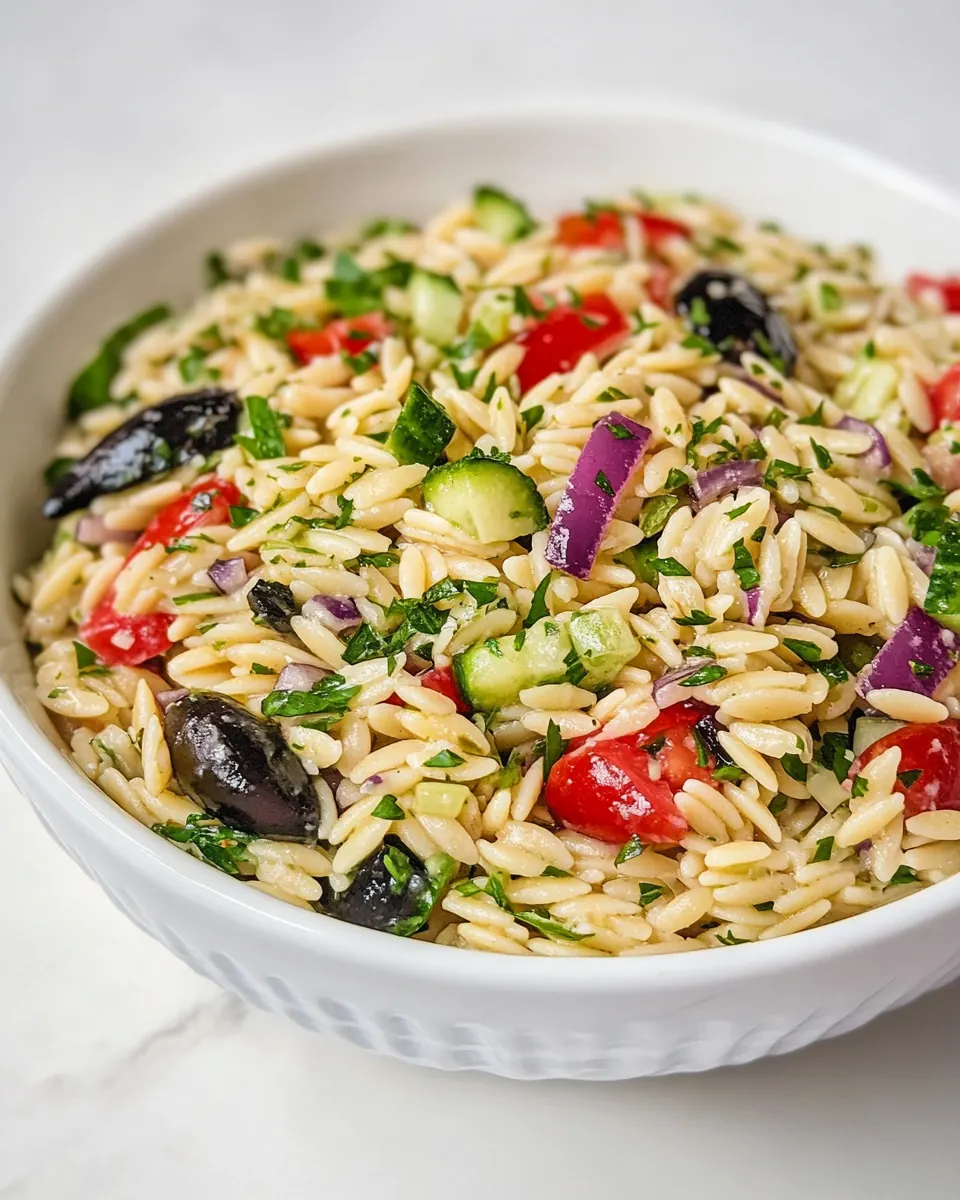
These ingredients come together with a clear purpose, creating a salad that s about texture and bright, Mediterranean flavors. The orzo pasta acts as a tender, grain like base while the veggies and briny components provide contrast. The key players are the feta cheese and Kalamata olives, which bring salt and creaminess, and the dressing ties everything with citrus and herbs.
- 1 cup orzo pasta: Cook until al dente and provide a tender, pasta base that soaks up the dressing and holds other flavors together; rinse briefly under cold water to stop cooking and prevent sticking for a cold salad.
- 1 cup cherry tomatoes halved: Halve to release juices and add bright, sweet acidity and juicy bursts; toss gently so the liquid melds with the dressing without making the salad watery.
- 1 cup cucumber diced: Dice to provide crisp, refreshing texture and mild vegetal flavor that balances richer components; remove excess seeds or moisture if needed to keep the salad from becoming soggy.
- 1/2 cup red onion finely chopped: Finely chop to impart sharp, pungent bite and aromatic depth in small amounts; distribute evenly throughout the salad so each bite has a hint of savory zing.
- 1/2 cup Kalamata olives pitted and sliced: Pit and slice to contribute briny, savory complexity and a tender, meaty texture that complements milder ingredients; use moderate amounts to avoid overpowering the salad.
- 1/2 cup feta cheese crumbled: Crumble to deliver creamy, salty tang and a rich, slightly crumbly texture that contrasts with the pasta and vegetables; sprinkle toward the end to preserve its shape and creaminess.
- 1/4 cup fresh parsley chopped: Chop to introduce fresh, herbaceous brightness and a clean flavor that lifts the whole dish; add just before serving to maintain vibrant color and aroma.
- 1/4 cup olive oil: Use to emulsify the dressing and add fruity, rich mouthfeel while helping coat the orzo and vegetables; whisk with lemon and oregano to create a cohesive vinaigrette.
- 2 tablespoons lemon juice: Measure and squeeze to provide zesty acidity and fresh citrus brightness that balances the oil and salty elements; adjust to taste for the desired tang level.
- 1 teaspoon dried oregano: Add to impart warm, savory Mediterranean herbiness and a subtle earthy note that ties the flavors together; sprinkle into the dressing for even distribution.
- Salt and pepper to taste: Season to taste to enhance and balance all flavors, providing necessary contrast and depth; add gradually and taste as you go to avoid over-salting or over-peppering.
Directions for Mediterranean Orzo Salad
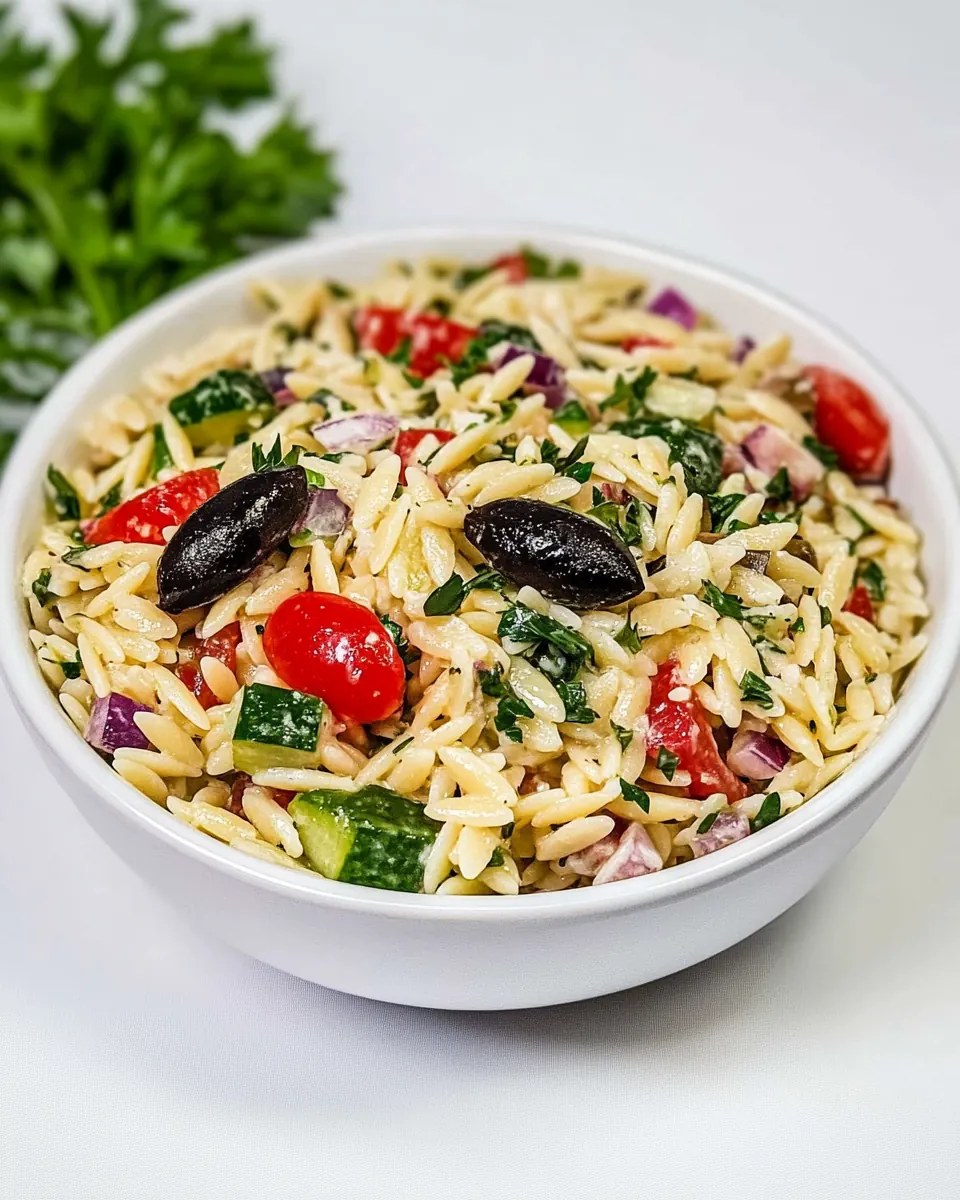
These directions will walk you through the steps in a friendly, conversational way. I like to move methodically, tasting along the way, and paying attention to visual and textural cues. Follow the sequence so each component contributes at the right moment.
- Cook orzo pasta in boiling, salted water according to package instructions until al dente, then drain and rinse under cold water to cool.: You ll hear a gentle, steady boil and smell the comforting wheat aroma as the orzo pasta cooks, with small grains bobbing like tiny pearls. Aim for a firm tender texture so it remains distinct in the salad, and salt the water well to season the pasta from the inside out. After draining, rinse under cold water to stop cooking and to cool the grains so they don t steam the other ingredients. The cooling also tightens the texture slightly, giving you that pleasant chew. A common mistake is overcooking, which creates mushy bits that make the salad glue together. If you re unsure, pull a test grain and bite it to check for a slight resistance in the center.
- In a large bowl, combine the cooled orzo with tomatoes, cucumber, red onion, olives, feta cheese, and parsley.: As you add each component to the bowl, you ll notice colors and textures layering, the glossy red of cherry tomatoes , the pale green of diced cucumber , and the creamy flecks of feta cheese . The cooled orzo pasta should feel separated, not sticky, which helps the vegetables mingle evenly. Toss gently to keep the feta cheese from breaking into dust, and distribute the Kalamata olives and red onion so their briny and sharp notes appear in every forkful. One pitfall here is vigorous tossing that pulverizes delicate ingredients; use a gentle folding motion to combine.
- Whisk together olive oil, lemon juice, oregano, salt, and pepper in a small bowl. Pour over the salad and toss to combine.: When you whisk together the olive oil and lemon juice , tiny droplets will form an emulsion that carries flavor across the salad. Add the dried oregano and seasoning, and you ll smell the citrus lift upfront with an herbaceous undertone. This emulsion clings to the orzo pasta and vegetables, ensuring every bite has brightness. Whisk briskly so the oil and lemon integrate slightly, which prevents the dressing from separating immediately in the bowl. A frequent error is adding too much salt before tasting, especially when using feta cheese and Kalamata olives , both of which add sodium to the dish.
- Pour over the salad and toss to combine: As the dressing hits the bowl, you ll see the sheen coat the ingredients, and the aroma will open up, with citrus and olive oil mingling. Toss gently so the dressing clings to orzo pasta and distributes the herb and seasoning. After tossing, pause and taste to adjust salt and pepper, or a touch more lemon juice if you want brighter acidity. Letting the salad rest for a bit allows flavors to marry, and chilling for a short time cools everything for serving. A common misstep is to dress too early and then overmix, which can make the salad soggy; dress shortly before serving or after the orzo pasta is thoroughly cooled.
Tips and Tricks about Mediterranean Orzo Salad
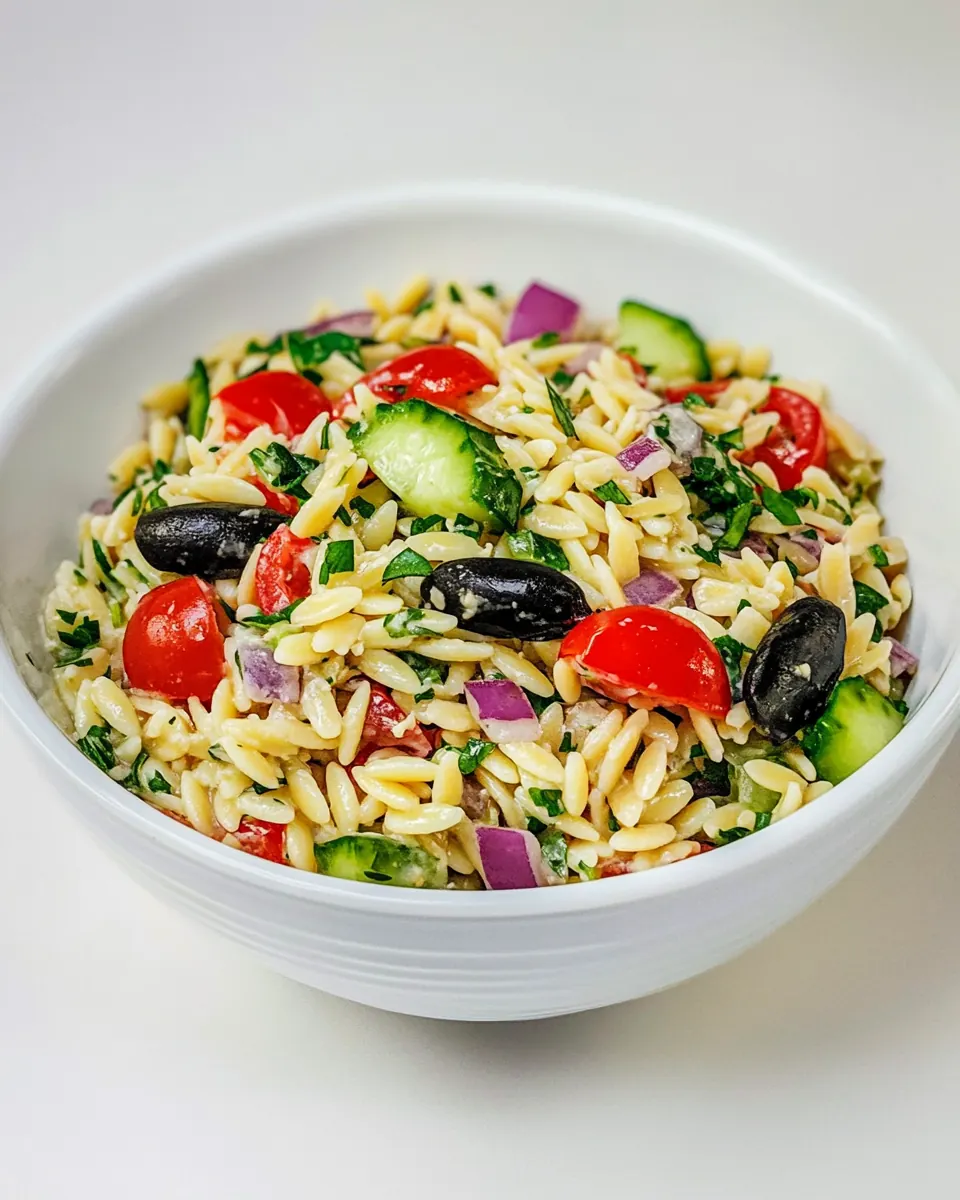
This salad rewards simple attention and a few practical moves. Below I ve expanded on helpful points that will keep texture and flavor bright, whether you re making it for a picnic or a weeknight meal.
- Balance the seasoning: Always taste before adding extra salt because the feta cheese and Kalamata olives provide saltiness; adjust gradually to avoid over seasoning.
- Don t overdress: Start with most of the dressing, then add more if needed after tasting, to prevent the salad from becoming greasy.
- Chill briefly: Refrigerate the salad for thirty to sixty minutes to let flavors meld, but avoid long refrigeration that softens the cucumber and tomatoes excessively.
- Even dice matters: Cut the cucumber and cherry tomatoes into uniform pieces so each bite has a balanced mix of textures and flavors.
- Keep feta cheese in good chunks: Crumble the feta cheese into moderate pieces so it adds creamy pockets rather than disappearing into dust.
Serving This Mediterranean Orzo Salad
This salad is flexible, colorful, and well suited to many settings. Here are thoughtful serving ideas, storage tips, and occasion notes to help you present it beautifully.
- Serve chilled or room temperature: Allow the salad to sit at room temperature for about fifteen minutes after refrigeration so the flavors open, or serve straight from the fridge for a refreshing dish on hot days.
- Pair with grilled mains: Offer the salad alongside grilled vegetables or skewers for a complete summer meal, the acidity cutting through richer grilled flavors.
- Great for lunches and potlucks: This travels well and holds up on a buffet table, making it an ideal potluck contribution or packed lunch for work.
- Storage tips: Store in an airtight container in the refrigerator for up to three days; stir gently before serving to redistribute dressing and freshen the textures.
- Seasonal pairings: Highlight it during warm months as a light accompaniment, or include it on brunch and picnic menus for its bright profile.
FAQ
Conclusion
This salad stands out for its bright flavors and effortless preparation, showcasing how simple ingredients can create something special. Give it a try when you want a dish that is both relaxed and flavorful, whether for a family meal or a casual gathering. I hope it becomes one of your go to recipes for warm weather entertaining and easy weeknight meals, bringing a little Mediterranean sunshine to your table.
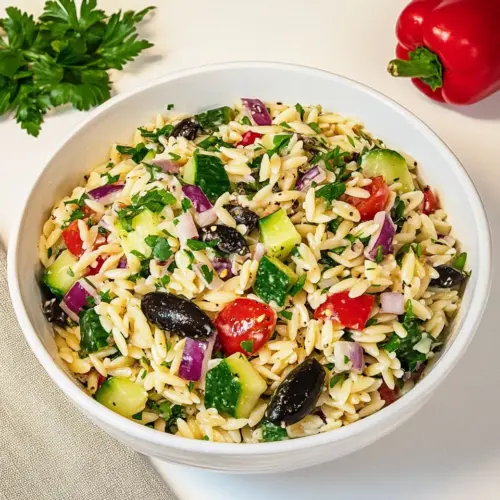
Mediterranean Orzo Salad
Equipment
- Large Pot
- Colander
- Large Bowl
- Small Bowl
- Whisk
Ingredients
- 1 cup orzo pasta Cook until al dente and provide a tender, pasta base that soaks up the dressing and holds other flavors together; rinse briefly under cold water to stop cooking and prevent sticking for a cold salad.
- 1 cup cherry tomatoes halved Halve to release juices and add bright, sweet acidity and juicy bursts; toss gently so the liquid melds with the dressing without making the salad watery.
- 1 cup cucumber diced Dice to provide crisp, refreshing texture and mild vegetal flavor that balances richer components; remove excess seeds or moisture if needed to keep the salad from becoming soggy.
- 1/2 cup red onion finely chopped Finely chop to impart sharp, pungent bite and aromatic depth in small amounts; distribute evenly throughout the salad so each bite has a hint of savory zing.
- 1/2 cup Kalamata olives pitted and sliced Pit and slice to contribute briny, savory complexity and a tender, meaty texture that complements milder ingredients; use moderate amounts to avoid overpowering the salad.
- 1/2 cup feta cheese crumbled Crumble to deliver creamy, salty tang and a rich, slightly crumbly texture that contrasts with the pasta and vegetables; sprinkle toward the end to preserve its shape and creaminess.
- 1/4 cup fresh parsley chopped Chop to introduce fresh, herbaceous brightness and a clean flavor that lifts the whole dish; add just before serving to maintain vibrant color and aroma.
- 1/4 cup olive oil Use to emulsify the dressing and add fruity, rich mouthfeel while helping coat the orzo and vegetables; whisk with lemon and oregano to create a cohesive vinaigrette.
- 2 tablespoons lemon juice Measure and squeeze to provide zesty acidity and fresh citrus brightness that balances the oil and salty elements; adjust to taste for the desired tang level.
- 1 teaspoon dried oregano Add to impart warm, savory Mediterranean herbiness and a subtle earthy note that ties the flavors together; sprinkle into the dressing for even distribution.
- Salt and pepper to taste Season to taste to enhance and balance all flavors, providing necessary contrast and depth; add gradually and taste as you go to avoid over-salting or over-peppering.
Instructions
- Cook orzo pasta in boiling, salted water according to package instructions until al dente, then drain and rinse under cold water to cool.: You ll hear a gentle, steady boil and smell the comforting wheat aroma as the orzo pasta cooks, with small grains bobbing like tiny pearls. Aim for a firm tender texture so it remains distinct in the salad, and salt the water well to season the pasta from the inside out. After draining, rinse under cold water to stop cooking and to cool the grains so they don t steam the other ingredients. The cooling also tightens the texture slightly, giving you that pleasant chew. A common mistake is overcooking, which creates mushy bits that make the salad glue together. If you re unsure, pull a test grain and bite it to check for a slight resistance in the center.
- In a large bowl, combine the cooled orzo with tomatoes, cucumber, red onion, olives, feta cheese, and parsley.: As you add each component to the bowl, you ll notice colors and textures layering, the glossy red of cherry tomatoes , the pale green of diced cucumber , and the creamy flecks of feta cheese . The cooled orzo pasta should feel separated, not sticky, which helps the vegetables mingle evenly. Toss gently to keep the feta cheese from breaking into dust, and distribute the Kalamata olives and red onion so their briny and sharp notes appear in every forkful. One pitfall here is vigorous tossing that pulverizes delicate ingredients; use a gentle folding motion to combine.
- Whisk together olive oil, lemon juice, oregano, salt, and pepper in a small bowl. Pour over the salad and toss to combine.: When you whisk together the olive oil and lemon juice , tiny droplets will form an emulsion that carries flavor across the salad. Add the dried oregano and seasoning, and you ll smell the citrus lift upfront with an herbaceous undertone. This emulsion clings to the orzo pasta and vegetables, ensuring every bite has brightness. Whisk briskly so the oil and lemon integrate slightly, which prevents the dressing from separating immediately in the bowl. A frequent error is adding too much salt before tasting, especially when using feta cheese and Kalamata olives , both of which add sodium to the dish.
- Pour over the salad and toss to combine: As the dressing hits the bowl, you ll see the sheen coat the ingredients, and the aroma will open up, with citrus and olive oil mingling. Toss gently so the dressing clings to orzo pasta and distributes the herb and seasoning. After tossing, pause and taste to adjust salt and pepper, or a touch more lemon juice if you want brighter acidity. Letting the salad rest for a bit allows flavors to marry, and chilling for a short time cools everything for serving. A common misstep is to dress too early and then overmix, which can make the salad soggy; dress shortly before serving or after the orzo pasta is thoroughly cooled.
Notes
- Balance the seasoning: Always taste before adding extra salt because the feta cheese and Kalamata olives provide saltiness; adjust gradually to avoid over seasoning.
- Don t overdress: Start with most of the dressing, then add more if needed after tasting, to prevent the salad from becoming greasy.
- Chill briefly: Refrigerate the salad for thirty to sixty minutes to let flavors meld, but avoid long refrigeration that softens the cucumber and tomatoes excessively.
- Even dice matters: Cut the cucumber and cherry tomatoes into uniform pieces so each bite has a balanced mix of textures and flavors.
- Keep feta cheese in good chunks: Crumble the feta cheese into moderate pieces so it adds creamy pockets rather than disappearing into dust.