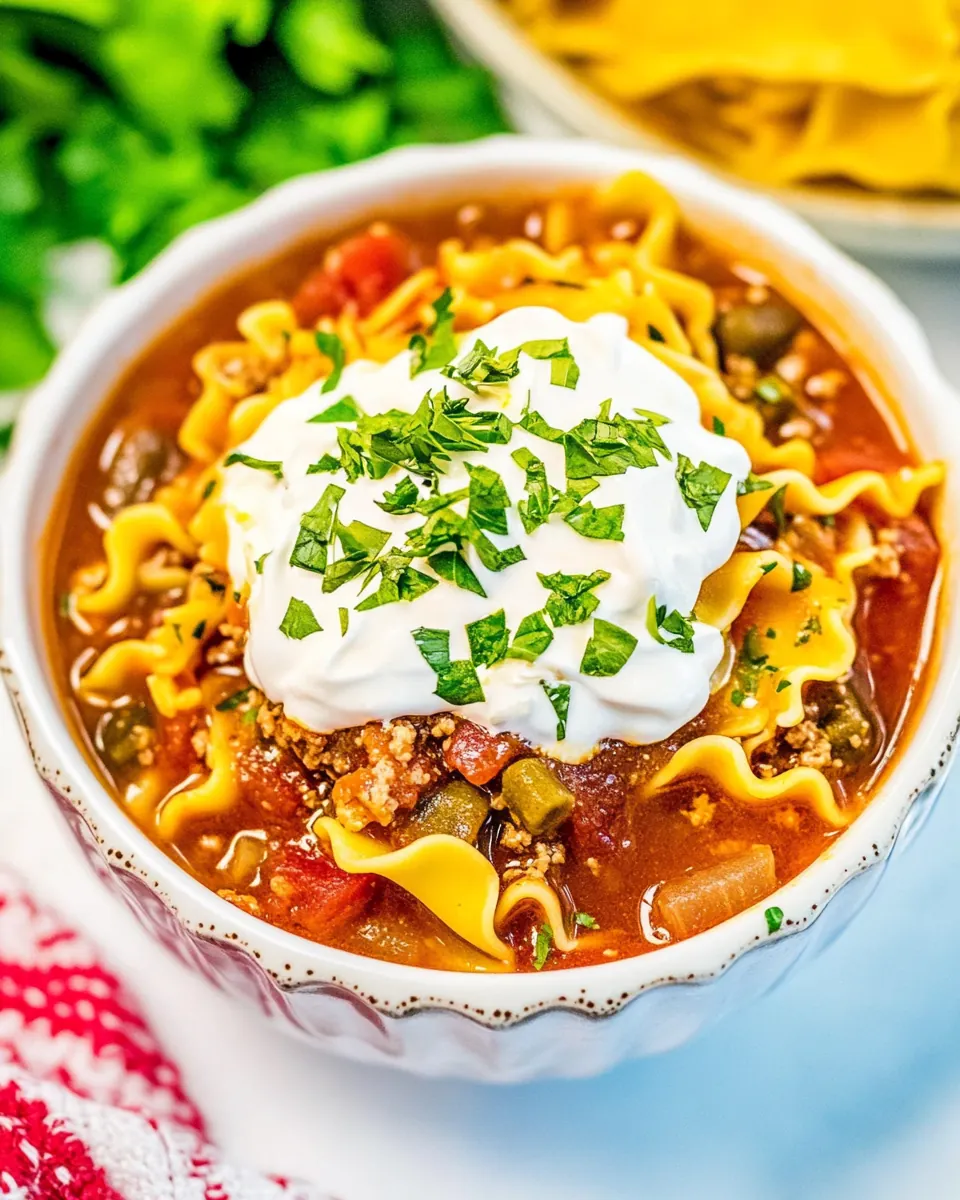
Lasagna Soup
Lasagna Soup became my go to when I wanted all the cozy, cheesy comfort of a big pan of lasagna without the assembly fuss. The first time I made it I was exhausted from a long day, and the idea of layering noodles, sauce, and cheese felt impossible. I traded casserole anxiety for a bubbling pot on the stove and discovered that the same flavors I loved in slices of lasagna could sing when served by the ladle. That night, the house filled with a warm tomato aroma that made everyone drift to the kitchen before dinner was even ready.
The memory of that steaming bowl still makes me smile. I love how Lasagna Soup invites improvisation without losing its essence. You can tune the broth thickness, pick your favorite garnishes, and still end up with a rustic, satisfying meal. When I serve it to friends, conversation slows while spoons scrape bowls and everyone sneaks an extra sprinkle of cheese. It’s the kind of dish that encourages relaxed evenings and easy cleanup, perfect for weeknights when you want to feel pampered but not overworked.
Recipe Snapshot
50 mins
10 mins
40 mins
Medium
350 kcal
Italian
Gluten-Free, Keto
Dinner
Dutch oven, Large stock pot, Large pot for boiling noodles, Knife, Cutting board
Why This Lasagna Soup Is So Good
Comfort in a Bowl
I adore how Lasagna Soup captures the classic lasagna profile in a single pot. Instead of wrestling with layers, you get the familiar tomato and meat notes in every bite, which is exactly why I reach for this recipe when I want comforting food that is effortless to serve.
Flexible and Forgiving
One of the best things about this version is how forgiving it is. You can reduce the broth for a thicker finish, switch jarred sauces, or use whatever garnishes you have on hand. I often adapt it without losing the core flavors, and that adaptability makes it a weeknight hero for our kitchen.
Family Friendly
I’ve watched picky eaters come around to this soup because it combines familiar textures like chewy lasagna noodles with a rich, savory broth. The blend of ground beef and tomato gives it broad appeal, so it’s become a reliable dinner when I need something the whole table will enjoy.
Quick Satisfying Dinner
Compared to oven baked lasagna, this dish is much faster to get on the table. It keeps the spirit of lasagna intact, while shaving off considerable time and effort. I love that I can deliver that same cozy satisfaction on busy evenings, and that you can stretch leftovers into multiple meals.
Garnish Driven Finale
The final flourish of ricotta, mozzarella, or parmesan is what elevates this soup from simple to memorable. I always encourage people to experiment with combinations of cheeses and herbs, because those finishing touches make every bowl feel personal and indulgent.
Main Ingredients for Lasagna Soup
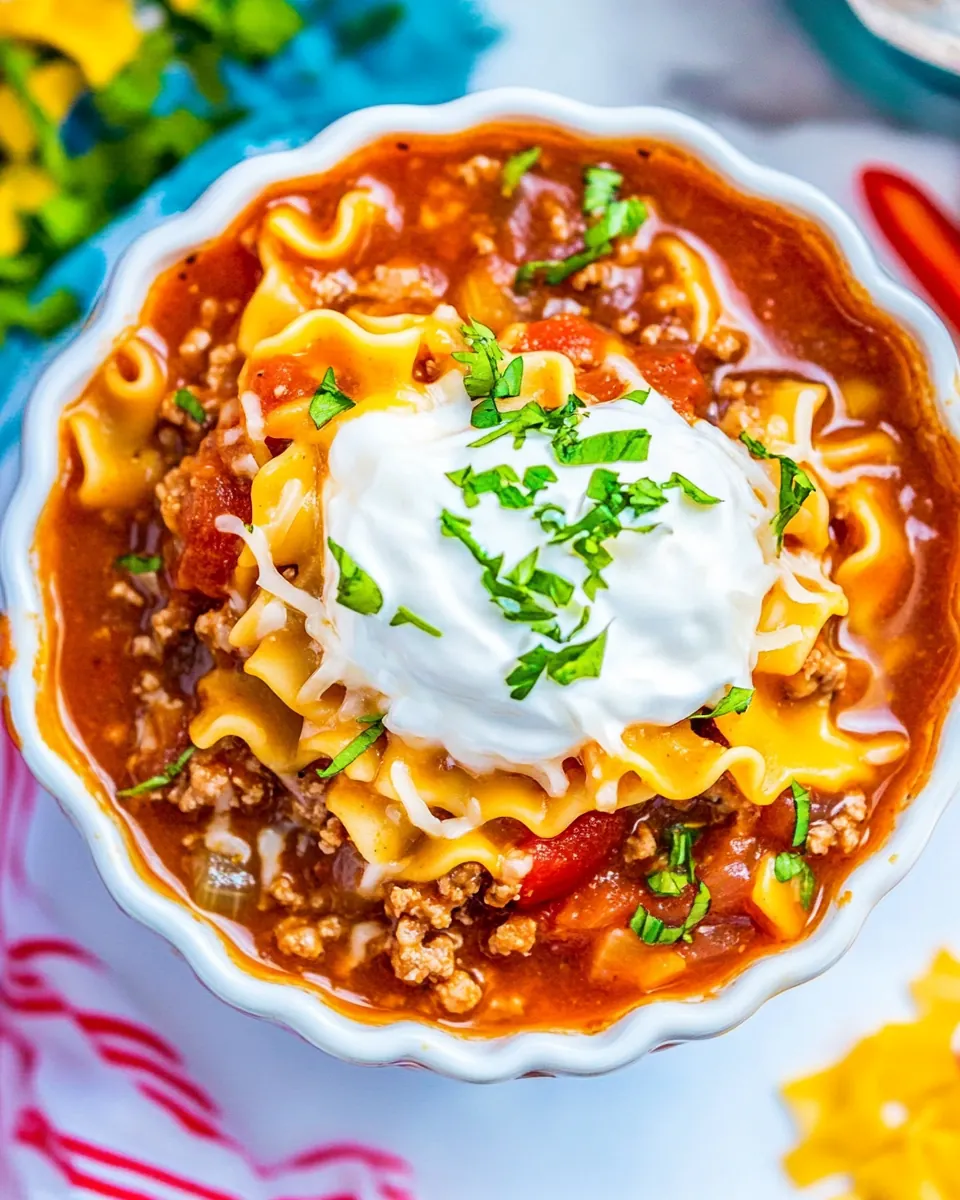
These ingredients come together to recreate lasagna flavors in a lighter, ladle ready format. The key players are the savory ground beef, the bright tomato elements, and the pasta that brings the chew you expect in lasagna. Together they form a harmonious balance where the broth carries bold, familiar notes while the garnishes provide creaminess and salt to finish.
- 1 tablespoon oil olive, vegetable or canola work well: Sauté in a large pot to create the hot fat base that softens aromatics and browns meat for depth of flavor in the soup; use medium heat and avoid burning to preserve a clean oil taste.
- 1 pound lean ground beef: Brown thoroughly to add rich savory umami and texture to the soup, breaking into small pieces so it integrates evenly with the sauce and absorbs seasonings.
- 1 large yellow onion diced: Dice finely and sweat until translucent to contribute natural sweetness and aromatic complexity, forming a foundational flavor layer that complements the tomatoes and herbs.
- 4 cloves garlic minced: Mince and add near the beginning to release pungent, aromatic oils that brighten and deepen the overall flavor; cook briefly to mellow sharpness without losing fragrance.
- 24 ounce jar of spaghetti sauce 28 ounce jar also works if that's the size you have on hand: Pour in to provide the concentrated tomato base and main body of the soup; choose the jar size you have on hand and stir in to combine with browned meat and aromatics.
- 5 cups chicken broth This can be cut down to 3 or 4 cups for a thicker consistency if desired.: Simmer to control the soup's consistency and boost savory depth; adjust the amount to achieve a thinner broth or reduce for a thicker, stew-like texture.
- 14 ounce can crushed tomatoes: Add for additional tomato texture and bright acidity, enhancing tomato flavor and body while balancing richer ingredients like meat and cheese during simmering.
- 1 tablespoon Italian seasoning: Sprinkle to introduce a blend of Mediterranean herbs that seasons the broth evenly, lending classic Italian flavor notes such as oregano, basil, and thyme.
- 1 teaspoon granulated sugar this can be left out if desired: Stir in to gently counteract tomato acidity and round flavors, optionally omitting if a less sweet profile is preferred while still maintaining balance.
- 1 teaspoon salt: Season to enhance all flavors and help components meld; add gradually and taste as you simmer to avoid over-salting.
- 1/2 teaspoon pepper: Crack in to provide a mild heat and subtle bite that rounds savory flavors; adjust to taste for a balanced finish.
- 10 uncooked lasagna noodles: Break into pieces and simmer until tender to mimic traditional lasagna layers while contributing starch for body and a comforting pasta presence in the soup.
- Garnishes as desired ricotta, mozzarella, parmesan, parsley and basil are all great choices: Top as desired to add creamy, melty, and fresh herb elements that finish each bowl; combine ricotta, shredded cheeses, and fresh herbs for contrast in texture and flavor.
Step by Step Guide for Lasagna Soup
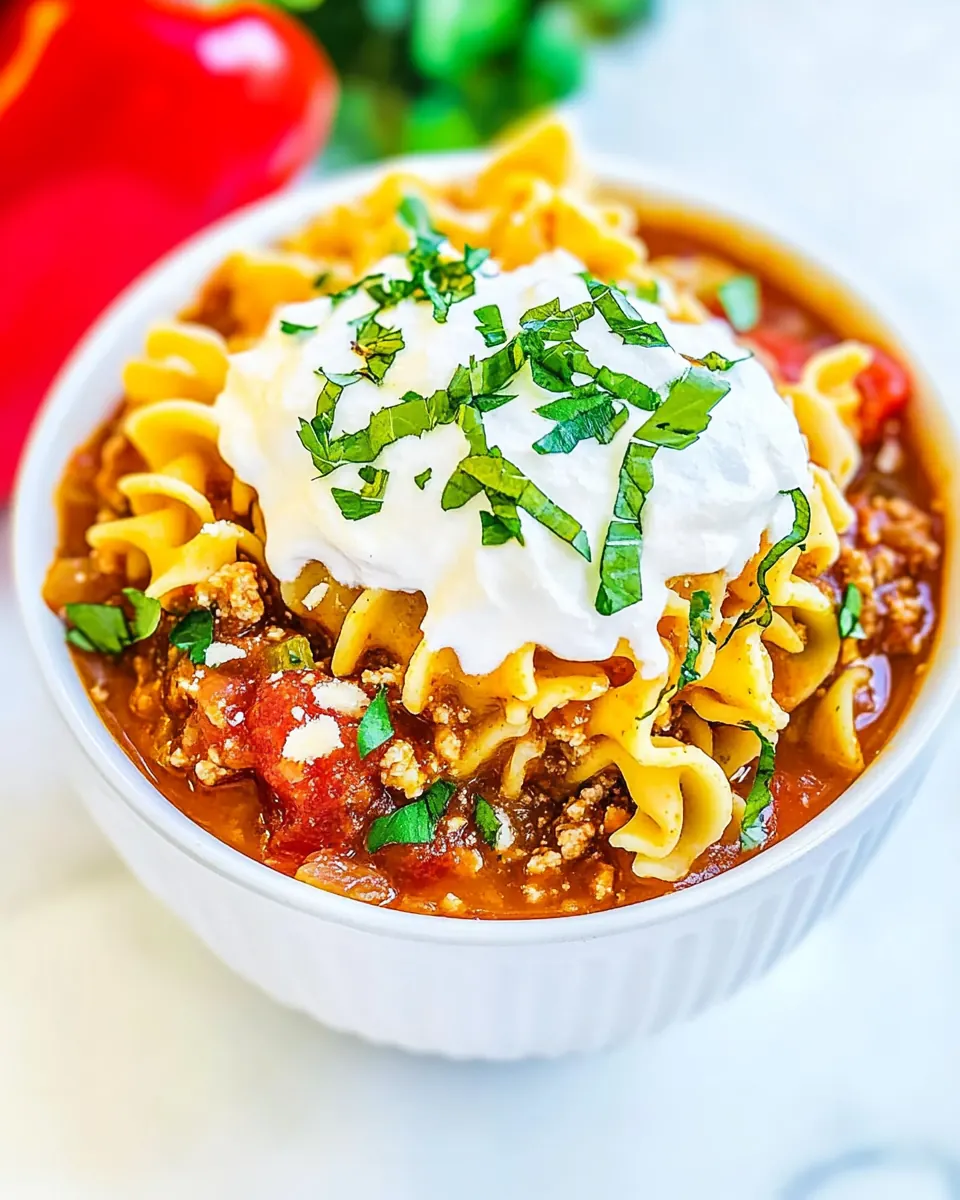
This recipe moves quickly, and a little preparation keeps everything flowing. Below you will find the cleaned directions expanded into detailed steps that explain sensory cues, why each technique matters, and common pitfalls to avoid while you cook.
- Add oil to Dutch oven or large stock pot, turn to medium high heat and brown the ground beef, garlic and diced onion together.: As the oil shimmers in the pot you will hear the first soft sizzle when the onion and ground beef hit the surface, and that sound signals flavor development. Browing releases sweet, caramelized notes from the onion , and the Maillard reaction on the edges of the ground beef produces savory complexity that becomes the backbone of the soup. Stir frequently so the meat breaks into small crumbles and the garlic softens without burning. Watch for a light golden color on the onion and deepening brown flecks on the meat; if the pot smokes, the heat is too high so reduce it to prevent bitter burned bits. A common mistake here is overcrowding the pot which causes steaming rather than browning, so give the meat room and brown in batches if necessary.
- Stir in the pasta sauce, chicken broth, crushed tomatoes, Italian seasoning, sugar, salt and pepper.: When the liquids hit the pot you will notice an immediate steam and a comforting tomato aroma that blends with the beefy scents. Stirring brings the ingredients together into a glossy, fragrant mixture where the Italian seasoning infuses warm herbal notes. The chicken broth adds savory depth while the crushed tomatoes contribute texture. Adding the sugar at this stage helps tame acidity. Mix thoroughly so the seasoning is distributed evenly, and taste once it simmers to check salt levels. Avoid dumping everything at once without stirring, because pockets of seasoning can create uneven flavor. If the sauce tastes flat, it likely needs more salt or an extra pinch of herbs.
- Bring to a boil, then let it simmer for 30 minutes.: As the pot reaches a gentle boil you will see energetic bubbles and hear a steady bubbling that then calms into a soothing simmer. This simmer is where flavors marry and the sauce concentration develops, making the broth richer and more cohesive. A 30 minute simmer allows the dried Italian seasoning to rehydrate and release its oils, and it gives the tomatoes time to meld with the meat juices. Keep the heat low enough so the surface forms occasional gentle bubbles rather than a vigorous rolling boil, which can break down texture and reduce liquid too quickly. Stir occasionally to prevent sticking, and if the pot reduces too fast, add a splash of broth. A common oversight is leaving the lid on tight which traps too much steam, so leave the lid partially ajar to control reduction.
- While the sauce cooks, prepare the lasagna noodles according to the box. (Only cook them until just tender, al dente.): The sound of water coming to a boil in a separate pot signals progress, and the scent of starchy steam will rise as the lasagna noodles soften. Cooking them until just tender preserves chew so they do not turn mushy when added to the hot broth. Al dente noodles should have a slight bite and a consistent texture without a raw center. Rinse is optional depending on preference, but be mindful that rinsing removes surface starch that helps the noodles cling to sauce. A frequent error is overcooking the pasta, which will cause it to disintegrate in the soup, so set a timer and taste early.
- Cut the noodles into bite size pieces and add them to the soup at the end of its cooking time.: When you cut the warm, pliable lasagna noodles , they should feel firm but yielding, and the cut edges will soak up sauce quickly. Adding the noodles at the end preserves their texture, letting them absorb just enough broth without collapsing. Stir gently to distribute pieces so each bowl gets pasta evenly. If you add the noodles too early they will swell and make the soup overly thick, while adding them too late leaves them under hydrated. A good rule is to add them in the final few minutes, then let the pot rest off heat for a moment so flavors settle before serving.
- Serve with desired garnishes.: The final garnishes transform the bowl, lending creamy, salty, and herbal dimensions that complete the dish. When you spoon the soup into bowls, add a dollop of ricotta or a sprinkle of shredded mozzarella and grated parmesan , then finish with torn basil or chopped parsley for color and brightness. The contrast between hot broth and cool ricotta is delightful, and melting cheese creates ribbons that enhance mouthfeel. A common misstep is piling on cheese while the soup is still aggressively boiling which can melt unevenly, so serve while the soup is hot but not at a violent simmer.
Substitutions and Tips
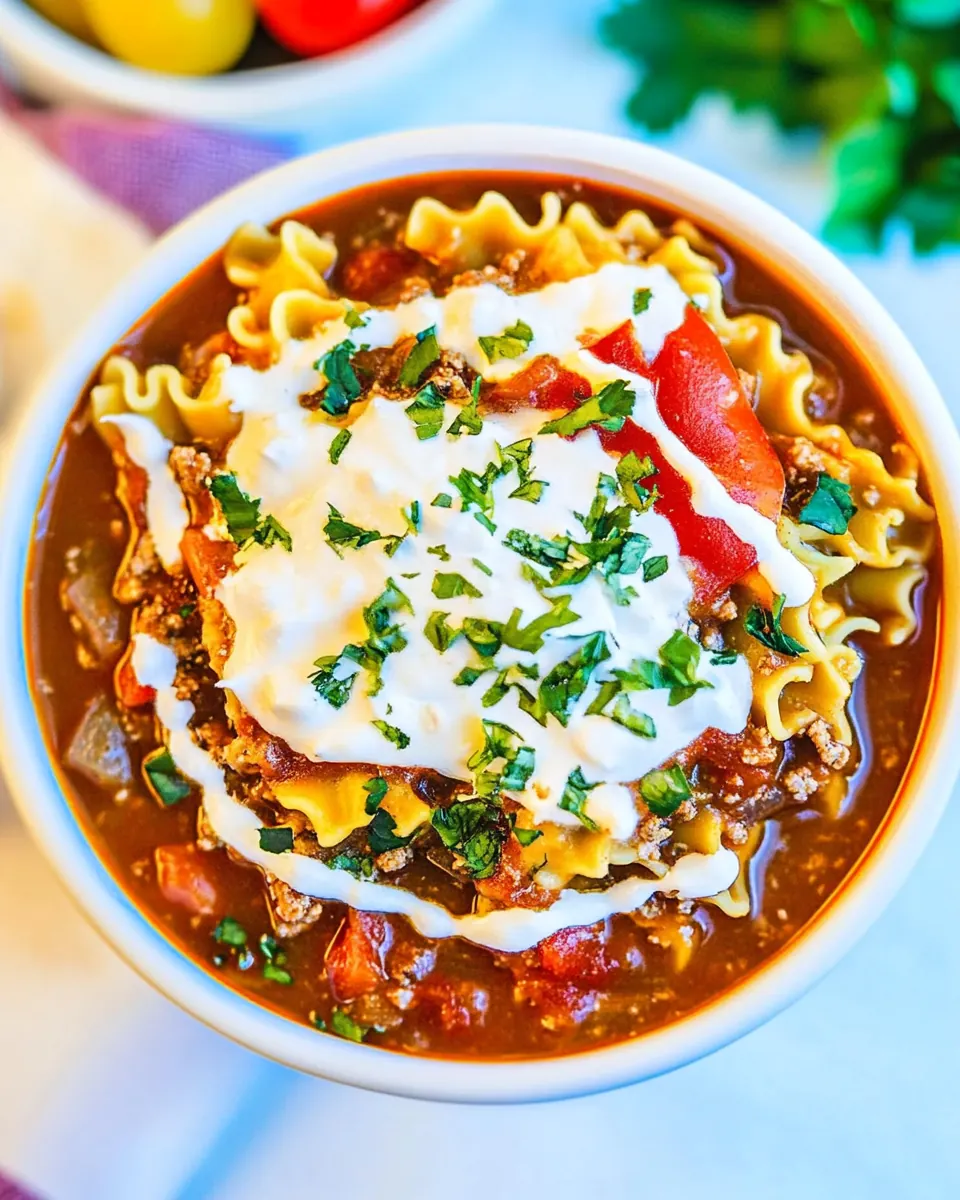
I like to keep a few simple strategies in mind when making Lasagna Soup. These tips will help you tailor the soup to your pantry and taste while maintaining the core lasagna character. Below are practical suggestions and storage notes to make the process smoother.
- Oil choice: If you prefer a neutral aroma, use vegetable or canola oil; olive oil adds fruitier notes but can dominate delicate tomato flavors.
- Meat swap: You can use lean ground beef for classic flavor, but if you need a lighter option, use the leanest available ground beef and drain excess fat after browning to prevent greasiness.
- Broth adjustment: Start with five cups for a brothy result, reduce to three or four cups for a heartier, stew like finish; always keep at least three cups to ensure proper hydration of the lasagna noodles.
- Sauce selection: Jarred spaghetti sauce speeds things up and adds reliable seasoning, taste it first and balance with sugar or salt as needed to avoid over seasoning or sweetness.
- Pasta timing: Cook the lasagna noodles just until al dente on the box timing minus one minute, because they will continue to soften once added to the hot soup.
- Garnish layering: Add ricotta or shredded cheeses to individual bowls rather than the pot to keep textures varied and prevent the entire batch from becoming overly cheesy.
Perfect Matches for Lasagna Soup
This soup works beautifully across seasons and settings. Below I outline serving styles, side pairings, and storage suggestions that suit weeknight dinners or relaxed gatherings. Use these ideas to elevate each bowl into a full meal.
- Simple salad pairing: A crisp green salad with a light vinaigrette cuts through the richness and adds refreshing contrast to each bowl.
- Garlic bread side: Warm, crusty bread or garlic bread is excellent for dipping and soaking up the tomato broth, offering a comforting textural companion.
- Family dinner: Serve it as a main dish for casual weeknight dinners, where the one pot approach keeps cleanup easy and everyone can customize their garnishes.
- Holiday or special nights: Although hearty enough for winter gatherings, the soup is also welcome on informal holiday evenings when you want a relaxed, crowd pleasing option.
- Leftovers storage: Store the broth and meat mixture separately from cooked pasta if you want to preserve noodle texture; broth keeps up to three days in the refrigerator or freeze for longer storage.
- Seasonal tweaks: In colder months emphasize richer cheeses and extra broth for comforting warmth, while in milder weather go lighter with herbs and smaller cheese portions.
FAQ
Conclusion
Lasagna Soup brings the beloved flavors of classic lasagna into a cozy, spoonable form that is faster to prepare and simpler to serve. It shines because it balances rich tomato and meaty depth with tender pasta and bright finishing cheeses, creating a bowl that feels indulgent without the oven time. Give it a try on a busy weeknight or when you want a relaxed dinner that still feels special, and enjoy the ease of a one pot meal that everyone at the table can customize.
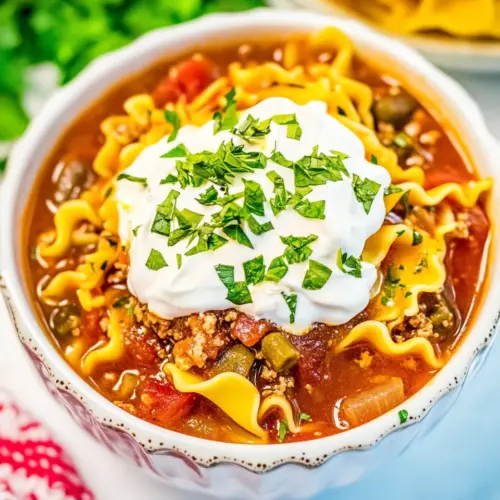
Lasagna Soup
Equipment
- Dutch Oven
- Large stock pot
- Large pot for boiling noodles
- Knife
- Cutting Board
Ingredients
- 1 tablespoon oil olive, vegetable or canola work well Sauté in a large pot to create the hot fat base that softens aromatics and browns meat for depth of flavor in the soup; use medium heat and avoid burning to preserve a clean oil taste.
- 1 pound lean ground beef Brown thoroughly to add rich savory umami and texture to the soup, breaking into small pieces so it integrates evenly with the sauce and absorbs seasonings.
- 1 large yellow onion diced Dice finely and sweat until translucent to contribute natural sweetness and aromatic complexity, forming a foundational flavor layer that complements the tomatoes and herbs.
- 4 cloves garlic minced Mince and add near the beginning to release pungent, aromatic oils that brighten and deepen the overall flavor; cook briefly to mellow sharpness without losing fragrance.
- 24 ounce jar of spaghetti sauce 28 ounce jar also works if that's the size you have on hand Pour in to provide the concentrated tomato base and main body of the soup; choose the jar size you have on hand and stir in to combine with browned meat and aromatics.
- 5 cups chicken broth This can be cut down to 3 or 4 cups for a thicker consistency if desired. Simmer to control the soup's consistency and boost savory depth; adjust the amount to achieve a thinner broth or reduce for a thicker, stew-like texture.
- 14 ounce can crushed tomatoes Add for additional tomato texture and bright acidity, enhancing tomato flavor and body while balancing richer ingredients like meat and cheese during simmering.
- 1 tablespoon Italian seasoning Sprinkle to introduce a blend of Mediterranean herbs that seasons the broth evenly, lending classic Italian flavor notes such as oregano, basil, and thyme.
- 1 teaspoon granulated sugar this can be left out if desired Stir in to gently counteract tomato acidity and round flavors, optionally omitting if a less sweet profile is preferred while still maintaining balance.
- 1 teaspoon salt Season to enhance all flavors and help components meld; add gradually and taste as you simmer to avoid over-salting.
- 1/2 teaspoon pepper Crack in to provide a mild heat and subtle bite that rounds savory flavors; adjust to taste for a balanced finish.
- 10 uncooked lasagna noodles Break into pieces and simmer until tender to mimic traditional lasagna layers while contributing starch for body and a comforting pasta presence in the soup.
- Garnishes as desired ricotta, mozzarella, parmesan, parsley and basil are all great choices Top as desired to add creamy, melty, and fresh herb elements that finish each bowl; combine ricotta, shredded cheeses, and fresh herbs for contrast in texture and flavor.
Instructions
- Add oil to Dutch oven or large stock pot, turn to medium high heat and brown the ground beef, garlic and diced onion together.: As the oil shimmers in the pot you will hear the first soft sizzle when the onion and ground beef hit the surface, and that sound signals flavor development. Browing releases sweet, caramelized notes from the onion , and the Maillard reaction on the edges of the ground beef produces savory complexity that becomes the backbone of the soup. Stir frequently so the meat breaks into small crumbles and the garlic softens without burning. Watch for a light golden color on the onion and deepening brown flecks on the meat; if the pot smokes, the heat is too high so reduce it to prevent bitter burned bits. A common mistake here is overcrowding the pot which causes steaming rather than browning, so give the meat room and brown in batches if necessary.
- Stir in the pasta sauce, chicken broth, crushed tomatoes, Italian seasoning, sugar, salt and pepper.: When the liquids hit the pot you will notice an immediate steam and a comforting tomato aroma that blends with the beefy scents. Stirring brings the ingredients together into a glossy, fragrant mixture where the Italian seasoning infuses warm herbal notes. The chicken broth adds savory depth while the crushed tomatoes contribute texture. Adding the sugar at this stage helps tame acidity. Mix thoroughly so the seasoning is distributed evenly, and taste once it simmers to check salt levels. Avoid dumping everything at once without stirring, because pockets of seasoning can create uneven flavor. If the sauce tastes flat, it likely needs more salt or an extra pinch of herbs.
- Bring to a boil, then let it simmer for 30 minutes.: As the pot reaches a gentle boil you will see energetic bubbles and hear a steady bubbling that then calms into a soothing simmer. This simmer is where flavors marry and the sauce concentration develops, making the broth richer and more cohesive. A 30 minute simmer allows the dried Italian seasoning to rehydrate and release its oils, and it gives the tomatoes time to meld with the meat juices. Keep the heat low enough so the surface forms occasional gentle bubbles rather than a vigorous rolling boil, which can break down texture and reduce liquid too quickly. Stir occasionally to prevent sticking, and if the pot reduces too fast, add a splash of broth. A common oversight is leaving the lid on tight which traps too much steam, so leave the lid partially ajar to control reduction.
- While the sauce cooks, prepare the lasagna noodles according to the box. (Only cook them until just tender, al dente.): The sound of water coming to a boil in a separate pot signals progress, and the scent of starchy steam will rise as the lasagna noodles soften. Cooking them until just tender preserves chew so they do not turn mushy when added to the hot broth. Al dente noodles should have a slight bite and a consistent texture without a raw center. Rinse is optional depending on preference, but be mindful that rinsing removes surface starch that helps the noodles cling to sauce. A frequent error is overcooking the pasta, which will cause it to disintegrate in the soup, so set a timer and taste early.
- Cut the noodles into bite size pieces and add them to the soup at the end of its cooking time.: When you cut the warm, pliable lasagna noodles , they should feel firm but yielding, and the cut edges will soak up sauce quickly. Adding the noodles at the end preserves their texture, letting them absorb just enough broth without collapsing. Stir gently to distribute pieces so each bowl gets pasta evenly. If you add the noodles too early they will swell and make the soup overly thick, while adding them too late leaves them under hydrated. A good rule is to add them in the final few minutes, then let the pot rest off heat for a moment so flavors settle before serving.
- Serve with desired garnishes.: The final garnishes transform the bowl, lending creamy, salty, and herbal dimensions that complete the dish. When you spoon the soup into bowls, add a dollop of ricotta or a sprinkle of shredded mozzarella and grated parmesan , then finish with torn basil or chopped parsley for color and brightness. The contrast between hot broth and cool ricotta is delightful, and melting cheese creates ribbons that enhance mouthfeel. A common misstep is piling on cheese while the soup is still aggressively boiling which can melt unevenly, so serve while the soup is hot but not at a violent simmer.
Notes
- Oil choice: If you prefer a neutral aroma, use vegetable or canola oil; olive oil adds fruitier notes but can dominate delicate tomato flavors.
- Meat swap: You can use lean ground beef for classic flavor, but if you need a lighter option, use the leanest available ground beef and drain excess fat after browning to prevent greasiness.
- Broth adjustment: Start with five cups for a brothy result, reduce to three or four cups for a heartier, stew like finish; always keep at least three cups to ensure proper hydration of the lasagna noodles.
- Sauce selection: Jarred spaghetti sauce speeds things up and adds reliable seasoning, taste it first and balance with sugar or salt as needed to avoid over seasoning or sweetness.
- Pasta timing: Cook the lasagna noodles just until al dente on the box timing minus one minute, because they will continue to soften once added to the hot soup.
- Garnish layering: Add ricotta or shredded cheeses to individual bowls rather than the pot to keep textures varied and prevent the entire batch from becoming overly cheesy.