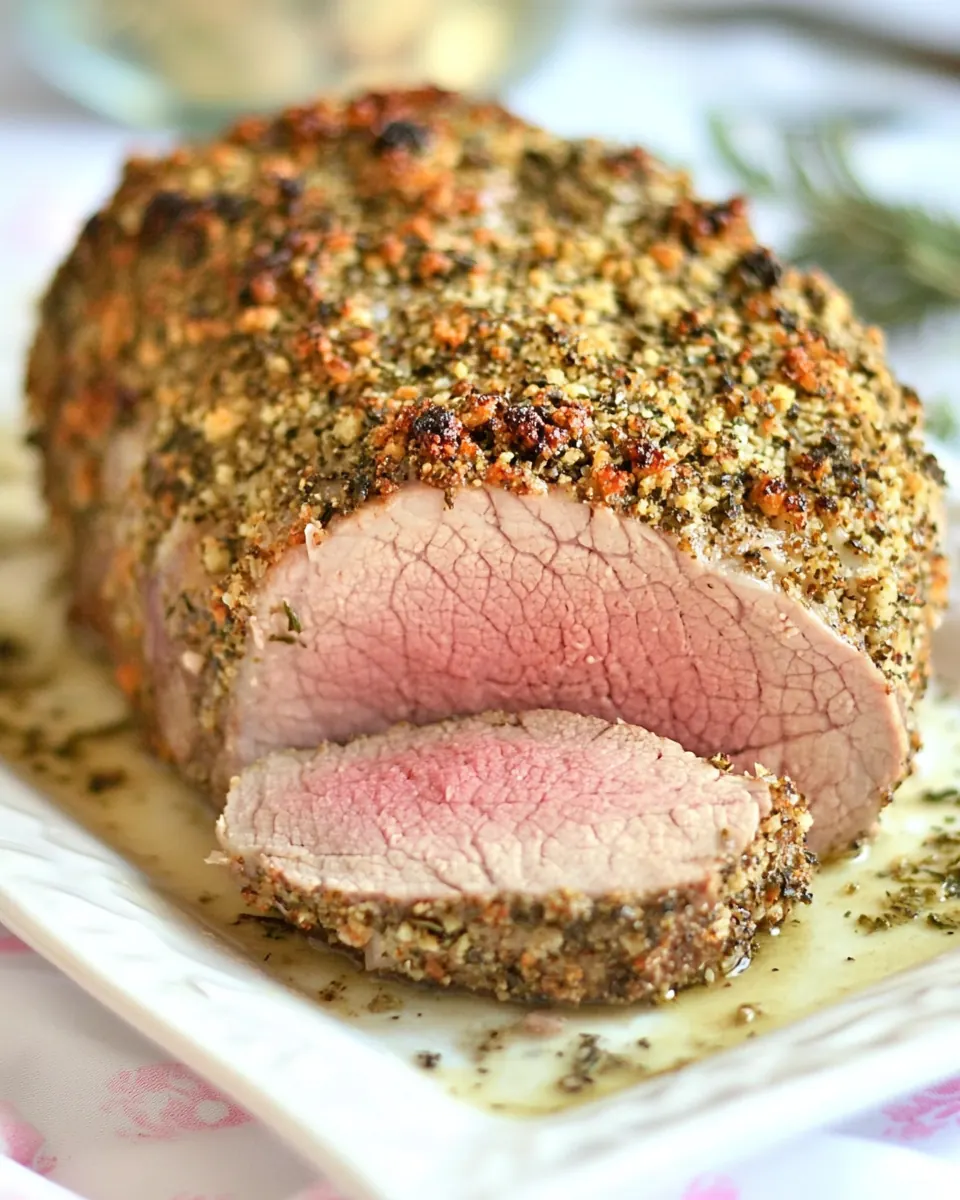
Herb Crusted Roast
Herb Crusted Roast is one of those recipes that I reach for when I want dinner to feel special without turning the kitchen into a war zone.
I first made this roast on a blustery winter evening when friends popped by with little notice, and the aroma of beef searing and garlic frying filled the house within minutes. I remember standing at the stove, stirring a simple crumb and parmesan cheese coating, thinking how a few modest ingredients can transform a plain cut into something memorable. The crust formed a savory shell that locked in juices, while the tangy sour cream and bright horseradish beneath it kept each slice lively. Guests lingered in the kitchen, drawn by the sound of the roast sizzling and the comforting warmth of the oven. I loved how the recipe let the roast be the star, while small accents like crushed garlic and dried herbs added personality.
What I appreciate most about Herb Crusted Roast is that it feels composed, not fussy. The technique is straightforward, and yet the results read like effort and care. I learned to trust the thermometer and to let the roast rest properly, which made the slices tender and evenly pink. Since that first night, it’s become my go to for casual dinner parties and quiet Sunday suppers, because it presents beautifully and slices easily. I hope you enjoy the rhythm of searing, piling on the herb crust, and waiting for that satisfying moment when the aroma tells you the roast is ready.
Recipe Snapshot
1 hr 10 mins
10 mins
60 mins
Medium
350 kcal
American
Gluten-Free, Keto
Dinner
Large skillet, Roasting pan, Instant read thermometer, Mixing bowls
The Magic of This Herb Crusted Roast
Classic, comforting flavor with lift
I love how Herb Crusted Roast delivers a familiar, comforting roast flavor while the herb and breadcrumb crust adds an exciting lift. The tang from the sour cream and horseradish under the crust brightens each bite, so the dish never feels heavy, even when served at a holiday table. That balance keeps everyone going back for more.
Minimal prep, maximum impact
We often want recipes that work on a weeknight and also impress guests. This one fits both worlds. A few minutes to combine the creamy mixture and the crumb topping yields a beautiful crunchy exterior. I appreciate recipes where a small amount of prep amplifies the result, and this roast does exactly that.
Textural contrast
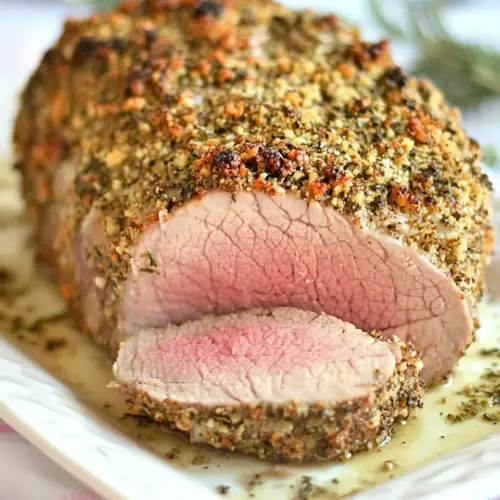
The interplay between the crisp herb crumb and the tender center is what I find irresistible. When you slice into the roast, the crust gives a slight resistance, then the knife meets juicy, evenly cooked beef. That contrast elevates simple meat into something more interesting and satisfying.
Adaptable and reassuring
There is comfort in knowing a recipe can be gently adapted without losing its essence. Swap the dried herbs to reflect your pantry or adjust seasoning to suit your crowd. I often tweak the herbs depending on what I am serving it with, and it always feels right. For cooks who like small experiments, this one rewards subtle changes.
Great for sharing
Finally, the way Herb Crusted Roast presents on a platter makes it feel communal. Slicing and serving becomes part of the meal experience, and the resting time gives you a moment to assemble sides and pour drinks. I find that those small pauses often become the best parts of dinner.
What’s In This Herb Crusted Roast
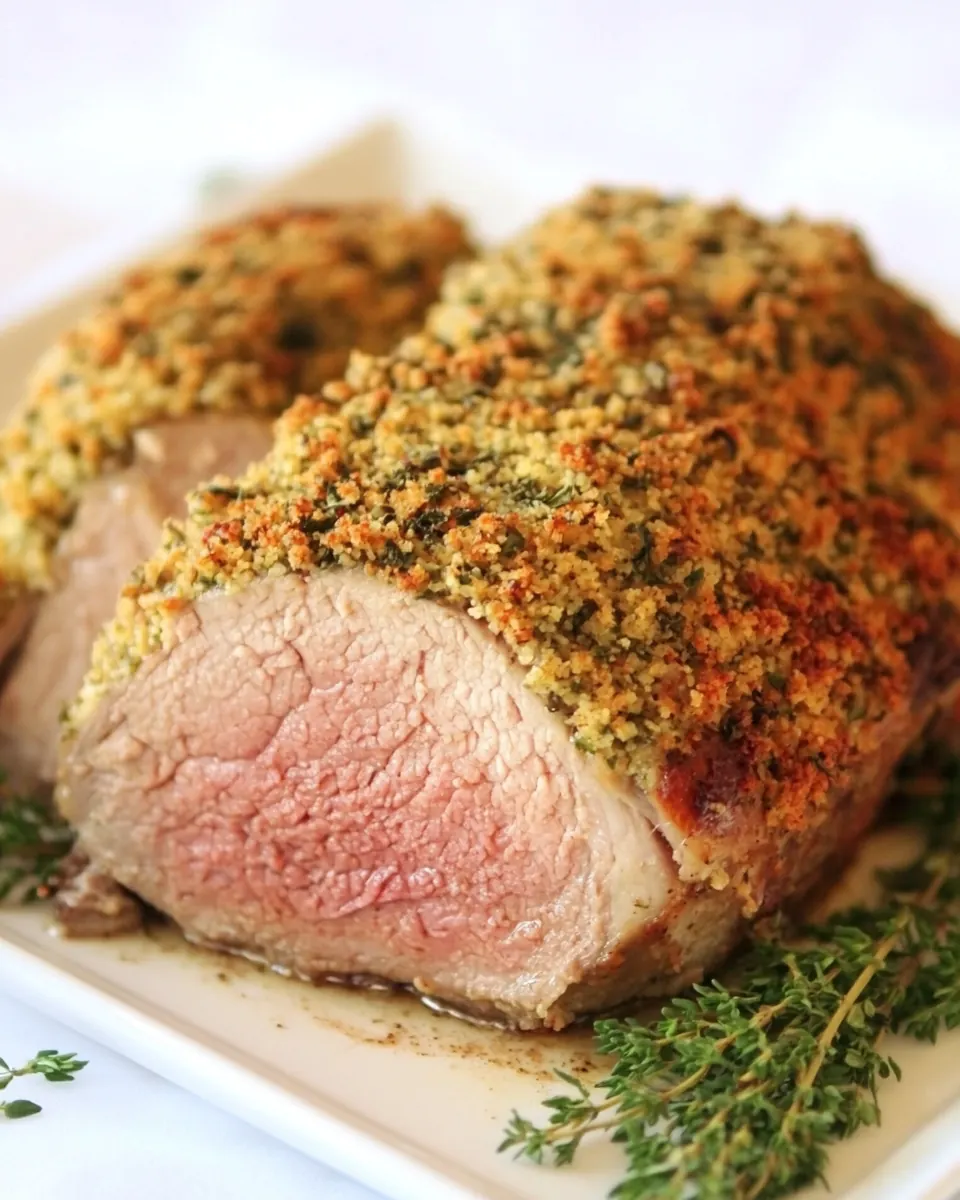
These ingredients come together with a simple philosophy: build a tender, flavorful center, then add a savory, textured shell to create contrast. The key players are the roast itself, which provides the meaty backbone, a tangy creamy layer that keeps the crust glued and flavorful, and a seasoned breadcrumb topping for crunch. Each component has a clear role, and together they produce depth without fuss.
- 2 1/2 lbs beef eye round roast, fat trimmed off: Trim and roast to provide the main protein and hearty structure for the dish; the lean eye round yields slices suitable for a herb crust while developing deep beefy flavors during roasting. Maintain even thickness to ensure uniform cooking and slice against the grain for tenderness. Reserve resting time after roasting to let juices redistribute for juicier results.
- 2 tablespoons sour cream: Add creamy tang and moisture to help bind the herb crust mixture to the roast; sour cream also contributes mild acidity that gently tenderizes surface proteins. Use full-fat or reduced-fat depending on desired richness and texture. Incorporate evenly so the crust adheres well during roasting.
- 1 tablespoon prepared horseradish: Lend sharp, piquant heat that cuts through the beef’s richness and brightens the crust profile; prepared horseradish disperses easily into the creamy binder for consistent flavor. Adjust quantity to taste since it can become assertive when concentrated. Combine with sour cream to mellow and integrate its bite.
- 2 teaspoons kosher salt, and fresh black pepper to taste: Season and enhance overall flavor balance while drawing out the roast’s natural juices; kosher salt helps with seasoning precision and texture, while fresh black pepper adds aromatic heat. Use measured kosher salt for consistent salting and crack pepper fresh for maximum aroma. Apply evenly to both meat and crust components for cohesive seasoning.
- 1/3 cup whole wheat seasoned bread crumbs: Provide bulk and toasting texture to form a crisp, whole-grain crust on the roast; whole wheat seasoned bread crumbs contribute heartier flavor and structure compared to finer crumbs. Ensure crumbs are evenly mixed with binder and herbs for uniform coverage. Toast lightly if desired to deepen nutty notes.
- 2 1/2 tablespoons grated parmesan cheese: Impart savory, salty umami and aid browning to enhance the crust’s richness; grated parmesan integrates with breadcrumbs to create a cohesive, flavorful coating. Use finely grated cheese for even distribution and press mixture onto the roast to ensure adhesion. Parmesan’s saltiness also reduces additional salt needs.
- 1/2 tbsp Italian dried herbs, or herbs de Provence: Introduce concentrated Mediterranean herb flavor and aromatic complexity to the crust; Italian dried herbs or herbes de Provence provide a blend of oregano, basil, thyme, and other fragrant herbs. Use measured amounts to avoid overpowering the beef and rehydrate briefly in the binder for brighter flavor release. Combine thoroughly with crumbs and cheese.
- 2 cloves garlic, crushed: Deliver pungent aromatic depth and savory warmth when crushed into the herb mixture; garlic melds with the creamy binder and herbs to amplify umami and fragrance. Mince or crush finely to ensure even distribution and prevent raw sharpness. Sear or roast briefly if a milder, sweeter garlic flavor is preferred.
- 2 tablespoons olive oil: Bind and help the crust adhere while adding rich mouthfeel and promoting browning; olive oil also assists in the formation of a crisp, golden exterior during roasting. Use extra-virgin for flavor or a milder oil for a subtler taste, and mix thoroughly with the breadcrumb-herb mixture. Brush or rub onto the roast so the crust forms evenly.
Directions for Herb Crusted Roast
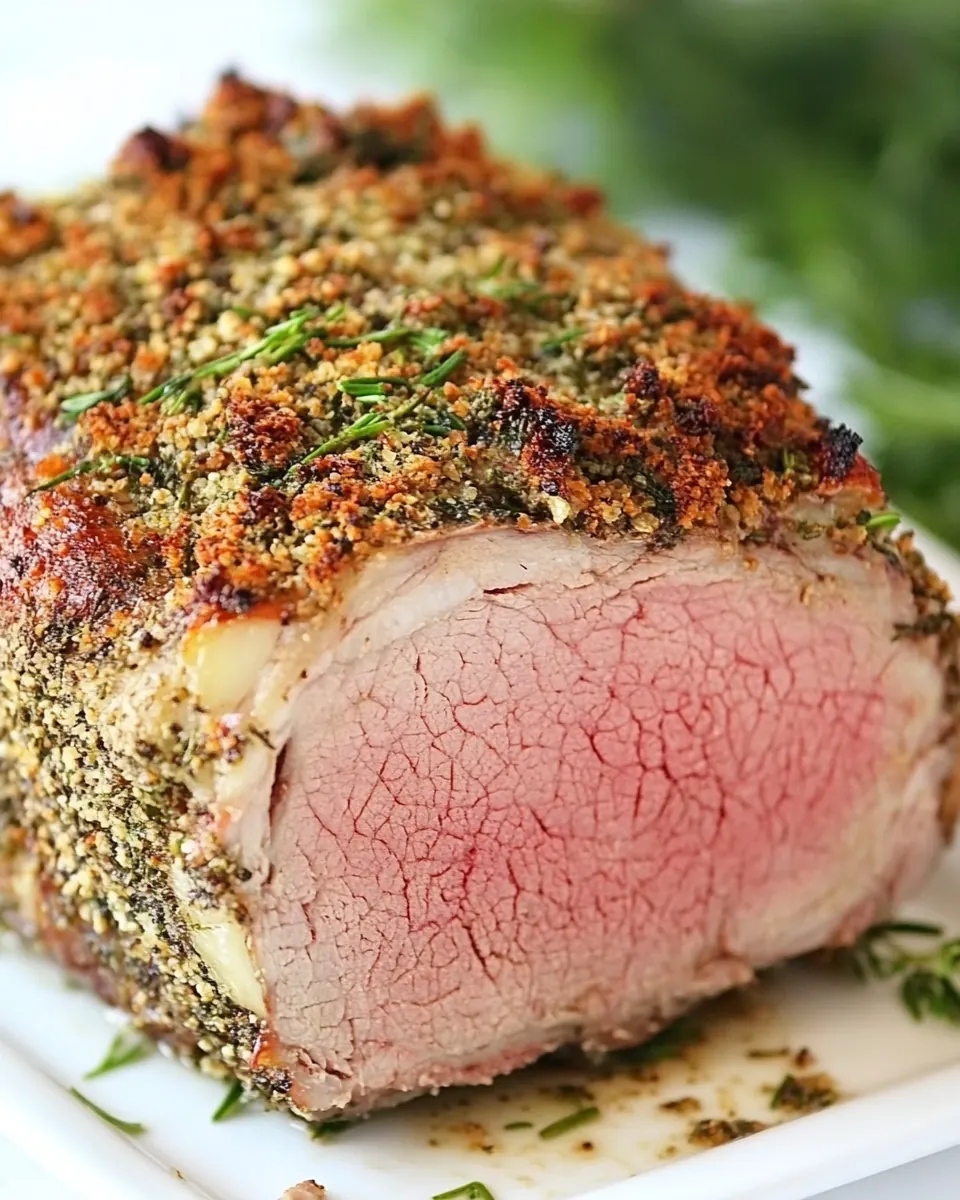
I like to think of these steps as a short rhythm: sear, build the layers, and roast to temperature. The instructions below expand each step with sensory cues and troubleshooting so you know when you are on track. Take your time with the sear and the resting period, because those moments shape the final texture and flavor.
- Preheat oven to 400 F.: As the oven comes up to temperature you will notice a dry heat smell that signals readiness; this high starting heat helps the crust begin to brown quickly once the roast goes in. Preheating is critical because placing the roast into a cold oven will extend cook time and can prevent the crust from forming properly. A common error is not waiting for full preheat, which may lead to uneven browning. Ensure the oven rack is positioned in the center to allow air circulation and consistent roasting.
- In a small bowl combine sour cream, salt, pepper and horseradish.: The mixture should feel creamy and slightly thick, and the aroma will carry a bright, tangy note from the horseradish that mingles with the dairy richness of the sour cream . This layer acts as a flavor reservoir and adhesive for the crumb topping, which is why you want a smooth, evenly blended paste. Troubleshooting tip, if the mixture seems too runny the crumbs will slide off, so adjust consistency with a touch more sour cream or a pinch of breadcrumbs.
- In another bowl combine breadcrumbs, Parmesan, dried herbs, garlic and oil.: Mixing these dry and oily elements releases an herbaceous scent and the texture should be sandy but cohesive when pressed. The Parmesan cheese will give a faint nutty smell while the crushed garlic adds warmth. This combination forms the crisp, flavorful crust, and the oil helps the crumbs brown. If the mixture is powdery and will not clump at all, add a small extra splash of olive oil so it adheres properly to the roast.
- Season the beef with salt and pepper. Sear roast in a large skillet on high heat until browned, about 6 to 8 minutes total on all sides.: As you sear, listen for an assertive sizzle, and watch the surface transform to deep mahogany, which signals development of the Maillard crust that yields savory complexity. Rotate the roast to get even color on every face, and use tongs to maintain control. Avoid crowding the pan, which can lower the temperature and cause steaming rather than searing. A common mistake is not patting the meat dry before searing; moisture impedes browning. The aroma when properly seared is rich and roasted, and the pan will show fond that adds flavor to your roast when transferred to the roasting pan.
- Place on a roasting pan and slather with the sour cream mixture, then the breadcrumbs on top.: When you spread the creamy layer, you should feel a cool, slightly tacky surface that helps the breadcrumb mixture adhere. Press the crumb topping gently so it forms an even shell; you want a snug coating, not a loose pile. This layered assembly ensures the crust crisps and stays in place during roasting. If crumbs are applied too thinly they may brown too quickly and burn; apply a balanced layer and check halfway through cooking for uniform color.
- Place in the oven and cook until thermometer reads 125-130 F for medium rare, about 60 minutes.: While roasting you will observe the crust set and take on a golden brown hue, and the kitchen will fill with roasted, herbaceous aromas. Using an instant read thermometer, insert into the thickest part of the roast to track internal temperature accurately. The thermometer is the most reliable indicator for doneness, far better than time alone because oven variance and roast shape affect cook time. A frequent pitfall is relying only on clock time; remove the roast when the target temperature is reached for consistent results. Expect gentle juices to appear at the edges when ready, and the meat will feel slightly springy to the touch.
- Remove and let it rest for 15 minutes before slicing.: During resting you will notice juices redistribute and the roast will firm slightly, which makes slicing cleaner and prevents a flood of juices from running out. Cover loosely with foil to retain warmth but avoid wrapping tightly, which can soften the crust. Resting is essential for texture, as cutting too soon results in drier slices and a compromised crust. A common error is impatiently slicing immediately, so set a timer and use the pause to finish sides and prepare the serving platter.
Ways to Adapt This Recipe
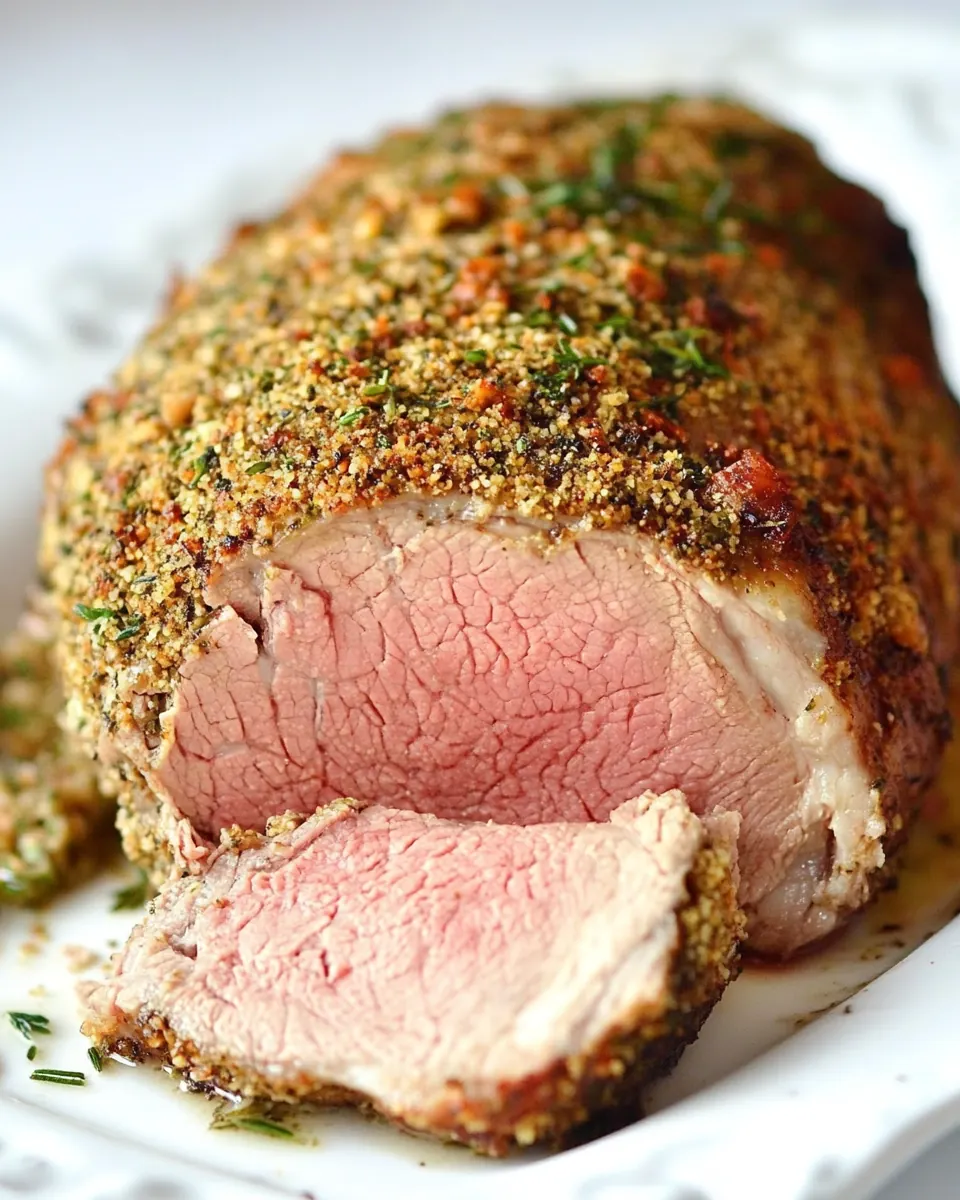
This roast is adaptable while keeping its simple technique intact. Below are practical variations and handling tips to help you customize the seasoning profile, adjust for dietary preferences, and manage timing for a larger crowd.
- Swap dried herbs for a different aromatic profile by using rosemary and thyme in equal parts if you prefer a woodsy note rather than the mixed Italian blend.
- Increase horseradish intensity by stirring in a little more prepared horseradish to the sour cream layer if you want a sharper, more pronounced bite under the crust.
- Adjust crust texture by pulsing the breadcrumbs briefly in a food processor for a finer, more uniform coating, or leave them coarser for a heartier crunch.
- Make ahead by combining the crumb mixture a day ahead and refrigerating in an airtight container to save prep time on the day you roast.
- Control browning by tenting the roast with foil if the crust reaches deep color before the internal temperature is reached, preventing overbrowning while the inside cooks.
How to Serve Herb Crusted Roast
The roast plates elegantly and suits many occasions from weeknight family dinners to small festive gatherings. Below are serving ideas, pairing suggestions, storage guidance, and timing tips so you can present the roast at its best.
- Family dinner Serve sliced thin alongside roasted root vegetables and a simple pan sauce or jus to soak up the flavorful juices.
- Casual entertaining Arrange slices on a large platter with a bowl of extra horseradish sauce and a crusty bread for guests to help themselves.
- Holiday meal Present the roast as the centerpiece with seasonal sides like glazed carrots and a green vegetable, keeping the roast the visual and flavor star.
- Storage Refrigerate sliced roast in an airtight container for up to three days; reheat gently to preserve juiciness and the integrity of the crust.
- Make ahead Roast earlier in the day and reheat covered at low oven temperature, then give a brief high heat blast if you need to revive the crust before serving.
- Portioning For a buffet or family style meal, slice on a slight bias for attractive slices that are easy to pick up, and label if there are multiple proteins on the table.
FAQ
Conclusion
This Herb Crusted Roast stands out because it combines a tender, juicy center with a flavorful, crunchy herb and breadcrumb shell. The method is approachable yet impressive, making it suitable for casual dinners or small gatherings. Try it when you want a centerpiece that requires modest prep but delivers on texture and depth of flavor. Slice it thin, serve it warm, and enjoy how simple ingredients come together to create a memorable meal.
Herb Crusted Roast
Equipment
- Large Skillet
- Roasting Pan
- Instant read thermometer
- Mixing Bowls
Ingredients
- 2 1/2 lbs beef eye round roast, fat trimmed off Trim and roast to provide the main protein and hearty structure for the dish; the lean eye round yields slices suitable for a herb crust while developing deep beefy flavors during roasting. Maintain even thickness to ensure uniform cooking and slice against the grain for tenderness. Reserve resting time after roasting to let juices redistribute for juicier results.
- 2 tablespoons sour cream Add creamy tang and moisture to help bind the herb crust mixture to the roast; sour cream also contributes mild acidity that gently tenderizes surface proteins. Use full-fat or reduced-fat depending on desired richness and texture. Incorporate evenly so the crust adheres well during roasting.
- 1 tablespoon prepared horseradish Lend sharp, piquant heat that cuts through the beef’s richness and brightens the crust profile; prepared horseradish disperses easily into the creamy binder for consistent flavor. Adjust quantity to taste since it can become assertive when concentrated. Combine with sour cream to mellow and integrate its bite.
- 2 teaspoons kosher salt, and fresh black pepper to taste Season and enhance overall flavor balance while drawing out the roast’s natural juices; kosher salt helps with seasoning precision and texture, while fresh black pepper adds aromatic heat. Use measured kosher salt for consistent salting and crack pepper fresh for maximum aroma. Apply evenly to both meat and crust components for cohesive seasoning.
- 1/3 cup whole wheat seasoned bread crumbs Provide bulk and toasting texture to form a crisp, whole-grain crust on the roast; whole wheat seasoned bread crumbs contribute heartier flavor and structure compared to finer crumbs. Ensure crumbs are evenly mixed with binder and herbs for uniform coverage. Toast lightly if desired to deepen nutty notes.
- 2 1/2 tablespoons grated parmesan cheese Impart savory, salty umami and aid browning to enhance the crust’s richness; grated parmesan integrates with breadcrumbs to create a cohesive, flavorful coating. Use finely grated cheese for even distribution and press mixture onto the roast to ensure adhesion. Parmesan’s saltiness also reduces additional salt needs.
- 1/2 tbsp Italian dried herbs, or herbs de Provence Introduce concentrated Mediterranean herb flavor and aromatic complexity to the crust; Italian dried herbs or herbes de Provence provide a blend of oregano, basil, thyme, and other fragrant herbs. Use measured amounts to avoid overpowering the beef and rehydrate briefly in the binder for brighter flavor release. Combine thoroughly with crumbs and cheese.
- 2 cloves garlic, crushed Deliver pungent aromatic depth and savory warmth when crushed into the herb mixture; garlic melds with the creamy binder and herbs to amplify umami and fragrance. Mince or crush finely to ensure even distribution and prevent raw sharpness. Sear or roast briefly if a milder, sweeter garlic flavor is preferred.
- 2 tablespoons olive oil Bind and help the crust adhere while adding rich mouthfeel and promoting browning; olive oil also assists in the formation of a crisp, golden exterior during roasting. Use extra-virgin for flavor or a milder oil for a subtler taste, and mix thoroughly with the breadcrumb-herb mixture. Brush or rub onto the roast so the crust forms evenly.
Instructions
- Preheat oven to 400 F.: As the oven comes up to temperature you will notice a dry heat smell that signals readiness; this high starting heat helps the crust begin to brown quickly once the roast goes in. Preheating is critical because placing the roast into a cold oven will extend cook time and can prevent the crust from forming properly. A common error is not waiting for full preheat, which may lead to uneven browning. Ensure the oven rack is positioned in the center to allow air circulation and consistent roasting.
- In a small bowl combine sour cream, salt, pepper and horseradish.: The mixture should feel creamy and slightly thick, and the aroma will carry a bright, tangy note from the horseradish that mingles with the dairy richness of the sour cream . This layer acts as a flavor reservoir and adhesive for the crumb topping, which is why you want a smooth, evenly blended paste. Troubleshooting tip, if the mixture seems too runny the crumbs will slide off, so adjust consistency with a touch more sour cream or a pinch of breadcrumbs.
- In another bowl combine breadcrumbs, Parmesan, dried herbs, garlic and oil.: Mixing these dry and oily elements releases an herbaceous scent and the texture should be sandy but cohesive when pressed. The Parmesan cheese will give a faint nutty smell while the crushed garlic adds warmth. This combination forms the crisp, flavorful crust, and the oil helps the crumbs brown. If the mixture is powdery and will not clump at all, add a small extra splash of olive oil so it adheres properly to the roast.
- Season the beef with salt and pepper. Sear roast in a large skillet on high heat until browned, about 6 to 8 minutes total on all sides.: As you sear, listen for an assertive sizzle, and watch the surface transform to deep mahogany, which signals development of the Maillard crust that yields savory complexity. Rotate the roast to get even color on every face, and use tongs to maintain control. Avoid crowding the pan, which can lower the temperature and cause steaming rather than searing. A common mistake is not patting the meat dry before searing; moisture impedes browning. The aroma when properly seared is rich and roasted, and the pan will show fond that adds flavor to your roast when transferred to the roasting pan.
- Place on a roasting pan and slather with the sour cream mixture, then the breadcrumbs on top.: When you spread the creamy layer, you should feel a cool, slightly tacky surface that helps the breadcrumb mixture adhere. Press the crumb topping gently so it forms an even shell; you want a snug coating, not a loose pile. This layered assembly ensures the crust crisps and stays in place during roasting. If crumbs are applied too thinly they may brown too quickly and burn; apply a balanced layer and check halfway through cooking for uniform color.
- Place in the oven and cook until thermometer reads 125-130 F for medium rare, about 60 minutes.: While roasting you will observe the crust set and take on a golden brown hue, and the kitchen will fill with roasted, herbaceous aromas. Using an instant read thermometer, insert into the thickest part of the roast to track internal temperature accurately. The thermometer is the most reliable indicator for doneness, far better than time alone because oven variance and roast shape affect cook time. A frequent pitfall is relying only on clock time; remove the roast when the target temperature is reached for consistent results. Expect gentle juices to appear at the edges when ready, and the meat will feel slightly springy to the touch.
- Remove and let it rest for 15 minutes before slicing.: During resting you will notice juices redistribute and the roast will firm slightly, which makes slicing cleaner and prevents a flood of juices from running out. Cover loosely with foil to retain warmth but avoid wrapping tightly, which can soften the crust. Resting is essential for texture, as cutting too soon results in drier slices and a compromised crust. A common error is impatiently slicing immediately, so set a timer and use the pause to finish sides and prepare the serving platter.
Notes
- Swap dried herbs for a different aromatic profile by using rosemary and thyme in equal parts if you prefer a woodsy note rather than the mixed Italian blend.
- Increase horseradish intensity by stirring in a little more prepared horseradish to the sour cream layer if you want a sharper, more pronounced bite under the crust.
- Adjust crust texture by pulsing the breadcrumbs briefly in a food processor for a finer, more uniform coating, or leave them coarser for a heartier crunch.
- Make ahead by combining the crumb mixture a day ahead and refrigerating in an airtight container to save prep time on the day you roast.
- Control browning by tenting the roast with foil if the crust reaches deep color before the internal temperature is reached, preventing overbrowning while the inside cooks.
