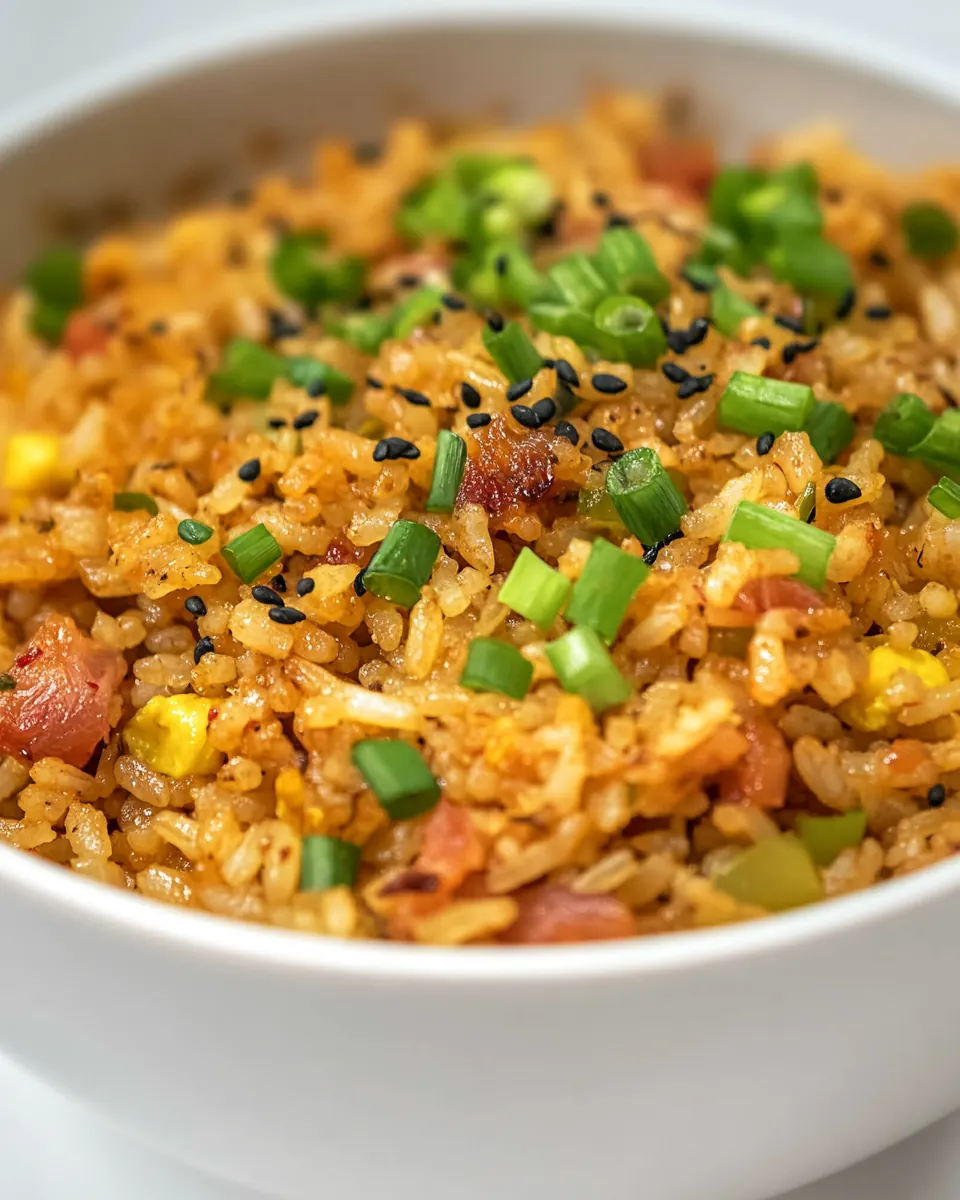
Hawaiian Fried Rice with Kimchi
Hawaiian Fried Rice with Kimchi showed up on my dinner table the night I decided to marry two pantry heroes, and it instantly became a weeknight favorite. I grew up eating fried rice with a variety of mix ins, and this version, with its bright tang from kimchi and salty crispness from spam, felt like a joyful mashup of comfort and island flair. Right from the first bite I liked how the chewy grains contrasted with little pops of savory bits, and I remember smiling as the aroma of sesame and soy filled the kitchen.
That evening I was pressed for time but wanted something satisfying, and this dish delivered. I used cold day old rice that had been tucked in the fridge, then seared the cubes of spam until they had golden edges. The eggs scrambled into soft curds, and the chopped kimchi released tangy juices that lifted the whole pan. Friends who tried it asked for the recipe, and I found myself making it again and again, tweaking little things until it felt just right. I like recipes that are forgiving yet bold, and this one checks both boxes.
Recipe Snapshot
38 mins
20 mins
18 mins
Easy
450 kcal
Hawaiian
Gluten-Free, Low FODMAP
Dinner
Wok or Large Sauté Pan, Wooden Spoon, Bowl, Spatula
Why This Hawaiian Fried Rice with Kimchi Is a Winner
Bold fusion of flavors
I adore how Hawaiian Fried Rice with Kimchi brings together salty, tangy, and slightly sweet notes. The kimchi injects lively acidity, cutting through the richness of the butter and the savory crunch of spam. Every forkful feels layered, and that contrast is why this dish stays interesting to me.
Quick weeknight win
When time is tight I lean on this dish because it moves fast on the stovetop. Using chilled rice and prepped components means most of the work is assembly, not long cooking. I often make the rice ahead, and that tiny bit of planning saves me from scrambling on busy nights.
Flexible and forgiving
This recipe is patient with small mistakes. If your heat runs a touch high or a bit low, the dish still comes together. I like that you can adjust the kimchi heat level or the amount of soy sauce and still end up with something delicious. That forgiving nature makes me reach for it frequently.
Textural delight
The crispy cubes of spam, the soft scrambled eggs, and the slightly chewy grains of chilled rice create a pleasing mouthfeel. The tiny bursts of frozen peas brighten each bite, and the scallion greens bring a fresh finish. That variety of textures keeps the dish exciting spoon after spoon.
Great for leftovers and feeding a crowd
I love recipes that taste even better the next day, and this one does. The flavors meld overnight, making leftovers genuinely enjoyable. It also stretches well, so it’s perfect when people drop by unannounced or when you want a hearty meal that lasts several servings.
Main Ingredients for Hawaiian Fried Rice with Kimchi
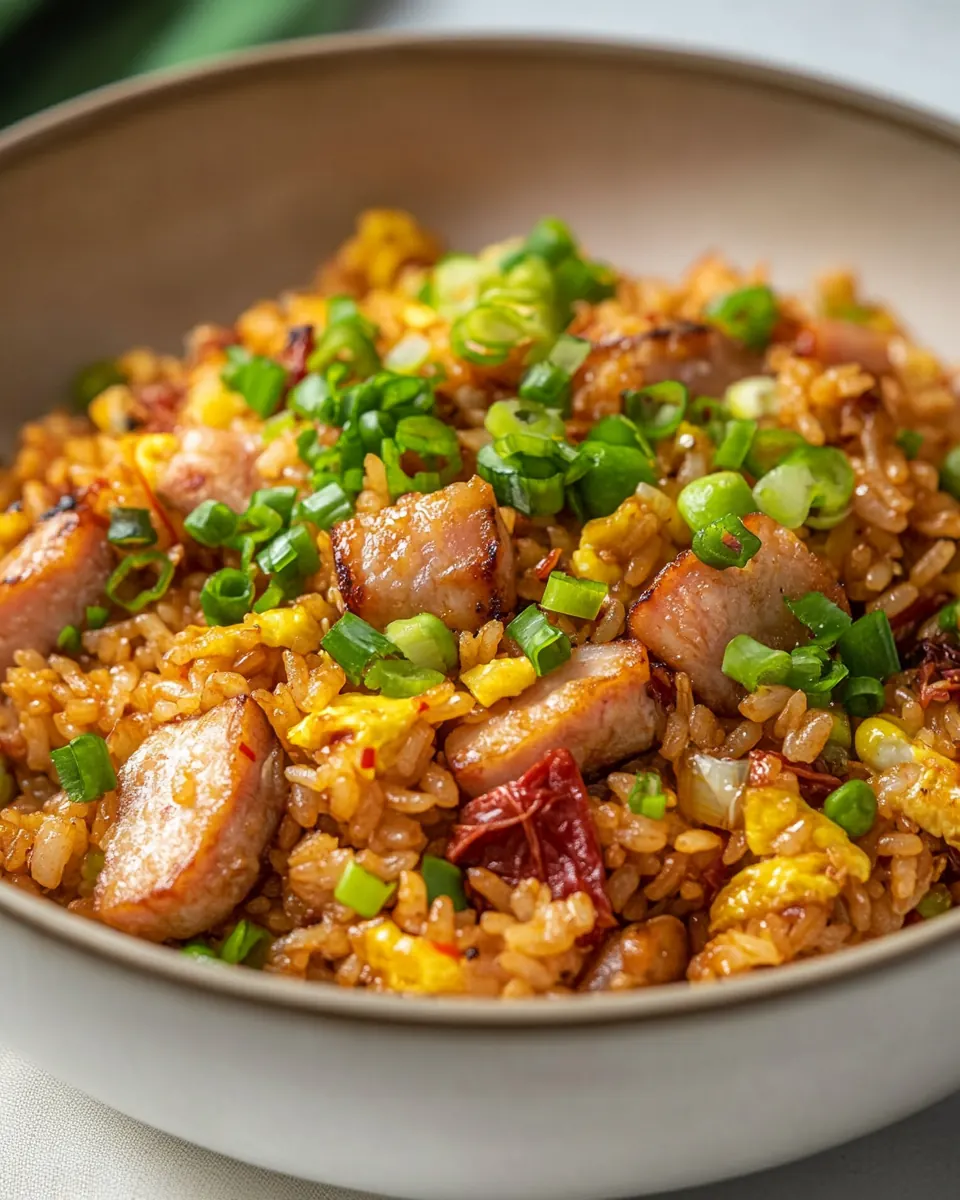
I treat these ingredients as a little orchestra where each player has a distinct job. The chilled rice provides the sturdy base, while the kimchi lends acidity and brightness. The spam offers salty meatiness and crisp texture, and the eggs add silkiness to bind everything together. Small accents like scallions, soy sauce, and sesame oil turn this into a cohesive, savory bowl.
- 3 tablespoons butter divided: Melted and separated to brown some and finish with a pat for richness; provides a silky mouthfeel and helps fry other ingredients evenly while adding a gentle toasted dairy flavor to the rice.
- 4 cups cooked and chilled long grain rice: Cooled and loosened before frying to prevent clumping and ensure separated grains; supplies the starch backbone that absorbs flavors and creates the fried rice texture.
- 3 large eggs: Beaten and cooked into soft curds to add silkiness and protein; contributes a tender scrambled element that binds grains and balances savory bites.
- 12 ounces spam I bought low sodium: Cubed and pan-fried until crisp edges form to deliver savory, salty, and slightly caramelized meaty notes; introduces a nostalgic Hawaiian touch and substantial umami.
- 1 bunch scallions: Sliced thinly to add fresh, oniony heat and a crisp green finish; used both as a cooking aromatics and a bright garnish to lift richness.
- 1 1/2 cups fresh kimchi mild or spicy: Chopped to release tangy, spicy, and fermented flavors that brighten the dish; offers acidity and complexity while contributing small crunchy fermented bits throughout the rice.
- 2 tablespoons soy sauce: Drizzled to season and deepen savory notes, balancing salt and umami; helps tie together the kimchi and spam flavors without overpowering the dish.
- 1 tablespoon sesame oil: Added sparingly for a nutty aroma and glossy finish; provides a toasty, aromatic note that enhances both the rice and cooked proteins.
- 1/2 cup frozen peas: Stirred in from frozen to introduce tender pops of sweetness and color; contributes a contrasting texture and light vegetal flavor to balance richness.
Hawaiian Fried Rice with Kimchi Instructions
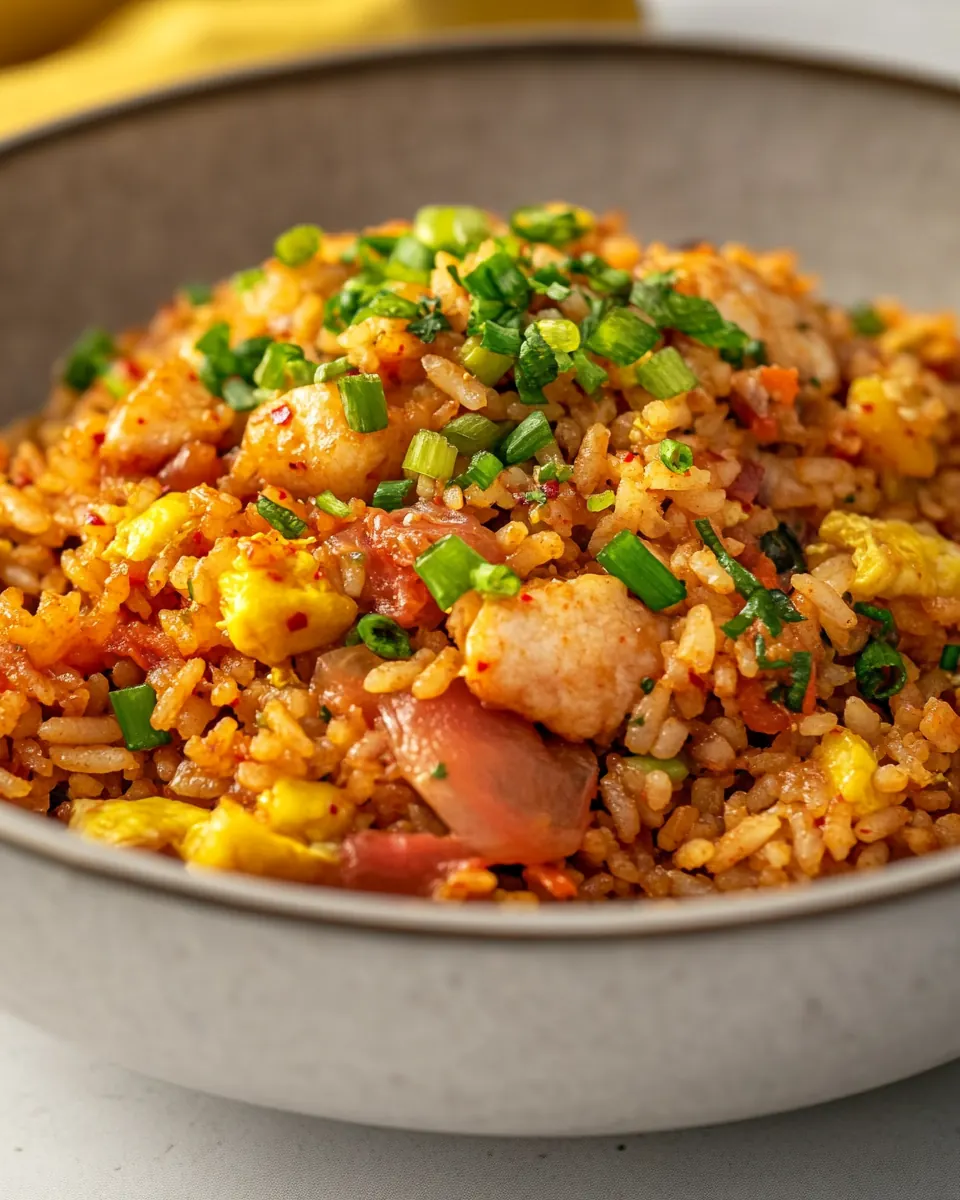
These directions guide you from mise en place to a sizzling, fragrant skillet meal. I find the process is rhythmical once the ingredients are prepped, and the key is watching for visual and auditory cues so nothing overcooks. Keep your tools and a holding plate ready so each component moves smoothly through the pan.
- Prep work: Make sure to start with cooked and chilled rice. (I usually make it the night before.) If needed, buy pre-cooked vacuum sealed rice. Break the eggs into a small bowl and whisk well. Cut the spam into small half inch cubes. Chop the scallions and separate into two piles, the whites and the greens. If the kimchi is in large pieces, roughly chop it to create smaller pieces, reserve the juices.: The aroma of chilled rice hitting a hot pan is restrained compared to freshly steamed rice, and you will notice a satisfying sizzling instead of steaming. Cold rice separates easily, helping each grain take on a slight toasting without turning gluey. A common mistake is using hot rice, which releases too much moisture and yields a mushy texture. If your rice was just made, spread it on a sheet pan and chill it in the fridge until firm, that reduces steam and leads to better frying.
- Set a wok (or large sauté pan) over medium heat. Add 2 tablespoons of butter. Set a holding plate to the side of the pan. When the butter has melted, pour in the eggs and quickly scramble. Move the scrambled eggs to the holding plate, and break into small pieces.: Whisking the eggs until uniform ensures even color and texture when cooked, producing tender curds rather than streaks of undermixed white. When the eggs hit the pan you will see them bubble gently before they set, and you should remove them while still slightly soft because residual heat will finish them. Overcooking here creates dry, rubbery chunks that fail to meld with the rice, so pull them early and set aside on a holding plate to preserve creaminess.
- Add the spam cubes to the pan. Stir and fry the spam for 4 to 6 minutes, until crispy on all sides. Then move the crispy spam cubes to the holding plate.: Evenly sized spam cubes brown at the same rate, giving you crisp edges and an appealing chew. As they fry you will hear a steady sizzle and see edges caramelize to a warm golden brown. If pieces vary in size, some will burn while others stay pale, so aim for uniform cuts for consistent texture and flavor.
- Add the remaining tablespoon of butter to the pan. Toss in the scallion whites and stir fry for 1 to 2 minutes.: The white parts soften and contribute sweet oniony depth when cooked, while the green tops hold shape and color as a fresh finish. Cook the whites earlier to let them mellow, and reserve the greens to toss in at the end so they remain bright. A frequent oversight is adding all scallions at once, which causes the greens to wilt and lose their vibrancy.
- Add in the cold rice, soy sauce, sesame oil, and chopped kimchi in juices. Use a wooden spoon to stir and break the cold rice apart. Stir fry for 5 to 6 minutes until the rice is warm and well mixed.: Smaller kimchi pieces mingle evenly through the grains, and the juices add tangy liquid that flavors the rice as it heats. When the kimchi hits the pan you will smell a fermented-sour lift that brightens the whole pan, and its moisture helps deglaze any browned bits. Leaving it in big chunks leads to uneven distribution, with some bites overpowering and others missing the flavor entirely.
- Mix in the scrambled eggs, spam, peas, and scallion greens. Stir fry another 1 to 2 minutes. Serve warm.: As the butter melts you will see it foam slightly and smell a warm, dairy aroma, signaling readiness. The melted fat gives the pan a slick surface so ingredients slide and sear properly. If the pan is too cool ingredients will steam rather than fry, so wait until the butter shimmers and just begins to bubble before proceeding.
- When the butter has melted pour in the eggs and quickly scramble: You will hear a soft sizzle as the egg mixture hits the hot fat, then gentle curds will form within seconds. Move them around with a spatula to create tender folds, and remove them while slightly underdone because they will finish cooking off heat. Overstirring or leaving them too long in the pan creates tight, dry curds that do not integrate well with the rice.
- Move the scrambled eggs to the holding plate and break into small pieces: Breaking the eggs into smaller pieces helps them disperse more evenly through the fried rice, offering occasional creamy pockets rather than one large clump. The residual heat will keep them warm without continuing to cook aggressively. If you leave a whole omelette in the pan, it will dominate texture and prevent even mixing later.
- Add the spam cubes to the pan Stir and fry the spam for 4 to 6 minutes until crispy on all sides: As the spam fries you should hear a pronounced sizzle and see its corners turn browned and caramelized, contributing a pleasant crunch. Crisping develops Maillard flavors that deepen the overall savory profile, and moving the cubes frequently ensures even browning. A mistake is crowding the pan, which steams the meat and prevents that sought after crisp exterior.
- Move the crispy spam cubes to the holding plate: Transferring the browned spam frees the pan to cook aromatics without burning and preserves the crisp texture until final mixing. This pause also allows you to control timing so each element returns at the perfect moment. Leaving the crisped meat in the pan too long can dry it out, so holding it separately maintains juiciness for the finish.
- Add the remaining tablespoon of butter to the pan Toss in the scallion whites and stir fry for 1 to 2 minutes: The butter will foam and carry the scallion whites, coaxing out their sweetness while softening their structure. You will smell a gentle sweet onion scent as they turn translucent. Cook them just until softened, because overcooking will remove their fresh brightness and make them mushy rather than pleasantly tender.
- Add in the cold rice soy sauce sesame oil and chopped kimchi in juices: When the cold rice hits the pan you will hear it separate and pop slightly against the heat, and the soy sauce will tint the grains while adding savory depth. The kimchi juices act like a quick deglazer, lifting any brown bits and distributing that fermented tang through the rice. Stir thoroughly so grains separate, and avoid pressing them into clumps, which prevents even toasting and leads to uneven seasoning.
- Use a wooden spoon to stir and break the cold rice apart Stir fry for 5 to 6 minutes until the rice is warm and well mixed: As you stir you will notice the rice warming and taking on a faint golden sheen where it kisses the pan, along with a toasty aroma. Continuous gentle agitation prevents sticking and ensures every grain is seasoned. A common pitfall is insufficient stirring, which leaves pockets of underheated rice and uneven flavor distribution.
- Mix in the scrambled eggs spam peas and scallion greens: Adding the reserved elements back in creates a lively mosaic of textures and flavors, and the peas will quickly heat through, adding bright green pops. Toss briefly so the eggs soften into the rice and the spam warms without losing crispness. Overstirring at this stage can break down the eggs and crush the rice grains, so fold just until everything is combined.
- Stir fry another 1 to 2 minutes Serve warm: In this brief finishing time the flavors marry and the dish releases a heady aroma of sesame, soy, and fermented kimchi. Serve immediately so the textures remain distinct and the scallion greens retain their fresh lift. Letting it sit too long causes the rice to soften further and the crisp edges to relax, changing the intended mouthfeel.
Tips and Tricks about Hawaiian Fried Rice with Kimchi
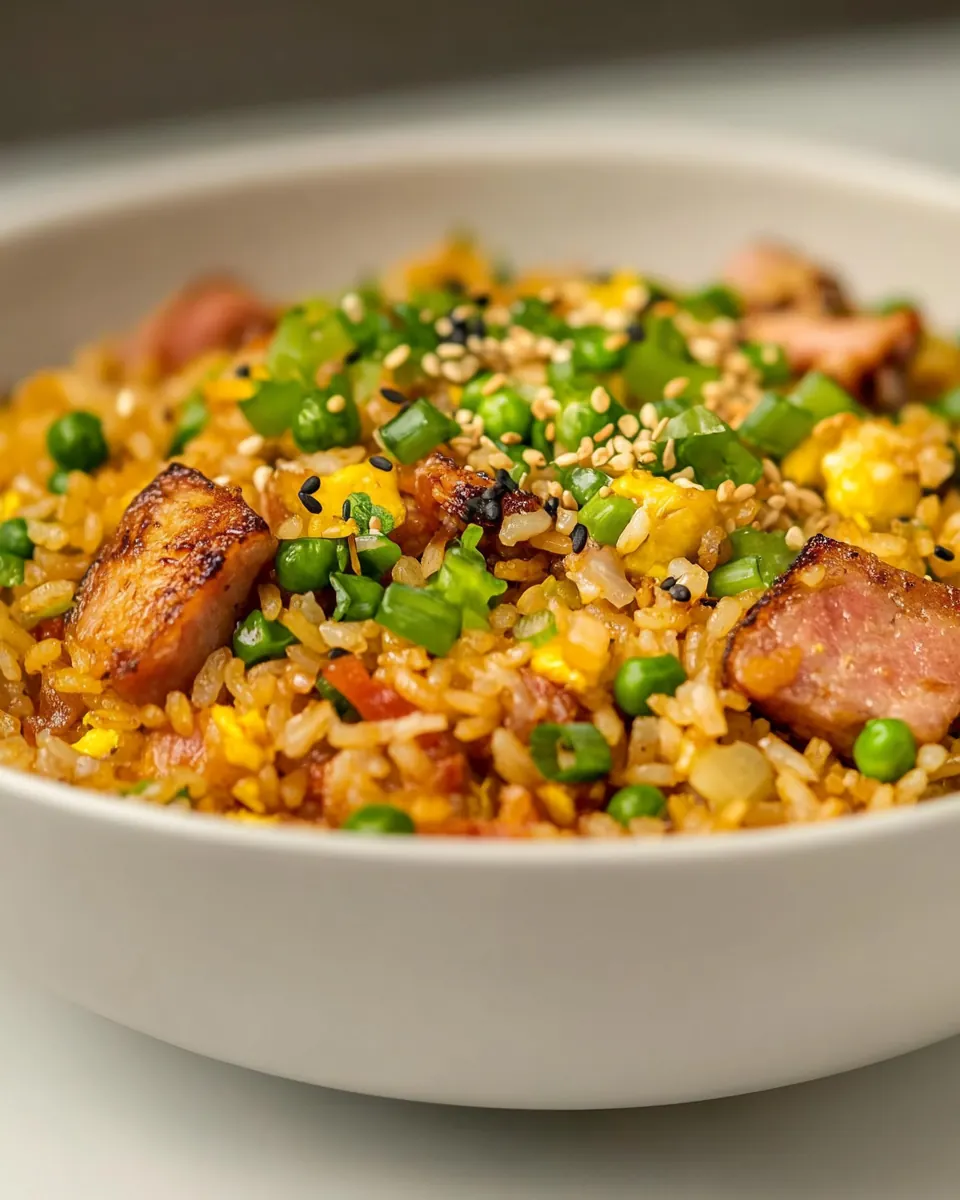
This recipe rewards a few simple habits more than fancy techniques. Read through these tips before you start, and you will move confidently through the steps. I expand on each point below so you can avoid common pitfalls and build flavor with minimal fuss.
- Use chilled rice: Cold rice separates better and fries rather than steams, giving you that desirable slightly toasted texture. If you have to use fresh rice, spread it on a sheet pan and cool in the fridge for at least 30 minutes to improve texture.
- Choose low sodium spam when possible: Low sodium spam lets you control salt with the soy sauce so the dish does not become overly salty. Taste as you go and add more soy sauce only if needed at the end.
- Reserve kimchi juices: The liquid from chopped kimchi acts like a deglazer, distributing fermented tang and helping the rice take on color. Pour it in with the rice so the pan picks up those browned bits for extra flavor.
- Cook eggs gently: Pull the eggs while slightly underdone because residual heat will finish them, leaving tender curds that integrate beautifully with the rice. Overcooked eggs become dry and do not blend as well.
- Add scallion greens at the end: Toss the green tops in just before serving to retain their bright color and fresh, oniony snap, which contrasts nicely with the warm components.
- Mind the heat: Medium to medium high gives good searing without burning; if you see smoke, lower the flame. Adjusting heat prevents burned butter and preserves the sesame oil aroma when you finish the dish.
Serving This Hawaiian Fried Rice with Kimchi
This dish is versatile and suits many occasions, from casual weeknight dinners to laid back gatherings. I like serving it directly from the pan so the steam and aroma stay present, and the colors look inviting on the table. Below are detailed serving ideas and storage notes to help you plan the meal.
- Serve family style: Spoon the rice into a large shallow bowl or straight from the wok so everyone can help themselves, making it perfect for a relaxed dinner.
- Accompaniments: Offer small bowls of extra chopped scallions and a drizzle of additional sesame oil or a little extra soy sauce for guests who want more punch at the table.
- Occasions: This is great for an easy weeknight dinner or casual gatherings where you want bold flavors with minimal fuss. It also works well for potlucks because it travels easily and holds up in a warm serving dish.
- Storage: Let leftovers cool completely, then store in an airtight container in the refrigerator for up to 3 to 4 days. Reheat gently in a skillet to restore some of the original texture rather than microwaving, which can make the rice gummy.
- Make ahead: Cook the rice the day before and refrigerate, and chop the kimchi and scallions in advance to speed assembly on the day you cook.
- Seasonal pairings: This dish works all year, pairing well with crisp salads in summer or hearty steamed greens in cooler months to balance its savory profile.
FAQ
Conclusion
Hawaiian Fried Rice with Kimchi stands out because of its energetic balance of tangy fermented kimchi, savory crisp spam, and perfectly separated chilled rice. I encourage you to try it on a busy weeknight when you want something quick but flavorful, or make it for friends who appreciate bold fusion flavors. This recipe is forgiving, travel friendly, and celebrates pantry staples coming together to create something greater than the sum of its parts. Give it a go, and you may find it earning a permanent spot in your rotation.
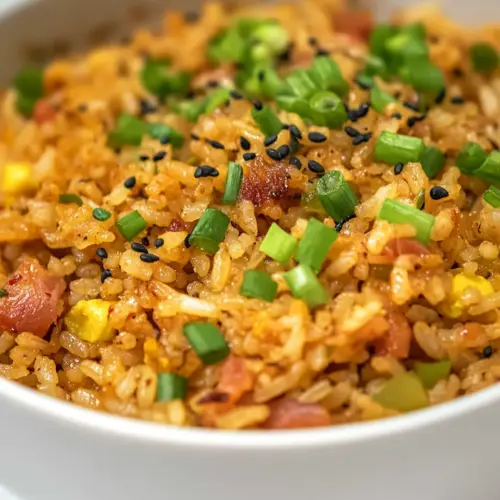
Hawaiian Fried Rice with Kimchi
Equipment
- Wok or Large Sauté Pan
- Wooden Spoon
- Bowl
- Spatula
Ingredients
- 3 tablespoons butter divided Melted and separated to brown some and finish with a pat for richness; provides a silky mouthfeel and helps fry other ingredients evenly while adding a gentle toasted dairy flavor to the rice.
- 4 cups cooked and chilled long grain rice Cooled and loosened before frying to prevent clumping and ensure separated grains; supplies the starch backbone that absorbs flavors and creates the fried rice texture.
- 3 large eggs Beaten and cooked into soft curds to add silkiness and protein; contributes a tender scrambled element that binds grains and balances savory bites.
- 12 ounces spam I bought low sodium Cubed and pan-fried until crisp edges form to deliver savory, salty, and slightly caramelized meaty notes; introduces a nostalgic Hawaiian touch and substantial umami.
- 1 bunch scallions Sliced thinly to add fresh, oniony heat and a crisp green finish; used both as a cooking aromatics and a bright garnish to lift richness.
- 1 1/2 cups fresh kimchi mild or spicy Chopped to release tangy, spicy, and fermented flavors that brighten the dish; offers acidity and complexity while contributing small crunchy fermented bits throughout the rice.
- 2 tablespoons soy sauce Drizzled to season and deepen savory notes, balancing salt and umami; helps tie together the kimchi and spam flavors without overpowering the dish.
- 1 tablespoon sesame oil Added sparingly for a nutty aroma and glossy finish; provides a toasty, aromatic note that enhances both the rice and cooked proteins.
- 1/2 cup frozen peas Stirred in from frozen to introduce tender pops of sweetness and color; contributes a contrasting texture and light vegetal flavor to balance richness.
Instructions
- Prep work: Make sure to start with cooked and chilled rice. (I usually make it the night before.) If needed, buy pre-cooked vacuum sealed rice. Break the eggs into a small bowl and whisk well. Cut the spam into small half inch cubes. Chop the scallions and separate into two piles, the whites and the greens. If the kimchi is in large pieces, roughly chop it to create smaller pieces, reserve the juices.: The aroma of chilled rice hitting a hot pan is restrained compared to freshly steamed rice, and you will notice a satisfying sizzling instead of steaming. Cold rice separates easily, helping each grain take on a slight toasting without turning gluey. A common mistake is using hot rice, which releases too much moisture and yields a mushy texture. If your rice was just made, spread it on a sheet pan and chill it in the fridge until firm, that reduces steam and leads to better frying.
- Set a wok (or large sauté pan) over medium heat. Add 2 tablespoons of butter. Set a holding plate to the side of the pan. When the butter has melted, pour in the eggs and quickly scramble. Move the scrambled eggs to the holding plate, and break into small pieces.: Whisking the eggs until uniform ensures even color and texture when cooked, producing tender curds rather than streaks of undermixed white. When the eggs hit the pan you will see them bubble gently before they set, and you should remove them while still slightly soft because residual heat will finish them. Overcooking here creates dry, rubbery chunks that fail to meld with the rice, so pull them early and set aside on a holding plate to preserve creaminess.
- Add the spam cubes to the pan. Stir and fry the spam for 4 to 6 minutes, until crispy on all sides. Then move the crispy spam cubes to the holding plate.: Evenly sized spam cubes brown at the same rate, giving you crisp edges and an appealing chew. As they fry you will hear a steady sizzle and see edges caramelize to a warm golden brown. If pieces vary in size, some will burn while others stay pale, so aim for uniform cuts for consistent texture and flavor.
- Add the remaining tablespoon of butter to the pan. Toss in the scallion whites and stir fry for 1 to 2 minutes.: The white parts soften and contribute sweet oniony depth when cooked, while the green tops hold shape and color as a fresh finish. Cook the whites earlier to let them mellow, and reserve the greens to toss in at the end so they remain bright. A frequent oversight is adding all scallions at once, which causes the greens to wilt and lose their vibrancy.
- Add in the cold rice, soy sauce, sesame oil, and chopped kimchi in juices. Use a wooden spoon to stir and break the cold rice apart. Stir fry for 5 to 6 minutes until the rice is warm and well mixed.: Smaller kimchi pieces mingle evenly through the grains, and the juices add tangy liquid that flavors the rice as it heats. When the kimchi hits the pan you will smell a fermented-sour lift that brightens the whole pan, and its moisture helps deglaze any browned bits. Leaving it in big chunks leads to uneven distribution, with some bites overpowering and others missing the flavor entirely.
- Mix in the scrambled eggs, spam, peas, and scallion greens. Stir fry another 1 to 2 minutes. Serve warm.: As the butter melts you will see it foam slightly and smell a warm, dairy aroma, signaling readiness. The melted fat gives the pan a slick surface so ingredients slide and sear properly. If the pan is too cool ingredients will steam rather than fry, so wait until the butter shimmers and just begins to bubble before proceeding.
- When the butter has melted pour in the eggs and quickly scramble: You will hear a soft sizzle as the egg mixture hits the hot fat, then gentle curds will form within seconds. Move them around with a spatula to create tender folds, and remove them while slightly underdone because they will finish cooking off heat. Overstirring or leaving them too long in the pan creates tight, dry curds that do not integrate well with the rice.
- Move the scrambled eggs to the holding plate and break into small pieces: Breaking the eggs into smaller pieces helps them disperse more evenly through the fried rice, offering occasional creamy pockets rather than one large clump. The residual heat will keep them warm without continuing to cook aggressively. If you leave a whole omelette in the pan, it will dominate texture and prevent even mixing later.
- Add the spam cubes to the pan Stir and fry the spam for 4 to 6 minutes until crispy on all sides: As the spam fries you should hear a pronounced sizzle and see its corners turn browned and caramelized, contributing a pleasant crunch. Crisping develops Maillard flavors that deepen the overall savory profile, and moving the cubes frequently ensures even browning. A mistake is crowding the pan, which steams the meat and prevents that sought after crisp exterior.
- Move the crispy spam cubes to the holding plate: Transferring the browned spam frees the pan to cook aromatics without burning and preserves the crisp texture until final mixing. This pause also allows you to control timing so each element returns at the perfect moment. Leaving the crisped meat in the pan too long can dry it out, so holding it separately maintains juiciness for the finish.
- Add the remaining tablespoon of butter to the pan Toss in the scallion whites and stir fry for 1 to 2 minutes: The butter will foam and carry the scallion whites, coaxing out their sweetness while softening their structure. You will smell a gentle sweet onion scent as they turn translucent. Cook them just until softened, because overcooking will remove their fresh brightness and make them mushy rather than pleasantly tender.
- Add in the cold rice soy sauce sesame oil and chopped kimchi in juices: When the cold rice hits the pan you will hear it separate and pop slightly against the heat, and the soy sauce will tint the grains while adding savory depth. The kimchi juices act like a quick deglazer, lifting any brown bits and distributing that fermented tang through the rice. Stir thoroughly so grains separate, and avoid pressing them into clumps, which prevents even toasting and leads to uneven seasoning.
- Use a wooden spoon to stir and break the cold rice apart Stir fry for 5 to 6 minutes until the rice is warm and well mixed: As you stir you will notice the rice warming and taking on a faint golden sheen where it kisses the pan, along with a toasty aroma. Continuous gentle agitation prevents sticking and ensures every grain is seasoned. A common pitfall is insufficient stirring, which leaves pockets of underheated rice and uneven flavor distribution.
- Mix in the scrambled eggs spam peas and scallion greens: Adding the reserved elements back in creates a lively mosaic of textures and flavors, and the peas will quickly heat through, adding bright green pops. Toss briefly so the eggs soften into the rice and the spam warms without losing crispness. Overstirring at this stage can break down the eggs and crush the rice grains, so fold just until everything is combined.
- Stir fry another 1 to 2 minutes Serve warm: In this brief finishing time the flavors marry and the dish releases a heady aroma of sesame, soy, and fermented kimchi. Serve immediately so the textures remain distinct and the scallion greens retain their fresh lift. Letting it sit too long causes the rice to soften further and the crisp edges to relax, changing the intended mouthfeel.
Notes
- Use chilled rice: Cold rice separates better and fries rather than steams, giving you that desirable slightly toasted texture. If you have to use fresh rice, spread it on a sheet pan and cool in the fridge for at least 30 minutes to improve texture.
- Choose low sodium spam when possible: Low sodium spam lets you control salt with the soy sauce so the dish does not become overly salty. Taste as you go and add more soy sauce only if needed at the end.
- Reserve kimchi juices: The liquid from chopped kimchi acts like a deglazer, distributing fermented tang and helping the rice take on color. Pour it in with the rice so the pan picks up those browned bits for extra flavor.
- Cook eggs gently: Pull the eggs while slightly underdone because residual heat will finish them, leaving tender curds that integrate beautifully with the rice. Overcooked eggs become dry and do not blend as well.
- Add scallion greens at the end: Toss the green tops in just before serving to retain their bright color and fresh, oniony snap, which contrasts nicely with the warm components.
- Mind the heat: Medium to medium high gives good searing without burning; if you see smoke, lower the flame. Adjusting heat prevents burned butter and preserves the sesame oil aroma when you finish the dish.
