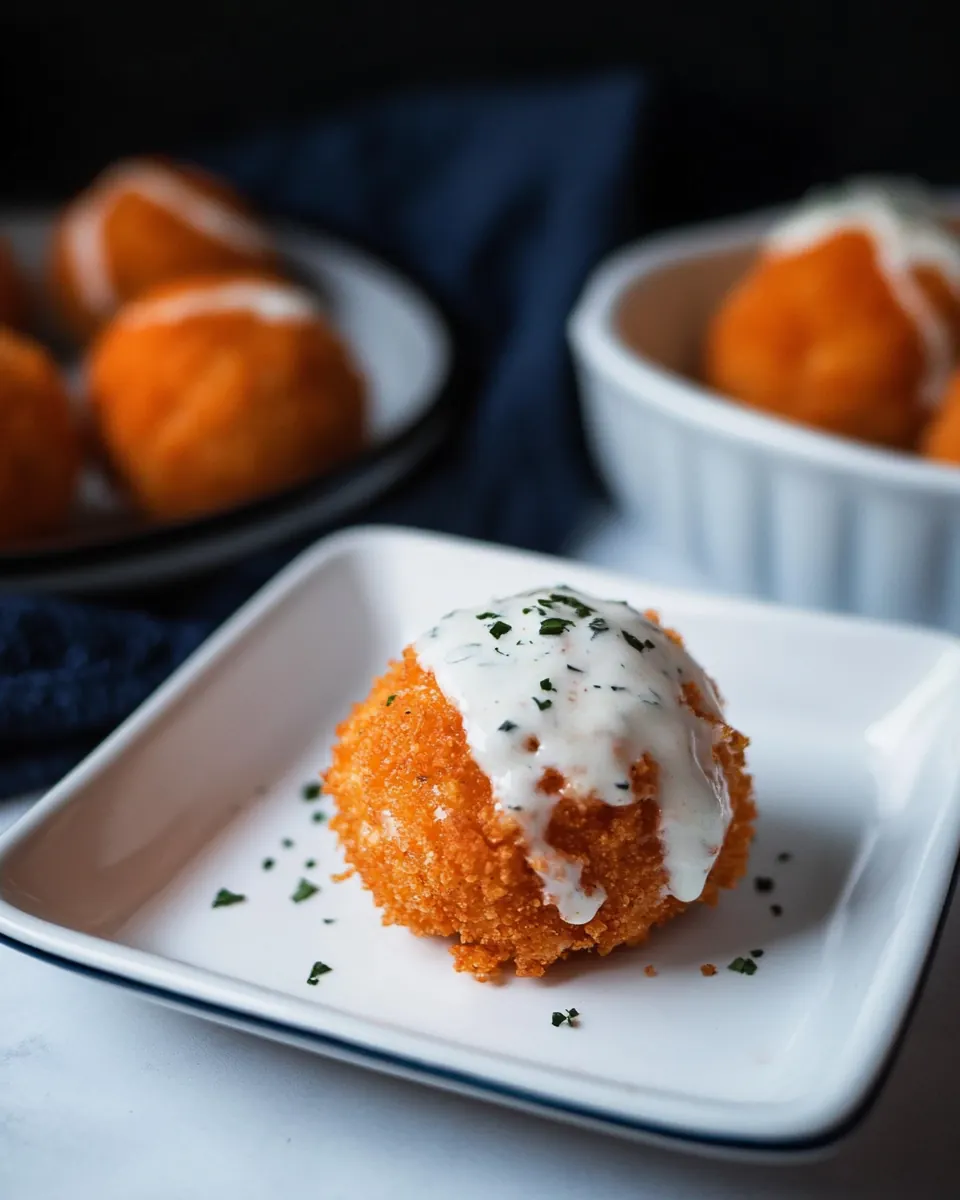
Halloween Buffalo Chicken Bombs
Halloween Buffalo Chicken Bombs have been my must bring appetizer ever since I first made them for a neighborhood party where costumes outnumbered chairs. I remember juggling trays while kids darted between legs, and the moment someone bit into one and the room collectively cheered, I knew these little parcels were magic. They are playful, bold, and a tiny bit messy in the best way, which is exactly what I love for festive gatherings.
Every time I make Halloween Buffalo Chicken Bombs I think about texture and contrast. You get a warm, pillowy exterior and then an electric, creamy filling that tastes like a wink. I like to tell friends that these are adult friendly yet still kid approved, because the heat can be dialed and the presentation is pure fun. Over the years I have learned how to tweak the filling so it holds together without being gluey, and how to seal the dough so nothing leaks during baking.
There is something very theatrical about assembling these spiders, placing each little olive head and sliding in the legs, it turns cooking into crafting. I often set aside time with a glass of iced tea and a playlist, treating the assembly as a relaxing project rather than a chore. When guests arrive they always ask where I bought them, and when I say I made them they act surprised and delighted. That reaction never gets old, and it keeps me coming back to this recipe for every fall bash I host.
Recipe Snapshot
50 mins
30 mins
20 mins
Medium
300 kcal
American
Keto, Gluten-Free
Appetizers
sheet pan, Mixing Bowl
Why You’ll Love This Halloween Buffalo Chicken Bombs
Bold flavor in a small package
I love how Halloween Buffalo Chicken Bombs pack a concentrated burst of spicy, tangy buffalo sauce balanced by creamy cream cheese and melty cheddar and mozzarella. Each bite hits multiple taste receptors, making them memorable at parties.
Playful presentation that delights
Assembly turns savory baking into a creative moment. Turning dough into spider shapes with black olives, pretzel legs, and candy eyes makes this more than food, it becomes an activity that people talk about and photograph. I enjoy the smiles it brings.
Great make ahead potential
These are forgiving when prepped ahead. You can prepare the filling and shape the dough balls in advance, which frees up time right before guests arrive. I often assemble the bombs a few hours ahead and refrigerate them, then brush and bake when needed.
Textural contrast is everything
The soft, pillowy pizza dough exterior contrasts with a creamy, slightly stringy center thanks to the mix of cream cheese, cheddar, and mozzarella. That contrast is what keeps me reaching for another one, and why guests rarely stop at one serving.
Customizable heat and flair
I appreciate that buffalo wing sauce controls the spice level easily. If I want more kick I add more sauce, if I want a milder crowd pleaser I reduce it. The black coating is optional, yet it transforms them into a Halloween showpiece, which I always find thrilling.
Key Ingredients for Halloween Buffalo Chicken Bombs
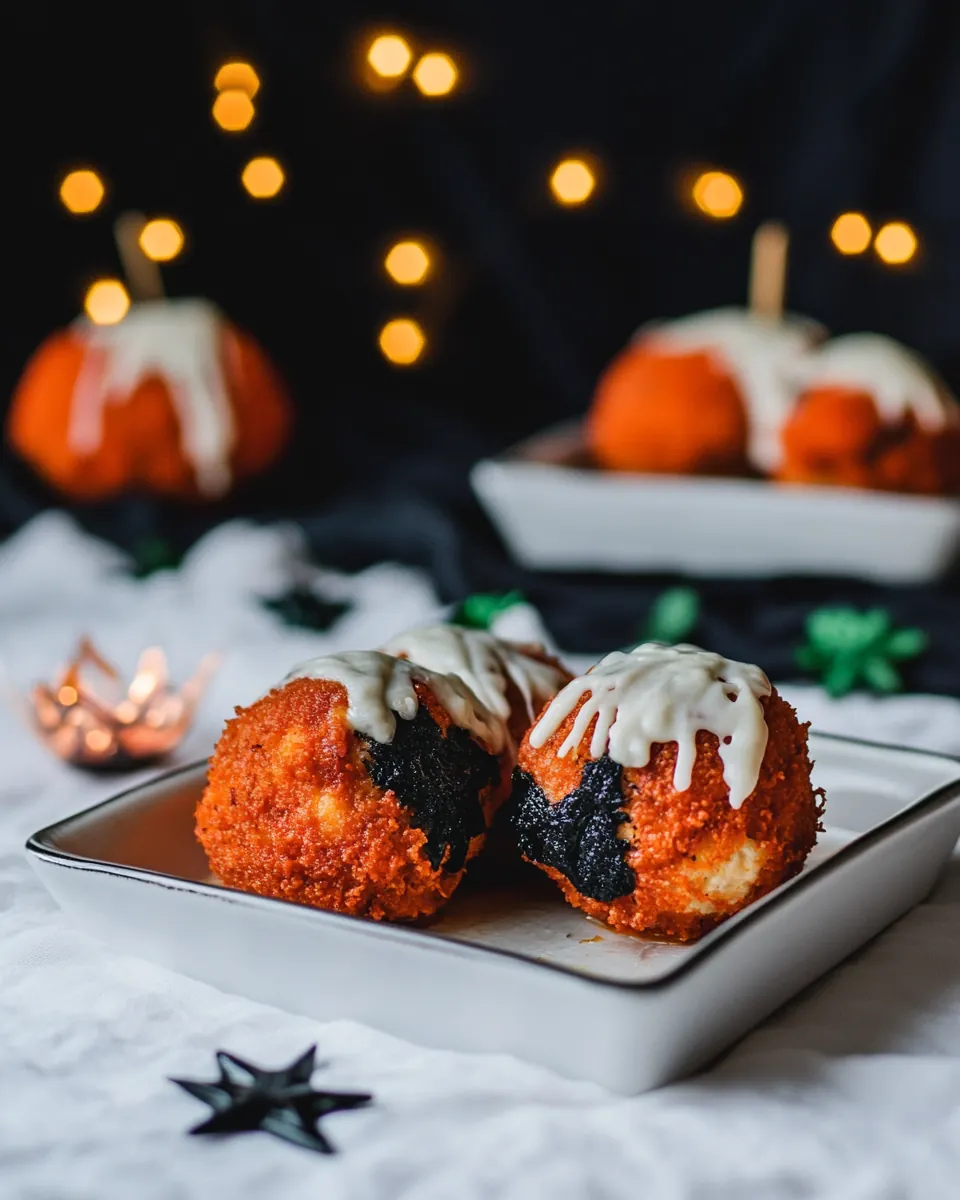
These ingredients work together to create a rich, spicy, and visually striking party treat. The filling focuses on creamy texture and tangy heat, while the dough gives structure and a comforting chew. The decorative elements transform ordinary components into a festive presentation, and the spices in the butter add a subtle savory finish that ties it all together.
- 1/2 cup (120 ml) buffalo wing sauce: Coat and flavor the chicken pieces by tossing them in the tangy hot sauce to infuse heat and moisture; balances richness from cheeses and cream cheese in the filling.
- 3 ounces (85 g) cream cheese softened: Soften and bind the filling while adding a creamy, tangy texture that mellows the spice; works as the glue that helps form cohesive stuffing.
- 4 cups chopped cooked chicken cooled, or shredded chicken: Provide the hearty protein base and texture for the filling; chopped or shredded chicken absorbs sauce and carries savory flavor throughout the bombs.
- 1 1/4 cup (140 g) shredded cheddar cheese: Melt into pockets of sharp, savory flavor and contribute gooey richness; helps create melty pockets and balances the buffalo heat.
- 1 1/4 cup (140 g) shredded mozzarella cheese: Add stretchy, mild melty texture that promotes chewiness and pull when baked; compliments cheddar for a balanced cheese profile.
- 1/4 cup green onions: Bring a fresh, mild oniony bite and a touch of color contrast when mixed into the filling or sprinkled on top; lightens the richness of cheeses.
- 113.8 oz can (390 g) pizza dough: Provide the doughy outer shell when portioned and wrapped around the filling; supplies structure, browning, and the breaded element for the bombs.
- 3 tablespoons (39 g) unsalted butter: Brush onto the dough for added flavor and facilitate browning; enriches the crust and helps seasonings adhere during baking.
- 1/4 teaspoon garlic powder: Impart a subtle garlic aroma and enhance overall savory depth; used sparingly to avoid overpowering the buffalo flavors.
- 1/4 teaspoon onion powder: Deliver a gentle sweet-onion undertone to round out savory notes; helps create a more complex flavor profile in the seasoned butter.
- 1/4 teaspoon Italian seasoning: Introduce aromatic herb notes and Italian-style seasoning to complement cheeses and chicken; adds a fragrant savory dimension to the crust.
- 1/4 teaspoon salt: Enhance and balance flavors by brightening and bringing out other seasonings; ensures the filling and crust are properly seasoned.
- Black food coloring: Color and tint decorative elements for a spooky effect; used sparingly to dye dough or accents black for Halloween presentation.
- 48 pitted black olives: Form the black olive slices used as spooky pupils or decoration; provide briny contrast and visual detail for the Halloween theme.
- 96 pretzel sticks: Serve as structural stems or sticks to create a spike or bone-like visual; add a crunchy, salty accent to each finished bomb.
- 12 large candy eyeballs: Provide playful, ghoulish decoration to top each bomb and enhance the Halloween presentation; add a whimsical finishing touch.
How to Prepare Halloween Buffalo Chicken Bombs
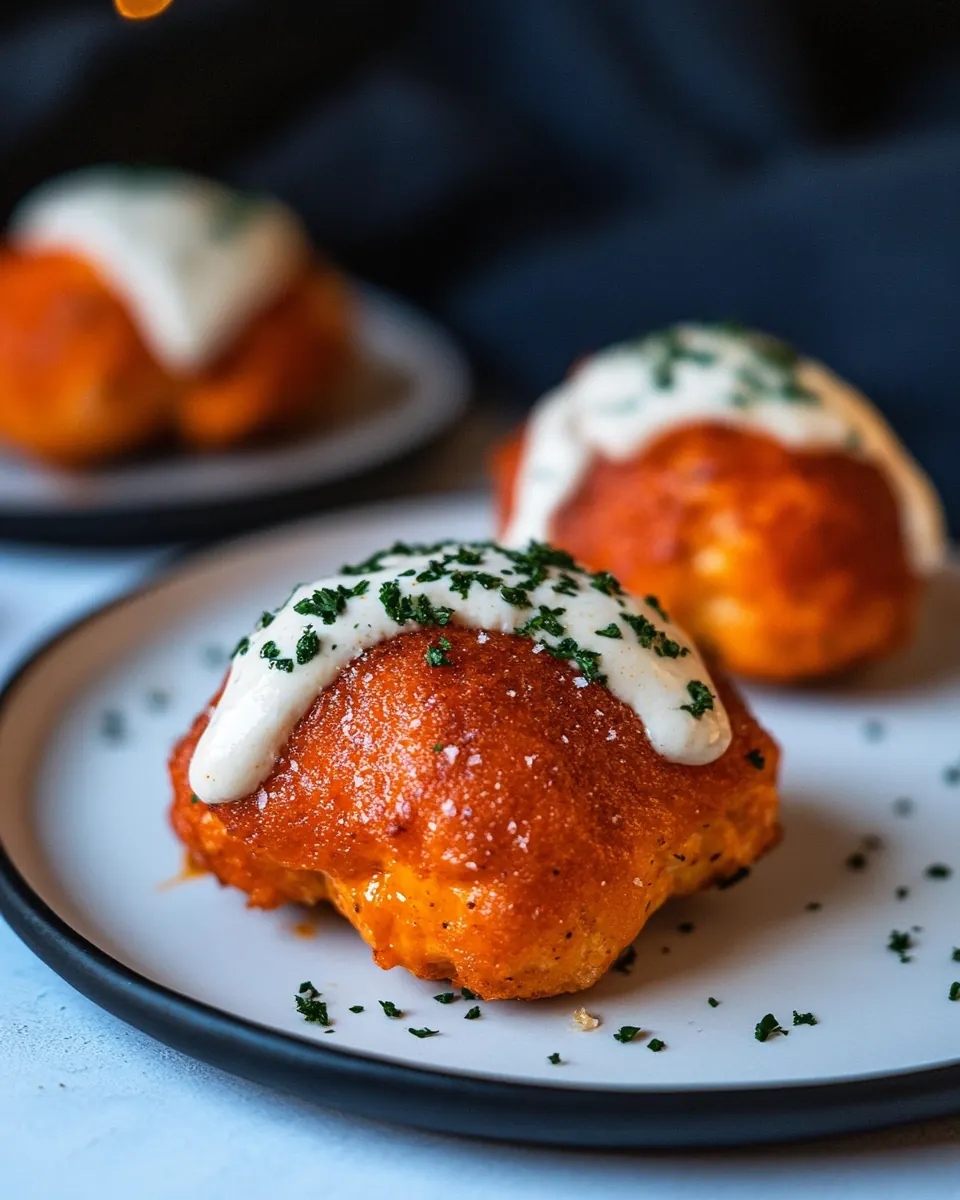
These directions guide you from preheating to final assembly, and I like to move through them with a sense of rhythm, keeping tools organized. The steps are straightforward but require patience when sealing and glazing so the bombs emerge intact and dramatic.
- Preheat the oven to 400°F (200°C), or 180°C for a fan oven, and prepare a large baking sheet by lining with aluminum foil and lightly spraying with oil. Set aside.: As you heat the oven you will notice the kitchen warming and a faint metallic clang if you shift the baking sheet, a cue that things are getting ready. Preheating ensures the dough begins baking immediately, creating a proper rise and golden bottom, which is crucial for structure. A common mistake is not preheating long enough, which can yield dense dough, so wait until the oven truly reaches temperature. Arrange the foil snugly and spray lightly to prevent sticking, and place the sheet within easy reach for quick transfer once assembled.
- In a large bowl mix the cream cheese and buffalo sauce together until mostly combined, a few small clumps of cream cheese is OK.: When you stir these two, the aroma of vinegar and spices from the buffalo wing sauce will brighten the tang of the cream cheese , and the mixture should become uniformly orangey with small flecks. I like to use a sturdy spoon or spatula so you can feel resistance as the cream cheese softens. The reason for slight clumps is that perfectly smooth can mean overworked texture, so stop when mostly combined. Avoid over mixing which can make the filling overly loose and harder to shape later.
- Add the chicken fingers and green onions, mix until coated.: At this stage the softened filling should cling to the strands of chopped chicken , coating them with spicy creaminess, while the green onions add pops of color and fresh scent. You will hear a soft scraping as you fold ingredients together, and when you lift the spoon you should see the filling ribbon across the bowl. A frequent error is adding warm chicken which can make the filling greasy, so ensure the chicken is thoroughly cooled before combining.
- Add the cheeses and mix one last time, add additional buffalo sauce if the mixture feels dry, then set aside.: When the cheddar and mozzarella fold in, the filling moves from loose to cohesive, with threads of mozzarella visible and shreds of cheddar speckled throughout. If the mixture seems dry, a splash more buffalo wing sauce brightens it and restores moisture. Letting the filling rest slightly helps flavors meld, but avoid overhydrating which can cause leaking during baking, a common pitfall I watch for.
- On a clean workspace roll out the pizza dough and cut into 6 equal pieces.: Rolling the pre made pizza dough spreads gluten and creates an even thickness, which bakes more predictably. Use a lightly floured surface to prevent sticking, and when you cut the dough, you should hear a soft tearing sound and see clean edges. Equal pieces ensure uniform bake times, and uneven portions lead to some bombs underdone while others overbrown. If the dough resists stretching, let it rest for a few minutes to relax the gluten.
- Gently stretch out the dough squares a bit then mound 1/6 of the filling in the center of each square.: The tactile moment of shaping is satisfying as you feel the dough soften under your palms, and the mound should sit proudly in the center without spilling. Press the filling into a compact mound so it stays contained when you lift the dough, and keep fingertips lightly floured to avoid sticking. A typical mistake is overfilling; although these are meant to be generous, too much will force seams to open during baking.
- For each square, pull the opposite corners up over the mound of filling and pinch them together, repeat with the second set of corners. Then pinch all of the remaining open dough together. Try to get a good seal without any openings.: When you seal, you are trapping steam inside which helps create a plush interior, and you should feel the seams firm under gentle pressure. Take time to crimp the dough so there are no hairline gaps, which are the usual cause of filling leakage. If dough stretches thinly and tears, press a little extra dough around the tear to patch it rather than forcing it closed, which can rupture during baking.
- Gently pick up the dough balls and place seam side down on the prepared baking sheet with plenty of space between each one. Carefully adjust the shape of the dough balls if needed, you’ll want them to be as spherical as possible.: Setting them seam side down helps keep the top smooth and gives the bottom a chance to brown, and spacing allows hot air to circulate for even baking. Use a light touch when moving them to maintain shape, and push any bulging seams lightly under the ball to round it. Crowding is a common mistake that can cause uneven browning and compressed texture, so leave ample room.
- In a small microwave safe bowl place the butter and the spices. Heat the butter in the microwave until melted. Add a few drops of the black food coloring and mix well. The color will be a dark charcoal gray to black when finished.: Melted butter releases a nutty aroma and helps the spices bloom, while the black coloring transforms the finish into a dramatic cloak. Stir until uniformly dark, and test a tiny dab on a spare piece of dough to confirm the color before glazing. Avoid adding too much coloring which can stain hands and surfaces; a few drops usually suffice.
- Gently as to not poke holes in the dough, brush the black butter mixture over the top of each dough ball. Make sure to get the sides all the way to the bottom, cover all exposed dough.: Brushing should be delicate, with long smooth strokes so you do not tear the dough. The butter will give a glossy sheen and help the color adhere and bake into the crust. If you see pooling butter, dab a small amount with a paper towel, as excess can cause soggy bottoms. Taking care here preserves the spherical shape and ensures even coloring.
- Bake in the preheated oven for 10 minutes. After about 10 minutes, take a look at the spiders. If they are not black enough for your preference now would be a good time to take them out and coat them with a little bit more of the black food coloring. Otherwise, continue to bake for an additional 5 to 10 minutes or until the bottoms have browned and the tops are solid.: As they bake you will hear soft pops and smells of toasted dough, and the bottoms should develop a golden brown that indicates doneness. Check visually for firmness on top; if still doughy, extend baking in short increments. A common misstep is removing them too soon because they look colored enough on top, when interiors may still be underbaked, so always verify the bottom color and overall solidity.
- Remove from the oven and set on a cooling rack.: Cooling allows steam to redistribute and prevents soggy bottoms, and you will notice the aroma deepen as they rest. Place them seam side down initially to avoid deformation. Rushing to decorate while piping hot can cause filling to escape or decorations to slide off, so give them a few minutes to stabilize.
- To make the legs, take the pretzel sticks and break them in half. Stick two halves of the pretzel sticks into the sides of a black olive, in a V shape, see pictures. Repeat this 8 times per spider.: Building legs is a hands on step where the crisp snap of the pretzel sticks is satisfying, and the olive gives a firm anchor. Make sure the pretzel halves are similar in length for balanced legs. Be careful not to push too far into the olive which can split it, a common error that results in unstable legs.
- Choose one side of a spider to be its face, and use a small paring knife to cut 2 round holes for the eyes, no need to remove the dough just press it into the spider gently. Place the eyes carefully into the holes.: Carving tiny eye wells should be gentle so you do not pierce through the dough, and the soft press will seat the candy eyeballs securely. I like to angle the holes slightly for personality. A mistake is pressing too hard and creating holes that leak filling, so keep the motion shallow and steady.
- Use the knife to cut 4 small slits on each side of the spiders. Slide one leg into each slit.: These slits hold the pretzel legs in place, and sliding them in should give a satisfying resistance as they wedge into the dough edge. If a slit is too tight, nudge it slightly wider with the knife tip to avoid tearing, but avoid making it so large the leg falls out. Ensuring legs are seated well will keep the spiders intact during serving.
Tips and Tricks about Halloween Buffalo Chicken Bombs
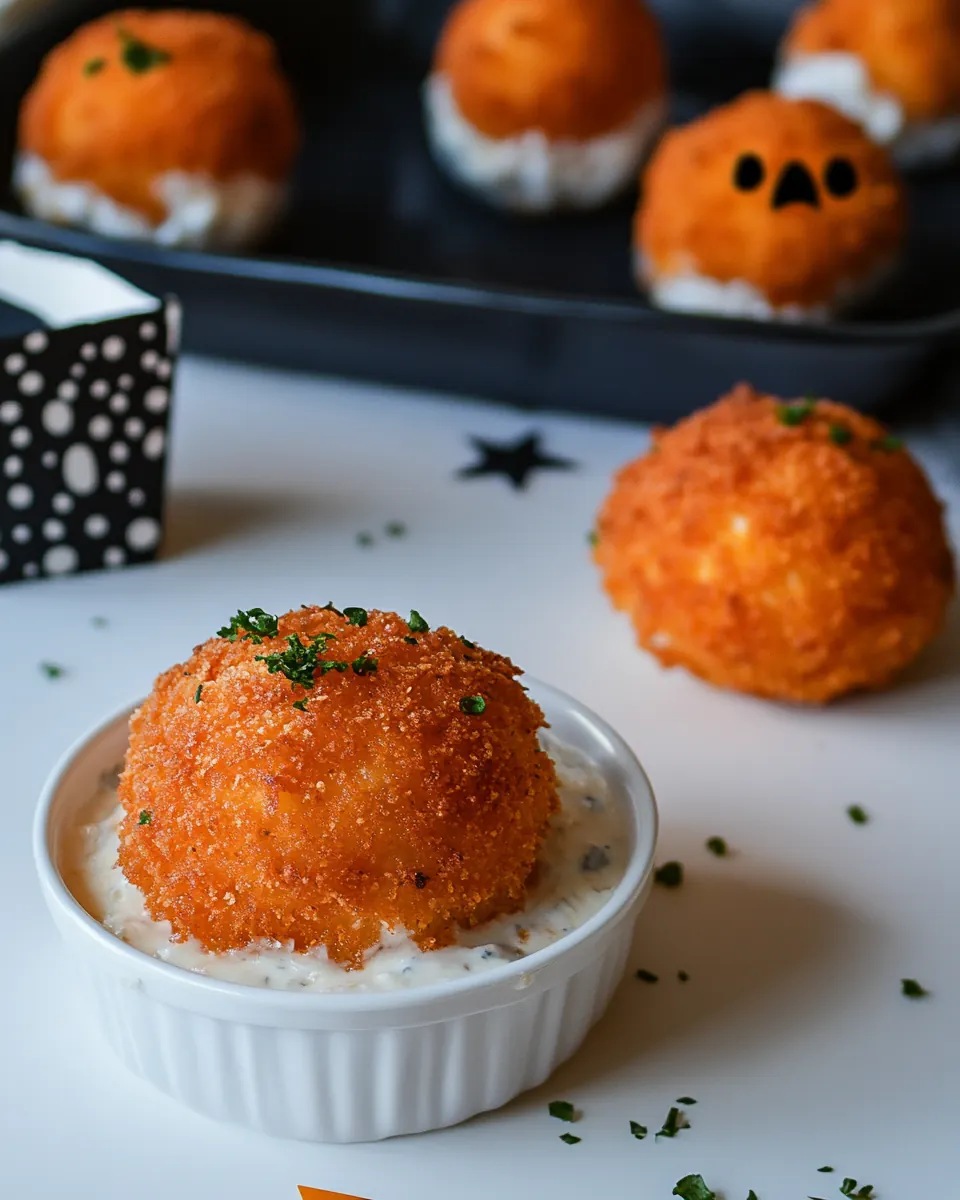
I like to think of these tips as both flavor boosters and assembly hacks. They save time and improve the final look and texture, and I use them every time I make these for a crowd.
- Make the filling a day ahead, it will meld flavors and be easier to shape, and chilling firms it so it is less likely to ooze during assembly.
- Keep the dough slightly floured while stretching to avoid tearing, but do not over flour which can dry the surface and make sealing difficult.
- Use cooled, shredded chicken to prevent excess moisture, which can cause leaking and soggy dough during baking.
- Brush gently with the black butter using a soft pastry brush to avoid puncturing the dough and to achieve an even, dramatic color.
- Test bake one bomb first to fine tune oven time for your specific oven, which ensures consistent results across the batch.
Best Served With
I serve these as a playful appetizer at gatherings, and they pair well with crunchy, cooling sides to balance the buffalo heat. They work equally well for casual game day spreads, fall parties, or a themed Halloween table.
- Cooling dip, such as a ranch style dip to offset the spice and add creamy contrast while guests pick at the spiders.
- Crisp vegetables, like sliced cucumbers or celery sticks to refresh the palate between bites.
- Warm side, such as a tray of soft rolls or additional baked goods for guests who want extra bread.
- Party occasions, ideal for Halloween gatherings, fall potlucks, and casual evenings where finger foods shine.
- Storage tips, refrigerate leftover bombs in an airtight container for up to three days, and reheat in a moderate oven to restore texture rather than microwaving which can make dough soggy.
- Seasonal pairing, these are perfect for crisp autumn evenings when hearty, spiced bites are crowd pleasing and festive.
FAQ
Conclusion
What makes this recipe special is the way it combines playful presentation with bold buffalo flavor and comforting, melty cheeses. These little stuffed spiders are equal parts appetizer and conversation starter, perfect for fall gatherings and Halloween parties. Give them a try and enjoy the smiles they bring, and don’t be surprised if everyone asks for the recipe. I love serving them because they are fun to assemble, surprisingly forgiving to make, and reliably popular with both kids and adults.

Halloween Buffalo Chicken Bombs
Equipment
- Sheet Pan
- Mixing Bowl
Ingredients
- 1/2 cup (120 ml) buffalo wing sauce Coat and flavor the chicken pieces by tossing them in the tangy hot sauce to infuse heat and moisture; balances richness from cheeses and cream cheese in the filling.
- 3 ounces (85 g) cream cheese softened Soften and bind the filling while adding a creamy, tangy texture that mellows the spice; works as the glue that helps form cohesive stuffing.
- 4 cups chopped cooked chicken cooled, or shredded chicken Provide the hearty protein base and texture for the filling; chopped or shredded chicken absorbs sauce and carries savory flavor throughout the bombs.
- 1 1/4 cup (140 g) shredded cheddar cheese Melt into pockets of sharp, savory flavor and contribute gooey richness; helps create melty pockets and balances the buffalo heat.
- 1 1/4 cup (140 g) shredded mozzarella cheese Add stretchy, mild melty texture that promotes chewiness and pull when baked; compliments cheddar for a balanced cheese profile.
- 1/4 cup green onions Bring a fresh, mild oniony bite and a touch of color contrast when mixed into the filling or sprinkled on top; lightens the richness of cheeses.
- 113.8 oz can (390 g) pizza dough Provide the doughy outer shell when portioned and wrapped around the filling; supplies structure, browning, and the breaded element for the bombs.
- 3 tablespoons (39 g) unsalted butter Brush onto the dough for added flavor and facilitate browning; enriches the crust and helps seasonings adhere during baking.
- 1/4 teaspoon garlic powder Impart a subtle garlic aroma and enhance overall savory depth; used sparingly to avoid overpowering the buffalo flavors.
- 1/4 teaspoon onion powder Deliver a gentle sweet-onion undertone to round out savory notes; helps create a more complex flavor profile in the seasoned butter.
- 1/4 teaspoon Italian seasoning Introduce aromatic herb notes and Italian-style seasoning to complement cheeses and chicken; adds a fragrant savory dimension to the crust.
- 1/4 teaspoon salt Enhance and balance flavors by brightening and bringing out other seasonings; ensures the filling and crust are properly seasoned.
- Black food coloring Color and tint decorative elements for a spooky effect; used sparingly to dye dough or accents black for Halloween presentation.
- 48 pitted black olives Form the black olive slices used as spooky pupils or decoration; provide briny contrast and visual detail for the Halloween theme.
- 96 pretzel sticks Serve as structural stems or sticks to create a spike or bone-like visual; add a crunchy, salty accent to each finished bomb.
- 12 large candy eyeballs Provide playful, ghoulish decoration to top each bomb and enhance the Halloween presentation; add a whimsical finishing touch.
Instructions
- Preheat the oven to 400°F (200°C), or 180°C for a fan oven, and prepare a large baking sheet by lining with aluminum foil and lightly spraying with oil. Set aside.: As you heat the oven you will notice the kitchen warming and a faint metallic clang if you shift the baking sheet, a cue that things are getting ready. Preheating ensures the dough begins baking immediately, creating a proper rise and golden bottom, which is crucial for structure. A common mistake is not preheating long enough, which can yield dense dough, so wait until the oven truly reaches temperature. Arrange the foil snugly and spray lightly to prevent sticking, and place the sheet within easy reach for quick transfer once assembled.
- In a large bowl mix the cream cheese and buffalo sauce together until mostly combined, a few small clumps of cream cheese is OK.: When you stir these two, the aroma of vinegar and spices from the buffalo wing sauce will brighten the tang of the cream cheese , and the mixture should become uniformly orangey with small flecks. I like to use a sturdy spoon or spatula so you can feel resistance as the cream cheese softens. The reason for slight clumps is that perfectly smooth can mean overworked texture, so stop when mostly combined. Avoid over mixing which can make the filling overly loose and harder to shape later.
- Add the chicken fingers and green onions, mix until coated.: At this stage the softened filling should cling to the strands of chopped chicken , coating them with spicy creaminess, while the green onions add pops of color and fresh scent. You will hear a soft scraping as you fold ingredients together, and when you lift the spoon you should see the filling ribbon across the bowl. A frequent error is adding warm chicken which can make the filling greasy, so ensure the chicken is thoroughly cooled before combining.
- Add the cheeses and mix one last time, add additional buffalo sauce if the mixture feels dry, then set aside.: When the cheddar and mozzarella fold in, the filling moves from loose to cohesive, with threads of mozzarella visible and shreds of cheddar speckled throughout. If the mixture seems dry, a splash more buffalo wing sauce brightens it and restores moisture. Letting the filling rest slightly helps flavors meld, but avoid overhydrating which can cause leaking during baking, a common pitfall I watch for.
- On a clean workspace roll out the pizza dough and cut into 6 equal pieces.: Rolling the pre made pizza dough spreads gluten and creates an even thickness, which bakes more predictably. Use a lightly floured surface to prevent sticking, and when you cut the dough, you should hear a soft tearing sound and see clean edges. Equal pieces ensure uniform bake times, and uneven portions lead to some bombs underdone while others overbrown. If the dough resists stretching, let it rest for a few minutes to relax the gluten.
- Gently stretch out the dough squares a bit then mound 1/6 of the filling in the center of each square.: The tactile moment of shaping is satisfying as you feel the dough soften under your palms, and the mound should sit proudly in the center without spilling. Press the filling into a compact mound so it stays contained when you lift the dough, and keep fingertips lightly floured to avoid sticking. A typical mistake is overfilling; although these are meant to be generous, too much will force seams to open during baking.
- For each square, pull the opposite corners up over the mound of filling and pinch them together, repeat with the second set of corners. Then pinch all of the remaining open dough together. Try to get a good seal without any openings.: When you seal, you are trapping steam inside which helps create a plush interior, and you should feel the seams firm under gentle pressure. Take time to crimp the dough so there are no hairline gaps, which are the usual cause of filling leakage. If dough stretches thinly and tears, press a little extra dough around the tear to patch it rather than forcing it closed, which can rupture during baking.
- Gently pick up the dough balls and place seam side down on the prepared baking sheet with plenty of space between each one. Carefully adjust the shape of the dough balls if needed, you’ll want them to be as spherical as possible.: Setting them seam side down helps keep the top smooth and gives the bottom a chance to brown, and spacing allows hot air to circulate for even baking. Use a light touch when moving them to maintain shape, and push any bulging seams lightly under the ball to round it. Crowding is a common mistake that can cause uneven browning and compressed texture, so leave ample room.
- In a small microwave safe bowl place the butter and the spices. Heat the butter in the microwave until melted. Add a few drops of the black food coloring and mix well. The color will be a dark charcoal gray to black when finished.: Melted butter releases a nutty aroma and helps the spices bloom, while the black coloring transforms the finish into a dramatic cloak. Stir until uniformly dark, and test a tiny dab on a spare piece of dough to confirm the color before glazing. Avoid adding too much coloring which can stain hands and surfaces; a few drops usually suffice.
- Gently as to not poke holes in the dough, brush the black butter mixture over the top of each dough ball. Make sure to get the sides all the way to the bottom, cover all exposed dough.: Brushing should be delicate, with long smooth strokes so you do not tear the dough. The butter will give a glossy sheen and help the color adhere and bake into the crust. If you see pooling butter, dab a small amount with a paper towel, as excess can cause soggy bottoms. Taking care here preserves the spherical shape and ensures even coloring.
- Bake in the preheated oven for 10 minutes. After about 10 minutes, take a look at the spiders. If they are not black enough for your preference now would be a good time to take them out and coat them with a little bit more of the black food coloring. Otherwise, continue to bake for an additional 5 to 10 minutes or until the bottoms have browned and the tops are solid.: As they bake you will hear soft pops and smells of toasted dough, and the bottoms should develop a golden brown that indicates doneness. Check visually for firmness on top; if still doughy, extend baking in short increments. A common misstep is removing them too soon because they look colored enough on top, when interiors may still be underbaked, so always verify the bottom color and overall solidity.
- Remove from the oven and set on a cooling rack.: Cooling allows steam to redistribute and prevents soggy bottoms, and you will notice the aroma deepen as they rest. Place them seam side down initially to avoid deformation. Rushing to decorate while piping hot can cause filling to escape or decorations to slide off, so give them a few minutes to stabilize.
- To make the legs, take the pretzel sticks and break them in half. Stick two halves of the pretzel sticks into the sides of a black olive, in a V shape, see pictures. Repeat this 8 times per spider.: Building legs is a hands on step where the crisp snap of the pretzel sticks is satisfying, and the olive gives a firm anchor. Make sure the pretzel halves are similar in length for balanced legs. Be careful not to push too far into the olive which can split it, a common error that results in unstable legs.
- Choose one side of a spider to be its face, and use a small paring knife to cut 2 round holes for the eyes, no need to remove the dough just press it into the spider gently. Place the eyes carefully into the holes.: Carving tiny eye wells should be gentle so you do not pierce through the dough, and the soft press will seat the candy eyeballs securely. I like to angle the holes slightly for personality. A mistake is pressing too hard and creating holes that leak filling, so keep the motion shallow and steady.
- Use the knife to cut 4 small slits on each side of the spiders. Slide one leg into each slit.: These slits hold the pretzel legs in place, and sliding them in should give a satisfying resistance as they wedge into the dough edge. If a slit is too tight, nudge it slightly wider with the knife tip to avoid tearing, but avoid making it so large the leg falls out. Ensuring legs are seated well will keep the spiders intact during serving.
Notes
- Make the filling a day ahead, it will meld flavors and be easier to shape, and chilling firms it so it is less likely to ooze during assembly.
- Keep the dough slightly floured while stretching to avoid tearing, but do not over flour which can dry the surface and make sealing difficult.
- Use cooled, shredded chicken to prevent excess moisture, which can cause leaking and soggy dough during baking.
- Brush gently with the black butter using a soft pastry brush to avoid puncturing the dough and to achieve an even, dramatic color.
- Test bake one bomb first to fine tune oven time for your specific oven, which ensures consistent results across the batch.
