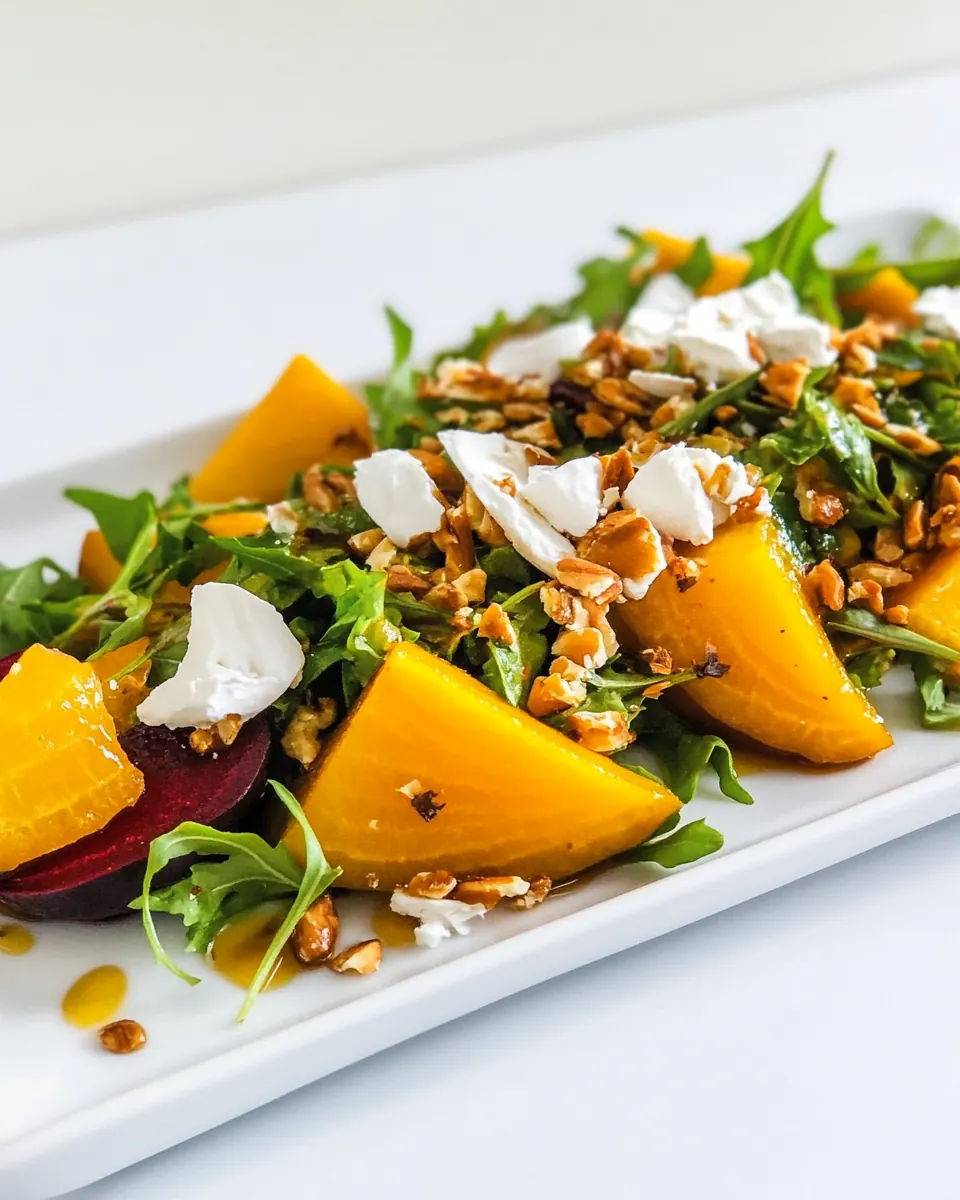
Golden Beet Salad
Golden Beet Salad has been a quiet favorite of mine since the first spring farmers market where I found a crate of gleaming golden beets that practically begged to be roasted. I remember juggling a tote bag, a toddler on my hip, and that stubborn grin from the vendor as I asked for the smallest beets he had. The earthy scent of warm beets filled the car on the drive home, and by the time I tossed them with a simple lemony dressing and peppery arugula, I was hooked on the balance of textures and colors.
That afternoon turned into an impromptu ritual. I started roasting batches whenever I needed a bright side that felt both elevated and effortless. The combination of tender golden beets, crisp sugar snap peas, crunchy pistachios, and tangy crumbled goat cheese taught me how a few honest ingredients can come together and sing. I like serving this salad when friends stop by unexpectedly, because it comes together with very little fuss yet always looks considered and seasonal.
Recipe Snapshot
1 hr 30 mins
15 mins
75 mins
Medium
200 kcal
American
Gluten-Free, Vegan
Salads
Oven, Rimmed baking sheet, Aluminum foil, Salad bowl, Microplane, Whisk
Why You Need This Golden Beet Salad
Rooted in flavor
I love Golden Beet Salad because the roasted golden beets bring a mellow, sweet earthiness that feels comforting but not heavy. Roasting concentrates their sugars and softens their texture, so you get a silky bite that pairs perfectly with crisp components.
Textural contrast
The interplay between tender roasted golden beets, crunchy pistachios, and snappy sugar snap peas keeps every forkful interesting. I often find myself smiling at how each mouthful alternates between soft and bright crunch, and that variety makes people reach for seconds.
Bright vinaigrette
The dressing, with lemon juice, rice vinegar, and a touch of Dijon mustard, lifts the whole salad. It cuts through the beets natural sweetness and ties the greens and cheese together. Emulsifying the dressing properly ensures it clings to the wedges instead of pooling at the bottom.
Easy to adapt
I like that this salad is forgiving. You can roast beets ahead of time, and the salad still tastes fresh when tossed right before serving. The components are simple enough to swap if you need, but the core balance of sweet roasted golden beets and bright, peppery arugula is what I always protect.
Seasonal star
In spring, when tender greens and early peas appear at markets, this salad feels right on time. It showcases seasonal produce without masking it, and it always makes my table look like I spent more time than I actually did.
Ingredients for Golden Beet Salad
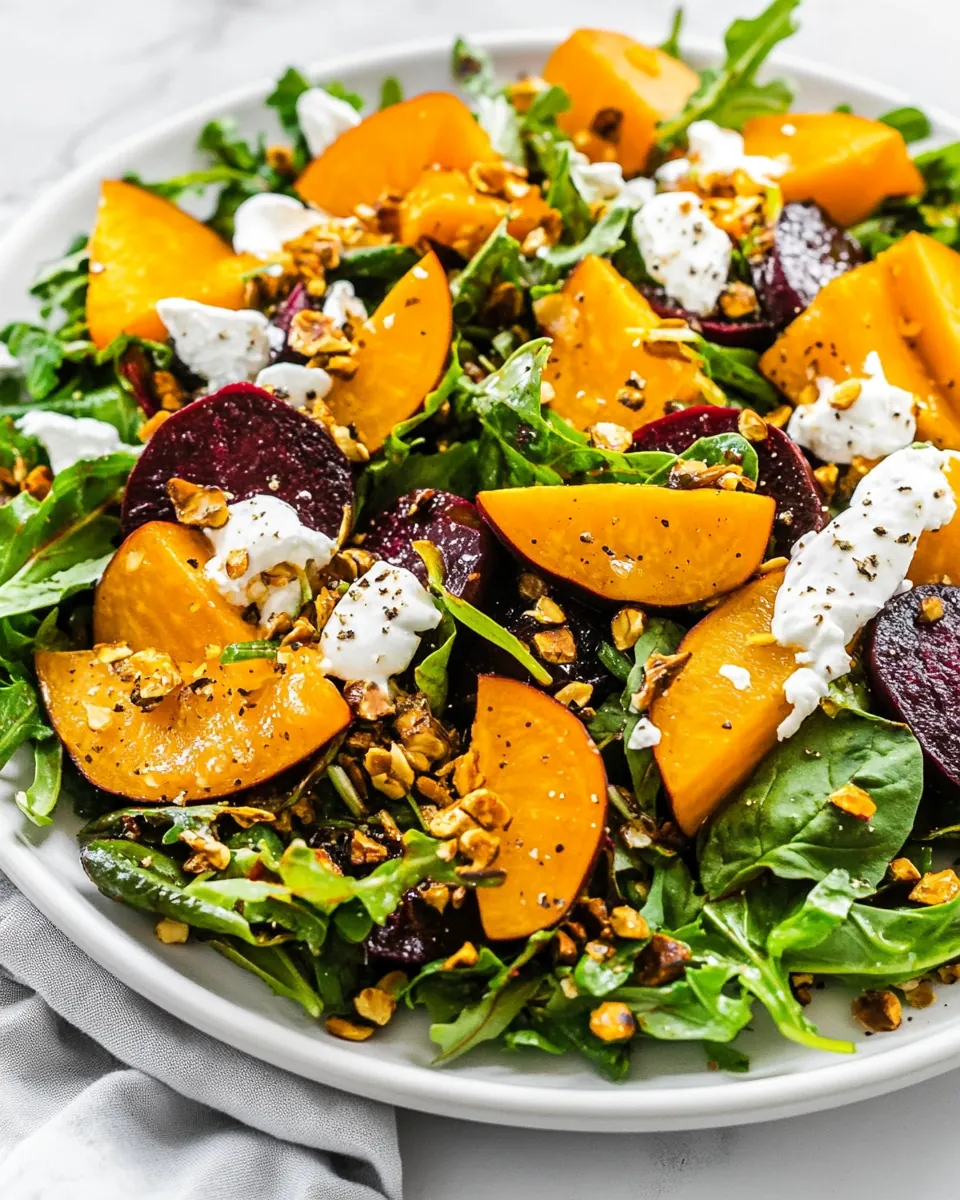
This ingredient list is about harmony. I choose ingredients that contrast and complement: sweet, earthy golden beets, peppery arugula, and creamy goat cheese create a melody of flavors while the pistachios add a toasty crunch. The dressing is intentionally simple so it highlights the beets natural charm, and the snap peas bring a fresh pop that keeps the salad lively.
- 3 large or 4 medium golden beets, greens removed and beets scrubbed clean: Roast or boil until tender then peel; provides the salad's sweet, earthy base and vibrant color while offering a tender, slightly firm bite.
- 1/3 cup extra virgin olive oil, divided: Divide between dressing and finishing oil; contributes richness and helps marry flavors while adding a silky mouthfeel to the dressing.
- 5 cups baby arugula: Toss as the leafy foundation for the salad; supplies a peppery, crisp contrast to roasted beets and adds bright green visual appeal.
- 1 cup sugar snap peas, trimmed and sliced on a bias: Trim and slice on the diagonal for texture; delivers a sweet, crunchy element and fresh vegetal snap that balances softer components.
- 1/4 cup pistachios, roughly chopped: Roughly chop to scatter over the salad; adds a toasted, nutty crunch and a subtle buttery flavor that enhances overall texture.
- 1 teaspoon Dijon mustard: Whisk into the dressing to emulsify; provides tangy depth and helps bind oil and vinegar into a cohesive vinaigrette.
- 1 1/2 tablespoons lemon juice: Squeeze into the dressing for brightness; brings fresh citrus acidity that lifts flavors and balances the beet's sweetness.
- 1 1/2 tablespoons rice vinegar: Combine with lemon and oil in the vinaigrette; offers mild tang and complexity while tempering sweetness with a gentle acidic note.
- 1 clove garlic: Mince or press into the dressing for pungency; imparts a sharp savory kick that enhances other ingredients without overwhelming them.
- 2 ounces crumbled goat cheese: Crumble over the finished salad for creaminess; introduces tangy, soft richness that contrasts the beets and crunchy elements.
- 1/2 teaspoon Kosher salt: Sprinkle to season the salad evenly; enhances overall flavor by bringing out natural tastes and balancing sweetness and acidity.
- Freshly ground black pepper: Grind over the salad for finishing seasoning; contributes aromatic heat and a sharp bite that complements salt and bright acids.
The Method for Golden Beet Salad
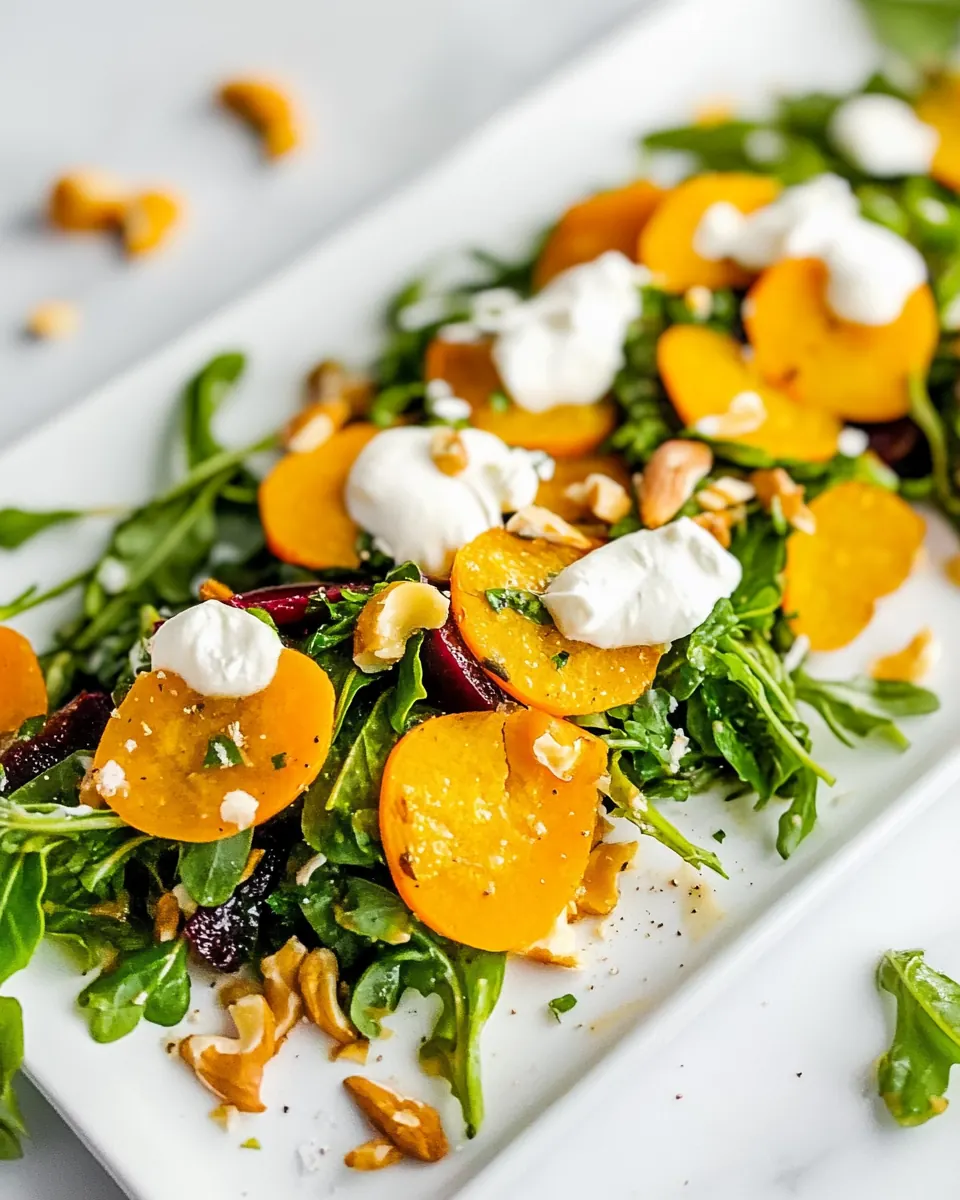
This is a relaxed method that centers on roasting the golden beets just right and bringing everything together in a bright dressing. Take a deep breath, give the beets enough time to become tender, and finish by tossing the warm wedges with the dressing so they soak up flavor.
- Preheat the oven to 400 degrees F. Place a large piece of foil on a rimmed baking sheet. Place the beets on one half of the foil. Drizzle with 1 tablespoon of olive oil and season with salt.: The smell of warm oven air signals that you are setting the stage for caramelization, which deepens the beets flavor. You should feel a steady, even heat when you open the oven and see a faint glow from the racks. This temperature helps the beets soften and concentrate sugars without burning. A common mistake is using too low a heat, which prolongs roasting and can dry the beets out; ensure the oven thermometer reads accurately if you suspect uneven heat.
- Pull the empty side of foil up and over the beets and crimp the edges of the foil together to seal. Transfer the baking sheet to the oven to roast for 1 hour to 1 1/2 hours, until the beets are fork tender. Cooking times can vary based on the size of the beets. Once tender, remove from the foil and let cool until you can easily handle them.: The foil creates a little packet that traps steam, helping the golden beets cook through gently while developing a tender exterior. You will notice the foil taking on a toasty aroma as the beets roast, a good sign of concentrated flavors building. Avoid wrapping too tightly, which can prevent even browning; crimp the edges so steam circulates but does not escape completely.
- While the beets are roasting, make your dressing. Add the remaining olive oil, lemon juice, rice vinegar, Dijon mustard, 1/2 teaspoon salt, 1/4 teaspoon pepper to a salad bowl. Use a microplane to finely grate the garlic into the bowl. Whisk until emulsified and evenly combined. Set aside.: The visual of raw golden beets clustered on foil is striking with their warm hue. Spacing them slightly apart promotes even cooking and browning. Overcrowding can lead to unevenly roasted pieces, so give them room on the sheet.
- Once the beets are cool, use clean hands to gently remove the skin. This can be done using a paper towel to wipe the skin off or under running water. Discard the skins and cut the beets into bite-size wedges. Add the wedges to the bowl with the dressing and stir to combine.: The oil helps the skin blister and the salt begins to season the beets as they roast. As the beets heat up, you will smell a faint nuttiness from the oil and notice the surface caramelize. A misstep is adding too much oil, which can make the exterior greasy rather than gently roasted; use the measured tablespoon for balance.
- To assemble the salad, add the arugula and snap peas to the bowl and toss to combine. Top with goat cheese and pistachios. Serve immediately.: Sealing creates a humid environment so the beets steam in their own juices while still achieving tender edges. You will hear a gentle hiss when the packet is first sealed and placed in the oven, an encouraging sign of trapped steam. Be careful not to seal so tightly that hot steam bursts out when you open it; use tongs when checking to avoid burns.
- Transfer the baking sheet to the oven to roast for 1 hour to 1 1/2 hours, until the beets are fork tender: During roasting, the kitchen fills with an earthy, sweet aroma and the beets soften to a fork tender texture. Check for doneness by piercing with a fork; it should glide in with little resistance. A common error is relying on a fixed time rather than testing for tenderness, since beet size affects cooking; always check with a fork before removing.
- Cooking times can vary based on the size of the beets: Larger beets need the full hour and often more, while smaller ones may be ready sooner, so trust the fork test over the clock. You'll notice the beets shrinking slightly and their color deepening as moisture evaporates and flavors concentrate. Avoid cutting beets to test doneness too early, which can release juices and slow the roasting process.
- Once tender, remove from the foil and let cool until you can easily handle them: Cooling brings the temperature down so you can peel without burning yourself, and it helps the interior set slightly for cleaner wedges. The aroma will settle into a sweeter, roasted scent once out of the oven. The mistake to watch is peeling while too hot, which risks burns and handling mishaps.
- While the beets are roasting, make your dressing: As you whisk the dressing, you will detect bright citrus notes from the lemon juice and a gentle tang from the rice vinegar . Emulsifying the extra virgin olive oil with the mustard creates a silky texture that clings to the beets. A common pitfall is adding oil too quickly, which prevents proper emulsification; stream it slowly while whisking for a stable dressing.
- Add the remaining olive oil, lemon juice, rice vinegar, Dijon mustard, 1/2 teaspoon salt, 1/4 teaspoon pepper to a salad bowl: Combining these elements in the bowl allows you to adjust seasoning as needed. You will see the dressing lighten and thicken slightly as it comes together. If the dressing tastes flat, a touch more acid can brighten it; be cautious adding salt too early because you will season the beets separately.
- Use a microplane to finely grate the garlic into the bowl: Grating the garlic releases a delicate perfume rather than a harsh raw bite, integrating smoothly into the vinaigrette. The microplane produces a fine texture that disperses evenly, ensuring no sudden garlic pockets. Avoid big chopped pieces, which can create sharp, uneven garlic bursts.
- Whisk until emulsified and evenly combined: A fully emulsified dressing will cling to the beets and greens, creating a cohesive salad rather than a separated mixture. You should see a glossy sheen and a slightly thickened texture. If it separates, whisk briskly or add a drop of water to bring it back together.
- Set aside: Letting the dressing rest allows flavors to marry, which softens the raw edge of the garlic and melds the acidity into the oil. This small pause makes the dressing taste more rounded when it meets the warm beets. Do not let it sit too long uncovered, which can dull the bright citrus notes.
- Once the beets are cool, use clean hands to gently remove the skin: Rubbing the skins off reveals the tender, glossy flesh and is oddly satisfying as the skins slip away. You will feel the texture change from slightly firm to silky as you peel. If the skins cling, a brief rinse under cool water helps; avoid aggressive scrubbing that wastes beet flesh.
- This can be done using a paper towel to wipe the skin off or under running water: Using a paper towel is quick and keeps your hands dry, while rinsing can be gentler for stubborn skins. You will notice the surface become smooth and satin like when fully peeled. A common misstep is leaving thin bits of skin behind, which can feel fibrous in the finished salad, so take a moment to inspect the wedges.
- Discard the skins and cut the beets into bite-size wedges: Cutting into wedges exposes the warm, fragrant interior, and the pieces will soak up dressing beautifully. Aim for uniform wedges so they mingle evenly with the arugula and sugar snap peas . Uneven pieces can lead to inconsistent bites, with some pieces overpowering others.
- Add the wedges to the bowl with the dressing and stir to combine: Tossing warm beets in the dressing allows them to absorb flavor, softening the vinaigrette and creating a glossy coating. You'll hear a soft swish as ingredients meet and see the dressing cling to the beet surfaces. Avoid overdressing, which can make the salad soggy; a gentle toss is sufficient.
- To assemble the salad, add the arugula and snap peas to the bowl and toss to combine: The fresh, peppery arugula will wilt slightly from the warm beets, which mellows its bite and melds the components. The sliced sugar snap peas add a crisp contrast and bright color. Be cautious not to overmix; heavy tossing can bruise the greens and reduce visual appeal.
- Top with goat cheese and pistachios: Crumbled goat cheese provides creamy, tangy pockets while chopped pistachios contribute a toasty crunch, finishing the salad with layered textures. Scatter them evenly so each forkful gets a bit of both. A typical mistake is adding the nuts too early, which can soften their crunch, so add them last for maximum texture.
- Serve immediately: Serve right away to enjoy the contrast between warm beet wedges and cool greens. The salad is best when freshly tossed, with the dressing still glossy and the cheese intact. If you wait, the greens may wilt and the textures will soften, so plan to plate close to serving time.
Pro Tips and Tweaks
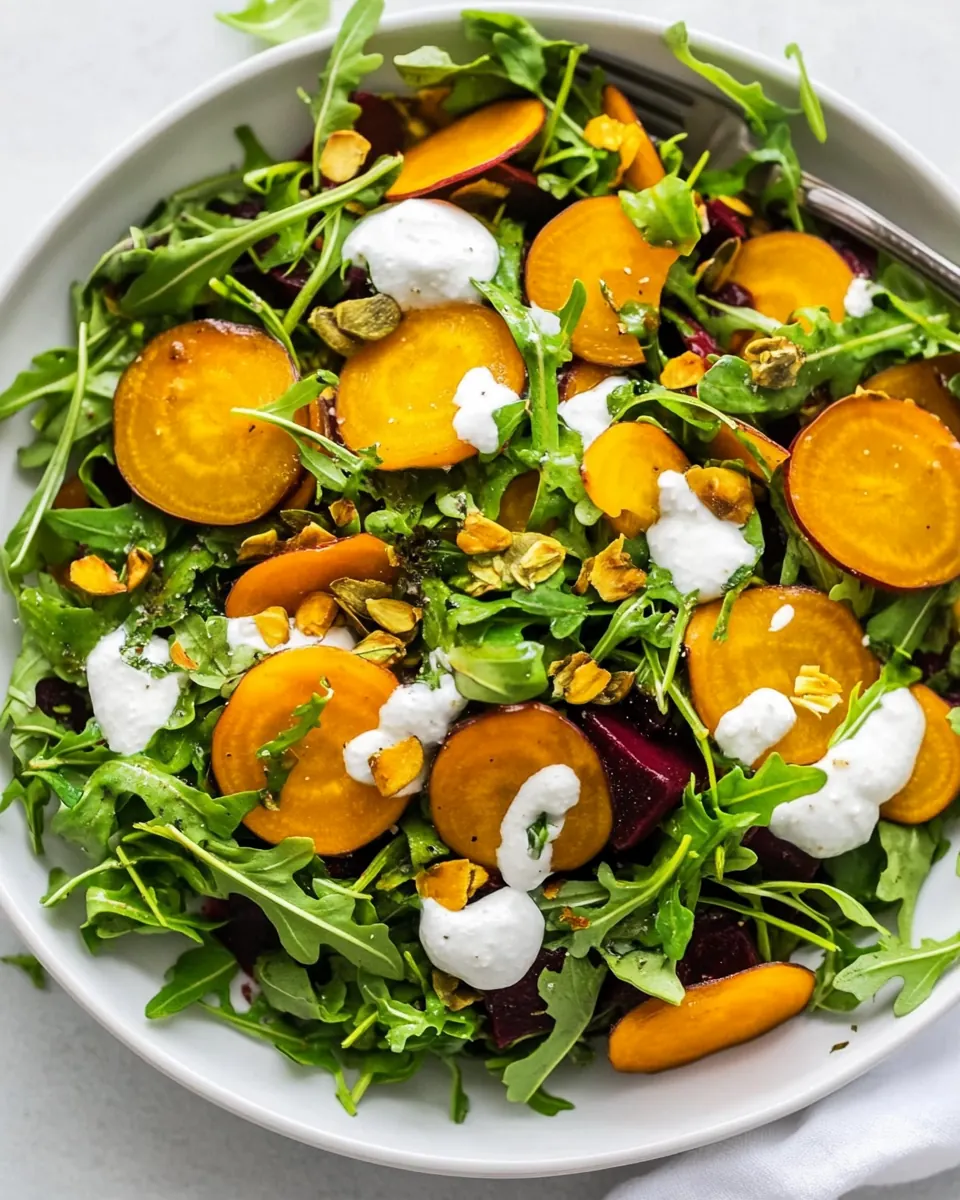
I like keeping things practical in this section, so these tips focus on flavor, timing, and presentation. Small adjustments can lift the salad without straying from the original balance.
- Roast for depth — Roast the golden beets until fork tender to deepen their sweetness and texture; underroasting leaves them starchy and less flavorful.
- Emulsify properly — Add the extra virgin olive oil slowly while whisking to create a glossy, clingy dressing that binds to the beets and greens.
- Toast nuts briefly — Toast pistachios in a dry skillet for one to two minutes until fragrant to amplify their aroma and crunch, but watch closely to prevent burning.
- Use fresh lemon — Fresh lemon juice brightens the dressing in a way bottled juice cannot, giving a clean, lively acidity.
- Add cheese last — Crumble the goat cheese onto the salad just before serving so it keeps its texture and doesn’t dissolve into the dressing.
How to Enjoy Golden Beet Salad
This salad is versatile enough for weeknight dinners and special spring lunches. I like to suggest serving approaches that highlight its colors and textures.
- As a side dish — Pair with a simply roasted fish or a grain bowl to add brightness and a pop of color to the plate.
- For lunch — Serve over extra arugula with a slice of crusty bread to make a light, satisfying midday meal.
- At a spring gathering — Arrange on a large platter and sprinkle toasted pistachios for a visually striking centerpiece that feeds a crowd.
- Storage tips — Store components separately in the refrigerator; keep the dressing airtight and toss with warm beets just before serving for best texture.
- Seasonal pairing — This shines in spring when sugar snap peas are at their sweetest, complementing the mellow roasted beets beautifully.
FAQ
Conclusion
Golden Beet Salad stands out for its harmonious balance of sweet roasted beets, peppery greens, crunchy pistachios, and tangy goat cheese. The dressing ties everything together while keeping the flavors bright and fresh. Give this salad a try the next time you want something seasonal that feels both simple and thoughtfully composed. It pairs with many meals, and I find it becomes a go to when I want a dish that looks impressive with minimal effort.
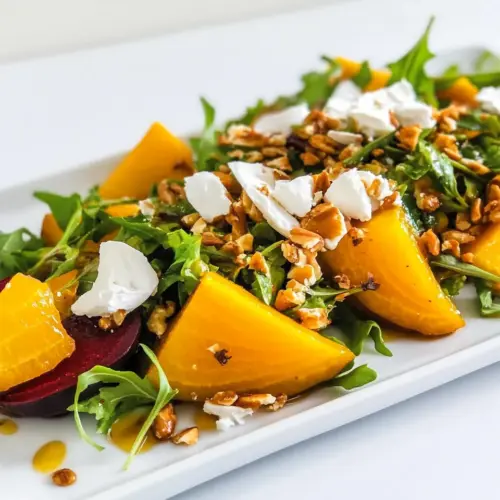
Golden Beet Salad
Equipment
- Oven
- Rimmed Baking Sheet
- Aluminum Foil
- Salad Bowl
- Microplane
- Whisk
Ingredients
- 3 large or 4 medium golden beets, greens removed and beets scrubbed clean Roast or boil until tender then peel; provides the salad's sweet, earthy base and vibrant color while offering a tender, slightly firm bite.
- 1/3 cup extra virgin olive oil, divided Divide between dressing and finishing oil; contributes richness and helps marry flavors while adding a silky mouthfeel to the dressing.
- 5 cups baby arugula Toss as the leafy foundation for the salad; supplies a peppery, crisp contrast to roasted beets and adds bright green visual appeal.
- 1 cup sugar snap peas, trimmed and sliced on a bias Trim and slice on the diagonal for texture; delivers a sweet, crunchy element and fresh vegetal snap that balances softer components.
- 1/4 cup pistachios, roughly chopped Roughly chop to scatter over the salad; adds a toasted, nutty crunch and a subtle buttery flavor that enhances overall texture.
- 1 teaspoon Dijon mustard Whisk into the dressing to emulsify; provides tangy depth and helps bind oil and vinegar into a cohesive vinaigrette.
- 1 1/2 tablespoons lemon juice Squeeze into the dressing for brightness; brings fresh citrus acidity that lifts flavors and balances the beet's sweetness.
- 1 1/2 tablespoons rice vinegar Combine with lemon and oil in the vinaigrette; offers mild tang and complexity while tempering sweetness with a gentle acidic note.
- 1 clove garlic Mince or press into the dressing for pungency; imparts a sharp savory kick that enhances other ingredients without overwhelming them.
- 2 ounces crumbled goat cheese Crumble over the finished salad for creaminess; introduces tangy, soft richness that contrasts the beets and crunchy elements.
- 1/2 teaspoon Kosher salt Sprinkle to season the salad evenly; enhances overall flavor by bringing out natural tastes and balancing sweetness and acidity.
- Freshly ground black pepper Grind over the salad for finishing seasoning; contributes aromatic heat and a sharp bite that complements salt and bright acids.
Instructions
- Preheat the oven to 400 degrees F. Place a large piece of foil on a rimmed baking sheet. Place the beets on one half of the foil. Drizzle with 1 tablespoon of olive oil and season with salt.: The smell of warm oven air signals that you are setting the stage for caramelization, which deepens the beets flavor. You should feel a steady, even heat when you open the oven and see a faint glow from the racks. This temperature helps the beets soften and concentrate sugars without burning. A common mistake is using too low a heat, which prolongs roasting and can dry the beets out; ensure the oven thermometer reads accurately if you suspect uneven heat.
- Pull the empty side of foil up and over the beets and crimp the edges of the foil together to seal. Transfer the baking sheet to the oven to roast for 1 hour to 1 1/2 hours, until the beets are fork tender. Cooking times can vary based on the size of the beets. Once tender, remove from the foil and let cool until you can easily handle them.: The foil creates a little packet that traps steam, helping the golden beets cook through gently while developing a tender exterior. You will notice the foil taking on a toasty aroma as the beets roast, a good sign of concentrated flavors building. Avoid wrapping too tightly, which can prevent even browning; crimp the edges so steam circulates but does not escape completely.
- While the beets are roasting, make your dressing. Add the remaining olive oil, lemon juice, rice vinegar, Dijon mustard, 1/2 teaspoon salt, 1/4 teaspoon pepper to a salad bowl. Use a microplane to finely grate the garlic into the bowl. Whisk until emulsified and evenly combined. Set aside.: The visual of raw golden beets clustered on foil is striking with their warm hue. Spacing them slightly apart promotes even cooking and browning. Overcrowding can lead to unevenly roasted pieces, so give them room on the sheet.
- Once the beets are cool, use clean hands to gently remove the skin. This can be done using a paper towel to wipe the skin off or under running water. Discard the skins and cut the beets into bite-size wedges. Add the wedges to the bowl with the dressing and stir to combine.: The oil helps the skin blister and the salt begins to season the beets as they roast. As the beets heat up, you will smell a faint nuttiness from the oil and notice the surface caramelize. A misstep is adding too much oil, which can make the exterior greasy rather than gently roasted; use the measured tablespoon for balance.
- To assemble the salad, add the arugula and snap peas to the bowl and toss to combine. Top with goat cheese and pistachios. Serve immediately.: Sealing creates a humid environment so the beets steam in their own juices while still achieving tender edges. You will hear a gentle hiss when the packet is first sealed and placed in the oven, an encouraging sign of trapped steam. Be careful not to seal so tightly that hot steam bursts out when you open it; use tongs when checking to avoid burns.
- Transfer the baking sheet to the oven to roast for 1 hour to 1 1/2 hours, until the beets are fork tender: During roasting, the kitchen fills with an earthy, sweet aroma and the beets soften to a fork tender texture. Check for doneness by piercing with a fork; it should glide in with little resistance. A common error is relying on a fixed time rather than testing for tenderness, since beet size affects cooking; always check with a fork before removing.
- Cooking times can vary based on the size of the beets: Larger beets need the full hour and often more, while smaller ones may be ready sooner, so trust the fork test over the clock. You'll notice the beets shrinking slightly and their color deepening as moisture evaporates and flavors concentrate. Avoid cutting beets to test doneness too early, which can release juices and slow the roasting process.
- Once tender, remove from the foil and let cool until you can easily handle them: Cooling brings the temperature down so you can peel without burning yourself, and it helps the interior set slightly for cleaner wedges. The aroma will settle into a sweeter, roasted scent once out of the oven. The mistake to watch is peeling while too hot, which risks burns and handling mishaps.
- While the beets are roasting, make your dressing: As you whisk the dressing, you will detect bright citrus notes from the lemon juice and a gentle tang from the rice vinegar . Emulsifying the extra virgin olive oil with the mustard creates a silky texture that clings to the beets. A common pitfall is adding oil too quickly, which prevents proper emulsification; stream it slowly while whisking for a stable dressing.
- Add the remaining olive oil, lemon juice, rice vinegar, Dijon mustard, 1/2 teaspoon salt, 1/4 teaspoon pepper to a salad bowl: Combining these elements in the bowl allows you to adjust seasoning as needed. You will see the dressing lighten and thicken slightly as it comes together. If the dressing tastes flat, a touch more acid can brighten it; be cautious adding salt too early because you will season the beets separately.
- Use a microplane to finely grate the garlic into the bowl: Grating the garlic releases a delicate perfume rather than a harsh raw bite, integrating smoothly into the vinaigrette. The microplane produces a fine texture that disperses evenly, ensuring no sudden garlic pockets. Avoid big chopped pieces, which can create sharp, uneven garlic bursts.
- Whisk until emulsified and evenly combined: A fully emulsified dressing will cling to the beets and greens, creating a cohesive salad rather than a separated mixture. You should see a glossy sheen and a slightly thickened texture. If it separates, whisk briskly or add a drop of water to bring it back together.
- Set aside: Letting the dressing rest allows flavors to marry, which softens the raw edge of the garlic and melds the acidity into the oil. This small pause makes the dressing taste more rounded when it meets the warm beets. Do not let it sit too long uncovered, which can dull the bright citrus notes.
- Once the beets are cool, use clean hands to gently remove the skin: Rubbing the skins off reveals the tender, glossy flesh and is oddly satisfying as the skins slip away. You will feel the texture change from slightly firm to silky as you peel. If the skins cling, a brief rinse under cool water helps; avoid aggressive scrubbing that wastes beet flesh.
- This can be done using a paper towel to wipe the skin off or under running water: Using a paper towel is quick and keeps your hands dry, while rinsing can be gentler for stubborn skins. You will notice the surface become smooth and satin like when fully peeled. A common misstep is leaving thin bits of skin behind, which can feel fibrous in the finished salad, so take a moment to inspect the wedges.
- Discard the skins and cut the beets into bite-size wedges: Cutting into wedges exposes the warm, fragrant interior, and the pieces will soak up dressing beautifully. Aim for uniform wedges so they mingle evenly with the arugula and sugar snap peas . Uneven pieces can lead to inconsistent bites, with some pieces overpowering others.
- Add the wedges to the bowl with the dressing and stir to combine: Tossing warm beets in the dressing allows them to absorb flavor, softening the vinaigrette and creating a glossy coating. You'll hear a soft swish as ingredients meet and see the dressing cling to the beet surfaces. Avoid overdressing, which can make the salad soggy; a gentle toss is sufficient.
- To assemble the salad, add the arugula and snap peas to the bowl and toss to combine: The fresh, peppery arugula will wilt slightly from the warm beets, which mellows its bite and melds the components. The sliced sugar snap peas add a crisp contrast and bright color. Be cautious not to overmix; heavy tossing can bruise the greens and reduce visual appeal.
- Top with goat cheese and pistachios: Crumbled goat cheese provides creamy, tangy pockets while chopped pistachios contribute a toasty crunch, finishing the salad with layered textures. Scatter them evenly so each forkful gets a bit of both. A typical mistake is adding the nuts too early, which can soften their crunch, so add them last for maximum texture.
- Serve immediately: Serve right away to enjoy the contrast between warm beet wedges and cool greens. The salad is best when freshly tossed, with the dressing still glossy and the cheese intact. If you wait, the greens may wilt and the textures will soften, so plan to plate close to serving time.
Notes
- Roast for depth — Roast the golden beets until fork tender to deepen their sweetness and texture; underroasting leaves them starchy and less flavorful.
- Emulsify properly — Add the extra virgin olive oil slowly while whisking to create a glossy, clingy dressing that binds to the beets and greens.
- Toast nuts briefly — Toast pistachios in a dry skillet for one to two minutes until fragrant to amplify their aroma and crunch, but watch closely to prevent burning.
- Use fresh lemon — Fresh lemon juice brightens the dressing in a way bottled juice cannot, giving a clean, lively acidity.
- Add cheese last — Crumble the goat cheese onto the salad just before serving so it keeps its texture and doesn’t dissolve into the dressing.
