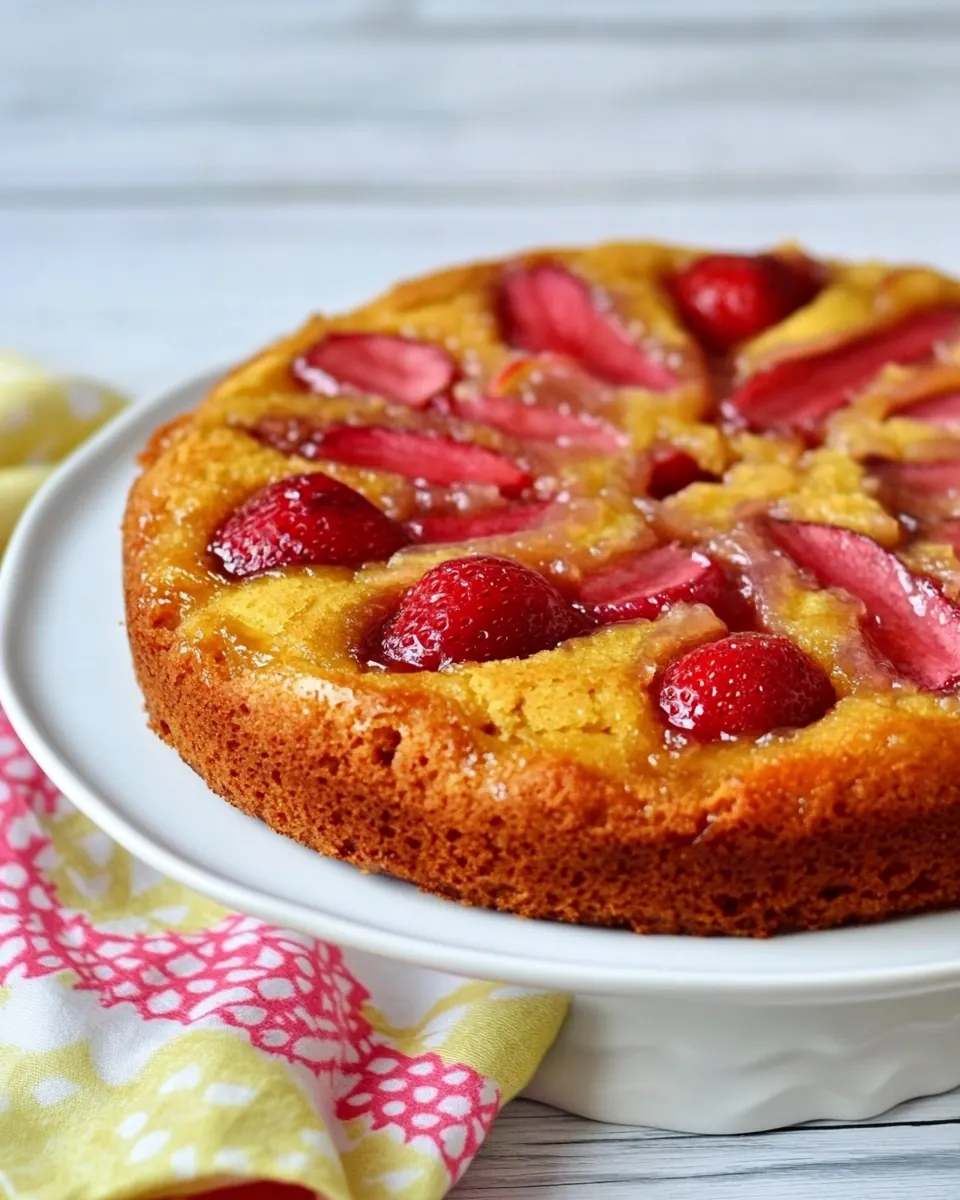
Gluten Free Strawberry Rhubarb Upside Down Cake
Gluten Free Strawberry Rhubarb Upside Down Cake is a treat I fell for one early spring when rhubarb stalks first showed up at the farmers market and strawberries smelled like summer in the sun. I remember juggling a basket of the brightest stalks while chatting with the grower about sourness and sugar, and deciding then that I wanted a cake that celebrated both textures, but without gluten or refined sugar. That very afternoon I set to work in my tiny kitchen, humming to myself as I measured flours and zested lemons.
What makes this version cozy is how the fruit becomes almost jam like as it bakes against the batter, releasing a syrup that soaks in and keeps every slice tender. I like to think of this Gluten Free Strawberry Rhubarb Upside Down Cake as the kind of dessert you bring to a potluck to make people ask for the recipe, yet it is humble enough for a slow Sunday tea. As the aroma of lemon and baked strawberries filled my home, neighbors wandered by, and I shared a warm wedge right from the pan. It felt like sharing sunshine.
Recipe Snapshot
1 hr 20 mins
20 mins
60 mins
Medium
250 kcal
American
Gluten-Free, Low FODMAP
Desserts
8-inch Springform Cake Pan
Why We Love This Gluten Free Strawberry Rhubarb Upside Down Cake
Natural tart meets gentle sweetness
I love how the tartness of rhubarb and the bright, fragrant notes of strawberries play off the gentle caramel like finish from coconut sugar. The contrast keeps each bite lively, never cloying, and invites second helpings.
Gluten free without compromise
Using a blend of brown rice flour, corn flour, and gluten free all purpose flour lends structure while staying tender. I wanted a crumb that holds together, so this combination gives you both lightness and stability, without the gummy feel some single flour cakes get.
Refined sugar free, full flavor
Coconut sugar provides a deeper, slightly toffee like flavor that complements the lemon zest and fruit. I appreciate how it browns nicely and enhances the upside down fruit, creating gentle caramelization rather than overpowering sweetness.
Simple pantry friendly ingredients
This cake relies on items you might already keep on hand like eggs, olive oil, and canned coconut milk. That makes it an easy last minute bake when you find seasonal fruit and want something special without a long shopping list.
Versatile, impressive presentation
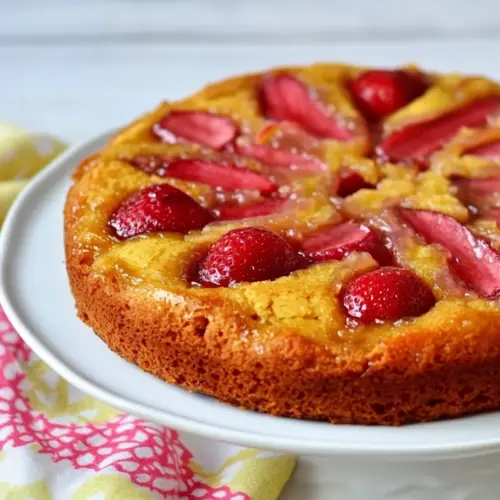
I adore how dramatic the cake looks once flipped out, fruit glistening on top, and how easy it is to serve in wedges for gatherings. It feels like effort but tastes like something lovingly homemade with minimal fuss.
Gluten Free Strawberry Rhubarb Upside Down Cake Shopping List
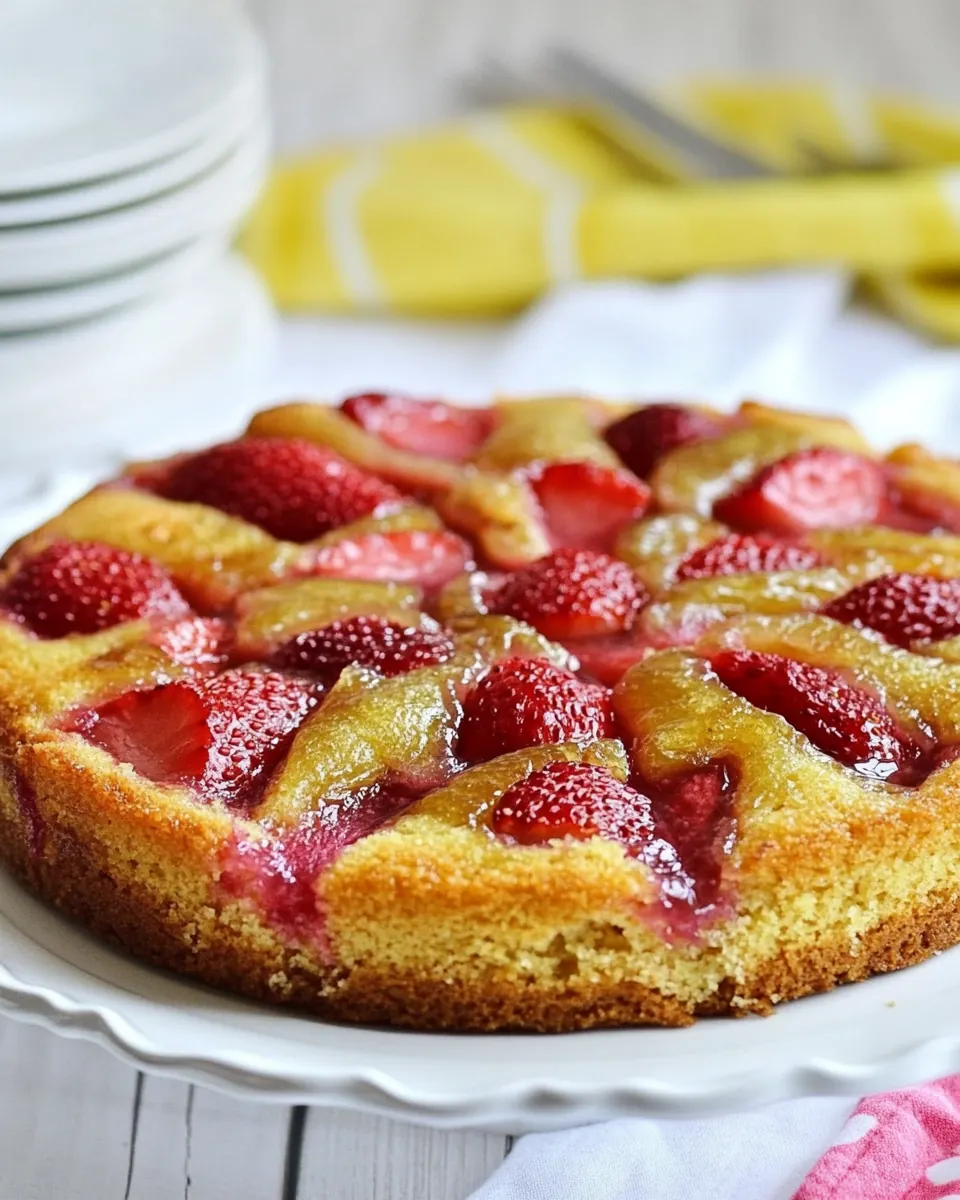
This cake’s ingredient philosophy is about harmony and balance. The fruit is the centerpiece, while the flours and binders create a tender crumb that supports the juicy topping. Key players like rhubarb, strawberries, and coconut sugar deliver flavor and texture, while the trio of flours gives structure without gluten. The citrus zest brightens the whole cake, and the coconut milk and olive oil keep the crumb moist and soft.
- 1 cup large stalk rhubarb about 1.5 chopped: Add chopped rhubarb to provide bright tartness and a firm texture that softens when baked; pairs beautifully with strawberries and balances sweetness. Use large stalks for noticeable fruit pieces and rustic visual appeal in the upside-down topping.
- 1.5 cups ripe strawberries sliced: Layer sliced ripe strawberries to contribute natural sweetness, juiciness, and vibrant color that complements rhubarb; they macerate slightly during baking to create a saucy fruit topping. Choose ripe berries for maximum flavor and a tender, appealing texture.
- 1 cup corn four: Sift corn flour to lend a subtle corn flavor and fine texture while helping with structure in a gluten–free batter; it absorbs moisture and can add a slightly crumbly, tender crumb. Use a neutral-tasting variety to avoid overpowering the fruit components.
- 1 cup brown rice flour: Blend brown rice flour for a light, neutral base that provides body and structure without gluten; it helps create a tender crumb and keeps the cake from being too dense. Combine with other gluten–free flours to achieve a balanced texture and mouthfeel.
- 1/2 cup gluten-free all-purpose flour: Measure gluten–free all-purpose flour to introduce a balanced mix of starches and binders formulated to mimic wheat flour; it aids in elasticity and cohesive crumb in the absence of gluten. Use the specified amount to help the batter hold together and rise evenly.
- 1 tablespoon baking powder: Whisk baking powder to act as the leavening agent that creates lift and a tender, airy crumb by releasing gas during baking; ensure freshness for reliable rise. Distribute evenly through the dry ingredients to avoid uneven pockets of lift.
- 1/2 teaspoon ground ginger: Incorporate ground ginger to add warm, spicy notes and aromatic depth that enhance the fruit flavors; it complements the tartness of rhubarb and brightness of lemon. Use sparingly to avoid overpowering the cake while still providing a subtle spice accent.
- 1/2 cup + 1 tablespoon coconut sugar: Stir in coconut sugar to supply caramel-like sweetness and a hint of molasses that pairs well with baked fruit; it also contributes to moistness and color in the crust. Adjust slightly if using very sweet fruit, but maintain the listed amount for balance.
- Zest of 2 lemons: Grate lemon zest to deliver concentrated citrus oils that brighten the overall flavor and cut through the richness; zest adds aromatic lift without extra acidity. Use fresh zest for the most vibrant, fragrant contribution to the batter and topping.
- 1 tablespoon lemon juice: Add lemon juice to provide fresh acidity that balances sweetness and enhances the fruit flavors; it also interacts with leavening for improved rise and tenderness. Use freshly squeezed juice for best clarity and bright citrus notes in the cake.
- 2 eggs: Whisk eggs to bind ingredients, provide structure, and incorporate air for a lighter texture; they also contribute moisture and richness to the batter. Beat sufficiently to ensure even distribution and a cohesive, stable crumb during baking.
- 1 cup full-fat canned coconut milk * full-fat: Pour full-fat canned coconut milk to impart creamy richness and tender crumb while adding subtle coconut flavor that complements the fruit; its fat content improves moisture and mouthfeel. Shake or stir well to recombine any separated solids for uniform consistency.
- 1/3 cup olive oil: Measure olive oil to supply moistness and a silky texture while keeping the cake tender and soft; it contributes a neutral fruity note and helps extend shelf life. Use a mild-flavored olive oil to avoid introducing any overpowering savory character.
Gluten Free Strawberry Rhubarb Upside Down Cake Instructions
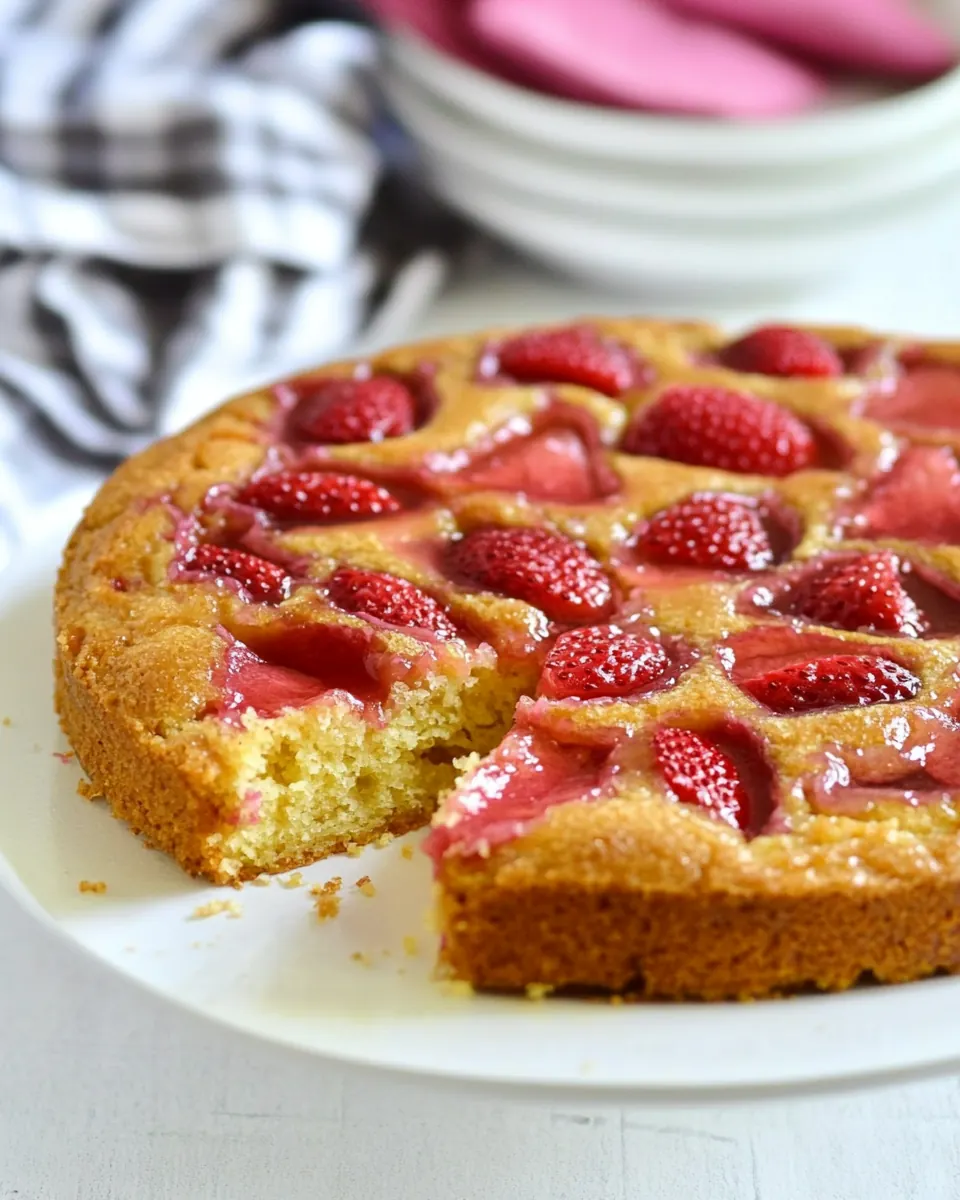
I like to keep the rhythm simple when baking this cake, moving from dry mixing to wet whisking, then assembly and a slow bake so the fruit becomes jammy. The following steps will guide you through the sensory cues and little decisions that make this cake sing. Read each step and trust the visuals and smells as your guide.
- Preheat the oven to 350 degrees Fahrenheit.: The kitchen will fill with warmth as the oven comes up to temperature, and preheating ensures even rise and consistent baking from the moment the cake goes in. A fully heated oven creates proper lift and sets the edges first, preventing the center from staying raw. One common mistake is skipping preheat, which can cause uneven texture. Check that your oven rack is centered for even browning across the top and sides.
- Prepare an 8" round cake pan by lightly oiling it or lining it with parchment paper.: Rubbing the pan with a thin film of oil gives a glossy sheen as the cake releases, and parchment creates a reliable nonstick layer so the fruit stays intact when you flip the cake. You should feel the surface slick under your fingers, ready for batter. A frequent error is using too much oil which pools, or too little causing sticking; use a light, even coating and trim parchment to fit snugly.
- In a large mixing bowl, combine flours, baking powder and ground ginger (dry mixture).: As you whisk these ingredients, they should look homogenous, a pale, speckled mound with the warm scent of ginger rising. Properly aerated dry ingredients help the batter incorporate evenly, preventing pockets of leavening. Avoid clumps by sifting or vigorous whisking; lumps of flour can create dense bits in the crumb.
- In a separate small bowl, mix the lemon zest and 1/2 cup of the coconut sugar together to release the zest oils. Once fragrant, whisk the lemon juice, eggs, coconut milk and olive oil in with the coconut sugar and zest (wet mixture).: Rubbing the zest into the sugar should produce a glossy, perfumed mixture, and the aroma will be noticeably citrus forward. When you whisk in the eggs , coconut milk , and olive oil , the wet mix will look smooth and slightly glossy, with the sugar beginning to integrate. This technique blooms the zest's oils and deepens flavor; skipping it mutes the lemon note. A common misstep is using cold eggs, which can make the wet mix look curdled; bring eggs to room temperature for a silkier emulsion.
- Pour the wet mixture into the bowl with the dry mixture and stir together until combined.: At this point, the batter should look cohesive, with no streaks of dry flour, and it will carry the scent of lemon and coconut. Stirring just until combined prevents overdeveloping the batter, which keeps the crumb tender. You will notice a slight resistance as the flours hydrate, then a smooth finish. Overmixing is a typical error, leading to a tougher texture; stop when you see uniform color and no dry patches.
- Pour the batter into the cake pan and sprinkle the rhubarb and strawberries on top, pressing them lightly into the batter. Sprinkle 1 tablespoon of coconut sugar on top.: As you arrange the fruit, watch how the red of the strawberries and vivid pink of the rhubarb contrast with the pale batter. Press just enough so the fruit adheres and will stay in place while baking. The final dusting of coconut sugar will catch the oven heat and create a thin caramelized crust. Avoid pressing too hard which buries the fruit completely; gentle placement lets juices bubble up without drowning the crumb.
- Bake for 50 to 60 minutes until cake tests clean (mine was still a little mushy around the fruit at 50 minutes, so I baked it a full 60 minutes).: During baking the kitchen will fill with a fragrant combination of citrus, warm berries, and caramelizing sugar. Look for golden edges and a center that springs back slightly; a toothpick inserted near the center should come out mostly clean with a few moist crumbs, not raw batter. If the fruit area looks overly wet, extend baking time in five minute increments. A common mistake is removing the cake too early which yields a gummy center around the fruit.
- Allow cake to cool and then turn it out onto a cutting board. Slice wedges and enjoy.: Cooling slightly lets the juices set so the fruit stays glossy but not runny when flipped. When you invert the pan, the top should gleam and the aroma will be bright and inviting. Use a sharp knife and let the cake sit five to ten minutes before slicing to avoid tearing. Cutting too soon can cause fruit to slip and ruin the presentation.
- Refrigerate leftovers in a sealable container or bag.: Chilling helps preserve the texture and keeps the fruit from fermenting, and you will notice the flavors mellow and meld overnight. Store in an airtight container to prevent the cake from absorbing other odors. A common oversight is leaving the cake uncovered which dries out the crumb quickly; always seal tightly and consume within three to four days for best quality.
How to Switch It Up
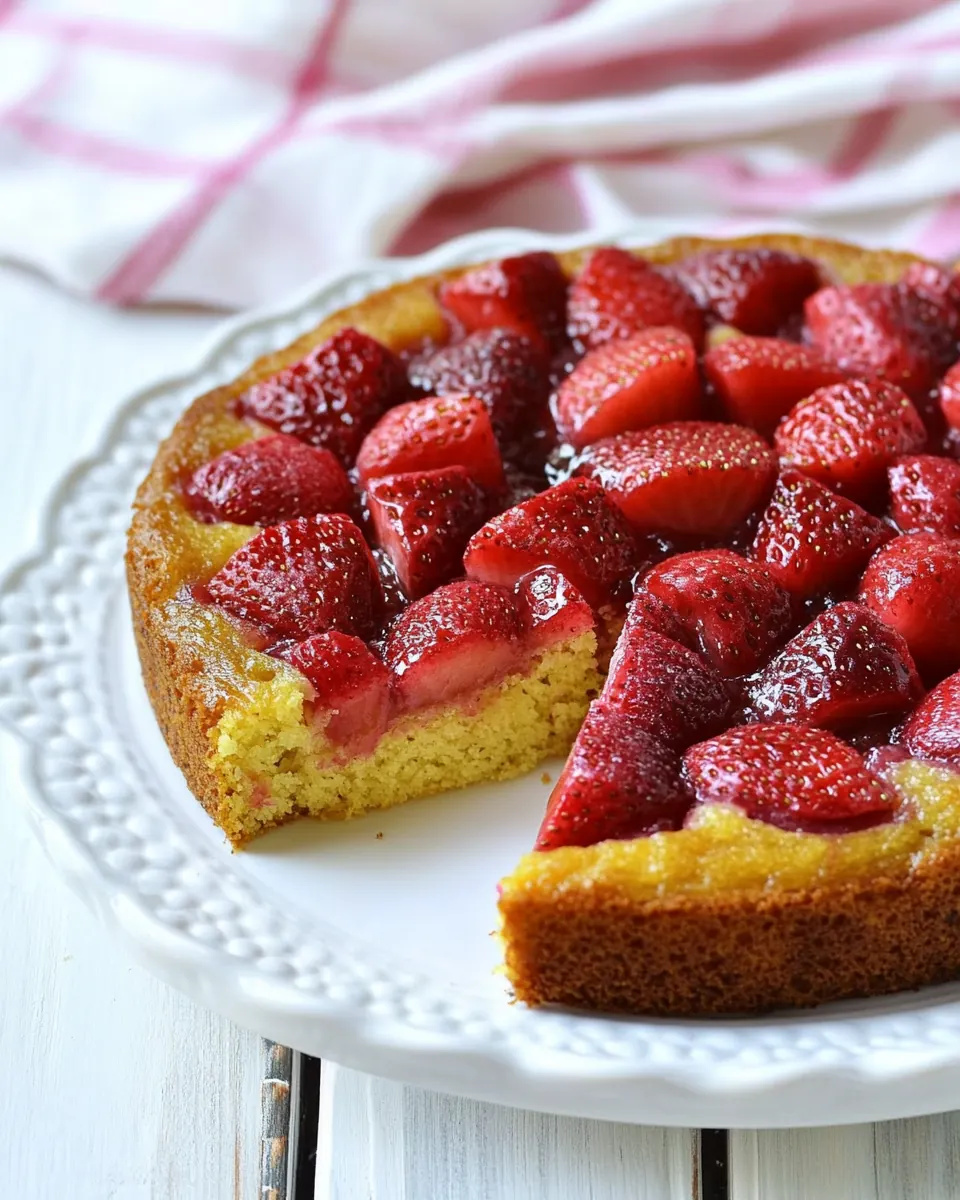
Once you know the basics of this cake, small swaps can tailor it to your pantry and taste. Below are ideas to vary texture, sweetness, and presentation while keeping the core technique intact.
- Swap fruit arrangement: Try arranging the strawberries and rhubarb in a concentric pattern for a decorative top that looks elegant when inverted.
- Adjust sweetness: Reduce the coconut sugar by a tablespoon or two if your strawberries are very ripe and sweet, preserving the tart contrast from the rhubarb.
- Texture boost: If you prefer a denser crumb, add an extra tablespoon of gluten free all purpose flour to the dry mix, keeping the balance of other flours the same.
- Zest variations: Substitute one lemon’s zest for orange zest to introduce a sweeter, floral citrus note that pairs beautifully with the fruit.
- Oil alternatives: Use a neutral oil with similar quantity if you want to avoid any olive oil flavor, keeping moisture and tenderness intact.
Side Dish Ideas for Gluten Free Strawberry Rhubarb Upside Down Cake
This cake is versatile at the table, pairing well with light accompaniments and fitting multiple occasions from casual brunch to festive gatherings. Below I outline serving styles, ideal occasions, and storage suggestions to help you plan how to present it.
- Serve with tea or coffee: Offer thin slices with a pot of hot tea for a relaxed afternoon gathering, the cake’s bright top making a pretty centerpiece.
- Brunch highlight: Pair wedges with fresh fruit and a light yogurt on the side for a spring brunch where the cake acts as a sweet feature without being heavy.
- Picnic friendly: Wrap slices individually for an outdoor picnic, keeping them chilled until ready to eat to preserve the texture and prevent juices from leaking.
- Holiday table: This cake works well for springtime celebrations like Ramadan if served after Iftar, providing a fruity, not-too-sweet finish to the evening meal.
- Make ahead and store: Bake a day early and refrigerate in an airtight container; bring to room temperature before serving to let flavors soften and the top regain its shine.
- Seasonal pairings: In spring, emphasize the rhubarb while in early summer, use the sweetest strawberries to balance the tartness and showcase peak produce.
FAQ
Conclusion
This cake stands out because it pairs seasonal fruit with a tender, gluten free crumb and a refined sugar free sweetener for a balanced, flavorful dessert. Give it a try on a weekend when you have fresh strawberries and rhubarb, or bake it for guests and watch how quickly the slices disappear. I hope this recipe becomes a springtime favorite in your kitchen, one you return to whenever you want a dessert that feels both special and approachable.
Gluten Free Strawberry Rhubarb Upside Down Cake
Equipment
- 8-inch Springform Cake Pan
Ingredients
- 1 cup large stalk rhubarb about 1.5 chopped Add chopped rhubarb to provide bright tartness and a firm texture that softens when baked; pairs beautifully with strawberries and balances sweetness. Use large stalks for noticeable fruit pieces and rustic visual appeal in the upside-down topping.
- 1.5 cups ripe strawberries sliced Layer sliced ripe strawberries to contribute natural sweetness, juiciness, and vibrant color that complements rhubarb; they macerate slightly during baking to create a saucy fruit topping. Choose ripe berries for maximum flavor and a tender, appealing texture.
- 1 cup corn four Sift corn flour to lend a subtle corn flavor and fine texture while helping with structure in a gluten-free batter; it absorbs moisture and can add a slightly crumbly, tender crumb. Use a neutral-tasting variety to avoid overpowering the fruit components.
- 1 cup brown rice flour Blend brown rice flour for a light, neutral base that provides body and structure without gluten; it helps create a tender crumb and keeps the cake from being too dense. Combine with other gluten-free flours to achieve a balanced texture and mouthfeel.
- 1/2 cup gluten-free all-purpose flour Measure gluten-free all-purpose flour to introduce a balanced mix of starches and binders formulated to mimic wheat flour; it aids in elasticity and cohesive crumb in the absence of gluten. Use the specified amount to help the batter hold together and rise evenly.
- 1 tablespoon baking powder Whisk baking powder to act as the leavening agent that creates lift and a tender, airy crumb by releasing gas during baking; ensure freshness for reliable rise. Distribute evenly through the dry ingredients to avoid uneven pockets of lift.
- 1/2 teaspoon ground ginger Incorporate ground ginger to add warm, spicy notes and aromatic depth that enhance the fruit flavors; it complements the tartness of rhubarb and brightness of lemon. Use sparingly to avoid overpowering the cake while still providing a subtle spice accent.
- 1/2 cup + 1 tablespoon coconut sugar Stir in coconut sugar to supply caramel-like sweetness and a hint of molasses that pairs well with baked fruit; it also contributes to moistness and color in the crust. Adjust slightly if using very sweet fruit, but maintain the listed amount for balance.
- Zest of 2 lemons Grate lemon zest to deliver concentrated citrus oils that brighten the overall flavor and cut through the richness; zest adds aromatic lift without extra acidity. Use fresh zest for the most vibrant, fragrant contribution to the batter and topping.
- 1 tablespoon lemon juice Add lemon juice to provide fresh acidity that balances sweetness and enhances the fruit flavors; it also interacts with leavening for improved rise and tenderness. Use freshly squeezed juice for best clarity and bright citrus notes in the cake.
- 2 eggs Whisk eggs to bind ingredients, provide structure, and incorporate air for a lighter texture; they also contribute moisture and richness to the batter. Beat sufficiently to ensure even distribution and a cohesive, stable crumb during baking.
- 1 cup full-fat canned coconut milk * full-fat Pour full-fat canned coconut milk to impart creamy richness and tender crumb while adding subtle coconut flavor that complements the fruit; its fat content improves moisture and mouthfeel. Shake or stir well to recombine any separated solids for uniform consistency.
- 1/3 cup olive oil Measure olive oil to supply moistness and a silky texture while keeping the cake tender and soft; it contributes a neutral fruity note and helps extend shelf life. Use a mild-flavored olive oil to avoid introducing any overpowering savory character.
Instructions
- Preheat the oven to 350 degrees Fahrenheit.: The kitchen will fill with warmth as the oven comes up to temperature, and preheating ensures even rise and consistent baking from the moment the cake goes in. A fully heated oven creates proper lift and sets the edges first, preventing the center from staying raw. One common mistake is skipping preheat, which can cause uneven texture. Check that your oven rack is centered for even browning across the top and sides.
- Prepare an 8" round cake pan by lightly oiling it or lining it with parchment paper.: Rubbing the pan with a thin film of oil gives a glossy sheen as the cake releases, and parchment creates a reliable nonstick layer so the fruit stays intact when you flip the cake. You should feel the surface slick under your fingers, ready for batter. A frequent error is using too much oil which pools, or too little causing sticking; use a light, even coating and trim parchment to fit snugly.
- In a large mixing bowl, combine flours, baking powder and ground ginger (dry mixture).: As you whisk these ingredients, they should look homogenous, a pale, speckled mound with the warm scent of ginger rising. Properly aerated dry ingredients help the batter incorporate evenly, preventing pockets of leavening. Avoid clumps by sifting or vigorous whisking; lumps of flour can create dense bits in the crumb.
- In a separate small bowl, mix the lemon zest and 1/2 cup of the coconut sugar together to release the zest oils. Once fragrant, whisk the lemon juice, eggs, coconut milk and olive oil in with the coconut sugar and zest (wet mixture).: Rubbing the zest into the sugar should produce a glossy, perfumed mixture, and the aroma will be noticeably citrus forward. When you whisk in the eggs , coconut milk , and olive oil , the wet mix will look smooth and slightly glossy, with the sugar beginning to integrate. This technique blooms the zest's oils and deepens flavor; skipping it mutes the lemon note. A common misstep is using cold eggs, which can make the wet mix look curdled; bring eggs to room temperature for a silkier emulsion.
- Pour the wet mixture into the bowl with the dry mixture and stir together until combined.: At this point, the batter should look cohesive, with no streaks of dry flour, and it will carry the scent of lemon and coconut. Stirring just until combined prevents overdeveloping the batter, which keeps the crumb tender. You will notice a slight resistance as the flours hydrate, then a smooth finish. Overmixing is a typical error, leading to a tougher texture; stop when you see uniform color and no dry patches.
- Pour the batter into the cake pan and sprinkle the rhubarb and strawberries on top, pressing them lightly into the batter. Sprinkle 1 tablespoon of coconut sugar on top.: As you arrange the fruit, watch how the red of the strawberries and vivid pink of the rhubarb contrast with the pale batter. Press just enough so the fruit adheres and will stay in place while baking. The final dusting of coconut sugar will catch the oven heat and create a thin caramelized crust. Avoid pressing too hard which buries the fruit completely; gentle placement lets juices bubble up without drowning the crumb.
- Bake for 50 to 60 minutes until cake tests clean (mine was still a little mushy around the fruit at 50 minutes, so I baked it a full 60 minutes).: During baking the kitchen will fill with a fragrant combination of citrus, warm berries, and caramelizing sugar. Look for golden edges and a center that springs back slightly; a toothpick inserted near the center should come out mostly clean with a few moist crumbs, not raw batter. If the fruit area looks overly wet, extend baking time in five minute increments. A common mistake is removing the cake too early which yields a gummy center around the fruit.
- Allow cake to cool and then turn it out onto a cutting board. Slice wedges and enjoy.: Cooling slightly lets the juices set so the fruit stays glossy but not runny when flipped. When you invert the pan, the top should gleam and the aroma will be bright and inviting. Use a sharp knife and let the cake sit five to ten minutes before slicing to avoid tearing. Cutting too soon can cause fruit to slip and ruin the presentation.
- Refrigerate leftovers in a sealable container or bag.: Chilling helps preserve the texture and keeps the fruit from fermenting, and you will notice the flavors mellow and meld overnight. Store in an airtight container to prevent the cake from absorbing other odors. A common oversight is leaving the cake uncovered which dries out the crumb quickly; always seal tightly and consume within three to four days for best quality.
Notes
- Swap fruit arrangement: Try arranging the strawberries and rhubarb in a concentric pattern for a decorative top that looks elegant when inverted.
- Adjust sweetness: Reduce the coconut sugar by a tablespoon or two if your strawberries are very ripe and sweet, preserving the tart contrast from the rhubarb.
- Texture boost: If you prefer a denser crumb, add an extra tablespoon of gluten free all purpose flour to the dry mix, keeping the balance of other flours the same.
- Zest variations: Substitute one lemon’s zest for orange zest to introduce a sweeter, floral citrus note that pairs beautifully with the fruit.
- Oil alternatives: Use a neutral oil with similar quantity if you want to avoid any olive oil flavor, keeping moisture and tenderness intact.
