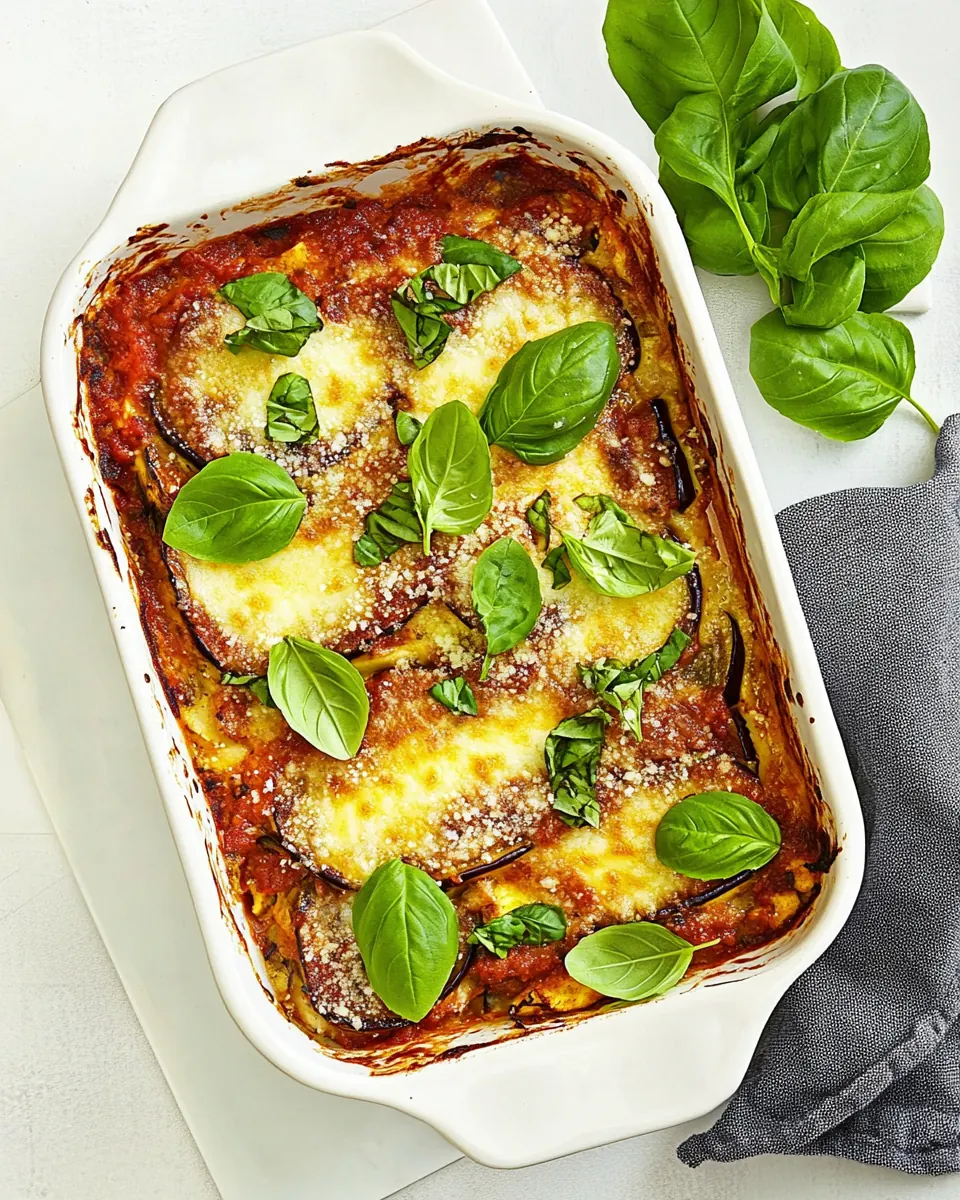
Eggplant Lasagna
Eggplant Lasagna is one of those dishes I come back to when I want something comforting, layered, and a little bit clever. The first time I made it, I was juggling a busy week and a fridge full of summer produce, and the way the roasted eggplant snapped into place as a noodle stand in for pasta felt like a small kitchen victory. That night the table filled with the warm scent of marinara sauce and bubbling mozzarella cheese, and everyone ate more than I expected.
I remember pulling the baking sheets out of the oven, the air full of a toasty, olive oil scent, and thinking this recipe could be the anchor of so many meals. Whether I was feeding a relaxed Sunday crowd or packing leftovers for a busy weekday, the layers of creamy ricotta cheese and roasted eggplant gave me the flexibility I needed. There is a rhythm to assembling it that is almost meditative, a series of small, satisfying motions: spreading sauce, dotting with the ricotta, laying down the slices with care.
Over time I’ve learned tiny tweaks that make a big difference, like salting the eggplant early to pull out bitterness and moisture, or letting the finished dish rest before slicing so it holds together beautifully. Guests often ask if it is as rich as traditional pasta lasagna, and I tell them it is different, in the best way, lighter yet still indulgent. I love serving it with a scatter of fresh basil leaves and a pinch of red pepper flakes for brightness and a little lift.
Recipe Snapshot
1 hr 20 mins
30 mins
50 mins
Medium
400 kcal
Italian
Keto, Gluten-Free
Dinner
Oven, Baking sheets, Parchment paper, 9 x 13-inch baking dish, Large bowl
What Sets This Eggplant Lasagna Apart
Layered Comfort Without the Fuss
I adore how Eggplant Lasagna delivers that lasagna feel without the pasta, giving you the same satisfying layers, gooey top, and cozy warmth. The roasted eggplant replaces noodles, so you get a pleasant bite and a lighter mouthfeel, which makes it great for evenings when you want something substantial but not heavy.
Summer Friendly and Seasonal
Because this recipe highlights ripe summer eggplant, it’s perfect when those glossy purple vegetables are at their best. I like that the produce shines here, and the combination of bright marinara sauce and fragrant basil leaves feels very rooted in warm weather cooking.
Simple Techniques, Big Flavor
The method is straightforward yet effective. Salting the eggplant to remove excess moisture, roasting until golden, and building the layers thoughtfully produces complex textures and deep flavors with minimal fuss. I appreciate how one careful roast step changes the whole dish, turning bland slices into richly caramelized components.
Make Ahead and Serve Warm or Room Temperature
I often prepare this ahead of time, letting it sit so the flavors marry. It reheats nicely and even sings at room temperature, which makes it a relaxed choice for gatherings. That flexibility is a huge selling point for busy weeknights or casual dinner parties.
Comfort That Feels Thoughtful
Finally, this dish always reads as lovingly composed. With layers of creamy ricotta cheese, tangy Parmesan cheese, and melty mozzarella cheese, it comforts without being heavy handed. When I want to impress without stress, this is where I turn.
What You Need for Eggplant Lasagna
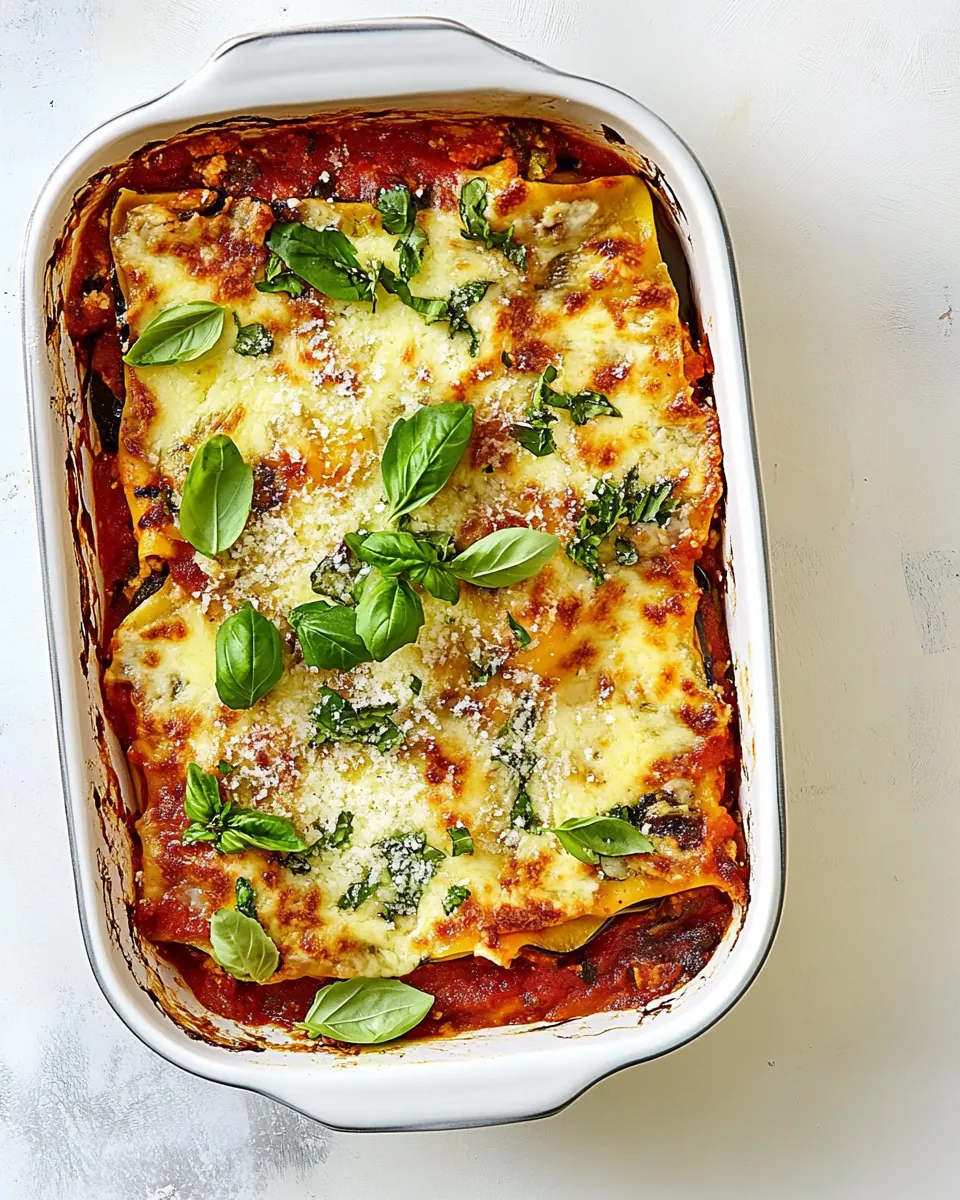
These ingredients are a simple, harmonious cast that each play a clear role. The eggplant acts as the structural noodle, the cheeses bring cream and melt, and the marinara sauce provides acid and tomato sweetness to tie everything together. A touch of lemon zest and garlic brightens the ricotta filling, while Parmesan cheese adds savory depth. Together they create layers that are cohesive and balanced.
- 2 to 3 large eggplants, 4 pounds, stemmed and sliced vertically into 1/4-inch-thick planks: Slice and layer to replace pasta sheets; provides a meaty, tender base when roasted or grilled and absorbs sauce flavors. Salt before cooking to draw out bitterness and moisture so slices brown evenly and hold structure in the lasagna.
- Sea salt: Season generously to draw out moisture from eggplant slices and to enhance overall flavor balance; helps with seasoning during both preparation and finishing. Use coarse sea salt for a clean, bright saltiness without metallic notes.
- Extra-virgin olive oil, for drizzling: Drizzle lightly to promote browning and prevent sticking when roasting or grilling eggplant slices; contributes fruity, slightly peppery richness to the dish. Use sparingly to avoid greasiness while ensuring the layers meld together.
- 1 1/2 cups marinara sauce: Spread between eggplant layers to provide tangy tomato flavor and moisture; acts as the primary saucy component that binds fillings and adds acidity. Choose a simple marinara to let cheeses and herbs shine without overpowering the bake.
- 2 cups grated mozzarella cheese: Sprinkle liberally to create a melty, gooey layer that gives the lasagna its classic cheesy pull and satisfying texture. Opt for mozzarella with good melting properties to form a cohesive, golden-bubbly top.
- 1/4 cup grated Parmesan cheese: Grate and scatter for a nutty, salty finish that enhances overall umami and helps create a browned crust when broiled. Use sparingly compared to mozzarella to add depth without overwhelming the cheese balance.
- Red pepper flakes, for sprinkling: Sprinkle lightly to add a touch of heat and complexity; works well as a finishing accent to lift flavors. Adjust amount to taste for subtle spiciness without dominating the dish.
- Fresh basil leaves, for garnish: Garnish whole or torn to add fresh herbal aroma, bright flavor, and visual contrast; complements the richness of cheeses and tomato sauce. Add just before serving to preserve vibrant color and fragrance.
- 2 cups (16 ounces) whole milk ricotta cheese: Mix with egg and seasonings to form a creamy, rich ricotta layer that provides structure and moistness between eggplant sheets. Use whole milk ricotta for a smoother, more luxurious texture that balances the tomato sauce.
- 1 large egg, beaten: Beat and incorporate to bind ricotta and create a cohesive filling that slices cleanly; contributes a slight richness and firmness as the lasagna sets. Ensure the egg is well mixed to distribute binding evenly throughout the ricotta.
- 1/4 cup grated Parmesan cheese: Grate and stir into the ricotta mixture for salty, savory depth; also used elsewhere for finishing to build umami complexity. Duplicate quantity emphasizes its role both inside the filling and atop the assembled lasagna.
- 2 garlic cloves, grated: Grate finely to infuse the ricotta mixture with aromatic garlic pungency and savory warmth; helps brighten the cheese layer and meld with tomato sauce. Use fresh grated garlic for a smoother, less harsh flavor than minced.
- 1 teaspoon dried oregano: Sprinkle into the ricotta or sauce to add earthy Mediterranean notes and to reinforce Italian flavor profile; dries herbs concentrate savory aroma. Use dried oregano sparingly to avoid bitterness and to complement fresh basil garnish.
- 1 teaspoon lemon zest: Zest to add citrusy brightness that cuts through richness and accentuates the dish's flavors; pairs especially well with ricotta and olive oil. Use only the yellow outer peel to avoid bitter pith and distribute evenly in the cheese mixture.
- 1/2 teaspoons ea salt: Measure precisely to season the ricotta filling and overall dish; provides necessary salinity for balanced flavor while avoiding over-seasoning. Combining this with earlier sea salt usage requires tasting as you go to harmonize salt levels.
- Freshly ground black pepper: Grind freshly to season and brighten flavors throughout the lasagna; adds a sharp, warming bite that enhances both cheeses and tomato sauce. Use freshly cracked pepper for the best aromatic impact and finish just before serving.
Instructions for Eggplant Lasagna
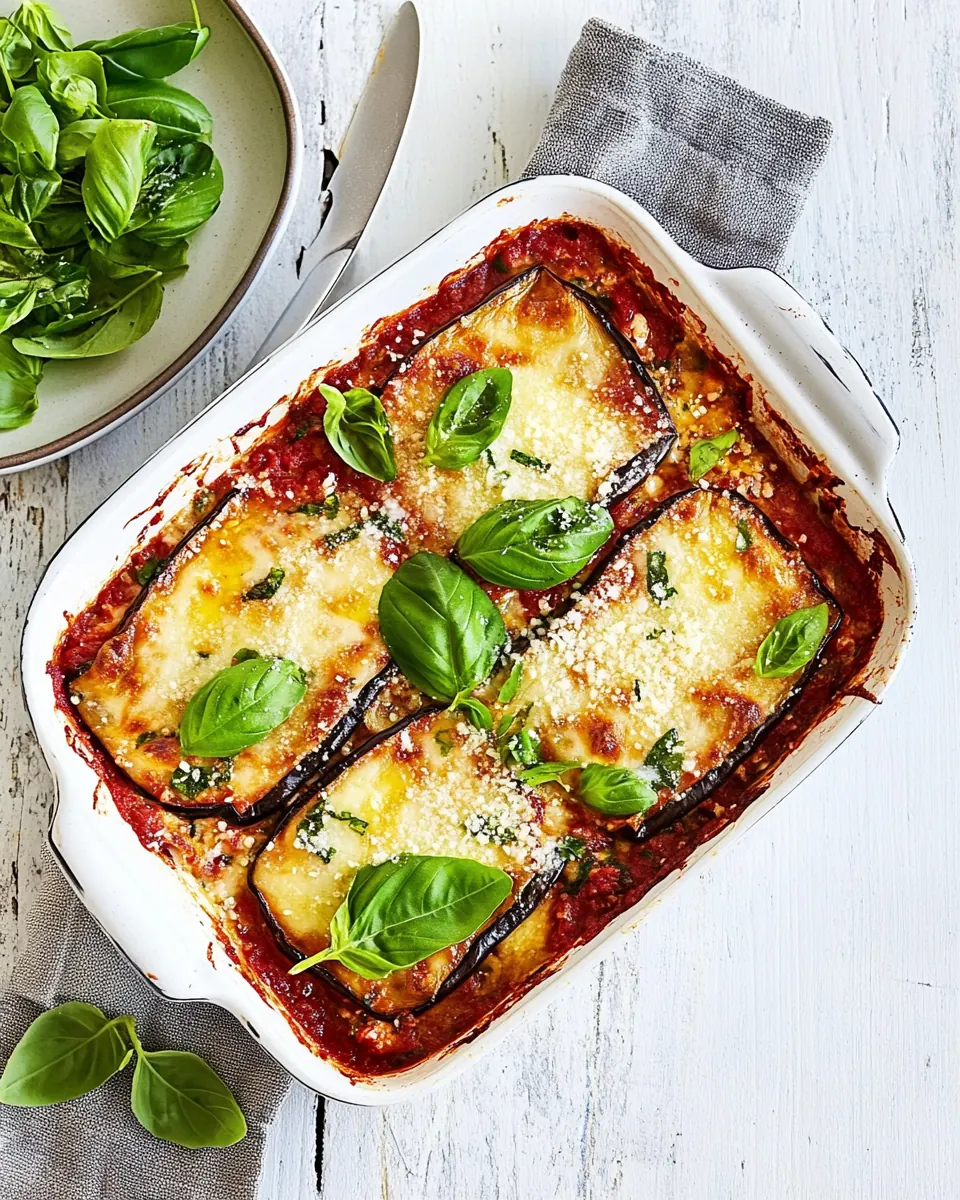
This process is patient but rewarding, and it helps to move steadily through the steps so each component ends up just right. Follow the rhythm from salting and roasting the eggplant to building the layers, and allow time at the end for the lasagna to set so it slices cleanly.
- Preheat the oven to 425°F and line three large baking sheets with parchment paper. Arrange the eggplant planks in a single layer on clean kitchen towels and sprinkle with salt. Set aside for 20 minutes to draw moisture out of the eggplant.: The warm oven smell and immediate heat create the environment needed to roast the slices to a golden edge, producing caramelized aromas that hint at sweet, roasted eggplant. As the baking sheets heat, you will notice a faint toasty scent from the oil once the slices go in. Why this matters, the high initial heat encourages browning rather than stewing, which deepens the flavor. A common mistake is overcrowding the pans; if you pile slices, they will steam instead of roast and lose that desirable golden color. If your parchment begins to brown at the edges, that's normal, but avoid direct contact with a heating element in smaller ovens.
- Pat the eggplant dry and transfer to the prepared baking sheets. Drizzle generously with olive oil, toss to coat, and arrange in a single layer on the baking sheets. Roast for 20 to 25 minutes, or until tender and golden brown, flipping the eggplant and rotating the pans halfway through.: The salt draws moisture out and concentrates flavor, which you can actually smell as a faint briny note after twenty minutes. Pressing them into towels helps wick away the water and shortens roasting time. This step prevents a watery final dish, and it changes texture from spongy to tender but firm. A typical error is skipping the salt or being too timid, which leaves excess moisture and can result in a limp, bland layer. Make sure the towel surface is absorbent, and replace towels if they become saturated during the resting period.
- Meanwhile, make the filling: In a large bowl, stir together the ricotta, egg, Parmesan, garlic, oregano, lemon zest, salt, and pepper.: After the salting period you will feel the slices become less floppy and a bit firmer when you blot them, which signals readiness for the oven. Drizzling with extra–virgin olive oil and tossing gives each plank a sheen that will crisp and brown. The sizzling sound when the slices hit the hot pan is a good cue that caramelization is happening. If you skip thorough patting, trapped water will steam the slices and prevent browning, so press firmly but gently with paper towels or a clean cloth.
- Brush a 9 x 13-inch or similar baking dish with olive oil and spread 1/2 cup of the marinara sauce on the bottom. Cover with a layer of the roasted eggplant slices, then top with half the ricotta mixture and dot with another 1/2 cup of the marinara. Repeat with another layer of eggplant, the remaining ricotta mixture, and the remaining 1/2 cup marinara. Top with a final layer of eggplant, then sprinkle the mozzarella and Parmesan cheeses on top.: You'll notice the edges bronzing and giving off a warm, nutty aroma, and the texture will change to silky with slightly crisped margins. Flipping ensures even color across the surface and avoids burned spots. This technique concentrates sweetness and adds savory complexity. A common pitfall is not watching closely during the final minutes; slices can go from perfectly golden to overly dark quickly, so check frequently in the last five minutes.
- Bake for 30 minutes, or until the cheese on top is browned and bubbling. Let stand for 30 minutes. Sprinkle with red pepper flakes and garnish with fresh basil. Slice and serve.: In a large bowl, stir together the ricotta, egg, Parmesan, garlic, oregano, lemon zest, salt, and pepper : As you mix, aromas meld, and you should smell the citrus brightness and the savory parmesan lifting the mixture. The beaten egg binds the filling, while grated garlic disperses its warmth evenly. Properly combined, the filling should feel creamy and slightly springy, which helps it stay put between layers. A mistake is under mixing, leaving pockets of unmixed egg or clumps of Parmesan cheese , which can bake unevenly. If the filling seems watery, a brief chill will firm it up before assembly.
- Brush a 9 x 13-inch or similar baking dish with olive oil and spread 1/2 cup of the marinara sauce on the bottom: The initial sauce layer prevents sticking and adds a flavor foundation, and spreading it thinly keeps the assembly balanced. You will see the shiny red pool tighten into a base that prevents the roasted slices from bonding to the pan. Doing this is important so slices release when you serve. Using too much sauce here is a frequent error, which can make the bottom soggy, so keep it measured and even.
- Cover with a layer of the roasted eggplant slices, then top with half the ricotta mixture and dot with another 1/2 cup of the marinara: When you lay the first layer, the roasted edges should face outward and the mellow centers align for consistent texture. The creamy ricotta cheese should be spooned and dotted rather than smeared, so each bite has pockets of cheese and sauce. The contrast between the warm roasted eggplant and the cool ricotta makes assembly tactile and satisfying. Avoid piling too many slices in one spot, which can prevent even heating in the center when baking.
- Repeat with another layer of eggplant, the remaining ricotta mixture, and the remaining 1/2 cup marinara: Building the repeat layer deepens the flavor profile as juices and oils marry between layers, creating a cohesive internal texture. You may notice the filling settle slightly as you layer, which is normal; it will firm up in the oven. This repetition ensures each slice you serve has a balance of roasted vegetable, creamy filling, and tomato brightness. Do not over compress the layers, as squeezing can force out fillings and create sogginess.
- Top with a final layer of eggplant, then sprinkle the mozzarella and Parmesan cheeses on top: The cheese on top is what browns and bubbles, offering a savory, golden crust and that delightful pull when you serve. Spread the mozzarella cheese evenly so it melts uniformly and the Parmesan cheese adds that nutty, salty finish. You will hear a gentle bubbling as it bakes and smell a toasty, cheesy aroma that signals readiness. A common issue is clumping the cheese in one area, which can lead to uneven browning.
- Bake for 30 minutes, or until the cheese on top is browned and bubbling: The oven transforms the layered components into one harmonious dish, with the top developing a golden brown color and the sauce at the edges softly simmering. You will see steam rise and hear the soft crackle of the cheese as it sets. This bake time melts the filling and makes the interior cohesive. Avoid opening the oven repeatedly, which drops the temperature and can prolong bake time; check through the window when possible.
- Let stand for 30 minutes: Allowing the lasagna to rest is crucial, because it lets the interior set and the layers bind, making it easier to slice without falling apart. During this time the steam redistributes and the flavors calm into a composed whole. If you cut too early, the layers will slide and the filling will spill out, so patience pays off. Keep it loosely tented if your kitchen is cool, but do not seal tightly or the crust may soften too much.
- Sprinkle with red pepper flakes and garnish with fresh basil: The final scatter of red pepper flakes adds a teasing heat while the aromatic basil leaves bring a fresh herbal note that lifts the whole dish. The contrast of the warm, savory interior with the bright garnish makes each bite exciting. A misstep here is adding basil too early while the lasagna is piping hot, which will wilt the leaves; add them at the end for best color and aroma.
- Slice and serve: When you slice, use a sharp, sturdy knife and make clean, deliberate cuts so each portion keeps its shape. Serve warm, noticing the way the strands of cheese pull and the layered texture holds. If the portions are uneven, you can use a spatula to support slices as you transfer them to plates. Cutting while too hot risks collapse, so wait for that resting period to finish before beginning to serve.
Variations to Try
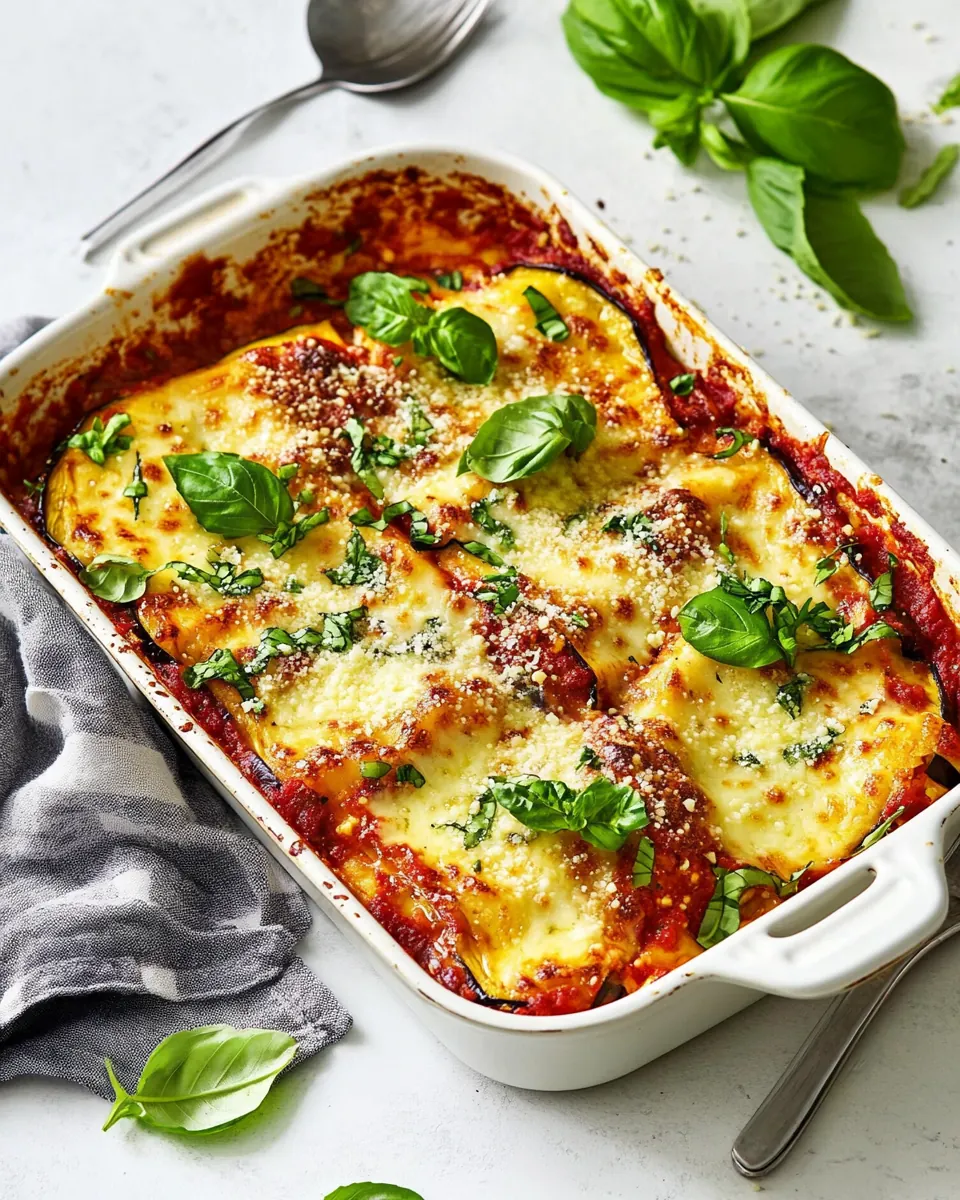
There are several ways to riff on this recipe while staying true to the original idea of layered roasted eggplant and creamy cheese. Below are practical, tested variations that I use depending on season and pantry supplies.
- Smaller Portions Make individual ramelet sized lasagnas for single servings or elegant plated lunches, which shortens bake time and creates crisp edges for each portion.
- Extra Herbs Fold chopped fresh basil or parsley into the ricotta cheese filling for an herbaceous lift that brightens every bite.
- Cheese Swap Use part shredded provolone in place of some mozzarella cheese for a deeper, more savory melt while keeping the texture familiar.
- Saucy Base If your marinara sauce is thin, simmer it gently to reduce and concentrate flavor so the lasagna does not become soggy.
- Bread Free Crust Bake on a rimmed sheet for a few minutes longer to dry the bottom slightly if you prefer a firmer base when slicing and serving.
How to Serve Eggplant Lasagna
This lasagna works beautifully across occasions, from a cozy family dinner to a relaxed summer gathering. Serve it warm so the cheeses are pleasantly melty, and consider a simple green side to cut through the richness. It stores well, making it ideal for planning ahead, and slices can travel well for picnics once cooled and packed carefully.
- Family Dinners Slice generous portions and serve with a crisp salad to balance the creamy ricotta cheese and melted mozzarella cheese.
- Vegetarian Gatherings Present as the centerpiece with a variety of small antipasti for guests to nibble on while the main is warm and ready.
- Meal Prep Portion into airtight containers after cooling, refrigerate for up to three days, and reheat covered to retain moisture.
- Make Ahead Assemble the lasagna, cover, and refrigerate for up to twenty four hours before baking; bring to room temperature slightly before placing in the oven so baking is even.
- Seasonal Pairings In summer, highlight the fresh basil leaves and pair with chilled white vegetables; in cooler months, serve with roasted root vegetables for a heartier plate.
- Serving Style For a rustic presentation, slice and place directly on a wooden board with scattered basil leaves and a light sprinkle of red pepper flakes for visual contrast.
FAQ
Conclusion
Eggplant Lasagna stands out because it delivers the layered comfort of traditional lasagna while highlighting roasted eggplant and a creamy ricotta filling. Give it a try if you want a familiar, satisfying meal with a lighter, vegetable forward twist. It is forgiving to make ahead, reheats well, and rewards a little patience with neat slices and depth of flavor, so bring it to your next casual dinner and enjoy the compliments.
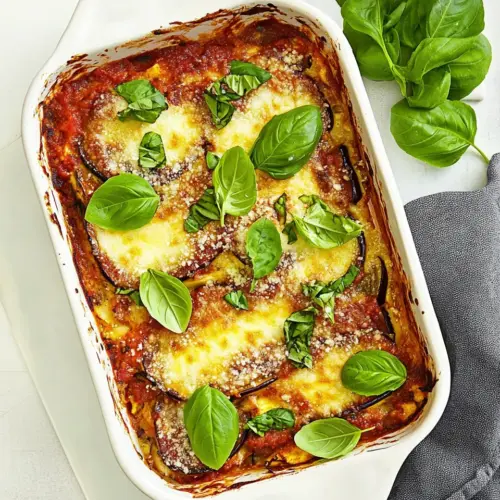
Eggplant Lasagna
Equipment
- Oven
- Baking Sheets
- Parchment Paper
- 9 x 13 inch baking dish
- Large Bowl
Ingredients
- 2 to 3 large eggplants, 4 pounds, stemmed and sliced vertically into 1/4-inch-thick planks Slice and layer to replace pasta sheets; provides a meaty, tender base when roasted or grilled and absorbs sauce flavors. Salt before cooking to draw out bitterness and moisture so slices brown evenly and hold structure in the lasagna.
- Sea salt Season generously to draw out moisture from eggplant slices and to enhance overall flavor balance; helps with seasoning during both preparation and finishing. Use coarse sea salt for a clean, bright saltiness without metallic notes.
- Extra-virgin olive oil, for drizzling Drizzle lightly to promote browning and prevent sticking when roasting or grilling eggplant slices; contributes fruity, slightly peppery richness to the dish. Use sparingly to avoid greasiness while ensuring the layers meld together.
- 1 1/2 cups marinara sauce Spread between eggplant layers to provide tangy tomato flavor and moisture; acts as the primary saucy component that binds fillings and adds acidity. Choose a simple marinara to let cheeses and herbs shine without overpowering the bake.
- 2 cups grated mozzarella cheese Sprinkle liberally to create a melty, gooey layer that gives the lasagna its classic cheesy pull and satisfying texture. Opt for mozzarella with good melting properties to form a cohesive, golden-bubbly top.
- 1/4 cup grated Parmesan cheese Grate and scatter for a nutty, salty finish that enhances overall umami and helps create a browned crust when broiled. Use sparingly compared to mozzarella to add depth without overwhelming the cheese balance.
- Red pepper flakes, for sprinkling Sprinkle lightly to add a touch of heat and complexity; works well as a finishing accent to lift flavors. Adjust amount to taste for subtle spiciness without dominating the dish.
- Fresh basil leaves, for garnish Garnish whole or torn to add fresh herbal aroma, bright flavor, and visual contrast; complements the richness of cheeses and tomato sauce. Add just before serving to preserve vibrant color and fragrance.
- 2 cups (16 ounces) whole milk ricotta cheese Mix with egg and seasonings to form a creamy, rich ricotta layer that provides structure and moistness between eggplant sheets. Use whole milk ricotta for a smoother, more luxurious texture that balances the tomato sauce.
- 1 large egg, beaten Beat and incorporate to bind ricotta and create a cohesive filling that slices cleanly; contributes a slight richness and firmness as the lasagna sets. Ensure the egg is well mixed to distribute binding evenly throughout the ricotta.
- 1/4 cup grated Parmesan cheese Grate and stir into the ricotta mixture for salty, savory depth; also used elsewhere for finishing to build umami complexity. Duplicate quantity emphasizes its role both inside the filling and atop the assembled lasagna.
- 2 garlic cloves, grated Grate finely to infuse the ricotta mixture with aromatic garlic pungency and savory warmth; helps brighten the cheese layer and meld with tomato sauce. Use fresh grated garlic for a smoother, less harsh flavor than minced.
- 1 teaspoon dried oregano Sprinkle into the ricotta or sauce to add earthy Mediterranean notes and to reinforce Italian flavor profile; dries herbs concentrate savory aroma. Use dried oregano sparingly to avoid bitterness and to complement fresh basil garnish.
- 1 teaspoon lemon zest Zest to add citrusy brightness that cuts through richness and accentuates the dish's flavors; pairs especially well with ricotta and olive oil. Use only the yellow outer peel to avoid bitter pith and distribute evenly in the cheese mixture.
- 1/2 teaspoons ea salt Measure precisely to season the ricotta filling and overall dish; provides necessary salinity for balanced flavor while avoiding over-seasoning. Combining this with earlier sea salt usage requires tasting as you go to harmonize salt levels.
- Freshly ground black pepper Grind freshly to season and brighten flavors throughout the lasagna; adds a sharp, warming bite that enhances both cheeses and tomato sauce. Use freshly cracked pepper for the best aromatic impact and finish just before serving.
Instructions
- Preheat the oven to 425°F and line three large baking sheets with parchment paper. Arrange the eggplant planks in a single layer on clean kitchen towels and sprinkle with salt. Set aside for 20 minutes to draw moisture out of the eggplant.: The warm oven smell and immediate heat create the environment needed to roast the slices to a golden edge, producing caramelized aromas that hint at sweet, roasted eggplant. As the baking sheets heat, you will notice a faint toasty scent from the oil once the slices go in. Why this matters, the high initial heat encourages browning rather than stewing, which deepens the flavor. A common mistake is overcrowding the pans; if you pile slices, they will steam instead of roast and lose that desirable golden color. If your parchment begins to brown at the edges, that's normal, but avoid direct contact with a heating element in smaller ovens.
- Pat the eggplant dry and transfer to the prepared baking sheets. Drizzle generously with olive oil, toss to coat, and arrange in a single layer on the baking sheets. Roast for 20 to 25 minutes, or until tender and golden brown, flipping the eggplant and rotating the pans halfway through.: The salt draws moisture out and concentrates flavor, which you can actually smell as a faint briny note after twenty minutes. Pressing them into towels helps wick away the water and shortens roasting time. This step prevents a watery final dish, and it changes texture from spongy to tender but firm. A typical error is skipping the salt or being too timid, which leaves excess moisture and can result in a limp, bland layer. Make sure the towel surface is absorbent, and replace towels if they become saturated during the resting period.
- Meanwhile, make the filling: In a large bowl, stir together the ricotta, egg, Parmesan, garlic, oregano, lemon zest, salt, and pepper.: After the salting period you will feel the slices become less floppy and a bit firmer when you blot them, which signals readiness for the oven. Drizzling with extra-virgin olive oil and tossing gives each plank a sheen that will crisp and brown. The sizzling sound when the slices hit the hot pan is a good cue that caramelization is happening. If you skip thorough patting, trapped water will steam the slices and prevent browning, so press firmly but gently with paper towels or a clean cloth.
- Brush a 9 x 13-inch or similar baking dish with olive oil and spread 1/2 cup of the marinara sauce on the bottom. Cover with a layer of the roasted eggplant slices, then top with half the ricotta mixture and dot with another 1/2 cup of the marinara. Repeat with another layer of eggplant, the remaining ricotta mixture, and the remaining 1/2 cup marinara. Top with a final layer of eggplant, then sprinkle the mozzarella and Parmesan cheeses on top.: You'll notice the edges bronzing and giving off a warm, nutty aroma, and the texture will change to silky with slightly crisped margins. Flipping ensures even color across the surface and avoids burned spots. This technique concentrates sweetness and adds savory complexity. A common pitfall is not watching closely during the final minutes; slices can go from perfectly golden to overly dark quickly, so check frequently in the last five minutes.
- Bake for 30 minutes, or until the cheese on top is browned and bubbling. Let stand for 30 minutes. Sprinkle with red pepper flakes and garnish with fresh basil. Slice and serve.: In a large bowl, stir together the ricotta, egg, Parmesan, garlic, oregano, lemon zest, salt, and pepper : As you mix, aromas meld, and you should smell the citrus brightness and the savory parmesan lifting the mixture. The beaten egg binds the filling, while grated garlic disperses its warmth evenly. Properly combined, the filling should feel creamy and slightly springy, which helps it stay put between layers. A mistake is under mixing, leaving pockets of unmixed egg or clumps of Parmesan cheese , which can bake unevenly. If the filling seems watery, a brief chill will firm it up before assembly.
- Brush a 9 x 13-inch or similar baking dish with olive oil and spread 1/2 cup of the marinara sauce on the bottom: The initial sauce layer prevents sticking and adds a flavor foundation, and spreading it thinly keeps the assembly balanced. You will see the shiny red pool tighten into a base that prevents the roasted slices from bonding to the pan. Doing this is important so slices release when you serve. Using too much sauce here is a frequent error, which can make the bottom soggy, so keep it measured and even.
- Cover with a layer of the roasted eggplant slices, then top with half the ricotta mixture and dot with another 1/2 cup of the marinara: When you lay the first layer, the roasted edges should face outward and the mellow centers align for consistent texture. The creamy ricotta cheese should be spooned and dotted rather than smeared, so each bite has pockets of cheese and sauce. The contrast between the warm roasted eggplant and the cool ricotta makes assembly tactile and satisfying. Avoid piling too many slices in one spot, which can prevent even heating in the center when baking.
- Repeat with another layer of eggplant, the remaining ricotta mixture, and the remaining 1/2 cup marinara: Building the repeat layer deepens the flavor profile as juices and oils marry between layers, creating a cohesive internal texture. You may notice the filling settle slightly as you layer, which is normal; it will firm up in the oven. This repetition ensures each slice you serve has a balance of roasted vegetable, creamy filling, and tomato brightness. Do not over compress the layers, as squeezing can force out fillings and create sogginess.
- Top with a final layer of eggplant, then sprinkle the mozzarella and Parmesan cheeses on top: The cheese on top is what browns and bubbles, offering a savory, golden crust and that delightful pull when you serve. Spread the mozzarella cheese evenly so it melts uniformly and the Parmesan cheese adds that nutty, salty finish. You will hear a gentle bubbling as it bakes and smell a toasty, cheesy aroma that signals readiness. A common issue is clumping the cheese in one area, which can lead to uneven browning.
- Bake for 30 minutes, or until the cheese on top is browned and bubbling: The oven transforms the layered components into one harmonious dish, with the top developing a golden brown color and the sauce at the edges softly simmering. You will see steam rise and hear the soft crackle of the cheese as it sets. This bake time melts the filling and makes the interior cohesive. Avoid opening the oven repeatedly, which drops the temperature and can prolong bake time; check through the window when possible.
- Let stand for 30 minutes: Allowing the lasagna to rest is crucial, because it lets the interior set and the layers bind, making it easier to slice without falling apart. During this time the steam redistributes and the flavors calm into a composed whole. If you cut too early, the layers will slide and the filling will spill out, so patience pays off. Keep it loosely tented if your kitchen is cool, but do not seal tightly or the crust may soften too much.
- Sprinkle with red pepper flakes and garnish with fresh basil: The final scatter of red pepper flakes adds a teasing heat while the aromatic basil leaves bring a fresh herbal note that lifts the whole dish. The contrast of the warm, savory interior with the bright garnish makes each bite exciting. A misstep here is adding basil too early while the lasagna is piping hot, which will wilt the leaves; add them at the end for best color and aroma.
- Slice and serve: When you slice, use a sharp, sturdy knife and make clean, deliberate cuts so each portion keeps its shape. Serve warm, noticing the way the strands of cheese pull and the layered texture holds. If the portions are uneven, you can use a spatula to support slices as you transfer them to plates. Cutting while too hot risks collapse, so wait for that resting period to finish before beginning to serve.
Notes
- Smaller Portions Make individual ramelet sized lasagnas for single servings or elegant plated lunches, which shortens bake time and creates crisp edges for each portion.
- Extra Herbs Fold chopped fresh basil or parsley into the ricotta cheese filling for an herbaceous lift that brightens every bite.
- Cheese Swap Use part shredded provolone in place of some mozzarella cheese for a deeper, more savory melt while keeping the texture familiar.
- Saucy Base If your marinara sauce is thin, simmer it gently to reduce and concentrate flavor so the lasagna does not become soggy.
- Bread Free Crust Bake on a rimmed sheet for a few minutes longer to dry the bottom slightly if you prefer a firmer base when slicing and serving.