Chipotle Steak Rice Bowls
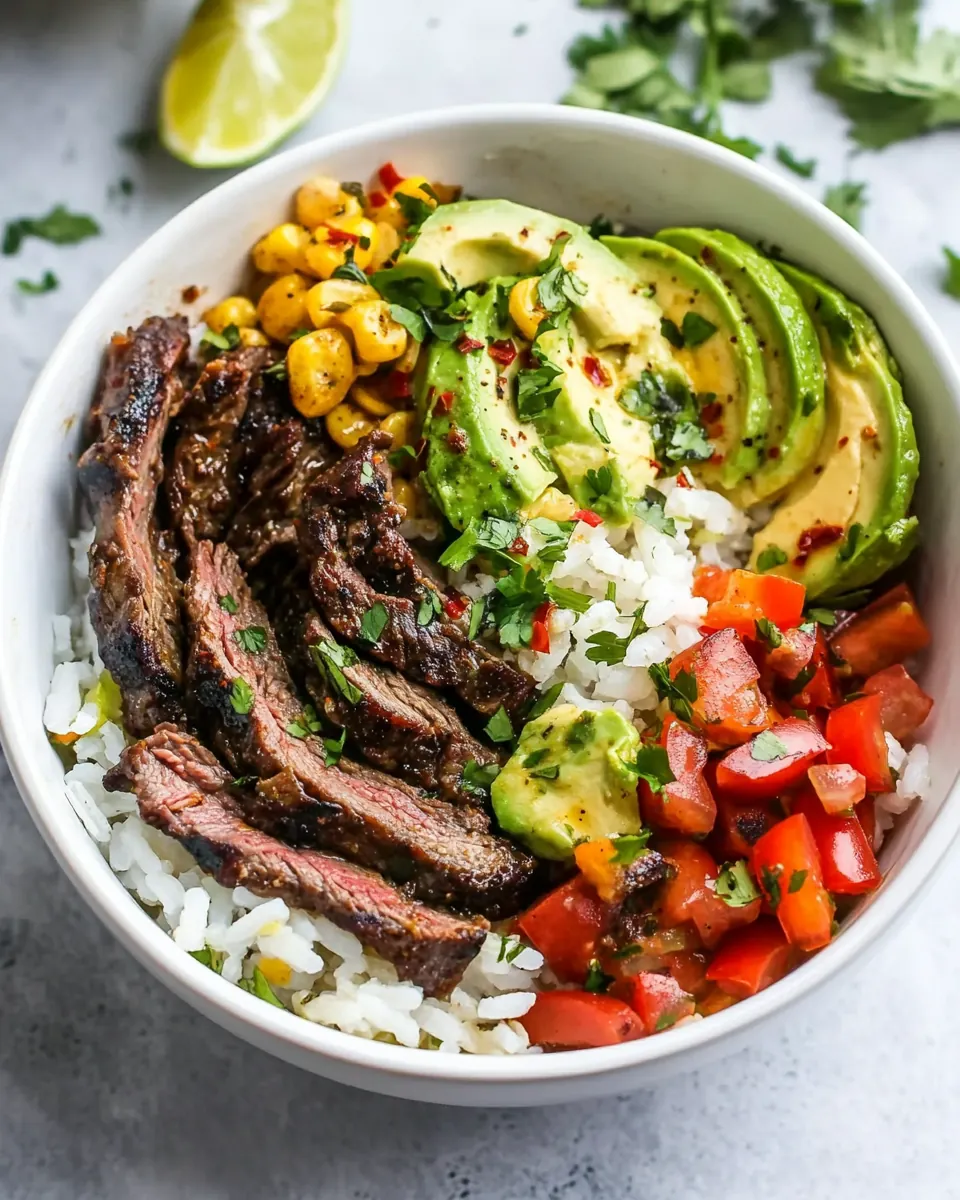
Chipotle Steak Rice Bowls came into my weeknight rotation the minute I figured out a quick way to coax deep, smoky flavor from a simple cut of steak and a handful of pantry spices. The first time I tossed the steak into a ziploc with a lime and soy based marinade, I had no idea how much of a difference that little rest would make. The steak turned out tender, with a crust that sang when it hit the hot skillet, and the peppers and onions brought a sweet, caramelized counterpoint that made every bite feel balanced and alive.
There is a memory tied to this bowl for me, one that involves a scraped together dinner between shifts and a friend who declared it restaurant worthy while leaning over my tiny kitchen counter. I remember the steam rising as I sliced the steak, the bright hit of fresh lime, and the satisfying clink of rice into warm bowls. Over time I adjusted the spice blend, learning when to hold back the chile so the lime could beam through, and how to let the vegetables keep a little snap underfoot.
Recipe Snapshot
40 mins
15 mins
25 mins
Easy
600 kcal
Mexican
Gluten-Free, Keto
Dinner
12-inch skillet, Large ziplock bag, Cutting board, Sharp knife
The Beauty of This Chipotle Steak Rice Bowls
Bold Smoky Flavor Without Fuss
I love how Chipotle Steak Rice Bowls delivers a smoky, slightly spicy profile using pantry staples, so you can get big flavor without racing to the specialty store. The chipotle powder is the star, giving that classic smoky warmth while the cumin and smoked paprika deepen the backbone. I always appreciate recipes that let a single seasoning blend carry the narrative, and this one does it confidently.
Fast Enough for Weeknights
For busy evenings, this dish is a revelation. The marinade and skillet method means the steak needs only a short sear to reach a juicy finish, and the peppers and onions cook quickly in the same pan, saving time and cleanup. I find it satisfying to pull dinner together in the same amount of time it would take to wait on takeout, with a far better payoff.
Customizable Bowls for Everyone
One of the main reasons I return to these bowls is how adaptable they are. Swap rice varieties, choose your favorite toppings, and dial the spice up or down, and you still get a cohesive meal. When friends come over, I love setting out small bowls of toppings so everyone can personalize theirs. It turns dinner into a small celebration without a lot of effort.
Great Texture Contrast
The contrast between tender, thinly sliced steak and slightly charred peppers and onions is deeply satisfying. The steak gives you chew and richness, while the vegetables offer brightness and crunch. That interplay is what makes each forkful interesting, and why this dish never feels one note to me.
Comfort That Travels Well
I often pack leftovers for lunch and they hold up beautifully. The rice soaks up juices without becoming soggy, and a quick rewarm on the stove revives the steak and vegetables. This reliability makes it a practical, flavorful choice for meal prep and busy days.
Chipotle Steak Rice Bowls Shopping List
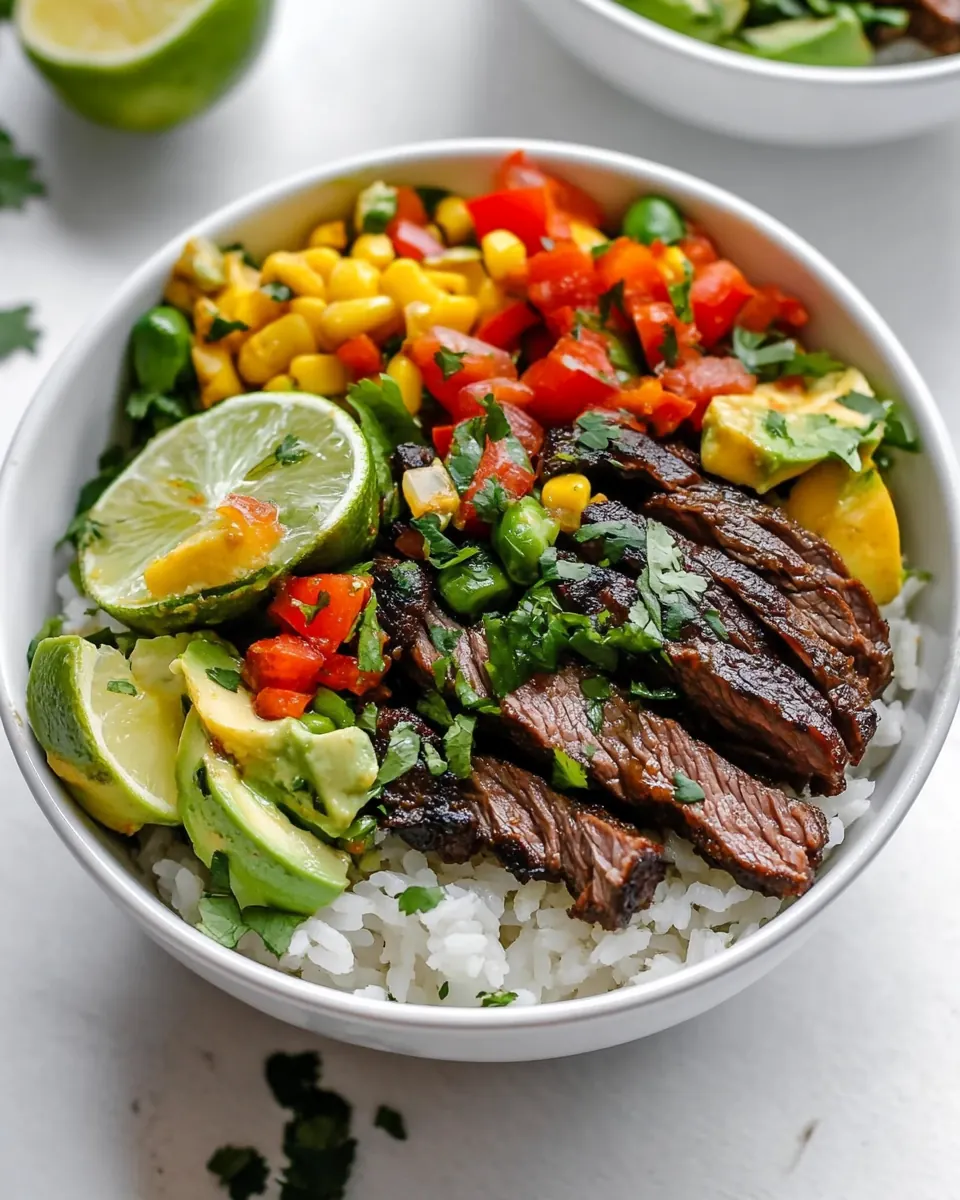
These ingredients are built around a simple philosophy: bold seasoning, good fat, fresh acid, and contrasting textures. The key players are the seasoning blend that defines the bowl, the flank or skirt steak for meaty satisfaction, and the bell pepper and red onion for their bright, caramelized notes. Together they create a balanced, hearty bowl that feels both fresh and indulgent.
- 1 1/2 teaspoons chipotle chili pepper powder: Provide smoky heat and earthy depth; brown and toast briefly before mixing into rubs to release aroma and build a layered chipotle flavor in the steak seasoning.
- 1 teaspoon cumin: Offer warm, slightly citrusy notes; toast lightly for enhanced fragrance and blend into the spice mix to complement the chipotle and anchor the meat's savory profile.
- 1 teaspoon garlic powder: Contribute pungent, savory garlic flavor; sprinkle evenly into the seasoning blend or rub to add aromatic complexity and help form a robust umami backbone for the steak.
- 1/2 teaspoon onion powder: Add mild onion sweetness and savory balance; incorporate into the dry rub to round out sharper spices and support the overall depth of the steak seasoning.
- 1/2 teaspoon smoked paprika: Impart gentle smokiness and a subtle sweet pepper note; mix into the spice blend to enhance the grilled character and harmonize with chipotle and paprika tones.
- 1/4 teaspoon salt: Provide essential seasoning and flavor enhancement; dissolve into marinades or rubs to heighten other spices and ensure the steak and vegetables taste well-balanced.
- 1/8 teaspoon ground black pepper: Introduce a subtle bite and complexity; grind fresh or measure precisely into the seasoning to brighten flavors without overpowering the mix.
- 1 1/2 pounds flank or skirt steak: Serve as the primary protein and flavor canvas; trim excess fat if desired, marinate or rub with spices, and sear hot for a tender, flavorful result best sliced against the grain.
- 3 tablespoons olive oil divided: Act as a cooking fat and marinade vehicle; divide between searing the steak and sautéing peppers and onions to promote browning and carry flavors evenly across ingredients.
- 3 tablespoons fresh lime juice divided: Deliver bright acidity and tenderizing effects; divide between a marinade for the steak and a finishing drizzle to lift flavors and balance richness in the rice bowls.
- 1 teaspoon low sodium soy sauce: Add a saline, umami note in small measure; include in the marinade to enhance savory depth without making the steak overly salty, complementing the citrus and spices.
- 1 cup sliced red onion sliced into 1/4-inch strips: Provide sharp, slightly sweet crunch and color; slice into strips and sauté or char briefly to add texture, mild piquancy, and visual contrast in the bowls.
- 3 cups sliced bell pepper of any color sliced into 1/4-inch strips: Bring sweet, crisp vegetable body and vibrant color; cut into 1/4-inch strips and cook with onions to create tender-crisp pepper ribbons that pair with the seasoned steak.
- 1 2 tablespoons unsalted butter: Contribute rich, silky flavor and aid in browning; add during vegetable sautéing as desired to create a glossy finish and enrich mouthfeel in the pepper–onion mix.
- 2 cups cooked white or brown rice: Serve as the carbohydrate base to fill bowls and absorb flavors; warm cooked rice before assembling so it soaks up steak juices and ties components together.
- avocado slices, chopped fresh cilantro, grilled (or roasted corn, guacamole, sour cream, jalapeno slices, roasted or grilled corn, Pico de Gallo: Offer optional toppings and garnishes that add creaminess, freshness, and brightness; assemble avocado, cilantro, grilled corn, guacamole, sour cream, jalapeño slices, and pico de gallo as desired to customize each bowl.
Making This Chipotle Steak Rice Bowls
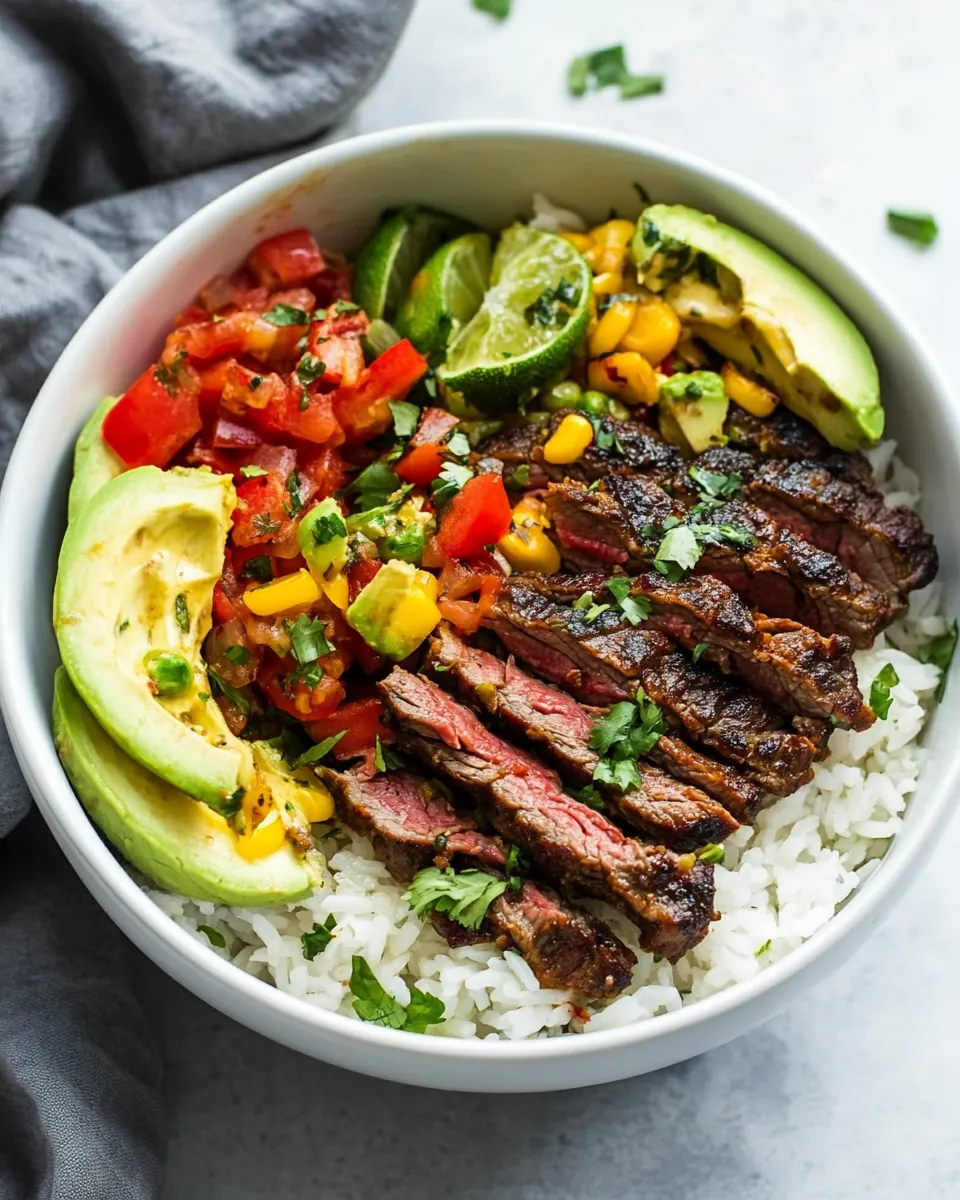
I like to think of the cooking as a short performance, where timing and temperature create dramatic results. These steps are built to move you through seasoning, marinating, cooking vegetables, searing steak, and assembling bowls in a smooth flow. Keep your pan hot, your ingredients organized, and you will be rewarded with layers of aroma and texture.
- In a small bowl, combine 1 1/2 teaspoons chipotle chili pepper powder, 1 teaspoon cumin, 1 teaspoon garlic powder, 1/2 teaspoon onion powder, 1/2 teaspoon smoked paprika, 1/4 teaspoon salt, and 1/8 teaspoon ground black pepper. Reserve 1 1/2 teaspoons of this seasoning for the vegetables.: The air will fill with warm, smoky notes as the spices mingle, and you will notice the toasted aroma of the cumin and smoked paprika, which signals a deep flavor foundation. Grinding or whisking these together ensures even distribution so each bite tastes balanced. A common mistake is adding the spices directly to the meat while clumpy, which can lead to uneven patches of heat, so make sure the mix is uniform and free of lumps.
- In a large ziplock bag, combine 2 tablespoons of the 3 tablespoons olive oil, 3 tablespoons fresh lime juice, 1 teaspoon low sodium soy sauce, and the fajita seasoning that has not been reserved for the vegetables. Add 1 1/2 pounds flank or skirt steak and press all of the air from the bag before sealing it to allow the flavors to meld with the steak. Allow it to sit while you prepare the vegetables.: That reserved portion will give the peppers and onions a direct line of flavor, preventing them from tasting bland next to the steak. By spreading the seasoning between meat and vegetables, you create continuity across the bowl. Avoid the trap of overseasoning the vegetables at this stage, which can mask their natural sweetness; a delicate hand keeps the balance.
- Heat the remaining olive oil in a 12-inch skillet over medium-high heat. Add 1 cup sliced red onion and allow to cook for 3-4 minutes or until softened and fragrant. Add 3 cups sliced bell peppers of any color and sprinkle with the reserved 1 1/2 teaspoons of fajita seasoning. If you like the peppers with a little crunch, cook them for about 2-3 minutes. And if you like them softer, cook them for about 5-6 minutes. Remove the peppers and onions from the skillet and reserve on a plate or in a bowl.: You will smell the citrus brightening the marinade immediately, which helps tenderize and flavor the meat. Liquids disperse the spices so they cling to the steak, promoting even browning in the skillet. One mistake is using too little oil, which can prevent good contact between seasoning and meat, so be sure the steak is well coated.
- Melt 1-2 tablespoons unsalted butter on the same skillet and add the steak. Cook for 3-4 minutes for medium-rare, or longer depending on how you like your steak. Flip the steak and cook for another 3-4 minutes. Once finished, transfer the steak to a cutting board and cover with foil. Let it rest for 5 minutes before slicing it into strips.: Massaging the bag helps the marinade penetrate the surface, and the lime juice will start to slightly tenderize the exterior. You should notice the meat taking on a glossy sheen, which is a visual cue that it is ready to absorb heat evenly. Leaving the steak in the marinade for at least several minutes is helpful, but avoid excessively long marinating times with high acid, which can alter texture into an undesirable mushiness.
- Fill bowls with 2 cups cooked white or brown rice and top with the steak, onions, and peppers.: Give yourself a moment here to slice and organize, because prepping first prevents rushing the cooking stage. Preparing the vegetables while the steak rests keeps the workflow efficient and ensures everything hits the skillet at the right time. A common misstep is multitasking too much, which can leave the pan cold when you start cooking and diminish the sear.
- Top with your desired topping and enjoy immediately.: The oil will shimmer when hot and deliver an immediate sizzle when food hits the pan, signaling the right temperature for good caramelization. A properly heated pan creates a Maillard crust on the vegetables and later on the steak, which adds complexity. Do not crowd the pan, as that will steam ingredients instead of browning them.
- Add 1 cup sliced red onion and allow to cook for 3 to 4 minutes or until softened and fragrant: You will smell sweetness building as the onion softens, and the edges will start to show golden color. Softened onion provides a tender, aromatic base for the peppers, and cooking them first helps marry flavors. Avoid burning by adjusting the heat; scorched onion tastes bitter and can overwhelm the dish.
- Add 3 cups sliced bell peppers of any color and sprinkle with the reserved 1 1/2 teaspoons of fajita seasoning: The peppers will hiss and release a bright vegetal aroma, and the seasoning will bloom, coating each strip. For a crunchier texture, cook for about 2 to 3 minutes, and for softer peppers cook about 5 to 6 minutes, giving you control over bite. Overcooking can lead to mushy peppers, so keep an eye on color and texture.
- Remove the peppers and onions from the skillet and reserve on a plate or in a bowl: Letting the vegetables rest off heat prevents them from continuing to cook in the hot pan and keeps their texture intact. The resting step also clears the pan for a targeted steak sear. A common mistake is leaving them in the hot skillet where residual heat will over soften them.
- Melt 1 to 2 tablespoons unsalted butter on the same skillet and add the steak: The butter will brown slightly and add a nutty aroma as the steak hits the pan, contributing a glossy finish to the sear. Hearing the intense sizzle is your cue that the pan is hot enough to form an appealing crust. Avoid flipping too often, which prevents a proper sear and reduces the flavorful crust development.
- Cook for 3 to 4 minutes for medium rare, or longer depending on how you like your steak: You will notice a deepening of the crust color and a concentrated meaty smell as the steak cooks; that crust traps juices, keeping the interior tender. Use touch or a thermometer to check doneness, because visual cues can be deceiving. Overcooking is the most frequent error here, which turns a juicy flank or skirt into a tough bite, so err on the side of slightly underdone if you plan to rest and slice thinly.
- Flip the steak and cook for another 3 to 4 minutes: The second side will develop its own crust and finish the cooking process. When both sides have good color, you will start to smell caramelized meat and fat, a sign that Maillard reactions are at work. Resist poking the meat frequently, which releases juices and dries the steak.
- Once finished, transfer the steak to a cutting board and cover with foil: Resting for about 5 minutes lets the juices redistribute, so the meat stays moist when sliced. You will see the steak relax and the carryover heat gently finish the interior. Cutting too soon causes juices to spill onto the board, leaving the slices dryer than intended.
- Let it rest for 5 minutes before slicing it into strips: Rested meat slices more cleanly and reveals tender, evenly colored interiors. Use a sharp knife to cut across the grain into thin strips for the most tender bite. Slicing with the grain is a common novice mistake that yields chewier pieces.
- Fill bowls with 2 cups cooked white or brown rice and top with the steak, onions, and peppers: The warm rice soaks up steak juices and provides a neutral canvas that amplifies the seasoned components. Layering this way keeps textures distinct while allowing flavors to mingle when you eat. Avoid cold rice straight from the fridge unless you intend to reheat it well, as cool rice will mute the overall warmth of the bowl.
- Top with your desired topping and enjoy immediately: Fresh toppings like avocado slices or chopped cilantro bring cooling and bright notes, balancing the smoky punch of the steak. Serving immediately preserves the contrast between warm components and cool garnishes. Letting the bowls sit too long can make the rice soggy and the vegetables lose their vibrancy.
Ways to Adapt This Recipe
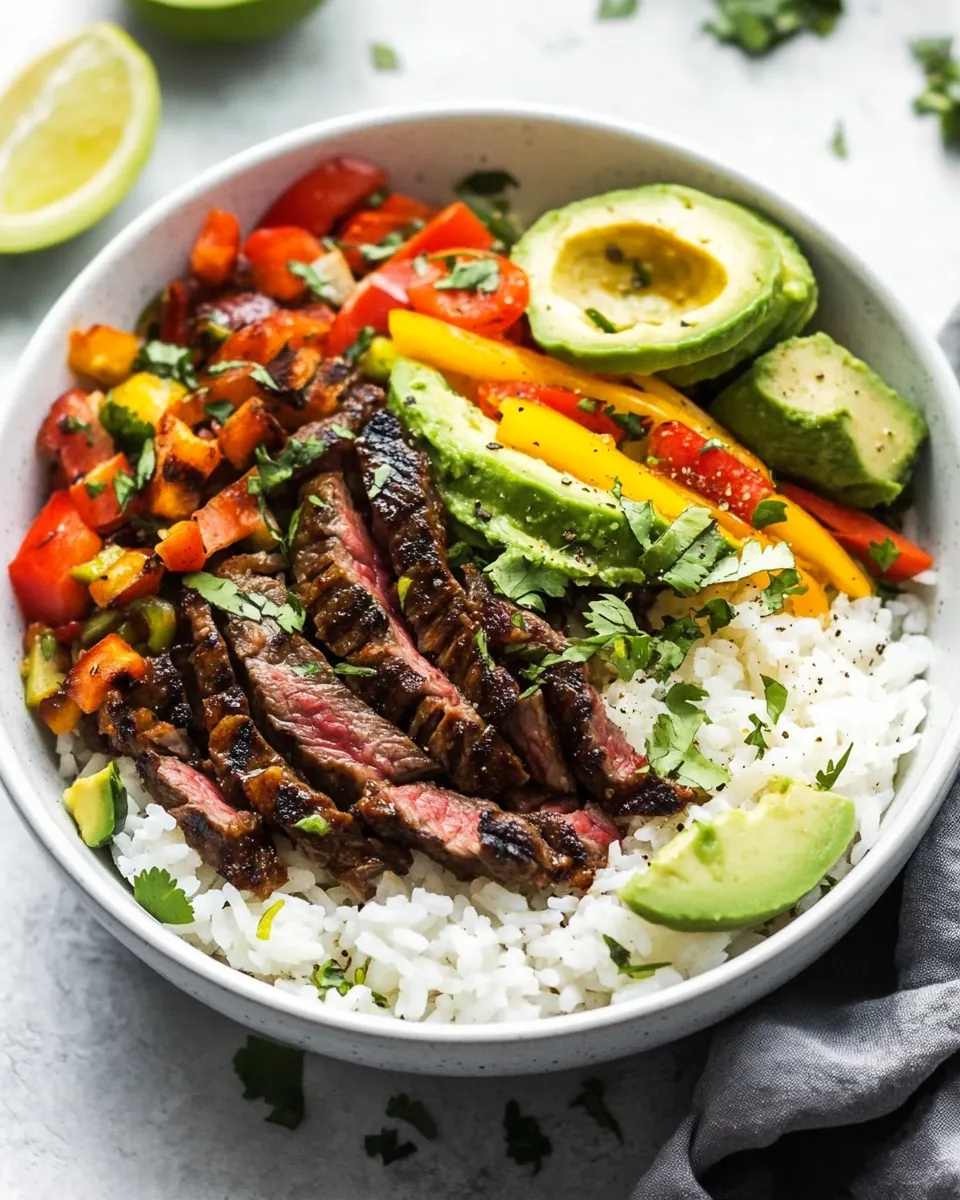
These adaptation tips help you tailor Chipotle Steak Rice Bowls to your pantry and preferences, whether you want it lighter, spicier, or ready for meal prep. Below are practical ideas to change up textures and flavors while keeping the core identity of the bowl intact.
- Make it milder by reducing the chipotle chili pepper powder to 3/4 teaspoon and emphasizing lime juice for brightness, which keeps the smoky notes but lowers the heat.
- Use brown rice for extra fiber if you prefer a nuttier base that holds up well to reheating, though it may need slightly more liquid and longer cooking time than white rice.
- Boost creaminess by adding avocado slices or a dollop of guacamole at service, which balances the spice and adds a rich mouthfeel without changing the cooking process.
- Make it a meal prep hero by packing rice, steak, and vegetables separately and assembling fresh toppings at lunch to keep textures bright and vibrant.
- Enhance umami with a splash of low sodium soy sauce in the marinade, which deepens savory notes without increasing saltiness if you choose low sodium varieties.
How to Enjoy Chipotle Steak Rice Bowls
Serving these bowls is fun because they suit casual weeknight dinners as well as more festive gatherings. The rice holds everything, and the toppings let you customize each bowl for different palates. Below are ways I enjoy them and suggestions for occasions and storage.
- Serve family style by placing steak, vegetables, and toppings on the table for everyone to assemble their own bowl, making it ideal for relaxed dinners with friends.
- Lunch meal prep by portioning cooked rice, steak strips, and vegetables into containers and keeping toppings separate to preserve texture and freshness throughout the week.
- Casual dinner night for busy weeknights when you want a satisfying, balanced plate without a lot of fuss, because the skillet method is quick and reliable.
- Celebrate outdoor seasons like summer by swapping skillet sear for grill marks if you want a charred flavor, and serve with grilled corn or Pico de Gallo for a seasonal touch.
- Storage tips include refrigerating components in airtight containers for up to four days, reheating gently on the stove to preserve steak texture, and adding fresh toppings just before serving to keep contrasts crisp.
FAQ
Conclusion
What makes these Chipotle Steak Rice Bowls special is the way bold smoky seasoning meets quick, high heat cooking to produce tender, flavorful steak paired with vibrant vegetables. Give this recipe a try because it’s fast enough for busy nights, adaptable for different tastes, and satisfying enough to become a regular in your weeknight lineup. I hope you enjoy the ease and depth of flavor this bowl brings, and that it becomes one of those meals you return to again and again.
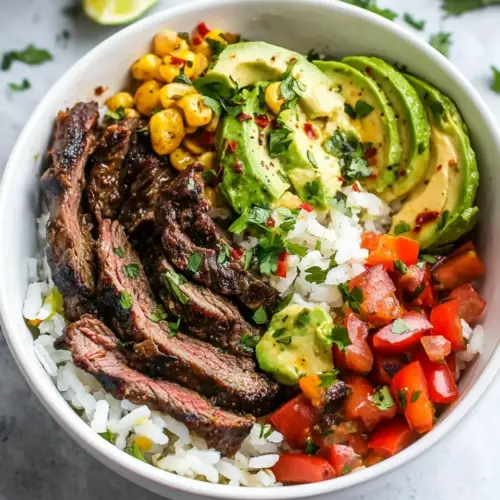
Chipotle Steak Rice Bowls
Equipment
- 12-inch skillet
- Large ziplock bag
- Cutting Board
- Sharp Knife
Ingredients
- 1 1/2 teaspoons chipotle chili pepper powder Provide smoky heat and earthy depth; brown and toast briefly before mixing into rubs to release aroma and build a layered chipotle flavor in the steak seasoning.
- 1 teaspoon cumin Offer warm, slightly citrusy notes; toast lightly for enhanced fragrance and blend into the spice mix to complement the chipotle and anchor the meat's savory profile.
- 1 teaspoon garlic powder Contribute pungent, savory garlic flavor; sprinkle evenly into the seasoning blend or rub to add aromatic complexity and help form a robust umami backbone for the steak.
- 1/2 teaspoon onion powder Add mild onion sweetness and savory balance; incorporate into the dry rub to round out sharper spices and support the overall depth of the steak seasoning.
- 1/2 teaspoon smoked paprika Impart gentle smokiness and a subtle sweet pepper note; mix into the spice blend to enhance the grilled character and harmonize with chipotle and paprika tones.
- 1/4 teaspoon salt Provide essential seasoning and flavor enhancement; dissolve into marinades or rubs to heighten other spices and ensure the steak and vegetables taste well-balanced.
- 1/8 teaspoon ground black pepper Introduce a subtle bite and complexity; grind fresh or measure precisely into the seasoning to brighten flavors without overpowering the mix.
- 1 1/2 pounds flank or skirt steak Serve as the primary protein and flavor canvas; trim excess fat if desired, marinate or rub with spices, and sear hot for a tender, flavorful result best sliced against the grain.
- 3 tablespoons olive oil divided Act as a cooking fat and marinade vehicle; divide between searing the steak and sautéing peppers and onions to promote browning and carry flavors evenly across ingredients.
- 3 tablespoons fresh lime juice divided Deliver bright acidity and tenderizing effects; divide between a marinade for the steak and a finishing drizzle to lift flavors and balance richness in the rice bowls.
- 1 teaspoon low sodium soy sauce Add a saline, umami note in small measure; include in the marinade to enhance savory depth without making the steak overly salty, complementing the citrus and spices.
- 1 cup sliced red onion sliced into 1/4-inch strips Provide sharp, slightly sweet crunch and color; slice into strips and sauté or char briefly to add texture, mild piquancy, and visual contrast in the bowls.
- 3 cups sliced bell pepper of any color sliced into 1/4-inch strips Bring sweet, crisp vegetable body and vibrant color; cut into 1/4-inch strips and cook with onions to create tender-crisp pepper ribbons that pair with the seasoned steak.
- 1 -2 tablespoons unsalted butter Contribute rich, silky flavor and aid in browning; add during vegetable sautéing as desired to create a glossy finish and enrich mouthfeel in the pepper-onion mix.
- 2 cups cooked white or brown rice Serve as the carbohydrate base to fill bowls and absorb flavors; warm cooked rice before assembling so it soaks up steak juices and ties components together.
- avocado slices, chopped fresh cilantro, grilled (or roasted corn, guacamole, sour cream, jalapeno slices, roasted or grilled corn, Pico de Gallo Offer optional toppings and garnishes that add creaminess, freshness, and brightness; assemble avocado, cilantro, grilled corn, guacamole, sour cream, jalapeño slices, and pico de gallo as desired to customize each bowl.
Instructions
- In a small bowl, combine 1 1/2 teaspoons chipotle chili pepper powder, 1 teaspoon cumin, 1 teaspoon garlic powder, 1/2 teaspoon onion powder, 1/2 teaspoon smoked paprika, 1/4 teaspoon salt, and 1/8 teaspoon ground black pepper. Reserve 1 1/2 teaspoons of this seasoning for the vegetables.: The air will fill with warm, smoky notes as the spices mingle, and you will notice the toasted aroma of the cumin and smoked paprika, which signals a deep flavor foundation. Grinding or whisking these together ensures even distribution so each bite tastes balanced. A common mistake is adding the spices directly to the meat while clumpy, which can lead to uneven patches of heat, so make sure the mix is uniform and free of lumps.
- In a large ziplock bag, combine 2 tablespoons of the 3 tablespoons olive oil, 3 tablespoons fresh lime juice, 1 teaspoon low sodium soy sauce, and the fajita seasoning that has not been reserved for the vegetables. Add 1 1/2 pounds flank or skirt steak and press all of the air from the bag before sealing it to allow the flavors to meld with the steak. Allow it to sit while you prepare the vegetables.: That reserved portion will give the peppers and onions a direct line of flavor, preventing them from tasting bland next to the steak. By spreading the seasoning between meat and vegetables, you create continuity across the bowl. Avoid the trap of overseasoning the vegetables at this stage, which can mask their natural sweetness; a delicate hand keeps the balance.
- Heat the remaining olive oil in a 12-inch skillet over medium-high heat. Add 1 cup sliced red onion and allow to cook for 3-4 minutes or until softened and fragrant. Add 3 cups sliced bell peppers of any color and sprinkle with the reserved 1 1/2 teaspoons of fajita seasoning. If you like the peppers with a little crunch, cook them for about 2-3 minutes. And if you like them softer, cook them for about 5-6 minutes. Remove the peppers and onions from the skillet and reserve on a plate or in a bowl.: You will smell the citrus brightening the marinade immediately, which helps tenderize and flavor the meat. Liquids disperse the spices so they cling to the steak, promoting even browning in the skillet. One mistake is using too little oil, which can prevent good contact between seasoning and meat, so be sure the steak is well coated.
- Melt 1-2 tablespoons unsalted butter on the same skillet and add the steak. Cook for 3-4 minutes for medium-rare, or longer depending on how you like your steak. Flip the steak and cook for another 3-4 minutes. Once finished, transfer the steak to a cutting board and cover with foil. Let it rest for 5 minutes before slicing it into strips.: Massaging the bag helps the marinade penetrate the surface, and the lime juice will start to slightly tenderize the exterior. You should notice the meat taking on a glossy sheen, which is a visual cue that it is ready to absorb heat evenly. Leaving the steak in the marinade for at least several minutes is helpful, but avoid excessively long marinating times with high acid, which can alter texture into an undesirable mushiness.
- Fill bowls with 2 cups cooked white or brown rice and top with the steak, onions, and peppers.: Give yourself a moment here to slice and organize, because prepping first prevents rushing the cooking stage. Preparing the vegetables while the steak rests keeps the workflow efficient and ensures everything hits the skillet at the right time. A common misstep is multitasking too much, which can leave the pan cold when you start cooking and diminish the sear.
- Top with your desired topping and enjoy immediately.: The oil will shimmer when hot and deliver an immediate sizzle when food hits the pan, signaling the right temperature for good caramelization. A properly heated pan creates a Maillard crust on the vegetables and later on the steak, which adds complexity. Do not crowd the pan, as that will steam ingredients instead of browning them.
- Add 1 cup sliced red onion and allow to cook for 3 to 4 minutes or until softened and fragrant: You will smell sweetness building as the onion softens, and the edges will start to show golden color. Softened onion provides a tender, aromatic base for the peppers, and cooking them first helps marry flavors. Avoid burning by adjusting the heat; scorched onion tastes bitter and can overwhelm the dish.
- Add 3 cups sliced bell peppers of any color and sprinkle with the reserved 1 1/2 teaspoons of fajita seasoning: The peppers will hiss and release a bright vegetal aroma, and the seasoning will bloom, coating each strip. For a crunchier texture, cook for about 2 to 3 minutes, and for softer peppers cook about 5 to 6 minutes, giving you control over bite. Overcooking can lead to mushy peppers, so keep an eye on color and texture.
- Remove the peppers and onions from the skillet and reserve on a plate or in a bowl: Letting the vegetables rest off heat prevents them from continuing to cook in the hot pan and keeps their texture intact. The resting step also clears the pan for a targeted steak sear. A common mistake is leaving them in the hot skillet where residual heat will over soften them.
- Melt 1 to 2 tablespoons unsalted butter on the same skillet and add the steak: The butter will brown slightly and add a nutty aroma as the steak hits the pan, contributing a glossy finish to the sear. Hearing the intense sizzle is your cue that the pan is hot enough to form an appealing crust. Avoid flipping too often, which prevents a proper sear and reduces the flavorful crust development.
- Cook for 3 to 4 minutes for medium rare, or longer depending on how you like your steak: You will notice a deepening of the crust color and a concentrated meaty smell as the steak cooks; that crust traps juices, keeping the interior tender. Use touch or a thermometer to check doneness, because visual cues can be deceiving. Overcooking is the most frequent error here, which turns a juicy flank or skirt into a tough bite, so err on the side of slightly underdone if you plan to rest and slice thinly.
- Flip the steak and cook for another 3 to 4 minutes: The second side will develop its own crust and finish the cooking process. When both sides have good color, you will start to smell caramelized meat and fat, a sign that Maillard reactions are at work. Resist poking the meat frequently, which releases juices and dries the steak.
- Once finished, transfer the steak to a cutting board and cover with foil: Resting for about 5 minutes lets the juices redistribute, so the meat stays moist when sliced. You will see the steak relax and the carryover heat gently finish the interior. Cutting too soon causes juices to spill onto the board, leaving the slices dryer than intended.
- Let it rest for 5 minutes before slicing it into strips: Rested meat slices more cleanly and reveals tender, evenly colored interiors. Use a sharp knife to cut across the grain into thin strips for the most tender bite. Slicing with the grain is a common novice mistake that yields chewier pieces.
- Fill bowls with 2 cups cooked white or brown rice and top with the steak, onions, and peppers: The warm rice soaks up steak juices and provides a neutral canvas that amplifies the seasoned components. Layering this way keeps textures distinct while allowing flavors to mingle when you eat. Avoid cold rice straight from the fridge unless you intend to reheat it well, as cool rice will mute the overall warmth of the bowl.
- Top with your desired topping and enjoy immediately: Fresh toppings like avocado slices or chopped cilantro bring cooling and bright notes, balancing the smoky punch of the steak. Serving immediately preserves the contrast between warm components and cool garnishes. Letting the bowls sit too long can make the rice soggy and the vegetables lose their vibrancy.
Notes
- Make it milder by reducing the chipotle chili pepper powder to 3/4 teaspoon and emphasizing lime juice for brightness, which keeps the smoky notes but lowers the heat.
- Use brown rice for extra fiber if you prefer a nuttier base that holds up well to reheating, though it may need slightly more liquid and longer cooking time than white rice.
- Boost creaminess by adding avocado slices or a dollop of guacamole at service, which balances the spice and adds a rich mouthfeel without changing the cooking process.
- Make it a meal prep hero by packing rice, steak, and vegetables separately and assembling fresh toppings at lunch to keep textures bright and vibrant.
- Enhance umami with a splash of low sodium soy sauce in the marinade, which deepens savory notes without increasing saltiness if you choose low sodium varieties.