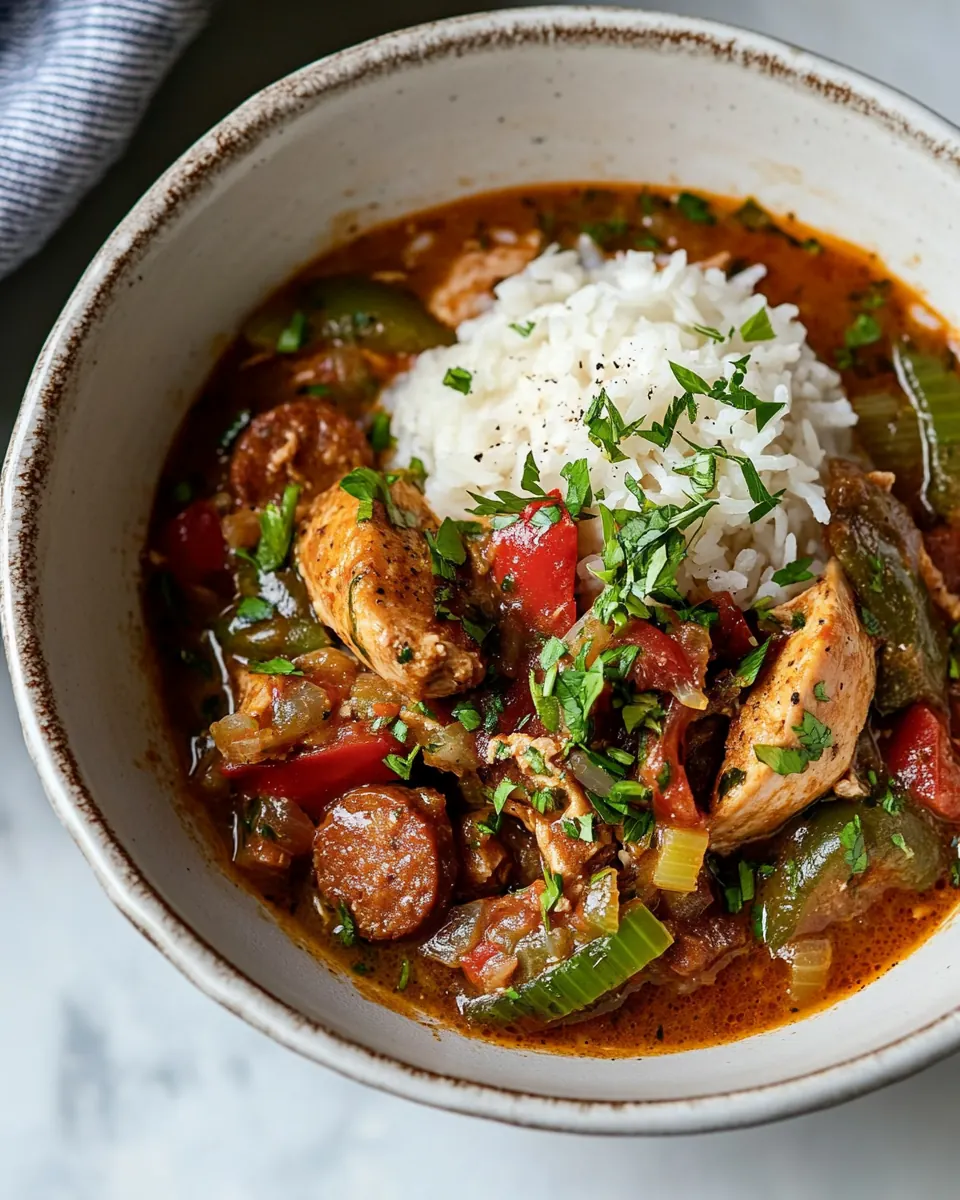
Chicken and Sausage Gumbo
Chicken and Sausage Gumbo has been my go to when I want food that feels like a warm family hug after a long day.
I first learned to make this stew on a blustery evening in fall, the kind of night that begs for something simmered low and slow while the house fills with savory steam. I remember the kitchen windows fogging up as the aroma of a dark roux mingled with sizzling sausage and sweet bell pepper. Each spoonful felt like a small celebration, and I loved how the textures played together, the tender chicken against the heft of sliced andouille sausage, all spooned over steaming white rice.
Over the years I tuned the seasoning so it sings without overwhelming, and I learned small rituals that make the difference, like letting the gumbo rest so the flavors marry, and shredding the chicken into generous pieces so every bite has bite and comfort. Friends always ask for the recipe when they taste it, and I usually answer with a story about the first time I burned a roux and swore never to rush it again. This dish has a neighborhood of memories attached to it, from late night conversations to big family dinners, and it keeps showing up whenever we need something soulful and sustaining.
Recipe Snapshot
1 hr 20 mins
20 mins
60 mins
Medium
550 kcal
American
Gluten-Free, Low FODMAP
Dinner
Large soup pot, Tongs, Two forks
The Appeal of This Chicken and Sausage Gumbo
Deep, layered flavor from the roux
I love a true gumbo because the roux builds a base of toasty, nutty flavor you just cannot fake. When you watch a roux turn from tan to chocolate, you are coaxing complexity out of simple pantry staples, and that patience pays dividends in aroma and depth.
Textural contrast that comforts
The combination of tender shredded chicken, chewy andouille sausage, and the slight sliminess of cooked okra gives this gumbo an irresistible mouthfeel. I always appreciate a dish that keeps you interested bite to bite.
Make ahead magic
I am a huge fan of recipes that improve with time. Letting the gumbo rest, even overnight, allows the spices and aromatics to meld so the second day tastes even richer. That convenience makes it perfect for hosting or batch cooking.
Simple ingredient harmony
There is a clear chorus of players here. The holy trinity of bell peppers, onion, and celery anchors the savory profile, while bay leaves, thyme, and Cajun seasoning provide lift and regional authenticity. I truly appreciate how straightforward components combine into something greater than the sum of its parts.
Comfort for a crowd
This gumbo scales beautifully, and because it keeps well you can feed a table without last minute panic. I often make a big pot when friends are coming over, knowing it will be welcomed, reheated, and loved.
Chicken and Sausage Gumbo Shopping List
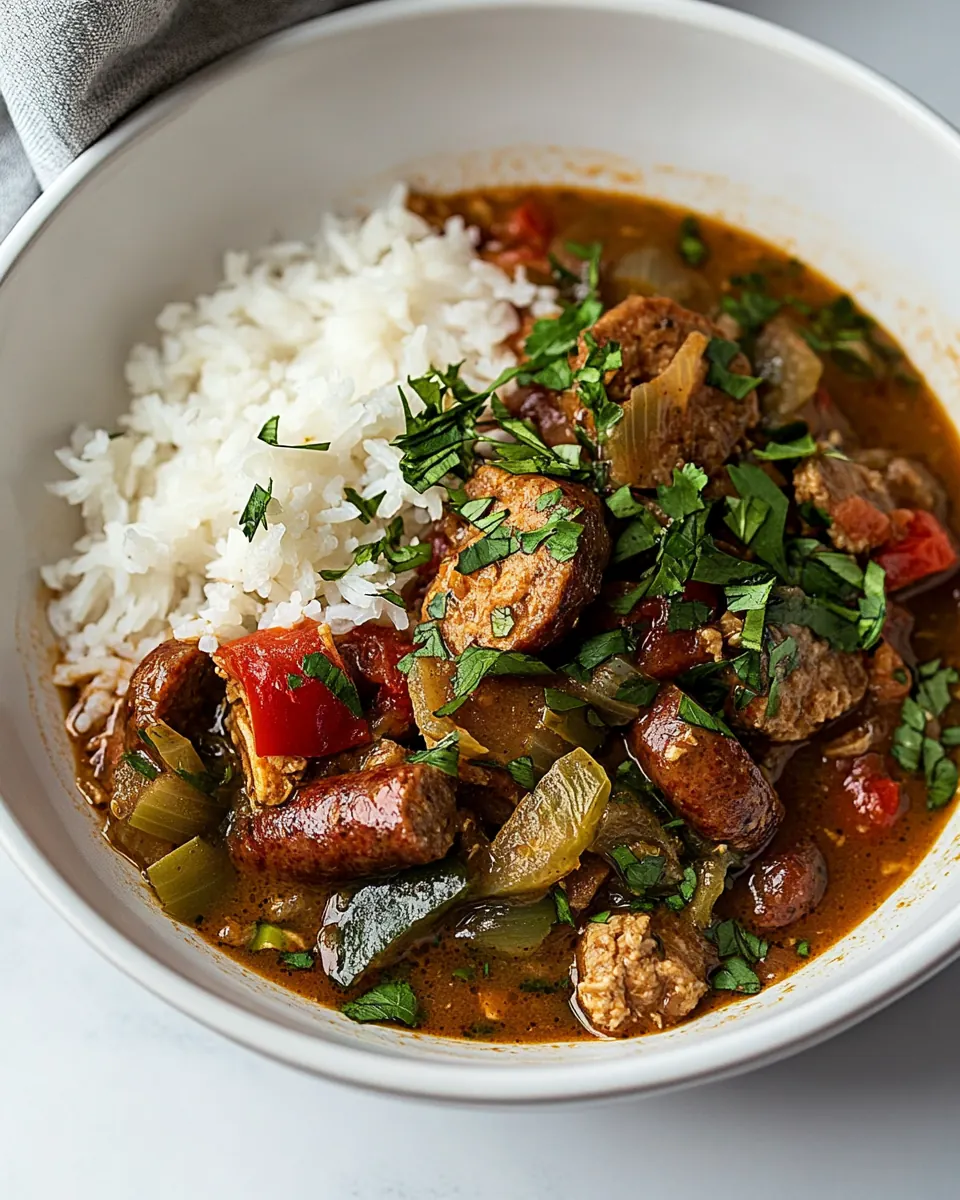
I think of the ingredient list as a small cast of characters where each one has a job. The roux components bring depth, the proteins give substance, and the vegetables add brightness and texture. Together they create a bowl that is both grounding and complex, so gather your key players and give them room to shine.
- 1/4 cup butter: Melted to create a rich base and help brown the roux; provides a silky mouthfeel and carries flavors throughout the gumbo. Adds a subtle dairy richness that balances the spice and acidity from other ingredients.
- 2 tablespoons canola oil: Heated to increase smoking point for the roux and sautéing vegetables; contributes neutral fat to prevent burning while blending flavors. Helps achieve an even browning of the flour and vegetables without overwhelming the dish.
- 1/2 cup all-purpose flour: Whisked into fat to make a roux that thickens the gumbo; slowly cooked to a deep brown for a nutty, complex flavor. Controls the final viscosity and provides a foundational toasted flavor characteristic of classic gumbo.
- 2 pounds boneless chicken thighs or breasts: Trimmed and seared to develop savory depth and tender texture; contributes substantial protein and richness to the stew. Simmered until fully cooked and infused with spices, it complements the sausage and absorbs the gumbo’s flavors.
- 1 pound andouille sausage sliced into 1/4 inch rounds: Sliced and browned to release smoky, spicy fat and add a robust, hearty flavor; pairs with chicken to create classic gumbo contrast. Its rendered oils enrich the broth and enhance the overall savory profile.
- 2 bell peppers green and red, diced: Diced and sautéed as part of the trinity for aromatic backbone and slight sweetness; adds color and fresh pepper flavor. Balances the richer meats and thick roux with vegetal brightness and texture.
- 1 large onion diced: Chopped and cooked in the trinity to provide sweet, savory depth and body; softens into the sauce and helps build umami. Releases natural sugars that caramelize slightly while sautéing, enhancing overall flavor complexity.
- 1 cup diced celery: Diced and sweated alongside onion and peppers to round out the holy trinity; adds subtle earthiness and crisp texture when lightly cooked. Contributes aromatic complexity and helps absorb seasonings and broth.
- 3 5 cloves garlic minced: Minced and added near the start or toward the end for sharp pungency and aroma; brightens the gumbo with garlicky depth. Integrates quickly into the roux and broth, amplifying savory notes without overpowering.
- 4 cups chicken broth or water: Poured to deglaze the pan and form the cooking liquid; supplies the main braising medium for proteins and vegetables. Choice of stock or water affects flavor intensity, with broth adding more savory depth to the gumbo.
- 2 cups frozen cut okra: Added to provide traditional gumbo texture and subtle vegetal flavor; helps thicken the stew as okra releases mucilage when cooked. Frozen cut form offers convenience and consistent pieces that absorb seasonings well.
- 15 ounce can diced tomatoes: Stirred in to add acidity, sweetness, and chunky tomato texture; balances richness and deepens the sauce color. Provides acidity that brightens flavors and complements the spicy, smoky components of the dish.
- 2 bay leaves: Dropped in whole to infuse aromatic bay leaf perfume; imparts a subtle herbal, slightly floral background note to the simmering gumbo. Removed before serving, the bay leaves enhance complexity without dominating the palate.
- 1 tablespoon cajun seasoning: Sprinkled to season with a blend of spices, salt, and herbs; delivers signature Cajun heat and seasoning balance. Ties together flavors of meat, vegetables, and roux to produce an authentic regional profile.
- 2 teaspoons dried thyme: Added dried to provide earthy, lemony herbal notes and savory depth; complements the Cajun seasoning and bay leaves. Rehydrates during simmering and releases a steady, warming aroma throughout the dish.
- 1/4 – 1/2 teaspoon cayenne pepper: Measured to adjust the overall heat level with concentrated chili heat; used sparingly to avoid overpowering other flavors. Offers control over spiciness so the gumbo can be tailored from mild to bold.
- 1/4 cup chopped parsley: Chopped and stirred in near the end for fresh herbal brightness and color contrast; adds a clean, slightly peppery finish. Enhances presentation and refreshes the palate between rich mouthfuls.
- 2 cups long-grain rice: Rinsed and cooked as the absorbing starch for serving the gumbo; provides a neutral, fluffy base to soak up the saucy stew. Long–grain grains keep separate, tender kernels that complement the dish’s robust flavors.
Recipe Steps for Chicken and Sausage Gumbo
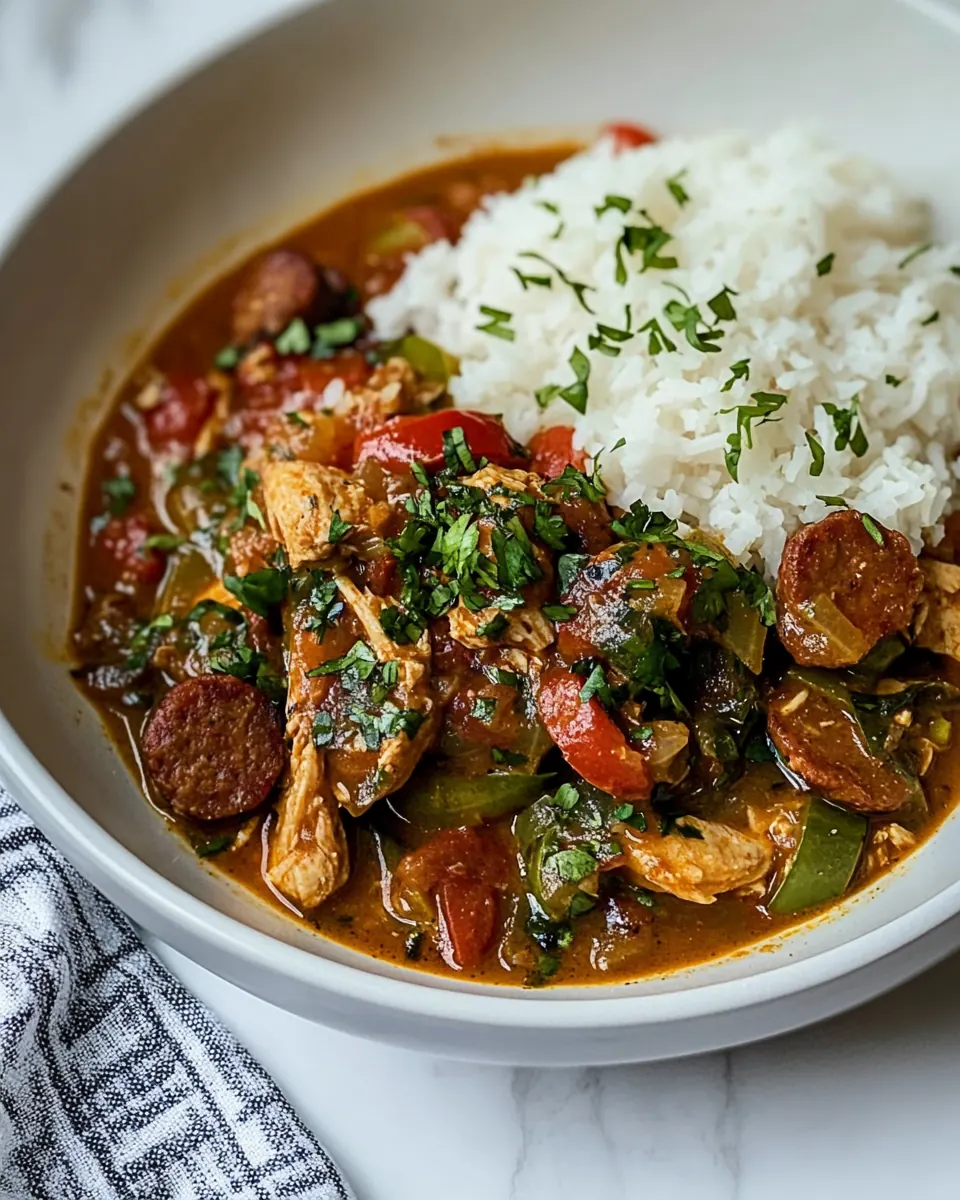
These steps will guide you from the first whisk of roux to the moment you ladle gumbo over fluffy rice. Take your time with the roux, pay attention to aroma and color, and enjoy how the kitchen evolves as the pot simmers.
- For the Roux: Place a large 6-8 quart soup pot over medium heat. Add the butter, oil, and flour to the pot. Whisk to form a smooth paste. Then continue to stir and watch the roux for as long as it takes to reach a dark chocolate color. Stir the roux every minute so it doesn't burn, but browns. Depending on your heat source and the cooking vessel you are using this could take as little as 8-10 minutes or up to 20 minutes. Don't rush, and don't stop stirring!: The kitchen will smell toasty and warm, with nutty notes rising as the butter , canola oil , and flour transform into a smooth paste. You should hear a gentle, steady soft bubbling and see the mixture move like warm caramel. Watching color is key, because the difference between deep and burnt is minutes and attention. Stirring constantly keeps heat distributed so the roux browns evenly, and this slow coaxing unlocks those roasted flavors that become the backbone of the gumbo. A common mistake is increasing heat to rush the process, which leads to scorching and bitterness, so maintain medium heat and patience. If small lumps form, whisk vigorously to smooth them out, because a silky roux gives the final sauce the best mouthfeel. Expect changes in aroma from raw flour to warm, toasty notes, and finally a chocolate tone that signals readiness.
- Once the roux reaches a deep chocolate color, add the sliced sausage, diced bell pepper, onion, celery, and garlic. Stir and sauté the sausage and vegetables for 5 to 10 minutes, until the veggies are softened.: At this stage the pot will sizzle as the andouille sausage renders fat and the vegetables meet hot fat, producing a lively, fragrant hiss. You will notice the peppers soften and the onion turn translucent, releasing sweet aromatics while the garlic becomes toasted without burning. This browning builds layers, caramelizing sugars that add rounded sweetness to the savory base. Stirring and sautéing for several minutes lets the edges of the sausage gain color and encourages fond to form on the pot bottom, which later deglazes into the stew. Avoid overcrowding the pan, which can steam rather than brown, and use tongs to move sausage so each piece gets contact with the hot surface for flavor development.
- Next add the whole chicken thigh pieces, chicken broth, cut okra, diced tomatoes and juices, bay leaves, Cajun seasoning, dried thyme, and cayenne pepper. Stir well and bring to a simmer. Partially cover the pot and simmer for 25 to 30 minutes, stirring every 5 minutes.: When you add the liquids and aromatics, the pot will shift from sizzle to a gentle simmer with steam rising and a mix of savory, herbal, and slightly tangy tomato notes. The chicken will start to poach, and the broth becomes a vehicle to extract flavors from the proteins and spices. The presence of okra will slightly thicken the liquid as it releases its characteristic mucilage, creating a silky consistency. Partially covering the pot traps heat and encourages steady simmering, but leaving a small vent prevents over reduction. A frequent mistake here is boiling too hard, which toughens the chicken , so keep it at a gentle simmer for the recommended time. Stir every few minutes so nothing sticks, and listen for occasional soft bubbling as a cue that temperatures are even.
- Then remove the cooked chicken thighs with tongs. Use two forks to shred the chicken into large pieces. Place the shredded chicken back into the pot and stir.: When the pieces come out of the pot they will be hot and tender, the meat pulling away from the bone or easily yielding when probed. Using two forks to shred results in large, satisfying pieces that hold texture in the stew rather than turning to mush. The act of shredding releases juices and a little collagen, which enriches the sauce when returned. Putting the shredded chicken back into the gumbo lets those juices mingle with the spiced broth so every bite remains cohesive. A common error is shredding too finely, losing textural contrast; aim for hearty shreds so the meat remains identifiable in the bowl.
- Now cover the pot and turn off the heat. Allow the gumbo to rest for at least 1 hour, but up to several hours. If resting for longer than 3 hours, allow the pot to cool completely and place in the refrigerator.: Allowing the gumbo to rest for at least 1 hour gives the flavors time to marry while the residual heat continues gentle mingling. This resting mellows sharp edges and integrates the seasoning so soups taste more rounded and balanced. If you plan to rest longer than a few hours, cooling fully before refrigerating prevents temperature danger zones and preserves texture. One pitfall is skipping this resting time and serving immediately, which can result in flavors that feel disjointed. You will notice after resting that the aroma is deeper, backgrounds blend, and the mouthfeel becomes more unified.
- Meanwhile, cook 2 cups of long grain rice, according to the package instructions.: Properly cooked rice should be fluffy with individual grains that soak up sauce rather than turning into a paste. Use a gentle simmer and a resting phase with the pot covered to let steam finish the cooking, and fluff with a fork to release trapped steam. If rice is undercooked it will be hard and unbalanced against the saucy gumbo, while overcooked rice becomes gluey and loses ability to cradle the stew. Following package ratios and letting the rice rest covered for a few minutes will yield the best texture to support the gumbo.
- When ready to serve, turn the heat back to medium, and bring the gumbo to a simmer. Simmer for 5 minutes until nice and hot. Stir in fresh chopped parsley, and serve over fluffy white rice.: Reheating concentrates aromas, and you should hear a lively simmer and see small bubbles breaking the surface as the pot warms. Stir in the chopped parsley for a fresh, green pop and spoon the gumbo over bowls of hot, fluffy rice . The final heat helps flavors bloom and thickens the sauce slightly, making for a saucy, spoonable finish. Avoid overheating or boiling aggressively at this stage as it can tighten proteins and reduce delicate aromatics. Serve immediately while still hot for the most satisfying experience.
Expert Tips about Chicken and Sausage Gumbo
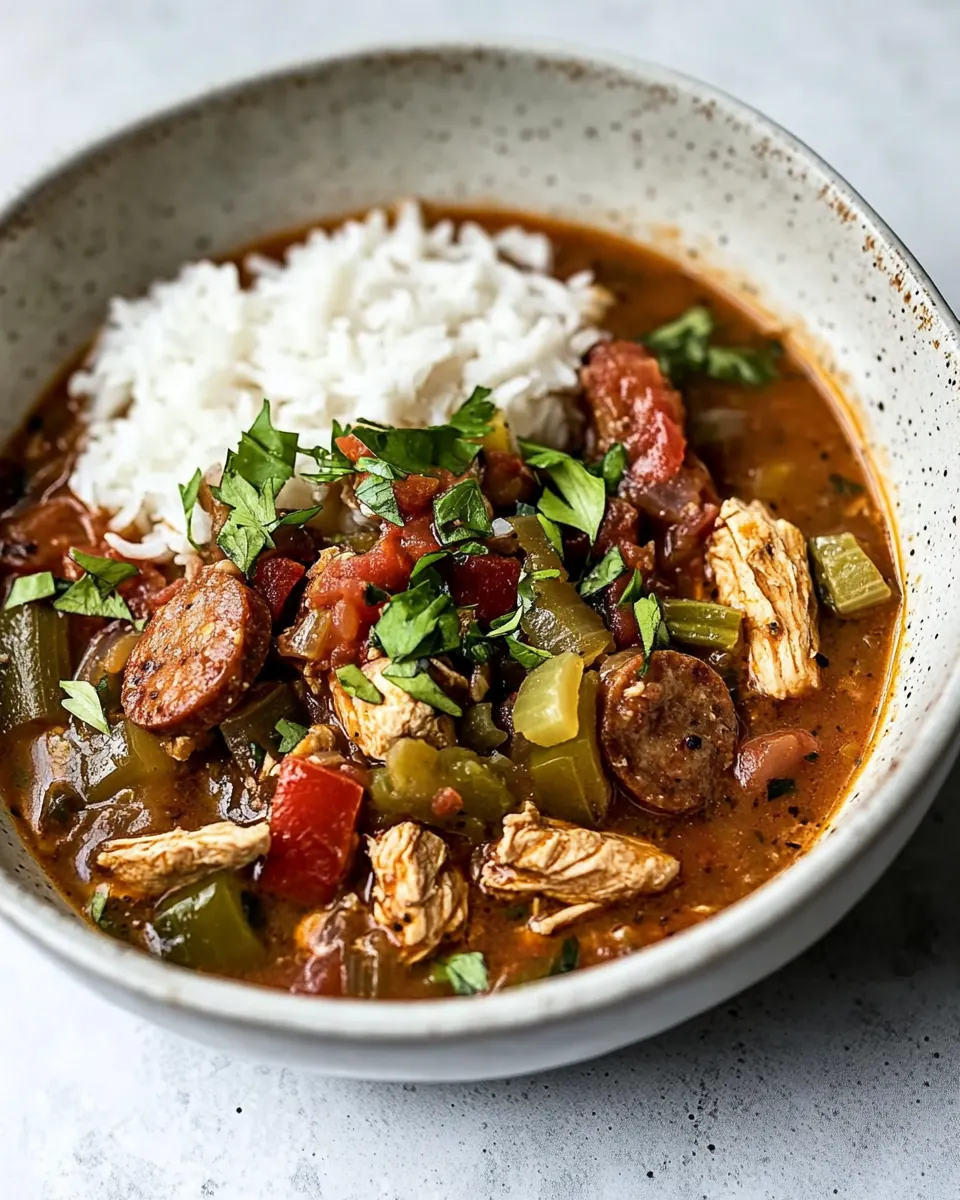
I keep a short list of dependable tips that help this gumbo shine every time. These notes focus on technique, timing, and how to preserve the best textures so your pot will reward patience and care.
- Roux patience: Take time to brown the roux gradually, because low and steady heat produces the nutty, chocolate notes essential to authentic gumbo without burning.
- Fat balance: Render the sausage slowly to release flavorful fat, which helps carry spice and improves mouthfeel when combined with the roux.
- Simmer control: Keep the pot at a gentle simmer when poaching chicken so the meat remains tender and juicy rather than tightening from aggressive heat.
- Stew resting: Allow the finished gumbo to rest off heat for at least one hour to let flavors marry and mellow into a cohesive profile.
- Okra timing: Add frozen okra early enough to contribute body but monitor so it does not become overly soft, maintaining some texture in the stew.
- Storage tips: Cool before refrigerating, store in airtight containers for up to three days, or freeze for longer keeping in freezer friendly containers to maintain quality.
What Goes Well With This Chicken and Sausage Gumbo
This gumbo works as a centerpiece for casual dinners or special gatherings. It pairs well with simple sides and holds up across seasons, especially in cooler weather when hearty bowls are most welcome.
- White rice base: Serve over fluffy long grain rice to soak up the sauce and balance the robust flavors.
- Crusty bread option: Offer crusty bread for mopping bowls if you prefer a drier accompaniment and like tearing and dipping.
- Family dinners and gatherings: This recipe scales for groups, so it is perfect for weekend family meals or neighbor potlucks in fall and winter.
- Storage and reheating: Store cooled leftovers in airtight containers in the fridge for up to three days, and reheat gently on the stove to restore texture and aroma.
- Seasonal pairing: It feels especially fitting for chilly evenings when a warm, spiced stew comforts and feeds a crowd with ease.
FAQ
Conclusion
What makes this Chicken and Sausage Gumbo special is the way few pantry ingredients transform into a deeply layered, soulful bowl through patient cooking and simple technique. It rewards time and attention with warm, savory complexity that feeds both body and company. Give it a try on a weekend when you can linger over the pot a bit, and invite friends or family to share the results; the leftovers are a tasty bonus that often taste better the next day. Enjoy the ritual of stirring the roux, savor the aromas as they unfold, and take comfort in a dish that feels like home.

Chicken and Sausage Gumbo
Equipment
- Large soup pot
- Tongs
- Two forks
Ingredients
- 1/4 cup butter Melted to create a rich base and help brown the roux; provides a silky mouthfeel and carries flavors throughout the gumbo. Adds a subtle dairy richness that balances the spice and acidity from other ingredients.
- 2 tablespoons canola oil Heated to increase smoking point for the roux and sautéing vegetables; contributes neutral fat to prevent burning while blending flavors. Helps achieve an even browning of the flour and vegetables without overwhelming the dish.
- 1/2 cup all-purpose flour Whisked into fat to make a roux that thickens the gumbo; slowly cooked to a deep brown for a nutty, complex flavor. Controls the final viscosity and provides a foundational toasted flavor characteristic of classic gumbo.
- 2 pounds boneless chicken thighs or breasts Trimmed and seared to develop savory depth and tender texture; contributes substantial protein and richness to the stew. Simmered until fully cooked and infused with spices, it complements the sausage and absorbs the gumbo’s flavors.
- 1 pound andouille sausage sliced into 1/4 inch rounds Sliced and browned to release smoky, spicy fat and add a robust, hearty flavor; pairs with chicken to create classic gumbo contrast. Its rendered oils enrich the broth and enhance the overall savory profile.
- 2 bell peppers green and red, diced Diced and sautéed as part of the trinity for aromatic backbone and slight sweetness; adds color and fresh pepper flavor. Balances the richer meats and thick roux with vegetal brightness and texture.
- 1 large onion diced Chopped and cooked in the trinity to provide sweet, savory depth and body; softens into the sauce and helps build umami. Releases natural sugars that caramelize slightly while sautéing, enhancing overall flavor complexity.
- 1 cup diced celery Diced and sweated alongside onion and peppers to round out the holy trinity; adds subtle earthiness and crisp texture when lightly cooked. Contributes aromatic complexity and helps absorb seasonings and broth.
- 3 -5 cloves garlic minced Minced and added near the start or toward the end for sharp pungency and aroma; brightens the gumbo with garlicky depth. Integrates quickly into the roux and broth, amplifying savory notes without overpowering.
- 4 cups chicken broth or water Poured to deglaze the pan and form the cooking liquid; supplies the main braising medium for proteins and vegetables. Choice of stock or water affects flavor intensity, with broth adding more savory depth to the gumbo.
- 2 cups frozen cut okra Added to provide traditional gumbo texture and subtle vegetal flavor; helps thicken the stew as okra releases mucilage when cooked. Frozen cut form offers convenience and consistent pieces that absorb seasonings well.
- 15 ounce can diced tomatoes Stirred in to add acidity, sweetness, and chunky tomato texture; balances richness and deepens the sauce color. Provides acidity that brightens flavors and complements the spicy, smoky components of the dish.
- 2 bay leaves Dropped in whole to infuse aromatic bay leaf perfume; imparts a subtle herbal, slightly floral background note to the simmering gumbo. Removed before serving, the bay leaves enhance complexity without dominating the palate.
- 1 tablespoon cajun seasoning Sprinkled to season with a blend of spices, salt, and herbs; delivers signature Cajun heat and seasoning balance. Ties together flavors of meat, vegetables, and roux to produce an authentic regional profile.
- 2 teaspoons dried thyme Added dried to provide earthy, lemony herbal notes and savory depth; complements the Cajun seasoning and bay leaves. Rehydrates during simmering and releases a steady, warming aroma throughout the dish.
- 1/4 – 1/2 teaspoon cayenne pepper Measured to adjust the overall heat level with concentrated chili heat; used sparingly to avoid overpowering other flavors. Offers control over spiciness so the gumbo can be tailored from mild to bold.
- 1/4 cup chopped parsley Chopped and stirred in near the end for fresh herbal brightness and color contrast; adds a clean, slightly peppery finish. Enhances presentation and refreshes the palate between rich mouthfuls.
- 2 cups long-grain rice Rinsed and cooked as the absorbing starch for serving the gumbo; provides a neutral, fluffy base to soak up the saucy stew. Long-grain grains keep separate, tender kernels that complement the dish’s robust flavors.
Instructions
- For the Roux: Place a large 6-8 quart soup pot over medium heat. Add the butter, oil, and flour to the pot. Whisk to form a smooth paste. Then continue to stir and watch the roux for as long as it takes to reach a dark chocolate color. Stir the roux every minute so it doesn't burn, but browns. Depending on your heat source and the cooking vessel you are using this could take as little as 8-10 minutes or up to 20 minutes. Don't rush, and don't stop stirring!: The kitchen will smell toasty and warm, with nutty notes rising as the butter , canola oil , and flour transform into a smooth paste. You should hear a gentle, steady soft bubbling and see the mixture move like warm caramel. Watching color is key, because the difference between deep and burnt is minutes and attention. Stirring constantly keeps heat distributed so the roux browns evenly, and this slow coaxing unlocks those roasted flavors that become the backbone of the gumbo. A common mistake is increasing heat to rush the process, which leads to scorching and bitterness, so maintain medium heat and patience. If small lumps form, whisk vigorously to smooth them out, because a silky roux gives the final sauce the best mouthfeel. Expect changes in aroma from raw flour to warm, toasty notes, and finally a chocolate tone that signals readiness.
- Once the roux reaches a deep chocolate color, add the sliced sausage, diced bell pepper, onion, celery, and garlic. Stir and sauté the sausage and vegetables for 5 to 10 minutes, until the veggies are softened.: At this stage the pot will sizzle as the andouille sausage renders fat and the vegetables meet hot fat, producing a lively, fragrant hiss. You will notice the peppers soften and the onion turn translucent, releasing sweet aromatics while the garlic becomes toasted without burning. This browning builds layers, caramelizing sugars that add rounded sweetness to the savory base. Stirring and sautéing for several minutes lets the edges of the sausage gain color and encourages fond to form on the pot bottom, which later deglazes into the stew. Avoid overcrowding the pan, which can steam rather than brown, and use tongs to move sausage so each piece gets contact with the hot surface for flavor development.
- Next add the whole chicken thigh pieces, chicken broth, cut okra, diced tomatoes and juices, bay leaves, Cajun seasoning, dried thyme, and cayenne pepper. Stir well and bring to a simmer. Partially cover the pot and simmer for 25 to 30 minutes, stirring every 5 minutes.: When you add the liquids and aromatics, the pot will shift from sizzle to a gentle simmer with steam rising and a mix of savory, herbal, and slightly tangy tomato notes. The chicken will start to poach, and the broth becomes a vehicle to extract flavors from the proteins and spices. The presence of okra will slightly thicken the liquid as it releases its characteristic mucilage, creating a silky consistency. Partially covering the pot traps heat and encourages steady simmering, but leaving a small vent prevents over reduction. A frequent mistake here is boiling too hard, which toughens the chicken , so keep it at a gentle simmer for the recommended time. Stir every few minutes so nothing sticks, and listen for occasional soft bubbling as a cue that temperatures are even.
- Then remove the cooked chicken thighs with tongs. Use two forks to shred the chicken into large pieces. Place the shredded chicken back into the pot and stir.: When the pieces come out of the pot they will be hot and tender, the meat pulling away from the bone or easily yielding when probed. Using two forks to shred results in large, satisfying pieces that hold texture in the stew rather than turning to mush. The act of shredding releases juices and a little collagen, which enriches the sauce when returned. Putting the shredded chicken back into the gumbo lets those juices mingle with the spiced broth so every bite remains cohesive. A common error is shredding too finely, losing textural contrast; aim for hearty shreds so the meat remains identifiable in the bowl.
- Now cover the pot and turn off the heat. Allow the gumbo to rest for at least 1 hour, but up to several hours. If resting for longer than 3 hours, allow the pot to cool completely and place in the refrigerator.: Allowing the gumbo to rest for at least 1 hour gives the flavors time to marry while the residual heat continues gentle mingling. This resting mellows sharp edges and integrates the seasoning so soups taste more rounded and balanced. If you plan to rest longer than a few hours, cooling fully before refrigerating prevents temperature danger zones and preserves texture. One pitfall is skipping this resting time and serving immediately, which can result in flavors that feel disjointed. You will notice after resting that the aroma is deeper, backgrounds blend, and the mouthfeel becomes more unified.
- Meanwhile, cook 2 cups of long grain rice, according to the package instructions.: Properly cooked rice should be fluffy with individual grains that soak up sauce rather than turning into a paste. Use a gentle simmer and a resting phase with the pot covered to let steam finish the cooking, and fluff with a fork to release trapped steam. If rice is undercooked it will be hard and unbalanced against the saucy gumbo, while overcooked rice becomes gluey and loses ability to cradle the stew. Following package ratios and letting the rice rest covered for a few minutes will yield the best texture to support the gumbo.
- When ready to serve, turn the heat back to medium, and bring the gumbo to a simmer. Simmer for 5 minutes until nice and hot. Stir in fresh chopped parsley, and serve over fluffy white rice.: Reheating concentrates aromas, and you should hear a lively simmer and see small bubbles breaking the surface as the pot warms. Stir in the chopped parsley for a fresh, green pop and spoon the gumbo over bowls of hot, fluffy rice . The final heat helps flavors bloom and thickens the sauce slightly, making for a saucy, spoonable finish. Avoid overheating or boiling aggressively at this stage as it can tighten proteins and reduce delicate aromatics. Serve immediately while still hot for the most satisfying experience.
Notes
- Roux patience: Take time to brown the roux gradually, because low and steady heat produces the nutty, chocolate notes essential to authentic gumbo without burning.
- Fat balance: Render the sausage slowly to release flavorful fat, which helps carry spice and improves mouthfeel when combined with the roux.
- Simmer control: Keep the pot at a gentle simmer when poaching chicken so the meat remains tender and juicy rather than tightening from aggressive heat.
- Stew resting: Allow the finished gumbo to rest off heat for at least one hour to let flavors marry and mellow into a cohesive profile.
- Okra timing: Add frozen okra early enough to contribute body but monitor so it does not become overly soft, maintaining some texture in the stew.
- Storage tips: Cool before refrigerating, store in airtight containers for up to three days, or freeze for longer keeping in freezer friendly containers to maintain quality.